ARAB AND WORLD

Fri 06 Mar 2026 5:03 am - Jerusalem Time

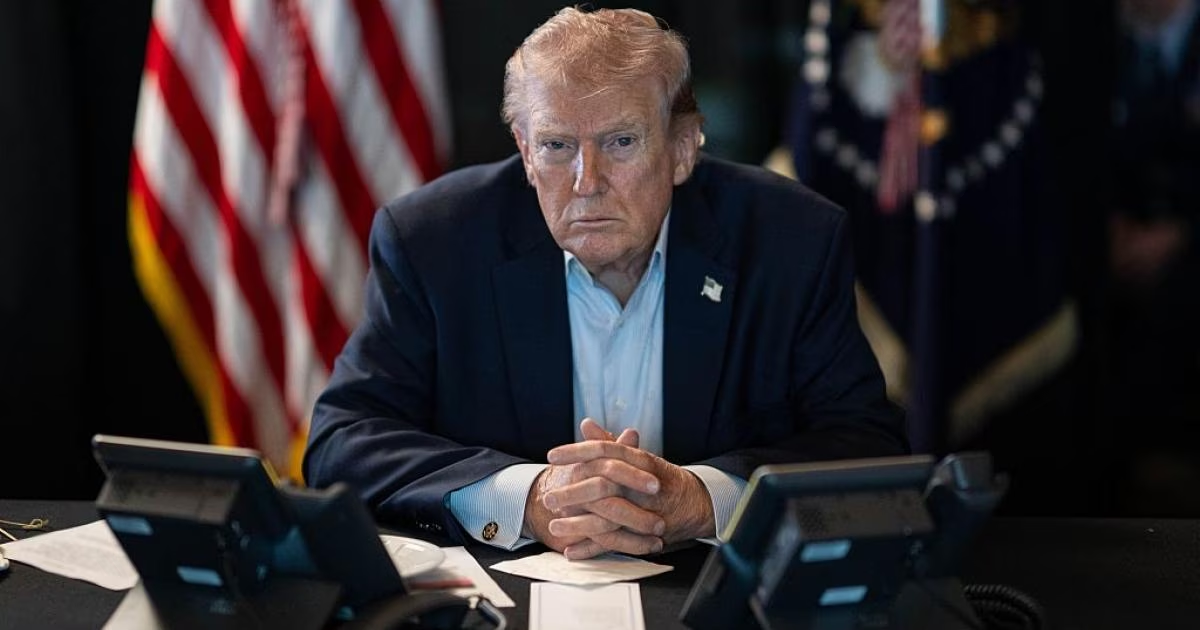
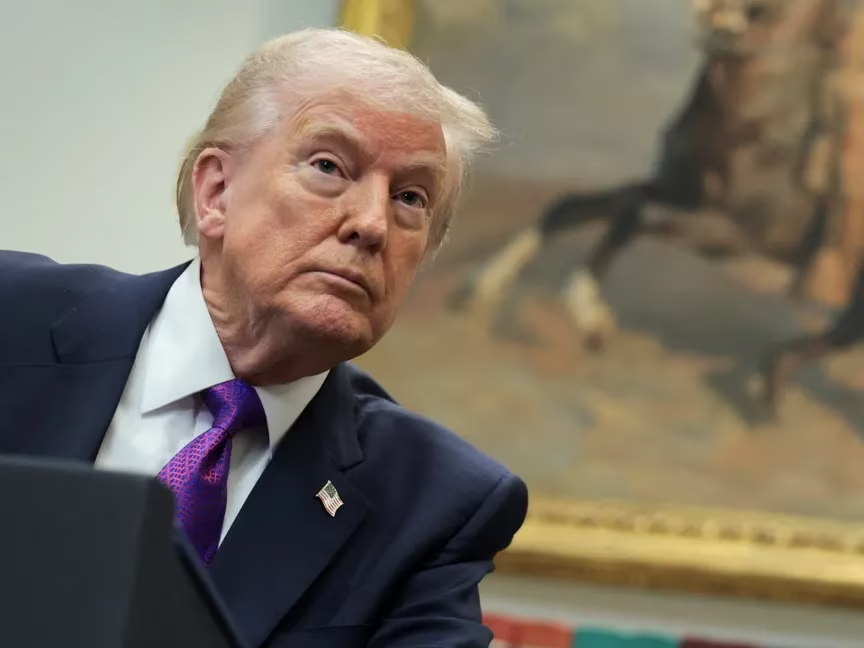
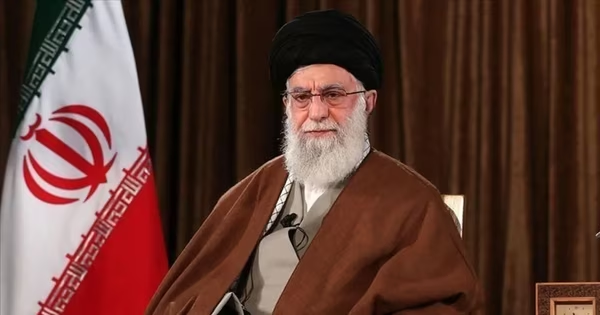
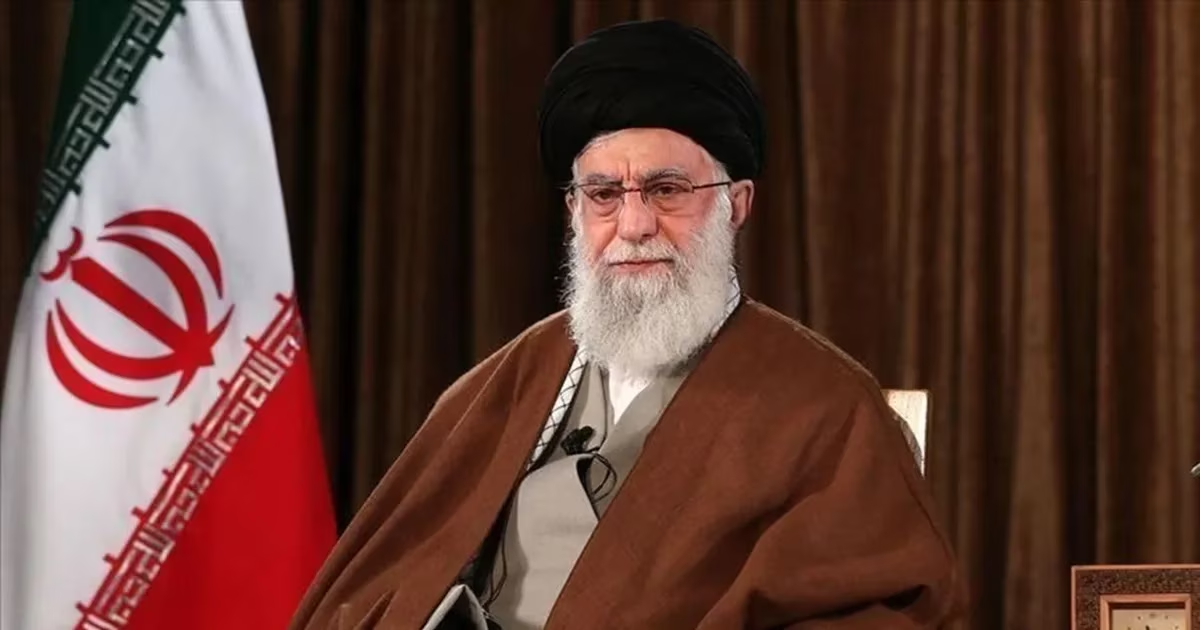
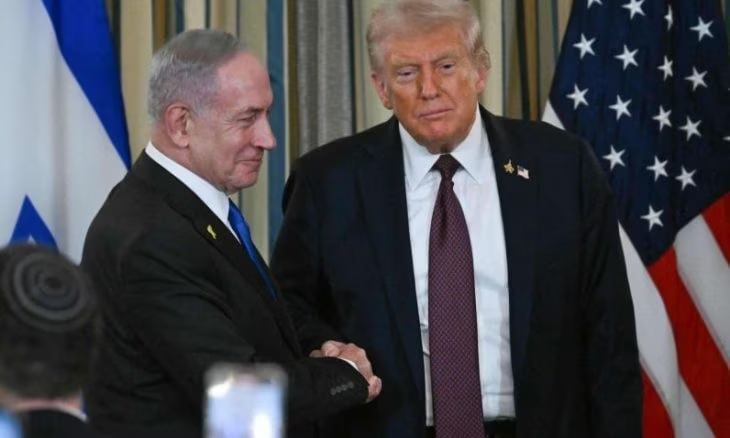
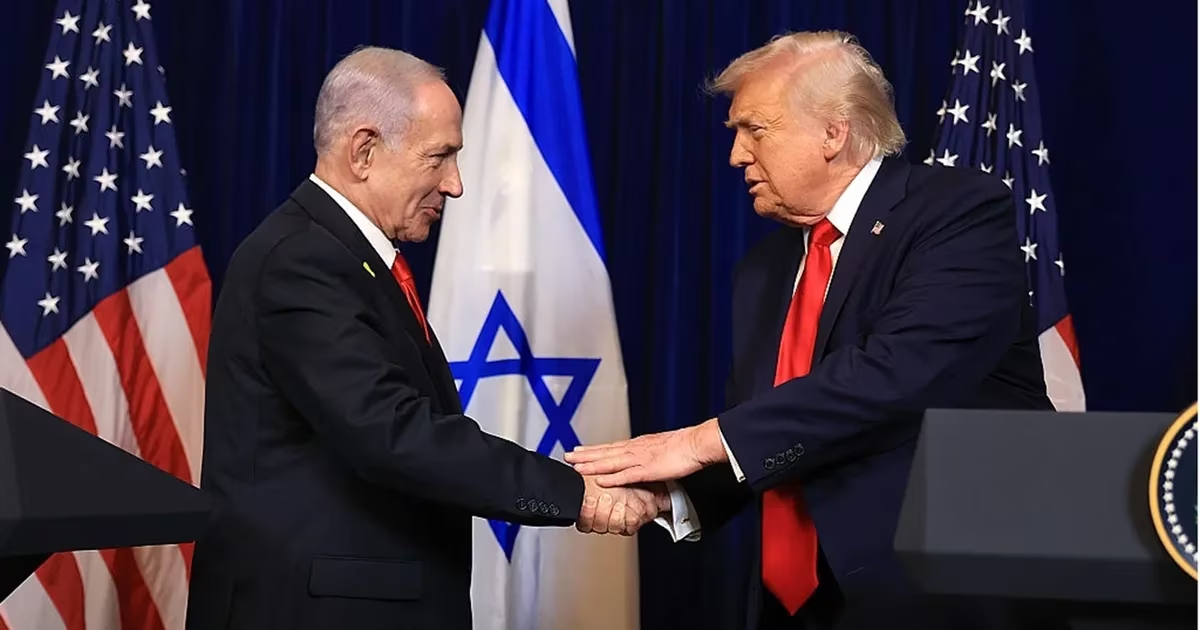
Trump demands intervention in choosing Khamenei's successor and rejects his son taking power

US President Donald Trump stressed the necessity of direct and personal American intervention in the process of identifying the next leader of the Islamic Republic of Iran. Trump affirmed in press statements that he would not allow the transfer of power to Mojtaba Khamenei, the son of the late leader, considering that Washington must be a partner in this fateful political decision.

These tough stances from the White House come at a sensitive time for Tehran, where intensive consultations are underway to choose a successor to Supreme Leader Ali Khamenei. Khamenei died on February 28, following a widespread military attack launched by Israeli and American forces on strategic Iranian targets.

Speaking to media sources, Trump described the son of the late leader as a figure lacking strong influence, indicating that his ascension to power would mean the continuation of previous confrontational policies. The US President clarified that he seeks to see new leadership capable of bringing peace and stability to the region, away from the escalation approach that characterized the past era.

Trump compared his desire to intervene in Iranian affairs to what previously happened with Delcy Rodriguez in Venezuela, stressing that the United States will not stand idly by while a leader adopting the same ideology is appointed. He warned that accepting a leader who follows in Khamenei's footsteps would force Washington to engage in a comprehensive military confrontation again within just five years.

Regarding international military cooperation, Trump showed great openness to receiving support from various countries to confront Iranian threats, especially concerning drones. He indicated in statements to press sources that he would welcome any technical or military assistance, in reference to potential Ukrainian offers to provide expertise in countering drones.

On the ground, the city of Qom in Iran witnessed severe security tensions, as the building of the religious body responsible for choosing the Supreme Leader was directly targeted last Tuesday. Reports stated that the attack clearly aimed to obstruct the vote counting process and disrupt consensus on the person who will assume the position of Vali-e Faqih in the next phase.

Despite the absence of official announcements, the name of 56-year-old Mojtaba Khamenei stands out as one of the strongest candidates to succeed his father due to his wide influence within the corridors of power. Mojtaba's strength is based on close and deeply rooted relations with the leaders of the Iranian Revolutionary Guard, although he has not held any official position in the state structure throughout the past years.

Iran has been in a state of confusion since the start of Israeli and American military operations last Saturday, which resulted in hundreds of deaths and injuries. These strikes targeted senior security and political officials, placing the Iranian regime before an existential challenge amid unprecedented international and field pressures to reshape the political scene.

Mojtaba Khamenei's ascension to power is unacceptable to me, and we want someone who brings peace to Iran.

ARAB AND WORLD

Fri 06 Mar 2026 5:03 am - Jerusalem Time

Behind the Scenes of Iranian Attempts to Negotiate with Washington... and Trump Hints at a 'Venezuela Scenario'

Intelligence sources revealed secret Iranian moves that took place following the widespread American-Israeli attack, where officials in Tehran attempted to open indirect communication channels with the US Central Intelligence Agency (CIA). According to press reports, these attempts aimed to explore potential conditions for halting the intense aerial bombardment targeting key Iranian state institutions, despite official denials from the remaining Iranian leadership of any desire for dialogue with Washington.

Informed sources stated that the Iranian offer was passed through the intelligence agency of a third country, raising questions about the ability of current officials in Tehran to conclude binding agreements given the state of chaos resulting from the systematic targeting of leaders. These moves come at a time when the Iranian government is experiencing unprecedented pressure after losing historical figures in the initial raids of the military operation that began last February.

For his part, US President Donald Trump showed a rigid stance towards these initiatives, stating via social media platforms that it was too late for diplomatic talks. Trump expressed to reporters his belief that most of the leaders Washington had been targeting had already been eliminated, indicating that the leadership structure in Tehran was rapidly eroding under the weight of continuous strikes.

In a related context, the Israeli government is exerting intense pressure on the Trump administration to ignore any Iranian negotiation offers, with officials in Tel Aviv demanding the continuation of the military campaign for several additional weeks. The Israeli strategy aims to inflict permanent damage on Iranian military capabilities, leading to the complete collapse of the existing political system, which Washington sees as an option requiring careful evaluation.

It appears that Trump has begun to back away from the idea of supporting a comprehensive popular revolution in Iran, preferring instead the emergence of 'pragmatic' figures from within the current political structure, specifically from the Revolutionary Guard. The White House aspires to reach an agreement that ensures the complete dismantling of Iranian missile and nuclear programs, and the cessation of support for armed groups in the region, in exchange for allowing some leaders to remain in their positions.

Trump explicitly indicated that his preferred model for dealing with Tehran is the 'Venezuela scenario,' where military and economic pressure is applied to force the new leadership to grant the United States broad control over resources, especially oil. Observers believe that this approach reflects Washington's desire to achieve quick economic and geopolitical gains without engaging in a complex and long-term nation-building process.

On the ground, previous reports confirmed the martyrdom of Iranian Supreme Leader Ali Khamenei and Commander Mohammad Pakpour, which prompted the Revolutionary Guard to activate a decentralized leadership strategy under the supervision of Ahmed Vahidi. This strategy aims to ensure the continuation of military operations and counter-responses even if communication with the center is cut off, complicating American-Israeli calculations about the 'decisive point.'

The US administration faces increasing internal pressures due to the exorbitant cost of military operations, estimated at about one billion dollars per day, as well as a significant 6% rise in global oil prices. This financial bleeding worries Trump's Republican allies, who fear long-term economic repercussions that could affect internal stability in the United States.

On the Israeli side, economic losses reached about 9.4 billion shekels weekly, prompting some economic circles to demand a reduction in the alert level to mitigate damages. Despite these losses, the Israeli military leadership insists that the current opportunity to change the face of the Middle East will not be repeated, and must be exploited to the end regardless of immediate costs.

Intelligence assessments prepared by the CIA indicate the difficulty of predicting the type of leadership that will emerge in Iran after the end of military operations, as all scenarios remain open to the possibilities of chaos. Experts warn that the collapse of the central government could lead to civil wars in areas inhabited by ethnic minorities, turning Iran into an enlarged version of the Syrian or Libyan models.

Despite Trump's previous calls for the Iranian people to take charge of their affairs, he expressed skepticism about the ability of any popular revolution to produce a pro-Western democratic system under wartime conditions. Trump said that the worst-case scenario is replacing the current regime with another that harbors the same hostility towards Washington, emphasizing the necessity of a 'strong person' to restore stability and protect common interests.

When asked about the possibility of supporting Reza Pahlavi, the son of the former Shah, Trump did not show great enthusiasm, preferring to search for a figure with genuine popularity and influence on the ground within existing institutions. This approach reflects Trump's pragmatism, which seeks a 'strong man' who can regulate the rhythm of the exhausted Iranian state and ensure the flow of global energy supplies without threat.

The major dilemma facing Washington remains finding a mediator with sufficient legitimacy to convince the Iranian interior of any commitments towards the United States, especially given the hardline rhetoric currently adopted by the Revolutionary Guard. Trump describes the current leaders as 'mentally ill,' which practically closes the door to any diplomatic settlement with the known figures of the old regime.

In conclusion, all eyes are on what the coming weeks of military confrontation will bring, amid Israeli insistence on a decisive outcome, and American hesitation between ending the mission or seeking a political solution. With the continued bleeding of the global economy and rising energy prices, the 'Venezuela scenario' remains the most likely card on Trump's agenda for dealing with the explosive Iranian issue.

I believe that what we did in Venezuela is the optimal scenario, where leaders can be chosen.

PALESTINE

Fri 06 Mar 2026 5:03 am - Jerusalem Time

The Specter of the 'Dahiya Doctrine' Looms: Unprecedented Israeli Escalation Threatens Total Destruction of Beirut

The intensity of military tensions in Lebanon is escalating unprecedentedly, with recent hours witnessing intense Israeli airstrikes targeting entire neighborhoods in Beirut's southern Dahiya. These developments come amidst official and popular fears of a repeat of the 2006 war scenario, in which Israel adopted a strategy of widespread destruction of residential areas.

Beirut's southern Dahiya has currently become a semi-evacuated area, with Israeli evacuation orders continuing to be issued, reaching the Hadath neighborhood and other vital areas. These warnings have specified mandatory displacement routes towards eastern and northern Lebanon, exacerbating the already worsening humanitarian crisis.

Evacuation orders were not limited to the capital but extended to cover a wide geographical strip starting from the international borders up to the Litani River, including the historic city of Tyre. These movements raise serious questions about the occupation's ultimate military objectives amidst ongoing ground operations and intense aerial bombardment.

Observers and political researchers believe that the evacuation operations south of the Litani fall into two contexts; the first relates to paving the way for expanding the ground war, and the second aims to impose a new military reality that goes beyond previous ceasefire understandings. They point out that the cities currently targeted, such as Nabatieh, had suffered massive destruction in previous wars.

Regarding the southern Dahiya, analyses indicate that the occupation aims, through systematic destruction, to exert maximum pressure on the Lebanese government. Through this policy, Israel seeks to push the state to make sovereign decisions against Hezbollah, using the targeting of civilian facilities as a tool for political blackmail.

The 'Dahiya Doctrine' re-emerges as an imminent danger, a strategy that relies on inflicting severe damage on infrastructure and civilians to force the popular base to abandon its political and military choices. It appears that the occupation is heading towards raising the cost of confrontation for Lebanese civilians directly to compensate for its failures in the military field.

Informed sources indicate that Israel's resort to targeting the civilian dimension may reflect a gap in intelligence information related to Hezbollah's military and security structure. While military bases remain fortified, the occupation finds residential neighborhoods easy targets to demonstrate power and achieve media and psychological gains.

Internally, Lebanese positions on the crisis vary, with voices emerging that hold Hezbollah responsible for sliding into a comprehensive war that some believe the country could have avoided. However, others believe that evaluating the results can only be done after the battle ends and the features of the political settlement that may follow this escalation become clear.

Estimates indicate that Lebanon may be part of a comprehensive regional settlement aimed at ending the conflict in the Middle East, but reaching this stage may pass through the gateway of violent military escalation. It appears that the diplomatic path has not achieved tangible results so far, making the field the sole arbiter in shaping the features of the next phase.

On the humanitarian front, the Lebanese government faces enormous challenges in securing the needs of hundreds of thousands of displaced people who have left their homes in the South, Dahiya, and Bekaa. With the expectation of expanding evacuation orders to include new areas in northern Bekaa, fears of a collapse of the national relief system are increasing amidst the difficult economic conditions the country is experiencing.

Israel seeks to directly target the civilian dimension and force the resistance's supportive environment to pay a heavy price through widespread destruction operations similar to what happened in 2006.

OPINIONS

Fri 06 Mar 2026 4:55 am - Jerusalem Time

Trump’s Dangerous Talk of Picking Iran’s Next Leader

News Analysis

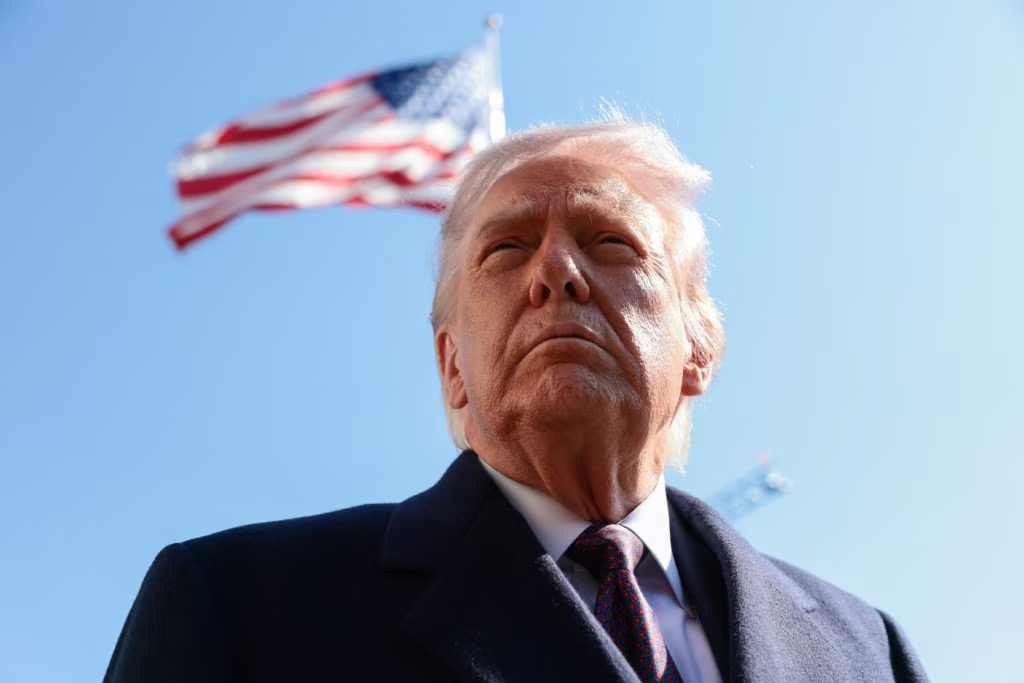
Washington, D.C-In the long history of American intervention in the Middle East, U.S. officials have often tried to shape political outcomes behind the scenes. But it is rare for a sitting president to say openly that he intends to help choose the next leader of another sovereign nation.


That is exactly what Donald Trump did on Thursday when he declared that he should be personally involved in selecting Iran’s next leader. In an interview with the news site Axios, Trump dismissed Mojtaba Khamenei — son of Iran’s late supreme leader — as “unacceptable,” and said Washington wants someone who will bring “harmony and peace to Iran.” He went further, insisting that he “has to be involved in the decision.”


The comments came only days after U.S.–Israeli strikes killed Iran’s supreme leader Ali Khamenei, a dramatic escalation that pushed the confrontation between Washington and Tehran into far more dangerous territory. Iranian sources say Mojtaba Khamenei survived the attacks that targeted senior figures in the country’s leadership and is widely viewed as a possible successor to his father.


Mojtaba Khamenei is not widely known outside Iran, yet within the Islamic Republic’s clerical establishment he has long been regarded as influential. A mid-ranking cleric with close ties to the powerful Islamic Revolutionary Guard Corps, he has quietly built networks of influence for nearly two decades. For years his name has circulated among insiders who believe Iran’s leadership could eventually pass from father to son.


Trump’s hostility to that possibility may not surprise critics of Iran’s political system. What is striking, however, is the blunt way he described America’s role. The president did not merely criticize a potential successor. He suggested the United States should participate directly in determining who rules Iran.


Such rhetoric exposes a deeper question about the real objectives of the expanding war. At the outset the administration framed military action as deterrence — a necessary step to counter threats and restore stability. Talk of selecting Iran’s future leader, however, points toward something far larger: the political engineering of a postwar Iranian state.


That trajectory should sound familiar to anyone who remembers America’s recent wars in the Middle East. Over the past quarter century, U.S. interventions have repeatedly begun with narrow security arguments before drifting toward sweeping ambitions of regime change and national reconstruction. Again and again those ambitions collided with political realities far more complicated than planners in Washington expected.


The United States learned that lesson painfully in Iraq and Afghanistan. In both countries wars launched in the name of security slowly mutated into vast experiments in state-building. The assumption that American power could redesign foreign political systems proved dangerously optimistic.


Trump’s statements therefore carry a striking irony. For years he built his political identity attacking exactly those interventionist projects. He blasted the policies of George W. Bush, arguing that Washington had squandered trillions of dollars and thousands of lives trying to rebuild foreign societies.


That critique resonated with Americans weary of endless wars and doubtful that distant societies could be remade by outside force. Trump cast himself as the leader who would end such crusades — not revive them.


Yet his latest remarks suggest the same old reflexes returning to the center of American strategy. The notion that Washington should help determine Iran’s next leader echoes the mindset that shaped U.S. policy after the September 11 attacks. It rests on a familiar conviction: that American power can ultimately reorder the politics of other nations.


History offers little support for that confidence. Political systems, especially ones rooted in dense religious and ideological institutions like Iran’s, do not bend easily to outside direction. Any leader perceived as emerging from American pressure would face immediate legitimacy problems at home. Instead of stabilizing the country, such interference could deepen factional conflict and empower the hardest hard-liners.


There is also the danger of mission creep. Once a government begins speaking openly about choosing another nation’s leadership, it assumes responsibility for whatever turmoil follows. That burden can expand far beyond the battlefield, drawing the intervening power into years of political and security entanglement.


Iran would be an especially perilous arena for such experimentation. The country possesses deep institutions, powerful security services, and a political culture shaped by suspicion of foreign domination. For decades its leaders have warned that Washington seeks to dictate Iran’s destiny. Trump’s declaration risks proving that accusation correct in the eyes of millions of Iranians.


The deeper problem is strategic arrogance. The belief that a U.S. president can influence Iran’s succession reflects a stubborn habit in American foreign policy: assuming that global political outcomes ultimately remain subject to Washington’s will. Experience suggests otherwise. Nations resist outside engineering. Legitimacy cannot be manufactured abroad. And wars launched with grand visions of political redesign rarely end as planned.


For a president who once promised to avoid new Middle Eastern quagmires, the temptation to shape Iran’s leadership marks a remarkable reversal. Presented as a path to “harmony and peace,” it may instead ignite deeper resistance and longer conflict.

ARAB AND WORLD

Thu 05 Mar 2026 8:07 pm - Jerusalem Time

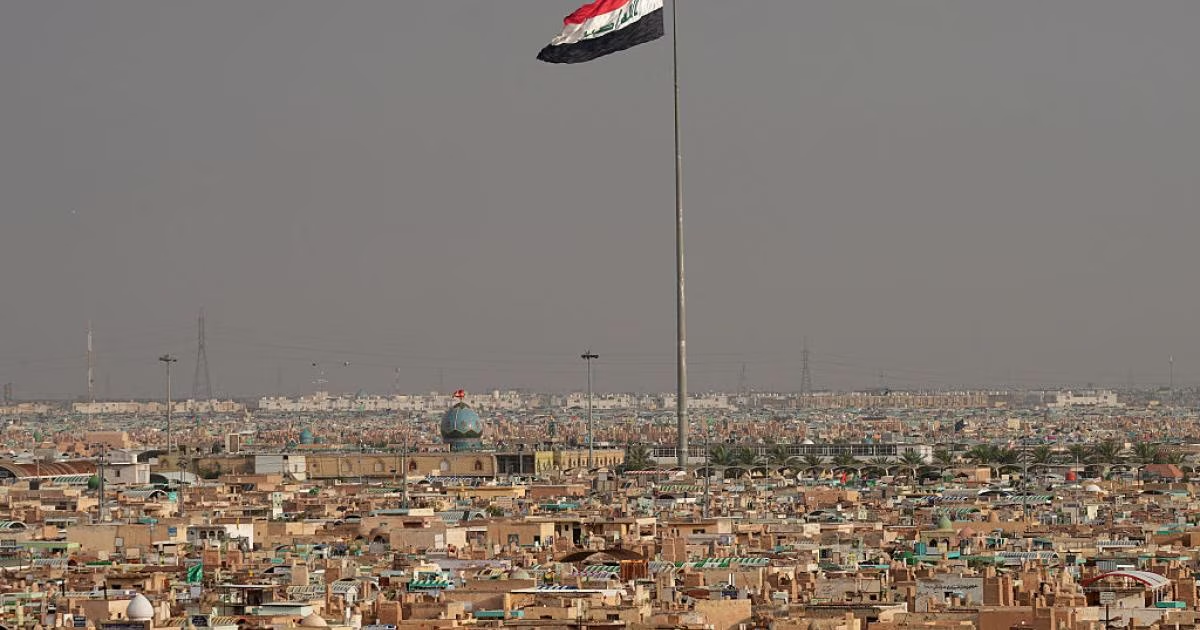
Iraq's Presidencies Affirm Rejection of Turning the Country into an Arena for Regional Conflicts

Baghdad, the capital, hosted a high-level meeting today, Thursday, bringing together the leaders of Iraq's four presidencies to discuss the rapidly escalating security developments in the country and the region. The meeting was attended by President Abdul Latif Rashid, Prime Minister Mohammed Shia' Al-Sudani, Parliament Speaker Mohammed Al-Halbousi, and the Head of the Supreme Judicial Council, Faiq Zidan.

In an official statement, the attendees expressed a unified stance unequivocally rejecting the use of Iraqi territory as a launching pad for aggression against any neighboring countries or threatening their security and stability. The leaders emphasized that Iraq seeks to distance itself from regional conflicts, while affirming the necessity of respecting Iraqi sovereignty and halting attacks targeting cities and governorates.

The meeting thoroughly reviewed the latest developments in the political and security arenas and discussed the direct implications of international tensions on the internal situation in the country. The leaders discussed the governmental mechanisms in place to prevent Iraq from being drawn into external conflicts that could destabilize the region and affect the safety of its citizens.

The presidencies affirmed their full support for the measures taken by the federal government to impose security and stability and protect the country's sovereignty from any violations. The attendees also reiterated the Iraqi state's commitment to protecting the security of diplomatic missions and international headquarters operating in the country, and ensuring the safety of their personnel from any potential threats.

This political move comes amid a recent military escalation in the region, where Tehran announced missile strikes targeting what it described as headquarters of opposing Kurdish groups within the Kurdistan Region. Sources reported that the Iranian shelling came under the pretext of thwarting infiltration operations planned by separatist groups across Iran's western borders.

For their part, the Iraqi presidencies considered the attacks on the Kurdistan Region and other areas a blatant violation of Iraqi national sovereignty. The leaders called for an immediate halt to all military operations in the region, emphasizing the need to respect the independence of states and not interfere in their internal affairs under any pretext.

The attendees called on the international community to take urgent and effective action to prevent the expansion of the conflict in the Middle East, warning of catastrophic consequences if the escalation continues. The statement indicated that diplomatic solutions and negotiation paths are the only way to spare peoples the scourges of wars and armed conflicts.

The region has witnessed severe military tension since late February, with international powers launching attacks on targets in Iran, resulting in hundreds of casualties, including high-ranking leaders. These confrontations have directly impacted the Iraqi arena, which has become a stage for the exchange of military and political messages between the warring parties.

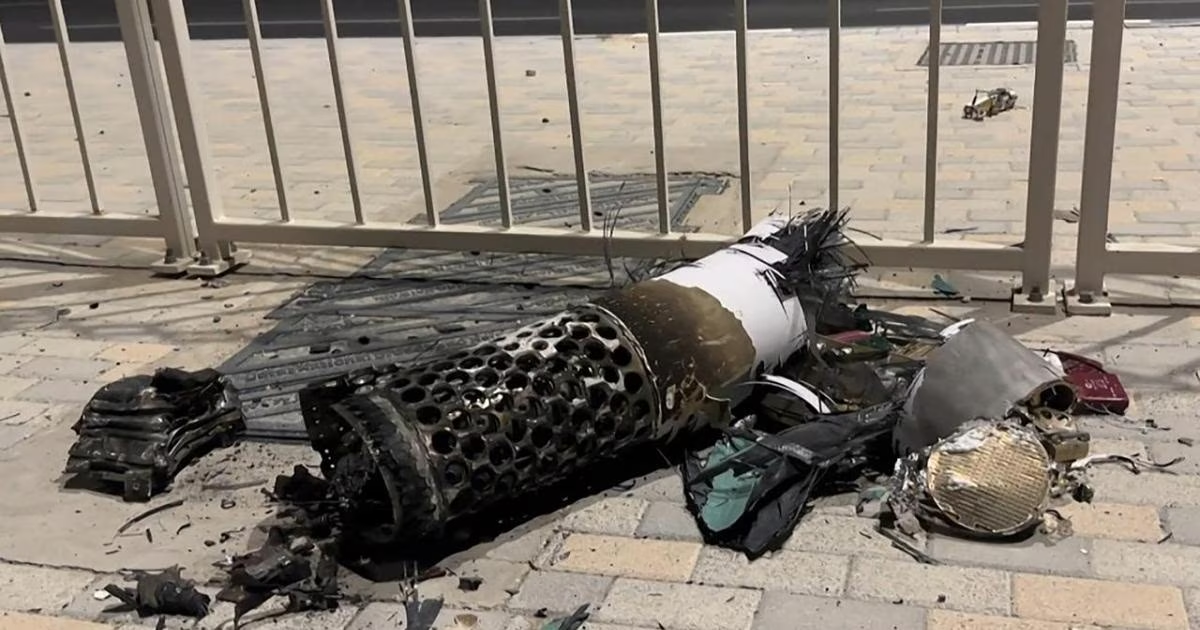
In a related context, Tehran responded by launching a barrage of missiles and drones towards various targets, leading to significant human and material losses. The attacks included targeting interests and military bases in Arab countries, which raised widespread international concern about the situation spiraling out of control and turning into a comprehensive regional war.

The Iranian Revolutionary Guard confirmed in official statements its targeting of bases belonging to Kurdish groups in northern Iraq, accusing them of working against the Iranian regime. In contrast, media sources denied the accuracy of reports that armed groups had crossed the Iraqi border into Iranian territory to carry out combat operations.

The city of Erbil, the capital of the Kurdistan Region, has been subjected to a series of attacks targeting vital facilities, including Erbil International Airport, which hosts a base for international coalition forces. The attacks also targeted the vicinity of the American consulate, causing damage to civilian properties and residential buildings, creating a state of panic among the local population.

Observers believe that the meeting of the four presidencies represents a serious attempt to formulate a unified national stance to confront the increasing external pressures on Baghdad. Through these diplomatic moves, Iraq seeks to affirm its role as an element of stability in the region, away from the policy of axes that could harm its supreme national interests.

In conclusion, the Iraqi leaders stressed that protecting sovereignty is not just a slogan, but a practice that requires the solidarity of all political forces to support state institutions. They affirmed that Iraq will not allow itself to be an arena for settling scores and will work with international partners to ensure de-escalation and a return to the logic of dialogue and international law.

Resorting to the negotiation path and diplomatic solutions is the optimal way to spare the region the dangerous repercussions of conflict at both regional and international levels.

ARAB AND WORLD

Thu 05 Mar 2026 8:07 pm - Jerusalem Time

Beirut's Southern Suburb Turns into a 'Ghost Town' Amidst Unprecedented Displacement Wave

A profound silence has fallen over the streets of Beirut's southern suburb, which has transformed into what resembles a 'ghost town' after unprecedented waves of mass displacement. Field sources reported that lights were turned off in most residential neighborhoods following the departure of hundreds of thousands of residents from their homes, in response to immediate evacuation warnings issued by the Israeli Army on Thursday, March 5, 2026.

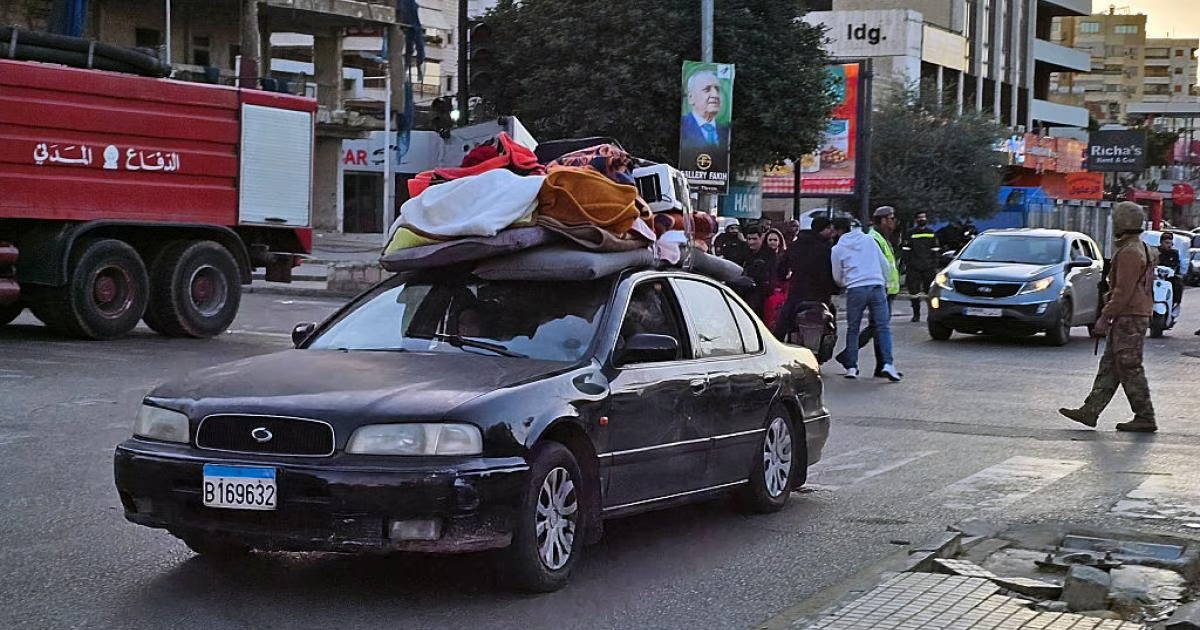
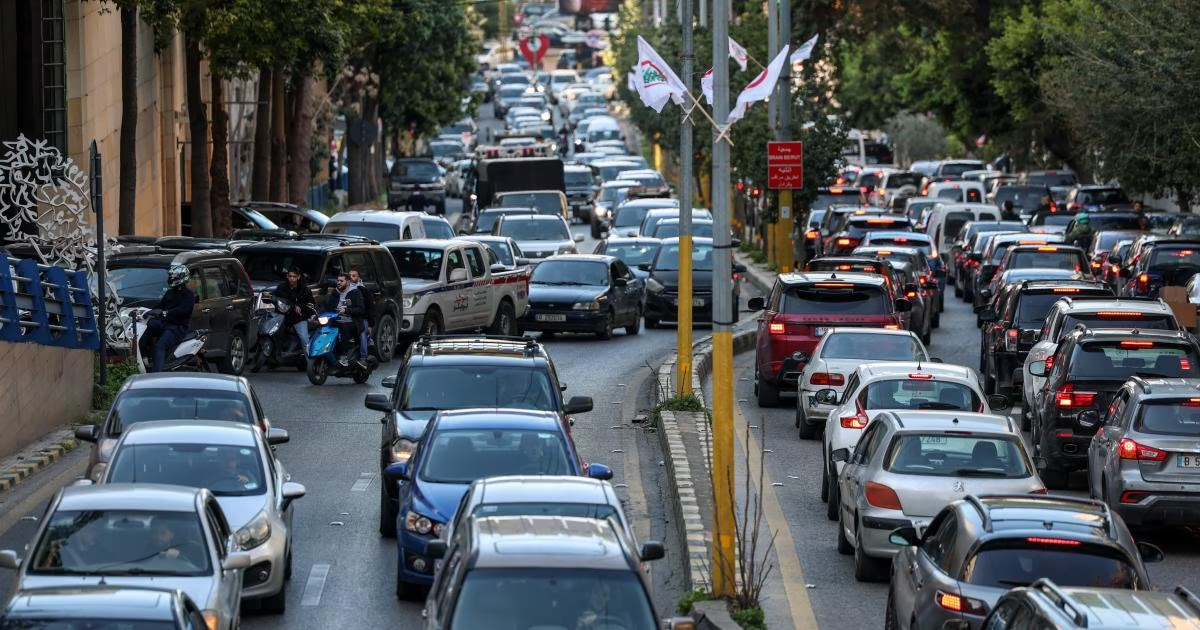
The evacuation operations were not limited to security squares or the four neighborhoods identified by Israeli threat maps, but extended to cover all parts of the southern suburb. A state of panic prevailed among families who rushed to leave the area, leading to the complete closure of entrances and exits due to heavy traffic congestion and confusion in identifying safe destinations.

In the heart of the capital, Beirut, thousands of displaced families spread out on roads, public squares, and parks, while others resorted to schools that opened their doors to accommodate the increasing numbers. Hundreds of citizens were seen walking or riding motorcycles, fleeing the imminent shelling threatened by Israeli forces in their warning statements.

Lebanese state institutions are experiencing a state of shock and helplessness in the face of this escalating humanitarian reality, as official administrations lack the capacity to absorb these massive numbers of displaced people. Fears are growing of the crisis worsening amid the difficult economic conditions plaguing the country, with expectations of evacuation orders expanding to include other areas in the northern Bekaa.

Observers believe that the current threats bring back memories of the July 2006 war, when the suburb was subjected to systematic destruction that lasted for more than a month. There is a general feeling among the political class and residents that the suburb is now under direct existential threat, especially with Israeli hints at implementing what is known as the 'Dahiya doctrine,' based on the comprehensive destruction of buildings and infrastructure.

The displaced people who abandoned their homes today, most of them hail from southern Lebanon, which has witnessed previous conflicts since 1978, which exacerbates their humanitarian tragedy as displaced persons for the second or third time. Warnings are increasing that the scene in Beirut could turn into a repeat of the 'Gaza scenario,' where excessive force is used as a tool for collective punishment against popular strongholds.

On the ground, sources reported that the northern entrances to Beirut witnessed suffocating congestion with the influx of displaced people who tried to reach safer areas in Mount Lebanon and the North. Hundreds of cars remained stuck for long hours, while some preferred to stay inside their vehicles in the streets due to the lack of alternative shelter or sufficient relief centers.

These rapid developments come amid continued tension on the Lebanese front, which opened in October 2023 under the banner of supporting the Gaza Strip. With the conflict entering a new phase of direct escalation, the fate of the southern suburb remains suspended between military threats and faltering diplomatic efforts to contain the situation and prevent a slide into an all-out war.

The most dangerous scenario feared by all is shelling that leads to the destruction of entire neighborhoods, or what is known in Israel as the 'Dahiya doctrine'.

OPINIONS

Thu 05 Mar 2026 8:07 pm - Jerusalem Time

Trump Wants to Choose Iran's Next Leader: A New American Tendency to Shape Regional Regimes

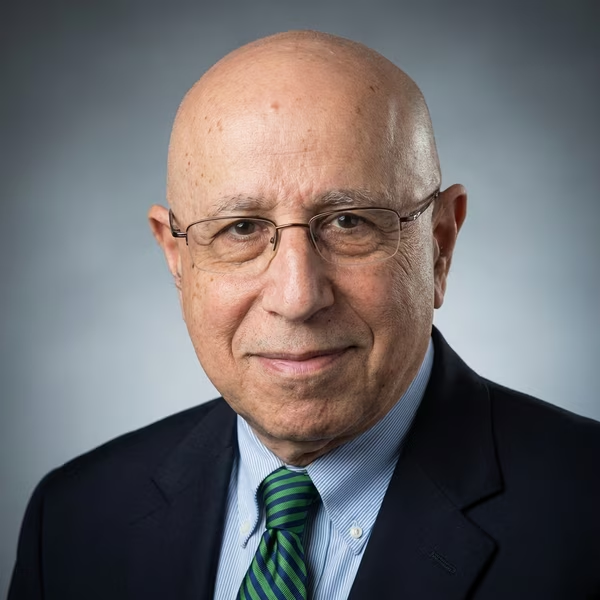
Said Erikat

Opinion Writer

Washington - Said Arikat - 3/5/2026

News Analysis

US President Donald Trump's statements regarding the future of leadership in Iran have sparked widespread controversy, after he explicitly declared that he believes he should have a personal role in choosing the next Iranian leader. In an interview with an American news website, Trump said that the son of the late Iranian Supreme Leader, Mojtaba Khamenei, is "unacceptable to him," stressing that the United States wants "someone who brings harmony and peace to Iran." The US President did not stop at this position, but emphasized that he "must be involved in the selection process."

These statements come in the wake of the American-Israeli military strikes that assassinated Iranian Supreme Leader Ali Khamenei last Saturday, in a dramatic development that reshaped the equations of conflict between Washington and Tehran. According to Iranian sources, Mojtaba Khamenei survived the strikes that targeted leadership positions in Iran, and is seen within the religious and political establishment as one of the most prominent candidates to succeed his father as Supreme Leader.

Mojtaba Khamenei is a mid-ranking cleric, but he has close ties with the "Revolutionary Guard," which has made him an influential figure within the Iranian power structure in recent years, despite his relative absence from media appearances. Therefore, the mention of his name as a potential successor to his father does not seem surprising in light of the complex balances within the Iranian system.

However, what was striking about Trump's statements was not merely his rejection of this option, but the direct way in which he expressed his position. He said that he "must be involved in the appointment," comparing it to previous American experiences in influencing political balances in other countries, in reference to Venezuela. This type of statement opens the door to deep questions about the nature of American goals in the current war, and whether they go beyond military deterrence to an attempt to reshape the Iranian political system.

Politically, these statements reveal a clear shift in American discourse. At the beginning of the American-Israeli aggression, the war was presented as a defensive step aimed at preventing security threats and re-establishing deterrence. But the talk now about choosing the next Iranian leadership suggests that the goal is no longer limited to militarily weakening Iran, but extends to directly influencing the future of its political system.

This shift brings to mind the experiences of American intervention in the Middle East over the past two decades, when military operations began with limited objectives before gradually turning into projects to re-engineer political systems. In many of those cases, reality proved that changing regimes from the outside is a much more complex process than decision-making centers in Washington imagine.

Trump's statements also put the United States in a contradictory position with its traditional discourse about respecting the sovereignty of nations. The public call to participate in choosing the leader of another country represents an unprecedented level of direct political intervention, even in the context of the intense conflicts that have characterized American-Iranian relations since the 1979 Islamic Revolution.

Even more noteworthy is that this position also contradicts the political discourse that Trump himself adopted for years. He built a large part of his political popularity on criticizing long wars in the Middle East, and on rejecting the "nation-building" policies associated with the administration of former Republican President George W. Bush. However, the call today to intervene in determining the Iranian leadership seems, in the view of many observers, a direct extension of those policies that Trump strongly criticized.

This contradiction reflects a clear paradox between political discourse and practical reality. The president who repeatedly pledged to avoid costly wars and deep foreign interventions finds himself today speaking in a language very similar to the language that prevailed during the years after the September 11 (2001) attacks, when Washington sought to redraw the political map of the Middle East.

This trend also raises fears that the current war may gradually expand towards more ambitious and complex goals. Recent history shows that wars that begin under the banner of deterrence or defense can quickly turn into regime change projects, a path that often leads to long-term entanglement. The mere talk of choosing the next Iranian leadership means that Washington is already thinking about the form of power that will succeed the current leadership, and not just about how to end military operations.

But such a path carries significant political risks. A leadership that is seen within Iran as the product of foreign intervention will likely face a severe legitimacy crisis, which could lead to further instability rather than achieving the "harmony and peace" that Trump spoke of.

In this context, observers believe that the US President's statements reveal a renewed tendency in American policy based on the belief that military power can rearrange political systems in the world according to the American vision. However, previous experiences in the region indicate that societies are not reshaped by external decisions, and that attempts to impose change from outside often produce longer and deeper crises than planned.

Here lies the great paradox. The president who repeatedly promised his voters to avoid Middle East wars and not engage in "nation-building" projects finds himself today speaking in a language that suggests the reproduction of the very model that led the United States to long and costly wars in the region. While intervention in choosing the Iranian leadership is presented as a step towards achieving stability, many analysts fear that such an approach will lead to the exact opposite: opening a new chapter of conflict and instability in one of the world's most sensitive and complex regions.

PALESTINE

Thu 05 Mar 2026 8:07 pm - Jerusalem Time

The Hague Meeting: Forty Countries Discuss Practical Steps to Stop Israeli Annexation in the West Bank

Said Erikat

Opinion Writer

Washington – Said Arikat – 3/5/2026

Forty countries met on Wednesday in The Hague, Netherlands, to discuss ways to translate the principles of international law into practical measures aimed at stopping what diplomats describe as a gradual annexation process carried out by Israel in the occupied West Bank through settlement expansion and changes to its governance systems.

The meeting was co-chaired by South Africa and Colombia under the umbrella of what is known as “The Hague Group,” an international initiative launched in early 2025 to coordinate legal and diplomatic responses to Israel’s policies in the occupied Palestinian territories, as well as to the war in the Gaza Strip.

This is the largest meeting organized by the group since its establishment, and it comes at a time when international concern is growing over the acceleration of settlement projects and military operations in the West Bank, and the potential for a permanent change in the geographical and political reality of the occupied territories.

A joint statement issued after the meeting affirmed the participating countries' commitment to the United Nations Charter and to the fundamental principle of international law prohibiting the acquisition of territory by force, in addition to affirming the right of peoples to self-determination.

The participating countries agreed to work through three main tracks that are being developed in preparation for their adoption at an upcoming ministerial meeting.

The first track focuses on strengthening legal accountability mechanisms for potential international crimes. This includes exploring the imposition of additional disclosure requirements on travelers who have served in the Israeli army, which could expose them to legal scrutiny procedures under international crime legislation in force in some countries.

The second track concerns the application of the principle of non-recognition of Israeli settlements in the occupied territories, by prohibiting the import of their products and preventing national companies from investing or operating within them.

The third track focuses on reviewing exports of weapons and dual-use materials, including military fuel, with the aim of preventing their transfer or transit to Israel if they are likely to be used to support the occupation.

The statement affirmed that the goal of these measures is to ensure that there is no “safe haven” for individuals who may be suspected of involvement in genocide, war crimes, crimes against humanity, or the crime of aggression.

Representatives from countries in Africa, Asia, Europe, and Latin America participated in the meeting, including Algeria, Brazil, China, Egypt, Lebanon, Malaysia, Mexico, Nigeria, Norway, Pakistan, Qatar, Saudi Arabia, Spain, South Africa, Sweden, Switzerland, Turkey, Uruguay, Venezuela, and Zimbabwe, in addition to the State of Palestine.

In Washington, a US official who requested anonymity, in response to a question from Al-Quds correspondent about the possibility of the United States joining the group, said he was not aware of any official or undeclared position on the matter, adding that the US administration is currently focused on the “Peace Council” initiative launched last month.

The Hague meeting comes at a time when international concerns are growing over the repercussions of Israel’s recent decisions, particularly the approval of the controversial settlement project known as “E1,” which experts warn could dismember the West Bank and undermine the geographical contiguity necessary for a viable Palestinian state.

On February 8, the Israeli government also approved a broad package of measures to restructure the governance system in the West Bank, including expanding Israeli civilian powers in areas that have been under military rule for nearly six decades.

Diplomats believe these steps represent a gradual expansion of what Israel describes as “imposing sovereignty” over the occupied territories, a goal long advocated by nationalist right-wing currents and settler movements within Israel.

Observers warn that these measures undermine the remaining limited powers of the Palestinian Authority and weaken the political framework on which the Oslo Accords were based more than three decades ago.

The initiative led by The Hague Group is based on the advisory opinion issued by the International Court of Justice in July 2024, as well as a subsequent resolution by the United Nations General Assembly calling on states not to recognize the legitimacy of the Israeli occupation and to prevent any form of support that might contribute to its continuation.

Colombia's Deputy Foreign Minister for Multilateral Affairs, Mauricio Jaramillo, said the meeting reflects growing frustration among a number of governments over the absence of real mechanisms for implementing international law.

He added: “Israel is carrying out a land confiscation process in plain sight of the world. After what happened in Gaza, it seems that solidifying the de facto annexation of parts of the West Bank is the next step in a project of permanent occupation.”

He stressed that countries today face a clear choice between defending international law or allowing a culture of impunity.

The Hague meeting reflects a gradual shift in the positions of an increasing number of Global South countries towards the Palestinian-Israeli conflict, as mere political statements are no longer sufficient in the eyes of many governments. After decades of non-binding condemnation, some countries have begun to seek concrete legal and economic tools to enforce compliance with international law. This shift does not necessarily mean the formation of a unified international front against Israel, but it reveals a growing trend towards “internationalizing accountability,” where countries are trying to use their national legislation and international courts to fill the vacuum left by the Security Council's inability to take binding action due to political divisions.

The steps proposed at The Hague meeting raise a deeper question about the future of the rules-based international order. The issue is no longer confined to the Palestinian-Israeli conflict as much as it has become a test of the ability of international law to assert itself when the political interests of major powers conflict. A number of diplomats believe that the continued occupation without real political or legal cost undermines the credibility of international institutions. Therefore, the current moves also aim to send a broader message that the lack of consensus in the Security Council should not mean paralyzing the international community's ability to act.

Politically, The Hague Group initiative reflects a growing realization that the reality of the West Bank is changing at a faster pace than traditional diplomacy can keep up with. Rapid settlement expansion, along with the restructuring of Israeli governance in the occupied territories, is creating new realities that may make a two-state solution more difficult over time. For this reason, some participants believe that focusing on economic and legal accountability tools may be the only available means to stop this trajectory. However, the success of these efforts will remain dependent on the extent to which countries are willing to translate their political positions into politically costly practical measures.


OPINIONS

Thu 05 Mar 2026 8:06 pm - Jerusalem Time

A Pivotal Historical Stage Determining the Future of the Middle East

Since the beginning of this new year 2026, everyone has been following the rapid developments, specifically in the Iranian scene, starting with the outbreak of widespread demonstrations that spread from the bazaar merchants in most Iranian cities. The demonstrators, including the youth, have overcome the barrier of fear with broad demands for the overthrow of the current Iranian regime, represented by Ali Khamenei, who was targeted and martyred along with some members of the Iranian regime, following a preemptive joint Israeli-American strike that marked the beginning of the war after the failure of the Geneva talks between the two parties. The primary goal of this war on Iran is to overthrow the Mullahs' regime, end Iran's nuclear power, destroy ballistic missile platforms, and eliminate Iran's proxy wars in the Arab East, namely Lebanon, Iraq, and Yemen, Iran's arms represented by Hezbollah.

On February 3, 2026, with the appearance of the Blood Moon amidst all the war explosions in the region, the rare red moon's appearance portends an ominous event and pivotal historical developments on our planet, including wars and unrest. The war intensifies on several fronts: Israel strikes Hezbollah strongholds in southern Lebanon, targeting military and economic infrastructure (Al-Qard Al-Hasan buildings), and on the Iranian front, the war escalates, and missiles fly, igniting the sky with the fire of Iranian missiles and drones that targeted several American bases in Saudi Arabia, Qatar, Dubai, Abu Dhabi, Bahrain, and Jordan, in parallel with joint Israeli-American strikes on multiple sites in Iran. It is noteworthy that Iran, under the pretext of targeting American bases in the Middle East, shifted its targets and began targeting residential structures and hotels in Dubai, Bahrain, and Qatar, and targeting Aramco oil refineries in Saudi Arabia. It seems that Iran, before its regime falls, wants to ignite the Arab region, especially the Gulf states, and expand the scope of the war with the aim of destabilizing governance in these countries and seeking to weaken the safe and economically, touristically, and politically prosperous Gulf states, which are characterized by safety and security. Unfortunately, with all these missiles burning in the sky of the Arabian Gulf, it will inevitably lead to the withdrawal of many global investors and the relocation of their money to safer and more stable places, especially if Iranian missiles and drones continue to target tourist and residential facilities in the Arabian Gulf. Here, the mask falls, and the true intentions towards neighboring Arab countries to Iran are revealed, and it seems that there are hidden goals, possibly seeking to overthrow some regimes in the Arabian Gulf, as the core of the war expands and seeks to burn everything, and its fragments reveal the hidden aspects of the Persian-Arab conflict, especially the sectarian Shiite-Sunni rift, and ultimately its basis is the monopolization of power and its replacement, for example, Bahrain and the majority of the Shiite component in it, and the endeavor to destabilize security there. And here, why was the bridge connecting Saudi Arabia to Bahrain struck? It seems that Iranian missiles and drones are directed more towards Arab countries instead of liberating Jerusalem! And striking the Great Satan, as they claim. Iran's striking of oil facilities in the Gulf and Saudi Arabia certainly aims to weaken the economy of the Gulf oil and energy states, and this is very clear from Iran's endeavor to close the Strait of Hormuz, through which 30% of the world's energy resources pass, meaning an attempt to influence global energy prices, not to mention disrupting and economically striking energy facilities in the Arabian Gulf, and this is represented in disrupting data centers and vital facilities such as transportation, airports, the tourism sector, hotels, and shipping.

In the Hashemite Kingdom of Jordan, amidst sirens, missiles, and their burning flames, burning and falling over the Kingdom's land, penetrating and destroying homes and injuring citizens, Jordan stated that (Iranian missiles are not passing through but are targeting Jordanian territories). Wheat silos survived a cyberattack, which was repelled, and it was noted that a number of Iranian missile attacks on Jordan and Saudi Arabia were launched by the Islamic Resistance in Iraq, which claimed responsibility for these drone attacks. Jordanian Foreign Minister Ayman Safadi also stated (Iran must respect Jordan's sovereignty and not violate our airspace. There are Iranian aggressions against the Kingdom and against our brothers in the Gulf states. Everyone's security is a red line). This military escalation has become not a fleeting event in regional political calculations but a fundamental factor in determining energy stability and global navigation security, and the Arab East faces rapidly escalating developments that complicate the scene and risk expanding the flame of war in the countries of the Arab East and threaten the region with sliding into a regional war, God forbid.

It seems that there is no hope of stopping the escalation and de-escalating matters through diplomatic negotiations. It seems that whoever decides the war with military force will draw the new maps of influence, as the US Secretary of War stated that military operations against Iran have rapidly achieved their goals, and full control over Iranian airspace has been achieved, and success has been achieved in controlling maritime passages, as 17 Iranian ships in the Arabian Gulf were destroyed, and about 2000 targets were bombed, including nuclear, military, and missile facilities, and several command headquarters of the Iranian Revolutionary Guard. It has become clear after the Israeli and American strikes on Iranian ballistic missile weapons that the intensity of missiles and drones has decreased, especially those that were targeting American bases in several Arab countries. The American goal is to uproot the Mullahs' regime, not just the military force but the structural power of the regime, including the Revolutionary Guard, Basij, police, and the structure of the current parliament with all its leaders, as they constitute and support the power of the current regime. For this reason, Trump stated that this war could be long. There is also a fundamental element in this battle between America and Israel against Iran: most of the ballistic missiles launched by Iran are supplied by China within strong economic relations between them, where China obtains 90% of its oil needs from Iran at preferential prices, thirty percent (30%) less than the global oil price, and China has invested in Iran about 400 billion in exchange for 25-year contracts in Iranian infrastructure investments, specifically financing Iran's proxy wars in the Middle East, where Iran regains its current military, missile, and technological power from China. The current American war against Iran is an internal war between America and China and its influence, as Trump seeks to impose a new Middle East, and with the overthrow of the current Mullahs' regime in Iran, it means reducing China's influence in its military support for current Iran, which has managed proxy wars in the Arab East, and Trump also seeks to impose a new world. Trump's policy will certainly affect the weakening of the Iranian-Chinese-Russian alliance and the economy of the BRICS countries that seek to weaken the power of the dollar and replace it with the new currency through which global oil will be purchased.

I believe that if these wars prolong, they will certainly affect the economies of some Arab countries and also the Gulf states, not to mention Iran's endeavor to dominate the influence of some of these countries, especially those with a Shiite majority, such as Bahrain, meaning the exacerbation of the war and conflict between Persians and Arabs and Iran's endeavor to destabilize the sovereignty of some Arab countries. This battle is pivotal, especially if America manages to change the rules of the game in the Middle East and achieve Trump's goal of making Iran great again, and now seeks to change the situation from within Iran and ally with and support the Kurdish opposition and arm it to change the balance of power on the ground in Iran (thousands of Kurds today are launching a ground attack in Iran), and the Ahwazis are also preparing for the battle to liberate Ahwaz from the Iranians.

PALESTINE

Thu 05 Mar 2026 8:06 pm - Jerusalem Time

Unhealing Scars: Thousands of Burn Victims in Gaza Face Risk of Permanent Disability Amidst Medical Siege

The tragedy of the war in the Gaza Strip is embodied in the details of bodies melted by fire, where the effects of deep burns remain a testament to the targeting of displacement tents and civilian homes. Among thousands of cases, the story of journalist Ahmed Mansour stands out, whose body was consumed by fire after a missile strike on a journalists' tent in Khan Yunis, his image merely a glimpse of a painful reality experienced by the wounded away from the spotlight.

In the northern part of the Strip, five-year-old Rital Halawa endures severe suffering inside a displacement tent, with burns covering the left side of her face and chest. Rital was injured by a bomb dropped by a 'quadcopter' drone while she was playing, which caused her small body to catch fire, resulting in second and third-degree burns.

Rital's family faces complex medical challenges, as anesthesia sessions have been stopped for fear of brain cell damage, leading to the formation of waxy tissue and severe infections. Her mother confirms that the currently available treatment is limited to simple painkillers, while the child urgently needs to travel abroad to save what can be saved of her features and body functions.

In displacement centers, Kamal Naseer recounts the details of his injury, which occurred in Beit Hanoun, when shelling directly targeted his home, causing a massive fire. Naseer tried to extinguish the flames with his hands, but they consumed his leg, leaving deep scars that refuse to heal due to the lack of a suitable healthy environment and essential medical supplies.

Naseer suffers from the absence of the simplest types of ointments and sterile medical gauze, which exacerbates his health condition day after day under harsh displacement conditions. Despite doctors' recommendations for him to travel for reconstructive treatment, the closure of crossings and imposed restrictions prevent him from reaching specialized hospitals outside the Strip.

As for the child Raneen Jundiya, her life turned into hell after suffering severe burns to the lower part of her body while trying to escape shelling that targeted the Al-Mawasi area. The injury caused gradual hardening of the skin on her feet, which now threatens her ability to walk normally and leaves her confined to the tent, suffering from continuous, relentless pain.

Dr. Mahmoud Mahani, head of the plastic surgery department at Al-Aqsa Martyrs Hospital, explains that the injured suffer from complex complications including hypertrophic and fibrotic scars. These cases require precise surgical interventions and the use of advanced techniques such as cortisone injections and silicone sheets, materials that are severely lacking in the Strip due to the ongoing siege.

Mahani points out that the danger lies in the tightening of scars around vital joints, which can lead to permanent motor disabilities and complete disfigurement of the normal functions of the limbs. Medical teams are making strenuous efforts to provide available treatment, but the absence of specialized equipment such as tissue expanders limits the success of reconstructive surgical operations.

For his part, Dr. Fahd Al-Madhoun from Doctors Without Borders revealed shocking statistics, stating that about 35% of war wounded suffered burns of varying severity. He confirmed that most of these injuries are third-degree, which are the most severe types of burns requiring intensive rehabilitation and surgical programs that can last for more than a full year.

Al-Madhoun warned that the health system is facing an unprecedented supply crisis, as no new medical equipment has entered the organization since the beginning of this year. This interruption threatens to halt the specialized medical services provided to burn victims, meaning thousands of patients will be left to face their fate with pain and permanent deformities.

Delayed surgical intervention for burn victims leads to the exacerbation of fibrotic tissues and joint stiffness, which leaves long-term psychological and physical effects on the victims. Medical sources appeal to the international community to pressure for the opening of crossings and to facilitate the entry of specialized medical supplies and surgical delegations to save the injured.

The stories of Rital, Raneen, and Kamal remain mere examples of thousands of cases living in displacement tents without adequate medical care, as hospitals lack precise surgical tools. Doctors confirm that the continuation of the current situation will turn these injured into an army of disabled people, as a result of injuries that could have been treated if the necessary capabilities were available.

Concerns are growing about the spread of bacterial infections among the injured due to environmental contamination in displacement camps and the lack of clean water and disinfectants. Open burns are a fertile environment for microbes, which puts the lives of the injured in constant danger, extending beyond mere skin disfigurement to the risk of blood poisoning.

Ultimately, the issue of burn victims in Gaza remains a bleeding wound that requires urgent international action to break the medical siege and provide safe passages for the wounded. Every day of delayed treatment means a lost opportunity for these children and young people to regain their normal lives, away from the pain of unhealing scars.

About 35% of all war injuries in Gaza were accompanied by burns, most of which were third-degree, requiring treatment that extends for a full year.

ARAB AND WORLD

Thu 05 Mar 2026 8:06 pm - Jerusalem Time

Israeli warnings to evacuate Beirut's southern suburb raise fears of a repeat of the 2006 destruction scenario

The Israeli army today, Thursday, issued unprecedented evacuation orders to the residents of Beirut's southern suburb, demanding them to leave immediately and head towards areas in the east and north of the country. Sources reported that these warnings specified certain routes for displacement, causing confusion and panic among civilians who fear their areas turning into an open confrontation zone.

The Lebanese atmosphere is currently overshadowed by memories of the July 2006 war, as residents and observers fear a repeat of the systematic destruction scenario that targeted infrastructure and residential buildings in the suburb at that time. That war, which lasted for more than a month, left a deep wound in the Lebanese memory after entire neighborhoods were turned into rubble before ending with a cessation of military operations.

Analysts believe that these developments constitute a dangerous turning point in the course of the current conflict that began in October 2023, when Hezbollah engaged in border confrontations under the slogan of supporting the Gaza Strip. It appears that the rules of engagement that lasted for many years have collapsed in the face of the recent escalation, opening the door to more severe and destructive military possibilities.

Historically, the presence of the large population bloc in the southern suburb has been linked to waves of displacement that began in 1978 due to Israeli military operations in southern Lebanon. Today, these residents find themselves in a new cycle of displacement, forced to leave their homes that they built over decades, becoming homeless amid harsh climatic and living conditions.

Field reports indicate that the wave of displacement may not stop at the suburb's borders, but there are strong indications of the possibility of similar orders being issued to residents of northern Beqaa in the coming days. This expansion of the threat area places immense pressure on host areas in the north and east, which already suffer from limited resources and basic services.

From a humanitarian perspective, the Lebanese government appears to be in a very critical situation, as official institutions lack the capacity to meet the growing needs of thousands of new displaced people. International appeals are increasing for intervention and the provision of urgent shelter, medical, and food aid, amid a previous economic collapse that made it difficult for the state to carry out its relief tasks.

Amid this grim scene, the Lebanese street awaits what the coming hours will bring, with warnings that continued escalation could lead to a humanitarian catastrophe that surpasses in its dimensions what happened in 2006. The displacement routes, crowded with cars and families, remain the most prominent image that summarizes a bitter Lebanese reality oscillating between military threats and official incapacity.

The current Israeli warnings bring back memories of the comprehensive destruction that turned the suburb into rubble in 2006, placing the Lebanese before a new fateful confrontation.

ARAB AND WORLD

Thu 05 Mar 2026 8:06 pm - Jerusalem Time

Lebanon Imposes Restrictions on Iranian Entry and Decides to Prosecute Revolutionary Guard Elements

The Lebanese government, during a ministerial session held on Thursday, announced a series of decisive decisions aimed at controlling the Iranian military and security presence within the country. Lebanese authorities affirmed their determination to prevent any activity by the Iranian Revolutionary Guard if the presence of its elements is verified, emphasizing the need to protect national sovereignty from any external interventions that could drag the country into additional conflicts.

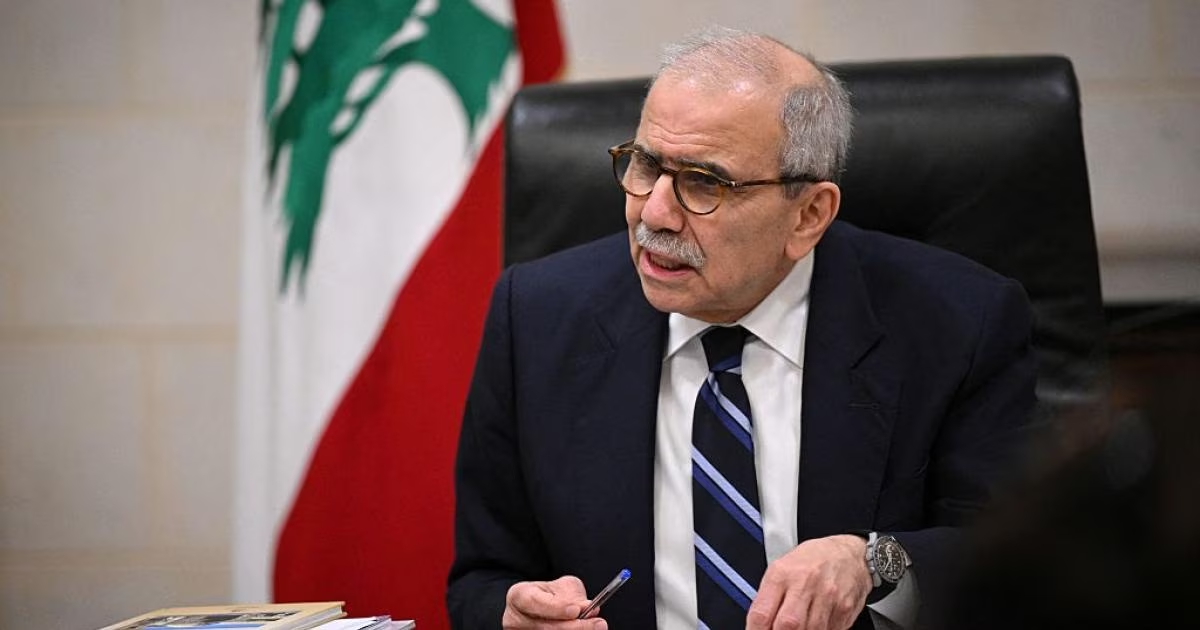
Information Minister Paul Morcos, in an official statement read after the session, clarified that the Council of Ministers tasked the relevant ministries and departments, primarily the Ministries of Defense and Interior, with issuing the necessary directives to verify the identity and activities of individuals suspected of belonging to the Revolutionary Guard. Morcos indicated that the state will not tolerate any security or military action planned or executed from within Lebanese territory, regardless of the guise under which these individuals operate.

The government's decisions included clear instructions to military and security agencies to intervene immediately and firmly to stop any suspicious movements, with those involved being referred to the competent judiciary for eventual deportation. This step comes within the government's efforts to enforce the rule of law and prevent the use of Lebanese geography as a launching pad for implementing private agendas or military operations that do not serve the supreme national interest.

In a related context of diplomatic measures, the Lebanese government decided to revoke the decision to exempt Iranian nationals from entry visas, imposing the requirement of obtaining a prior visa as a basic condition for entering Lebanese territory. The government justified this approach by the necessity of border control and applying the principle of reciprocity, as well as the desire to monitor the movement of arrivals to ensure that internal security is not compromised or previous facilities are not exploited for illegal purposes.

These official Lebanese moves follow threats issued by the Israeli occupation army to target what it described as 'representatives of the Iranian regime' present in Lebanon, giving them a short deadline to leave. These pressures coincide with a state of severe tension in the region, especially after the expansion of military confrontations, which included mutual targeting between Hezbollah and the occupation forces in northern areas.

Observers believe that these decisions represent a significant shift in the Lebanese state's handling of the Iranian file, especially given the complex circumstances following the assassination of Iranian Supreme Leader Ali Khamenei. Through these measures, Beirut seeks to neutralize itself from direct conflict and avoid military escalation that threatens the fragile ceasefire agreement reached late last year.

The Council of Ministers decided on firm and immediate intervention to prevent any activity or security or military action that Revolutionary Guard elements might undertake from Lebanese territory.

PALESTINE

Thu 05 Mar 2026 8:06 pm - Jerusalem Time

California Governor Attacks Occupation: Israel Has Become an Apartheid System, Aid Must Be Reviewed

The Governor of the US state of California, Gavin Newsom, launched scathing and unprecedented criticism against the policies of the Israeli occupation, describing the entity as having become 'a kind of apartheid state'. Newsom affirmed in press statements that it is time for the US administration to reconsider the size and nature of military aid flowing to Tel Aviv without clear restrictions.

These stances came during a lengthy interview Newsom conducted with the 'Pod Save America' program, where he stressed that the continuation of the current approach by the Israeli leadership puts Washington in a complex moral and political position. He indicated that discussing a review of security aid has become necessary, despite it being 'painful' from a traditional political perspective in the United States.

Hebrew press sources reported that Newsom's statements represent a fundamental shift in the discourse of the American political elite, especially since he is seen as one of the most prominent potential contenders for the Democratic Party's presidential nomination in 2028. Israeli circles considered this tone to reflect a growing gap between the new generation of Democratic leaders and the far-right government.

In his remarks, the California Governor linked the field and political developments within Israel to the decisions made by President Donald Trump regarding military escalation. He clarified that the personal political interests of Israeli Prime Minister Benjamin Netanyahu were the primary driver of many strategic decisions that led to the worsening of the situation in the region.

Newsom also pointed out that Netanyahu's influence on decision-makers in the White House during the Trump era was very clear, contributing to pushing the region towards confrontational paths. He warned that Netanyahu faces immense internal pressures from extremist forces in his coalition who openly seek to impose Israeli sovereignty and annex the occupied West Bank.

In his description of Israel as an 'apartheid system,' the American official relied on reports by prominent analysts and writers, noting that this description is no longer limited to human rights organizations but has extended to well-known journalists such as Thomas Friedman. He affirmed that the lived reality on the ground necessitates these kinds of harsh descriptions that reflect the extent of the violations.

In his assessment of the military situation, Newsom questioned the occupation army's ability to achieve its stated goals, pointing to the absence of any clear military victory in the Gaza Strip after a long period of fighting. He questioned the utility of continuing the conflict given Israel's inability to definitively resolve the Hamas issue despite the intensity of fire.

Newsom criticized Israeli tendencies to expand the circle of conflict to include Iran under the pretext of 'regime change,' considering these ambitions to lack political or military realism. He explained that the failure to end operations in Gaza raises major question marks about the strategic capabilities of the current military and political leadership in Tel Aviv.

Follow-up reports indicated that Newsom, who previously adopted cautious and balanced positions towards Israel, has recently begun to significantly toughen his tone. Observers attribute this change to popular pressures within the Democratic Party's electoral base, which has become more critical of the occupation's crimes in the Palestinian territories.

The Governor did not limit his criticism to the Israeli government alone; his criticisms extended to include the influence of pro-Israel organizations and lobbies within decision-making centers in the United States. He considered that this influence can sometimes hinder decisions that serve paramount American national interests and align with the human rights values advocated by Washington.

Newsom addressed the catastrophic humanitarian situation in the occupied territories, considering that the continuation of current policies will lead to Israel's complete international isolation. He affirmed that younger generations in America no longer accept the traditional narrative that justifies all Israeli violations under the guise of self-defense, which changes the rules of the political game.

Analysts believe that Newsom's statements are a 'test balloon' to gauge the American public's acceptance of a tougher discourse towards Israel before entering the presidential arena. These statements reflect a growing conviction that the strategic alliance between the two countries must be subject to conditions related to adherence to international law and the rights of Palestinians.

In conclusion, Newsom called for the necessity of a comprehensive political vision to end the cycle of violence, instead of relying entirely on military solutions that have proven to be failures. He stressed that the United States must use its influence and aid as real leverage to impose a political path that leads to an end to the occupation and a halt to apartheid practices.

These developments come at a time when US-Israeli relations are experiencing unspoken tensions due to settlement issues and the ongoing aggression on Gaza. The California Governor's statements place additional pressure on the current and future administrations to define a clear stance on Israeli transgressions that are now openly described as racist in American political circles.

The policies pursued by the current Israeli leadership are pushing the United States to seriously consider re-evaluating security aid.

OPINIONS

Thu 05 Mar 2026 5:44 pm - Jerusalem Time

Iran and War Management: Avoiding Israel and Calculated Regional Escalation

In wars, military strikes are not merely battlefield actions, but a political language written in fire, carrying multiple messages to adversaries, allies, and international public opinion. From this perspective, one can understand the way Iran chose to respond to the strikes it suffered. From the very first moment the confrontation between it and Israel expanded, it became clear that Tehran had chosen an unexpected pattern in its military response. Instead of focusing its strikes on Israel, which initiated the attack, or on American military assets that later participated in the operations, Iran broadened the scope of its response to include sites in Gulf states and other countries in the region. This choice raises a logical question: Why is Iran distributing its response instead of concentrating it on the party that started the war?

From a purely military standpoint, it would seem more logical for Iranian strikes to be concentrated on Israel, as the party that initiated the attack, and on American military bases that later entered the battle. Such a concentration would give the response political and legal clarity and reinforce the narrative of self-defense. But what happened was the opposite: geographically distributed strikes and multi-directional messages, suggesting that what is happening goes beyond a mere direct military response to broader strategic calculations.

The first possible explanation is that Iran is not only fighting a deterrent war with Israel but is also trying to expand the circle of cost so that the confrontation does not remain bilateral. When strikes extend to other countries, the war transforms from a conflict between two states into a multi-party regional crisis. This would push many countries to exert political pressure to stop the escalation, fearing that the region might slide into a comprehensive war affecting their economic and security interests. Thus, the war would not remain solely an Iranian-Israeli affair but would turn into a crisis affecting the stability of the entire region.

The second explanation relates to an attempt to dismantle the regional environment supporting Israel and the United States. Iran realizes that a significant part of the military and logistical capability in any confrontation depends on the network of bases and infrastructure spread across the region. Therefore, directing strikes at the vicinity of this infrastructure might be an attempt to raise the cost of involvement in the war and send a clear message to the concerned governments that participation in any military effort against Iran will not be without a price.

The third, and perhaps most sensitive, explanation is related to managing the level of escalation with Israel itself. Concentrating strikes directly and heavily on Israel could quickly lead to a comprehensive war that Iran is still trying to avoid, especially if it would lead to broader American intervention. Moreover, transforming the confrontation into a direct war with Israel might redefine the conflict in the Western narrative as an existential struggle and revive fears in Europe and the West of Iran's ideological rhetoric towards Israel. In this case, Iranian strikes might be seen as a practical translation of an old ideological animosity, not merely a response to a military attack.

From this perspective, the distribution of strikes might be part of a conscious attempt to manage the image of the war as much as its military course. When operations appear multi-directional and not entirely focused on Israel, it becomes politically easier to present them as a defensive response to a regional military system that participated to varying degrees in targeting Iran, rather than a war directed exclusively towards Israel or a direct threat to its existence.

However, this strategy, however calculated it may seem, also carries significant risks. Targeting Arab countries or expanding the scope of strikes could lead to completely opposite results, as it could create broader regional alignments against Iran instead of politically isolating Israel. It could also weaken the argument Tehran is trying to uphold, which is that the confrontation is a response to aggression, not part of an expansionist project.

Amidst this complex equation, Arab countries, especially those in the Gulf, find themselves in a highly sensitive position. On the one hand, they become part of the theater of Iranian military messages, whether through indirect targeting or through political pressure associated with the presence of bases or military infrastructure on their territories. On the other hand, they also find themselves at the heart of Israeli calculations, where an expansion of tension could gradually drag these countries into a confrontation with Iran that exhausts both parties simultaneously. In such a scenario, Israel might find itself in the position of an observer benefiting from the attrition of two regional adversaries without bearing the greater cost of the confrontation.

Nevertheless, Arab countries so far appear keen to manage this delicate balance with clear caution. Many Arab capitals, especially in the Gulf, realize that direct involvement in the conflict will not serve their stability or their economic and security interests. Therefore, their policies tend to avoid engagement in the confrontation and seek to contain tension instead of fueling it, in an attempt to maintain a safe distance from a conflict whose calculations extend beyond the region's borders.

In any case, Israel still seems to be trying to push the confrontation towards broader paths than Iran desires. By expanding the scope of engagement and raising the level of tension, Tel Aviv seeks to drag Tehran into arenas of escalation it does not want, while at the same time trying to push the United States into deeper involvement in the conflict and entice regional countries to align themselves within an open confrontation equation. In such a complex scenario, the conflict might gradually transform from a limited confrontation into a network of intertwined conflicts in which more than one party finds itself involved in a war it did not necessarily seek.

Ultimately, what we are witnessing may not be just a distributed military response, but a precise attempt to manage a highly sensitive equation: responding enough to maintain deterrence, but without turning the war into a direct existential confrontation with Israel. Between these two limits, Iranian strategy moves in a very narrow space, where the distribution of strikes becomes not a sign of hesitation as much as a political tool to camouflage objectives and keep the conflict within controllable limits.

However, history teaches us that wars, no matter how much parties try to control their pace, often escape the calculations of those who started them or those who wanted to manage them cautiously. Therefore, the question remains open: Will this tactic succeed in keeping the confrontation within the bounds of a calculated conflict, or will it turn into an additional step in an escalation path that might drag the entire region into a wider war than everyone desired?

ISRAELI AFFAIRS

Thu 05 Mar 2026 5:43 pm - Jerusalem Time

Questions in Tel Aviv: How Did Intelligence Succeed Against Iran and Fail to Prevent October 7th?

Fundamental questions are escalating in political and security circles within the occupation state regarding the stark contradiction in the performance of intelligence agencies, especially after claims of liquidating about forty high-ranking Iranian officials in a swift operation that lasted only forty seconds. This alleged success reopened the wounds of the disastrous failure suffered by the security system on October 7th, amidst confusion over the air force and intelligence's ability to monitor highly secret meetings abroad and their inability to detect movements on the Gaza Strip borders.

In this context, Nachman Shai, former Minister of Diaspora Affairs and former spokesman for the occupation army, considered Israel's recent assassinations of political and military elite leaders in Iran to represent an exceptional capability. He explained that Israeli-American coalition aircraft were able to detect a highly secret meeting, allowing the air force to carry out a precise strike that eliminated all participants, which raises a bitter question about the absence of this vigilance on the morning of the major attack.

Shai pointed out in an analysis published by Maariv newspaper that military operations since October 8th have shown very high capabilities of the air force and intelligence, which are considered the 'preferred' forces in the army. Despite these achievements, which included widespread assassinations across the Middle East, the painful failure in October continues to haunt these institutions and highlights the incomprehensible gap in strategic performance.

The former official believes that precise assassinations are only part of a broader intelligence picture presented to decision-makers to enable them to choose targets and timing of attack. However, these intelligence 'miracles' raise a question that future generations of Israelis and Jews around the world will ask: Where were all this technology and human capabilities when events began in the Gaza envelope?

The Israeli question focuses on how all security agencies combined failed, starting from military intelligence and the advanced Unit 8200, all the way to the 'Shin Bet' agency directly responsible for the Gaza file. Even the 'Mossad' agency, which monitors Hamas activities abroad, did not escape criticism as it possessed parts of the overall picture that preceded the attack in one way or another.

Shai emphasized in his reading of the scene that it is difficult to comprehend the idea that the army and intelligence agencies achieving astonishing successes today are the same ones that led Israelis to the October catastrophe. This deep gap between 'amazement' at current success and 'astonishment' at previous failure has created fertile ground for the spread of conspiracy theories, stories of betrayal, and baseless accusations within Israeli society.

He also drew attention to the fact that mutual personal accusations among leaders have not yet revealed the full truth, expressing his doubts about the possibility of forming an investigation committee capable of providing satisfactory answers. The question that lacks any logical answer in Tel Aviv remains: What exactly happened at 6:49 AM on that day that changed the face of the region?

The analysis concluded that the image of 'lethal' intelligence that Israel now boasts in pursuing Hezbollah, Hamas, and Iranian leaders increases the ethical and professional dilemma of the security establishment. The more precise current operations become, the deeper the conviction that the failure of October 7th was not due to a lack of means, but rather to a structural flaw and disregard for information that could have changed the course of history.

It is inconceivable that this is the same state, the same army, and the same intelligence agencies that plunged Israelis into this failure.

ARAB AND WORLD

Thu 05 Mar 2026 4:47 pm - Jerusalem Time

Pentagon Opens Investigation into Minab School Massacre in Iran Amidst UN Shock

US Secretary of Defense, Pete Hegseth, announced the initiation of official investigations into the circumstances of the joint aerial raid carried out by American and Israeli forces that targeted an elementary school in Iran's Hormozgan province last Saturday. Hegseth clarified in press statements that Washington is following the details of the incident, which led to a horrific massacre claiming the lives of dozens of children, while simultaneously claiming that his country's military policy avoids deliberately targeting civilian facilities.

For its part, an independent UN investigation committee expressed its extreme shock at the targeting of the 'Good Tree' girls' school in Minab city, confirming that the attack occurred on the first day of the widespread military operations against Iran. UN reports indicated that the majority of the victims were female students aged between seven and twelve, with initial statistics pointing to the deaths of over 175 girls in this bloody bombing.

These developments come amidst an unprecedented military escalation that began on February 28th, with the declared American-Israeli operation aiming to change the political map in the region and overthrow the existing regime. The first days of the aggression witnessed the martyrdom of Supreme Leader Ali Khamenei and Commander Mohammad Pakpour, which prompted Tehran to activate a decentralized command strategy under the supervision of Ahmad Vahidi, declaring entry into a long-term war.

On the ground, Tehran continues its military responses by launching batches of ballistic missiles and drones towards Israeli territory, in addition to targeting what it describes as American interests and bases in the region. These counter-attacks have resulted in the deaths of 13 people and injuries to approximately 1700 others on the Israeli side, while some strikes caused damage to civilian properties and vital facilities due to the intensity of the exchanged fire.

Economically, the confrontation has caused severe shocks to global markets, with oil prices jumping by 6% due to threats facing energy supplies from the Gulf region. Inside Israel, economic reports revealed devastating weekly losses amounting to 9.4 billion shekels, prompting some parties to demand a reduction in alert levels to alleviate financial burdens, at a time when the defense budget for 2026 has risen to record levels of 121 billion shekels.

All I can say is that we are investigating the incident, and the American military never targets civilian targets.

OPINIONS

Thu 05 Mar 2026 4:46 pm - Jerusalem Time

Khamenei's Departure: Between Popular Division and Regional Destiny Challenges

Ramallah - "Al-Quds" Dot Com

Ramallah - "Al-Quds" Dot Com

Opinion Writer

Following the announcement of the death of the Supreme Leader of the Islamic Revolution of Iran, Sayyid Ali Khamenei, sharp divisions in Arab and Islamic viewpoints emerged. This divergence reflects the nature of figures with complex roles whose careers combine positions that evoke praise and others that warrant condemnation, making their departure a rich subject for debate.

Social media platforms were filled with existential and jurisprudential questions about the nature of the stance towards the deceased, with opinions ranging from condolences to gloating. Many questioned the classification of the personality as a 'martyr' or otherwise, questions that have historically recurred with figures such as Saddam Hussein, Gamal Abdel Nasser, and Hassan Nasrallah.

This type of debate overlooks the fact that bestowing titles like 'martyr' or 'cursed' is merely an individual prayer, and its owner does not possess indulgences or the power to punish. Accountability and punishment, from a religious perspective, are purely divine prerogatives, and these personal convictions should not turn into fierce social battles.

The deeper problem lies in the transformation of these discussions into sectarian and political fanaticism that hinders peoples from seeing the larger strategic realities. Dwelling on the ruins of the past and its disputes prevents the nation from effectively moving forward in the face of current challenges that threaten its existence and stability.

Today, real fears emerge that preoccupation with the stance on Khamenei's personality will lead to a loss of direction regarding the military threats facing the region. Attempting to confine the situation to settling scores with the Iranian regime may overlook the broader goals of international powers in destroying the capabilities of nations.

No sane person can ignore the injustices that occurred in countries like Syria, but a purely self-interested perspective requires thinking beyond momentary emotions. Removing or weakening regimes in the context of international wars may not necessarily serve the interests of rebellious peoples or those seeking stability.

International acceptance of some regimes in the previous stage was linked to the balance of power and the presence of an Iranian bogeyman, and the disappearance of this party may change the rules of the game in a way that does not serve Arab causes. Therefore, what is required is to read the scene from the perspective of strategic interests and harms, far from the momentary elation over yesterday's adversaries.

Some extremists have emerged to delve into doctrines and classify the battle as a conflict between faith and disbelief, which is a flawed oversimplification of the complex reality of political alliances. Islamic history and the Prophet's biography are rich with examples of alliances built on common interests and warding off evils, not on doctrinal conformity.

The Holy Quran in Surah Ar-Rum presented a model of political alignment based on the global balance of power at that time, despite the radical doctrinal difference with the Romans. This Quranic lesson confirms that political contexts require language and alignments different from those of preaching or doctrinal reporting.

It seems that the collective Arab mind suffers from a weakness in political memory, as the same mistakes are repeated at every historical turning point the region goes through. The inability to distinguish between fixed and changing positions keeps the nation in a constant cycle around issues that have been exhausted in research and theorizing.

The most dangerous matter is the infiltration of this disorder in vision into the elites and religious institutions that are supposed to be more balanced. Those who follow the statements issued by some bodies find a stark contradiction and superficiality in dealing with major events, which makes them lose credibility with the masses.

We are in urgent need of an impartial and neutral research effort that analyzes contemporary religious and political discourse to identify points of weakness and disorder. Reviewing the positions of scientific and popular platforms has become an urgent necessity to form a collective consciousness capable of facing future challenges.

Ultimately, individuals depart, and positions remain recorded in the pages of history, but living peoples are those who do not mortgage their future to the conflicts of the dead. Thinking with reason and deliberation is the only way to escape the traps of polarization set for the region at every stage of political transition.

The real battle is not about whom we mourn or whom we gloat over, but about how to preserve what remains of national entities in the face of fragmentation projects. Awareness of the historical moment requires transcending narrow sectarian differences towards a broader horizon that achieves the nation's supreme interests.

The battle now is not about evaluating the Iranian regime as much as it is about realizing what will result from the wars aimed at destroying states and peoples.

ARAB AND WORLD

Thu 05 Mar 2026 4:46 pm - Jerusalem Time

Paris denies deployment of American fighter jets to its bases and affirms rejection of war on Iran

The French Ministry of Armed Forces categorically denied circulating news about allowing the deployment of United States fighter jets to its military bases spread across the Middle East. The ministry clarified in official statements that the information recently circulated is inaccurate, emphasizing that French sovereignty over its bases remains governed by clear political decisions regarding current regional crises.\n\nIn clarification, French sources revealed approval for the presence of only 'non-combat' American aircraft, and only within the 'Istres' air base located deep within France, not in external bases. The ministry indicated that this logistical presence is limited to specific missions that do not include participation in any offensive actions, reflecting Paris's desire to regulate the limits of military cooperation with Washington.\n\nParis stressed strict and clear conditions to the American side, which prohibit the use of these aircraft in any military operations targeting Iranian territory. This stance confirms the French political doctrine that seeks to avoid sliding into a comprehensive confrontation in the region, while maintaining communication channels to prevent uncalculated military escalation.\n\nThe Ministry of Armed Forces affirmed that France's official position is firm and has not changed, as the state rejects direct involvement in any war against Iran. It clarified that current military movements are exclusively aimed at protecting supreme French interests and defending partners in the Arabian Gulf region, especially countries facing missile threats or drone attacks.\n\nIn the context of strengthening defensive capabilities, President Emmanuel Macron announced orders for the deployment of massive military reinforcements in the Western Mediterranean region, including the aircraft carrier 'Charles de Gaulle'. This step aims to enhance the French naval and air presence, and ensure readiness to respond to any threats affecting navigation security or the stability of allied countries in the region.\n\nSince the beginning of military escalation in the region, France has adopted a stance described by the Élysée as 'purely defensive', based on security agreements concluded with countries such as Qatar, Kuwait, and the UAE. Through this positioning, Paris seeks to balance its defensive commitments towards its Arab partners with its desire not to become a direct party to the raging regional conflict.\n\n"The official French position has not changed, Paris will not engage in war against Iran, and what we are doing falls within the defense of our partners and in accordance with international law."\n

ARAB AND WORLD

Thu 05 Mar 2026 4:46 pm - Jerusalem Time

Behind the Scenes of the Final Moments: How an Intelligence Tip from Netanyahu Decided Trump's Decision to Start the War and Assassinate Khamenei?

Well-informed sources revealed details of a pivotal phone call on Monday, February 23, between Israeli Prime Minister Benjamin Netanyahu and US President Donald Trump, which carried highly critical intelligence. The information indicated that Israeli intelligence had detected a plan for a meeting involving Iranian Supreme Leader Ali Khamenei and his senior advisors at a single location in the capital Tehran on Saturday morning, representing an unprecedented operational opportunity.

Reports confirmed that Netanyahu emphasized during his call with Trump that a focused aerial strike at that time would be sufficient to eliminate the entire Iranian leadership hierarchy in one blow. American and Israeli officials considered this call the moment that officially put the war on track, providing the decisive answer to those who doubted the timing of the sudden military escalation.

Despite Trump's prior inclination to deliver strong blows to Iran, the Israeli intelligence information was the decisive factor in determining the zero hour. The two months preceding the outbreak of the confrontation witnessed unprecedented intensive coordination, with the two leaders meeting twice and speaking by phone on fifteen occasions to study available military options and refine targets.

At Trump's direct request, the US Central Intelligence Agency began conducting independent verification operations that confirmed the accuracy of reports from Israeli military intelligence regarding Khamenei's movements. The strike was originally scheduled to be carried out a week earlier, but intelligence and operational circumstances, including bad weather, necessitated its postponement to ensure the success of the operation.

In a tactical move to ensure the element of surprise, the US President deliberately avoided excessive focus on the Iranian file during his State of the Union address delivered before the operation. According to White House officials, the aim of this media calm was to avoid raising any suspicions with the Iranian leader that might prompt him to change his plans or disappear before the planned attack was carried out.

By Thursday, intelligence reports had definitively confirmed that all targeted individuals would be present at the specified location. Meanwhile, Trump's envoys, Jared Kushner and Steve Witkoff, were holding talks in Geneva with Iranian officials, but they later informed Washington that the diplomatic path had not made any tangible progress that satisfied the aspirations of the US administration.

On the other hand, the Omani mediator was making last-dditch efforts to avert an explosion, as Omani Foreign Minister Badr Al Busaidi revealed that Tehran had agreed to conditions described as unprecedented. Al Busaidi explained that Iran had agreed to zero out its enriched uranium stockpile and accept a comprehensive and precise inspection regime by the International Atomic Energy Agency to ensure it did not possess a nuclear weapon.

Despite these significant Iranian concessions conveyed by Muscat, the US President considered that the diplomatic path had reached a dead end and could not be trusted. It seemed that the conviction in Washington and Tel Aviv was leaning towards a military solution as the only option to fundamentally end the Iranian threat, away from diplomatic promises that the administration considered insufficient.

At precisely 3:38 PM on Friday, Eastern Seaboard time, Trump issued his final order to commence the aerial assault. Just eleven hours after the order was issued, bombs began falling on their targets in Tehran, leading to the death of Ali Khamenei and igniting the spark of a comprehensive war that changed the balance of power in the region.

Sources clarified that the US administration was working on two parallel tracks; one diplomatic, led by the negotiation team, and the other military, coordinating precisely with the Israeli side. Trump was constantly evaluating the results of both tracks, but he found in the close partnership with Netanyahu and the rare intelligence opportunity sufficient motivation to tip the scales towards military force over negotiations.

US Secretary of State Marco Rubio defended the decision to go to war, emphasizing that the confrontation was inevitable and unavoidable given Iranian behavior. Rubio indicated that the military operation had to happen eventually, and the debate was only about choosing the optimal timing to achieve the greatest strategic impact.

For his part, an Israeli official revealed that Trump had wanted to deliver the strike as early as January, but it was Netanyahu who requested the postponement to ensure complete field coordination. While original plans suggested execution in the spring to build domestic support, the Israeli side pushed to accelerate the operation as soon as the golden intelligence became available regarding the location of the Iranian leadership meeting.

Netanyahu informed Trump and his team that a single devastating aerial strike could eliminate Khamenei and his inner circle entirely.

ARAB AND WORLD

Thu 05 Mar 2026 4:46 pm - Jerusalem Time

Moscow accuses Washington and Tel Aviv of luring Arabs into war and denies Tehran's request for military support

The Kremlin officially announced that the Islamic Republic of Iran has not submitted any requests for military supplies or armament support from Moscow, despite the severe military escalation in the region. The spokesman for the Russian presidency, Dmitry Peskov, affirmed that Russia's position on the field developments is firm and has not changed, noting that communication channels between the two countries remain open within the framework of existing cooperation.

These statements come at a time when Russian-Iranian relations are witnessing an unprecedented strategic rapprochement, culminating in the signing of a comprehensive partnership agreement last year extending for two decades. Moscow plays a pivotal role in Iran's peaceful nuclear program by building new units at the Bushehr plant, while field reports indicate previous cooperation that included Tehran supplying Moscow with drones used on other fronts.

In a related context, the Russian Foreign Ministry directly accused both the United States and Israel of trying to expand the conflict in the Middle East by provoking the Iranian leadership. Moscow considered that the recent military moves aim to push Tehran to carry out retaliatory strikes targeting objectives in Arab countries, thereby directly dragging the Gulf states into a comprehensive regional confrontation.

Russian diplomatic sources explained that Washington and Tel Aviv are seeking to use Iranian counterattacks as a pretext to involve Arab parties in the conflict, which Moscow considers a plan that serves the interests of international parties at the expense of regional security. In recent days, human and material losses have been recorded in some Arab countries as a result of the mutual missile barrages since the start of the widespread aggression against Iranian territories.

On the diplomatic front, Russian President Vladimir Putin initiated intensive telephone calls with the leaders of four Gulf states to discuss the repercussions of the current crisis. Putin offered to use Moscow's influence and close relations with Tehran to convey the concerns of the Gulf capitals, especially regarding threats to target oil infrastructure and energy facilities, which have already been affected by a 6% rise in global prices.

On the ground, the military confrontation led by the United States and Israel against Iran entered its sixth day, after it began on the morning of February 28. The intensive air raids in their first hours resulted in the martyrdom of Supreme Leader Ali Khamenei and a number of senior military commanders, which prompted Tehran to declare a 'long-term war' strategy and activate a decentralized command system under the supervision of Ahmed Vahidi.

Economic reports indicate that this confrontation has caused severe financial bleeding for the Israeli occupation, with weekly losses reaching approximately 9.4 billion shekels. Demands are escalating within Israeli circles for the need to lower the level of alert to reduce economic burdens, while the cost of American military operations is estimated at about one billion dollars per day, putting immense pressure on defense budgets that reached record numbers for 2026.

In conclusion, observers believe that Russia's current position seeks to balance powers and prevent a complete collapse of the security system in the Gulf, while continuing its political support for Tehran. The region remains open to scenarios in light of Iran's insistence on a military response, and the continued operations of the United States and Israel aimed at changing the political map in the Middle East.

The United States and Israel deliberately pushed Iran to carry out retaliatory strikes against targets in some Arab countries, with the aim of drawing the region into a war that serves the interests of external parties.

ARAB AND WORLD

Thu 05 Mar 2026 4:46 pm - Jerusalem Time

Iran accuses Washington and Tel Aviv of targeting 105 civilian sites and killing hundreds of people

The Iranian Red Crescent revealed in an official statement today, Thursday, that 105 civilian sites across the country were subjected to direct shelling during air raids carried out by American and Israeli forces. The statement clarified that the intense attacks targeted wide residential areas, exacerbating the humanitarian crisis amid the continuation of military operations for the fifth consecutive day.

According to statistics issued by the relief agency, hostile aircraft carried out approximately 1332 attacks, focusing on 636 sites distributed in 174 populated residential areas. Sources confirmed that these aggressions did not differentiate between military and civilian targets, as the damage affected major cities such as Isfahan, Hamadan, Kurdistan, and Kermanshah, in addition to residential neighborhoods in the capital, Tehran.

Regarding the details of the damage to the health sector, the Red Crescent indicated the destruction of 7 of its branches and 14 health and treatment centers in various cities. These targeting incidents caused partial paralysis of emergency medical services, hindering rescue operations for the wounded and the recovery of victims from under the rubble of destroyed buildings in the targeted areas.

For its part, Hebrew media reports, citing military assessments, revealed that the Israeli air force dropped approximately 5500 shells on Iranian territory since the confrontation erupted last Saturday. The reports indicated that the shelling rate reached 1000 shells per day, in an air campaign described as the most extensive against the Iranian heartland in decades.

Tehran alone witnessed 12 large-scale air raids, aimed at destroying dozens of military headquarters and sovereign government institutions. Informed sources confirmed that the first phase of military operations was completed after 100 hours of fierce fighting, which resulted in heavy human and material losses among the Iranian leadership.

In a remarkable field development, sources confirmed the killing of approximately 40 prominent military commanders in the capital, Tehran, during the first waves of shelling. The assassination list included the Supreme Leader of the Islamic Republic, Ali Khamenei, along with a number of senior security and military officials who were present in the targeted command headquarters.

The total number of victims since the start of the American-Israeli aggression reached approximately 940 dead, according to the latest updates from the Iranian Red Crescent. Medical sources expect this number to rise due to hundreds of missing persons under the rubble and the difficulty of accessing some areas that are still subjected to intermittent raids.

For its part, the Israeli army announced in an official statement the execution of a new wave of air raids last night targeting various parts of Tehran. The statement claimed that the attacks focused on infrastructure belonging to the ballistic missile system, including strategic underground storage sites and ready-to-use launch platforms.

In the context of field responses, Tehran continued to launch missile barrages and suicide drones towards targets inside Israel and American interests in the region. Sources reported that the Iranian response targeted military bases and vital civilian facilities, including ports and residential buildings in several Arab countries that host US military bases.

The region is experiencing a state of extreme anticipation with the continuation of military escalation that threatens a comprehensive regional war extending beyond Iranian borders. International warnings continue regarding the repercussions of targeting civilian facilities and infrastructure, at a time when the warring parties insist on continuing military operations until their strategic objectives are achieved.

1332 attacks were launched by the United States and Israel, targeting 636 sites in 174 residential areas within the country, resulting in the destruction of vital and civilian facilities.

ARAB AND WORLD

Thu 05 Mar 2026 4:46 pm - Jerusalem Time

Former US soldier suffers broken hand during Capitol protest against war in Iran

A dramatic incident unfolded in the halls of the US Congress, where a former US Navy soldier sustained serious injuries while attempting to express his rejection of his country's military policies. Ryan MacGinnis, a Green Party candidate for the Senate from North Carolina, disrupted a hearing dedicated to discussing military readiness, denouncing what he described as ongoing American-Israeli aggression in the region. Videos showed a state of extreme tension inside the chamber as soon as MacGinnis began chanting against US military involvement.

As Capitol security personnel attempted to control the situation and remove the protester, MacGinnis offered peaceful resistance by clinging to the chamber door, repeating phrases asserting that American soldiers refuse to fight for Israel's interests. Events escalated unexpectedly when Senator Tim Sheehy directly intervened to help security officers forcibly remove the former soldier. This violent intervention directly led to MacGinnis suffering a broken hand, which sparked widespread condemnation among the attendees who watched the scene in shock.

After sustaining the injury, MacGinnis shouted, directly accusing the senator of breaking his hand, as he was dragged out of the chamber amidst his continued anti-war chants. Senator Sheehy returned to his seat to resume the session despite the shouts of disapproval that filled the room, while the former soldier was taken for necessary treatment and documentation of his injury. This incident comes at a time when the United States is experiencing a sharp division over the utility of direct military interventions in the Middle East.

On the popular front, the latest opinion polls conducted by Ipsos in cooperation with Reuters revealed a significant decline in support for US military operations against Iran. Data showed that only about 27% of Americans support the military strikes that recently led to the assassination of Iranian Supreme Leader Ali Khamenei. In contrast, a significant bloc of 43% expressed explicit opposition to these attacks, while 29% of participants preferred not to take a specific stance on this military escalation.

This incident within Congress reflects a growing state of anger among veterans and independent politicians towards current US foreign policy. Observers believe that the involvement of Senate members in forcibly breaking up protests represents a precedent that raises questions about freedom of expression within democratic institutions. MacGinnis's injury is expected to provoke widespread political and legal reactions, especially with escalating demands to halt absolute military support for operations led by Israel in the region.

No one wants to fight for Israel... A US Senator just broke my hand.

PALESTINE

Thu 05 Mar 2026 4:45 pm - Jerusalem Time

All-Out War Against Iran: The 'Long Breath' Strategy in the Face of Military Superiority and Economic Bleeding

The region entered a dangerous historical turning point with the outbreak of direct military confrontation led by the American-Israeli alliance against Iran, which began with a series of intense air and missile strikes on the morning of February 28, 2026. This campaign, according to declared objectives, aims to undermine the existing regime in Tehran and redraw the geopolitical maps in the Middle East to serve the expansionist Israeli vision.

Despite the severe blow received by the Iranian leadership with the martyrdom of Supreme Leader Ayatollah Ali Khamenei and Commander Mohammad Pakpour, Tehran quickly activated military contingency plans. Informed sources confirmed that the new leadership, now controlled by the Revolutionary Guard, decided to proceed with the 'open war' strategy, whose end is not determined by the aggressor.

On the ground, sources reported that the initial Iranian response included the launch of about 500 missiles and 2000 drones targeting strategic locations, causing confusion in air defense systems. Tehran is currently adopting the principle of decentralization in military decision-making, with powers delegated to mid-level ranks to ensure the continuity of defensive operations under any circumstances.

Economically, reports from the Israeli Ministry of Finance revealed a severe bleeding in the state budget, with weekly losses reaching 9.4 billion shekels (equivalent to 2.9 billion dollars). These heavy losses are due to the paralysis of economic activity, the closure of educational institutions, and a widespread call-up of reserve forces, which prompted the ministry to demand a reduction in alert levels to minimize damages.

On the American side, estimates from within Congress indicate that the cost of military operations against Iran exceeds one billion dollars daily. These exorbitant costs include complex air and naval operations, the consumption of smart munitions, and intercontinental logistical support, putting the Trump administration under increasing internal pressure as the conflict prolongs.

Global energy markets are experiencing severe turmoil, with oil prices jumping by 6% immediately after the disruption of energy exports from the Gulf region. This rise threatens the stability of the global economy and increases international opposition to the war, which many see as a blatant violation of international law and a threat to global peace.

The current Iranian strategy is based on the principle of 'steadfastness and endurance,' betting on the inability of the Israeli and American home fronts to withstand a long war of attrition. Analysts believe that technical and military superiority may achieve initial destructive gains, but it fails to decisively win battles against forces that rely on combat doctrine and unlimited popular endurance.

In a related context, the Israeli defense budget for 2026 increased to 121 billion shekels, after allocating additional emergency funds for security. This increase reflects the magnitude of the military challenge facing Israel amid expectations of the military campaign continuing for weeks or perhaps months, with the growing financial deficit exceeding 3.9%.

Regarding the Iranian leadership, the name Ahmad Vahidi emerged as the head of the Iranian Revolutionary Guard, actively participating in all sovereign meetings to manage the crisis. The new leadership is working to prove that the absence of historical figures will not lead to the collapse of the regime, but may push towards a fiercer military cohesion in the face of existential threats.

Political readings of the scene indicate that Israeli Prime Minister Benjamin Netanyahu is seeking to build new international alliances that include regional and international powers such as India and Greece. This alliance aims to encircle Iranian influence and secure alternative trade routes, but these efforts clash with an explosive ground reality and unprecedented military escalation.

The historical experience of American wars in Vietnam and Afghanistan looms as a warning against the folly of getting involved in major regional conflicts whose end cannot be predicted. The ability to destroy infrastructure does not necessarily mean the ability to impose political will, especially in the face of a people with a deep belief in their right to sovereignty and national dignity.

The current war is not only managed by missiles and planes, but by a conflict of wills and the ability to bear human and material losses. As the war enters its second week, it appears that the Iranian bet on 'long breath' has begun to put the opposing front before difficult economic and political consequences that were not taken into account when the first shot was fired.

In light of this complex scene, warnings are increasing about the region sliding into comprehensive chaos whose effects may not be limited to the warring states only. The globally forming revolution against power politics and the American administration's disregard for international justice may create diplomatic pressures that are equivalent in their impact to the military pressure on the ground.

In conclusion, the coming days will determine the course of this existential conflict. Either the alliance succeeds in achieving its goals by changing the regime, or the attacking forces sink into Iran's shifting sands. Between this and that, the only constant remains that the map of the Middle East that Netanyahu wanted to change has today become the arena for the largest military confrontation in the twenty-first century.

The enormous military and technical superiority, against a just and long-suffering popular war, must retreat or face a blatant military defeat.

ISRAELI AFFAIRS

Thu 05 Mar 2026 4:45 pm - Jerusalem Time

New York Times: Israel Adopts Offensive Strategy to Reshape Middle East with US Support

International press reports indicate that Israel has begun to adopt a bold and adventurous military approach, exploiting current circumstances to reshape the geopolitical reality in the region. Sources suggest that years of mutual deterrence with Iran have ended, as Tel Aviv now sees Hezbollah's arsenal as an obstacle that has been overcome through extensive preemptive operations.

Current data indicates that Israel and the United States are imposing complete air superiority over Iranian airspace, enabling them to repeatedly target ballistic missile infrastructure. This shift reflects an Israeli desire to neutralize existential threats before they mature, rather than relying on intelligence assessments that might misread intentions.

Informed sources considered that Hezbollah's recent attack, despite its limited impact, provided Israel with the necessary pretext to launch a pre-prepared military campaign. This campaign targeted Hezbollah leaders and weapon depots in Beirut and various parts of Lebanon, in an attempt to undermine its ability to respond on behalf of Tehran.

This reality reflects a fundamental shift in Israeli strategic thinking since the events of October 7, where the conviction has grown that it is necessary to destroy the material capabilities of adversaries as soon as they form. Discussions about the Iranian nuclear program are no longer limited to timing, but have moved to the actual implementation phase of striking vital facilities.

Defense sources revealed that Prime Minister Benjamin Netanyahu had instructed the army since the end of last year to prepare for a unilateral strike against Iran. However, military commanders initially expressed reservations about Israel's ability to withstand the consequences of a widespread Iranian response targeting major cities without international cover.

The Israeli military's stance changed radically once direct American involvement in offensive and defensive operations against Tehran was confirmed. Washington began mobilizing its forces and enhancing its aerial refueling capabilities, giving Israeli aviation the ability to carry out long-range raids with unprecedented firepower.

Israeli generals believe that this phase represents a historic and unrepeatable opportunity to strike the Iranian nuclear program and weaken the regime to the brink of collapse. US logistical support has allowed for the deployment of the largest combat air fleet in Israel's history to carry out missions to destroy missile launch platforms deep inside Iran.

Regarding Lebanese affairs, analyst Orna Mizrahi confirms that the current operations against Hezbollah are not spontaneous, but rather the implementation of plans laid out many months ago. She adds that Israel was waiting for the opportune moment to strike the military infrastructure that the party has embedded within residential areas in Lebanese villages and towns.

Israel accuses Hezbollah of continuously violating previous truce agreements, which has led the army to intensify its daily raids under the pretext of targeting terrorist sites. Military sources claim that the party has turned civilian homes into missile depots and launch platforms, necessitating a comprehensive cleansing campaign.

For its part, Hezbollah insists that its actions are in response to continuous Israeli provocations and violations of Lebanese sovereignty. This wave of escalation has led to dozens of civilian casualties and the displacement of thousands from their villages, portending a humanitarian catastrophe that is worsening with the continuation of military operations.

Analytical circles warn that the excessive confidence currently displayed by Israel could lead to counterproductive results if not coupled with clear political pathways. The use of excessive military force may succeed in destroying material targets, but it does not guarantee long-term stability in a region fraught with complexities.

Shira Efron, an analyst at the RAND Corporation, points out that the belief in a small state's ability to change the face of the region by force alone is a kind of strategic exaggeration. She emphasizes that aggressive behavior, even if it targets internationally unpopular parties, may face widespread regional rejection that complicates future diplomatic solutions.

It appears that the partnership between Washington and Tel Aviv has reached unprecedented levels of operational coordination, with combat burdens being openly shared. This alliance aims not only to deter Iran but also to impose a new reality that ends the influence of its associated armed factions in neighboring countries.

In conclusion, the region remains open to various scenarios, as Israel continues to exploit air superiority and Western support to implement its geopolitical agenda. With continued mutual shelling, the question remains about the extent to which this strategy can achieve real security away from the language of missiles and drones.

It is an exaggeration to believe that a country with a population of 10 million can change the entire region by force alone.

ARAB AND WORLD

Thu 05 Mar 2026 4:45 pm - Jerusalem Time

Military escalation in the Gulf: Drones and missiles intercepted over Doha, Abu Dhabi, and Riyadh

The Emirati capital, Abu Dhabi, witnessed a security incident today, Thursday, resulting in six people sustaining various injuries after fragments of a drone, which air defenses successfully intercepted and destroyed, fell. Official sources confirmed that the injured, of Pakistani and Nepalese nationalities, received necessary medical care after specialized authorities dealt with the incident at two locations in the ICAD 2 industrial area.

In the Qatari capital, Doha, violent explosions rocked the city simultaneously with black smoke plumes rising from the western suburbs, causing a state of anxiety among residents. The Qatari Ministry of Defense announced that air defense systems successfully countered a missile attack targeting the country, affirming the armed forces' readiness to deal with any external threats affecting the state's sovereignty and security.

Security authorities in Qatar took strict precautionary measures, including the temporary evacuation of residents living in areas surrounding the US Embassy in Doha. The Ministry of Interior clarified that this step primarily aims to ensure the safety of civilians, noting the provision of alternative and equipped housing for all families included in the evacuation decision.

On the diplomatic front, sources revealed the content of a phone call between the Qatari Prime Minister and Minister of Foreign Affairs, Sheikh Mohammed bin Abdulrahman Al Thani, and Iranian Foreign Minister Abbas Araghchi. The Qatari minister sharply criticized Tehran, accusing it of seeking to destabilize neighboring countries and attempting to drag the region into a wide-ranging military conflict that does not serve the interests of its peoples.

Bahrain was not immune to this escalation, as local sources reported hearing successive explosions in the capital, Manama, accompanied by sirens blaring in several neighborhoods. A state of security alert prevails in the Kingdom following these developments, with close monitoring of the airspace and vital waterways surrounding the island.

In the Kingdom of Saudi Arabia, the Ministry of Defense announced the success of its forces in intercepting and destroying three 'Cruise' missiles that were headed towards the city of Al-Kharj in the central part of the country. The ministry affirmed that Saudi air defenses are operating with high efficiency to monitor and thwart any aggression attempts targeting vital installations or population centers in various regions of the Kingdom.

As for Kuwait, international maritime authorities detected a massive explosion in the territorial waters off the Kuwaiti coast, which damaged one of the oil tankers anchored there. Initial reports indicated an oil spill from one of the tanker's tanks after the explosion, amid fears of serious environmental repercussions that could affect marine life in the region.

Navigational sources quoted the captain of the damaged tanker as saying that he saw a small boat leaving the explosion site at high speed, which suggests the hypothesis of deliberate sabotage. Kuwaiti rescue and environmental teams are currently working to contain the oil spill and prevent its spread, while the alert level has been raised in major oil ports.

In a related context, the Iranian Revolutionary Guard announced its full control over the Strait of Hormuz, which is the main artery for global energy supplies. This announcement came at a time when the region is witnessing unprecedented tension, as Tehran seeks to demonstrate its military strength in the face of international pressure and military operations targeting its depth.

This wave of attacks comes on the sixth day of what was described as the widespread American-Israeli aggression on Iranian territory, which began last Saturday with intense airstrikes. These attacks resulted in a dramatic development, represented by the assassination of Iranian Supreme Leader Ali Khamenei and a number of prominent military and political leaders of the Tehran regime.

Observers believe that the region has entered a phase of strategic ambiguity after the absence of the supreme leadership in Iran, which could lead to further reciprocal military operations. International calls for restraint and avoiding a slide into a comprehensive regional war that could destabilize the global economy and energy security are increasing amid continuous threats to waterways.

Iran is trying to harm neighboring countries and drag the region into a war it is not a party to.

OPINIONS

Thu 05 Mar 2026 1:49 pm - Jerusalem Time

Dr. Al-Jarbawi: We are facing a regional war and perhaps more!

In this interview, Dr. Ali Al-Jarbawi, Professor of Political Science, talks about the current data of the war, which could expand amid talks of the possibility of American-backed Kurdish forces entering Iran by land to contribute to deciding the battle. Dr. Al-Jarbawi believes that the rising Chinese influence is at the heart of this war, whether there is direct intervention from Beijing or not.

https://youtu.be/2Ub7XmfA_cQ

https://www.youtube.com/watch?v=2Ub7XmfA_cQ

ARAB AND WORLD

Thu 05 Mar 2026 1:48 pm - Jerusalem Time

Fragmentation of Iranian Opposition Hampers Regime Change Plans After Leader's Assassination

International efforts aimed at bringing about a radical change in the structure of Iranian rule face complex challenges, foremost among them the state of fragmentation experienced by opposition forces. Despite the launch of extensive military and security operations by the United States and Israel, including the elimination of the Supreme Leader of the Islamic Republic, the absence of a unified vision for the future remains the biggest obstacle for forces aspiring to overthrow the regime.

US President Donald Trump, coinciding with the launch of 'Epic Fury' operation, called on the Iranian people to take direct action to seize the reins of power. However, the US administration began sending mixed signals, with official sources clarifying that overthrowing the regime itself might not be the absolute priority at the moment, compared to the necessity of ensuring stability and preventing widespread chaos.

Political analysts believe that the fundamental question is not limited to the desire for regime change, but rather to what extent the absence of supreme leadership can cause a complete institutional collapse. Informed sources indicated that the vacuum left by the Supreme Leader may not necessarily lead to the fall of the state, especially given the presence of security and military forces that still hold their positions.

On the part of the opposition abroad, Reza Pahlavi, son of the former Shah of Iran, stands out as one of the figures trying to present himself as a legitimate alternative to the current authority. Despite the support he enjoys in some Western circles and among segments of protesters, his father's authoritarian legacy and his current proximity to Israel raise widespread reservations among ethnic minorities and liberal forces.

In contrast, the People's Mojahedin Organization of Iran continues its activities under the slogan 'Neither Shah nor Mullahs,' considering itself the most organized and capable force to lead the transitional phase. However, the organization in turn faces widespread popular rejection within Iran, as a result of its history of fighting alongside Iraq during the 1980s war, which makes it a highly polarizing party.

Experts on Iranian affairs confirmed that the opposition is now more polarized than ever, despite repeated attempts to hold unifying conferences in European capitals. These initiatives failed to formulate a national charter that brings together monarchist, leftist, and nationalist forces, which weakened the momentum generated during the 'Woman, Life, Freedom' protests.

US President Donald Trump appears to be inclined to search for a leading figure from within Iran instead of relying entirely on the exiled opposition. Trump stated that figures residing inside the country, who enjoy popularity or relative moderation, may be more capable of managing political transition and ensuring that the mistakes of the 2003 US invasion of Iraq are not repeated.

Most external opposition groups lack extensive operational networks and the actual ability to mobilize the street inside Iran in an organized manner. This structural weakness prompts international powers to consider elements from within the existing regime, who may defect or show flexibility in negotiations, as a more realistic option than betting on fragmented forces.

Human rights reports indicate that the violent repression practiced by Iranian authorities in recent years has resulted in the killing of thousands, generating great popular resentment. However, this anger still lacks the leadership that can transform spontaneous protests into a comprehensive political project capable of taking the initiative.

Reza Pahlavi previously called for international intervention to support the Iranian people, warning that waiting could lead to more bloodshed. But his calls were met with mixed reactions, as a large segment of Iranians fear that external military intervention could destroy the country's infrastructure without guaranteeing a real democratic alternative.

Ethnic minorities in Iran, such as Kurds, Balochis, and Arabs, remain a difficult number in the equation of change, as they feel marginalized by the central exiled opposition. These components demand clear guarantees regarding federalism and minority rights in any future system, which the aspiring ruling powers have not convincingly provided so far.

Trump criticized the previous US strategy in Iraq, which relied on 'de-Ba'athification' of all elements of the old regime, describing it as wrong. Observers believe that Washington may this time try to preserve some of the structures of the Iranian state to avoid a comprehensive security collapse that extremist groups or other regional powers could benefit from.

In light of this complex landscape, it appears that protesters inside are currently focusing on one goal: getting rid of the current authority, without prior agreement on the identity of the next ruler. This 'nihilistic' approach to a political alternative may prolong the internal conflict and make the political transition process fraught with risks and internal disputes.

In conclusion, the fragmentation of the Iranian opposition remains an indirect lifeline for what remains of the regime's structure, as the 'national consensus' necessary to convince the international community and the Iranian street of the feasibility of change is absent. With continued military strikes, Iran remains facing open scenarios ranging from an internal coup to extended chaos.

No prominent opposition figure has been able to form a broad enough coalition to unite its ranks.

ARAB AND WORLD

Thu 05 Mar 2026 1:48 pm - Jerusalem Time

Justification Crisis in the White House: Trump Faces Time Pressure to Market War on Iran

The administration of US President Donald Trump is facing a critical time crunch in its attempts to justify ongoing military operations against Iran, with observers noting that the window of opportunity to persuade public opinion is rapidly narrowing. Four days after the confrontation began, senior officials are struggling to craft a coherent narrative that asserts this conflict is different from the Iraq experience and does not fall under the category of endless wars.

The confusion within Washington's corridors is exacerbated by President Trump's repeated statements, which often contradict the justifications put forth by his political and military team. While the administration tries to point to imminent nuclear or missile threats, Trump's denial of some of these facts weakens the official stance before allies and supporters alike.

On the ground, informed sources confirmed that pressure increased following the killing of six American soldiers since the start of airstrikes last Saturday, providing opponents with material to promote a narrative of human casualties. Former officials believe that the rising death toll weakens the American public's view of the war and makes it difficult to maintain the momentum of public support for an extended period.

Republican leaders fear that a slide into a long-term conflict could lead to a jump in fuel prices, which could undermine the President's economic message about affordability. These concerns come at a sensitive time ahead of the midterm elections scheduled for November, where voters consider the economy a top priority.

The 'America First' movement formed the core of Trump's political discourse, based on questioning foreign interventions led by neoconservatives in past decades. Today, the White House finds itself forced to reconcile these electoral promises with a military operation that some of the President's close allies see as a direct contradiction of his previously stated principles.

Prominent conservative commentators, including Tucker Carlson and Megyn Kelly, have joined the list of critics of the attack on Iran, arguing that the administration has failed to provide a convincing explanation for the strategic objectives. They believe that the lack of clarity opens the door to legitimate questions about the cost and desired outcomes of this sudden military escalation in the region.

In an attempt to allay these fears, Elbridge Colby, a Pentagon official, assured the Senate Armed Services Committee that the war is limited in scope and not a nation-building operation. Colby clarified that the current military action will not continue indefinitely, emphasizing the administration's commitment to Trump's agenda, which rejects involvement in open regional conflicts.

However, President Trump quickly contradicted these assurances via social media platforms, indicating that 'wars can sometimes last forever.' This contradiction in estimating the timeline, between those who expect operations to end within weeks and those who see them as open-ended, reflects a lack of unified vision within the American power hierarchy regarding the Iranian crisis.

On the other hand, Iran has shown an ability to influence the course of events, as its attacks forced the United States to take extraordinary measures, including closing embassies and evacuating citizens. Maritime traffic has also been significantly affected, prompting insurance companies to raise their fees on oil tankers, which puts additional pressure on the US administration to end the conflict quickly.

Experts like Eliot Abrams believe that President Trump needs to address the American people with a formal and detailed speech instead of short interviews and recorded clips. Abrams warns that if the situation continues beyond next week with more casualties, it will require strong public support that can only be built by being frank with public opinion about the facts and objectives.

MAGA is not against the use of force but is against endless wars, and support will weaken the moment the war appears as an open-ended operation.

ISRAELI AFFAIRS

Thu 05 Mar 2026 1:40 pm - Jerusalem Time

Israeli Study Proposes 'De-Hamasification' of Gaza Through Arab Models and Comprehensive Social Engineering

Post-war strategies in the Gaza Strip are at the forefront of concerns for policymakers in Israel and Western circles, as the occupation seeks to find a formula that ends the deeply rooted resistance. In this context, a recent study prepared by researchers at the Israeli Institute for National Security Studies (INSS) emerged, reviewing mechanisms for what it called 'comprehensive change' in the Strip to ensure that no influence of resistance movements returns.

The study considers the Gaza Strip to be one of the most complex arenas in the world due to what it describes as 'political and religious extremism' that has formed over decades. It believes that the current war and the massive destruction it has caused to infrastructure and casualties represent a 'rare opportunity' to re-engineer Gazan society and separate it from the Hamas ideology that has permeated all aspects of life.

Researchers Ofer Guterman and Tara Feldman introduced the term 'de-Hamasification' as an alternative to traditional de-radicalization terms, to emphasize the specificity of the situation in Gaza. This process aims to revoke the social legitimacy of the resistance and undermine its entrenched Islamic system, while attempting to maintain a formal space for peaceful political action to ensure credibility is not lost before the international community.

The proposed plan relies on 'push and pull' dynamics, where push factors include exploiting military defeat and destruction to create popular disillusionment with resistance options. Pull factors, on the other hand, involve offering economic and educational alternatives and a limited political horizon, aimed at creating a new civil identity that moves away from confrontation with the occupation.

The study reviewed Arab models for combating 'extremism,' preferring the Egyptian model based on security containment, and the Gulf model (Emirati and Saudi) based on comprehensive social transformation. The study concluded by favoring the Emirati model for its proactive approach, with the possibility of integrating elements of the Egyptian model if the full implementation of the Gulf vision is not feasible.

The study believes that the Palestinian Authority, despite its current weak capabilities, remains an indispensable pillar in the national and Arab perspective. However, the study stipulates the necessity of 'rehabilitating' this authority to be capable of implementing anti-resistance measures and providing legitimate cover for the required transformations in the Strip under international and regional supervision.

The Israeli vision proposes establishing a 'National Committee for Gaza Management' operating under an international guardianship system called the 'Peace Council,' to ensure Hamas does not return to power. This includes rebuilding and fortifying governance institutions, and presenting a 'moderate' religious and media discourse consistent with the Israeli security vision and new regional orientations.

The study emphasizes that comprehensive Israeli security control remains a fundamental condition for the success of any civilian or social operations in the Strip. It considers that continuous military suppression of organizations is the only guarantee to prevent the failure of 'de-radicalization' efforts or the resistance regaining the initiative in areas that are cleared.

The plan links the speed of civil reconstruction to the success of the transformative narrative, warning that long delays could lead to counterproductive results. It proposes implementing reconstruction projects exclusively in areas confirmed to be disarmed and completely out of the control of resistance factions, to ensure aid is used as a leverage tool.

The study calls for the practical and leading involvement of Arab states, considering the Arab model to be more suitable for the culture of Gazan society than Western models. Israel realizes that this Arab engagement requires offering symbolic 'political concessions' related to limited Palestinian independence, to ensure these countries accept participation in the material and political costs.

Institutionally, the study calls for 'purging' mosques, religious, and educational bodies of any elements associated with the resistance, and replacing them with trained personnel who promote a discourse of 'non-violence.' This includes reforming curricula and producing cultural and artistic content aimed at redefining Palestinian identity away from the concept of armed struggle.

The plan emphasizes the importance of 'authoritarian tolerance,' an approach that promotes religious moderation through coercive and centralized means that ensure the rule of law imposed by the new system. This requires building institutional immunity against the return of Hamas through strict legal frameworks and transparent criteria for appointments to public positions in the Strip.

Despite these ambitious plans, other reports and sources indicate that the Palestinian spirit remains resistant to subjugation, as resistance is considered an integral part of national identity. Analysts believe that attempts to 'occupy consciousness' may face dismal failure, as happened in previous international experiences, given the depth of historical injustice faced by Palestinians.

In conclusion, this study remains an expression of an Israeli desire to achieve a cultural and social victory that complements military action, but it clashes with a complex reality on the ground. History proves that excessive pressure and destruction often generate generations more committed to their national rights, making 'social engineering' a task close to impossible under continued occupation.

De-radicalization is not a subsequent stage to Hamas's defeat, but rather an essential element in strategically weakening it by offering an alternative in governance and ideology.

PALESTINE

Thu 05 Mar 2026 1:40 pm - Jerusalem Time

Repercussions of Strikes Against Tehran: Is the Era of Houthi Influence in Yemen Nearing Its End?

The intense military strikes targeting Iranian territory by the United States and Israel represent a dramatic shift in regional power dynamics. The repercussions of these attacks are not limited to Iran's internal affairs but also extend to cast a shadow over Tehran's allies in the region, foremost among them the Houthi group in Yemen, which organically relies on Iranian support.

The recent military operations have resulted in the killing of pivotal figures in the Iranian power hierarchy, most notably the Supreme Leader, which weakens the command and control center of the Iranian regional project. In contrast, Iran's indiscriminate missile and drone responses have caused damage to Arab countries, further intensifying international and regional condemnations against the Tehran regime and its allies.

Observers believe that weakening Iran will inevitably lead to the erosion of the Houthis' ability to maneuver in Yemen, especially since the group has controlled the capital Sana'a and vast areas for over a decade. The group's fate is linked to the continuity of financial and military support that reached it through Iranian Revolutionary Guard channels, which are now under direct targeting scrutiny.

On the ground, the group had previously suffered painful blows, including the killing of its prime minister, Ahmed Al-Rahawi, and several of his ministers in Israeli raids. Despite the group's leader Abdul-Malik al-Houthi's assurances of combat readiness, the deteriorating economic reality in their controlled areas limits their ability to engage in a broad and long-term regional confrontation.

Researcher Dr. Adel Dashila indicates that the repercussions will be significant for all parties loyal to Tehran in Iraq, Lebanon, and Yemen alike. He believes that a direct expansion of the war might push the Houthis to intervene to complicate matters, but this would make the military option to remove them from the scene an urgent regional and international demand, supported by lurking local forces.

If the group chooses not to escalate militarily directly and contents itself with political stances, it will find itself in a very weak negotiating position in any upcoming political process. The outcomes of the current conflict, according to political readings, will not allow the Iranian project to expand again, meaning that the Houthis will lose their ability to impose the conditions they were accustomed to previously.

For his part, Adnan Al-Jabri, a journalist specializing in military affairs, links the extent of the impact to the degree of damage that will be inflicted specifically on the structure of the Iranian Revolutionary Guard. The Houthis rely entirely on Tehran in complex military technology fields and the transfer of technical expertise necessary to operate and develop long-range missile and drone systems.

The cessation of arms smuggling operations or a decline in direct financial support will quickly deplete the group's armament stockpile. Although they possess the ability for self-fighting in internal wars, their regional ambitions will clash with the absence of logistical and technical support provided by Iranian experts present in operations rooms.

Attention is now turning to the new Iranian leadership and the extent of its conviction in the feasibility of continuing to fund regional proxies after the severe blows it has received. If Tehran becomes preoccupied with its internal crises and attempts to preserve the regime's survival, the Houthis will find themselves politically and militarily isolated in the face of increasing international and local pressures.

At the level of the Yemeni street, there is concern about the country being dragged into a new regional conflict that will exacerbate the suffering of citizens, which has continued for 11 years. Yemenis aspire to restore security and stability away from axis politics and believe that the country's interest lies in neutralizing it from tug-of-wars that serve external agendas at the expense of national sovereignty.

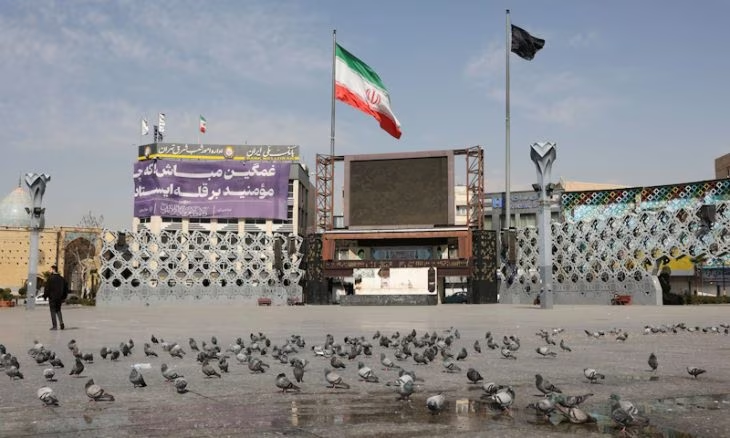
Citizens in Sana'a believe that any new Houthi adventure to support Iran would be political and military suicide for the group in light of widespread international rejection. Popular priority is focused on improving deteriorating living conditions, not entering proxy wars that increase Yemen's isolation and destroy what remains of its dilapidated infrastructure.

The close link between the Houthis and Tehran has made the group's future hostage to the major geopolitical shifts currently sweeping the region. The more the power of the center in Tehran declines, the more its affiliated parties lose their ability to influence, opening the door to new scenarios that could radically reshape the political map in Yemen.

Ultimately, it seems the group faces two bitter choices: either escalation and risking an all-out military confrontation that could end their existence, or political retreat and accepting a settlement that does not grant them the 'lion's share.' Both paths ultimately lead to the weakening of their influence, which they derived for years from the Iranian momentum in the region.

Sources confirm that the next phase will be decisive in determining the identity of the future Yemeni state, as the weakening of the Iranian axis will reduce the Houthis' recklessness. The group will have to adapt to international changes that do not accept the presence of armed entities threatening international navigation or neighborhood security, which puts their project to the real test of survival.

The future of the Houthi group is linked to the outcomes of this war, which will not be in favor of the Iranian project, meaning their removal from power, peacefully or by war.