ARAB AND WORLD

Tue 07 Jul 2026 3:39 pm - Jerusalem Time

Brazil warns of potential US military intervention on its territory under the pretext of counter-terrorism

Official correspondence from the Brazilian Ministry of Foreign Affairs has revealed a state of extreme concern within the government regarding recent US policies, with Foreign Minister Mauro Vieira warning of the possibility of Washington resorting to military force within Brazilian territory. These warnings come in the wake of the US administration's decision to classify the country's major criminal groups as terrorist organizations, which Brasília considers a pretext for interfering in its sovereign affairs.

Diplomatic sources confirmed that leftist President Luiz Inácio Lula da Silva expressed strong opposition to this US approach, considering that granting terrorist status to criminal gangs aims to legitimize cross-border military interventions. The Brazilian government believes that this classification, from its perspective, gives Washington the right to pursue and target the leaders of these groups anywhere in the world without coordination with the concerned countries.

Reports indicate that Brazilian concerns are based on military precedents carried out by the Donald Trump administration since his return to the White House in 2025, where US forces launched deadly attacks against gangs in Venezuela and strikes at sea. The new US list included the groups 'Primeiro Comando da Capital' and 'Comando Vermelho', which Washington accuses of operating extensive international drug trafficking networks that extend beyond Brazilian borders.

In his message to Parliament, Minister Vieira explained that this US classification could be used to justify coercive measures against Brazilian national institutions under the guise of counter-terrorism. He stressed that the Brazilian state rejects any infringement on its territorial integrity, warning that US interpretations of international law in this context pose a direct threat to the national security of independent states in Latin America.

Domestically, the US stance has caused a sharp political division, as the right-wing opposition in Brazil quickly welcomed Washington's decision, considering it a necessary step to combat organized crime. Opposition forces accused the Lula da Silva government of being lax in confronting the gangs, amidst a charged electoral atmosphere preceding the presidential elections scheduled for next October.

International political circles are cautiously monitoring developments in this matter, especially with the increasing US military operations against drug cartels in the region, sometimes without sufficient evidence. The question remains about Brazil's ability to curb the new US tendencies, given Washington's insistence on using military tools to confront security challenges that were previously classified within the framework of police and judicial cooperation.

This classification could be used to justify cross-border measures against Brazilian institutions, and there is a risk of the United States resorting to the use of military force against national territory.

PALESTINE

Tue 07 Jul 2026 3:39 pm - Jerusalem Time

Killing by Algorithms: How Israel Turned AI into a Machine of Annihilation in Gaza?

Field and technical reports have revealed a radical shift in Israeli military doctrine, where reliance on artificial intelligence and big data has become a fundamental pillar in managing operations in the Gaza Strip. These technologies, developed for human well-being, have been harnessed as tools for digital killing and mass surveillance, leading to an unprecedented acceleration in targeting. These developments coincide with the aggression entering its thousandth day, amidst international criticism of the role of global technology companies in providing the necessary platforms for these operations.

The process of identifying targets in Gaza is shifting from the traditional field level to a complex technical level, where digital data is integrated into unified intelligence systems. The US-backed Civil-Military Coordination Center plays a pivotal role in linking field operations with digital intelligence networks. Satellite images, biometric data, and drone signals are processed by AI systems before the final results are sent to combat units.

Palantir's 'Maven' platform stands out as one of the main drivers for integrating multiple intelligence sources, turning target identification into a semi-automated process. In parallel, 'Dataminer' provides real-time risk analysis based on social media data. This integrated system relies entirely on a technical infrastructure provided by global companies to enhance the operational capabilities of the Israeli army in the field.

The occupation authorities use the algorithm-based 'Lavender' and 'Where's Daddy' systems to track thousands of Palestinians and classify them as potential targets. Despite names that may seem civilian, these systems work to build assessments about individuals' affiliations with resistance factions. Specifically, the 'Where's Daddy' system tracks targets until they reach their homes, then sends immediate notifications to forces to begin bombing, without considering the presence of other civilians.

Palantir has acknowledged providing the Israeli army with specialized technologies to support targeting operations since October 2023, confirming increased demand for its advanced products. The company has signed strategic agreements with the occupation presidency and the Ministry of Defense to provide technical tools that support the war effort. Observers believe that this close cooperation puts technology companies in direct conflict with international laws related to human rights.

In the context of surveillance, Israel relies on American-made drones and facial recognition technologies developed by Elbit Systems. These tools allow for the creation of massive databases that are updated in real-time to track Palestinian movements and verify their identities at checkpoints. Human rights activists warn that the use of algorithms gives the occupation a pretext to evade legal responsibility by claiming 'technical errors'.

The $1.2 billion 'Project Nimbus' represents the backbone of the cloud computing used by Israeli military institutions. This project, implemented by Google and Amazon, provides data centers that allow for the storage and processing of vast amounts of intelligence information. These platforms offer advanced machine learning services that contribute to analyzing human behavior and tracking objects with high accuracy.

Leaked documents indicate that the 'Google Cloud' platform provides the occupation with advanced tools for automated image classification and sentiment analysis based on audio and visual recordings. The 'Auto ML' system can also analyze detainee records and reconnaissance reports to suggest precise coordinates for military targets. This use of cloud computing goes beyond mere storage to being a platform for making direct killing decisions.

The capabilities of the digital system are not limited to analyzing field data but extend to monitoring digital content and classifying it as 'anti-Israel'. Live broadcasts from street cameras and drones are analyzed to track individuals in real-time and continuously. This comprehensive surveillance aims to tighten security control and facilitate pursuit, arrest, or physical liquidation operations.

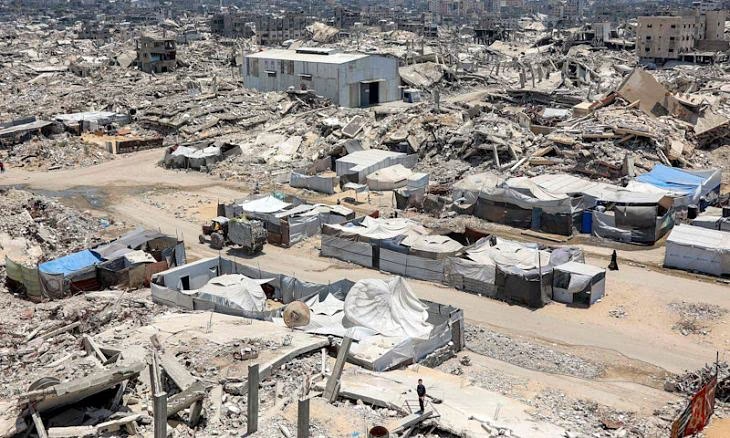
Since the start of the widespread aggression, AI-backed attacks have become a tool for carrying out genocide affecting more than 2.4 million Palestinians. The occupation has seized vast areas of the Strip, using massive quantities of explosives that have almost completely destroyed civilian infrastructure. The numbers indicate an unprecedented humanitarian catastrophe, with the number of martyrs and missing exceeding tens of thousands, most of whom are women and children.

Medical sources reported that the number of bodies reaching hospitals exceeded 73,000, while thousands remain under rubble that teams cannot access. Intensive, algorithmically directed raids have led to the annihilation of entire families and their removal from civil registries. This systematic destruction has also affected the health and education systems, making life in the Strip almost impossible.

These technologies raise deep ethical questions about the 'humanization' of war, where human decision-making is replaced by programmatic assessments that may lack accuracy. Experts believe that the reliance on AI in Gaza is a 'testing laboratory' for future killing technologies. The absence of international oversight over these companies gives them the green light to continue developing tools that contribute to violating international humanitarian law.

The link between biometric data, communication records, and satellite images creates a 'digital prison' surrounding all residents of the Strip. This system allows the occupation to predict movements and target individuals at their most vulnerable moments, such as when they are with their families. Reports confirm that this technology has not reduced civilian casualties but has increased the lethality of military operations and their precision in widespread destruction.

In conclusion, the reality in Gaza shows that 'digital killing' has become a tangible reality that transcends the boundaries of science fiction, with major technology companies contributing to shaping the scene of annihilation. The continuation of this approach threatens to transform future wars into conflicts managed entirely by algorithms, far from any ethical or legal standards. Palestinians in Gaza remain the first victims of this terrifying technological shift in means of mass killing.

Artificial intelligence in Gaza does not merely analyze information but directly contributes to guiding targeting decisions and transforming data into military targets that can be eliminated.

PALESTINE

Tue 07 Jul 2026 3:38 pm - Jerusalem Time

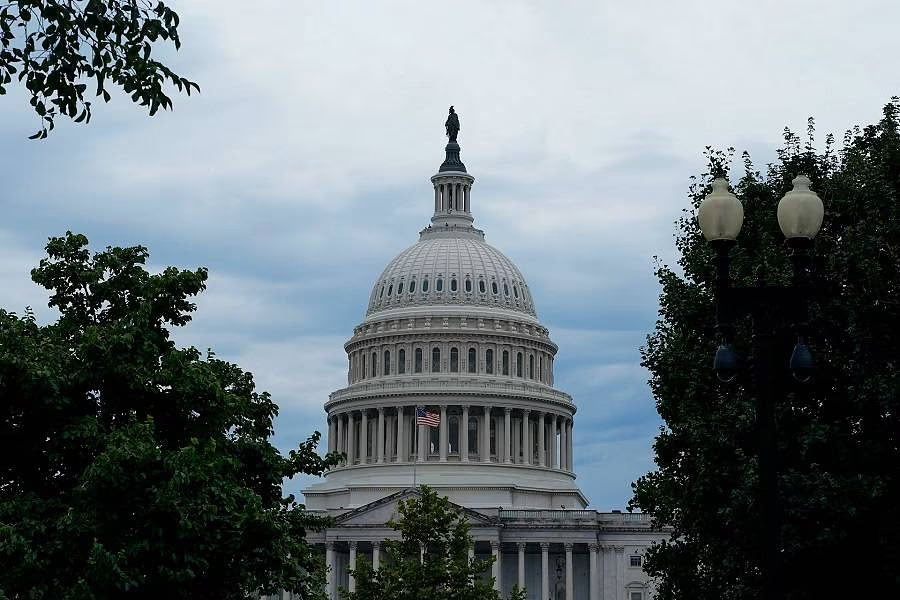
Congress Challenges Trump: Historic Decision to Limit War Powers Against Iran

The American political scene witnessed a dramatic shift after Congress, in both its chambers, the House and Senate, passed a joint resolution directing President Donald Trump to withdraw US forces from hostilities against Iran. This move reflects growing concern within the Republican Party, which controls Parliament, regarding the repercussions of the conflict that has been ongoing since late last February.

The Senate's approval of the joint resolution on war powers came weeks after a similar step taken by the House of Representatives, marking a historic precedent in the agreement between the two legislative chambers to limit executive power. This measure aims to immediately suspend all unauthorized military activities against Tehran.

The origin of this legal dispute dates back to the War Powers Act of 1973, which was enacted as a oversight tool after the Vietnam War to ensure that the president does not unilaterally decide on war. This law grants Congress alone the authority to declare wars, while the president's role is limited to leading operations in cases of immediate threat.

Under the current legislation, the US administration must notify lawmakers of any military action within 48 hours, with the necessity of ending unauthorized operations within 60 days. Data indicates that this legal deadline effectively expired on May 1st for ongoing operations against Iran.

For his part, President Trump tried to circumvent these controls by declaring that hostilities had ended thanks to a ceasefire agreement, despite the continued naval blockade and mutual attacks. Legal experts believe that this argument may not stand up to judicial scrutiny for long in light of the continued active military presence.

Informed sources reported that decisions related to war powers have priority in voting, allowing them to be put up for discussion even without the approval of council leaders. This legal path gives lawmakers opposed to the current foreign policy greater ability to maneuver and exert political pressure.

Legal doubts arise about the binding nature of this joint resolution, as its opponents believe that it does not have the force of law as long as the president has not signed it or the veto has not been overridden. However, legal experts confirm that the matter has not yet been judicially settled, given the absence of similar precedents since the 1970s.

Democratic Representative Gregory Meeks, the initiator in the House of Representatives, affirmed that the resolution is legally binding according to the spirit of the US Constitution. Meeks announced his intention to explore all available legal avenues to compel the White House to comply with the will of lawmakers and end unauthorized military intervention.

Observers believe that this legislative movement primarily aims to restore Congress's constitutional authority to declare wars, which has eroded over decades in favor of the presidency. The close voting results are considered a clear message that there is a bipartisan desire to curb the expansion of foreign military intervention.

The White House tried to exert intense pressure on Republican members to obstruct the resolution, as the Senate witnessed heated meetings and direct reprimands from Trump to some lawmakers. Despite his success in changing the minds of some members, the momentum supporting the resolution remained strong enough to pass it.

Catherine Yon Ebright, an expert at the Brennan Center for Justice, explained that the passage of this law represents an explicit condemnation of the continued war, which many see as a violation of the Constitution. She added that lawmakers from both sides have become convinced that the armed conflict with Iran has exceeded the permissible temporal and legal limits.

On the other hand, defenders of Trump's policy describe these moves as mere political maneuvers aimed at weakening the United States' position against its enemies. They claim that such decisions infringe on the president's powers as commander-in-chief of the armed forces responsible for protecting national security.

These developments cast a shadow over the midterm elections scheduled for next November, as American voters closely monitor the developments of the conflict. Opinion polls indicate that the war against Iran lacks widespread popular support, which could threaten Republican control of Congress.

The latest 'Reuters/Ipsos' poll data showed that only 25% of Americans support the necessity of war, while general fears prevail about the fragility of the ceasefire. This popular concern has been reflected in President Trump's popularity, which has fallen to record lows of 34%, further complicating the political scene.

The war powers resolution sends a strong signal to the president that lawmakers believe this war has gone on too long and violates the Constitution.

PALESTINE

Tue 07 Jul 2026 3:38 pm - Jerusalem Time

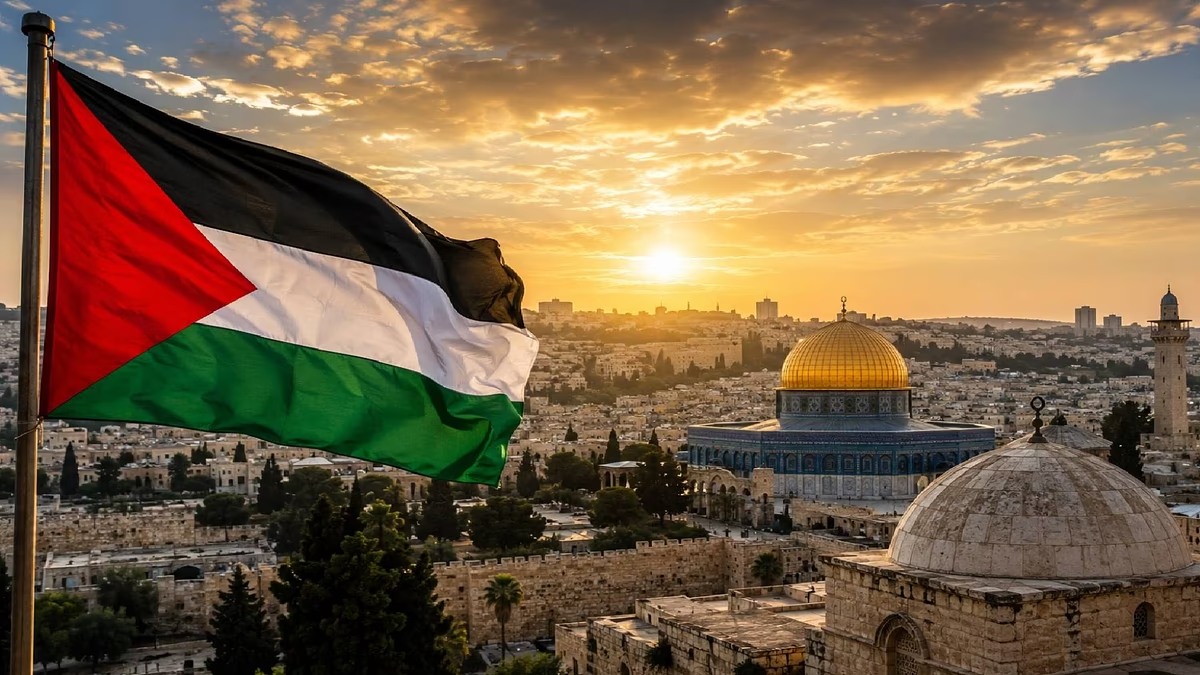
Belgium begins formal legal procedures to recognize the State of Palestine

Belgian Foreign Minister, Maxime Prévot, announced that official directives have been issued to his technical and operational team to immediately begin drafting the necessary procedures and technical arrangements, in preparation for taking a comprehensive legal and sovereign decision to diplomatically recognize the State of Palestine. The Minister explained in statements reported by Belgian media sources that this move comes to complete the procedural and field frameworks that precede the official announcement, stressing that the issue is now strongly on the executive discussion table in the country.

Regarding the timeline for this decision, Prévot indicated that he cannot definitively confirm whether the government will be able to complete all required documents before the cabinet meeting scheduled for next Friday. However, the Minister stressed that the current political direction is moving towards resolving this issue very soon, as the Belgian Foreign Ministry seeks to ensure that the step is based on solid legal foundations consistent with Brussels' international commitments.

For its part, the legislative authority has entered the line of developments, as the chairwoman of the Foreign Relations Committee in the Belgian House of Representatives, Els Van Hoof, demanded that the government respect the political pledges made within the ruling coalition last summer. Van Hoof affirmed that previous political agreements were clear and explicit regarding activating the recognition of the State of Palestine once the conditions agreed upon between the political partners were met, considering that the current move is a natural entitlement of those understandings.

This diplomatic movement comes as a continuation of what the Belgian government announced last September on the sidelines of the United Nations General Assembly meetings in New York, where Brussels kept its intention to recognize despite legal obstacles. The main obstacle was the absence of the necessary royal decree to bring the decision into actual effect, which the current technical procedures seek to overcome and place within its correct legislative framework.

Belgian Prime Minister, Bart De Wever, had previously set a number of political conditions for full legal recognition, including the necessity of releasing detainees and changing the political reality in the Gaza Strip to ensure disarmament. However, increasing internal pressures and the escalating pace of events in the Palestinian territories brought the recognition file to the forefront again, amid a desire from parties within the government to accelerate diplomatic steps regardless of long-term field complexities.

The European continent is witnessing a growing wave of recognitions of the State of Palestine, driven by the worsening humanitarian situation in the Gaza Strip and the increasing settler attacks in the West Bank. After Spain, Ireland, and Norway recognized in 2024, major international powers such as France, Britain, Canada, and Australia joined this path in 2025, which put the Belgian government before a political entitlement to keep pace with this shift in European foreign policy towards the Palestinian issue.

I directed my operational team to proceed with taking the necessary measures and technical arrangements in preparation for taking a comprehensive legal decision regarding the diplomatic recognition of the State of Palestine.

PALESTINE

Tue 07 Jul 2026 3:37 pm - Jerusalem Time

Occupation demolishes two homes in Ramallah and launches widespread arrest campaign targeting 20 Palestinians in the West Bank

Israeli occupation forces launched a large-scale raid and incursion campaign at dawn today, Tuesday, covering several cities and towns in the occupied northern West Bank. These military operations resulted in the arrest of at least 20 Palestinian citizens, including a young woman, after searching their homes and tampering with their contents in what residents described as retaliatory measures.

In Nablus city, field sources reported that large military reinforcements stormed the area behind the National Hospital, where soldiers and vehicles spread through the main streets. The raids focused on the town of Madama to the south, targeting dozens of homes and resulting in the arrest of 14 Palestinians, some of whom underwent harsh field interrogations before being taken to unknown locations.

Salfit Governorate also witnessed a military incursion that led to the arrest of two individuals, one of whom was the head of the labor unions in the governorate, Mahmoud Al-Barr, after his home was raided and thoroughly searched. During the withdrawal of forces from the city, a Palestinian civilian vehicle was damaged due to a deliberate collision with a military vehicle, amidst a state of tension that prevailed in the area.

In Jenin, arrests targeted four citizens, including a young woman, with incursions concentrated around the American Arab University and displaced persons' residences. Occupation forces raided residential buildings near Martyr Yahya Ayyash Roundabout and the German Quarter, in a move aimed at restricting residents and displaced persons who had sought refuge in those areas to escape ongoing military operations.

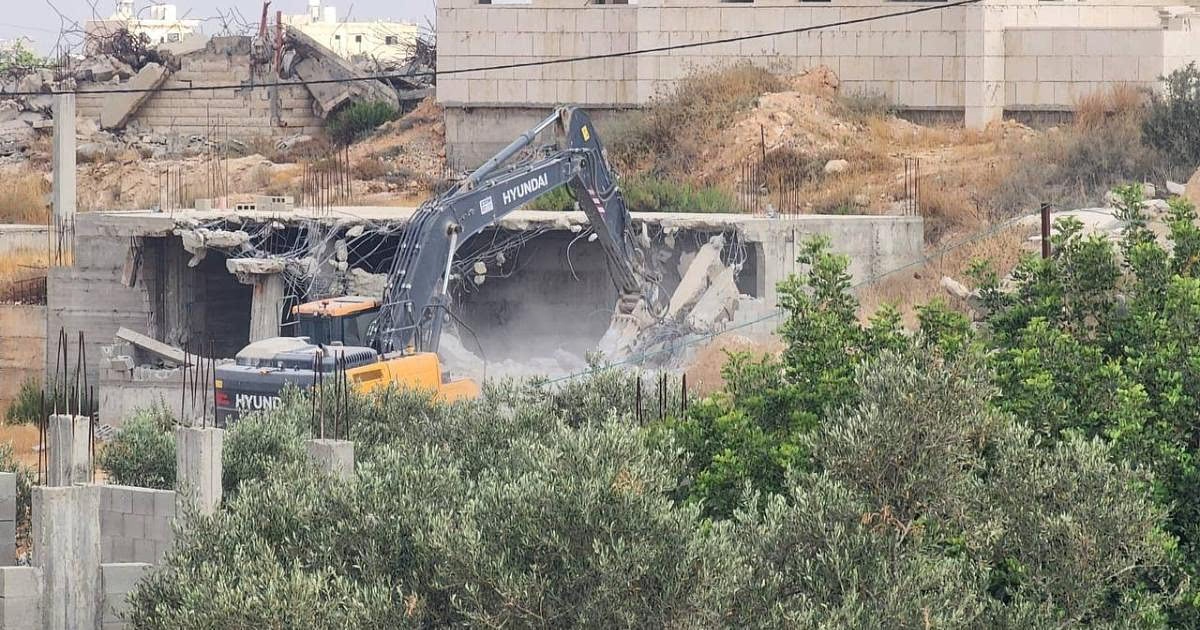
In a related context of ethnic cleansing policy, occupation bulldozers demolished two homes under construction in the town of Shaqba, west of Ramallah city. The invading forces fired a barrage of tear gas and sound bombs at citizens who tried to confront the demolition, leading to cases of suffocation among civilians.

The head of Shaqba Municipal Council, Khalaf Qadah, explained that the two targeted homes are located within lands owned by Palestinians in Area 'C'. He pointed out that this operation raises the number of demolished homes in the town to 25 since the beginning of the year, as part of a systematic plan to displace residents and prevent Palestinian urban expansion.

Official data from the Wall and Settlement Resistance Commission indicates a dangerous escalation in demolition operations, with 740 Palestinian structures destroyed during the first half of this year alone. These policies have caused the displacement of more than 1,700 Palestinians, in clear violation of the Fourth Geneva Convention, which prohibits the destruction of civilian property except for absolute military necessity.

On the sports and humanitarian front, international positions supporting the Palestinian cause emerged, as Hossam Hassan, coach of the Egyptian national football team, made emotional statements during a press conference organized by the International Federation of Association Football (FIFA). Hassan considered that the lack of empathy for what the Palestinian people are going through represents a loss of part of humanity, amidst the political tensions overshadowing the global sports scene.

It is worth noting that the West Bank has been in a state of turmoil since October 2023, with the death toll reaching 1,179 martyrs and over 12,000 injured. These figures coincide with unprecedented arrest campaigns targeting approximately 24,000 Palestinians, reflecting the scale of the comprehensive Israeli escalation against the Palestinian presence in all governorates.

The demolition operation in Shaqba town is the 25th carried out by the occupation since the beginning of this year, targeting the Palestinian presence in Area C.

ARAB AND WORLD

Tue 07 Jul 2026 11:32 am - Jerusalem Time

Trump heralds imminent solution to Ukraine war, Kyiv strikes deep into Siberia

US President Donald Trump affirmed that reaching a political settlement for the ongoing war in Ukraine, which has lasted over four years, has become unexpectedly imminent. Trump indicated his intention to raise this issue for discussion during scheduled talks in Turkey this week, which will take place on the sidelines of the North Atlantic Treaty Organization (NATO) summit.

Trump's statements follow a series of intensive diplomatic contacts, during which he held separate talks with Russian President Vladimir Putin and his Ukrainian counterpart Volodymyr Zelensky. The US President told journalists in the Oval Office that he sensed a genuine desire from both parties to end what he described as a 'horrific' situation.

Trump revealed details of a lengthy call he had with Putin during the Fourth of July holiday, which lasted approximately 85 minutes, during which he offered assistance in finding a path to peace. In contrast, Ukrainian President Zelensky believes that the new American approach to the conflict comes amid recent battlefield successes achieved by his forces.

On the ground, Ukrainian forces carried out an unprecedented strategic attack using drones targeting the 'Omsk' oil refinery deep within Russian territory. This refinery is the largest in Russia, located in Siberia about 2700 kilometers from the front lines, marking a new record for the range of Ukrainian attacks.

The Ukrainian General Staff confirmed that the attack caused a massive fire at the vital facility owned by 'Gazprom Neft'. Zelensky described the operation as a significant military achievement, emphasizing that Russian sites in Siberia are now within the range of precise strikes by the Ukrainian Armed Forces.

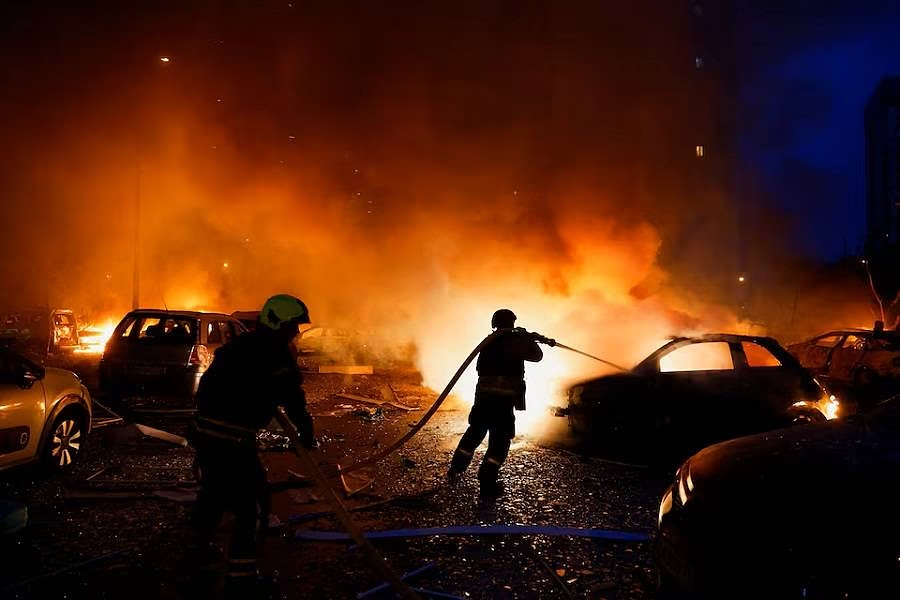
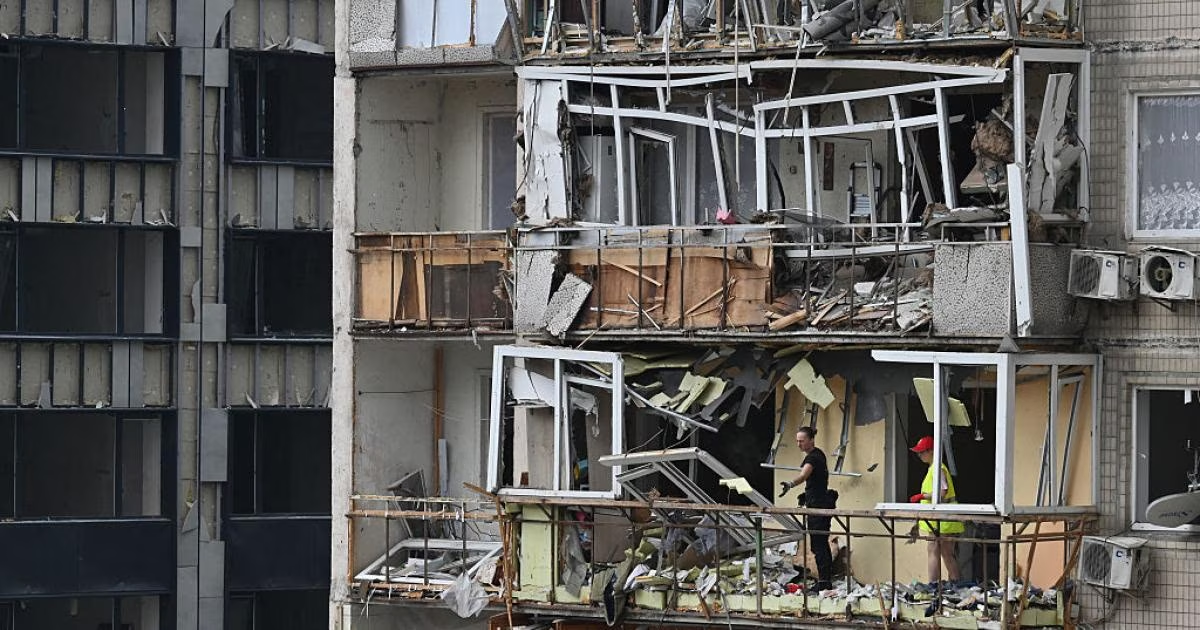
In response, Russia launched a large-scale missile and air attack targeting the capital Kyiv and other cities, resulting in the deaths of at least 28 people. Military data showed a clear deficiency in Ukrainian air defenses, which failed to intercept any of the 23 Russian ballistic missiles launched in the attack.

Military commanders in Kyiv attribute this failure to the imminent depletion of US-made 'Patriot' missile stockpiles. Field reports indicated that air defenses were only able to shoot down a very small percentage of ballistic missiles during July, exposing infrastructure and civilians to imminent danger.

For his part, President Zelensky appealed to Western allies for the urgent need to provide his country with more advanced interception systems. Zelensky demanded obtaining American licenses to manufacture 'Patriot' systems locally, emphasizing that Ukraine possesses the necessary technical expertise to meet its needs and those of its partners in the future.

In Moscow, Kremlin spokesman Dmitry Peskov downplayed expectations of an imminent solution, considering that the official American position has not fundamentally changed. Nevertheless, the anticipated meeting between Trump and Zelensky in Ankara on Wednesday raises international hopes for a breakthrough in the current diplomatic stalemate.

Sources reported that the latest Russian attack targeted energy facilities and military airbases with long-range precision-guided weapons. The strikes caused the destruction of about 30 buildings in Kyiv, where rescue teams recovered the bodies of entire families from under the rubble in a tragic scene reflecting the ferocity of the escalation.

Data released by the Ukrainian Air Force indicates that the army managed to intercept 37 missiles of various types and over 90% of suicide drones. However, ballistic missiles remain the biggest challenge due to their high speed and trajectories that are difficult to track with traditional systems.

In parallel, the governor of the Russian Omsk region stated that air defenses repelled most Ukrainian drones, downplaying the extent of human damage. But satellite images and field reports indicate an impact on operations at the refinery, which processes about 460,000 barrels of oil per day.

Observers believe that the timing of these military and diplomatic moves aims to improve negotiating positions before the upcoming NATO summit. While Ukraine seeks to prove its ability to strike deep into Russia, Moscow is trying to exploit gaps in Ukrainian air defense to impose a new reality on the ground.

Finally, hopes rest on the talks Trump will hold in Turkey, where US officials believe they could provide a 'new impetus' to end the war. The meeting between Trump and Zelensky is expected to be followed by additional consultations with the Russian side to discuss possible ceasefire mechanisms.

"I believe the conflict is closer to a resolution than people realize. President Putin wants to end it, and I tell you that with certainty."

ARAB AND WORLD

Tue 07 Jul 2026 11:31 am - Jerusalem Time

Ankara Summit: European Allies Race Against Time to Appease Trump by Increasing Defense Spending

The NATO summit, which lasts for two days, kicks off today, Tuesday, in the Turkish capital, Ankara, amidst an atmosphere of anticipation and political pressure. During this meeting, held at the Turkish Presidential Palace, European leaders seek to showcase significant increases in their defense budgets, in an attempt to absorb the anger of US President Donald Trump.

This summit comes a year after the strict pledges imposed by Trump on members to raise security spending to 5% of GDP. Informed sources reported that European countries have realized the necessity of proving their readiness to take on a greater role in protecting the continent, to ensure the continued involvement of US military power in the alliance.

For his part, NATO Secretary General Mark Rutte affirmed that European countries have already begun to fulfill their promises and strengthen their military capabilities to face current challenges, especially Russian threats. Rutte indicated in statements to journalists before the summit that the alliance is witnessing a tangible shift in the European defense mindset from what it was previously.

Within what diplomats described as a 'showtime,' the alliance secretariat prepared a series of statistics and figures demonstrating European commitment to the new American standards. Leaders are expected to unveil massive arms deals estimated at tens of billions of dollars during a defense industry forum as material proof of this commitment.

In line with this trend, Canada announced a strategic move by choosing a German company to build a new submarine fleet in a multi-billion dollar deal. Ottawa described this decision as part of broader efforts to deepen defense ties with European allies and reduce direct and sole reliance on American technology in some areas.

Despite these efforts, the US President continues to express his dissatisfaction with the pace of European action, especially after the restrictions imposed by some countries on the use of American bases. Trump attacked the allies via his 'Truth Social' platform, considering that the current relationship lacks the required reciprocity and that Washington cannot continue on a unilateral path.

European leaders at the Ankara summit aspire to avoid any direct confrontation with Trump that could undermine the alliance's credibility before the world. Diplomats are counting on Turkish mediation and the good relationship between President Recep Tayyip Erdoğan and his American counterpart to calm the tense atmosphere and ensure the summit concludes with a unified final statement.

In an attempt to demonstrate cooperation on Middle East issues, France and Britain began forming a naval mission to secure navigation in the Strait of Hormuz. Although this step aims to appease Washington, European capitals still prefer to wait until the final features of American policy towards the nuclear agreement with Iran become clear.

Reports indicate that Washington has already begun to reduce some military assets it places at the disposal of NATO command in Europe. This inevitable retreat has pushed European leaders to adopt what is called the 'third version of NATO,' which relies on a strong European pillar capable of operating almost independently when necessary.

On the Ukrainian issue, European countries have borne the brunt of military support for Kyiv amidst the reduction of direct American aid. Ukrainian President Volodymyr Zelensky is expected to receive pledges of aid amounting to 70 billion euros annually over the next two years to ensure the continued resilience of Ukrainian forces.

Zelensky, who is participating in the leaders' dinner, seeks decisive decisions to strengthen his country's air defense systems after recent Russian attacks. The Ukrainian president hopes to convince Trump that Kyiv is capable of winning the battle if it receives sufficient qualitative support, which could change the US administration's stance on peace negotiations.

Diplomatic sources indicate concerns about potential disagreements between Trump and other European leaders such as Italian Prime Minister Giorgia Meloni. These personal and political differences could cast a shadow over the summit's agenda, which is crowded with thorny issues ranging from budgets to the stance on China and Russia.

The shift in the balance of power within the alliance reflects a new reality imposed by economic and political pressures within the United States. Europe must now balance its defensive independence with its urgent need for the nuclear and technological umbrella provided by the immense American military power, which remains the backbone of the alliance.

The Ankara summit will remain a true test of NATO's ability to remain a cohesive bloc in the face of rapid global transformations. While Rutte seeks to market the 'real transformation' in the European mindset, the question remains whether these figures and deals will be enough to convince Trump to remain fully engaged in the security of the old continent.

Just one year later, we are beginning to see tangible transformative progress in Europe taking on its defense responsibilities.

OPINIONS

Tue 07 Jul 2026 11:31 am - Jerusalem Time

Does the "solution" mark the beginning of a solution?

Dr. Ibrahim Melhem

Editor-in-Chief

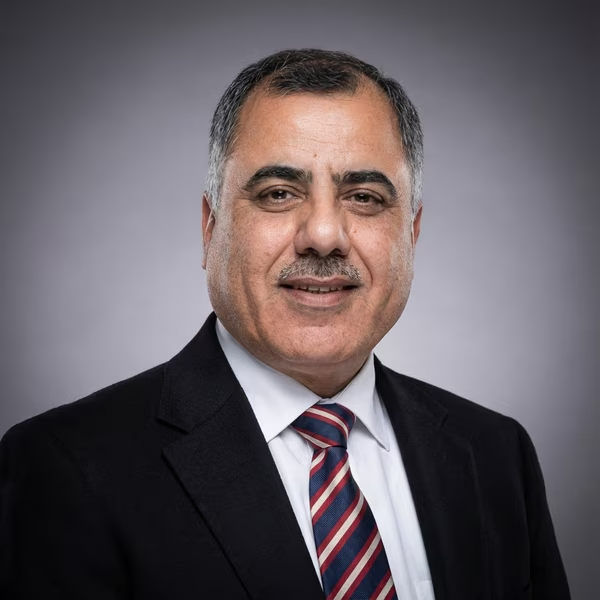
The step taken by the Hamas movement yesterday to dissolve its government in the Gaza Strip is of paramount importance and urgent necessity; as a prelude to the "Gaza Committee" taking over its duties and assuming its responsibilities in a political and field environment booby-trapped with surprises, and submerged in a pile of crises and challenges that require concerted international efforts to dismantle them, and to put the Strip on the threshold of recovery from its deep pains.The Israeli response to the step was not delayed, as Foreign Minister Gideon Sa'ar considered it a trick, which means his rejection of it, a rejection translated by policies of daily killing and continuous pursuit via drones targeting vehicles in the streets; exactly as happened a few hours after Hamas's announcement, where a vehicle was targeted, leading to the martyrdom of two.Meanwhile, leaders of the political and military establishments in Israel do not cease to incite and rally Israeli and international public opinion against the movement; by exaggerating its military power and warning of its intention to prepare for a new "October 7th." This systematic incitement aims only to obtain an American green light to resume the war of extermination, cloaked in these fabricated pretexts, especially after the residents of the Strip have been crammed into thirty percent of its area.This behavior also aims to throw a wrench in the works of any international solution, the first procedural features of which appeared in the request for Hamas to dissolve its government, and the subsequent steps that would restore calm to the Strip.Mixing cards is one of the most political arts mastered by the "Likud fox" whenever it is time for implementation; just as he blew up the first steps to implement the framework agreement in southern Lebanon, it is not unlikely today that he will obstruct the first steps of a solution in the Gaza Strip after a thousand days and more of suffering.

PALESTINE

Tue 07 Jul 2026 7:20 am - Jerusalem Time

Occupation Foreign Minister attacks 'technocrat' government proposal, describes it as a maneuver to protect Hamas's weapons

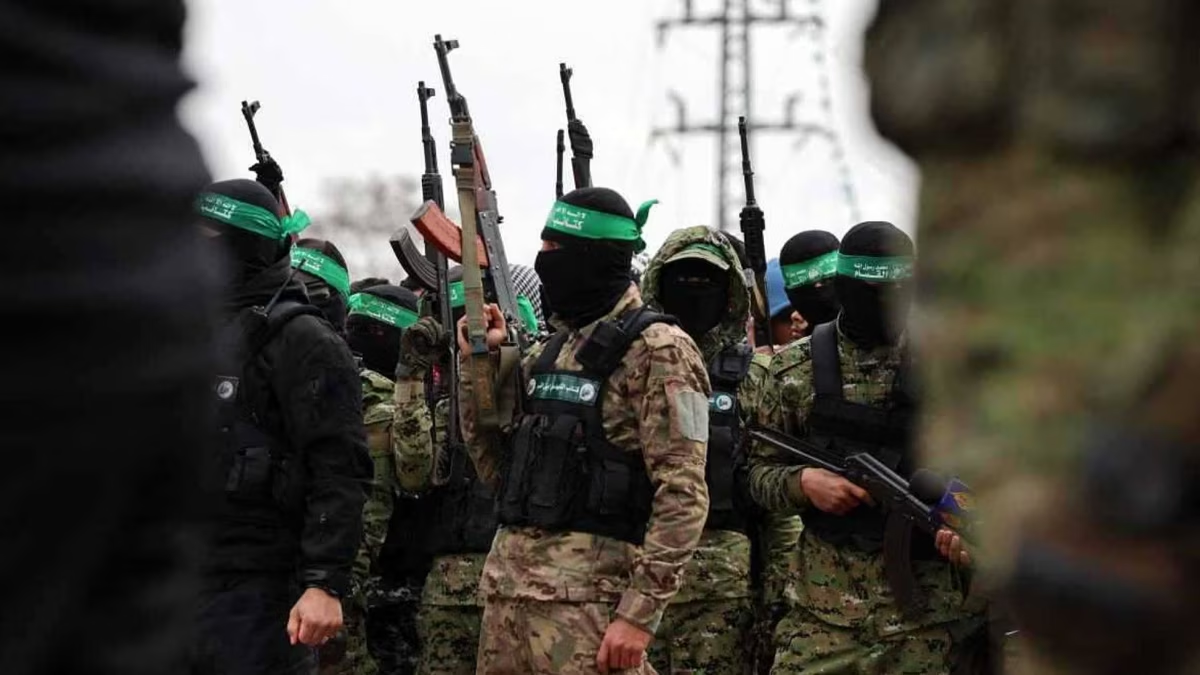
The Occupation Foreign Minister described the recent political moves by the Hamas movement as merely a 'diplomatic maneuver' essentially aimed at protecting its military arsenal from dismantling. The minister indicated that the movement is trying to circumvent international and field pressures by showing flexibility towards forming an independent technocrat government that would only handle administrative affairs.

The official in the occupation government stressed Tel Aviv's categorical rejection of any political or administrative arrangements in the Gaza Strip that would allow the military infrastructure of Palestinian factions to remain. Sources confirmed that the occupation views the continued presence of weapons in the movement's hands as a direct and continuous threat to its security, regardless of the identity of the entity managing civilian and service institutions.

According to the vision put forth by the Occupation Foreign Minister, Hamas seeks through these proposals to place the burdens of daily administration and municipal services on the technocrat committee, allowing it to dedicate itself to strengthening its combat capabilities. The minister warned that this scenario would reproduce previous crises, as the ultimate authority in the Strip would remain with those who possess military power on the ground.

In the context of Israeli warnings, the official indicated that any civilian government formed without dismantling the factions' weapons would be hostage to military dictates and directives. He clarified that the continued presence of weapons means the continued ability to carry out operations against the occupation, which would make the civilian government merely a facade with no real authority to make sovereign or security decisions.

These statements come at a time when regional and international parties are intensifying their efforts to formulate a clear vision for the post-war phase in the Gaza Strip, based on entrusting administration to independent national figures. However, the Israeli position continues to pose an obstacle to these proposals, as the occupation insists on the complete dismantling of military capabilities before discussing any political or administrative settlement.

The real goal of the Hamas movement in accepting these proposals is for the technocrat committee to manage civilian files, while the movement retains its full power and weapons on the ground.

ARAB AND WORLD

Tue 07 Jul 2026 7:19 am - Jerusalem Time

Macron in Damascus: Al-Sharaa Praises French Role in Supporting Syria's Stability and Reconstruction

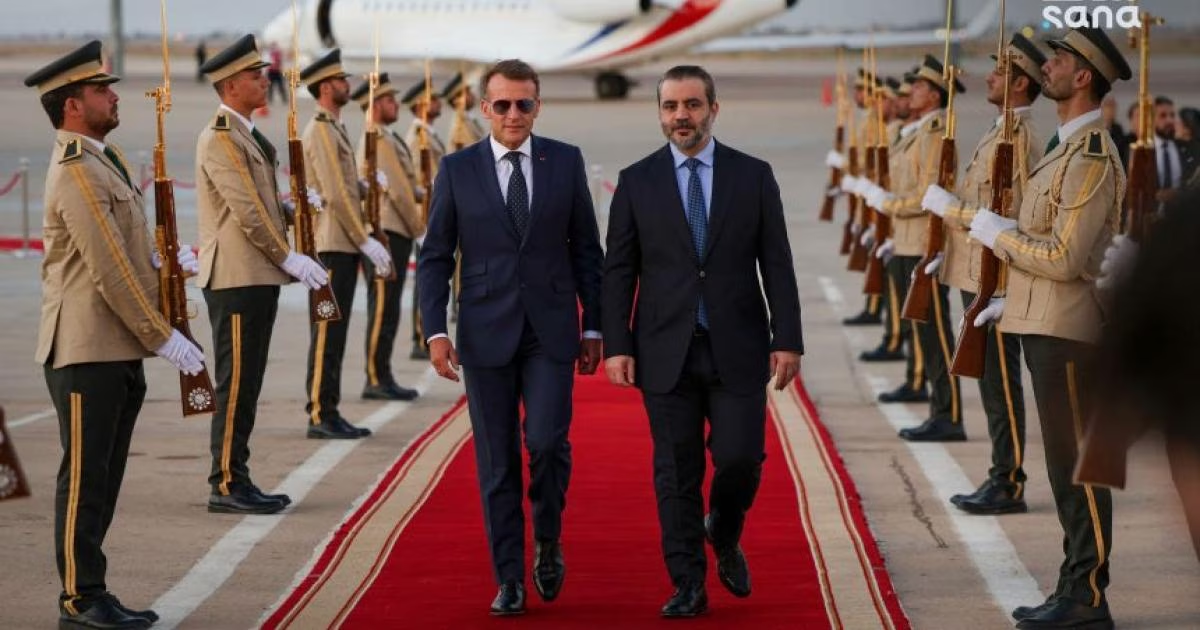
French President Emmanuel Macron arrived in the Syrian capital, Damascus, today, Monday, on an official visit that holds significant historical and strategic dimensions. He was received at Damascus International Airport by Syrian Foreign Minister Asaad Al-Shaibani, amidst official reception ceremonies reflecting the two countries' desire to inaugurate a new phase of bilateral relations.

In his first statement coinciding with the visit, Syrian President Ahmed Al-Sharaa praised the French role, which he described as 'constructive,' regarding the Syrian issue. Al-Sharaa affirmed in an interview with French media that Paris stood by the aspirations of the Syrians, considering it a key partner and a loyal friend to the people in their endeavor to liberate themselves from the previous era of tyranny.

The Syrian President explained that France played a pivotal role in breaking Syria's international isolation and facilitating its openness to the international community in recent months. He pointed out that Damascus succeeded in overcoming significant diplomatic obstacles, paving the way for building strong relations with active international powers, with France at the forefront.

This visit comes laden with heavy economic files, as President Macron is accompanied by a high-level delegation including investors and heads of major French companies. This economic representation aims to explore investment opportunities and contribute to the revival of the Syrian economy after years of stagnation and destruction left by conflicts.

Al-Sharaa revealed the intention of both sides to sign a set of joint agreements that will form the cornerstone of the Syrian state's reconstruction process. These understandings will focus on vital areas including reconstruction and infrastructure development, in addition to empowering government institutions to provide their services efficiently.

The Syrian President stressed his country's need for advanced technical expertise possessed by France, especially as Syria enters a phase of comprehensive recovery. He considered that the currently available Syrian capabilities require partnerships with technologically advanced countries to ensure the implementation of sustainable development projects according to the highest international standards.

The two presidents are scheduled to hold a round of discussions involving the accompanying delegations to discuss regional and international issues of common interest. The discussions will focus on coordinating political stances and enhancing prospects for cooperation in various sectors, serving the mutual interests of the French and Syrian peoples.

This visit is the first by a French president to Damascus since 2009, representing a radical shift in French foreign policy towards the Syrian file. Observers believe that this move reflects international recognition of the new political reality in Syria and a desire to contribute effectively to the stability of the region.

The Media Directorate of the Syrian Presidency had paved the way for this visit with an official announcement emphasizing the importance of continuous political dialogue. Through this summit, Damascus aspires to consolidate its new international position and strengthen partnerships that ensure the flow of necessary investments for the post-war phase.

France was considered one of the friends of the Syrian people during the Syrian revolution and was a supporter of the path to achieving freedom and dignity.

ARAB AND WORLD

Tue 07 Jul 2026 7:19 am - Jerusalem Time

South Lebanon: Framework Agreement Implementation Stalled Amidst Israeli Violations and Political Tensions

South Lebanon is experiencing a highly complex field and political phase, where diplomatic movements intertwine with ongoing Israeli violations on the ground. Despite reaching a US-sponsored framework agreement, the implementation of the Israeli withdrawal remains postponed, raising serious questions about the future of de-escalation and stability in the border areas.

Field data indicates that the occupation authorities are linking the start of a gradual withdrawal to additional security arrangements and specific American guarantees. This delay exacerbates the suffering of residents in border villages who await the removal of security restrictions and the return of normal life to their towns, which have been damaged by continuous military operations.

For his part, President Joseph Aoun stressed that the full extension of Lebanese sovereignty begins with the withdrawal of occupation forces from all occupied territories. Aoun affirmed that the Lebanese Army is the sole force authorized to protect the borders, considering the continued presence of Israeli forces as an impediment to the military institution's deployment and an undermining of the official state's authority.

In the context of political escalation, Israeli Prime Minister Benjamin Netanyahu's claims regarding the desire of Christian border villages to join Israel sparked widespread anger. Local figures and mukhtars in these villages swiftly denied these allegations outright, emphasizing their absolute adherence to Lebanese national identity.

Speaker of Parliament Nabih Berri entered the political fray, commending the stances of the residents of the border villages who set an example of steadfastness and attachment to their land. Berri warned against falling for misleading Israeli narratives aimed at undermining Lebanese internal unity and dismantling the social fabric in the South.

On the regional level, the Iranian position emerged through statements by Parliament Speaker Mohammad Bagher Ghalibaf, who affirmed that any peace equation in the region cannot bypass Tehran's role. Ghalibaf clarified that Lebanon and the resistance front represent red lines in any negotiations his country conducts with international powers, especially the United States.

An analytical reading of the scene reveals three conflicting visions; while Israel sets complex security conditions for withdrawal, the Lebanese state insists on a complete withdrawal as a prerequisite for stability. In contrast, Iran views the Lebanese file as closely linked to major regional balances and its role in the region.

In this context, media sources indicated that Beirut is awaiting the arrival of a US military delegation in the coming days to discuss mechanisms for implementing what is known as 'experimental zones.' The delegation aims to convey Israeli responses to Lebanese demands previously submitted to the American mediator, amidst an atmosphere of caution and anticipation.

Observers believe that the current framework agreement appears suspended and not practically implementable in the absence of broad internal political consensus around it. Furthermore, the retreat of some official parties from fully adopting the agreement reflects the extent of pressures and complexities surrounding the proposed understanding's provisions.

On the other hand, specialized analyses of Israeli affairs indicate that the Netanyahu government used the agreement as political cover for a ceasefire without making substantial concessions. This move aims to present de-escalation as a diplomatic achievement with the Lebanese government, to avoid appearing to align with other regional agendas.

Despite initial Israeli celebration of the agreement, subsequent assessments within Tel Aviv downplayed the significance of this 'achievement,' considering that actual implementation is linked to complex field positions. Analysts confirm that Netanyahu is trying to market an image of victory to his domestic society, despite not achieving the declared strategic goals of the war.

Civilians in the border villages remain the weakest link in this ongoing conflict, living amidst the rubble of destruction and awaiting the unknown. Daily Israeli violations make a safe return difficult to achieve, and further complicate efforts to rebuild and resettle residents in their lands.

Successive developments indicate that the crisis will remain open to multiple scenarios, awaiting the outcome of international pressures and ongoing negotiations. Between field conditions and sovereign demands, the framework agreement remains mere ink on paper unless there is a genuine will to end the occupation and stop the violations.

In conclusion, the unified Lebanese stance behind the army and official institutions represents the first line of defense against Israeli attempts to impose a new reality on the borders. With diplomatic activity continuing, the bet remains on the Lebanese state's ability to fully reclaim its sovereign rights without any security conditions that diminish its national dignity.

The continued Israeli presence undermines state authority and hinders the army's deployment along the entire southern border, and negotiation has become the only path.

PALESTINE

Tue 07 Jul 2026 7:18 am - Jerusalem Time

Hamas warns of Israeli attempts to impose an administrative vacuum in Gaza after the dissolution of the emergency committee

Hamas announced on Monday the official dissolution of the governmental emergency committee in the Gaza Strip, a step it described as completing the necessary legal and administrative arrangements to transfer tasks to the National Committee for the Administration of Gaza. The movement affirmed that this resignation, which included the committee's head and the acting head of government work follow-up, Mohammed Abdel-Khaleq Al-Farra, comes in line with recent understandings aimed at arranging internal affairs and managing the sector's matters.

In a press statement, the movement warned of persistent Israeli attempts to impose a state of administrative and field vacuum within the sector, noting that the occupation aims to thwart efforts to restore normal life. Hamas stressed its full commitment to implementing all provisions of the ceasefire agreement and continuing to work accordingly until the National Committee assumes all its administrative responsibilities.

In contrast, the Israeli side expressed strong objection to these developments, with Israeli Foreign Minister Gideon Sa'ar describing the move as a political 'trick.' Sa'ar claimed that Hamas is trying, through this administrative transition, to maintain its military influence in Gaza and adopt a model similar to Hezbollah's situation in Lebanon, which Tel Aviv completely rejects.

Hamas called on international mediators and guarantor states of the agreement to act urgently and pressure the Israeli government to stop its continuous obstruction attempts. It clarified that enabling the National Committee to enter the sector and begin its tasks is the only way to end the humanitarian deterioration, holding the occupation responsible for any repercussions that may result from obstructing this transitional path.

These developments coincide with ongoing intensive discussions in the Egyptian capital, Cairo, the latest round of which took place on June 30 to complete the mechanisms for implementing the agreement. The parties involved in the dialogue seek to overcome obstacles preventing the new technocratic body from commencing its work on the ground amid persistent Israeli intransigence.

It is worth noting that the 'National Committee for the Administration of Gaza' was formed as a transitional body under UN Security Council Resolution 2803, and within the framework of an international plan aimed at managing the transitional phase. The committee held its first meeting in Cairo in mid-January, where it announced its readiness to take over civil and internal security files and oversee reconstruction and economic recovery operations.

Despite repeated announcements of the committee's readiness, it has not yet been able to effectively carry out its tasks from within the Gaza Strip due to continuous Israeli violations. No official clarifications have been issued by international bodies or the Israeli side regarding the real reasons preventing committee members from accessing the sector to begin their legal mandate.

In a related context within Israel, the Knesset approved in its first reading a bill to form an official investigation committee into the security and political failures that preceded the October 7, 2023 attack. This step comes under increasing political and popular pressure within Israel to hold those responsible for the intelligence and military shortcomings that accompanied the outbreak of the confrontation accountable.

The Gaza Strip is experiencing catastrophic conditions after many long months of genocidal war, with statistics indicating more than 73,000 martyrs and almost complete destruction of infrastructure exceeding 91%. Concerns are growing that the Israeli obstruction of the new administrative path will exacerbate the humanitarian crisis and famine threatening hundreds of thousands of displaced people.

The occupation seeks to obstruct the implementation of the agreement and attempt to impose a reality of administrative vacuum in the Gaza Strip with the aim of deepening the suffering of our people.

OPINIONS

Tue 07 Jul 2026 7:18 am - Jerusalem Time

Settlement Plan Targets Heart of West Bank: One Hundred New Outposts Push Towards Practical End of Oslo Accords

Washington's Message

Washington – Said Arikat – 7/7/2026

News Analysis

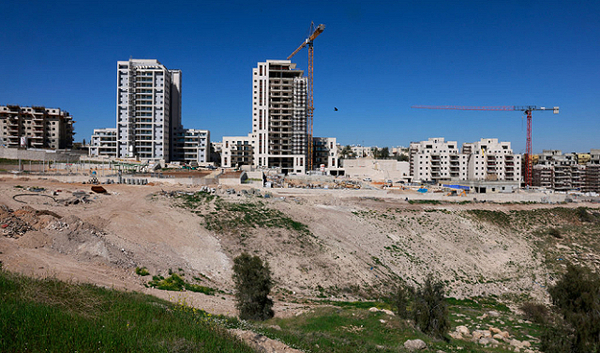
The West Bank is witnessing a development considered one of the most dangerous shifts in the Israeli settlement project since the signing of the Oslo Accords in 1993, following the revelation of a plan led by settler groups to establish one hundred settlement outposts within Areas (A) and (B). This move goes beyond the policy of expanding existing settlements to an attempt to implant a permanent settler presence within the heart of Palestinian cities and towns. Observers believe that this project is not merely urban expansion, but reflects a strategic shift aimed at reshaping the geopolitical landscape of the West Bank, undermining the foundations of the peace process, and ultimately imposing a reality that makes the establishment of a geographically contiguous Palestinian state extremely difficult.

The American website "Mondoweiss," citing information published by the newspaper "Israel Hayom," revealed that the plan, named "Day of Decision," aims to establish settlement outposts in locations described as "strategic" within areas that, under the Oslo Accords, were subject to full or joint Palestinian control. Areas (A) and (B) constitute about 40 percent of the West Bank's area, while the majority of existing Israeli settlements are concentrated in Area (C), which represents about 60 percent of the occupied territories.

The project represents a remarkable shift in Israeli settlement doctrine, as the establishment of settlements within Area (A), which is theoretically under Palestinian civil and security control, was until recently considered a red line that successive Israeli governments adhered to, even amidst continuous settlement expansion in Area (C). Today, the project moves the conflict from the outskirts of Palestinian cities to their interior, opening the door to a new phase of redrawing the field map.

Experts believe that the implementation of this plan will fragment the Palestinian geography into isolated islands, by controlling vital heights, intersections, religious sites, and areas overlooking major cities. This will restrict the movement of Palestinians and weaken the possibility of geographical contiguity between population centers, which is a fundamental condition for any future Palestinian state.

In this context, Palestinian maps and settlement expert Khalil Tafakji explained to "Mondoweiss" that the concept of "strategic locations" in Israeli thought is not limited to mountain heights, but also includes major road junctions, religious sites, and even areas containing central Palestinian institutions. He points out that such locations are spread in cities like Hebron, Nablus, and Jenin, where some areas are already witnessing gradual Israeli measures to control them or turn them into closed security zones.

Two prominent settlement organizations are leading the project: "Habayta," concerned with absorbing and settling Jewish immigrants, and the "Agricultural Union," which is one of the most prominent arms of the settlement movement since the 1980s. Although the project is presented as a grassroots initiative, observers believe it enjoys direct political and institutional support from the Israeli government.

Tafakji and others affirm that the implementation of such a plan cannot be done without the protection of the Israeli army, which makes it, in practice, a government project even if it carries a civilian cover. The establishment of outposts, the provision of military protection, funding, and political endorsement are all decisions linked to Israeli state institutions, and not merely initiatives carried out independently by groups of settlers.

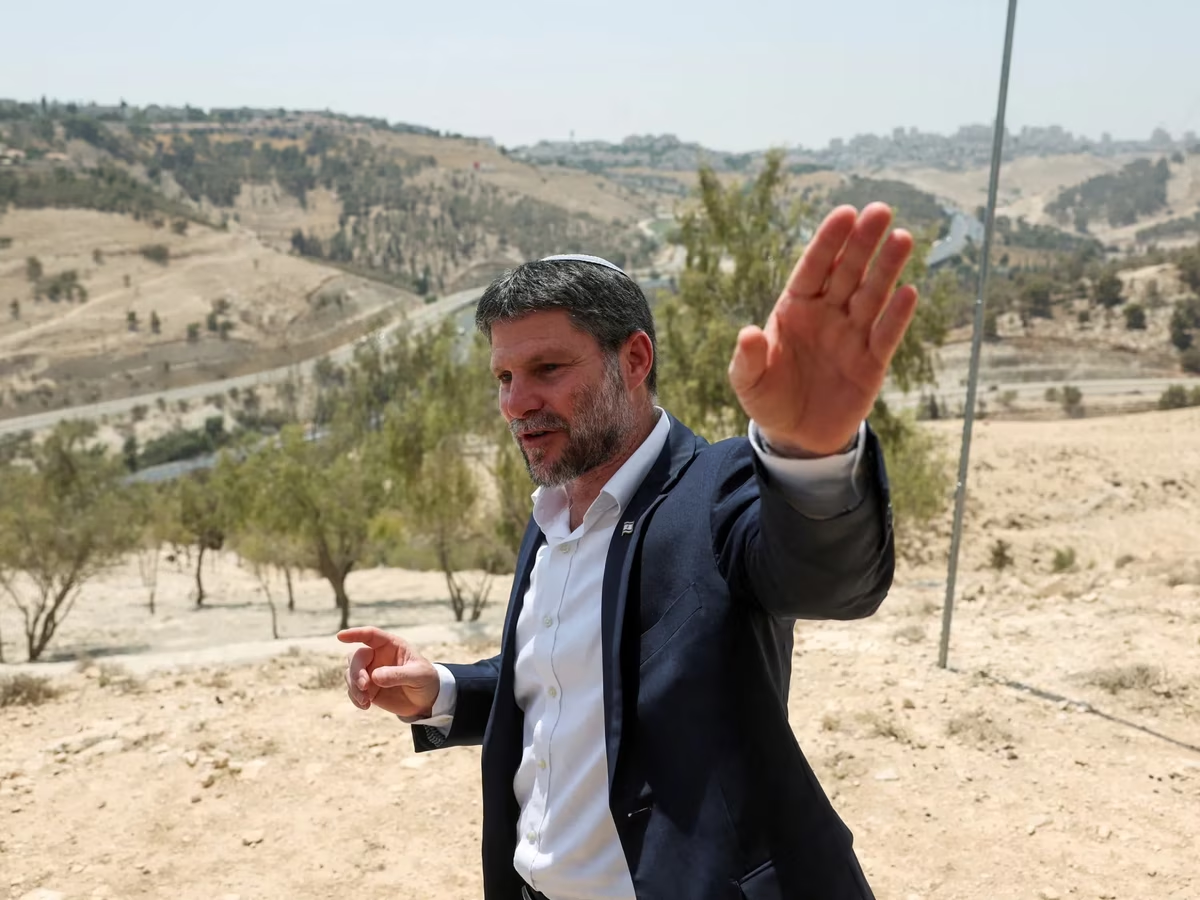
Israeli reports indicate that the project has already reached the cabinet and enjoys the support of influential figures within Prime Minister Benjamin Netanyahu's government, foremost among them Finance Minister Bezalel Smotrich, who is one of the most prominent leaders of the settlement movement and a historical founder of the "Agricultural Union" that is leading this initiative.

This development comes amidst a series of legal and administrative changes witnessed in the West Bank in recent years, where a large part of the occupation administration's powers has been transferred from the military establishment to civilian bodies controlled by officials from the settlement movement. This has led to the acceleration of approval procedures for settlement construction projects and the reduction of bureaucratic restrictions that previously delayed their implementation.

According to Tafakji, settlement projects previously underwent complex security and military reviews before being presented to the government twice a year. Today, they are subject to civilian committees that hold weekly meetings to approve new projects, a change Smotrich previously described as a "change in the DNA of the system," referring to the structural shift in the mechanism of West Bank administration.

In recent months, the Israeli government also approved new measures allowing Israelis to purchase properties within Areas (A) and (B), in addition to expanding the powers of Israeli institutions in managing Palestinian historical and religious sites. Analysts see these steps as part of a gradual annexation policy, aimed at transferring Israeli control from a temporary military level to a permanent civilian sovereignty level.

These measures were accompanied by legislative steps taken by the Knesset, including rejecting the establishment of a Palestinian state, and then issuing positions supporting the annexation of the West Bank, which provided political cover for projects that were until recently considered highly sensitive domestically and internationally.

Smotrich had declared on more than one occasion that his goal is to "eliminate the idea of a Palestinian state" and to end the Oslo Accords "officially and practically." Observers believe that the "Day of Decision" plan represents the clearest practical application of this political vision.

Shift from Occupation Management to Imposing Sovereignty

The importance of the project lies in its reflection of a transition from a policy of settlement expansion to a strategy of penetrating Palestinian cities themselves. The goal is no longer merely to surround Palestinian communities with settlement belts, but to establish strongholds within or in direct proximity to them, making any future Israeli withdrawal more politically and security-wise complex, and transforming the settler presence into a permanent, difficult-to-dismantle element.

From this perspective, the danger of the project is not as much related to the number of proposed settlement outposts as it is to the philosophy upon which it is based. Control over intersections, heights, and religious and administrative sites practically means redrawing the security and demographic map of the West Bank, so that Palestinian cities become surrounded by a network of Israeli control points, which undermines geographical contiguity and prevents the emergence of a cohesive Palestinian entity.

The Settlement Movement: From Pressure Group to Governing Partner

The plan also reveals a profound shift in the structure of decision-making within Israel. The settlement movement is no longer merely a pressure group influencing governments, but has become a direct partner in shaping policies and managing occupation institutions. The transfer of civil administration powers to figures belonging to the settlement movement has accelerated construction and annexation procedures, and reduced the role of security and diplomatic considerations that previously delayed some projects or limited their scope.

This reflects the integration of the settlement project into the core of state institutions, so that settlement is no longer merely a negotiating tool or a political card, but has become the governing framework for the Israeli vision towards the future of the West Bank, transforming annexation from a proposed option into a gradual process that accumulates through facts on the ground.

A New Test for the International Community

In contrast, these developments present the international community with a renewed test regarding its ability to protect the legal and political foundations upon which the peace process was built. For years, the international response has been limited to statements of condemnation and calls to halt settlement, without translating this into practical measures or effective political pressure.

Analysts believe that the international powers' preoccupation with other global and regional crises, coupled with the absence of a genuine Western will to impose a political cost on Israel, has provided the Israeli government with ample space to proceed with its settlement projects at an accelerated pace. If this equation continues, the facts being imposed on the ground today may, over time, turn into new political boundaries, making the two-state solution closer to a theoretical framework than a viable project, and ushering in a new phase where the termination of the Oslo Accords becomes a practical reality rather than a political declaration.

PALESTINE

Tue 07 Jul 2026 7:18 am - Jerusalem Time

Upcoming Negotiations in Rome and a Bloody Israeli Violation Claims Civilian Lives in Southern Lebanon

The Israeli Ambassador to the United States, Yehiel Leiter, revealed a plan for a new round of diplomatic talks between Israel and Lebanon in the Italian capital, Rome. This round is scheduled to begin on July 15 and 16, with discussions taking place at the ambassadorial level to address outstanding issues.

Leiter clarified during a meeting with the Council on Foreign Relations in Washington that his country views these negotiations as a fundamental opportunity to continue discussions on security and border arrangements. The meetings aim to strengthen regional stability mechanisms and avoid any slide towards a widespread military escalation that could threaten the region's security.

In the context of intense diplomatic activity, press reports indicated that Lebanese President Joseph Aoun would travel to Washington to meet with US President Donald Trump on July 21. This anticipated summit comes at a sensitive time, aiming to advance the political settlement process and solidify the pillars of the recent agreement.

On the ground, Israeli forces committed a serious violation of the two-week-old ceasefire agreement following an airstrike that targeted a civilian car deep in southern Lebanon. The attack resulted in the deaths of four people, including three women, in an escalation that sparked a wave of official and popular condemnation.

Local sources reported that the drone strike targeted the car of a public school principal as she was returning with her family from inspecting their home in the Nabatieh al-Fawqa area. The Lebanese Ministry of Health confirmed the casualty toll, noting that among the dead were a domestic worker and a Syrian worker who were with the family.

For its part, the Israeli army claimed that the strike targeted four individuals it described as 'suspects' who were approaching the prohibited security zone in the south. The military spokesman claimed that the operation was precise and aimed at eliminating what he described as an 'imminent threat' in that border area.

Lebanese MPs condemned this targeting, holding the international community responsible for its silence regarding repeated Israeli violations of Lebanese sovereignty. Political parties considered the bombing of civilians to be an undermining of de-escalation efforts and a blatant breach of the understandings reached under international patronage.

In another development, the Israeli army sent warning voice messages to residents of five predominantly Christian municipalities in the Marjayoun district. These messages urged residents to prevent the entry of what they described as 'strangers' into their villages, in a clear reference to preventing the return of Hezbollah elements to those areas.

These developments come after the signing of a framework agreement on June 26, sponsored by the US, aimed at establishing a roadmap to end the armed conflict. The agreement stipulates a gradual Israeli withdrawal, met by the deployment of the Lebanese army in specific areas as a first experimental step.

However, the agreement faces significant challenges, particularly concerning the annex on disarming Hezbollah, a clause that the party has unequivocally rejected. Observers believe that the absence of a clear timetable for the Israeli withdrawal further complicates the field and political landscape alike.

In his recent statements, the Lebanese President emphasized the need for the US administration to exert real pressure on Israel to complete its full withdrawal. He considered this withdrawal to be the only key to achieving any tangible progress on the path to peace and ensuring sustainable security on the borders.

President Aoun pointed out that the continued presence of Israeli forces on Lebanese territory undermines the authority of the state and prevents the army from exercising its sovereign duties. He affirmed that a just peace cannot be achieved under continued occupation and daily violations of airspace and land.

Border villages are experiencing a state of cautious anticipation amid ongoing intermittent Israeli strikes targeting what Israel claims are military infrastructures. Both sides exchange accusations of truce violations, putting the ceasefire agreement at risk before the Rome negotiation round.

International powers, led by the United States and Italy, are striving to provide a diplomatic environment that helps bridge the views between the two parties. The reliance remains on the ability of political channels to address outstanding issues away from the language of weapons that continues to rear its head in the South.

The continued occupation undermines the legitimacy of the state and prevents the deployment of the army, which is the primary obstacle to achieving a just and lasting peace.

ARAB AND WORLD

Tue 07 Jul 2026 7:17 am - Jerusalem Time

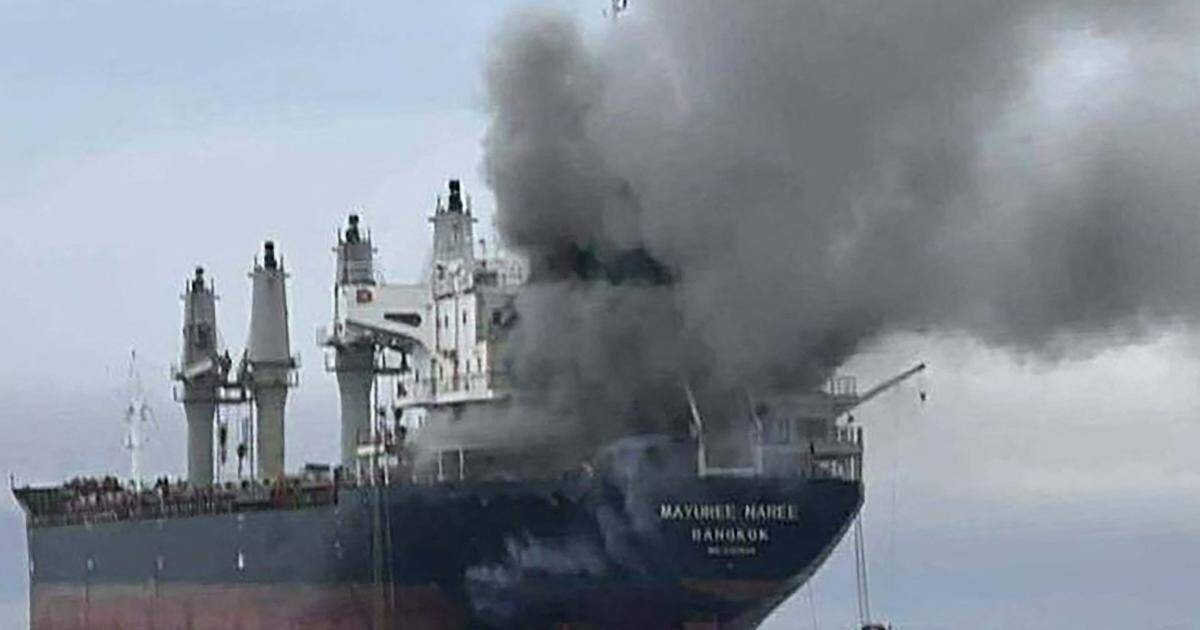
Oil tanker targeted by projectile in Strait of Hormuz amid escalating tensions between Washington and Tehran

Official sources at the UK Maritime Trade Operations (UKMTO) reported today, Monday, that an oil tanker was directly hit by an unspecified projectile while transiting the Strait of Hormuz off the coast of the Sultanate of Oman. The sources clarified that the attack occurred 8 nautical miles east of Lima, resulting in a fire on the port side of the vessel, with no crew injuries or serious environmental leaks reported.

In a related context, media reports quoted a US official confirming that the Iranian Revolutionary Guard Corps (IRGC) launched at least two missiles at commercial ships sailing in the international waterway. The official indicated that the attack caused significant damage to two vessels, a move that reflects the fragility of the recent de-escalation achieved between major powers and Tehran regarding maritime navigation security.

This field escalation comes at a sensitive time in the region, as the attack coincided with the funeral ceremonies of former Supreme Leader Ali Khamenei in Iran. The incident has raised international fears of the return of direct military confrontation in the strait, which is the most important artery for global energy trade, especially shortly after the resumption of navigation under a framework agreement signed last June.

For his part, US President Donald Trump hinted at decisive options towards Tehran, indicating that the US administration seeks to reach a final agreement or proceed with 'ending the mission,' a clear reference to potential military action. These statements were met with a firm response from the Secretary of Iran's Supreme National Security Council, who stressed the need to address the Iranian people with respect to avoid harsh reactions.

Field data indicates that Iran continues to adhere to its position rejecting a return to the free navigation system that prevailed before the recent conflict, despite continuous US pressure. Tehran had previously been accused of targeting ships in Kuwait and Bahrain in response to US airstrikes, leading the region into a spiral of military action and reaction that affected supply chains.

The Strait of Hormuz represents a vital pivot point for the global economy, with approximately 20 million barrels of crude oil passing through it daily, accounting for about one-fifth of global liquid oil consumption. Any long-term disruption in this waterway could lead to unprecedented jumps in global energy prices, posing complex economic and security challenges for the international community.

Amid ongoing tensions, international shipping companies are cautiously monitoring developments in the Gulf, with calls for enhanced military protection for commercial convoys. Informed sources confirm that the coming days will be crucial in determining the fate of the fragile de-escalation, especially with Washington's insistence on securing international navigation and Tehran's demand for a complete lifting of restrictions imposed on its ports.

Washington will reach an agreement with Iran or will end the mission.

PALESTINE

Tue 07 Jul 2026 7:17 am - Jerusalem Time

Israel Rejects Hamas Government Dissolution, Insists on Disarming Gaza Factions

Israeli Foreign Minister Gideon Sa'ar reiterated Tel Aviv's strict demand for the disarmament of the Hamas movement in the Gaza Strip, considering the movement's recent announcement of dissolving its administrative government as merely a political maneuver. Sa'ar clarified that this step is essentially aimed at avoiding the disarming of factions under the guise of handing over authority to civilian entities.

The Israeli minister affirmed that his government is committed to the literal and full implementation of the plan put forth by US President Donald Trump, which explicitly stipulates the demilitarization of the Strip. He indicated that any future arrangements must ensure that no military force threatening Israel's security remains in the areas to be administered by the technocratic government.

For its part, the Hamas movement officially announced the dissolution of its de facto government in the Gaza Strip, including the committee overseeing the ministries that had managed the Strip's affairs for over a decade. The movement stated that this step comes as a gesture of goodwill to facilitate the transfer of authority to a group of Palestinian technocrats within the framework of international understandings.

Despite this announcement, the movement clarified that ministry employees would remain in their positions to ensure the continuity of essential services for the population. It also stressed that it would continue to oversee the security file and the police force in areas still under its field control, which raises widespread Israeli and American reservations.

In a related context, sources reported that the 'Peace Council' formed by Trump to monitor the implementation of the plan is closely following Hamas's recent moves. The Council affirmed that the final assessment of the seriousness of these steps would depend on concrete actions on the ground, especially regarding meeting the needs of the population and ensuring stability.

On the ground, the Gaza Strip continues to suffer from massive destruction more than two and a half years after the outbreak of the comprehensive military confrontation in October 2023. Continuous military operations have caused the displacement of nearly two million people, most of whom live in harsh humanitarian conditions in dilapidated tents and shelters.

Administratively, Ismail Al-Thawabta, director of the government media office in Gaza, announced the resignation of the head of the government emergency committee and the final dissolution of the committee. Al-Thawabta indicated at a press conference in Gaza City that this measure aims to enhance the seriousness of the administrative transition and enforce agreements concluded with international parties.

For his part, Ali Shaath, head of the National Committee for Gaza Administration, expressed his 15-member team's readiness to take over national tasks as soon as the necessary capabilities are available. Shaath stipulated that for the committee's success, there must be a single authority and a unified law, in addition to a single legitimate weapon subject to clear political authority.

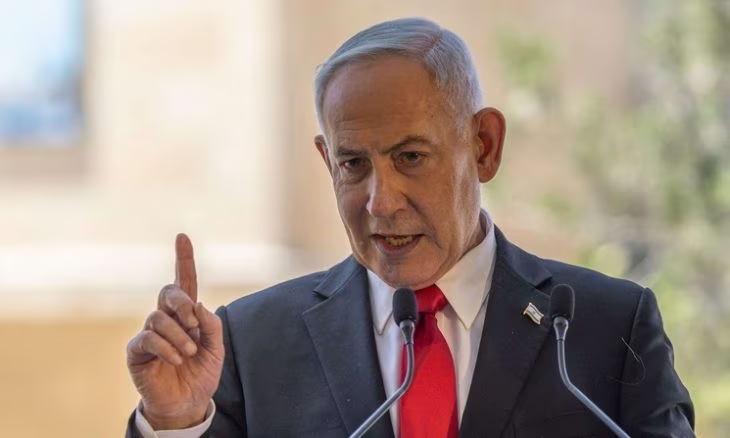
Regarding the field situation, Israeli forces continue to control more than 60% of the Strip's area, where they impose buffer zones and conduct intensive military patrols. Israeli Prime Minister Benjamin Netanyahu affirms that his army will not withdraw from these areas to ensure deterrence against any future attacks that might originate from the Strip.

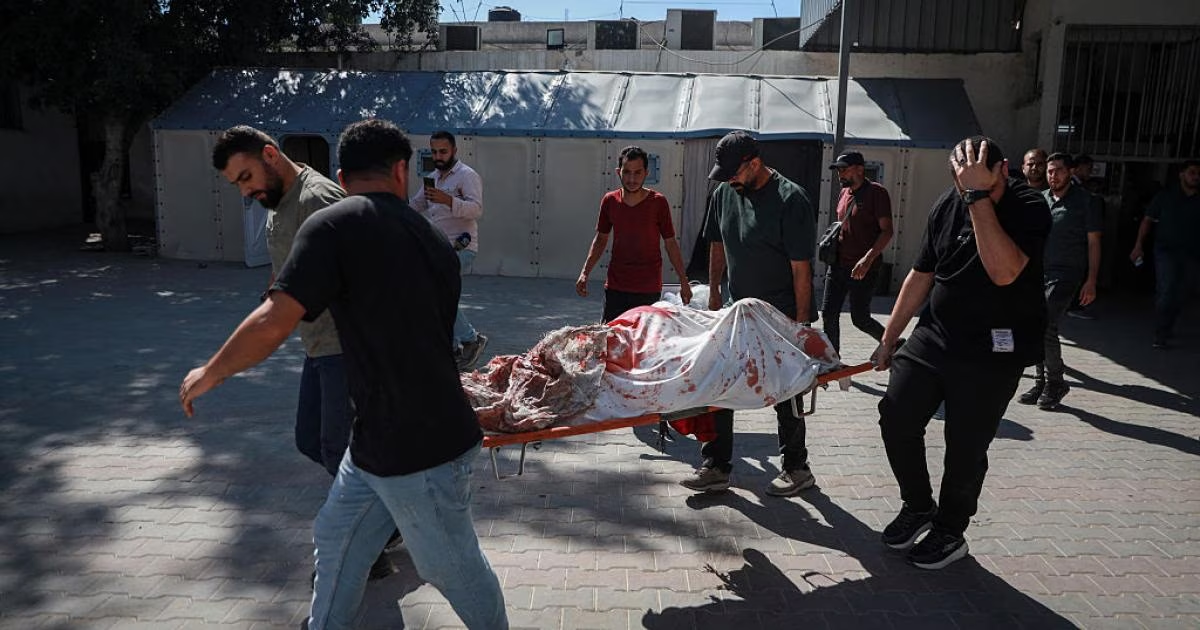
Monday witnessed a new field escalation resulting in the killing of five Palestinians in scattered airstrikes targeting different areas. Medical sources reported that a couple was killed in a strike targeting a residential apartment in the Tal al-Hawa neighborhood of Gaza City, while others fell in attacks targeting displaced persons' tents and vehicles in Khan Yunis.

The Israeli army claimed that the strike in the Tal al-Hawa neighborhood targeted Fadi Ashour Daghmas, whom it described as a prominent military commander in the ranks of the Hamas movement. No immediate comment was issued by the army regarding the other raids that targeted gatherings of displaced persons in the southern areas of the Strip.

The Hamas movement accuses the Israeli side of continuous intransigence and violating the fragile ceasefire understandings reached under American auspices. The movement believes that Israel is evading the requirements of withdrawal from the Strip by imposing impossible conditions related to the resistance's weapons, which it considers a 'red line'.

Reports indicate that the Washington-backed plan calls for the full handover of governmental oversight to the National Committee for Gaza Administration, a technocratic body that enjoys international support. However, the dilemma of 'weapons' remains the major obstacle threatening to collapse the political process and return to a comprehensive confrontation.

The residents of the Strip remain in a state of cautious anticipation of these political developments, with slim hopes that these moves will lead to an end to the suffering of displacement and the beginning of reconstruction operations. However, hardline Israeli statements indicate that the path towards lasting stability is still fraught with security and political complexities.

Israel insists on the full implementation of the Trump plan, whose core principles are the disarmament of Hamas and all other organizations and the complete demilitarization of the Gaza Strip.

PALESTINE

Tue 07 Jul 2026 7:17 am - Jerusalem Time

Hamas announces dissolution of emergency committee, affirms commitment to transferring Gaza administration to national committee

The Hamas movement announced its full commitment to implementing all provisions of the ceasefire agreement concluded in the Gaza Strip, emphasizing that it is working diligently to facilitate the process of transferring administrative responsibilities. The movement clarified in an official statement that it has already begun taking practical steps to ensure the handover of all administrative tasks in the Strip to the newly formed National Committee, as part of understandings aimed at arranging internal affairs and managing the next phase.

In the context of these arrangements, the movement confirmed the dissolution of the governmental emergency committee that had been managing executive affairs during the past period, considering this decision a responsible measure to create conditions for the National Committee. Sources indicated that this step aims to unify administrative authority in the Strip and prevent any overlap in powers, thereby ensuring the smooth functioning of vital institutions that serve citizens.

On the other hand, Hamas warned against the actions of the Israeli occupation authorities aimed at undermining this administrative transition by attempting to impose a state of vacuum in field institutions. The movement stated that the occupation is deliberately seeking to obstruct the implementation of the agreement's provisions, which leads to an exacerbation of the humanitarian crises experienced by the residents of the Strip, and hinders efforts to rehabilitate essential facilities and normal life.

The movement issued an urgent appeal to international mediators and the guarantor states of the agreement, stressing the necessity of immediate intervention to exert real political pressure on the Israeli side to stop its obstructive practices. It affirmed that the continued obstruction by the occupation of the National Committee threatens the stability of the truce and prevents the arrival of necessary relief aid urgently needed by the residents under current circumstances.

Hamas concluded its statement by emphasizing the importance of quickly enabling the National Committee to enter the Gaza Strip and commence its executive and relief tasks without delay. It considered the success of this committee in performing its role a fundamental pillar for ensuring the provision of services to citizens and the reconstruction of what the war destroyed, affirming that the responsibility now lies with the international community to ensure the implementation of the commitments arising from the ceasefire agreement.

The step to dissolve the emergency committee comes as a responsible measure to complete the transfer of administrative and executive powers to the new National Committee.

PALESTINE

Mon 06 Jul 2026 3:53 pm - Jerusalem Time

Settler Attacks.. Unprecedented Escalation as Part of the "Creeping Displacement" Policy

Dr. Khalil Tafakji: Villages are subjected to attacks because, for them, they are an obstacle to settlement expansion, and therefore they are systematically targeted to force their residents to leave. Abdullah Abu Rahma: The absence of a real confrontation with these policies may open the door for settlers to move to a stage of controlling cities, in line with the "Decisive Plan." Dr. Hassan Brijieh: Forced displacement represents a declared goal of the occupation government, and if it fails, continuous field measures push Palestinians towards the same outcome. Fayez Abbas: Israeli policy is based on continuing settlement expansion and exerting pressure to impose a reality that makes the establishment of a Palestinian state impossible. Dr. Suhail Diab: The attacks may be part of a trend to expand control over Area C and strengthen the connection of settlement blocs to make any political settlement more complicated. Yasser Manna: Settler violence is no longer limited to retaliatory attacks but has become a means of pressure to impose facts on the ground before any declared political decisions. Ramallah – Exclusive to "Al-Quds" – The field reality in the West Bank is witnessing an unprecedented escalation in settler attacks that have extended to include Palestinian villages, amid a clear shift in the nature of these attacks from scattered assaults to more organized and widespread operations, targeting agricultural lands, homes, water sources, and pastures, in parallel with the establishment of new settlement outposts and the imposition of field realities that strengthen control over areas classified as (C). Officials, specialists, writers, political analysts, and university professors, in interviews with "Al-Quds," believe that this escalation reflects an integrated policy aimed at reshaping the geographical and demographic realities in the West Bank, noting that Palestinian villages located around major settlement blocs have become the main target of attacks, as they constitute an obstacle to settlement expansion and the completion of geographical connectivity between settlements and outposts. They confirm that the repeated attacks, which include burning crops and homes, seizing land, preventing farmers from accessing their lands, and occupying some homes, represent continuous pressure tools to gradually force residents to leave, as part of the "creeping displacement" policy. They warn that the continuation of these policies, in light of political and security support for settlers, threatens to expand the circle of displacement from Bedouin communities to villages, and perhaps to wider areas in the future, thereby entrenching a new reality that makes any political settlement more complicated and undermines the chances of establishing a geographically contiguous Palestinian state. A settlement project to empty areas of their population. The expert in settlement affairs, Dr. Khalil Tafakji, confirms that the escalation of settler attacks on Palestinian villages in the West Bank cannot be separated from a broader settlement project aimed at emptying entire areas of their Palestinian residents, in preparation for connecting settlements and outposts to each other, and achieving geographical connectivity subject to full Israeli control. Tafakji explains that the Palestinian villages currently subjected to repeated attacks constitute, from the perspective of the settlement planner, an obstacle to settlement expansion, and therefore they are systematically targeted to force their residents to leave. Tafakji points out that the villages of Al-Mughayyir, Turmus Ayya, Al-Lubban Al-Sharqiya, and Al-Sawiya are located within a large settlement cluster extending from the Kafr Qasim area towards the Jordan Valley, with the "Ariel" settlement being one of its most prominent centers, which gives this area strategic importance in Israeli plans. Official support. Tafakji confirms that what is happening on the ground is with the support of the Israeli government and aims to empty these areas of Palestinian presence, so that they become completely subject to Israeli control, considering that this is consistent with what is known as the "Fingers" project proposed by former Israeli Prime Minister Ariel Sharon, which is based on establishing settlement extensions connecting the Jordan Valley with the Green Line areas, thereby dismembering the West Bank and isolating Palestinian communities from each other. Tafakji points out that the village of Al-Mughayyir, northeast of Ramallah, represents a clear example of this policy, due to its proximity to what is known as the "Allon" settlement line and to the settlement clusters extending towards the Jordan Valley, which include large settlements such as "Shilo" and "Ma'ale Efraim," stressing that controlling this area means, from the occupation's point of view, emptying it of its Palestinian residents and fully controlling it. Attacks to cripple the economy. Tafakji confirms that the attacks are not limited to attacking residents, but also include burning crops, bulldozing land, destroying olive trees, and targeting agricultural lands in Al-Mughayyir, Turmus Ayya, and Al-Lubban Al-Sharqiya, areas whose residents primarily depend on agricultural activity. Tafakji believes that these practices aim to cripple the local economy and strip Palestinians of their livelihoods, thereby gradually forcing them to leave their lands. He explains that the ultimate goal of these policies is to implement "silent displacement," which does not necessarily rely on direct expulsion at gunpoint, but rather on repeated attacks, burning property, and inflicting continuous losses on citizens, making staying in those areas extremely difficult. Tafakji points out that this method has been previously applied in Bedouin communities in the Jordan Valley and Masafer Yatta, and is now being expanded to include major Palestinian villages that hinder settlement expansion, as part of an Israeli vision aimed at re-engineering Palestinian geography within the West Bank and changing the demographic reality in favor of the settlement project. A new, more dangerous stage. The acting deputy head of the Wall and Settlement Resistance Commission, Abdullah Abu Rahma, believes that settler attacks in the West Bank have entered a new, more dangerous stage, after moving from targeting Bedouin communities and less densely populated areas to carrying out repeated attacks on Palestinian villages, as part of a systematic plan aimed at controlling more land and imposing forced displacement on the Palestinian population. Abu Rahma explains that the previous stage focused on targeting Bedouin communities extending from the northern Jordan Valley through Masafer Yatta, the eastern Bethlehem desert, the eastern Jerusalem desert, and the eastern Ramallah desert, all the way to the areas east of Nablus and Tubas. Abu Rahma points out that this policy has led to the displacement of more than 80 Bedouin communities and the settlers' control over vast areas, which has made accessing those areas or engaging in grazing and work there extremely difficult, and the movement of citizens and their vehicles has become fraught with dangers due to continuous threats and attacks. Direct targeting of villages. Abu Rahma confirms that recent developments reflect the transition of settler groups to a new stage based on directly targeting Palestinian villages, and that the attacks are no longer limited to attacking citizens and their property, but have extended to occupying homes and residential buildings in several towns and villages, preventing their owners from accessing them, in parallel with attacking vehicles, farms, facilities, and agricultural lands. Abu Rahma considers that this confirms that these groups are working according to an organized plan and are not individual movements or related to what is promoted as "agricultural farms" settlements. He stresses that what are called farms or agricultural outposts are a tool used to control land and expand settlements, in addition to providing funding and gaining sympathy and promoting the settlement project, while the main goal remains to impose field control over the largest possible area of Palestinian land. The danger of extending to cities. Abu Rahma warns that the absence of a real confrontation with these policies may open the door for settlers to move to more dangerous stages, starting with tightening control over villages and then extending to cities, considering that this is consistent with what is known as the "Decisive Plan" proposed by Israeli Finance Minister Bezalel Smotrich in 2017, which aims to forcibly displace Palestinians from their lands, starting from Bedouin communities to villages, then to cities, eventually pushing them to emigrate outside Palestine. He points out that these trends are now being openly discussed through speeches and social media, and their proponents boast about what they describe as achievements related to the establishment of dozens of settlements and outposts. Clear indicators of the escalation of the settlement offensive. The researcher in settlement affairs, Dr. Hassan Brijieh, explains that the escalation of settler attacks in the West Bank reflects a more dangerous stage of the settlement project, stressing that the attacks are continuously increasing with the protection of the Israeli army and the Israeli police, and under the directives of the Israeli government, as part of a policy aimed at expanding control over land and forcing Palestinians to leave it. Brijieh points out that the patterns of attacks have witnessed a significant development recently, as they are no longer limited to attacking property, but have extended to burning and occupying homes, in addition to shooting unarmed civilians, considering that these practices constitute clear indicators of the escalating pace of the settlement offensive led by the right-wing Israeli government, while settlers are its executive tool on the ground. Brijieh notes that the pace of settlement targeting of Palestinian villages increases whenever Israeli elections approach, indicating that it is linked to the nature of Israeli political discourse. Brijieh confirms that forced displacement represents a declared goal of the Israeli government, both in the Gaza Strip and the West Bank, noting that even if it cannot be achieved directly, continuous field measures push Palestinians towards the same outcome. Brijieh explains that these policies include genocide, imposing military restrictions, establishing gates and checkpoints, controlling the movement of citizens and road junctions, in addition to demolishing homes and bulldozing agricultural lands and preventing farmers from accessing their lands, which directly affects the olive, grape, guava, and other crop seasons. Brijieh points out that all these measures, in addition to proposals for corridors or various projects, converge in one direction, which is to push Palestinians towards forced displacement or what is described as voluntary displacement, stressing that the ultimate goal of these policies is to empty the land of Palestinian presence, whether in the West Bank or the Gaza Strip. Netanyahu's government and the escalation of the settlement project. The writer specializing in Israeli affairs, Fayez Abbas, explains that the formation of Benjamin Netanyahu's current government represented a turning point in the escalation of the settlement project in the West Bank, after key positions were assigned to figures from the religious Zionist current and the settlement movement, which was reflected in the nature of field policies in the occupied Palestinian territories. Abbas points out that the appointment of Bezalel Smotrich as Minister of Finance, in addition to granting him powers within the Ministry of Defense related to managing West Bank affairs, and the appointment of Orit Strock as Minister of Settlement, marked the beginning of a new stage aimed at intensifying the attack on Palestinian lands and villages, especially in areas that Israel considers strategically important, with the aim of strengthening control over the West Bank. Abbas notes that the appointment of Itamar Ben-Gvir as Minister of National Security, and granting him powers related to the police responsible for settlers in the West Bank, contributed to providing broader political and security cover for settlement groups, considering that the three ministers played a pivotal role in supporting what he described as Jewish militias, including groups known within Israel as "hilltop youth." Control of hills and establishment of settlement outposts. Abbas explains that these groups, in coordination with the occupation army, focused on controlling hills and establishing new settlement outposts near Palestinian villages, especially in the Jordan Valley and the Hebron mountains, while carrying out attacks targeting residents and their property, including burning homes and agricultural crops, harassing citizens, and stealing or killing sheep. Abbas confirms that these attacks took place under the protection of the occupation forces, without legal prosecution of those responsible, in addition to receiving financial and logistical support including vehicles and various equipment. Official support and protection. Abbas explains that official support for these groups was not limited to funding or political cover, but also included security and military protection, which contributed to the escalation of attacks against Palestinians in areas that the Israeli political and security leadership considers strategic for settlement expansion. He points out that Israeli Defense Minister Yoav Gallant issued a decision preventing the classification of Jews involved in attacks in the West Bank as "terrorists," and also canceled administrative detention orders against a number of leaders of what is known as Jewish terrorism, considering that these steps strengthen the immunity enjoyed by these groups. Abbas indicates that a number of security and military officials overseeing the West Bank come from or are linked to the settlement movement, including the head of the Shin Bet and the commander of the Central Command in the army and a number of senior officers, considering that this reality is reflected in the nature of decisions and measures taken against Palestinians. Abbas notes that Israeli policy, although not officially declared, is based on continuing settlement expansion, establishing more outposts, and exerting pressure on Palestinians, to the point of imposing a reality that makes the establishment of a Palestinian state in the West Bank impossible. Organized pressure led by higher authorities. Professor of Political Science and specialist in Israeli affairs, Dr. Suhail Diab, confirms that the escalation of settler attacks on Palestinian villages in the West Bank reflects a qualitative shift in the nature of these attacks, noting that they no longer represent scattered attacks or random movements carried out by small groups, but have become part of an organized pressure pattern led by higher authorities within a studied vision related to the future of the West Bank and settlement expansion programs. Diab explains that the first indication is the transition from individual attacks to an organized policy characterized by coordination and continuity, noting that the attacks are no longer limited to attacking citizens or carrying out scattered acts of violence, but have expanded to include burning crops, seizing agricultural lands, establishing new settlement outposts, controlling water sources and pastures, and preventing farmers from accessing their lands, which he sees as part of an integrated plan aimed at imposing new field realities on the ground. Creating a coercive environment. Diab points out that the second indication is the creation of what international organizations describe as a "coercive environment," which is a situation in which the daily lives of Palestinians become extremely difficult as a result of the destruction of livelihoods, the imposition of restrictions on movement and travel, and the absence of effective legal protection. Diab notes that this concept is adopted in UN literature and is considered, under international law, a practice that violates human rights protocols and the rules governing conflicts and occupation. Diab confirms that the political dimension represents the most important indication in these developments, explaining that the attacks are linked to trends within Zionist movement currents, especially the settlement current, which works to expand actual control over large areas of Area C, and strengthen geographical connectivity between settlement blocs and new outposts, thereby entrenching field realities that make any future political settlement more complicated. Diab points out that the Israeli government may sometimes express limited reservations about some attacks, but this is related to diplomatic considerations to avoid embarrassment before the international community, especially regarding the relationship with the United States. Escalating risks of displacement in the West Bank. Diab points to alarming indicators regarding the escalating risks of displacement in the West Bank, explaining that there is talk of a broad policy that practically leads to the relocation of entire villages, which requires precise legal and political distinction. Diab confirms that international institutions base their warnings on a set of indicators, most notably the increasing number of families who have left pastoral and agricultural communities, the significant decline in citizens' ability to access their lands, and the repeated attacks on homes and infrastructure, in addition to the increasing cases of families forced to flee more than once due to repeated attacks. He notes that the transformation of these attacks into an organized pattern was accompanied by the displacement of thousands of Palestinians in 2026, as a result of settler violence and restrictions on access to land and livelihoods, with these numbers significantly exceeding previous years' levels. Diab believes that the continuation of pressing conditions may lead to forced displacement of residents if they are forced to leave their homes involuntarily, stressing that small pastoral communities in the Jordan Valley and southern Hebron are, according to recent reports, among the most vulnerable areas to this scenario. Diab explains that what large parts of the West Bank are witnessing reflects an unprecedented escalation in settler violence, and an increase in economic and security pressures imposed on Palestinian rural communities, in addition to rising international concerns about individual and local displacement turning into a wider phenomenon if current trends continue, with all its humanitarian, political, and legal implications for the future of Palestinian presence in the targeted areas. Reshaping the reality in the West Bank. The writer and researcher specializing in Israeli affairs, Yasser Manna, confirms that the attacks carried out by settlers in the West Bank are no longer understood as individual acts or uncontrolled incidents, but rather represent part of an organized and institutional policy consistent with the vision adopted by the Israeli government to reshape the demographic and geographical reality in the West Bank. Manna explains that settlers have become the "back hand" of the Israeli government in the targeted areas, by carrying out a series of attacks that include attacking villages from their outskirts, targeting farmers and shepherds, burning crops, seizing property, and imposing control over roads, springs, and pastures, thereby expanding settlement influence and restricting Palestinian presence in open areas. A shift in the nature and function of settler violence. Manna confirms that settler violence has witnessed a clear shift in its nature and function, as it is no longer limited to acts of intimidation or retaliatory attacks, but has become a daily means of pressure used to impose new field realities before any declared political decisions, by reducing Palestinian presence in targeted areas and gradually expanding the scope of settlement control. Manna points out that Israeli Finance Minister Bezalel Smotrich explicitly announced his vision based on displacing Palestinians from the West Bank, but the most dangerous aspect is that displacement does not necessarily occur through direct official decisions, but rather by creating an environment hostile to Palestinian life, especially in villages and communities adjacent to settlement outposts. Manna confirms that when a Palestinian loses the sense of security, is deprived of access to his land, farm, or pasture, and his property is repeatedly attacked without protection or accountability, staying on his land turns into a difficult daily battle. Manna believes that these circumstances gradually push residents to leave peripheral areas, as part of the "creeping displacement" process, which begins with intimidating citizens, then drying up the elements of their steadfastness and livelihoods, leading to emptying entire areas of their indigenous inhabitants and opening the way for settlement expansion and imposing a new reality on the ground.


PALESTINE

Mon 06 Jul 2026 3:53 pm - Jerusalem Time

Smotrich announces launch of 'settlement revolution' extending from the West Bank to the Negev and Galilee

Israeli Finance Minister Bezalel Smotrich revealed government directives to expand the settlement project unprecedentedly, describing the current phase as the beginning of a 'settlement revolution'. Smotrich affirmed in his statements today, Monday, that these plans will not stop at the borders of the occupied West Bank but will include the Galilee and Negev regions to enhance demographic and geographic control.

These moves come as Benjamin Netanyahu's government relies on the support of far-right parties that prioritize settlement. These directives have already been translated into action with the Israeli cabinet recently approving the construction of 13 new settlements in the 'Binyamin' area in the central West Bank, with timelines set for implementation to begin in the coming months.

On the ground, local sources reported an escalation in settler attacks, where extremist groups on Sunday dawn set fire to Palestinian commercial establishments, including a restaurant and a cafe, on the road connecting the town of Al-Lubban Al-Sharqiya and the city of Salfit. These attacks are part of a growing wave of violence aimed at pressuring Palestinian citizens and forcing them to leave their lands for the benefit of settlement expansion.

In the vicinity of occupied Jerusalem, occupation machinery continues extensive bulldozing operations in the Shuafat Airport area near Qalandia village, with the aim of implementing settlement projects that connect settlement blocs to each other. Observers believe that these operations aim to completely isolate Jerusalem from its Palestinian surroundings and divide the West Bank into isolated cantons, making communication between them difficult.

According to data issued by the Wall and Settlement Resistance Commission, the number of settler attacks since the beginning of this year has exceeded 3,400, including attacks on villages and properties. The commission confirms that these figures reflect a green light from the Israeli political level for settlers to persist in their violations against Palestinians under the protection of the army.

For its part, estimates by the 'Peace Now' movement indicate that the number of settlers in the West Bank has reached about half a million settlers, in addition to another quarter of a million in East Jerusalem. These statistics illustrate the extent of settlement infiltration that the occupation seeks to impose as a fait accompli, preventing the establishment of a geographically contiguous Palestinian state in the future.

Regarding human casualties, the West Bank has witnessed a bloody escalation since October 8, 2023, resulting in the martyrdom of 1,175 Palestinians and the injury of thousands of others with varying degrees of wounds. Official bodies have also documented the arrest of about 24,000 citizens and the displacement of more than 33,000, amid the continuation of systematic military operations targeting infrastructure and Palestinian camps.

We have begun the settlement revolution, and this step will not be limited to the West Bank only, but will reach the Negev and Galilee.

PALESTINE

Mon 06 Jul 2026 3:53 pm - Jerusalem Time

Documenting the crime of detaining youths inside a vehicle and detonating a bomb in it in Qalandia camp

Videos widely circulated showed Israeli occupation forces committing a horrific crime in Qalandia camp, north of occupied Jerusalem, where a soldier threw a hand grenade inside a vehicle carrying a group of Palestinian youths. The assault did not stop there; the soldier forcefully closed the vehicle door to prevent the driver and passengers from escaping, leading to the explosion of the grenade while they were trapped inside, in a scene reflecting extreme sadism.

Following the explosion, the soldier continued to pursue the youths who managed to flee the vehicle, showering them with insults and profanities. The occupation forces present at the scene also threatened to fire live ammunition at the youths, forcing them to take cover behind the damaged vehicle's wreckage in a desperate attempt to protect their lives from direct and potential targeting.

For its part, Hebrew press reports revealed that the assailant belongs to the so-called 'Border Guard' forces, indicating that he initiated throwing the grenade after a verbal altercation during which he shouted angrily at the driver. These details refute any narratives attempting to justify the incident, confirming that the attack was deliberate and aimed at inflicting the greatest possible physical and psychological harm on unarmed civilians.

In an attempt to absorb public and human rights anger, the occupation police claimed that the soldier's conduct violated established procedures, announcing that the incident had been referred to the police internal investigations department. Observers believe that these procedures are often superficial and aim to mislead public opinion, as soldiers are rarely held accountable for their documented crimes against Palestinians, which encourages the repetition of such violations.

On the ground, this assault coincided with a widespread military escalation in Qalandia camp, where the Palestinian Ministry of Health announced the martyrdom of 16-year-old Walid Nidal Abu Snaineh, who succumbed to his injuries from occupation bullets. Medical teams also reported that two other children were injured by live ammunition in their lower extremities and were transferred to the hospital for treatment amidst a state of extreme tension that prevailed in the area.

Qalandia camp constitutes a constant flashpoint due to its strategic location on the road connecting the cities of Jerusalem and Ramallah, where it is subjected to repeated incursions and systematic assaults. The recent scenes sparked a wave of widespread anger on social media platforms, where activists considered what happened to represent the peak of the occupation army's moral degradation, demanding international accountability for these crimes that violate the most basic human rights.

Shut up, who are you talking to like that?

ARAB AND WORLD

Mon 06 Jul 2026 3:52 pm - Jerusalem Time

Christian villages in southern Lebanon refute Netanyahu's claims, affirm commitment to national identity

Municipalities, community leaders, and mukhtars of the Christian border villages in southern Lebanon issued a strongly worded statement, categorically denying Israeli media reports about these villages' desire to join Israel. This response followed statements by Israeli Prime Minister Benjamin Netanyahu, who claimed that local leaders had contacted the occupation authorities to request protection and citizenship.\n\nThe Lebanese community leaders described these allegations as pure fabrication and false news with no basis in reality, aimed at sowing discord among the people of the same nation. The statement affirmed that the residents of these areas are committed to their national identity and to the Lebanese state as their sole and ultimate authority, despite the shelling and harsh conditions imposed by the ongoing war.\n\nThe signatories of the statement clarified that the border villages have been keen, since the beginning of the military escalation, to coordinate fully with official Lebanese authorities, spiritual leaders, and international organizations. The goal of this coordination was to secure humanitarian corridors and ensure residents remained in their lands, while maintaining open channels of communication with legitimate state institutions in Beirut.\n\nThe Christian villages emphasized their pride in their Lebanese national affiliation, considering attempts to exploit their humanitarian suffering to serve Israeli political agendas as desperate and rejected. The statement indicated that what is being promoted by the Hebrew media falls within a misleading campaign aimed at distorting the positions of the border villages that have stood firm in the face of aggression.\n\nThe list of villages that signed the statement included Alma al-Shaab, Qawzah, Debel, Rmeish, Ain Ebel, and Deir Mimas, in addition to Burj al-Muluk, Qleiaa, Sarda, and Jadida Marjayoun. The villages of Ebel al-Saqi, Koukaba, Bouweida, Rachaya al-Fakhar, and Abu Qamha also joined the unified stance rejecting any form of dealing with the occupation.\n\nBenjamin Netanyahu had claimed in an interview with the American network 'Fox News' that some Christian villages in southern Lebanon had actually requested to be annexed to Israel. Netanyahu claimed that these villages were seeking protection from Hezbollah fighters, asserting that Israel was playing the role of 'protector' for Christians in the region, which was refuted by the reality on the ground and official statements.\n\nThese claims come at a time when border areas are witnessing a significant military escalation, with many of these Christian towns subjected to intense Israeli artillery shelling and airstrikes. Despite repeated evacuation warnings issued by the occupation army, the majority of residents preferred to remain in their homes to protect their churches and agricultural lands from destruction.\n\nLocal sources reported that the occupation army had attempted in recent weeks to exert pressure through direct phone calls with mayors and mukhtars in those villages. These calls included warnings against allowing resistance elements into the villages, in a clear Israeli attempt to create a social and security rift within the southern Lebanese fabric.\n\nIn a related context, Israeli Army Chief of Staff Eyal Zamir affirmed that his forces would continue to operate in southern Lebanon to remove what he described as threats, indicating the army's readiness to launch rapid offensive operations. These statements coincide with the continuation of field confrontations despite international attempts to reach a framework agreement for a ceasefire through American mediation.\n\nOn the international political front, press reports revealed sharp differences between Netanyahu and US President Donald Trump regarding the management of the war in Lebanon and Iran. Trump, in statements to 'Axios', described the Israeli Prime Minister as a "very difficult person," criticizing the pace of military escalation pursued by the current Israeli government.\n\nOfficial Lebanese statistics indicate that the Israeli aggression has so far resulted in the martyrdom of approximately 4,300 people and the injury of thousands, in addition to the displacement of over one million citizens. Most of the damage is concentrated in the southern regions and the southern suburbs of Beirut, where airstrikes have destroyed entire residential neighborhoods and vital infrastructure.\n\nDespite the widespread destruction, the residents of the border villages insist that their steadfastness is a national political message that rejects being drawn into false Israeli promises. Community leaders affirmed that the churches in the south will continue to ring their bells, confirming the Arab and Lebanese identity of this land, and rejecting any new divisive or colonial schemes.\n\nObservers believe that Netanyahu's statements aim to justify a long military presence in southern Lebanon by claiming the existence of a 'popular base' seeking protection. However, the swift and unified response from all concerned Christian villages has thwarted these political maneuvers and reaffirmed the unity of the Lebanese position in confronting the occupation.\n\nIn conclusion, the statement issued by the southern villages emphasized full commitment to Lebanese national choices, warning against being drawn into rumors spread by the Hebrew media. The signatories affirmed that their suffering from the war would not be an entry point for ceding their country's sovereignty or accepting any proposals that undermine the unity of Lebanese territories.\n\nThese claims are completely unfounded, and the people of the border villages are committed to the Lebanese state and its legitimacy and have not deviated from this position despite the conditions of war.
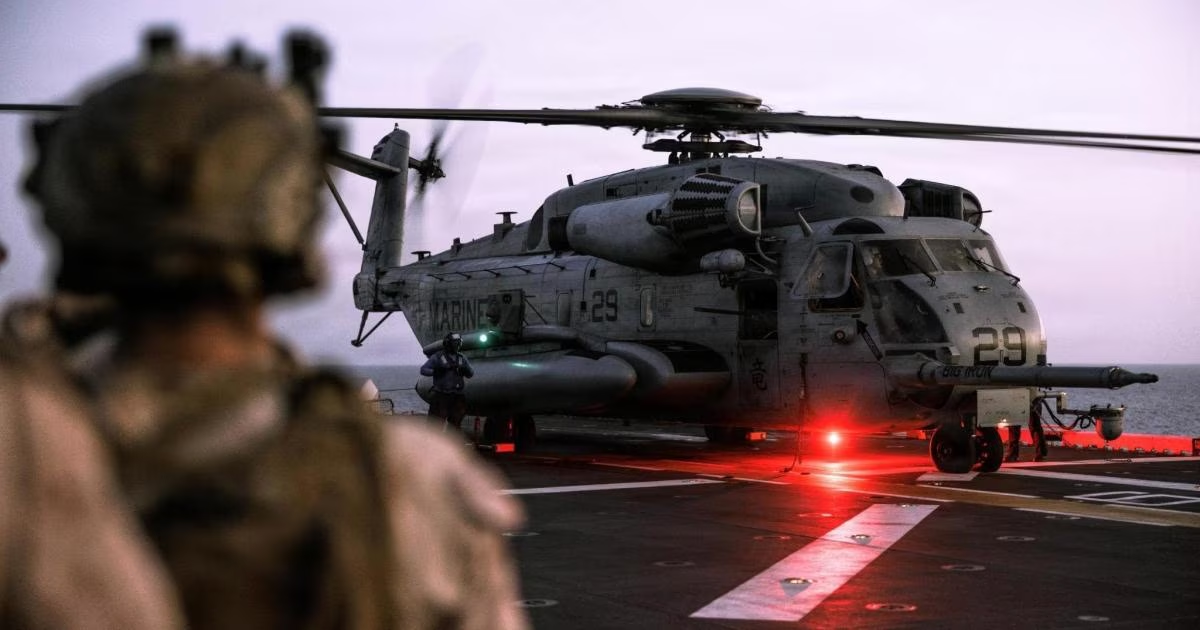
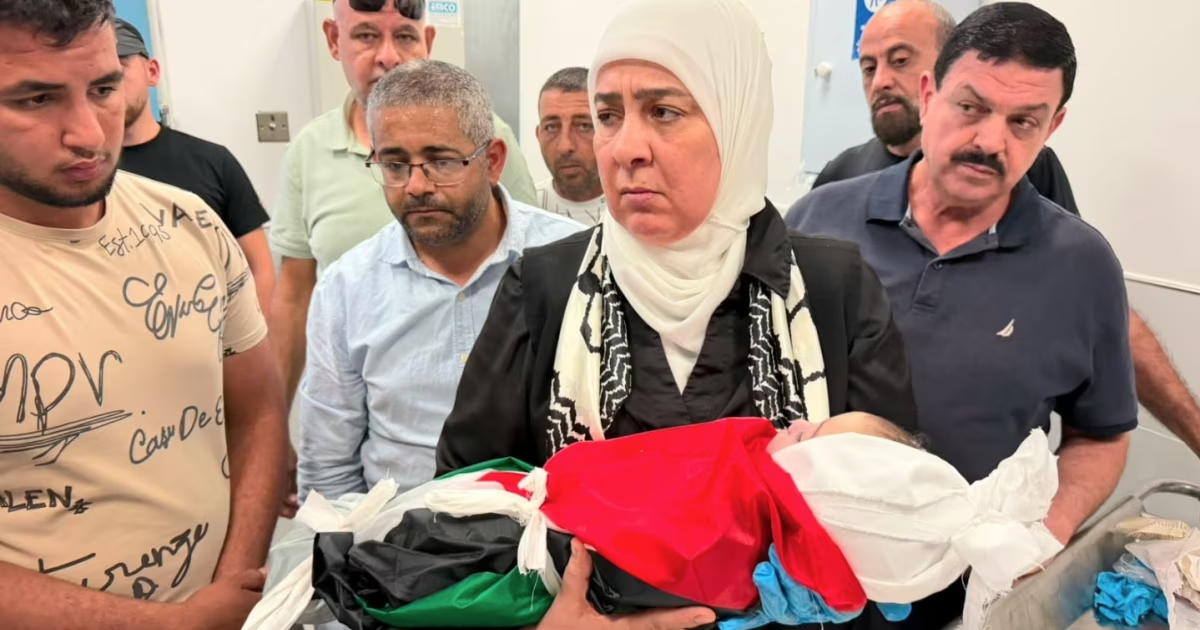
PALESTINE

Mon 06 Jul 2026 3:52 pm - Jerusalem Time

Martyrs and wounded in scattered Israeli raids on the Gaza Strip

Israeli air raids on the Gaza Strip resumed since the early hours of this Monday morning, resulting in the martyrdom of at least three people and the injury of about 22 citizens with varying degrees of wounds. These attacks come in the context of a series of continuous violations of the ceasefire agreement concluded in October of last year, as occupation aircraft continue to target civilian objectives and movements in various areas of the Strip.

In details of the field aggression, medical sources reported the martyrdom of one citizen and the injury of 15 others as a result of an airstrike that targeted a civilian vehicle in the Al-Mawasi area, which is crowded with displaced people, west of Khan Yunis city. Eyewitnesses also observed another targeting of a second vehicle near the Al-Matahen intersection north of the city, but no injuries were reported in that strike, which caused a state of panic among passersby.

In Gaza City, occupation aircraft targeted a residential home in the Tal al-Hawa neighborhood south of the city, which led to the immediate martyrdom of citizen Fadi Fallah Daghmash and his wife. The bombing also resulted in the injury of six other family members and neighbors, who were transferred to hospitals to receive treatment amidst difficult health conditions suffered by the besieged Strip.

Field sources indicated that the attack on the Daghmash family home was preceded by intense and low-altitude flights of Israeli helicopters that did not leave the skies of the Strip throughout the night. This intense aerial activity reflects the occupation's intention to continue military pressure and target populated residential areas despite existing international understandings to cease hostile operations.

In a related context, the occupation forces continue systematic destruction operations of the urban infrastructure by blowing up residential blocks within what is known as the 'Yellow Line'. These operations aim to erase what remains of civilian life, coinciding with the construction of military fortifications and earth berms in more than 40 strategic locations to enhance the Israeli military presence in those areas.

Official statistics issued by the Ministry of Health indicate that the toll of victims of Israeli violations since October 10, 2025, has risen to 1066 martyrs and more than 3400 injured. These figures confirm that the ceasefire agreement has not prevented the Israeli war machine from claiming more civilian lives almost daily in various governorates of Gaza.

It is worth noting that the Gaza Strip is living under the weight of a comprehensive war of extermination that began in October 2023, which has so far resulted in more than 73,000 martyrs and 173,000 injured, in addition to massive destruction affecting 90% of vital facilities. The humanitarian suffering continues amidst the shrinking areas of safe living and the continuation of the scorched-earth policy pursued by the Israeli army in its dealings with residential areas.

The occupation continues around the clock to blow up Palestinian homes and build military sites with earth berms in more than 40 locations.

PALESTINE

Mon 06 Jul 2026 3:52 pm - Jerusalem Time

Injuries in Settler Attack on Masafer Yatta and Record Escalation of Attacks in the West Bank

Six Palestinian citizens sustained varying degrees of injuries and bruises today, Monday, as a result of a violent attack launched by extremist settlers on citizens' homes in the town of Yatta, south of Hebron. Local sources reported that about 30 heavily armed settlers stormed the village of Umm al-Khair in Masafer Yatta under the direct protection of occupation soldiers, after closing the main gate of the village and isolating it from its surroundings.

The attackers severely beat the unarmed residents, necessitating the provision of field treatment for the six injured. The attacks also targeted the home of citizen Salem Al-Hathalin, which the occupation forces had turned into a closed military zone for two days. This measure prevented family members from accessing their health facilities and livestock pens, leaving the livestock without food or care.

In a related context, groups of settlers vandalized the property of citizen Ayoub Al-Masri in the Khillet Al-Homs area, south of Yatta, where they cut the fence of his land and damaged the electricity wires of his home. These attacks coincide with similar assaults in the village of Umm Safa, northwest of Ramallah, which resulted in four Palestinians being injured by rubber bullets and two with fractures during settlers' attempts to steal livestock under the eyes of the occupation forces.

For his part, the head of the Wall and Settlement Resistance Commission, Minister Moayad Shaaban, revealed shocking figures documenting the occupation's violations, with the commission recording 11,074 attacks during the first half of this year. Shaaban explained that these attacks included land confiscation, settlement expansion, forced displacement, in addition to field executions and systematic destruction of Palestinian property.

Hebron Governorate topped the list of areas most exposed to violations with 2,224 attacks, followed by Ramallah and Al-Bireh and Nablus governorates with similar rates, then Bethlehem. The official report indicated that settlers alone carried out 3,488 attacks, which resulted in the martyrdom of 17 Palestinians in various governorates, and the displacement of 26 Bedouin communities, either wholly or partially, due to continuous intimidation.

In other areas of the West Bank, settlers continued attempts to storm homes in the village of Jalud, south of Nablus, while occupation forces prevented farmers from harvesting wheat crops in the villages of Beit Dajan, Salem, and Beit Furik. These developments coincide with estimates by the 'Peace Now' movement, which indicate the presence of about 750,000 settlers in the West Bank and East Jerusalem, who carry out organized attacks aimed at imposing new geographical realities.

Documented statistics since October 8, 2023, point to a tragic reality in the West Bank, where 1,175 martyrs have fallen and about 13,000 citizens have been injured, while the number of detainees has exceeded 24,000. Observers confirm that the escalating pace of these attacks reflects a systematic policy adopted by the Israeli government, where the settler community now views Palestinian blood as a tool in political and electoral conflicts.

Occupation forces and settlers carried out a total of 11,074 attacks during the first half of 2026, indicating a dangerous escalation in the nature of the attacks.

PALESTINE

Mon 06 Jul 2026 8:23 am - Jerusalem Time

During a meeting with the Secretary of the Gansu Provincial Committee of the Communist Party of China .. Popular Struggle: Appreciates the Chinese experience in various fields of progress and its role in global civilization

The Palestinian Popular Struggle Front appreciated the Chinese experience in various fields of progress and its role in global civilization.

Husni Shilo, member of the Political Bureau of the Front and Secretary of the Central Information Department, who is participating in an official visit at the invitation of the International Liaison Department of the Communist Party of China for leaders of think tanks and research centers for about 40 participants from Asian, African, and European countries, stated that they will be briefed on Chinese experiences and hold meetings with research centers, party leaders, and universities, as well as multiple field visits. He emphasized the depth of relations between the two parties, especially since the Front is the only Arab party participating. Shilo extended congratulations on the occasion of the 105th anniversary of the founding of the Communist Party of China during a meeting with Zhangsheng, Secretary of the Gansu Provincial Committee of the Communist Party of China, his deputy Shi Mujin, the head of media and communications Matang Zhou, and the deputy director-general of policy research in Gansu.

Mr. Zhangsheng briefed the participants on the Chinese experience in poverty eradication and development, stating that Gansu is considered the pearl of northern China and has presented a successful experience in poverty eradication, ranking second in heritage with 7 world heritage sites. It is famous for cultivating medicinal herbs.

He also welcomed the participants and emphasized China's policy based on mutual benefit and its keenness to continue working with the peoples of the world for development and achieving common goals.

PALESTINE

Mon 06 Jul 2026 8:22 am - Jerusalem Time

Gaza Between the Hammer of Bombing and the Anvil of Epidemics: Rats and Insects Devour the Bodies of Displaced People

The suffering of displaced Palestinians in the Gaza Strip is escalating as plastic tents become fertile ground for the spread of insects and rodents, turning the lives of thousands of families into a daily hell. In the Al-Mawasi area west of Khan Yunis, residents face nightly battles with swarms of mosquitoes, flies, and rats that attack children's bodies and prevent them from sleeping amid rising temperatures.

Field testimonies from inside the camps describe a tragic reality, where women are forced to perform arduous manual labor, such as washing and cooking over open fires, due to electricity and water outages. Sources confirm that insect bites have left inflamed skin patches on children, while families are unable to provide even the simplest therapeutic ointments or insect repellents, which are prohibited from entering.

This environmental deterioration is directly linked to the accumulation of solid waste piles that have become adjacent to the displaced people's tents, after municipal crews were unable to reach the main landfills. Estimates indicate that there are about one million tons of garbage collected in 23 temporary dumps, turning them into breeding grounds for rats and cockroaches that have begun to attack residents' food and bodies.

Municipal sources reported that the occupation authorities have prevented trucks from reaching the central landfills located in the eastern areas, which are within what is known as the 'Yellow Line,' since the beginning of the aggression. This prohibition has led to the accumulation of waste in populated areas, increasing the emission of foul odors and the spread of disease-carrying pests among the displaced.

Regarding infrastructure, Munther Salem, Director General of the Water Authority, confirmed that the destruction rate of water and sanitation networks has reached about 90%. This systematic destruction has led to sewage overflowing into the streets and between tents, doubling the risks of environmental pollution and the outbreak of intestinal and skin diseases among vulnerable groups.

The Union of Municipalities of the Gaza Strip warned of the complete collapse of the basic services system due to continuous targeting and the prevention of entry of maintenance supplies and fuel. The Union explained that the continuation of this situation threatens an uncontrollable health catastrophe, especially with the disruption of water pumping and treatment stations that require urgent spare parts.

For his part, Jens Laerke, spokesperson for the United Nations Office for the Coordination of Humanitarian Affairs (OCHA), indicated that the accumulation of solid waste represents a major problem that has not found a solution. Laerke affirmed that international organizations have the capacity to address the crisis, but lack the necessary access and facilities to remove these makeshift dumps.

In the medical field, doctors working in UNRWA clinics expressed their fear of the emergence of deadly diseases not seen in the region for decades, such as plague. A doctor in Nuseirat camp explained that the current conditions of waste accumulation and the spread of rats create an ideal environment for the transmission of dangerous infections, amid a severe shortage of medicines and laboratories.

The Ministry of Social Development recorded in a recent report more than 70,000 injuries related to rodents and environmental pests since the beginning of this year. The report confirmed that the lack of food and clean water, coinciding with rising temperatures, portends a humanitarian catastrophe threatening the lives of hundreds of thousands of citizens, especially children and the elderly.

World Health Organization reports indicate that more than 80% of displacement sites have already reported the spread of contagious skin diseases such as scabies, lice, and bed bugs. The organization attributes this spread to severe overcrowding and lack of personal hygiene due to water loss, as well as restrictions on the entry of necessary medical equipment.

Displaced people in central Gaza City and Nuseirat camp suffer from unprecedented sizes of rats that have begun to attack residents while they sleep, causing direct physical injuries. Local sources say that medical clinics receive daily cases suffering from rodent bites, which requires special vaccines and medicines that are often unavailable.

The occupation authorities continue to tighten the siege by preventing the entry of cooking gas and fuel, forcing residents to use plastic and waste to light fires, which adds air pollution to the environmental crisis. This overlap of visual, auditory, aerial, and water pollution creates an uninhabitable environment in overcrowded shelters.

Competent authorities confirm that the only solution to stop this deterioration lies in allowing the entry of heavy equipment and insecticides and opening roads to the main landfills. Without urgent international intervention to pressure the occupation, the Gaza Strip is heading towards a health explosion whose effects may extend beyond the besieged Strip, due to the interaction of carcinogenic environmental factors.

Gaza residents remain trapped in an endless cycle of suffering, where death pursues them either by aircraft missiles or by silent epidemics that devour their bodies. With each passing day without radical solutions, the piles of waste grow higher, and with them, the list of diseases that plague a society exhausted by long years of war and siege.

Currently, nothing prevents the spread of diseases like the plague; all conditions are ripe for it in the absence of medicines and pesticides.

PALESTINE

Mon 06 Jul 2026 8:22 am - Jerusalem Time

Netanyahu conditions Gaza reconstruction on disarmament, as occupation continues field violations

Medical sources reported today, Sunday, the martyrdom of two Palestinian citizens as a result of being targeted by a drone strike belonging to the occupation in the center of Gaza City. The attack occurred near the Al-Samir intersection, resulting in additional civilian casualties, in a renewed violation of the ceasefire agreement in effect in the Strip.

The Al-Bureij refugee camp in the central Gaza Strip witnessed a similar raid carried out by an Israeli drone, as part of a series of ongoing violations since the agreement came into effect on October 10th. These violations range from airstrikes and direct gunfire to systematic demolition operations of buildings in various areas.

On the political front, Israeli Prime Minister Benjamin Netanyahu reiterated his adherence to strict conditions regarding the future of the Strip, emphasizing that no reconstruction operations would commence before the complete disarmament of the Hamas movement is verified. These statements were made during the weekly meeting of the Israeli government, reflecting a growing gap with international proposals.

Netanyahu's current vision contradicts the prioritization in the second phase of US President Donald Trump's plan to end the war. The American plan stipulates that reconstruction operations begin in parallel with the withdrawal of occupation forces, which the Israeli side is attempting to circumvent by imposing preconditions.

Field data indicates that the occupation army has expanded its military control to include about 70% of the total area of the Gaza Strip. This expansion has confined the Palestinian population to very small areas not exceeding 30% of the total area, amidst extremely complex humanitarian conditions.

Hebrew press reports stated that Netanyahu's statements come in response to trends within the so-called 'Peace Council' which seeks to move forward with the reconstruction of areas under Israeli military control. It appears there is a current within the Israeli establishment that prefers to begin reconstruction without directly linking it to the stalled disarmament issue.

Observers of Israeli affairs believe that the direct security threat from resistance factions has become practically limited given the absolute control over crossings and land, sea, and air borders. Nevertheless, the political level insists on continuing localized military operations to prevent any attempt at field reorganization.

Analyses indicate that the occupation army applies a policy of targeting any military or security activity, even if it is linked to the local police force in Gaza. This policy aims to ensure that the Hamas movement does not regain any form of civilian or security administration in areas from which the army has partially withdrawn.

Analysts link Netanyahu's rigidity to internal political calculations and upcoming elections, as he seeks to avoid granting Palestinians any political or moral achievement. The Israeli Prime Minister fears that starting reconstruction without major concessions from the resistance would weaken his position before the far-right.

Amidst this political deadlock, Israeli forces stationed along defensive lines and military installations within the Strip continue their routine operations. These forces target any movements they deem suspicious, leading to casualties almost daily despite the declared truce.

The disarmament issue remains the most prominent obstacle threatening the collapse of fragile understandings, especially with the resistance's insistence on linking weapons to self-defense. All eyes are now on international mediations to see their ability to bridge the gap between Netanyahu's conditions and the provisions of the proposed American plan.

There will be no reconstruction in Gaza without the disarmament of the Strip.

PALESTINE

Mon 06 Jul 2026 8:22 am - Jerusalem Time

Two martyrs and wounded in an occupation raid targeting a water station east of Gaza

The Israeli occupation army committed a new limited massacre today, Sunday, after a drone targeted a group of civilians in the Al-Samir area, located east of Gaza City. Civil defense sources confirmed that the missiles directly targeted citizens while they were in front of a drinking water filling station, leading to the immediate martyrdom of two people and varying injuries among those present at the scene.

In the same field context, medical sources at Al-Ma'madani Hospital reported the arrival of the bodies of the two martyrs, in addition to a number of wounded who required urgent surgical interventions. This raid comes as part of a series of targeting operations carried out by the occupation forces against civilian gatherings and vital facilities in the besieged areas of the Gaza Strip, exacerbating the already deteriorating humanitarian crisis.

As for the southern part of the Strip, the occupation forces continued their attacks on displacement shelters, where a Palestinian was shot by the army in the regional park area of Mawasi Rafah. Local sources explained that the shooting randomly targeted the tents of the displaced, while another Palestinian youth was injured by occupation bullets in the area east of Hamad City, north of Khan Yunis, and the injured were transferred to nearby medical points for treatment.

Al-Mawasi area, northwest of Rafah city, witnessed a remarkable field escalation, as field sources reported that Israeli military vehicles opened heavy machine gun fire towards tent gatherings housing thousands of displaced people. These attacks caused a state of extreme panic among women and children, amid the continued intensive hovering of drones in the skies of the area that the occupation claims are safe zones.

Regarding official statistics, Ministry of Health data indicate that violations of the ceasefire since last October have resulted in the martyrdom of more than a thousand Palestinians and the injury of thousands. Since the outbreak of the war of extermination on October 7, 2023, the total number of victims has risen to more than 73,000 martyrs and 173,000 wounded, with massive destruction affecting about 90% of facilities and infrastructure in all governorates of the Strip.

Israeli shelling targeted a group of citizens in front of a water filling station in the Al-Samir area, resulting in two martyrs and a number of injuries.

ARAB AND WORLD

Mon 06 Jul 2026 8:22 am - Jerusalem Time

Fierce Russian missile attack shakes Kyiv, people trapped under rubble

The Ukrainian capital, Kyiv, woke up at dawn today, Monday, to the sound of more than ten violent explosions that shook the city, coinciding with the sounding of air raid sirens warning of imminent missile attacks. These rapid field developments come just hours after warnings issued by Ukrainian President Volodymyr Zelensky about Moscow's preparations to launch a large-scale military operation.

Field sources confirmed that the Russian attack directly targeted residential areas, with a building in the historic Podil district suffering severe damage as a result of the shelling. The mayor of Kyiv, Vitali Klitschko, indicated that rescue teams are trying to reach residents trapped under the rubble on the upper floors of the targeted building, amid fears of casualties.

In a related context, the military administration in Kyiv announced that Russian forces used ballistic missiles in their latest attack, which led to the immediate activation of air defense systems. Debris from intercepted drones fell in various parts of the capital, prompting authorities to urge citizens to remain in shelters until the danger passes.

Intelligence information, on which President Zelensky relied, indicates that this escalation represents the beginning of a new wave of intense Russian attacks. For more than four years, Russia has continued to adopt a strategy of long-range air strikes, targeting urban centers and vital infrastructure in various Ukrainian cities.

On the other hand, Ukrainian operations have not stopped at defense; Kyiv has recently intensified its attacks using long-range drones deep inside Russian territory. These strikes have primarily focused on fuel depots, energy facilities, and military targets to undermine the logistical capabilities of the Russian army.

In this context, official sources in the Russian-controlled Crimean Peninsula reported a Ukrainian attack targeting energy infrastructure near the city of Sevastopol. This targeting led to a temporary power outage in the city, according to Mikhail Razvozhayev, the Moscow-appointed governor.

Razvozhayev explained that the attack, which he described as 'aggressive,' hit vital facilities, necessitating the intervention of emergency teams to restore electricity. These mutual strikes reflect the Ukrainian side's determination to move the battle into Russian territory and areas annexed by Moscow, in response to the destruction of Ukraine's energy grid.

These ongoing confrontations are part of the deadliest conflict on the European continent since the end of World War II, with the pace of violence escalating daily. With continued mutual shelling, the humanitarian suffering of civilians on both sides of the border is increasing, in the absence of any immediate prospect for a political solution or ceasefire.

There are people trapped on the seventh to ninth floors of the targeted residential building in the Podil district.

ARAB AND WORLD

Mon 06 Jul 2026 8:21 am - Jerusalem Time

Behind the Scenes of the Covert Passage: How Washington Managed Oil Transit in the Strait of Hormuz?

The conflict between the United States and Iran has entered a new phase characterized by a Cold War dynamic since last April's truce, with the Strait of Hormuz becoming a primary arena for undeclared strategic movements. These developments come amid both parties' efforts to exert mutual pressure in complex negotiation tracks concerning navigation security and energy flows.

Investigative data revealed Washington's execution of an operation dubbed the "Covert Passage," aimed at securing alternative routes for oil tankers away from strict Iranian oversight. US President Donald Trump announced that this secret mission successfully helped approximately 200 vessels, carrying nearly 100 million barrels of oil, safely cross the Strait.

Timely data indicates that the operation effectively began in early May, coinciding with the suspension of what is known as the Freedom Project. US officials later confirmed in statements that their forces successfully moved dozens of ships out of the sensitive area within a few weeks without causing media uproar or direct confrontation.

Investigations relied on tracking maritime traffic through open sources, where MarineTraffic data showed an unusual pattern in tanker movements. This pattern involved ships disappearing from international tracking radars upon entering the Strait, before reappearing in the waters of the Gulf of Oman.

Intensive naval activities were concentrated in two strategic areas: off the coast of Fujairah port in the UAE and near Sohar port in Oman. Sources reported that these locations became safe gathering points for reorganizing maritime convoys and offloading cargo away from direct threats in the heart of the Strait.

Sentinel satellite images reinforced these hypotheses, showing large gatherings of ships on specific dates in June. These images suggest that the ships were undergoing precise protection and guidance operations by US forces deployed in the region to secure navigation lanes.

The tactics used in the operation included disabling Automatic Identification Systems (AIS), a technical means that prevents accurate tracking of a ship's path. The forces overseeing the operation also resorted to conducting ship-to-ship oil transfers at sea to distribute logistical risks and facilitate passage.

Specific tanker names such as G Dream and Atokos appeared on lists that experienced disruptions in navigation broadcast signals during the first week of June. Experts believe that this signal manipulation was part of a deception plan aimed at confusing the naval operations rooms of the Iranian Revolutionary Guard.

The operation was not without field military tensions, as a US Apache helicopter was reportedly targeted by an Iranian drone near the Omani coast. Observers believe this incident represents the peak of escalation linked to Tehran's attempts to thwart US bypass operations of its naval influence.

Washington used a combination of drones and attack helicopters in this mission to provide continuous air cover over the tanker routes. This military coordination helped create relatively safe corridors, despite the high risks involved in navigation in one of the world's most tense regions.

Technical reports documented nine ship-to-ship cargo transfers in one day near the coast of Sohar, indicating the enormous logistical effort. These operations continued at an escalating pace throughout June, with intensified activity in locations considered outside direct Iranian control.

The tactics employed by US forces in this operation resemble methods typically used by shadow fleets to circumvent international sanctions. However, the difference here lies in the objective: securing global trade and ensuring the flow of oil to international markets amid threats of closure or detention.

Satellite images taken in late June showed continued cargo transfer activity in the Fujairah and Sohar areas, confirming the permanence of this alternative route. It appears that the United States has decided to adopt this approach as a long-term strategy for dealing with security challenges in the Strait of Hormuz.

In conclusion, the Covert Passage operation reflects the complexity of the naval conflict between Washington and Tehran, where navigational technology intertwined with military power. This mission remains a testament to the shifting balance of power in the region and the increasing reliance on secret operations to secure major economic interests.

US forces carried out a secret mission to help stranded ships bypass Iranian control in the Strait of Hormuz and enable them to cross safely.

PALESTINE

Mon 06 Jul 2026 8:21 am - Jerusalem Time

Bloody escalation in the West Bank: Infant and child martyred by occupation and settler bullets and attacks

The occupied West Bank, this Sunday, recorded a new wave of bloody field escalation due to attacks by Israeli occupation forces and settlers. These violations resulted in the martyrdom of an infant and a child, and the injury of a number of citizens with varying degrees of wounds, amid the continued policy of restriction and siege imposed on Palestinian villages and camps.

In a tragic crime, medical sources announced the martyrdom of infant Ahmed Maarouf Zeid, who was not more than four months old, as a result of obstruction of his access to the hospital. The sources explained that the occupation forces stationed at a military checkpoint at the entrance to Deir Ammar village, west of Ramallah, prevented the infant's family from passing for more than an hour despite his deteriorating health condition.

Laila Ghannam, Governor of Ramallah and Al-Bireh, confirmed that doctors at the Arab Specialized Hospital announced the infant's death immediately upon his arrival, affected by the delay in treatment. Ghannam pointed out that the occupation soldiers not only prevented the family from passing but also fired tear gas canisters at vehicles and citizens present in the vicinity of the military checkpoint.

Ghannam stressed that the martyrdom of child Ahmed, who was the family's only male child, represents one aspect of the daily suffering imposed by the military checkpoint system. She considered that these measures are directly aimed at depriving Palestinians of access to medical centers, turning checkpoints into death points that threaten the lives of patients and emergency cases.

In occupied Jerusalem, the Palestinian Ministry of Health reported the martyrdom of a child and the injury of two others by occupation forces' bullets during a violent raid on Qalandia camp. Local sources stated that clashes erupted after occupation vehicles stormed the camp, where soldiers fired live and rubber bullets heavily at youths and young men.

Also, a Palestinian young man was injured by live bullets in the thigh area during the same clashes in Qalandia camp, and ambulance crews transported him to the hospital for treatment. This coincided with an arrest campaign that targeted three young men from the neighboring town of Kafr Aqab, after raiding and searching their homes and tampering with their contents amidst the firing of gas canisters.

Regarding settler attacks, the area south of Nablus witnessed a violent attack targeting a vital economic facility serving university students. Settlers stormed a restaurant located near Al-Zaytouna University between the towns of Al-Lubban Al-Sharqiya and Ammuriya, vandalized its contents, stole money, and then completely set it on fire.

Field sources reported that the fire completely destroyed the restaurant, with material losses estimated at about one million shekels, equivalent to 300,000 US dollars. Eyewitnesses confirmed that this attack took place under the direct protection of occupation forces who were present at the scene and did nothing to prevent the settlers from carrying out their crime.

In the town of Sinjil, north of Ramallah, armed settlers accompanied by herds of livestock attempted to storm the northern neighborhoods of the town. Clashes erupted between residents and settlers, where citizens, with their bare chests, managed to confront the attackers and force them to retreat away from the threatened homes of citizens.

These attacks in Sinjil come after the occupation authorities' decision to seize more than 464 dunams of the town's land and convert it into so-called 'state land'. The Wall and Settlement Resistance Commission warned that these confiscations aim to expand the surrounding settlement outposts and stifle Palestinian urban expansion in the area.

In East Jerusalem, settlers continued their provocative practices in the Al-Kaabneh – Al-Kassarat cluster near Anata town, by releasing their sheep among citizens' homes. Local activists described this behavior as an attempt to pressure Bedouin residents to forcibly displace them from their lands for the benefit of pastoral settlement projects.

As for Masafer Yatta, south of Hebron, settlers stormed the vicinity of a Palestinian home in the Sha'ab al-Butm area and carried out provocative acts against family members. Local sources reported that the settlers cut the electricity lines feeding the house, in a move aimed at intimidating residents and forcing them to leave their homes in areas classified as 'C'.

Official data indicate that the West Bank has been in a state of continuous turmoil since October 8, 2023, due to the integrated roles of the army and settlers. This systematic policy has led to the martyrdom of hundreds and the injury of thousands, as well as widespread destruction of infrastructure and private and public property.

According to the latest statistics issued by Palestinian authorities, the number of martyrs in the West Bank since that date has risen to 1,175, while the number of injured has exceeded 12,000. The number of arrests has also reached about 24,000 cases, amid harsh conditions experienced by Palestinians due to the forced displacement that has affected thousands of families.

What happened to child Ahmed Zeid, who was his family's only male child, comes in the context of the policy of closures and military checkpoints that deprive Palestinians of their right to treatment.