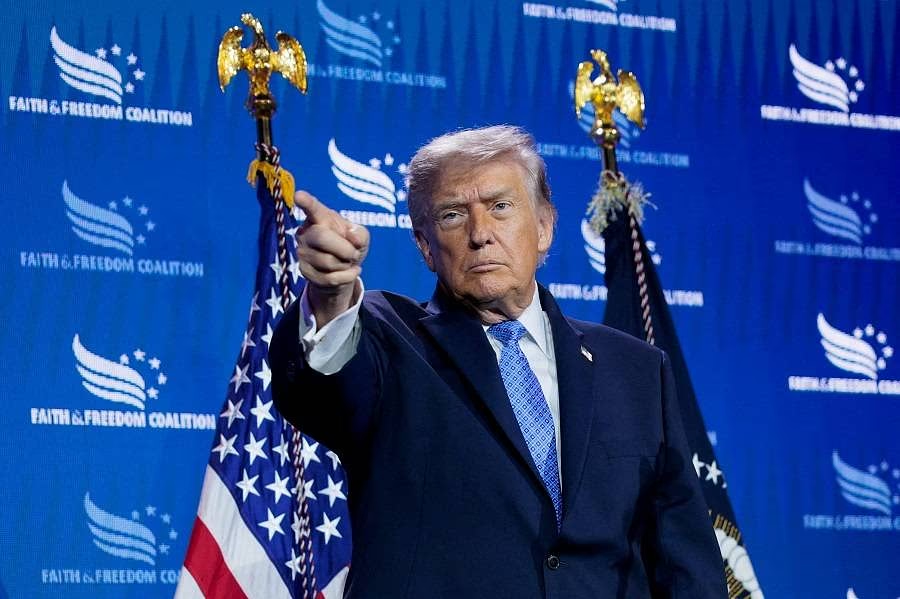







The NATO summit, which lasts for two days, kicks off today, Tuesday, in the Turkish capital, Ankara, amidst an atmosphere of anticipation and political pressure. During this meeting, held at the Turkish Presidential Palace, European leaders seek to showcase significant increases in their defense budgets, in an attempt to absorb the anger of US President Donald Trump.
This summit comes a year after the strict pledges imposed by Trump on members to raise security spending to 5% of GDP. Informed sources reported that European countries have realized the necessity of proving their readiness to take on a greater role in protecting the continent, to ensure the continued involvement of US military power in the alliance.
For his part, NATO Secretary General Mark Rutte affirmed that European countries have already begun to fulfill their promises and strengthen their military capabilities to face current challenges, especially Russian threats. Rutte indicated in statements to journalists before the summit that the alliance is witnessing a tangible shift in the European defense mindset from what it was previously.
Within what diplomats described as a 'showtime,' the alliance secretariat prepared a series of statistics and figures demonstrating European commitment to the new American standards. Leaders are expected to unveil massive arms deals estimated at tens of billions of dollars during a defense industry forum as material proof of this commitment.
In line with this trend, Canada announced a strategic move by choosing a German company to build a new submarine fleet in a multi-billion dollar deal. Ottawa described this decision as part of broader efforts to deepen defense ties with European allies and reduce direct and sole reliance on American technology in some areas.
Despite these efforts, the US President continues to express his dissatisfaction with the pace of European action, especially after the restrictions imposed by some countries on the use of American bases. Trump attacked the allies via his 'Truth Social' platform, considering that the current relationship lacks the required reciprocity and that Washington cannot continue on a unilateral path.
European leaders at the Ankara summit aspire to avoid any direct confrontation with Trump that could undermine the alliance's credibility before the world. Diplomats are counting on Turkish mediation and the good relationship between President Recep Tayyip Erdoğan and his American counterpart to calm the tense atmosphere and ensure the summit concludes with a unified final statement.
In an attempt to demonstrate cooperation on Middle East issues, France and Britain began forming a naval mission to secure navigation in the Strait of Hormuz. Although this step aims to appease Washington, European capitals still prefer to wait until the final features of American policy towards the nuclear agreement with Iran become clear.
Reports indicate that Washington has already begun to reduce some military assets it places at the disposal of NATO command in Europe. This inevitable retreat has pushed European leaders to adopt what is called the 'third version of NATO,' which relies on a strong European pillar capable of operating almost independently when necessary.
On the Ukrainian issue, European countries have borne the brunt of military support for Kyiv amidst the reduction of direct American aid. Ukrainian President Volodymyr Zelensky is expected to receive pledges of aid amounting to 70 billion euros annually over the next two years to ensure the continued resilience of Ukrainian forces.
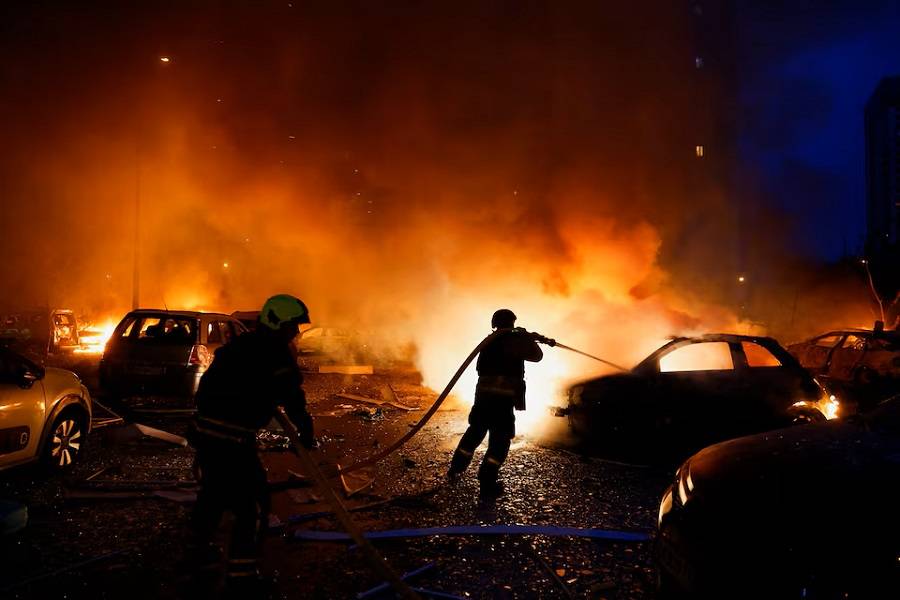
Zelensky, who is participating in the leaders' dinner, seeks decisive decisions to strengthen his country's air defense systems after recent Russian attacks. The Ukrainian president hopes to convince Trump that Kyiv is capable of winning the battle if it receives sufficient qualitative support, which could change the US administration's stance on peace negotiations.
Diplomatic sources indicate concerns about potential disagreements between Trump and other European leaders such as Italian Prime Minister Giorgia Meloni. These personal and political differences could cast a shadow over the summit's agenda, which is crowded with thorny issues ranging from budgets to the stance on China and Russia.
The shift in the balance of power within the alliance reflects a new reality imposed by economic and political pressures within the United States. Europe must now balance its defensive independence with its urgent need for the nuclear and technological umbrella provided by the immense American military power, which remains the backbone of the alliance.
The Ankara summit will remain a true test of NATO's ability to remain a cohesive bloc in the face of rapid global transformations. While Rutte seeks to market the 'real transformation' in the European mindset, the question remains whether these figures and deals will be enough to convince Trump to remain fully engaged in the security of the old continent.
Just one year later, we are beginning to see tangible transformative progress in Europe taking on its defense responsibilities.
Share your opinion
Ankara Summit: European Allies Race Against Time to Appease Trump by Increasing Defense Spending