PALESTINE

Tue 14 Jul 2026 6:36 am - Jerusalem Time

Aoun awaits Rome negotiations to schedule Israeli withdrawal amid field escalation in Nabatieh

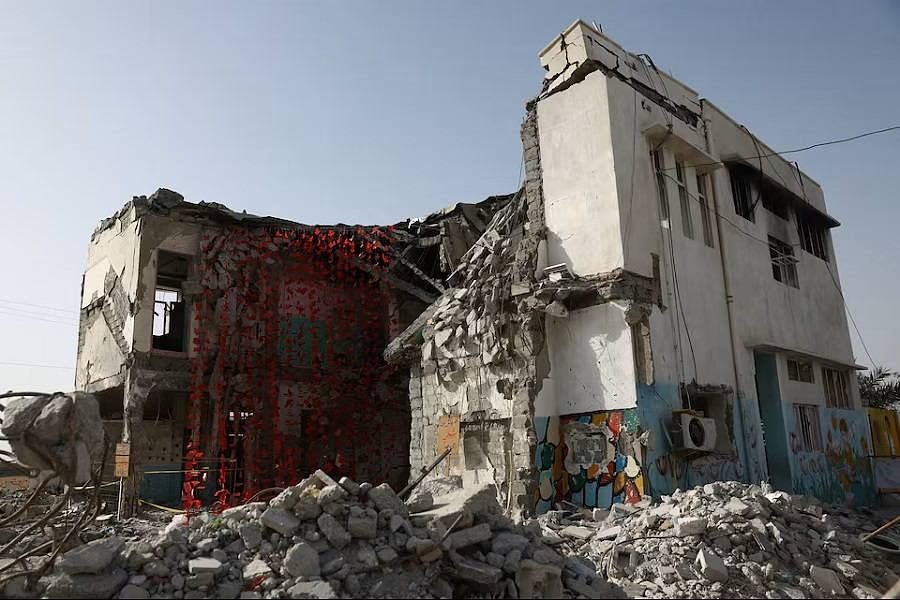
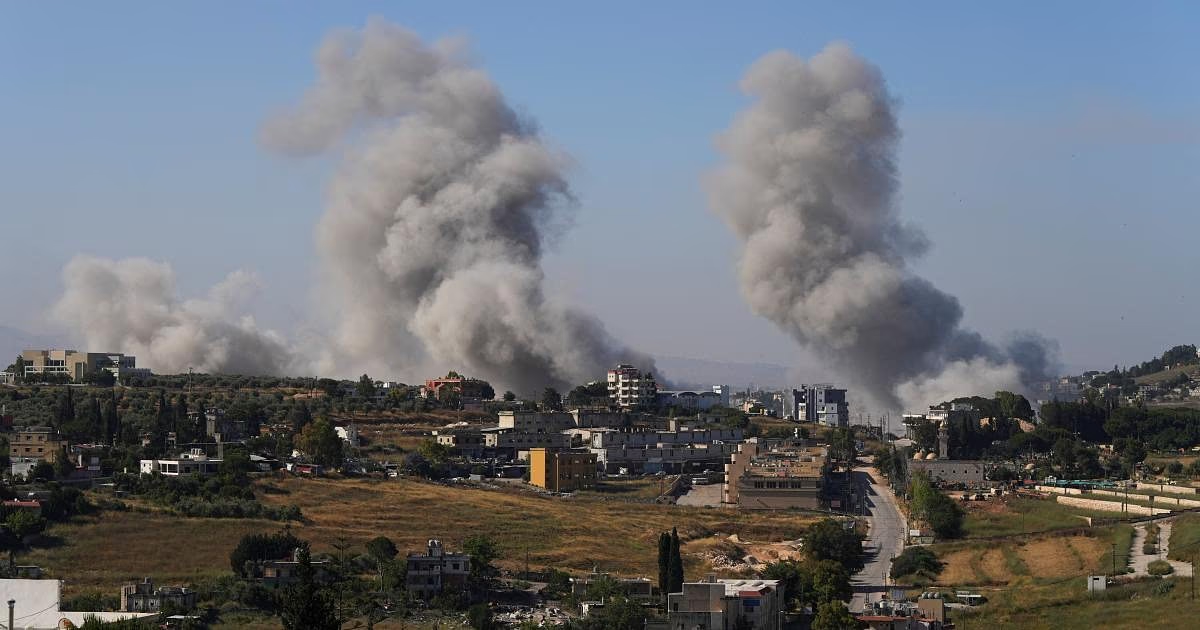
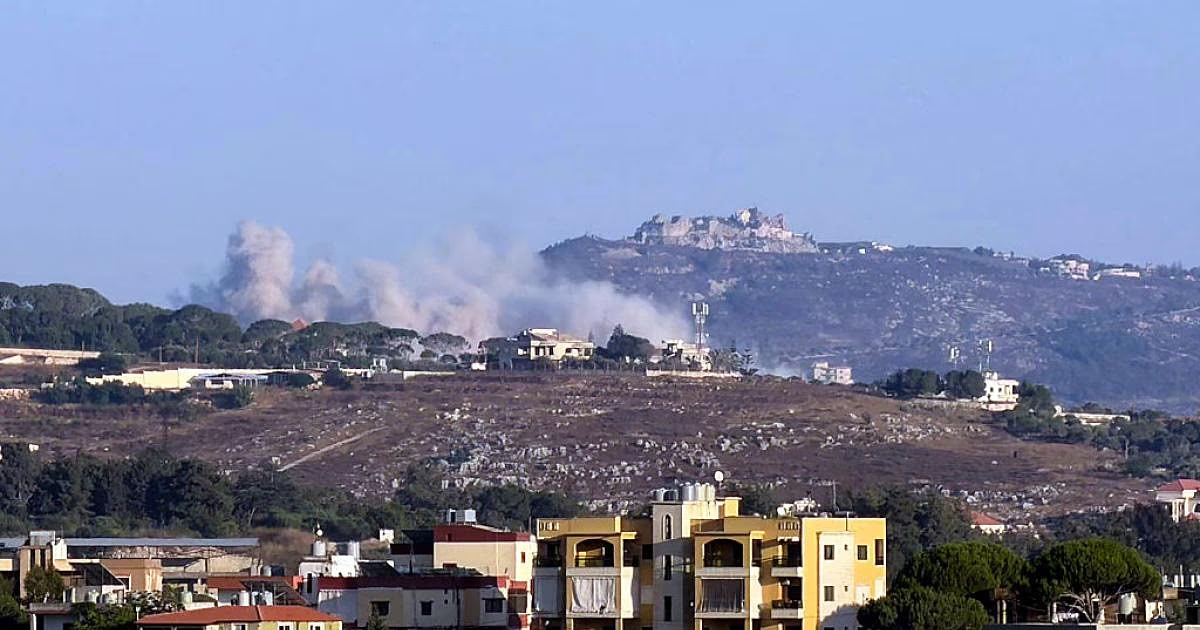
The southern parts of the town of Yahmar Al-Shaqif in the Nabatieh Governorate witnessed a large-scale bombing operation carried out by the Israeli occupation army in the Safita area on Monday evening. Local sources reported that the explosion was so massive that it caused significant cracks and fissures in the surrounding mountainous heights, with its echo reverberating widely across southern villages.

The field escalation was not limited to the Safita area but extended to the town of Kafrtibnit, part of the Nabatieh district, where occupation forces carried out a similar bombing as part of their ongoing military operations. These explosions were accompanied by intensive sweeping operations with machine guns targeting the town of Majdal Zoun, coinciding with artillery shelling that hit the Wadi Hassan area.

Politically, all eyes are on the Italian capital, Rome, where Lebanese President Joseph Aoun expressed his aspirations that the sixth round of negotiations would constitute a real starting point for the withdrawal of occupation forces. Aoun affirmed that Lebanon awaits practical steps that will lead to the deployment of the Lebanese Army in all areas evacuated according to international understandings.

Rome negotiations are scheduled to begin on Tuesday and Wednesday under direct American sponsorship, to complete what was achieved in the previous five rounds hosted by Washington. This round aims to establish precise executive mechanisms for the framework agreement signed on June 26, which outlined the broad lines for ending the Israeli military presence.

The 'framework agreement' signed between Beirut and Tel Aviv stipulates a phased Israeli withdrawal starting from two experimental areas, as a first step towards a full withdrawal from occupied Lebanese territories. However, the agreement still lacks a specific timetable, as the occupation authorities link the implementation of the withdrawal to the Lebanese Army's ability to impose full security control.

President Aoun stressed in his statements the necessity of supporting the Lebanese military institution and providing it with the necessary equipment to enable it to perform its national duties amidst harsh economic conditions. He pointed out that the Lebanese Army proves its readiness despite the challenges, emphasizing that extending national sovereignty is the supreme goal that the Lebanese state seeks at this stage.

In a message addressed to Israeli Prime Minister Benjamin Netanyahu, Aoun affirmed that military force would not achieve security for the people of Israel, and that true stability stems from recognizing rights. He added that continuing the path of aggression completely contradicts any talk of peace, warning that wars only lead to deepening crises and displacement.

The Lebanese President called on the American administration, specifically President Donald Trump, to exert serious pressure on the Israeli side to adhere to what was agreed upon in Washington. He clarified that Lebanon seeks to benefit from the current international desire to achieve comprehensive calm, ensuring the full restoration of Lebanese rights without any compromise on sovereignty.

Basic Lebanese demands in the Rome negotiations, in addition to military withdrawal, include the return of displaced persons to their villages, the return of prisoners, and the recovery of the bodies of detained martyrs. The Lebanese side also stresses the need to begin reconstruction plans for areas destroyed by the ongoing Israeli aggression for months.

On the ground, previous reports revealed continued Israeli violations through low-altitude drone flights over the capital Beirut, and the dropping of incendiary bombs on hills in the town of Kafr Rumman. These breaches pose significant challenges for the international oversight committee to ensure the preservation of the fragile ceasefire understandings reached through international efforts.

Regarding the army's diplomatic moves, Lebanese Army Commander General Rudolph Heikal met with a number of Western ambassadors to discuss ways to enhance the capabilities of the armed forces. These meetings come at a time when Beirut rejects Israeli proposals aimed at testing the army's capabilities in certain areas of influence, considering this an interference in sovereign affairs.

Official statistics issued by the Lebanese Ministry of Health indicate the extent of the humanitarian tragedy, with the death toll since the start of the aggression in March 2026 exceeding 4322 martyrs. The number of injured has also surpassed 12,000 people, while more than a million displaced persons continue to live in difficult conditions away from their destroyed homes.

In contrast, reports speak of Lebanese fears that the occupation will backtrack on its commitments due to escalating regional tensions between Washington and Tehran, which could hinder the Rome negotiations. Beirut insists that implementing the outcomes of the Washington negotiations is the only way to avoid the region sliding into a wider, undesirable confrontation.

President Aoun concluded by affirming that Lebanon will not give up an inch of its south, and that the signing of any final agreement must include an explicit Israeli pledge of no ambitions in Lebanese lands or resources. The Lebanese bet remains on what the coming hours in the corridors of the Italian capital will yield in terms of concrete results.

War will not achieve security, and stability can only be achieved through negotiation and the recognition that continued aggression only leads to more destruction.
ARAB AND WORLD

Tue 14 Jul 2026 6:36 am - Jerusalem Time

Explosions rock southern Iran, intense US air activity coincides with targeting of ships in Strait of Hormuz

A state of security tension prevailed in the southern and southeastern provinces of Iran following successive explosions that rocked several coastal and border cities. Official sources reported that four missiles fell in the outskirts of Konarak city, in Sistan and Baluchestan province, amid a state of alert in the region. This shelling coincided with intense US fighter jet activity observed in the city's airspace, raising questions about the nature of the ongoing military operations.

In the strategic Hormozgan province, reports varied regarding the nature of the explosions that occurred east of Bandar Abbas city, with initial reports indicating four violent explosions. While Iranian state television did not definitively determine the nature of these sounds, field sources suggested they might have resulted from air defense systems intercepting unknown drones attempting to penetrate the airspace, or from external projectiles targeting sites in the city's vicinity.

For its part, media sources close to Iranian decision-making circles reported six additional explosions distributed between the Konarak and Chabahar areas, indicating an expansion of the targeting scope. These developments come amid close monitoring of military movements in the region, especially with the increasing frequency of security incidents affecting Iranian infrastructure and border areas in recent hours.

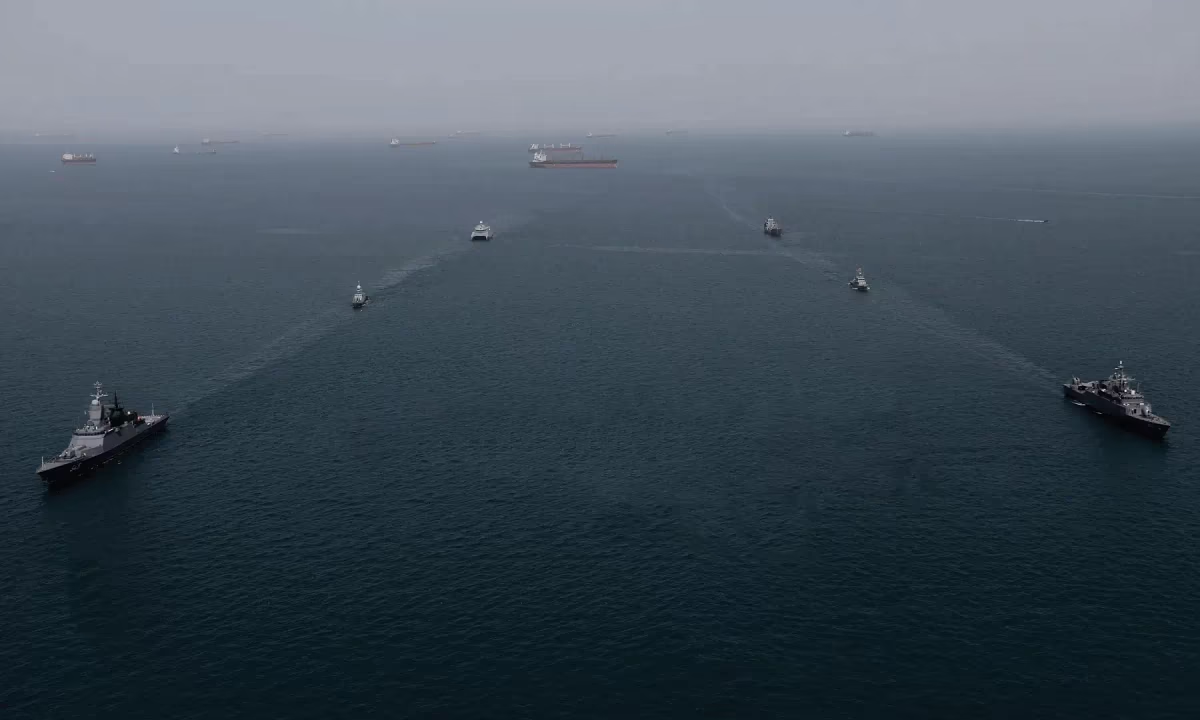
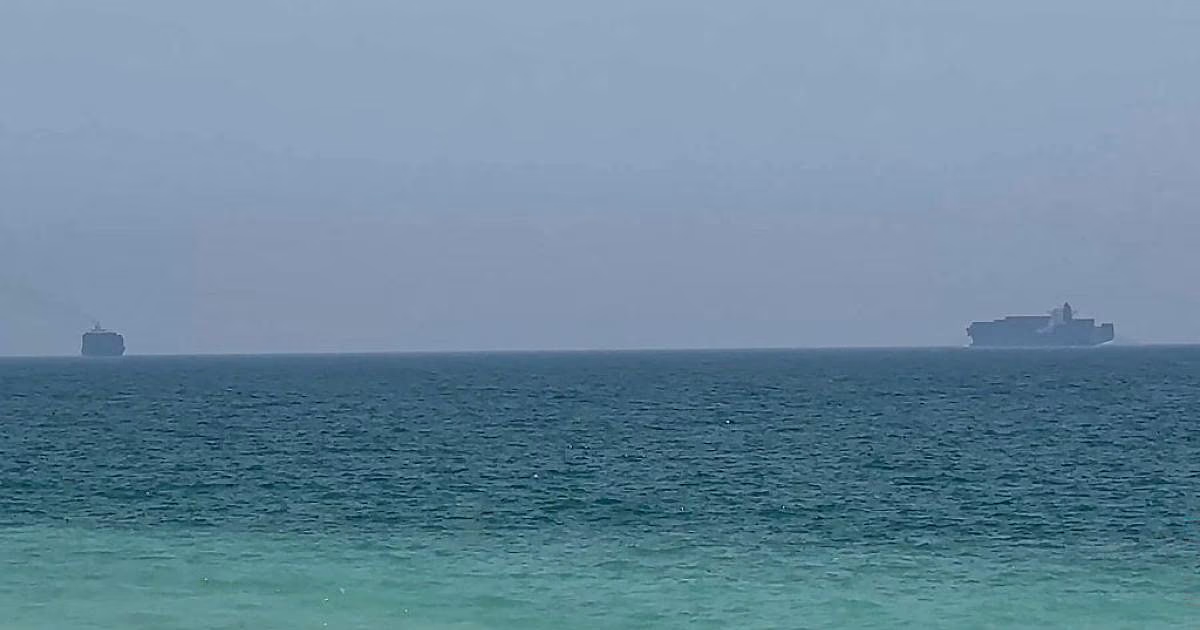
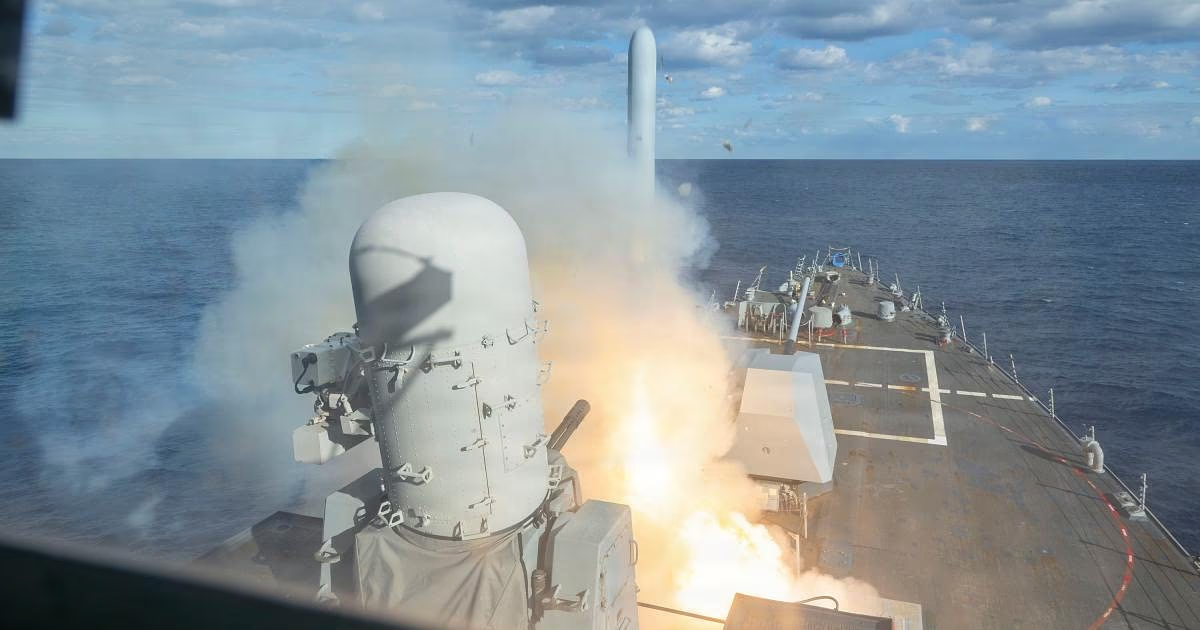
Regarding naval movements, sources revealed the targeting of a number of ships described as 'violating' in the waters of the Strait of Hormuz, the most important shipping lane for global energy trade. The sources did not disclose the identity of the parties that carried out the attack or the nature of the targeted ships, but the incident further complicates the field situation amid mutual threats between Tehran and Washington regarding freedom of navigation and control over waterways.

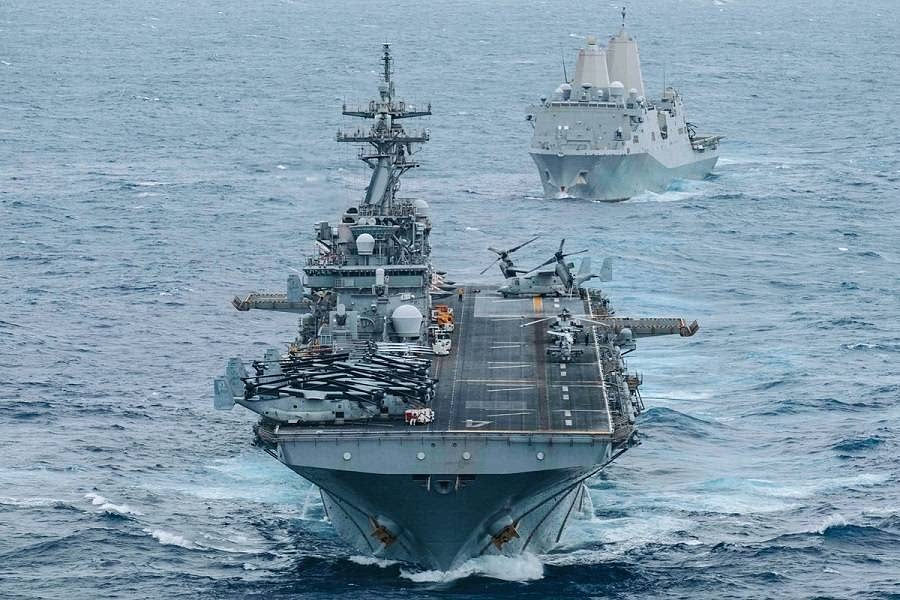
This series of explosions and air and naval movements comes at a very sensitive time, as the world awaits the start of the blockade announced by the US Navy on Iranian ports. This blockade is scheduled to come into effect tomorrow evening, Tuesday, raising the likelihood of direct confrontation in the region, amid the insistence of international parties to impose strict restrictions on Iranian commercial and military movements.

It is not yet clear whether the sounds of the explosions were caused by enemy projectiles or by Iranian air defenses intercepting drones.

ARAB AND WORLD

Tue 14 Jul 2026 6:36 am - Jerusalem Time

For the third day.. Washington intensifies its air strikes against military targets in Iran

The US Central Command announced, on Monday evening, the launch of a new round of intensified air attacks against targets inside Iranian territory, for the third consecutive day. These direct military operations come based on explicit instructions from President Donald Trump, amid unprecedented tension in the region following the collapse of previous understandings between the two parties.

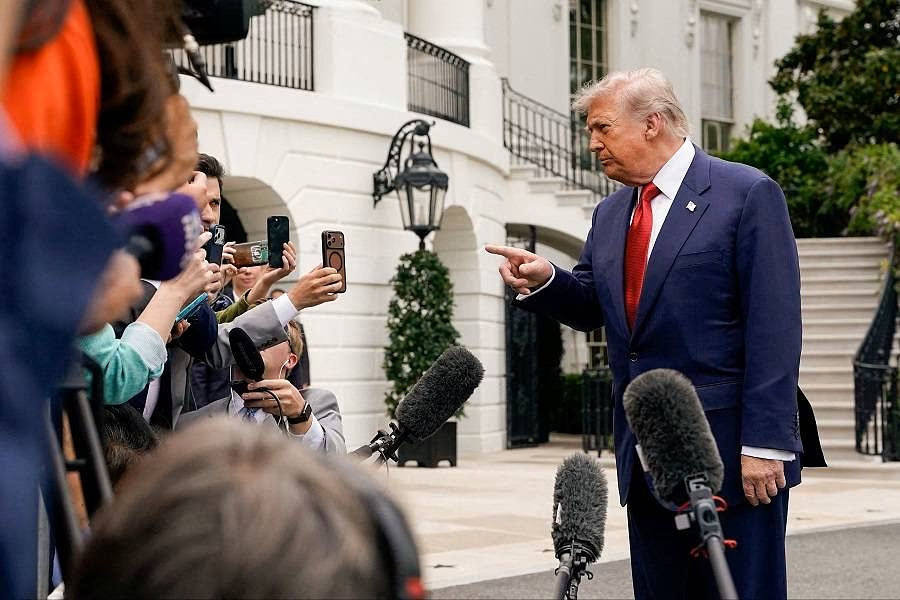
The US President confirmed in preemptive statements that the armed forces would carry out strong and decisive strikes against Iranian facilities in the coming hours. Trump justified this escalation by accusing Tehran of reneging on its commitments contained in the recently concluded memorandum of understanding, stressing that the United States would not tolerate protecting its interests and the security of international navigation.

For its part, the Iranian Revolutionary Guard took a major escalatory step by announcing the complete closure of the Strait of Hormuz to maritime navigation until further notice. This decision came after a night that witnessed a violent exchange of shelling between Washington and Tehran, which threatened to halt global energy supplies passing through this strategic waterway.

US military sources explained that the strikes, which began at 4:45 PM Eastern Time, accurately targeted military infrastructure. The targets included surveillance and monitoring systems, drone launch platforms, in addition to missile capability depots used by Tehran in its naval operations.

In contrast, local media in Iran reported violent explosions shaking Kish Island, located in the Arabian Gulf south of the country. This coincided with the Revolutionary Guard's announcement of the success of its air defenses in intercepting and shooting down a US 'MQ-1' drone that was flying in the region's airspace, reflecting the extent of the direct field engagement.

On the political front, Trump used his 'Truth Social' platform to announce the re-imposition of a comprehensive naval blockade on Iran, affirming that the Strait of Hormuz would remain accessible to all international vessels. The US decision excluded Iranian vessels or those belonging to entities cooperating with Tehran, in an attempt to tighten the economic and military noose on the Iranian regime.

Washington claims that these attacks come in self-defense and as a deterrent to Iranian movements that targeted commercial vessels in international waterways. The US administration believes that undermining Iranian military capabilities is the only way to ensure the safety of global trade and prevent continuous attacks on tankers in the Strait of Hormuz.

In a counter-reaction, Iranian forces launched shelling operations targeting what they described as military facilities belonging to the US army located in the territories of neighboring Arab countries. These attacks, according to reports from those countries, resulted in civilian casualties and caused severe damage to some vital non-military facilities.

Ibrahim Zulfiqari, spokesman for the 'Khatam al-Anbiya' central headquarters, stressed that his country would not allow any American interference in the affairs of the Strait of Hormuz under any circumstances. Zulfiqari warned that the Iranian armed forces would deal firmly with any vessel attempting to cross the strait without prior approval or adherence to the routes specified by Tehran.

Field data indicate that the region has entered a dark tunnel of open confrontations, as Tehran considered the recent military operations as evidence of its readiness for confrontation. With the continuation of US air strikes, international circles are awaiting the extent of the parties' ability to contain the situation before it slides into a comprehensive regional war.

These strikes will continue to inflict heavy losses on Iranian forces and undermine their ability to attack innocent civilians and commercial vessels in the Strait of Hormuz.

PALESTINE

Tue 14 Jul 2026 6:35 am - Jerusalem Time

UN Accuses Hamas of Obstructing Aid in Gaza, Movement Denies and Speaks of 'Law Enforcement'

UN sources reported that the Hamas movement faces direct accusations of obstructing the distribution of vital humanitarian aid in the Gaza Strip, exacerbating the living crisis suffered by civilians amidst the ongoing war. Ramiz Alakbarov, Deputy Special Coordinator for the United Nations for the Middle East Peace Process, explained that these practices have disrupted the delivery of life-saving supplies and undermined the ability of international organizations to operate in the field.

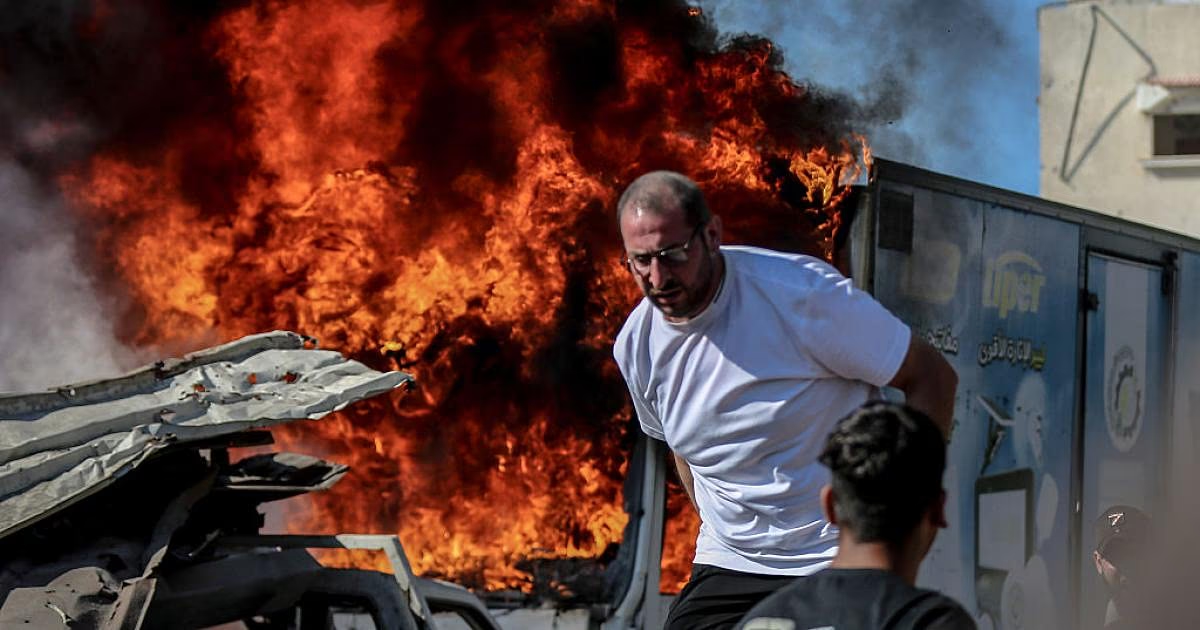
The sources stated that humanitarian organizations were forced to suspend their operations last Saturday after armed individuals stormed a food distribution point in the northern areas of the Strip. This intrusion included a physical assault on two truck drivers inside a warehouse belonging to the World Food Programme, raising serious concerns about the safety of aid workers.

The UN official described these developments as more than isolated incidents, considering them part of an escalating pattern characterized by intimidation, violence, and attempts to target humanitarian operations. Alakbarov affirmed that such actions put the lives of aid workers at direct risk and limit the access of support to civilians facing extremely harsh humanitarian conditions throughout Gaza.

In response, the Hamas movement promptly and completely denied these accusations through a statement issued by its media office on Monday. The movement stated that what happened was not an assault or obstruction of humanitarian work, but rather a security measure aimed at enforcing the law and protecting aid from illegal exploitation operations that had been recently detected.

The movement clarified that its security forces acted based on reports and intelligence information indicating the presence of smuggled materials hidden inside UN aid packages. It noted the seizure of quantities of cigarettes and mobile phone components that had been secretly introduced, asserting that its intervention at the 'Abu Rashid' distribution center in Jabalia camp was solely to address these violations.

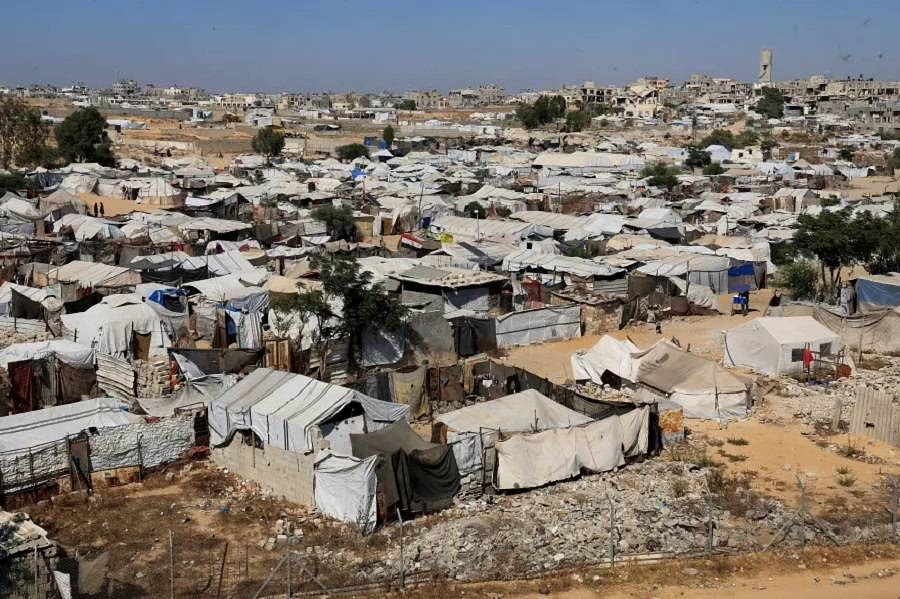
These tensions come at a time when nearly two million Palestinians are experiencing forced displacement as a result of intensive Israeli military operations that began in October 2023. The majority of the displaced are living in dilapidated tents and shelters within a narrow coastal strip, amidst severe restrictions on the entry of goods and basic necessities by Israeli forces controlling all crossings.

On the political front, international efforts to reach a ceasefire agreement remain stalled without achieving a real breakthrough to end the suffering of the population. Negotiations are faltering over fundamental issues, including the withdrawal of Israeli forces from the Strip and the disarmament of factions, amidst continued Israeli control over more than 60% of Gaza's area.

These incidents are not isolated, and they are absolutely unacceptable, reflecting an increasingly dangerous pattern of intimidation, violence, and obstruction.
OPINIONS

Tue 14 Jul 2026 6:35 am - Jerusalem Time

Washington launches comprehensive campaign to dismantle the International Criminal Court: A new escalation in the battle for sovereignty and international law

Washington's Message

Washington – Said Arikat – 7/14/2026

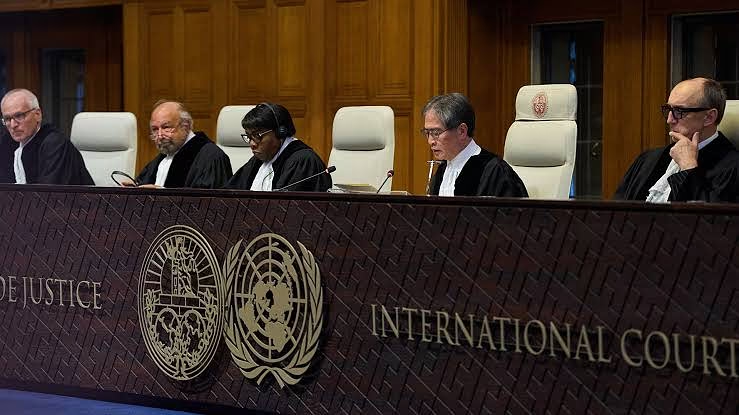
In an unprecedented escalation of its stance on the International Criminal Court (ICC), the US State Department announced the launch of a comprehensive government campaign aimed at undermining the court and isolating it diplomatically, considering it a "direct threat to American sovereignty." This move comes at a time of escalating confrontation between Washington and the court, against the backdrop of the latter's pursuit of American officials and military personnel, as well as its investigations related to US allies, foremost among them Israel.

US State Department spokesperson, Tommy Pigott, stated that the US administration has launched "a broad campaign led by the State Department, with the participation of various government institutions, to dismantle the threat posed by the International Criminal Court to American sovereignty," emphasizing that "all diplomatic, political, and economic options are on the table to ensure that the court cannot target the United States or its citizens."

According to a State Department official who spoke on condition of anonymity, the campaign is not limited to imposing more pressure on the court, but also includes a wide-ranging diplomatic effort targeting member states of the Rome Statute, which established the court, with the aim of persuading them to withdraw from it and cease any financial or political support for the international judicial institution.

The official explained that the Secretary of State, his deputy, US ambassadors, and senior administration officials have already begun intensive contacts with governments around the world to rally international support against the court and work to isolate it politically, thereby preventing it from exercising its jurisdiction over American officials or soldiers.

The US administration, according to the same official, is considering a wide range of escalatory measures, including imposing travel bans and revoking visas for court officials and those working with it, expanding economic sanctions to include institutions and individuals cooperating with it, in addition to exerting direct pressure on governments that continue to support or cooperate with the court.

The official also explained that Washington is calling on non-member states of the court, such as the United States, to use their diplomatic influence to join this campaign, while demanding that countries hosting US military bases or relying on the US security umbrella declare their explicit rejection of the court's jurisdiction to prosecute American officials and military personnel.

The State Department indirectly warned that countries that continue to rely on US security support, while at the same time refusing to oppose the court, may face "increased scrutiny" in their relations with Washington, a reference interpreted by observers as implying the possibility of using political or economic pressure tools to force those countries to reconsider their position.

In statements with an unprecedented tone, Pigott considered the International Criminal Court to be "seeking to transform into a global body above states," accusing it of attempting to impose an "illegitimate legal system" on the United States, and said that his country "does not recognize the authority of international bureaucrats seeking to undermine America's more than 250-year history of self-governance," emphasizing that "American sovereignty is not and will not be negotiable."

This campaign reflects a shift from a policy of defending the American position towards the court to an offensive strategy aimed at reducing its influence and international standing. Instead of merely rejecting the court's jurisdiction, the US administration seeks to weaken it institutionally by reducing its base of supporting countries and drying up its funding sources, which may limit its ability to continue its investigations.

This move comes in the context of escalating tension between Washington and the International Criminal Court, especially after the court issued arrest warrants against high-ranking figures in international conflicts, and the accompanying increase in concerns within the US administration about the possibility of expanding the scope of investigations to include American officials or close allies of the United States.

Diplomats believe that the American campaign may place many European allies in a complex equation, as most of them are members of the International Criminal Court and consider it one of the fundamental pillars of the international legal system, while their security and military relations with the United States are largely dependent, which may make them vulnerable to increased pressure in the coming period.

The American campaign reveals a deeper conflict than just a legal dispute with the International Criminal Court; it reflects a competition between two visions of the international system. The first, adopted by Washington, grants the national state absolute sovereignty over its citizens and institutions, while the second believes that the most serious crimes should not remain immune from international accountability, regardless of the nationality of their perpetrators. Hence, the current confrontation does not target the court alone, but touches upon the future of international criminal justice and the limits of the authority of multilateral institutions in the face of major powers that refuse to submit themselves to independent international justice.

American pressure will not be limited to the court alone, but will extend to a wide network of allies who find themselves caught between their international legal obligations and their strategic interests with Washington. European countries, in particular, have supported the court since its establishment as one of the most important institutions of the international system after the Cold War, while at the same time relying on the American security umbrella. This contradiction is likely to create divisions within the Western bloc and make the court issue a new test for the balance of Western alliances and the future of the rules-based international order.

If Washington succeeds in persuading a significant number of countries to withdraw from the court or reduce their financial and political support for it, this could open the door to a redefinition of the relationship between international law and the balance of power. If the campaign fails, the United States may find itself facing an international institution that has gained greater momentum as a result of the pressures placed upon it. In both cases, the current confrontation appears to be an indicator of a new phase in which the competition between the logic of political power and the logic of international institutions is increasing, amidst growing questions about the future of the global legal system and its ability to withstand geopolitical pressures.

ARAB AND WORLD

Tue 14 Jul 2026 6:35 am - Jerusalem Time

Imminent Collapse of Washington-Tehran Memorandum of Understanding: The Struggle for Control of Hormuz Revives the Specter of War

The fragile Memorandum of Understanding between the United States and Iran has entered a dark tunnel, with de-escalation efforts now in jeopardy following renewed hostilities and mutual accusations of reneging on commitments. US President Donald Trump explicitly announced the end of the preliminary ceasefire agreement, stating that Tehran does not respect the understandings reached recently.

Tensions escalated with hints from the US administration about the possibility of imposing military control over the Strait of Hormuz, the most important waterway for global energy trade. This escalation puts an end to short-term hopes that emerged with the signing of a 14-point Memorandum of Understanding last month, which aimed to stop the war and open maritime passages.

For its part, Tehran quickly blamed Washington for the crisis, with Iranian Foreign Ministry spokesman Ismail Baqaei accusing the United States of pushing the agreement to the brink through continuous violations. Iran believes that recent American moves represent a retreat from promises made during indirect negotiation rounds sponsored by regional parties.

The Strait of Hormuz stands out as a focal point for both field and legal conflict, as Tehran interprets the terms of the memorandum as an acknowledgment of its right to fully manage the waterway. In contrast, Washington completely rejects this interpretation, asserting that the agreement obliges Iran to facilitate the safe passage of commercial vessels without imposing any restrictions or fees.

The field witnessed a practical translation of this dispute, as Iranian forces fired on commercial ships, claiming they deviated from approved routes, leading to the renewed closure of the strait. The US Navy responded by confirming that the southern shipping lanes remain open, warning against any attempts to disrupt the flow of global oil and gas.

The economic crisis returned to the forefront after Washington's decision on July 7 to cancel Iranian crude export licenses, which Tehran considered a fatal blow to Article 10 of the agreement. The memorandum had promised broad exemptions, including banking and insurance services, as a lifeline for the Iranian economy, which has been exhausted by long-standing sanctions.

The frozen assets file further complicated the scene, especially concerning six billion dollars held in Qatari accounts. While Tehran insists on its absolute right to dispose of these funds, US Vice President J.D. Vance announced that Washington and Doha would oversee their expenditure to ensure they are used only for humanitarian goods.

Regionally, Iran linked the stability of the agreement to the situation in Lebanon, with Iranian Parliament Speaker Mohammad Bagher Ghalibaf considering Israeli military operations in southern Lebanon a violation of the spirit of the understandings. Tehran believes that the ceasefire must be comprehensive to include the fronts where its allies have been engaged since last March.

Pakistani mediation is striving to defuse the explosion, with Islamabad issuing urgent appeals to both parties to return to the negotiating table and fulfill their signed commitments. However, the absence of direct communication channels and mutual distrust make the mediators' task almost impossible at present.

Political analysts pointed out that the ambiguity surrounding the drafting of the Memorandum of Understanding was a major reason for its rapid collapse, as thorny issues such as the nuclear program were left for later stages. This interpretive vacuum allowed each party to adopt a narrative that served its political and field interests at the expense of regional stability.

The Carnegie Endowment for International Peace believes that the memorandum is facing an existential crisis that requires an urgent secondary agreement to restore order. Experts affirmed that the fragility of the agreement reflects the depth of fundamental differences that previous meetings failed to address, making the region vulnerable to a new wave of military escalation.

History repeats itself in the eyes of observers, as the current situation recalls Trump's previous withdrawal from the nuclear deal in 2015, reinforcing Iranian suspicions towards any American promises. This legacy of distrust casts a shadow over any future attempt to build a sustainable security framework in the Gulf region.

Amidst these developments, the fate of international navigation in the Strait of Hormuz remains suspended between Iranian threats of closure and American vows of military control. This waterway, through which a fifth of global energy supplies pass, represents the fulcrum in any potential confrontation that could transcend the boundaries of political conflict into a direct clash.

In conclusion, it appears that the sixty-day deadline set by the memorandum for reaching a final agreement will pass without any significant diplomatic breakthrough. With no specific dates for new negotiation rounds, attention is turning to the field, which is now dictating the pace of stalled politics.

Trump: The preliminary agreement is over because Iranian officials are not adhering to what they negotiated, and we will control the Strait of Hormuz.

ARAB AND WORLD

Tue 14 Jul 2026 6:35 am - Jerusalem Time

Death toll from Venezuela earthquakes rises to over 4,500

Official sources in Venezuela reported a tragic increase in the death toll from the two devastating earthquakes that struck the country on June 24th. According to a statement released by the President of the National Assembly, Jorge Rodríguez, the documented number of fatalities as of Monday stood at 4,561 people, reflecting the scale of the humanitarian catastrophe still afflicting the country.

Official reports clarified that the number of injured reached approximately 16,740, a toll that is subject to change as relief operations continue. These new figures update the previous count, which had stopped at 4,490 fatalities, indicating the retrieval of more victims from under the rubble of collapsed buildings in recent hours.

Regarding the missing persons file, Venezuelan authorities are still refraining from announcing final figures, despite shocking international estimates. The United Nations had estimated the number of missing at around 50,000 people immediately after the disaster, while other local and international estimates suggest that the number may approach 10,000 missing whose fate remains unknown.

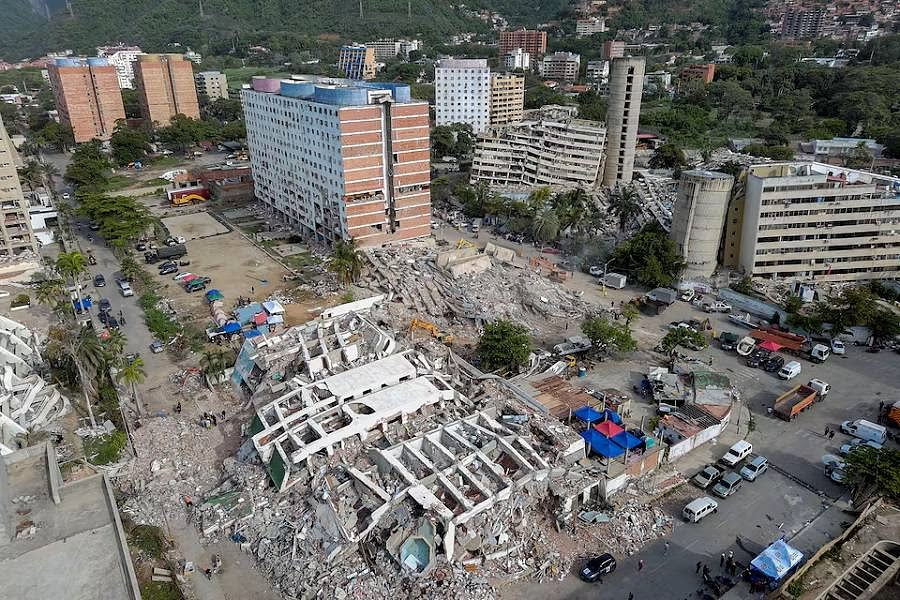
The capital Caracas and the neighboring state of La Guaira were hit by two violent tremors measuring 7.2 and 7.5 on the Richter scale, separated by only 39 seconds. This rapid and sudden succession turned entire high-rise residential complexes into piles of rubble, doubling the difficulty of rescue operations and reaching survivors in the initial moments.

Government data indicates that the number of affected people who lost their homes or were directly impacted has exceeded 20,000. Specialized rescue teams from within Venezuela, in cooperation with international missions, are working around the clock to retrieve trapped bodies, under complex field conditions and widespread destruction that affected essential infrastructure in the stricken areas.

In terms of material losses, the government confirmed that more than 850 buildings and vital facilities were damaged by the violent earthquakes. Among these facilities, 190 buildings completely collapsed, posing enormous challenges for authorities in reconstruction efforts and housing thousands who have become homeless under these harsh circumstances.

The updated death toll on Monday reached 4,561 fatalities, with the number of injured remaining at approximately 16,740.

ARAB AND WORLD

Tue 14 Jul 2026 6:35 am - Jerusalem Time

Congress Pressures for Disclosure of Investigation Results into Iranian School Bombing

Pressure has escalated within the US Congress for the administration of President Donald Trump to disclose the results of military investigations related to an airstrike that targeted a girls' school in Iran. Senator Kirsten Gillibrand led a group of Democratic lawmakers in an explicit call for the US military to reveal the facts associated with the attack that occurred on February 28th.

In an official letter addressed to the US administration, the lawmakers emphasized the necessity of informing Congress and the public about the details of what transpired in the Iranian city of Minab on the first day of military operations. The group, comprising over 20 members, stressed the importance of presenting a clear plan to ensure that such catastrophic errors are not repeated in the future.

Reports from informed sources indicate that an initial internal investigation conducted by the US military in early March showed that US forces are the likely perpetrators of the raid. Despite these indications, the US Department of Defense remains cautious in its statements, asserting that investigations are still ongoing and have not yet concluded.

For their part, Iranian officials stated that the airstrike resulted in the deaths of at least 175 female students and faculty members, describing the incident as a war crime. This incident, if US responsibility is proven, would be the largest in terms of civilian casualties since the bombing of the Al-Amiriyah shelter in Iraq in 1991.

In previous testimony before the relevant authorities, Admiral Brad Cooper, head of Central Command, described the investigation as extremely complex. Cooper attributed this complexity to the geographical location of the school, which is situated next to an active cruise missile base belonging to the Iranian Revolutionary Guard.

Intelligence data suggests that those responsible for identifying military targets may have relied on outdated and inaccurate information when planning the raid. The school's website records showed that it is located in a security-sensitive area, which increased the likelihood of error in distinguishing between military and civilian targets.

Despite legislative demands, President Donald Trump publicly expressed doubts about the possibility of accurately determining responsibility amidst the military chaos that accompanied the beginning of the war. Trump previously stated that he had not seen conclusive evidence to make him believe that the missile that hit the school was American, questioning narratives that hold his military responsible.

In their letter, the lawmakers responded that the US military bears a legal and moral obligation to take all possible precautions to protect civilians in conflict zones. They affirmed that the department owes it to the victims' families and the American people to provide a transparent and convincing explanation for the failures that led to this human tragedy.

Addressed to Secretary of War Pete Hegseth and Admiral Cooper, the letter demanded that an unclassified copy of the final investigation results be delivered within a week. Lawmakers believe that withholding information from the public and parliament weakens accountability and undermines trust in US military operations abroad.

In a related context, a Pentagon official confirmed that the department is aware of the parliamentary interest in this issue but refuses to provide updates before all aspects of the technical investigation are completed. Military sources insist that the United States does not intentionally target civilians and that operations are managed according to strict protocols to minimize collateral damage.

This crisis highlights the challenges faced by the US administration in justifying civilian casualties during major armed conflicts. Observers fear that procrastination in revealing the facts will increase internal political tension, especially with the Democratic Party's insistence on exercising its oversight role over the executive branch.

Lawmakers concluded their letter by emphasizing that transparency is the only way to rectify structural flaws in targeting operations. They stressed that presenting a comprehensive reform plan is no less important than revealing the identity of those responsible for launching the missile that destroyed the Minab school.

There is no justification for withholding an unclassified report about what happened, what went wrong, and what the department is doing to prevent its recurrence.

ARAB AND WORLD

Tue 14 Jul 2026 6:35 am - Jerusalem Time

Trump announces widespread attack on Iran and confirms: Agreement is still an option

The US Central Command announced the launch of a new wave of military attacks against targets deep inside Iran, which began at 4:45 PM Eastern Time. These operations come as part of the third consecutive night of direct military escalation, in a move that reflects unprecedented tension in the region.

In a related context, US President Donald Trump revealed during a media interview that Tehran will face violent and intense military strikes in the coming hours and tomorrow. Trump confirmed that he officially notified Congress of the resumption of combat operations, stressing at the same time that the option of reaching a political agreement with the Iranian regime is still on the table despite the drums of war.

On the ground, media sources reported loud explosions in the coastal city of Bandar Abbas in southern Iran. While local authorities confirmed hearing the explosions, they have not yet determined the nature of the targets hit or the extent of the resulting damage, amid a state of security and military alert in the region.

Iran will be subjected to strong strikes today and tomorrow, but reaching an agreement is still possible.

ARAB AND WORLD

Mon 13 Jul 2026 9:46 pm - Jerusalem Time

Raids target Sana'a Airport, Houthis announce end of de-escalation

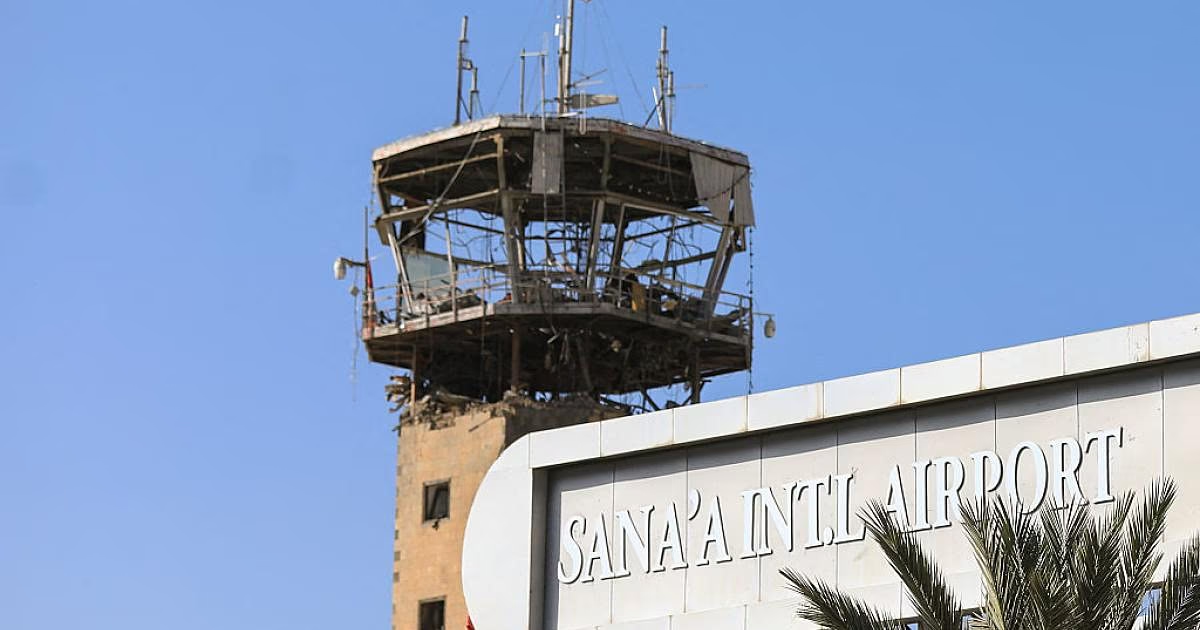
The Yemeni capital, Sana'a, was subjected today, Monday, to a series of violent airstrikes that targeted vital facilities at Sana'a International Airport. Field sources reported that at least four raids hit the airport premises, while warplanes continued to fly in the skies, raising a state of widespread security alert in the city controlled by the Houthi group.

For his part, the military spokesman for the Houthi group announced that the raids directly targeted the airport's infrastructure, considering this attack a dangerous shift in the course of the conflict. The group confirmed through its media platforms that this operation effectively means the end of the de-escalation phase that was prevalent, vowing that this targeting will not pass without a deterrent military response in the near future.

In contrast, the Ministry of Defense of the internationally recognized Yemeni government clarified that the military operation was precise and targeted. The ministry indicated in a statement that the bombing targeted the airport runway to prevent an Iranian plane from landing, stressing that the move came to protect national sovereignty and prevent the arrival of unauthorized shipments to the armed group in Sana'a.

In a related context, the Yemeni Minister of Information directed direct accusations at the Houthi group of detaining a plane belonging to the International Committee of the Red Cross inside the airport. The minister explained that the group refuses to allow the plane to take off, and is detaining its pilot and co-pilot, which further complicates the humanitarian and human rights scene in light of the recent military escalation witnessed in the country.

This field escalation comes at a time when diplomatic efforts are suffering from a state of stagnation, as the government continues to carry out its duties from the interim capital, Aden. These raids raise international concerns about the return of comprehensive confrontations, especially after the Houthis' explicit announcement of stopping work on previous truce agreements, which puts the region before open scenarios of confrontation.

Targeting Sana'a Airport will not pass without retaliation and punishment, and we officially announce the end of the de-escalation phase.

OPINIONS

Mon 13 Jul 2026 9:46 pm - Jerusalem Time

Trump announces naval blockade on Iran, vows to manage Strait of Hormuz, Tehran threatens decisive response

Washington's Message

Washington – Said Arikat – 7/13/2026

The confrontation between the United States and Iran entered a new phase of escalation after US President Donald Trump announced on Monday the re-imposition of what he described as an "Iranian blockade," preventing Iranian ships from entering or leaving the Arabian Gulf, while keeping the Strait of Hormuz open to other commercial and international vessels.

Trump said in a post on the "Truth Social" platform that the Strait of Hormuz "is open and will remain open, whether Iran agrees or not," stressing that all countries will enjoy the right to "fair and open use" of the strait, with the exception of Iran.

The US President announced that the United States will, from now on, become the "guardian of the Strait of Hormuz," indicating that his administration will impose a 20 percent fee on shipments crossing the strait, as compensation for the costs incurred by Washington to provide security and protect navigation in this vital maritime passage.

In a phone interview with "Fox News," Trump went further, announcing that the United States "is managing the Strait of Hormuz," and that US forces will protect and perhaps operate it, adding that his country "should receive financial compensation" for this mission.

These American statements came hours after military tension escalated in the Gulf, where Iran reiterated that it had closed the Strait of Hormuz following a new wave of American strikes targeting Iranian military sites, leading to increased fears about the security of one of the world's most important maritime passages, through which about a fifth of global oil trade passes.

The Central Command of Khatam al-Anbiya Headquarters, the highest joint military command body in Iran, responded by rejecting any American role in managing the strait, stressing that any attempt by US forces to cross without Iran's approval "will be met with a strong response." It also warned regional countries against cooperating with the United States, considering any support for Washington as an "act of war against Iran," and threatening that any expansion of the war would affect all countries in the region.

In contrast, Germany called for an immediate return to negotiations and a resumption of the ceasefire, expressing concern about Iranian attacks on commercial vessels and emphasizing the need to ensure freedom of navigation and the resumption of international shipping traffic through the Strait of Hormuz.

This escalation comes at a time when the interim agreement signed by Washington and Tehran last month faces an unprecedented crisis. The agreement aimed to reopen the strait and halt military operations, in exchange for resuming negotiations for sixty days to reach a broader understanding on the nuclear file and security issues. However, the renewed military strikes and mutual escalation practically threaten the collapse of the agreement and a return to the logic of open confrontation.

Trump's statements reflect a remarkable shift in the American approach, as the discussion is no longer limited to protecting international navigation but has extended to declaring a direct American role in managing one of the world's most sensitive maritime passages, which Tehran views as an infringement on its sovereignty and the security balances in the Gulf.

While Washington insists on its right to protect international trade, Iran considers the Strait of Hormuz to be within its immediate security environment, and that any attempt to impose external management on it represents a crossing of red lines, which portends further military and political escalation in a region considered a major artery for global energy markets.

Trump's statements reveal a shift in American policy from protecting freedom of navigation to attempting to impose a new strategic reality in the Gulf, granting Washington a permanent role in managing the Strait of Hormuz. If these statements are translated into practical measures, they will raise broad legal and political questions about the legitimacy of one country managing an international waterway, and will also increase the likelihood of military friction with Iran, which considers the strait part of its national security. This means that any miscalculation could turn the current crisis into a regional confrontation that is difficult to contain.

The imposition of American fees on ships crossing the Strait of Hormuz also represents an unprecedented precedent in the management of international maritime passages, as it links the provision of security with the imposition of a financial charge on global trade. This step, if implemented, could provoke objections from major trading powers and energy-importing countries, which may see it as an infringement on the principle of freedom of navigation. It could also push many countries to seek alternative security arrangements or enhance multilateral maritime cooperation away from the unilateral dominance of any international power.

Perhaps the most dangerous aspect of the current escalation is that it comes at a time when the interim agreement between Washington and Tehran provided a window, however limited, for resuming the diplomatic path. Today, however, the exchange of military strikes, the re-closure of the Strait of Hormuz, and mutual threats are all indications that the logic of military deterrence has once again taken precedence over the logic of negotiation. If this path continues, the region may enter a long phase of crisis management instead of resolution, with direct implications for energy markets, the global economy, and Gulf security.

ARAB AND WORLD

Mon 13 Jul 2026 6:52 pm - Jerusalem Time

How Did 'Live Aid' Reshape the Concept of Global Charity?

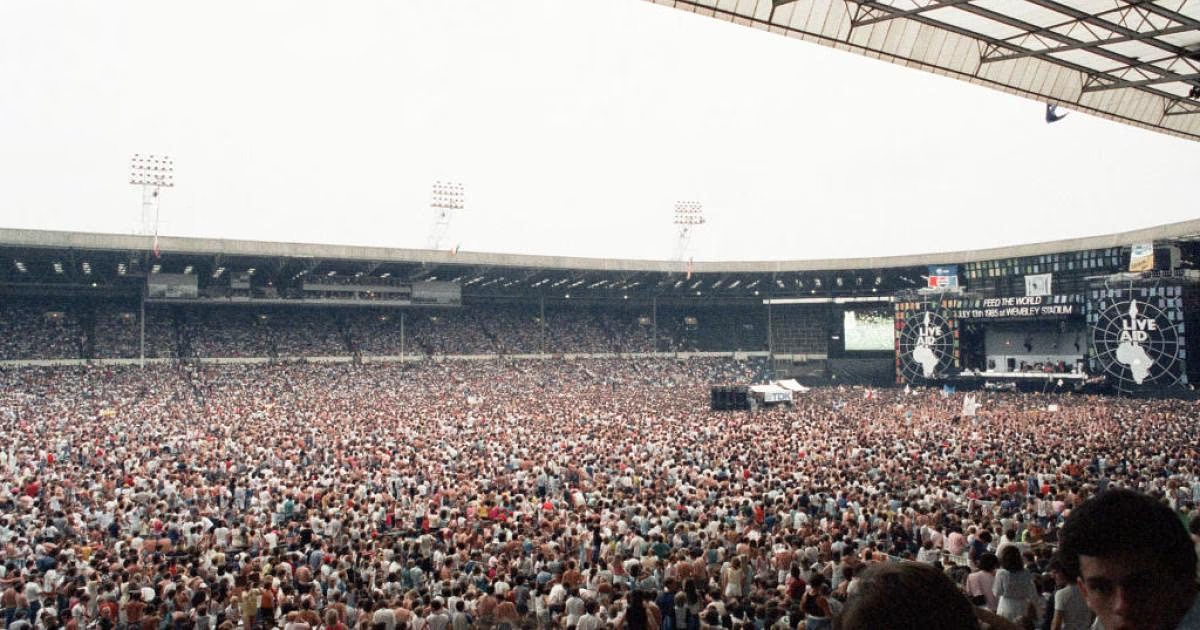
On July 13, 1985, the world witnessed an extraordinary event where music was not just entertainment, but a resounding humanitarian cry. Over 160,000 people gathered at Wembley Stadium in London and John F. Kennedy Stadium in Philadelphia, while more than a billion viewers were glued to their screens to watch the largest live broadcast in history at the time.

The event was named 'Live Aid' and was primarily aimed at raising funds to combat the devastating famine that struck Ethiopia. It was not just a concert, but an ambitious attempt to transform celebrity fame into an effective relief tool, and a window through which the world could see a humanitarian crisis that had long remained in the shadows.

The musical marathon lasted for 16 continuous hours, with major stars performing alternately on two stages separated by the Atlantic Ocean. The organizers succeeded in breaking geographical barriers, as the event provided a unique opportunity to raise awareness among vast numbers of people about the necessity of acting to eliminate hunger in Africa.

The concert remains present in collective memory, especially with the legendary performance of the band 'Queen' led by Freddie Mercury. History also recorded the journey of artist Phil Collins, who used a Concorde aircraft to cross the ocean and appear on both the London and Philadelphia stages on the same day, embodying the slogan 'one world'.

Behind these lights, Ethiopia was suffering from a famine that extended between 1983 and 1985, where drought factors intertwined with armed conflicts. The policies of Mengistu Haile Mariam's government, including forced population displacement and restrictions on economic activities, contributed to an unprecedented exacerbation of the humanitarian catastrophe.

The spark for action began when Irish musician Bob Geldof watched television reports showing the tragedy of the hungry in northern Ethiopia. Geldof collaborated with Midge Ure to produce the song 'Do They Know It's Christmas?', which brought together Britain's most famous artists and achieved amazing popularity, paving the way for the larger concert.

Donations poured in generously during the broadcast hours, with the final tally exceeding 100 million British pounds. This financial success proved that the viewer can transform from a passive follower of news to an active contributor in responding to major international crises.

'Live Aid' established a new model for humanitarian work driven by stardom and television imagery, where artists attract the public, who in turn pressure governments. This formula later became a common approach in confronting earthquakes, epidemics, and natural disasters around the world.

Despite its success, the concert faced sharp criticism regarding the way Africa was portrayed as a helpless continent awaiting a Western savior. Ethiopian voices were absent from the main platforms, and an entire continent was reduced to the image of 'hungry Africa', which distanced complex political factors from the core of public debate.

Long-standing questions were raised about the fate of the funds and ensuring their delivery to those in need under an authoritarian military rule. Despite claims that the money was used to buy weapons, subsequent investigations and official apologies from media institutions confirmed that there was no evidence to prove the diversion of aid for military purposes.

In 2005, Bob Geldof returned to organize 'Live 8', but this time with a political goal of pressuring the G8 leaders. The aim was to demand the cancellation of debts for poor countries and an increase in aid, recognizing that poverty requires radical political decisions, not just food shipments.

Experts believe that it is difficult to replicate the 'Live Aid' experience in the current era due to audience fragmentation across digital platforms and algorithms. However, the equation set by the concert still stands, with artists' social media accounts being used to mobilize rapid humanitarian support.

The famines and wars did not end after the lights of the Wembley stage went out, but the concert left a lasting institutional legacy. The 'Band Aid' charitable trust is still registered and active in Britain, providing annual grants of millions of pounds to combat poverty and disease in Africa.

In conclusion, 'Live Aid' remains a lesson in the limits and power of human empathy simultaneously, confirming that popular culture can move mountains. But it also reminds us that true aid requires understanding political contexts and involving those affected in shaping their future away from tutelage.

Live Aid proved that the public is not entirely helpless in the face of a disaster in a distant country, and that popular culture can impose a humanitarian issue on the media and governments.

LATEST NEWS

Mon 13 Jul 2026 6:52 pm - Jerusalem Time

Trump announces naval blockade of Iran and imposing fees in the Strait of Hormuz, Tehran vows fierce resistance

US President Donald Trump announced today, Monday, the immediate and comprehensive return of the naval blockade on Iran, in an escalatory step aimed at tightening the economic and military noose on Tehran. Trump indicated that the United States would begin imposing financial fees of up to 20 percent on all goods shipped through the strategic Strait of Hormuz.

The US President justified this decision by stating that his country had protected the international shipping lane for more than five decades without receiving financial compensation, while Iran was the biggest beneficiary of the revenues. Trump affirmed that US forces would take effective control of the strait to ensure what he described as 'navigation security' in exchange for these new fees.

Trump revealed the behind-the-scenes of marathon negotiations that took place on Sunday and lasted for about 11 hours with the Iranian side, but they ended in failure. He claimed that Tehran backed out of a draft agreement that was ready for signing, noting that the Iranians had violated nearly ten previous agreements with his administration during past periods.

In contrast, the Iranian response was swift and firm through the 'Khatam al-Anbiya' headquarters, the supreme joint military command, which affirmed that it would not allow Washington to interfere in the administration of the Strait of Hormuz. The Iranian statement stressed that any American attempt to regulate transit traffic outside the routes specified by Tehran would be met with fierce military resistance.

The Iranian military command issued a strong warning to the countries of the region, considering that any cooperation with American moves would be classified as a hostile act and direct war against Iran. Tehran clarified that the scope of the conflict would not remain confined if confrontation erupted, but its sparks would reach all countries that facilitate the tasks of the US army.

For its part, the Iranian Revolutionary Guard warned that American intervention in the waterway seriously threatens the stability of global oil supplies. The Revolutionary Guard affirmed in press statements that Tehran's authority over the Strait of Hormuz is a geographical and military reality that cannot be bypassed or subjected to external dictates.

On the ground, Iranian medical and official sources reported casualties as a result of a wave of attacks launched by US forces at dawn on Monday on sites in Khuzestan and Isfahan provinces. According to initial reports, four people were killed and 14 others injured in strikes that targeted vital facilities and residential areas in the cities of Mahshahr, Abadan, and Na'in.

Local sources quoted the Deputy Governor of Khuzestan, Waliullah Hayati, as saying that one of the American shells hit an irrigation water pumping station in the city of Mahshahr, killing a security officer. The city of Abadan also witnessed another shell fall, killing two people and injuring three others in the most violent field escalation in months.

In Isfahan province in the center of the country, local authorities confirmed that one person was killed and seven others injured in an attack that targeted the district of Na'in before dawn today. These strikes come within what Washington described as a new wave of attacks in response to the targeting of commercial ships in international waterways in recent days.

Iran's response to the American shelling was not delayed, as Tehran announced the implementation of missile strikes targeting positions and concentrations of American forces in several Arab countries. The Iranian missile barrages included military bases and facilities in Kuwait, Bahrain, Qatar, and Jordan, in response to the attacks that targeted Iranian territory.

The region has been in a state of maximum military alert since the start of the American-Israeli aggression against Iran in February of this year. International fears are growing of the situation sliding into a comprehensive regional war that could lead to a complete closure of the Strait of Hormuz, which would cause a global economic catastrophe and a crazy rise in energy prices.

Observers believe that Trump's announcement of imposing fees for passage in Hormuz represents a precedent in international maritime law and could lead to a direct clash with major oil-importing powers. Diplomatic efforts by some regional parties to de-escalate continue, but the language of military escalation and mutual threats remains dominant in the current scene.

We will control the Strait of Hormuz and charge fees for guarding it. We have protected the strait for more than 50 years for free while the Iranians got all the money.

ARAB AND WORLD

Mon 13 Jul 2026 6:51 pm - Jerusalem Time

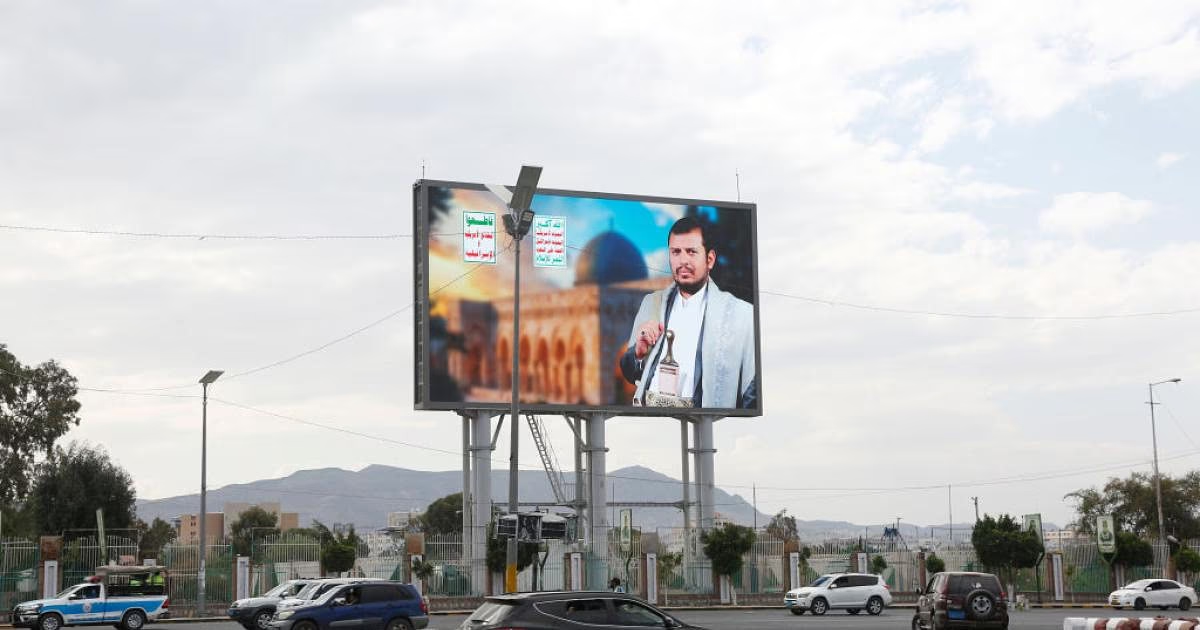
Military escalation in Yemen: Targeting Sana'a Airport runway and an Iranian plane landing in Hodeidah

The Yemeni Ministry of Defense announced today, Monday, the execution of a strike targeting Sana'a International Airport runway, as a preemptive measure to prevent an Iranian plane from landing in the capital, which is under the control of the Houthi group. The ministry confirmed in an official statement that this move comes within the framework of protecting national sovereignty and preventing any unauthorized aerial violations.

In contrast, the Houthi group announced that the Iranian plane later managed to land at Hodeidah Airport, located on the Red Sea coast in the west of the country. The group indicated that this development represents an effective end to the de-escalation phase that the country witnessed during the past period, holding the government responsible for the repercussions.

The Minister of Transport in the Houthi government clarified that the plane that landed in Hodeidah was transporting a number of wounded and sick Yemenis and those stranded abroad, in addition to what he described as the 'official delegation of the Republic of Yemen'. Media outlets affiliated with the group broadcast scenes documenting the moment the plane arrived at the runway amidst security measures.

For his part, the head of the Yemeni Presidential Leadership Council, Rashad Al-Alimi, accused the Houthi group of systematically undermining peace opportunities and rejecting all international initiatives aimed at stabilizing the country. Al-Alimi stressed that the group continues to implement external agendas that harm Yemeni and Arab national security alike.

Al-Alimi directed the Yemeni armed forces to raise combat readiness to its maximum level, calling for full vigilance to confront any emergency. He also demanded that all necessary measures be taken to prevent the recurrence of what he described as Iranian and Houthi violations of Yemeni sovereignty, affirming that the state will not tolerate protecting its airspace.

Despite the warning tone, Al-Alimi indicated that he does not seek to expand the scope of direct military confrontation at the present time, considering that being drawn into escalation is an Iranian goal par excellence. He explained that the government is trying to avoid sliding into a comprehensive war that serves Tehran's regional interests and increases the suffering of the Yemeni people.

In a related context, the General Authority of Civil Aviation issued an urgent circular to close all Yemeni airports to air traffic completely until further notice. This decision comes as a precautionary measure in light of escalating security tensions and fears of targeting vital facilities.

Field assessments indicate that the Yemeni scene is heading towards a new round of armed conflict, as observers believe that the targeting of Sana'a Airport may be followed by a military response from the Houthi group. Expectations are growing for the resumption of missile attacks and drone strikes that had stopped for a relatively long period.

Informed sources reported that the most likely scenario in the coming hours is the return of mutual shelling between the warring parties, which brings back memories of the harsh years of war. Analysts believe that the Houthi group may target vital facilities in response to what it considered a government escalation supported by the coalition.

Sources also suggested that the upcoming wave of escalation may include a return of threats to international navigation and ships in the Red Sea, which may necessitate a broad international response. These developments are considered a major setback for the diplomatic efforts led by regional and international parties to stabilize the truce.

Observers of Yemeni affairs believe that the Houthi group's priority in responding may be directed towards Saudi territory, which officials in the group hinted at after the incident. This possibility opens the door for direct intervention by coalition forces, which could bring the conflict back to square one and end hopes for a political settlement.

The situation in Yemen remains dependent on the coming hours and the ability of international parties to contain the situation before it fully explodes. While the government insists on its right to protect its sovereignty, the Houthis see the targeting of airports as a clear declaration of the return of a comprehensive war that could burn everything in its path.

It was directed not to expand the scope of the confrontation to achieve the goal that Iran seeks, which uses Yemen as a card in its regional conflict.

ARAB AND WORLD

Mon 13 Jul 2026 6:51 pm - Jerusalem Time

Ahead of the Rome Round.. Israeli Procrastination in Withdrawing from Southern Lebanon and Continued Field Violations

Diplomatic preparations are accelerating for the sixth round of Lebanese-Israeli negotiations in the Italian capital, Rome, amidst a field atmosphere charged with continuous violations. Informed sources reported that Israeli aggressions in southern Lebanon have not ceased, with drones continuing to carry out scattered raids and drop sound bombs to terrorize civilians returning to their destroyed villages.

On the official level, Lebanon stresses the necessity of adhering to what was agreed upon in the previous Washington negotiations, especially regarding the comprehensive Israeli withdrawal timeline. Beirut demands the deployment of the Lebanese Army in border areas and the activation of what are known as 'experimental zones' as a first step towards restoring full sovereignty over the occupied territories.

In contrast, data from Beirut indicates clear Israeli procrastination in implementing these entitlements, as the occupation has so far refused to specify the names of the villages that will be included in the first phase of the withdrawal. The Israeli government is also evading setting a clear timeline for the redeployment process, raising doubts about its true intentions regarding sustainable calm.

The Lebanese state insists that the 'experimental zones' be villages still under direct occupation, to ensure the complete withdrawal of Israeli forces from them before the entry of Lebanese Army units. This vision aims to create a security model that allows for the return of displaced residents and paves the way for expanding the scope of withdrawal to include all disputed border points.

For its part, the Lebanese Army assured the International Monitoring Committee on the Ceasefire of its full readiness for immediate deployment in any area evacuated by the occupation forces. However, the Israeli side is trying to impose new conditions outside the framework of understandings, including demanding that the Lebanese Army enter certain areas to test its ability to deal with the field reality there, which was met with a categorical Lebanese rejection.

In the context of diplomatic activity, a high-level American military delegation continues its meetings with the army leadership in Beirut to follow up on the technical details of the security understandings. These meetings coincide with intensive political contacts aimed at overcoming obstacles before the start of the Rome round, amid international hopes of containing the escalation and preventing the region from sliding into a wider confrontation.

A state of extreme caution prevails among decision-makers in Lebanon, fearing an Israeli reversal of existing understandings, exploiting the regional tension between Washington and Tehran. Political sources believe that the pressure exerted by the American administration on Tel Aviv has not yet translated into tangible practical steps on the ground, especially regarding the timeline for military withdrawal.

Lebanese sources confirm that American pressure on Israel has not yet achieved practical results, neither in terms of defining the experimental zones nor in setting a timeline for their implementation.

ARAB AND WORLD

Mon 13 Jul 2026 6:51 pm - Jerusalem Time

Escalation in Hormuz: Tehran Threatens to Renounce Understandings and Sharp Decline in Shipping Traffic

Tehran issued a strong warning to the United States, asserting that it would not adhere to the existing memorandum of understanding unless Washington fulfilled its reciprocal commitments. This stance comes amidst a field escalation, the most severe since the ceasefire agreement came into effect last April, threatening the collapse of fragile diplomatic channels between the two parties.

Ismail Baqaei, spokesman for the Iranian Foreign Ministry, affirmed that his country would adopt the principle of reciprocity in implementing international obligations. Baqaei clarified during a press conference that Tehran would not hesitate to backtrack on its steps if the other party continued to shirk its responsibilities, noting at the same time that mediation channels remain active in an attempt to contain the situation.

On the ground, the Iranian Revolutionary Guard announced the complete closure of the Strait of Hormuz until further notice, preventing the passage of any vessel through this strategic waterway. The Iranian military command justified this measure by the necessity of stopping what it described as American interventions, especially after a ship was detected taking an unauthorized route and was directly targeted.

In contrast, US President Donald Trump downplayed the significance of the Iranian announcements, asserting that the Strait of Hormuz remains open to global commercial navigation. The United States insists on ensuring freedom of navigation in the passage through which a large percentage of global energy supplies pass, rejecting Iranian conditions that impose prior coordination for transit.

Regarding shipping traffic, ship tracking data revealed a sharp and unprecedented decline in the number of tankers that crossed the strait in recent hours. The company 'Kepler' recorded the passage of only six ships on Sunday, the lowest number observed in over a month, reflecting the growing concern among international shipping companies.

The ships that risked crossing included the massive Iranian oil tanker 'Humanity' loaded with two million barrels, in addition to a Kuwaiti tanker carrying petroleum derivatives. It was noted that most of these tankers resorted to turning off their transponders to avoid detection or targeting amidst escalating security tensions.

Technical reports also indicated a complete absence of LNG tankers from the strait over the weekend, a dangerous indicator of the impact on supply chains. Only one tanker belonging to the UAE's 'ADNOC' company left the region heading towards India, amidst close monitoring of naval movements in the Gulf.

Militarily, the US Central Command announced a series of concentrated airstrikes against targets inside Iranian territory. US forces used precision-guided munitions to strike dozens of sites, a move described as a response to ongoing threats to navigation and American interests in the region.

For its part, the Revolutionary Guard revealed the implementation of nighttime naval interception operations that led to the detention of two unidentified vessels inside the strait. Military sources explained that the detention operation was carried out by disabling the ships' electronic systems, which raises concerns about the strait turning into a direct technical and military confrontation arena.

Every time the other party fails to fulfill its obligations, we will fail to fulfill ours... We will continue to operate in this manner.

PALESTINE

Mon 13 Jul 2026 6:51 pm - Jerusalem Time

Martyr and wounded in Israeli shelling targeting Al-Maghazi camp and Gaza City

Israeli violations of the ceasefire agreement in the Gaza Strip continued, as medical and field sources reported the martyrdom of a Palestinian and the injury of three others, including a child, in separate attacks launched by the occupation forces on Monday. These field developments come amid the continued systematic violations of the agreement in force since October 10, 2025, which threatens the fragile calm that residents are trying to cling to.

In details of the aggression, an Israeli drone launched an airstrike targeting an inhabited house in the Birkat Al-Lawz area in Al-Maghazi camp in the central Gaza Strip. The direct shelling resulted in the martyrdom of a child who was inside the house, while the explosion caused extensive material damage to the surrounding properties, amid a state of panic among citizens in the crowded camp.

Coinciding with the Al-Maghazi raid, Israeli army forces opened fire with their machine guns towards citizens' homes in Al-Tuffah neighborhood, east of Gaza City. Medical sources at the Baptist Hospital stated that ambulance crews transported three wounded, including a child, who were injured by occupation bullets while they were near their homes, and their injuries were described as varied.

Official data issued by the Ministry of Health in Gaza indicates that the extent of Israeli violations since the signing of the ceasefire agreement has reached record levels, with about 1,100 martyrs and more than 3,500 injured. These figures confirm that the occupation has not adhered to the terms of the truce, continuing to target civilians in various governorates of the Strip on a daily basis.

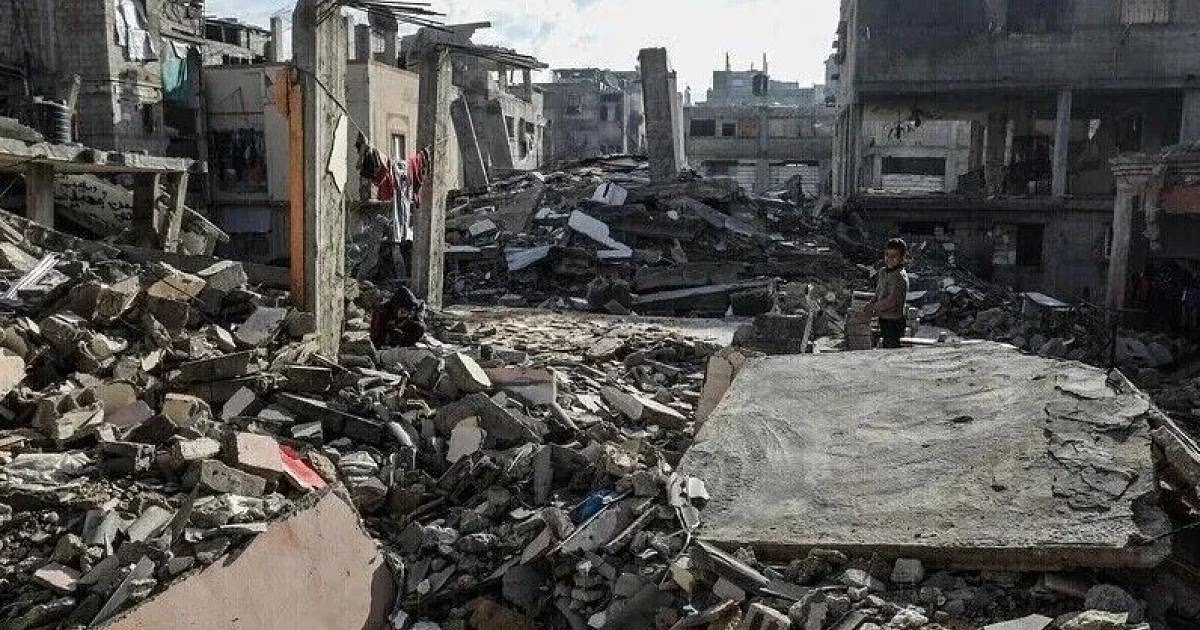
It is worth noting that the Gaza Strip has been experiencing an unprecedented humanitarian catastrophe since the start of the genocide war in October 2023, which has left more than 73,000 martyrs and 173,000 injured. The ongoing military operations have also led to the destruction of nearly 90% of the infrastructure and civilian facilities, making large areas of the Strip uninhabitable due to the lack of medical and relief capabilities.

An Israeli drone targeted a house in the Birkat Al-Lawz area in Al-Maghazi camp in the central Gaza Strip, which led to the martyrdom of a child.

OPINIONS

Mon 13 Jul 2026 11:19 am - Jerusalem Time

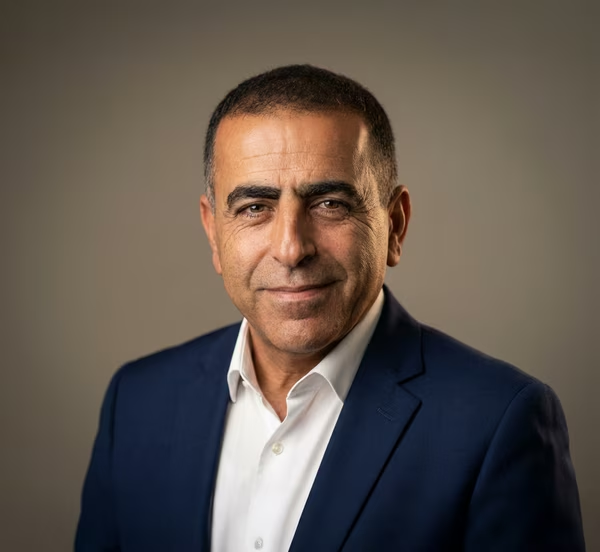
The Political Bazaar... And Those Dreaming of Leadership

Dr. Ibrahim Nairat

Opinion Writer

Dr. Ibrahim Nairat

The Palestinian political scene is entering a phase open to wide possibilities, where internal transformations intertwine with regional and international changes, amidst anticipation of what the next stage might bring in terms of redrawing power balances. In such moments, those dreaming of leadership multiply, and attempts at repositioning accelerate, as each party strives to secure its place before the features of the upcoming phase become clear.

Therefore, the emergence of political stances described as bold is no longer surprising; some even transcend the prevailing popular mood, as if they are messages directed both internally and externally. Some are betting that their discourse will resonate with regional and international powers, while others try to reintroduce themselves to the public in a different light.

Some of these stances appear to be an attempt to fish in troubled waters, where the bet is not limited to the Palestinian internal scene but extends to the possibilities of external support and signals from regional and international powers, in an attempt to secure an early position in a scene whose features are not yet clear.

In this race, the tools and discourses are not alike. Figures historically known for their flexibility are now presenting a more rigid discourse, while others adopt more open positions on sensitive issues, trying to appear as realistic politicians capable of dealing with changes. However, this disparity does not always reveal a difference in projects as much as it reflects a struggle for image, position, and acceptance.

It is an open political bazaar; in transitional phases, not only are positions reformulated, but political images are also reshaped, where discourse becomes a tool for positioning, and the ability to attract attention becomes part of the battle for access. There is nothing surprising in this, as this is a characteristic known to many political experiences, but the specificity of the Palestinian case makes the matter more sensitive, because the issue has never been merely a competition for power, but a national project linked to the sacrifices of an entire people.

Here the question arises: Are we witnessing real political reviews imposed by transformations, or merely a repositioning imposed by the calculations of the moment? And is the goal to build a new project, or to build a new image for those with ambitions?

Politics by nature is a field for review and re-evaluation, and successful leaders are those who read changes without losing their compass. But review differs from changing discourse in search of acceptance, just as political realism differs from making external satisfaction more important than internal trust.

Legitimacy begins with the people. As for the outside, no matter how important it is, it is an assisting factor, not an alternative source of legitimacy. The danger begins when capitals become a reference, and when presenting credentials to the outside becomes more important than presenting a convincing project to the people.

The Palestinian national movement was founded on the idea of independent national decision-making, and this slogan was not just a political phrase, but the essence of a long experience with attempts at guardianship, intervention, and imposing choices. Therefore, any path that places legitimacy externally threatens one of the most important foundations of the national project.

Changing discourse does not create leadership. The value of any political transformation is not measured by its form, but by its motives and results. If it stems from a responsible national review, it is a natural development, but if it is merely a response to the winds of politics, it is a new attempt at repositioning.

More dangerously, this continuous transformation reflects on public trust. The Palestinian citizen, by virtue of their long experience, has become more capable of distinguishing between political conviction and temporary calculations. The faster positions change, the wider the gap between elites and the street, and the more trust, which forms the basis of any successful leadership, erodes.

Nevertheless, the stage does not require stagnation, but renewal. Major challenges require new ideas and leaders capable of combining political realism and national commitment. But true renewal does not begin with changing language, but with developing vision, and it is not based on replacing slogans, but on providing solutions that respond to people's needs and preserve constants.

Leadership is not an announcement of ambition, nor the result of a fleeting political moment, nor the fruit of external support, but a relationship of trust built through practice, responsibility, and the ability to represent the people. Hence, the upcoming challenge will not only be about changing faces, but about changing the rules of leadership production itself.

Therefore, the question in the next phase will not only be: Who will reach leadership? But: What kind of leadership does the stage need? Elections, whenever they occur, will not be merely a competition for seats, but a test for the existing elites and the new faces that will enter the scene.

These elections may be the beginning of a reshaping of political life, not only through changing individuals, but through the emergence of new elites who bring different tools in thinking and action. The generations that have lived through the recent transformations may assert their presence, not only as an alternative to old names, but as an attempt to redefine the meaning of leadership itself.

Legitimacy in the next phase may become more linked to achievement, representation, and accountability, and less linked to political legacy or external relations. The upcoming battle may not be between names competing for positions, but between different models of leadership: a model based on the past, and a model trying to be born from the requirements of the future.

The bazaar will remain open for dreamers, and many will continue to try to present themselves as the title of the next phase. But Palestinian history has not granted its status to those who mastered the art of positioning, but to those who possessed a national project and derived their legitimacy from their people before any other entity.

Leadership is not made in the world's capitals, nor is it born from the turmoil of the moment, but it is made by a people who see in their leader an expression of their will, not of others' bets. Between the pursuit of position and the building of a project, the distance remains the difference between a politician seeking the moment and a statesman creating the future.

OPINIONS

Mon 13 Jul 2026 11:10 am - Jerusalem Time

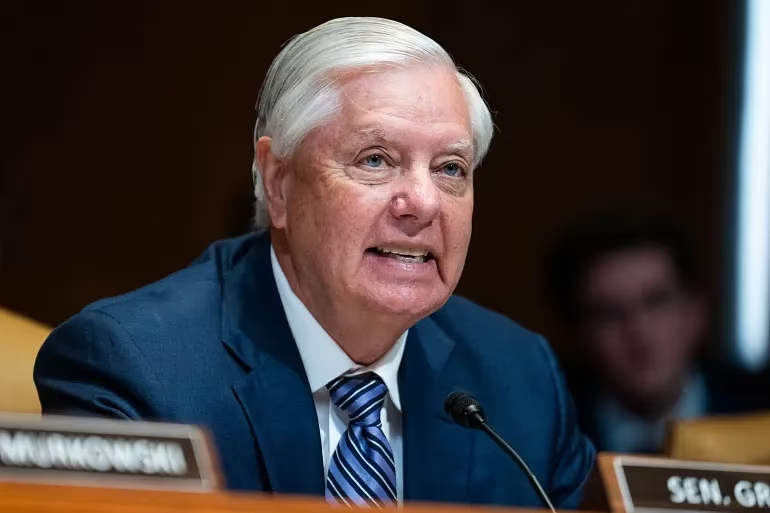
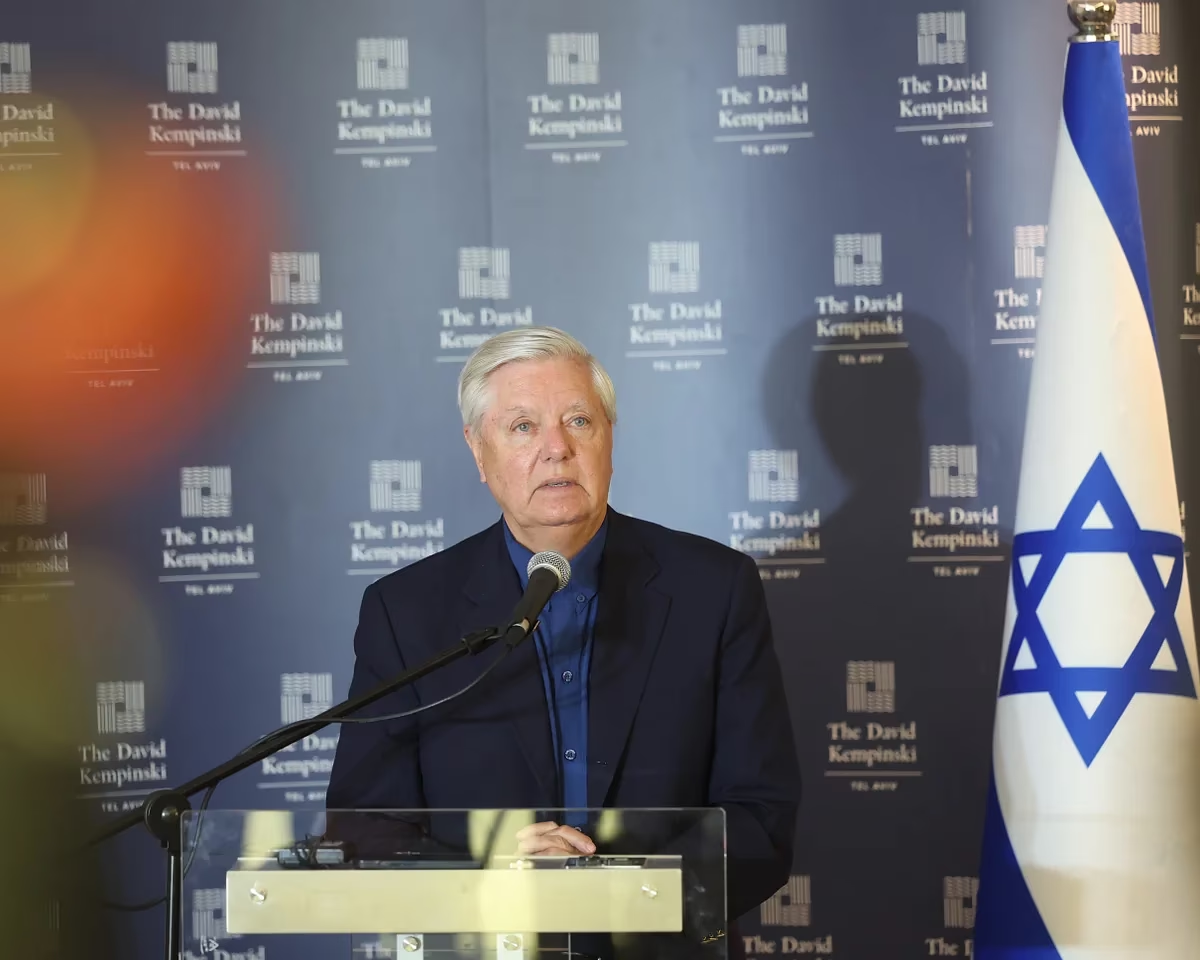
With the passing of Lindsey Graham, one of the most prominent architects of American interventionist policy is gone, and the debate over his legacy remains.

Washington Message

Washington – Said Arikat – 7/13/2026

News Analysis

Republican Senator from South Carolina, Lindsey Graham, passed away on Saturday evening, July 11, at the age of 71, just hours after returning from a visit to Ukraine where he met with President Volodymyr Zelenskyy, a stop that reflected his continued defense of American support for Kyiv until his final days. His sudden passing caused shock in political circles in Washington, especially as he was preparing to appear on Sunday morning on NBC News' "Meet the Press" program. US President Donald Trump, in a phone call with the program, revealed that he had spoken to Graham shortly before his death, saying that he seemed "a little tired" after the return journey, but he did not notice anything concerning, adding that he never imagined that would be their last call.

As is the case with the passing of prominent political figures, eulogies poured in, praising his service of more than three decades in Congress, his extensive connections, and his dedication to the causes he championed. However, the evaluation of a political legacy does not stop at eulogies but extends to reviewing the ideas and policies he advocated for, and the consequences that resulted from them. From this perspective, it is difficult to ignore that Graham was one of the most prominent symbols of the interventionist school in American foreign policy, and one of the strongest advocates for the use of military force as the most effective tool to protect American interests and resolve international crises.

Since the September 11, 2001 attacks, Graham solidified his image as one of the most hawkish voices within Congress. He consistently advocated for the principle of preemptive strikes, believing that the credibility of the United States was linked to its willingness to use military force against its adversaries, while considering diplomacy effective only if it was based on a real military threat.

This approach was clearly embodied in his strong support for the invasion of Iraq in 2003, as he not only endorsed the war but also demanded its more resolute management and rejected most of the warnings that preceded the invasion regarding the fragility of the Iraqi state and the potential for a slide into a prolonged conflict. Years later, with Iraq turning into a scene of chaos and sectarian violence, the rise of extremist organizations, and the expansion of Iranian influence, Graham did not offer a fundamental review of his position, even though these outcomes were far from the goals announced by President George W. Bush's administration at the start of the war.

Iraq was not an exception in his political career. He supported military intervention in Libya, considering the overthrow of Muammar Gaddafi's regime a strategic necessity, even though the country later entered a long period of division and armed conflict. In Syria, he repeatedly called for broader American intervention and greater arming of opposition factions, believing that Washington's hesitation prolonged the war.

Iran was a constant focus in Lindsey Graham's positions throughout his Senate career, as he was one of the most vocal Republican voices demanding widespread military strikes against it, believing that deterrence could only be achieved by demonstrating Washington's willingness to use force. He strongly opposed the "memorandum of understanding" signed by President Donald Trump with Tehran last June 17, considering it a concession that would give Iran time and space to strengthen its capabilities instead of curbing them. He called on the US administration to adopt a tougher policy, warning that any settlement not based on the complete dismantling of Iran's nuclear capabilities would ultimately lead to a more dangerous confrontation.

Graham's critics say that his positions did not reflect a different reading of each crisis, as much as they were based on a firm conviction that American military superiority could impose political solutions, a view that has faced increasing criticism with the faltering of many American military interventions over the past two decades.

In parallel, his relationship with Israel was one of the most prominent features of his political career. He went beyond the traditional support Israel enjoys within the American political establishment, becoming one of the most prominent defenders of the policies of successive Israeli governments, especially during the era of Prime Minister Benjamin Netanyahu, with whom he had a close political and personal relationship. He also adopted the positions of the Israeli right on a number of issues, including the use of the term "Judea and Samaria" to refer to the occupied West Bank, the defense of settlements, and the rejection of many international criticisms related to the occupation and human rights violations.

This bias reached its peak during the Israeli war on Gaza, at a time when the United Nations was warning of an unprecedented humanitarian catastrophe, and the International Court of Justice was considering a lawsuit accusing Israel of committing acts that could amount to genocide. Amidst these developments, Graham sparked a storm of criticism when he invoked the American bombing of Hiroshima and Nagasaki as a historical example for ending wars, before saying that Israel should be allowed to use "whatever it deems necessary" to resolve the battle.

Although he did not explicitly call for the use of nuclear weapons, the invocation of that historical example in the context of defending Israeli military operations was widely interpreted as a justification for the use of maximum destructive force against a densely populated civilian area. His critics also saw these statements as consistent with his political philosophy of prioritizing military decisive action, even when the human cost is high.

Graham's critics also point to the outcome of the military interventions he advocated throughout his career. Iraq still suffers the consequences of the American invasion, Libya has not regained its stability, Syria emerged from a devastating war that lasted for years, while the war in Afghanistan ended with the return of the Taliban to power after the withdrawal of American forces. As for Gaza, it remains one of the most complex conflict hotspots in the world, amidst ongoing international debate about the extent of destruction and human losses.

The repercussions of these wars were not limited to the Middle East alone but extended to the American interior, where their financial and human costs increased, and questions arose about the utility of open military engagement in prolonged foreign conflicts. This contributed to the rise of currents within both the Republican and Democratic parties calling for a reduction in foreign interventions and prioritizing internal challenges, a shift that reflects a decline in confidence in the approach that Graham was one of its most prominent advocates.

In contrast, his supporters believe that Graham remained steadfast in his positions, and that he was driven by a firm conviction of the need to demonstrate strength to protect the United States and its allies and deter adversaries. They believe that the world has become more turbulent due to the decline of American resolve, and that Graham embodied a school that believes military deterrence remains the primary guarantor of international stability.

However, the debate that will accompany his legacy extends beyond his person to the political school he represented. The interventionist approach dominated American foreign policy since the end of the Cold War, based on the premise that military superiority can reshape systems and societies to serve American interests. However, the results of the past decades have shown, in the view of many researchers, that military interventions often led to adverse outcomes, such as security vacuums, internal conflicts, the escalation of the influence of rival regional powers, as well as the erosion of the United States' moral image in large parts of the world.

The Gaza file stands out as one of the most controversial issues in evaluating Graham's legacy, as his critics believed that his positions gave absolute priority to military decisive action at the expense of humanitarian considerations and international law, and contributed to reinforcing the impression that the principles Washington upholds regarding human rights are subject, in practice, to considerations of political alliances.

With the passing of Lindsey Graham, Washington turns a page on one of the most influential and controversial politicians in national security and foreign policy over the past three decades. However, the debate he represented will not end with his passing, as the American establishment remains divided between those who see military power as the primary guarantor of American interests, and those who call for a return to diplomacy and political settlements. Between these two trends, Graham's legacy will remain present in every discussion related to the role of the United States in the world, and to the question that has not yet found a decisive answer: Does military power create lasting stability, or does it often sow the seeds of new crises?

From Iraq to Libya and Syria and Iran, all the way to Gaza, Graham remained convinced that military force was the shortest path to achieving security and stability, even when the experiences of the past two decades proved that wars often left behind devastated nations, collapsed institutions, and conflicts more complex than those they came to address. For this reason, many researchers believe that the debate about Graham's legacy is not as much about his person as it is about the American interventionist school that believed military superiority alone could reshape political reality.

OPINIONS

Mon 13 Jul 2026 11:09 am - Jerusalem Time

Settlers in the Eastern Quarter!

Dr. Ibrahim Melhem

Editor-in-Chief

The least said

No deterrent stops them, and no obstacle prevents them from continuing their organized terrorism, by committing crimes of erasure, burning, looting, and terrorizing; to force peaceful villagers to abandon their homes and water sources, and to seize their livelihoods of money, livestock, and farms, which were their only fence to ensure a dignified life for their children.

And the settlers' war did not stop at the limits of the rural perimeter and the outskirts of cities, but rather penetrated deep into them to plant settlement outposts, marketed with false and erroneous historical narratives, claiming to "preserve heritage," as happens in Qalandia and Sebastia, and as happened in Hebron and other cities and towns. This arrogance has reached its peak with the direct seizure of citizens' homes, as is the case in the village of "Al-Mughayyir," and in the "Eastern Quarter" of the village of "Jalud," whose homes have turned into voluntary prisons that their residents cannot leave for fear of being attacked.

The difficult ninety minutes endured by the US Congress delegation - led by presidential candidate from the Democratic Party "Ro Khanna" - during their visit to Khirbet "Zanuta" south of Hebron, represent only the tip of the iceberg of organized terrorism led by the settlers' army. Terrorism that moves with full sponsorship and public support from the occupation army, which exchanges cigarettes with them in the field, while rushing to arrest the victims who defend themselves, instead of punishing the aggressors and curbing their crimes.

What is happening is no longer just an outbreak of extremist gangs, or children's mischief as described by "the Likud fox," but rather a systematic distribution of roles; where pastoral militias silently displace villagers, and the army provides legal and fire cover in a functional division to implement the "decisive plan" that was drawn up with great difficulty.

OPINIONS

Mon 13 Jul 2026 8:03 am - Jerusalem Time

Beyond the Tributes: Remembering Lindsey Graham’s Foreign Policy Legacy


By: Said Arikat


July 13, 2026


News analysis


Washington, D.C: It is customary to speak generously of the dead, especially when they remained in public life until the end. Since Senator Lindsey Graham’s death on July 11, 2026, tributes have rightly acknowledged his decades in the Senate, his friendships across the aisle, and his devotion to causes he held dear. But history, unlike a eulogy, must reckon with the consequences of the choices a public figure championed. And for Graham, those consequences demand an accounting that his obituaries have largely avoided: he was one of the most relentlessly hawkish voices in modern American politics, a senator whose default answer to foreign crises was military force, whose interventions repeatedly produced disaster, and whose most infamous remarks justified the idea of nuclear annihilation as a legitimate tool of war.


Graham’s hawkishness was not an occasional posture; it was the defining thread of his career. From the aftermath of September 11 onward, he argued that American credibility rested on a willingness to project overwhelming power preemptively. He championed the 2003 invasion of Iraq and consistently urged that the war be prosecuted with maximal force, dismissing diplomatic caution as weakness. Across the Senate floor and cable news appearances, he became the embodiment of a conviction that war was not a last resort but a preferred instrument—that the United States should shape events before threats fully materialized, and that negotiations were meaningless unless backed by an unmistakable readiness to destroy.


That conviction led Graham to embrace military escalation with an almost reflexive predictability. He urged deeper U.S. intervention in Syria, backed the Libya campaign that left a failed state in its wake, pushed for hard-line confrontation with Sudan, and spent years demanding that the United States be prepared to bomb Iran. To his admirers, this was clarity and strength; to his critics, it was a destructive addiction to force that repeatedly ignored the long-term human and strategic costs. The Iraq War stands as a monument to the failure of that worldview, yet Graham never publicly reckoned with the hundreds of thousands of dead, the sectarian bloodshed, or the regional chaos his advocacy helped unleash.


Perhaps no relationship better illustrated Graham’s interventionist zeal than his bond with Israel’s right wing. He routinely adopted the lexicon of the settlement movement, calling the occupied West Bank “Judea and Samaria,” defending settlement expansion, and remaining silent about settler violence against Palestinians. He joked about spending more time in Israel than in South Carolina, and he served as Benjamin Netanyahu’s most reliable congressional shield, brushing aside international law and Palestinian suffering as secondary concerns. His commitment to Israel became indistinguishable from an endorsement of its most brutal military campaigns.


Nowhere was this more chilling than during Israel’s war on Gaza. At a moment when the International Court of Justice was weighing accusations of genocide, when U.N. officials described entire families obliterated, and when global protests demanded a ceasefire, Graham chose not to urge restraint but to offer the most incendiary justification imaginable. On Meet the Press, he invoked the U.S. atomic bombings of Hiroshima and Nagasaki to argue that Israel should be allowed “whatever means it deems necessary” to end the war—implicitly condoning the nuclear destruction of Gaza’s civilian population. The comment was not a gaffe; it was the logical endpoint of a worldview that had long treated the lives of people in distant lands as acceptable collateral in the projection of power.


The grim irony is that Graham’s hawkishness did not make the United States or its allies safer. The wars he cheered hollowed out American credibility, drained trillions of dollars, and generated blowback that continues to this day. Libya collapsed into warlordism. Syria became a charnel house. Iraq remains a cautionary tale of how military hubris breeds enduring instability. The Israeli-Palestinian conflict is more intractable than ever, and the unconditional support Graham embodied has only deepened the occupation’s brutality. He was not solely responsible for these catastrophes, but he was their most persistent Washington advocate—a senator who never met a war he did not think could be won with enough firepower.


The customary decency extended to the dead should not become a license to whitewash. Lindsey Graham’s legacy is not merely that of a committed public servant; it is the legacy of a man who, over two decades, helped normalize the idea that American greatness is measured by a willingness to wage war, and who, in defending Israel’s assault on Gaza, stripped away any remaining pretense of humanitarian limits. He leaves behind a record of hawkish zeal that was as consistent as it was calamitous—a testament to the enduring danger of confusing belligerence with strength.

OPINIONS

Mon 13 Jul 2026 8:00 am - Jerusalem Time

Collision Memo!

Dr. Ibrahim Melhem

Editor-in-Chief

The world did not need to wait until the end of sixty days to realize that the "Memorandum of Understanding" was nothing more than a "truce on smoke" signed between the two adversaries with the intention of breaking it when the time was right; after each had achieved their desires and fulfilled their aims, only to return to confrontation again, as long as its embers still glowed beneath its ashes.All that is happening between the two adversaries is still on the surface, and has not touched the depth of the crisis and its roots that extend for decades, and its origin, its فصل, and its most important goal, the nuclear file, which the "carpet weaver" is trying to distract from; by occupying the adversary with continuing to tread water in the strait that Tehran successfully cornered everyone into, for the memorandum was not about establishing peace as much as it was a prescription to control the upcoming explosion in warm waters, and across the vast Persian land.It is not unlikely that Netanyahu will export his crisis by fabricating a confrontation that would constitute a lifeline for him, after he choked on opinion poll numbers, which predicted a drop in his popularity and an increase in his opponents' chances of overthrowing him.The atmosphere has become conducive to such a possibility, increasing the chances of it happening are attempts to incite Trump by employing a narrative of assassination plots, fueled yesterday by the statements of the returning leader after a long absence of revenge against his father's killers, which would justify Trump going to the option of war without obtaining the permission of legislators.

ARAB AND WORLD

Mon 13 Jul 2026 7:59 am - Jerusalem Time

Escalation of Military Confrontation between Washington and Tehran: Has Traditional Deterrence Failed to Break the 'Asymmetric Warfare' Strategy?

The military confrontation between Tehran and Washington has entered a new phase of direct field escalation, with the US Central Command (CENTCOM) announcing extensive aerial operations targeting approximately 140 military sites deep within Iran. These military movements came in response to an attack on a commercial vessel in the Strait of Hormuz, reflecting increasing tension in strategic international shipping lanes.

In contrast, Tehran was quick to demonstrate its ability to retaliate, with the Iranian Revolutionary Guard Corps launching a series of missile and drone attacks targeting American forces' sites and bases in several Gulf countries. Military sources confirmed that the Iranian response also included logistical support facilities in Duqm Port in Oman, a clear indication of the expanding scope of the confrontation.

Military experts believe that the official American narrative exaggerated the results of the recent military operations, especially with statements from President Donald Trump and military leaders about achieving decisive successes. Military analyst Major General Mahmoud Al-Samadi considered that these assessments do not match the reality on the ground, which shows Iran maintaining effective deterrent capabilities despite the intensity of American firepower.

Analytical readings indicate that Admiral Brad Cooper, commander of CENTCOM, went too far in stating that Iran had lost its ability to exert regional influence. The data on the ground confirms that Tehran built its military doctrine on the basis of 'asymmetric warfare,' a method that allows it to absorb major conventional strikes and continue to wear down adversaries for long periods.

Geography plays a crucial role in strengthening Iranian resilience, as its extensive land borders with seven countries and its long coastlines provide multiple logistical and economic alternatives. These geographical advantages significantly limit the effectiveness of blockade and international sanctions policies, despite the significant economic pressures Washington imposes on Iran domestically.

On the manufacturing front, intensive military operations did not paralyze Iran's military production capabilities; instead, factories continued to supply forces with ballistic missiles and drones. This continued production is the cornerstone of Iran's deterrence strategy, ensuring the flow of necessary weapons to carry out simultaneous and large-scale operations in the region.

Observers believe that the recent attacks on American bases and facilities in Oman are tangible evidence of the weakening of American deterrence in the region. Despite thousands of airstrikes, Washington has not yet succeeded in achieving its fundamental political goal of changing the Iranian regime's strategic behavior or forcing it to retreat.

American objectives in this conflict go beyond mere direct military response, as Washington seeks to maintain its absolute dominance and prevent the emergence of any regional power capable of challenging its influence. This approach is closely linked to the broader global conflict with China, as the United States seeks to secure its control over energy sources and vital supply lines in the Middle East.

The continuation of the current military escalation reflects a state of political impasse, where both parties refuse to make fundamental concessions that would lead to sustainable de-escalation. Despite the material and human losses incurred by the various parties, the equation of final resolution remains absent, with Tehran insisting on continuing its military resistance approach to external pressures.

Ultimately, the Middle East remains an open arena for all possibilities in light of the failure of advanced conventional weapons to impose a single political will. Recent developments confirm that the confrontation between Washington and Tehran is likely to continue as a long-term war of attrition, in which regional calculations intertwine with major international conflicts over influence and energy.

The United States and Israel used the greatest conventional military power, but they were unable to impose dictates or force Tehran to submit.

OPINIONS

Mon 13 Jul 2026 7:59 am - Jerusalem Time

Palestinian Women Lead a New Approach to Diplomacy... Palestinian Community Diplomacy

In 2022, the United Nations General Assembly adopted a resolution declaring June 24th as the International Day of Women in Diplomacy, in recognition of the growing role women play in international relations, and in belief of the importance of their participation in decision-making, promoting peace, and building partnerships between peoples. This occasion raises a question, in the Palestinian context, that goes beyond celebrating the traditional role of women in the diplomatic corps: Are Palestinian women today leading a new approach to diplomacy? The Palestinian experience, due to the complexities of the political and humanitarian reality, has produced a new approach to diplomatic work that I propose to call "Palestinian Community Diplomacy"; an approach that is not limited to negotiation halls and official meetings, but rather stems from the people, relies on listening to them, conveying their voices, building alliances, and influencing the positions of decision-makers. It is a diplomacy that places people and the cause at the heart of diplomatic work, and gives civil society, especially women, an active role in conveying and defending the Palestinian narrative in international forums. For many decades, the concept of diplomacy has been associated with closed meeting rooms, official negotiations, political protocols, and official ambassadors and representatives of states. However, the transformations the world has witnessed, and the unprecedented challenges imposed by the Palestinian reality, have reshaped this concept in a broader and more human-centered way. Palestinian women, although they have not always held the title of "diplomat" or occupied an official position, have practiced diplomacy in various forms. They have been present at international conferences, meetings with parliamentarians and diplomats, United Nations meetings, and global civil society platforms, where they conveyed the Palestinian narrative, defended the rights of their people, and raised issues of women, justice, and occupation before decision-makers. Diplomacy, thanks to the contribution of women, has moved from closed rooms to the field; to villages and camps, and to women who live the details of the occupation daily. Diplomacy is no longer merely an exchange of political positions, but has become a process that begins with listening to people, understanding their needs, and then transforming those voices into messages and positions presented to the international community. In contrast, we have begun to witness a remarkable shift in the practice of official diplomacy itself, as many female ambassadors and representatives of governments and Western diplomatic missions working in Palestine have become more present among the people, visiting local communities, meeting women and community organizations, and listening directly to the needs and challenges of citizens. This reflects a shift towards a diplomacy closer to society, believing that understanding reality begins in the field, and that the success of diplomatic work is achieved not only through official meetings, but also through direct communication with people. In recent years, Palestinian community diplomacy has emerged as a new space for influence, where civil society activists, researchers, and leaders in institutions play an influential role in building international relations, gaining support, and influencing policies, even though they do not hold official diplomatic titles. The Palestinian woman who meets ambassadors, ministers, parliamentarians, and UN officials, and provides them with evidence and testimonies, defends the rights of Palestinian women, and advocates and lobbies for accountability and justice, is essentially performing a comprehensive diplomatic act. She does not only represent a specific institution, but carries with her the voice of Palestinian women, their stories of resilience, and the aspirations of their communities, to present them to decision-makers in various international forums. Perhaps what has given Palestinian women this ability is the nature of their societal roles; they are closest to the details of daily life, to the suffering of families, women, and children, and are most capable of translating this human experience into a language the world understands. Therefore, their contribution is no longer limited to presenting facts, but has become building bridges of trust and dialogue with decision-makers, based on credibility, field experience, and a human narrative that is difficult to ignore. The Palestinian experience has proven that diplomacy is no longer exclusive to official institutions, but has become a collective responsibility in which everyone who has the ability to influence, build bridges, convey the truth, and defend rights participates. This does not diminish the importance of official diplomacy led by the Ministry of Foreign Affairs and Palestinian missions, but rather Palestinian community diplomacy has become a complementary tributary to it, enhancing the presence of the Palestinian cause in international forums by reaching parliaments, universities, think tanks, media, and civil society organizations, thereby expanding circles of influence and giving the Palestinian narrative a deeper and more humane presence. Official diplomacy continues to represent the State of Palestine in international forums, while community diplomacy contributes to building bridges of trust and influence with communities and decision-makers, so that the two approaches together form an integrated system for defending Palestinian rights. In light of the ongoing occupation violations, widespread displacement, and escalating settler attacks, Palestinian women have acquired an even more important role in international forums. They do not only convey numbers and statistics, but carry with them the stories of women and children, the suffering of families, and the resilience of local communities, transforming the human experience into an issue of international public opinion, and into political, legal, and ethical demands. This transformation calls on us to reconsider the concept of diplomacy itself. Is diplomacy only what happens in official meetings? Or is it also the daily effort made by women in building alliances, influencing public opinion, defending justice, and reaching decision-makers? The Palestinian experience pushes us to broaden the concept of diplomacy to include every organized effort that contributes to influencing international policies, conveying the voice of society, building partnerships, and defending rights. In this context, Palestinian women are no longer merely participants in diplomatic work, but have become among the most prominent actors in developing its tools and expanding its spaces. Perhaps future studies will write that Palestinian women did not just demand a place for themselves in diplomacy, but contributed to developing one of its most important transformations; a diplomacy that starts from people, returns to them, and makes society a partner in creating influence. This is Palestinian community diplomacy, which has today become an essential tributary to official diplomacy, and one of Palestine's tools in addressing the world, conveying its narrative, and mobilizing international support for its just cause.

ARAB AND WORLD

Mon 13 Jul 2026 7:59 am - Jerusalem Time

British Police Rule Out Political Motives in the Murder of Former Minister Ann Widdecombe

British security sources reported that initial investigations into the murder of former minister and prominent politician Ann Widdecombe do not indicate any political motives behind the crime. Police clarified that they found no evidence linking the incident to terrorist activity or deliberate targeting due to the victim's political background, despite her long history in public service.

These statements followed the arrest of a 28-year-old man in the South Yorkshire area, who is suspected of direct involvement in the assault that led to Widdecombe's death. Assistant Chief Constable Matt Longman of Devon and Cornwall Police confirmed that the forensic team is working intensively to determine the circumstances of the incident that shook political circles in the United Kingdom.

Authorities found the body of Widdecombe, 78, inside her home in the county of Devon in southwest England last Thursday. According to the initial examination, the victim sustained serious physical injuries that led to her death, prompting a widespread security alert in the area surrounding the house.

In the context of legal procedures, sources stated that the police released another 26-year-old man who had been previously detained on suspicion. Investigators confirmed that this person is no longer included in the current investigation, focusing efforts on the new suspect who remains in custody and under investigation.

Investigators estimate that the violent attack occurred in broad daylight, specifically around 12:30 PM on Wednesday, July 8. Police are currently seeking to gather as much testimony and physical evidence from the crime scene as possible to reconstruct the precise timeline of the alleged perpetrator's movements.

Ann Widdecombe, who held a seat in the British Parliament for the Conservative Party for over two decades, was considered a controversial political figure due to her outspoken views. She was known for her deep Christian religious commitment and her staunch conservative positions on crime and punishment issues, especially during her tenure as Minister of Prisons.

Among the most prominent milestones in her political career was her staunch defense in 1995 of the policy of shackling pregnant prisoners, a stance that sparked a storm of human rights criticism at the time. Despite this, Widdecombe maintained a wide popular base among supporters of the right-wing in Britain thanks to her direct and rhetorical style.

In a notable political shift in 2019, Widdecombe decided to leave the Conservative Party to join the Brexit Party founded by Nigel Farage. This move solidified her position as one of the strongest voices advocating for Britain's withdrawal from the European Union, where she waged fierce election campaigns to achieve this goal.

Nigel Farage expressed his deep shock at the incident, describing the murder of his former colleague as a tragic and horrific reflection of the state of contemporary British society. Farage indicated in televised statements the increasing risks faced by public figures and politicians amid the growing polarization in the country.

For its part, Devon and Cornwall Police confirmed that they continue to inform the deceased's family of all developments related to the investigation, expressing their sincere condolences to her relatives. Sources stressed that investigations will continue under the leadership of local police without the need for anti-terrorism units to intervene at this stage, given the absence of political motives.

The current suspect, a British national, is undergoing intensive questioning to ascertain the true motives behind the commission of this crime, and whether there was a prior relationship between him and the victim. Forensic laboratories are analyzing samples collected from the crime scene to provide a final report supporting the anticipated indictment.

A state of sadness and concern prevails in the quiet county of Devon, where Widdecombe was a well-known and familiar figure among her neighbors and residents of the area. Many citizens have placed flowers in front of her home to express their shock at the violent way the veteran politician's life ended.

Observers believe that this incident reopens the debate about the security of former and current politicians in Britain, especially after a series of attacks targeting members of Parliament in recent years. Despite the police ruling out a political motive, the incident has raised serious concerns about the safety of those working in public affairs.

In conclusion, the British public awaits the final results of the investigations, which will reveal whether the incident was a random criminal act or if there are other details that have not yet emerged. The case of Ann Widdecombe's murder remains one of the most mysterious and impactful cases on the British scene this summer.

I truly fear that things have become more dangerous today for anyone working in public life, especially in politics.

OPINIONS

Mon 13 Jul 2026 7:59 am - Jerusalem Time

Israeli Settlements in the West Bank: Between Legal Reality and Geopolitical Impacts

By: Munadhil Hanani

Writer and Political Analyst

The Israeli settlement project in the West Bank, known to Palestinians as the Occupied West Bank, began after the June 1967 war, when Israel imposed its control over the area. Since then, successive Israeli governments have established hundreds of settlements and outposts within continuous expansionist policies that have received political, economic, and security support.

Recent estimates indicate that the number of settlers in the West Bank, including East Jerusalem, ranges between 500,000 and 780,000 settlers, distributed among 150 to 192 official settlements, in addition to hundreds of settlement outposts. Settlement has become one of the most complex and influential issues in the Israeli-Palestinian conflict, due to its connection with legal, demographic, economic, security, and political dimensions.

The position that settlements are illegal enjoys broad international consensus, based on international humanitarian law, specifically Article (49) of the Fourth Geneva Convention of 1949, which prohibits an occupying power from transferring parts of its own civilian population into the territory it occupies. In this context, the International Court of Justice, in its advisory opinion issued in 2024, considered the continued Israeli occupation of Palestinian territories illegal and demanded that Israel cease and dismantle settlement activities. UN Security Council Resolution 2334 of 2016 also stipulated that Israeli settlements in the occupied Palestinian territories have no legal validity and constitute a flagrant violation of international law.

In contrast, Israel rejects this legal description, considering the West Bank “disputed territory” rather than “occupied territory,” based on its own specific legal and political interpretations and internal reports, most notably the Levy Report issued in 2012. However, these positions are not recognized by the international community, which still considers settlement a fundamental obstacle to any political settlement based on the two-state solution.

On the ground, settlement has brought about profound transformations in the geographical and demographic map of the West Bank. Human rights reports indicate that settlements and their associated infrastructure directly or indirectly control vast areas of Palestinian land, especially in the Jordan Valley, the vicinity of Jerusalem, and large settlement blocs such as “Gush Etzion” and “Ma'ale Adumim.” Recent years, particularly between 2023 and 2026, have also witnessed a remarkable acceleration in settlement expansion through the construction of new housing units or through the legalization of settlement outposts that were previously considered illegal even under Israeli law.

Bypass roads and closed military zones have contributed to increasing the isolation of Palestinian communities, especially in Area (C), which constitutes about 60% of the West Bank's area and is under full Israeli control. This reality undermines Palestinian geographical contiguity, making the establishment of an independent and geographically contiguous Palestinian state more difficult and complex, and limiting the chances of success of any future political settlement.

Economically and socially, settlement expansion has led to the confiscation of vast areas of agricultural land and water sources, which has limited Palestinian economic development opportunities. Palestinians also face severe restrictions on construction, movement, and access to their agricultural lands, while in recent years, the phenomenon of settler attacks on Palestinian villages and communities has worsened, leading in some cases to the displacement of entire families and communities from their homes. Settlement has also contributed to weakening Palestinian productive sectors, especially agriculture and industry, and increased levels of economic dependence on the Israeli economy.

On the Israeli side, despite what settlement supporters see as political and security gains, the settlement project imposes significant financial and security burdens. Protecting settlements and securing access roads to them requires allocating huge military and security resources, in addition to continuous government support for infrastructure, services, and housing. A number of experts believe that many settlements rely heavily on government subsidies, which makes their economic sustainability debatable if this support declines in the future.

Settlement supporters believe that the presence of settlements, especially in high and strategic areas, provides security depth for Israel and contributes to strengthening its defensive capabilities. However, a number of Israeli military experts, including retired generals, believe that the continued occupation and settlement expansion contribute to fueling tension and violence, draining security and military resources, and complicating Israel's strategic environment.

Politically, settlement is seen as one of the most prominent obstacles to any serious negotiation process. Every new settlement expansion reduces the chances of reaching a settlement based on the two-state solution, and pushes towards a more complex political reality that may move towards a single, binational state model, or towards patterns of separation and discrimination that some international human rights organizations have described as closer to an apartheid system.

Settlement has gone beyond being an issue related to land or borders, to become a project that reshapes the demographic and political reality in the occupied Palestinian territories. Despite repeated international condemnations, its continuation reflects influential political and ideological balances within Israeli society and decision-making institutions. Therefore, achieving sustainable peace requires a radical solution to this issue, either through a real freeze of settlement, or through negotiated arrangements that guarantee Palestinian rights and preserve security for all parties.

Settlement remains one of the most prominent challenges to international law and the prospects for peace in the region, as the continued settlement expansion threatens to erode the possibility of reaching a just political settlement, and increases the likelihood of escalation and instability. Therefore, any serious approach to the future must be based on respect for Palestinian national rights and international legal obligations, as only just political solutions are capable of breaking the cycle of conflict that has been ongoing for decades.

ARAB AND WORLD

Mon 13 Jul 2026 7:59 am - Jerusalem Time

Widespread Military Escalation: One Dead in Iran, Attacks Target Kuwait and Gulf States Amid Strait of Hormuz Closure

The past few hours have witnessed a dangerous military escalation in the Gulf region, as an employee of an Iranian telecommunications company was killed and two others injured in attacks targeting Hormozgan province in southern Iran. Official sources reported that the strikes focused on the 'Farur' area, part of Bandar Lengeh, coinciding with a new wave of direct confrontations between American and Iranian forces.

In the coastal city of Bandar Abbas and the strategic Qeshm Island, violent explosions rocked the area overlooking the Strait of Hormuz. Local sources confirmed that the sounds of the explosions were clearly audible from the sea, while officials on Qeshm Island indicated that the area was subjected to about 11 missiles launched by American forces, with no human casualties specifically at that point.

For his part, a senior American official revealed that the United States carried out a series of precise airstrikes targeting Iranian air defense systems and missile launch platforms. American military operations also included the destruction of Iranian Revolutionary Guard speedboats stationed at various locations around the Strait of Hormuz, in an attempt to curb naval threats.

On the Kuwaiti side, the Ministry of Defense announced that three border centers in the northern region were subjected to what it described as aggressive attacks, resulting in extensive material damage. The attacks were not limited to land borders but also targeted an offshore drilling rig belonging to the Kuwait Oil Company in territorial waters by a drone, injuring one worker.

In a direct response, Tehran claimed responsibility for launching ballistic missiles towards sites in Kuwait, alleging that they targeted military bases used by American forces to launch attacks on Iranian territory. This development places the region before open scenarios of a comprehensive confrontation whose geographical scope has begun to expand to include neighboring countries.

The Iranian Revolutionary Guard took a major escalatory step by announcing the closure of the Strait of Hormuz to international maritime navigation until further notice. Tehran justified this decision by the necessity of imposing new transit rules, stating that it targeted two ships in the strait for allegedly violating Iranian instructions, which directly threatens global energy supplies.

The US Central Command 'CENTCOM' confirmed, for its part, the launch of a wave of retaliatory attacks against targets inside Iran, in response to what it described as the targeting of commercial vessels in international waterways. Washington stressed that its operations aim to protect freedom of navigation and ensure the security of its allies in the region against increasing Iranian threats.

The conflict's effects extended to the Sultanate of Oman, where the Ministry of Foreign Affairs summoned the Iranian ambassador in Muscat to deliver a strongly worded protest note. This step came after Omani areas were targeted by Iranian drones, which the Sultanate considered a violation of state sovereignty, principles of good neighborliness, and international norms.

In Doha, the Qatari Ministry of Foreign Affairs condemned the Iranian attacks that targeted its territories, holding Tehran fully legally responsible for the resulting repercussions. Qatar affirmed that these military actions undermine diplomatic efforts aimed at de-escalation, emphasizing its right to respond in accordance with the requirements of general international law.

On the ground in Qatar, the Ministry of Interior announced that three people, including a child, were injured as a result of missile shrapnel falling after being intercepted in Qatari airspace on Sunday morning. Authorities called on citizens to exercise caution and obtain information from official sources, confirming the success of air defenses in confronting several hostile targets.

Bahrain and the UAE, in turn, declared a state of defensive alert, with Manama confirming the activation of sirens and calling on residents to head to safe shelters. In the UAE, the Ministry of Defense announced that air defense systems successfully dealt with missiles and drones that attempted to penetrate Emirati airspace coming from Iran.

Saudi Arabia entered the political condemnation line, with its Ministry of Foreign Affairs expressing its strongest condemnation of Iran's destabilizing behavior. Riyadh stressed that repeated attacks on commercial vessels and threats to navigation represent an imminent danger that requires a firm international stance to stop these transgressions.

Politically, the diplomatic path appears to have completely collapsed after US President Donald Trump announced the cancellation of the memorandum of understanding signed last June. That memorandum, mediated by Qatar and Pakistan, represented a glimmer of hope for reaching a final agreement before being swept away by the latest military escalation.

Field data indicates that Iran has expanded its targeting circle to include sites where American forces are present in Jordan, Qatar, and Bahrain, in addition to Kuwait. This expansion of military operations warns of a widespread regional war, especially with all parties insisting on using military force to achieve field or political gains.

The continuation of these attacks represents a dangerous escalation that would complicate efforts to contain tension and undermine political and diplomatic endeavors.

ARAB AND WORLD

Mon 13 Jul 2026 7:59 am - Jerusalem Time

Saudi Arabia and Iraq Emphasize Protecting Sovereignty and Rejecting Mutual Security Threats

The Saudi capital, Riyadh, hosted a high-level bilateral meeting on Sunday, bringing together Saudi Foreign Minister Prince Faisal bin Farhan and his Iraqi counterpart, Fuad Hussein. The meeting was attended by prominent officials from both sides to discuss prospects for joint cooperation and address the security and political challenges currently facing the region.

The official discussions focused on the necessity of consolidating the principles of respecting national sovereignty and good neighborliness, while emphasizing the rejection of interference in the internal affairs of states. A statement issued by the Saudi Ministry of Foreign Affairs clarified that both parties agreed on a unified vision that rejects the exploitation of any country's territory as a platform to threaten the stability of neighbors or undermine regional security.

During the meeting, the Iraqi side reiterated its strict commitment to preventing any attempts to use Iraqi geography, whether land or air, to carry out hostile attacks. The Iraqi delegation affirmed that Baghdad would not allow its territory to be a launching point for any action targeting the security of the Kingdom of Saudi Arabia or any of the GCC countries.

These diplomatic moves come amidst highly complex regional circumstances, with the statement highlighting the importance of supporting Iraq's stability and strengthening the role of its national institutions. Observers believe that this coordination aims to fortify the region against the repercussions of armed conflicts that recently erupted between regional and international powers in neighboring territories.

The meeting touched upon developments in the security situation, especially after the military escalation witnessed in the region since last February between the United States and Israel on one hand, and Iran on the other. These confrontations have resulted in significant human and material losses, prompting Arab countries to seek ways to de-escalate and protect their borders.

Sources reported that the Saudi and Iraqi sides discussed ways to enhance cooperation in various economic and political fields to serve common interests. The ministers stressed that Iraq's stability is a fundamental pillar for the security of the Arabian Gulf region and the Middle East in general, which requires continuous coordination at the highest levels.

Previous reports had indicated that some GCC countries were subjected to attacks, in which armed factions active in the region were accused, which prompted Baghdad to affirm its rejection of these actions. Through these meetings, Iraq seeks to deny any official connection to the attacks that targeted civilian facilities in neighboring countries.

In a related context, both sides recalled previous statements by Iraqi Prime Minister Ali Al-Zaidi, who confirmed the absence of evidence proving that attacks originated from Iraqi territory towards the Gulf. This affirmation comes within the framework of the Iraqi government's endeavor to reassure its regional partners and build strong bridges of trust with the Arab environment.

The meeting also addressed the collapse of international memoranda of understanding that aimed to de-escalate tensions between Washington and Tehran, which increased the pace of regional concern. Both parties expressed their apprehension about the repercussions of the failure of international diplomatic channels on the security of waterways and vital installations in the region.

Saudi Arabia emphasized its full support for the Iraqi government's efforts to assert its sovereignty and prevent uncontrolled weapons from affecting Iraq's foreign relations. Riyadh considered the strength of Iraqi institutions to be the real guarantee against the country being drawn into proxy conflicts that harm the interests of the Iraqi people and its neighbors.

The two ministers agreed to continue close coordination and consultation to confront common threats, with a focus on activating the security agreements signed between the two countries. This cooperation aims to create a safe environment that allows for increased Saudi investments in Iraq and supports reconstruction and economic development projects.

The final statement affirmed that safeguarding the region's security is a collective responsibility that requires full commitment to international conventions and rules of international law. Both sides indicated that dialogue is the only way to resolve existing disputes, away from the language of threat and the use of force, which only results in destruction and displacement.

At the conclusion of the meeting, the Iraqi delegation expressed its appreciation for the leading role played by the Kingdom in supporting the region's issues and its economic stability. For his part, Prince Faisal bin Farhan affirmed that the Kingdom places Iraq's security and stability at the top of its political priorities, considering it an integral part of the Arab national security system.

This meeting is expected to be followed by a series of technical meetings between security officials from both countries to develop executive mechanisms for what was agreed upon. This path aims to ensure border monitoring and prevent any breaches that could lead to strained bilateral relations or threaten the security of GCC countries.

Iraq is committed to not allowing its territory or airspace to be used as a launching point for any actions or attacks targeting the Kingdom or GCC countries.

PALESTINE

Mon 13 Jul 2026 7:58 am - Jerusalem Time

Five martyrs, including a child, in a series of Israeli raids and demolition operations in the Gaza Strip

The Civil Defense and a hospital in the Gaza Strip announced today, Sunday, the martyrdom of five Palestinians, including a child, and the injury of others in raids carried out by an Israeli drone and gunfire, at a time when Israeli violations of the ceasefire agreement reached last October continue.

Medics reported that Israeli fire targeted a camp in the eastern part of Al-Bureij refugee camp in the central Gaza Strip, leading to the martyrdom of Palestinian child Tala Abu Matar (9 years old).

In another raid, Israel targeted a workshop in the Al-Sabra neighborhood of Gaza City, resulting in the martyrdom of 4 Palestinians. Eyewitnesses said that 3 Israeli missiles hit the site.

Civil Defense spokesman Mahmoud Bassal said: "4 martyrs and a number of injuries due to shelling from an Israeli drone that targeted a blacksmith workshop in Al-Rayes neighborhood in Al-Sabra, south of Gaza City."

Al-Shifa Hospital in Gaza confirmed "the arrival of 4 martyrs due to the Israeli shelling that targeted Al-Rayes neighborhood in Al-Sabra, south of Gaza City."

In a related context, a medical source at Al-Aqsa Martyrs Hospital stated that Palestinian Mahmoud Muhammad Musleh was martyred due to his injuries, on Friday, from gunfire by the Israeli army east of Al-Bureij refugee camp in the central Strip.

Also, a medical source at Nasser Medical Complex reported the martyrdom of Palestinian Muhammad Majed Abu Sneida, due to injuries he sustained yesterday, Saturday, in a raid by an Israeli drone in the vicinity of Bani Suhaila roundabout east of Khan Yunis in the southern Strip.

Earlier on Sunday morning, the Israeli army blew up homes and facilities belonging to Palestinians within the areas it controls south of Khan Yunis city and east of Gaza City.

The Israeli army also carried out at least 5 demolition operations south of Khan Yunis city, while it carried out a sixth demolition operation east of Gaza City.

Israeli violations since last October until Saturday have resulted in the martyrdom of 1098 Palestinians and the injury of 3535 others, according to data from the Ministry of Health in the Strip.

This escalation comes at a time when leaders of the Palestinian Islamic Resistance Movement "Hamas" are visiting Cairo for a new round of discussions regarding the implementation of the second phase of US President Donald Trump's plan for Gaza.

Currently, about two million Palestinians live in the Gaza Strip, most of them in temporary tents or damaged buildings due to the war, while the displaced, many of whom have been displaced several times, constitute the vast majority of the population.

The Civil Defense and a hospital in the Gaza Strip announced today, Sunday, the martyrdom of five Palestinians, including a child, and the injury of others in raids carried out by an Israeli drone and gunfire, at a time when Israeli violations of the ceasefire agreement reached last October continue.

Medics reported that Israeli fire targeted a camp in the eastern part of Al-Bureij refugee camp in the central Gaza Strip, leading to the martyrdom of Palestinian child Tala Abu Matar (9 years old).

In another raid, Israel targeted a workshop in the Al-Sabra neighborhood of Gaza City, resulting in the martyrdom of 4 Palestinians. Eyewitnesses said that 3 Israeli missiles hit the site.

Civil Defense spokesman Mahmoud Bassal said: "4 martyrs and a number of injuries due to shelling from an Israeli drone that targeted a blacksmith workshop in Al-Rayes neighborhood in Al-Sabra, south of Gaza City."

Al-Shifa Hospital in Gaza confirmed "the arrival of 4 martyrs due to the Israeli shelling that targeted Al-Rayes neighborhood in Al-Sabra, south of Gaza City."

In a related context, a medical source at Al-Aqsa Martyrs Hospital stated that Palestinian Mahmoud Muhammad Musleh was martyred due to his injuries, on Friday, from gunfire by the Israeli army east of Al-Bureij refugee camp in the central Strip.

Also, a medical source at Nasser Medical Complex reported the martyrdom of Palestinian Muhammad Majed Abu Sneida, due to injuries he sustained yesterday, Saturday, in a raid by an Israeli drone in the vicinity of Bani Suhaila roundabout east of Khan Yunis in the southern Strip.

Earlier on Sunday morning, the Israeli army blew up homes and facilities belonging to Palestinians within the areas it controls south of Khan Yunis city and east of Gaza City.

The Israeli army also carried out at least 5 demolition operations south of Khan Yunis city, while it carried out a sixth demolition operation east of Gaza City.

Israeli violations since last October until Saturday have resulted in the martyrdom of 1098 Palestinians and the injury of 3535 others, according to data from the Ministry of Health in the Strip.

This escalation comes at a time when leaders of the Palestinian Islamic Resistance Movement "Hamas" are visiting Cairo for a new round of discussions regarding the implementation of the second phase of US President Donald Trump's plan for Gaza.

Currently, about two million Palestinians live in the Gaza Strip, most of them in temporary tents or damaged buildings due to the war, while the displaced, many of whom have been displaced several times, constitute the vast majority of the population.

The Civil Defense and a hospital in the Gaza Strip announced today, Sunday, the martyrdom of five Palestinians, including a child, and the injury of others in raids carried out by an Israeli drone and gunfire, at a time when Israeli violations of the ceasefire agreement reached last October continue.

Medics reported that Israeli fire targeted a camp in the eastern part of Al-Bureij refugee camp in the central Gaza Strip, leading to the martyrdom of Palestinian child Tala Abu Matar (9 years old).

In another raid, Israel targeted a workshop in the Al-Sabra neighborhood of Gaza City, resulting in the martyrdom of 4 Palestinians. Eyewitnesses said that 3 Israeli missiles hit the site.

Civil Defense spokesman Mahmoud Bassal said: "4 martyrs and a number of injuries due to shelling from an Israeli drone that targeted a blacksmith workshop in Al-Rayes neighborhood in Al-Sabra, south of Gaza City."

Al-Shifa Hospital in Gaza confirmed "the arrival of 4 martyrs due to the Israeli shelling that targeted Al-Rayes neighborhood in Al-Sabra, south of Gaza City."

In a related context, a medical source at Al-Aqsa Martyrs Hospital stated that Palestinian Mahmoud Muhammad Musleh was martyred due to his injuries, on Friday, from gunfire by the Israeli army east of Al-Bureij refugee camp in the central Strip.

Also, a medical source at Nasser Medical Complex reported the martyrdom of Palestinian Muhammad Majed Abu Sneida, due to injuries he sustained yesterday, Saturday, in a raid by an Israeli drone in the vicinity of Bani Suhaila roundabout east of Khan Yunis in the southern Strip.

Earlier on Sunday morning, the Israeli army blew up homes and facilities belonging to Palestinians within the areas it controls south of Khan Yunis city and east of Gaza City.

The Israeli army also carried out at least 5 demolition operations south of Khan Yunis city, while it carried out a sixth demolition operation east of Gaza City.

Israeli violations since last October until Saturday have resulted in the martyrdom of 1098 Palestinians and the injury of 3535 others, according to data from the Ministry of Health in the Strip.

This escalation comes at a time when leaders of the Palestinian Islamic Resistance Movement "Hamas" are visiting Cairo for a new round of discussions regarding the implementation of the second phase of US President Donald Trump's plan for Gaza.

Currently, about two million Palestinians live in the Gaza Strip, most of them in temporary tents or damaged buildings due to the war, while the displaced, many of whom have been displaced several times, constitute the vast majority of the population.

ARAB AND WORLD

Mon 13 Jul 2026 7:58 am - Jerusalem Time

UAE Condemns Attack on Kuwait Amid Broad Military Escalation Between Washington and Tehran

The UAE Ministry of Foreign Affairs expressed its strong condemnation of the aggressive attacks that targeted land border centers and an offshore drilling platform in the State of Kuwait. In an official statement, the ministry described these aggressions as a blatant violation of Kuwaiti sovereignty and a direct threat to regional security and stability, affirming Abu Dhabi's full support for Kuwait in all measures it takes to protect its territory.

For its part, the Kuwaiti army revealed details of the aggressions that affected the northern region of the country, where three land border centers were subjected to what were described as heinous strikes. The spokesperson for the Kuwaiti Ministry of Defense, Colonel Saud Abdulaziz Al-Atwan, explained that the attacks caused extensive material damage to the targeted sites, without recording any human casualties at those centers.

In a parallel development, an offshore drilling platform belonging to the Kuwait Oil Company was directly targeted by a hostile drone within territorial waters. This attack resulted in material damage to the platform and injuries to one of the workers, who was immediately transferred to receive necessary medical care, while the competent authorities began investigating the circumstances of the incident.

The General Staff of the Kuwaiti Army affirmed that the armed forces are in a state of full readiness to deal with any future threats. The Staff emphasized that it has taken all necessary measures and precautions to secure the borders and protect vital installations, noting the high-level coordination between various security and military agencies to confront this escalation.

These dangerous field developments come in the context of a large-scale military confrontation that began with the United States launching intensive attacks on targets inside Iranian territory. The American strikes came in response to Iran's targeting of a commercial vessel in the Strait of Hormuz, which led to it catching fire and its crew being forced to abandon it under threat of sinking.

Sources reported that the Iranian response was not delayed, as Tehran launched a series of missile and drone strikes targeting several Gulf countries. The list of targets included sites in the United Arab Emirates, Qatar, and Bahrain, in addition to Kuwait, plunging the region into an unprecedented escalation that threatens global energy supplies.

In Washington, the US administration announced the targeting of approximately 140 military targets deep inside Iran in the largest military operation since the signing of the latest memoranda of understanding between the two parties. Sources confirmed that the attacks focused on the military infrastructure of the Iranian Revolutionary Guard and missile launch platforms that threaten international navigation in the Arabian Gulf.

On the other hand, Iranian media claimed that the missile force of the Revolutionary Guard succeeded in destroying American 'HIMARS' missile platforms stationed in Kuwaiti territory. These sources claimed that there were deaths and injuries among the forces present there, but the Kuwaiti authorities did not confirm these reports and only referred to the material damage at the border centers.

In a related context, Israel entered the crisis with statements from its Prime Minister Benjamin Netanyahu, who considered that his country had succeeded in averting a direct existential threat. Netanyahu indicated that the recent military movements contributed to neutralizing threats related to the Iranian nuclear program, affirming that Tel Aviv is closely monitoring ongoing developments in the region.

The region is witnessing a state of diplomatic and military alert in an attempt to contain the situation and prevent it from sliding into an all-out war. International efforts are currently focused on securing the Strait of Hormuz shipping lane, which is the main lifeline for global oil trade, amid mutual threats between Washington and Tehran to target more vital sites.

Observers believe that the targeting of oil and border facilities in Kuwait represents a dangerous shift in regional rules of engagement. Concerns are growing that continued mutual shelling could disrupt oil production in the region, which would necessarily lead to sharp jumps in global energy prices and negative economic impacts affecting all continents.

The aggressive attack on the State of Kuwait represents a blatant violation of its sovereignty and a threat to its security and stability, and we affirm our full solidarity with our brethren.