PALESTINE

Mon 15 Jun 2026 7:52 pm - Jerusalem Time

The 'Professional Starvation' Weapon: How Opponents in Egypt Face the Policy of Deprivation of Work?

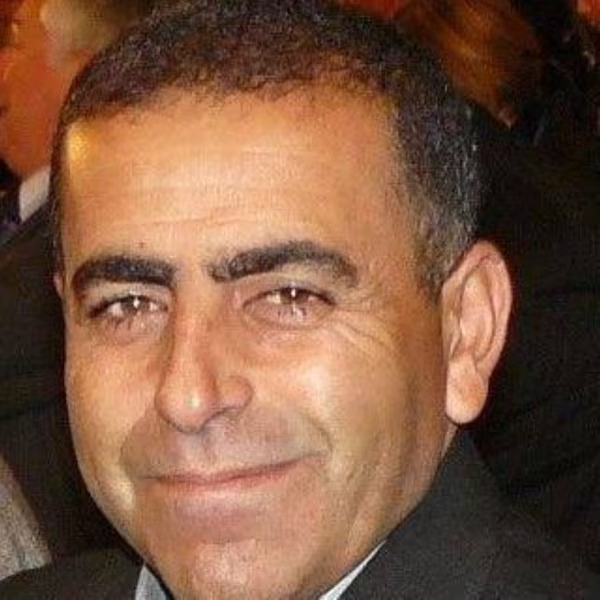
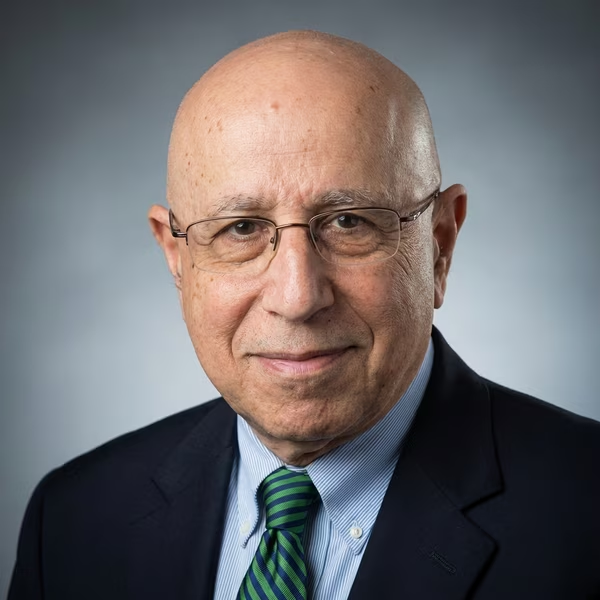
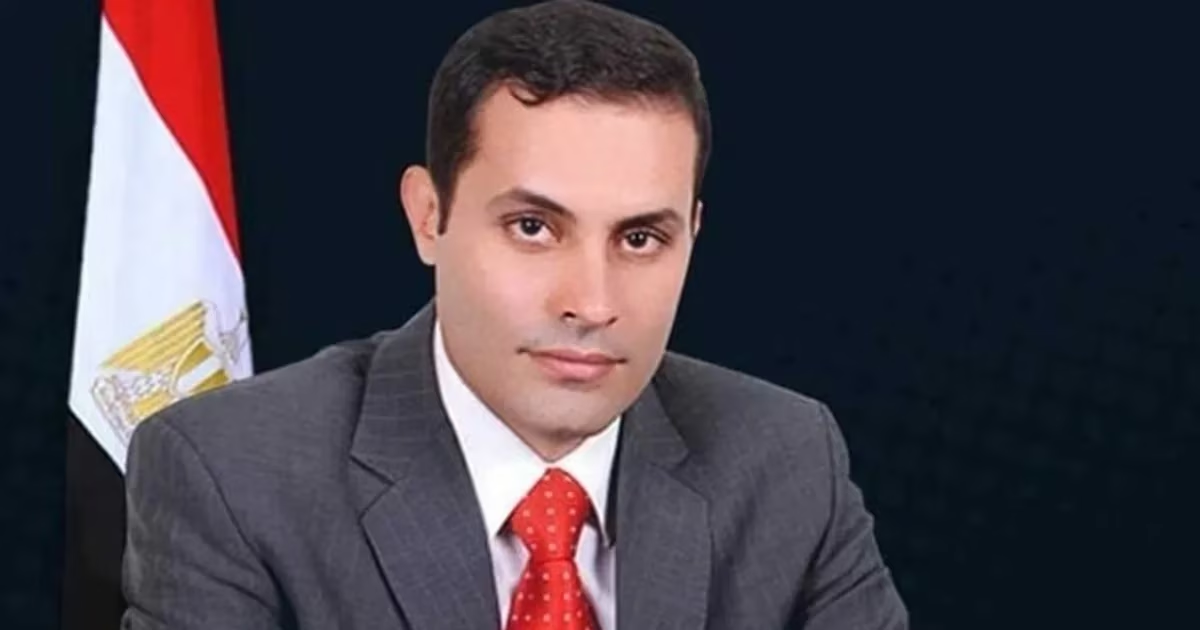
The recent announcement by Egyptian politician Ahmed Tantawi, former presidential candidate and ex-member of parliament, about his search for employment opportunities in academic and media fields, sparked a wave of controversy regarding the reality of economic restrictions imposed on opponents. Tantawi explained via his personal account that he is looking to utilize his 25 years of experience in journalism and scientific research, after a period of political pressure that ended with his imprisonment and deprivation from running in the last presidential race.

Tantawi's case is a revealing example of what human rights organizations describe as the 'drying up the sources' policy adopted by the Egyptian regime against critical voices. After his release from prison following the 'popular endorsements' case, he found himself besieged in the job market, where private sector employers fear hiring any individual with an 'opposition profile' to avoid security accountability or administrative pressures.

Human rights sources reported that these practices are not limited to well-known political figures but extend to include thousands of citizens who were released after periods of detention. These individuals face extreme difficulties in obtaining official documents such as 'criminal record certificates,' which deprives them of their natural right to earn a living and live a dignified life, turning their lives into a large prison outside its walls.

In testimonies documented by field sources, stories emerged of public employees in the education and endowments sectors who were prevented from returning to their jobs after their release. A supervisor in the Ministry of Education was deprived of his retirement pension on the pretext of absence from work, even though his absence was involuntary due to detention, which reflects the exploitation of administrative laws as punitive tools.

Reports indicate that professional restrictions have also affected the academic sector, where university professors have been dismissed or deprived of academic promotions due to their political stances or solidarity with their detained relatives. The case of Dr. Manar El-Tantawy, an engineering professor, stands out as one of the cases where professional advancement was linked to political loyalty or silence on violations.

The media and cultural fields were not far from these pressures, as unofficial lists were created preventing prominent writers and journalists from publishing in local newspapers. Names like Fahmy Howeidy and Alaa Al-Aswany found themselves banned from addressing the Egyptian public through traditional means, forcing many of them into forced emigration or involuntary cessation of writing.

Observers believe that the Egyptian regime has succeeded in creating a 'state of fear' within the business sector, where the private sector has become an indirect partner in political punishment. Factory and company owners request security checks before hiring, and any indication of previous political activity immediately leads to the exclusion of the job candidate, for fear of license revocation or tax prosecutions.

Samar El-Husseini, director of the Egyptian Platform for Human Rights, said that this pattern of punishment represents a blatant violation of economic and social rights. She affirmed that depriving a citizen of work based on their political affiliation is discrimination that violates the Egyptian constitution and international treaties, and aims to turn opposition into a financial and livelihood burden on its proponents.

For his part, human rights researcher Ahmed Hilal pointed out that the political deadlock has led to transforming disagreement with the authorities into 'personal enmities' that follow the details of the opponent's life. He considered that a figure of Tantawi's stature publicly seeking work is a symbolic cry expressing that the political elite has reached a stage of complete livelihood suffocation.

The pressures did not stop at preventing employment but extended to destroying small commercial projects that former detainees try to start. Testimonies documented cases of simple shops being raided and destroyed as soon as security agencies learned the identity of their owner, closing all doors of livelihood for these citizens.

In a related context, dozens of artists and media professionals left Egypt after their programs were shut down or the production companies dealing with them were pressured. Artists like Amr Waked and Khaled Abol Naga found themselves completely outside the Egyptian art scene, as part of a policy aimed at unifying media discourse and marginalizing any voice that does not align with the official narrative.

Sources confirm that security reports have become the primary criterion for appointment in government competitions, including judicial and teaching positions. Applicants are excluded not based on their competence, but based on the 'security check' which may include data about fourth-degree relatives engaged in opposing political activity.

This reality has pushed many national competencies to migrate to work abroad, representing a major loss for the Egyptian state. Activists believe that developed countries compete to attract expertise, while the current authorities work to squander these human resources simply because they differ in opinion with the executive authority's directives.

In conclusion, the 'deprivation of work' file remains one of the most complex issues in the Egyptian human rights scene, as it affects the right to life and survival. While the authorities deny the existence of systematic policies, the stories of hundreds of opponents and those economically pursued remain a testament to the use of livelihood as a weapon in the ongoing political struggle.

The story is not Tantawi's alone, but the story of a country that treats political difference as a reason to squander national competencies and expertise.

PALESTINE

Mon 15 Jun 2026 7:52 pm - Jerusalem Time

Palestinian woman killed in a raid on Al-Zawaida, and the death toll exceeds 72,000 martyrs

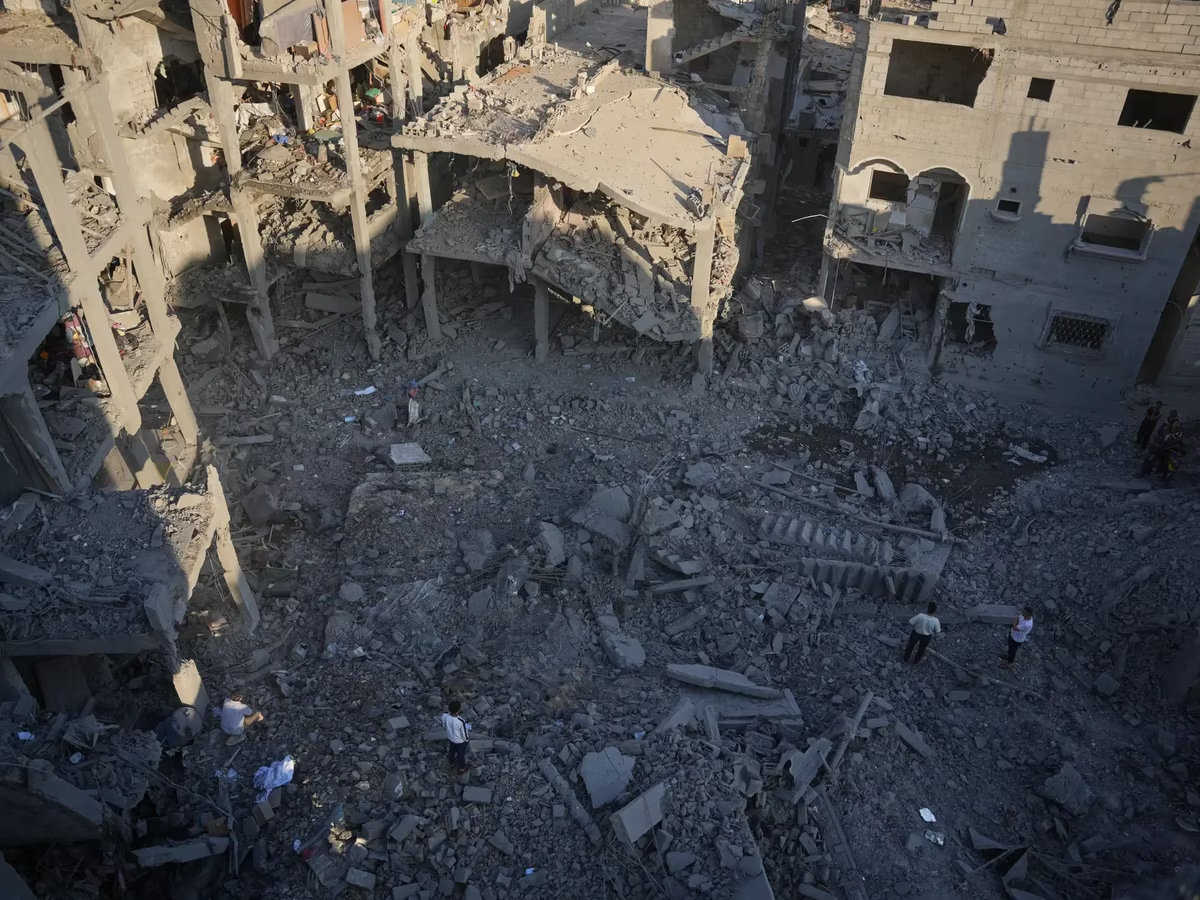
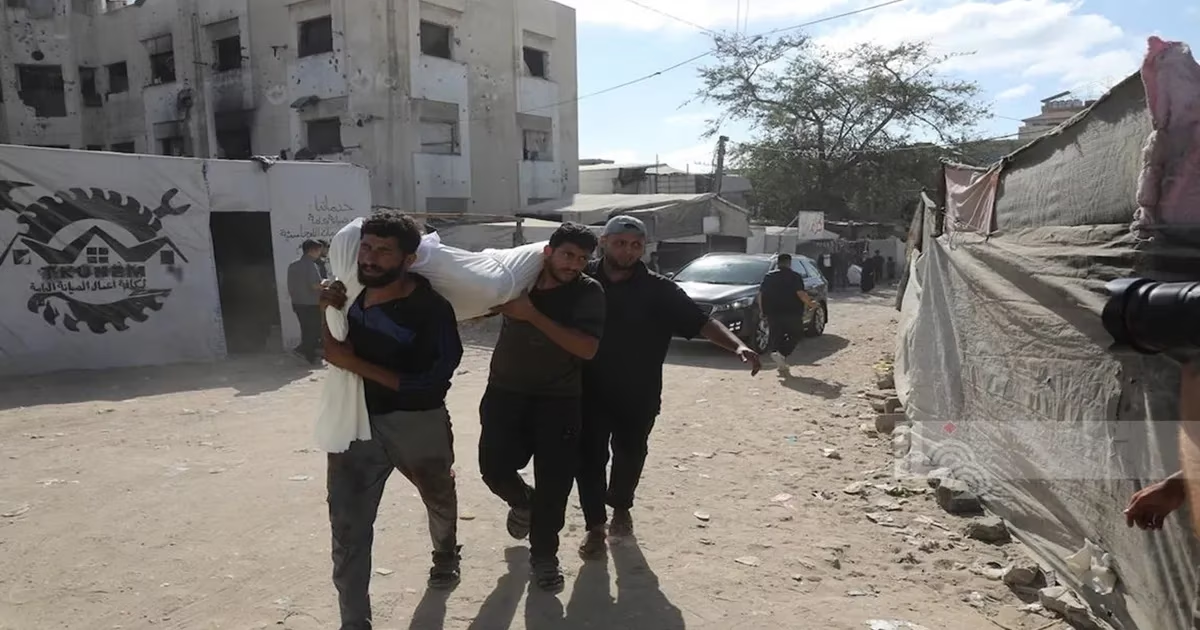
Nadia Kamal Ayyash, a citizen, was martyred this Monday morning as a result of a raid launched by the Israeli occupation forces on a residential area in the town of Al-Zawaida in the central Gaza Strip. Medical sources at Al-Aqsa Martyrs Hospital confirmed the arrival of the martyr's body after a direct targeting of the area adjacent to her home, as part of the ongoing military operations targeting residential areas in the Strip.

In a related context, the Palestinian Ministry of Health revealed a new update on the toll of victims of the ongoing aggression since October 7, 2023, where the number of martyrs rose to 72,996 martyrs, while documented injuries reached about 173,246 injuries, amidst extremely complex health and humanitarian conditions experienced by the residents of the besieged Strip.

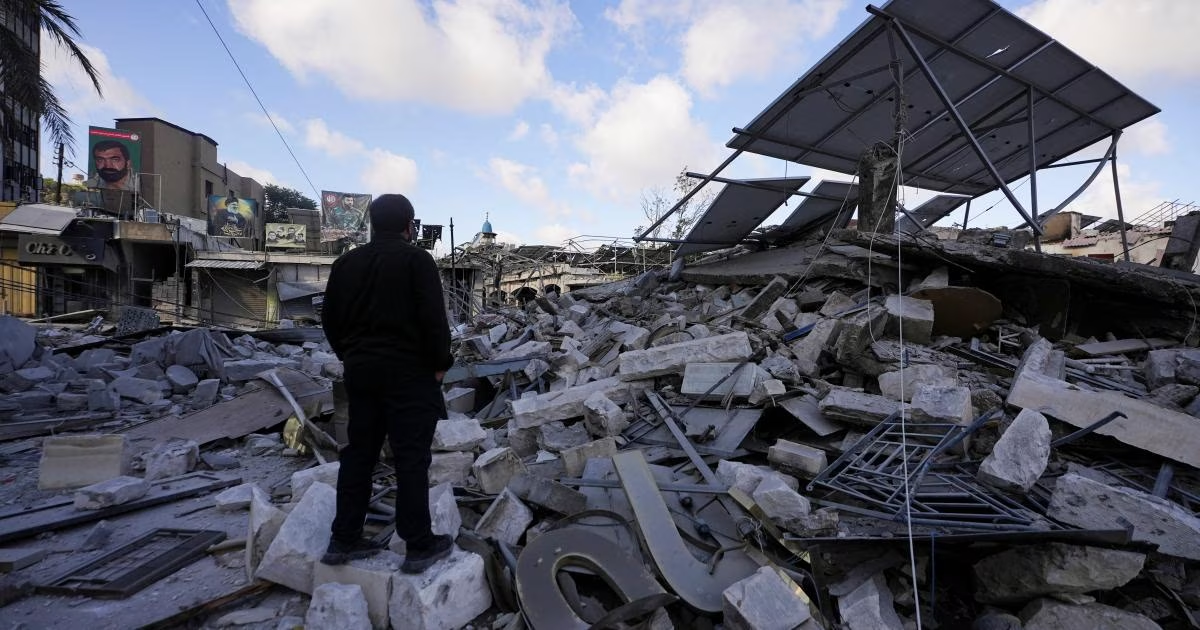
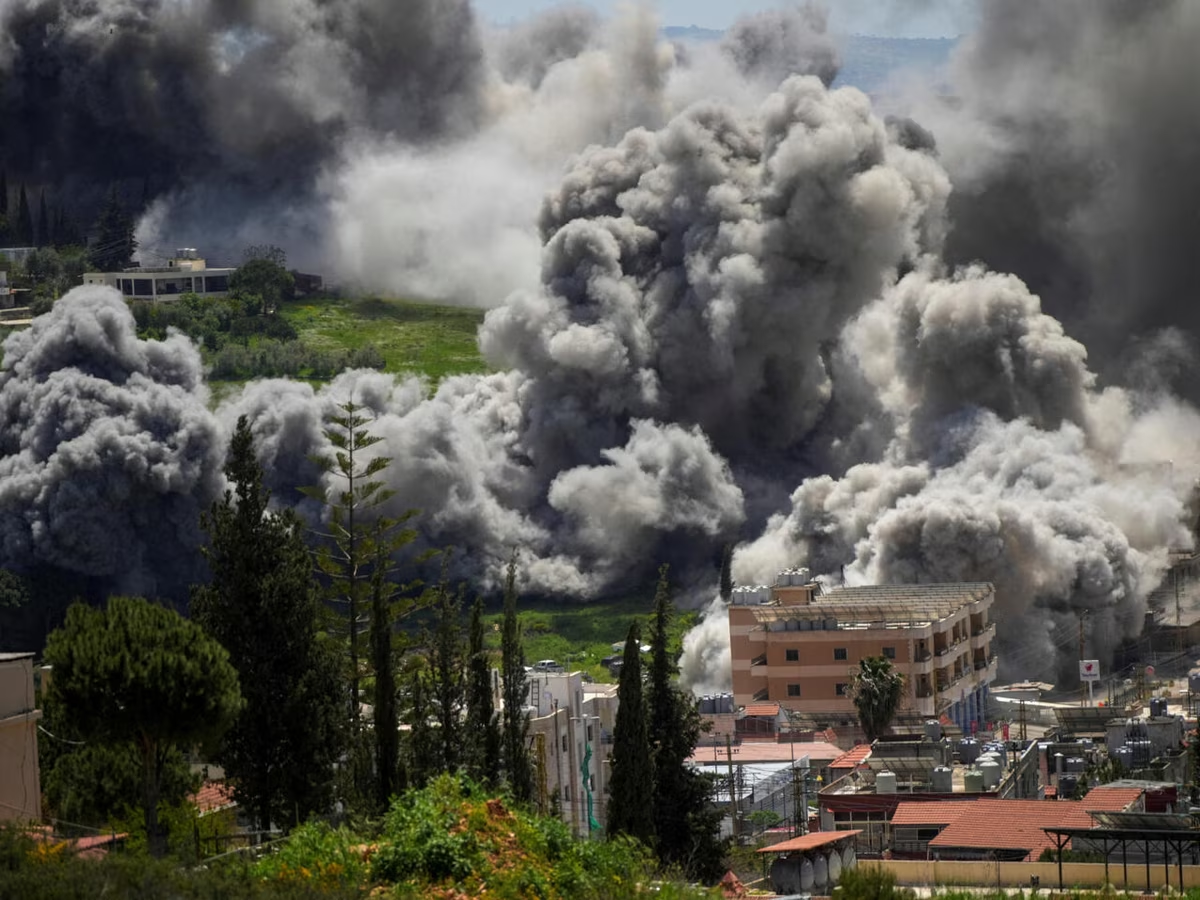
On the northern front, field sources reported an Israeli escalation targeting southern Lebanon, including a drone raid on a vehicle in the town of Kafr Tibnit, and artillery shelling that targeted Nabatieh Al-Fawqa and the vicinity of the town of Khiam. Meanwhile, hardline political stances emerged, as Israeli Prime Minister Benjamin Netanyahu informed US President-elect Donald Trump of Israel's refusal to withdraw from Lebanon, coinciding with statements by Minister Itamar Ben-Gvir in which he affirmed Tel Aviv's non-commitment to any international understandings with Iran.

On the ground, resistance factions continued to confront Israeli movements, as Hezbollah announced targeting gatherings of occupation soldiers in the areas of Majdal Zoun, Khiam detention center, Tyre Harfa, and Ras al-Bayada, at a time when a limited return of some Lebanese displaced persons to villages south of the Litani was observed despite official warnings of the danger of the security situation.

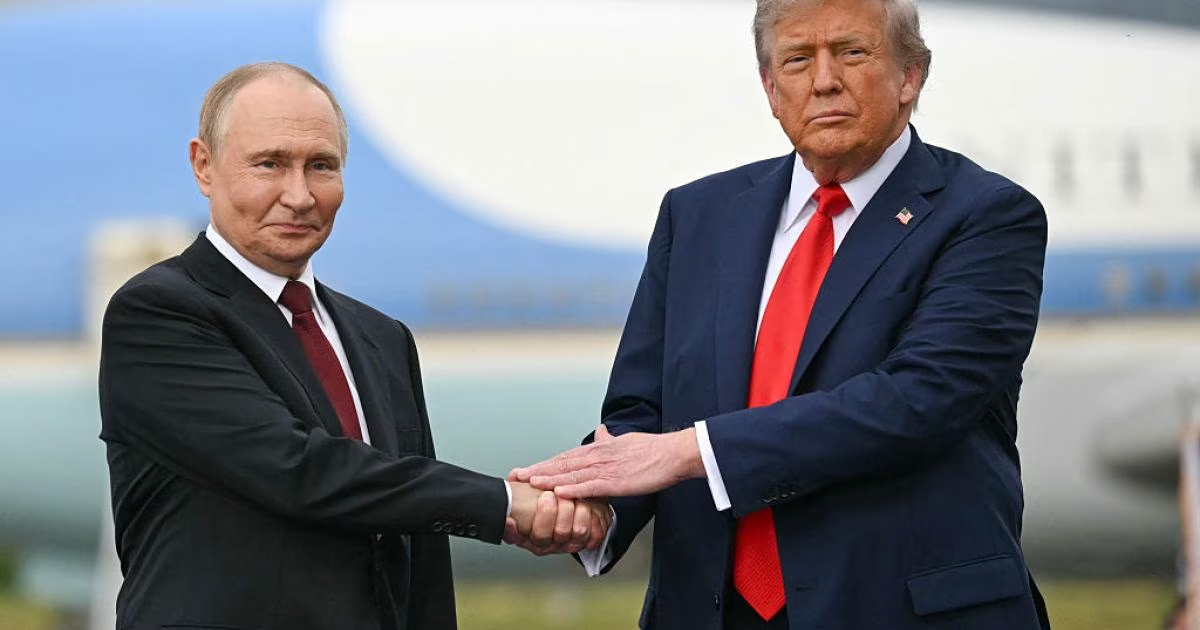
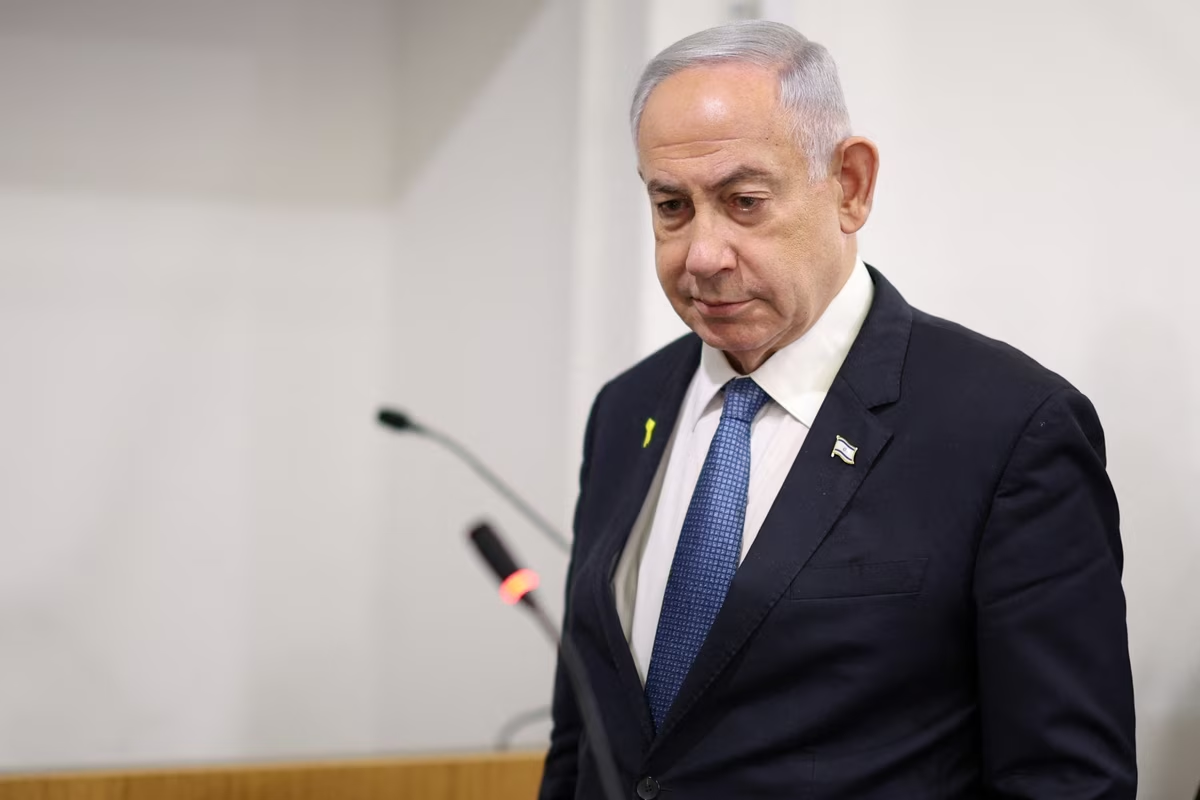
Benjamin Netanyahu informed Donald Trump that Israel does not intend to withdraw from Lebanon and will not abide by an agreement that imposes it.

OPINIONS

Mon 15 Jun 2026 7:52 pm - Jerusalem Time

The Dilemma of Opinion Monopolization: Why Do Some Fear the Culture of Disagreement and Leadership Renewal?

Ramallah - “Alquds ” dot com

Ramallah - “Alquds ” dot com

Opinion Writer

The claim of encompassing all truth and reality represents one of the most prominent manifestations of intellectual delusion in the modern era, where many believe that correctness is exclusive to them in all matters of life. This intellectual closed-mindedness makes one reject advice and confront opponents with overwhelming responses, forgetting that the era of infallibility ended with the death of prophets and messengers.

Sheikh Muhammad Al-Ghazali warned long ago against the phenomenon of intellectual intrusion, where someone who succeeds in one field believes they have become an expert in all fields. This intellectual arrogance closes the doors of reform in the nation and makes those who volunteer for good imagine themselves infallible, thus hindering any real progress.

Quranic texts indicate that the youth are the most flexible and accepting of differences, as mentioned in the story of the youths of the cave whom God guided further. The vitality of youth makes them more capable of accepting the correct opinion once it becomes clear to them, which is something lacking in some who have deeply rooted unilateral tendencies.

Looking at the Prophet's biography, we find that the Prophet, peace be upon him, broke the age barriers in assuming leadership positions when he appointed Usama ibn Zayd to lead the army. This decision was a clear message about the necessity of prioritizing competence over seniority, even in the presence of senior companions and people of opinion and consultation.

In contrast, today we find a strange insistence from some elites on excluding youth from decision-making circles, as if wisdom is exclusively linked to old age. This approach contradicts the spirit of the age and historical experiences that have proven that renewal is the secret to the survival and strength of nations.

The paradox appears when observing Western societies that might entrust a young Muslim like Zohran Mamdani with major responsibilities based on his competence. Whereas in our societies, elders insist on remaining at the forefront even if their ability to contribute in the field or travel constantly has declined.

The idea of unifying people on a single opinion or an identical lifestyle is an idea that contradicts human nature and the cosmic laws established by the Creator. Difference is not merely an incidental matter, but rather a creative purpose, as Imam Al-Qurtubi pointed out in his interpretation of the verses of Surah Hud, where God created people to be distinct.

The question that arises for those who monopolize their opinions is: What if life proceeded in one direction and in an unvarying, repetitive pattern? The absence of diversity means the death of creativity and the transformation of societies into silent machines, which contradicts the development of the earth that requires the cross-pollination of ideas and the multiplicity of visions.

The prophetic methodology was based on gentleness and consultation, in implementation of the divine command that linked mercy with people gathering around the leader. If the Messenger had been harsh and hard-hearted, people would have dispersed from around him, and this is a profound lesson for anyone who tries to impose their opinion by force or intimidation.

Attempting to compel the nation to a single opinion, especially in matters of ijtihad (independent reasoning), can lead to dire consequences, sometimes even bloodshed. Rigidity in positions without considering the opinions of experts who advise caution reflects a flaw in understanding the jurisprudence of balances and interests.

Some sometimes link adherence to an opinion with personal interests or what is known as 'livelihood', which turns intellectual disagreement into a utilitarian conflict. This conduct justifies to the self what God has not justified for Himself, ignoring that sustenance is in the hands of the Creator alone and should not be the price of flattery.

One of the most dangerous contemporary phenomena is accusing opponents of treason or falsehood merely because of their differing political or social viewpoints. This intellectual terrorism frightens those with sound opinions and prevents them from speaking the truth, thereby endangering the future of the entire nation.

I recall here the saying of Sheikh of Arabic, Mahmoud Shaker, who affirmed that every honorable Arab is truly responsible for the destiny of this nation. This responsibility requires clarity and foresight before it is too late, and the recognition that the nation's strength lies in the collective minds of its children, not in a single mind.

In conclusion, we must realize that rigidity in a single opinion can be a reason for alienating people from religion itself, as Sheikh Al-Ghazali pointed out. Mercy, ease, and acceptance of the other are the pillars upon which this religion was built, and without them, we turn into closed societies that lose their present and future.

Some excel in one field of worldly affairs and then interfere in another they are not good at, as if they have mastered both because of their mastery in one of them.

PALESTINE

Mon 15 Jun 2026 7:52 pm - Jerusalem Time

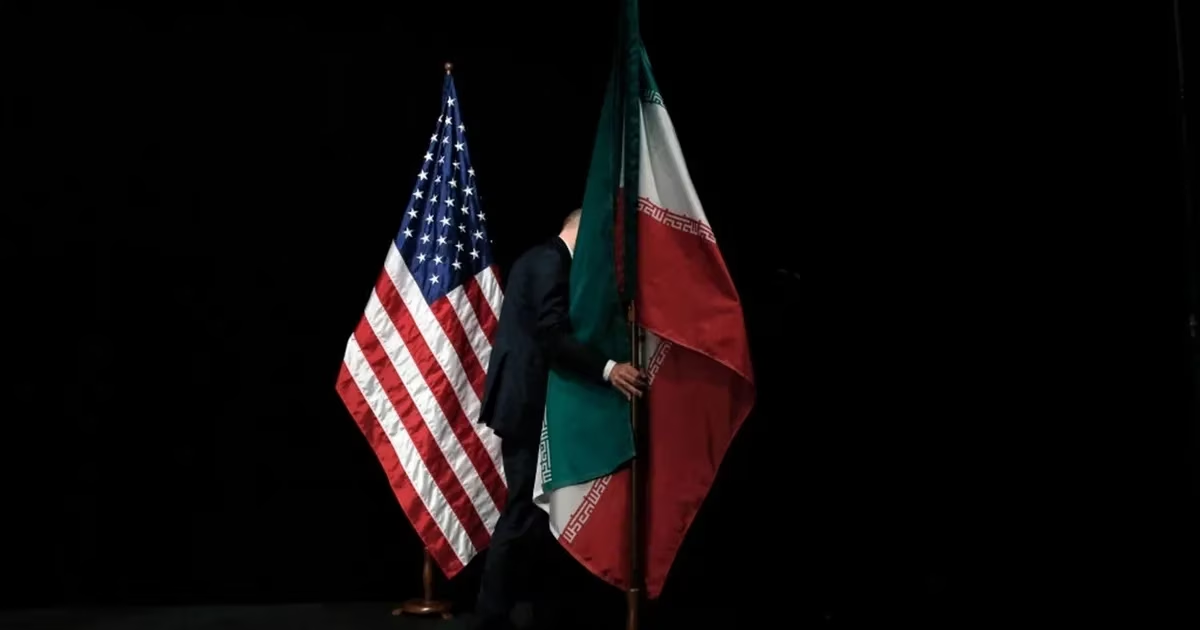
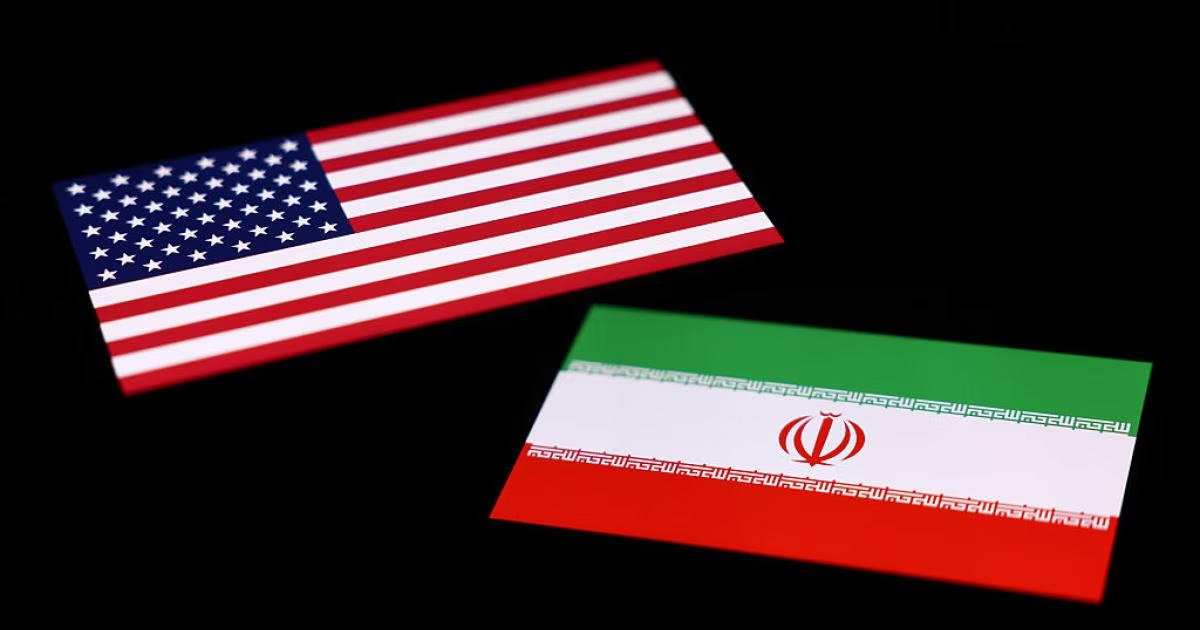
US-Iranian Understanding to Calm Fronts, Netanyahu Declares Rebellion: We Will Not Withdraw from Lebanon

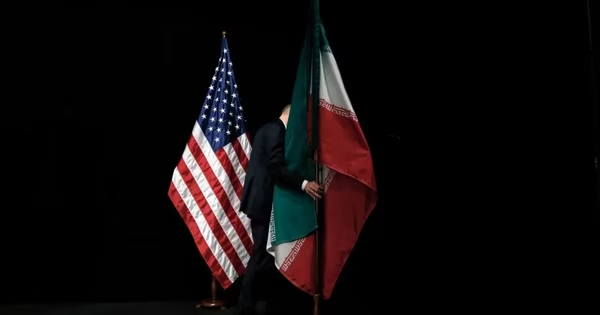
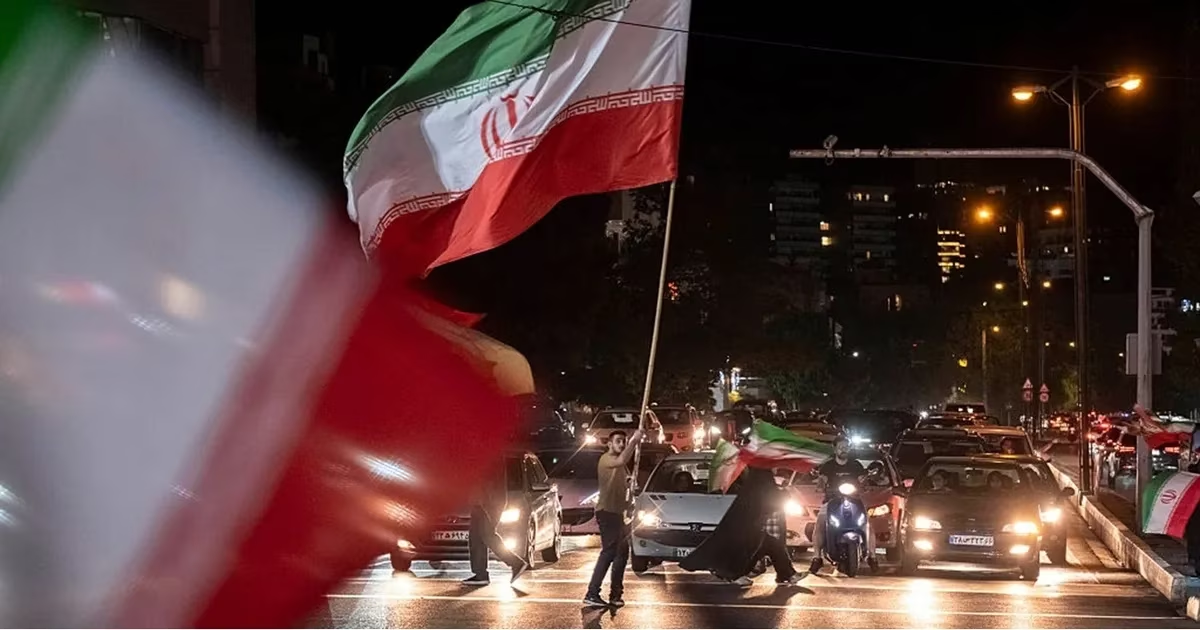
The regional arena witnessed a dramatic development following the announcement that the United States and Iran had reached a memorandum of understanding to end military operations on various fronts. This announcement quickly reflected on the Lebanese field, where large numbers of citizens began returning to their villages and towns in the south, despite the continued Israeli warplane flights in the skies.

For his part, Lebanese President Joseph Aoun quickly welcomed this understanding, emphasizing his close follow-up to the provisions of the memorandum that stress the cessation of escalation and hostilities. Aoun expressed his appreciation to all international and regional parties that sought to include Lebanon in comprehensive de-escalation efforts to ensure the country's stability.

In a related context, Lebanese Parliament Speaker Nabih Berri praised the memorandum, commending the role played by Qatar, Saudi Arabia, Egypt, and Pakistan in bringing viewpoints closer. Berri stressed the importance of the binding clause to stop Israeli aggression, considering that the commitment of major powers to this path represents a necessary step to protect Lebanese sovereignty.

On the other hand, the Israeli response was sharp and contradictory to the diplomatic atmosphere, as media sources reported that Prime Minister Benjamin Netanyahu clearly informed US President Donald Trump that Israel would not withdraw from Lebanese territories. Netanyahu affirmed that his government does not consider itself a party to this agreement or bound by the implementation of any of its field provisions.

Israeli rejection did not stop at the prime minister's office but extended to far-right figures, with National Security Minister Itamar Ben-Gvir stating that the Trump agreement does not bind Israel in any way. These statements reflect a deep gap between the American vision for regional de-escalation and the military strategy adopted by Tel Aviv at the current stage.

Observers believe that the sixty-day memorandum of understanding aims to test intentions but does not guarantee sustainable peace in light of Israeli intransigence. Questions remain about Washington's ability to pressure its ally Israel to engage in the de-escalation path it outlined with Tehran.

In an analytical reading of the scene, conflict management experts considered the Israeli position to be the 'cornerstone' that could lead to the failure or success of the understanding. They explained that Netanyahu is seeking at this stage to prove the independence of his political decision to his domestic audience, denying his submission to the pressures exerted by the Trump administration.

Estimates indicate that the next phase will be governed by two main scenarios regarding military operations in southern Lebanon. The first scenario assumes the Israeli forces remaining in their positions with a reduced pace of hostilities to avoid a direct clash with the new American administration.

The second scenario predicts the continuation of military strikes at a high pace, based on an Israeli reading that Iran will not risk entering a comprehensive confrontation after signing the memorandum. Through this approach, Israel aims to keep the Lebanese file under its direct control, away from any international arrangements that do not serve its security objectives.

For its part, Tehran continues to adhere to the principle of 'unity of fronts,' linking any real de-escalation to a comprehensive ceasefire that includes all inflamed arenas. This position poses an additional challenge to American efforts that are trying to dismantle regional crises through separate paths or temporary understandings.

Anticipation remains the master of the situation regarding Hezbollah's reaction on the ground, especially in light of the continued Israeli military presence in contact areas. Recent Israeli statements suggest a desire to establish a new occupation reality that goes beyond the limits of transient military operations to include areas in Lebanon and Syria.

In conclusion, the US-Iranian understanding faces a difficult test on Lebanese soil, where international political calculations intertwine with Israeli field ambitions. The next few days will be decisive in determining whether the region is heading towards real de-escalation or towards a new and more ferocious round of conflict.

Netanyahu informed Trump that Israel will not withdraw from Lebanon and is not bound by the agreement concluded with Iran.

ANALYSIS

Mon 15 Jun 2026 7:51 pm - Jerusalem Time

Analysis: How Iran Achieved Its Strategic Goals and Forced Washington to Retreat?

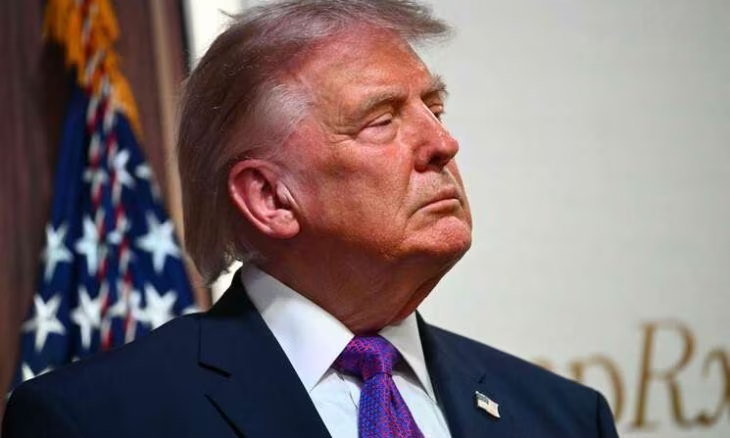
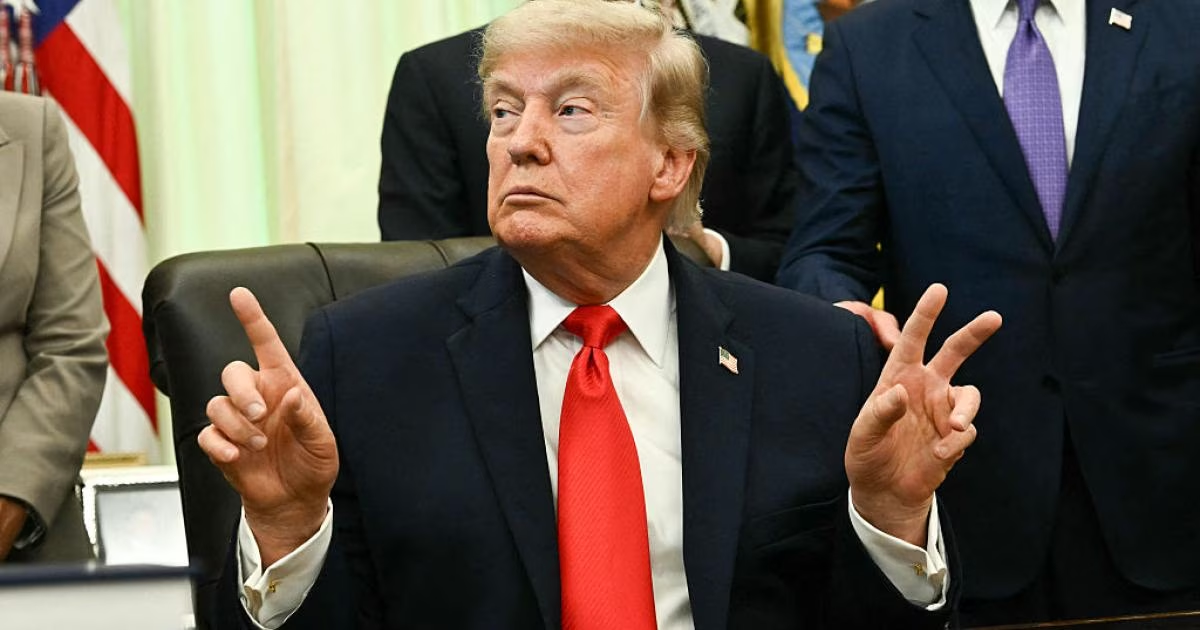
In an extensive political analysis, 'The Atlantic' magazine considered the agreement announced by US President Donald Trump with Iran to be a clear strategic victory for Tehran and a diplomatic defeat for Washington. The analysis indicated that Trump, who rushed to celebrate the agreement coinciding with his eightieth birthday, failed to achieve any of the promises he made at the beginning of the conflict, most notably changing the Iranian regime.

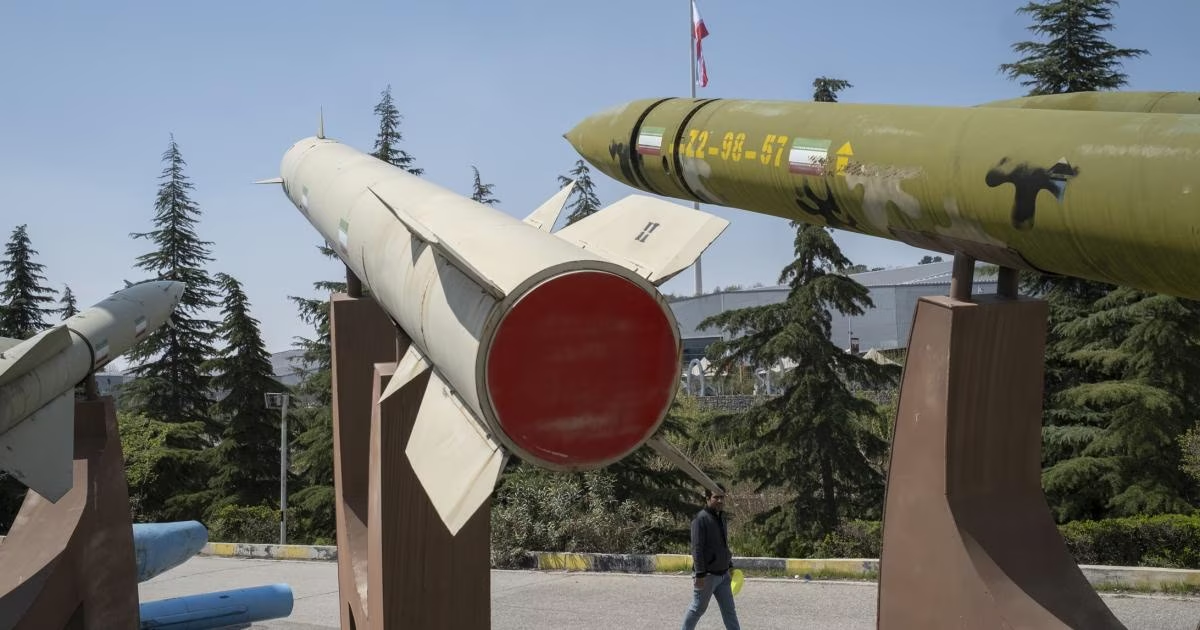
Despite the US administration's attempts to portray the outcome as a victory, field and political realities indicate that Tehran emerged from this confrontation stronger and more cohesive. The Iranian regime maintained its structure under the leadership of the Revolutionary Guard, and its arsenal of ballistic missiles and drones continued to pose an existing threat, while its regional influence through allied groups continued without significant decline.

Reports indicate that the Iranians are now in control of the ongoing negotiations, with a crucial meeting scheduled in Switzerland next Friday to finalize the details. This agreement is expected to lead to a broad lifting of economic sanctions, paving the way for the flow of billions of dollars in frozen assets that Washington had previously refused to release.

Behind the scenes of the strained relationship with allies, the analysis revealed immense anger expressed by Trump towards Israeli Prime Minister Benjamin Netanyahu, accusing him of trying to obstruct the American withdrawal from the conflict. According to informed sources, Trump severely reprimanded Netanyahu after the latter's plans to attack Beirut, reminding him that American support is what protects him from legal prosecution and imprisonment.

Observers believe that Iran's clever linking of the Lebanon front with the tension in the Gulf forced the US administration to accept conditions that include a comprehensive ceasefire in the region. This shift places Israel in a state of political isolation, especially after Netanyahu recklessly encouraged Trump to military escalation, which ended in a settlement that does not serve direct Israeli interests.

Regarding the nuclear file, the analysis described Washington's claims of depriving Iran of nuclear weapons as a 'ridiculous assertion,' given that Tehran had previously adhered to international agreements before Trump withdrew from them. Now, the United States finds itself facing a new reality in which Iran possesses large quantities of enriched uranium, with less capacity for international oversight compared to the situation before the war.

The leaked terms of the agreement include huge financial gains for Tehran, with an expected receipt of 12 billion dollars as a first installment, followed by similar amounts within two months of signing. There is also talk of establishing an international reconstruction fund worth up to 300 billion dollars, which represents an economic lifeline for the regime that has suffered for years from a suffocating blockade.

On the ground, the Strait of Hormuz remains under Iran's de facto control despite Trump's showy announcements of opening it for free international navigation. The geopolitical reality confirms that Iranian forces are the only party capable of imposing their will in this vital waterway, making American promises mere statements for local media consumption before the elections.

This confrontation has led to the depletion of US military stockpiles and increased economic pressure on consumers in the United States due to rising fuel prices. In contrast, Iran emerged from the crisis with new financial resources and implicit recognition of its regional power, which strengthens its position as an indispensable player in the equations of the Middle East.

Writer Tom Nicholas points out that Trump was in a hurry to end the conflict at any cost to avoid its repercussions on financial markets and the upcoming elections. This haste gave the Iranian negotiator an opportunity to impose harsh conditions, including guaranteeing the survival of the regime and lifting the naval blockade on Iranian ports, which is considered a complete retreat from the 'maximum pressure' policy.

Regarding the enriched uranium that was bombed, a major technical and security dilemma arises about how to deal with the radioactive materials under the rubble. Despite the threats of US Secretary of Defense Pete Hegseth, the reality confirms the impossibility of US forces entering to extract these materials without the full approval and coordination with the authorities in Tehran.

Recent events have proven that military power alone is not enough to achieve sustainable political victories, especially against an adversary that possesses multiple leverage points. Iran not only withstood militarily but also succeeded in inflicting economic and political damage on regional countries that engaged in Trump's strategy, pushing everyone to seek a diplomatic solution.

Analysts believe that this settlement will have a long-term impact on US alliances in the region, as Gulf countries have begun to realize the futility of complete reliance on American protection. The military bases that were supposed to provide security, at the moment of conflict, turned into potential targets, while Washington ultimately prioritized its own political interests at the expense of its allies.

In conclusion, the current scene shows that the United States has lost its bet on breaking Tehran's will, and ended up accepting an agreement that grants the Iranian regime everything it aspired to. While Trump celebrates in the White House garden, the bitter truth remains that Washington surrendered to the fait accompli, leaving the region facing new power balances that clearly tilt towards the Islamic Republic.

The truth is that the war will stop, and the regime in Tehran is healthy and under the control of the Revolutionary Guard, while the Americans have not achieved any of their goals.

PALESTINE

Mon 15 Jun 2026 7:51 pm - Jerusalem Time

Crime in the 'Safe Zone'.. Occupation Executes Child in Front of His Father in Central Gaza Strip

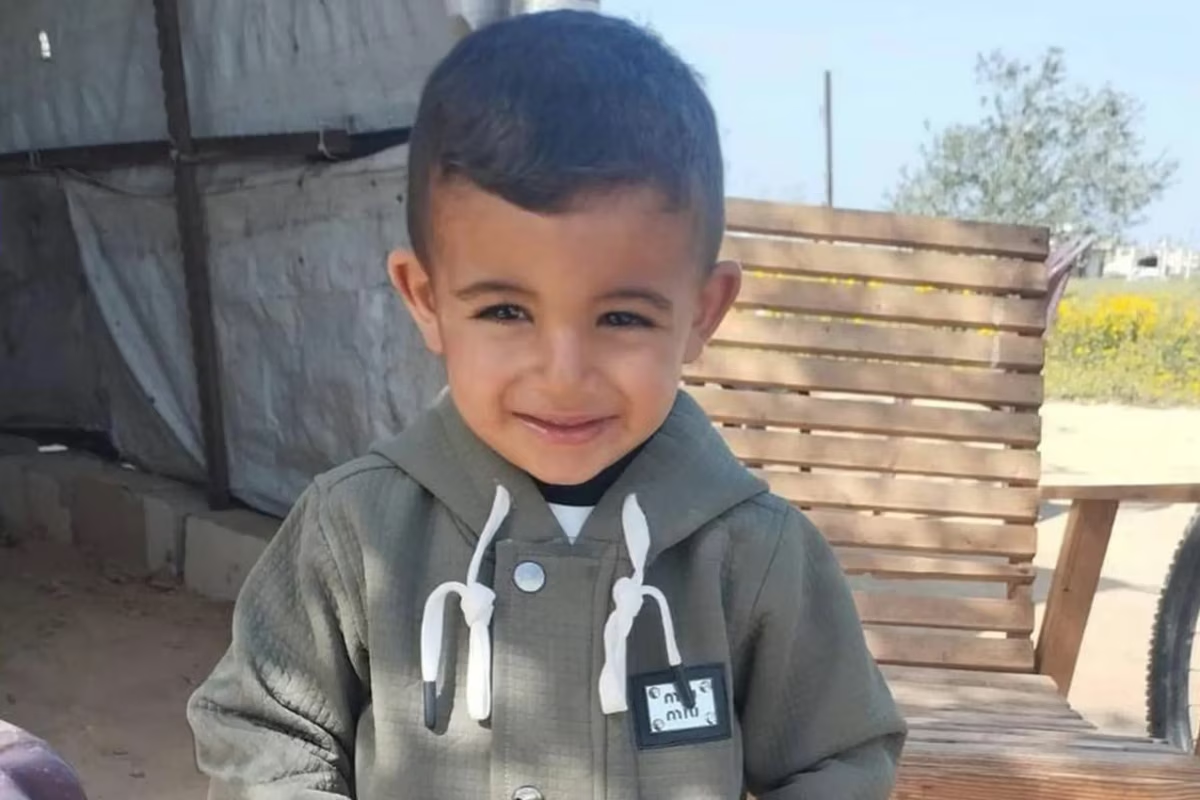
Israeli occupation forces committed a new crime against childhood in the central Gaza Strip early Monday morning, directly shooting a child not older than four years old in front of his father. Medical sources confirmed the arrival of the body of child Rayan Bahaa Abu Al-Ajeen to Al-Aqsa Martyrs Hospital, after he sustained fatal injuries from the bullets of occupation soldiers who ambushed the family in a residential area.

Local sources reported that the incident did not stop at the execution of the child, but also affected his father, Bahaa Abu Al-Ajeen, who was shot in the leg, while one of their relatives, Khaled Abu Ghorab, was arrested. This incident comes in the context of a series of field attacks carried out by the occupation army against unarmed civilians attempting to inspect their properties in areas from which forces have partially withdrawn.

For its part, the Government Media Office in Gaza clarified that the victims were in an area classified as 'safe' and located outside the scope of military operations or what is known as the Yellow Line. Officials indicated that the family was on their way to inspect their 'agricultural baths' before occupation soldiers ambushed them from inside a nearby house, where they were brutally assaulted.

In horrific details about the fate of the injured, sources stated that the occupation army took the father and his relative to the 'Kissufim' military crossing before releasing them and handing them over to groups described as 'collaborator gangs'. These groups threw the injured in the Wadi Al-Salqa area east of Deir al-Balah, in an attempt to disclaim direct responsibility for the crime committed against child Rayan.

This crime was not the only one in recent hours, as a woman and another child were martyred and three citizens were injured in airstrikes and shootings targeting various areas of the central Strip. These field developments confirm the fragility of the security situation and the continued systematic targeting of civilians despite announced understandings regarding the cessation of hostile operations.

In an official statistic, the Government Media Office revealed the extent of Israeli violations of the ceasefire agreement in effect since October 2025, which amounted to more than 3269 violations. These continuous violations led to the martyrdom of 992 people and the injury of about 3138 Palestinians with varying injuries, in addition to dozens of arbitrary arrests of citizens during their movement.

On the humanitarian front, the occupation authorities continue to impose strict restrictions on the entry of vital aid, allowing only about 36% of the agreed-upon trucks to enter. Data shows that only 52,740 trucks entered the Strip out of 147,000 trucks that were supposed to arrive to meet the needs of the besieged population, which seriously exacerbates the living and health crisis.

The truce agreement stipulates the entry of 600 trucks of aid and goods daily, along with 50 trucks loaded with fuel and gas, but the reality on the ground shows a clear evasion of these commitments. This Israeli intransigence extends to preventing the entry of essential medical supplies and fuel needed to operate the remaining vital facilities in Gaza and Deir al-Balah.

Regarding the file of the wounded and sick, reports indicated that the compliance rate for enabling critical cases to travel through the Rafah crossing did not exceed 35%. Out of 19,600 patients and companions who were supposed to travel for treatment abroad, only 6845 people were able to leave, putting the lives of thousands of people suffering from intractable diseases and serious injuries at risk.

The child and his father were outside the Yellow Line in a completely safe area, and were surprised by a military ambush inside one of the houses while they were on their way to inspect their agricultural work.

ARAB AND WORLD

Mon 15 Jun 2026 7:51 pm - Jerusalem Time

Tehran announces completion of final framework agreement with Washington under the leadership of Mojtaba Khamenei

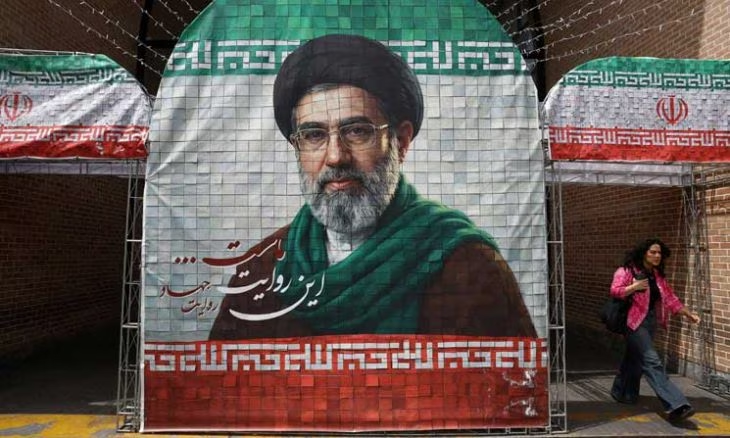
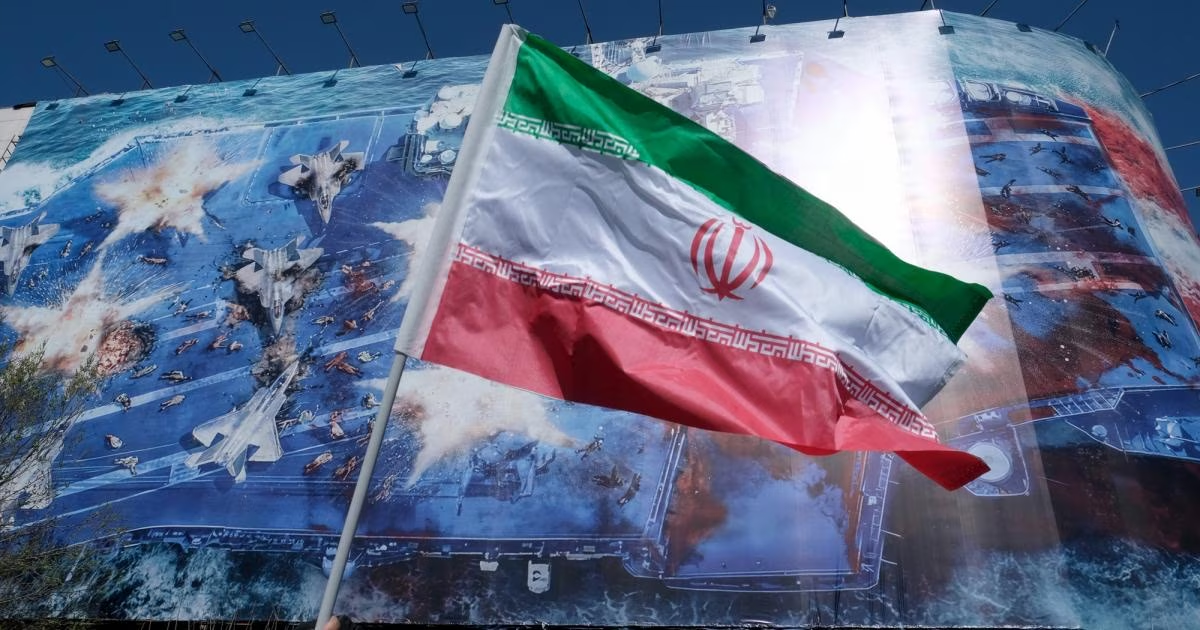
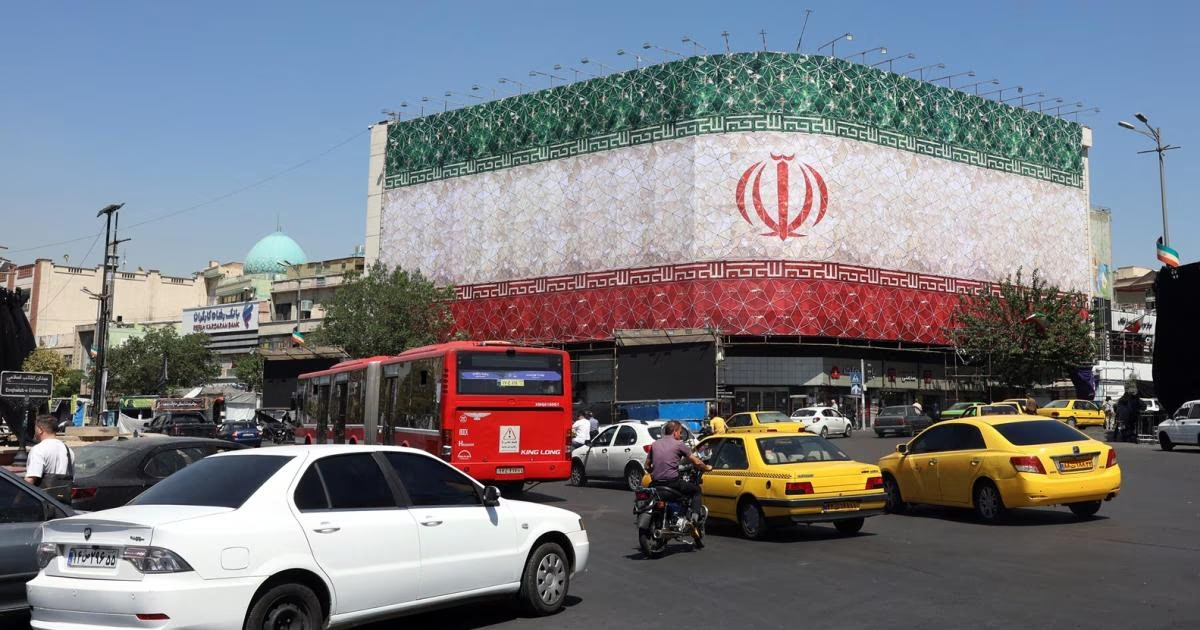
The Iranian Supreme National Security Council announced today, Monday, the final completion of all provisions of the framework agreement with the United States of America. The Council clarified in an official statement that these understandings took place under the direct leadership of Supreme Leader Mojtaba Khamenei, representing a fundamental shift in Iranian foreign policy in the new era.

Official sources confirmed that intensive rounds of negotiations concluded on Sunday evening, where broad outlines were agreed upon to govern the relationship between the two parties in the coming phase. This announcement comes at a sensitive time when the region is awaiting with great anticipation the results of diplomatic moves recently led by Tehran away from the spotlight.

The framework agreement includes a fundamental clause stipulating the immediate and comprehensive cessation of all hostile actions on various fronts ablaze in the region. The statement indicated that this commitment includes the Lebanese arena, paving the way for a broad regional de-escalation long awaited by international and regional powers alike.

In the context of Iranian gains, the provisions of the agreement stipulated the necessity of the immediate and complete lifting of the naval blockade imposed by the United States on Iranian ports. This step would end years of economic isolation and allow the flow of goods and Iranian oil to global markets without restrictions or international legal pursuits.

Media sources quoted Iranian Deputy Foreign Minister Kazem Gharibabadi as saying that the Iranian side has completed all technical and political preparations for implementing the outcomes of this agreement. Gharibabadi clarified that the actual implementation of Iranian commitments is linked to the official signing schedule set for next Friday.

In a significant field and economic development, reports from Tehran confirmed that the strategic Strait of Hormuz will be fully reopened to international navigation immediately upon the signing of the agreement. This step is a fundamental guarantee for the stability of global energy markets and an affirmation of the parties' seriousness in de-escalating military tensions in vital waterways.

The Supreme National Security Council, which issued the statement, is considered the highest authority for strategic decision-making in the Islamic Republic, operating under the direct supervision of the Supreme Leader. This step highlights the growing role of Leader Mojtaba Khamenei in managing major sovereign files since he assumed power after his late father.

Despite the importance of the agreement, the official statement did not address the nature of the concessions Iran may have made in return to ensure the lifting of the blockade. Observers believe that the silence on these details may be related to the necessities of internal Iranian balances before the full text of the agreement is announced on Friday.

Available information indicates that Iranian President Masoud Pezeshkian played an important coordinating role between the executive bodies and the Leader's institution to ensure the smooth conduct of negotiations. This leadership harmony aims to present a united front to the international community to ensure the implementation of corresponding American commitments without hesitation or retreat.

Supreme Leader Mojtaba Khamenei is 56 years old and is a veteran who is highly regarded within Iranian military and security institutions. Despite his absence from direct public appearances since taking office, the achievement of this agreement solidifies his presence as a key player in shaping the country's new roadmap.

The announcement of the agreement has sparked mixed reactions in political circles, with some considering it a victory for Iranian diplomacy in extracting American recognition of Tehran's interests. In contrast, regional capitals are awaiting the details of the security annexes of the agreement and how they will reflect on militias and allied forces of Iran abroad.

Next Friday is expected to witness an official signing ceremony with wide international coverage, where the features of the transitional phase in Iranian-American relations will become clear. This date will serve as a real test of Washington's commitment to lifting economic and financial restrictions imposed on the Iranian banking system.

Regarding the Iranian domestic situation, the lifting of the naval blockade is expected to alleviate living pressures and improve the value of the local currency, which has suffered severe deterioration. Economic experts believe that the reopening of the Strait of Hormuz will be a new lung for the Iranian economy, exhausted by accumulated sanctions over the past decades.

In conclusion, this framework agreement represents the end of a phase of direct confrontation and the beginning of an era that may be characterized by cautious coexistence between Tehran and Washington. The next few days remain crucial in determining whether this agreement will withstand field challenges and political pressures from parties rejecting Iranian-American rapprochement.

Iran's commitments under the agreement will not come into effect until the official signing scheduled for next Friday.

OPINIONS

Mon 15 Jun 2026 7:50 pm - Jerusalem Time

Washington and Tehran's Fragile Agreement: Iranian Resilience and Israeli Predicament in the Face of Transformations

Ramallah - “Alquds ” dot com

Ramallah - “Alquds ” dot com

Opinion Writer

The announcement of a ceasefire agreement between the United States and the Islamic Republic of Iran came as a surprise to many, especially as it was described as fragile given the surrounding circumstances. This agreement was preceded by a widespread Israeli military escalation in Lebanon, clearly reflecting Benjamin Netanyahu's desire to obstruct any diplomatic path that might end the state of war, which he sees as a lifeline for his political future threatened by prosecution.

For its part, Tehran showed no eagerness to sign the agreement; rather, it appeared ready to strike at sources of aggression in support of Hezbollah, which did not stand idly by. This Iranian stance put the American administration in a predicament, as the US President sought to finalize the agreement at any cost to present himself to voters as a man of peace, especially after realizing that military force alone could not impose his will.

The recent confrontation revealed that Iran is fundamentally different from other countries whose regimes Washington tried to change, as Tehran proved its possession of strategic power tools capable of raising the cost of war. Prominent among these tools is the ability to control the Strait of Hormuz, in addition to a political system structure that does not collapse merely by targeting leaders, which came as a surprise to decision-makers in the White House.

American ambitions shifted from attempting to overthrow the regime and impose alternatives like Reza Pahlavi, the son of the former Shah, to seeking a formula that ensures a minimum level of stability. Events proved that betting on the external opposition was a losing bet, as Washington failed to market these figures who lack a real popular base within Iranian society.

In contrast, the Israeli position stands out as a potential detonator for this agreement, as observers believe that Netanyahu might resort to harassing Lebanon again to drag the region into a comprehensive confrontation. Iran realizes that any new aggression against its allies will necessarily mean its direct response, which puts the entire agreement at risk and brings it back to square one.

On the Israeli domestic front, warnings of imminent security and political collapses increased, as former military leaders like Moshe Ya'alon criticized the absence of a strategic vision in dealing with the Iranian file. Ya'alon described current policies as leading Israel towards an apartheid system, warning that Iran emerged stronger from the recent confrontation despite the strikes.

Iran now needs huge budgets and a long time to rebuild what the aggression destroyed, especially in the capital Tehran, whose vital facilities were damaged. Despite these wounds, analysts believe that Tehran will not abandon its regional aspirations; rather, it may use the period of calm to rearrange its internal affairs and strengthen its presence in the region through new methods.

The experience has proven that complete reliance on American protection was a great illusion sold to the countries of the region for many years, as it became clear that American bases could become a burden in moments of real confrontation. This requires the Arab world to formulate a new strategy that deals with Iran as a neighboring country according to the rules of good neighborliness, away from illusions of expansion or external dependence.

Iranian resilience, despite heavy losses, represents a guarantee against Washington violating the agreement, as it fears the repercussions of failure on the upcoming congressional elections. The Democratic Party is anticipating any stumble by Trump, who finds himself compelled to curb Netanyahu's ambitions to ensure the continuation of de-escalation and achieve internal political gains.

Considering the figures Washington bet on to change the regime, Reza Pahlavi stands out as a model of failure, as he tried to exploit American support to return to power without success. Events proved that 'he who is covered by America is naked,' as Washington abandoned its allies at critical moments, just as it happened with his father previously.

The Iranian regime, with its complex structure and multiple layers of power, has proven its ability to continue despite the assassination of senior leaders, a governance pattern that the author believes needs to be studied to understand its sources of strength. This resilience is what forced the American administration to humble its demands and accept an agreement that does not achieve all its declared goals at the beginning of the conflict.

In light of this scene, a question arises about the international community's ability to compel all parties to the agreement, especially with the presence of national religious currents in Israel that believe in the superiority of the Jewish race and push for escalation. These currents, which Ya'alon referred to, pose a danger not only to Palestinians but to the stability of the entire region.

In conclusion, the next phase requires the countries of the region to take the initiative to open direct channels of communication with Tehran, to ensure its transformation into a 'normal state' that respects the sovereignty of its neighbors. External protection has lost its effectiveness, and the peoples of the region have no choice but to rely on themselves to build a sustainable regional security system away from international interventions.

The lessons learned from this war confirm that brute military force does not always guarantee the achievement of political goals, and that peoples with the will to resist are capable of imposing their conditions. The American-Iranian agreement remains a real test of the major powers' ability to control their allies and prevent the region from sliding into a wider catastrophe.

He who is covered by America is naked; experience has proven that the Iranian regime is not the rule of an individual that falls with the arrest of its president, but rather a complex structure that has surpassed the objectives of the American war.

ARAB AND WORLD

Mon 15 Jun 2026 9:47 am - Jerusalem Time

International anticipation for the signing of the Washington-Tehran agreement in Geneva and American debate over frozen funds

Pakistan officially welcomed the announced understandings between the United States and Iran, describing them as a fundamental step towards strengthening security and stability in the Middle East region. The Pakistani Foreign Ministry affirmed that this diplomatic path opens new horizons for regional cooperation and ends the state of tension that has prevailed for many years.

In a related context, Pakistani Foreign Minister Muhammad Ishaq Dar expressed his country's gratitude to the countries that played a mediating role in bringing the views of the two parties closer. He specifically mentioned the efforts of Saudi Arabia, Qatar, Turkey, and Egypt, noting that the solidarity of these powers contributed to reaching this advanced stage of negotiation.

For its part, informed sources revealed that the Swiss capital, Geneva, will be the scene for the official signing ceremony of the agreement next Friday. JD Vance, the US Vice President, indicated the possibility of President Donald Trump personally attending these ceremonies, reflecting the strategic importance the administration attaches to this file.

Despite the optimistic atmosphere, President Trump described the agreement as a 'historic achievement' that will redraw the political and security map in the region, but he did not overlook the deterrent aspect. He affirmed in press statements that the military option will remain on the table if the diplomatic path fails to prevent Tehran from acquiring nuclear weapons.

The anticipated agreement primarily aims to secure global navigation in the Strait of Hormuz, which is the world's energy lifeline. The provisions include the immediate commencement of naval mine clearance operations and the lifting of restrictions on commercial vessels, ending months of mutual threats and attacks in international waters.

Through this understanding, Washington seeks to establish long-term arrangements that ensure strict oversight of the Iranian nuclear program. According to responsible sources, the agreement will provide international verification mechanisms to prevent any future attempts to develop nuclear military capabilities, in exchange for a gradual easing of some economic pressures.

However, the agreement still faces legal and political challenges, as the final signed document has not been published yet. The absence of the full text raises questions about the nature of mutual commitments and implementation timelines, especially given the slight discrepancies in official narratives issued by Washington and Tehran.

Domestically in the US, the issue of frozen Iranian funds emerged as one of the most controversial points between the administration and the Republican opposition. Sources in the US administration categorically denied reports that Washington intended to immediately release approximately $12 billion to Iran upon signing.

Sources told American media that any financial gains Tehran receives will be conditional on practical verification of its implementation of its commitments. The administration described the circulating information about 'immediate release' as misleading, emphasizing that the process will be subject to strict oversight and precise measurement of the Iranian side's commitment.

For his part, Republican Senator Lindsey Graham led the opposition front within Congress, demanding that the final agreement be presented to lawmakers for review. Graham expressed concern about a gap between what American negotiators announce and what Tehran promotes to its citizens about the benefits of the agreement.

Observers believe that the next few days will witness an escalation in the political debate within the United States as the Geneva date approaches. Opponents of the agreement are trying to pressure the Trump administration to ensure that no extensive economic concessions are made before obtaining tangible and irreversible security guarantees.

On the ground, international shipping companies are awaiting the actual implementation of the agreement's provisions related to the Strait of Hormuz. Securing this waterway is a top priority for the international community to ensure stable energy prices and the unimpeded flow of global trade without military or security obstacles.

Reports indicate that technical teams have already begun preparing logistical plans for naval mine clearance operations in coordination with regional powers. This step is considered an initial test of the seriousness of both parties in transforming political understandings into a tangible reality on the ground that ends the crisis.

The question remains about the ability of this agreement to withstand internal pressures in both countries. While Tehran seeks quick economic relief, Washington seeks to achieve a diplomatic victory that ensures the security of its allies in the region, a delicate balance whose success will become clear after the official document is published in Geneva.

This positive development will pave the way for lasting peace, stability, and shared prosperity for the countries of the region.

ARAB AND WORLD

Mon 15 Jun 2026 9:47 am - Jerusalem Time

Surprise Ceasefire Agreement Between Tehran and Washington Mediated by Pakistan

Pakistani Prime Minister, Shehbaz Sharif, revealed the successful mediation efforts in reaching a historic peace agreement between the United States of America and the Islamic Republic of Iran. Sharif clarified that this agreement is the fruit of intensive and complex discussions, where both parties pledged an immediate and permanent cessation of all military and hostile activities on all active fronts, with explicit mention of the de-escalation encompassing the Lebanese arena.

The Swiss capital is scheduled to host the official signing ceremony of this memorandum on the nineteenth of June, with high-level international attendance. Informed sources indicated that mediators will work over the next few days to facilitate a series of technical and political meetings to ensure the smooth implementation of the agreement and to establish the necessary mechanisms for monitoring adherence to the terms of the comprehensive de-escalation.

For its part, the Iranian Ministry of Foreign Affairs affirmed that its acceptance of the memorandum of understanding came only after ensuring the inclusion of all Tehran's fundamental demands within the final text of the agreement. The Iranian Deputy Foreign Minister stressed that his country does not base its positions on absolute trust in the American side, but rather on tangible guarantees, emphasizing that Tehran will retain the right to respond and take sovereign measures in the event of any field violations by the other party.

Regarding the immediate economic and field consequences, media sources reported the commencement of procedures to end the naval blockade imposed by the United States on Iranian ports starting from the night of the announcement. Negotiations between the two sides are expected to continue for an additional 60 days after the official signing, with the aim of drafting a final and comprehensive agreement that addresses all outstanding issues between the regional and international powers.

Globally, the announcement caused a positive shock in international markets, with oil prices recording a significant decline of more than 3% immediately after the news of the de-escalation spread. Observers believe that this agreement may pave the way for a redefinition of security balances in the Middle East, especially with the explicit text on ending military operations on various fronts associated with the Iranian-American conflict.

Tehran's approval of the memorandum of understanding came after the inclusion of its final demands in the text, and Iran's military power contributed to finalizing the agreement.

ARAB AND WORLD

Mon 15 Jun 2026 9:46 am - Jerusalem Time

Israel Informs Washington of Refusal to Withdraw from Lebanon, Continues Military Operations Southward

Areas in southern Lebanon witnessed a military escalation on the ground this Monday morning, as an Israeli drone targeted a civilian car in the town of Kafr Tibnit, resulting in varying degrees of injuries among citizens. This attack coincided with intense artillery shelling that targeted the outskirts of the town and the city of Nabatieh al-Fawqa, as part of the ongoing offensive operations launched by the occupation against border villages.

In another field development, units of the Israeli army carried out extensive demolition operations around the town of Khiam towards the Dardara area. The detonation of a booby-trapped vehicle and a remote-controlled drone was also observed on the road between Haris and Tibnin. These movements come amid continuous drone flights that dropped sound bombs over the Bint Jbeil district to intimidate local residents.

On the political front, media reports revealed a hardline Israeli stance towards international de-escalation efforts. Sources quoted Prime Minister Benjamin Netanyahu as confirming to US President Donald Trump that Tel Aviv does not intend to withdraw from the positions it has seized in Lebanon. Netanyahu clarified that his government is not bound by any understandings that might impose restrictions on its army's movements within Lebanese territory in the coming period.

For his part, National Security Minister Itamar Ben-Gvir reinforced this direction with public statements in which he affirmed that any potential agreement between the United States and Iran would not be binding on Israel in any way. These statements reflect the desire of the Israeli right to maintain full freedom of military action on the northern front, away from international diplomatic pressures.

Amidst these tense circumstances, field sources observed a limited return movement of some displaced families towards the city of Tyre and a number of villages located south of the Litani River. Despite the residents' desire to return to their homes, extreme caution prevails in the region due to continued Israeli threats and the lack of clarity regarding a ceasefire.

In turn, local municipalities and the Islamic Health Authority issued urgent appeals to residents, urging them to be patient and not rush back to border areas before official announcements guaranteeing their safety are issued. The authorities warned that field risks, including mines and sudden shelling, still exist and pose a direct threat to the lives of civilians in villages that have witnessed clashes.

In contrast, Hezbollah announced the execution of a series of rocket and artillery attacks targeting Israeli troop concentrations around Khiam detention center, the town of Tayr Harfa, and Beaufort Castle. Hezbollah sources confirmed that its fighters also targeted a newly established artillery position in the town of Adayssa, emphasizing the continuation of defensive operations to repel Israeli incursions into Lebanese territory.

Netanyahu informed Trump that the Israeli army would remain in its current positions within Lebanese territory and would not withdraw from them.

PALESTINE

Mon 15 Jun 2026 9:46 am - Jerusalem Time

Settler escalation in Ramallah: Attempt to burn a mosque and widespread attacks on properties

The Ramallah and Al-Bireh Governorate witnessed a new wave of settler attacks on Sunday evening, targeting several villages and towns, resulting in extensive material damage to citizens' properties. Field sources reported that the attacks focused on areas east and northwest of the governorate, where a state of extreme tension prevailed following attempts to target places of worship and residential homes.

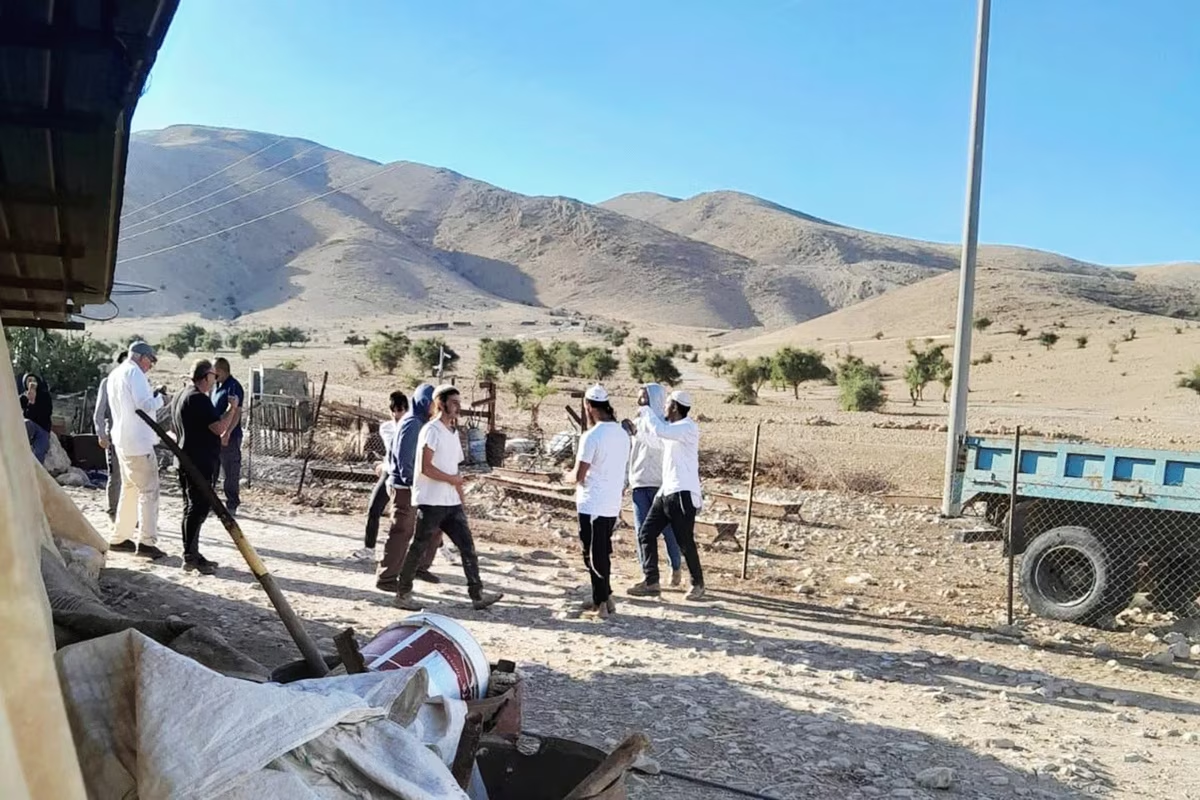
In the village of Burqa, east of Ramallah, groups of settlers stormed the area and began smashing the doors of Al-Nour Mosque, and set fire to its entrance in a clear attempt to burn it completely. The villagers managed to confront the attackers and extinguish the fire before it spread inside the mosque, while the attack also resulted in the burning of a vehicle parked at the scene.

Concurrently, the town of Deir Dibwan was subjected to a similar attack targeting the Al-Marah area near the western entrance, where settlers set fire to two vehicles and smashed the windows of two other vehicles. These attacks come in an escalating context aimed at intimidating local residents and destroying the elements of their steadfastness in areas near settlements and outposts.

In the village of Deir Abu Mash'al, Palestinian farmers were subjected to intense stone-throwing while heading to their agricultural lands in the southern part of the village, leading to clashes with settlers. Occupation forces intervened after the attack to secure the withdrawal of the settlers, with no injuries or arrests reported among the citizens who tried to protect their lands.

On the military front, occupation vehicles stormed the towns of Silwad and Yabroud, east of Ramallah, and carried out provocative patrols in the streets and residential neighborhoods without recording any arrests. The incursions also extended to include the town of Beita, south of Nablus, and the vicinity of Raboud village in Dura city, south of Hebron, as part of a widespread tightening campaign witnessed in the West Bank governorates.

In Nablus Governorate, educational sources at Jaloud School documented settlers burning classrooms and writing racist incitement slogans on the school walls. This systematic incident reflects the targeting of Palestinian educational institutions, which is consistent with international reports indicating a record increase in the pace of violence perpetrated by settler groups against civilians.

Data issued by the United Nations Office for the Coordination of Humanitarian Affairs (OCHA) indicates that settler attacks are now recording an average of 6 attacks per day, resulting in widespread injuries and material damage. Reports confirm that these attacks, coupled with access restrictions and home demolitions, have led to the forced displacement of thousands of Palestinians from their lands during the current year.

Settlers attempted to burn Al-Nour Mosque in Burqa village after smashing its doors and setting fire to its entrance before the intervention of the residents.

OPINIONS

Mon 15 Jun 2026 8:49 am - Jerusalem Time

The Palestinian Political System in a Phase of Reshaping: Implications of Amending the General Elections Law

At a political moment characterized by accumulating crises and a reordering of the rules of Palestinian political action, Palestinian President Mahmoud Abbas issued a decision to amend the General Elections Law. This step goes beyond a mere technical update, transforming into an attempt to re-engineer the Palestinian political system in terms of representation, governance mechanisms, and the relationship between existing political institutions. This comes in the context of preparing for legislative and national elections expected in 2026, and the announcement of an intention to hold presidential elections in 2027, after many years of the Legislative Council's inactivity and its dissolution by presidential decree in 2018, and the absence of elections since 2006.

The amendments included increasing the number of Legislative Council members from 132 to 200, a change that does not merely reflect a numerical expansion, but a broader redistribution of the concept of political representation within the legislative institution. This allows for the entry of new forces, relatively reduces the monopoly of major factions over seats, and redistributes opportunities to new forces, independents, youth, and women. The electoral threshold was also lowered from 2% to 1%, an amendment that appears simple mathematically but carries a profound political impact, as it opens the door for small lists and independents to enter parliament more easily, and increases the number of political actors within it, leading to a more diverse and fragmented reshaping of the representation map at the same time. In addition, the amendments included raising the number of candidates on each list to 20, enhancing women's representation by requiring at least one woman for every three candidates, and lowering the age of candidacy to 23 instead of 28, thus opening the way for a younger and more diverse political generation.

This expansion of participation rules cannot be separated from its structural consequences, as the combination of increasing the number of seats and lowering the electoral threshold leads to a more pluralistic parliament, but at the same time, one that is less capable of forming a stable majority. The wider the base for entry into the council, the more blocs and lists there will be, and the less likely it is for a single faction or even a limited alliance to dominate legislative decisions. In this sense, the political system shifts from a logic of decisive victory to a logic of continuous negotiation, where alliances become a permanent necessity rather than an option, and stability becomes contingent on the ability of different parties to manage complex balances within a more crowded and diverse institution.

In this context, the relationship between Palestinian political forces, especially Fatah and Hamas, becomes more complex, as it is difficult for any party to achieve an individual majority. This means that political influence will not only be linked to the size of the electoral bloc, but also to each party's ability to build flexible alliances with other forces, including small lists and independents who may become decisive elements in tipping the balance of blocs within parliament. Instead of the balance of power being based solely on numerical superiority, it will also be based on the ability to maneuver and build partnerships within a multi-party scene.

Politically, these amendments redistribute gains among different actors without giving any single party a decisive advantage. Fatah benefits from strengthening its position within the general political structure and its ability to manage alliances within a more pluralistic parliament, while Hamas finds a broader opportunity to translate its popular weight into institutional representation within the Legislative Council, with the possibility of this presence extending to the National Council within the framework of the Palestine Liberation Organization. In contrast, independents and small lists are the most direct beneficiaries electorally due to the lowering of the threshold and the expansion of seats, allowing them to enter parliament and play an influential negotiating role despite their limited size. As for the representation of the diaspora, it regains some of its weight within the national representation equation by linking the interior to the National Council, but it remains subject to the logic of political consensus rather than being an independent decisive factor. In this sense, the amendments do not produce a single winner as much as they reshape the balance of power within a more pluralistic system with complex balances.

If elections are held without prior political consensus among the main forces, the scene may lead to several potential paths: continued division within a parliamentary framework with large blocs unable to make decisive decisions, accompanied by partial paralysis and difficulty in passing laws; or forced coexistence in which cooperation occurs on daily issues such as budgets and services while major political differences remain unresolved; or the formation of a consensus government or partial national unity under internal or external pressure, but remaining fragile due to deep disparities in political projects; or, in the most complex scenario, the re-production of division within institutions, so that the council becomes a permanent arena of political conflict where decision-making centers multiply, legitimacies overlap, and legislative work is paralyzed or chronically slowed down.

The sensitivity of these transformations increases with the deeper dimension related to the link between the Legislative Council and the Palestinian National Council, as members of the Legislative Council are supposed to automatically become members of the National Council. This means that the election results will not remain confined within the legislative authority, but will directly transfer to the broader representative structure of the Palestinian people within the framework of the Palestine Liberation Organization.

Here appears the most important transformation: the entry of forces such as Hamas or Islamic Jihad, if they participate and win, will not be limited to parliamentary representation, but will automatically extend to the National Council, i.e., to the comprehensive institution for Palestinian representation at home and abroad. This does not automatically mean recognition of Israel or a direct change in political positions, because membership in a representative institution does not mean adopting its entire reference, but rather entering into a broader negotiating framework about the nature of national decision-making, which makes its real impact related to reshaping the balance of power within the organization rather than being a direct ideological transformation.

In this context, the Palestinian National Council becomes not just a numerical extension of the Legislative Council, but a broader political structure that also includes Palestinians abroad, i.e., the diaspora, meaning that Palestinian representation is not limited to the interior only, but extends to multiple countries where Palestinian communities form an essential part of the political and symbolic structure of national representation.

Here a more complex balance equation emerges, as the results of internal elections alone are not enough to determine the majority within the National Council, because the diaspora constitutes a parallel political bloc with significant historical and organizational weight within the Palestine Liberation Organization. At the same time, the representation of the diaspora is not entirely separate from the interior, nor is it based on broad direct elections, but is often achieved through consensus, appointments, and organizational representation within existing political frameworks, which makes the diaspora itself part of the power balances within the organization and not a completely independent bloc. In this sense, it cannot be said that the interior alone determines the balance of the National Council, nor can the diaspora be considered a completely separate element; rather, the two form an intertwined system of balance, where political influence interacts between them within a single structure.

This intertwining between the interior and the diaspora means that the Palestinian National Council is not subject to a simple direct electoral logic, but to a logic of complex balances, where the majority is not determined solely through ballot boxes in the interior, nor through appointments in the diaspora, but through continuous interaction between the two blocs within the framework of the Palestine Liberation Organization. In this sense, Palestinian representation becomes a dual system: an interior that produces electoral legitimacy, and a diaspora that produces historical and organizational legitimacy, and together they form the balance of the final decision.

Between this complex structure, the political system transforms from a simple model based on an internal parliament and government to a more complex system extending between the interior and the diaspora, between elections and appointments, and between direct representation and organizational balances. Ultimately, these amendments do not merely reformulate the election law, but reformulate the nature of the political system itself: from a system based on a relative majority within a legislative institution, to a system extending between the interior and the diaspora, between elections and consensus, between direct representation and organizational balances—a system that is more pluralistic and expansive, but at the same time more complex and fragile, and more dependent on the ability of political actors to transform pluralism from a source of permanent conflict into a viable governance mechanism.

ARAB AND WORLD

Mon 15 Jun 2026 7:03 am - Jerusalem Time

Widespread International Welcome for US-Iranian Agreement to End War and Secure the Strait of Hormuz

The agreement reached by the United States and Iran to end the war and address outstanding issues has received widespread international and regional welcome. Global capitals hope that this understanding will contribute to solidifying stability in the Middle East and ensuring freedom of navigation in the strategic Strait of Hormuz, opening the door to a new phase of diplomatic cooperation.

Pakistani Prime Minister Shehbaz Sharif had revealed via the 'X' platform that a peace agreement had been reached to end military operations on various fronts, including the Lebanese arena. Sharif clarified that the official signing ceremony would take place in Switzerland on June 19, which was later confirmed by US President Donald Trump, announcing the completion of the agreement with the Iranian side.

For its part, the State of Qatar quickly welcomed the agreement, considering it a fundamental step towards achieving sustainable peace in the region. Doha affirmed in an official statement that addressing outstanding issues, especially ensuring freedom of navigation in the Strait of Hormuz, which has suffered from disruptions since last March, is a priority for enhancing regional and international security.

The Qatari Prime Minister and Minister of Foreign Affairs, Sheikh Mohammed bin Abdulrahman Al Thani, expressed his appreciation for the Pakistani efforts and the international parties that created the conditions for this understanding. Al Thani called on all parties to engage in upcoming negotiations with a positive and constructive spirit, emphasizing that Qatar will remain a steadfast supporter of all initiatives aimed at promoting stability through dialogue.

In the same context, the Qatari Ministry of Foreign Affairs stressed the importance of the will shown by both the American and Iranian sides to resolve differences through peaceful means. The ministry indicated that this agreement will enhance global economic growth by securing international trade routes, appreciating the role of regional partners in de-escalating tensions and bringing viewpoints closer between Washington and Tehran.

At the UN level, United Nations Secretary-General António Guterres described the agreement as a 'decisive step' towards achieving comprehensive peace in the Middle East. Guterres urged the concerned parties to utilize this new momentum to redouble diplomatic efforts aimed at reaching final solutions to existing conflicts, stressing that the negotiation path is the only way to reduce tensions.

In Asia, Japanese Prime Minister Sanae Takaichi announced her country's welcome of the agreement, expressing Tokyo's anticipation for its full and regular implementation. Takaichi emphasized the importance of the effective reopening of the Strait of Hormuz to international shipping, given the strait's utmost importance for global energy supplies and trade movement.

A joint statement was also issued by the leaders of Britain, France, Germany, and Italy welcoming the step, while emphasizing the need for continued diplomatic work to ensure the security of the region. The European leaders stressed in their statement their firm position on the necessity of Iran not possessing nuclear weapons, expressing their readiness to cooperate with Washington, Tehran, and the International Atomic Energy Agency.

For his part, British Prime Minister Keir Starmer focused on the navigation aspect, emphasizing the need to ensure freedom of movement in the Strait of Hormuz without any restrictions or additional fees. Starmer reiterated his country's commitment to working with international partners to prevent the proliferation of nuclear weapons in the region, considering that the new agreement provides an appropriate framework for achieving these strategic goals.

Informed sources reported that the agreement includes detailed provisions related to mechanisms for monitoring the ceasefire and dismantling hotspots of tension in shared arenas. Joint technical committees are expected to begin work immediately after the agreement is signed in Switzerland to set timelines for implementing the obligations of both parties, ensuring no return to military escalation.

Observers believe that this development represents a radical shift in US foreign policy towards the Iranian issue, where the language of negotiation has prevailed over confrontation options. The effects of this agreement are expected to positively impact global energy markets, which have experienced anxiety and anticipation due to continuous threats of closing vital waterways.

Finally, political circles are awaiting June 19 to follow the details of the final document to be signed in Switzerland. The international community relies on the commitment of the signatory parties to the provisions of the memorandum of understanding, to ensure that this agreement transforms from a mere temporary calm into a fundamental pillar of a new and stable regional security system.

The agreement represents an important step towards sustainable peace and enhanced economic growth at both regional and international levels.

PALESTINE

Mon 15 Jun 2026 7:02 am - Jerusalem Time

Abbas issues extensive amendments to Palestinian election law, including raising legislative seats and lowering the age of candidacy

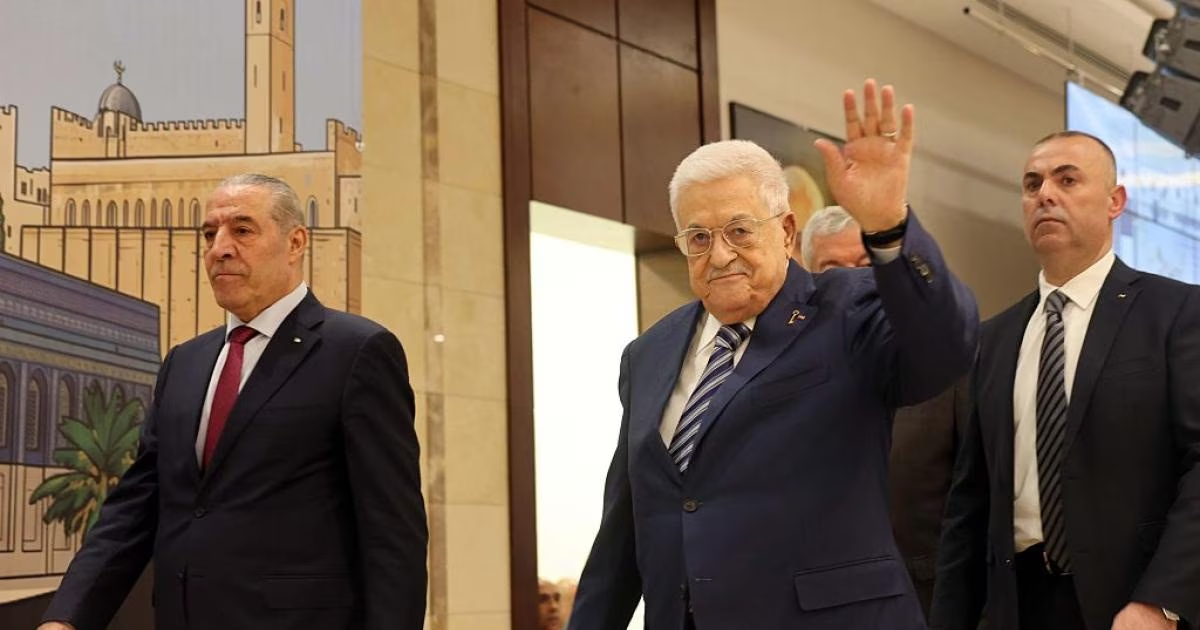
Palestinian President Mahmoud Abbas issued a decree-law containing fundamental and extensive amendments to the General Election Law, in a step aimed at reshaping the Palestinian political landscape. These amendments come as part of the ongoing preparations for the upcoming legislative and national elections, through which the Palestinian leadership seeks to enhance popular participation and expand the base of democratic representation in official institutions.

The new decisions included raising the number of members of the Palestinian Legislative Council from 132 to 200 members, which grants broader representation to various political and regional factions. The President also decided to lower the electoral threshold from 2% to only 1%, a strategic step aimed at enabling small and independent lists to reach parliament and participate in the decision-making process.

In the context of enhancing the role of women in political life, the amendments imposed new requirements on electoral lists to ensure more effective female representation. The amended law stipulated the necessity of having at least one woman among every three candidates on the list, in addition to raising the minimum number of candidates on each list from 16 to 20 to ensure the seriousness of competing blocs.

The amendments responded to the demands of the youth by lowering the age of candidacy for membership in the Legislative Council from 28 to 23 years, which opens the door for younger generations to enter the political arena. This step aims to inject new blood into Palestinian institutions, especially since the Legislative Council had been stalled for many years since its dissolution by presidential decree in late 2018.

A formal presidential decree is expected to be issued later to call for Legislative Council elections concurrently with the Palestinian National Council elections on November 1, 2026. According to the new system, those who win membership in the Legislative Council will be considered ex-officio members of the National Council, to represent Palestinians inside the framework of the Palestine Liberation Organization.

Regarding the presidential elections, President Abbas announced that the ballot to elect a new president for the Palestinian Authority will be held during 2027, to complete the path of democratic building. These steps come after the presidency approved the electoral system for the National Council earlier this month, based on the recommendations of the PLO Executive Committee to arrange internal affairs.

These amendments seek to overcome the state of political stagnation that the Palestinian territories have witnessed since the last legislative elections held in 2006. Official sources confirm that the ultimate goal is to end the division and achieve national unity through the ballot boxes, and to ensure the representation of all Palestinian forces inside and outside within a unified and strong institutional framework.

The new amendments aim to enhance political participation and expand the base of democratic representation in national institutions.

PALESTINE

Mon 15 Jun 2026 7:02 am - Jerusalem Time

France reveals Israeli company's involvement in manipulation and digital interference in elections

French authorities have formally accused an Israeli digital technology company called 'Black Core' of involvement in cyber interference operations targeting municipal elections in France. Reports indicated that these activities were not limited to France but extended to similar operations in other countries, including Angola, Togo, and Scotland, reaching as far as the New York City elections in the United States.

This announcement was made during a press conference held by Marc-Antoine Brillant, head of the National Agency for Monitoring and Combating Foreign Digital Interference, with the participation of French Prime Minister Sébastien Lecornu. Brillant affirmed that investigations proved a direct link between systematic disinformation campaigns and the company based in Israel, noting that the goal was to destabilize democratic processes in several regions.

According to the official statement, the suspicious digital activities specifically targeted political forces and figures who adopt positions supportive of the rights of the Palestinian people. Investigators detected attempts to tarnish the reputation of candidates opposing Israeli policies in the occupied territories, indicating clear political dimensions behind these cyberattacks.

In New York City, sources revealed that the interference targeted the electoral process won by Zohran Mamdani, who is set to become the city's first Muslim mayor in 2025. Mamdani is known for his sharp and continuous criticism of Israeli practices in the Gaza Strip, which made him a potential target for the smear campaigns led by the Israeli company.

In the French arena, the interference campaign focused on the left-wing 'La France Insoumise' party, which is one of the most prominent defenders of the Palestinian cause in Europe. The investigation clarified that three candidates from the party were subjected to widespread digital defamation operations before the municipal elections held last March, with the aim of weakening their electoral chances.

French officials described what happened as a 'highly organized operation' that used a wide range of sophisticated technical tools. These tools included the creation of fake websites and thousands of fake accounts on social media platforms, with the ability to manage simultaneous campaigns in multiple languages to influence public opinion and distort facts.

For his part, French Prime Minister Sébastien Lecornu affirmed that his government had requested official and direct clarifications from the Israeli side regarding the activities of 'Black Core'. Lecornu stressed the necessity of cooperation to identify the sponsors of these campaigns, noting that France would not tolerate any external interference originating from the territories of friendly countries.

In a related context, Lecornu indicated that these incidents necessitate updating electoral laws to strengthen digital guarantees and protect the democratic process. He added that information manipulation represents an existential threat requiring urgent legal measures, especially with the approaching French presidential elections scheduled for 2027.

On the other hand, the Israeli Embassy in Paris issued a statement confirming receipt of the French request, noting that it awaits full details of the investigation. The embassy claimed that Israel does not interfere in the internal political processes of other countries and that it would conduct its own examination upon receiving the necessary documents from the French authorities.

In Scotland, technical sources detected accounts linked to the Israeli company directly targeting First Minister John Swinney. Swinney had described the situation in the Gaza Strip as a 'man-made humanitarian catastrophe,' hinting at the occurrence of genocide, which appears to have prompted a hostile digital response from the aforementioned company.

'Black Core' had previously described itself, before deleting its digital presence, as an 'elite company' specializing in modern information warfare and digital influence. The company had earlier claimed to provide governments and political campaigns with advanced strategies to shape narratives and control cyberspace, which raises suspicions about the nature of its clients.

Earlier in May, the French Minister of Interior had noted the detection of unprecedented methods of information manipulation during election periods. Judicial authorities were informed of these violations, and security agencies began tracking the digital footprint that ultimately led to the revelation of the Israeli company's role.

This issue raises profound questions about the role of private technology companies in implementing cross-border political agendas for unknown entities. Observers believe that targeting pro-Palestinian figures reflects a desire to suppress voices critical of Israel on the international stage using the weapon of digital 'moral assassination'.

Finally, political circles in Paris and New York are awaiting the outcome of the ongoing judicial investigations, amidst calls for imposing international sanctions on companies involved in undermining democracy. The issue remains open to the possibility of diplomatic escalation between France and Israel if official entities are proven to have supported these activities.

We faced an organized operation that included a wide range of digital assets and fake websites to carry out suspicious foreign interventions.

ARAB AND WORLD

Mon 15 Jun 2026 7:02 am - Jerusalem Time

Historic Agreement Between Tehran and Washington: End of Military Operations and Lifting of Naval Blockade

The Iranian National Security Council announced the finalization of the Memorandum of Understanding with the United States of America, confirming that all technical and legal details have been fully completed. The official signing ceremony for this historic agreement is scheduled to take place next Friday in Switzerland, with high-level attendance from both sides.

Pakistani Prime Minister Shahbaz Sharif revealed his country's role in bridging viewpoints, explaining that intensive negotiations led to a comprehensive peace agreement. The agreement includes an immediate and permanent cessation of all military operations on various active fronts, with an emphasis on including the Lebanese arena in this ceasefire.

The statement issued by the Iranian National Security Council stressed that the final text of the memorandum guarantees the immediate and complete lifting of the naval blockade imposed on the country. Tehran considers this step a fundamental pillar for moving towards advanced stages of political and diplomatic dialogue between the two countries after years of military escalation.

For his part, Iranian Deputy Foreign Minister Kazem Gharibabadi explained that the understanding reached opens a 60-day window for in-depth negotiations. This period aims to reach a final and comprehensive agreement that addresses all outstanding issues, provided that Washington adheres to implementing its commitments contained in the current memorandum.

Abadi stated in remarks to state television that Iran has achieved what he described as 'great victories' in this confrontation, emphasizing the failure of the objectives that the adversary sought to achieve through force. Despite reaching the agreement, the Iranian official affirmed that Tehran will maintain a high level of caution and vigilance in dealing with American commitments.

In contrast, US President Donald Trump confirmed via his 'Truth Social' platform that the agreement with the Islamic Republic has indeed been completed, describing it as a historic step. Trump congratulated the concerned parties, considering that this achievement will change the face of the region and bring long-awaited stability to international shipping lanes.

Trump explicitly announced the opening of the Strait of Hormuz to global navigation without any restrictions or transit fees, coinciding with the end of the naval blockade. The US President called on international oil companies and ships to resume their activities at full capacity, indicating that the flow of energy will return to its normal and safe course.

In the context of preparations for the signing ceremony, US Vice President J.D. Vance announced his plan to travel to Geneva, Switzerland, to participate in the anticipated event. Vance did not rule out President Trump's personal attendance at the signing ceremony on June 19, given the strategic importance of this agreement for US national security.

Previous reports indicate that the memorandum includes US guarantees for a complete cessation of military operations against Iranian territory and related interests in Lebanon. It is also expected that the beginning of implementation will see the release of a portion of frozen Iranian assets abroad as a goodwill gesture to encourage the negotiation process.

Leaked provisions of the agreement include the suspension of sanctions imposed on Iran's oil sector for two months, the period allocated for final negotiations. This measure aims to test the seriousness of the parties in adhering to the agreement before entering into more complex issues such as the nuclear file, which was excluded from the first phase.

Informed sources spoke of side understandings related to the establishment of a massive investment fund worth up to $300 billion. This fund aims to compensate for damages resulting from recent military operations and contribute to reconstruction projects, thereby enhancing the chances of sustainable peace in the region.

Observers believe that this dramatic shift in the relationship between Tehran and Washington represents a turning point in international politics, where the diplomatic path has prevailed over direct confrontation. The true test of this agreement remains in the ability of both parties to overcome mutual trust obstacles during the next sixty days.

The agreement with the Islamic Republic of Iran is now complete... World ships, start your engines. Let the oil flow!

ARAB AND WORLD

Mon 15 Jun 2026 7:01 am - Jerusalem Time

Tehran threatens Israel with 'zero hour' and holds Washington responsible for bombing Dahiyeh

Tehran issued strong warnings to the Israeli occupation following the air raid that targeted the southern Dahiyeh of Beirut, where the Iranian Foreign Ministry held the United States directly responsible for this violation of the ceasefire agreement. The Foreign Ministry affirmed in an official statement that Washington and Tel Aviv will bear all consequences resulting from this dangerous escalation that threatens the stability of the entire region.

In statements reflecting the seriousness of the situation, the advisor to the Iranian Supreme Leader, Mojtaba Khamenei, announced that the 'zero hour' has indeed arrived, indicating that specialized forces have begun preparing launch platforms to respond to the attack. These statements come at a time when the Lebanese front is witnessing unprecedented tension after a residential apartment in a densely populated area of the capital Beirut was targeted.

For his part, Ali Akbar Velayati, advisor to the Iranian Supreme Leader, brandished the global economic pressure card, threatening that the continuation of Israeli attacks would lead to Iranian action in the Strait of Hormuz and Bab al-Mandab. Velayati clarified that Tehran is capable of strategically strangling the enemy's economic arteries if the aggression on Lebanese territory does not stop immediately.

In a related context, Mohammad Bagher Zolghadr, Secretary-General of Iran's Supreme National Security Council, affirmed that the response is imminent and will not be delayed, describing Lebanon as 'the soul of Iran' that cannot be touched. Zolghadr stressed that his country will not tolerate any transgression of the red lines it has drawn to protect its allies in the region.

On the military front, Major General Ali Abdollahi, commander of the 'Khatam al-Anbiya' headquarters of the Revolutionary Guard, announced that the fighters' fingers are on the trigger, awaiting orders to fire into the heart of the enemy. Abdollahi indicated that missile and defense capabilities, in addition to drone weapons, are now stronger than ever and ready for implementation.

On the ground, sources reported that the Israeli raid on the southern Dahiyeh targeted a residential apartment near 'Qalqas Bakery' on the highway connecting Musharrafieh and the airport bridge, resulting in martyrs and injuries. The attack was carried out with two guided missiles without any prior warning to residents, causing widespread destruction and a state of panic in the targeted area.

Inside Israel, the office of Prime Minister Benjamin Netanyahu and his security minister, Israel Katz, confirmed that the military operation in the heart of Beirut was carried out based on their direct instructions. Hebrew sources claimed that the attack came in response to the detection of drones that entered the airspace from Lebanon, some of which crashed in northern areas.

Extremist voices within the Israeli government escalated, with Bezalel Smotrich calling for the implementation of what is known as the 'Dahiyeh doctrine,' which involves leveling buildings to the ground and destroying infrastructure. Itamar Ben-Gvir also demanded that the southern Dahiyeh 'tremble' for every alleged ceasefire violation, amid claims of an American green light for these operations.

Concurrently, the occupation army continued its violent raids on southern Lebanon, where two people were martyred and others injured in attacks targeting the southern and Nabatiyeh governorates since dawn on Sunday. The Israeli army spokesman issued urgent warnings to residents of 29 southern towns and villages to evacuate their homes immediately in preparation for a new wave of intense shelling.

Statistics issued by the Lebanese Ministry of Health indicate that the scale of the humanitarian catastrophe is constantly increasing, with the number of martyrs since last March rising to more than 3,756. The ongoing military operations have also left more than 11,000 injured, in addition to the displacement of more than one million Lebanese from their villages and cities due to indiscriminate shelling.

These developments put the fragile ceasefire agreement to the test, amid Israel's insistence on continuing its military operations under the pretext of pursuing Hezbollah targets. With direct Iranian threats, the international community awaits the form of the upcoming response and its repercussions, which could ignite a comprehensive regional confrontation that transcends Lebanese borders.

Lebanon is our soul, and the violation of Iranian red lines will not be tolerated, and the response of the fighters of Islam is very close.

PALESTINE

Mon 15 Jun 2026 7:01 am - Jerusalem Time

With amputated legs and strong will... Gaza's girls chase World Cup dream from amidst the rubble

In the heart of the besieged Gaza Strip, where war leaves its harsh marks on the bodies of Gazans, a unique story of defiance emerges from the city of Deir al-Balah, starring girls who lost their limbs but not their passion. On a grassy pitch that survived the shelling, the players of the amputee football team gather, kicking the ball and with it, memories of pain and displacement.

This team was founded under the umbrella of the Palestine Amputee Football Association, and its organizers aim to build the nucleus of a national team to represent Palestine in international tournaments. This initiative is a vital outlet for girls who have found in sports a way to prove that physical disability does not mean the end of ambition or isolation from society.

Rozan Khaira, a 24-year-old woman, used to run before an airstrike changed the course of her life in November 2023. Rozan recounts how she lost her leg in a bloody moment, but today she stands on her crutches to pass the ball to her teammates, asserting that the will to live is stronger than the occupation's missiles.

Rozan grew up in the historic Daraj neighborhood of Gaza amidst a sporty family and never imagined she would one day play football with one leg. Despite the bitterness of displacement and the difficulty of movement, the young woman insists on committing to training, dreaming of wearing the Palestinian national team jersey and raising her country's flag in international stadiums.

As for Kifah Al-Fakhouri, she lost her leg and her companions in a raid that targeted a cafe on the Gaza beach in June of last year. Kifah woke up in the hospital to find herself facing a new and painful reality, but she quickly decided to turn her sadness into positive energy by joining the women's team.

Kifah considers playing football a form of psychological and physical resistance that enables her to regain her lost balance. She says that the laughter that echoes during training is the most eloquent response to attempts to break the will of Gazans, as she found in the team a second family that shares the same challenges.

In the goalkeeper position, 16-year-old Aisha Al-Abadla stands out, having been born with an underdeveloped arm. Aisha indicates that her health condition was a result of her mother inhaling white phosphorus during the 2008 war, while she was still a fetus in her womb.

Aisha loved football since her childhood, and her congenital disability did not prevent her from brilliantly protecting her team's goal. She wears her glove on her only right hand and stands confidently between the three posts, expressing her hope of becoming the primary goalkeeper for the Palestinian amputee national team in the near future.

Coach Lamia Musleh supervises the girls' training, emphasizing that football in Gaza has transcended being merely a sport to become a space for psychological release. The coach observes a significant improvement in the players' morale, as physical activity contributes to boosting their self-confidence and social integration.

Musleh adds that the goal is not only to win matches but to instill a spirit of determination in the girls who have suffered severe traumas. Every kick of the ball is a message to the world that amputating the body does not mean amputating the dream, and that the Palestinian will is capable of performing miracles from amidst the rubble.

For his part, Fouad Abu Ghalyoun, head of the Palestine Amputee Football Association, indicates that the association has resumed its activities despite the widespread destruction of sports facilities. He affirms that work is being done in a dangerous environment and with very modest capabilities, due to the continuous siege and the repercussions of the recent war.

Official statistics issued by the Ministry of Health indicate that there are about 6,000 amputation cases in the Gaza Strip due to the ongoing aggression. Children and women represent a large percentage of these cases, which necessitates long-term rehabilitation programs to help them adapt to their new reality.

Abu Ghalyoun seeks through this team to provide a nurturing environment for amputees, helping them overcome physical and psychological obstacles. He believes that sports are the shortest way to integrate people with disabilities into society and make them active and productive members despite all surrounding circumstances.

Between Rozan's ambitions, Aisha's saves, and Kifah's determination, a picture of resilience is drawn on Gaza's exhausted pitches. These girls are not just running after the ball; they are running after their right to life and international representation, carrying a message that Gaza will continue to pulsate with hope, no matter the sacrifices.

The occupation's fires amputated our bodies, but they did not stop our dreams and our will to live.

ARAB AND WORLD

Mon 15 Jun 2026 7:01 am - Jerusalem Time

Putin congratulates Trump on his 80th birthday and affirms their ability to shape a stable world order

Russian President Vladimir Putin sent a warm congratulatory message to his American counterpart, Donald Trump, on the occasion of his 80th birthday, describing him as an exceptional and distinguished political figure. In his message, published by the Kremlin, Putin expressed his aspiration to open a new chapter in relations between Moscow and Washington, serving the interests of both countries and international security.

Kremlin foreign policy advisor, Yuri Ushakov, revealed details of a lengthy phone call between the two leaders that lasted approximately 55 minutes. Ushakov explained that the conversation was friendly and informal, with Putin offering his personal congratulations to Trump, expressing his appreciation for the level of mutual understanding they share in addressing complex issues.

The Russian President emphasized the importance of frankness and honesty in bilateral dialogue, asserting that this approach is the only way to discuss thorny international issues. Putin expressed his full confidence that joint cooperation between him and Trump is capable of elevating bilateral relations to unprecedented levels, which will positively reflect on global stability.

In the context of hot topics, Trump briefed his Russian counterpart on the developments of negotiations with Tehran, indicating that reaching a final agreement with Iran is imminent. The American President anticipated the possibility of signing this agreement electronically within a few hours, to be followed by official ceremonies in a European capital next week.

For its part, the Russian side welcomed this breakthrough in the Iranian issue, affirming Moscow's readiness to continue its constructive role in this diplomatic path. Putin expressed his deep satisfaction with the prospects of ending tensions related to the Iranian crisis, considering that the success of this agreement would represent a major step towards de-escalating the situation in the Middle East.

The phone call extensively touched upon the latest developments in the war in Ukraine, where Trump emphasized the necessity of stopping hostilities and seeking peaceful solutions. The American President expressed his readiness to exert pressure on Kyiv and European allies during the upcoming G7 summit to push them towards adopting a de-escalation option and stopping military escalation.

The call was not without humanitarian gestures, as Putin praised the efforts of First Lady Melania Trump, commending her role in humanitarian issues related to the conflict. He specifically mentioned her contribution to facilitating the reunification of Russian and Ukrainian children with their families, considering it a noble act that contributes to alleviating the human suffering resulting from the war.

These diplomatic developments come after the last direct meeting between the two leaders in Alaska in August 2025, which at the time aimed to reach a comprehensive settlement of the Ukrainian crisis. Despite the continuation of military operations since 2022, the tone of the recent call indicates a shared desire to break the current political stalemate.

Moscow adheres to its demands for guaranteeing Ukraine's military neutrality and its non-joining of any Western alliances as a fundamental condition for ending the war. In contrast, Kyiv continues to reject these conditions and considers them an infringement on its national sovereignty, making the diplomatic efforts led by Trump and Putin the focus of global attention in the coming period.

"I am convinced that together we can truly improve the quality of Russian-American relations, and do a lot to ensure security and stability on the world stage."

OPINIONS

Mon 15 Jun 2026 7:00 am - Jerusalem Time

Washington and Tehran's Agreement Between Promises of Peace and Risks of Explosion: Lebanon Reveals the Fragility of the Anticipated Understanding

Said Erikat

Opinion Writer

Washington's Message

Washington – Saeed Erikat – 15/6/2026

News Analysis

American and Iranian officials stated on Sunday that they had reached an agreement on a peace framework aimed at ending the war between the two countries, lifting the American blockade on Iran, and reopening the Strait of Hormuz; these steps could lead to a drop in energy prices once oil shipments resume through this vital waterway.

US President Donald Trump wrote on his "Truth Social" platform - around 5:30 PM Washington time (21:30 GMT) on Sunday - saying: "The agreement with the Islamic Republic of Iran is now complete." His post came shortly after Pakistani Prime Minister Shehbaz Sharif - whose country played a mediating role - announced an agreement early Monday local time.

Sharif wrote that the agreement would be officially signed on Friday in Switzerland.

The exact terms of the agreement were not immediately clear; Sharif stated in a post on the "X" platform that the agreement stipulates "an immediate and permanent cessation of military operations on all fronts, including Lebanon."

Lebanon had been a thorny issue in the negotiations, with both Israel and Hezbollah ignoring calls from Trump and others to cease their mutual attacks in recent weeks.

Trump also stated that the Strait of Hormuz - a key shipping lane for global energy supplies that Iran had effectively closed for several months - would open on Friday, noting that he had issued an order to end the US blockade of Iranian ports.

Trump wrote: "Ships of the world, start your engines. Let the oil flow!"

Oil prices fell following the news; Brent crude futures dropped by 4% in early Monday trading, while US West Texas Intermediate crude fell by more than 4.6%.

Kazem Gharibabadi, Iran's Deputy Foreign Minister, stated that a broader agreement would be negotiated during the sixty-day ceasefire period, including sanctions relief. The fate of Iran's nuclear program would also be discussed in those subsequent talks, according to sources who spoke to Reuters earlier.

Thousands have been killed, mostly in Iran and Lebanon, since US and Israeli forces launched their first attack on Iran on February 28. Iran launched attacks on Israel and Gulf states hosting US bases, and effectively blockaded the Strait of Hormuz, leading to a rise in global energy prices; in response, US forces imposed a blockade on Iranian ports.

Political and diplomatic developments in the region accelerated with US President Donald Trump's announcement on Sunday of an agreement with Iran, a move described as potentially paving the way to end one of the most dangerous confrontations the Middle East has witnessed in recent years. While Trump spoke confidently about an almost complete agreement, and referred to ending the naval blockade on Iran and opening the way for a new phase of understandings, the scene appeared more complex from the Iranian side, where official ambiguity and hesitation persisted regarding the final ratification of the memorandum of understanding.

According to circulating information, the anticipated agreement will open the door for sixty-day negotiations aimed at solidifying the cessation of military operations and laying the foundations for a broader settlement that includes thorny security and strategic issues. Reports also spoke of an Iranian commitment not to seek nuclear weapons in exchange for arrangements related to freedom of navigation and regional tension reduction, but the final details remain far from fully clear.

While Pakistan, which played a pivotal role in mediation, announced that the official signing ceremony would be held in Switzerland in the coming days, sources close to the Iranian negotiating team confirmed that the final decision is still under legal, political, and technical review. This disparity between American enthusiasm and Iranian reservation reflects a clear gap in both parties' understanding of the nature and political limits of the understanding.

Israeli strikes on Beirut further complicated the scene. The raids targeted sites Israel claimed belonged to Hezbollah, resulting in casualties and rising smoke plumes over the Lebanese capital. Although Benjamin Netanyahu's government justified the operation as a response to attacks targeting northern Israel, its timing raised widespread questions, especially as it came at a sensitive moment preceding the final announcement of the anticipated agreement between Washington and Tehran.

Trump did not hide his displeasure with the military operation, considering that the Israeli attack "should not have happened" at a time when the region was approaching a rare opportunity for political understanding. This stance is an additional indicator of increasing discrepancies between the US administration and the Israeli government on how to manage the next phase, especially since any escalation in Lebanon could threaten to derail the entire negotiation process.

In parallel, Qatar re-emerged as an active mediator by sending delegations to Tehran to finalize the understanding, while Saudi Arabia and Turkey continued to support efforts to solidify the agreement. The multiplicity of mediators indicates a broad regional awareness that any collapse of negotiations would return the region to a cycle of military and economic escalation.

The manner of announcing the agreement reveals the extent of the imbalance in the political narratives between Washington and Tehran. While Trump seeks to present the agreement as a historic achievement proving the success of his pressure and power policy, the Iranian leadership tries to avoid appearing as the party that made concessions under pressure. Therefore, Iranian statements seem more cautious and ambiguous. The real battle is no longer just about the terms of the agreement, but about how to market it to domestic public opinion in both countries, and who will convince their audience that they emerged victorious from the long confrontation.

The Israeli strike on Beirut cannot be separated from the political context surrounding the negotiations. Israel views with suspicion any American-Iranian rapprochement that could lead to easing Tehran's isolation or its gradual reintegration into the regional system. From this perspective, the recent military operations appear to be a political message as much as a security operation. They also remind Washington that any future arrangements cannot ignore Israeli calculations, even if the US administration prefers to prioritize diplomacy over military escalation.

Rising protests within Iran reveal a deep division that goes beyond mere disagreement over a specific agreement. Hardliners see any understanding with the United States as a threat to the political identity on which the Islamic Republic has been founded for decades. Supporters of negotiation, on the other hand, believe that continued open confrontation imposes heavy economic and social costs. Between these two trends, the Iranian leadership finds itself facing a complex equation: the need to alleviate external pressures on one hand, and the fear of inciting internal political conflict on the other.

Despite increasing talk of peace, the path to a stable settlement remains fraught with obstacles. Issues related to sanctions, frozen Iranian funds, the nuclear program, and the future of Tehran's regional influence have not been definitively resolved. Moreover, any security incident in Lebanon, the Gulf, or Iraq could quickly reshuffle the cards. Therefore, the anticipated agreement seems more like an initial framework for managing the conflict rather than a final settlement. Its actual success will depend on the parties' ability to overcome their internal crises before facing the region's challenges.

The Middle East stands at a pivotal moment that could open the door to a new phase of de-escalation or reproduce conflicts in different forms. Between the optimism expressed by Trump, the reservation shown by Tehran, the rising internal Iranian objections, and the clear Israeli concern, the region appears to be facing a complex political test whose results will determine the nature of regional balances for years to come. Until the anticipated signing date, the fundamental question will remain: Are we witnessing the beginning of true peace or merely a temporary truce preceding a new round of conflict?

OPINIONS

Mon 15 Jun 2026 6:57 am - Jerusalem Time

The U.S.-Iran Agreement: Netanyahu’s Failed War and the Diplomacy That Was There All Along


By Said Arikat


June 15, 2026


News Analysis


Washington, D.C. — The emerging U.S.-Iran agreement may ultimately be remembered not as a diplomatic breakthrough alone, but as a devastating indictment of the war that preceded it. If the deal succeeds, it will expose one of the most consequential strategic failures in recent Middle Eastern history: the ability of Israeli Prime Minister Benjamin Netanyahu to lure President Donald Trump into a costly confrontation that achieved virtually none of its stated objectives and ended precisely where diplomacy could have begun.


For more than twenty years, Netanyahu built his political identity around the argument that Iran represented an existential threat requiring relentless pressure and, if necessary, military action. He dismissed negotiations as naïve, portrayed compromise as surrender, and repeatedly urged Washington to abandon diplomatic engagement in favor of confrontation. Successive American presidents resisted him at various moments, recognizing the risks of another regional conflict. Trump ultimately did not.


The result was a war that generated destruction, economic uncertainty, and widespread fears of regional escalation while producing remarkably little strategic gain. Iran’s government remains in power. Its political system survived. Its military capabilities were damaged but not eliminated. Its influence across the region persists. Most importantly, Tehran has returned to negotiations without accepting the sweeping capitulation that advocates of military action had promised would inevitably follow.


That reality raises a simple but devastating question: if the conflict ends through negotiation, what exactly was the war supposed to accomplish?


The answer appears increasingly uncomfortable for Netanyahu and those who promoted confrontation. The war failed because it was built on flawed assumptions. Its architects believed that overwhelming pressure would force Iran into submission. Instead, the conflict demonstrated the limits of military coercion and reinforced a lesson repeatedly confirmed throughout modern history: wars often destroy lives and resources while leaving the underlying political problems unresolved.


The economic consequences were equally revealing. Even before any formal agreement was signed, markets responded positively to indications that tensions were easing. Expectations of stable shipping through the Strait of Hormuz and the gradual normalization of Iranian energy exports helped reduce anxiety in global markets. Investors welcomed diplomacy because diplomacy offered what war could not: predictability, stability, and economic opportunity.


For the United States, the agreement also underscores the extent to which American interests were never fully aligned with Netanyahu’s objectives. Washington’s priorities include global economic stability, secure trade routes, manageable military commitments, and avoidance of prolonged regional wars. Netanyahu’s priorities were different. His overriding goal was to keep Iran permanently isolated and to prevent any meaningful rapprochement between Washington and Tehran.


In that sense, the emerging agreement represents a direct repudiation of Netanyahu’s central strategic argument. For years he insisted that diplomacy with Iran was dangerous. Yet after months of fighting, Washington appears ready to embrace the very diplomatic process he spent decades trying to block. The irony is extraordinary. The war did not validate Netanyahu’s worldview. It discredited it.


More troubling is the question of how the conflict began. Trump entered office promising strength but also promising to avoid unnecessary wars. He frequently criticized previous administrations for costly foreign interventions that consumed enormous resources without producing lasting results. Yet Netanyahu successfully appealed to Trump’s instinct for projecting power, framing confrontation with Iran as both necessary and unavoidable. The result was a conflict that contradicted Trump’s own stated skepticism toward open-ended military adventures.


Now Trump appears prepared to support an agreement that implicitly acknowledges the failure of the very strategy he was encouraged to adopt. The administration’s apparent return to diplomacy suggests an unspoken recognition that military escalation could not achieve the political outcomes its advocates promised. That recognition inevitably raises questions about the judgment of those who pushed hardest for war in the first place.


The broader regional implications are equally significant. Saudi Arabia emerges from the crisis with enhanced diplomatic credibility, having maintained communication channels across multiple fronts while encouraging de-escalation. Pakistan’s reported role in facilitating dialogue highlights the growing influence of regional powers in shaping outcomes once dominated by Washington and other global actors. The crisis demonstrated that diplomacy increasingly depends on diverse coalitions rather than unilateral pressure.


The agreement may also reshape the strategic calculations of Russia and China. Years of sanctions and isolation pushed Tehran closer to both powers. Improved relations between Washington and Tehran would provide Iran with greater flexibility and potentially reduce its dependence on either Moscow or Beijing. Such an outcome would further illustrate how diplomacy can accomplish strategic objectives that military pressure often fails to deliver.


Perhaps the greatest political consequence concerns Palestine. Netanyahu long benefited from placing Iran at the center of regional discussions, often diverting international attention from the unresolved Palestinian question. A reduction in U.S.-Iran tensions could make that strategy harder to sustain. As the Iranian issue recedes, pressure may grow for renewed engagement with the realities of occupation, statehood, and Palestinian rights.


None of this guarantees lasting peace. The agreement could fail, hardliners could sabotage progress, and Netanyahu may continue efforts to undermine any rapprochement he considers threatening. Yet one conclusion already appears unavoidable. The war did not create the conditions for diplomacy; it merely delayed diplomacy while imposing immense costs. If the agreement endures, history may judge the conflict not as a necessary struggle for security, but as a tragic exercise in political manipulation, strategic miscalculation, and personal ambition. Its most enduring lesson may be that Netanyahu succeeded in selling Washington a war that never needed to be fought and could not deliver what it promised.

ARAB AND WORLD

Mon 15 Jun 2026 12:08 am - Jerusalem Time

Trump attacks Netanyahu over Beirut raid and announces imminent signing of historic agreement with Iran

US President Donald Trump directed sharp and unprecedented criticism at Israeli Prime Minister Benjamin Netanyahu, holding him responsible for disrupting a sensitive diplomatic path. Trump stated in media remarks that the Israeli attack on the southern suburb of Beirut was a grave mistake and its timing lacked political wisdom.

Trump revealed that an official agreement with the Islamic Republic of Iran was close to being reached, indicating that the electronic signing could take place within a few hours. He clarified that this path aims to bring comprehensive peace to the region, including the Lebanese arena which is experiencing continuous escalation.

The US President expressed his strong displeasure at the raid occurring just one hour before the scheduled start of the signing procedures. He described the attack as 'very bad,' emphasizing that such military movements do not serve major strategic interests at this critical time.

Regarding the details of the anticipated agreement, sources mentioned that the personal signing and official ceremonies would take place in a European capital within a week from now. This agreement aims to end the long-standing tension and establish a new framework for relations between Washington and Tehran, which Trump sees as a historic opportunity that should not be spoiled.

Despite acknowledging Israel's right to self-defense, Trump considered the pretext for the Beirut raid to be 'very small and meaningless.' He pointed out that the threat Israel responded to did not result in injuries or deaths, and therefore did not warrant a response that would disrupt the peace process.

The US President called on all parties to immediately de-escalate and cease mutual attacks between Israel and Hezbollah in Lebanon. He warned that continued escalation could squander a golden opportunity to build a 'long and beautiful peace' in the Middle East, urging leaders to exercise restraint.

On the Iranian side, a state of skepticism regarding US intentions prevailed after the Israeli raid, with Tehran considering the attack as evidence of the weakness of the US administration. Iranian Parliament Speaker Mohammad Bagher Ghalibaf stated that Washington either lacks the will or the ability to compel its allies to abide by agreements.

Qalibaf emphasized that the continuation of the diplomatic path becomes questionable if the United States cannot fulfill its commitments and prevent military escalation. He stressed that giving the green light to such attacks will not lead to extracting any additional concessions from the Iranian side in negotiations.

Meanwhile, the Iranian Revolutionary Guard threatened a firm military response to recent Israeli crimes, asserting that the attack on Beirut would not go unpunished. The military force's spokesperson vowed that the response would be proportionate to the extent of the violations committed by the Israeli occupation in the region.

On the ground, Israeli security agencies raised their alert level to the highest degree in anticipation of a direct Iranian response with missiles or drones. Sources reported that the Israeli army is conducting continuous security assessments to counter any offensive scenarios that might originate from Iranian territory or through proxies.

In a move reflecting the seriousness of the threats, Israeli authorities decided to move the meeting of the Ministerial Committee for National Security Affairs ('the Cabinet') to a fortified underground shelter. This decision came based on intelligence recommendations indicating the possibility of imminent field developments targeting decision-making centers in Tel Aviv.

For its part, Washington is making intensive diplomatic efforts through international mediators to persuade Tehran not to respond militarily to the Beirut raid. The US administration is exerting strong pressure to ensure that the initial understandings reached regarding the new nuclear and political agreement do not collapse.

Israel informed international mediators that it would respond 'forcefully and quickly' if it were subjected to any direct Iranian attack, placing the region on the brink of a volcano. International concerns are growing about the situation escalating into a comprehensive regional war that would undermine all recent diplomatic efforts.

Anticipation remains the order of the day in the coming hours to see whether the US-Iranian agreement will move forward despite these field obstacles. All eyes are on the White House and the final decision Trump will make in the face of the challenges posed by his close ally in Tel Aviv.

It's very bad, I couldn't believe it... The Israeli raid should not have happened on this special day when we are so close to a peace agreement with Iran.

ARAB AND WORLD

Mon 15 Jun 2026 12:08 am - Jerusalem Time

Clashes in Geneva Ahead of G7 Summit: Thousands of Protesters Denounce 'Imperialism' and Support Palestine

The streets of the Swiss city of Geneva turned into an arena for open confrontations between security forces and thousands of protesters, who gathered on the eve of the G7 summit in the neighboring French city of Evian. Approximately 15,000 demonstrators participated in the massive marches, expressing their categorical rejection of the economic and political policies pursued by the major powers in the world.

Participants in the demonstration, which started from a park on the shores of Lake Geneva, raised banners denouncing 'imperialist alliances' and calling for the cancellation of the summit, amidst an intensive security presence that included continuous helicopter flights and the erection of iron barriers at vital city junctions. An atmosphere of extreme tension prevailed, fearing a repeat of the violence scenarios witnessed in the region in previous years.

The protesters' demands were not limited to economic issues; voices resonated with chants supporting the Palestinian people, condemning the occupation and international policies towards the Middle East. Slogans also included issues of climate justice, women's rights, and opposition to global capitalism, which demonstrators believe increases the poverty gap in the world.

Field sources reported that violent clashes erupted around the United Nations headquarters, where police used tear gas to disperse groups of protesters. This security response came after demonstrators pelted forces with stones, bottles, and firecrackers in an attempt to breach the imposed security cordons.

Buildings belonging to international companies and technology organizations were attacked, including the headquarters of 'PricewaterhouseCoopers' and the International Telecommunication Union, where protesters smashed glass facades. These targeting reflect the anger towards institutions that demonstrators consider arms of the global financial system represented by the G7.

The 'No to G7' alliance, which includes dozens of trade unions and leftist associations, condemned what it described as 'fascism and imperialism,' calling for a popular international response to confront the leaders' decisions. The alliance affirmed that the policies proposed at the summit serve only the interests of political and financial elites at the expense of oppressed peoples.

As a precautionary measure, major stores, theaters, and university buildings in Geneva covered their facades with wooden panels, in anticipation of looting or vandalism that might affect properties. The city's main hospital also declared a state of alert and set up field tents to receive any injuries that might result from the ongoing clashes.

Swiss police confiscated quantities of what they described as dangerous tools, including knives, axes, gas canisters, and highly explosive fireworks found in the possession of some groups. Authorities affirmed that they would not allow a repeat of the 2003 events, which caused massive material losses estimated at millions of dollars due to riots.

For her part, the Swiss Security Minister, Carole Anne Kast, criticized the strict French measures that prevented the holding of a 'counter-summit' on its territory, which led to the concentration of protests on the Swiss side. She said that the lack of sufficient coordination to create conditions for dialogue and a popular forum contributed to escalating the tension in the streets.

On the political front, this summit comes at a very sensitive time, as it is the first major international gathering since the escalation of military tensions in the Middle East earlier this year. The issue of war and its repercussions on the global economy is expected to dominate the discussion tables among the seven leaders and invited guests.

Leaders from the United States, France, Britain, Germany, Italy, Canada, and Japan are participating in the Evian summit, in addition to leaders from emerging countries such as Brazil and India. French President Emmanuel Macron is scheduled to arrive at the summit venue on Sunday evening, followed by the arrival of US President Donald Trump and the rest of the leaders.

The summit agenda includes thorny issues, most notably an attempt to reach an agreement to end the war with Iran and re-secure navigation in the strategic Strait of Hormuz. The US President stated before his arrival that the parties are 'very close' to an agreement, despite international skepticism about the possibility of a quick diplomatic breakthrough.

In the streets of Geneva, camera lenses captured groups wearing black clothes and masks, who set fire to a 'Tesla' electric car and wrote anti-rich slogans on it. Despite these isolated incidents, the organizers of the demonstration insisted that the general nature of the protest remains peaceful and celebratory, aiming to convey a clear political message.

To ensure the security of the summit, Switzerland deployed about 4,000 soldiers to support the local police, while France mobilized nearly 16,000 personnel from various security and military agencies. The border region between the two countries is in a state of maximum alert to secure international delegations and ensure that protesters do not reach the summit area.

No to the G7 summit and all imperialist alliances... thwart the summit of the powerful that ignores the rights of peoples and the climate.

PALESTINE

Mon 15 Jun 2026 12:08 am - Jerusalem Time

International preparations to launch a new naval fleet to break the siege on the Gaza Strip

The representative of the "Global Fleet of Resilience" in Turkey, Bahçeci İsmail Sungur, revealed the start of logistical and technical arrangements to launch a new naval campaign aimed at reaching the shores of the Gaza Strip within the next few months. Sungur explained that the upcoming mission will see broader international participation than its predecessors, with a significant increase in the number of ships and activists, in an effort to break the Israeli siege imposed on the Strip and draw the world's attention to the escalating humanitarian tragedy there.

This announcement came during an extensive meeting held by international activists in Istanbul today, Sunday, dedicated to evaluating the results of the last mission targeted by Israeli occupation forces at sea. Informed sources confirmed that the meeting focused on the necessity of continuing the popular naval movement as an international pressure tool, noting that military threats will not deter solidarity activists from continuing their efforts to deliver relief aid and solidarity messages to besieged Palestinians.

In the context of legal prosecution, Sungur indicated that intensive diplomatic and legal efforts are currently underway to release activists who are still detained by the occupation authorities since the last mission. He added that legal teams have already begun filing lawsuits before European courts and international forums to prosecute Israeli officials involved in the assault on peaceful boats, considering that international silence encourages the occupation to repeat its violations in international waters.

On May 18th, the Israeli navy carried out an attack against the "Fleet of Resilience" boats that were sailing in the international waters of the Mediterranean Sea. The fleet at that time included about 50 boats with 428 activists representing 44 countries, all of whom were arrested and their relief cargo, intended for the residents of the Strip who suffer from the consequences of the ongoing siege since 2007, was confiscated.

That attack sparked a wave of global human rights condemnations, with Amnesty International describing Israeli practices as "shameful and inhumane" and lacking any international legal cover. These actions come at a time when about 2.4 million Palestinians in Gaza are living in catastrophic living and health conditions, as a result of the ongoing war of extermination that has left tens of thousands of victims and almost completely destroyed the infrastructure.

The organizers of the new fleet stressed that their goal is not limited to the material aspect and the distribution of food parcels, but also extends to providing moral support and breaking the isolation that the occupation is trying to impose on Gaza. Sources from within the organizing committee confirmed that preparations are underway in high coordination with human rights and humanitarian organizations around the world to ensure the greatest possible political and media protection for participants in the upcoming journey.

Messages received from the residents of the Strip confirm that their needs are not limited to humanitarian aid, but also include moral support and international solidarity.

PALESTINE

Mon 15 Jun 2026 12:07 am - Jerusalem Time

7 Killed and Destruction of Civilian Facilities in a Series of Israeli Attacks on the Gaza Strip

Medical sources in the Gaza Strip reported the martyrdom of 7 Palestinians, including a child, and the injury of several others with varying degrees of wounds as a result of a series of airstrikes and shootings carried out by Israeli occupation forces today, Sunday. The attacks focused on different areas of the Strip, with the Ministry of Health confirming that these aggressions come within the context of ongoing escalation despite existing understandings.

In field details, 4 citizens were martyred in Jabalia camp north of the Strip after shelling targeted a group of commercial shops, causing widespread destruction in the area. This coincided with the occupation army carrying out systematic demolition operations of civilian facilities and residential buildings in the eastern areas of Gaza City and Jabalia town, where huge explosions were heard shaking the northern region.

In the southern part of the Strip, medical sources announced the martyrdom of young man Zaki Mohammed Al-Qarra (30 years old) and child Amir Al-Bashti (13 years old) by bullets and shelling from a drone targeting displaced persons' tents in Khan Yunis city. The sources clarified that the attack also resulted in the injury of other citizens, one of whom was described as seriously wounded, which raises the pace of humanitarian suffering in overcrowded shelters.

In Gaza City, a Palestinian died in Al-Shifa Hospital from wounds he sustained earlier from occupation forces' fire, while the coastal areas of the city were subjected to intense shelling from Israeli warships. These field developments come amid continued Israeli violations of the ceasefire agreement in effect since October 10, 2025, which has seen hundreds of casualties since its signing.

Official data issued by the Ministry of Health indicates that the toll of victims from Israeli violations since last October has reached 986 martyrs and more than 3,100 injured. These figures reflect the extent of ongoing violations directly targeting civilians in various governorates of Gaza, undermining international efforts to stabilize the relative calm.

Regarding the total toll, the number of martyrs since the start of the aggression on October 7, 2023, has risen to about 73,000 martyrs, while the number of injured has exceeded 173,000. Military operations have caused the destruction of approximately 90% of the civilian infrastructure, forcing hundreds of thousands to live in tents lacking the most basic necessities for a dignified life and essential services.

The number of martyrs since the start of the genocide war on October 7, 2023, is approximately 73,000, with 90% of the infrastructure destroyed.

PALESTINE

Mon 15 Jun 2026 12:07 am - Jerusalem Time

President of "Somaliland" in Israel to Open Embassy in Jerusalem.. Hamas Calls it a "Political Sin"

The president of the self-proclaimed separatist region of "Somaliland," Abdirahman Mohamed Abdullahi, began a first-of-its-kind official visit to Israel, where he met with his Israeli counterpart Isaac Herzog on Sunday. This visit comes as part of strengthening bilateral relations, just a few months after Tel Aviv officially recognized the region, which unilaterally declared its secession from Somalia.

Sources reported that the visit primarily aims to inaugurate an embassy for the region in occupied Jerusalem, fulfilling previous promises made by Abdullahi after receiving an official invitation from Israeli Prime Minister Benjamin Netanyahu. Israel is the first country to grant the region full diplomatic recognition since its declaration of independence following the civil war in 1991.

Abdullahi, in a statement issued by the Israeli Prime Minister's Office, expressed his deep gratitude for this step, describing the visit as having special historical significance as it is the first state visit by the region's president. He noted that his country had sought international recognition for decades but had only received a response from the Israeli side.

For his part, Israeli President Isaac Herzog welcomed the visiting delegation, considering this partnership to open broad horizons for direct cooperation between the two sides in various fields. Herzog affirmed that both parties face common security challenges in the Horn of Africa, particularly concerning combating what he described as extremism and protecting maritime navigation.

The visit's agenda includes high-level meetings with Benjamin Netanyahu and Foreign Minister Gideon Sa'ar, in addition to participating in economic events aimed at attracting Israeli investments to the region. The visit is scheduled to conclude on Monday with the official ceremony for the embassy's opening in Jerusalem, according to Hebrew media reports.

In contrast, these moves were met with strong Palestinian condemnation, with Hamas describing the region's intention to open an embassy in occupied Jerusalem as a major "political sin." The movement affirmed in a statement that this behavior represents a blatant violation of all international laws and a disregard for Arab and Islamic positions regarding the issue of Jerusalem.

Hamas condemned in the strongest terms the meeting of the region's president with the leaders of the occupation, noting that these leaders have a criminal record against the Palestinian people and Arab nations. It stressed that opening up to an entity that continues to desecrate holy sites and Judaize Al-Aqsa Mosque is a stab in the back of the just Palestinian cause.

The movement called on the League of Arab States and the Organization of Islamic Cooperation to take immediate action to prevent this separatist region from breaking Arab and international consensus. It demanded that the concerned parties exert pressure to prevent the continuation of this diplomatic decline towards building relations with an entity that commits massacres it described as the most horrific in modern history.

The pace of cooperation between the two sides has accelerated since the beginning of this year, with Israeli Foreign Minister Gideon Sa'ar visiting the region last January. This visit was followed by a mutual appointment of ambassadors, with Israeli Ambassador Michael Lotem commencing his duties in the region last April, amidst official protests from the Somali government in Mogadishu.

The Somali government views these moves with great seriousness, describing previous Israeli visits to the region as an "unauthorized intrusion" into its national sovereignty. Mogadishu fears that this Israeli recognition could encourage other separatist movements in the African continent, threatening the stability of the entire region.

The Somaliland region enjoys a sensitive strategic location on the Gulf of Aden and possesses its own governing institutions, army, and currency, yet it has lacked international legitimacy. Observers believe that rapprochement with Israel is an attempt by the region's leaders to break the international isolation imposed on them for more than three decades.

These developments have raised widespread regional concerns about hidden plans related to the future of the Gaza Strip, with warnings emerging about the possibility of using the region as a destination for the displacement of Palestinians. These concerns come amid an absolute rejection from neighboring Palestinian countries, such as Egypt and Jordan, of any attempts to displace residents from their lands.

Reports confirm that Israel seeks through this alliance to strengthen its influence in the Horn of Africa and secure its shipping lanes in the Red Sea. In return, the separatist region hopes that this recognition will pave the way for other countries to follow Tel Aviv's lead, despite strong Arab opposition to this step.

The opening of the embassy in occupied Jerusalem remains the most controversial point, as Palestinian and Arab national forces consider it an attempt to enshrine the occupation's sovereignty over the holy city. Popular and official calls continue for the necessity of reversing this step, which serves the occupation's agendas in the region and harms Arab national security.

Opening an embassy in occupied Jerusalem is a political sin and a violation of all international norms and laws, and a disregard for the unified Arab and Islamic position.

PALESTINE

Mon 15 Jun 2026 12:07 am - Jerusalem Time

Shifts in British Public Opinion Towards 'Brexit' and the Murder of Infant Sam Shakes the Conscience of the Occupation

Political debate in Britain regarding the utility of withdrawing from the European Union has strongly resurfaced, with prominent conservative politician Michael Heseltine calling for a comprehensive review of the 'Brexit' decision. The former Deputy Prime Minister accused the leaders of the Leave campaign of making false and misleading promises to voters, noting that economic and political realities have proven the failure of those approaches years after official implementation.

These escalating calls are based on tangible shifts in British public sentiment, as recent opinion polls have shown increasing skepticism about the benefits promoted by proponents of separation. Observers believe that Britain, which officially left the bloc in early 2020, is now suffering from the consequences of economic isolation that were not anticipated to this extent by a large segment of voters.

In a notable development in May 2026, former Health Secretary Wes Streeting described the decision to leave as a 'catastrophic mistake' that must be corrected by returning to the European fold. This view was reinforced by the results of a YouGov poll last April, which revealed that 63% of citizens demand closer ties with Brussels, while 55% support full re-membership in the Union.

On another front, media reports highlighted a horrific crime committed by Israeli occupation forces in the West Bank, resulting in the death of seven-month-old infant Sam Abu Heikal. The incident, which occurred in the Tal Rumeida neighborhood of Hebron, sparked a wave of outrage after details emerged of indiscriminate shooting at a Palestinian family inside their vehicle.

B'Tselem, a human rights organization, documented through video clips the harsh moments following the shooting, showing the infant's father, Fahd Abu Heikal, desperately trying to save his child who was shot in the head. The organization confirmed that the car was slowing down in response to soldiers' orders and posed no security threat, making its targeting a clear case of extrajudicial execution.

Journalistic sources indicated that this crime created a rift in the state of denial within Israeli society regarding its army's practices in the occupied territories. Although Israeli attention to atrocities committed in Gaza and the West Bank remains minimal, the horror of infant Sam's murder forced some Hebrew media outlets to address the violence of soldiers and settlers more frankly.

Analysts believe that the emergence of these facts may represent the beginning of a limited retreat in the policy of overlooking daily crimes, but they doubt the ability of this shock to bring about structural change in the Israeli military mindset. The incident, which occurred on June 5th, adds to a long record of violations that often pass without real accountability for the perpetrators.

In the context of ongoing wars, French reports revealed a humanitarian tragedy facing the Ukrainian army, where the number of amputee soldiers has risen to approximately 120,000. These shocking figures reflect the heavy human cost of the conflict with Russia and place immense pressure on Ukraine's medical and social systems to rehabilitate these injured individuals.

Medical associations in Ukraine are seeking to innovate therapeutic methods based on sports, such as climbing, to help soldiers adapt to their new prosthetics. These initiatives aim to provide psychological and physical support to amputees, in an attempt to reintegrate them into society after the war has radically and permanently altered the course of their lives.

Regarding decolonization, the government of the Democratic Republic of Congo has initiated intensive diplomatic efforts to reclaim its historical archives from Belgium. Kinshasa is demanding access to maps and secret documents related to mineral wealth fields that were surveyed and plundered during the Belgian colonial period, which are still preserved in Brussels museums.

Congo's Minister of Mines held meetings with European officials to demand the digitization and official handover of these documents, considering this information a sovereign right of the Congolese people. This step comes within the framework of African nations' efforts to regain control over their natural resources and understand their economic history shaped by colonial powers.

The roots of this issue trace back to the Berlin Conference of 1884, convened by German leader Bismarck to partition the African continent among major European powers. That conference legitimized the exploitation of Congo by King Leopold II, who transformed the country into a private estate under the guise of alleged humanitarian and missionary work.

That historical era led to a massive depletion of Congo's wealth, as the Belgian king used national and economic arguments to justify the colonization of vast areas tens of times larger than Belgium. Today, Congo seeks to turn this page by reclaiming its documents that record the extent of organized plunder its lands endured.

These international files intertwine to paint a picture of a world facing the consequences of its past decisions, whether related to old colonialism or modern political alliances like Brexit. While peoples seek justice and truth, field crimes in Palestine remain a constant reminder of the necessity of international intervention to protect civilians from the machinery of war and occupation.

Video recordings document an Israeli soldier firing at the family's car as it slowed to a stop, and the vehicle posed no danger at the moment it was targeted.

ARAB AND WORLD

Mon 15 Jun 2026 12:07 am - Jerusalem Time

Trump harshly attacks Netanyahu: Beirut raid delayed a historic agreement with Iran that was to be signed within hours

Media sources revealed a state of intense anger felt by US President Donald Trump towards Israeli Prime Minister Benjamin Netanyahu, following the aerial raid carried out by the occupation army on the southern suburb of Beirut. Trump confirmed in phone calls and press statements that this attack caused a disruption to a precise timeline for signing a historic agreement with the Islamic Republic of Iran.

The US President clarified that the agreement with Tehran is still in place and on track, expecting it to be signed electronically within two to three hours from now. He indicated that the Israeli strike did not cancel the agreement, but rather delayed it for a few hours at a time when the world was anticipating an official announcement that would end decades of tension.

Trump described the timing of the Israeli attack as 'extremely bad,' expressing his astonishment at Netanyahu's decision to make this move just one hour before the scheduled signing of the framework agreement. According to informed sources, Trump used harsh and expletive language in his description of Netanyahu, expressing his displeasure at the Israeli leadership's lack of 'good judgment' in this sensitive circumstance.

In a related context, sources stated that the US administration is closely monitoring the field and political repercussions of the raid that targeted a residential building in Beirut. Trump affirmed that he would directly request the Iranian leadership to exercise restraint and not respond to the Israeli strikes that targeted sites linked to Hezbollah, to ensure that the ongoing understandings do not collapse.

For his part, Trump stressed via his 'Truth Social' platform that the Beirut attack should not have happened, especially given the intensive efforts to reach what he described as a 'peace agreement' with Iran. He added that this agreement would achieve comprehensive stability in the region, including the Lebanese arena, calling on all parties for an immediate ceasefire to allow for diplomacy.

On the ground, the Israeli raid on Beirut's southern suburb resulted in the martyrdom of three people and the injury of others, according to Lebanese civil defense teams. The occupation authorities justified the attack as a response to the infiltration of three Hezbollah drones into Israeli airspace, which Tehran considered an escalation that would not go unpunished.

In the first official Iranian reaction, Mohammad Jafar Asadi, Deputy Commander of the Central Operations Room of the Iranian Armed Forces, stated that the Israeli aggression against Lebanon would not go unanswered. These statements come at a sensitive time when Washington and Tehran are trying to finalize a draft agreement that would end hostilities and open new horizons for bilateral relations.

In turn, Iranian President Masoud Pezeshkian affirmed that Iranian state institutions are working with a unified vision aimed at protecting national interests and preserving state sovereignty during the negotiation process. Despite the field escalation, it appears that the Iranian leadership remains committed to the negotiation path, which may lead to tangible results in the coming hours.

In contrast, Iranian Parliament Speaker Mohammad Bagher Ghalibaf questioned the seriousness of the American commitment to peace efforts, considering that the Israeli attack reflects a contradiction in positions. Observers believe that these statements reflect the extent of internal pressures facing the Iranian government to balance military response and the anticipated political gains from the agreement.

Press reports quoted Israeli officials as saying that Netanyahu strongly opposes any American-Iranian rapprochement, fearing that it would ease pressure on Tehran and enable it to support its allies in the region. It appears that the recent Israeli military action was aimed, in part, at sending a clear message of objection to the path Trump is taking.

Political assessments in Washington indicate a sharp division within American circles regarding the current Israeli government's policies and their impact on US national security. A team of advisors believes that Netanyahu's actions have become a burden on Trump's ambitions to achieve a 'grand bargain' in the Middle East before the end of his term.

Despite the escalating tension, the US President insists on describing this day as 'exceptional and important,' expressing great optimism about the possibility of overcoming the obstacle of the Beirut raid. Trump is betting on his ability to convince the various parties that lasting peace is the only option available to avoid a comprehensive regional war that no one desires.

Global capitals are awaiting the outcome of the coming hours, as a joint statement is expected to announce the details of the American-Iranian understandings. The success of this agreement, if signed, would be a major strategic shift that redraws the map of alliances in the region, despite continuous field obstruction attempts.

The Beirut attack should not have happened this morning, especially on a special day when we are close to reaching a peace agreement with Iran.

PALESTINE

Mon 15 Jun 2026 12:06 am - Jerusalem Time

Charred boats and torn nets: How the occupation assassinates the fishing sector and the memory of the sea in Gaza?

The Palestinian fisherman 'Abu Asad' stands with a tone filled with sorrow on the shore of Gaza's sea, observing the state of the port that once pulsed with life and activity. He describes the current scene as having turned into a graveyard of shattered structures and ruins inhabited by the memories of fishermen, after the Israeli war machine destroyed the boats and launches that once covered the horizon, transforming the sole source of livelihood for thousands of families into charred wreckage.

The military attacks launched by gunboats and warplanes were not merely targeting wooden planks, but rather a systematic attempt to assassinate the 'memory of the place' and cut off the lifeline of the fishing community. The fishing profession in Gaza has become a perilous adventure, as the naval blockade clamps down on fishermen, and bullets pursue them in every movement and stillness, making the pursuit of a livelihood an unequal daily battle.

In light of this harsh reality, Zakaria Bakr, head of the fishermen's committees in the sector, spoke about the 'ingenuity of necessity' that manifested among fishermen to counter the destruction of their equipment. Bakr explained that fishermen have resorted to using small paddles re-manufactured from the remnants of destroyed boats, in a desperate attempt to continue working despite the almost complete paralysis of fishing activity due to the deliberate destruction of essential equipment in the port.

Fishermen's innovations did not stop at recycling wood; they extended to transforming 'Styrofoam' panels and old 'refrigerator doors' into makeshift rafts they improvise to navigate the sea. These simple means reflect the magnitude of the tragedy and determination simultaneously, as these men try to flirt with the waves with tools that offer no protection from the sun's heat or the occupation's bullets, solely to secure their children's daily sustenance.

The suffering extends beyond sailing and pursuit at sea, as the danger reaches fishermen even when they are resting on the sand. One fisherman recounts that bullets pursue them every second, indicating that the occupation is not content with direct firing at sea, but also targets tents erected on the beach, depriving them of a sense of security even during moments of exhausting fatigue.

Today, fishing nets stand empty as a verdict of hunger and loss threatening thousands of families who have lost their breadwinners or their tools of work due to the ongoing aggression. The scene of boats unable to sail encapsulates the chapters of the great human tragedy in the Gaza Strip, where the sea has transformed from a source of good and giving to an arena of pursuit and siege that encircles Gazans by land, air, and sea.

Today, the Gazan fisherman digs in rock to secure his daily sustenance, as the occupation deliberately destroyed most boats and fishing equipment completely.