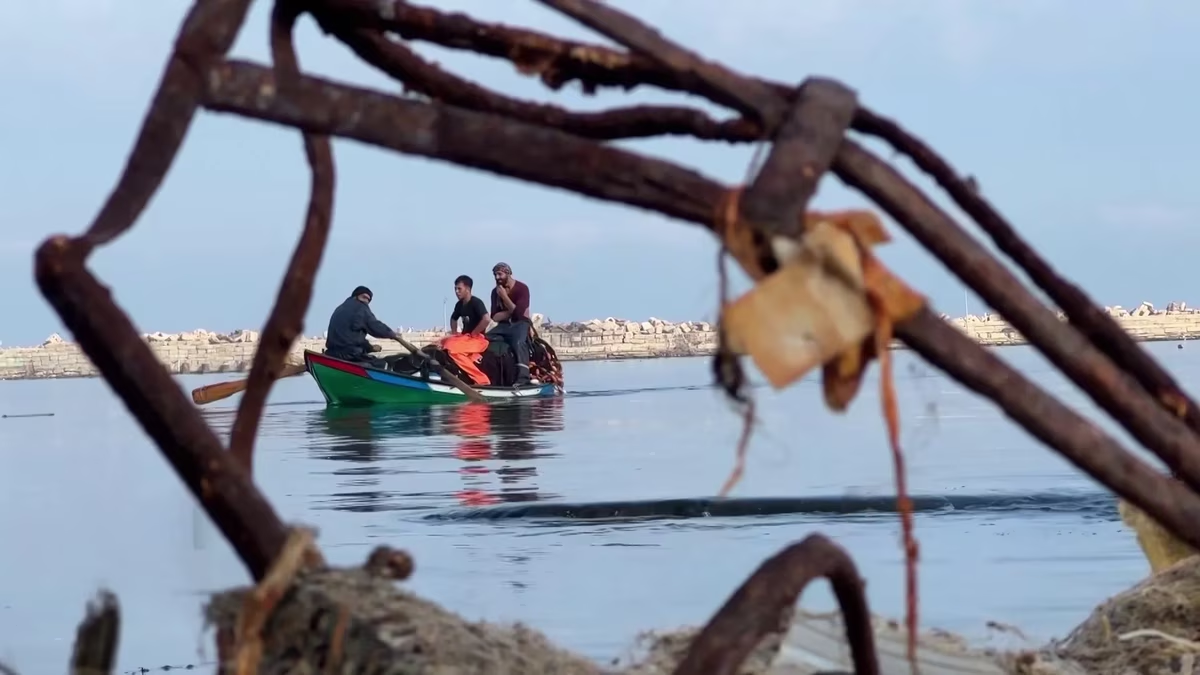







The Palestinian fisherman 'Abu Asad' stands with a tone filled with sorrow on the shore of Gaza's sea, observing the state of the port that once pulsed with life and activity. He describes the current scene as having turned into a graveyard of shattered structures and ruins inhabited by the memories of fishermen, after the Israeli war machine destroyed the boats and launches that once covered the horizon, transforming the sole source of livelihood for thousands of families into charred wreckage.
The military attacks launched by gunboats and warplanes were not merely targeting wooden planks, but rather a systematic attempt to assassinate the 'memory of the place' and cut off the lifeline of the fishing community. The fishing profession in Gaza has become a perilous adventure, as the naval blockade clamps down on fishermen, and bullets pursue them in every movement and stillness, making the pursuit of a livelihood an unequal daily battle.
In light of this harsh reality, Zakaria Bakr, head of the fishermen's committees in the sector, spoke about the 'ingenuity of necessity' that manifested among fishermen to counter the destruction of their equipment. Bakr explained that fishermen have resorted to using small paddles re-manufactured from the remnants of destroyed boats, in a desperate attempt to continue working despite the almost complete paralysis of fishing activity due to the deliberate destruction of essential equipment in the port.
Fishermen's innovations did not stop at recycling wood; they extended to transforming 'Styrofoam' panels and old 'refrigerator doors' into makeshift rafts they improvise to navigate the sea. These simple means reflect the magnitude of the tragedy and determination simultaneously, as these men try to flirt with the waves with tools that offer no protection from the sun's heat or the occupation's bullets, solely to secure their children's daily sustenance.
The suffering extends beyond sailing and pursuit at sea, as the danger reaches fishermen even when they are resting on the sand. One fisherman recounts that bullets pursue them every second, indicating that the occupation is not content with direct firing at sea, but also targets tents erected on the beach, depriving them of a sense of security even during moments of exhausting fatigue.
Today, fishing nets stand empty as a verdict of hunger and loss threatening thousands of families who have lost their breadwinners or their tools of work due to the ongoing aggression. The scene of boats unable to sail encapsulates the chapters of the great human tragedy in the Gaza Strip, where the sea has transformed from a source of good and giving to an arena of pursuit and siege that encircles Gazans by land, air, and sea.
Today, the Gazan fisherman digs in rock to secure his daily sustenance, as the occupation deliberately destroyed most boats and fishing equipment completely.


Share your opinion
Charred boats and torn nets: How the occupation assassinates the fishing sector and the memory of the sea in Gaza?