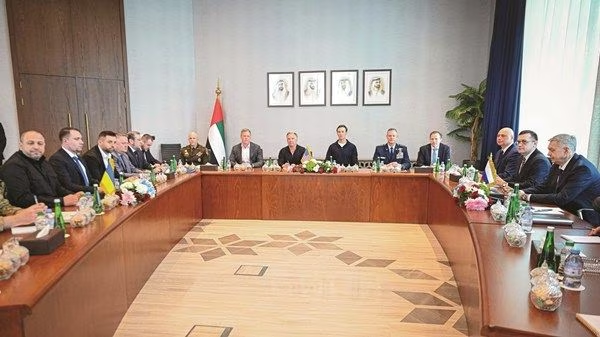
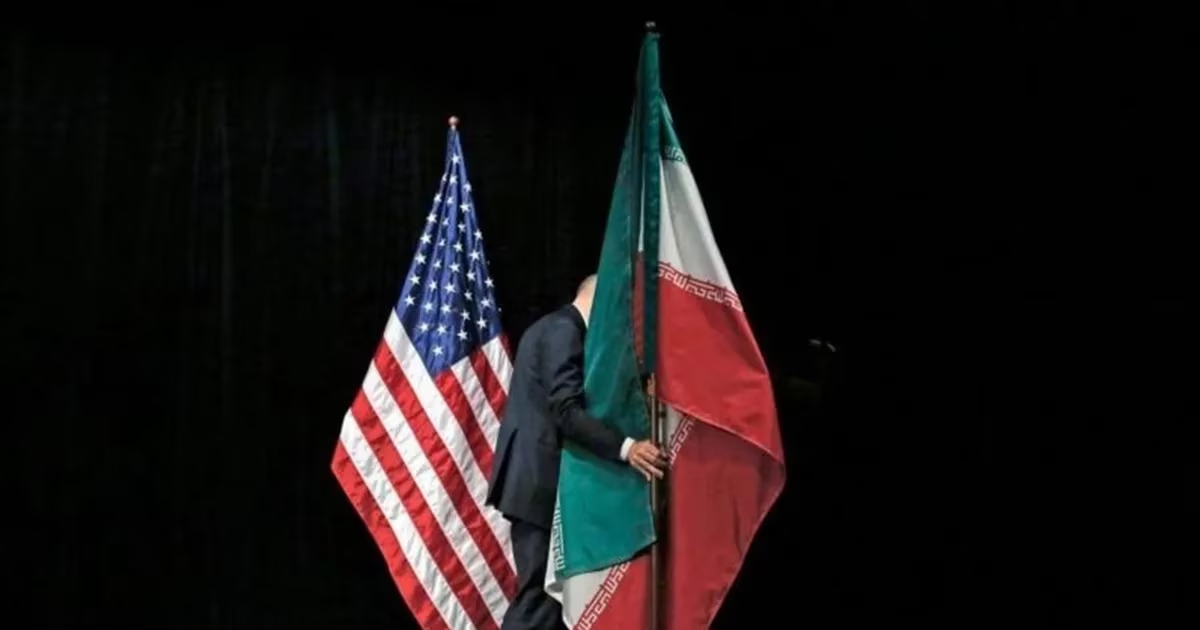
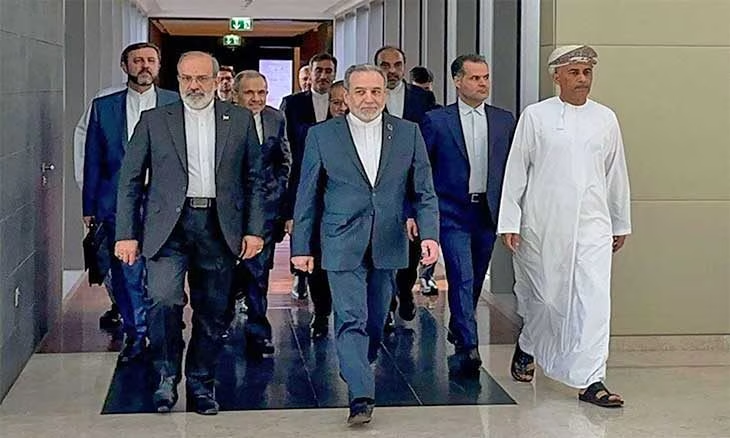
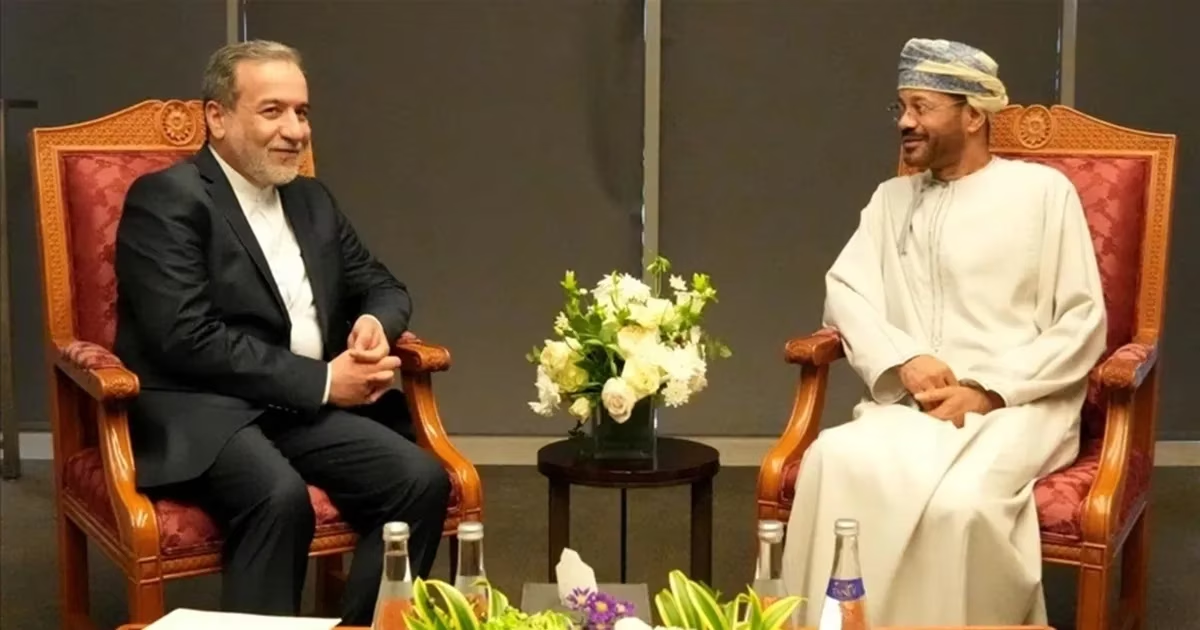
On Friday evening, the Omani capital, Muscat, witnessed the launch of the first round of direct nuclear negotiations between the Iranian and American delegations, in a step aimed at breaking the deadlock surrounding the nuclear file. Despite positive statements from Iranian Foreign Minister Abbas Araghchi and his Omani counterpart Badr Al Busaidi, leading to optimism expressed by US President Donald Trump, the situation on the ground remains tense.
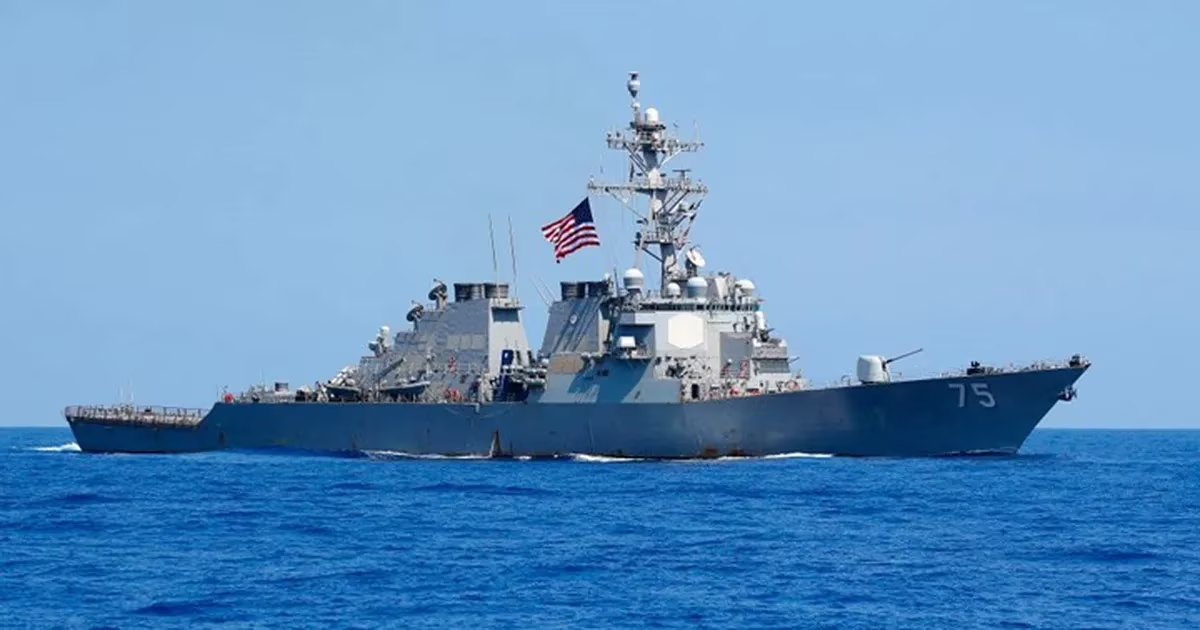
These negotiations are taking place at a time when the United States continues to strengthen its military presence in the region, with the aircraft carrier 'Abraham Lincoln' showcasing its combat capabilities off the Iranian coast. This intense military presence reflects the Trump administration's doctrine of 'peace through strength,' indicating that the military option remains strongly on the American table.
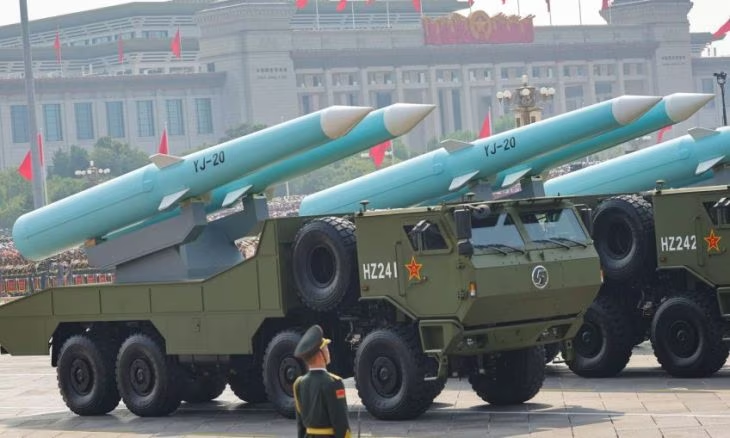
For its part, Tehran did not stand idly by, but rather showcased its missile power in conjunction with the diplomatic movement, revealing the 'Khorramshahr 4' ballistic missile. This missile features hypersonic capabilities reaching 16 times the speed of sound and a range of 3000 kilometers, making it capable of hitting strategic targets deep within and beyond the region.
Field skirmishes were not absent from the scene, as sources reported that an American aircraft shot down an Iranian reconnaissance drone that attempted to approach American naval vessels. The negotiations were also preceded by Iranian attempts to intercept a commercial ship flying the American flag in the Strait of Hormuz, reflecting the high state of tension preceding any potential political understandings.
Iranian Foreign Minister Abbas Araghchi affirmed that his country is entering this round with 'open eyes,' in reference to Tehran's incomplete trust in American intentions based on previous experiences. Araghchi clarified that Iran is prepared for all scenarios, including the option of war, despite its preference for diplomatic solutions that guarantee its peaceful nuclear rights.
In contrast, statements by US Secretary of Defense Pete Hegseth highlight the ideological dimension of the current administration, as he stressed that American power derives its momentum from faith-based values and a sacred duty. This rhetoric reinforces the conviction that Washington will not hesitate to use force if it believes that the diplomatic path does not achieve its goals of fully curbing Iranian capabilities.
Political readings indicate that the Trump administration, driven by intense Israeli pressure, seeks to impose quick and comprehensive deals that are not limited to the nuclear file alone. Washington insists on including Iran's ballistic missile program and regional influence in any future agreement, which Tehran considers a red line that cannot be crossed.
Tehran understands that Washington's acceptance of negotiations may be part of a broader strategy aimed at gaining time or justifying future military action if talks fail. Therefore, the Iranian leadership is keen to demonstrate its high military readiness, while hinting at its missiles' ability to penetrate the latest Israeli and American defense systems.
Despite the damage inflicted on the Iranian nuclear program during the June 2025 confrontations, reports indicate that those operations failed to achieve their ultimate goal of completely destroying the project. This relative military failure forces the US administration to carefully review its calculations before embarking on any new military adventure that could ignite the region.
Iran, for its part, appears ready to make technical concessions, such as reducing uranium enrichment levels to internationally acceptable levels, or freezing some activities for a specified period. Tehran bases this on religious fatwas that prohibit the possession of nuclear weapons, while at the same time affirming its adherence to the peaceful uses of atomic energy in accordance with international standards.
On the Israeli side, developments in Muscat are being closely monitored, as it views the Iranian regime as an existential threat that must be eradicated or radically curbed. Washington has tried to exploit internal unrest in Iran to pressure the regime, but these attempts have not yet led to tangible political change in the structure of governance in Tehran.
The current conflict is a conflict of wills par excellence, where each party seeks to use negotiations to serve its own agenda; Tehran wants to lift sanctions and develop its capabilities, while Washington wants to dismantle the Iranian threat. The question remains whether this round will lead to a historic agreement or whether it is merely a warrior's respite before a broader confrontation.
Negotiations in Muscat will not be easy by any means, especially with Washington's insistence on linking the nuclear file to regional proxies such as Hezbollah and the Houthis. This linkage represents a major dilemma for the Iranian negotiator, who views these proxies as a strategic depth that cannot be compromised under any political or economic pressures.
In conclusion, the coming hours and days remain crucial in determining the course of the relationship between the two poles, either reaching understandings that ensure a minimum of stability, or returning to the square of escalation. In both cases, the region stands on a hot plate, as the outbreak of an open confrontation will have catastrophic repercussions that extend beyond the borders of the two countries concerned.
Iran enters the diplomatic arena with open eyes and a firm memory, and it wants to conclude an agreement but is at the same time ready for war.