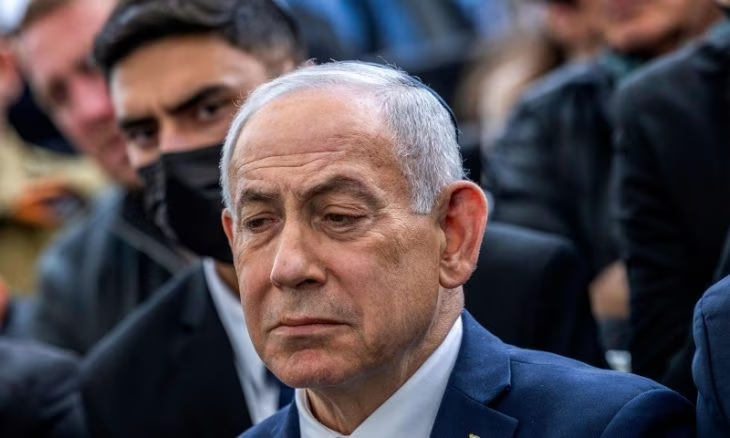







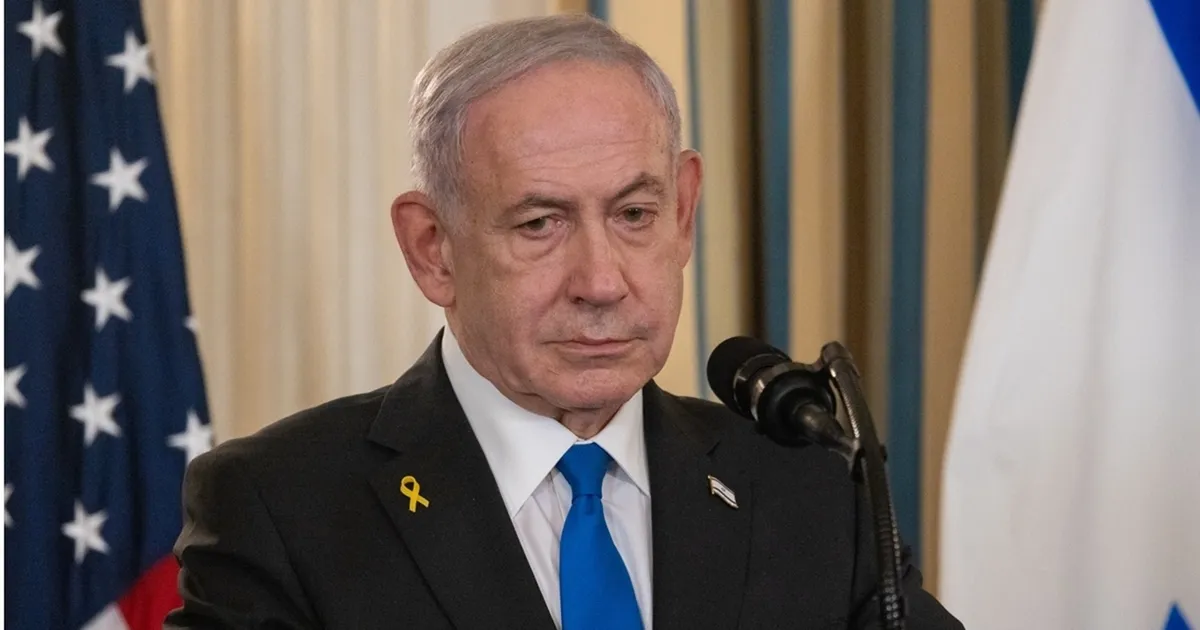
A state of anticipation prevails within political and security circles in Israel ahead of the snap visit that Prime Minister Benjamin Netanyahu intends to make to Washington next Wednesday. This sudden move comes at a sensitive time, as speculations increase about the nature of the ongoing understandings between President Donald Trump's administration and the Iranian regime.
The office of the occupation government's prime minister clarified in a brief statement that the primary goal of the visit is to affirm Israel's firm stance on the necessity of including strict restrictions on the ballistic missile project in any negotiations with Tehran. Netanyahu also emphasizes the need to stop Iranian support for proxies in the region, considering these elements vital for Israel's national security.
Observers believe that the timing of the visit raises many questions, especially since Netanyahu has pre-scheduled appointments in the United States within the next two weeks. This urgency is interpreted by some as the existence of dramatic developments behind the scenes of the American-Iranian negotiations that may not satisfy Israeli ambitions to undermine the regime.
For its part, several Hebrew media outlets reviewed several scenarios for this visit, including the possibility of coordinating an imminent military strike against Iranian facilities. Meanwhile, other analyses suggested that Netanyahu is trying to escape increasing internal pressures and demands for accountability for the security failure on October 7th.
In a related context, political analyst Yaakov Bardugo indicated that there are fears of the influence of regional powers such as Saudi Arabia, Qatar, and Turkey on the White House's decision. Bardugo warned that the American focus solely on the nuclear file is not enough, stressing that Israel may be forced to act alone to neutralize the ballistic missile threat.
Reports indicate that Netanyahu seeks to hear President Trump's position directly, and not just rely on the meetings his advisors held with American envoys. It appears there is a gap in expectations between what Israel demands and Trump's desire to conclude a 'historic' agreement that ends tension without entering into an all-out war.
Domestically, Netanyahu faces harsh criticism from his political opponents, with outgoing Defense Minister Yoav Gallant describing him as a liar and the primary person responsible for military failures. Some circles consider the intensive foreign visits a way to divert attention from the political and legal crises pursuing him.
In a different reading, analyst Shimon Sheffer believes that President Trump will not be drawn into a direct military confrontation with Iran, but will rather seek a diplomatic solution that he can declare as a political victory. Sheffer recalls Netanyahu's repeated statements for decades about Iran approaching a nuclear bomb, describing them as a scare tactic that has not achieved its goals.
At the Institute for National Security Studies in Tel Aviv, researcher Raz Zimmt believes that Iranian Supreme Leader Ali Khamenei faces a real dilemma between conceding on missiles or facing collapse. Zimmt believes that missiles represent the regime's only insurance policy, and abandoning them may mean temporary protection but paves the way for the regime's future downfall.
Doubts are increasing about the extent of Washington's commitment to Israel's demands regarding missile range and warhead weights, despite statements from the US State Department about full coordination. It appears that the occupation government is cautiously monitoring Trump's statements, which sometimes ignore the issue of Iranian proxies in the region.
For his part, expert in American affairs Eitan Gilboa considered that the current coordination between Washington and Tel Aviv is limited to military aspects only, without political ones. Gilboa explained that Trump may have abandoned the 'regime change' strategy in Tehran, preferring to reach a permanent agreement that prevents major military escalation.
Media sources indicate that Israel is trying to exploit its strong relations with the Trump administration to ensure that no free concessions are given to Iran on the sanctions file. The Israeli bet remains on Netanyahu's ability to convince the American president that overthrowing the Iranian regime is in the interest of global stability.
Amidst these complexities, a question arises as to whether Tehran will accept Trump's new conditions, which differ from the 2015 agreement. Analysts believe that Iran may be forced to drink the 'cup of poison' and agree to technical restrictions in exchange for guaranteeing the regime's survival and lifting its economic isolation.
In conclusion, next Wednesday's visit remains a pivotal moment in determining the path of confrontation or settlement in the Middle East, as Netanyahu seeks to extract solid security guarantees. International circles await the results of this meeting, which may shape American policy towards Tehran for the next four years.
Israel cannot tolerate a neighboring state possessing nuclear weapons and ballistic missiles after the events of October 7th.



Share your opinion
Israeli Speculations on the Objectives of Netanyahu's Urgent Visit to Washington and the Iran File