PALESTINE

Sat 10 May 2025 10:11 pm - Jerusalem Time

Euro-Mediterranean Human Rights Monitor: Israeli blockade kills 14 elderly people in Gaza in one week


The Euro-Mediterranean Human Rights Monitor documented the deaths of 14 elderly Palestinians in the Gaza Strip last week due to complications from hunger, malnutrition, and lack of medical care resulting from the comprehensive Israeli blockade of the Strip since March 2.


The Geneva-based human rights monitor said in a statement on Saturday that "a silent death is claiming the lives of the elderly and children in Gaza as a result of deadly living conditions deliberately imposed by Israel, most notably starvation and denial of care, as part of a genocide that has been ongoing for more than 19 months."


He explained that the 14 victims died in various areas of Gaza, where residents are suffering from severe shortages of food, water, and medicine, amid famine and the complete collapse of the health system, exacerbating the suffering of the elderly and sick, leaving them to face death in complete isolation.


Regarding the alleged Israeli-American mechanism for delivering aid to Gaza, the Observatory warned that this mechanism "is a maneuver to extend the illegal blockade by re-presenting the crime of starvation in a misleading form that gives it a false humanitarian character and legitimizes its continued use as a weapon within the ongoing crime of genocide."


On Friday, US Ambassador to Israel Mike Huckabee spoke at a conference at the US embassy in Jerusalem about the launch of "US efforts to deliver humanitarian aid to Gaza," claiming that President Donald Trump "has ordered his team to do everything possible to provide relief to civilians."


"This is a major effort, and it will require partnerships from governments, NGOs, and philanthropists around the world. There are many partners who have already agreed to participate," Huckabee said.


He added, "I would say that the Israelis will participate in providing the necessary military security because this is a war zone, but they will not participate in distributing food, or even in bringing food into Gaza. Their role will remain on the periphery."


PALESTINE

Sat 10 May 2025 9:35 pm - Jerusalem Time

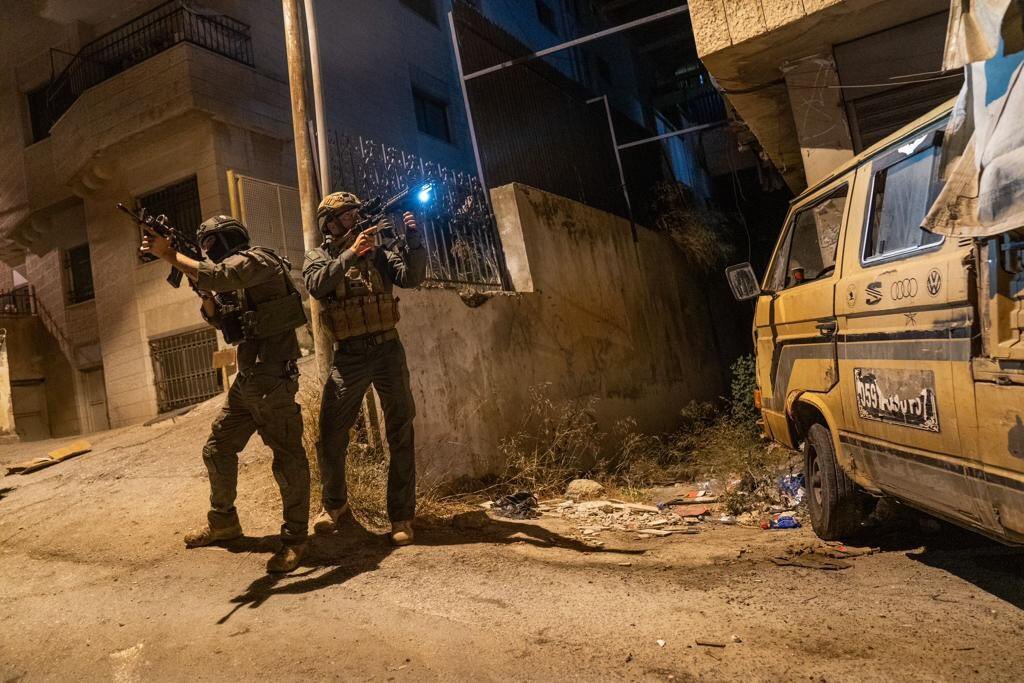
Israeli occupation forces stormed Al-Khader, south of Bethlehem.

Israeli occupation forces stormed the town of Al-Khader, south of Bethlehem, on Saturday evening.


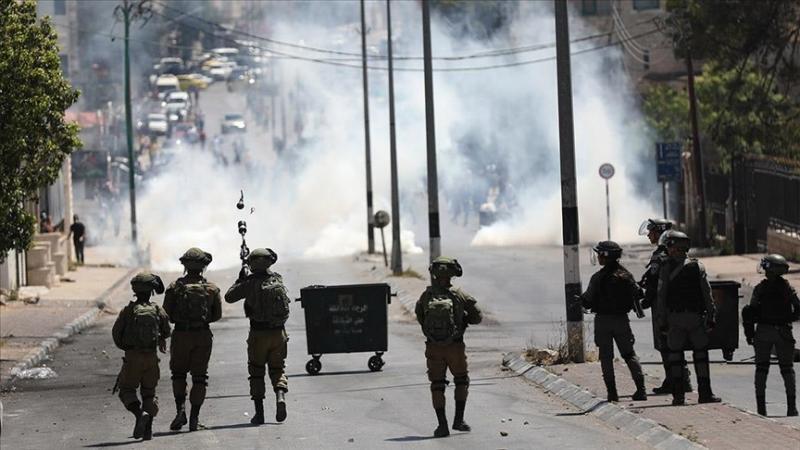
According to local sources, the occupation forces stormed Al-Khader and took up positions in the areas of Al-Bawaba, Al-Yamama, Abu Sura neighborhood, and Jerusalem-Hebron Street. They fired tear gas and sound bombs, but no injuries were reported.

ARAB AND WORLD

Sat 10 May 2025 9:27 pm - Jerusalem Time

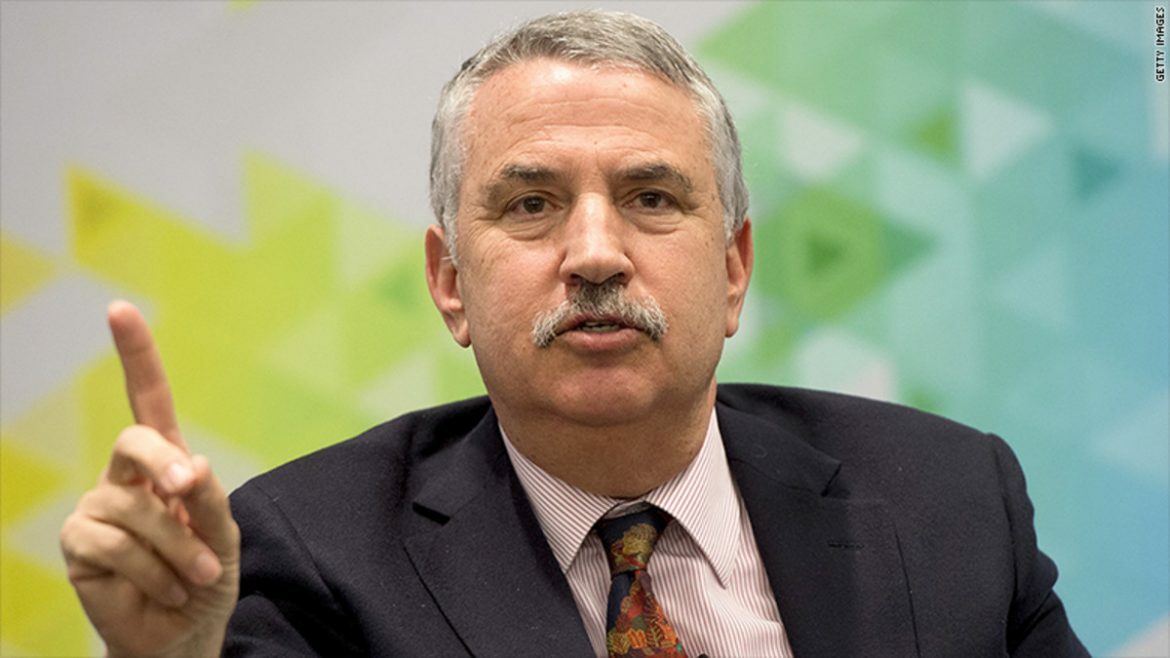
A famous American writer in the New York Times: The Netanyahu government is not our ally

Renowned American author and analyst Thomas Friedman said that Israeli Prime Minister Benjamin Netanyahu's government "is not an ally of the United States."


Friedman asserted that Netanyahu is prioritizing his personal interests over those of Israel and the United States.


In an article published Friday in The New York Times titled "This Israeli Government Is Not Our Ally," Friedman addressed a direct message to US President Donald Trump, praising his failure to schedule a meeting with Netanyahu in his upcoming meetings with the leaders of Saudi Arabia, the UAE, and Qatar, viewing it as evidence that he is "beginning to understand a vital truth."


Friedman added that the current Israeli government "threatens core American interests in the region," and that "Netanyahu is no friend of the United States."


He pointed out that Netanyahu "considers Trump naive," and that the US president's administration "has proven to him, through its independent negotiations with Hamas, Iran, and the Houthis, that it is not for sale."


Friedman described the Israeli government as "extreme right-wing," not seeking coexistence with its Arab neighbors, but rather prioritizing "annexing the West Bank, expelling Palestinians from Gaza, and rebuilding Israeli settlements there."


The author noted that Netanyahu's refusal to support a peace plan that would have normalized relations with Saudi Arabia stems from his desire to preserve his political position and avoid prosecution and imprisonment on corruption charges.


He pointed out that Israel could have achieved major strategic gains from a tripartite peace agreement involving the Palestinians and Saudi Arabia, but Netanyahu "sacrificed all of that for his own personal gain."


"He (Netanyahu) has been fooling everyone for two years," Friedman added.


He stressed that "Netanyahu plans to reoccupy Gaza, not to replace Hamas with a moderate alternative, but rather to perpetuate a permanent occupation that will strangle the Palestinians and force them to leave."


Friedman also warned that Gaza could become "a new Vietnam on the shores of the Mediterranean," given the plans being prepared that include the use of excessive force and the widespread destruction of infrastructure. This could lead to "more Israeli leaders being accused of war crimes," according to analysis he quoted from Israeli military expert Amos Harel.


He stressed that "this trend not only threatens Israel, but also harms the United States' allies in the Middle East," especially Jordan and Egypt, which fear that the goal is "to push the Palestinians toward the territories of these two countries."


Friedman also warned that "destroying any hope for the Palestinians will undermine the desire to expand Arab-Israeli-American security integration and weaken Washington's position in favor of Iran and China."


The American writer addressed Trump, saying, "Mr. President, you have good, independent instincts about Middle East issues. Stick to them. Otherwise, you must prepare for the bitter reality that Jews will in the future live in a Jewish state that is ostracized by the world."


At the end of his article, the author quoted the Israeli newspaper Haaretz as saying that more than 52,000 Palestinians were killed in Gaza, including 18,000 children.


He added, "We can continue to ignore these numbers, question their credibility, or justify them with all the tools of denial, evasion, and normalization, but nothing will change the painful truth: Israel is the one who killed them. This happened with our own hands. We must open our eyes and shout at the top of our voices: Stop the war."


The American writer's article echoes a report in the Hebrew newspaper Yedioth Ahronoth on Friday, which claimed that Trump was "fed up" with Netanyahu because of the latter's refusal to act in accordance with Washington's directives regarding the war on the Gaza Strip.


The newspaper explained that Trump and his administration are "simply fed up" with Israel, represented by Netanyahu, "refusing to act in accordance with the United States' vision in the Middle East."


She added that Americans "feel that Israel is putting many obstacles in the way of Trump winning the Nobel Peace Prize."


Trump has previously stated on several occasions that he considers himself eligible to win the Nobel Peace Prize, whether through his efforts to end the war between Russia and Ukraine or his mediation of a broad peace agreement with Israel that includes Palestine and other countries in the region.


The Hebrew newspaper Haaretz quoted an unnamed informed source on Friday as saying that "the Trump administration is exerting intense pressure on Israel to reach an agreement with Hamas before the president's upcoming visit to the region."


Trump is scheduled to begin his visit to the Gulf next Tuesday, which will include stops in Saudi Arabia, Qatar, and the UAE.

PALESTINE

Sat 10 May 2025 8:36 pm - Jerusalem Time

23 civilians killed in Israeli raids on Gaza

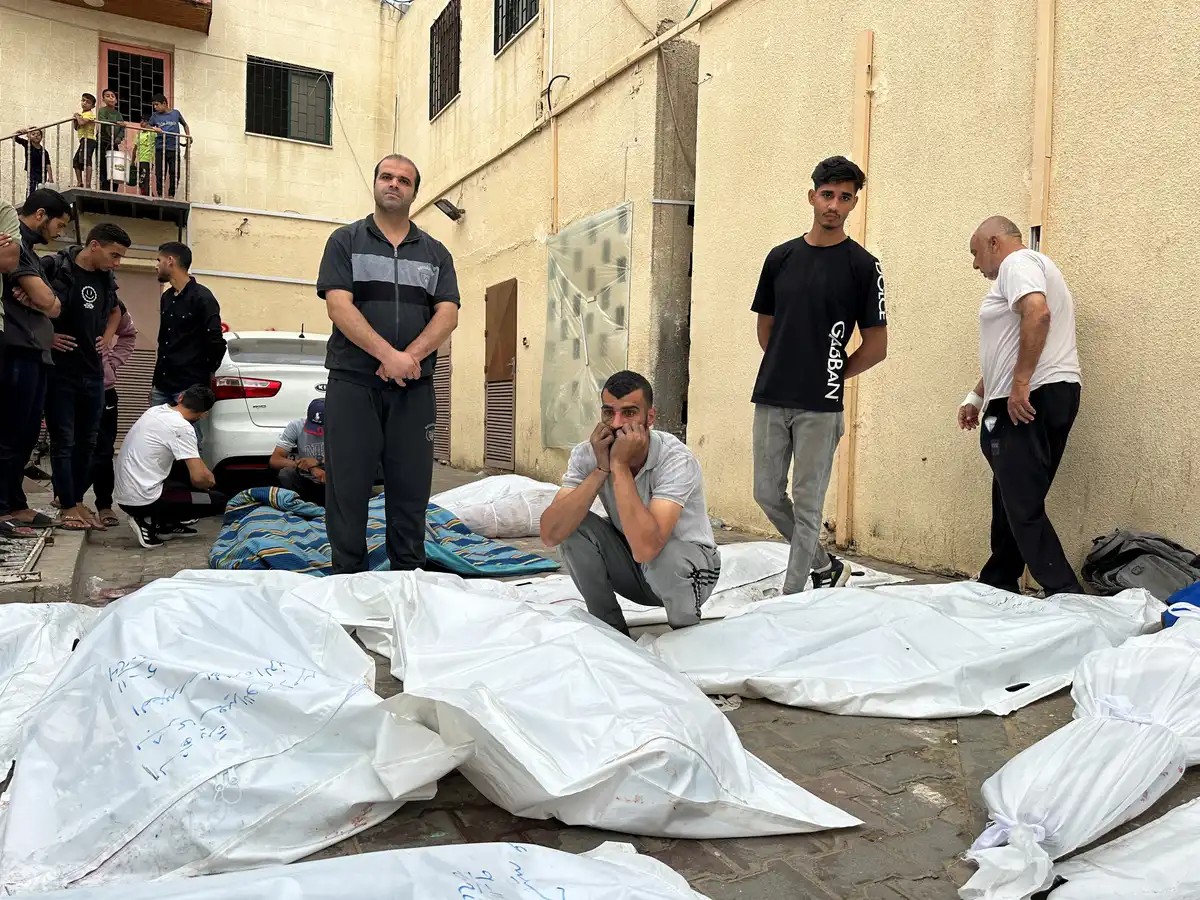
Israeli airstrikes overnight and into Saturday killed at least 23 Palestinians in Gaza, including three children and their parents, when their tent in Gaza City was bombed, Gaza officials said.


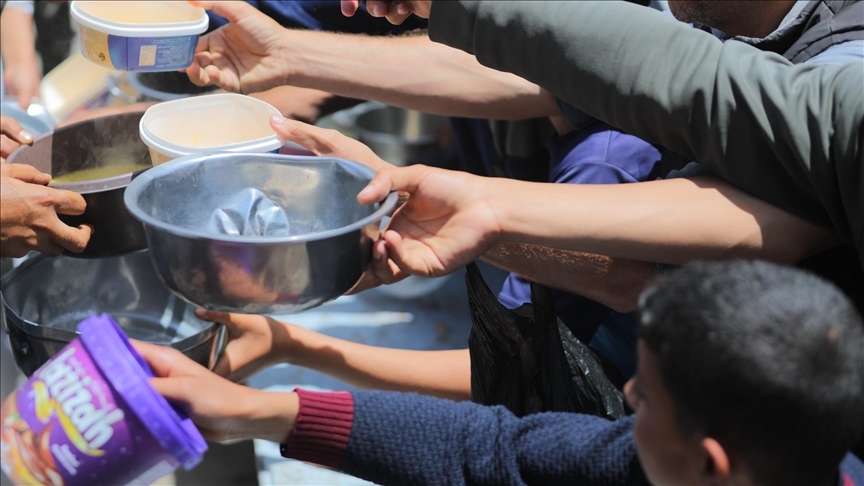
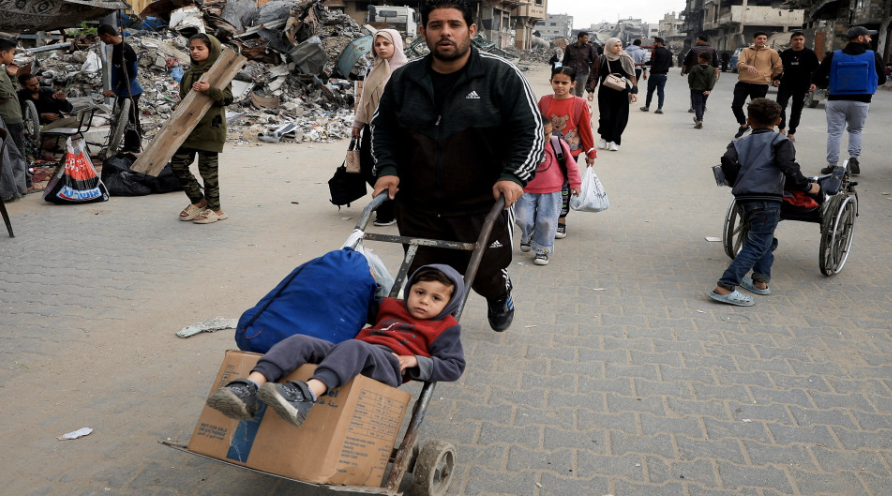
Israeli bombardment continues amid growing international warnings about Israeli plans to control aid distribution in Gaza, as the Israeli blockade of the enclave, home to more than two million people, enters its third consecutive month.


The United Nations and aid organizations have rejected Israeli efforts to distribute aid, including a plan by a group of American security contractors, former military officers, and humanitarian aid officials calling itself the Gaza Humanitarian Foundation, according to the Associated Press.


The Gaza Ministry of Health said that among the 23 bodies transferred to hospitals over the past 24 hours were those of a family of five whose tent was bombed in the Sabra neighborhood of Gaza City.


Another Israeli airstrike late Friday hit a warehouse belonging to the United Nations Relief and Works Agency for Palestine Refugees (UNRWA) in the Jabalia area in the northern Gaza Strip. Four people were killed, according to the Indonesian hospital where the bodies were transferred.


An Associated Press video showed the destroyed building engulfed in flames.


Several residents, including Hamza Mohammed, reported that the warehouse had been empty since it was bombed and raided several times during the Israeli ground operation in the Gaza Strip last year.

PALESTINE

Sat 10 May 2025 8:25 pm - Jerusalem Time

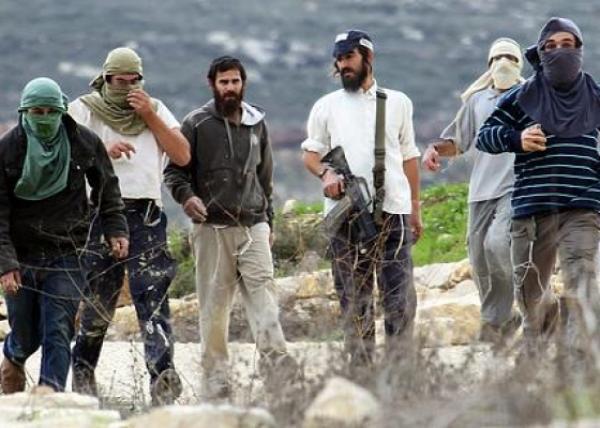
Israeli Settlers raid Palestinian citizen's tents east of Tubas, and the occupation forces arrest four citizens.

Settlers raided a citizen's tents east of Tubas city, Saturday evening.


Human rights activist Aref Daraghmeh reported that settlers, under the protection of the occupation army, raided the tents of citizen Faisal Masaeed east of Tubas.


In this context, the director of the Prisoners Club in Tubas, Kamal Bani Odeh, said that the occupation forces arrested Jihad Saleh Masaeed, Faisal Muhammad Daraghmeh, Muhammad Ali Daraghmeh, and Kamal Faisal Daraghmeh, from the area.


Many areas in the northern Jordan Valley and the eastern borders of the villages of Tayasir and Aqaba, east of Tubas, are witnessing a continuous presence of settlers, protected by the occupation army.

PALESTINE

Sat 10 May 2025 8:20 pm - Jerusalem Time

The Trump administration increases pressure on Israel over Gaza.

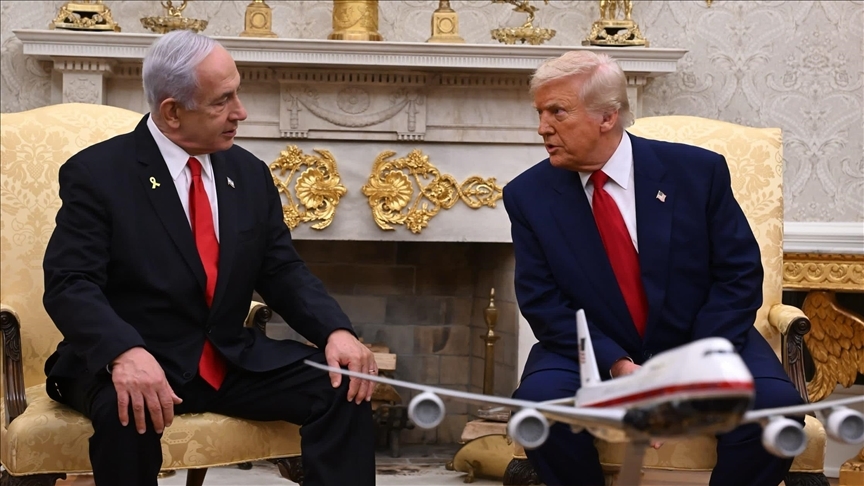
Concern is growing in Israel that US President Donald Trump may force the Israeli prime minister and his government into an imminent agreement on the Gaza Strip, even if it is unsatisfactory to Tel Aviv. Trump may even turn his back on Israel on other issues. Concerns about US pressure have increased following the agreement to activate a new humanitarian aid mechanism for the Gaza Strip.


Official Israeli sources confirmed to various local media outlets that the US administration is exerting significant pressure on Israel to conclude an agreement with Hamas before Trump's expected visit to the Middle East in mid-May, warning that the price will be high if Israel does not end the war.


Israel's Army Radio said Trump was angry because he believed Netanyahu was "playing him." Most Israeli media outlets focused on Saturday on Trump's remarks that the fighting in Gaza was complex and had been going on for 1,000 years, while US envoy Steve Witkoff expanded his team of advisors for the "day after" talks in the Gaza Strip.


Yedioth Ahronoth and Channel 12 quoted the Wall Street Journal as saying that Trump, speaking to donors in Florida last week, acknowledged his growing frustration over the failure to end the war in the Gaza Strip, which poses a major challenge to him, saying that it is difficult to reach a solution because "they have been fighting for a thousand years." Yedioth confirmed that some Trump administration officials also expressed frustration with Israel's intention to expand the war in Gaza.


Witkoff Team Expansion


According to informed sources, Witkoff's expanded team now includes former British Prime Minister Tony Blair and lawyer Alan Dershowitz, who said, "I feel it's more challenging than we thought." Israeli media outlets reported that "Trump will issue a statement regarding a Palestinian state and American recognition of it without the presence of Hamas." However, Israeli sources denied the veracity of that report to Yedioth Ahronoth: "There is no indication of its authenticity, and it appears to be fabricated."


Reports in Israel reflect anger at Trump, anxiety, and a crisis of confidence. Sima Kadmon wrote in Yedioth Ahronoth, "Those who complained this week that Trump sold us out, betrayed us, and turned his back on us need to wake up. To sell out, betray us, and turn your back, you first have to promise something. And the American president didn't promise us anything. Perhaps we heard what we wanted to hear, and perhaps Netanyahu's reaction to Trump's election created exaggerated expectations here."


She added: "We were surprised this week by his promises to the Houthis that America would stop the attack, and now that we've bitten our nails over his dramatic announcement, it's clear, at least for now, that these were just trade agreements, and he didn't say a single word about Israel."


Kadmon believes that Trump doesn't particularly like Netanyahu, seeing him as merely a functional figure. She continued, "There is an inherent tendency among the families of the kidnapped to place their trust in Trump. They realized long ago that the key lies in Washington, not in this government. But Trump is not working for us."


Witkov presented his new initiative, a detailed document of which was obtained by Ynet, which aims to restore humanitarian aid to the Gaza Strip through what he described as a "transparent, independent, and neutral logistical infrastructure," thereby overcoming obstacles that have undermined donor confidence and the efficiency of aid delivery.


Food for 60% of the population


Channel 12 quoted Israeli security officials as saying that this complex step will be implemented within about two weeks. The US-backed Israeli plan to resume the distribution of humanitarian aid in Gaza after an initial period of more than two months will provide food for only about 60 percent of the Strip's population, according to a memo sent to potential donors by the organization running the initiative.


The Gaza Humanitarian Foundation's memo acknowledges that civilians in the Strip "are currently suffering from severe deprivation," but states that the "safe distribution sites" it will establish to distribute aid will initially serve only 1.2 million people, compared to a population of approximately two million.


The memo states that the four safe distribution sites will be "capable of scaling up to cover more than two million people," but does not specify how long the initial phase will last.


Furthermore, the Gaza Humanitarian Foundation acknowledged that each of the safe distribution site initiatives will take time to reach the initial goal of serving 300,000 people. An Israeli official told The Times of Israel that Israel hopes some countries will begin accepting Palestinians, which would help narrow the gap between the initial capacity of the aid initiative and the total population of Gaza.


However, no country has yet volunteered to accept Palestinians. While Israel promotes the option of migration as "voluntary," countries in the region increasingly view it as forced.


The aid distribution centers will be located in a new humanitarian zone being established by Israel in southern Gaza between the Philadelphi Corridor, along Gaza's southern border with Egypt, and the newly established Morag Corridor, about five kilometers to the north. This zone primarily includes the southern Gaza city of Rafah, and entry to the zone will be via Israeli army checkpoints, a move the military hopes will prevent Hamas fighters from reaching the area.


According to the memo, aid will be distributed from distribution centers in boxes containing 50 meals, each containing 1,750 calories, as well as personal hygiene and medical supplies. Officials familiar with the plan said that between 5,000 and 6,000 screened representatives will be allowed to walk to the aid centers once every one to two weeks to receive a food box weighing approximately 18 kilograms for their families.

ARAB AND WORLD

Sat 10 May 2025 8:08 pm - Jerusalem Time

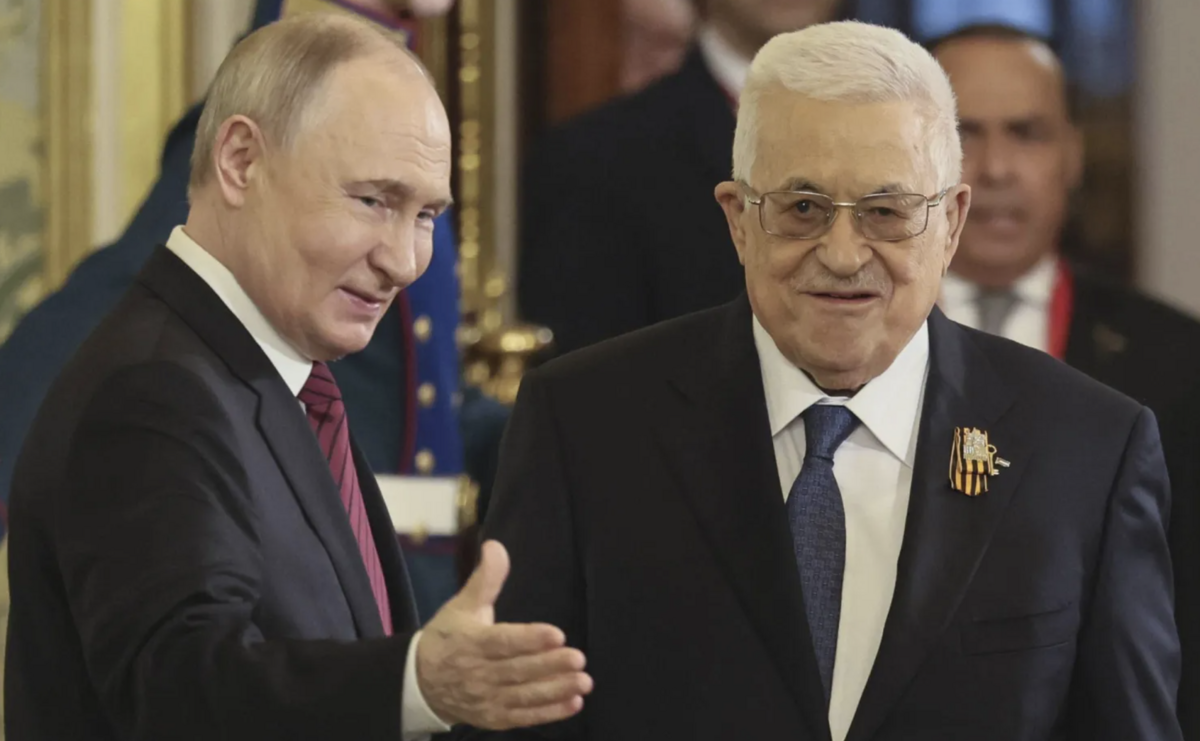
Putin: Gaza Strip is experiencing a humanitarian catastrophe

Russian President Vladimir Putin was quoted by Sputnik news agency on Saturday as saying that the Gaza Strip is experiencing a humanitarian catastrophe, noting that Russia has provided approximately 800 tons of aid to the Palestinians.


The Russian president said that the situation in the Middle East is worsening, noting that Moscow supports the two-state solution.


Putin continued, "We are monitoring the tragic events in the Palestinian territories and are trying to provide ongoing assistance."


Several aid groups told Reuters on Tuesday that dozens of local charity kitchens are at risk of closing, possibly within days, unless aid is allowed into Gaza. Failure to do so would end the last sustainable source of meals for most of the 2.3 million population.


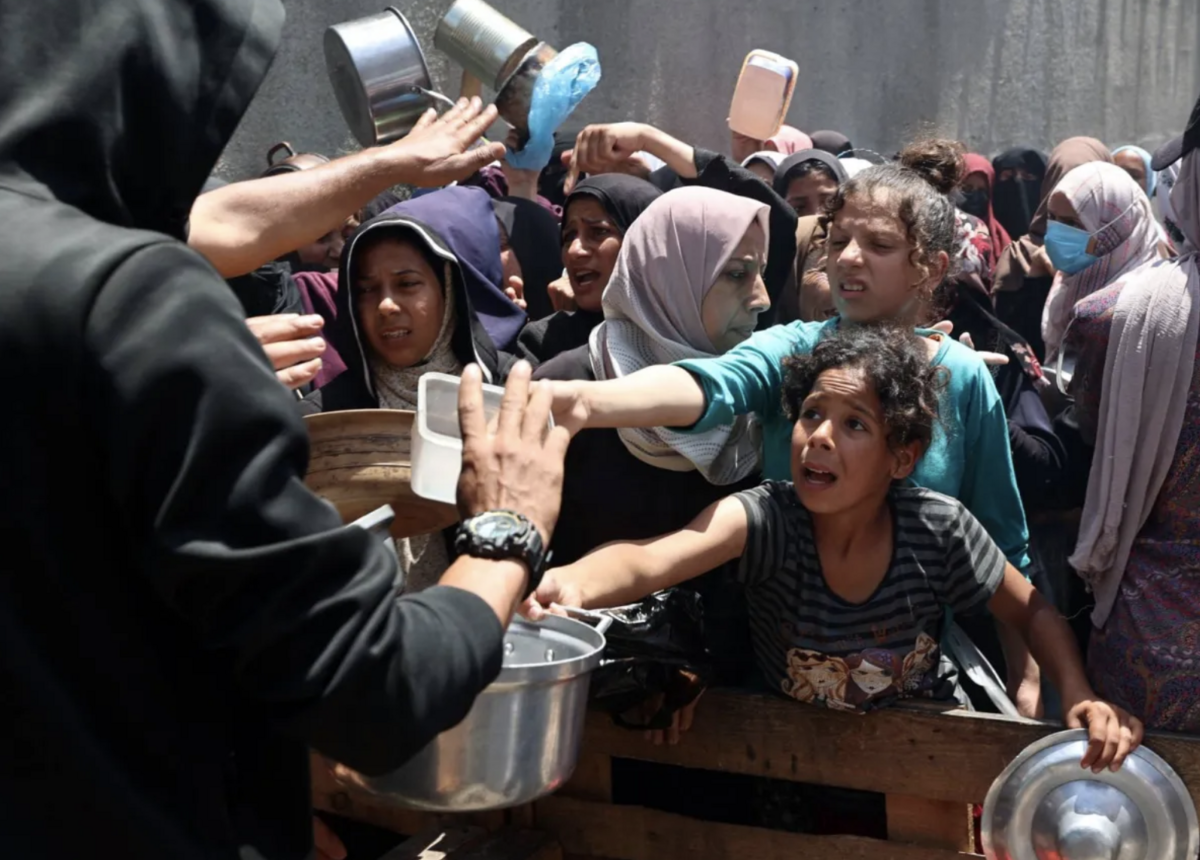
Since March 2, Israel has completely blocked all supplies to the 2.3 million residents of the Gaza Strip, and nearly all food stockpiled during the ceasefire at the beginning of the year has run out. This is the longest closure of its kind the Gaza Strip has ever faced.


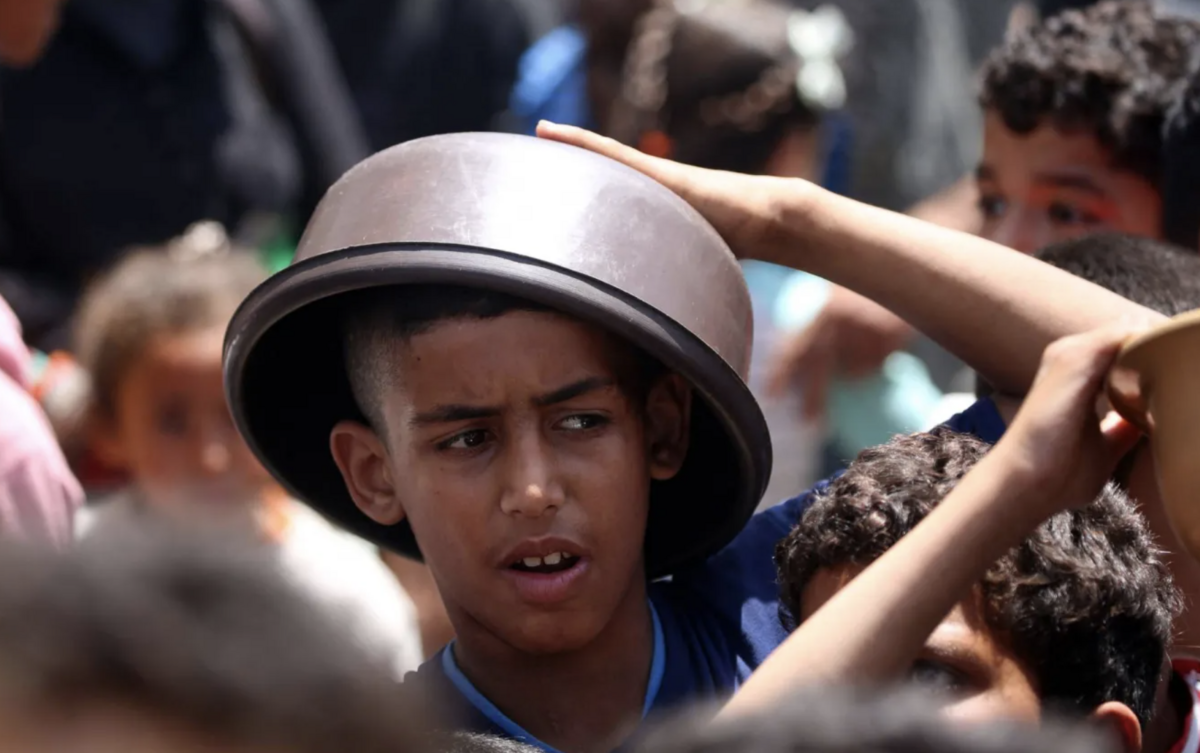
The Government Media Office in Gaza explained on Monday that "the stifling blockade and the ongoing closure of crossings have led to a catastrophic deterioration in health conditions and the spread of severe malnutrition, particularly among children and infants. The number of cases arriving at the remaining hospitals and medical centers due to severe malnutrition has exceeded 65,000, out of a total of 1.1 million children in the Gaza Strip who suffer from daily hunger."

PALESTINE

Sat 10 May 2025 7:57 pm - Jerusalem Time

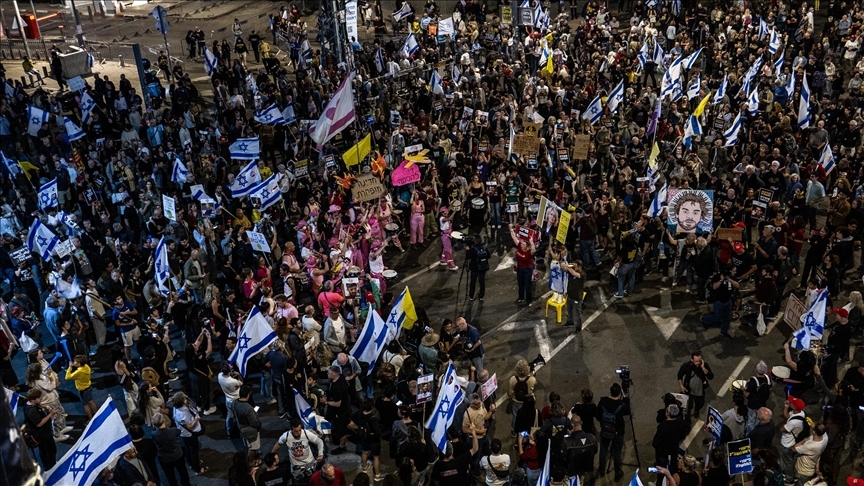
The father of an Israeli prisoner demands that Netanyahu be forced to stop the war and release the prisoners.

The father of an Israeli prisoner who appeared in a video posted by the Qassam Brigades on Saturday called on Israelis to confront Benjamin Netanyahu's government and force it to halt its war of extermination in the Gaza Strip in order to release the prisoners.


Avi Haim, the father of Israeli prisoner Yosef Haim in the Gaza Strip, said on Saturday that "the country's internal problems have distracted attention from the issue of the detainees."


In an interview with the official Israeli Broadcasting Authority, Haim called for "an immediate confrontation with the government to force it to stop the war in the Gaza Strip in order to release the prisoners."


"I feel that public attention has been diverted from the issue of prisoners," he said.


He added, "All the internal problems currently occurring, such as the dismissal of the head of the Shin Bet and the attorney general, are making us forget the prisoners in Gaza."


He stressed that "the government must be confronted and forced to stop the war."


This comes shortly after the Qassam Brigades, the military wing of Hamas, released a video clip of two Israeli detainees, one of whom is ill.


The two Israeli detainees are: Yosef Haim and Elkana Bohbot.


The Al-Qassam Brigades have repeatedly warned, in previous statements, of Israel's procrastination in resuming the ceasefire agreement in Gaza and the risks it poses to the lives of prisoners due to Israel's deliberate bombing of the sites where they are located.


Tel Aviv estimates that there are 59 Israeli prisoners in the Gaza Strip, 21 of whom are still alive. Meanwhile, more than 9,500 Palestinians are languishing in its prisons, suffering torture, starvation, and medical neglect, many of whom have died, according to Palestinian and Israeli human rights and media reports.

PALESTINE

Sat 10 May 2025 6:41 pm - Jerusalem Time

UNICEF: New aid distribution plans in Gaza will exacerbate children's suffering

The United Nations Children's Fund (UNICEF) has criticized new plans proposed by Israel and the United States to take over responsibility for distributing humanitarian aid in Gaza, saying they will exacerbate the suffering of children and families.


"The draft plan presented by Israel to the aid community appears likely to exacerbate the ongoing suffering of children and families in the Gaza Strip," UNICEF spokesman James Elder said in a statement on Saturday.


Elder added that his statement also applies to the new institution, which he believes is part of the same expanded plan.


Aid organizations already reject any plans that would give occupying power Israel a role in distributing aid in Gaza.


“Using humanitarian aid as bait to force people to flee, especially from the north to the south, will leave them with an impossible choice: between displacement and death,” Elder said.


He continued: There is a simple alternative, which is to lift the siege and allow humanitarian aid to enter to save lives.

PALESTINE

Sat 10 May 2025 6:18 pm - Jerusalem Time

Clashes with the occupation forces northwest of Ramallah

Clashes erupted with Israeli occupation forces on Saturday evening in the town of Al-Mazra'a al-Gharbiya, northwest of Ramallah.


According to local sources, an Israeli army force stormed the town of Al-Mazra'a al-Gharbiya, sparking clashes. No injuries were reported.


The sources added that occupation forces also raided the town of Kobar, northwest of Ramallah, without any arrests or raids being reported.

PALESTINE

Sat 10 May 2025 5:51 pm - Jerusalem Time

An injury by Israeli occupation forces' bullets west of Ramallah

A young man was shot by Israeli occupation forces on Saturday evening in the village of Nabi Saleh, northwest of Ramallah.


According to local sources, an Israeli infantry force stormed the village of Nabi Saleh, positioned itself in the center of the village, and opened fire on residents and their homes. A young man was shot in the thigh and taken to the hospital for treatment.


In this context, the occupation forces have continued to close the western entrance to the village of Al-Mughayyir, north of Ramallah, in both directions since the morning hours, preventing citizens from entering and exiting it. This is the only entrance to the village, after the occupation forces closed the eastern entrance after October 7, 2023.

PALESTINE

Sat 10 May 2025 5:30 pm - Jerusalem Time

Palestinian Water Authority: Gaza is dying of thirst


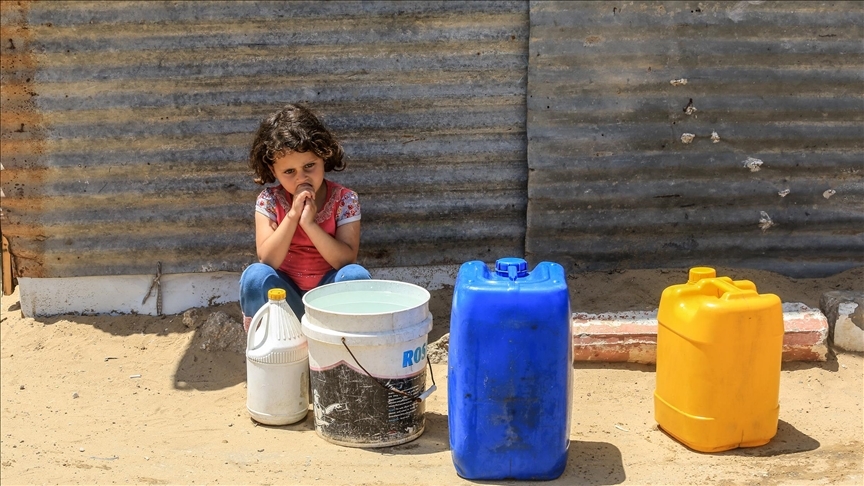
The Palestinian Water Authority warned on Saturday of an imminent humanitarian disaster in Gaza due to the collapse of water and sanitation services as a result of the ongoing Israeli genocide, noting that the Strip has become a "dying of thirst" area.


The Water Authority said in a statement that "85 percent of water and sewage facilities in the Gaza Strip have suffered severe damage, and water extraction volumes have decreased by 70-80 percent."


She pointed out that "the occupation's destruction of infrastructure, power outages, and prevention of the entry of fuel and basic supplies (into the Gaza Strip) has led to a near-total halt in the provision of water services."


The Water Authority added, "Gaza has become a region dying of thirst."


She explained that "the average per capita water consumption in Gaza has dropped to between 3 and 5 liters per day, which is far less than the minimum recommended by the World Health Organization in emergency situations."


The minimum amount recommended by the World Health Organization for emergency response is 20 liters per person per day.


The Water Authority warned of "the spread of diseases resulting from the discharge of wastewater into residential areas and the filling of rainwater basins."


She stressed that "these Israeli policies constitute a flagrant violation of international humanitarian law, including the Fourth Geneva Convention, the Convention on the Prevention and Punishment of the Crime of Genocide, and the Rome Statute."


The Water Authority called on the international community to "take immediate action to halt the aggression, lift the blockade, provide protection for technical personnel, and support the Palestinian government's efforts in emergency interventions and recovery plans in the Gaza Strip."


On Tuesday, Pedro Araujo-Agudo, the UN Special Rapporteur on the human rights to adequate drinking water and sanitation, told Anadolu Agency that the Israeli occupation's destruction of the water infrastructure in the Gaza Strip and its denial of access to clean water are a "silent but deadly bomb."


"The vast majority of Gaza's population either only has very limited access to water, or the water they do have is dangerously polluted," Agudo explained.


He added that the Israeli blockade imposed since October 2023 has included food, water, electricity, and other basic commodities.


The UN rapporteur noted that the crisis spiraled out of control after the Israeli occupation cut off access to fuel needed to operate water purification plants and wells.


He stressed that the deliberate destruction of water systems means using water as a weapon in the war on Gaza.


Based on UNICEF data, Agudo said that diarrhea cases among children under five increased from 40,000 to more than 70,000 during the first week of December 2024.


With full American support, Israel has been committing genocidal crimes in Gaza since October 7, 2023, leaving more than 172,000 Palestinians dead or wounded, most of them children and women, and more than 11,000 missing.


PALESTINE

Sat 10 May 2025 4:49 pm - Jerusalem Time

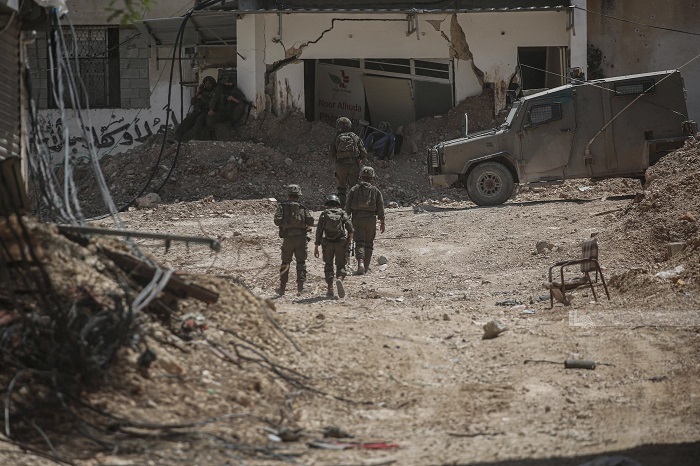
Israeli occupation forces demolished homes in Nour Shams camp, east of Tulkarm.

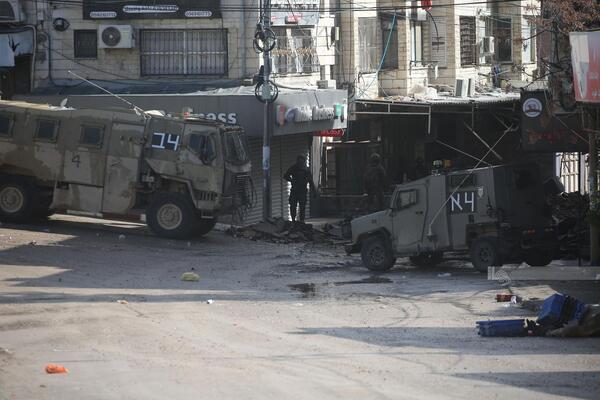
Israeli occupation forces blew up residential homes in the Nour Shams camp, east of Tulkarm, on Saturday, coinciding with the ongoing aggression against it for 91 days.


According to local sources, occupation forces blew up three houses in the Al-Manshiya neighborhood of the camp, accompanied by the sound of massive explosions throughout the area and heavy smoke rising.


This escalation comes as a continuation of the ongoing demolition of residential buildings and homes in the camp, specifically in the neighborhoods of Al-Manshiya, Al-Maslakh, Al-Jami', Al-Eidah, and Al-Shuhada. This comes as part of the occupation's plan, announced 10 days ago, to demolish 106 homes and buildings in the Tulkarm and Nur Shams camps, including 48 buildings in Nur Shams camp.


According to local estimates, the number of buildings demolished by Israeli bulldozers over the past week has reached 15, including the apartments they contained. Residents had evacuated the buildings after obtaining prior coordination and forcibly displacing them during the ongoing aggression.


The aggression has forced the displacement of more than 4,200 families from the Tulkarm and Nur Shams camps, comprising over 25,000 residents. It has also completely destroyed more than 400 homes and partially destroyed 2,573. The entrances and alleys have been sealed off with earth mounds, transforming them into isolated, lifeless areas.

ARAB AND WORLD

Sat 10 May 2025 3:41 pm - Jerusalem Time

Trump: India and Pakistan have agreed to an immediate and comprehensive ceasefire.

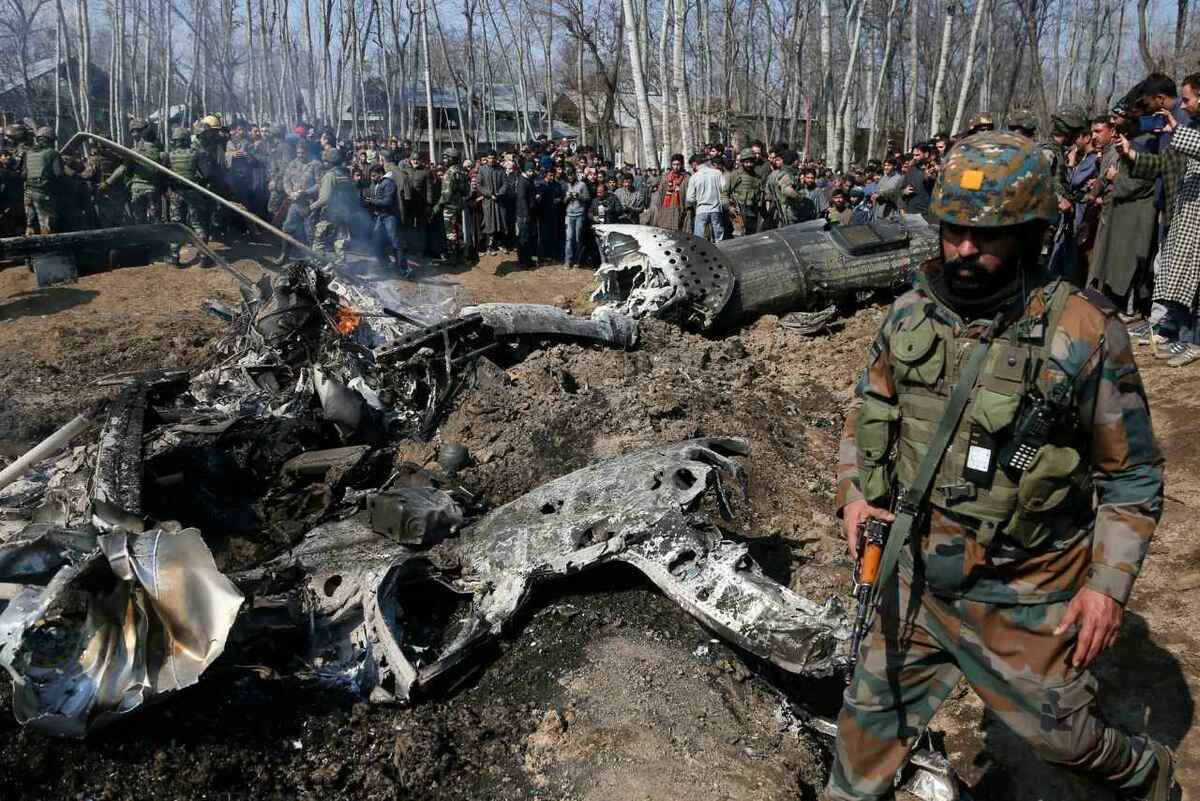
US President Donald Trump announced on Saturday that India and Pakistan had agreed to an immediate, comprehensive ceasefire, following US mediation, bringing an end to days of escalating hostilities during which the two nuclear-armed neighbours exchanged missile attacks, drone strikes, and artillery shelling, in the worst crisis in decades.


Trump thanks India and Pakistan

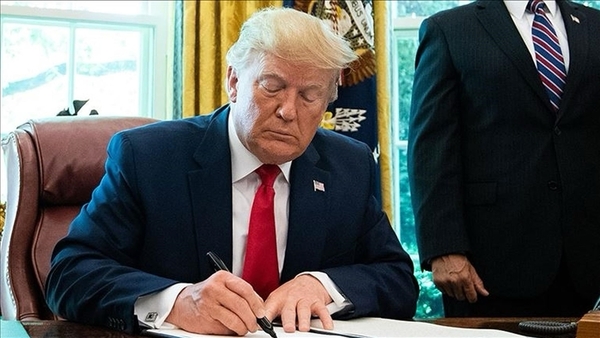
"After a long night of talks brokered by the United States, I am pleased to announce that India and Pakistan have agreed to an immediate, comprehensive ceasefire," Trump said in a post on his Truth Social platform, praising the two countries for "using common sense and great intelligence."

Pakistani Foreign Minister Ishaq Dar announced via Twitter on Saturday that Islamabad and New Delhi had agreed to a "ceasefire with immediate effect," following Trump's announcement.

The US announcement came after Pakistan and India exchanged strikes and attacks on each other's military installations on Saturday, prompting the United States to call on the two neighbors to begin talks and defuse the escalating conflict.

ARAB AND WORLD

Sat 10 May 2025 2:32 pm - Jerusalem Time

Jerusalem Post: Trump may recognize the state of Palestine during the upcoming Saudi summit

The Jerusalem Post, citing the American news agency The Media Line, reported that President Donald Trump is likely to announce US recognition of the State of Palestine during the Arab Summit in Saudi Arabia.


According to the newspaper, a Gulf diplomatic source, who declined to reveal his identity or position, revealed to The Media Line that "President Donald Trump will issue a declaration regarding the State of Palestine and American recognition of it, and that a Palestinian state will be established without the presence of Hamas."


The source added, "If an American declaration is issued recognizing the State of Palestine, it will be the most significant statement changing the balance of power in the Middle East, and more countries will join the Abraham Accords."


The source confirmed that economic agreements will certainly be present, but many of them have already been announced, and we may witness the exemption of Gulf countries from customs duties.


For his part, Ahmed Al-Ibrahim, a former Gulf diplomat, told The Media Line: "I don't expect the issue to be related to Palestine. Egyptian President Abdel Fattah el-Sisi and Jordanian King Abdullah II were not invited, as they represent the two countries closest to Palestine, and it would have been important for them to attend any event like this."


Al-Ibrahim continued, "There will be major deals coming, perhaps similar to what happened at the 2017 Gulf-US Summit, where Saudi Arabia announced deals exceeding $400 billion. Let's not forget that the UAE announced investments in the US exceeding $1 trillion, while Saudi Arabia announced investments exceeding these amounts."


US President Donald Trump is scheduled to visit Saudi Arabia next week, marking his first visit to the Middle East since assuming his second presidential term in January 2025.


Trump's Middle East tour, from May 13 to 16, will also include Qatar and the United Arab Emirates. Last Saturday, Axios reported, citing a US official and Arab officials, that Trump plans to participate in a summit with Gulf leaders during his visit to Saudi Arabia.

PALESTINE

Sat 10 May 2025 2:29 pm - Jerusalem Time

The Israeli army announced that 9 soldiers were injured in an explosive device explosion in northern Gaza.

The Israeli army announced that nine soldiers were injured after an explosive device exploded in the Gaza Strip.


The occupation army added that among those injured by the explosive device explosion were two officers with the rank of colonel and lieutenant colonel.


Earlier today, the Hebrew website Hadashot Be'Zaman reported that a serious security incident occurred in the Shuja'iyya neighborhood, east of Gaza City, during the early hours of the morning, followed by the evacuation of Israeli soldiers by military helicopters, according to the Palestinian Information Center.


The website confirmed the evacuation of a number of soldiers and officers injured by an anti-tank missile fired at the Shuja'iyya neighborhood, and that helicopters carried out evacuation operations to Tel Hashomer Hospital.

He noted that an Israeli military vehicle was directly targeted by an anti-tank missile, resulting in a high number of casualties. The Israeli army also dispatched helicopters to the Shuja'iyya neighborhood at the time of the incident and fired artillery shells.

Video footage showed the moment a number of wounded soldiers were evacuated by helicopter from Shuja'iyya, early this morning.

PALESTINE

Sat 10 May 2025 12:20 pm - Jerusalem Time

Israeli occupation continues its aggression on the city of Tulkarm for the 104th consecutive day.

The Israeli occupation forces continue their aggression on the city of Tulkarm and its camp for the 104th consecutive day, and on the Nour Shams camp for the 91st day, amid an ongoing escalation in the field, including repeated raids, arrests, and home evictions.

Our correspondent said that the occupation forces are continuing their escalation on the ground in the Tulkarm and Nur Shams camps, where several explosions were heard during the night and early morning hours inside them, coinciding with the heavy firing of live ammunition, sound bombs, and the launching of drones, amid a state of strict siege that prevents us from knowing the precise details of what is happening inside the two camps.

Over the past week, Nur Shams camp has been subjected to widespread demolition of residential buildings in the neighborhoods of Al-Manshiya, Al-Maslakh, Al-Jami', Al-Eyada, and Al-Shuhada. This comes as part of the occupation's plan to demolish 106 homes and residential buildings in Tulkarm and Nur Shams camps. Tension remains high in the camp, with residents anticipating a new wave of demolitions.

In a related development, intensive Israeli military activity was observed on the city's streets at night, particularly in the eastern neighborhood, specifically in the areas of Al-Salam Roundabout, Al-Maslakh Roundabout, Abu Safiya Roundabout, Al-Haddadin Street, and the vicinity of the Martyr Thabet Thabet Governmental Hospital.

Local sources reported that the occupation forces forced residents of the eastern neighborhood to evacuate their homes, which belong to the Abu Safia and Abu Aqel families and are located adjacent to the Abu al-Foul neighborhood in Tulkarm camp. They also threatened to demolish the wall of the memorial to the martyr Amir Abu Khadija if it was not removed by the residents. The occupation forces assassinated the martyr Abu Khadija on March 23, 2023.

The occupation forces also arrested Ibrahim Al-Sheikh Ali from inside a café in the Al-Maslakh roundabout in the eastern neighborhood, and took him to an unknown location.

In the Dhnaba suburb, east of the city, occupation forces deployed around the Sharia School and Halima Khreisha School, where they searched vehicles and checked the identities of their passengers. They also opened fire on surveillance cameras in the area.

Meanwhile, the city is witnessing intense, 24-hour activity by occupation forces, patrolling the main streets, particularly Courts Street, the central market, and Shuweika Roundabout, obstructing the movement of citizens and vehicles, provocatively honking their horns and deliberately driving against traffic.

The occupation forces also continue to seize homes and residential buildings on Nablus Street and the adjacent northern neighborhood, converting them into military barracks after forcibly evacuating their residents. They have stationed their vehicles in the vicinity, while the occupation forces have continued to seize some buildings for more than two months.

The ongoing Israeli aggression and escalation against the city of Tulkarm and its two refugee camps resulted in the deaths of 13 citizens, including a child and two women, one of whom was eight months pregnant. Dozens were also injured and arrested, and the infrastructure, homes, shops, and vehicles were completely and partially demolished, burned, vandalized, looted, and robbed.

The aggression also resulted in the forced displacement of more than 4,200 families from the Tulkarm and Nur Shams camps, comprising over 25,000 citizens. It also resulted in the complete destruction of more than 400 homes and the partial destruction of 2,573 others. Furthermore, the entrances and alleys were sealed off with earth mounds, transforming them into isolated areas devoid of any sign of life.

PALESTINE

Sat 10 May 2025 12:17 pm - Jerusalem Time

OCHA: Palestinians are dying in Gaza amid the third month of an Israeli blockade.

The United Nations Office for the Coordination of Humanitarian Affairs (OCHA) confirmed on Saturday that "Palestinians are dying in the Gaza Strip, which has been under a complete Israeli blockade for the third consecutive month," as part of a genocide that has been ongoing for more than a year and a half.

The OCHA office said in a statement posted on its X account that 70% of Palestinians in the Gaza Strip are located within areas where Israeli forces are present, under evacuation orders, or both.

He stressed that the United Nations and its partners are ready to intensify aid to the Gaza Strip as soon as the Israeli blockade, which has been in place since March 2, is lifted.

Describing the situation in the Gaza Strip, OCHA said: "Palestinians are dying under a complete Israeli blockade for the third consecutive month."

PALESTINE

Sat 10 May 2025 7:02 am - Jerusalem Time

Haaretz: Sde Teiman is a sadistic torture camp. Dozens entered it alive and left it in bags.

An Israeli soldier who served at the Sde Teiman detention camp revealed the horrific conditions faced by prisoners from the Gaza Strip inside the prison, noting that the camp was described as a "cemetery," even by its officials, according to what was reported from "higher levels."


This came in an anonymous article published in the Israeli newspaper Haaretz, written by a soldier who served in Sde Teiman and gave testimony in an investigation broadcast by the Israeli Broadcasting Authority as part of the "Real Time" program, which focused on the rape of a prisoner. He noted that the investigation did not reveal the atrocities that took place in Sde Teiman.

He said in his article: "The Sde Teiman camp, as anyone who has been there knows, is a sadistic torture camp. Dozens of detainees entered it alive and left it in bags. There are testimonies from guards, doctors, and detainees." He added: "I saw hell there."

He continued: "I saw a detainee die before my eyes. He was sitting next to other detainees, covering his face with a cloth. Suddenly, we realized he was dead. I saw the commander of the facility gather the staff and try to calm the daily routine of abuse, violence, and the inhumane conditions in which the prisoners were held. I heard him say, 'They tell me from above that they call Sde Teiman the cemetery.'"

The soldier continued his testimony, saying, "I saw people enter this facility with war wounds, then be left to starve for weeks without any medical care. I saw them urinate and defecate on themselves because they were not allowed to use the bathroom. I still remember the smell to this day. Many of them were not fighters, just Gazans who were detained for interrogation and then released after being severely abused. It is no wonder some of them died there, and it is a miracle that some survived."

The writer explained that he had submitted his testimony to the Israeli Broadcasting Authority, including many details, but that it was not presented in the broadcast version of "Real Time."

He concluded by saying: “Everyone who served in Sde Teiman knows the truth: about the torture, about the surgeries performed without anesthesia, and about the horrific sanitary conditions. Yet none of this was broadcast. What happened there is no secret, but most Israelis know nothing about it, because the Israeli media largely ignored it. Palestinians are being taken out of our detention centers in bags, and most of those around me have never heard about it until now.”

PALESTINE

Sat 10 May 2025 6:58 am - Jerusalem Time

Netanyahu: The destruction of Gaza aims to displace people.

In a moment of anger and outrage, Israeli Prime Minister Benjamin Netanyahu admitted that he was waging a war that could turn into a historic opportunity to eliminate a huge number of Palestinians. Speaking to a group of reserve army officers, he said that the destruction in Gaza was not a response to Palestinian "terrorism" but rather part of a deliberate plan aimed at displacing the people of the Strip.

This came after the officers criticized the Netanyahu government's policies, complaining about a war that "threatens the lives of the kidnapped soldiers and has no strategic goal other than to serve your party and personal interests." Netanyahu became enraged at them, banging his fist on the table and saying, "We are destroying Gaza completely, and they should not have a safe place to return to and live... They must leave," according to Haaretz.

In the same context, a transcript of the Knesset Foreign Affairs and Defense Committee revealed that members of the ruling right-wing party justified the policy of systematically starving the population of the Gaza Strip and preventing them from receiving medicine.

Meanwhile, the Israeli army said yesterday that it had intercepted a Houthi missile launched from Yemen and vowed to respond forcefully.

PALESTINE

Sat 10 May 2025 6:54 am - Jerusalem Time

Washington's aid distribution plan in Gaza: Why is it facing rejection and skepticism?

New details are emerging regarding the US plan to distribute aid to Gaza, sparking controversy over its effectiveness and raising questions about its true objectives and meaning.

Details revealed by US Ambassador to Israel Mike Hagabi reopen the debate after he revealed information related to the so-called "Gaza Humanitarian Foundation."

The announced document stipulates the exclusion of Hamas from the aid plan and the participation of the Israeli army in securing the perimeter of four aid distribution centers, but not its presence inside them. Each center is designated to serve 300,000 residents of the Gaza Strip.

Reactions rejecting the American plan

Condemning the move, there were successive reactions from UN agencies operating in the Gaza Strip and the Palestinian NGO Network. The network considered it a form of control and domination of the Strip and an exploitation of its humanitarian situation. Meanwhile, the United Nations Relief and Works Agency for Palestine Refugees (UNRWA) called for the opening of the crossings, stressing the impossibility of implementing the aid distribution mechanism without it.

UNICEF, through its spokesperson, considered that using humanitarian aid as a bait to force people to flee, especially from the north to the south, would leave them facing the prospect of death or displacement.


For its part, Hamas rejected US Ambassador Mike Hagaby's accusations of controlling aid, stating, "Every detail of the plan he presented reflects a new form of justification for the involvement of two million Palestinians in plans to displace them from the Gaza Strip after months of a brutal war of division." It rejected the militarization of aid and demanded the lifting of the blockade.

Fear of displacement of the population of the north

In this context, Jonathan Crickx, Head of Communications and Spokesperson for UNICEF, believes that the plan does not meet essential elements such as neutrality and objectivity.

Speaking to Al Arabiya TV from Rafah, Kriks expressed his fear that Gazans would be forced to move from north to south, noting that the plan does not include establishing aid distribution centers in the northern Gaza Strip.

"Thousands of Gazans, including children, will be forced to relocate," he said. "How will thousands of orphans receive aid? How will a mother carry food parcels and walk for several kilometers with her children?" he asked.

Krix confirms that UN organizations are still working in Gaza, where a large number of children suffer from severe malnutrition and therefore need a varied diet to treat them.

He points out that the humanitarian situation in the Gaza Strip is catastrophic, with food supplies unavailable due to the imposed blockade, and the few available supplies being sold at extremely high prices that families cannot afford.

The UNICEF spokesperson also noted that UN organizations know little about what the US plan calls the "Gaza Humanitarian Foundation." He said, "We have read what was published in the news reports."

"Short-term plan"

For his part, US Deputy National Security Advisor Mark Pfeiffle believes that bringing aid into the Gaza Strip

"Israeli plan"

Meanwhile, writer and political researcher Wissam Afifa believes the US plan is shrouded in mystery, noting that it is essentially an Israeli plan proposed weeks ago and aimed at paving the way for the displacement of Palestinians from the Gaza Strip.

Afifa explains that the goal of the Israeli plan was to place thousands of Palestinians in specific camps and feed them in preparation for the displacement process.

Afifa pointed out that there is a security mechanism controlling aid, believing that the greatest danger lies in the legalization of starvation. He also noted that the clustering of aid centers in the southern Gaza Strip is an Israeli demand.

He also believes that the institutions overseeing the aid distribution plan are "hybrid institutions," as their licenses were created in the United States and then transferred to Switzerland in an attempt to legitimize them. He points out that those in charge of the plan are former officers, emphasizing that this reflects the military dimension of the aid plan. He notes that the plan's trajectory is a "security track," as food will only reach the Strip via the Kerem Shalom crossing.


Gaza poses a major challenge as the humanitarian crisis worsens and hunger spreads.


Speaking to Al Arabiya TV from Washington, he said, "What the United States is trying to do is find a short-term plan to provide food to the Palestinians without letting the aid fall into the hands of Hamas."

He added, "US President Donald Trump is seeking a solution to the hunger crisis while trying to negotiate with Hamas for a second phase of the ceasefire agreement in the Gaza Strip."


OPINIONS

Sat 10 May 2025 6:49 am - Jerusalem Time

This Israeli government is not our ally.

Thomas Friedman


Dear President Trump,

There are very few initiatives you've taken since taking office that I agree with—except those related to the Middle East. Your travel there next week and your meeting with the leaders of Saudi Arabia, the United Arab Emirates, and Qatar—and your lack of plans to meet with Prime Minister Benjamin Netanyahu in Israel—suggest to me that you're beginning to recognize a fundamental truth: This Israeli government is acting in ways that threaten core American interests in the region. Netanyahu is not our friend.

Yet he thought he could make you his victim. That's why I admire how you signaled to him, through your independent negotiations with Hamas, Iran, and the Houthis, that he had no leverage over you—that you would not be his victim. This clearly panicked him. I have no doubt that the Israeli people, by and large, still consider themselves steadfast allies of the American people, and vice versa. But this ultranationalist, messianic Israeli government is no ally of America. It is the first government in Israel's history that does not prioritize peace with more of its Arab neighbors, nor the benefits that enhanced security and coexistence would bring. Its priority is annexing the West Bank, expelling the Palestinians of Gaza, and rebuilding Israeli settlements there.

The idea that Israel has a government that no longer acts as an ally of America, and should not be considered one, is a shocking and bitter pill for Israel's friends in Washington to swallow—but they must swallow it.

Because the Netanyahu government, in pursuing its extremist agenda, is undermining our interests. To your credit, you have not allowed Netanyahu to bypass you as he did other American presidents. It is also essential to defend the American security architecture built by your predecessors in the region. The current U.S.-Arab-Israeli alliance structure was established by Richard Nixon and Henry Kissinger after the 1973 October War, with the goal of excluding Russia and making America the dominant global power in the region, a process that has served our geopolitical and economic interests ever since. Nixon and Kissinger’s diplomacy crafted the 1974 disengagement agreements between Israel, Syria, and Egypt. These agreements laid the foundations for the Camp David Peace Accords, which paved the way for the Oslo Peace Accords. The result was a region dominated by America, its Arab allies, and Israel.

But this entire structure was largely based on a US-Israeli commitment to a two-state solution—a commitment you yourself sought to reinforce in your first term with your own plan for a Palestinian state in Gaza and the West Bank alongside Israel—on the condition that the Palestinians agree to recognize Israel and accept that their state would be demilitarized. Yet this Netanyahu government prioritized the annexation of the West Bank when it came to power in late 2022—long before Hamas’s brutal invasion on October 7, 2023—rather than the US security and peace architecture for the region.

For nearly a year, the Biden administration has been begging Netanyahu to do one thing for America and Israel: agree to open a dialogue with the Palestinian Authority on a two-state solution one day with a reformed government—in exchange for Saudi Arabia normalizing relations with Israel. This would pave the way for Congress to pass a US-Saudi security treaty to counterbalance Iran and thwart China.

Netanyahu refused to do so, because Jewish extremists in his government said that if he did, they would bring down his government—and with Netanyahu on trial on multiple corruption charges, he could not give up the protection of being prime minister to prolong his trial and avoid a possible prison sentence.

Therefore, Netanyahu placed his personal interests above those of Israel and America. Normalization of relations between Israel and Saudi Arabia, the most important Islamic power—based on an effort to forge a two-state solution with moderate Palestinians—would have opened the entire Muslim world to Israeli tourists, investors, and innovators, eased tensions between Jews and Muslims worldwide, and consolidated the American advantages in the Middle East that Nixon and Kissinger had established for another decade or more.

After Netanyahu persuaded everyone for two years, reports emerged that the Americans and Saudis had decided to abandon Israel's participation in the deal—a real loss for both Israelis and the Jewish people. Reuters reported Thursday that "the United States is no longer demanding that Saudi Arabia normalize relations with Israel as a condition for progress in civilian nuclear cooperation talks."


And now things could get worse. Netanyahu is preparing to re-invade Gaza with a plan to mobilize the Palestinian population there.

In a tight corner, bordered by the Mediterranean Sea on one side and the Egyptian border on the other, while it is rapidly and extensively advancing its de facto annexation of the West Bank, Israel (and especially its new chief of staff, Eyal Zamir) will incur more war crimes charges, which Bibi expects your administration to protect him from.

I have absolutely no sympathy for Hamas. I believe it is a sick organization that has done grave damage to the Palestinian cause. It bears grave responsibility for the humanitarian tragedy in Gaza today. The Hamas leadership should have released its hostages and left Gaza long ago, removing any pretext for Israel to resume fighting. But Netanyahu's plan to reconquer Gaza is not aimed at creating a moderate alternative to Hamas, led by the Palestinian Authority, but at a permanent Israeli military occupation, the unstated goal of which is to pressure all Palestinians to leave. This is a recipe for permanent rebellion—a Vietnam on the Mediterranean. At a conference on May 5 sponsored by the religious Zionist newspaper Besheva, Bezalel Smotrich, Israel's far-right finance minister, spoke as if he didn't care: "We are occupying Gaza to stay. There will be no more entry and exit." The local population will be squeezed into less than a quarter of the Gaza Strip.

As Haaretz military expert Amos Harel noted: “Since the army will try to minimize casualties, analysts expect it to use extremely aggressive force, which will cause significant damage to Gaza’s remaining civilian infrastructure. The displacement of residents to humanitarian camps, coupled with the ongoing shortage of food and medicine, could lead to further mass civilian deaths… and more Israeli commanders and officers could face personal legal action.”

In fact, if implemented, this strategy could not only lead to more war crimes charges against Israel, but would also threaten the stability of Jordan and Egypt. These two pillars of America's Middle East alliance fear that Netanyahu will seek to displace Palestinians from Gaza and the West Bank to their own countries, which would undoubtedly fuel instability that would spill over their borders even if the Palestinians did not do so.

This hurts us in other ways. As Hans Weksel, a former senior policy advisor at U.S. Central Command, told me, "The more hopeless things seem for Palestinian aspirations, the less willing there is in the region to expand U.S.-Arab-Israeli security integration, which would have provided long-term advantages over Iran and China—and without requiring comparable U.S. military resources in the region to sustain it."

Regarding the Middle East, you have some good independent instincts, Mr. President. Follow them. Otherwise, you need to prepare yourself for this urgent reality: Your Jewish grandchildren will be the first generation of Jewish children to grow up in a world in which the Jewish state is considered a pariah state. I'll leave you with the words of a Haaretz editorial from May 7: "On Tuesday, the Israeli air force killed nine children, aged 3 to 14. ... The IDF stated that the target was a 'Hamas command and control center,' and that 'steps were taken to reduce the risk of harm to uninvolved civilians.' ... We can continue to ignore the number of Palestinians in the Strip killed—more than 52,000, including some 18,000 children; to cast doubt on the credibility of the numbers; to employ all the mechanisms of repression, denial, indifference, distancing, normalization, and justification. None of this will change the bitter truth: Israel killed them. It was our hand that did it. We must not turn a blind eye. We must wake up and shout at the top of our lungs: Stop the war."


From the New York Times


OPINIONS

Sat 10 May 2025 6:48 am - Jerusalem Time

Trump's plan... under a humanitarian cover

Baha Rahal


The Trump plan, whose outlines are beginning to emerge despite not being officially announced, heralds a new era reminiscent of Iraq after the fall of Saddam Hussein. Trump intends to appoint a Bremer-style military commander for the Gaza Strip, named David Beasley. Beasley is an American general who will preside over the administration of the Gaza Strip for an indefinite period. Beasley will enjoy international and Arab support and the capabilities that will enable him to govern Gaza under promises of reconstruction, aid deliveries, and rebuilding what was destroyed by the war of genocide there.

The plan, which ostensibly promises to lift the siege, allow aid in, and halt the war of extermination, conceals a deeper reality, even more dangerous than expected, upon closer examination. Trump is the author of the idea of expelling Gaza's residents and of theories about seizing control of Gaza, including its underground and aboveground areas, and transforming it into an American investment zone and a tourist destination with multiple resorts and facilities, while displacing the indigenous population under humanitarian pretexts and false claims. This is the real danger being promoted as the sole Trumpian lifeline, extended to rescue the people of Gaza from the threat of death by starvation and bombing.

It's a plan promoted as the only possible solution, a lifeline, without which Netanyahu and his army would have continued their brutality against the people, continuing their killing and starvation. Given the famine, the failure of the Arab plan, and indeed the failure of any other plan to confront Trump's plan, the real danger lies in its content, not in slogans cloaked in a humanitarian guise. Trump is the one who said he intends to turn Gaza into a "Riviera," vowed that he would own it, and deemed it uninhabitable, urging the people of Gaza to leave and live in another country. As is well known, the deal-maker, Trump, aspires to more than that, so that his control of Gaza does not conflict with his regional project known as the Abraham Accords and the normalization plan.

In light of this complex landscape, it appears that the Trump plan is not just a fleeting initiative, but rather a long-term strategic project aimed at redrawing the map of Gaza politically, geographically, and economically. It is considered the most dangerous threat to the two-state solution and the establishment of a Palestinian state on the June 4, 1967 borders. It is the most dangerous plan, under the pretext of humanitarianism and an apparent disagreement with the occupation government. Given the state of Arab weakness, the widespread hunger in Gaza, and the Palestinian inability to move forward towards unity and partisan and factional partnership that would salvage the reality, the Trump plan portends an unknown fate and a bleak future.


OPINIONS

Sat 10 May 2025 6:48 am - Jerusalem Time

Trump's fantasy and speculation about the upcoming announcement

Jihad Harb


The media is awash with leaks and news, speculating about what US President Donald Trump will announce this evening or early next week ahead of his Middle East visit. Various headlines, contradictory proposals, and projects range from a partial solution related to the delivery of aid without a ceasefire to a comprehensive agreement spanning several years. All of this news suggests, in my opinion, that there are four possible scenarios that could be present in Trump's anticipated announcement, a reality TV fantasy practiced by the US president and used in his interviews with world leaders, as well as in his announcements and deals. The first scenario is to simply announce a specific mechanism for distributing food to Palestinians in the Gaza Strip, one that aligns somewhat with Israeli proposals and plans. This scenario is supported by the confidential statements made by the new US ambassador to Israel, Mike Huckabee, and the proposed production of a new food distribution institution headed by American David Beasley.

The second scenario involves reaching a prisoner exchange agreement with modifications related to the number and nature of the prisoners, while ensuring the release of Israeli citizen Idan Alexander, who holds American citizenship, and the entry of aid in the same manner as the first phase of the ceasefire agreement signed on January 17, as a transitional period allowing for the transition to the second phase of the ceasefire agreement signed under US auspices. This is supported by the proposal of US envoy Steve Witkoff and the Egyptian proposal, which also extends the US president's desire to stop the war.

The third scenario is announcing American intervention in the Gaza Strip by announcing the appointment of an American administrative governor to administer the Gaza Strip. This would involve forming a government of Palestinian figures to govern the Strip, with Arab countries assuming security responsibility for the demilitarization of the Gaza Strip. Although this proposal has been circulated behind closed doors and through multiple communications, the Arab Republic of Egypt's proposal to form a community support committee (a "local government"), followed by the Cairo Summit declaration on the reconstruction of the Gaza Strip and its civil and security arrangements, constitute an alternative to this scenario.

The fourth scenario involves reaching a "comprehensive" solution related to a relatively long-term truce of five or seven years, including multiple security aspects such as refraining from arms smuggling and manufacturing, the reconstruction of the Gaza Strip, and removing Hamas from power or transforming it into a political party without a military wing. This scenario is supported by Hamas's proposal and the US administration's flexibility in discussing such options.

The realization of any of these scenarios is linked to several inherently contradictory factors. These include the US president's desire to achieve political and economic gains abroad as quickly as possible, his way of thinking, and his personal nature, such as his reluctance to bear the financial burdens of any possible solution or potential scenario. The US president's pragmatism, such as concluding an agreement with Hamas similar to what happened with the Houthis in Yemen, announcing the US administration's support for aid in the Saudi civil nuclear program, initiating negotiations with Iran, and attempting to reach an agreement with the Taliban in 2020, all for the sake of America First. The US president's personal nature, which does not tolerate direct opposition or evasion, may lead to Netanyahu's downfall, following his obstruction of the implementation of the truce agreement sponsored by Trump at the beginning of the year after its first phase was completed. Netanyahu's attempt to obstruct the possibility of announcing the expansion of the Abraham Accords, which he desires during his Middle East visit, is a personal pledge he made to his constituents to stop the war in Gaza, achieve peace, and support stability in the Middle East, on the path to the Nobel Peace Prize.

These include the balance of power on the ground in the Gaza Strip and the Israeli government's ability to achieve its declared goals of eliminating Hamas and its rule and recovering Israeli prisoners, versus Hamas's ability to prolong the war and continue fighting. The interests of regional countries such as Egypt, Jordan, and Saudi Arabia also conflict with Israel's desire to occupy the Gaza Strip and displace its population. In addition, the positions of regional countries and blocs and their international commitments, such as the European Union, which will begin discussing Israel's commitment to the terms of their partnership agreement, which is of great importance to Israel in light of the famine afflicting Palestinians in the Gaza Strip as a result of Israeli measures.

Thus, the fantasy of presidential announcements, a reality TV-style event in the White House, does not allow for any prediction of the expected announcement regarding the Gaza Strip and the direction it might take or be achieved. In other words, with Trump, you cannot predict, anticipate, or even speculate, or apparently close your eyes.


OPINIONS

Sat 10 May 2025 6:46 am - Jerusalem Time

Urgent political transformations


Hamada Faraana


Striking political transformations are taking place in our Arab region. These are neither formal nor procedural, but are moving toward influencing the entire political landscape.

Saudi Arabia, with Chinese mediation, conducted negotiations with Iran, mitigating or reducing the state of conflict and intensity between the two countries, and imposing a state of balance in the forms of interaction between the two capitals, in the service of their common interests. The result of this is that Saudi Arabia did not submit to ideas and proposals for normalizing relations with the Israeli colony, and stipulated that this be done through responding to the interests of the Palestinian people, the two-state solution, and the establishment of an independent state. This means the emergence of political independence, freedom of choice, and self-confidence in Riyadh.

The US President decided to open negotiations with Iran without prior consultation with Netanyahu, who was surprised by the start of the US-Iranian negotiations. These negotiations included a series of bilateral meetings in several countries, with the goal of reaching agreements that were being arranged and formulated.

The United States reached a ceasefire agreement with the Yemenis without Netanyahu's knowledge and without prior consultation with the Israeli colonial institutions.

The Qatari Prime Minister held talks in Washington, and it appears that some formula has been agreed upon regarding Palestine and a ceasefire in the Gaza Strip. Trump calls Netanyahu to update him on what has been agreed upon. Netanyahu's Minister of Strategic Affairs arrives in Washington and meets with President Trump. News is circulated that Trump has severed ties with the head of the colony's government, due to his failure to respond to the ceasefire plan and the release of prisoners.

Trump dealt Netanyahu two blows: 1- Opening negotiations with Iran, 2- Reaching a ceasefire agreement with the Houthis in Yemen. He also previously opened direct negotiations with Hamas, without the knowledge of the Israelis, but these negotiations were unsuccessful at the time and may happen again in the future.

Washington is threatening Tel Aviv that it will negotiate with Hamas without Israeli participation, making the situation even more tense. This is despite the strong support Washington has provided to the colony since the beginning of the October War against the Gaza Strip, in response to the Palestinian Al-Aqsa Flood Initiative, both under former President Biden and current President Trump.

The US President will arrive in our Arab region next week, visiting three Gulf Arab capitals. He hopes to reap financial gains from arms sales and attract more investment to these capitals in the US market.

The merchant Trump seeks financial gains for the Americans, and is not restrained by the American policies that support the colony. He wants to say and clarify to all those who fall into narrow-mindedness that the colony's policy controls American policy. He wants to clarify that the facts and truths are completely the opposite: that the colony implements US policy and serves its interests, that Tel Aviv is a tool serving American interests, and that the colony cannot undertake an action that Washington does not want and that does not serve American interests and influence in the Arab world.

Clear, dialectical transformations are taking place for those seeking to scrutinize, understand, and comprehend, and the coming days are open to many variables based on these transformations.


ARAB AND WORLD

Fri 09 May 2025 9:22 pm - Jerusalem Time

Xinhua Commentary: Pass the torch of peace from generation to generation

History is a mirror, and only by drawing lessons from history can the world avoid repeating past calamities.

BEIJING, May 7 (Xinhua) -- Eighty years ago, the victory of the World Anti-Fascist War marked a turning point in human history, opening a new chapter in building a better international order and pursuing lasting peace.

Today, the world has undergone dramatic transformations. Technology has connected distant corners of the globe, and globalization has brought nations closer than ever before. Yet, alongside these advances, new and complex challenges have emerged. Global uncertainty is rising, marked by power politics, unilateralism and division in ever-evolving forms.

As the world reflects on the lessons of history, humanity must confront some urgent questions: How can we safeguard the hard-won peace? How can we collectively address pressing global challenges? And most importantly, how can we forge a shared future for all?

As noted by Chinese President Xi Jinping at the general debate of the 70th session of the United Nations General Assembly back in 2015, history is a mirror, and only by drawing lessons from history can the world avoid repeating past calamities.

"We should view history with awe and human conscience. The past cannot be changed, but the future can be shaped. Bearing history in mind is not to perpetuate hatred. Rather, it is for mankind not to forget its lesson. Remembering history does not mean being obsessed with the past. Rather, in doing so, we aim to create a better future and pass the torch of peace from generation to generation," Xi said then.


VICTORY OF THE JUST

On the night of May 8, 1945, Germany signed the surrender document in Karlshorst, Berlin, marking the end of World War II (WWII) in Europe. Meanwhile in Asia, China's final major campaign against Japan -- the Battle of Western Hunan -- reached its decisive phase.

Japan's surrender aboard the USS Missouri in Tokyo Bay on Sept. 2, 1945, concluded WWII, humanity's deadliest conflict. More than 80 countries and regions, involving roughly 2 billion people, were drawn into the war, with the total casualties at over 100 million and economic losses exceeding 4 trillion U.S. dollars. Against fascist aggression, more than 50 countries, including China and the Soviet Union, formed a united front.
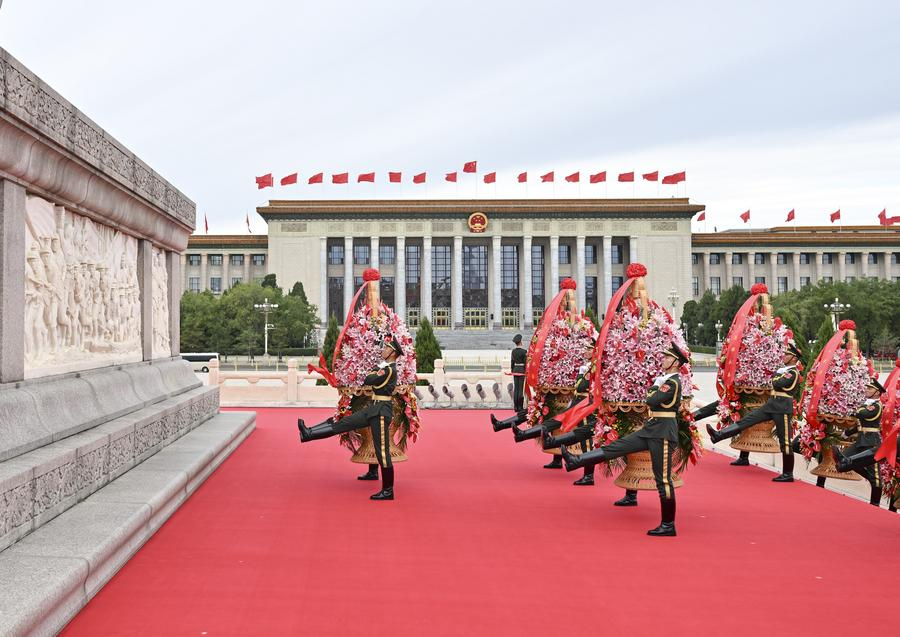
A ceremony presenting flower baskets to fallen heroes to mark Martyrs' Day is held at Tian'anmen Square in Beijing, capital of China, Sept. 30, 2024. (Xinhua/Yin Bogu)


The world will never forget that as the main theater in the East of the World Anti-Fascist War, China made a national sacrifice of over 35 million casualties in its fight against the majority troops of Japanese militarism. During 14 years of fierce anti-fascist fighting, China engaged and tied down over two-thirds of the Japanese Army, inflicting 70 percent of Japan's wartime military casualties. These efforts significantly contributed to the victory of the World Anti-Fascist War.

People from different countries stood with China in the common struggle. China will always remember the international support it received. For example, the U.S. "Flying Tigers" opened up the Hump Route for transporting emergency supplies; foreign doctors such as Norman Bethune from Canada and Dwarkanath Kotnis from India risked their lives to save others; German businessman John Rabe helped protect civilians during the Nanjing Massacre in 1937.

Equally significant was the Soviet Union's sacrifice and contribution on the European theater of World War II. From the Battle of Moscow to the Battle of Stalingrad and the Battle of Kursk, the Soviet people bore tremendous hardship and played a decisive role in defeating Nazi troops.
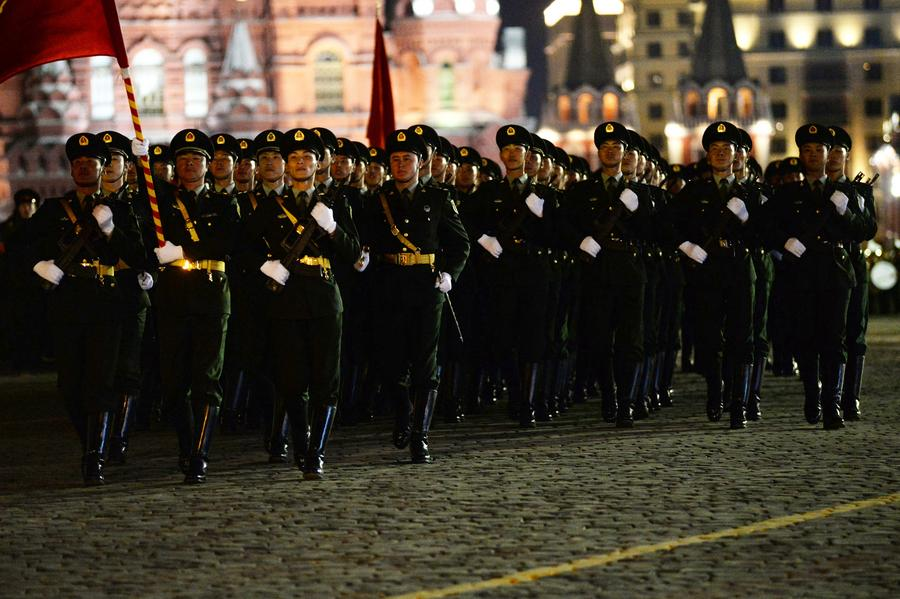
China's guards of honor take part in the rehearsal of the Victory Day parade in Moscow, Russia, April 29, 2015. (Xinhua/Pavel Bednyakov)


During the global anti-fascist war, China and the Soviet Union supported each other. Soviet air force volunteers fought alongside Chinese soldiers, during which over 200 of them lost their lives in China. Many Chinese, including Mao Anying, late Chinese leader Mao Zedong's eldest son, engaged in fighting against Nazi troops during the toughest time of the Soviet Union's Great Patriotic War. This shared sacrifice forged a deep bond between the two sides.

The victory of the anti-fascist war shattered attempts of the fascists and militarists to dominate the world, ended the colonial divisions of the world by imperial powers, and laid the foundation for a new vision of global peace and cooperation.


REBIRTH OF THE WORLD

This year also marks the 80th founding anniversary of the United Nations. The opening words of the UN Charter -- "We the peoples of the United Nations determined to save succeeding generations from the scourge of war, which twice in our lifetime has brought untold sorrow to mankind" -- stand as a powerful testament to the hard-won lessons of two catastrophic world wars.

More than just a historical reflection, these words convey humanity's ardent desire for lasting peace.

Born from the ashes of World War II, the United Nations represents humanity's efforts to move away from a world governed by the law of the jungle and a world order of Western-dominated hierarchies.

From the Westphalian and Vienna systems to the Versailles-Washington system, the old order divided the world into dominant powers, and nations they colonized and oppressed.

In a historic shift, the UN Charter enshrines the principle of sovereign equality, affirming for the first time in international law that all nations, irrespective of size, strength or wealth, are equal. That became the cornerstone for the postwar international order.
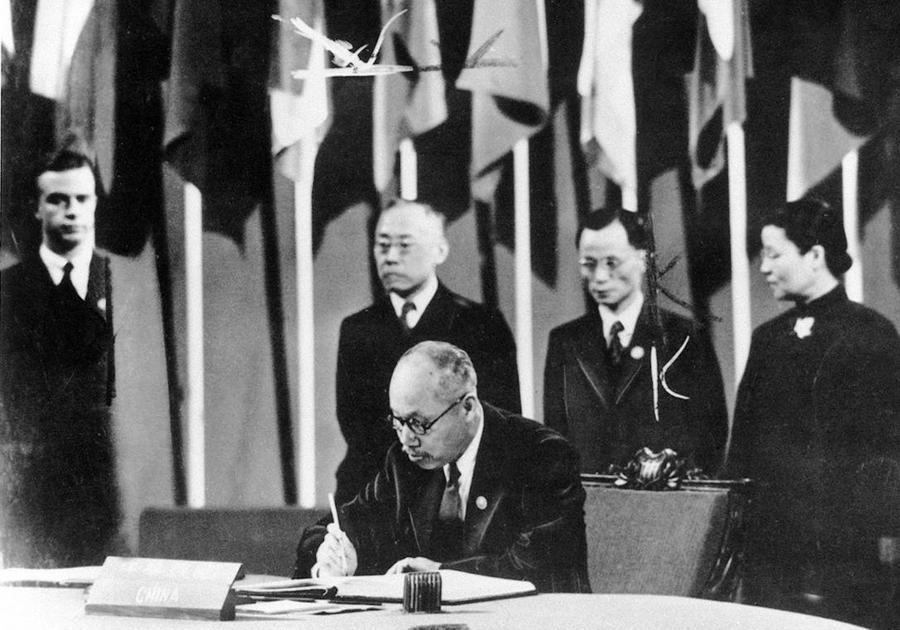
File Photo taken on June 26, 1945 shows Dong Biwu (front), representative of the Communist Party of China, signing the Charter of the United Nations, San Francisco, U.S. (Xinhua)


Anchored in the UN Charter, principles such as sovereign equality, non-interference in other's internal affairs, peaceful settlement of disputes and prohibition of the use or threat of force have evolved into bedrock norms of international relations. The UN system's creation has established not merely institutional platforms for cooperation, but transformed the very architecture of global governance.

Under the guidance of the spirit of the UN Charter, national liberation movements swept across the globe. Many countries in Asia, Africa and Latin America cast off the shackles of colonialism and gained national independence and sovereignty.

International law thus began to genuinely safeguard the rights and interests of developing countries. A more open and inclusive international community has replaced the West-centric paradigm of an exclusive "civilized nations club," a solid and far-reaching step toward lasting peace for humanity.

China has actively participated in founding the United Nations and shaping the postwar international order. On June 26, 1945, China was the first country to sign the UN Charter. Before that, the Chinese delegation strongly defended the interests of small- and medium-sized countries, and insisted that "independence" be enshrined in the UN Charter as the goal of the International Trusteeship System despite pressure from the West. Such efforts exemplified China's unwavering commitment to defending international fairness and justice.

The postwar international order has consolidated the victory of the World Anti-Fascist War, established the fundamental norms of modern international relations, curtailed military expansionism, and advanced global peace and development.

Since its inception 80 years ago, the United Nations has grown into the most universal, representative and authoritative intergovernmental organization in the world, carrying humanity's shared aspirations for a better future.


CALL OF THE ERA

Over the past 80 years, the absence of global-scale wars has allowed the world to enjoy sustained peace. Emerging economies, including China, have risen collectively, while economic globalization has deepened, turning the world into an interconnected "global village" through expanding cross-border exchanges and cooperation.

At the same time, a new wave of technological and industrial transformation is reshaping economies, societies and international relations. The benefits of this largely peaceful era have created a level of global prosperity unprecedented in human history.

However, beneath the surface of peace flow some turbulent undercurrents. Unilateralism and protectionism are on the rise, with some politicians in the West obsessed with dividing the world along ideological lines, forming exclusive blocs and fueling a "new Cold War" mentality.

Even more, the United States openly disregards international norms, engages in economic coercion, imposes punitive tariffs and elevates domestic law above international law.

Such hegemonic behavior undermines the UN-centered international system, challenges the international order underpinned by international law, and threatens the very foundation of global peace and development.

A China-Europe freight train bound for Moscow of Russia waits for departure at a logistics center in Beijing, capital of China, April 16, 2025. (Xinhua/Zhang Chenlin)


As UN Secretary-General Antonio Guterres has warned, "Everywhere we look, peace is under attack."

The world is once again at a crossroads. Should the world uphold multilateralism and seek common ground, or allow unilateralism to grow unchecked? Should the world support more democratic international relations, or accept that power politics rules everything? Should the world follow international law and basic diplomatic norms, or return to a world where the strong dominate the weak?

History offers the clearest lessons. Firstly, peace must be defended. The terror of Nazi tyranny and the atrocities in Nanjing Massacre showed that war destroys civilization, while peace allows it to grow.

Secondly, unity is essential for the survival of human civilization. When fascism and militarism were tearing the world apart, the signing of the Declaration by United Nations by 26 nations in 1942 showed that ideological divisions can be overcome, and shared human values can bind nations together.

Thirdly, the tide of history cannot be reversed or resisted. The fall of colonialism, the end of the Cold War and the rise of developing countries all show that the logic of "might makes right" does not last. A multipolar world is the way forward.

Fourthly, rules are not tools for the powerful to abuse. Instead, they are the foundation of fairness and justice. The principles in the UN Charter, including sovereign equality and bans on aggression, remind humanity that without rules, the world risks sliding into chaos.

As a victor in World War II as well as a founder and defender of the post-war order, China has consistently stood on the right side of history and on the side of civilization and human progress.

From advancing high-quality Belt and Road cooperation to launching the Global Development Initiative, the Global Security Initiative and the Global Civilization Initiative, and from promoting a community with a shared future for mankind to offering ideas and solutions for global and regional challenges, China supports true multilateralism through concrete actions. It is working to make global governance fairer and more balanced, while contributing stability and positive momentum to world peace and development.

The majority of the world has come to recognize China as a pivotal force in safeguarding world peace and stability. As noted by UN Under-Secretary-General for Humanitarian Affairs and Emergency Relief Coordinator Tom Fletcher, initiatives China proposed around peace and security, global development and cultural cooperation closely align with the UN's core mission of peacemaking, humanitarian efforts and global security.

The concept of "a community with a shared future for mankind" is another key idea that highlights global solidarity and "the world coming together, not pulling apart," Fletcher told Xinhua, adding that such a concept has created "partnerships that we really need if we're to meet the challenges ahead of us, including climate change."

As partners who fought side by side in World War II, China and Russia continue to work together today to uphold global strategic stability. They coordinate closely within multilateral frameworks such as the United Nations, the Shanghai Cooperation Organization and BRICS, jointly opposing hegemonism and power politics, and promoting a more multipolar world and economic globalization through true multilateralism.

Meanwhile, emerging markets and developing countries are rising as a collective force. The awakened Global South is gaining strength, confidence and a greater voice in global governance. The forces for peace and development have never been more robust.

French writer Victor Hugo once observed: "Memories are our strength. When night attempts to return, we must light up the great dates, as we would light torches." The significance of marking the 80th anniversary of the victory of the World Anti-Fascist War lies in illuminating the path ahead, and reaffirming humanity's unwavering commitment to enduring peace.

At this new crossroads in history, what humanity needs is not the drumbeat of a new Cold War, but the call for cooperation; not claims of civilizational superiority, but a spirit of shared prosperity; not a return to the law of the jungle, but a renewed commitment to a shared future.

Only by following this path can the world prevent the tragedies of history from repeating themselves and turn the vision of lasting peace and sustainable development into reality.■


ARAB AND WORLD

Fri 09 May 2025 9:06 pm - Jerusalem Time

Xinhua Headlines: Xi's upcoming visit to deepen China-Russia ties, bolster global peace


* Xi's upcoming visit to Russia is expected to inject new momentum into the China-Russia comprehensive strategic partnership of coordination for a new era.

* Under the guidance of the two heads of state, China and Russia will further jointly advocate the correct historical view of World War II, and work together to maintain global strategic stability, so as to make the due contributions of responsible major countries to the advancement of international fairness and justice.

* China and Russia collaborate through platforms like the SCO and BRICS, which has not only promoted a multipolar world, but also empowered the Global South with a greater voice in global governance and a bigger role in shaping the rules on major international issues.


BEIJING, May 6 (Xinhua) -- At the invitation of Russian President Vladimir Putin, Chinese President Xi Jinping will pay a state visit to Russia from Wednesday to Saturday and attend in Moscow the celebrations marking the 80th anniversary of the Victory in the Soviet Union's Great Patriotic War.


More than 80 years ago, the peoples of China, the Soviet Union and other countries fought side by side and secured victory in the World Anti-Fascist War, opening a new chapter in human history.

As the world is undergoing accelerating changes unseen in a century, the international community demands greater global efforts to face common challenges, and to build a community with a shared future.

Xi's upcoming visit is expected to inject new momentum into the China-Russia comprehensive strategic partnership of coordination for a new era. Moreover, it will demonstrate the two major countries' commitment to working with the rest of the world to safeguard the outcomes of the victory in World War II, uphold international fairness and justice, and maintain world peace and stability.


LONG-LASTING FRIENDSHIP

History and reality show that China and Russia are good neighbors that cannot be moved away, and true friends who share weal and woe, support each other and achieve common development, Xi said in his phone conversation with Putin in February.

The coming visit marks Xi's 11th trip to Russia since he became Chinese president. The two heads of state have met more than 40 times on different occasions over the years. Their close communication provides strategic guidance, under which China-Russia relations have matured into a resilient and stable partnership characterized by deepening political trust, closer strategic alignment and sustained practical cooperation.

In 2024, bilateral trade rose to 244.8 billion U.S. dollars, making China the largest trading partner of Russia for 15 consecutive years. In December 2024, the China-Russia east-route natural gas pipeline was fully completed. Cooperation in emerging sectors such as the digital economy, e-commerce, bio-medicine, scientific and technological innovation, as well as green energy continues to expand.

Tourists from Belarus and Russia pose for photos at the Yuyuan Garden area in east China's Shanghai, Feb. 1, 2025. (Photo by Chen Haoming/Xinhua)


The two countries' long-lasting friendship has grown increasingly popular among the two peoples. The mutual visa exemption agreement for group tours has encouraged more robust two-way travel. Hundreds of cultural events have been held in succession with the framework of the China-Russia Year of Culture.

Andrey Denisov, first deputy chair of Russia's Federation Council Committee on Foreign Affairs and former Russian ambassador to China, said the strategic guidance of the two heads of state is a key factor in ensuring the steady and long-term development of the China-Russia comprehensive strategic partnership of coordination for a new era.

The two leaders are expected to hold extensive and in-depth discussions on both bilateral cooperation and multilateral issues, and the Russian side has high expectations for that, he added.


INDELIBLE CONTRIBUTION

Over 80 years ago, China and Russia, as the main battlefields in Asia and Europe during World War II, made tremendous sacrifices and indelible contribution to the final victory.

In a signed article published by the Russian Gazette newspaper ahead of his visit to Russia in 2015, Xi quoted Russian historian Vasily Klyuchevsky as saying, "If we lost the memory of our past, our mind and soul would be lost in the darkness," in a bid to express his remembrance of the history of the World Anti-Fascist War and earnest expectations for the two nations to join hands to maintain world peace and stability.

The bitter lessons drawn from World War II have taught mankind that the strong preying on the weak, the law of the jungle, warlike or hegemonic policies, the winner-takes-all mindset and zero-sum game do not benefit coexistence, peace or development of mankind, Xi wrote in the article.

Su-25 attack aircrafts fly over Red Square during the Victory Day military parade, which marks the 79th anniversary of the Soviet victory in the Great Patriotic War, in Moscow, Russia, on May 9, 2024. (Xinhua/Bai Xueqi)


Noha Bakir, a professor of political science at American University in Cairo, said China and Russia, drawing lessons from history, shoulder the important responsibility of safeguarding international stability and cooperation amid today's complex global landscape.

By studying, restoring and spreading the true history, people can better understand World War II and the post-war international order, thus they will resist the attempts to distort historical facts, he added.

Andrey Fesyun, deputy director of the Institute of Asian and African Studies at Moscow State University, said that under the guidance of the two heads of state, China and Russia will further jointly advocate the correct historical view of World War II, and work together to maintain global strategic stability, so as to make the due contributions of responsible major countries to the advancement of international fairness and justice.


SPEARHEADING PROGRESS

Eighty years ago, representatives from multiple countries, including China and the Soviet Union, gathered in the U.S. city of San Francisco, and signed the Charter of the United Nations, laying the cornerstone of the post-war international order.

The preamble to the charter solemnly states the commitment "to practice tolerance and live together in peace with one another as good neighbors, and to unite our strength to maintain international peace and security."

China and Russia have natural responsibilities to make joint efforts to steer and promote global governance in a direction that meets the expectations of the international community and promote the building of a community with a shared future for mankind, said Xi when meeting with Putin in March 2023. And it was during Xi's first visit to Russia in 2013 as Chinese president that he first proposed the vision of building a community with a shared future for mankind.

As permanent members of the UN Security Council and major countries in the world, China and Russia have been working closely on the world stage. Beijing and Moscow firmly uphold the international system with the United Nations at its core, the international order underpinned by international law, as well as the fundamental norms governing international relations based on the purposes and principles of the UN Charter. They are also advocates of true multilateralism.

Media staff work at the press center of the 16th BRICS Summit in Kazan, Russia, Oct. 23, 2024. (Xinhua/Shen Hong)


The two nations have also joined hands to promote political solutions to international and regional hot-spot issues. They have strengthened communication and coordination within multilateral mechanisms such as the United Nations, the Shanghai Cooperation Organization (SCO), BRICS and the Group of 20, and are jointly committed to advancing a multipolar world and the democratization of international relations.

Adhere Cavince, a Kenyan scholar on international relations, said that China and Russia collaborate through platforms like the SCO and BRICS, which has not only promoted a multipolar world, but also empowered the Global South with a greater voice in global governance and a bigger role in shaping the rules on major international issues.

Ilgar Velizade, head of the South Caucasus Club of Political Scientists from Azerbaijan, said that the growing strength of multilateral cooperation mechanisms such as the SCO and BRICS represents a powerful embodiment of the purposes and principles of the UN Charter.

If countries engage in an active, constructive and sustainable dialogue focused on common interests, the world will be safer, the global economy more sustainable and humanity's future far more promising, he said.■
 

ARAB AND WORLD

Fri 09 May 2025 8:44 pm - Jerusalem Time

The Houthis confirm the launch of a ballistic missile towards Ben Gurion Airport.

The Houthis announced they launched a "ballistic missile" toward Ben Gurion Airport in Tel Aviv on Friday, shortly after the Israeli military announced it had intercepted a missile fired from Yemen.

Houthi military spokesman Yahya Saree said, "The Yemeni armed forces' missile force carried out a qualitative military operation targeting Lod Airport, known in Israel as Ben Gurion Airport... with a hypersonic ballistic missile," and launched a drone that "targeted a vital enemy target" in central Israel.

PALESTINE

Fri 09 May 2025 8:42 pm - Jerusalem Time

Sheikh: The president's priority is to stop the criminal war against our people.

Deputy Chairman of the Executive Committee of the Palestine Liberation Organization and Vice President of the State of Palestine, Hussein al-Sheikh, said that the priority of the President of the State of Palestine, Mahmoud Abbas, and the Palestinian leadership in their current actions is to stop the criminal war against our Palestinian people.

The sheikh added, in a tweet on the "X" website on Friday, that the priority is also "urgent relief, the release of hostages and prisoners, and then moving to a new phase leading to the Israeli withdrawal from the Gaza Strip, and entering into a comprehensive political process based on international legitimacy and the implementation of the two-state solution."

OPINIONS

Fri 09 May 2025 7:29 pm - Jerusalem Time

A year after the engineers' government

                                          Nassar Yaqeen

Nassar Yaqeen

Opinion Writer


A year has passed since the government of engineers in Palestine, and what its head, Dr. Muhammad Mustafa, announced upon his appointment, in terms of the titles of the very hot files that he would take on, and which would be of interest to him, was enough to give the Palestinian elites a sense of optimism about the coming Palestinian era under this government, and that it is an opportunity for all the ideas of integration that build a state that will avenge the Gaza Strip five months after the start of the war of extermination launched by the enemy, which knows no red lines or taboos and insists on putting the donkey, not the horse, before the cart.

Dr. Mohamed Mustafa:

The son of the intelligent province of Tulkarm, the polite student of Kuwait, the engineer of Arab Iraq, the Chairman of the Board of Directors of the Palestine Investment Fund and the senior administrator at the World Bank who knows the secrets of this international institution and its shameful mysteries, Muhammad Mustafa - Abu Musab, is the most amazing reader and the fastest writer and responder to the messages and requests that reach him and transfer them for immediate implementation, due to the large number of his responses to us in the Accountants Syndicate, we thought he would never neglect any message, unlike what is usual from other officials, in one of our emails to him before he assumed the premiership, he responded to us seven minutes after receiving that message with a message containing one hundred and eleven words, agreeing to our request and sending us the number of the person he assigned to implement it so that we could contact him and receive what we requested.

The Engineering Government in Palestine - headed by an engineer and including 7 engineers:

Alongside the Prime Minister are a number of engineers, including Sami Hijjawi, who holds a doctorate in civil engineering, is a former mayor of Nablus and the head of the Engineers Syndicate in Nablus, who is fit to carry the message of the municipalities and unions that ran Palestine before the Authority and before the supervisory state. Engineer Mohammed Al-Amour, who at the time of his appointment was the head of the Palestinian Businessmen Association, is fully aware of the evils of the competition of enemy products in the Palestinian market, and who moved the headquarters of the Businessmen Association from a small rented apartment to a large office and headquarters that has so far cost nearly seven hundred thousand dollars, owned by this association, with very generous donations, most of which came from him and the members of the board of directors. Then there is Wael Zaqout, who also holds a doctorate in civil engineering and the environment, an expert in land policy and property rights, and the originator of the idea of turning sand into gold, inspired by his experience in Dubai. And other engineers, including Amjad Barham, a mathematician who is very close to the engineers, and the head of the Federation of Palestinian University Workers' Unions, who is able to carry the messages of the staff and students of all Palestinian universities. In the end, this government did not achieve what the Palestinian people were striving for, and of course this is not due to their shortcomings, but rather to the crimes of the enemy of this government, and the enemy of everything Palestinian. They did well to keep this government in place, with what is rumored about new additions to this ministry, because of our great confidence that it is capable of correcting its course and developing its performance.


Arab experiences as models of governments,

We have before us two examples of these governments in northern and southern Palestine: The government of engineers in Egypt 1978-1980, which was formed by the handsome genius Dr. Mustafa Khalil, the very famous engineering doctor, which unfortunately failed miserably to achieve Egypt's interests and sacrificed the morale of the brotherly Egyptian people in all its segments, and greatly confused people's thoughts. When Mustafa Khalil was Prime Minister of Egypt, Engineer Sayed Marei was also the Speaker of the People's Assembly, so Egypt became a government and parliament under the leadership of well-intentioned engineers who did not take much notice of their enemy and did not fear his treachery, and believed that building oneself takes precedence over destroying the enemy or at least the constant clash with the permanent enemy. The second model is the model of the two lawyer governments formed by the Syrian hero, lawyer: Marouf Al-Dawalibi.


Mustafa Khalil's government: Mustafa Khalil was born in 1920, which means he was only two years younger than Gamal Abdel Nasser. He graduated from the Faculty of Engineering in Cairo in 1941. When the revolution broke out in Egypt in 1952, he had returned to Egypt with a doctorate degree as a teacher at Ain Shams University. His qualifications at that time made him close to the symbols of the revolution, so Gamal Abdel Nasser appointed him Minister of Transportation in 1956. After that, he was a minister in the governments of Ali Sabri and Zakaria Mohieddin in the sixties of the last century and later Deputy Prime Minister. Then he was Secretary-General of the Socialist Union in Egypt from the age of 1970 until 1976, which led Egypt towards humane socialism that does not deviate from the religion of Egypt at all, as they said in defense of Arab socialism, which knows that the essence of this nation is its Islam. He stuck to Sadat and carried the engineers' ideas about the necessity of achieving development without much consideration for the values of the Egyptian people and the revolution of the Egyptian people. He fragmented the Socialist Union and divided it into right, left and center, to be three parties Headed by Mamdouh Salem, Khaled Mohieddin, and Ibrahim Shukry, he wanted to exploit Egypt’s minds and considered them the real wealth. He saw that Egypt lives on only 4% of its area along the Nile, and he claimed that development requires huge capital, and this can either come through loans with interest rates reaching 14%, which he rejected. He believed in economic openness with the wealth of Egyptians, expatriates and residents, and the wealth of Arabs and foreigners who wanted to invest in Egypt. He brought openness, and with it, national factories and public sector factories were dwarfed, and an imported bar of soap became twenty-three times the price of a beautiful scented Egyptian bar of soap. There are many examples in other goods. Unfortunately, he accompanied Sadat on his visit to Jerusalem and became close to him with the ideas shared by the two men. After that, he transformed from a railway engineer and university professor to an engineer to complete the Camp David Accords and then the peace treaty after sessions with Carter himself. So, the engineering genius transformed from one extreme to the other, from what he was in the era of Nasser to what he transformed into in the era of Sadat. He bound Egypt with good or bad opinion, and later subjected it through He changed it to the terms of the World Bank and the International Monetary Fund, which transformed the value of the Egyptian pound from a fist of gold to a fist of dust.

The two lawyers' governments in Syria - the Ma'rouf al-Dawalibi governments:

Politician, jurist, Speaker of the Syrian Parliament and Prime Minister for two terms, none of the above is more important than the character of this man when he was a young student in Europe, the day he redeemed the Mufti of Jerusalem in the last moments of the fall of Berlin and fled to France, and made a fool of all of France, its presidency, airports, ports and land borders, when it, along with the rest of the allies, was demanding the head of the Palestinian Mufti. Then he gave up his Syrian passport and stuck a picture of the Mufti of Jerusalem on it, and smuggled him to Cairo, to arrive at the royal palace at night, and that palace was lit up, and Farouk of Egypt was kind enough in 1945 to receive Hajj Amin al-Husseini in front of the eyes of the British who dominated the government in Egypt. Until that date, we had some dignity and a degree of chivalry. Marouf al-Dawalibi returned with a doctorate from the Sorbonne in law and entered the Syrian parliament representing fierce Aleppo. In 1950, Marouf al-Dawalibi took over as Minister of National Economy in Syria and preserved the national currency and was dedicated to preserving Syria's wealth, which made all the honorable and free people of Syria cling to that heroic man. In 1954, he formed his first ministry, which lasted only one day, before Amin al-Shishakli overthrew the government in Syria and arrested Marouf al-Dawalibi, who was never afraid of presidents, in all his previous positions, when he was a representative and when he was a minister. In 1961, he formed his second government and remained in it for a short period as well, until another coup occurred. May God have mercy on that hero who defied the French as a student and laughed at them in their capital, and served his country honestly without fear of a president or anyone else. This is how the hero Muhammad Marouf al-Dawalibi was a role model for everyone who wanted to be prime minister.