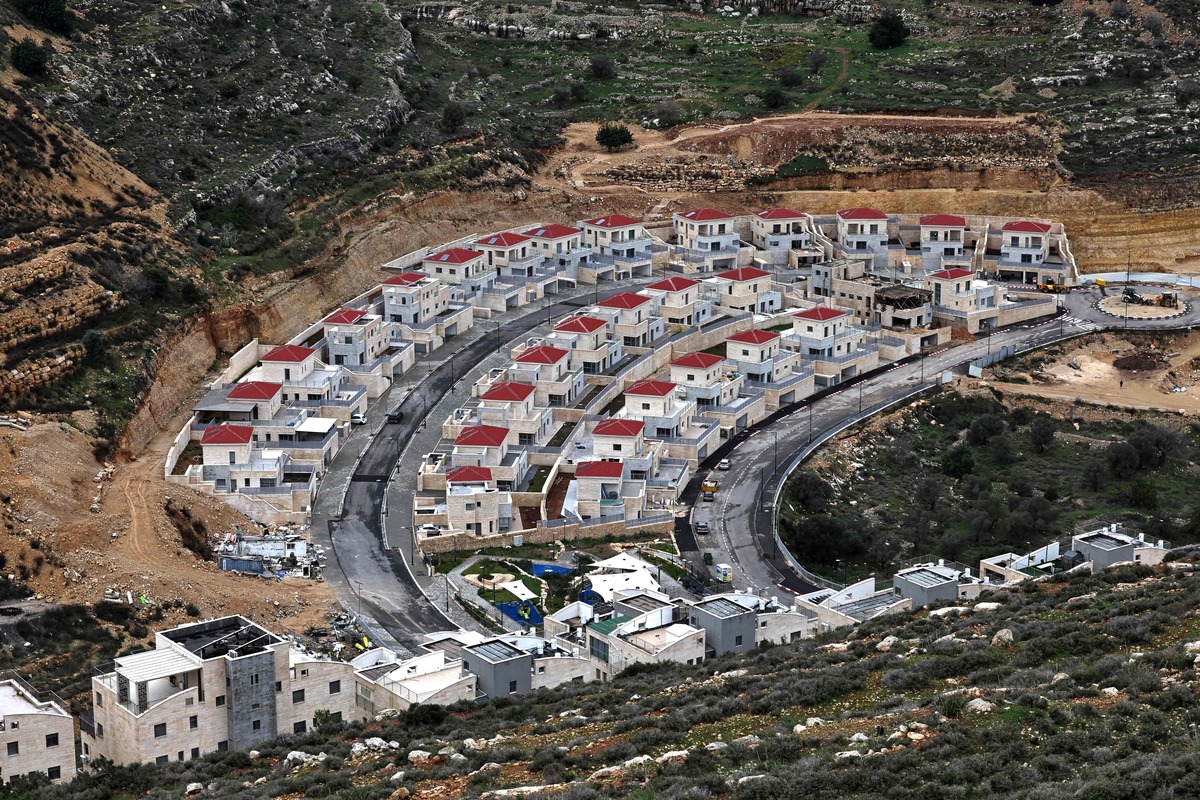







The New York Times revealed in an extensive journalistic investigation published last Sunday a grim picture of what is happening away from the spotlight in the West Bank, where Palestinian villages are turning into a daily stage for a systematic land seizure operation. The investigation documents how settler attacks, supported by negligence or direct intervention from the Israeli army, have become a central tool to force Palestinians to abandon their historical lands. In the village of Al-Mughayyir northeast of Ramallah, the seventy-year-old farmer Rizq Abu Na'im recounts how his land is invaded weekly by herds led by armed settlers, who destroy olive trees and deplete water sources, in a clear attempt to push him and his family into forced displacement from land they have lived on for successive generations.
Abu Na'im's story, as presented in the investigation, is not an isolated incident, but part of a recurring pattern that has accelerated since the outbreak of the war on Gaza in October 2023. While the world was preoccupied with scenes of destruction in the sector, the West Bank was witnessing profound field transformations, redrawing its political and demographic map at an unprecedented pace. The land that is supposed to be the core of the future Palestinian state is eroding piece by piece.
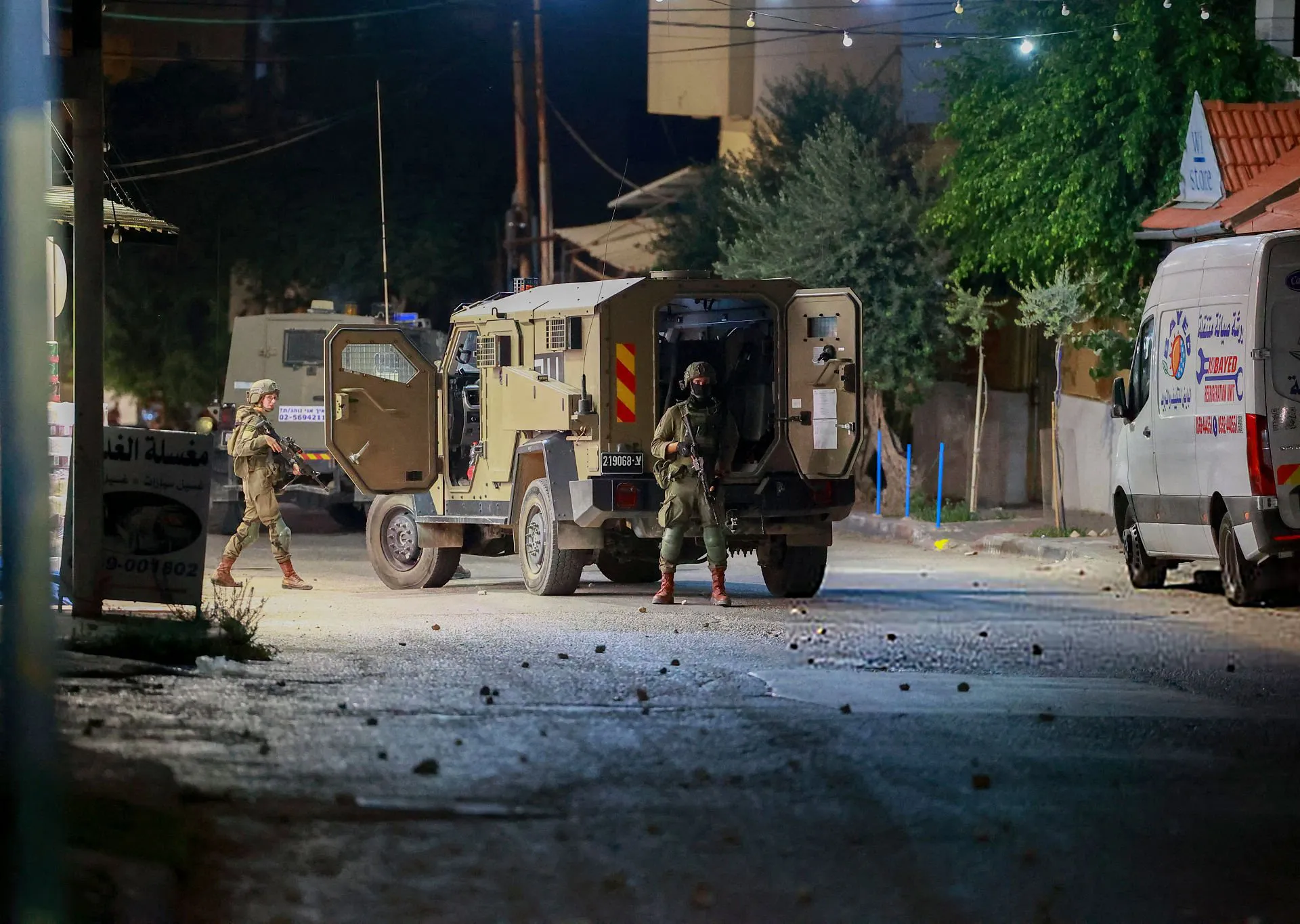
The investigation indicates that throughout the West Bank, from Hebron to Jenin, the same mechanism repeats: an unlicensed settlement outpost suddenly appears on a hill near a Palestinian village, followed by an escalation in settler attacks, from crop destruction and livestock theft, to direct threats with weapons. Then the Israeli army intervenes, not to protect the indigenous population, but to issue military orders restricting Palestinian movement or declaring their lands "closed military zones" or "state lands".
In this way, Palestinian villages are pushed into slow suffocation. Roads are closed with iron barriers, agricultural lands are isolated behind wires, and farmers are prevented from accessing their fields. In contrast, the settlement outposts expand to become full settlements, with bypass roads built for them and schools and homes constructed. According to data from Israeli organizations, about 130 new outposts were established during 2024 and 2025, a number exceeding the total built over the previous two decades.
Violence forms the backbone of this policy, where United Nations data indicates an unprecedented surge in settler attacks, at a daily rate that is the highest since the documentation of these incidents began more than twenty years ago. The olive harvest season, which lasts no more than a few weeks annually, turns into a period of terror for Palestinian farmers, where dozens of assaults are recorded, often ending with the expulsion of the victims, not the perpetrators.
The investigation documents in the village of Hawara south of Nablus an attack by armed settlers on two brothers while they were working on their land, before the army arrived and prevented Palestinians from returning to the fields with a temporary military decision. In Singel, a similar clash ended with the killing of a Palestinian youth holding American citizenship, in an incident officially described as "under investigation," without announcing notable results.
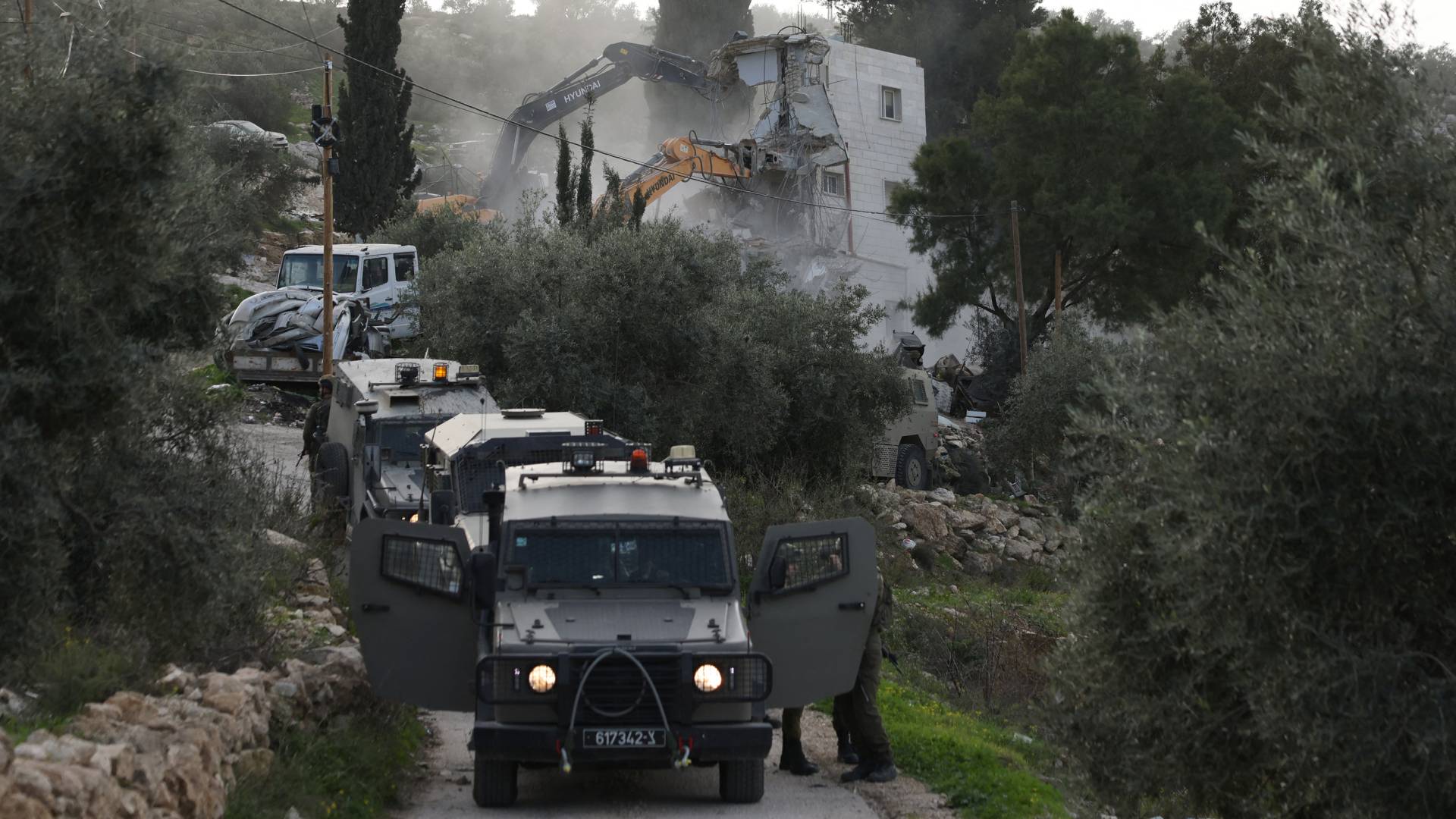
According to the investigation, the demolition policy completes the circle of emptying. In just one year, more than 1,500 Palestinian structures were destroyed in the West Bank, double the annual rate in the previous decade. The village of Al-Ma'arjat al-Sharqiya in the Jordan Valley provides a stark example: a violent nighttime attack carried out by masked settlers, followed by mass displacement of residents, then gradual demolition of the remaining homes, while the army merely said it did not detect "violent events."
In all these facts, the imbalance in the scales of justice is evident. Settlers are subject to Israeli civil law and are rarely held accountable, while Palestinians are subject to military law that allows arrest without charges, and land confiscation without an actual judicial process. The Palestinian Authority, with limited powers, appears unable to protect its people, while the occupation consolidates its full control over the land.
The right-wing Israeli government does not hide its orientations. Statements by prominent ministers explicitly affirm that settlement expansion aims to bury the two-state solution. With the continuation of international silence, Palestinians' fears are increasing that what is happening is no longer reversible, and that the West Bank is being pushed toward a permanent reality of fragmentation and isolation.
What the facts in the West Bank reveal cannot be separated from the concept of settler-colonialism, where extremist civilian groups, protected by regular military force, are used to achieve long-term political goals. This model allows the state to deny direct responsibility, despite the fact that the field results clearly serve its project.
The international role, especially the Western one, is characterized by blatant hypocrisy. While warnings are repeated that settlement undermines peace opportunities, political and diplomatic support for Israel continues without effective conditions. This contradiction turns international law into a rhetorical tool with no practical effect.
According to experts, if these dynamics continue, the occupied West Bank is heading toward a model of isolated cantons, where Palestinians live in besieged pockets without sovereignty or political horizon. Then, the question will no longer be about the two-state solution, but about the nature of a permanent system of control and inequality, and its ethical and security implications for the region and the world
شارك برأيك
Silent Takeover: How the Occupied West Bank is Being Forcefully Reengineered