






The war on the besieged Gaza Strip has placed the Israeli occupation in international economic isolation, especially after some countries halted trade or imported products from settlements.
The "Russian Strategic Center for Cultures" website published a report discussing the possibility of Israel facing economic isolation that includes trade restrictions and symbolic sanctions from European countries and other trading partners.
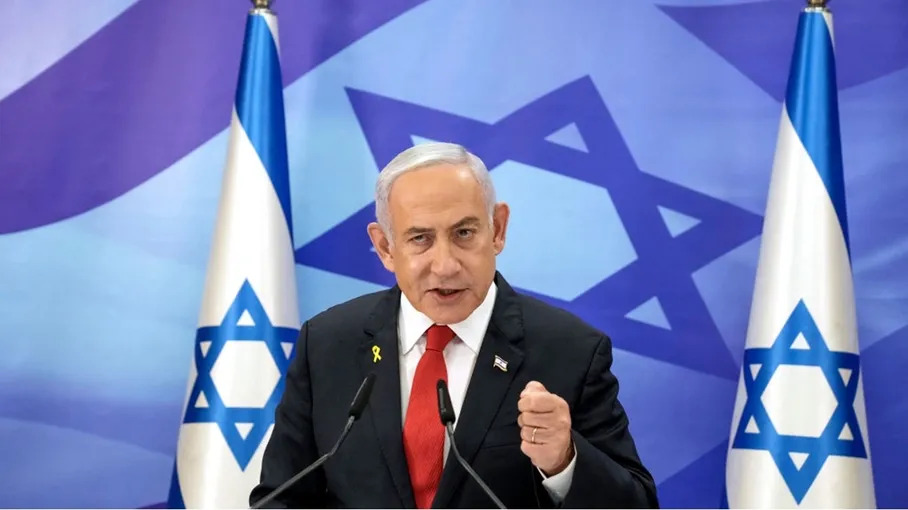
The site stated in its report that Israeli Prime Minister Benjamin Netanyahu issued an unprecedented warning about the future of the Israeli economy, confirming that his country faces growing economic isolation that may force it to undertake a comprehensive restructuring of its economy and rely on a self-sufficiency model.
The "Times of Israel" newspaper quoted Netanyahu as saying during a meeting held at the Ministry of Finance in Jerusalem on September 15: "Israel is living in a state of isolation," noting that the government "may have to adopt an economy based on self-sufficiency and adapt to a new reality that reduces reliance on foreign trade."
The site adds that Netanyahu emphasized that the top priority will be ensuring Israel's defense readiness, warning of the possibility of imposing restrictions on defense cooperation with foreign partners: "We may face a situation where our defense sectors are banned, and we must develop these industries locally, not only in terms of research and development but also by having the capacity to produce what we need within the country."
Israeli Prime Minister Benjamin Netanyahu blamed demographic shifts in Europe, considering that the increasing number of Muslims there drives some European politicians to adopt more hardline positions toward Israel, leading to restrictions on trade cooperation with it.
According to official data, the percentage of Muslims in Sweden, France, and Austria ranges between 8 and 9 percent, while it exceeds 6 percent in Germany and the UK, and reaches over 25 percent in Cyprus.
However, the criticisms directed at Israel are not limited to Muslims; a broad segment of European public opinion, including citizens of Jewish descent, also participates in them.
In recent months, the Gaza Strip has witnessed widespread destruction due to Israeli military operations, with estimates indicating that up to 90 percent of housing has been destroyed. Israel has also launched airstrikes targeting the territories of countries such as Syria, Lebanon, Iran, and Qatar, which has expanded the circle of international criticism.
This situation has even led the most moderate European politicians to warn that Israel has surpassed the stage of "self-defense" and moved to policies described as aggressive, leading to a "humanitarian disaster."
Bloomberg reported earlier this year that European countries, including Germany, the UK, the Netherlands, and France, are considering imposing trade sanctions on Israel and restrictions on arms exports to it.
The site noted that Turkey has become the most prominent example cited by European politicians in their positions toward Israel, after Ankara took a series of escalatory economic steps against Tel Aviv.
Between October 7, 2023, and May 2, 2024, Turkey reduced its trade volume with Israel by about 30 percent.
On April 9, 2024, Ankara suspended the export of 1,019 goods to Israel covering 54 different categories.
Although Turkish President Recep Tayyip Erdoğan announced in the spring of 2024 that his country would completely halt trade with Israel, trade continued partially until the end of summer.
However, the Turkish stance escalated again on August 29 of this year, when Turkish Foreign Minister Hakan Fidan announced a complete cut in trade relations, stating: "We have closed our ports to Israeli ships, and we do not allow our ships to enter Israeli ports. I confirm that no other country has completely halted its trade with Israel as we have."
The site reported that Israeli airstrikes on Qatar on September 9 led to a new round of discussions within Europe about imposing sanctions on Tel Aviv.
During a session of the European Parliament in Strasbourg on September 10, European Commission President Ursula von der Leyen stated that sanctions could be imposed on Israeli officials "who adopt extreme positions," as she put it.
She also announced, according to what was reported by the "Jerusalem Post," a "partial suspension" of the partnership agreement signed between the European Union and Israel in light of the situation in the Gaza Strip.
However, activating these sanctions requires the approval of at least 15 of the 27 EU member states, which may face political obstacles, as the newspaper indicated that ensuring this support is not guaranteed.
The site pointed out that despite the rising international criticism of Israeli policies, broad economic sanctions, such as disconnecting Israeli banks from the SWIFT system or freezing cash reserves or imposing a comprehensive ban on exports and imports, remain outside the realm of practical application at the moment.
شارك برأيك
Economic isolation threatens the occupation amid European calls for sanctions.