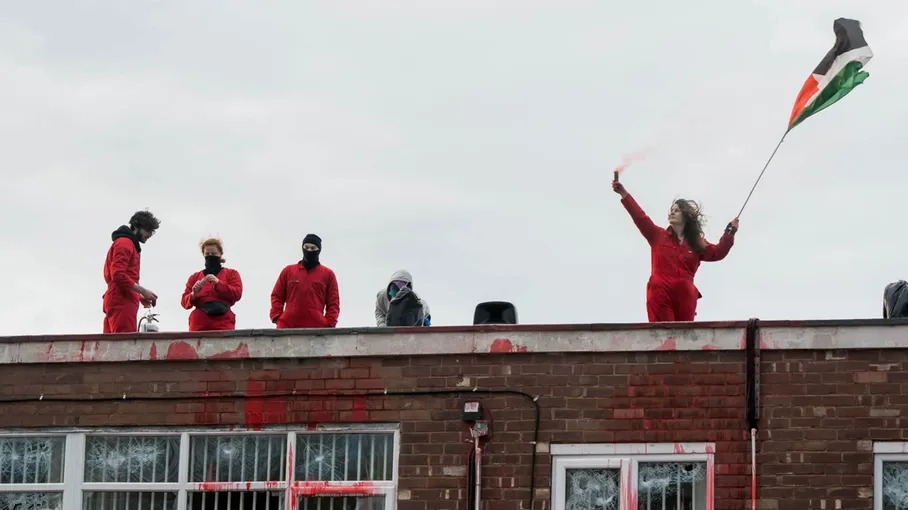







The newspaper confirmed in its editorial that the British government should reconsider the classification of "Palestine Action," stating that while protesters are being prosecuted under the Terrorism Act of 2000, it is clear that ministers have chosen the wrong target and the wrong legal process as well.
The newspaper added that the appearance of three protesters in court on Tuesday, accused of terrorist offenses for holding signs declaring their support for Palestine Action, will certainly embarrass the government.
The decision to ban the group, made in June, was an exaggerated and alarmingly illiberal reaction to the alleged damage that some supporters of the group have inflicted on military equipment.
Now, ministers and the public are witnessing the consequences, as peaceful protesters opposing the ban appear before judges.
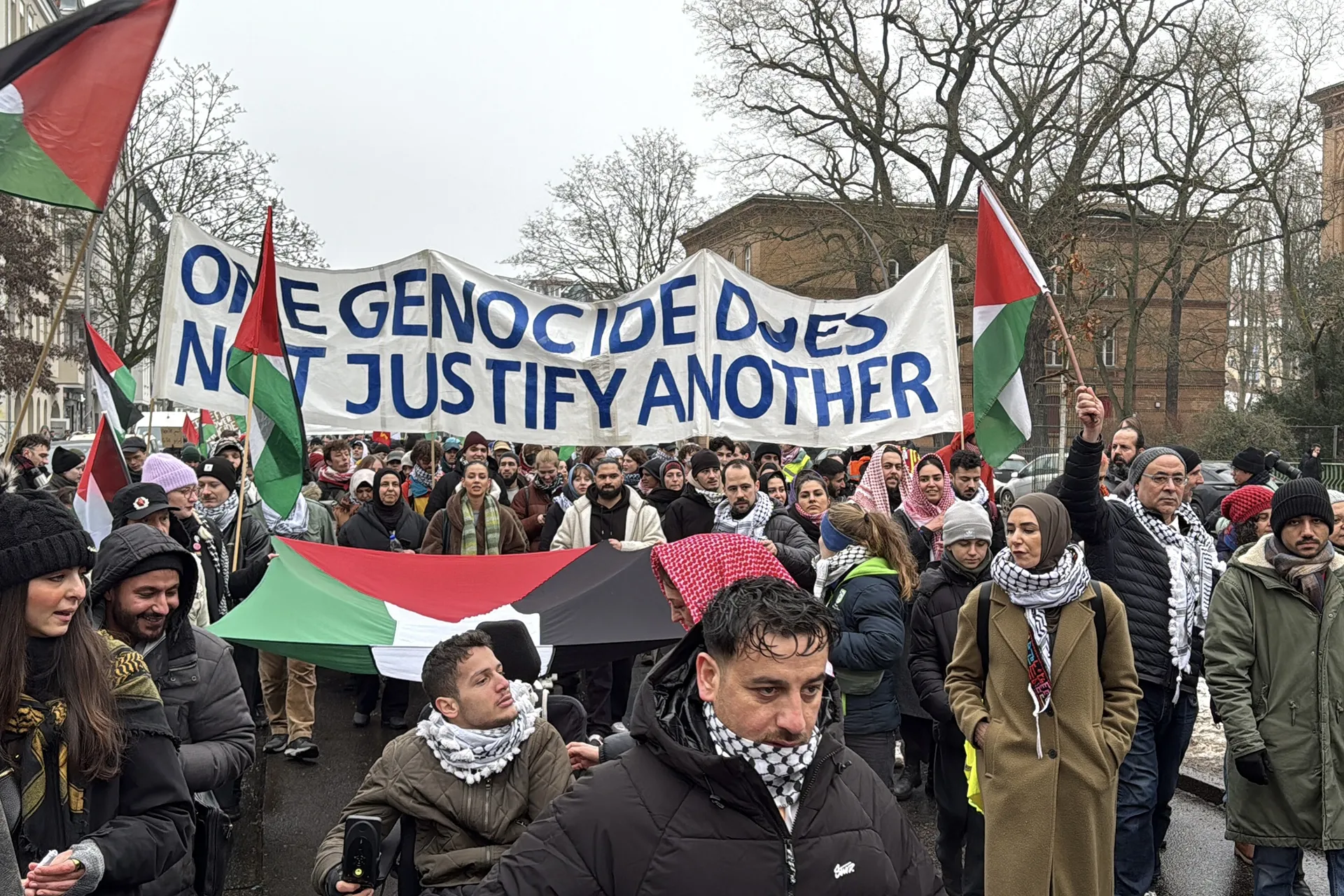
The newspaper stated that there is a long and proud history of civil disobedience, which includes demonstrations for women's suffrage and protests against the proliferation of nuclear weapons and carbon emissions due to fossil fuel use.
With the government's reckless decision to classify the direct action taken by Palestine Action as terrorism, ministers have turned their backs on these long-standing traditions.
British security has arrested more than 1,600 people since the ban, many of whom are middle-aged and elderly, with more protests scheduled to take place.
It is bad enough that Britain, like the European Union, has failed to restrict trade with Israel or end arms exports, despite increasing evidence of war crimes, but for supporters of direct action to face the risk of imprisonment in the same week that the Prime Minister hosts President Donald Trump is shameful.
As noted when the ban on Palestine Action was imposed, existing laws can be used to prosecute individuals committing politically motivated crimes.
Currently, 24 individuals are awaiting trial on charges including violent disturbances after targeting a branch of Elbit Systems in Bristol.
Ministers claimed that their decision was based on intelligence assessments.
However, a declassified version of this advice, reviewed by The New York Times, stated that most activities of Palestine Action "are not classified as terrorism."
At a time when police, prisons, and courts are under immense pressure, the ban has diverted resources in the wrong direction.
Whatever happens in court this week, the events of the weekend, where 26 police officers were injured in a massive far-right demonstration in London, reveal the government's confused priorities, and ministers and police seem surprised by the size and violence of the protest.
Unless the Home Secretary can prevent it, the ban on Palestine Action will be challenged in court in November, on the grounds that it may conflict with people's rights to freedom of expression and assembly.
As long as the ban remains in place, the courts should choose leniency.
Punishing people harshly for advocating the right to protest would send a bad signal at a time when liberal democracy is facing increasing threats.
The newspaper confirmed that acquittals will not correct the mistake of banning Palestine Action in the first place.
Protesters against Israel's brutality in Gaza and the West Bank should never have been treated under the same legislative framework that was applied in July to the "Minyak Murder Cult" and the "Russian Imperial Movement," or placed in the same category as Hamas and Hizb ut-Tahrir.
In the wake of the recent panicked cabinet reshuffle by the Prime Minister, the new Home Secretary, Shabana Mahmood, should take a different approach.
Three independent reviewers of terrorism laws have recommended that banning orders be time-limited.
Now is the time to reconsider a decision that should never have been made.
Punishing people harshly for advocating the right to protest would send a bad signal.
شارك برأيك
"The Guardian" calls for lifting the ban on Gaza supporters in Britain after "criminalizing the Palestine movement."