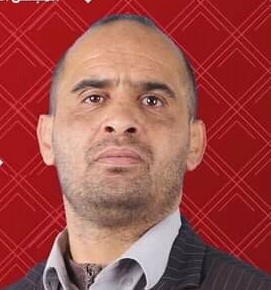







Ben Maamar Al-Hajj Issa: Algerian writer and political researcher
In the night of Gaza, the wound does not sleep, the pain does not subside, and the death lurking in the bodies of its children does not slumber. While the Israeli occupation continues its open war on everything Palestinian, dark chapters of an ongoing crime are being revealed, one after the other, committed behind the silent walls of detention centers, where the Palestinian human being is crushed under the weight of torture, humiliation, and enforced disappearance. The report issued by the Commission of Prisoners' Affairs and the Palestinian Prisoners' Club on July 24, 2025, is not merely a human rights document, but rather a cry of conscience and a living testimony to the ongoing genocide, not only on the fields of bombing, but also inside the cellars that have been transformed into a laboratory for revenge and the release of hatred.
From the Negev detention center to Ofer, from the Compound to the Sde Teiman camp, Palestinian prisoners face nothing but deprivation, humiliation, and an endless series of physical and psychological torture methods documented by the detainees themselves in chilling testimonies. One detainee was forced to undress and drink alcohol at a camp near Jerusalem; another had boiling water poured over his body in the Negev prison; a third was attacked by a police dog that bit his foot; yet another detainee reported being severely beaten, losing the sight in his left eye and causing him constant headaches and loss of balance. These are not scenes from a terrifying fiction novel; they are the daily reality of Palestinian detainees at the hands of an authority that cares nothing for the law and recognizes no human value.
The pain lies not only in the torture, but also in the psychological warfare waged by the cold-blooded jailers. One detainee was informed by his interrogator that his entire family had been wiped out, prompting him to attempt suicide in his cell, only to discover later that his family was fine. That dividing moment between madness and despair was no coincidence, but rather part of a systematic approach aimed at destroying the soul before the body, and dismantling whatever resistance remains within the heart of the imprisoned Palestinian.
Testimonies confirm that detainees are forced to live in overcrowded tents and harsh environmental conditions, deliberately deprived of food and medical care, and that diseases such as scabies are prevalent, with no attempt at treatment or prevention. Detainees are held in solitary confinement and subjected to daily violent searches and deliberate humiliation. It is a slow, soul-crushing process that leaves little room for nightmares.
Despite the horrific testimonies, what has been recorded represents only a tiny fraction of the greater crime, which goes beyond all reasonable doubt. Thousands of detainees from Gaza have been subjected to the "unlawful combatant" law, the occupation's tool for legalizing genocide, outside any international legal framework. This law does not grant detainees even the most basic human rights, but rather turns them into numbers within a camp, a legitimate target for torture and extortion.
Since the beginning of the war, the occupation has established new camps specifically to hold detainees from Gaza, such as Sde Teiman, Anatot, Naftali, and the Rakefet section under Ramle prison, adding to the chain of slow death in the Negev and Ofer. With each passing day, the number of victims who have died under torture or whose fate remains unknown in the cycle of enforced disappearance increases, amid a suspicious international silence and the complicity of human rights organizations whose very existence is now in doubt.
The question of the effectiveness of human rights institutions has become more than a project, in light of this global moral collapse in the face of the occupation's crimes. What does it mean to issue reports, document testimonies, and expose violations if the oppressor is not held accountable and the victim is not rescued? When will Palestinian pain become worthy of being heard? And when will the state of exception, in which the occupation enjoys a status above the law, above accountability, and above all humanitarian systems, be broken?
This report is not a collection of dry numbers, nor a mere legal observation. Rather, it is a bloody reflection of a reality that brooks no delay. It is a damning document in the annals of humanity, a book of stark pain that is supposed to stir the world from its slumber. But even when consciences awaken, hundreds will have been silently crushed, and time will remain powerless to heal their wounds.
The crime of genocide against detainees is not a separate chapter of the war, but rather an integral part of a comprehensive genocidal project. Remaining silent is no longer an option, because every moment of delay is equivalent to a human life being snatched from them, in the dark, without witnesses, mercy, or justice.
شارك برأيك
The hell of captivity in the occupation's prisons... damning testimonies from Gaza reveal chapters of silent genocide.