PALESTINE

Fri 17 Jul 2026 4:28 pm - Jerusalem Time

45 Years Since the Fakhani Massacre: When the Occupation Invaded the Heart of Beirut with Iron and Fire

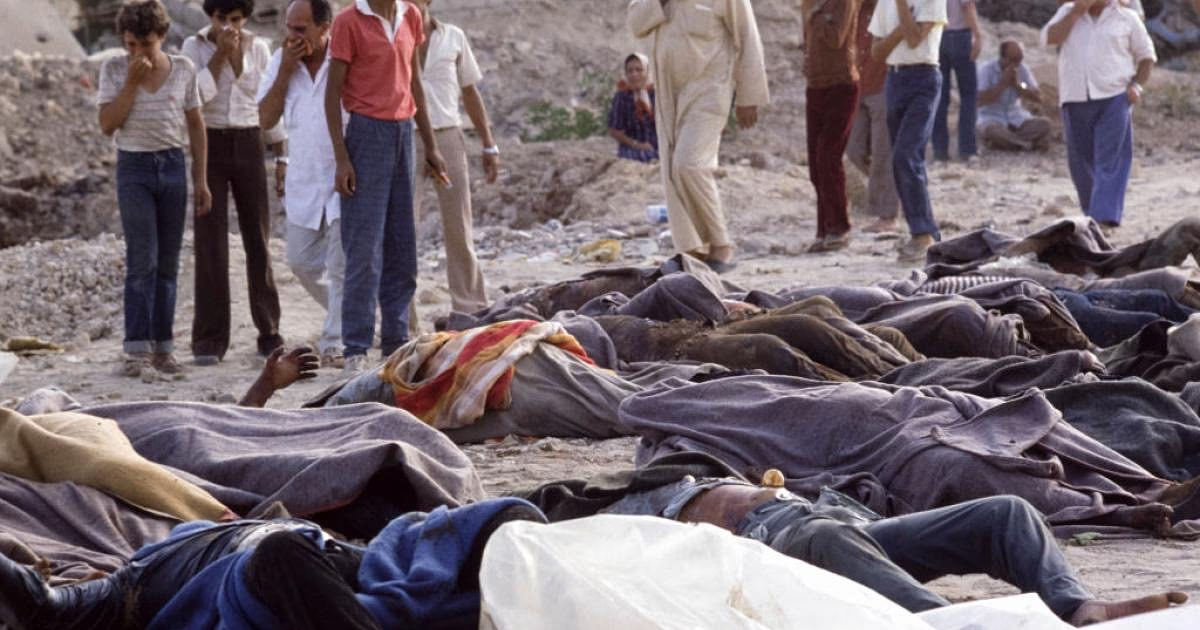
On the afternoon of July 17, 1981, the Israeli occupation's raids did not target isolated military sites or border villages, but extended to strike the heart of the Lebanese capital, Beirut. Warplanes reached the skies of the densely populated Fakhani area, dropping their bombs on passersby and residents in a tragic scene.

Within minutes, residential buildings completely collapsed, and vital streets turned into piles of rubble and fires, while ambulances rushed in a desperate attempt to rescue those trapped. This bombing constituted one of the most brutal Israeli attacks on Beirut, paving the way for a new phase of comprehensive military escalation.

Historical and documentary sources agree that the vast majority of the victims of that massacre were unarmed civilians who were caught off guard by the bombing in their homes and workplaces. Fakhani was not just a geographical point; it represented the pulse of shared life between Lebanese and Palestinians at that time.

These violent raids came amidst escalating confrontation between the occupation forces and the Palestine Liberation Organization, which was using Lebanon as a base for its operations. The occupation authorities at the time claimed that the bombing was in response to rockets fired towards northern settlements, using this as a pretext to violate the capital.

Israeli aircraft heavily targeted the Fakhani area, claiming the presence of Fatah and Democratic Front for the Liberation of Palestine offices within the neighborhood. Although the area included political and administrative centers, it was essentially a residential neighborhood teeming with children, women, and workers.

The massacre revealed a recurring Israeli approach that relies on turning densely populated civilian neighborhoods into legitimate military targets simply by the presence of a political office or organizational facility. This method led to buildings collapsing on their inhabitants, and rescue operations became a race against time amidst blocked roads and accumulated casualties.

Figures regarding the final death toll varied, with Palestinian documentation indicating over 300 martyrs, while other reports cited different numbers. This discrepancy reflects the conditions of the Lebanese Civil War at the time and the weakness of official institutions in accurately counting victims under the rubble.

Fakhani was not just a fleeting incident in the conflict's record; it was a test of the occupation's ability to move the battle from the borders to the heart of major cities. The images from Beirut that day showed the extent of the destruction inflicted on high-rise buildings, civilian, and service institutions.

One week after the massacre and bloody escalation, international efforts led by US envoy Philip Habib succeeded in reaching a ceasefire agreement on July 24, 1981. Although the truce temporarily silenced the guns, it did not defuse the large explosion looming on the horizon.

The armed Palestinian presence in Lebanon remained a concern for the occupation, which continued to plan a broader military operation to completely end this presence. Only a few months passed until the comprehensive Israeli invasion of Lebanon began in June 1982, leading to the famous siege of Beirut.

Analysts believe that the July 1981 raids were a military 'rehearsal' for what the occupation would later do in the 1982 invasion and the Sabra and Shatila massacres. International reactions to the bombing of Arab capitals and the direct and widespread targeting of civilians were tested.

Despite 45 years passing, the memory of the Fakhani neighborhood remains alive in the hearts of the area's residents and the families of the victims who lost their loved ones in treacherous moments. The tragedy is not limited to numbers and statistics, but in the human stories buried under the rubble of balconies and bedrooms.

The anniversary of the massacre raises legal and ethical questions about the protection of civilians in armed conflicts, and how the lives of hundreds are sacrificed for presumed military objectives. What happened in Fakhani remains a testament to the 'scorched earth' policy pursued by the occupation in confronting the Palestinian presence.

Today, Lebanese and Palestinians remember those moments not only as part of the past, but as a continuous lesson about the nature of the conflict in the region. The scenes witnessed in Beirut in 1981 are still recurring in different forms and shapes in other Palestinian and Lebanese cities to this day.

Within minutes, the streets of the Fakhani neighborhood turned into a scene of rubble and fires, a moment that showed how the occupation erases the boundaries between combatants and civilians.

PALESTINE

Fri 17 Jul 2026 4:28 pm - Jerusalem Time

Martyr and wounded in a raid on Gaza and limited Israeli incursion into Khan Yunis

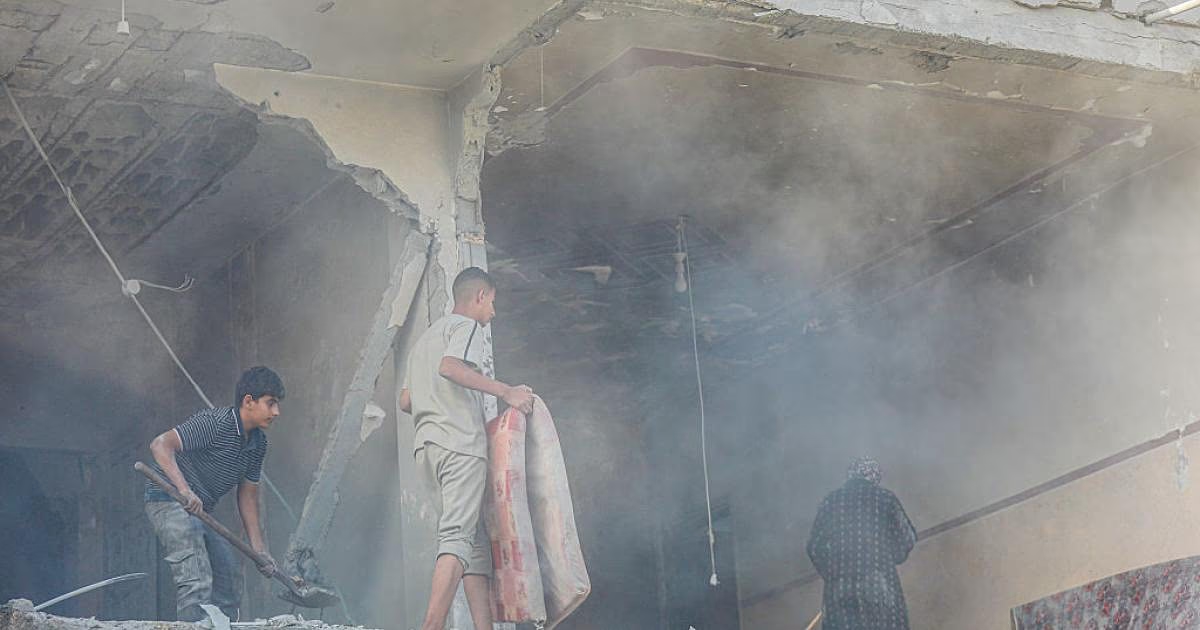
A Palestinian citizen was martyred and six others were wounded with varying injuries, at dawn today, Friday, as a result of Israeli drones targeting a residential apartment in the heart of Gaza City. Medical and local sources reported that the martyr was identified as Muhammad Taysir Obaid, and he fell as a result of the raid that targeted the 'Al-Taj' building located on Al-Yarmouk Street, where the injuries included women and children who were inside the targeted home.

In a related context, Israeli aircraft launched another raid using a guided missile targeting a residential apartment on Al-Mu'assasat Street in the western part of Gaza City. Despite the extensive material damage to the building, no casualties or human injuries were reported in this attack, which comes as part of a series of ongoing aerial violations.

On the ground, the southern areas of the Gaza Strip witnessed ground military movements, as occupation army vehicles infiltrated dozens of meters into the vicinity of Street 16, east of Al-Qarara town, north of Khan Yunis city. This incursion was accompanied by intense gunfire and artillery shelling targeting agricultural lands and surrounding areas, before the infiltrating forces withdrew after several hours of the operation.

In the northern Strip, Israeli artillery continued its heavy shelling, targeting the eastern outskirts of Al-Tuffah neighborhood and various areas of Jabalia town. The artillery shelling coincided with intense gunfire from military vehicles stationed on the border strip, causing a state of panic among residents who suffer from the continuation of military operations despite the truce agreement.

In the coastal areas, Israeli warships opened heavy fire and launched a number of shells towards the beaches of Rafah and Khan Yunis cities. Displaced persons' tents in the western areas of Rafah city were also subjected to direct fire from military vehicles, exacerbating the humanitarian suffering of thousands who sought refuge in those areas in search of safety.

The latest statistics issued by the Ministry of Health in the Gaza Strip indicate that the toll of victims of Israeli violations of the ceasefire agreement, which has been in effect since October 10, 2025, has significantly increased. The ministry documented the martyrdom of 1127 Palestinians and the injury of more than 3600 others, amid the continuation of military operations targeting civilians and infrastructure on a daily basis.

Israeli violations of the ceasefire agreement have resulted in the martyrdom of 1127 Palestinians and the injury of 3643 others since last October.

PALESTINE

Fri 17 Jul 2026 4:27 pm - Jerusalem Time

Legal achievement after a battle that lasted more than eight years.. Lawyer Maysaa Abu Saleh Abu Akr secures the right of two Jerusalemite children to permanent residency in Jerusalem

In a prominent legal and humanitarian achievement, lawyer Maysaa Abu Saleh Abu Akr from the HaMoked organization succeeded in resolving one of the most complex and sensitive residency cases in Jerusalem, after a legal battle that lasted more than eight years, culminating in the Israeli Ministry of Interior's decision, dated July 6, 2026, to grant two Jerusalemite children permanent residency in the city where they were born and raised, after living 14 and 15 years of their lives without any legal status or identity document.

The case is considered one of the most complex residency and family reunification files, as it faced complex bureaucratic procedures, continuous procrastination, and contradictory decisions over many years, which necessitated a long series of legal actions before the Ministry of Interior and the courts, until it ended with securing the children's right to permanent residency.

The details of the case go back to two children born to a mother holding a Palestinian identity and a father holding a Jerusalemite identity. However, the father refrained from registering them as residents in Jerusalem before the mother separated from him in 2014, severing his connection with his children. With the deterioration of the family's social and economic conditions, their Jerusalemite grandmother took care of them alongside their mother, while the children lived for many years in extremely difficult social and humanitarian conditions, moving between different care frameworks, without being able to obtain any legal status that would guarantee them their most basic rights.

Despite the clear humanitarian and legal aspects of the case, the procrastination continued for years, which prompted lawyer Maysaa Abu Saleh Abu Akr to continue defending the children's rights through an arduous legal process, interspersed with multiple judicial procedures and intensive legal follow-up, until the final decision was issued granting them permanent residency in Jerusalem.

This decision grants the children, for the first time in their lives, the right to legal residency within their city, to benefit from health, educational, and social services, and to live in safety and stability after many years of deprivation and lack of legal status.

This achievement is more than just a legal victory, as it represents the restoration of basic rights that two children were deprived of throughout their childhood years, and confirms that perseverance and professional legal work can achieve justice even in the most complex cases. It also highlights the prominent role played by lawyer Maysaa Abu Saleh Abu Akr in following up on this thorny humanitarian file until a just outcome was reached that did justice to the children and restored their right to residency within their city.

PALESTINE

Fri 17 Jul 2026 4:26 pm - Jerusalem Time

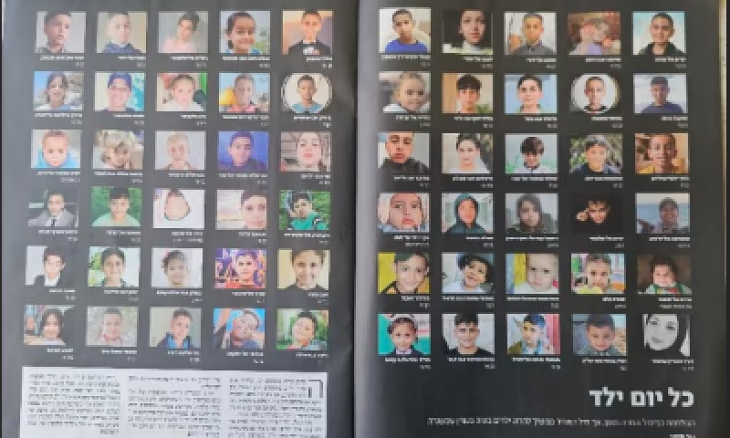
Shocking statistic: Occupation kills one child daily in Gaza since last October

Hebrew press sources confirmed in an extensive investigation that the Israeli war machine has not stopped targeting children in the Gaza Strip, with at least one child martyred daily since last October. The investigation indicated that the air force continues its deadly raids despite the harsh conditions experienced by displaced people in tents, who lack the most basic necessities of life.

According to documented figures, approximately 274 children have been martyred since the last ceasefire agreement, raising the total number of child martyrs since the beginning of the aggression to more than 21,000 children. The methods of killing vary between direct aerial bombardment, sniper bullets, or death due to injuries that did not receive adequate medical care amid the collapse of the health system.

The sources spoke of tragic stories of children who recently lost their lives, including ten-year-old Mutaz Abu Shaar, who was hit by Israeli bullets while inside his tent in the Al-Mawasi area. Mutaz had lost his father and brother in a previous bombing about six months ago, only to follow them in a crime that shook the feelings of the displaced.

In a related context, nine-year-old Tala Abu Matar was martyred one day before Mutaz's death, as activists circulated her picture smiling in her colorful clothes next to her body laid out in a body bag. These individual cases reflect a bitter collective reality experienced by thousands of children who have become direct targets of Israeli fire in areas that the occupation claims are safe.

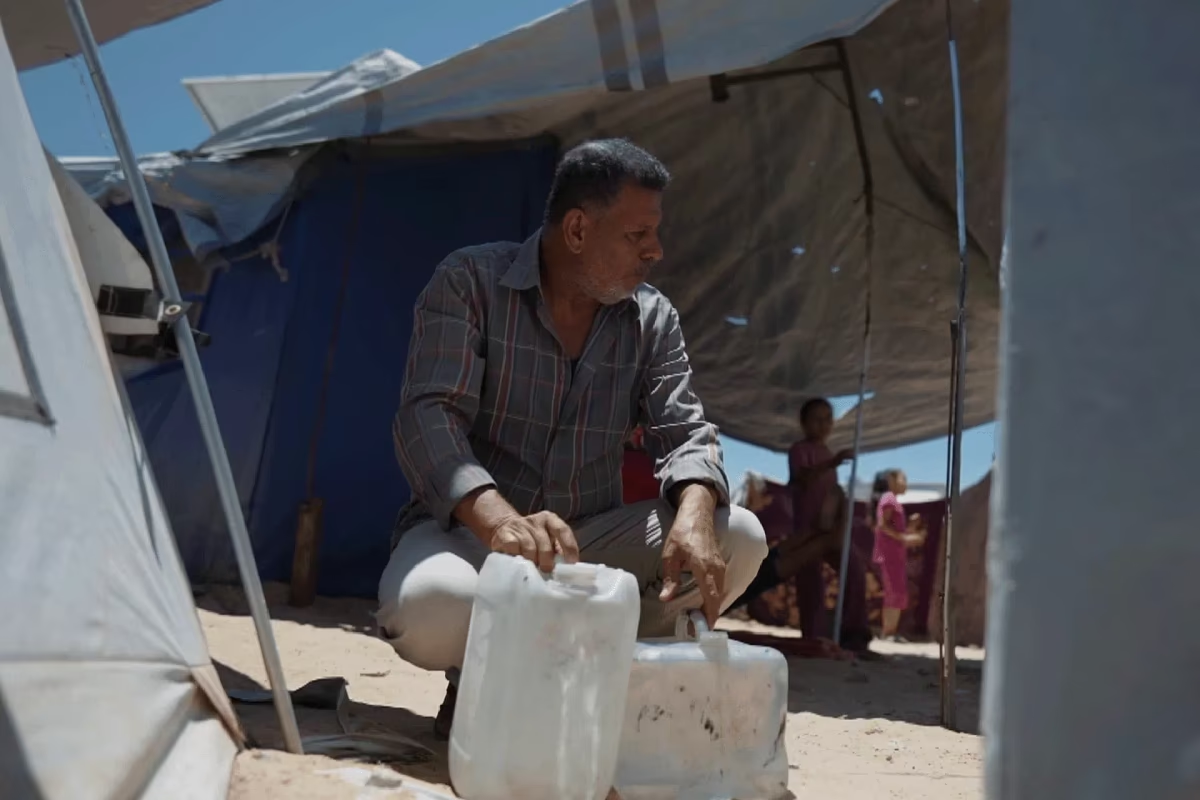
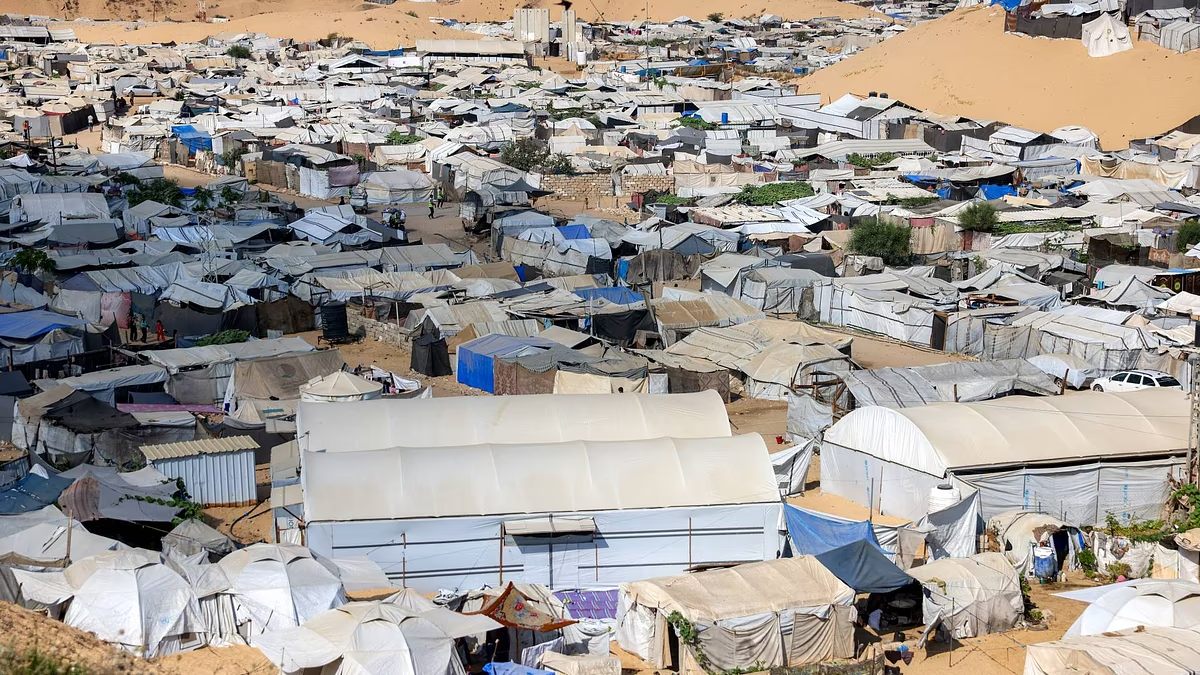
In addition to direct killing, approximately 1.7 million displaced people in Gaza face hellish living conditions inside dilapidated tents lacking water, electricity, and sewage networks. The intense heat inside these tents exacerbates the humanitarian suffering, as displacement sites have turned into hotbeds for the spread of infectious diseases and dangerous health hazards.

Human rights reports stated that children in Gaza live under a double siege of bombing and disease, as families are forced to deal with skin injuries and epidemics spreading among the tents. A displaced grandmother in Deir al-Balah recounts the suffering of her orphaned grandchildren with skin itching and blisters covering their small bodies without any effective treatment available.

UNRWA data indicates an alarming increase in the rates of skin diseases and parasites, especially scabies and chickenpox, in addition to cases of acute diarrhea. The agency confirms that these diseases are directly linked to the polluted environment and the overcrowding of displaced people in confined spaces lacking general hygiene.

UN assessments covering more than 1,600 displacement sites revealed a dense spread of rodents and insects in about 80% of these sites, increasing the likelihood of infection transmission. Infectious skin diseases were also recorded in nearly half of the displacement sites, which specialists attribute to the accumulation of waste and the flow of wastewater between the tents.

Medical sources warned that water production and pumping systems face the risk of complete breakdown due to the severe shortage of fuel and spare parts needed for maintenance. This deterioration threatens to halt wastewater management and waste collection services, putting the lives of hundreds of thousands of children at risk due to increasing environmental pollution.

For its part, the Palestinian Ministry of Health stressed that the tents in the Gaza Strip are no longer just temporary shelters, but have turned into spaces where all factors of death and disease intersect. The ministry explained that severe malnutrition weakens children's immunity, making them susceptible to a vicious cycle of infection that is difficult to break without urgent international intervention.

At Al-Aqsa Martyrs Hospital, medical staff confirm receiving dozens of cases daily of children suffering from newly emerging skin diseases and epidemics that had previously disappeared. The remaining hospitals are unable to provide the necessary treatment due to the imposed siege and the lack of medicines and essential medical supplies to combat these epidemics.

The reality on the ground indicates that the occupation uses deprivation of healthcare and a healthy environment as an additional tool in its war against civilians, especially the most vulnerable groups. Children who survive bombs find themselves in direct confrontation with hunger and disease that ravage their bodies amid deafening international silence.

The suffering of families who have lost their breadwinners continues, as the responsibility for caring for orphaned children falls on the elderly who lack the ability to secure food or medicine. These human stories reflect the magnitude of the catastrophe left by the ongoing aggression, whose effects have gone beyond material destruction to affect the social and health fabric of Palestinian society.

In conclusion, the children of Gaza remain the biggest victims of this war, as planes pursue them in their skies and diseases in their tents, with no prospect for a humanitarian solution to end this tragedy. International organizations demand the necessity of opening crossings and immediately bringing in medical aid and fuel to prevent an uncontrollable health catastrophe.

The sun rises, the sky is blue, and the Israeli air force continues to kill children in Gaza on a daily basis.

ARAB AND WORLD

Fri 17 Jul 2026 4:25 pm - Jerusalem Time

Dangerous Maritime Escalation: Militants Seize Tanker Off Aden, Near Total Paralysis in Strait of Hormuz

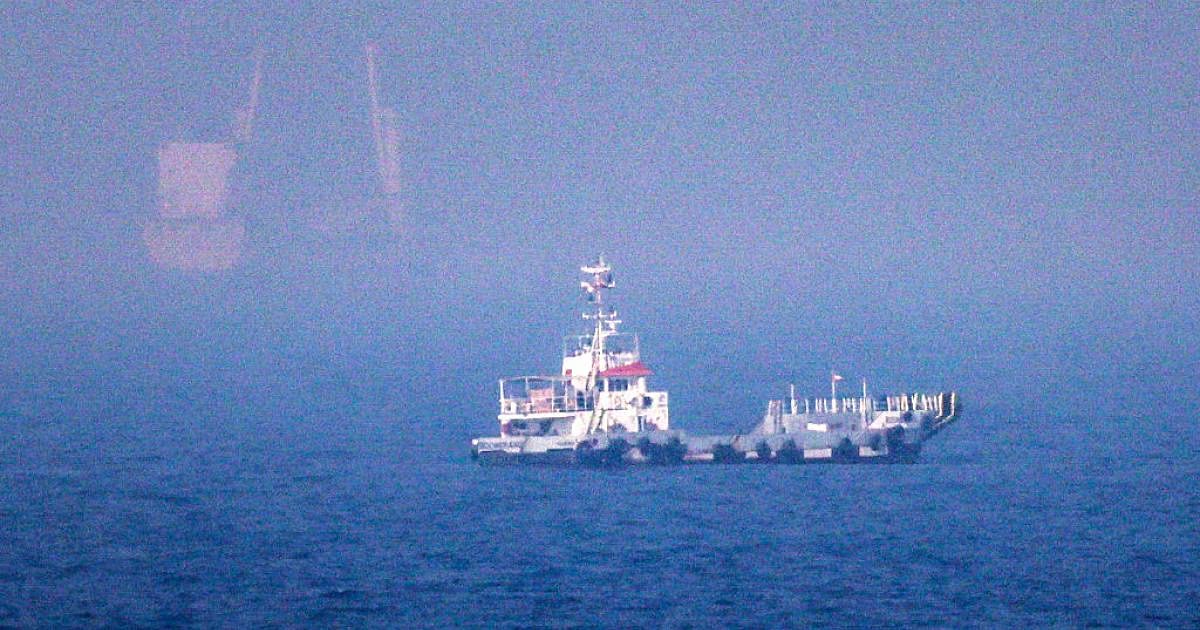
Maritime security sources reported that a group of militants managed to board and seize the tanker 'Asana', specialized in transporting chemical materials, while it was off the southern coast of Yemen. Ship tracking data indicates that the small tanker had designated Bosaso port in Somalia as its next destination before the incident occurred in the Gulf of Aden.

For its part, the UK Maritime Trade Operations confirmed the incident, stating that unauthorized individuals boarded the vessel while it was sailing eastward. The attack occurred approximately 65 nautical miles south of Yemen's Mukalla port, raising concerns about the security of vital waterways in the region.

This development coincides with a sharp escalation in regional tensions following an exchange of military strikes between the United States and Iran. Reports indicated that Tehran instructed the Houthi group in Yemen to prepare to close the strategic Bab al-Mandab Strait if Iranian energy facilities were subjected to American bombardment.

In a related context, another ship sustained a direct hit off the coast of the Sultanate of Oman, specifically 19 nautical miles from the city of Khasab. The UK Maritime Security Agency clarified that the attack resulted in minor damage to the ship's hull, with no serious human casualties reported so far.

These direct military confrontations have led to a near-total paralysis of traffic through the Strait of Hormuz, which is the most important maritime passage for global oil and gas trade. This halt immediately impacted international energy markets, with oil prices recording significant increases due to fears of supply disruptions.

Iran's Revolutionary Guard explicitly announced that it would disrupt energy export operations through the Strait as long as American military movements against it continued. This escalatory stance came through statements reported by Iranian media, affirming that Tehran would not stand idly by in the face of the naval blockade imposed on it.

Shipping data revealed a historic decline in the number of vessels crossing the Strait, with only three ships recorded last Thursday. This figure represents the lowest daily crossing level in years, compared to the usual average of up to 125 ships daily before the current crisis erupted.

Tracking systems observed most ships stopping or turning back to avoid conflict zones, especially with the United States resuming its naval blockade on Iran-linked shipping. The tankers 'Miran' and 'Norita' exited the Strait via Iranian routes but were forced to stop in the Gulf of Oman due to the American military presence.

In Iraq, oil and security sources confirmed the temporary halt of crude loading operations at Basra port for a brief period on Thursday. This forced halt came after an oil tanker docked at one of the berths was attacked by a drone, before authorities announced the resumption of operations later after securing the site.

Despite the tension, giant tankers such as 'Columbia Prosperity' and 'Costa Rica Prosperity' were seen outside the Strait carrying millions of barrels of Saudi and Iraqi oil. These tankers are heading to international destinations including Japan and Turkey, with their routes closely monitored by marine insurance companies.

Estimates from international energy companies indicate that crude oil and liquefied natural gas tankers have completely stopped crossing the Strait for the second consecutive day. This halt reflects the extreme caution exercised by global shipping companies to avoid being caught in the direct confrontation between regional and international powers.

The situation in the waterways surrounding the Arabian Peninsula remains susceptible to further escalation in the absence of a political solution. Major capitals are closely monitoring developments regarding ship seizures in the Gulf of Aden, given their serious implications for the freedom of international navigation and the costs of shipping and insurance.

Iran's Revolutionary Guard will not allow oil or gas exports through the Strait of Hormuz as long as American attacks continue.

PALESTINE

Fri 17 Jul 2026 10:01 am - Jerusalem Time

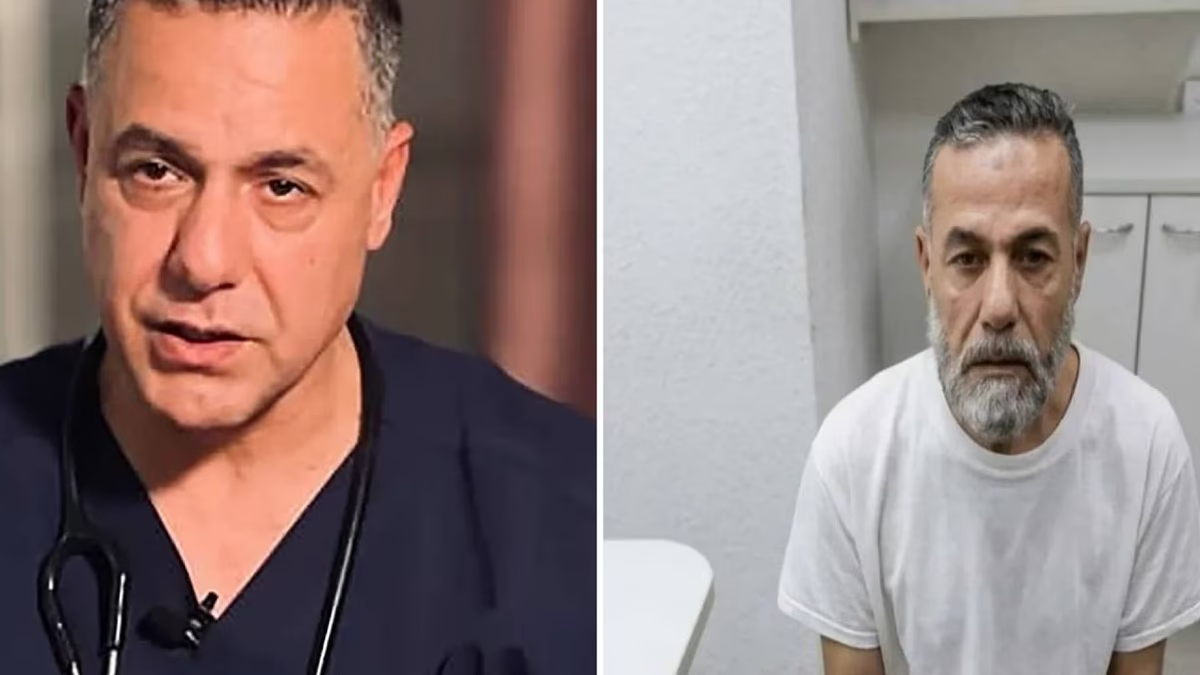
Harsh Testimony from Doctor Hussam Abu Safiya: Repeated Physical Assaults and Underground Solitary Confinement

Legal sources reported, quoting captive doctor Hussam Abu Safiya, that he has been subjected to a series of violent physical assaults inside Israeli occupation prisons. Lawyers explained after visiting him on Thursday that the doctor's health condition is concerning due to the continued systematic abuse he has faced since his arrest, showing signs of exhaustion and injuries resulting from direct beatings.

According to Abu Safiya's testimony, the jailers beat him again brutally, causing a severe injury to one of his fingers that led to heavy bleeding. This incident comes amid an escalation of violations against Palestinian prisoners, especially medical personnel who were working in hospitals before being abducted by occupation forces.

The detained doctor revealed the tragic conditions of his detention, as he is currently in complete solitary confinement inside a facility known as 'Rakevet,' which consists of cells located underground and lacking the most basic human necessities. Abu Safiya described this place as aiming to break the morale of prisoners by isolating them from the outside world in a harsh and dark environment.

In a moving message conveyed through his legal team, Dr. Abu Safiya called on human rights and international organizations to take immediate action to save his life and secure the necessary medical treatment for his recent injury. He emphasized the need to work by all available means to end the policy of solitary confinement imposed on him by the prison administration without legal justification.

It is worth noting that targeting Palestinian doctors and health personnel has become a recurring approach by the occupation authorities, amid increasing international demands for the protection of medical teams and ensuring the safety of detainees. Dr. Abu Safiya's case is an example of what hundreds of prisoners face in terms of illegal detention conditions that contradict the Geneva Conventions and international humanitarian law.

I was beaten again after your previous visit, and my finger was injured and bled. Do whatever you can to get me out of this place and end my isolation.

ARAB AND WORLD

Fri 17 Jul 2026 10:01 am - Jerusalem Time

Widespread Military Escalation Between Washington and Tehran: American Strikes Target Bandar Abbas and Iranian Defenses Respond

The military escalation between the United States and Iran entered a new phase of direct confrontation on Thursday, as the two sides exchanged strikes and threats in the vicinity of the strategic Strait of Hormuz. These field developments come despite a memorandum of understanding signed last June to end the state of hostility, yet the current round of fighting has entered its sixth day amid Iranian warnings of targeting regional infrastructure.

The US Central Command (CENTCOM) announced a series of air and missile attacks targeting military sites within Iranian territory, primarily concentrated in the city of Bandar Abbas on the Gulf. US military sources clarified that these operations are directly aimed at undermining Tehran's ability to threaten the security of international navigation in vital waterways.

In contrast, official Iranian sources confirmed that sites near Qeshm Island and Hormozgan Province were subjected to intense American missile bombardment, with several projectiles falling in strategic areas. Reports from Tehran indicated that local authorities are closely monitoring the extent of the damage resulting from these attacks, which targeted military installations belonging to the army and the Revolutionary Guard.

The state of alert extended to the Iranian capital, Tehran, where air defense systems were activated after explosions were heard in various areas, including Lorestan and Semnan provinces. The Iranian Foreign Ministry accused the American side of imposing an illegal naval blockade, considering these actions a blatant violation of recently signed agreements between the two countries.

On the naval front, the US military revealed that an empty oil tanker was targeted and disabled after it attempted to break the naval blockade imposed on Iranian ports. This step comes as part of tightening US military control over the movement of ships entering and leaving Iran to prevent any security or economic breaches amid the ongoing tension.

Media sources in Tehran reported that American strikes in recent hours focused on the cities of Bandar Abbas, Sirik, and Jask, which are areas of significant military weight. Despite the intensity of the bombardment, the governor of Hormozgan stated that no civilian casualties or destruction of vital public facilities were recorded, indicating the precision of the selected military targets.

The repercussions of the confrontation were not limited to inside Iran but extended to neighboring countries, as the Bahrain Defense Force announced the interception of Iranian air attacks in the skies of Manama. Bahraini authorities activated air raid sirens early Thursday as a precautionary measure, amid a state of maximum alert among the armed forces to confront any cross-border threats.

In Kuwait, the army announced that its air defense systems intercepted drone attacks for the second time in a short period, confirming the readiness of the forces to protect national airspace. Residents of nearby areas heard explosion sounds resulting from the successful interception operations of drones that attempted to penetrate Kuwaiti airspace concurrently with the regional escalation.

In the city of Dubai in the United Arab Emirates, a loud explosion was heard in the city center, with no immediate official statements clarifying the nature or source of the incident. Concerns are growing about the region sliding into a full-scale war that would affect major economic centers in the Gulf, especially with the continued exchange of violent military messages between Washington and Tehran.

In Iraq, security sources reported that a cargo ship loaded with American cars coming from the UAE was attacked by a drone near the Basra oil port. This attack represents a dangerous development in targeting American commercial interests in Iraqi territorial waters, further complicating the security situation in the south of the country.

Field data indicates that the United States, through this round, seeks to impose a new military reality that permanently limits Iran's naval influence. In contrast, Tehran is threatening to use regional pressure cards, including its allies in the region, to strike American interests and its allies, putting the previous memorandum of understanding at risk.

The Strait of Hormuz remains the primary flashpoint of the conflict, as a large portion of global energy supplies pass through it, making any confrontation there of international dimensions that transcend the bilateral conflict. International political circles are awaiting what the coming hours will bring, amid the insistence of both parties to continue military operations until their stated objectives are achieved.

Military operations aim to reduce Iran's ability to threaten navigation in the Strait of Hormuz.

PALESTINE

Fri 17 Jul 2026 10:00 am - Jerusalem Time

Safadi: Occupation obstructs treatment of Gaza children and imposes bureaucratic restrictions on aid convoys

Jordanian Deputy Prime Minister and Minister of Foreign Affairs, Ayman Safadi, affirmed the Kingdom's commitment to continuing to provide medical care to patients and wounded individuals evacuated from the Gaza Strip in cooperation with the World Health Organization. Safadi explained during his participation in a security forum in the United States that Jordanian efforts focus primarily on children who need surgical interventions and emergency treatments not available within the besieged Strip due to the destruction of the healthcare system.

The minister indicated that His Majesty King Abdullah II officially pledged during his discussions with the US administration to provide treatment for more than 2,000 Palestinian children in Jordanian medical facilities. He stated that Jordan has already received a number of these children, but humanitarian efforts are constantly met with the intransigence of the Israeli authorities, who refuse to grant exit permits for many critical cases, directly threatening their lives.

In a related context, Safadi revealed Israeli violations related to preventing patients who have completed their treatment journey in Amman from returning to their homes in the Gaza Strip. He described these measures as unjustified obstacles faced by the Kingdom and international organizations, as recovered patients find themselves stranded away from their families despite the end of their need to stay in hospitals, which exacerbates their humanitarian and psychological suffering.

The Foreign Minister addressed the crisis of humanitarian aid flow, stressing that the main problem is not the availability of relief materials but rather the systematic obstruction policy practiced by the occupation at the crossings. Sources reported that the complex bureaucratic mechanisms imposed by Israel aim to slow down the arrival of vital supplies, as the number of trucks allowed to pass through the World Food Program does not exceed 30 trucks per week.

Safadi concluded his speech by criticizing the technical procedures imposed at the borders, where the occupation authorities force trucks to completely unload their cargo and reload it onto other vehicles in a process that consumes time and effort. He stressed that these practices often lead to the spoilage of sensitive food and medical materials before their arrival, thereby emptying international relief efforts of their meaning and tightening the noose on the residents of the Strip who live in a tragic reality.

The real challenge lies not in Jordan's ability to mobilize aid, but in the occupation's intransigence and prevention of its delivery to those in need within the Gaza Strip.

ARAB AND WORLD

Fri 17 Jul 2026 10:00 am - Jerusalem Time

Trump threatens comprehensive military escalation against Iran amid collapse of de-escalation and threats to close waterways

US President Donald Trump has intensified the pace of airstrikes on Iranian targets, threatening to expand military operations to include strategic and vital targets. These moves come amid a lack of clear indications that the current strategy is succeeding in extracting political concessions from Tehran, which continues to defy increasing American pressure.

With the announcement of the collapse of the temporary ceasefire agreement, which lasted no more than a month, the White House finds itself in direct confrontation to break Iranian influence over the Strait of Hormuz. Trump is trying to impose his will on Tehran at a time when he is unable to withdraw American forces from a military conflict that has significantly lost popularity domestically.

The rapid developments on the ground have dashed hopes for an early diplomatic solution to the crisis, negatively impacting global financial markets. Oil prices have seen new increases due to fears of supply disruptions, especially with the continued wave of mutual attacks for the sixth consecutive day between the two sides.

For its part, Tehran has brandished a new pressure card through its Houthi allies in Yemen, threatening to close the Bab el-Mandeb Strait at the entrance to the Red Sea. This threat comes as a preemptive response should Washington carry out its promise to strike energy sector infrastructure within Iranian territory, which could paralyze international shipping.

Informed sources revealed that Trump discussed unprecedented military options with his aides, including striking power generation stations and vital bridges. The deliberations also included the possibility of a ground landing to seize Kharg Island, which is the main center for Iranian oil exports, in addition to targeting the fortified underground nuclear site 'Jabal al-Faas'.

Observers believe that some of these options may face major logistical and political obstacles due to the geopolitical risks involved. Although Trump has issued similar threats in the past and backed down, the intensity of the current rhetoric indicates a desire to change the rules of engagement that have been in place for months.

Military analysts believe that any widespread American escalation, unless it reaches the point of a comprehensive ground invasion, will not succeed in changing Tehran's political course. Previous strikes targeting senior leaders and military facilities did not lead to Iran backing down from its positions, but rather increased its determination to confront external pressures.

In this context, Jonathan Panikoff, a former US intelligence official, indicated that the recent attacks may be completely counterproductive. He explained that intense military pressure could push the Iranian leadership to adopt more radical and rigid positions in any future negotiations regarding its nuclear program or regional influence.

Trump faces increasing political pressure with the approaching congressional midterm elections in November, where voters are demanding an end to involvement in costly wars. The ongoing four-and-a-half-month war has caused devastating human and economic losses, particularly in Iran and Lebanon, affecting the president's popularity in opinion polls.

On the diplomatic front, conflicting reports emerged regarding the prisoner file, with Trump welcoming what he described as the release of an American citizen as a gesture of goodwill. However, judicial authorities in Tehran quickly denied these reports, confirming that no exchanges or releases of detainees had occurred at present.

The roots of the current conflict revolve around the dispute over the management of international waterways, with Iran insisting on its right to supervise the Strait of Hormuz and impose transit fees. In contrast, the United States and its allies in the region insist on the necessity of ensuring freedom of navigation without any restrictions or preconditions from the Iranian side.

Recent American responses included reimposing a naval blockade on Iranian ports after Tehran resumed its attacks on commercial vessels. The White House considered these Iranian moves a clear violation of previously reached understandings, necessitating a firm military and economic response.

Intelligence reports indicate that the current wave of American strikes may be merely 'preparatory operations' aimed at destroying Iranian defensive capabilities. This tactic aims to give the US administration broader options should it decide to move to a phase of comprehensive confrontation or directly target nuclear facilities.

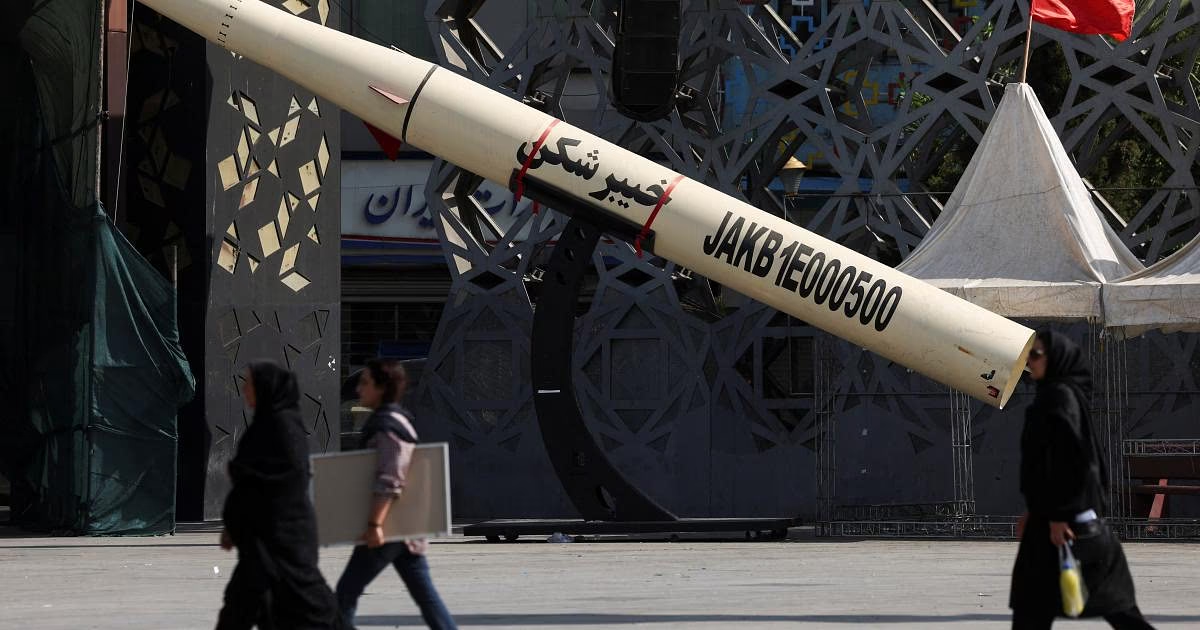
In contrast, Tehran warned that it possesses a massive arsenal of ballistic missiles and drones capable of reaching civilian and vital targets in neighboring countries. Sources confirmed that Iran is prepared to expand the scope of the conflict to include the facilities of Washington's allies in the Gulf if its oil interests are threatened.

There is no reason to believe that this latest series of attacks will force the Iranians to change their way of thinking; rather, it is likely to lead to a hardening of their stance.

ARAB AND WORLD

Fri 17 Jul 2026 10:00 am - Jerusalem Time

Widespread American escalation in southern Iran: Raids target bridges and airports, fears of a ground operation

The past hours have witnessed an unprecedented American military escalation targeting the Iranian interior, as US forces focused their raids on vital infrastructure in the southern regions. The attacks included the destruction of Iranshahr Airport in the southeast, in addition to bombing three strategic bridges in Hormozgan province, which represents the main artery for navigation in the region.

Hormozgan province gains extreme geopolitical importance as it directly overlooks the Strait of Hormuz and controls its waterways. It also includes the city of Bandar Abbas, which is a heavy economic and military center. Observers believe that severing this province aims to isolate it geographically and facilitate its control in the event of a decision to take direct military action.

Sources reported that the bombing also targeted the vital railway line connecting the cities of Bandar Abbas and Shiraz, which is the route the Iranian army relies on to secure logistical support and transport troops. This systematic targeting of supply lines indicates Washington's desire to cripple the movement of Iranian forces and prevent them from strengthening their defenses in coastal areas.

Raids were not limited to Hormozgan, but also extended to include the provinces of Shiraz, Kerman, Sistan, and Baluchestan, which are areas that form a security and logistical cordon around the Strait of Hormuz. This expansion in the targeting circle reinforces the hypothesis that the United States seeks to secure the operational environment before moving to a more dangerous phase of confrontation.

In Washington, informed sources revealed that President Donald Trump's administration has two options on the table for dealing with Tehran in the next phase. The first option involves intensifying air strikes to include sovereign targets in the capital Tehran, while the second option focuses on carrying out a wide-ranging ground operation aimed at full control of the Iranian coasts overlooking the Gulf.

Reports from the White House indicate that President Trump is leaning towards the option of ground control despite the high risks associated with this approach. However, there is a state of concern within American military circles regarding guarantees of success in light of the geographical complexities and defensive capabilities that Tehran possesses in that rugged region.

For their part, military experts warned that any American ground adventure could face fierce resistance from the Revolutionary Guard forces, which have about 190,000 elements specially trained in guerrilla warfare and coastal confrontations. These experts believe that the US Army may find itself in a long-term war of attrition if it decides to engage in a direct confrontation on Iranian soil.

The US administration is considering the option of carrying out a ground operation to control the Iranian coasts, amid warnings about the combat capabilities of the Revolutionary Guard.

PALESTINE

Fri 17 Jul 2026 10:00 am - Jerusalem Time

From comprehensive reconstruction to a border camp.. How did the ambitions of Trump's plan in Gaza shrink?

The plan promoted by the so-called 'Peace Council' of US President Donald Trump's administration has seen a dramatic decline in its objectives related to the Gaza Strip. After the proposed vision included comprehensive reconstruction of infrastructure throughout the Strip, ambitions have shrunk to settle on a limited experimental project focused on the southern region.

International press sources reported that the current project is limited to establishing a temporary camp on the outskirts of Rafah city, aimed at accommodating tens of thousands of displaced people only. This contraction comes amidst ongoing Israeli military operations that have made the implementation of major projects almost impossible at present.

Field data indicates that the project will not see the light before the end of this year, despite some initial logistical movements. Reports have monitored the arrival of a limited number of officers from Morocco and Kosovo to the occupied territories, to form the nucleus of an international stabilization force that is supposed to oversee the security of the targeted area.

In the context of preparations, a logistical supply base was established near the Kerem Shalom crossing to store the necessary vehicles and equipment for the work. However, satellite images confirm that excavation work within the proposed camp site is still very limited, and no actual construction operations for facilities or for the international force's headquarters have begun.

Western diplomats in Jerusalem link the project's faltering to the internal political scene in Israel, especially with the approaching elections on October 27. It is believed that any real progress may remain frozen until the fate of Benjamin Netanyahu's government becomes clear, which may face radical changes or complete replacement.

Since the announcement of the US-brokered ceasefire last October, intermittent Israeli raids on various areas in the Strip have not stopped. These attacks, along with severe restrictions on the entry of aid and construction materials, have created continuous obstacles to any attempt to begin actual reconstruction.

International parties fear that the collapse of this experimental project may open the door for extremist currents within the Israeli government to push for more aggressive plans. These plans include scenarios for widespread forced displacement and resettlement in areas of the Strip, which those in charge of Trump's plan are trying to avoid by keeping the project alive, even minimally.

On the ground, the Israeli army currently imposes direct control over about 60% of the Gaza Strip's area as a result of continuous incursions. The occupation authorities stipulate that Hamas must agree to full disarmament to defuse a comprehensive confrontation, which the movement rejects and considers unacceptable surrender.

In the Egyptian capital, Cairo, recent discussions took place on complex mechanisms for the possibilities of disarmament and identifying the international bodies that might receive the equipment. However, informed Palestinian sources confirmed that these discussions will not lead to tangible results as long as Israeli military expansion and systematic bombing operations continue.

In an attempt to salvage the situation, US negotiator Aryeh Lightstone sent messages to the Israeli government demanding a relaxation of restrictions on 'dual-use' materials. The demands included allowing the entry of water pipes and solar panels, in addition to facilitating the access of Palestinian police officers trained in Egypt to assume security tasks within the camp.

This reality represents a significant retreat from the promises made by former White House advisor Jared Kushner, who previously pledged to restart vital services within 100 days. The current plan, recently discussed in Cyprus, does not go beyond the idea of temporary housing units in a buffer zone, with an international force that could reach 5,000 personnel.

Finally, the project faces a suffocating funding crisis, as only meager amounts have been disbursed from the original $17 billion allocated for the original plan. The proposal to use withheld Palestinian tax money to fund the camp caused anger among the Palestinian Authority, which considered it piracy of the Palestinian people's rights and illegal use of their money.

The project's goal has become to keep something moving for fear of its complete collapse in the face of displacement and settlement plans.

ARAB AND WORLD

Fri 17 Jul 2026 10:00 am - Jerusalem Time

Trump Declassifies 'Chinese Interference' Documents, Vows to Protect Voter Data

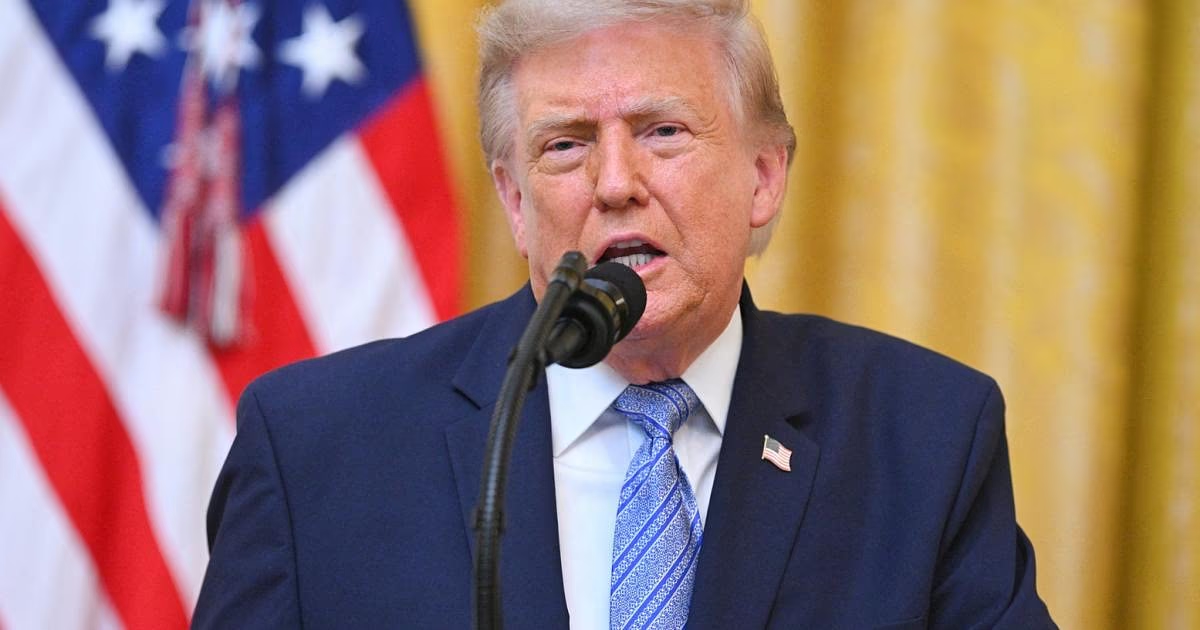
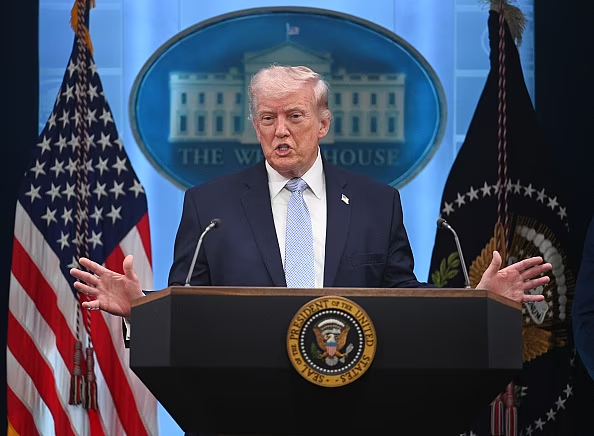
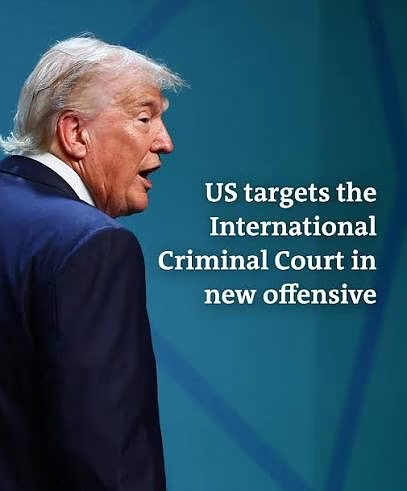
US President Donald Trump launched a scathing attack on the electoral system in the United States, considering the integrity of voting to be the fundamental pillar of the nation's greatness. In a speech to the nation, Trump pledged to take strict measures to ensure the protection of voter data from attempts at theft or manipulation in upcoming democratic processes.

The US President announced a surprise decision to immediately declassify a set of sensitive intelligence information, which he said reveals details of Chinese interference in electoral affairs. He clarified that these documents clarify the cyber threats facing the country from its international adversaries.

Trump directly accused Beijing of responsibility for carrying out what he described as 'the largest election data breach in history,' noting that these operations could not have succeeded without security vulnerabilities. He also strongly criticized the fragility of the infrastructure of electronic systems used in voting and vote counting processes.

Trump's accusations were not limited to external actors but also extended to what he called the 'deep state' within US intelligence agencies, accusing elements within them of deliberate complicity. He indicated that there were internal parties that worked to cover up the extent of Chinese infiltration and prevented the full truth from reaching the American people in a timely manner.

The speech revealed intelligence assessments indicating that countries such as Russia, Iran, and North Korea, in addition to non-governmental groups, possess advanced technical capabilities to penetrate electoral systems. Trump affirmed that the available evidence proves that the system has been subjected to dangerous and unprecedented violations that threaten national sovereignty.

According to the information provided by the President, China formed a special unit since 2020 to exploit hacked voter data and employ it in subversive activities aimed at destabilizing the country. He added that the policy pursued by the Chinese Communist Party focused on weakening his administration and supporting any opposing party to push him towards resignation.

The declassified documents, according to Trump, touched upon Chinese attempts to forge illegal ballots to support his rival Joe Biden during the 2020 elections. He claimed that Beijing tried to exploit its influence with major American companies to incite against his policies and turn the business community against his economic decisions.

In a related context, Trump accused the Chinese government of funding misleading media campaigns by attracting American journalists and providing them with huge sums of money. He stated that the goal of this funding was to ensure the writing of negative reports that would tarnish his image in public opinion and contribute to his loss in the previous presidential elections.

The US President concluded his speech by emphasizing that revealing these facts is the first step towards reforming the electoral system and restoring citizens' trust in the ballot box. He stressed that his administration will not allow these transgressions to be repeated and will work to fortify national cybersecurity against any future foreign interference, regardless of its source.

No nation can be great unless its elections are honest, and I have decided to immediately declassify information revealing the extent of foreign interference.

OPINIONS

Fri 17 Jul 2026 10:00 am - Jerusalem Time

Forced Displacement in Gaza Echoes the 1948 Nakba… And Britain Must Confront Their Shared Legacy

By: Avi Shlaim

Avi Shlaim (born October 31, 1945) is a British-Israeli historian and academic, born in Baghdad to an Iraqi Jewish family. He is an Emeritus Professor of International Relations at Oxford University and an advisor to the "Britain Owes Palestine" campaign. He is considered one of the most prominent New Historians who re-examined the history of the Arab-Israeli conflict, known for his critical stance on the traditional Zionist narrative, adopting a discourse supportive of Palestinian rights and critical of Israeli policies towards the Palestinian people.

Israeli Defense Minister, Israel Katz, announced that his government's ultimate goal is to push large numbers of Palestinians to leave Gaza through what he described as “voluntary migration,” to be carried out “at the right time and in the right way.” But what is actually being discussed is a long-term plan for ethnic cleansing, based on making living conditions in Gaza unbearable. For anyone who has studied the history of Palestine, this discourse carries a clear echo of a catastrophe that occurred before.

I have spent most of my academic career studying the Palestinian-Israeli conflict, a conflict made in Britain. In 1917, with a stroke of an imperial pen, the Promised Land became the subject of two promises, first to the Arabs, then later to the Zionist movement. The “Balfour Declaration” pledged support for the establishment of a national home for the Jewish people in a land whose overwhelming majority of inhabitants were Arab Palestinians, without their knowledge or consent.

Britain then ruled Palestine for three decades, establishing a legal and administrative structure that granted privileges to one community at the expense of another, while systematically restricting the rights of Palestinians. The first British High Commissioner to Palestine, Herbert Samuel, was Jewish and an enthusiastic Zionist. He initiated a policy of unrestricted Jewish immigration and land purchase, a policy that later triggered the Great Arab Revolt between 1936 and 1939.

In 1948, Britain withdrew from a conflict its policies had helped shape, leaving the indigenous population unprotected. During the ensuing war, some 750,000 Palestinians became refugees, and the name Palestine was erased from the map, known in Arabic as the “Nakba.”

In the same year, Israel carried out an ethnic cleansing operation in Palestine. Today, Israeli officials cloak ethnic cleansing in terms like “voluntary migration.” But when a people are subjected to continuous bombing, a suffocating siege, and systematic destruction of homes, hospitals, and food sources, no departure can be described as “voluntary.” Rather, what is happening is forced displacement of civilians. In the Zionist lexicon, it is called “transfer,” but in international law, it is a war crime and a crime against humanity.

The parallels between the ongoing war in Gaza and the 1948 war are strikingly clear. Then, as now, the uprooting of Palestinians from their land was portrayed as an unfortunate consequence of war, not one of its objectives, while Palestinians were denied any real role in determining their future.

In this context, the “Britain Owes Palestine” campaign submitted a 400-page legal petition to the British government, documenting Britain's unlawful actions during the Mandate period. The petition details, in horrifying detail, the violence, brutality, collective punishment, arbitrary arrests, and extrajudicial executions carried out by the British army to suppress the Arab Revolt. It also documents British government policies that made the Palestinian loss of Palestine not only possible but probable.

A cross-party coalition of 45 MPs and members of the House of Lords called on the British Prime Minister to respond to this petition. But after eight months, the government has not issued any response. This silence in itself constitutes a form of complicity with British crimes against the Palestinian people from 1917 to the present day.

Former Prime Minister Keir Starmer had affirmed his belief in the necessity of applying international law. However, possessing moral authority on the international stage also requires moral consistency at home. Britain cannot credibly condemn the forced displacement carried out by Israel in Gaza and the West Bank in 2026, while refusing to acknowledge its central role in the displacement of Palestinians in 1948.

Furthermore, the tools of control developed during the Mandate period, including torture, collective punishment, deportation, and the suspension of judicial oversight, did not disappear with the ignominious end of the British Mandate. Instead, the State of Israel inherited, expanded, and entrenched them within its institutions.

History does not repeat itself automatically; rather, it reproduces itself because those who have the power to break this cycle choose not to use it. The justification for British silence regarding Israeli crimes in Gaza has long since ended, and it is time for Britain to respect international law, hold Israel accountable, and end its complicity in the destruction of Gaza.

PALESTINE

Fri 17 Jul 2026 9:59 am - Jerusalem Time

By Law and Bureaucracy: How Israel Plundered $161 Billion of Palestinian Wealth?

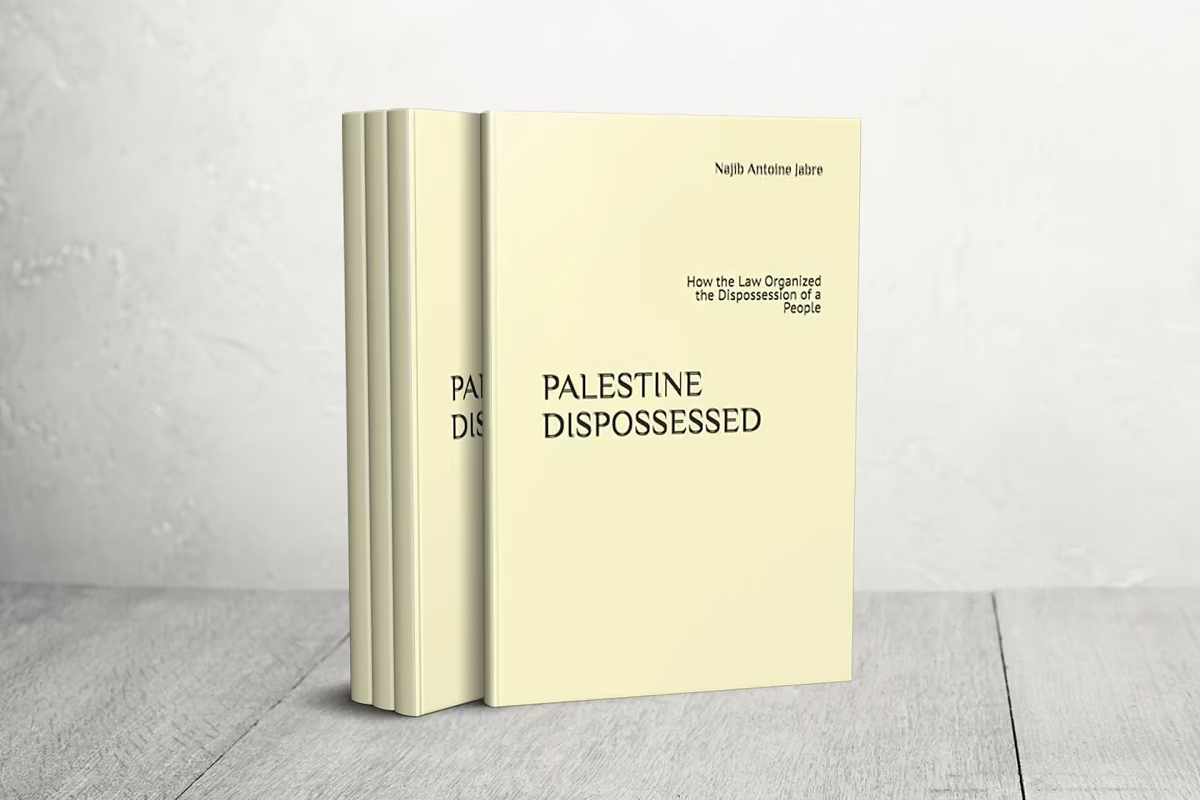
A recent legal study by Canadian jurist Najib Antoine Jabbour has revealed the hidden face of the Palestinian Nakba, which was not written with bullets but through court corridors and the seals of Israeli bureaucracy. The recently published book, titled 'Palestine Plundered,' explains how the occupation used a complex legal system to systematically strip the Palestinian people of their properties and financial assets.

The study confirms that the confiscation of land and financial entitlements was not merely a side effect of war, but a deliberate and continuous process enshrined through the 'Absentees' Property Law.' This law transformed the reality of forced displacement into a permanent legal status, allowing the transfer of ownership of real estate and bank accounts to the occupation authorities under misleading administrative designations.

The occupation relied on surreal classifications such as 'present absentee' to strip Palestinians who remained within the occupied territories of their rights to their properties. Under this classification, the management of these assets was transferred to the so-called 'Custodian of Absentees' Property,' an administrative step in appearance but in essence meaning the final confiscation of historical rights.

The plunder did not stop at land and structures but extended to include bank accounts, stock deposits, safety deposit boxes, and even contractual rights and debts. Sources indicate that freezing these financial assets aimed to cripple the ability of Palestinian families to rebuild their lives or appoint lawyers to claim their stolen rights.

The financial estimates in the book indicate that the total value of frozen properties and accounts today amounts to approximately $161 billion USD. This enormous figure reflects the scale of economic deprivation and the opportunity cost lost over eight decades of occupation and systematic prevention from accessing capital.

The author based his estimates on data from the United Nations Conciliation Commission for Palestine, which in the 1950s recorded millions of British pounds as movable and frozen assets. By calculating inflation rates and assumed annual returns of 10%, the true figure of losses incurred by the Palestinian economy as a result of these policies becomes apparent.

The study touched upon famous legal cases such as the 'Arab Bank' dispute against 'Barclays Bank,' which revealed how Palestinian depositors' balances were forcibly transferred to the occupation's treasury. These cases demonstrate that the banking system was a partner, willingly or unwillingly, in implementing the confiscation decisions issued by the 'Custodian of Absentees' Property.'

The book describes the 'procedural trap' in which the Palestinian refugee was placed, where they were asked to seek justice within the legal system that originally prevented their return. If entry into the country is prohibited and legal representation requires security approvals, then avenues for redress become practically and legally impossible.

The term 'abandoned properties' promoted by the Israeli narrative is a misleading term intended to conceal the reality of forced expulsion and prevention of return. A home is not abandoned if its owner possesses the key and is prevented from accessing it by force of arms or administrative decisions that prevent their movement.

The study asserts that international law considers displacement and loss of property without compensation as injustices requiring full restitution and compensation, and cannot be considered mere transient administrative procedures. It emphasizes that recognition of states does not grant moral immunity to legal structures built on the ruins of individual and collective property rights.

Subsequent Israeli real estate development and legislation bodies contributed to entrenching the plunder operations by transferring ownership to quasi-governmental channels to complicate recovery paths. These mechanisms made the recovery of any property in Jerusalem or the occupied cities a legal battle lost in advance, given the judiciary's complete bias towards the settlement system.

The book represents a transparent methodological study that goes beyond emotional narratives to provide conclusive legal evidence of the use of administrative authority as a tool of war. It calls on researchers and human rights advocates to examine banking records and old court files as incriminating documents that are beyond interpretation against the policy of illicit enrichment.

The conclusion of the work is that the Israeli legal system did not come to manage the consequences of the conflict, but was an integral part of the tools of displacement. Laws were designed to produce the same material outcome every time: stripping Palestinians of their financial means and preventing them from defending their land.

The issue of Palestinian property remains an unresolved matter as the largest organized plunder operation in modern history, where politics intertwined with law to serve the settlement project. Understanding the conflict today necessarily requires understanding how 'paper and pen' became weapons no less lethal than cannons in obscuring Palestinian rights.

Forced Palestinian displacement was not only the result of soldiers and battles, but also the result of legal definitions, banking restrictions, and bureaucratic obstacles that made plunder an institutionalized system.

OPINIONS

Fri 17 Jul 2026 9:59 am - Jerusalem Time

The US Embassy in Jerusalem... Is it built on Palestinian land whose names are still in the records?

This may be one of the most perplexing questions in the Palestinian-Israeli conflict today:

Can the embassy of the world's most powerful nation, or its permanent diplomatic complex in Jerusalem, be built on land whose original owners' names are still preserved in historical records?

This is not about an oral narrative, family memory, or unsubstantiated claims, but about names, families, inheritance shares, and documents dating back to a time when Jerusalem was a vibrant Palestinian city, before it was swept by political transformations, war, and occupation.

In the Jerusalem neighborhood of Baka, and in the famous Allenby complex, there is a plot of land, approximately thirty dunams in size, that was owned by dozens of Palestinian Jerusalemite families before the British Mandate government leased it to establish military barracks during the Mandate period.

The legal relationship at the time was clear and simple: there were Palestinian owners, and there was a tenant government using the land for a specific period.

But 1948 not only changed the geopolitical landscape of the city but also altered the fate of thousands of Palestinian properties that found themselves within a new legal and administrative system imposed by the war and its outcomes, and the transformations that followed.

Today, more than seven decades later, the same site returns to the forefront after being designated as the permanent headquarters for the US Embassy complex in Jerusalem, a step that carries political and diplomatic dimensions extending beyond the property's boundaries to deeper questions related to sovereignty, legitimacy, and historical narrative.

For decades, the United States has presented itself as a sponsor of the peace process in the Middle East, but geopolitics sometimes carries clearer messages than official statements. The embassy's location is not just an address for a diplomatic mission, but a political expression of understanding the sovereignty and national belonging of the place.

Sovereignty is not only measured by who raises the flag over the building, but sometimes by where that flag is raised.

And when the flag of a major power is raised over land whose Palestinian owners' names are still preserved in historical records, the political question becomes larger than the limits of diplomacy, and deeper than the limits of the property, to touch upon the United States' own position in the conflict over Jerusalem, its narrative, and its future.

Can we speak of American diplomatic sovereignty over land whose Palestinian owners are still known by name, family, and inheritance share?

And can political decisions nullify historical facts?

And can power, over time, become a source of legitimacy?

Perhaps the political and legal answers differ, but what cannot be ignored is that historical records still preserve the names of the owners of this land, that their descendants are still alive, and that the Palestinian narrative of this piece of Jerusalem has not disappeared despite the passage of decades.

The most painful irony is that many of the children of those families do not even know that the names of their fathers and grandfathers are still preserved in old documents and records.

Perhaps today one of the descendants of the original owners lives in Jerusalem, Hebron, Ramallah, Amman, Santiago, Chicago, or Sydney, without knowing that his grandfather's name is still recorded in the registers of land that has today become the focus of one of the most controversial political decisions in the world.

And perhaps someone holds an old photograph, a lease agreement, or a document inherited from his father, without realizing that that yellow paper is not just a family memory, but a part of Jerusalem's memory itself.

What makes this issue even more important is that it may not be an exception, but a microcosm of the entire story of Palestine, a land with known owners, existing documents, and a documented narrative, but facing a political and military force trying to turn a de facto situation into a final historical reality.

And this is precisely where the contemporary Palestinian's battle begins.

The battle is no longer just over land, but also over memory.

The occupation does not only rely on the balance of power, military superiority, or international political support, but also on the factor of time, on the departure of witnesses, on the loss of documents, and on the disconnection between descendants and ancestral land.

The most dangerous forms of confiscation are not the confiscation of land, but the confiscation of the narrative itself.

Therefore, initiatives aimed at collecting documents, connecting heirs to each other, and rebuilding the historical archive of Palestinian ownership in Jerusalem do not represent merely a family or legal effort, but constitute a national act par excellence, and part of the battle to protect Palestinian memory from oblivion.

Nations are not defeated only when they lose control of land, but when they forget that they once owned it.

Perhaps this explains the constant fear of documents, archives, old maps, and land registry records, because a silent document can sometimes raise questions larger than politics' ability to answer them.

The Palestinian has long defended his land with stones, steadfastness, and words, and perhaps it is time to add a new front to the battle for national survival: the front of the document, the archive, and memory.

In Jerusalem alone, and perhaps in many Palestinian cities, there are lands and properties that still bear the names of their Palestinian owners in old records, while their heirs are unaware of their existence.

And here the question becomes more urgent:

How many rights have been lost because their owners did not know of their existence?

And how many narratives have triumphed because the owners of the original narrative did not document them?

In Palestine, the battle for land does not begin the day it is confiscated, but the day its owners forget that they once owned it.

Therefore, documents alone may not be able to reclaim the land, but they can prevent the ultimate defeat, the defeat of memory.

The occupation can change maps, alter names, impose new realities on the ground, and build embassies over stones, but it is unable to erase the simple truth that old records have been silently writing for decades:

Here was Palestinian land.

And here were its owners.

And here their names are still preserved, waiting for someone to read them anew.

OPINIONS

Fri 17 Jul 2026 9:59 am - Jerusalem Time

What does the economy fear more than crises?

A few days ago, the International Monetary Fund (IMF) lowered its forecast for global economic growth in 2026 to 3.0%, down from 3.1% in its previous forecast. It justified this by citing ongoing geopolitical tensions, rising energy prices, and escalating uncertainty that continues to cast a shadow over the global economy.

This might seem like just a periodic review of growth forecasts, but in reality, it raises an economic question more important than the numbers themselves.

If global risks are increasing, why haven't economic decisions stopped? And why are companies still investing, relocating their factories, and pouring billions of dollars into new projects?

The answer doesn't start with growth rates, but with reading the report itself.

Despite lowering growth forecasts, the IMF did not speak of a halt in economic activity. Instead, it emphasized that the priority for policymakers is to:

"Restoring confidence, predictability, and sustainability remains a key policy priority."

This means that restoring confidence, enhancing predictability, and building more sustainable policies have become among the most important priorities for the next phase.

This phrase might seem ordinary, but in my opinion, it holds the key to understanding how the economy moves.

The economy does not wait for crises to disappear, because economic history has never known a crisis-free period. But it needs the surrounding environment to become more understandable, so that companies, investors, and governments can base their decisions on reasonable expectations, not on a state of complete ambiguity.

Here lies the difference between two concepts often used interchangeably: risk and uncertainty. Although the difference between them completely changes the way economic decisions are made.

Risk means that the challenges are known, even if they are costly. Energy prices might rise, new customs duties might be imposed, or interest rates might increase, but the effects of these variables can be estimated, and scenarios for dealing with them can be built.

Uncertainty, on the other hand, is a state where the rules of the game themselves become unclear. A company doesn't know how trade policies will change, where energy prices will go, or whether the supply chains it relies on today will still be able to meet its needs months from now. In this case, the problem is not the size of the potential loss, but the impossibility of estimating it.

For this reason, major companies have not stood idly by waiting for crises to end; instead, they have reformulated their strategies.

For example, Apple continued to diversify its production sites outside China, as part of a strategy aimed at enhancing the resilience of supply chains and reducing reliance on a single production hub. TSMC also continued to make huge investments in the United States, Japan, and Germany, even though the cost of production in these locations is higher than the cost of production in Taiwan.

Economically, these decisions do not seem logical if the only criterion for success is cost reduction.

But they become more logical if the goal is to build a greater ability to continue in a rapidly changing environment, even if that requires bearing higher costs.

And this, in part, explains what was stated in the IMF report.

Economic growth is not only linked to reduced risks, but also to the economy's ability to understand and adapt to them.

Therefore, economies do not wait for the end of crises to move, but rather begin to move when ambiguity turns into risks that can be estimated and managed.

For this reason, the most important question in every crisis is not:

When will it end?

But rather: When will its boundaries become clearer, so that individuals, companies, and governments can make their decisions with greater confidence?

The true value of reports from international economic institutions lies not in the growth figures they announce, but in the messages they carry about the nature of the next phase. The latest IMF report does not say that the world has become more stable, nor does it say that risks have disappeared. Instead, it draws attention to a more important truth: that restoring confidence and enhancing predictability have become essential conditions for continued growth.

Hence, the real challenge for policymakers is not to build an economy free of crises – a goal that has never been achieved at any stage of economic history – but rather to build an economy that can make decisions even amidst crises, because markets can coexist with risks, but they rarely can coexist with an unpredictable future.

The economy does not fear crises as much as it fears the absence of the ability to predict them.

OPINIONS

Fri 17 Jul 2026 9:59 am - Jerusalem Time

Trump Exaggerates Claims of Electoral Flaws in White House Speech

Washington Message

Washington – Said Arikat – 17/7/2026

In a televised speech from the White House on Thursday, US President Donald Trump primarily focused on the issue of election security, considering the integrity of the electoral process a matter of national security. He announced that his administration would reveal intelligence information and declassified documents, which he claimed related to foreign interference attempts in American elections, reiterating his skepticism about the 2020 elections, and affirming that his government would take additional measures to ensure "free and fair elections."

He also called on Congress to expedite the approval of new legislation to tighten voter registration rules and proof of citizenship, considering electoral reform a national priority no less important than security and defense. He presented the new website launched by the White House as a platform for publishing documents and information related to what he described as electoral irregularities.

Regarding foreign affairs, Trump touched upon developments in Iran, affirming that US military operations are ongoing and achieving their objectives, while emphasizing that the United States will not allow Tehran to threaten international navigation or American interests. He did not make a major political announcement regarding Iran but stressed that his administration would continue to exert pressure until its security and strategic goals are achieved.

The speech reflects the Trump administration's shift towards making election security a central focus of the upcoming political campaign, in an attempt to re-mobilize his popular base around an issue that has formed the basis of his discourse since 2020. By linking elections to national security, the White House seeks to give the issue a dimension that transcends partisan competition, thereby justifying broader executive and legislative measures. However, this approach will face widespread legal and political objections, as many of the re-raised claims have previously been rejected by courts and electoral bodies in recent years.

Allocating limited space to foreign policy compared to the electoral file carries clear political significance. The administration realizes that American public opinion has become more interested in domestic affairs, the economy, and the electoral system than in external developments. Therefore, the discussion about Iran came within the framework of emphasizing military resolve without announcing new initiatives. This indicates that the White House seeks to avoid opening an additional political front, while keeping the military option as a continuous pressure tool against Tehran without committing to a clear diplomatic path.

The speech reaffirmed Trump's political style of combining security and electoral messages in one address, thereby reinforcing the image of a president who presents himself as the defender of the nation against both internal and external threats. However, this approach also carries the risk of deepening political polarization, as opponents see repeated challenges to elections as undermining citizens' trust in democratic institutions, while his supporters consider these positions necessary to restore confidence in the American voting system, a division likely to persist until the midterm elections.

ARAB AND WORLD

Fri 17 Jul 2026 9:58 am - Jerusalem Time

Scenarios for a Ground Confrontation Between Washington and Tehran: The Strait of Hormuz at the Heart of the Storm

The prospects of a ground confrontation between the United States and Iran have returned to the forefront of the military scene, following intensified mutual strikes targeting vital infrastructure. The US Central Command announced a wide wave of attacks on dozens of military targets inside Iranian territory, including coastal air defense systems, surveillance centers, and naval capabilities belonging to the Revolutionary Guard.

In an assessment of the field situation, military sources indicate that talk of a ground invasion of some Iranian islands has become a plausible scenario within potential confrontation plans. However, the biggest challenge lies in the ability of US forces to establish a foothold in those locations, given their direct proximity to heavy Iranian missiles and artillery that heavily cover the coasts.

Military analyses suggest that any American landing operation could be considered by Tehran as a strategic opportunity to draw in conventional forces and inflict heavy losses. Iran's complex geography and the widespread deployment of missile platforms make any long-term occupation an uncertain military adventure, especially in the absence of current capabilities for a comprehensive military decisive victory on the ground.

As for the Strait of Hormuz, controlling it remains a major strategic dilemma for military planners in Washington. Iran relies on 'asymmetric warfare' in its defensive strategy, using fast boats, naval mines, and cruise missiles to threaten international navigation. These tools are difficult to neutralize completely through traditional air strikes alone without entering into a war of attrition.

Regarding field developments, Tehran announced targeting what it described as 'American military bases' in the Gulf region, leading to a widespread defensive alert in several Arab countries. Kuwait, Bahrain, and Qatar all confirmed intercepting drones in their airspace, an escalation that threatens to expand the conflict to include regional parties not directly involved in the operations.

In Qatar, local sources reported that a child was injured by shrapnel resulting from aerial interception operations of Iranian drones, reflecting the extent of the risks facing civilians in the region. The affected Gulf states emphasize that their cooperation with Washington is limited to training and defensive aspects, denying the involvement of their bases in offensive operations launched against Iran.

Observers believe that the continuation of Iranian attacks on neighboring countries may push these countries in the future to change their defensive strategy and engage more openly in military alliances. The attrition of air defense systems in the region places immense political and security pressure on Arab capitals that are trying to balance their strategic relations and avoid sliding into a regional war.

Despite the intensity of US airstrikes, Iranian military capabilities possess high flexibility due to the country's vast area and the underground distribution of military facilities. Experts confirm that weakening these capabilities requires a long time and continuous military effort, which Washington may not wish to commit to given the exorbitant political and economic costs.

The combat doctrine of the Iranian Revolutionary Guard is not based on conventional military superiority, but on possessing the continuous ability to disrupt and harass at the lowest possible cost. This approach makes it difficult for any regular force, no matter its technological strength, to end the Iranian threat to international navigation through unilateral military action without reaching comprehensive political settlements.

In conclusion, it appears that the region is heading towards a phase of mutual attrition, where each party seeks to impose new deterrence equations at the expense of the security of waterways. The Strait of Hormuz remains the hottest point in this conflict, where global economic interests intertwine with regional military ambitions, making political solutions a necessity to avoid a full-scale explosion.

Washington may be able to occupy certain positions, but the real challenge lies in its ability to establish its forces there against Iran's arsenal of missiles and drones.

OPINIONS

Fri 17 Jul 2026 9:58 am - Jerusalem Time

A Reading of Eng. Tayseer Muhaisen's Article: Elections or Rebuilding the National Project?

As in every sharp national turning point, comrade Tayseer Muhaisen excels in devising creative ideas and presents a coherent political thesis that can serve as a roadmap for exiting the current Palestinian dilemma, especially amidst the debate surrounding the issue of elections. It is not based on rejecting elections as a constitutional right and a democratic tool, but rather on reordering national priorities before reaching them. Thus, he shifts the discussion from the question: “Should we hold elections?” to a deeper question: “What needs to be achieved nationally so that elections become the culmination of a political process, not a substitute for it?”

Tayseer’s article does not stem from a pro- or anti-election stance, but from an attempt to redefine their position in the hierarchy of Palestinian national priorities. Elections, in his view, are not an end in themselves, but a means whose value is determined by their political function. If they contribute to strengthening the national project, advancing the liberation struggle from occupation, and restoring national unity, they would be a step forward. However, if they come to reproduce the existing political system with its tools and imbalances, or to confer new legitimacy on the transitional phase, they become part of the crisis, not an entry point to its solution.

From this perspective, Muhaisen reorders national priorities, presenting a set of strategic tasks that should precede any electoral entitlement.

The first of these priorities is building a unified Palestinian national stance towards the next phase, because any elections held amidst division and the absence of a common political vision will not produce a comprehensive national legitimacy, but may instead generate conflicting legitimacies that deepen the crisis at a moment when the enemies of our people seek to exploit the division to complete their targeting of the national project.

The second priority is to build a representative national consensus that restores the standing of the Palestine Liberation Organization as the comprehensive national framework and establishes a genuine political partnership, so that elections become part of the process of rebuilding the Palestinian political system, not merely a reshuffling of Authority institutions and the accompanying competition between centers of influence.

The third priority is the necessity of not reverting to the ceiling of the transitional phase. The article warns against elections becoming a tool to reproduce the equations that emerged under the Oslo Accords, or to consecrate the ceiling that the occupation gradually sought to lower until it was determined by the advance of its tank treads and settlement bulldozers. What is required, however, is to build upon the recognition of the State of Palestine and develop national achievements, not to return to managing a transitional authority with limited powers as if the political process had not witnessed any development.

In the same context, comrade Tayseer, in his important article, draws attention to the fact that a large part of the international discussion focuses on “reforming the Palestinian Authority” more than on ending the occupation, which necessitates caution against elections becoming a response to external priorities, instead of being a response to the needs of the Palestinian people and the requirements of their national struggle.

The author places recovery in the Gaza Strip at the forefront of these priorities. After the war of extermination and its widespread destruction, displacement, and economic and social collapse, providing the conditions for recovery, rebuilding society, and strengthening its resilience becomes a necessary condition before talking about normal electoral competition. Democracy does not flourish in an environment that is still struggling for survival.

His article does not call for the cancellation of elections or their indefinite postponement, but rather means that elections should be the culmination of a new national path based on unity, partnership, and recovery, not a substitute for this path or an entry point for reproducing the crisis.

The fundamental intellectual value of this article lies in redirecting the discussion from mechanisms to objectives, and from means to ends, and reminding that national legitimacy in liberation movements is not confined to the ballot box alone, but is also based on unity of representation, clarity of the national project, and the ability to lead the people in the battle for freedom and independence.

Perhaps the most important message that Tayseer Muhaisen concludes with is that elections must be a culminating station for rebuilding the Palestinian national project, not a starting point amidst continued division, stalled recovery, absence of national consensus, and the risk of returning to the ceiling of the transitional phase. The challenge today is not limited to renewing institutions, but goes beyond that to renewing the national project itself, as the comprehensive framework for all forms of political and democratic struggle.

This is a call that deserves a broad national discussion, because it does not pose the question of elections as a procedural question, but places it in its deeper context: What national project do we want? And what political system do we want these elections to legitimize?

OPINIONS

Fri 17 Jul 2026 9:58 am - Jerusalem Time

An old international system is receding and retreating... and a new one is delayed in its birth..

A reading on the transformations of the international system and the birth pangs of a post-hegemony world...

It is no longer possible to read the war in Ukraine, the Israeli aggression on Gaza, the military confrontation between Israel and Iran, the US-China rivalry, and the trade and technological wars as separate crises. They are interconnected links in a single historical context, titled: The decline of the international system formed after World War II, and the faltering birth of a new international system.

Since 1945, the international system has been based on a set of institutions and legal and political rules that were supposed to preserve international peace and security. After the collapse of the Soviet Union in 1991, the world entered a unipolar phase led by the United States, which possessed military, economic, and technological superiority, and managed the global system according to its interests and alliances.

However, the last three decades have revealed the limits of this hegemony. Prolonged wars, financial crises, the rise of China, Russia's return to the international stage, and the emergence of influential regional powers such as India, Turkey, Saudi Arabia, and Brazil, are all factors that have reshaped the balance of power and weakened any single state's ability to lead the world alone.

The Russian-Ukrainian war confirmed that Western power, despite its magnitude, is no longer capable of resolving major conflicts. Then, the war on Gaza revealed the inability of the United Nations and the Security Council to stop a devastating war, protect civilians, or enforce the rules of international humanitarian law, amidst double standards and the use of veto power to serve political interests. As for the military confrontation between Israel and Iran, and the direct American intervention that accompanied it, it confirmed that the region has become part of a broader international conflict, and that traditional deterrence policy is no longer exclusive to one party.

These developments do not mean that the United States has lost its position as the world's greatest power, but they do mean that its ability to impose its will alone is no longer what it once was. In contrast, rising powers, primarily China and Russia, have not yet been able to build an alternative international system with established institutions and effective mechanisms for managing global crises.

Hence arises the great paradox: the old system is gradually losing its effectiveness and legitimacy, while the new system is not yet complete. In the vacuum between them, wars increase, crises expand, trust in international institutions declines, and the world becomes more turbulent and less capable of managing conflicts.

It is no coincidence that this phase coincides with a global race for artificial intelligence, semiconductors, energy, maritime corridors, and supply chains, as the conflict is no longer solely about geography, but about technology, economics, and control over the levers of power in the 21st century.

In this scene, the "BRICS" group and other emerging blocs stand out as an expression of a growing desire to build a more multipolar system. However, these powers, despite their expanding economic and political influence, still lack a unified vision and institutions capable of managing the international system or providing a comprehensive alternative to the existing system.

The Palestinian issue, meanwhile, has become one of the most important tests of the international system. What is happening in Gaza is no longer just a regional conflict, but has become a benchmark by which the extent of respect for international law, the credibility of UN institutions, and the ability of the international community to protect the principles upon which the global order was founded after World War II are measured. When these institutions fail to implement their resolutions, or protect civilians, the crisis is not just a crisis of Palestine, but a crisis of the international system itself.

Nevertheless, history teaches us that international systems do not collapse suddenly, nor do their alternatives emerge in an instant. The system that followed the Congress of Vienna, and then the system after the two World Wars, only took shape after years of conflicts and major transformations. What the world is witnessing today may be a similar historical birth pang, in which strategic competition intertwines with the redrawing of maps of influence and alliances.

The world stands at a crossroads today. Either the major powers succeed in building a more balanced and just system based on respect for international law and multilateral partnerships, or the transitional phase will be prolonged, with its accompanying wars, conflicts, and polarizations that threaten global security and stability.

The conclusion is that the world is not experiencing a fleeting crisis, but rather the end of an entire historical phase. The old international system is receding and retreating, but it has not completely fallen, and the birth of the new system is delayed, but it is slowly taking shape amidst the struggle of wills and the shifting balance of power. Between the decline of the old and the birth pangs of the new, the world is experiencing one of its most turbulent phases since the end of World War II, where the question is no longer: Will the international system change? But rather: Who will shape its new rules, and on what foundations of power, legitimacy, and justice will it be based?

OPINIONS

Fri 17 Jul 2026 9:58 am - Jerusalem Time

Netanyahu's visit to Washington... Will he clash with Trump's demands regarding South Lebanon?

Ahead of Israeli Prime Minister Benjamin Netanyahu's anticipated visit to Washington, the South Lebanon file tops the political and security agenda, not only as one of the most prominent unresolved issues between Lebanon and Israel, but also because it has become a clear point of divergence in visions between the administration of US President Donald Trump and the Israeli government.

While Washington seeks to solidify the framework agreement it sponsored and push for the implementation of what are known as "experimental zones" as a first step towards the redeployment of the Israeli army and strengthening the presence of the Lebanese army in the South, Netanyahu appears more committed to maintaining the buffer zone established by the Israeli army inside Lebanese territory, considering it part of Israel's security doctrine after the last war.

The disagreement between the two sides is not only about military arrangements but also reflects a difference in the nature of their objectives. Trump, who seeks to market himself as a dealmaker capable of ending conflicts, sees stability on the Lebanese front as an opportunity to achieve a new political and diplomatic accomplishment, especially in light of his efforts to redraw the map of regional balances through US-sponsored security and political agreements.

Netanyahu, on the other hand, views the issue from a completely different angle. He realizes that any unconditional withdrawal from South Lebanon could be interpreted within Israel as a retreat in the face of Hezbollah, and could provide his political opponents with new material to attack him in a crucial election year, at a time when his government still faces significant internal pressures. Therefore, he tries to combine formal acceptance of the American initiative with practically maintaining the realities imposed by the Israeli army on the ground.

The idea of "experimental zones" is based on a gradual Israeli withdrawal from specific areas where the Lebanese army would assume security responsibility, with American monitoring of the implementation as a test of the possibility of expanding the experiment later to other areas. However, this mechanism still faces many obstacles, most notably the dispute over the nature and limits of the withdrawal, and Israel's insistence on retaining freedom of military movement, which raises Lebanese concerns that the process could turn into a re-formulation of occupation rather than its termination.

Conversely, the American administration insists on the necessity of showing tangible progress before moving to broader political stages, because the success of this experiment will enhance Washington's position as a key mediator in the region, while its failure would mean the shaking of the entire framework agreement, and perhaps a return to the cycle of military escalation.

However, historical experience with Israeli governments makes many approach promises of withdrawal with caution. For decades, Israel has adopted a policy of imposing facts on the ground and then turning them into bargaining chips, which raises questions about whether the "experimental zones" truly represent the beginning of a real withdrawal, or whether they are merely a means to entrench new security arrangements that grant Israel long-term influence within South Lebanon.

Netanyahu also realizes that maintaining a buffer zone gives him a permanent leverage over Lebanon and Hezbollah, and establishes a security equation that allows Israel to intervene whenever it wishes under the pretext of "preventing threats," which contradicts the American vision that prefers stability serving its regional interests and reducing the chances of a new confrontation.

These divergences reveal that the American-Israeli alliance, despite its strength, is not without disagreements when it comes to defining each party's priorities. The United States seeks a political achievement that enhances its regional influence, while Israel seeks to consolidate its military gains and avoid making concessions that could be interpreted internally as a defeat or retreat.

Ultimately, the future of South Lebanon remains contingent on Washington's ability to exert real pressure on Netanyahu's government to implement what has been agreed upon, and on Lebanon's ability to impose its full sovereignty over its territories. However, if narrow Israeli calculations prevail over political commitments, the "experimental zones" may turn from a gateway to de-escalation into a new title for conflict management, not its termination, leaving the region suspended between settlement projects and the realities of occupation, and between Washington's diplomacy and the doctrine of force that still governs Israeli decision-making.

In the end, the disagreement between Trump and Netanyahu will not just be a divergence of views on the mechanism of withdrawal from South Lebanon, but a real test of who holds the decision-making power within the American-Israeli alliance. If Washington seeks to impose a settlement that entrenches its influence and presents it as a sponsor of stability, as it claims, then Netanyahu's government is trying to turn any agreement into a cover that grants it legitimacy to maintain the occupation in a new form, under different security designations.

Hence, Netanyahu's visit to Washington will not only determine the future of the "experimental zones" but may also shape the features of the next phase in the relationship between the American administration and Israel. If Trump fails to compel Netanyahu to implement the understandings sponsored by his country, it will be confirmed once again that Israeli governments only view agreements insofar as they serve their interests, and that they quickly disavow them when they conflict with their expansionist project. However, if Washington succeeds in imposing its vision, it will be a rare precedent revealing that American interests may temporarily take precedence over the calculations of the Israeli right.

The most important question remains: Will the "experimental zones" be the beginning of the restoration of Lebanese sovereignty, or merely a new experiment to reproduce the occupation with different tools? Previous experiences confirm that Israel does not relinquish land except under real pressure, and does not grant peace for free, but always seeks to turn it into a means to consolidate its military and political superiority, not to end the conflict or respect the sovereignty of others.

PALESTINE

Fri 17 Jul 2026 9:57 am - Jerusalem Time

Thirst Policy: Occupation Cuts Lifeline to Nablus Villages for Settlements

The severity of the humanitarian suffering is escalating in the villages northwest and west of Nablus city in the occupied West Bank, where thousands of citizens are facing a severe water shortage crisis that has lasted for consecutive weeks. This crisis coincides with intense heatwaves in the summer, which has doubled families' need for water to meet basic drinking and hygiene requirements, amidst a bitter daily reality where residents spend their time searching for a drop of water.

Sebastia Mayor, Mohammed Azem, held the Israeli occupation authorities fully responsible for this deterioration, emphasizing that the occupation has absolute control over the quantities of water reaching the area. Azem explained that Israeli measures include preventing Palestinians from developing new water sources or drilling additional wells, making the area hostage to political and security decisions aimed at restricting the Palestinian presence.

Field sources indicated that water pumping stations in the Sebastia area are completely dry, reflecting the scale of the disaster affecting population centers. Local officials called on the international community to intervene urgently to pressure the occupation authorities to ensure water flow, warning that the continuation of these policies poses a direct threat to the lives of residents and their stability in their lands.

During a tour inside the affected homes, the extent of frustration and distress experienced by citizens is evident, as citizen Mohammed Shehadeh confirmed that water has not reached his home for ten days. Shehadeh explained that the absence of water has disrupted all details of daily life, making the simplest household tasks a burden requiring prior planning and double effort, leading to a state of constant tension within the family.

Many residents in Nablus are forced to resort to alternative and costly options, such as buying water from private tankers that charge exorbitant prices beyond the financial capacity of families. These additional financial burdens come amidst difficult economic conditions experienced by West Bank residents, putting heads of households before harsh choices to provide the minimum needs for their children and elderly.

For his part, child Abdul Rahman Shehadeh expressed his dissatisfaction with the loss of this essential facility, noting that the absence of clean drinking water has made it difficult to lead a normal life. The child, like other children in the area, hopes for an end to this crisis soon and a return to their daily routine without the constant worry about the availability of water for personal and educational uses.

Technical data indicates that the crisis is a result of a deliberate decision by the Israeli company 'Mekorot' to reduce the quantities of water allocated to Palestinian towns, in response to pressure and demands from settlers in the area. Observers believe that this step falls within the systematic 'thirst policy' aimed at prioritizing illegal settlements at the expense of indigenous Palestinian villages and cities, in flagrant violation of international law.

This water crisis comes in the context of a broader escalation witnessed in the West Bank since October 7, 2023, where the pace of attacks by the army and settlers has increased unprecedentedly. According to official statistics, these attacks have resulted in thousands of martyrs and wounded, in addition to widespread arrest campaigns and forced displacement affecting thousands of families, exacerbating living and service crises in all governorates.

Ending the crisis requires allowing water access to villages, approving well drilling, and stopping water theft and diversion to settlements.

PALESTINE

Fri 17 Jul 2026 9:57 am - Jerusalem Time

Burnham apologizes for 'Labour's' stance on Gaza and faces new 'Trump era' challenges

The new British Prime Minister, Andy Burnham, made a remarkable statement by publicly apologizing for the way the Labour Party handled the war in Gaza, in the presence of his predecessor Keir Starmer. Burnham affirmed that the official position should have included an early call for a ceasefire and more serious pressure on the Israeli side.

The new Prime Minister pledged to listen more carefully to grassroots and public demands, despite recognizing the difficulty of satisfying all parties. While some groups demand that what is happening be described as genocide and call for a ban on arms sales, the British position remains constrained by the necessity of coordination with the White House and international allies.

On the broader foreign policy front, Burnham appears to be navigating a diplomatic minefield with Donald Trump's return to the scene and his impact on the NATO alliance. Burnham has committed to raising defense spending to 3.5%, a move aimed at absorbing Washington's anger despite the unclear funding mechanisms in the current budget.

Sources reported that Western capitals are concerned about the fading features of 'old America' that adhered to traditional international norms. This concern is evident in the statements of European leaders who are beginning to lose patience with volatile American policies, especially after recent trade threats against countries like Spain.

The recent NATO summit in Ankara witnessed unprecedented tensions, with Trump threatening punitive measures against allies who do not commit to increasing military spending. The situation in the Gulf has also escalated with the resumption of military operations against Iranian targets, threatening global energy price stability and increasing the likelihood of conflict.

In this context, the book 'Ten Steps to Prevent World War III' by former minister Tobias Ellwood stands out as a warning of a grim future awaiting the international system. The book imagines 2040 as a time of regret for missed opportunities that allowed the collapse of international rules and the rise of alternative powers that filled the vacuum left by Washington.

Ellwood believes that the next world war will not be one major confrontation, but a series of local conflicts and proxy wars that drain the world. In this scenario, grave violations of military norms, including the threat of tactical nuclear weapons, become routine, threatening the survival of traditional alliances like NATO.

To confront this potential catastrophe, experts suggest the necessity of forming a new stability alliance comprising middle powers from various continents. This alliance aims to protect the rules-based global order and share technology with poorer nations to reduce the gaps that fuel conflicts and armed disputes.

Burnham faces the challenge of implementing this ambitious program, known for his skill in building alliances since he was mayor. However, questions remain about his ability to withstand direct American pressure, especially on sensitive issues such as nuclear deterrence and intelligence sharing.

Reports indicate that European leaders are beginning to be convinced of the necessity of change and self-reliance, especially after declared American ambitions in areas like Greenland. This shift comes at a time when Ukraine has developed its military manufacturing capabilities, which may relatively reduce its need for direct and volatile American support.

His predecessor Starmer left a complex legacy of postponed decisions and financial crises that burden the new government. While Starmer succeeded in buying some time for Ukraine, observers believe that Britain lost valuable time in updating its defense capabilities and funding its international military commitments.

Under these circumstances, Burnham needs an exceptional diplomatic team to manage the next phase and overcome obstacles. David Miliband's name stands out as a strong candidate to play a pivotal role, given his long experience and international relations that could help London reposition itself on the global map.

The next phase requires what diplomats describe as 'the art of calibration,' which is the ability to make minor policy changes that lead to significant results. Burnham must balance firmness on the Gaza issue to avoid moral complicity, with maintaining a balanced strategic relationship with the new American administration.

Success in this test will mean sparing Britain and the world the scenarios of failure that Ellwood warned of in his vision for 2040. The bet remains on the ability of the new leadership in London to make fateful decisions that separate stability from the comprehensive collapse of the international system.

The government should have called for a ceasefire earlier, and escalated pressure on Israel.

OPINIONS

Fri 17 Jul 2026 9:53 am - Jerusalem Time

The Real Target Isn’t the ICC—It’s Accountability


By: Said Arikat


July 17, 2026


News analysis 


Washington, D.C.- When U.S. Secretary of State Marco Rubio declared on Monday, in the Wall Street Journal that the Trump administration intends to dismantle the International Criminal Court “brick by brick,” he cast the effort as a defense of American sovereignty against an unelected international bureaucracy. Read closely, however, his essay is less a constitutional argument than a political manifesto against international accountability—especially when that accountability reaches America’s closest allies.


Rubio portrays the ICC as an institution determined to place American soldiers, elected officials, and law enforcement officers under the authority of foreign judges. Yet this caricatures the court’s legal mandate. The United States never ratified the Rome Statute, and successive administrations have challenged the ICC’s jurisdiction over Americans. That legal dispute is genuine. Rubio’s argument goes much further: he questions the court’s legitimacy altogether and calls for its dismantlement.


That objective says more about Washington’s political priorities than the ICC’s legal flaws.


The timing is no coincidence. Rubio has been among Israel’s strongest defenders throughout the Gaza war and fiercely condemned the ICC after it sought arrest warrants for Israeli Prime Minister Benjamin Netanyahu and former Defense Minister Yoav Gallant over alleged war crimes and crimes against humanity. Rather than allowing those allegations to be tested before an independent tribunal, he joined a campaign portraying the court itself as the offender.


Nor did this campaign begin with Rubio’s wall Street Journal’s article. It began the moment the ICC showed a willingness to investigate leaders of countries closely aligned with Washington.


For years, American officials embraced international criminal justice when it targeted African dictators, Balkan warlords, or Russian officials. Washington supported the tribunals for Rwanda and Sierra Leone, welcomed the prosecution of Slobodan Milošević, and applauded the ICC’s indictment of Russian President Vladimir Putin. Accountability was celebrated as a cornerstone of the rules-based international order.


That enthusiasm waned once similar legal scrutiny approached American personnel or Israeli officials.


The contrast is difficult to ignore. International justice appears acceptable when directed at geopolitical rivals but intolerable when applied to strategic partners. Such selectivity weakens both American diplomacy and the credibility of the international legal order Washington routinely claims to uphold.


Rubio repeatedly invokes sovereignty, yet sovereignty has never been an absolute shield against allegations of genocide, crimes against humanity, or war crimes. The legal framework established after the Second World War—including the Geneva Conventions and subsequent treaties—was built on the premise that governments cannot always be relied upon to investigate themselves impartially.


The Rome Statute reflects that principle through complementarity, which gives national courts the first opportunity to prosecute alleged crimes. The ICC serves as a court of last resort when domestic authorities prove unwilling or unable genuinely to investigate. Whether the court always applies that principle consistently is open to debate. Rubio, however, largely sidesteps this framework, depicting the ICC instead as an institution eager to override functioning national courts.


His rhetoric is equally revealing.


Rubio describes the ICC as being driven by “leftist nongovernmental organizations,” “smug globalists,” and “hostile Third World governments.” Such language may resonate politically, but it substitutes ideological branding for legal analysis. Courts are challenged through evidence, jurisdiction, and legal reasoning—not by dismissing their supporters as global conspirators.


His reference to “Third World governments” is especially telling. It dismisses many of the countries that have been among the strongest advocates of international accountability precisely because they have endured mass atrocities, military coups, and state violence firsthand.


The irony becomes sharper when viewed alongside remarks attributed to the late Senator Lindsey Graham, another staunch defender of Israel. Graham reportedly told former ICC Prosecutor Karim Khan that the court “was built for Africa and for thugs like Putin,” not for the United States or Israel. Whether intended as blunt diplomacy or political theater, the comment encapsulated a criticism that has long shadowed international justice: accountability is expected of weaker states but resisted when it reaches powerful democracies and their allies.


Rubio’s article effectively elevates that perception into official policy.


The secretary of state also warns that Border Patrol agents, Marines, and federal prosecutors could someday face politically motivated prosecutions. That concern deserves serious consideration. Any international judicial institution must guard against politicization. But dismantling the ICC is an extraordinary remedy for problems that could instead be addressed through procedural reforms, clearer jurisdictional limits, and stronger due-process protections.


Indeed, even many of the ICC’s critics advocate reform rather than abolition. The court has faced legitimate criticism over slow investigations, uneven prosecutions, prosecutorial overreach, and inconsistent evidentiary standards. Those shortcomings warrant improvement, not demolition.


More fundamentally, Rubio’s proposal raises uncomfortable questions about the international order the United States helped build after 1945.


For decades, Washington has argued that respect for international law distinguishes democratic governance from authoritarian rule. American officials regularly condemn Russia, China, Iran, and other rivals for violating international norms. Those criticisms lose moral force if the United States insists that international legal institutions possess authority only when judging others.


Rules applied only to adversaries are not rules. They are instruments of power.


The consequences extend beyond legal theory. America’s allies increasingly find themselves caught between Washington’s rejection of the ICC and their own obligations as states party to the Rome Statute. European governments, in particular, face growing tension between their commitment to NATO and their commitment to international criminal justice.


Rubio frames the debate as a choice between sovereignty and globalism. The real question is whether powerful states should remain subject to independent legal scrutiny when allegations involve the gravest crimes recognized under international law.


The answer will shape far more than the future of the ICC. It will determine whether the rules-based international order remains a universal legal framework or becomes a selective system in which accountability depends less on the gravity of alleged crimes than on the political influence of those accused.


If Washington succeeds in dismantling the ICC, it may shield American and Israeli officials from future prosecutions. But it will also send a clear message to the world: international justice is for the weak, while the powerful answer only to themselves. That is not a defense of sovereignty. It is an affirmation of exceptionalism—one whose cost will be measured not only in legal precedent, but in the erosion of America’s credibility the next time it invokes international law against others.

PALESTINE

Thu 16 Jul 2026 7:39 pm - Jerusalem Time

Investigation reveals former US soldier's involvement in managing an air supply network for the Rapid Support Forces

An extensive investigative report has revealed the involvement of companies managed by Stephen Shaulis, a former US Army Special Forces soldier, in operating a fleet of old cargo planes to support the logistical operations of the Rapid Support Forces (RSF) in Sudan. The findings were based on a meticulous analysis of flight records and satellite data, in addition to interviews with dozens of intelligence officials, diplomats, and weapons experts.

The threads of this case began to unravel after the Sudanese army destroyed a Boeing 737 aircraft in May 2025, while it was at Nyala Airport in Darfur, which is the main stronghold of the Rapid Support Forces. Informed sources reported that the airstrike resulted in the deaths of 54 people, including a pilot and an engineer working for Occidental Sport Services, a company owned by Shaulis and registered in the UAE.

Flight tracking operations monitored two additional Boeing 727 aircraft linked to the same network, which were transferred from the United States and Brazil to the African continent. These aircraft conducted frequent flights to sensitive logistical centers in Chad, Libya, and Somalia, areas classified as essential supply bases for the military movements of the Rapid Support Forces.

Technical data showed that the three aircraft landed at least 16 times at Bossaso, Kufra, and Nyala airports, locations that UN experts confirmed form the backbone of the supply network relied upon by the forces during the siege of El Fasher. These aircraft were suspiciously stationed within the military section of N'Djamena Airport in Chad, away from the oversight of local civil aviation authorities.

Stephen Shaulis, 63, is a pivotal figure in the military contracting sector, having founded C.A.D.G. in Singapore in 2002. According to official records, his companies have secured massive contracts exceeding $400 million from the US government, in addition to deals worth $160 million with UN agencies over the past two decades.

Shaulis's companies' activities varied between establishing facilities for US forces in Afghanistan and Iraq, and providing logistical services at military airports in African countries such as Kenya, the Central African Republic, and Mozambique. Despite this extensive record of cooperation with international entities, the involvement of his aircraft in the Sudanese conflict has raised deep questions about the nature of the missions they were performing out of sight.

For his part, UN spokesperson Stéphane Dujarric stated that the organization had contracted with Shaulis's companies on previous projects, but he categorically denied the organization's knowledge of the recent air operations in Sudan. Dujarric affirmed that the UN had not entered into any contracts with these companies to operate within Sudanese territory during the current conflict.

Observers considered the destruction of the aircraft in Nyala a significant political and military turning point in the course of the war, as the Sudanese government accused regional parties of using these flights to transport military equipment. This incident was followed by a series of diplomatic tensions, including the severance of relations with countries accused of supporting the Rapid Support Forces, which those countries have repeatedly denied.

In contrast, Craig Munro, Shaulis's business partner, denied any connection of their companies to the Rapid Support Forces, claiming that the aircraft were used to transport medical and humanitarian equipment for a client. Munro alleged that the information regarding landings at Kufra and Nyala airports was inaccurate, despite visual evidence and tracking data proving the exact opposite.

Although the investigation could not determine the funding source for these flights or the nature of the cargo with absolute precision, the material evidence closely links the aircraft to the RSF's air supply network. Military experts confirm that this network has a complex international character, relying on intermediaries and cross-border logistics companies to circumvent international oversight imposed on the conflict.

The destruction of the Boeing aircraft at Nyala Airport revealed the threads of a complex international logistical network supporting the military operations of the Rapid Support Forces.

PALESTINE

Thu 16 Jul 2026 7:38 pm - Jerusalem Time

Occupation Releases 12 Prisoners from Gaza via Kerem Shalom Crossing

Field sources reported the arrival of 12 Palestinian prisoners, released by the Israeli occupation authorities today, Wednesday, at Al-Aqsa Martyrs Hospital in the city of Deir al-Balah in the central Gaza Strip. The release operation took place via the Kerem Shalom crossing, where the prisoners were immediately transferred upon their arrival to receive medical examinations and necessary care due to the health conditions they suffered from inside the prisons.

The sources clarified that the transfer of the released prisoners was carried out with direct coordination and facilities provided by the International Committee of the Red Cross, which supervised their safe exit from the Israeli side to the central areas of the Strip, to ensure they received immediate healthcare upon their crossing.

For its part, the International Committee of the Red Cross issued a brief statement confirming the success of its teams in facilitating the release of the 12 detainees. The committee indicated that it worked to secure their exit route and direct them immediately to medical facilities in Deir al-Balah to follow up on their health conditions after varying periods of detention in Israeli prisons.

Our teams today facilitated the release of these twelve detainees from Israeli prisons, where their exit and medical accommodation were secured.

OPINIONS

Thu 16 Jul 2026 7:37 pm - Jerusalem Time

From Washington.. Ali Al-Zaidi's Government Shapes the Political and Economic Future of the New Iraq

The summit held at the White House on Tuesday, July 14, 2026, between Iraqi Prime Minister Ali Al-Zaidi and US President Donald Trump, marked a pivotal moment in the trajectory of Iraqi-American relations. This visit holds particular significance as it is Al-Zaidi's first foreign visit since assuming the premiership, and also the first official Iraqi visit to the United States since 2003.The Iraqi Prime Minister received an official welcome and clear support from President Trump, a step that carries deep political, economic, and security implications, potentially shaping a new phase in Iraq's history. The outcomes of this summit are expected to bring about a tangible transformation in relations between Baghdad and Washington, positively impacting Iraq's future and establishing a more solid partnership in various fields.This visit comes amidst rapid regional and international developments, most notably the American-Iranian war and its repercussions on the region and the world, especially the closure of the Strait of Hormuz and the resulting global rise in energy prices. In this context, discussions focused on strengthening relations between White House officials, economic institutions, and businessmen, to discuss economic cooperation files between Washington and Baghdad, primarily the energy sector and security cooperation.Discussions also covered the development of the Strategic Framework Agreement, deepening economic partnership, and enhancing cooperation in the areas of reconstruction, technology, and investment protection, thereby opening a new chapter in Iraq's relations not only with the United States but with the entire international community, and contributing to building a modern Iraqi state that its people can be proud of. In this regard, Prime Minister Ali Al-Zaidi stated: "Great nations are not made by chance, and Iraq is a key partner in achieving stability."Under Ali Al-Zaidi, Iraq is experiencing a pivotal phase of national reform, coinciding with the transition from a military alliance phase to a strategic partnership phase with the United States, meaning transforming the relationship from crisis management to creating shared opportunities, with a focus on supporting production, developing infrastructure, industry, technology, and the digital economy, by attracting major American companies to invest in Iraq.The White House summit opens a new page of partnership between Baghdad and Washington, supported by political and reformist momentum, with the aim of translating these relations into strategic investments and agreements that enhance political and economic stability, and solidify Iraq's new regional and international standing.On the security front, Al-Zaidi's government is making significant efforts to address one of the most complex issues, which is limiting weapons to state control, establishing security, and strengthening the rule of law. During his visit to Washington, Al-Zaidi announced from inside the White House his pledge that Iraq would be free of any weapons outside state institutions by September 30, 2026, emphasizing his rejection of the continued presence of armed factions outside government authority.This coincided with statements by President Trump in which he confirmed progress in the disarmament of factions, considering that this security development might in the future lead to no longer needing the presence of American forces on Iraqi soil. However, achieving this goal still faces significant challenges, especially given the insistence of some armed factions, which are an extension of Iranian influence in Iraq, on refusing to surrender their weapons, and their announcement of continuing to develop their military capabilities even after the specified deadline.This issue is one of the biggest challenges facing Al-Zaidi's government, as its success in limiting weapons to state control would open the door to a more stable environment and enhance opportunities for investment and economic development in Iraq.Among the issues that the government has also given great attention to is the fight against corruption. Prior to the Washington visit, Al-Zaidi's government launched a wide-ranging campaign called "Dawn Raid," targeting major individuals involved in corruption cases, resulting in the referral of a number of officials to justice, along with the confiscation of large sums of money and gold bars linked to cases of public money waste and administrative corruption.These measures are seen as an important step to boost investor confidence in Iraq and encourage the implementation of joint projects and deals with the United States, as well as expanding Iraq's investment openness to the world.In light of these developments, the United States sent positive political and financial messages to Baghdad, represented by the resumption of transferring Iraqi oil revenues deposited with the Federal Reserve Bank, days before Al-Zaidi's arrival in Washington, a step considered an indicator of growing American confidence in the new Iraqi government, and support for Iraq's stability as an important political and economic partner.This confidence was reflected in President Trump's statements during the meeting, where he said: "We love Iraq," describing Ali Al-Zaidi as a "great leader," announcing his support for him, expecting him to continue as Iraqi Prime Minister for a long time, and noting that he would be an influential leader not only for Iraq but for the region as well.Trump also affirmed that Iraqi-American relations have moved from a phase he described as "not good" to a new phase characterized by an "excellent" level, praising the Iraqi Prime Minister's performance, describing him as the right person for Iraq, and that he succeeded in bringing about important changes in a short period since assuming the premiership. The US President also announced that the two countries would sign major deals during the same week, and added, in his characteristic joking manner, describing Al-Zaidi as "young and handsome."For his part, the Iraqi Prime Minister thanked President Trump for the warm reception, emphasizing that the visit does not represent a fleeting protocol event, but rather a declaration of a strategic economic partnership between the two countries. He also reiterated his confirmation of the end of the American military presence in Iraq by September 30, 2026, and the transition to an economic, social, and military partnership based on mutual interests, noting that he conveys the greetings of the oldest civilization in history, the civilization of Mesopotamia, to the largest economic and technological center in the world.In conclusion, this visit reflects a remarkable development in Iraqi-American relations, in light of current regional changes, and establishes a new phase with important political and economic dimensions. It also paves the way for the signing of memoranda of understanding in the fields of oil, gas, and energy, and attracting American companies to increase production capacity, as well as seeking alternatives for transport corridors in light of the repercussions of the closure of the Strait of Hormuz.In parallel with the government's efforts to combat corruption, establish state sovereignty, and limit weapons to the Iraqi armed forces, these developments, if they continue, will contribute to enhancing the investment environment, supporting the energy, trade, and technology sectors, and consolidating Iraq's political and economic openness, not only with the United States but with the entire region and the world.

PALESTINE

Thu 16 Jul 2026 7:36 pm - Jerusalem Time

Settlers burn a vehicle and an agricultural tractor in Ramin, east of Tulkarm

Settlers, this Thursday morning, burned a vehicle and an agricultural tractor during an attack they carried out in the town of Ramin, east of Tulkarm.

Citizen Manal Zidan told "Wafa" agency that four vehicles carrying a group of settlers stormed the town, and their members set fire to a vehicle and an agricultural tractor belonging to citizen Rouhi Hamad, which led to their burning.

He added that the settlers tried to set fire to other vehicles and homes, but the vigilance of the citizens and their quick response prevented that, as the residents rushed to extinguish the fire along with the civil defense crews in Anabta, who responded to distress calls and worked to control the fire.

Filmed scenes showed flames rising from the burning vehicle, while citizens tried to extinguish them and limit the spread of the fire to neighboring vehicles, with no injuries reported.

OPINIONS

Thu 16 Jul 2026 7:36 pm - Jerusalem Time

Escalation of the War of Annihilation… in Service of Settlement

It is striking in recent weeks to see the escalation of Israeli attacks on the Gaza Strip, and the rising number of martyrs due to the intensive bombing targeting various parts of the Strip, despite nearly nine months having passed since the ceasefire agreement. At the same time, humanitarian conditions are deteriorating unprecedentedly, amid stalled Cairo negotiations regarding the disarmament of Hamas and the transition to the second phase of the agreement.Every night in Gaza, the same tragedy repeats itself. A phone call lasting no more than a minute is presented as a “warning,” but in reality, it means that dozens of families will leave their homes in panic, instantly becoming displaced persons without shelter, spreading out over what remains of cramped spaces and carrying what belongings they can. Then comes the bombing, and the house is destroyed, as if that minute is enough to save lives, preserve dignity, or provide shelter for those who have been displaced.Conversely, Hamas has not been able to seize the opportunity to stop the bloodshed and remove the pretexts Israel uses to continue its war. The continued stalemate in negotiations allows the Israeli government to proceed with its declared goals, foremost among them establishing military control over the Gaza Strip, expanding what is known as the “Yellow Line,” and remaining in the northern part of the Strip, leading to the preparation for establishing new settlements. These goals are no longer limited to leaks or speculations but are now clearly appearing in statements by senior Israeli officials.In this context, Israeli Channel 14 quoted Defense Minister Yisrael Katz as saying that the next phase in the Gaza Strip will be determined by the extent of Hamas's commitment to its pledge of disarmament and dismantling, adding that if it becomes clear that the movement has not fulfilled this commitment, Israel will move to new field steps, including a “geographical maneuver” and a direct military operation.Katz said: “We may reach a stage where it becomes clear that Hamas has not adhered to its commitment to dismantle, and then there will also be a geographical maneuver, as well as a kinetic operation.” This statement implies that the “geographical maneuver” means expanding Israeli control over additional areas within the Gaza Strip, in parallel with military operations targeting the movement.Channel analysts linked these statements to the plan to establish three Nahal settlement nuclei in the northern Gaza Strip, considering that the announcement of Hamas's non-compliance with disarmament conditions could be the turning point from the threat phase to the implementation of practical steps on the ground, including expanding military control and launching the project of these nuclei.Military correspondent Hillel Bitton Rosen said that the channel had revealed about six months ago the idea of establishing three nuclei in northern Gaza, explaining that he could not confirm that the plan had become a final decision, but it is still on the political level, and the possibility of taking initial steps before the elections is now present. He suggested that the government might seek to market this step as an electoral achievement if it is unable to declare the complete elimination of Hamas or enforce its disarmament.These assessments, issued by analysts on Channel 14, known for its proximity to the Israeli right and Prime Minister Benjamin Netanyahu, reflect a reading that goes beyond the military dimension, linking the continued pressure on Hamas to accept disarmament with the use of this issue in the election campaign. It also intersects with the goals of Finance Minister and Religious Zionism party leader Bezalel Smotrich, whose party's poll numbers have begun to show around six seats after being threatened with not passing the electoral threshold, at a time when settlement activity in the occupied West Bank is experiencing accelerated activity and funding, reflecting the government's direction towards solidifying its settlement project.This discourse does not hide the Israeli right's ambition to re-establish settlements in the northern Gaza Strip, especially since the discussion revolves around Nahal nuclei. Although Nahal is known as a unit in the Israeli army, since its establishment in the 1950s, it has played a pivotal role in the settlement project, combining military service with the establishment of settlements and agricultural and security outposts, and contributed to the establishment of a large number of settlements within historical Palestine and then in the occupied Palestinian territories after 1967.Therefore, invoking Nahal in the context of discussing Gaza does not seem to be merely a military detail but carries clear political and settlement implications. The re-introduction of this project in the media and politically suggests that the Israeli government is gradually working to prepare Israeli public opinion to accept the idea of re-establishing settlements in parts of the Gaza Strip, taking advantage of the ongoing war, stalled negotiations, and approaching elections, so that military escalation becomes a means not only to pressure Hamas but also to impose new geographical and political realities that may be difficult to reverse in the future.Hence, these statements do not appear to be mere media stances or electoral messages but reflect a political direction that intersects with the ongoing military operations in the Gaza Strip, which prompts a reading of the escalation from an angle that goes beyond its declared goals.However, what is happening cannot be read as merely a military escalation linked to stalled negotiations or an attempt to increase pressure on Hamas. Field developments, along with Israeli political discourse, indicate that the war goes beyond its declared goals to fall within a broader project based on reshaping the geography and demography of the Gaza Strip.The continued intensive bombing, systematic destruction of residential neighborhoods, repeated evacuation orders, and the forced displacement of hundreds of thousands of Palestinians from one area to another are not merely consequences of the war but are gradually turning into a policy in themselves. It is a policy based on making life in large parts of the Strip impossible, thereby pushing residents into permanent displacement, preventing them from returning to their areas, and creating a new reality that can be built upon politically and securely.This is not separate from the continued military control over large areas of the Gaza Strip, nor from the expansion of what is known as the “Yellow Line,” nor from the repeated talk about establishing settlement nuclei in the northern part of the Strip. These elements seem interconnected within a single vision, where forced displacement is a means to redraw the map, while settlement becomes one of the goals that can be marketed internally as an achievement for the Israeli government, especially with the approaching elections.In this context, forced displacement does not seem to be an end in itself but a means to empty the land of its inhabitants in preparation for its reshaping. The settlement project does not begin with building settlements but begins with creating a reality that makes return very difficult, through systematic destruction, continued displacement, obstruction of reconstruction, and keeping large areas of the Strip under military control. Thus, the relationship between the war of annihilation and the escalating talk of re-settlement does not seem to be merely a relationship of synchronicity but a relationship of integration, where the former creates the field and demographic conditions that the latter needs.Hence, what is happening is not limited to a war aimed at eliminating Hamas or disarming it but goes beyond that to create conditions that prevent residents from returning to their areas and prevent their reconstruction, thereby opening the way for imposing new geographical and demographic realities. Every home destroyed, every neighborhood emptied of its residents, and every family forced to displace again and again, brings this project one step closer.Therefore, the escalation of the war of annihilation at this stage does not seem separate from the escalation of settlement discourse but forms part of the environment that the Israeli government seeks to produce. Ethnic cleansing, through forced displacement, destruction of livelihoods, and prevention of return, does not seem to be merely a side effect of the war but one of the paths that may, if continued, lead to the imposition of a new settlement reality in parts of the Gaza Strip, which explains the correlation between military escalation, talk of re-settlement, and the electoral exploitation of these policies within Israel.

PALESTINE

Thu 16 Jul 2026 7:35 pm - Jerusalem Time

Human Rights Report: Occupation Solidifies Forced Displacement by Preventing Return of Women and Elderly to Gaza

The Gaza Centre for Human Rights expressed its strong condemnation of the Israeli occupation authorities' continued practice of arbitrary policies that prevent Palestinian citizens from returning to their homes in the Gaza Strip. The Centre affirmed that these measures affect vulnerable groups, including women, children, the sick, and the elderly, reflecting a growing Israeli trend to restrict the right of return, deepen the fragmentation of Palestinian families, and impose facts on the ground that solidify forced displacement.

The human rights center clarified in a statement that it has recently received an increasing number of testimonies confirming the occupation's prevention of residents of the Strip from returning through what is called 'security refusal.' This process occurs through a complex mechanism that begins with registering names at the Palestinian Embassy in Cairo or through private coordination companies. The lists are then submitted to the occupation's security apparatus for review, a process that can extend for weeks and often ends with sudden rejection decisions.

The report indicated that rejection decisions are issued without providing any clear legal reasons, and there is no effective mechanism to appeal these unjust decisions. This situation has transformed the citizen's inherent right to return to their homeland, guaranteed by international laws, into a 'privilege' subject to the unilateral will and security whims of the occupation authorities, exacerbating the suffering of those stranded abroad.

The Centre documented painful humanitarian cases of women stranded outside the Strip for many months, deprived of reuniting with their husbands and children who are living through war conditions inside Gaza. The data also included cases of patients who completed their medical treatments abroad but remained deprived of return, placing them in extremely harsh humanitarian and psychological conditions due to forced separation from their families.

In a poignant testimony, citizen (M.M.), 34 years old, said that she left Gaza for treatment, leaving behind her husband and children. When she tried to return via Egypt, she was shocked by the decision to prevent her for security reasons. She added bitterly that she thought only a few hours separated her from embracing her children, but she is now in a state of shock, not knowing the reasons preventing her from meeting her family for nearly two years.

For her part, Ms. Aisha (42 years old) recounted her experience with the ban, affirming that she decided to return despite the risks of death and hunger in Gaza to be with her family, some of whom she had lost. She indignantly questioned why the occupation's approval was required for her return to her destroyed home, describing her life as now suspended by a decision of unknown reasons and timing, reflecting the extent of oppression experienced by the displaced.

The elderly were not spared from this policy. Abdul Aziz (68 years old) stated that he left the Strip for treatment, assuming that his return would be easy once he recovered. Abdul Aziz expressed his deep pain from loneliness abroad and constant worry about his children and grandchildren in Gaza, affirming that his only wish is to return to be with his family, no matter how difficult the conditions inside the Strip.

The human rights center stressed that these measures constitute a blatant violation of freedom of movement and the right to return to one's homeland, noting that those fortunate enough to obtain approval suffer a humiliating return journey. This journey includes lengthy inspections and repeated interrogations at border crossings, in addition to the confiscation of personal belongings and exposure to deliberate humiliation by occupation soldiers.

The report also revealed the documentation of arrests of returning citizens despite having prior approvals, as well as some of them, including women, being subjected to beatings, ill-treatment, and extortion during crossing procedures. The Centre considered these practices to be grave violations of the rules of international humanitarian law and international human rights law that protect civilians in times of conflict.

In conclusion, the Centre warned in its report that controlling crossings and using freedom of movement as a weapon against civilians primarily aims to reduce the Palestinian presence in Gaza. It affirmed that this policy aims to create an expelling environment that pushes residents to remain outside their homeland, practices that completely contradict the legal obligations imposed on Israel as an occupying power under international agreements.

I feel that our lives are suspended by a decision whose reasons we do not know and whose timing of change is unknown; why does my return to my destroyed home require approval from the occupation?