PALESTINE

Sun 28 Jun 2026 11:49 am - Jerusalem Time

Barcelona hosts the first library specializing in Palestinian literature and history in Europe

The ancient Gràcia district in the Spanish city of Barcelona witnessed the launch of a pioneering cultural project with the opening of the 'Finistres Palestine' library, which is classified as the first library entirely dedicated to Palestine on the European continent. This initiative, launched by the 'Finistres' foundation, aims to go beyond traditional reading towards building a deep and comprehensive awareness of the Palestinian cause, with a focus on highlighting the rich intellectual and literary heritage produced by Palestinians over decades.

Palestinian writer Mohammed Bittari, one of the supervisors of this cultural edifice, confirmed that the library houses thousands of titles and works translated into several international languages. These collections vary to include novels, poetry, and theater, in addition to history books and fine arts, making it a comprehensive reference for any researcher or person interested in Palestinian cultural identity and its various manifestations.

Regarding the motives that led to the establishment of this project, Bittari revealed that the idea was born out of confronting racism, as Palestinian books in a Spanish library were deliberately vandalized by having coffee spilled on them. This incident prompted the foundation's organizers to make a strategic decision to dedicate an independent and complete space for Palestinian works, in response to attempts to marginalize or abuse the Palestinian national narrative.

The library's organizers believe that Palestinian literature plays a pivotal role not only in preserving memory but also in protecting the cause itself from attempts at obliteration, especially since there is abundant literary production preceding the date of the occupation. Through this platform, the institution seeks to present the Palestinian narrative to the world in the voice of its people, and to integrate the experiences of Palestinians inside and in the diaspora within a comprehensive literary context that reflects their suffering and aspirations.

The opening of the library received wide interaction and great celebration from academics and intellectuals in Spain, as well as remarkable interest from residents of the neighborhood and tourists who visit Barcelona in large numbers. Sources indicated that publishing and distribution houses responded quickly to the initiative, which contributed to enriching the library's content and providing the latest publications related to Palestinian affairs as soon as they were released.

The new headquarters quickly transformed into something akin to a cultural and information center, where visitors of different nationalities seek assistance in understanding the dimensions of the Palestinian cause through literature. The library's team provides explanations and reading suggestions that help visitors form a clear picture based on historical and literary facts, away from the media distortion they may encounter on other platforms.

In conclusion, Bittari stressed that 'Finistres Palestine' will be a vital platform for launching educational and awareness activities and literary events that serve Palestinian creators, writers, and artists. The library is expected to play a fundamental role in strengthening European solidarity with the Palestinian people, by providing a nurturing environment for cultural dialogue based on knowledge and books as tools for peaceful resistance.

The library is not just shelves for books, but a center for providing information, suggestions, and talking with people to learn about Palestine with its cause and ancient literature.

PALESTINE

Sun 28 Jun 2026 11:48 am - Jerusalem Time

Occupation Escalates Incursions in Ramallah: 21,000 Arrests Since Early 2023

The Ramallah and Al-Bireh Governorate witnessed a series of widespread incursions carried out by Israeli occupation forces today, Saturday. Military operations targeted the villages of Deir Jarir and Taybeh, and the towns of Silwad and Al-Mazra'a Al-Sharqiya. The raids also extended to include the village of Al-Mazra'a Al-Gharbiya, northwest of the governorate, amidst strict security measures imposed by the occupation army in the area.

In the village of Al-Mughayyir, field sources reported that a number of citizens suffered severe suffocation due to the occupation forces firing a barrage of toxic gas and tear gas canisters during confrontations. The forces also detained a citizen at a military checkpoint at the western entrance to the village and severely beat him, in addition to detaining a child before both were later released.

The assaults were not limited to the Ramallah Governorate but also extended to the city of Nablus, where occupation forces arrested a young man after besieging a house in Al-Quds Street near Balata refugee camp. In a related context, a 16-year-old boy sustained head injuries after an attack by settlers throwing stones at the Awarta military checkpoint.

Regarding the issue of prisoners, the Prisoners' Information Office revealed in a recent report issued today, Saturday, that the occupation authorities have carried out more than 21,000 arrests among Palestinians in the West Bank and Jerusalem since the beginning of 2023. The report clarified that these figures reflect an unprecedented escalation in the systematic arrest policy pursued by the occupation apparatus.

Official statistics indicate that the number of prisoners currently held in occupation prisons has reached approximately 9,500, living in harsh conditions lacking the most basic human necessities. Among these detainees are nearly 90 Palestinian female prisoners and 300 children, which confirms the occupation's targeting of all segments of Palestinian society without exception.

Concerning prisoners from the Gaza Strip, the report documented the martyrdom of 52 identified prisoners inside Israeli prisons and camps due to torture or medical neglect. Sources confirmed that the occupation still holds the bodies of a number of these martyrs, while the fate of hundreds of others, whose news has been cut off since their arrest, remains shrouded in mystery.

For his part, the head of the Palestinian Prisoners' Club, Abdullah Al-Zaghari, stated that arrest operations have not stopped for a single moment, affecting men, women, and children in both the West Bank and Gaza. Al-Zaghari pointed out that the occupation adopts a punitive policy aimed at breaking the will of the Palestinian people through daily arrest campaigns.

Al-Zaghari explained that the torture methods currently employed have surpassed traditional patterns, now reflecting an extremist right-wing ideology dominating prison administration. These methods vary between severe beatings, electric shocks, sleep deprivation, and systematic starvation, which has led to the deterioration of the health of hundreds of prisoners.

Regarding detainees from the Gaza Strip, the head of the Prisoners' Club noted that the occupation continues to detain approximately 1,300 Palestinians under the designation of 'unlawful combatant.' This legal classification is used as a pretext to keep residents of the Strip in arbitrary detention for long periods without formal charges or fair trials.

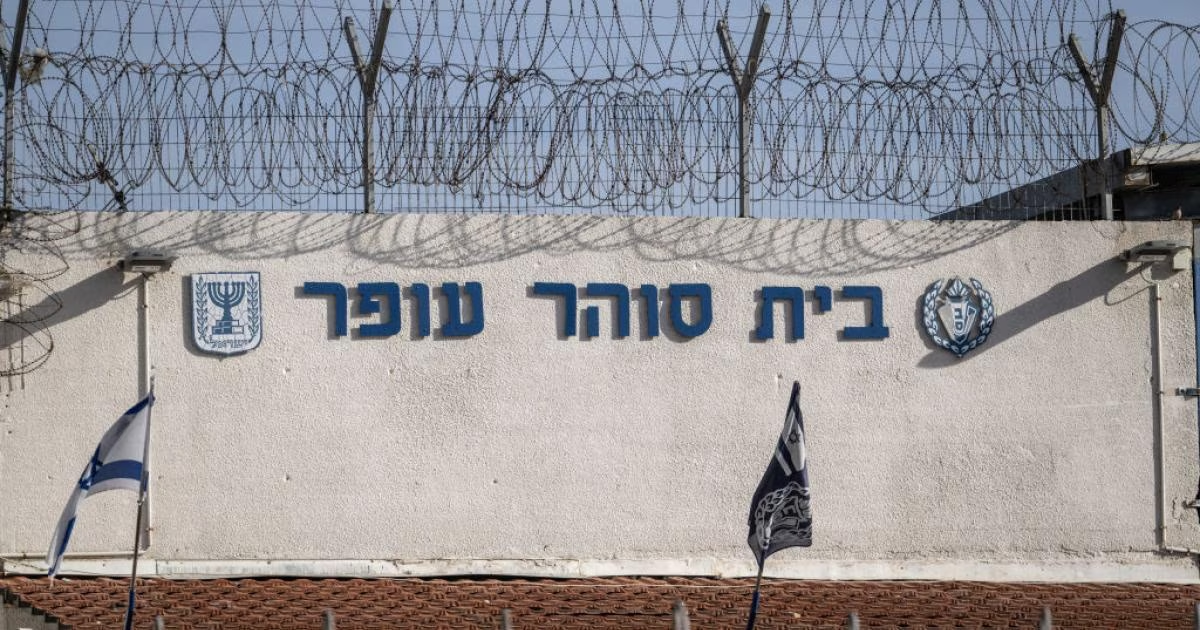
Human rights reports have spoken of the occupation establishing new prisons and camps specifically for Gaza prisoners, prominent among them being the 'Sde Teiman' detention center, described as a major 'torture station.' Flagrant violations, inconsistent with all international conventions, occur in this detention center, far from any human rights or legal oversight.

Amidst this escalation, the occupation authorities continue to prevent International Committee of the Red Cross teams from communicating with prisoners or visiting them to assess their health and living conditions. The decision to ban family visits also continued, exacerbating the suffering of prisoners and their families, who live in a state of constant anxiety about the fate of their loved ones.

Human rights organizations confirm that what is happening inside prisons represents a silent 'extermination arena' against prisoners, where disease and deliberate medical neglect are rampant. Human rights advocates appeal to the international community to intervene urgently to stop these crimes and ensure the protection of Palestinian prisoners in accordance with the Fourth Geneva Convention and relevant international laws.

The torture practiced against prisoners is no longer in the traditional sense but now reflects an extremist right-wing ideology that practices various forms of abuse.

PALESTINE

Sun 28 Jun 2026 11:48 am - Jerusalem Time

Alternative Educational Initiatives in Gaza to Counter University Collapse and Qualify Students for the Digital Job Market

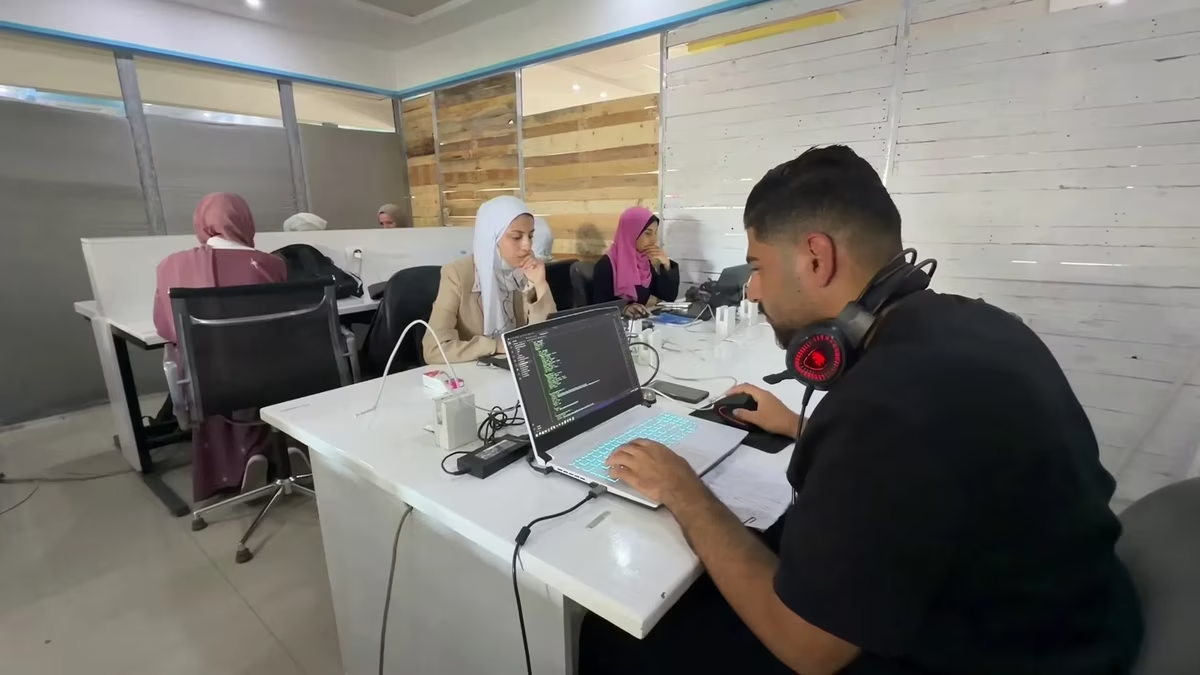
In light of the forced absence of academic institutions due to the war that affected all aspects of the educational sector in Gaza, alternative youth initiatives and training centers have emerged as a lifeline for students. These initiatives use tents and damaged buildings as their headquarters, striving to create a new reality that connects youth with digital age skills and the global online job market, in an attempt to overcome the effects of the siege and destruction.

Ashraf Al-Issawi, the General Manager of the Canadian institution overseeing student training, explained that these centers aim to provide graduates with the necessary practical skills for their specializations amidst the collapse of the traditional educational system. He pointed out that the experience focuses on human development, educating youth, and defining their career goals, especially after the official educational process in the sector stopped for more than two years.

The objectives of these centers, established through voluntary efforts and local institutional support, are not limited to granting academic certificates. Instead, they focus intensively on programming, graphic design, translation, and content creation. According to their organizers, this approach empowers graduates to compete in international markets through freelancing platforms, while also providing parallel programs for psychological and professional support to cope with the pressures of war.

For his part, trainer Ali Saleh reviewed the enormous challenges facing the training process, primarily the limited available spaces and the continuous power outages, which force them to rely on limited solar energy. These centers also suffer from very weak internet networks and constant interference, in addition to a severe shortage of smart devices and technical equipment necessary to efficiently complete practical training.

Despite these difficulties, local data indicate a qualitative leap in youth engagement in artificial intelligence and freelancing courses, with numbers significantly doubling in recent months. Experts believe that this trend represents the only remaining window to overcome geographical and economic isolation, transforming the 'digital knowledge economy' into a national survival strategy in the face of comprehensive educational collapse.

When my university was bombed, I felt my future was over, but joining the training center here gave me hope. I didn't just learn to code; I learned how to sell my services as a freelancer to support my family.

ARAB AND WORLD

Sun 28 Jun 2026 11:48 am - Jerusalem Time

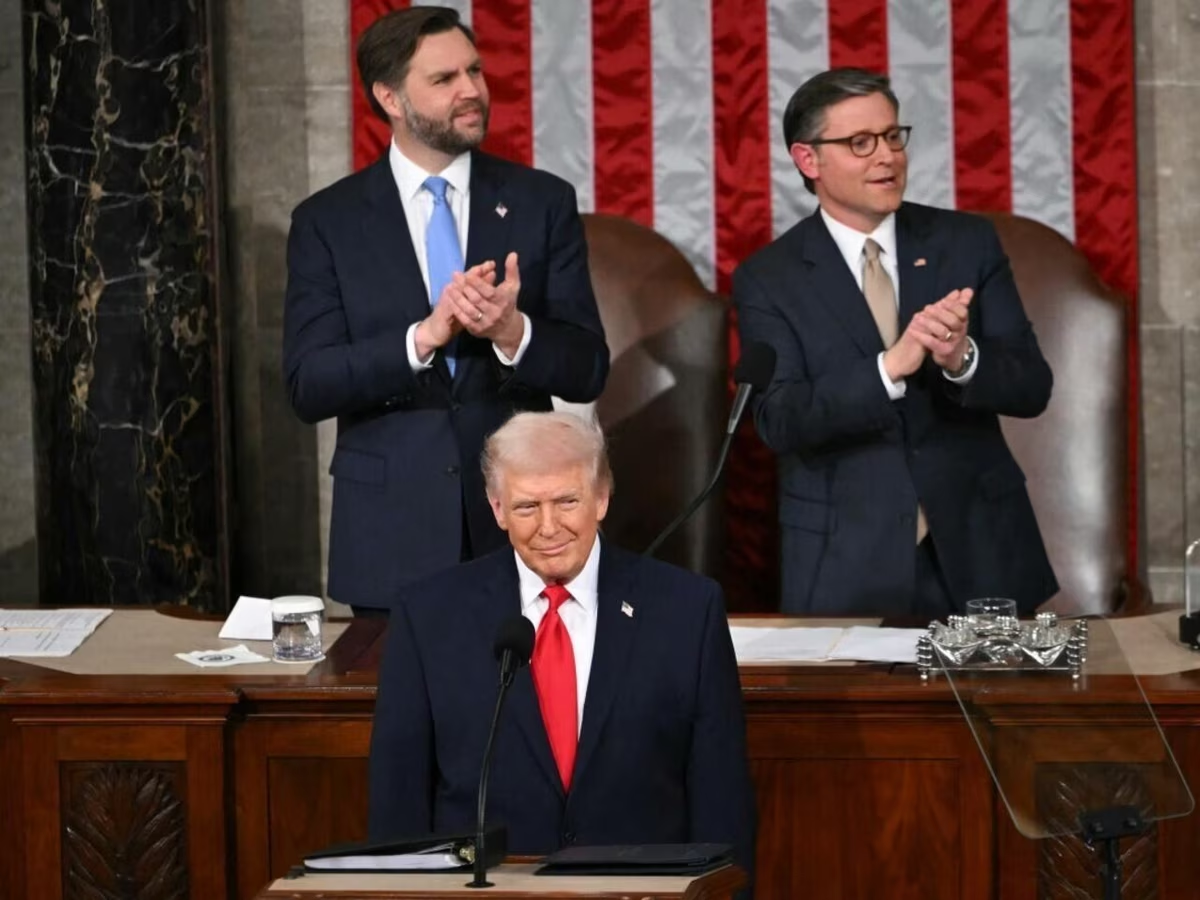
Trump's Deal with Iran Angers His Base and Raises Fears of Losing Congress

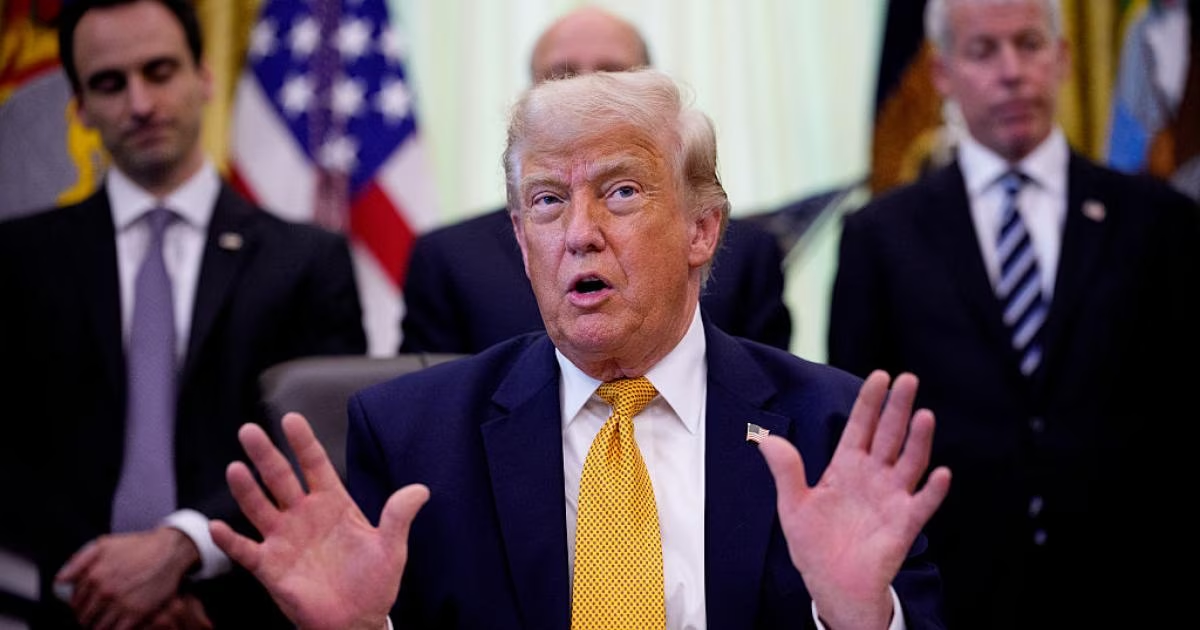
US President Donald Trump is facing a growing domestic political challenge after striking a deal to end military operations with Iran, as field reports have shown a significant decline in his approval ratings among his solid electoral base. Interviews conducted by journalistic sources with a group of voters who supported Trump in the 2024 elections indicated a state of doubt and suspicion regarding the strategic feasibility of this surprising agreement.

The controversial agreement includes provisions for reopening the Strait of Hormuz to international navigation and a temporary suspension of the harsh oil sanctions that Washington had imposed on Tehran. The understandings also stipulated an unprecedented step: the establishment of an international fund worth $300 billion dedicated to rebuilding what was destroyed by the war in Iranian territories, which angered American taxpayers.

Terry Alberta, a pilot from Michigan, expressed his dissatisfaction with this policy, asserting that the United States needed to genuinely and radically weaken the Iranian regime instead of retreating. Alberta criticized the approach of delivering limited strikes and then withdrawing, leaving room for Tehran to rebuild its military and political capabilities anew under the guise of international agreements.

In a related context, recent opinion polls showed that only about a quarter of Americans believe that the war with Iran was worth the exorbitant human and material cost. There is a general sense of concern among poll participants that the current truce with Tehran may be fragile and unsustainable in the long term, putting the credibility of the US administration at stake.

A large number of Republican voters fear that these extensive concessions to the Iranian side will weaken the party's position in the midterm congressional elections scheduled for next November. Observers believe that the lack of widespread public support for these diplomatic steps could give Democrats an opportunity to regain control of the legislative body.

The majority of participants in opinion polls had initially supported military action, based on their conviction of the necessity to deplete Iran's missile capabilities and completely undermine its nuclear program. However, after four months of conflict, it became clear that a significant portion of Iran's military capabilities remained intact, leading many to criticize the memorandum of understanding signed on June 14.

Voters expressed deep skepticism about the Iranian leadership's ability to adhere to its international commitments, rejecting the idea of granting Tehran billions of dollars under the guise of reconstruction. Some believed that these funds might ultimately be used to strengthen the regime's regional influence rather than improve the lives of Iranian citizens or ensure peace.

For his part, citizen Juan Rivera said that Trump fell into the same trap for which he criticized his predecessors: negotiating with entities he described as terrorist. Rivera added that disappointment had crept into the ranks of voters of Latin American descent, leading to a loss of motivation to support Republican candidates in upcoming elections due to poor management of the war file.

On the other hand, the White House strongly defended the agreement, describing President Trump's achievements on the battlefield and at the negotiating table as exceptional by all historical standards. The US administration affirmed that these understandings would enhance US national security for many years and prevent the region from sliding into an endless comprehensive war.

However, prominent businessmen, such as Steve Egan from Florida, confirmed that their trust in political leadership had sharply declined since early 2025. Egan attributed this decline to the negative effects of tariffs on his business activities, as well as the war's failure to achieve its stated goal of changing the political regime in Tehran.

Egan warned that Trump's endorsement of any candidate in the upcoming elections could become a political burden, describing it as a 'kiss of death' that might push voters to seek other alternatives. This statement reflects the size of the gap that has begun to form between the president and broad sectors of the business community that had traditionally supported him.

In a military reading, Brandon Neuemeister, a former National Guard member, indicated that the recent armed conflict seemed to serve the interests of major oil companies more than national security. Meanwhile, Robert Billups affirmed that he would vote in the future based on electoral programs and better plans, away from narrow partisan affiliations that had recently failed him.

Despite these criticisms, there is still a segment of Trump's most loyal voters who hope for a 'secret plan' ultimately aimed at completely subjugating Iran. Kate Motl said that destroying the regime in Tehran is the only way to ensure no future conflicts, considering that the current agreement might be merely a tactical step in a broader strategy.

In conclusion, diplomats and international analysts believe that the war may have backfired by strengthening the grip of Iran's religious leadership instead of weakening it. In Arizona, Joyce Kinney summarized the situation by saying that she supports Iran's return to global trade but completely rejects Washington bearing the costs of reconstruction, considering it a responsibility that does not fall on the American people.

Trump criticized his predecessors for negotiating with terrorists, but he essentially did the exact same thing.

ARAB AND WORLD

Sun 28 Jun 2026 11:48 am - Jerusalem Time

Intensive Qatari-Pakistani Mediation to Contain Escalation Between Washington and Tehran Following Mutual Attacks

Diplomatic movements are accelerating in the region, led by Qatar and Pakistan, aimed at curbing the escalating military tension between the United States and Iran. Informed sources reported that Doha and Islamabad are strongly pushing for new rounds of dialogue between the two parties in the coming days, in an effort to overcome obstacles threatening the continuity of existing understandings.

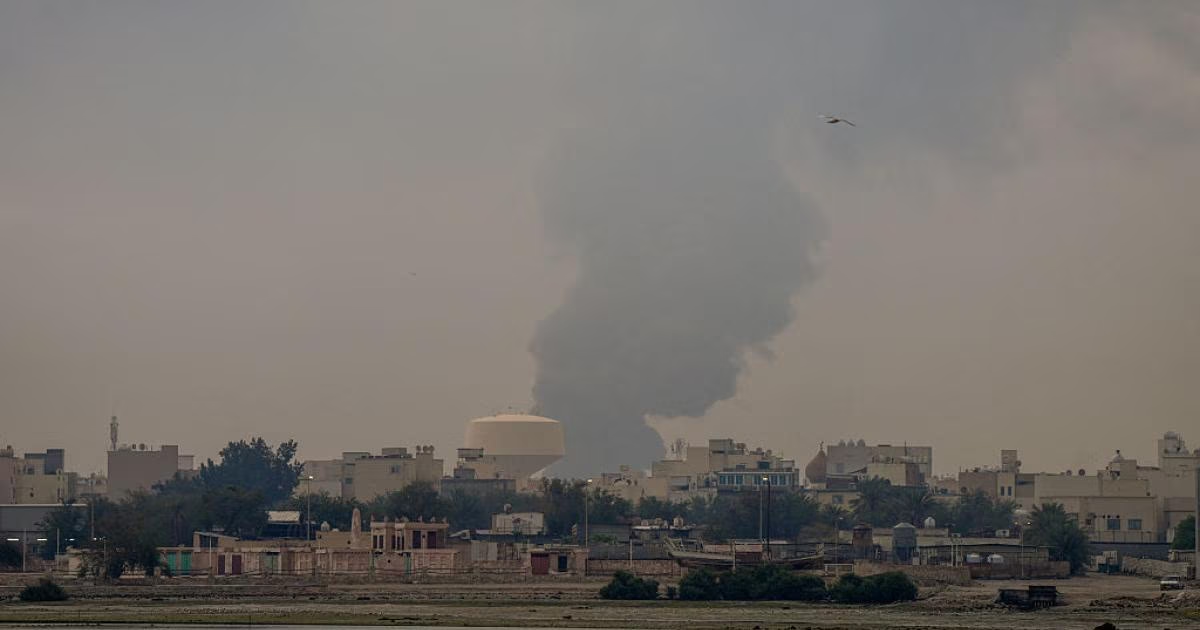
These efforts come in the wake of serious field developments, as US forces carried out military strikes targeting Iranian sites last Friday evening. This coincided with Manama's announcement that its territory had been subjected to attacks by drones launched from the Iranian side, placing the region on the brink of a comprehensive confrontation that threatens the security of international waterways.

As part of these endeavors, Sheikh Mohammed bin Abdulrahman bin Jassim Al Thani, the Qatari Prime Minister and Minister of Foreign Affairs, held intensive phone calls with his Saudi counterpart, Prince Faisal bin Farhan, and Egyptian counterpart, Badr Abdel Aty. Discussions focused on the necessity of coordinating Arab and regional positions to ensure that the region does not slide into broader conflicts that do not serve the stability of its peoples.

The Qatari Prime Minister stressed during his consultations the strategic importance of ensuring freedom of navigation in the Strait of Hormuz, considering it a vital artery for the global economy that cannot be compromised. He called for adherence to diplomacy and de-escalation of inflammatory rhetoric, while focusing on building upon the achievements previously made within the joint memorandum of understanding between Washington and Tehran.

Doha expressed its full support for the ongoing negotiations, emphasizing that sustainable solutions to outstanding issues can only be reached through dialogue and peaceful means. The Qatari Foreign Ministry indicated that the success of the diplomatic path will open new horizons for development and prosperity in the Middle East, enhancing opportunities for lasting peace and achieving the common interests of all parties.

On the regional level, there was widespread condemnation of the attack targeting the Kingdom of Bahrain, with Doha describing the incident as a blatant violation of national sovereignty and a clear breach of the principles of international law. Qatar called for the necessity of self-restraint and sparing the region the consequences of any military escalation that could lead to catastrophic results for regional security.

For its part, the Gulf Cooperation Council affirmed its full support for Manama in all measures it takes to protect its security and stability, strongly condemning the drone attacks. Saudi Arabia, the UAE, and Kuwait also issued separate statements condemning the attacks, describing them as a direct threat to regional and international security and stability and a violation of the United Nations Charter.

The current Qatari-Pakistani mediation aims to clarify fundamental points of contention, especially those related to security arrangements in the Strait of Hormuz and maritime borders. The mediating parties seek to find a consensual formula that prevents the recurrence of military friction and ensures a return to the negotiating table as the only option to end the current crisis between major and regional powers.

The region must be spared the repercussions of unjustified attacks, with the necessity of building on what has been achieved within the framework of the memorandum of understanding to consolidate regional and international security.

PALESTINE

Sun 28 Jun 2026 11:47 am - Jerusalem Time

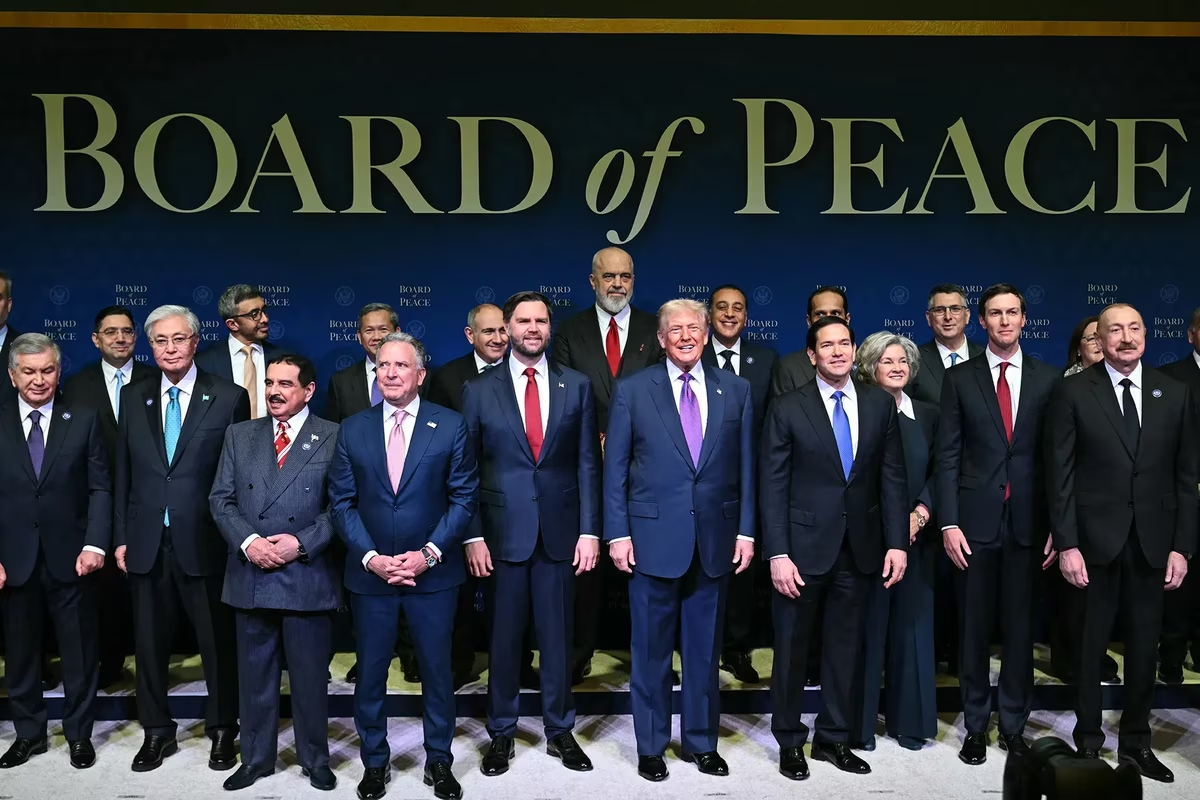
Leaked Document Reveals 'Trump Council' Plan for Gaza: Full Immunity and Free Seizure of Public Facilities

International press reports have revealed a leaked four-page draft resolution outlining the controversial directives of the 'Peace Council' announced by US President Donald Trump to manage the Gaza Strip. The document, classified as 'sensitive,' shows the council's attempt to secure comprehensive legal immunity for its members, international forces, and contractors, protecting them from any prosecution or arrest within the Strip.

The proposed draft grants executive council members, the office of the High Representative, and forces participating in reconstruction operations full exemption from appearing before local Gaza courts. Under these provisions, the council's chairman, Donald Trump, holds exclusive authority to lift immunity from any individual, provided he obtains the approval of the majority of the seven executive council members.

The executive council includes prominent figures in Trump's inner circle, among them his son-in-law Jared Kushner, special envoy Steve Witkoff, as well as White House Chief of Staff Susie Wiles and National Security Advisor Marco Rubio. This composition reflects the US administration's desire to tighten its political and security grip on the Gaza management file in the post-war phase.

In addition to legal immunity, the document included a clause allowing the council and its international forces to obtain buildings and public facilities within the Gaza Strip for free and without any costs. Legal experts warned that this text could legitimize the seizure of public or private Palestinian property without the consent of its owners or the provision of fair compensation, in the absence of a legal framework regulating the work of these forces.

In the context of field movements, sources reported that the council's High Representative, Bulgarian diplomat Nikolay Mladenov, is holding a series of meetings in the Egyptian capital, Cairo. These meetings with Palestinian officials chosen by the council aim to complete the regulatory and logistical frameworks for starting actual work within the Strip, although the immunity project has not yet been presented to the Palestinian side.

These leaks sparked a wave of criticism among international law experts, with lawyer Emily Schaeffer Omer-Man considering the document a clear attempt to evade responsibility for any violations that may occur. She believed that the absence of accountability could lead to disasters in the event of shooting incidents or civilian deaths during the implementation of reconstruction projects.

For his part, an official in the Peace Council denied the authenticity of the leaked document, describing the information contained therein as 'misleading and inaccurate.' The official affirmed that the council plans to ensure that all personnel are subject to applicable laws and to establish clear mechanisms for oversight and accountability, but he did not provide specific details about the nature of these mechanisms or the bodies that would oversee them.

The council's plans, according to participating contractors, indicate an intention to build a military base for international forces and major logistical centers in strategic areas of the Strip. The primary mission of these forces will be to support the disarmament process of Palestinian factions, which Trump's plan considers a fundamental pillar for ensuring future stability in the region.

Observers believe that this document reflects a tendency to impose a de facto authority in Gaza that transcends international laws and established diplomatic norms. The question remains about the extent to which the international community or Palestinian entities will recognize these measures, especially since the proposed resolution comes into effect upon the signing of the council's High Representative without the need for bilateral agreements.

The project establishes its own legal system, away from any external oversight or application of international law.

PALESTINE

Sun 28 Jun 2026 11:47 am - Jerusalem Time

Drug Crisis in the West Bank: Patients Face Death Risk and Severe Shortage of Cancer Medications

West Bank cities are witnessing a silent health crisis that is escalating day by day, as thousands of Palestinians find themselves in a direct confrontation with illness without the weapon of medicine. In the streets of Ramallah and other governorates, the health card no longer guarantees its holder access to necessary treatment; instead, it has often turned into a mere piece of paper that offers no benefit in front of empty government pharmacy shelves.

Field data indicates that nearly half of Palestinians with official health insurance cannot benefit from its actual services due to a severe shortage in drug supplies. This harsh reality places patients before bitter choices: either a wait that may be prolonged and lead to a deterioration of their condition, or an attempt to secure exorbitant sums of money to purchase treatment from private pharmacies.

Figures released by medical authorities reveal the extent of the catastrophe, as medicines consume about 40% of the monthly income of Palestinian citizens who are forced to provide for them at their own expense. Many patients resort to borrowing or selling their personal belongings to secure therapeutic doses for chronic diseases such as diabetes and high blood pressure, which cannot tolerate delay or interruption.

During a tour inside the warehouses of the Palestinian Ministry of Health, data shows that the crisis has reached unprecedented levels, with a 'zero' balance recorded for approximately 180 types of medicine out of 520 essential types. This shortage is not limited to ordinary medicines but extends to vital medical supplies, leading to partial paralysis in public health facilities.

The most vulnerable group is cancer and tumor patients, as warehouses lack 50 types of treatment out of 97 types that the ministry is supposed to provide. This interruption puts the lives of about 4,000 cancer patients at risk, as they face the danger of death due to the absence of chemotherapy and supportive treatment protocols.

The repercussions of the crisis have not stopped at drug availability but have extended to operating rooms, where approximately 11,000 scheduled surgeries have been postponed. The main reason for this postponement is the shortage of surgical sutures and simple medical supplies without which no surgical intervention can be performed, increasing waiting lists and patient suffering.

Sources reported that the severe financial crisis suffered by the Palestinian Authority is the primary driver of this health collapse, especially with the occupation's continued withholding of clearance funds. These funds, which constitute two-thirds of the Authority's revenues, have led to the accumulation of the Ministry of Health's debts to pharmaceutical companies and suppliers, reaching 1.3 billion shekels.

As a result of these massive debts, a large number of local and international suppliers and pharmaceutical companies have stopped supplying the ministry with new shipments, leading to the depletion of strategic stock. This financial setback has rendered the health system unable to fulfill its obligations towards patients, turning government hospitals into diagnostic centers lacking actual treatment tools.

Patients suffering from rare and chronic diseases, such as Crohn's disease, recount painful stories of their treatment doses being interrupted for continuous months, returning them to square one of pain and helplessness. These patients describe their condition as living in a struggle with a 'ferocious beast' that can only be tamed with regular medication, and without it, leading a normal life becomes impossible.

In this bleak scene, the Palestinian patient remains the weakest link in the conflict of politics and economics, demanding a basic right guaranteed by all international laws. The continuation of the drug crisis in the West Bank opens a new front of pain added to the fronts of siege and aggression, necessitating urgent intervention to save what can be saved of exhausted lives.

When medicine becomes a luxury, unfortunately, illness becomes a death sentence.

PALESTINE

Sun 28 Jun 2026 11:47 am - Jerusalem Time

Facing bullets with mud.. a content creator in Gaza invents an alternative shelter for fragile tents

Amidst the continuous threats posed by stray bullets and the volatile climate in the displacement camps in the Gaza Strip, young Khalil Abu Ramadan resorted to inventing an alternative means of protection. With canvas tents failing to withstand summer heat or winter cold, Khalil decided to build a mud room using simple local materials, striving to provide a minimum level of safety for his family.

The idea of construction was not born in the moment, but rather came as a result of a bitter displacement journey undertaken by the digital content creator, as he was forced to move with his family more than 25 times between different areas of the Strip. During these forced journeys, Khalil lost all the professional photography equipment he relied on for his work, which made him face a new reality stripped of his essential tools.

Abu Ramadan describes his suffering with the tent, which could no longer withstand strong winds or heavy rains, noting that it lacks the simplest elements of stability and privacy. This constant reality of uncertainty pushed him to search for a more solid alternative that could withstand the harsh weather conditions that plague the bodies of the displaced.

Khalil's attempts to return to content creation began from the heart of the rubble, where he chose the remains of a demolished room to be his temporary studio. Using only his mobile phone, he made a primitive camera stand from stacked stones, trying to document the daily details of displacement and convey the image of suffering to the world despite the scarcity of resources.

The need to find a safer shelter increased with the continued random shooting, especially in areas close to what is known as the 'Yellow Line'. Sources reported that stray Israeli bullets have become a daily threat to the lives of those living in fragile tents, making the move to mud construction an urgent necessity for survival.

Abu Ramadan consulted a friend who has experience in traditional construction inherited from ancestors, who advised him to build a circular mud room. These designs are considered more cohesive and capable of withstanding external pressures, in addition to being economical and relying entirely on available surrounding environmental resources.

The construction process began with collecting mud from designated lands and manually transporting it to the new housing site, a task Khalil described as extremely difficult and slow. The walls required gradual shaping and long patience to dry and become capable of supporting the roof, reflecting the amount of effort expended in the absence of modern machinery and equipment.

Although this mud room may not radically change the tragic reality of displacement, it represents a humanitarian attempt to alleviate the harshness of living under bombardment and cold. Khalil believes that every brick he lays is a step towards restoring a small part of the dignity and stability lost since the beginning of the aggression on the Strip.

Khalil Abu Ramadan's story embodies the will of the Palestinian in Gaza to adapt to the harshest conditions and create alternatives from nothing to confront the war machine. This mud room remains a testament to a difficult phase, in which man tries to protect his loved ones with the available earth, awaiting return to their homes destroyed by the occupation.

I found myself in a tent that could not withstand rain or wind, and offered no sense of stability, even in the simplest details of daily life.

ARAB AND WORLD

Sun 28 Jun 2026 11:47 am - Jerusalem Time

Tucker Carlson admits his mistake regarding Islam: I was hysterical and nothing I said was true

The American media scene witnessed a dramatic shift in the positions of conservative political commentator Tucker Carlson, who openly announced his retraction of his previous views towards the Islamic religion. Carlson admitted in recent statements that he was wrong in inciting against Muslims, considering that his previous positions were not based on factual evidence.

During a recent media interview, Carlson admitted that he spent many years repeating on screens that Islam was a problem and that Muslims sought to kill. He described his state during that period as 'hysterical,' stressing that he no longer believed in the claims he was promoting to his wide audience in the United States.

This shift was not limited to the stance on Islam, but extended to include American foreign policy towards Israel, as Carlson expressed his regret for the state the Hebrew state had reached. He pointed out that the Israel he knew decades ago had fundamentally changed, which led him to adopt more critical positions towards the policies of its current government.

These statements come in the context of a series of radical changes that have occurred in Carlson's career during 2026, including his official announcement of leaving the Republican Party. He also apologized to his followers for 'misleading' them in the past by supporting former President Donald Trump, confirming the permanent withdrawal of this support.

Carlson's professional record at Fox News was full of statements that human rights organizations described as hostile to immigrants and Muslims. In previous years, he defended travel ban decisions that targeted Muslim countries, which made him a target of continuous criticism from the Council on American-Islamic Relations (CAIR).

However, the American media personality's tone began to change since late 2025, when he described attacks targeting Muslims in America as 'disgusting.' In his recent analyses, he considered that the Israeli government and its supporters in Washington are working to inflate 'Islamophobia' to achieve special political gains.

In contrast, Carlson faced accusations of anti-Semitism from the Anti-Defamation League, especially after hosting controversial figures who denied the Holocaust. Carlson responded to these accusations by saying that his criticisms of Israel stem from the policies of its government that harm American interests, and have nothing to do with race or religion.

Press reports link Carlson's transformations to the noticeable change in the mood of American public opinion towards international issues. Recent opinion polls indicate a significant decline in public support for Israel within the United States, especially among young people and those affiliated with the Democratic Party.

According to Pew Research Center data released in March 2026, the majority of Americans now hold a negative view of Israel, with a percentage reaching 60%. Gallup institution indicators also showed that public sympathy for Palestinians reached unprecedented levels, equaling sympathy for Israelis for the first time in decades.

Observers believe that Carlson's confessions may open the door for similar reviews by other right-wing media figures who were affected by smear campaigns against Muslims. This shift reflects the depth of the division within the conservative camp in America over issues of identity, foreign policy, and traditional alliances in the Middle East.

I was hysterical, and I believed it. Now that's not true, and none of it is true, but I believed it.

PALESTINE

Sun 28 Jun 2026 11:46 am - Jerusalem Time

With flippers and floats.. a father and his son from Gaza swim across the Aegean Sea towards Greece

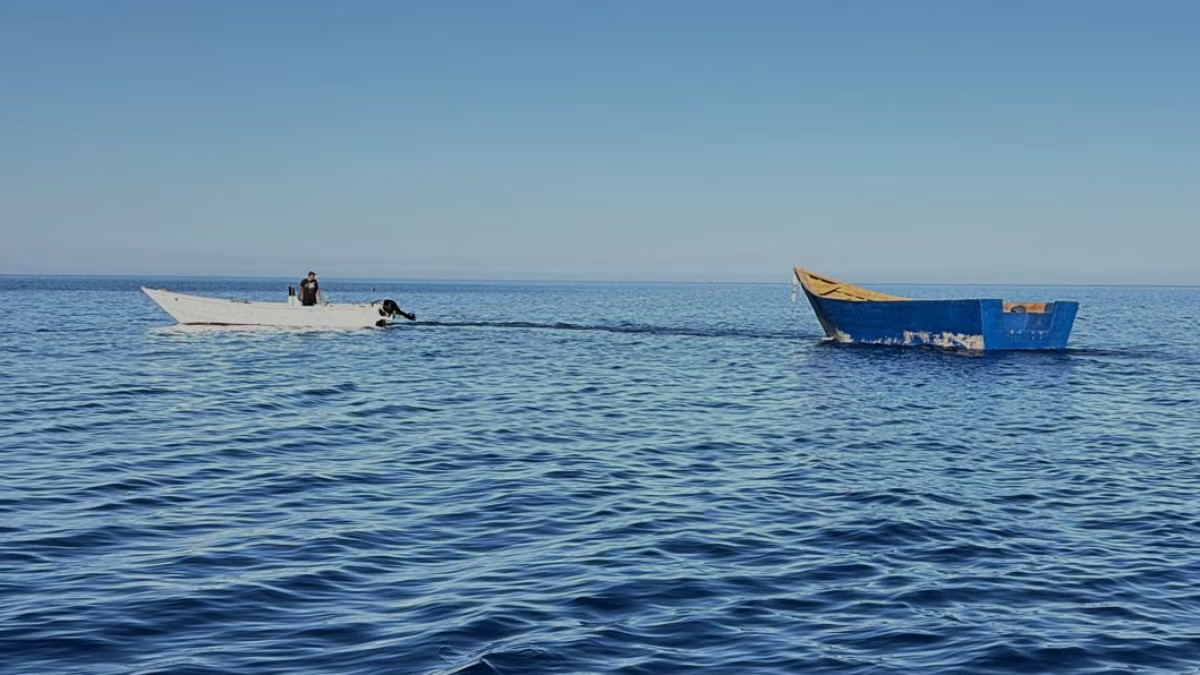
In an incident that reflects the extent of determination and despair at the same time, the Greek island of Kos recorded an unusual arrival of Palestinian refugees, as a father and his son from the city of Khan Yunis in the Gaza Strip managed to cross the Aegean Sea by swimming. According to human rights reports, the two men covered a distance of about 8 kilometers in open sea waters, defying the high risks involved in this sea route, which is usually crossed by boats.

The perilous journey began from the Akyarlar region, affiliated with the Turkish city of Bodrum, where the 52-year-old father and his 23-year-old son set off towards Greek territory. The two men had nothing but simple swimming fins and inflatable floats, spending about 7 continuous hours facing waves and sea currents, and most of this time in complete darkness before reaching land.

Data indicates that the two men had left the Gaza Strip about a year ago, heading to Egyptian territory to receive necessary medical treatment in light of the ongoing Israeli aggression on the Strip. From there, they managed to reach Turkey, where they decided to embark on this extraordinary adventure to reach Europe in search of safety and stability away from the ravages of war and displacement.

The 'Aegean Boat Report' organization, concerned with monitoring migrant movements, stated that it received a distress call from the relatives of the two men at dawn on Friday, after communication with them was lost and there were fears of them drowning. By 10 AM, the two men were able to contact the organization from the outskirts of Paradiso Beach on the island of Kos, confirming their arrival in a state of extreme exhaustion and urgent need for medical intervention.

Due to fears of the strict legal procedures taken by the Greek authorities, the two men initially hid in bushes near the beach immediately upon their arrival. Human rights organizations made efforts to persuade them to come out of their hiding place to ensure they received the necessary healthcare, especially since they were suffering from severe dehydration and physical exhaustion due to the strenuous physical effort.

Meanwhile, the 'Alarm Phone' organization launched urgent appeals via social media platforms, calling on the Greek Coast Guard and police to provide immediate humanitarian assistance to the two men. Sources confirmed that the police later found them, but information about their current fate remains unclear, whether they were transferred to a hospital or to detention centers designated for migrants.

Human rights organizations described this story as one of the very rare cases documented of people attempting to reach the Greek islands by swimming, given the extreme danger to life. This incident once again highlights the harsh paths Palestinians are forced to take to escape the tragic conditions in the Gaza Strip, searching for a glimmer of hope in the European continent.

Like many who arrive on the Greek islands, they were afraid of the authorities, so they hid near the beach before securing access to care.

ARAB AND WORLD

Sun 28 Jun 2026 11:46 am - Jerusalem Time

Military Escalation in the Strait of Hormuz: US Raids Target Iranian Sites in Response to Oil Tanker Attack

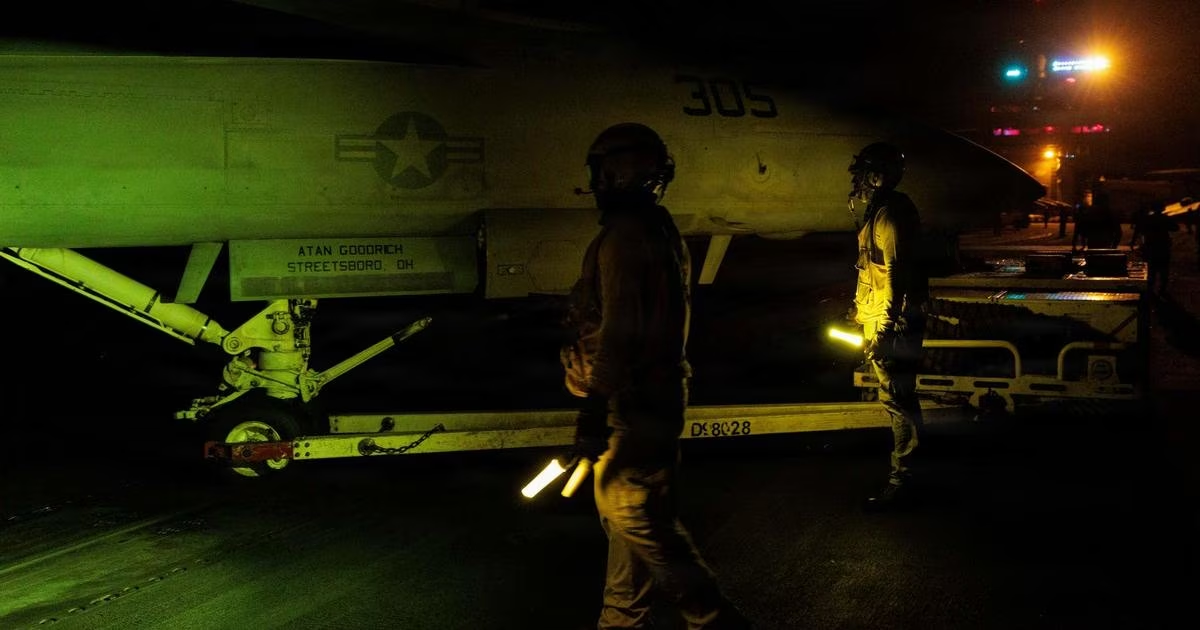
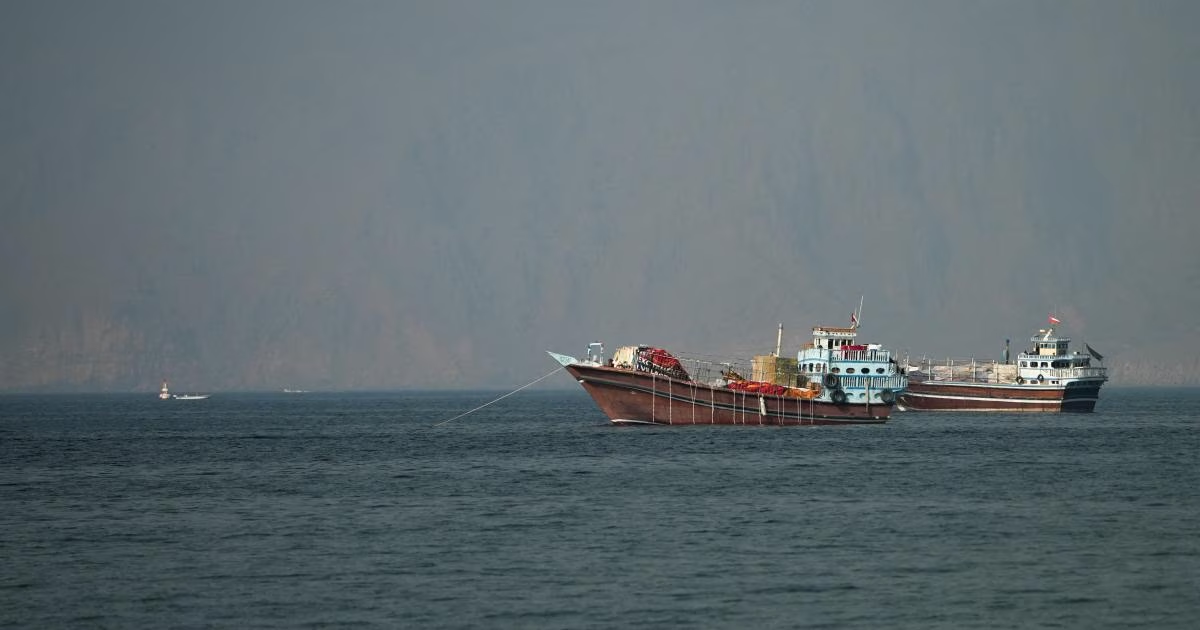
The Strait of Hormuz region witnessed a dangerous military escalation on Saturday night and Sunday morning, as the US military carried out a series of concentrated airstrikes on sites belonging to Iran. The US Central Command clarified that these operations directly targeted Iran's military surveillance infrastructure and air defense systems in the strategic region.

These US military movements came in response to an earlier attack on an oil tanker, with Washington accusing Tehran of being behind the targeting of the commercial vessel. This marks the second consecutive night that the region has slid towards direct confrontation, putting recent diplomatic understandings at risk.

For its part, official Iranian media documented violent explosions in the city of Sirik, located in the south of the country, indicating that projectiles hit a communications tower in the vicinity of Tahrouyi village. The attacks also affected sites on Qeshm Island, reflecting the widening scope of US aerial targeting of vital Iranian facilities.

In a related context, British maritime sources reported that an oil tanker sustained a direct hit by a projectile while transiting the strait, causing material damage to the command room. Despite the severity of the attack, the Maritime Trade Operations agency confirmed that all crew members were unharmed and their safety was secured.

This explosion in the field situation comes just two weeks after the signing of a memorandum of understanding between Washington and Tehran that aimed to end a four-month conflict. Both sides exchanged accusations of violating the terms of this agreement, with each party considering the other's actions a direct threat to regional security.

Washington explicitly announced that it targeted Iranian interests overnight to deter ongoing attacks on international shipping lanes, while Tehran responded by confirming strikes on targets associated with US forces. This mutual escalation raises international concern about the stability of global energy supplies passing through this waterway.

On the maritime security front, the Combined Maritime Information Center decided to raise the security threat level in the region to higher degrees due to repeated security incidents. The center warned that targeting cargo ships and tankers now poses an imminent danger that requires high vigilance from all vessels transiting the strait.

In a move that reinforces control, Iranian television indicated that the Revolutionary Guard fired warning shots at ships attempting to pass through routes not approved by Tehran. This action forced many commercial vessels to request prior permits from Iranian authorities before attempting passage.

An crisis over navigation routes is emerging, with the United States seeking to promote a southern route adjacent to the Omani coast to secure trade movement away from interventions. In contrast, Tehran insists on the necessity for ships to take a northern route passing through its territorial waters to ensure they are subject to its direct supervision.

In a clear tone of defiance, Ibrahim Azizi, head of the National Security Committee in the Iranian Parliament, stated that his country would not tolerate any violation of navigation instructions. Azizi affirmed that the Iranian armed forces are prepared to respond with firmness and strength to any violation of sovereignty or the rules set by Tehran to regulate movement in the Strait of Hormuz.

We will respond firmly to any violation of Iranian instructions regarding navigation through the Strait of Hormuz.

ARAB AND WORLD

Sun 28 Jun 2026 11:46 am - Jerusalem Time

Violent Explosions Rock Kyiv, Mutual Attacks Leave Dead and Wounded on Both War Fronts

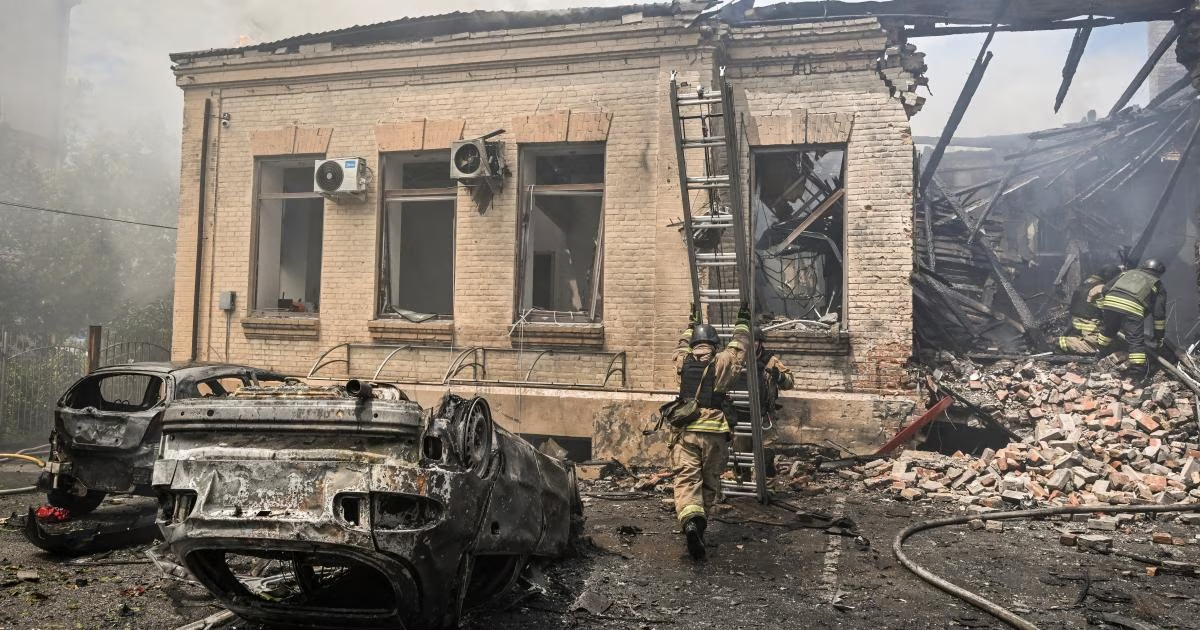
The Ukrainian capital, Kyiv, woke up early on Sunday to the sound of violent explosions that rocked the city, resulting from a large-scale ballistic missile attack. Local authorities and the Ukrainian army confirmed that air defenses intercepted several targets in the capital's skies, warning residents not to leave shelters until the air raid alert ended.

For his part, Vitali Klitschko, the mayor of Kyiv, reported via social media platforms that air defense units engaged in direct combat with the attacking missiles. Successive explosions were heard in various areas, causing panic among civilians who sought refuge in metro stations and fortified basements.

Regarding human casualties, the past twenty-four hours saw victims in various Ukrainian regions due to intense Russian airstrikes. Two people were killed in the Dnipropetrovsk and Sumy regions, following the targeting of facilities and residential areas with a barrage of fire and guided missiles.

In contrast, Ukrainian counter-attacks did not cease, with shelling reaching the cities of Volgograd and Belgorod deep inside Russian territory, as well as the city of Horlivka in the Donetsk region. These operations resulted in the deaths of at least three people, according to statements from pro-Moscow regional authorities in those areas.

In a significant field development, the Russian Ministry of Defense announced its success in intercepting and destroying 124 Ukrainian drones within a period of no more than 12 hours. Sources clarified that these drones were targeting vital facilities in several Russian regions, in a Ukrainian attempt to expand the scope of military response.

The Russian capital, Moscow, was also a target of these attacks, with Sergei Sobyanin, its mayor, announcing the interception of a series of kamikaze drones. Initial statistics indicate that about 24 drones attempting to penetrate the Russian capital's airspace and strike strategic targets were shot down.

In the border region of Bryansk, acting governor Yegor Kovalchuk reported the deaths of two civilians who were in a private vehicle near the border. The incident occurred as a result of a direct attack by a Ukrainian drone targeting the border village, highlighting the escalating risks to civilians in areas adjacent to the fighting.

In southeastern Ukraine, the town of Nikopol was subjected to more than 40 airstrikes and concentrated Russian artillery shelling, resulting in one person killed and others injured. This town holds significant strategic importance and extreme sensitivity due to its location opposite the Zaporizhzhia Nuclear Power Plant, which is currently under Russian control.

In the Donetsk region, Denis Pushilin, the Russian-appointed official, confirmed two deaths in the towns of Horlivka and Makiivka as a result of Ukrainian drone strikes. These cities are major urban centers experiencing ongoing conflict and mutual shelling, increasing the suffering of local residents.

This new wave of escalation comes within the framework of the ongoing war of attrition since February 2022, where mutual airstrikes have become a daily feature of the conflict. While Russia continues to bomb Ukrainian infrastructure, Kyiv intensifies its operations deep inside Russia in what it describes as a legitimate retaliatory response to aggression.

Air defense forces are operating in the capital, immediately take shelter to ensure your safety.

PALESTINE

Sun 28 Jun 2026 11:46 am - Jerusalem Time

Gaza.. Ceasefire 'Ink on Paper' and Occupation Expands Geographical Control

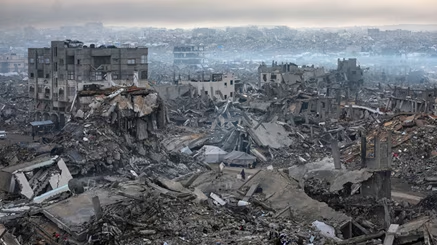
The terms of the ceasefire agreement in the Gaza Strip remain mere unactivated texts on the ground, as field reports confirm the continuation of Israeli military operations and the escalating pace of the humanitarian catastrophe. More than two million Palestinians live in a reality that grows harsher day by day, where survival has become a difficult daily battle amidst continuous bombing and displacement.

Despite the announcement of understandings for a ceasefire last October, the field has recorded the fall of more than a thousand martyrs since then as a result of continuous airstrikes and targeting. Local sources reported that violations did not stop at bombing but included extensive geographical changes aimed at imposing a new reality within the Strip.

In statements reflecting expansionist intentions, Israeli Prime Minister Benjamin Netanyahu affirmed that his army currently controls about 60% of the Gaza Strip's area. Netanyahu indicated that there are military directives to raise this percentage to 70%, by pushing front lines and expanding what is called the 'Yellow Line' to restrict the movement of residents.

These field movements impose immense pressure on the residents, leading to the deepening of the forced displacement crisis and depriving residents of access to already scarce humanitarian aid. These developments are accompanied by continuous Israeli threats to resume comprehensive military operations under security pretexts, placing the Strip before an unknown future.

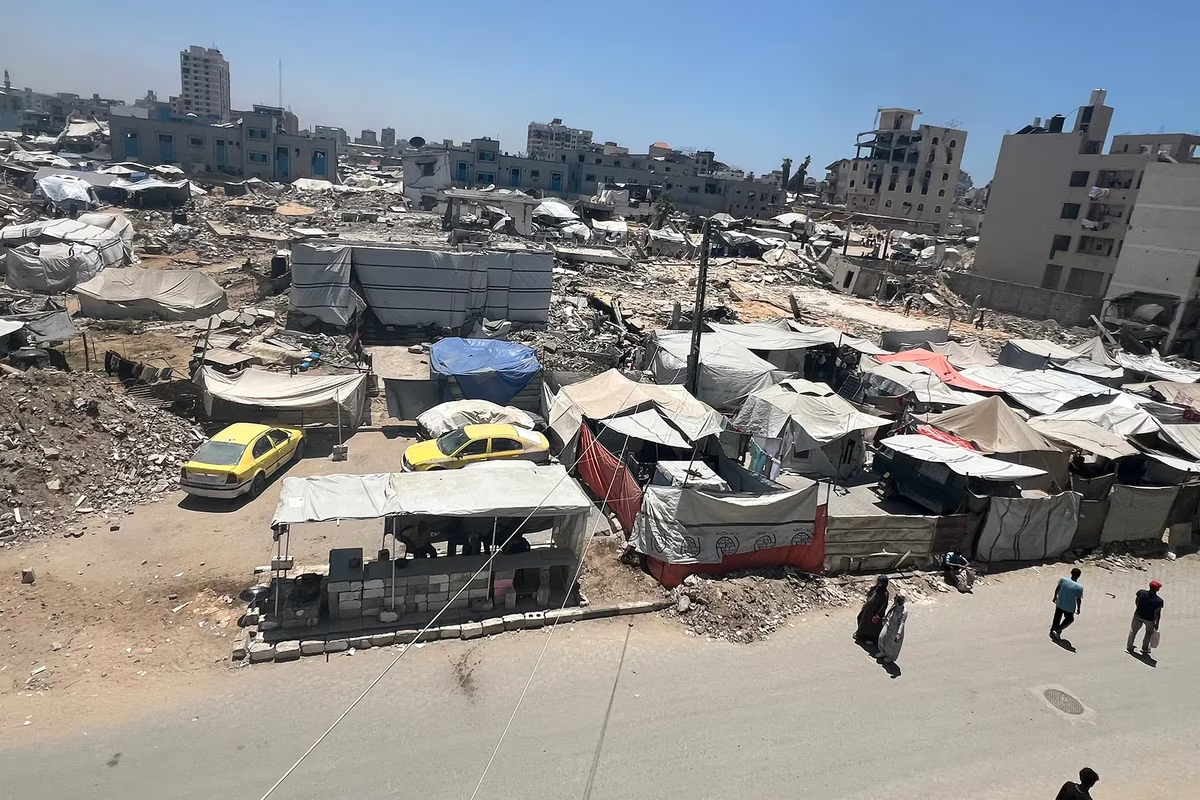
On the humanitarian front, hundreds of thousands of displaced people face extremely dire conditions in cramped geographical areas lacking the most basic necessities for a dignified life. The collapse of sewage networks and the accumulation of waste, especially with rising temperatures in the summer, have led to the spread of epidemics and infectious diseases among children and the elderly.

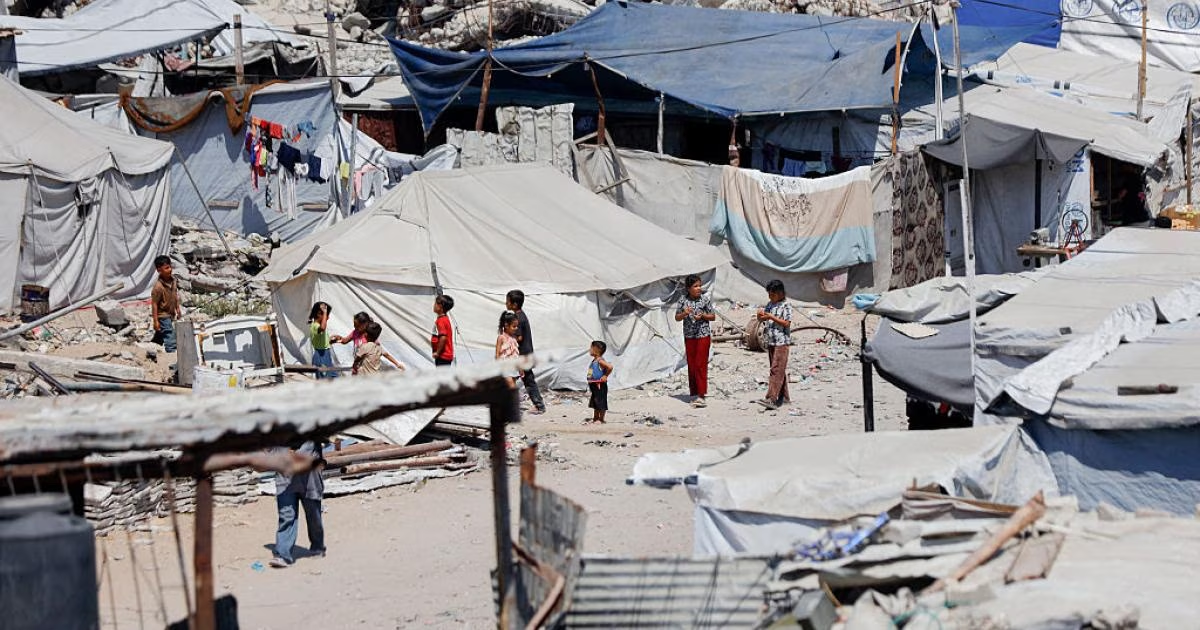
Displacement camps are witnessing an unprecedented deterioration, with residents living in dilapidated tents that offer no protection from weather fluctuations or extreme heat. Electricity is completely absent from these gatherings, while obtaining clean water is a daily challenge that requires standing in long queues for hours.

International organizations have warned that the continuation of this situation portends an uncontainable catastrophe, with the Norwegian Refugee Council describing what is happening in Gaza as an 'international scandal.' The council confirmed that about 170,000 families live in very harsh shelter conditions, with the continued closure of crossings that are the only lifeline for the besieged population.

For its part, the Hamas movement stated in a statement that the genocide, starvation, and systematic destruction that the Strip is subjected to constitute a blatant violation of all international laws. The movement stressed that these Israeli policies aim to break the will of the Palestinian people, but they will not succeed in achieving their political goals through humanitarian pressure.

In a field testimony, Raafat Al-Majdalawi, Director General of the Al-Awda Health Association, confirmed that killing, home destruction, and siege have not stopped for a single moment despite talk of a truce. Al-Majdalawi clarified that the full responsibility for the continuation of the aggression lies with the occupation, describing the international community's silence regarding the suffering of millions as a 'stain of shame.'

Al-Majdalawi described life inside the tents as 'extremely harsh,' with entire families forced to live in areas not exceeding nine square meters, which eliminates any privacy. He pointed out that the per capita share of space inside the tent may not exceed one meter, a situation that lacks the simplest standards of human dignity.

These camps lack safe cooking facilities or regular bathing, as families suffer from a severe shortage of water, fuel, and cooking gas. Medical sources added that the current environment has become unfit for human life due to the unprecedented spread of insects and rodents, threatening a comprehensive health catastrophe.

Regarding food security, more than 700,000 families rely on one simple meal a day provided by charity kitchens, which in turn suffer from a lack of resources. Limited food items such as rice and lentils are repeated, while many families fail to get their share due to severe overcrowding and insufficient quantities.

The education sector was not immune to this suffering, as thousands of students are forced to travel long distances in search of an internet signal to take their online exams. Students often fail to complete their academic tasks due to communication and electricity outages, threatening the loss of the academic future for an entire generation of Palestinians.

In conclusion, observers and local officials agree that the war in Gaza has gone beyond military action to become a war on every detail of daily life. The lack of health services and medical diagnosis makes access to treatment impossible, confirming that what is happening is a process of 'breaking humanity' in all its dimensions.

What is called a ceasefire is not reflected on the ground, and the humanitarian situation represents a breaking of humanity in every sense of the word.

ARAB AND WORLD

Sun 28 Jun 2026 11:46 am - Jerusalem Time

Major arrest campaign in Baghdad's Green Zone targets political leaders

The Iraqi capital, Baghdad, woke up to unprecedented security movements within the fortified Green Zone, as special forces units were heavily deployed throughout the area. These movements coincided with widespread raids targeting residential complexes and official headquarters, amid a state of security alert that affected the main entrances and exits of the zone, which houses government headquarters and diplomatic missions.

Informed sources reported that this security campaign resulted in the arrest of a number of senior political officials and prominent members of the Iraqi parliament. These arrests come against the backdrop of these officials' involvement in massive financial and administrative corruption cases, in addition to accusations related to abusing influence to achieve illicit personal gains, reflecting an escalation in the pursuit of corruption within state institutions.

Available information indicates that the Iraqi Prime Minister, Ali Al-Zaidi, is directly supervising this security and judicial operation. This step comes within the framework of ongoing investigations conducted by specialized committees for corruption crimes. Sources revealed that among those arrested is at least one heavyweight political leader, which may pave the way for radical changes in the Iraqi political scene.

In a related context, field sources confirmed that special forces imposed a strict security cordon around a number of sensitive headquarters within the Green Zone. Tanks, armored vehicles, and military vehicles were seen positioned in strategic locations, while main gates were closed and entry or exit was prohibited except with strict security permits, to ensure the execution of arrest warrants without any obstacles or interference.

Sources clarified that the security movement and raids were not random, but rather came in implementation of official judicial arrest warrants issued based on evidence and documents obtained during lengthy investigations. These warrants target individuals whose names were explicitly mentioned in cases related to squandering public funds and manipulating government contracts, which places many political forces under the microscope of legal accountability.

These rapid developments come in fulfillment of the promises made by the new Prime Minister, Ali Al-Zaidi, upon assuming office, where he pledged to fight corruption and mismanagement that have drained Iraq's resources for decades. Observers believe that this campaign could be the beginning of a new phase of accountability, despite the significant challenges the government may face in confronting traditional centers of power and influence in the country.

The campaign is supervised by Iraqi Prime Minister Ali Al-Zaidi as part of corruption investigations, and has targeted at least one prominent political leader.

OPINIONS

Sun 28 Jun 2026 11:46 am - Jerusalem Time

Power Shifts: Today's Giants Displace Yesterday's Masters

A comparison published by Forbes magazine between the top ten global companies in 2003 and their counterparts in the 2026 ranking reveals a historic shift in the structure of the global economy, not only in terms of company names, but also in the nature of the sectors driving growth, centers of economic influence, and tools for wealth creation. It is a journey of transition from an economy led by traditional industries, energy, and Western financial institutions, to an economy based on technology, innovation, and artificial intelligence, with a rapid rise of Asian economic powers.In 2003, companies such as "Citigroup," "General Electric," "ExxonMobil," "Royal Dutch Shell," and "BP" dominated the global economic scene, based on the strength of industry, energy, and financial services. In the 2026 ranking, the lead went to "JPMorgan Chase," "Amazon," "Berkshire Hathaway," "Alphabet" the parent company of the Google search engine, and "Saudi Aramco," alongside the notable Chinese presence through the "Industrial and Commercial Bank of China, China Construction Bank, and Agricultural Bank of China," clearly indicating a significant shift of the economic center of gravity towards Asia.Financial indicators confirm this major transformation; Microsoft's market capitalization exceeded $3.5 trillion, while Amazon's and Alphabet's market capitalization ranged between $2 and $2.5 trillion. Saudi Aramco maintained a market capitalization of over $1.7 trillion, despite fluctuations in energy markets. JPMorgan Chase's market capitalization exceeded $800 billion, achieving annual profits of over $58 billion, reflecting the continued pivotal role of major banking institutions in leading the global economy.In contrast, the relative position of a number of companies that were at the forefront two decades ago declined. General Electric restructured its operations and split into specialized companies, while Citigroup and American International Group (AIG) were significantly affected by the repercussions of the 2008 global financial crisis. Major oil companies such as ExxonMobil, Royal Dutch Shell, and BP also faced challenges imposed by the shift towards clean energy and a low-carbon economy, although they remain among the most important players in the global energy sector.A careful reading of these transformations confirms that the global economy is no longer measured solely by the size of factories or oil reserves, but by the possession of knowledge and the ability to manage data, develop technology, and the artificial intelligence revolution. Technology companies now manage platforms supported by AI technologies used by billions of people daily, directly impacting trade, education, health, media, and financial services, while global banks have transformed into digital institutions that rely more on artificial intelligence and data analysis to manage trillions of dollars.The most important message remains that economic leadership in the 21st century has become the fruit of investment in people, education, scientific research, innovation, and the digital economy. Countries seeking a leading position in the global economy are required to build integrated knowledge systems, encourage entrepreneurship, and invest in modern technologies, because the future will not be for the largest in size, but for those most capable of innovation, knowledge creation, and transforming it into sustainable economic [email protected] article is supported by artificial intelligence

OPINIONS

Sun 28 Jun 2026 11:46 am - Jerusalem Time

The rivalry between the colony's parties

The ruling Israeli right in the colony is torn between three main parliamentary blocs, which will contest the upcoming elections before the end of this year, in addition to smaller blocs: 1- The first bloc is the Likud bloc, headed by Netanyahu. 2- The second bloc is an alliance between Yair Lapid and Naftali Bennett, titled "Beyahad" (Together), meaning the Change Camp. 3- The third bloc is headed by former army chief of staff Gadi Eizenkot, and is titled "Yashar" (Straight), meaning integrity. Therefore, the conditions of the upcoming elections in the colony differ from the 2022 elections, where Netanyahu was able to win a majority of 32 seats, which he will not be able to obtain in this year's elections for several reasons: In the 2022 Knesset elections, Likud benefited from the loss of two parties that failed to cross the electoral threshold: first, the Arab National Democratic Assembly party, and second, the left-wing Zionist Meretz movement. The votes they received, according to the Knesset election law, were transferred to other parties, and Likud benefited from this as the largest party, gaining at least six seats for free from the votes of the Assembly and Meretz parties. The data differs for both; the Assembly has secured success through a triple alliance with the Democratic Front for Peace and Equality and the Arab Movement for Change, while the Meretz movement has united with the Zionist Labor Party, headed by former officer Yair Golan, and together they formed the "Democrats" party, which polls give at least ten seats. Thus, Netanyahu will not benefit from the loss of votes from the Assembly and Meretz parties. The second new factor is the agreement reached between the parties of Yair Lapid and Naftali Bennett, and their competition for the possibility of becoming the largest party, which will reduce Likud's chances of obtaining the largest number of seats. The third new factor is the rise in the stature of former Chief of Staff Gadi Eizenkot, whom polls give the possibility of becoming the largest party, in competition against the Likud bloc and the Lapid-Bennett alliance. Polls are volatile among the three right-wing blocs, giving each between 20 and 24 seats, which confirms that Likud will not enjoy 32 seats as before. The overall data indicates that Likud is not only facing a decline in its electoral strength, but this also extends to the difficulty of building a parliamentary coalition capable of securing a majority of 61 deputies. Therefore, increasing estimates suggest that Netanyahu may find himself for the first time unable to form the next government, even if he remains head of Likud and becomes a member of the Knesset. The existence of the three right-wing blocs, which do not believe in, work for, or acknowledge two issues: equality for Palestinians in the '48 areas, and the rejection of independence for Palestinians in the '67 areas, causes embarrassment for the Islamic Movement and its United Bloc, led by MP Mansour Abbas, who seeks an alliance with the Yair Lapid and Naftali Bennett bloc. He had previously allied with Naftali Bennett's government to be a partner in the government, driven by livelihood demands to achieve gains and needs for his people in the '48 areas, and for political motives, most notably breaking the notion of the "Jewish state," which is a controversial outcome not approved by other Palestinian Arab political forces, especially the triple alliance that brings together the Democratic Front for Peace and Equality with the Arab Movement for Change and the National Democratic Assembly. The data of the Israeli colonial society is still stuck in the thinking and choices of fundamental hostility towards the Palestinian people, carrying the slogan "Either us or them," and that partnership, settlement, or reaching realistic solutions according to UN Resolutions 181 and 194, no matter how unfair they may seem to the rights, aspirations, and demands of the Palestinian people, have become a program and policy adopted by the majority of Palestinian political forces, whether in the '48 areas or the '67 areas, and have been approved by the Palestinian National Council. Even the Hamas movement announced its acceptance of the two-state solution in a document issued in Doha on (1/5/2017).

PALESTINE

Sun 28 Jun 2026 11:45 am - Jerusalem Time

Lebanon at a Crossroads: Divergent Readings of the State's Future and Sovereignty After the Framework Agreement

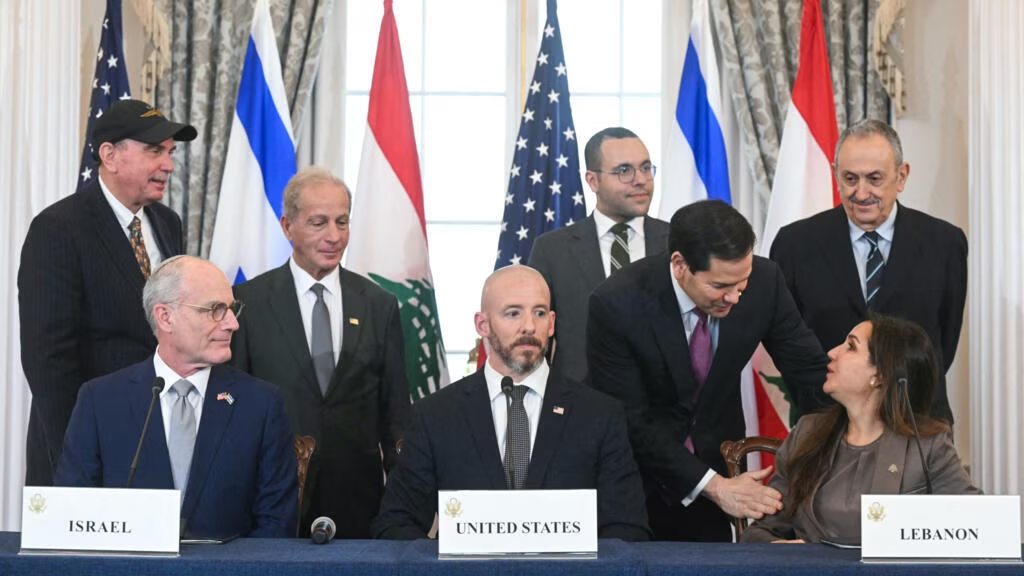
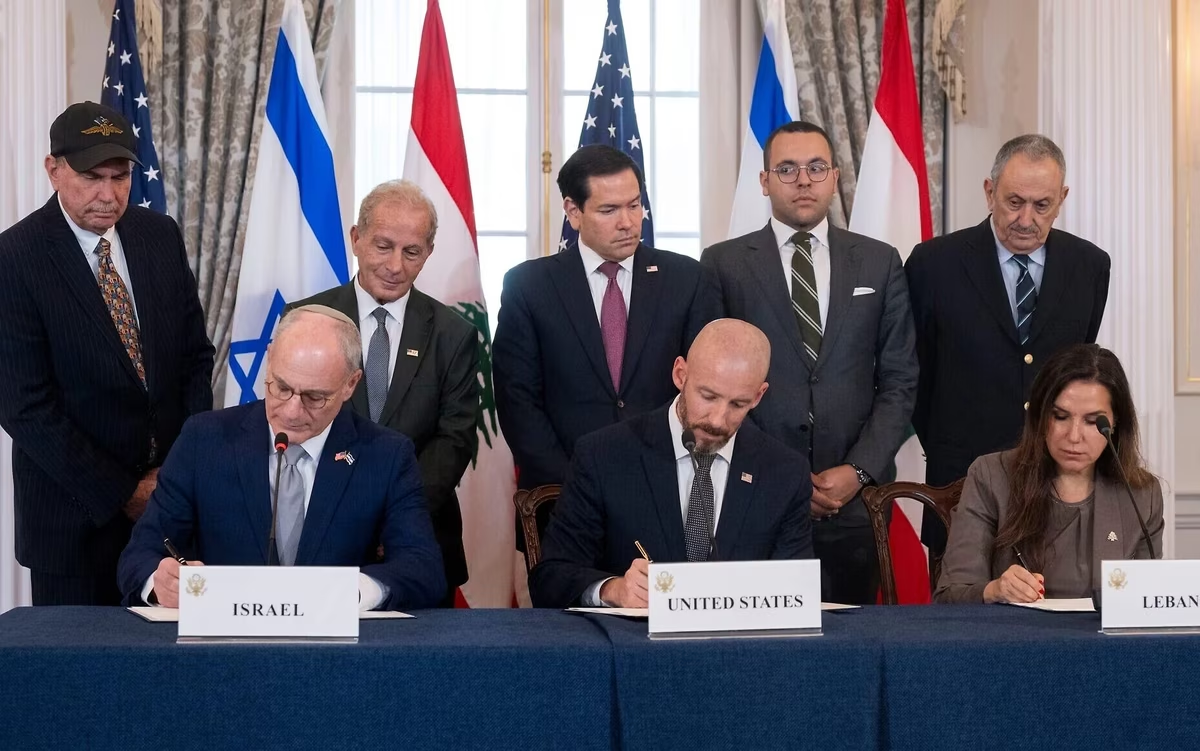
Lebanon entered a new political and security phase from the moment the framework agreement with Israel was signed in the American capital, Washington, where the discussion went beyond technical clauses to touch the core of the Lebanese entity. This shift raises deep questions about the shape of the state that will emerge after the war, and how to re-formulate the balances in a country that has lived for decades under the weight of division and occupation.

A wide current of supporters believes that this agreement represents a window of hope to restore the credibility of Lebanese state institutions and end years of duality in security and military decision-making. The agreement is expected to pave the way for the deployment of the Lebanese army in the south and the start of reconstruction and the return of displaced persons to their villages, which enhances the lost national sovereignty.

In contrast, opposition forces, led by Hezbollah and its allies, express great apprehension about the terms of the agreement, considering it a sovereign concession that does not reflect the real balance of power on the ground. These forces believe that Israeli conditions were inserted into the negotiations, especially regarding linking withdrawal to the disarmament issue, which they consider a threat to the resistance.

A third approach emerges, seeing the agreement as neither a decisive victory nor an absolute defeat for any party, but rather a reflection of a state of mutual impotence that imposed a forced settlement. This view considers what has been reached to be a temporary calm aimed at overcoming the phase of direct confrontation without providing final solutions to the structural crises in the country.

For her part, MP Najat Aoun Saliba considered that the framework agreement represents a real opportunity for the state to regain the initiative and activate dormant institutions. She affirmed in statements to media sources that the top priority currently is to secure the return of residents and displaced persons to their lands and ensure their stability in their border areas.

Regarding guarantees for Israeli withdrawal, Saliba clarified that the official Lebanese position adheres to full withdrawal according to the signed texts, but actual implementation is linked to gradual understandings. She indicated that addressing the arms issue must be done within the framework of an internal national discussion that ultimately aims to restore full state sovereignty.

In a related context, Hassan Qabalan, a member of the political bureau of the Amal Movement, warned that the features of the agreement are still incomplete and marred by a disturbing state of ambiguity. He pointed to reports of a secret security annex, which could put Lebanon in a situation that repeats previous experiences that were not in the interest of Lebanese national security.

Qabalan considered that the current agreement serves the political interests of the occupation government's prime minister, Benjamin Netanyahu, who seeks to achieve external gains to alleviate his internal crises. He criticized the absence of a binding timetable for withdrawal, warning against legitimizing concepts such as 'buffer zones' that directly affect Lebanese sovereignty.

Qabalan also warned of the danger of linking the return of displaced persons to the issue of resistance weapons, describing this link as a mine that could ignite internal Lebanese tensions at a sensitive time. He considered that this path could be a deliberate targeting to disrupt broader regional negotiation paths, putting Lebanon back in the eye of the storm.

For his part, political analyst Mounir Al-Rabie linked the agreement to major transformations in the regional and international conflict, emphasizing that Lebanon cannot isolate itself from its surroundings. He believed that the state entered into this quick settlement, thinking that it would protect itself, but the reality indicates that regional repercussions will remain present.

Al-Rabie described the agreement as the beginning of a new phase in which Israel tries to establish security and political facts that serve its long-term vision in the region. He stressed that the essence of the agreement is a 'declaration of intent' more than a final treaty, which makes it subject to conflicting interpretations or even disruption at any changing political moment.

Al-Rabie concluded by pointing to a shift in the traditional Lebanese path, as the agreement includes indications about seeking assistance from Arab and international parties to implement the clauses. This trend raises questions about the identity of these parties and their future role in Lebanon, and the extent of its impact on historical Arab commitments towards the Palestinian cause.

The framework agreement does not record a victory for any party nor a complete defeat, but rather is the result of a state of everyone's impotence that imposed a temporary settlement.

OPINIONS

Sun 28 Jun 2026 11:45 am - Jerusalem Time

A Reading of the Framework Agreement Between Lebanon and Israel

The framework agreement between Lebanon and Israel, announced on Friday, is an Israeli attempt to indirectly strike Iran, by entrenching itself behind international law and agreements in its conflict with Hezbollah, which has lost much of its strength. This has upset the internal balances in Lebanon in favor of the logic of the legitimate state, which should work for the benefit of Lebanon, away from involving this country in external geopolitical conflicts that do not respect the sovereignty of the state or the sanctity of the spirit of the Lebanese people, who suffer from Israeli killing, destruction, and displacement.Regarding the content, Netanyahu raised points related to experimental areas that will be under the control of the Lebanese army in coordination with Israel, in preparation for a gradual withdrawal. This logic, although it seems contradictory to Lebanese national sovereignty, appears very realistic given the hard power that Israel possesses, and behind it the dominant pole in the world, by which I mean the United States of America.However, there is no solution in Lebanon to protect the Lebanese people except the diplomatic option, and the re-arming of the Lebanese army to impose its strength, for a state without power will never stand, in addition to finding a negotiating path with Hezbollah, and perhaps opening a discussion with Iran itself, so that an internal war does not break out in Lebanon, which the region can do without, given the nature of the political and sectarian balances that cannot be overlooked.The position of the Amal movement seems very ambiguous, but it may be interpreted as an unannounced and implicit acceptance of new balances in Lebanon, after the political developments in the region that have shuffled the cards.As for Iran, it believes that this agreement is directed against it, and an attempt to isolate its ally Hezbollah by using the Lebanese army, and perhaps other parties with logistical support, in addition to military coordination with Israel, according to statements by US Secretary of State Marco Rubio. Consequently, Iran will find itself cornered, and may push its ally Hezbollah to take to the streets, or even engage in a confrontation with the Lebanese state. Iran may risk military intervention, or using the Strait of Hormuz card to pressure regional powers, and behind them the United States of America and Israel.I believe that the memorandum of understanding between America and Iran has moved from the stage of direct negotiations to the stage of sending hot messages and hitting below the belt, in order to score points that may be used in negotiations that are moving towards comprehensive solutions for the region's issues. Each party will use its cards in a way that suits it to achieve a political accomplishment that it can market to its domestic audience.

OPINIONS

Sun 28 Jun 2026 11:45 am - Jerusalem Time

Raiding Kafr Aqab Schools: Escalation in the Battle of Curricula and Identity

In a new escalatory step, the extremist Israeli Knesset member Tzvi Sukkot, head of the Knesset Education Committee, recently raided the vicinity of Kafr Aqab schools north of occupied Jerusalem, in an operation described as provocative, accompanied by an intense military presence. This raid came in the context of a campaign led by Sukkot to cut financial aid to educational institutions that teach Palestinian curricula, accusing them of "inciting terrorism."Details of the Raid and ThreatsSukkot, a member of the far-right "Religious Zionism" party, raided the town of Kafr Aqab on the morning of Thursday, June 18, 2026, under tight protection from occupation forces, while detaining Al-Doha school students and preventing them from leaving simultaneously with the raid. During this, Sukkot sent a message in Arabic to the school administrators, threatening to cut funding and close any school that does not adhere to the Israeli curriculum.According to Sukkot's statements, "educational institutions in Kafr Aqab receive budgets amounting to tens of millions of shekels from Israel, but in practice, they teach students content from the Palestinian Authority that encourages incitement to terrorism," as he claimed. He added: "We came today to make it clear that the party is over. Anyone who incites terrorism and encourages support for terrorists must be immediately closed, and certainly should not receive a single shekel from the state." In his words.Political Context and DimensionsThis raid comes as part of a broader campaign led by Sukkot against Arab educational institutions in Jerusalem and the West Bank, with the aim of imposing full Israeli sovereignty over the educational system in areas classified within East Jerusalem. This campaign coincides with a broader Israeli plan to establish an "educational complex" in Kafr Aqab, which official Palestinian institutions have warned against, considering it an attempt to undermine the role of these schools and their counterparts affiliated with the UNRWA and to impose a new educational reality that serves the Israeli agenda.Curriculum and Funding IssuesThe controversy surrounding Palestinian curricula in Jerusalem schools raises complex legal and political issues. On the one hand, Kafr Aqab schools are located within areas administratively controlled by Israel, but they are administratively and educationally affiliated with the Palestinian Authority in several aspects. On the other hand, the Israeli side believes that funding schools that teach a curriculum that does not recognize the Israeli narrative constitutes a contradiction, while Palestinians consider this measure an infringement on national identity and the right to education.Tzvi Sukkot's raid on Kafr Aqab schools and his threat to cut financial aid represent a new link in a series of Israeli measures aimed at imposing control over Palestinian educational institutions in Jerusalem. This step carries serious implications for the future of education in the region, amid escalating tension between the Palestinian national narrative and attempts to impose the Israeli curriculum, which portends further escalation in the conflict over identity and institutions in occupied Jerusalem.The Educational Scene in JerusalemThe raid by Knesset member Sukkot on Kafr Aqab schools cannot be understood in isolation from the broader context of Palestinian education in Jerusalem, which is witnessing a systematic and methodical campaign aimed at undermining it and imposing the Israeli alternative. What happened in Kafr Aqab is not an isolated event, but a link in a continuous chain of Israeli policies targeting the educational institution in all its dimensions: infrastructure, curricula, funding, and identity.Infrastructure CrisisThe education sector in East Jerusalem suffers from a severe shortage of schools and classrooms. According to a 2025 report by the Israeli organization "Ir Amim," the Israeli Ministry of Education itself acknowledged a shortage of 1,461 classrooms in East Jerusalem. Although the Israeli authorities plan to build 1,204 new classrooms by 2029, this figure does not take into account the annual population growth of 2.5%, nor the shortage resulting from the closure of UNRWA schools that housed hundreds of students.More problematic is that the occupation authorities place obstacles in the way of Palestinians wishing to build new schools, as the process of obtaining the necessary building permits takes between 10 to 15 years, not to mention the exorbitant costs of these permits. This means that the shortage of classrooms is not a result of neglect, but a deliberate policy aimed at tightening the noose on the Palestinian educational institution.Imposing the Israeli Curriculum: The War on IdentityThe battle over curricula is at the heart of the educational conflict in Jerusalem. The pluralism witnessed in the city's educational system reflects a state of conflict and division, with multiple educational tracks: an authentic Palestinian curriculum, a Palestinian curriculum distorted by the occupation authorities (by deleting texts and replacing them with others), an Israeli curriculum (Bagrut), and international educational systems.Israel is systematically working to tighten the noose on the Palestinian curriculum. In recent years, it has succeeded in deleting many materials after reprinting them, and this year it escalated its pace after withdrawing the permanent license from 6 schools in Jerusalem in July 2024, granting them a temporary license for one year, under the pretext of "incitement in textbooks." The decision included "Ibrahimieh College" and "Al-Iman Schools" in all their branches in Beit Hanina.The Israeli Ministry of Education demanded "correction of Palestinian curricula" and sent copies of books it considered "inciting," including lessons about Palestinian prisoners, the Israeli army preventing ambulances from reaching the injured, the water crisis, and lessons related to the Nakba in 1948. In parallel, Israel allocated 215 million shekels in its educational plan for Jerusalem for the period 2024-2028 to promote the policy of "Israelization" of educational curricula.Closure of UNRWA Schools: A Devastating BlowIn May 2025, Israel implemented the decision to close the schools of the United Nations Relief and Works Agency for Palestine Refugees (UNRWA) in East Jerusalem. This decision affected more than 650 students in Shuafat refugee camp alone, who are now facing an unknown educational future. Alternative schools are located outside the camp, behind Israeli military checkpoints, making going to them a daily adventure fraught with risks.This step comes as part of a broader campaign aimed at ending UNRWA's role in Jerusalem, which the Palestinian National Authority has warned against, considering it an attempt to undermine the agency's role and impose a new educational reality that serves the Israeli agenda.Implications for Identity and FutureThe Royal Hashemite Committee for Jerusalem Affairs warns that these policies are part of a systematic campaign aimed at "Judaizing" and "Israelizing" educational institutions, and imposing an Israeli vision of Palestinian history, identity, and culture. Since October 7, 2023, the far-right Israeli government has treated the "Israelization" of education as a national security priority, accompanied by the disruption of educational activities through the arrest of teachers and students, the establishment of checkpoints, and the construction of the separation wall.The Palestinian Ministry of Education denied rumors about curriculum changes, affirming its commitment to UNESCO standards, and that what is being circulated is based on distorted models by the occupation in textbooks used in Jerusalem schools. However, the official denial does not change the reality that thousands of Jerusalemite students live in a state of uncertainty, between a curriculum stripped of its content, schools closing their doors, and funding threatened with cuts.Conclusion:What the education sector in Jerusalem has witnessed, from Sukkot's raid on Kafr Aqab schools to the closure of UNRWA schools and the imposition of distorted curricula, paints a bleak picture for the future of Palestinian education in the Holy City. The battle is not just a battle of curricula or funding, but a battle of existence and identity, for which children and students who find themselves at the heart of a conflict for which they are not to blame are paying the price. The question remains: how far will Israel go in its campaign against Palestinian education, and will the international community find enough will to protect these children's right to education, as guaranteed by international conventions?*Head of the Education File in the National Popular Conference for Jerusalem

OPINIONS

Sun 28 Jun 2026 11:45 am - Jerusalem Time

Has the 'birth pangs' of a new Middle East finally begun?

The war on Iran represents a pivotal moment, and it may indeed prove to be a harbinger of a version of the Middle East that neither the United States nor Israel desires. On September 27, 2024, Israel assassinated Hassan Nasrallah, the Secretary-General of Hezbollah. The strike that ended his life came after a series of other operations, the most diabolical of which were the pager attacks that disfigured thousands of the party's civilian and military cadres, in addition to dozens of passersby. I was stuck in Dubai at the time, waiting for a seat on a flight back to Beirut. Three days after the assassination, I was having lunch with two close friends, both keen political observers like myself. The three of us were perplexed because Tehran, even after the assassination of Nasrallah, a man whose stature in Iran was no less than in Lebanon, responded with an inexplicable inertia. Hezbollah, before everyone, and most importantly before its hunted and besieged public, was left to face a fierce attack alone. This abandonment was puzzling in its implications. My friends went so far as to speculate that Iran might have sold Hezbollah in a secret deal with the Americans. But I disagreed with them, saying that the Islamic Republic does not abandon invaluable strategic assets, such as the Lebanese resistance, as part of an understanding with a sworn enemy known for easily reneging on its commitments. Ali Khamenei's hesitation required another explanation. For me, the most logical explanation was the Supreme Leader's extreme reluctance to enter a war that would invite American intervention. Over the past three months, as I watched the Iranian Revolutionary Guard Corps endure and transform the overwhelming Israeli-American offensive into bold and economically and militarily costly counter-strikes at the regional level, I remembered that lunch in Dubai. In the shocking contrast between the Republic's reservation then and its audacity today, the first features of a new Middle East began to unfold. These features appear in the fourteen points of the memorandum of understanding between Iran and the United States, which collectively signify an American recognition of Iran as a true regional power. They also appear through the active role played by major Gulf states in drafting this memorandum. They also appear in the tangible tensions between the Netanyahu government and the Trump administration, which are in many ways an inevitable result of a catastrophic war crafted by Israel. They are also evident in the significant shift in American attitudes towards Israel, both among the public and policymakers, a profound shift that is increasingly reflected in the superpower's policy towards its once highly privileged ally. For the first time in decades, Israel faces a dangerous and unpredictable geopolitical landscape. It faces it in an uncharacteristic state of decline and isolation, besieged by its genocide in Gaza and by the ongoing ethnic cleansing operations in the West Bank and Lebanon. Perhaps its biggest mistake was the mistaken belief that it could, through military force alone, overthrow an entire regional system and reshape it into a subordinate or fragmented space. And perhaps Washington's deeper mistake was allowing its ally to proceed with its most insane scheme yet, which is to shape a submissive Middle East from the ashes of mass destruction. In 2024, Benjamin Netanyahu declared to the world: "A year ago I said something simple: we will change the face of the Middle East, and we are indeed doing so. Syria is no longer the same Syria. Lebanon is no longer the same Lebanon. Gaza is no longer the same Gaza. And the head of the axis, Iran, is no longer the same Iran." The prime minister was overly modest, and tragically mistaken in his predictions. The truth is that no country in the region is as it was. Not one! But the Middle East he envisioned is now much further from realization than it was when he embarked on his most dangerous and deadly gambles. It is understandable that Netanyahu, known for his excessive arrogance, expected his 2026 blitzkrieg against Iran to achieve the same results as his attack on Hezbollah in Lebanon. But what happened instead was that the highly effective elimination of the first generation of Islamic Revolution leaders accelerated, at an astonishing pace, the rise of a new class of leaders: sophisticated, tough, bold, and ruthless, but less concerned with revolutionary fervor and more interested in managing mundane state affairs. Khamenei's hardened and aging theocracy, which had always been besieged and on the defensive, is finally giving way to the future. As Vali Nasr and Narges Bajoghli wrote in their prominent Foreign Affairs article titled "Iran's New Grand Strategy": "Domestically and externally, the new leadership espouses no revolutionary maximalism or revolutionary activism. They are state institution men: pragmatic, seasoned nationalists, operating on a realistic assessment of Iran's capabilities and vulnerabilities." We will soon know what the priorities of this elite mean for the resilient and vibrant Iranian people. The Islamic Republic has long been on this arduous and bumpy road. It seems to have finally reached its destination, ironically, thanks in large part to the Jewish state and the United States, who have always been our midwives in the birth of our recurring upheavals. In Lebanon, the open theater where geopolitical trends never cease to leave their mark, Iran is already showing its cards. It has made the two countries a single front in the war, and today it is making them a single front in negotiations. The Lebanese government has every right to feel humiliated by the paradox that Hezbollah's patron represents it in negotiations that may determine its fate. But the problem here is not only the small size of the country, but more painfully, the smallness of the ruling class, which of course explains the smallness of the state itself. The only consolation that comes to mind is that Israel, remarkably, has joined Lebanon in sitting on the sidelines. Nevertheless, Tehran's insistence on including the Lebanese file in the settlement also reflects its own weaknesses. The attention it pays to this file is no less indicative of its limitations than it is a translation of its strength. The Lebanese Shiite community has been forced to sacrifice almost everything over the past three years. Towns, villages, homes, livelihoods, and families have been destroyed in vast areas of the South and the southern suburbs. Discontent within the community is clear, and grief is widespread. This human community will no longer be forced to suffer in the service of others. Hezbollah and Iran are well aware that this war was a turning point. A public that has long suffered due to its proximity to a fierce enemy has been exhausted and has had enough. Mass destruction, ethnic cleansing, and the occupation of gas and water-rich areas form the core of Israeli strategy. Iran's challenge lies in denying the Jewish state the spoils of war and granting it absolute freedom in Lebanon. At a minimum, Israel seeks to maintain its hegemony in the Levant. Therefore, the coming months will be the most dangerous in a decade of continuous turmoil. It has been almost twenty years since we were last promised a new Middle East. In July 2006, as the war between Israel and Hezbollah entered its second week, Condoleezza Rice, then US Secretary of State, said that "what we are seeing here are the birth pangs of a new Middle East." In her vision, a major battle was raging between the American axis of virtue and the Iranian axis of evil, across the lands stretching between the eastern Mediterranean and the Persian Gulf. The main battlefields were Lebanon, Palestine, and Iraq. The grand prize for the winner was the soul of the region itself. In Lebanon, Hezbollah's opponents, perhaps buoyed by the confidence instilled by Rice, were almost ecstatic at the prospect of the party's fall. The mood in those circles was a mixture of elation, euphoric anticipation, and a desire for revenge. Finally, salvation at the hands of Israel. The search for salvation through foreign "saviors," near or far, was an old Lebanese reflection. No force, sectarian or otherwise, was innocent of it in our modern history. Not one! By mid-August, the sandcastles had collapsed, just like the ruins of the southern suburbs. The biggest of those castles was the one built by Rice. Hezbollah withstood a massive aerial assault and repelled the Israeli army. Today, the birth pangs that Rice and Netanyahu spoke of seem to have finally arrived. But the new Middle East emerging from the ashes of a catastrophic war is not the one they so desperately wanted. As for the Lebanese sandcastles built on the expectation of the Islamic Republic's defeat and salvation at the hands of the Jewish state, they too have collapsed. There are many lessons in these recurring illusions that end in disappointment. But, unfortunately, history has never been the strongest subject for our leaders.

PALESTINE

Sun 28 Jun 2026 11:45 am - Jerusalem Time

The Lebanese-Israeli Agreement.. Warnings of Falling into the "Trap" of Temporariness and Division

Dr. Ahmed Rafiq Awad: Iran is unlikely to accept the proposed formula for the Lebanese-Israeli agreement, which may doom this understanding to failure from the outset. Areeb Rantawi: The agreement is a "consolation prize" for Israel at the expense of the Lebanese, and its terms reflect a priority of targeting Hezbollah and Iran more than addressing the issue of the occupation of southern Lebanon. Dr. Amjad Shihab: The specter of civil war may push various Lebanese forces to overturn the agreement, based on the conviction that the cost of sliding into internal conflict will be much greater. Firas Yaqhi: The agreement may establish a new relationship between Lebanon and Israel with elements similar to the Oslo Accords, based on security coordination and linking any withdrawal to disarmament. Dr. Raed Al-Dabai: The most prominent mistakes of the agreement are falling into the trap of temporariness by postponing fundamental issues and linking their resolution to the issue of disarming Hezbollah according to the American-Israeli vision. Samer Anabtawi: The agreement paves the way for creating an internal division between a current that supports direct negotiations with Israel and another that adheres to the option of resistance and linking the Lebanese file to the regional context. Ramallah – Exclusive to "Al-Quds" – Warnings are increasing that the Lebanese-Israeli framework agreement, under American patronage, may lead to the reproduction of the Oslo Accords model for the Palestinian issue, within long-term transitional agreements that grant Israel security and political gains, in exchange for postponing fundamental issues related to sovereignty, withdrawal, and borders.

Writers and political analysts agree that the terms of the agreement between Lebanon and Israel give the latter an advanced position in managing the next phase, and link any withdrawal from southern Lebanon to the issue of disarming Hezbollah, which raises widespread doubts about the possibility of its implementation.

They believe that the agreement goes beyond being security understandings to form part of a rearrangement of the regional scene, by separating the Lebanese file from the path of American-Iranian understandings, and reducing the Iranian role in Lebanon, while opening the door for new security and political arrangements.

They warn that the absence of internal Lebanese consensus, and the continued disagreement over Hezbollah's weapons, may turn the agreement into a source of internal division, and lead to an escalation of political and security tensions, and perhaps open the door for wider regional interventions.

In their reading of the potential scenarios, they suggest that the agreement will face significant difficulties preventing its full implementation, given Israel's adherence to its security priorities and linking withdrawal to complex conditions, in addition to expected rejection from Hezbollah and Iran, and continued disagreements over border and sovereign issues.

Intersection of the Agreement with Oslo Political writer and analyst Dr. Ahmed Rafiq Awad believes that the framework agreement between Lebanon and Israel does not represent a repetition of the Oslo Accords in terms of circumstances, objectives, implementation mechanisms, or results, but it intersects with it in a set of basic features that give Israel political and security superiority, and make it the decisive voice in the success or obstruction of the agreement, considering that this constitutes one of the most dangerous aspects of the proposed understanding.

Awad explains that both agreements share in giving Israel freedom of movement and indirectly legitimizing the reality of occupation, in addition to consecrating the recognition of Israel as an existing entity, rather than defining its final borders, which opens the door for strengthening its regional and international acceptance.

Political Objectives Beyond Lebanese Affairs Awad emphasizes that the Lebanese-Israeli agreement carries political objectives that go beyond Lebanese affairs, as it seeks to separate what is known as "unity of fronts," and consolidate Israeli hegemony and influence in the region, as well as pave the way for a broader normalization process that may include Lebanon, and perhaps Syria and other countries.

In his reading of the future of the agreement, Awad proposes several potential scenarios, the first of which is the possibility of a direct confrontation between the Lebanese state and Hezbollah, which may lead to the outbreak of civil war within Lebanon, in light of the internal division over the agreement and its implementation mechanisms.

Awad points out that the second scenario is the expansion of the conflict if internal confrontations develop into the intervention of Arab and regional parties, similar to what the Lebanese arena witnessed during the 1970s, noting that the agreement gives the Lebanese state the possibility of seeking assistance from external parties, which may open the door for regional interventions, including Syria, threatening to reignite the situation in the region.

Awad refers to a third scenario based on the success of the United States and the Lebanese government in limiting Hezbollah's influence within specific areas, or removing it from some areas, considering that this possibility exists, but it faces significant challenges that reduce the chances of its full implementation.

Iran's Rejection of the Agreement The scenario that Awad favors is Iran's rejection of the agreement and its efforts to thwart it, based on previous understandings between Tehran and Washington regarding a ceasefire in Lebanon.

He believes that Iran is unlikely to accept the proposed formula for the Lebanese-Israeli agreement, which may doom this understanding to failure from the outset, and place serious obstacles to its entry into force, given the complexities of the Lebanese and regional scenes.

Significant Political and Security Gains for Israel The director of the Jerusalem Center for Political Studies, Areeb Rantawi, believes that the framework agreement between Lebanon and Israel has granted Tel Aviv significant political and security gains, compensating for the frustration it experienced after the American-Iranian memorandum of understanding, describing the agreement as a "consolation prize" for Israel that came at the expense of the Lebanese, and emphasizing that its terms reflect a priority of targeting Hezbollah and Iran more than addressing the issue of the Israeli occupation of southern Lebanon.

Rantawi explains that the agreement is not limited to similarity with the Oslo Accords, but goes to a worse formula, noting that its fourteen terms did not include any explicit reference to an Israeli withdrawal from Lebanese territories, while the talk of disarmament was repeated five times, which reflects that the agreement places Hezbollah and Iran in the position of "enemy," and grants Israel legitimacy to continue in the security zone in southern Lebanon under the names of experimental areas.

The Primary Goal of Weakening Hezbollah and Iranian Influence Rantawi emphasizes that the drafting of the agreement and the arrangement of its priorities and commitments confirm that the primary goal is to weaken Hezbollah and Iranian influence, considering that the Lebanese government does not have the political or field capability to implement the commitments contained therein without an understanding with Hezbollah, which makes its chances of implementation limited, recalling the May 17, 1983 agreement that did not last and was later overturned.

He points out that the agreement was born in rapidly changing circumstances within a race between two negotiating tracks, one led by Washington and the other linked to the Islamabad-Geneva track, considering that the rush to announce it was to show progress in the American track, despite many fundamental issues remaining unresolved.

Rantawi notes that the full text of the agreement has not yet been published, and what is currently circulated is based on Israeli and Lebanese readings, which makes its final evaluation premature.

Amending the Outcomes of the Memorandum of Understanding with Iran Rantawi believes that the agreement comes in the context of broader American moves to reinterpret or amend the outcomes of the memorandum of understanding with Iran, citing the Manama meeting and its outcomes that focused on missile files, armed arms, and disarmament, considering that what happened in Washington represents an extension of this trend.

Regarding future scenarios, Rantawi expects an escalation of tension in the Lebanese arena and perhaps at the level of confrontation with Iran, pointing out that Washington realizes that Tehran and Hezbollah will not accept the current formula of the agreement, which may push the American administration to search for a new formula that prevents the collapse of the basic memorandum of understanding.

Rantawi believes that the agreement reflects a divergence within the American administration between the hardline current represented by Secretary of State Marco Rubio, and other parties seeking to preserve the path of understandings with Iran, suggesting that the agreement may remain a beginning that may not reach its end.

Similarity with Oslo in Security Structure and Implementation Mechanisms Political science and public law professor Dr. Amjad Shihab believes that the Israeli-Lebanese framework agreement is essentially based on security arrangements that grant Israel strategic gains without making real concessions, pointing to a great similarity between it and the Oslo Accords in terms of security structure, implementation mechanisms, and expected results.

He refers to a Jewish proverb that states: "Give your enemy the impression that you have made a concession, while in reality you have given nothing," considering that this principle is clearly reflected in the content of the agreement.

Shihab explains that the agreement grants Israel a direct role in security arrangements within southern Lebanon, including supervising the selection of soldiers who will be deployed in the area, considering that the primary goal is to transfer the confrontation with Hezbollah from Israel to the Lebanese state, and push the Lebanese government to bear the responsibility of disarming the party, with the possibility of seeking assistance from Arab countries to carry out this task, which represents a major political and security victory for Israeli Prime Minister Benjamin Netanyahu.

Disarming Hezbollah and the Impossible Condition Shihab points out that Israel has not made any actual commitment to withdraw from southern Lebanon, as it linked that to disarming Hezbollah throughout Lebanon, which is an almost impossible condition to implement given Hezbollah's popular and political weight, which suggests that the security belt will remain under Israeli control for a long time.

Shihab explains that Israel destroyed the villages within this area with the aim of consolidating its presence and reducing its human losses in any future war of attrition.

Increasing Doubts About the Implementation of Any Withdrawal from Southern Lebanon Shihab believes that the agreement reproduces the experience of the Oslo Accords, as it is based on recognition of Israel's sovereignty in exchange for future promises of withdrawal, citing that Israel, more than three decades after the signing of Oslo, has not withdrawn from the West Bank, which reinforces doubts about the implementation of any withdrawal from southern Lebanon.

Shihab expects the agreement to turn into a temporary understanding that is difficult to implement in practice, with the possibility of escalating internal tensions if the Lebanese government tries to implement it or if Hezbollah manages to overturn it, noting that the party's announcement of its non-commitment to these understandings, in addition to popular reactions, may hinder their implementation.

Continued Assassinations and Bombings Shihab points to the possibility of Israel continuing to carry out assassinations and bombings based on the "freedom of action" clause, and perhaps directing new strikes against the party's leaders.

He believes that overturning the agreement remains a possibility, whether legally based on the Lebanese constitution which considers Israel an enemy state, or practically due to the government's inability to implement it and the lack of necessary political cover.

Shihab believes that the specter of civil war, which is still present in Lebanese memory, may push various forces to overturn the agreement, based on the conviction that the cost of sliding into internal conflict will be much greater than the continuation of the status quo.

An Attempt to Separate the Lebanese File Political writer and analyst Firas Yaqhi believes that the Israeli-Lebanese framework agreement under the patronage of US Secretary of State Mark Rubio represents a political and security shift that, on the whole, serves Israel's interests, considering that it constitutes an American attempt to separate the Lebanese file from the negotiation process with Iran, and at the same time support Israeli Prime Minister Benjamin Netanyahu politically and restore his internal position, in light of the ongoing American-Iranian understandings.

Official Lebanese Recognition of Israel Yaqhi points out that the agreement, consisting of 14 clauses, entrenches the concept of sovereignty between Lebanon and Israel without defining geographical borders according to international legitimacy resolutions, considering that this amounts to official Lebanese recognition of Israel.

Yaqhi notes that the initial Israeli withdrawal is limited to two areas outside what it calls the "security zone," while the full withdrawal remains conditional on the disarmament of Hezbollah and other armed groups from all Lebanese territories, not just the south, in addition to additional security arrangements, which means that Israel does not make a final commitment to withdraw.

Elements Similar to the Oslo Accords Yaqhi explains that the agreement grants Israel freedom of movement within the security zone, and includes clauses that speak of forming working groups, contact, and security cooperation between the two sides, as well as cooperation in pursuing armed groups and drying up their sources of funding, considering that this may establish a new relationship between Lebanon and Israel with elements similar to the Oslo Accords, based on security coordination and linking any Israeli withdrawal to disarmament.

Yaqhi believes that the agreement practically ends any Iranian role in the ceasefire and Israeli withdrawal from southern Lebanon, and grants the United States a wider space for maneuver in its negotiations with Tehran.

Yaqhi believes that the agreement allows the Lebanese government to request support from Arab countries to eliminate Hezbollah, which is consistent with US President Donald Trump's statements about a future Syrian role in Lebanon.

Yaqhi notes that the agreement includes restrictions on Lebanese movements in international institutions, and restricts Beirut's ability to take political or legal stances against Israel, and also links the files of prisoners and remains to goodwill measures, without a clear Israeli obligation to release all prisoners.

A New Phase of Internal Lebanese Division Yaqhi points out that the agreement establishes a new phase of internal Lebanese division, warning that it may sow the seeds of discord and civil conflict if implemented, in light of what he considers a political alignment between the Lebanese presidency and the premiership on the one hand, and the Shiite duo on the other.

He proposes three potential scenarios for the next phase, the first being Lebanon sliding into internal confrontation or civil war, the second being the collapse of the ceasefire and the return of military confrontation between Hezbollah and Israel, and the third being the continuation of the status quo due to the inability of the Lebanese state to implement the terms of the agreement, with the continuation of the equation of "calm for calm and escalation for escalation."

Yaqhi believes that the most dangerous possibility is the transformation of the internal Lebanese conflict into a wider regional confrontation through the intervention of external parties, pointing out that the framework agreement may not see the light of day due to the nature of internal political balances in Lebanon.

Risks of Reaching Outcomes Similar to the Oslo Experience Political science professor at An-Najah National University, Dr. Raed Al-Dabai, believes that the agreement between Lebanon and Israel does not constitute a new version of the Oslo Accords from a legal and political perspective, but it carries the risks of reaching outcomes similar to the Oslo experience, by producing a long-term transitional agreement that grants Israel security gains and postpones the resolution of fundamental sovereign issues, foremost among them the Israeli occupation of parts of Lebanese territories and the files of borders and natural resources.

Al-Dabai explains that there are fundamental differences between the two cases, most notably that Lebanon is a sovereign state according to international law, unlike the status of the Palestine Liberation Organization when the Oslo Accords were signed, and that Hezbollah represents a party and military actor within a regional axis, and is not the sole representative of the Lebanese people.

Al-Dabai believes that the elements of similarity remain present, foremost among them the imbalance of power in favor of Israel militarily, security-wise, and economically, in addition to the pressures faced by Hezbollah as a result of the war of attrition and the regional changes that followed October 7, 2023, which recalls the circumstances that surrounded the Palestinian issue after the First Gulf War.

American Sponsorship of the Lebanese Agreement Reflects the Same Approach Al-Dabai points out that the American sponsorship of the Lebanese agreement reflects the same approach that governed the Palestinian settlement process, where Washington remained the most influential party in managing the negotiations in line with Israeli security and expansionist priorities, despite France's attempts to play a supportive role.

Al-Dabai believes that the talk of restoring Lebanese sovereignty recalls the slogans that accompanied the promises of establishing a Palestinian state, without reaching tangible results.

Falling into the Trap of Temporariness Al-Dabai believes that the most prominent mistakes of the agreement are falling into the trap of temporariness, by postponing fundamental issues such as the Shebaa Farms, the village of Ghajar, land borders, and aerial violations, and linking their resolution to the issue of disarming Hezbollah according to the American-Israeli vision.

Al-Dabai believes that the agreement repeats the logic of prioritizing security over politics and rights, as any Israeli withdrawal is linked to ending what Israel considers a threat posed by Hezbollah, which reproduces the equation of prioritizing security at the expense of political and sovereign issues.

Al-Dabai emphasizes that the absence of internal consensus represents another common factor with the Oslo experience, warning that any agreement that does not receive understanding from Hezbollah and its political environment may turn into a source of internal crisis.

Continuation of Fragile Calm Regarding future scenarios, Al-Dabai suggests the continuation of a fragile calm based on a limited security agreement that establishes a relative ceasefire, with the issues of Hezbollah's weapons, Israeli violations, and border issues remaining unresolved, considering that this scenario is the most realistic.

As for the scenario of the collapse of the agreement and what it may lead to in terms of civil war, or its transformation into a comprehensive agreement, Al-Dabai considers it less likely given the absence of the necessary political environment and American and Israeli will to achieve that.

More Dangerous Repercussions Than the Oslo Accords Political writer and analyst Samer Anabtawi believes that the announced principles agreement between Lebanon and Israel came in circumstances very similar to the Oslo Accords, and may even be more dangerous in terms of its repercussions, given the different balance of power within Lebanon and the continued Israeli presence in the south.

He points out that the agreement grants Israel strategic gains and restricts the Lebanese position in any subsequent negotiations.

Anabtawi explains that the Lebanese government sought, through the agreement, to confirm that the Lebanese file is subject to state authority and not to Iran, and to prove that it is an internal file that enjoys Arab support, away from the path of American-Iranian negotiations.

Anabtawi believes that this approach came at the expense of fundamental constants, after it provided Israel with legitimacy to continue its occupation of southern Lebanon, at a time when regional pressures, especially Iranian, were pushing for a comprehensive ceasefire and linking the Israeli withdrawal to the ongoing negotiations with Washington.

The Agreement and Weakening Lebanese Bargaining Chips Anabtawi points out that the agreement weakened Lebanese bargaining chips, after separating the Lebanese file from regional negotiations, and granting Israel the role of observer and arbiter in implementing its terms, by adopting experimental areas subject to its evaluation, which allows it to postpone any withdrawal under the pretext that the Lebanese government is unable to assert its control or disarm the resistance, which may prolong the stay of its forces in the south.

Anabtawi believes that the agreement paves the way for creating an internal division in Lebanon between a current that supports direct negotiations with Israel, and another that adheres to the option of resistance and linking the Lebanese file to the regional context, warning that this division may develop into an internal conflict for which the Lebanese will pay the price, while Israel benefits from it to advance its political and military objectives.

Netanyahu's Attempt to Present the Agreement as a Political Victory Anabtawi points out that Israeli Prime Minister Benjamin Netanyahu tried to leverage the agreement to present it as a political victory that strengthens his internal position, while American objectives differ, as Washington seeks to calm the Lebanese arena in preparation for addressing broader regional issues, while Israel continues to expand its operations in the West Bank and Gaza Strip, while seeking to consolidate its control in southern Lebanon, and perhaps repeat the same model in southern Syria.

Significant Difficulties in Implementation Regarding the future of the agreement, Anabtawi suggests that it will face significant difficulties in implementation, due to the rejection of resistance forces and Israel's non-compliance with its terms, expecting continued Israeli violations and stalled withdrawal, in addition to the possibility of Iran insisting on re-linking the Lebanese file to regional negotiations.

Anabtawi did not rule out an escalation of resistance operations or an internal confrontation between the Lebanese government and the resistance, considering that all scenarios remain open, given the Lebanese government's haste and failure to learn from past experiences that showed that Israel does not abide by agreements when they conflict with its interests.


OPINIONS

Sun 28 Jun 2026 11:45 am - Jerusalem Time

Immunities Over Gaza: Is the Future of Palestinians Being Reshaped Beyond Accountability?

Washington's Message

Washington – Said Arikat – 28/6/2026

News Analysis

The draft resolution concerning what is known as the "Peace Council" reveals more than just administrative arrangements for the post-war phase in the Gaza Strip; it opens the door to a deeper question related to the nature of the authority intended to be imposed, the limits of Palestinian sovereignty, and the future of accountability itself in one of the world's most destructive and complex environments.

While the project is presented as a framework for reconstruction, stabilization, and disarmament, the document shows a parallel, less obvious but more sensitive trend: the establishment of a transitional governance structure with broad legal immunities, extending from political leaders to contractors, international forces, and even local Palestinian experts who will participate in civil administration. This expansion of the concept of immunity is not only about protecting individuals but about redefining who has the right to accountability and who is exempt from it.

In practice, granting comprehensive immunity to any entity managing the affairs of a devastated sector like Gaza immediately weakens one of the most important principles of public law: that authority is coupled with accountability. When these powers are transferred to an entity not subject to independent judicial oversight within the territory, nor to a clear international mechanism outside it, the question becomes not only how Gaza will be governed, but under what law it will be governed, and who has the right to object when violations or errors occur.

The most dangerous aspect of the draft is not only the broad scope of immunity but the absence of an entity to which Palestinians can appeal for challenge or accountability. The provisions that make the Council itself the investigating body for claims related to damages or losses practically mean merging the positions of "adversary" and "judge" into one institution. This is not just a technical loophole, but a structural flaw in the concept of transitional justice, which usually assumes the existence of a neutral third party.

In this context, the future of Palestinians in Gaza becomes linked to a governance model that is not based on a balance between authority and accountability, but on a broad delegation of power to a transitional body that possesses executive, security, and judicial powers simultaneously. This type of accumulation of power, even if temporary, creates a new political reality that will be difficult to reverse later, especially given the fragility of the Palestinian political structure and the ongoing internal division.

Politically, this formula raises a sensitive question about the meaning of "transition" itself. Are we facing a preparatory phase for the return of Palestinians to actual self-rule, or a long-term international administration model managed from outside and whose priorities are set outside the internal Palestinian context? The broader the powers of the Peace Council and the deeper its immunities, the more the space for Palestinian decision-making shrinks, even within daily civil affairs.

Most tellingly, the document, as revealed by reports, was not fully presented to the Palestinian parties participating in the civil administration. This detail, despite its importance, reflects a flaw in the structure of participation itself: it appears that Palestinians are being called upon to implement a model they did not actively participate in drafting, but rather one that was prepared in narrow external circles and then presented to them as a fait accompli.

Economically and administratively, the clause on the free use of public property for the Council's administration adds another layer of problems. The absence of clear mechanisms for compensation or legal regulation places the future of public resources in Gaza in a gray area, where facilities may turn into operational tools in the hands of an external administration without real sovereign or local guarantees. This reproduces a pattern known in previous international experiences, where reconstruction is mixed with the redistribution of influence rather than being a balanced development process.

As for security, linking the project to the disarmament of factions and creating an environment for the deployment of an international force places Gaza before a deep reshaping of its security structure, but this is happening outside the framework of a comprehensive political agreement with the Palestinians themselves. Here lies one of the most important contradictions: lasting stability cannot be imposed through externally imposed security arrangements without a clear political contract that defines mutual rights, duties, and guarantees.

From the perspective of international law, the draft raises an additional problem related to the nature of the entity itself: Is it an international organization? Or a special political body? Or a hybrid model outside traditional classifications? This ambiguity is not a minor detail, but a crucial element in determining whether the proposed immunities are legally sound in the first place or merely unstable political privileges.

In conclusion, it appears that what is being proposed in Gaza is not just about reconstruction, but about re-engineering the governance model itself. However, any model that is not based on transparent accountability, and does not guarantee the right of Palestinians to oversight, accountability, and objection, carries within it the seeds of a future crisis, even if it appears at the moment to be a tool for stability.

The future of Palestinians in Gaza, in light of this draft, is not determined solely by the success of construction projects or disarmament, but by the ability of any new governing framework to answer a simple but fundamental question: Who holds power accountable when it errs? And who ensures that the "transitional phase" does not turn into a permanent system without accountability?

Without clear answers to these questions, immunities may turn from an administrative protection tool into a political barrier that separates the population from their rights, and makes Gaza more a sphere of external administration than a viable space for Palestinian sovereignty.

ARAB AND WORLD

Sun 28 Jun 2026 11:44 am - Jerusalem Time

Widespread Military Escalation in Hormuz: US Raids Met by Iranian Strikes on Bases in Kuwait and Bahrain

The intensity of military tensions in the Arabian Gulf region has rapidly escalated, with US President Donald Trump threatening to continue military operations against Iranian targets. Trump announced concentrated attacks on Tehran's positions around the Strait of Hormuz, considering it a necessary response to the targeting of oil tankers in the international waterway.

In an immediate reaction, the Iranian Revolutionary Guard announced widespread shelling operations targeting US military positions in both Kuwait and Bahrain. Iranian forces used ballistic missiles and drones in their attack, representing a dangerous shift in the direct confrontation between the two sides, moving beyond traditional engagement boundaries.

For its part, the US Central Command confirmed that it carried out precise strikes targeting ten strategic locations around the Strait of Hormuz. Military sources clarified that these raids came as a 'direct response' to what it described as repeated Iranian aggressions targeting freedom of commercial navigation and maritime security in the region.

US targets hit by the shelling included Iranian military surveillance infrastructure, in addition to communication systems and air defense sites. The raids also focused on destroying drone storage facilities and capabilities dedicated to laying naval mines, in an attempt to curb Tehran's ability to threaten ships passing through the strait.

These field developments come after the oil tanker 'Kiko', flying the Panamanian flag, sustained damage while passing near the Strait of Hormuz carrying approximately two million barrels of crude oil. Despite the damage, the tanker was able to continue its journey, but the incident was the spark that ignited the current round of conflict.

Observers believe that this military escalation, which continues for the second consecutive night, puts the recently signed memorandum of understanding between Washington and Tehran to the test. It appears that both sides are seeking, through military force, to impose new rules of engagement and solidify their political and field positions amidst the ongoing clash of wills.

Analyses from informed sources indicate that the United States has set a sixty-day timeline to remove the Strait of Hormuz from the sphere of absolute Iranian control. Washington seeks to ensure the passage of commercial vessels without being subject to the procedures or fees that Tehran attempts to impose on navigation in this strategic passage.

In contrast, Tehran insists on asserting its sovereignty and control over the navigation routes within the strait, making a direct confrontation likely to continue. While diplomatic communication channels remain indirectly open, the field remains the primary arena where each party attempts to impose its vision for the future of navigation in the region.

There may come a time when we are no longer able to act rationally, and we will be forced to complete the mission militarily after having started it with great success.

OPINIONS

Sun 28 Jun 2026 11:42 am - Jerusalem Time

A Peace Agreement That Risks Undermining Lebanon’s Sovereignty


By: Said Arikat


June 28, 2026


News analysis


Washington, D.C- The proposed American-Lebanese framework agreement has been presented as a historic opportunity to stabilize Lebanon and end decades of conflict along its southern border. Yet beneath the language of peace, security, and institutional reform lies a document that raises profound constitutional, political, and democratic concerns. Rather than offering a roadmap toward national reconciliation, the agreement appears designed to reshape Lebanon’s political order in ways that privilege external interests over domestic legitimacy.


No peace agreement can endure if it excludes a substantial portion of the society it claims to govern. The most striking weakness of the proposed framework is its apparent disregard for nearly 35 percent of Lebanon’s population, represented politically and socially by constituencies aligned with Hezbollah and its allies. Whether one supports or opposes Hezbollah is beside the point. Sustainable political settlements are not built by pretending that millions of citizens simply do not exist.


History repeatedly demonstrates that durable peace emerges through inclusion rather than exclusion. Agreements imposed upon deeply divided societies without broad political consensus rarely survive. Instead, they deepen polarization, delegitimize state institutions, and often create the very instability they seek to eliminate. Lebanon’s modern history—from the civil war to the Taif Agreement—illustrates that lasting political arrangements require compromise among competing communities, not the victory of one camp over another.


The agreement’s treatment of legal accountability is equally troubling. Rather than placing transitional authorities under the oversight of independent judicial institutions, the draft reportedly grants the proposed Peace Council sweeping authority to manage legal disputes arising from its own decisions. Such an arrangement effectively allows an executive body to become judge in its own cause.


This is not merely a technical legal issue. It strikes at the heart of constitutional governance. Independent oversight exists precisely because governments, particularly transitional ones exercising extraordinary powers, require external scrutiny. When executive institutions acquire the authority both to make decisions and determine the legality of those decisions, accountability becomes little more than a political slogan.


The result is the emergence of an exceptional governing structure operating outside ordinary constitutional checks and balances. Such models have consistently failed elsewhere because they erode public confidence. Political legitimacy cannot be sustained by foreign endorsement or diplomatic recognition alone. It ultimately depends upon transparent institutions capable of holding power accountable regardless of who exercises it.


Even more concerning is the agreement’s apparent security architecture. Although presented as a mechanism to prevent renewed conflict, its practical effect appears to institutionalize Israeli influence over Lebanon’s sovereign security decisions. If Israel is granted authority—directly or indirectly—to determine whether Lebanon is complying with its obligations, then the agreement effectively hands Israel a continuing veto over Lebanese policy.


This fundamentally alters the balance between peace and sovereignty. A neighboring state ceases to be merely a party to an agreement and instead becomes an arbiter of another country’s domestic affairs. Such arrangements rarely produce stability. Rather, they create permanent dependency, leaving one side able to delay, suspend, or reinterpret implementation whenever political circumstances change.


Israel has long argued that its security requires freedom of military action inside Lebanon whenever it identifies potential threats. If that doctrine becomes embedded within an internationally supported framework agreement, Lebanon risks entering an arrangement in which Israeli security concerns consistently supersede Lebanese sovereignty. That would represent not peace between equals but a hierarchy in which one state exercises disproportionate influence over another.


Supporters may argue that these extraordinary mechanisms are necessary because Hezbollah’s military capabilities have prevented previous diplomatic efforts from succeeding. Yet democratic governance cannot be strengthened by circumventing democratic principles. Weakening constitutional safeguards in order to achieve short-term security objectives often produces the opposite outcome over time.


The agreement also appears to assume that Lebanon’s political crisis can be solved primarily through external engineering. This assumption misunderstands the nature of Lebanon’s problems. The country’s institutional paralysis reflects deep internal divisions rooted in sectarian power-sharing, economic collapse, regional rivalries, and decades of state weakness. None of these challenges can be resolved solely through security arrangements negotiated under foreign sponsorship.


Moreover, agreements perceived as externally imposed carry their own political costs. Large segments of the Lebanese public may view the framework not as a national compact but as an American-sponsored restructuring designed to satisfy Israeli strategic priorities. That perception alone risks undermining implementation, regardless of the agreement’s technical provisions.
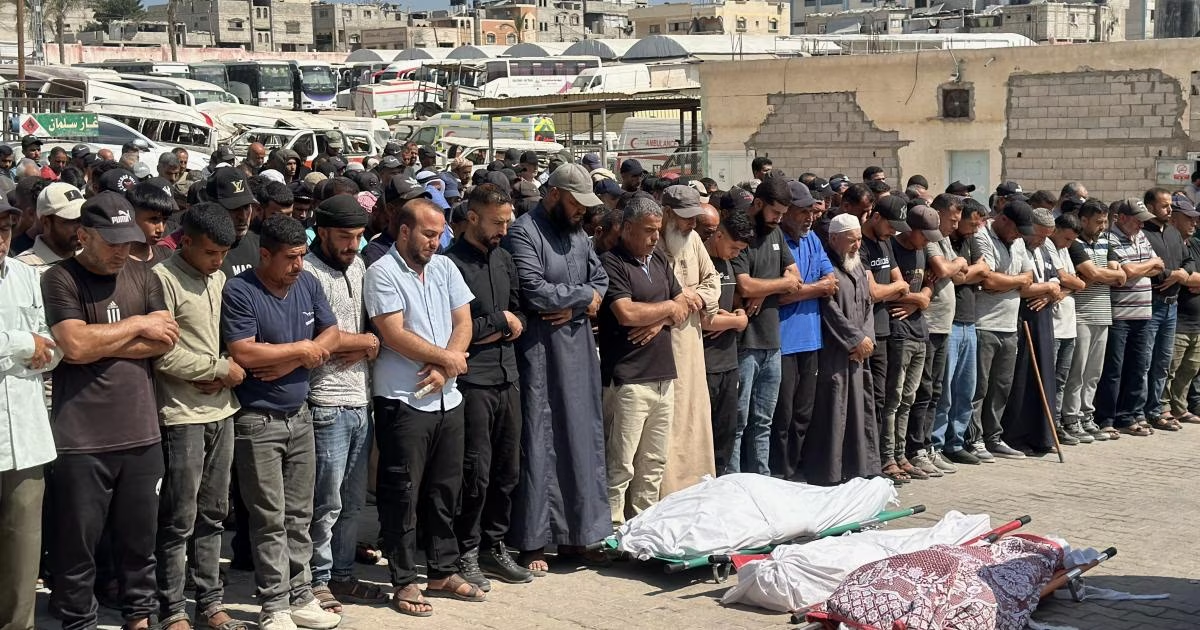

Peace cannot be built upon political exclusion. Nor can sovereignty be strengthened by transferring essential decision-making authority to external actors. Any agreement that effectively marginalizes more than one-third of the population while granting another state enduring leverage over national security is unlikely to command lasting legitimacy.


Lebanon deserves an agreement that strengthens its institutions rather than bypasses them; reinforces judicial independence rather than concentrates power; and protects national sovereignty instead of creating new mechanisms of external supervision. Above all, it deserves a political settlement reflecting the consent of its people rather than the strategic calculations of foreign governments.
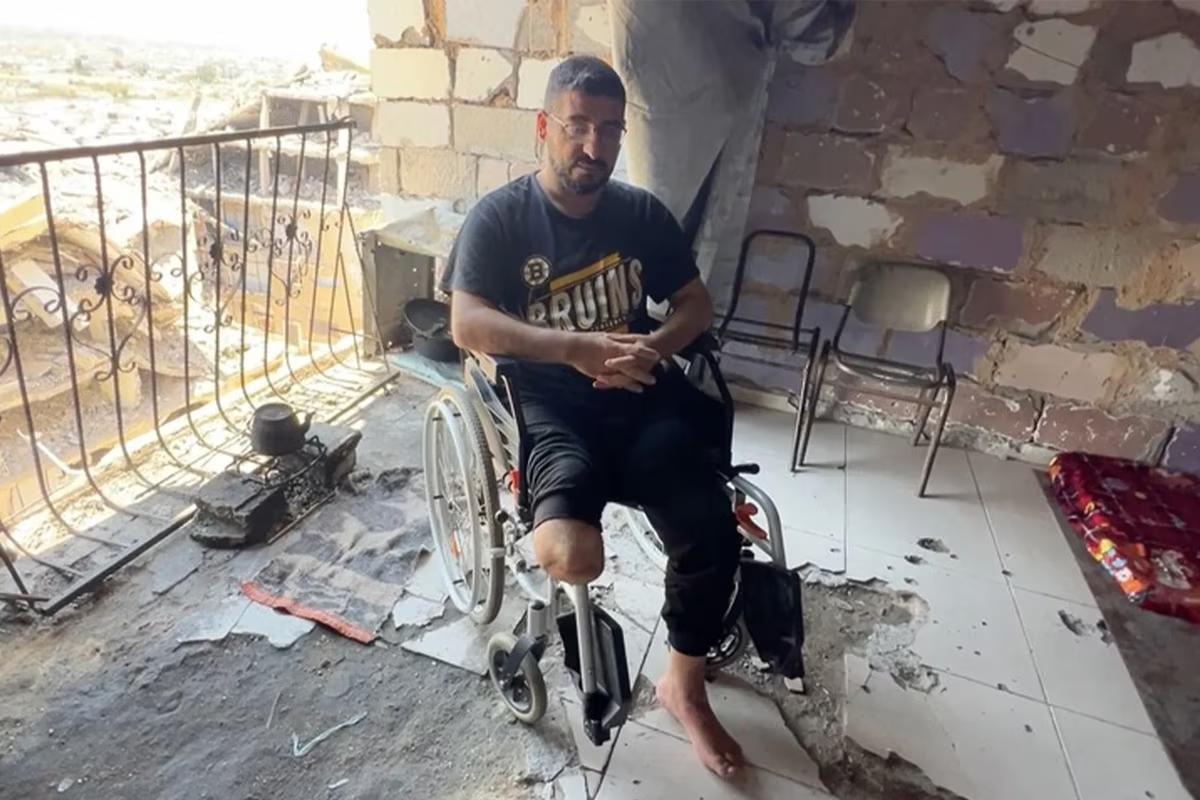

History offers a simple lesson. Peace imposed without inclusion is often temporary. Stability achieved through exceptional powers is frequently fragile. And sovereignty surrendered in the name of security is rarely recovered without enormous political cost. If the proposed framework proceeds without addressing these fundamental flaws, it risks becoming less a peace agreement than a blueprint for a new political order—one that institutionalizes exclusion at home while normalizing Israeli predominance over Lebanon’s future.

OPINIONS

Sat 27 Jun 2026 2:53 pm - Jerusalem Time

Trump escalates rhetoric against the left: Progressive Democrats "most dangerous threat" to America since its founding

Washington Message

Washington – Said Arikat - 27/6/2026

US President Donald Trump escalated his political and ideological attack on the progressive wing within the Democratic Party, describing his opponents as "atheist communists" and "animals," in a sharp speech he delivered at the Faith and Freedom Coalition conference in Washington D.C., coinciding with a lengthy post he published on the "Truth Social" platform exceeding 400 words, carrying unprecedented accusations against American progressive forces, warning of what he considered an existential threat to the United States.
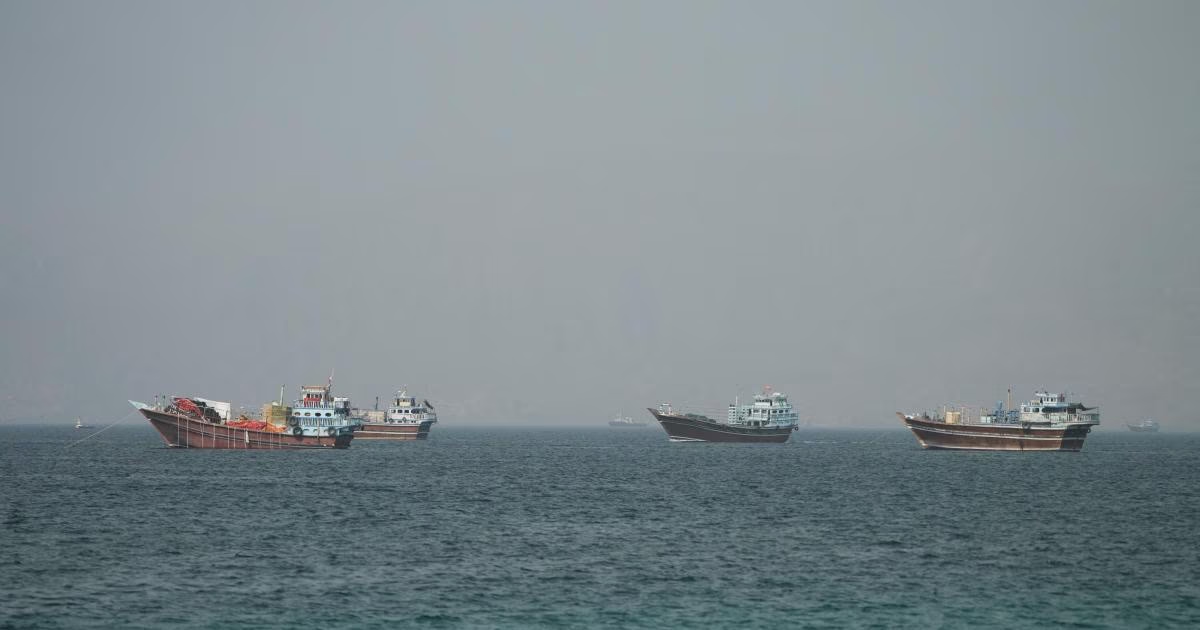
The escalation came after the successes achieved by progressive and democratic socialist candidates in the New York City primaries, with the support of Mayor Zohran Mamdani, which Trump considered an indication of the expansion of the leftist current within the Democratic Party, and its transformation into a political force capable of influencing the future of national elections.
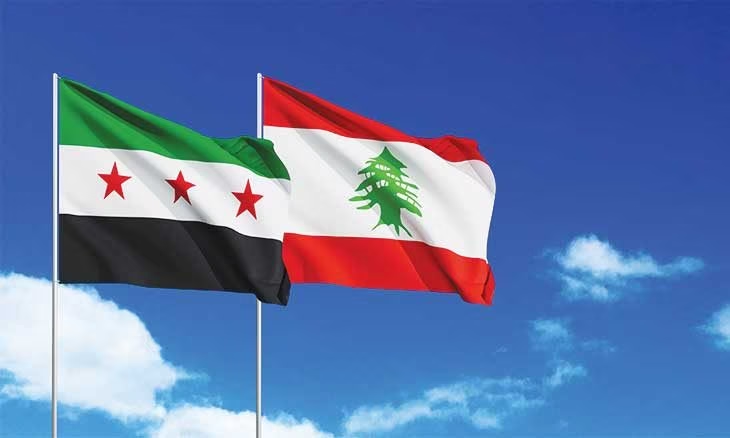
Trump said that what he described as "hardline communists" represent "the most dangerous threat facing the United States since its founding 250 years ago," considering that their ideas do not only target the economy, but also the religious and social identity of Americans. He claimed that this current "will close churches and kill people," alleging that assassinations are an essential part of its political doctrine, without providing evidence to support these accusations.

In an attempt to mock his opponents, Trump said he could become "the greatest communist in history" if he promised Americans free housing and free food, but he added that such policies would lead the country, in his words, to poverty and economic collapse and turn the United States into a state incapable of competing.

This speech comes within the framework of the election campaign in which Trump relies on mobilizing his conservative and evangelical base, by presenting the political conflict as an existential confrontation between religious and conservative values on the one hand, and radical leftist ideas on the other. His choice of the "Faith and Freedom Coalition" platform reflects his keenness to address one of the most important components of his electoral base, which played a pivotal role in his political rise in recent years.

Observers believe that Trump's language has gone beyond traditional political criticism to rhetoric based on intimidation and sharp polarization, as he portrays political opponents as an existential threat, not just electoral rivals, a style that has become a prominent feature of his discourse since entering political life.

This discourse reflects a growing trend in American politics based on transforming electoral competition into a moral and cultural battle, rather than a competition over programs and policies. When an opponent is portrayed as an enemy of the nation and religion, the space for democratic dialogue shrinks in favor of mobilization and fear rhetoric. The danger of this approach increases when it comes from a former president seeking to return to the White House, because his words not only affect his supporters, but also redraw the boundaries of public debate and push society towards more polarization and division.

Trump's statements also reveal the success of the progressive current in establishing itself as an influential player within the Democratic Party, which has led Republicans to consider it the main threat in the upcoming elections. The intense focus on New York victories reflects an understanding that shifts within the Democratic Party may extend to other states, thereby changing the nature of political competition. However, exaggerating this danger through descriptions such as "communism" and "destroying America" also reflects an electoral exploitation of historical fears associated with the Cold War more than with the current political reality.

The use of phrases such as "they will close churches" and "they will kill people" raises questions about the limits of political discourse in the United States, especially in light of the escalation of social tensions and political violence incidents in recent years. Language that relies on intimidation may achieve short-term electoral gains, but it also carries the risks of deepening societal divisions and weakening trust in democratic institutions, especially when serious claims are made without clear evidence, which opens the door to the spread of misinformation and the promotion of conspiracy theories among the public.

Trump's statements do not appear to be merely a reaction to local election results, but rather part of a broader electoral strategy based on mobilizing the conservative right-wing base by portraying the upcoming elections as a battle to save the United States from a radical transformation in its political and cultural identity. However, the continuation of this approach may make public discourse more severe, and reduce the chances of bipartisan consensus, at a time when the United States faces economic, social, and international challenges that require a greater degree of national consensus, not more political division.

PALESTINE

Sat 27 Jun 2026 2:52 pm - Jerusalem Time

Horrific Testimonies from Released Gaza Prisoners: Systematic Torture and Deaths of Detainees in Detention Centers

On the occasion of the International Day in Support of Victims of Torture, Palestinian prisoners released from the Gaza Strip gave shocking testimonies about the grave violations and systematic torture they were subjected to in Israeli detention centers. Sources confirmed that these practices included severe beatings, deliberate humiliation, intentional medical neglect, and deprivation of the most basic human rights from the moment of their arrest until their release.

Journalist Khader Baker Abdel Aal, who worked as a correspondent for local and international agencies, recounted details of his arrest from Al-Shifa Medical Complex on March 18, 2024. Abdel Aal explained that occupation forces tied his hands behind his back, blindfolded him, stripped him of his clothes, and subjected him to continuous beatings for long hours in extremely humiliating conditions.

Abdel Aal pointed out that the absence of international protection for Palestinian journalists made them easy prey for direct assaults from the first moments of detention. He described the transfers as taking place in large trucks packed with about 150 detainees, before they were distributed to smaller buses, shackled with iron handcuffs on their hands and feet.

The released journalist spoke about the severe physical effects left by the continuous beatings during transfers, confirming that he suffered rib fractures whose pain lasted for many months. He added that detainees were forced to wear uniform prison clothing amidst an atmosphere of continuous physical and psychological intimidation that did not stop throughout the journey.

In a horrific testimony about medical neglect, Abdel Aal mentioned that he was transferred to a medical examination point within the Gaza envelope to record data, and there he informed the specialist doctor of his chronic skin disease. The doctor's response was shocking, as he clearly told him: 'I am not here to treat you, but I came to torture you,' before he was sent back to the detention cells.

Abdel Aal revealed the crime of the death of detainee Kamal Radi inside one of the prison sections, where the latter was summoned and subjected to brutal beatings for a full hour. He explained that Radi was returned to the cell in a very critical health condition, only to die shortly thereafter, with his body placed in a black bag in front of his son, who was detained in an adjacent section.

Regarding the detention conditions in the 'Sde Teiman' camp, Abdel Aal described the 91 days he spent there as an endless series of abuse. He confirmed that the prison administration prevented detainees from speaking, praying, or sleeping normally, and restricted the use of restrooms to only a few minutes per day.

Sources reported that detainees in 'Sde Teiman' remain constantly bound and blindfolded, and are subjected to severe punishments for any slight movement or attempt to communicate with others. Repression units storm the sections weekly to carry out mass beatings without any justification, even on holidays and special occasions.

Released prisoners stressed that the violence practiced against them was not aimed at achieving intelligence purposes or obtaining information, but rather its primary purpose was humiliation and the destruction of human dignity. They described these practices as a consistent policy followed by the occupation authorities against all detainees from the Gaza Strip without exception.

In another incident, Abdel Aal recalled suffering from severe blood poisoning that required his transfer to the hospital, handcuffed and shackled, under heavy guard. There, instead of receiving care, he was subjected to a physical assault that led to bleeding in his head, and was forced under threat to conceal the truth of what happened to him to avoid a new round of torture.

Released prisoners described transfers to courts or hospitals as additional 'torture trips,' where detainees are forced to sit in painful positions for long hours. They pointed to the occupation's deliberate act of leaving them under the scorching sun and on hot asphalt surfaces to increase their physical and psychological suffering.

For his part, released prisoner Musab Amdoukh revealed the existence of special rooms known as 'the disco,' where very loud music is played continuously to prevent detainees from sleeping. He explained that this type of psychological torture aims to exhaust the mental and physical strength of prisoners and keep them in a state of constant disorientation.

Amdukh added that torture methods also included the use of electric shock and prolonged sleep deprivation as primary pressure tools. He also pointed to other humiliating practices such as forcing detainees to drink water in ways that degrade their human dignity, reflecting the sadism of the jailers in dealing with Palestinians.

Prisoners concluded their testimonies by emphasizing that what happens inside Israeli detention centers goes beyond all description and represents a blatant violation of all international conventions. They appealed to international human rights organizations to intervene immediately to save thousands of detainees who still face the risk of death and daily torture in occupation prisons.

'I am not here to treat you, I came to torture you,' the doctor replied when I told him about my chronic skin disease.

PALESTINE

Sat 27 Jun 2026 2:52 pm - Jerusalem Time

Martyrs in Khan Yunis and Israeli Incursion to Expand the 'Yellow Line' in Central Gaza Strip

Medical and local sources reported the martyrdom of two Palestinians today, Saturday, as a result of an Israeli drone targeting a tent housing displaced people in the Al-Mawasi area, west of Khan Yunis city, southern Gaza Strip. This raid comes amidst continuous field escalation despite the ongoing ceasefire agreement, with aerial attacks targeting civilian gatherings in areas previously classified as safe.

In a related context, Nasser Medical Hospital announced the death of 10-year-old child Walid Youssef Abu Jazar, who succumbed to serious injuries sustained days earlier. The child was injured in a previous Israeli shelling that targeted the Al-Mawasi area, joining a long list of children who have fallen due to direct targeting of displacement areas.

On the ground, the central areas of the Gaza Strip witnessed suspicious military movements, as Israeli vehicles and bulldozers infiltrated a limited distance east of Al-Maghazi camp and Deir al-Balah city. Eyewitnesses stated that the invading force moved the yellow concrete blocks westward, in a step aimed at seizing new areas of citizens' lands and expanding the scope of military control.

Local sources explained that two tanks and a military bulldozer advanced about 200 meters southeast of Al-Maghazi camp, amidst heavy gunfire to intimidate residents and farmers. The vehicles removed the blocks that define what is known as the 'Yellow Line,' the demarcation line stipulated by the ceasefire agreement, indicating the occupation's intention to impose a new geographical reality.

This 'Yellow Line' forms a security buffer strip extending along the eastern and central borders of the Strip, depriving thousands of Palestinians from accessing their agricultural lands and homes. Field data confirms that the Israeli army seeks to transform this strip into a closed military zone, devouring vast areas deep within the Strip.

For his part, Israeli Prime Minister Benjamin Netanyahu had previously stated that his forces currently control about 70% of the Gaza Strip's area. These statements intersect with Palestinian reports indicating that the occupation exploited the truce period to strengthen its military presence and expand bases and security points within populated areas.

Palestinian factions condemned these ongoing violations, with Hamas spokesman Hazem Qassem considering what is happening a blatant breach of international understandings. Qassem called on international mediators to intervene immediately to pressure the occupation authorities to stop forced displacement operations, house demolitions, and the expansion of buffer zones that suffocate the population.

Statistics from the Ministry of Health in Gaza indicate that the occupation's violations of the ceasefire agreement, since its inception last October, have led to the martyrdom of 1031 citizens and the injury of more than 3300 others. These figures show the magnitude of the challenges facing the stability of the calm amidst ongoing localized military operations and intermittent aerial bombardment.

It is worth noting that the Gaza Strip has been experiencing an unprecedented humanitarian catastrophe since the outbreak of the war on October 8, 2023, with the death toll exceeding 73,000 martyrs and 173,000 injured. Continuous military operations have caused near-total destruction of infrastructure, rendering vast areas of the Strip uninhabitable amidst a severe blockade.

The occupation continues its violations of the ceasefire agreement by expanding control areas, displacement operations, and systematic house demolitions.

PALESTINE

Sat 27 Jun 2026 2:52 pm - Jerusalem Time

His leg was amputated and he lost his only son.. The released prisoner, Jibril Al-Safadi, recounts chapters of suffering between occupation prisons and the Gaza genocide

In a corner of his partially destroyed home in Hamad City, north of Khan Yunis, the liberated prisoner Jibril Al-Safadi (48 years old) sits in a wheelchair, bearing the scars of captivity in his body and the pain of loss in his heart. His journey to freedom from the occupation's prisons was not as he had imagined; he returned to find himself without a leg and without a son, in a story that encapsulates the chapters of double Palestinian suffering between prison walls and the machinery of war outside.

The tragedy began on March 4, 2024, when occupation forces arrested him at the Hamad City checkpoint, leading him to spend one year, eight months, and nine days in captivity. Al-Safadi entered prison with a healthy body, but he soon faced a systematic policy of medical neglect from the very first moments of his arrest, as severe pains began to afflict his right leg without his cries receiving any response from the jailers.

Al-Safadi recounts harsh details of his continuous screaming days inside the cell, confirming that he spent eight days calling on the soldiers to save him from pain and bleeding, but the response was always insults and humiliation. With his health deteriorating dangerously, he was transferred to the medical center to be faced with two bitter choices: either amputation of the leg or facing certain death, forcing him to sign documents in a language he did not master.

Al-Safadi's journey inside prison ended with the loss of his limb, but the greater shock awaited him at the gate of freedom in October 2025, when he learned of the martyrdom of his only son, 22 years old. The son was the family's primary provider in his father's absence and was killed in an Israeli raid targeting the area, turning the dream of reunion into an insurmountable tragedy.

The Palestinian liberated prisoner describes the news of his son's martyrdom as harsher than all the forms of torture he endured in interrogation centers, including 'Sde Teiman' camp and 'Ofer' prison. He affirms that his return to his dilapidated home was not a victory as much as it was a new confrontation with a bitter reality, where he became unable to move and support his wife and five daughters under extremely difficult humanitarian conditions.

Regarding the conditions inside prisons, sources quoted Al-Safadi as saying that detainees live in a deadly environment lacking the most basic human necessities, where starvation and severe beatings prevail. He pointed out that the occupation has turned prisons into centers for systematic abuse, where prisoners lose their lives or limbs due to the absence of deliberate medical care and repeated physical assaults that do not stop.

Al-Safadi's case reflects the reality of thousands of Palestinian prisoners who face a similar fate amidst widespread international silence regarding the crimes committed behind bars. Human rights calls are escalating for the necessity of opening an international investigation into cases of amputation and medical neglect suffered by detainees from the Gaza Strip, and ensuring their protection in accordance with the Geneva Conventions and international humanitarian law.

Today, Jibril tries to adapt to his new life in his wheelchair, surrounded by the city's destruction and the memories of his late son, in a scene that embodies the resilience of the Palestinian people in the face of attempts at annihilation. His story remains a living testament to the brutality of the violations practiced by the occupation authorities against prisoners, which go beyond merely depriving them of freedom to depriving them of bodies and souls.

For eight days, I screamed and called out to the male and female soldiers, but there was no response; instead, I was subjected to humiliation and insults.

ARAB AND WORLD

Sat 27 Jun 2026 2:51 pm - Jerusalem Time

Escalation in Hormuz: Trump Accuses Tehran of Attacking Cargo Ships, Revolutionary Guard Denies Coordination with Washington

US President Donald Trump directly accused Iranian authorities of violating ceasefire understandings by launching aerial attacks targeting international navigation in the Strait of Hormuz. Trump clarified that Tehran launched at least four offensive drones towards commercial ships crossing the strategic waterway, representing a dangerous escalation in the region.

The US President revealed details of the attack, indicating that one of the drones successfully hit the deck of a large cargo ship directly, causing significant material damage. In contrast, he affirmed that US defenses and forces stationed in the region were able to intercept and shoot down three other drones before they reached their targets.

For its part, the Iranian Revolutionary Guard quickly denied reports circulating about the existence of security coordination channels with the United States. The Guard's command affirmed that there is no truth to rumors about establishing a direct communication line with Washington to regulate movement in the Strait of Hormuz, emphasizing that sovereignty in this passage is subject solely to Iranian administration.

Iranian media reports, specifically 'Press TV', had previously stated that the two parties reached understandings in Switzerland to establish a communication channel to prevent military escalation. The reports claimed that this channel aimed to avoid accidental incidents and implement provisions related to broader regional understandings, which the Iranian military establishment later denied.

In a firm statement, the naval forces of the Revolutionary Guard announced that passage through the Strait of Hormuz can only occur via the designated routes officially declared by Tehran. The statement stressed that the only law in force in the waters of the Strait is Iranian law, and under the exclusive supervision of its naval forces.

Iranian diplomacy entered the crisis through statements by Deputy Foreign Minister Kazem Gharibabadi, who affirmed that navigation security is linked to recognizing Iran's status. Gharibabadi warned that any security arrangements that ignore Iran's role as a key coastal state would not guarantee safe passage for ships, and could instead lead to disruptions in regional trade routes.

The Iranian official hinted that uncoordinated movements with his country could push Tehran to take strict measures that might affect supply chains in the region. These warnings come amid Iranian insistence on managing the maritime security file away from international interventions, which Tehran describes as illegal.

On the ground, informed sources reported that foreign oil tankers attempted yesterday to cross the Strait via routes not authorized by Iranian authorities. The sources clarified that these ships were forced to retreat and turn back after receiving strict warnings from Revolutionary Guard warships patrolling the area.

Regionally, UAE Foreign Minister Sheikh Abdullah bin Zayed held a phone call with his Iranian counterpart Abbas Araghchi to discuss the implications of the situation. During the call, the Emirati minister stressed the need to adhere to signed international agreements and ensure the protection of vital waterways that represent the lifeline of the global economy.

The Emirati Foreign Minister concluded his remarks by emphasizing that responsible dialogue and serious diplomacy are the only way to overcome current crises. He called for respecting national sovereignty and adhering to international laws that guarantee freedom of navigation, stressing the importance of stopping all hostile actions that threaten regional stability.

Safe passage through the Strait of Hormuz cannot be guaranteed under unclear arrangements or parallel routes that ignore Iran's role as a coastal state.

OPINIONS

Sat 27 Jun 2026 2:51 pm - Jerusalem Time

Mutual Interests Between Damascus and Beirut: Is Syria Looking for a Political Way Out in Lebanon?

Amidst the political clamor and conflicting interpretations that have recently accompanied the Lebanese file, a fundamental truth emerges, indicating that Syria does not wish to engage in a new war, nor does the United States seek Syrian military intervention there. It seems that the general trend is towards finding a political solution to the Lebanese crisis, especially after years of escalation have proven that destruction cannot create sustainable solutions for warring states.

The Syrian state, which emerged from a devastating war that lasted nearly a decade and a half and lost a large part of its infrastructure, today places reconstruction and development at the top of its national priorities. It is illogical for Damascus to seek to open external fronts or engage in military adventures that contradict its urgent need to restore economic growth and attract foreign investments to repair what the war left behind.

Geopolitics imposes an inevitable integration between the two countries, as Beirut is considered the maritime lung for Damascus, while Tripoli represents a natural extension of central Syrian regions. Syria's true interest lies in transforming borders into corridors for trade and tourism, where any financial or security stability in Lebanon positively reflects on the Syrian interior, and vice versa, given the deep geographical overlap.

Regarding international positions, it appears that US President Donald Trump's approach moves away from the idea of direct military escalation in favor of containing crises through political influence tools. Washington sees Damascus as a party with historical influence capable of contributing to producing a viable political settlement, especially since past experiences have proven that costly military solutions do not guarantee long-term stability in the region.

Recent messages from Damascus indicate a trend that adopts dialogue instead of revenge, and accommodates complex Lebanese realities, including the relationship with Hezbollah. This openness reflects a desire to close past files and open a new page based on strategic partnership, away from the traditional concepts of hegemony that prevailed in previous decades and burdened both states.

Lebanon is currently going through one of its most complex economic and political crises, which makes regional cooperation an urgent necessity, not just a political option. Utilizing the current international climate and Syrian openness may represent a rare opportunity to save Lebanon from total collapse, provided that relations are built on common interests and away from narrow ideological calculations that have drained the resources of both peoples.

Beirut represents the natural maritime lung for Damascus, and what the two countries need today is not new lines of contact, but rather trade and investment routes and economic integration.