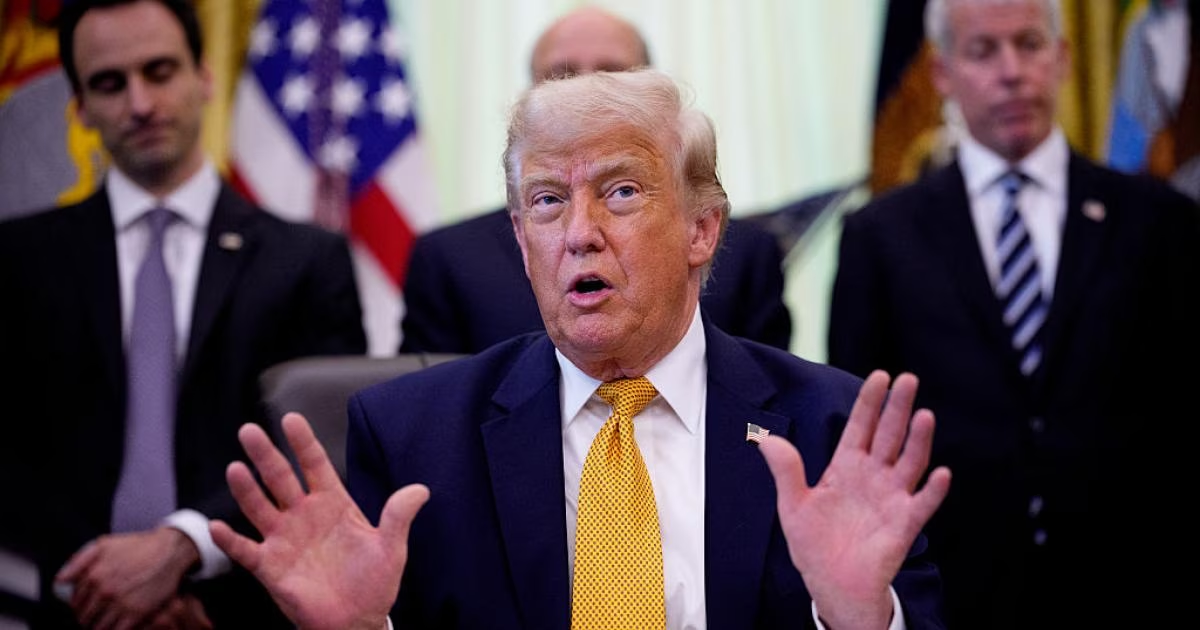







US President Donald Trump is facing a growing domestic political challenge after striking a deal to end military operations with Iran, as field reports have shown a significant decline in his approval ratings among his solid electoral base. Interviews conducted by journalistic sources with a group of voters who supported Trump in the 2024 elections indicated a state of doubt and suspicion regarding the strategic feasibility of this surprising agreement.
The controversial agreement includes provisions for reopening the Strait of Hormuz to international navigation and a temporary suspension of the harsh oil sanctions that Washington had imposed on Tehran. The understandings also stipulated an unprecedented step: the establishment of an international fund worth $300 billion dedicated to rebuilding what was destroyed by the war in Iranian territories, which angered American taxpayers.
Terry Alberta, a pilot from Michigan, expressed his dissatisfaction with this policy, asserting that the United States needed to genuinely and radically weaken the Iranian regime instead of retreating. Alberta criticized the approach of delivering limited strikes and then withdrawing, leaving room for Tehran to rebuild its military and political capabilities anew under the guise of international agreements.
In a related context, recent opinion polls showed that only about a quarter of Americans believe that the war with Iran was worth the exorbitant human and material cost. There is a general sense of concern among poll participants that the current truce with Tehran may be fragile and unsustainable in the long term, putting the credibility of the US administration at stake.
A large number of Republican voters fear that these extensive concessions to the Iranian side will weaken the party's position in the midterm congressional elections scheduled for next November. Observers believe that the lack of widespread public support for these diplomatic steps could give Democrats an opportunity to regain control of the legislative body.
The majority of participants in opinion polls had initially supported military action, based on their conviction of the necessity to deplete Iran's missile capabilities and completely undermine its nuclear program. However, after four months of conflict, it became clear that a significant portion of Iran's military capabilities remained intact, leading many to criticize the memorandum of understanding signed on June 14.
Voters expressed deep skepticism about the Iranian leadership's ability to adhere to its international commitments, rejecting the idea of granting Tehran billions of dollars under the guise of reconstruction. Some believed that these funds might ultimately be used to strengthen the regime's regional influence rather than improve the lives of Iranian citizens or ensure peace.
For his part, citizen Juan Rivera said that Trump fell into the same trap for which he criticized his predecessors: negotiating with entities he described as terrorist. Rivera added that disappointment had crept into the ranks of voters of Latin American descent, leading to a loss of motivation to support Republican candidates in upcoming elections due to poor management of the war file.
On the other hand, the White House strongly defended the agreement, describing President Trump's achievements on the battlefield and at the negotiating table as exceptional by all historical standards. The US administration affirmed that these understandings would enhance US national security for many years and prevent the region from sliding into an endless comprehensive war.
However, prominent businessmen, such as Steve Egan from Florida, confirmed that their trust in political leadership had sharply declined since early 2025. Egan attributed this decline to the negative effects of tariffs on his business activities, as well as the war's failure to achieve its stated goal of changing the political regime in Tehran.
Egan warned that Trump's endorsement of any candidate in the upcoming elections could become a political burden, describing it as a 'kiss of death' that might push voters to seek other alternatives. This statement reflects the size of the gap that has begun to form between the president and broad sectors of the business community that had traditionally supported him.
In a military reading, Brandon Neuemeister, a former National Guard member, indicated that the recent armed conflict seemed to serve the interests of major oil companies more than national security. Meanwhile, Robert Billups affirmed that he would vote in the future based on electoral programs and better plans, away from narrow partisan affiliations that had recently failed him.
Despite these criticisms, there is still a segment of Trump's most loyal voters who hope for a 'secret plan' ultimately aimed at completely subjugating Iran. Kate Motl said that destroying the regime in Tehran is the only way to ensure no future conflicts, considering that the current agreement might be merely a tactical step in a broader strategy.
In conclusion, diplomats and international analysts believe that the war may have backfired by strengthening the grip of Iran's religious leadership instead of weakening it. In Arizona, Joyce Kinney summarized the situation by saying that she supports Iran's return to global trade but completely rejects Washington bearing the costs of reconstruction, considering it a responsibility that does not fall on the American people.
Trump criticized his predecessors for negotiating with terrorists, but he essentially did the exact same thing.


Share your opinion
Trump's Deal with Iran Angers His Base and Raises Fears of Losing Congress