PALESTINE

Mon 29 Jun 2026 2:50 pm - Jerusalem Time

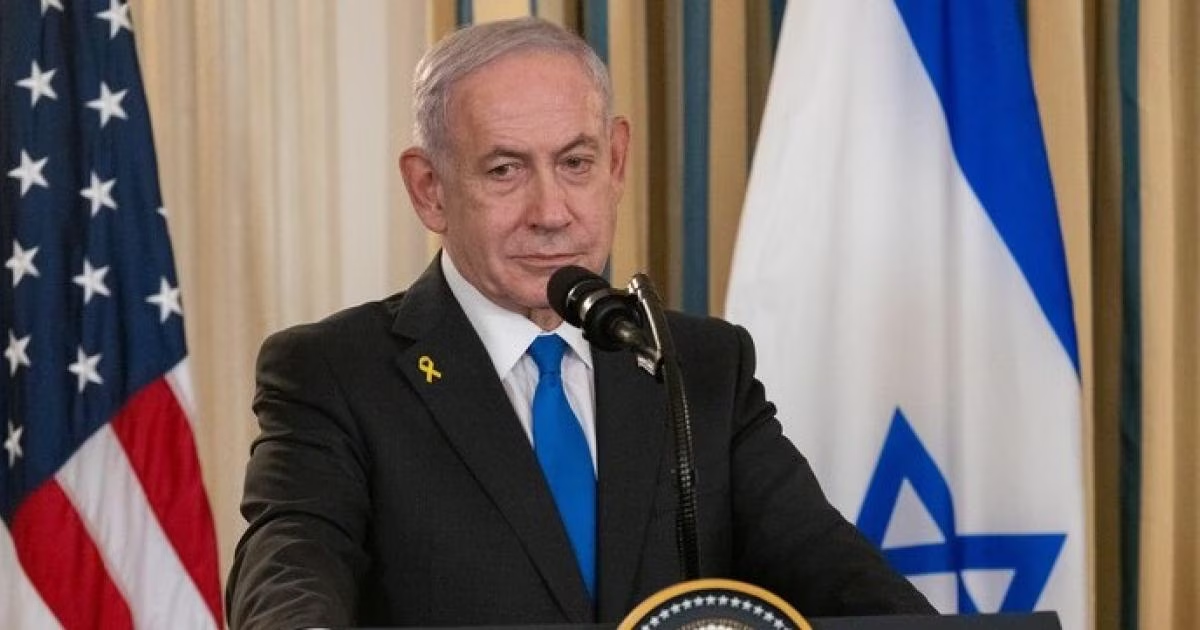
Under the name "Free Movement".. The occupation re-markets plans for the displacement of Gaza residents internationally

Media sources revealed a new trend within the political and security levels in the Israeli occupation state, which stipulates abandoning the use of the term "voluntary migration" when referring to plans for the displacement of Palestinians from the Gaza Strip. The sources explained that the new adopted name is "Free Movement Plan," in a tactical attempt to re-market the project, which faced significant setbacks and outright rejection from the international community in recent months.

According to leaked information, official instructions have been issued to all security, intelligence, and diplomatic institutions concerned with the necessity of adopting the new term in all international correspondence and communications. This step comes after the previous designation sparked sharp criticism, as global capitals considered it an explicit promotion of the policy of forced "transfer," which hindered any international cooperation to receive displaced persons from the Strip.

Decision-making circles in Tel Aviv are betting that changing the name may contribute to softening the positions of some countries that have expressed moral and legal reservations, which may open the door again to reviving contacts regarding the absorption of a number of Palestinians. Previous reports had indicated intensive Israeli attempts to reach agreements with African countries and internationally unrecognized parties, but these endeavors have not achieved tangible results so far.

In an admission that reflects the reality on the ground, a senior Israeli official acknowledged that Hamas still maintains its presence and influence within the Gaza Strip despite ongoing military operations. The official indicated that the current strategy aims to reduce the population density in the Strip by pushing the largest possible number of residents to leave, considering that emptying the land of its inhabitants represents a fundamental pillar for any future security or political arrangements planned by the occupation.

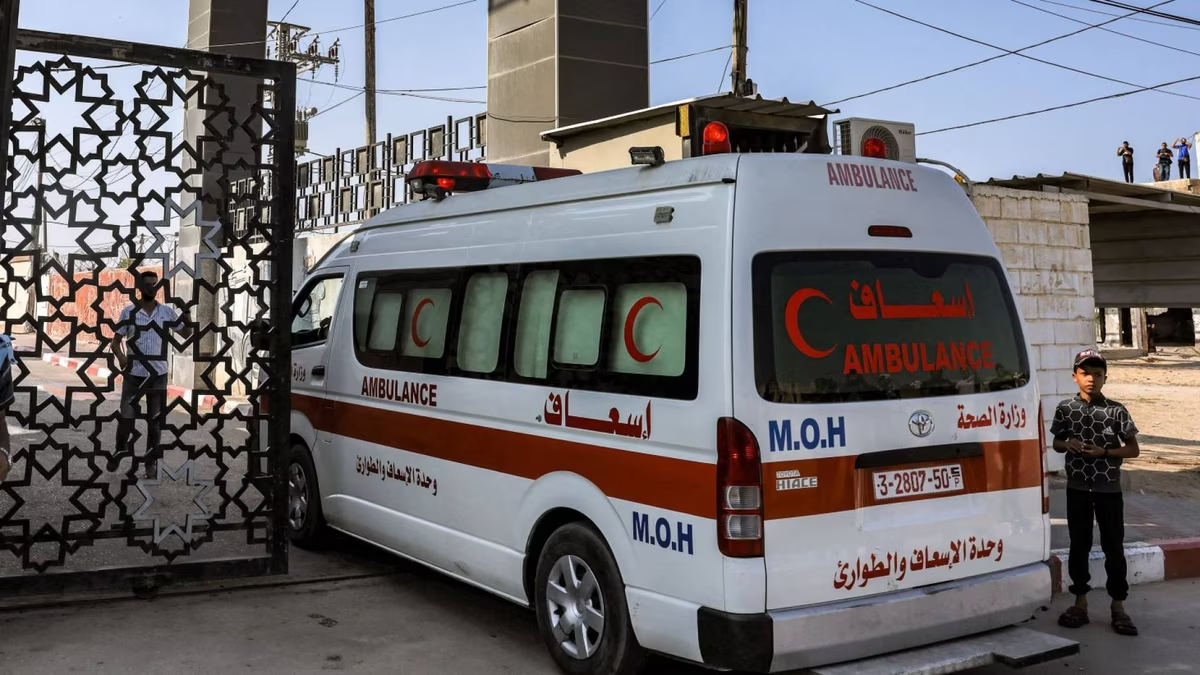
On the humanitarian front, local sources reported the sudden and unexplained disruption of travel for the wounded and sick through the Rafah crossing, which exacerbated the suffering of critical cases awaiting treatment abroad. This closure comes despite previous understandings that stipulated the passage of about 50 patients daily with their companions, which puts thousands of injured people at risk of certain death in light of the collapse of the health system inside Gaza.

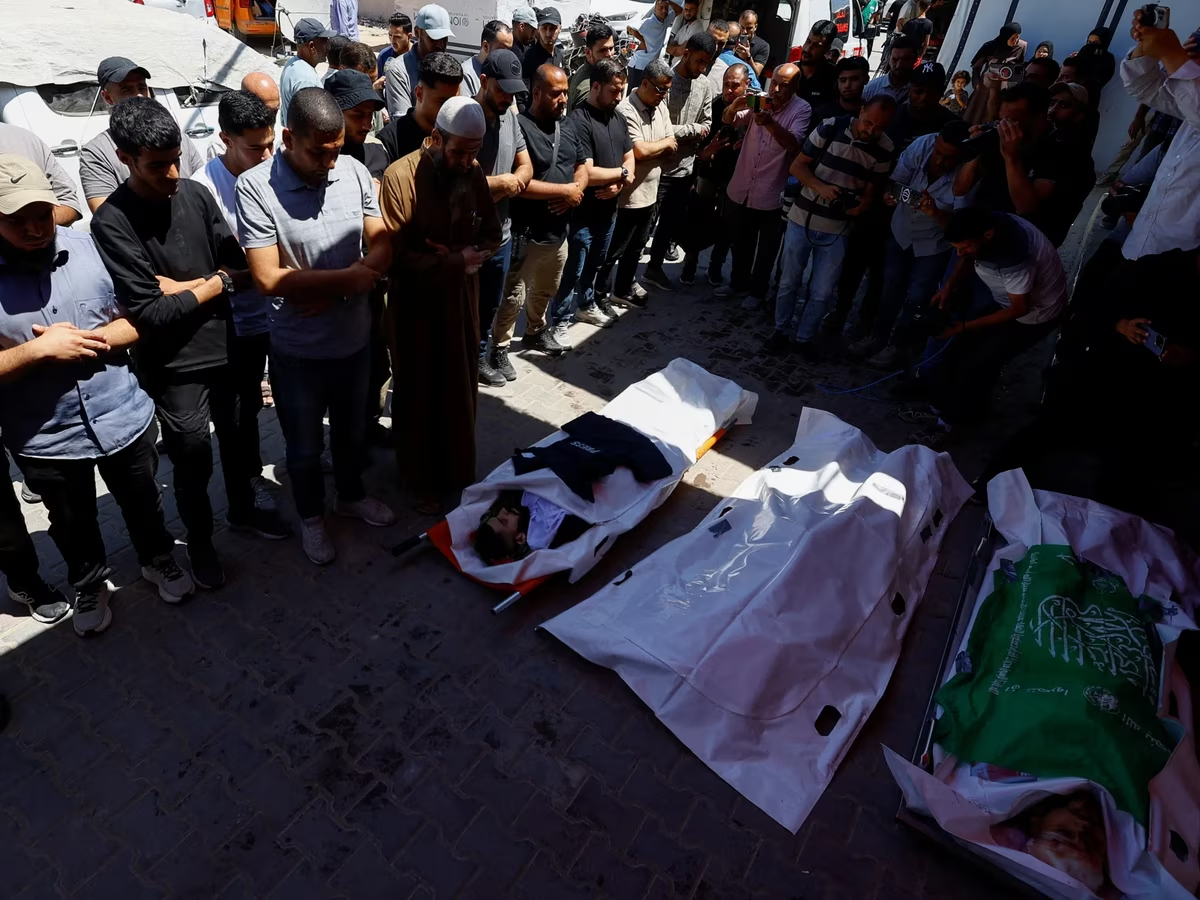
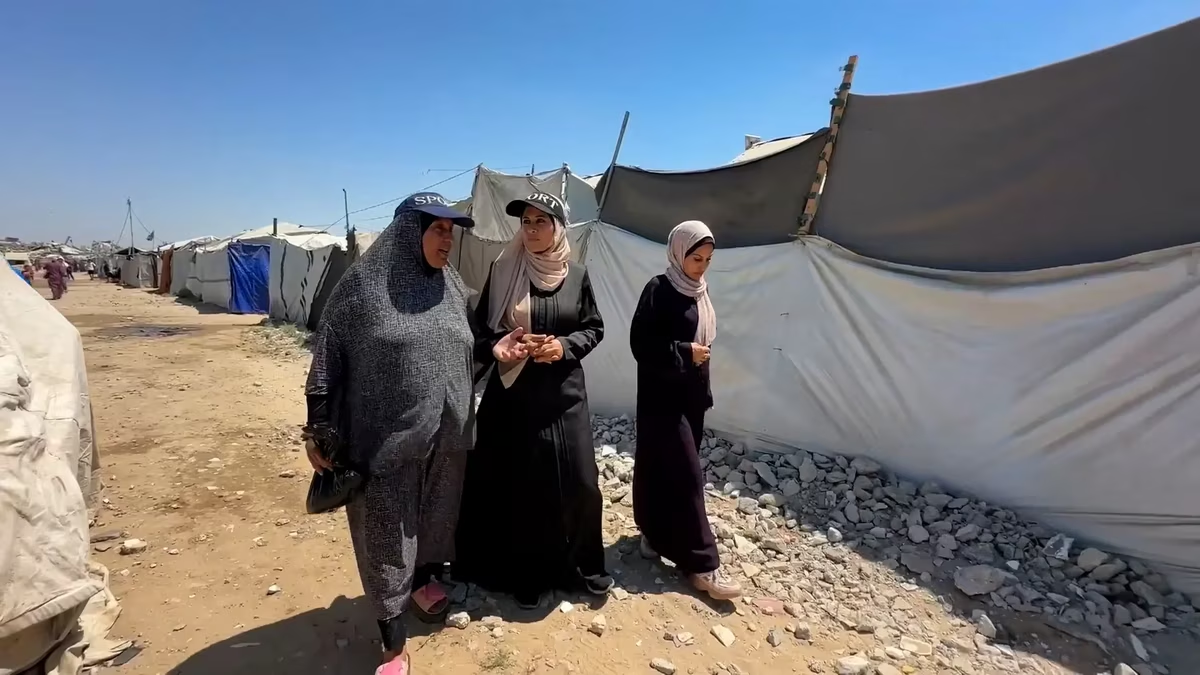
Coinciding with these political moves, the occupation army continues to escalate its military operations, as aerial and artillery shelling targeted tents for displaced people in Khan Yunis city, resulting in martyrs and injuries among unarmed civilians. Occupation forces also expanded their bulldozing and shelling operations in the central areas of the Strip, specifically in Deir al-Balah and al-Maghazi camp, as part of a policy of systematically destroying infrastructure and residential blocks.

International and human rights organizations warn that living conditions in Gaza are reaching a point of no return, in light of the severe shortage of drinking water, medicines, and basic foodstuffs. Fears of epidemics spreading are increasing due to waste accumulation and the collapse of sanitation services, while commodity prices continue to rise wildly, putting the residents of the Strip between the hammer of daily shelling and the anvil of siege and systematic starvation.

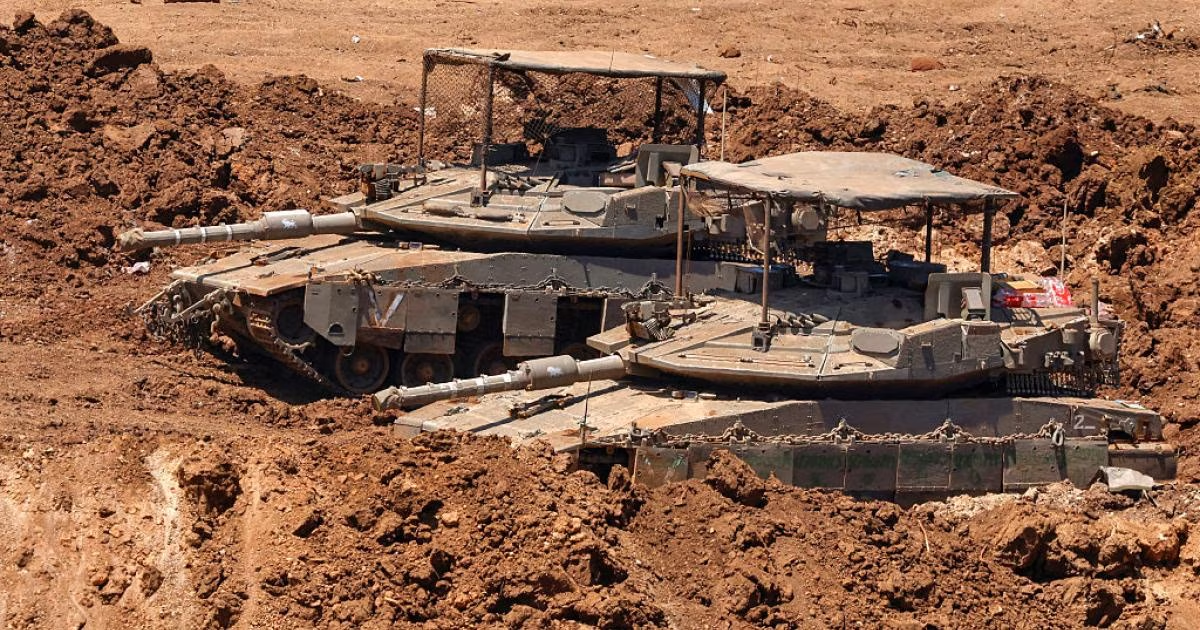
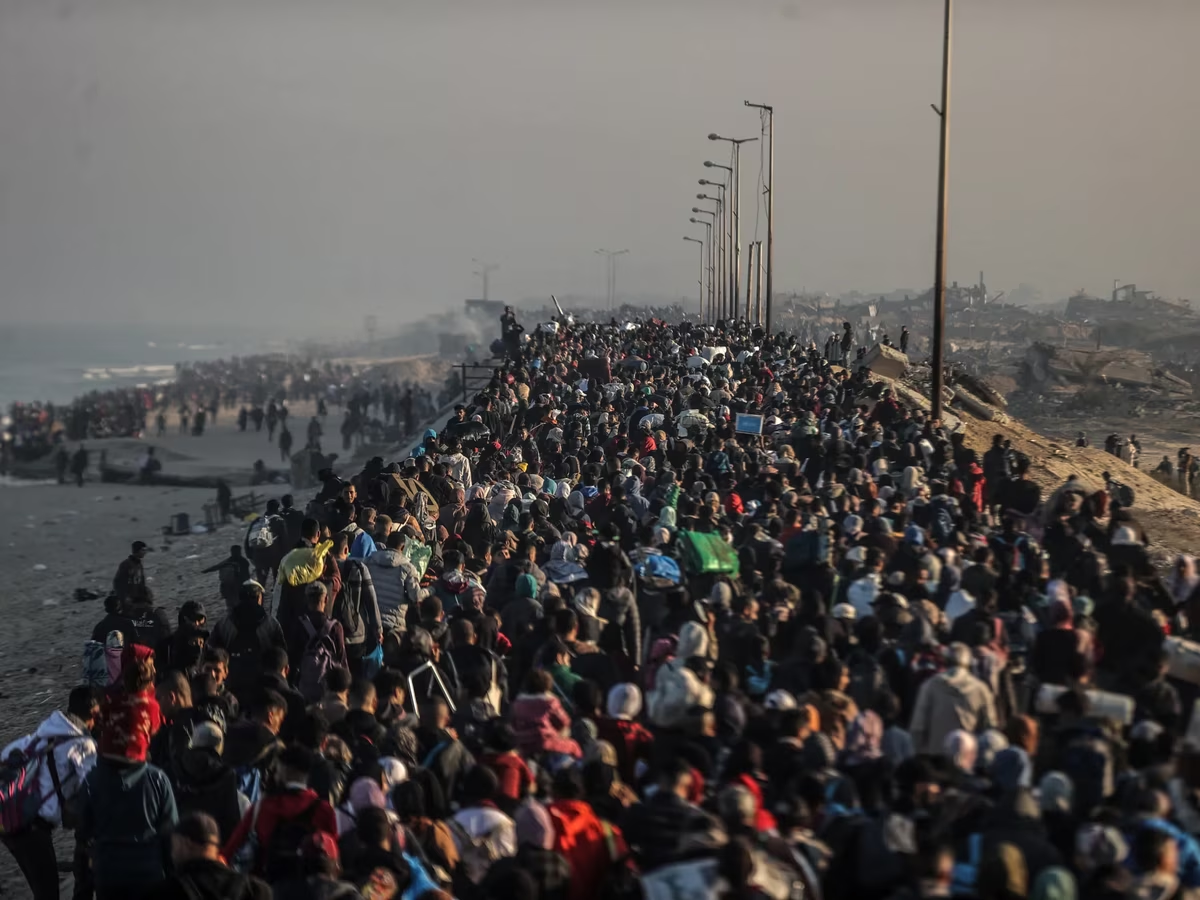
Israel seeks to push the largest possible number of Palestinians to leave the Strip to facilitate any future arrangements there.

OPINIONS

Mon 29 Jun 2026 2:50 pm - Jerusalem Time

A Writer's Break!

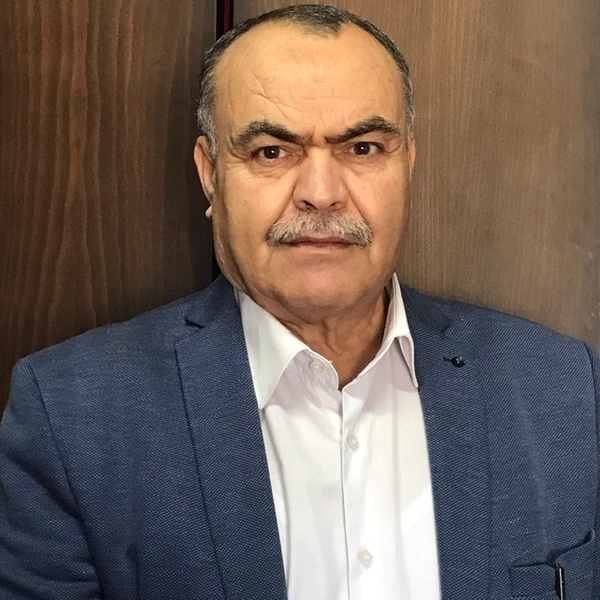
Dr. Ibrahim Melhem

Editor-in-Chief

A few wordsMany friendly inquiries were received, asking about the reasons for this column's absence for weeks, during which abundant waters flowed under the bridges of crises, some of which spawned from others in the region and the world.A writer, like a warrior, is allowed to rest, to take a break from the fatigue of staying up late and the hardship of traveling through the wilderness of crises, and on the edges of developments, which no sooner stop than they return again, like darkness in a deep sea covered by waves upon waves upon clouds.There are moments when one becomes frustrated by the bleakness of the scene and the unfortunate turn of events, so he suppresses his despair, conceals his helplessness, and resorts to silence so that his frustration does not seep through the cracks of his words, affecting people as it affected him. For if a writer feels despair, he must keep it to himself and not reveal it to others, as negative emotions spread in the air like viruses.The silence was not a retreat, but rather a moment of reflection necessitated by the need to distance oneself a little from the noise of successive events, to view the scene from a distance that allows for reading the complete picture, not just its scattered fragments.This column returns anew, monitoring events, reading the map of developments, analyzing new occurrences, and standing as much as possible at the frontiers of crises, exploring the limits of outcomes with keen insight, without any exaggerations; attempting to untangle knots rather than merely observing them. For the writer's task today is not merely to describe the tragedy, but rather to search for commonalities and to illuminate the darkness in the sea of shadows where crises multiply, in a region that produces more questions than it offers answers.A salute to the passion of dear readers, always present in the details of this free space that they visit whenever the morning breathes.

PALESTINE

Mon 29 Jun 2026 2:50 pm - Jerusalem Time

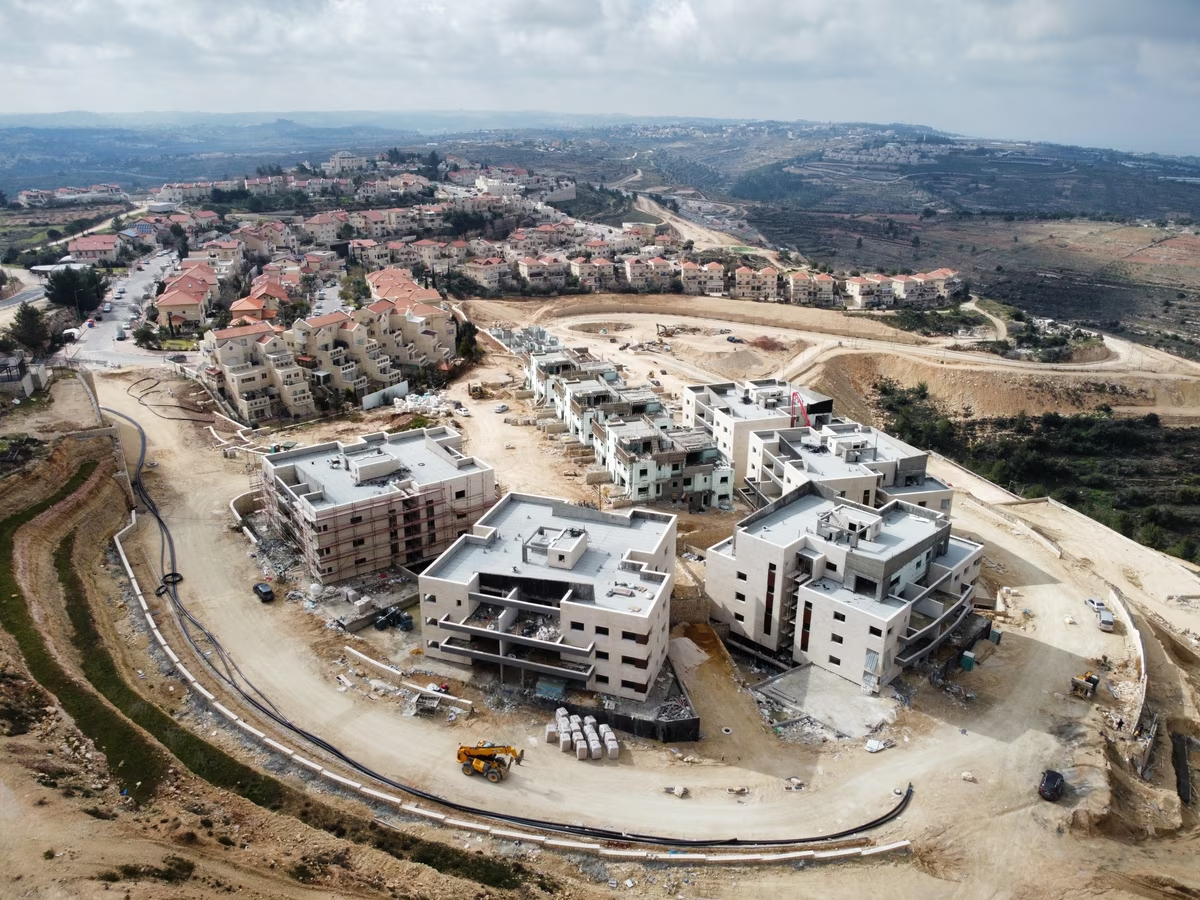
Settlement plan to storm Area (A) and seize 100 strategic sites in the West Bank

Media sources have revealed extensive movements led by extremist settlement groups to bring about a radical and comprehensive change in the map of deployment in the occupied West Bank. This plan, dubbed 'Execution Day,' aims to penetrate areas classified as (A), which are under full Palestinian control, representing a direct undermining of what remains of international political and security understandings.

These movements are led by organized groups under the names 'Settlement Farm Union' and 'Habita Forum,' which have defined a precise mechanism for deploying forces and settlers in about 100 strategic points. This step comes after months of surveying and mapping operations, which focused on selecting locations that give settlers a topographical advantage and the ability to control vital passages.

The data indicates that the targeted sites are located in the heart of major Palestinian communities, lands that had been transferred to the responsibility of the Palestinian Authority under the agreements of the 1990s. The project's organizers seek to regain control over what they describe as 'state lands' that have been under Palestinian civil and security sovereignty for decades.

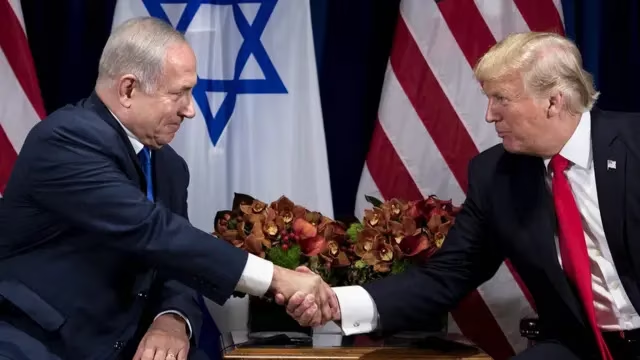
These plans have reached the decision-making corridors of the occupation government, where they were presented to prominent ministers and figures close to Prime Minister Benjamin Netanyahu. Finance Minister Bezalel Smotrich stands out as one of the main supporters of this approach, which aims to impose a new reality that goes beyond the traditional settlement boundaries in Area (C).

This shift reflects a fundamental change in the discourse of the far-right, which has moved from demanding the annexation of Area (C), which constitutes 61% of the West Bank, to openly calling for the complete annulment of the Oslo Accords. Observers believe that the implementation of this plan would practically mean ending the administrative and security presence of the Palestinian Authority in major cities and villages.

The proposed plan presents the government with a complex security and political dilemma, as the entry of settlers deep into Area (A) will inevitably lead to direct confrontations and widespread field escalation. This step would also provoke a severe international diplomatic crisis, given the close global scrutiny of any change in the status quo in the occupied territories.

The leaders of the settlement movements are betting on seizing a favorable political moment to pass the plan through a decision by the small ministerial council 'the Cabinet.' The project's organizers confirm that the matter does not require complex or lengthy legislative procedures, but rather a single political decision that will overturn the security balance in the region for years to come.

Amidst this escalation, fears are growing that these proposed settlement points will turn into permanent hotbeds of armed conflict, especially since they include the vicinity of major Palestinian cities. This plan comes at a time when the West Bank is witnessing escalating tensions, making 'Execution Day' a potential spark for a comprehensive explosion that would end any prospect for political solutions.

One small decision from the Cabinet could change the security reality for many years to come.

OPINIONS

Mon 29 Jun 2026 2:49 pm - Jerusalem Time

Behind the Scenes: What is Being Prepared Politically for Palestine?

Dr. Ibrahim Nairat

Opinion Writer

Dr. Ibrahim Nairat

Palestine is no longer discussed today merely as a battlefield or an urgent humanitarian aid issue, but as an open political file potentially subject to reshaping, its features slowly being drawn behind the scenes more than they are publicly announced. While the war in Gaza continues and its repercussions become more complex, a quieter but more profound discussion is taking place in the background: What comes after this moment?

In Washington, European capitals, and influential Arab decision-making centers, approaches are crystallizing that speak not only of ending the crisis but of re-engineering the Palestinian political landscape itself: Who will govern Gaza? How will the relationship between Gaza and the West Bank be reformulated? What is the future of the Palestinian Authority? And what is the nature of the political system that can lead Palestinians in the next phase?

Despite the differing priorities of the United States, Europe, and Gulf states, there is a general convergence on several key issues: ending the war, reconstructing Gaza, restructuring the Palestinian Authority, reunifying the Palestinian political system, and then launching a political process that revives the prospect of a Palestinian state. However, the discussion is not limited to changing governments or personalities; it extends to rethinking the very philosophy of governance.

From a Transitional Authority to a State Project

In a number of political circles and research centers, a vision emerges based on transitioning from a “transitional authority” model to a “state” model. This means moving from daily conflict management to building permanent institutions of a modern state, including a civilian government, an independent judiciary, professional public administration, a regulated economy, and security agencies operating within a unified political and constitutional framework.

In this context, there is repeated talk of a Palestinian government with a civilian and technocratic character that would manage both the West Bank and the Gaza Strip, in parallel with deep reforms in the Authority's institutions, restructuring of security agencies, and renewal of the Palestinian political structure, leading to elections when political and security conditions allow.

The goal here is not limited to improving administrative performance but extends to rebuilding political legitimacy, restoring internal trust, and creating an environment capable of launching a more stable political process.

However, this vision is inseparable from the fundamental problem governing the Palestinian situation, which is the endeavor to build state institutions that perform their functions as if they were a fully sovereign state, while this sovereignty remains incomplete due to the ongoing occupation. This places this model in a middle ground between a “transitional authority” and a “complete state,” where state functions are gradually exercised within existing political and security constraints.

Within this innovative vision, a more specific understanding emerges that the desired Palestinian state institutions should exercise their internal powers towards citizens as if they were a fully sovereign state, in terms of managing public affairs, enforcing law, providing services, and regulating political and economic life, despite the continued presence of the occupation as an external factor limiting sovereign space.

More precisely, the state here is not built as a fully sovereign entity at the level of political reality, but as an institutionally complete system of functions internally, capable of imposing public order and unifying executive authority within society, thereby strengthening the idea of the state from within, even in the absence of full external sovereignty.

This vision is based on a relative separation between the “internal function of the state” and the “issue of ultimate political sovereignty,” focusing on building institutions capable of enforcing law and unifying administrative and security decisions, pending the development of the overall political process.

The goal here is not limited to improving administrative performance but extends to rebuilding political legitimacy, restoring internal trust, and creating an environment capable of launching a more stable political process.

From Multiple Authorities to a Civil State

If past decades were characterized by multiple decision-making centers and overlapping functions between political and security spheres, many of the proposed visions for the next phase tend towards building a civil political scene where the government is the supreme executive authority, and law is the governing framework for the relationship between the state and society.

This approach is based on the idea that the stability of any modern political system requires unity of political and legal authority, such that all institutions, including security agencies, are subject to a single constitutional framework, and the law applies to everyone without exception, within an agreed-upon political legitimacy.

In this context, a vision is proposed that the powers of using force and enforcing law should be confined to official institutions, as this is one of the pillars of building a modern state. The state's monopoly on these powers is not seen merely as a security measure but as a condition for building institutions capable of imposing public order and ensuring equality before the law.

Factional Presence and Institutional Re-alignment

In parallel, a vision emerges within ongoing discussions regarding the reorganization of factions' presence within the Palestinian political system, in a broader context related to strengthening the rule of law and unifying executive authority. The intention here is not to abolish the political role of factions but to redefine it within a clear institutional framework, so that all political actors become subject to the authority of the state and law without exception.

This vision is based on the idea that building a modern state requires unity in executive decision-making, which necessitates subjecting political and security activities to unified legal and regulatory rules, and re-aligning the relationship between factions and governing institutions on an institutional rather than a parallel basis. In this sense, factions are viewed as political forces operating within a state system, not as parallel or alternative entities in the areas of governance and security.

This proposal comes within a vision aimed at reducing duplication of decision-making and multiple centers of power, and enhancing the ability of institutions to enforce law equally on all actors. However, the success of this path remains dependent on the existence of a consensual formula that precisely defines the nature of the relationship between factions and the state, ensuring that law enforcement does not become a tool for political conflict, but rather a unifying framework for reorganizing political life.

Redefining Tools of National Action

If this path progresses, the next phase may witness a gradual shift in the Palestinian center of gravity from military tools to political, diplomatic, and institutional tools, through expanding Palestinian presence in international organizations, strengthening international law instruments, intensifying diplomatic work, and investing in international recognition of the Palestinian state.

In contrast, popular and civil resistance may gain wider space as one of the organized tools of national action, through peaceful mass movements, human rights work, economic boycott, trade union and media activity, and recourse to international justice, within a political and legal framework linked to the state project and its institutions.

In this sense, the shift from military to political action is not understood as a retreat from the national project, but as a repositioning of its tools within a different phase of the conflict.

Does Consensus Precede State Building or Does the State Produce It?

Many believe that any process of rebuilding the Palestinian political system requires broad national consensus beforehand. However, this vision clashes with the reality of the prolonged political division, making it extremely difficult to wait for comprehensive consensus before starting to build institutions.

Another approach suggests that state-building can be a tool for producing consensus, not a result of it.

Comparative experiences indicate that stable institutions, the rule of law, and unified political authority often contribute to gradually reducing divisions, because they impose common rules to which everyone adheres regardless of their political differences.

From this perspective, the most realistic approach may not be to wait for comprehensive consensus, but to gradually establish a rule-of-law state that possesses institutions capable of enforcing law equally on everyone, and subjecting various forces and actors to a single constitutional authority.

Law enforcement here is not understood merely as a security function, but as a process of building trust between citizens and the state, and between society and political institutions. As this authority becomes entrenched, political disagreement transforms from a conflict outside institutions to an organized competition within them.

Vision Gap Between Inside and Outside

However, despite this movement in visions, the perspective adopted by some decision-making circles in the West does not fully align with Palestinian aspirations.

In light of the situation after the Gaza war, it appears that part of Western thinking stems from the idea that the priority in the current phase is to build a stable political system, effective civil institutions, and entrench the rule of law, thereby creating a more stable environment that can later allow for the re-launch of a political process leading to a two-state solution.

This vision is based on the premise that major transformations are not limited to changing the balance of power but can also lead to gradual changes in political consciousness and societal choices, and that periods of intense conflict often open the door to reordering political priorities.

Hence, some Western decision-makers and think tanks are betting that investing in institution-building, supporting civil governance, strengthening the economy, and entrenching the rule of law may, in the long run, contribute to the emergence of a political environment more amenable to negotiated settlements, including the revival of the two-state solution path when appropriate regional and international conditions are met.

However, this bet faces a fundamental challenge: collective consciousness is not shaped solely by political decisions or institutional arrangements, but is also influenced by historical experience, the continuation of the existing reality, and the extent to which people feel that any new political project truly leads to sovereignty and freedom, rather than merely more efficient management of the same reality.

Between State Building and Conflict Management

Ultimately, what is being discussed today is not just about rebuilding infrastructure, but about reformulating the Palestinian political system itself. The question is no longer who will govern Gaza after the war, but what political model Palestinians are intended to move towards: a model of a state with complete institutions, or a model of sustainable conflict management.

Perhaps the greatest challenge lies in the ability to reconcile two parallel paths: building a modern state based on the rule of law and institutions, while simultaneously preserving the essence of the Palestinian cause as a matter of freedom and self-determination.

If Palestinians succeed in building this balance, the post-Gaza phase could turn into an opportunity to re-establish the national project on more stable and clear foundations. However, if the gap between the international vision and Palestinian aspirations widens, the path may remain confined to crisis management instead of reaching a historical settlement that ends the conflict.


PALESTINE

Mon 29 Jun 2026 2:49 pm - Jerusalem Time

Stalled Implementation of the Framework Agreement: Ongoing Israeli Violations and Ambiguity Surrounding Withdrawal Schedules from South Lebanon

Challenges are escalating for the Lebanese state in its efforts to implement the provisions of the framework agreement with Israel, amidst a wave of continuous field violations and the ambiguity surrounding the mechanisms for the withdrawal of occupation forces from the southern regions. Data indicates significant obstacles preventing the agreement from being translated into tangible reality, especially with the absence of clear timelines.

Sources reported that the Israeli occupation army has not yet begun to implement any actual withdrawal steps that were supposed to start within the initial timeline. The sources confirmed that field military units have not received explicit orders to evacuate the sites included in the agreement, which raises doubts about Israeli intentions regarding de-escalation.

In a related context, media reports revealed the postponement of the withdrawal operation, which was scheduled for Sunday morning, indefinitely, without providing official justifications for this delay. This comes at a time when extreme secrecy surrounds the details of the military annex to the agreement, which was described as secret and does not include precise criteria for the areas the army will leave.

Circulating information indicates that the military annex lacks binding timelines for the withdrawal of Israeli forces or for the disarmament mechanisms of Hezbollah in the border areas. This procedural vacuum raises widespread questions in Lebanese circles about the seriousness of the Israeli side in adhering to the international commitments recently reached.

For its part, the Northern Command of the occupation army proposed withdrawing from three villages: Froun, Al-Ghandouriyah, and Zawtar Al-Gharbiyah, areas that do not originally have a permanent military presence. Observers considered this proposal an attempt to circumvent the essence of the agreement by evacuating secondary points where only raids were carried out without fixed positioning.

The problem of terminology in Israeli discourse stands out, where the focus is on the concept of 'redeployment' instead of a complete and comprehensive 'withdrawal' from Lebanese territories. Israeli sources believe that this wording grants the army the right to return to those sites at any time under the pretext of monitoring the implementation of the agreement's provisions and preventing any security threats.

On the political front, no official comment has been issued from Beirut on the statements by Benjamin Netanyahu and his security minister, Yisrael Katz, regarding the insistence on keeping forces within the so-called 'Yellow Zone'. These statements contradict the Lebanese vision, which presented the agreement to the public as a sovereign step aimed at completely ending the occupation.

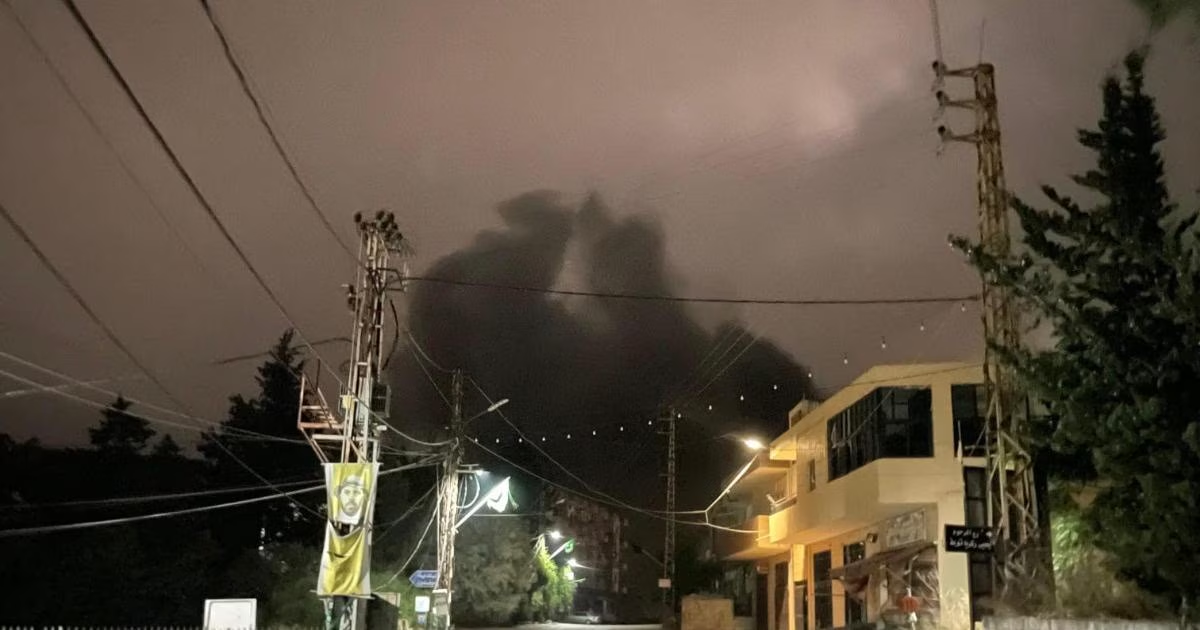
On the ground, Israeli aggressions did not stop despite the announcement of de-escalation, as occupation aircraft launched raids targeting the city of Nabatieh and the town of Meifdoun. Occupation forces also carried out extensive demolition operations of buildings and facilities within the villages of Hadatha and Taybeh, in addition to destroying what they claimed was a strategic tunnel in the town of Majdalzoun.

In contrast, Hezbollah affirmed in a statement that it is closely monitoring all Israeli violations along the border line, emphasizing its full right to respond. However, the party indicated its current commitment to the ceasefire, while at the same time warning against allowing the occupation freedom of movement within Lebanese sovereignty.

Internal debate is escalating in the Lebanese arena after statements attributed to the party considering the agreement 'non-existent' from its ideological and field perspective. In an attempt to contain the situation, Parliament Speaker Nabih Berri is leading intensive regional and international contacts to ensure that fragile understandings do not collapse and to consolidate stability.

As part of regional support, Iranian Parliament Speaker Mohammad Bagher Ghalibaf affirmed during a call with Berri that preserving Lebanon's sovereignty is a fundamental pillar in understandings with international parties. Ghalibaf referred to the activation of a technical committee for de-escalation, including representatives from the United States, Iran, and Lebanon, to follow up on developments.

Questions remain in Beirut about the ability of state institutions to impose their control and implement international commitments amidst this field complexity. With continued disagreements over the interpretation of the agreement's provisions, South Lebanon remains an open arena for all possibilities, awaiting practical steps to end the current state of ambiguity.

Israeli phrasing focuses on the concept of redeployment instead of withdrawal, which allows for later return under the pretext of monitoring implementation.

PALESTINE

Mon 29 Jun 2026 2:49 pm - Jerusalem Time

3 Martyrs in Deir al-Balah and the Occupation Expands its Incursion into the Central Gaza Strip

Israeli occupation forces committed a new massacre this Monday morning, following a drone strike targeting a gathering of civilians in the city of Deir al-Balah in the central Gaza Strip. Medical sources confirmed the martyrdom of three citizens, including a child not exceeding eight years of age, while a number of wounded were transferred to nearby hospitals for treatment as a result of the shelling that targeted the vicinity of Wadi al-Salqa bridge.

The sources clarified that the martyrs are Ali Fayez Esbaitan, Hassan Salman al-Hanajra, and the child Malik Wael Abu Shawish, who died in a direct raid on Al-Baraka Street. This crime comes in the context of a series of continuous violations by the occupation army of the ceasefire agreement concluded last October, threatening the collapse of fragile understandings on the ground.

On the ground, local sources reported that occupation vehicles began to expand their military control in the central region by shifting what is known as the 'Yellow Line'. Israeli bulldozers moved concrete blocks an additional 150 meters westward, in a step aimed at seizing more land and establishing a new military reality within the Strip.

The new expansion operations included the area extending from the vicinity of the electricity company in the southern direction to the Wadi Gaza bridge in the north, where residents were surprised by the placement of concrete blocks alongside Salah al-Din Street. This move represents a clear violation of the terms of the ceasefire agreement, which stipulated a partial withdrawal, a comprehensive cessation of hostile operations, and the facilitation of the return of displaced persons.

Reports indicate that the occupation has completely reneged on its commitments regarding the agreed-upon deployment maps in the first phase of the agreement. According to current data, the percentage of land militarily controlled by the Israeli army has risen from 53% at the time of signing the agreement to approximately 70% currently, reflecting a strategy of gradual territorial encroachment.

Regarding human casualties, Ministry of Health data revealed that Israeli violations since the agreement came into effect have led to the martyrdom of 1048 people and the injury of thousands more. These figures reflect the occupation's insistence on continuing to target civilians despite political announcements of calm, exploiting the absence of effective international oversight on the ground.

It is worth noting that the Gaza Strip has suffered massive destruction affecting 90% of its infrastructure since the start of the war of extermination on October 8, 2023. The total toll of the aggression has reached more than 73,000 martyrs and 173,000 wounded, amid catastrophic humanitarian conditions and a near-complete halt of basic services due to the siege and continuous military operations.

Israel reneged on its commitments and continued its military operations, with the area of military control within the Strip increasing to 70% at present.

PALESTINE

Mon 29 Jun 2026 2:49 pm - Jerusalem Time

Zeina Abu Eid.. A new victim of waiting for medical 'death lists' in Gaza

Amidst a tragic health reality sweeping across the Gaza Strip, the dreams of Palestinian families to provide the minimum level of care for their children are fading, as death lurks for the young due to a lack of treatment and malnutrition. The child Zeina Abu Eid was the latest victim of this bitter reality; she was not killed by the incurable disease alone, but by the long wait on medical referral lists that never opened the doors to salvation for her.

Zeina suffered from a rare autoimmune hepatitis, a condition that requires urgent surgical intervention for a liver transplant and precise examinations that exceed the capabilities of the exhausted health system in the Strip. Dr. Ahmed Al-Farra, director of the children's building at Nasser Medical Complex, explained that her condition required immediate travel to save her life from rapid deterioration.

Despite the issuance of an urgent medical referral, complex coordination procedures and the closure of crossings prevented her departure in time. Medical sources confirmed that death was faster than official papers, as the child passed away last Friday after a harsh journey of suffering with illness and waiting.

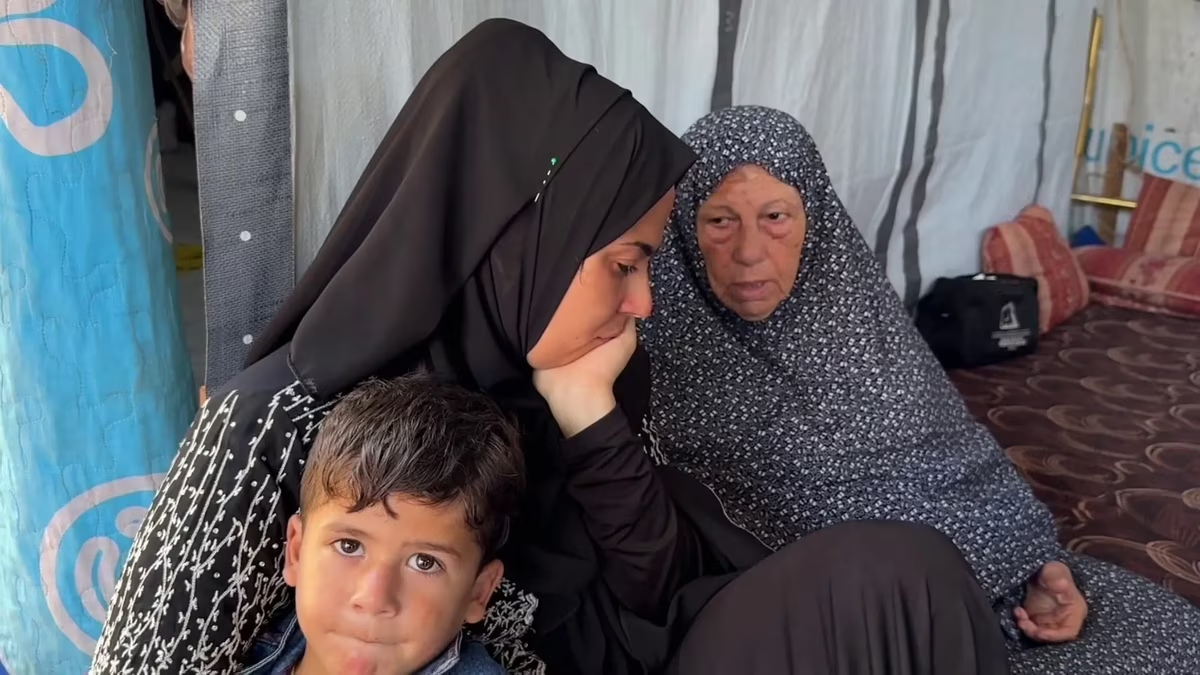
Zeina's mother bitterly recounts the details of the last days, noting that her daughter initially underwent a misdiagnosis that led to taking treatments that weakened her immunity instead of strengthening it. Within a few days, the child's health deteriorated dramatically, as she lost her sight and hearing and fell into a complete coma before her death on June 26th.

Zeina's story is not just an individual case, but a reflection of a major tragedy experienced by thousands of patients in Gaza; official statistics indicate that there are more than 22,000 patients awaiting their turn for medical referral abroad. Among these, there are about 5,000 children facing real risks to their lives due to the lack of surgical and medicinal capabilities.

Doctors warn of 500 critical cases among children suffering from diseases similar to Zeina's condition, including congenital heart defects, cancer, and kidney failure. Medical staff in Gaza describe this situation as a 'death sentence' written next to the medical diagnosis for every patient who cannot leave.

Zeina's father, who hoped to see his daughter grow up before his eyes, stood before her grave, appealing to the world to intervene to save the rest of Gaza's children. He stressed that his family's dream was shattered in an instant due to the absence of essential medical supplies that could have given his daughter a second chance at life.

For his part, Dr. Muhammad Zaqout, Director General of Hospitals, confirmed that the number of injured and sick people who actually need urgent travel reached 17,730 cases. Medical sources accused the occupation authorities of deliberate and unjustified intransigence in dealing with the humanitarian medical file, which exacerbates the daily death toll.

Reports indicate that the occupation follows a systematic policy to reduce the number of patients allowed to leave through the remaining crossings, in addition to reducing the working days allocated for humanitarian cases. This restriction is not limited to the movement of individuals, but extends to preventing the entry of essential drug shipments and specialized surgical equipment.

Strict restrictions on the entry of medicines have led to the vital departments in hospitals going out of service, making major operations impossible within the Strip. Patients remaining in the exhausted hospitals face a severe shortage of painkillers and antibiotics, making their treatment journey fraught with continuous pain.

Thousands of injured and sick people in Gaza share the same unknown fate, as they line up in long queues awaiting security approvals that may never come. The closed crossings remain the biggest obstacle to their ambition for healing, amidst international silence regarding the humanitarian catastrophe ravaging the health system.

In conclusion of the medical appeals, the Ministry of Health demanded the necessity of opening safe and sustainable humanitarian corridors to ensure the departure of critical cases and the entry of medical aid. Hope remains pinned on international action to end the policy of 'death while awaiting coordination' that has been claiming the lives of children and women in the Gaza Strip without stopping.

Our family's dream was shattered in one minute due to the lack of medicine and essential medical supplies that could have saved our daughter.

OPINIONS

Mon 29 Jun 2026 2:49 pm - Jerusalem Time

Firas Al-Sawwah's Delusions and Youssef Ziedan's Lies

Once again, I find myself compelled to return to what Firas Al-Sawwah and Youssef Ziedan say, not because what they present represents a great cognitive discovery, but because the magnitude of the shock they deliberately cause makes silence a kind of surrender to what I see as nothing but a misleading reading of history, religion, and humanity combined.Firas Al-Sawwah says that our master Muhammad, peace be upon him, was a Christian, and that the Quran is nothing but an extension of the myths and stories of previous peoples, from the Sumerians to the Syriacs and others. He goes further when he proposes the idea that God is Gabriel, as if he carries the ultimate truth in his pocket, or as if fourteen centuries of Islamic thought, interpretation, and creed were merely a collective error finally discovered by a contemporary researcher.As for Youssef Ziedan, he says that Abraha al-Habashi did not want to demolish the Kaaba, but was a Christian saint, and he questions the story of the Companions of the Elephant on the pretext that elephants cannot travel from Yemen to Mecca, and considers that the narrative is derived from apocryphal gospels.For me, the problem is not only in the validity or invalidity of these statements, as there are Arab and Muslim researchers, historians, and scholars who have discussed these issues and proven the fragility of many of these claims. Rather, the deeper problem is: why do some choose to fight their intellectual battles in such a shocking way in societies already living under the weight of killing, displacement, forced migration, poverty, and oppression?What do you say to a father who lost his son, or to a person whose home was destroyed, or to a people living under occupation and siege? Do you tell him that all he relies on in faith, hope, and spiritual strength are mere transmitted myths? Do you tell him that all that gives him the ability to endure is just a historical illusion?The problem is that those who want to strip people of faith do not offer a real alternative. It is not enough to raise slogans of enlightenment, modernity, and re-reading heritage, and then leave people alone to face ruin. Where is the alternative ethical project? Where is the vision that gives people meaning and the ability to endure?Europe witnessed a conflict with the Church during the Renaissance, but those who criticized the religious institution there presented new philosophies, sciences, and visions for humanity, the world, and society. But to come today and tell hundreds of millions that what they believe is false, and then offer nothing but media sensationalism and provocation, this does not create a renaissance nor achieve progress.Moreover, some of these theses do not stand up to the simplest reading of the Quranic text. The distinction between Allah Almighty and Gabriel is clear in the Quran, and the difference between the Prophet Muhammad, peace be upon him, as a human messenger, and revelation as a divine discourse, is unequivocally present in the Islamic text itself. Also, God in the Quran is presented as transcending nature, history, and humanity, and not merely a mythical figure or an intermediary being that can be reduced to Gabriel or others.What also bothers me is that these battles sometimes seem like an attempt to change priorities. Instead of talking about hunger, poverty, tyranny, the erosion of human dignity, and the absence of justice, people are pushed into debates that do not affect their daily lives as much as they affect their emotions and sacred beliefs.It is not required that we stop thinking, criticizing, or re-examining heritage, for criticism is a legitimate right, and scientific research is a necessity. But there is a difference between serious criticism and the pursuit of shock, and between the search for truth and turning religious heritage into material for provocation and controversy.Therefore, I believe that what Al-Sawwah and Ziedan propose does not open new doors to understanding as much as it creates intellectual chaos and further divisions in already exhausted societies. Nations do not progress by insulting people's convictions, nor by making them feel that everything they held onto for centuries was an illusion, but rather by building people, defending their dignity, and confronting the real causes of their misery, not by fabricating symbolic battles that only add more confusion and resentment to people's suffering.

PALESTINE

Mon 29 Jun 2026 7:54 am - Jerusalem Time

Netanyahu describes framework agreement with Lebanon as an 'achievement' amid Israeli skepticism about Hezbollah disarmament

Israeli Prime Minister Benjamin Netanyahu announced his blessing for the framework agreement recently signed between Lebanon and Israel in Washington D.C. Netanyahu considered this step a decisive blow to Iranian influence and its ally Hezbollah in the region, describing it as a major political and diplomatic achievement.

Informed sources in occupied Jerusalem reported a consensus within Israeli circles on the necessity of putting this agreement to the test of actual implementation on the ground. Widespread skepticism prevails among analysts in Tel Aviv regarding the ability of Lebanese state institutions and its army to fully meet the requirements of disarming Hezbollah.

For his part, Israeli Defense Minister Yoav Gallant affirmed that the occupation forces would not withdraw from the positions they control in southern Lebanon at present. Gallant stressed that the military presence would continue until Hezbollah's weapons are confirmed to be surrendered, claiming that Israel derives the legitimacy of its presence from the provisions of the signed agreement.

In the context of internal opposition, National Security Minister Itamar Ben-Gvir described the agreement as a 'grave mistake' that harms long-term Israeli interests. Ben-Gvir demanded a formal vote within the Ministerial Committee for National Security Affairs ('the Cabinet') to review the provisions of the agreement, which he considers insufficient to ensure security.

On the ground, Israel began initial steps to withdraw from some areas described as experimental in southern Lebanon, specifically in two villages belonging to the Nabatieh district. These movements come as part of the first phase to test the commitment of other parties to the new security arrangements stipulated in the tripartite agreement.

The signing ceremony took place last Friday at the U.S. State Department headquarters, where Ambassador Nada Moawad represented the Lebanese side, while Ambassador Yehiel Leiter represented the Israeli side. This framework agreement aims to put an end to the military operations that erupted on March 2nd following a widespread escalation on the ground.

Previous reports indicate that the war, which lasted for several months, resulted in heavy human losses on the Lebanese side, with more than 4,230 people killed and thousands injured. The military operations also led to the displacement of about one million Lebanese from their villages and cities, creating a humanitarian crisis that accelerated the pace of international negotiations.

The agreement includes provisions for the deployment of the Lebanese army in two experimental areas north and south of the Litani River, with the formation of a tripartite military coordination committee to oversee implementation. The United States also allocated funds to support humanitarian aspects and enhance the capabilities of the Lebanese army to ensure its control over border areas.

In contrast, the agreement was met with categorical rejection from Hezbollah's leadership, with Naim Qassem describing it as 'humiliation and shame,' emphasizing adherence to existing regional alliances. This rejection coincided with protests erupting in the streets of Beirut, amid warnings of the country sliding into internal strife or civil confrontations as a result of the division over the agreement's provisions.

The agreement allows Israeli forces to continue occupying southern Lebanon if Hezbollah does not give up its weapons.

PALESTINE

Mon 29 Jun 2026 7:54 am - Jerusalem Time

From Operating Rooms to Relief Queues: The Tragedy of Pregnant Women in Gaza Under Siege

Pregnant women in the Gaza Strip are living a catastrophic health reality, as the ongoing siege and severe food shortages have led to a significant increase in miscarriage rates and fetal loss within displacement centers and the remaining hospitals. This crisis is exacerbated by the declining capacity of the medical system to provide necessary care, leaving thousands of mothers directly facing the risk of death or loss of newborns due to severe anemia and lack of essential nutrients.

Field sources reported that many pregnant women suffer from a sharp drop in hemoglobin levels, with some cases recording blood levels as low as 9 degrees in the seventh month of pregnancy. These women face extreme difficulties in securing essential nutritional supplements such as folic acid and iron, the acquisition of which now requires strenuous physical effort and standing in long queues that are incompatible with their critical health condition.

In a painful testimony reflecting the scale of the tragedy, one woman was forced to go directly from the operating table after suffering a miscarriage to food distribution points known as 'Al-Tekiya' to secure a meal for her other children. These testimonies confirm that hunger is not just a lack of meals, but a direct factor in the cessation of fetal growth and death within the womb, given the inability of hospitals to accommodate the increasing number of high-risk pregnancies.

In addition to malnutrition, strenuous physical exertion emerges as another major cause of miscarriage, as displaced women are forced to carry heavy water containers and transport them long distances on foot. This muscular fatigue is coupled with the consumption of contaminated and unsafe drinking water, leading to the spread of intestinal diseases and infections that multiply the chances of fetal loss in the absence of necessary medications and painkillers.

Reports indicate that repeated displacement and the constant state of fear resulting from ongoing military operations have deeply affected the psychological and physical well-being of mothers. The combination of food insecurity, an unhealthy living environment in tents, and immense psychological pressure has created a life-repelling environment that threatens an entire generation of newborns in the besieged Strip.

I lost my fetus due to lack of food and drinking contaminated water, and we are forced to walk long distances and carry containers to provide drinking water for our children.

PALESTINE

Mon 29 Jun 2026 7:54 am - Jerusalem Time

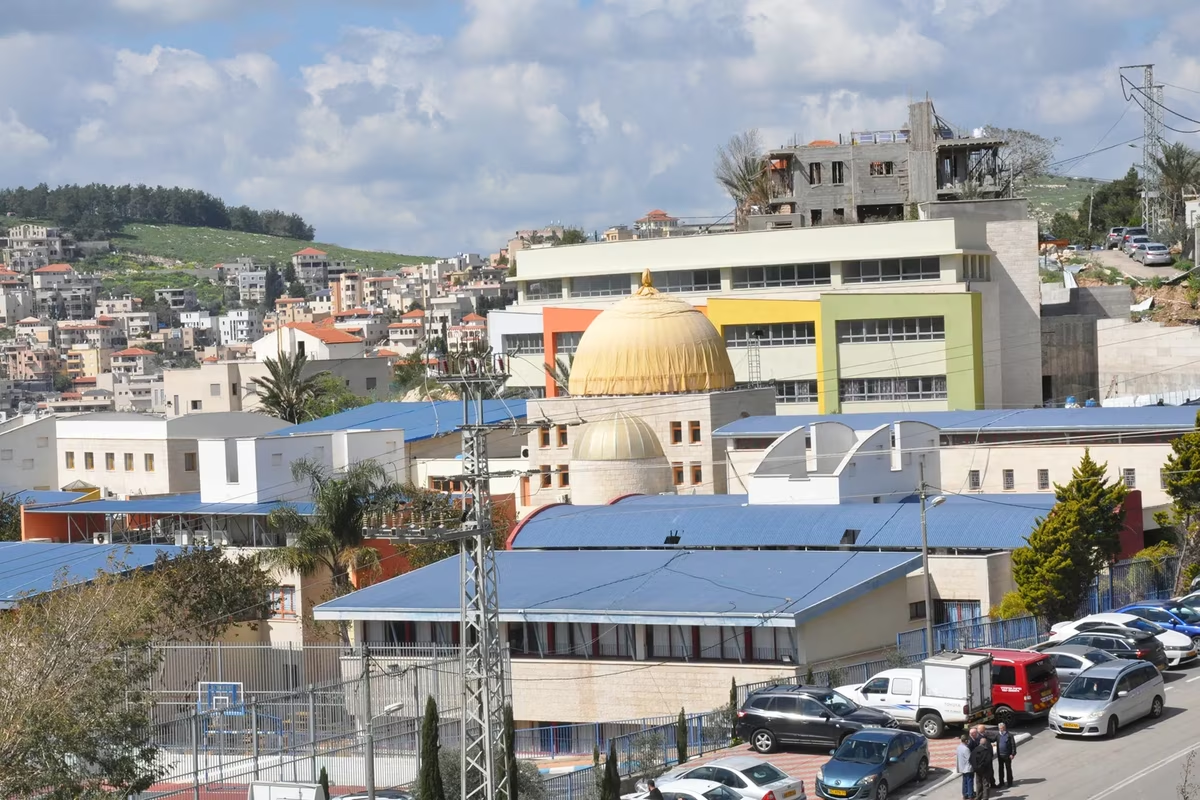
Residents of Umm al-Fahm Confront Attempt by Extremist Knesset Member to Storm City Schools

Residents of the city of Umm al-Fahm, within the Green Line, today, Sunday, succeeded in thwarting an attempt by the far-right Israeli Knesset member Zvi Sukkot to storm a number of schools and educational institutions in the city. This popular movement came after a firm decision taken by local committees to suspend school attendance and close doors to any provocative attempts aimed at harming the educational process.

Field sources reported that city residents demonstrated in large numbers in protest against the arrival of Sukkot, who was moving under heavy protection from Israeli police forces. Video documentation showed the Knesset member attempting to reach the entrances of the closed schools, amidst widespread chants and objections from residents who gathered to prevent this step, which they described as aggressive.

On Saturday, the local committee for students' parents and the popular committee in Umm al-Fahm held an emergency meeting, at the conclusion of which they announced a comprehensive strike in all schools and educational institutions, including special education frameworks. The committees affirmed that this decision was made to ensure the safety of students and teaching staff from any friction with settlers or occupation forces that provide protection to extremists.

Knesset member Zvi Sukkot, a member of the 'Religious Zionism' party, justified his attempt to storm the schools by 'examining the curricula,' claiming that they incite violence against Israel. These claims were rejected outright by national and educational bodies in Umm al-Fahm, considering them false accusations aimed at demonizing Arab education and exercising political censorship over it.

In their statement, the popular committees stressed that these actions are nothing but an attempt to exploit the educational system for electoral propaganda and to achieve personal political gains at the expense of the city's stability. They clarified that Umm al-Fahm schools adhere to lofty educational values, and that any interference by extremist right-wing elements constitutes a blatant violation of the privacy and sanctity of educational institutions.

It is worth noting that Zvi Sukkot has a record full of assaults and provocations, as he previously stormed the Al-Shabat Comprehensive School in occupied Jerusalem during the general secondary exams last Thursday. He also constantly participates in storming the blessed Al-Aqsa Mosque, making him one of the most prominent incitement figures in the current right-wing government led by Bezalel Smotrich.

The attempted storming represents a clear and rejected provocation to our schools, and it is an attempt to exploit educational institutions to achieve political, electoral, and personal propaganda.

ARAB AND WORLD

Mon 29 Jun 2026 7:53 am - Jerusalem Time

Security Annex Leaks: Clause Grants Israel Right to Field Verification of Hezbollah Disarmament

Media sources have revealed new details concerning the framework agreement recently signed in Washington between Lebanon and Israel under American auspices, where the agreement is based on the establishment of what are called 'experimental zones' in the south and north of the Litani River. According to these arrangements, the Israeli army will begin a gradual withdrawal from these areas in exchange for the deployment of Lebanese Army units, which will undertake the task of imposing full control and ensuring the area is free of armed manifestations belonging to Hezbollah.

Informed sources reported that the security annex to the agreement includes a controversial clause that grants the Israeli side the right to field access to those areas to verify the implementation of disarmament procedures. This clause comes amid continuous Israeli skepticism regarding the accuracy of reports provided by the Lebanese Army about its field deployment, as the occupation's security agencies claim they have not observed actual movements in some locations that Lebanon officially announced its forces had entered.

The leaked data indicates that the United States will play a pivotal role in overseeing the disarmament process of Hezbollah within these experimental zones, with the formation of a tripartite military coordination group to monitor implementation. This move comes at a time when Israeli media rhetoric has escalated against the structure of the Lebanese Army, attempting to portray it as an entity incapable of fulfilling its security obligations or suffering from internal divisions, which Beirut completely denies.

On the political front, Israeli Prime Minister Benjamin Netanyahu described the agreement as a strategic achievement that deals a strong blow to Iranian influence in the region, while the agreement faces internal opposition from far-right ministers such as Itamar Ben-Gvir, who considered it a grave mistake. In contrast, a state of anger prevailed among circles close to Hezbollah, where Naim Qassem described the agreement as 'humiliating and shameful,' amid protests in Beirut warning of the repercussions of these understandings on civil peace.

It is worth noting that this agreement aims to end the war that erupted on March 2, 2026, which resulted in devastating human and material losses in Lebanon, with the Ministry of Health recording 4,230 martyrs and more than 12,000 injured. The agreement also includes an international aid package comprising $100 million for humanitarian relief and $30 million allocated to support the logistical capabilities of the Lebanese Army to enable it to deploy in border areas.

The leaked clause in the security annex grants Israel the right to enter southern sites to verify Hezbollah's disarmament on the ground and not rely solely on Lebanese reports.

PALESTINE

Mon 29 Jun 2026 7:53 am - Jerusalem Time

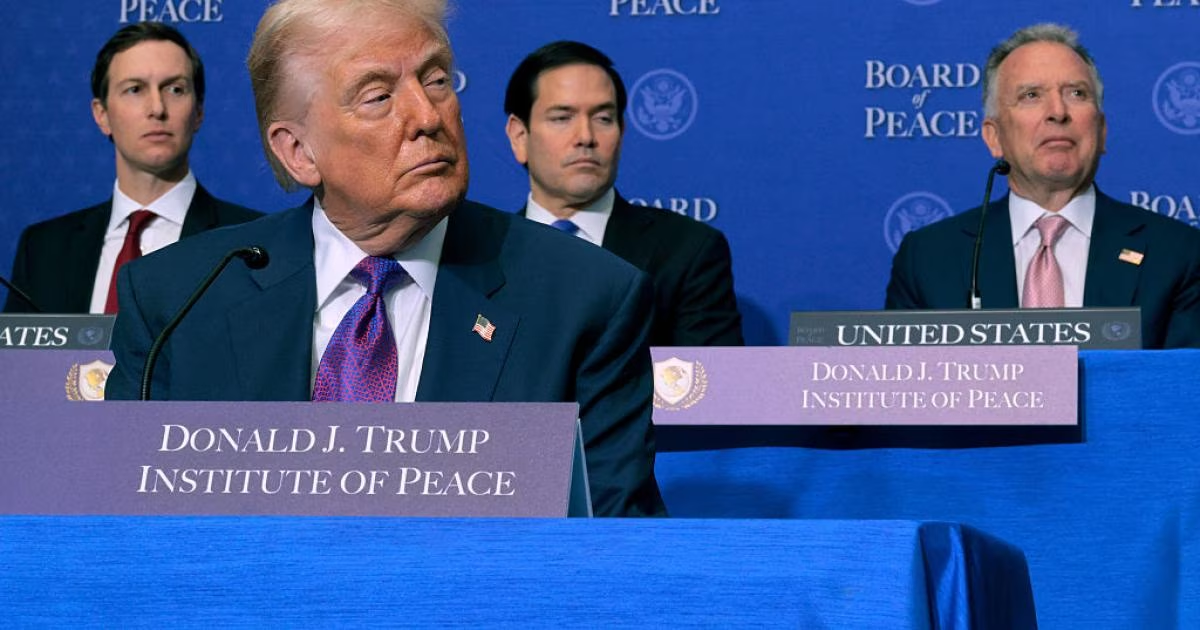
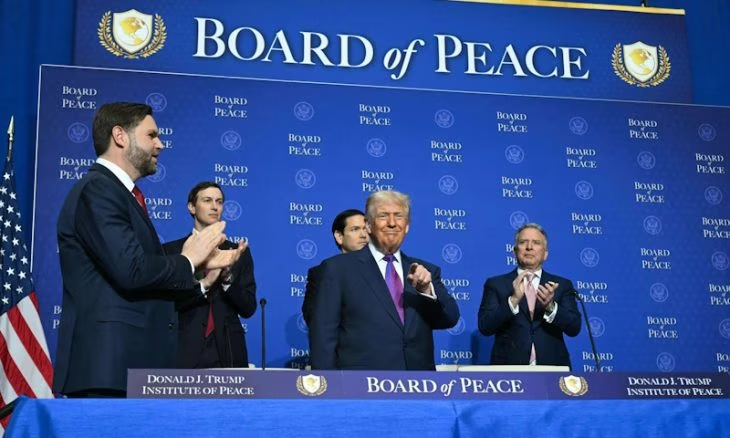
Leaked Document Reveals Features of Gaza Administration: Broad Immunities for 'Peace Council' and Absolute Security Powers

International journalistic sources have revealed a leaked four-page draft resolution outlining a proposed framework for the administration of the Gaza Strip under the umbrella of the so-called 'Peace Council'. This document, classified as 'sensitive but unclassified' and dated June 2026, grants broad legal immunities to the council members and its staff, raising deep questions about accountability.

According to the draft, the proposed immunity covers council members and its administrative body, as well as Palestinian technocrats, international forces, and foreign contractors involved in operations. These measures aim to prevent the arrest, detention, or prosecution of these individuals before any local judicial authorities within the Gaza Strip, providing them with absolute legal protection during the performance of their duties.

According to the document, the authority to lift immunity from any covered individual is exclusively limited to the head of the council, and subject to the approval of the majority of members. This arrangement places legal decision-making power in the hands of the council's administrative structure itself, away from any independent or local judicial authorities that might attempt to prosecute potential abuses.

The draft grants the 'Peace Council' an absolute right to use public headquarters, facilities, and properties in the Gaza Strip without paying any financial compensation. This step is part of the proposed administrative and security arrangements, including securing the needs of the international force planned for deployment in the Strip, which has raised concerns about the disposal of public state assets.

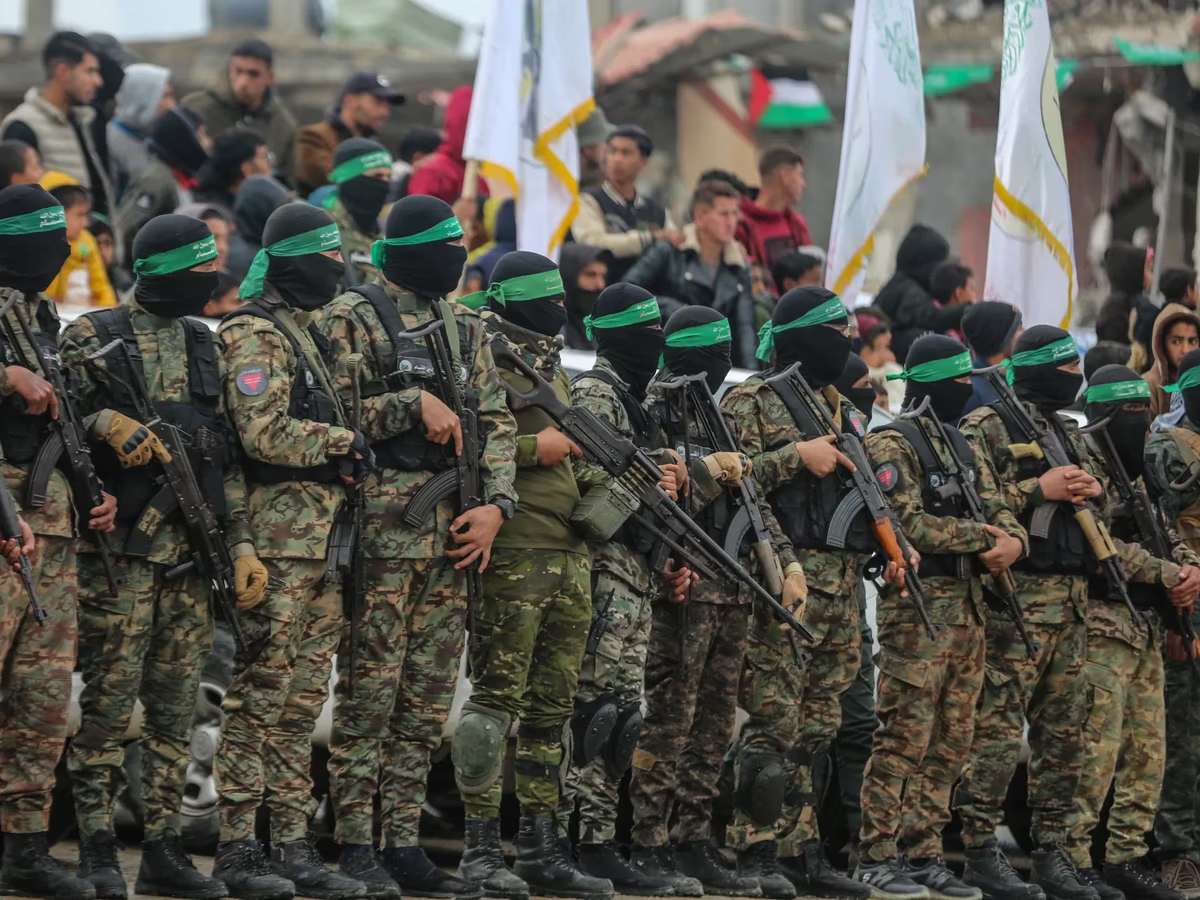
Leaked details indicate ambitious plans to establish an integrated security and logistical structure for an international force, whose primary mission will be to disarm the Islamic Resistance Movement (Hamas). This move comes within a broader framework aimed at managing the reconstruction phase, although the funding arrangements for these massive operations have not yet been finalized.

Prominent American figures appear in the council's executive committee, including Jared Kushner, son-in-law of US President Donald Trump, and special envoy Steve Witkoff. The committee also includes US Secretary of State Marco Rubio and Susie Wiles, reflecting direct American political weight in shaping the administrative and security future of the Strip.

In initial reactions, the White House referred inquiries regarding the document to the 'Peace Council' administration, which in turn quickly denied the existence of an effective framework granting immunities in this manner. The council stated in brief remarks that all participants would be subject to legal rules and oversight mechanisms, but did not provide clear details about the nature of these mechanisms or the oversight body.

For their part, legal experts who reviewed the draft warned that the proposed framework establishes a closed internal legal system that grants immunity from criminal and civil prosecution to those working within it. The experts pointed out that the document includes an internal mechanism for considering claims related to damages, whether physical injuries, deaths, or property losses resulting from the council's activities.

Observers criticized the document's lack of any independent external oversight, noting that it differs from traditional 'status of forces' agreements that regulate the work of foreign forces in conflict zones. They believe that the absence of a clear legislative framework makes it difficult to assign legal responsibility to any party in the event of human rights violations or field abuses.

The experts concluded that these arrangements practically pave the way for the creation of a parallel legal system specific to the 'Peace Council', which will handle disputes and claims internally, away from international law mechanisms. This approach raises doubts about the extent to which these plans are consistent with Palestinian sovereignty and international justice rules, especially in the absence of any effective external judicial oversight.

The proposed draft establishes an internal legal system that grants the Peace Council broad immunity from prosecution, and lacks any independent external oversight.

PALESTINE

Mon 29 Jun 2026 7:53 am - Jerusalem Time

The Policy of Revenge in the West Bank: Comprehensive Siege and Extrajudicial Killings Since October

Haaretz writer Gideon Levy believes that the phrase 'there are no innocents in Gaza' was not merely a political slip of the tongue, but rather an ethical key that unleashed the occupation's hand to practice collective punishment, which has extended to include the West Bank. Once the attribute of innocence was stripped from Palestinian society, the occupation no longer needed to prove individual guilt; instead, Palestinian identity itself became an accusation warranting punishment.

The events of October 7th turned life in the West Bank upside down, where no place between Jenin and Hebron resembles what it was before that date. The stark irony lies in the fact that Palestinians in the West Bank were not directly involved in military action at that time, yet they suffered abuse not witnessed by the Palestinian people since the Nakba of 1948.

The occupation authorities treat the Palestinian geography as a single unit for punishment, where the residents of the West Bank bear the brunt of the Gaza events as part of a comprehensive retaliatory policy. Levy describes this situation as a 'life sentence' imposed on millions of Palestinians whose relative calm did not intercede against the oppressive machine that views their existence as a major sin.

Since the start of the war, security and political restrictions in the West Bank have been unleashed, and settlers have exploited the world's and Israeli society's preoccupation with the dead and prisoners to implement their postponed plans. The desire for revenge provided a thick cover for settlers to carry out actions that were previously difficult to pass under international or legal scrutiny.

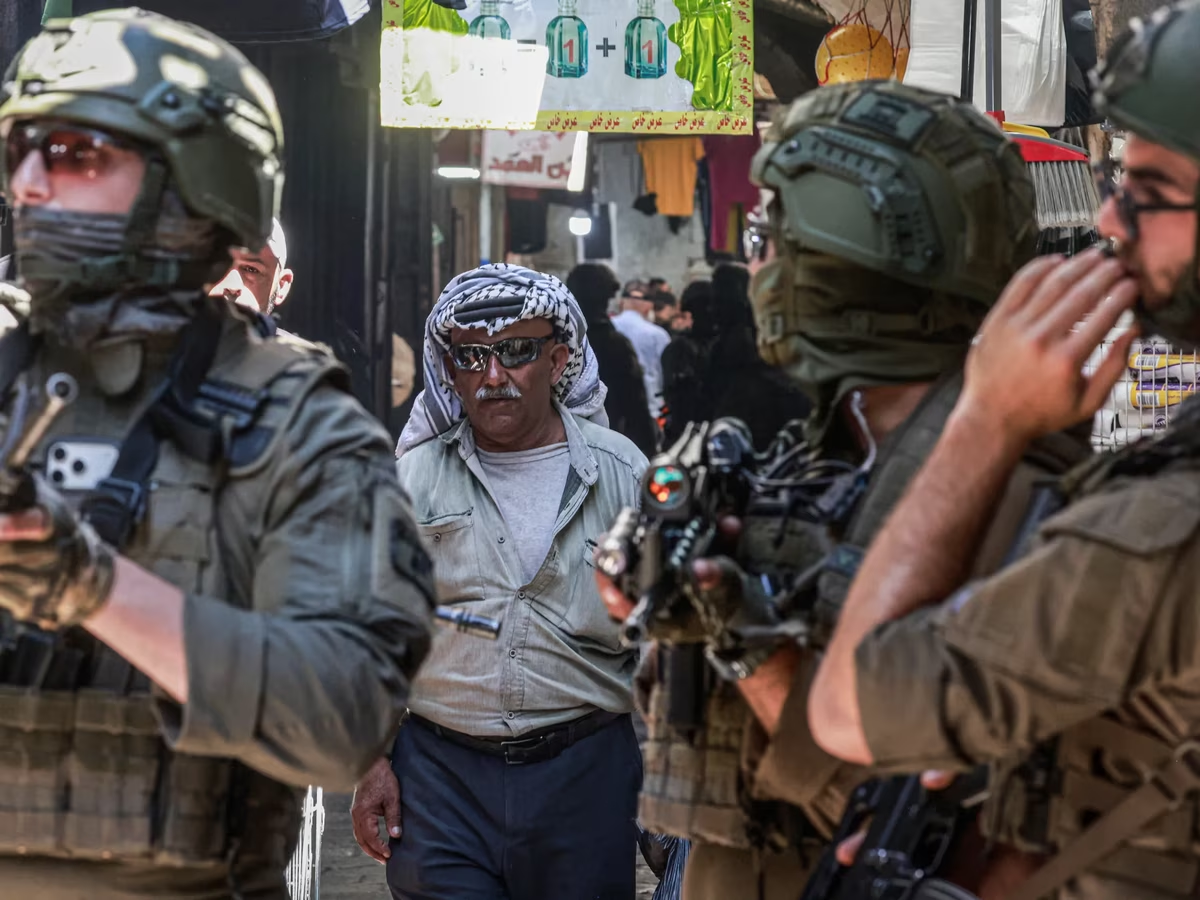
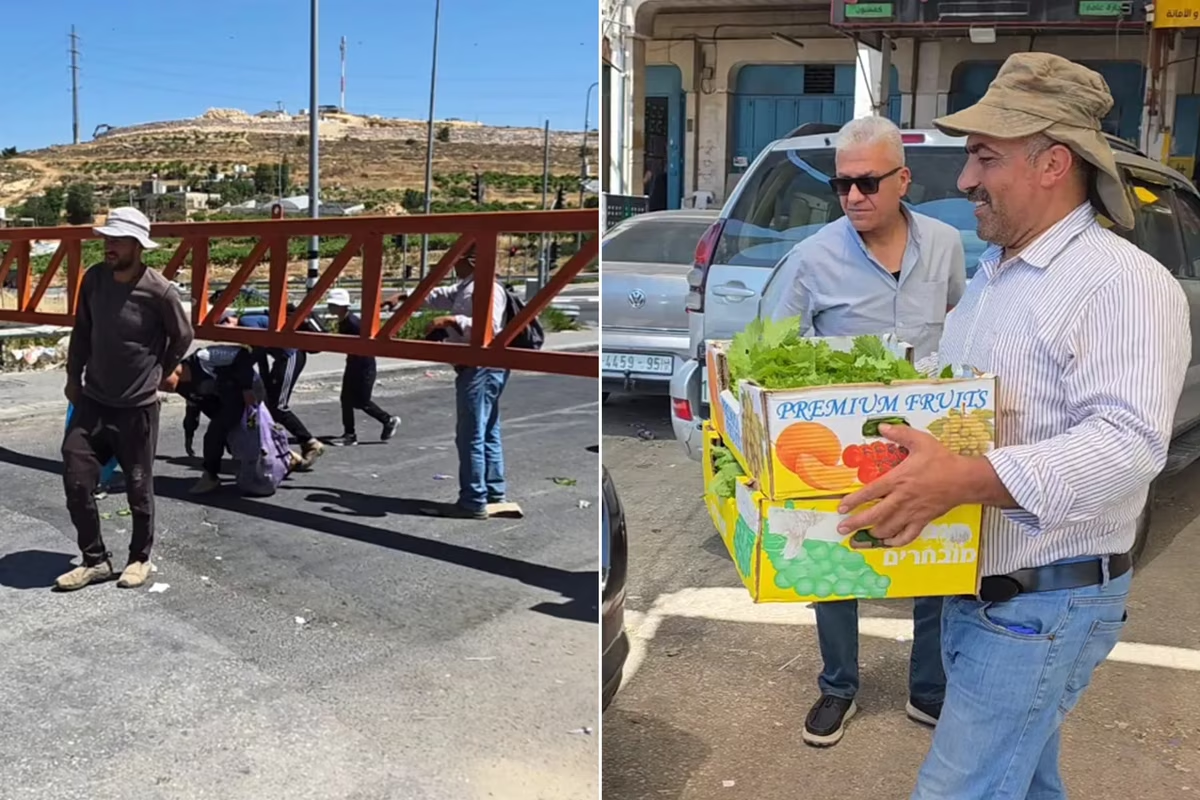
Occupation forces tightened the closure of Palestinian cities and villages through hundreds of yellow iron gates, turning population centers into besieged enclaves. Nablus, Ramallah, and Hebron did not escape this strangulation, as citizens were forced to take rough and alternative dirt roads, while paved roads remained an exclusive privilege for settlers.

Levy asserts that this suffocating siege is not linked to genuine security necessities, but rather is a tool for daily abuse, which was acknowledged by the legal advisor to the Israeli army when he described the restriction of movement as illegal. However, this legal admission remains without actual value on the ground, as the closure policy continues without any tangible change.

The strangulation did not stop at movement and travel, but extended to strike the livelihoods of Palestinians by preventing tens of thousands of workers from reaching their workplaces within the Green Line. This measure led to an economic and social catastrophe, as Palestinians were trapped in their livelihoods and daily bread just as they were trapped in their cities and villages.

These measures coincided with an escalation in the pace of arbitrary military raids carried out by the army, which were accompanied by the emergence of so-called 'readiness teams' in the settlements. These teams are nothing more than armed militias that grant settlers absolute authority over the lives and passages of Palestinians, turning every settler into a security decision-maker.

Reports indicate the emergence of about 150 new settlement violence hotspots since October, which have managed to control vast areas of land exceeding what official settlement projects achieved for years. This violent settlement expansion is taking place under army protection and with clear political support from the poles of the extreme right-wing government.

Itamar Ben-Gvir's name stands out as a symbol of a new phase of abuse against Palestinian prisoners, where prisons have turned into horrific torture centers lacking the most basic humanitarian requirements. Levy points out that policies of deliberate starvation and humiliation have become an integral part of the punishment structure within detention centers that hold thousands of political prisoners and detainees without trial.

On the level of field killings, the Israeli army made the rules of engagement more flexible, leading to the martyrdom of more than a thousand Palestinians in the West Bank since October, including over 200 children. These victims fell in the context of uncontrolled shooting, although most of them posed no actual threat to Israeli forces or settlers.

In conclusion of his vision, Levy questions the ethical and political utility of continuing this indiscriminate abuse in the absence of widespread armed activity in the West Bank. He places the international and Israeli communities before their responsibilities, asking if it is not time to say 'enough' to this continuous bleeding for nearly three years with no end in sight.

The sin of Palestinians in Israel's eyes is deeper than any action; they are simply Palestinians, and this is enough to impose a life sentence on them.

ARAB AND WORLD

Mon 29 Jun 2026 7:53 am - Jerusalem Time

Political Earthquake in Iraq: Dozens of MPs and Officials Arrested in Largest Anti-Corruption Campaign

Since dawn on Sunday, the Iraqi capital Baghdad and a number of governorates have witnessed the launch of one of the largest legal and security crackdowns on corruption in years. Informed sources reported that the number of detainees exceeded 50 people, including current MPs and former executive officials, in a move that reflects the government's serious approach to undermining patronage networks and the squandering of public funds.

The official news agency confirmed that security forces managed to arrest 47 suspects in an initial count, noting that among the detainees were 12 members of parliament. Operations are still ongoing to pursue the remaining wanted individuals against whom judicial arrest warrants have been issued, amidst anticipation for a comprehensive official statement following the cabinet meeting chaired by Ali Al-Zaidi.

Prominent political figures topped the list of detainees. The campaign included the head of the 'Azm' alliance, MP Muthanna Al-Samarrai, in addition to MPs Ziyad Al-Janabi, Bahaa Al-Nouri, and Muhammad Al-Karbouli. Legal proceedings also targeted MP Alia Nassif and the former governor of Wasit, Muhammad Jamil Al-Mayahi, reflecting the comprehensiveness of the campaign across various political forces and geographical regions.

The arrests were not limited to the legislative branch but extended to officials in the oil sector and executive institutions, with the arrest of Deputy Oil Minister Ali Maaraj. It is worth noting that Maaraj is on the US sanctions list, linking these moves to international pressure aimed at drying up funding sources for illegal entities.

In a related context, authorities arrested Ibrahim Al-Sumaidaie, who served as an advisor to former Prime Minister Mohammed Shia' Al-Sudani, on charges related to financial corruption cases. A special security force raided the headquarters of the Midland Oil Company in Baghdad to search for additional wanted individuals, as part of a plan aimed at controlling vital state joints and preventing the destruction of sensitive documents.

Former officials in the Ministry of Finance warned of the danger of destroying documents related to public money squandering cases during this security chaos, demanding increased guarding of government departments. These warnings come at a time when the Federal Commission of Integrity is seeking to secure all criminal evidence that incriminates those involved in stealing the Iraqi people's resources.

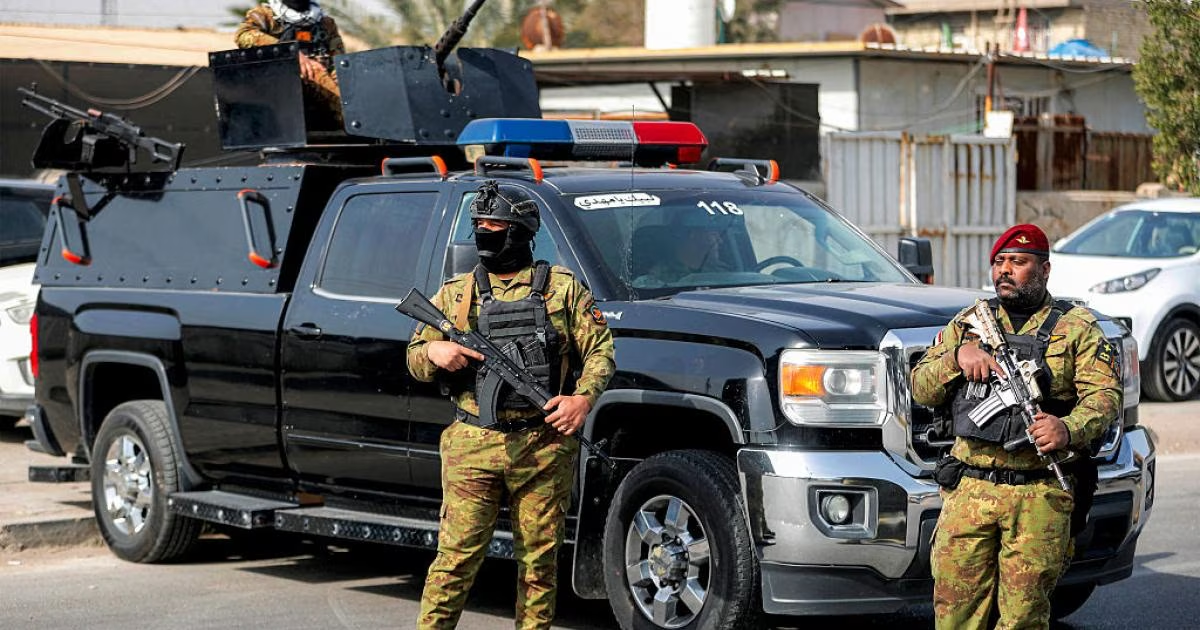
On the ground, counter-terrorism forces imposed strict security measures within the Green Zone, which includes sovereign headquarters and diplomatic missions, completely preventing entry and exit. Heavy military vehicles were seen deployed in major streets, coinciding with raids on homes and residential headquarters belonging to influential figures involved in financial corruption cases.

Precautionary measures extended to all airports and land border crossings in the country, including coordination with the Kurdistan Region authorities to prevent the escape of wanted individuals. Security sources confirmed the success of coordination between Baghdad and Erbil in arresting a number of suspects who tried to flee to the region to evade prosecution.

Available information indicates that this widespread campaign was based on confessions made by former Deputy Oil Minister Adnan Al-Jumaili, who was apprehended last month. Al-Jumaili was caught with a huge sum of money exceeding $85 million, which opened the door to uncovering a complex network of cross-institutional corruption.

Current investigations go beyond mere financial bribes, reaching thorny issues related to funding armed factions and smuggling Iranian oil through Iraqi territory. Authorities are also pursuing those involved in dollar smuggling operations that directly affected the stability of the local currency and the national economy, amidst increasing US pressure to clean up the financial system.

Observers link the timing of this campaign to the upcoming visit of Prime Minister Ali Al-Zaidi to Washington in mid-July. This is Al-Zaidi's first visit since taking office, through which he seeks to present his government's credentials as an entity capable of implementing real and tangible reforms in the structure of the Iraqi state.

Through these decisive measures, the Iraqi government seeks to reassure the international community and attract foreign investments, especially in the energy and oil sectors. The American side and international partners require seeing actual steps to distance armed factions from state institutions and confine weapons to regular forces before providing any new economic support.

Finally, the Federal Commission of Integrity affirmed that it continues to implement 'decisive measures' and will not exclude any figure, regardless of their political weight, if their involvement in encroaching on public funds is proven. The Iraqi street remains in anticipation of what the investigations will reveal in the coming days, amidst hopes that this campaign will be a real beginning to end the era of impunity.

Investigations include files related to funding armed factions, smuggling Iranian oil, and dollar smuggling, in addition to financial corruption cases, and matters are still in their early stages.

PALESTINE

Mon 29 Jun 2026 7:53 am - Jerusalem Time

Solomon's Pools in Bethlehem: A Palestinian Popular Movement to Confront Judaization and Annexation Plans

The historical area of Solomon's Pools, located south of Bethlehem, is witnessing a widespread popular movement, with hundreds of Palestinian youths and families flocking to the archaeological site. The purpose of the visit is no longer merely summer recreation, but has transformed into an act of popular resistance aimed at asserting the Palestinian right to the place and confronting repeated attempts by settlers to control it.

On the edges of the three massive pools, young people stand in their swimsuits, ready to jump into the waters that once were the main source of drinking water for the city of Jerusalem. Visitors emphasize that their continuous presence is the strongest message in the face of official Israeli threats that have recently escalated to annex this important historical and archaeological landmark to the occupation's sovereignty.

The roots of the current tension date back to last May, when Israeli Finance Minister Bezalel Smotrich stormed the site and made public statements about the necessity of imposing Israeli control over it. This move sparked widespread condemnation from the Palestinian Ministry of Endowments and Religious Affairs, which affirmed that the pools are a purely Islamic endowment, legally and historically registered.

For the residents of the surrounding area, the pools represent an integral part of their collective memory and their indivisible Arab and Islamic heritage. Elders in the village of Artas recall how these pools were a destination for Palestinians from all governorates, including families from the Gaza Strip who were keen to visit them before heading to pray at the blessed Al-Aqsa Mosque.

Young people frequenting the site indicate that their increased presence recently came as a natural response to the growing incursions by settlers into the area under the protection of occupation forces. They believe that preserving the Arab character of the place requires a continuous human presence to prevent settler groups from monopolizing the site and transforming it into Talmudic shrines.

Historically, the water system at Solomon's Pools represents an engineering marvel whose features began in the Roman era before Christ and continued to be developed in successive Islamic eras. Interest in it peaked during the reign of the Mamluk Sultan Al-Zahir Khushqadam in 1460 AD, when the third pool was built to enhance the capacity of the water system.

The unique water system extends from Wadi Artas to the heart of Jerusalem, covering a distance of approximately 44 kilometers of winding channels. This geographical and historical link between Bethlehem and Jerusalem makes control over the pools a strategic goal for the occupation, which seeks to sever the geographical and historical ties between Palestinian cities.

Samer Shaheen, Deputy Head of the Artas Village Council, warned that Solomon's Pools have become in the 'eye of the storm' as a result of a systematic Israeli decision to control all archaeological sites and water sources in the West Bank. He clarified that the village council and official bodies possess all documents proving the Waqf's ownership of the site from the Ottoman era to the present day.

The pools consist of three massive structures of varying heights, with a total capacity of more than a quarter of a million cubic meters of water, making them a strategic water reservoir. The depths of these pools range between 8 and 23 meters, and they are surrounded by stunning nature, making them the only remaining recreational area for the residents of Bethlehem Governorate amidst settlement expansion.

The popular movement is not limited to swimming; it also includes organizing cultural and social events and amateur fishing activities within the pools to strengthen the connection to the place. Participants affirm that adherence to these landmarks is part of the battle for survival and the preservation of Palestinian national identity, which is subjected to continuous attempts of obliteration and falsification by the occupation institutions.

Amidst the continuous restrictions on natural tourist areas in the West Bank, Solomon's Pools stand out as a model of spontaneous popular steadfastness that refuses to surrender to the status quo. The dense Palestinian presence remains the only guarantee to protect this historical heritage from Judaization plans that target both stone and people in the occupied territories.

Solomon's Pools are ancient Palestinian history, and we come here to revive the place and prevent settlers from controlling it.

PALESTINE

Mon 29 Jun 2026 7:52 am - Jerusalem Time

Health in Gaza: Occupation obstructs patient travel, 20,000 cases await treatment abroad

Medical sources in the Gaza Strip reported the cancellation of scheduled treatment trips for a number of patients on Sunday, due to the Israeli occupation authorities' intransigence in granting the necessary security permits for departure through the crossings. The Ministry of Health clarified that these measures come within the context of tightening the medical blockade on the population, depriving hundreds of injured people and those with chronic diseases from accessing specialized hospitals outside the Strip.

The Ministry stated in an official declaration that the systematic obstacles imposed by the occupation include reducing the number of travelers to the lowest levels, as well as deliberate procrastination in responding to requests for long periods that may exceed several months. This delay often leads to a serious deterioration in the health condition of patients, making their chances of treatment later slim or impossible due to the lack of medical capabilities within Gaza.

Regarding the latest statistics, sources revealed a huge gap between actual needs and granted approvals, as urgent requests were submitted for about 70 cases classified as 'life-saving' in recent weeks, but the occupation only allowed 5 cases to depart. Official estimates indicate that the total number of patients waiting for their turn to travel and receive necessary treatment has reached approximately 20,000 patients.

The Ministry of Health launched an urgent appeal to the international community, UN organizations, and human rights organizations, demanding the necessity of exerting real pressure on the occupation authorities to lift restrictions on patient movement. The Ministry stressed the importance of accelerating travel procedures for critical cases that cannot tolerate postponement, warning of the repercussions of continued closure of crossings in the face of humanitarian cases whose right to access healthcare is guaranteed by international laws.

We reiterate our demand to international bodies and UN organizations to exert urgent pressure and intervention; with the aim of increasing the number of patients allowed to travel and reducing waiting periods.

PALESTINE

Mon 29 Jun 2026 7:52 am - Jerusalem Time

Occupation authorities release 14 detainees from Gaza amid international calls to open prisons for inspection

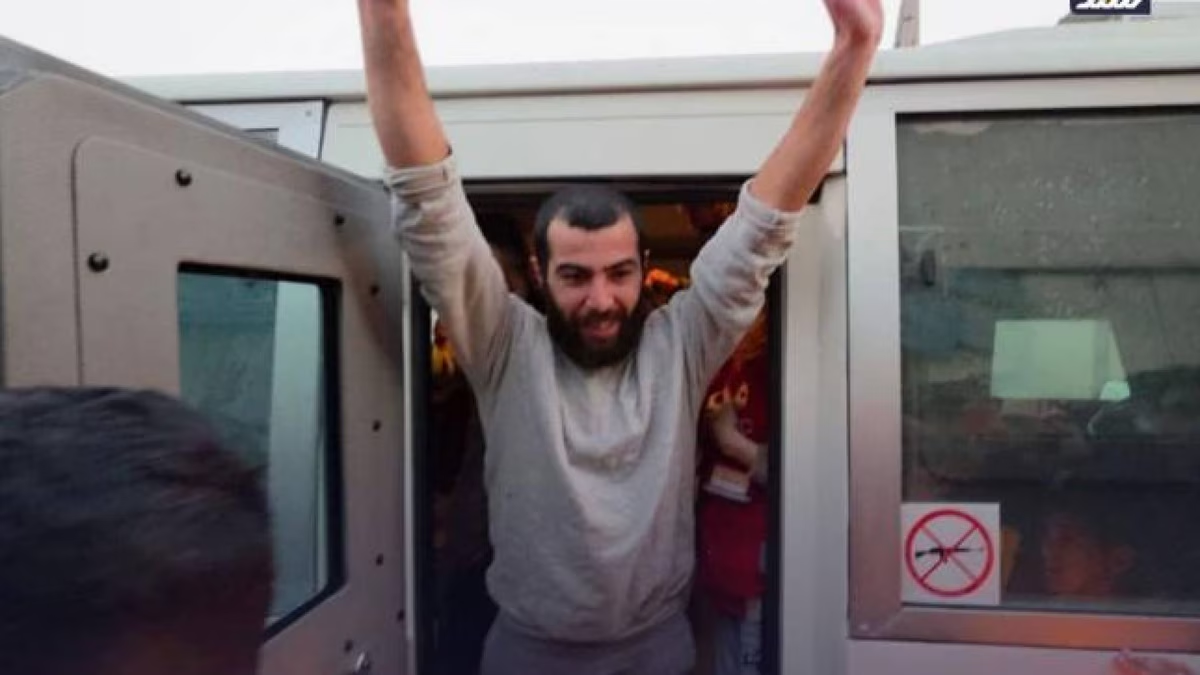
The Israeli occupation authorities today, Sunday, released a new batch of 14 Palestinian detainees from the Gaza Strip via the Kerem Shalom commercial crossing. Immediately upon their arrival, teams from the International Committee of the Red Cross took on the task of facilitating the transfer of the released individuals to Al-Aqsa Martyrs Hospital in Deir al-Balah for necessary medical examinations. The organization also worked to ensure their communication with their families after long periods of separation.

The International Committee of the Red Cross revealed in an official statement that it has been able to facilitate the return and transfer of more than 2,500 Palestinian detainees since the beginning of 2023 until now, within the established mechanisms. Sources confirmed that these operations come amidst complex humanitarian conditions faced by prisoners inside detention centers, which requires immediate health care for the released individuals upon their exit from prisons.

In a related context, the international organization renewed its complaint about the continued prevention of its teams from accessing Israeli detention centers since October 2023. The Committee demanded the necessity of revealing the fate of all detainees and their whereabouts transparently, emphasizing the importance of allowing it to resume its inspection and monitoring duties inside prisons to ensure the safety of the detainees.

International sources stressed that the rules of international humanitarian law impose clear obligations on the occupation authorities to treat detainees humanely and preserve their dignity. This includes providing an appropriate detention environment with basic necessities of life, in addition to ensuring their inherent right to continuous communication with their families and informing their families about their health and legal conditions.

Thousands of Palestinian families in the Gaza Strip and the West Bank live in a state of existential anxiety as a result of the systematic Israeli blackout regarding the fate of their children inside prisons. The International Committee affirmed its continued dialogue with the Israeli authorities to secure the right to official visits, considering that the absence of information constitutes a blatant violation of human rights and increases the psychological suffering of the detainees' families.

International humanitarian law mandates humane and dignified treatment of detainees, providing appropriate detention conditions, and enabling them to communicate with their families.

PALESTINE

Mon 29 Jun 2026 7:52 am - Jerusalem Time

Mass Wedding for 150 Grooms and Brides Amidst the Rubble of Jabalia: A Message of Life from the Heart of Destruction

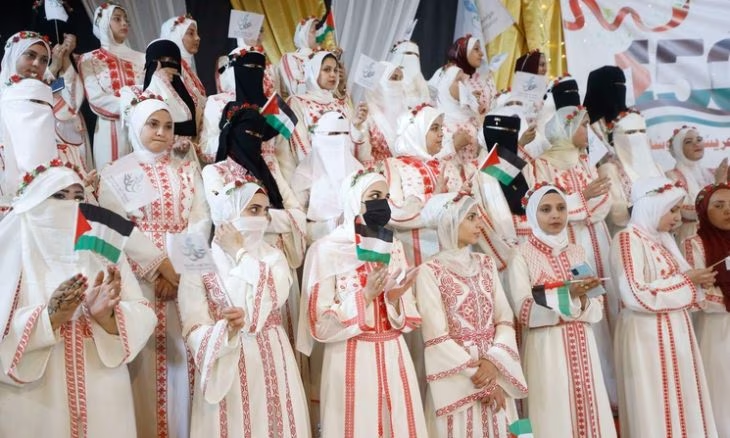
In a rare scene that brought life back to the northern Gaza Strip, joyous ululations and Palestinian dabke chants rose above the ruins of a wedding hall west of Jabalia camp. The ceremony, held under the slogan 'Joys of the North.. Dreams from the Rubble,' included 150 grooms and brides, in an initiative organized by the 'Ghaith' charity to break the state of sadness that has enveloped the region since the start of the genocide war.

Hundreds of citizens gathered to share the joy of the newlyweds at a location not far from the areas where the occupation forces are stationed, where the rubble left by the war turned into a platform to declare adherence to the land and steadfastness. The organizers of the ceremony explained that this initiative targeted families in the most affected areas, providing financial contributions to young people to help them start their married lives amidst suffocating living crises and a lack of aid.

Sources quoted participants as confirming that creating joy at this time is an act of resistance. Groom Yahya Abu Al-Qumsan, who lost dozens of his family members, said that celebrating amidst the destruction represents a challenge to the reality imposed by the occupation and a determination to restore normal life. For his part, Mukhtar Nimer Al-Maqousi indicated that the gathering of hundreds at this traditional wedding heals the wounds of the afflicted and sends a message to the world that the Palestinian people are steadfast and will not be broken.

This ceremony comes at a time when areas of northern Gaza are still suffering from a very slow pace in removing rubble and stalled reconstruction efforts, despite the ceasefire agreement coming into effect last October. Palestinian families face severe difficulties in securing basic needs due to the continued closure of crossings and the evasion of humanitarian obligations, making such events the only outlet for residents amidst the rubble of war.

Despite the bombing, destruction, and loss of family and loved ones, we prove to the world that Gaza loves life and creates it, and this ceremony is a covenant that we remain on our land.

ARAB AND WORLD

Mon 29 Jun 2026 7:52 am - Jerusalem Time

Two days after the framework agreement... the occupation destroys a tunnel in Majdal Zoun and launches raids in southern Lebanon

The Israeli occupation army announced the destruction of a military tunnel belonging to Hezbollah in the town of Majdal Zoun, located within the Tyre district in southern Lebanon. This military operation comes just two days after the signing of the framework agreement between Lebanon and Israel in the American capital, Washington, raising questions about the nature of field movements in light of the new understandings.

A joint statement issued by the Israeli Prime Minister's Office and the Ministry of Security clarified that the targeted tunnel extends for more than 200 meters and reaches a depth of more than 25 meters underground. The statement indicated that forces found hundreds of various weapons inside the tunnel, in addition to four openings designated for launching projectiles towards the occupied territories.

Official sources revealed that Tel Aviv had informed the American administration and the American representative in Lebanon in advance before carrying out the attack on the underground facility. The occupation forces published visual documentation of the massive explosion carried out by the 'Yahalom' engineering units and the 551 combat team, where the scenes showed an intense flash and an explosion that shook the villages surrounding Majdal Zoun.

In a related context, Israeli warplanes launched a series of violent airstrikes targeting the city of Nabatieh and its surroundings. One of the strikes focused on the Al-Amana station area at the intersection of Al-Maslakh neighborhood, which led to the complete destruction of a house and severe damage to adjacent buildings and public properties on Nabih Berri Avenue.

The aerial aggressions continued to affect the outskirts of the town of Mayfadoun, where a direct raid targeted a residential house, leveling it to the ground, with no immediate reports of the extent of injuries. Local sources stated that the aerial bombardment coincided with intensive flights of reconnaissance and drone aircraft in the skies of the South and Nabatieh governorates.

In the town of Frun, media sources reported that an Israeli drone carried out a raid targeting an open area located near inhabited residential neighborhoods. The raid caused a state of panic among civilians, at a time when the occupation forces continue to violate Lebanese airspace and carry out localized strikes in various areas of the central sector.

On the ground, the town of Khiam witnessed extensive combing operations carried out by the occupation army using heavy machine guns. The sound of heavy gunfire was heard throughout the border area, coinciding with military movements of occupation vehicles in nearby locations, indicating continuous field tension despite the announced political paths.

The complex that was destroyed was built with Iranian technology and knowledge, and contained hundreds of combat means and guided launch platforms.

PALESTINE

Mon 29 Jun 2026 7:52 am - Jerusalem Time

Israeli security assessments: Hamas regains control, plans to remove it from Gaza 'unrealistic'

A professional conviction is growing within Israeli security circles that the future of the Gaza Strip is no longer linked to the possibility of ending Hamas's existence, but rather to the necessity of recognizing that it has become a formidable force in the field and political equation. These assessments, circulated by Hebrew media sources, are based on clear indicators that reflect the movement's continued influence and its ability to manage the scene despite the ferocity of the ongoing war.\n\nThe security establishment in Tel Aviv believes that the absence of any real popular movement against Hamas, even amidst the humanitarian catastrophe, is evidence of the stability of its governing system. Sources indicated that recent calls on social media platforms to protest living conditions did not receive a tangible response in the streets of Gaza, which reinforces the hypothesis of tight control.\n\nAccording to Israeli assessments, this field calm is not only due to complex security conditions, but also to Hamas's ability to deploy its armed elements at vital intersections and impose a deterrent environment that prevents any protest. This organizational presence confirms that the movement has succeeded in reproducing its governance tools and restoring its administrative structure amidst the rubble and widespread destruction left by military operations.\n\nSecurity circles go so far as to describe any international or regional plans aimed at managing the Strip independently of Hamas as \"unrealistic\" and lacking practical components on the ground. These circles consider that attempts by some armed groups to challenge the movement's authority have failed in the face of the organizational cohesion demonstrated by Hamas in various areas of the Strip.\n\nIn a message directed to decision-makers in Washington and Tel Aviv, sources confirmed that attempts to create \"Hamas-free zones\" or rely on a technocratic government are doomed to failure. The assessments stressed that any plan put on hold will not find its way to implementation as long as the movement holds the initiative and effective control on the ground.\n\nFor his part, military analyst Ron Ben Yishai presented a different vision from the official political discourse, considering that Hamas is not just an armed faction that can be uprooted, but rather an expression of a deeply rooted social and political structure. Ben Yishai criticized the continuous promotion of the concept of \"complete victory,\" stressing that separating society from the movement in Gaza is an extremely complex process that goes beyond mere military capabilities.\n\nReports indicate that post-war Gaza will not be an empty political space that can be easily reshaped according to Israeli or American visions. The movement remains the central actor, whether through direct governance or through its influence as a field force that cannot be bypassed in any future security or civilian arrangements.\n\n"The absence of an alternative" stands out as one of the most important challenges facing the occupation, as observers believe that the real problem lies in the absence of a party capable of filling the vacuum. The Palestinian Authority suffers from a credibility crisis, while Israel rejects the option of international forces, making Hamas's continued presence a realistic option imposed by the field.\n\nOn the military front, official sources conveyed warnings from senior officers in the Israeli army about Hamas's rapid recovery of its combat capabilities. Reports indicated that the movement has already begun manufacturing hundreds of explosive devices and anti-tank missiles monthly, exploiting the relative calm in some areas to rearm its units.\n\nReconstruction operations include recruiting new elements and training elite units to compensate for the human losses it suffered in recent months. Israeli intelligence also monitored strenuous attempts to smuggle advanced communication equipment and drones, in addition to continuous work on rehabilitating the strategic tunnel network.\n\nMilitary officials confirmed that Hamas is still \"strong on the ground\" and no local or external party poses a real threat to its authority so far. This reality prompted the army leadership to recommend resuming widespread military operations, despite American reservations fearing an exacerbation of the humanitarian crisis and an expansion of the conflict.\n\nIn a related context, analysts believe that Israeli confusion in dealing with the issue of Gaza's administration reflects the gap between declared political goals and the reality on the ground. The war, whose goal was to eliminate Hamas, ended with an implicit admission by the security establishment that the movement remains the main player with administrative experience and popular presence.\n\nThe challenge facing any future vision for Gaza is how to deal with a movement that has deep roots in the Palestinian social and political fabric. This is what always makes theoretical proposals about the \"day after\" the war clash with the reality that Hamas still holds the reins in the besieged Strip.\n\nIn conclusion, it seems that the scene in the Gaza Strip is heading towards more complexity with the movement's insistence on remaining and its ability to adapt to immense military pressures. The latest Israeli assessments remain a frank admission of the failure of the total exclusion strategy, and a call to search for more realistic paths to deal with the existing reality.\n\nToday, conclusive evidence has confirmed that two million Palestinians outside the fence do not oppose Hamas rule, and as long as the movement is in power, there is no chance for change.

PALESTINE

Mon 29 Jun 2026 7:52 am - Jerusalem Time

Between displacement tents and broken internet links... a difficult journey for high school students in Gaza

Every morning, student Iman Awad wakes up in her tent in the Gaza Strip, not to go to traditional school desks, but to begin an arduous search for a way to take her high school exams. Iman accompanies her father on a daily journey through the crowded alleys of the camps, searching for a spot that provides an internet connection and electricity to power her tablet.

Iman's experience, a science stream student, embodies a bitter reality lived by thousands of Palestinian students who found themselves forced to adapt to an electronic examination system in the absence of infrastructure. Field sources confirm that this daily journey has turned into an additional psychological and physical burden, added to the pressures of studying and continuous displacement.

The suffering begins inside the tent, where the cramped spaces lack the minimum requirements for concentration or privacy, forcing students to resort to temporary cafes set up amidst the rubble. Iman's father says that the tents are not suitable for studying due to overcrowding and noise, making leaving them an indispensable necessity to ensure his daughter's educational future.

On the technical front, Iman faced severe difficulties while trying to access the 'Wise School' educational platform, as the link broke down more than once during crucial tests. The student recounts how she almost lost her grade in the physics exam due to the inability to upload answers, before succeeding at the last minute after arduous technical attempts.

These technical malfunctions were not isolated incidents; they recurred with many students who were not lucky enough to send their answers, forcing some to postpone their exams to the second round. Students' guardians indicate that the stress resulting from the fear of losing connection outweighs the stress of the exam itself, negatively affecting their academic performance.

In addition to technical crises, the living environment in the tents imposes harsh challenges, including a sharp rise in temperatures, the spread of insects, and the lack of adequate lighting. Iman is forced to study by the light of her mobile phone in the late hours of the night, or wake up before dawn to take advantage of the relative calm before the daily noise of the camp begins.

Amidst this crisis, community initiatives emerged to try and bridge the gap, such as 'Cafe Ferrero' run by Siraj Abu Hilal, which transformed from a commercial project into a service center for students. The place provides charging and internet services at symbolic prices or sometimes for free to support the continuity of the educational process for displaced people in those areas.

Abu Hilal explains that the idea for the cafe stemmed from a personal struggle his family faced, as he watched his sister struggle last year to take her exams under similar conditions. The engineering team supervising the place strives to overcome technical obstacles and provide a quiet environment as much as possible for students and remote workers amidst the large crowds.

Despite these efforts, the pressure remains high on the limited connection points, as the cafe faces challenges related to the slowness of official platforms when large numbers of users access them simultaneously. Those in charge of the initiative try to monitor ministry links and provide alternative internet cards to reduce the chances of students failing to upload their files.

Iman Awad's story encapsulates a complex educational scene in the Gaza Strip, where success now requires resilience that goes beyond mental capabilities to physical endurance. It is a daily battle that begins with searching for a charger for electricity and ends with waiting for the 'Sent' signal on the phone screen, under exceptional circumstances that the educational journey has never witnessed before.

The battle for success in Gaza is no longer linked to academic achievement alone; it begins with finding electricity, an empty seat, and a working electronic link.

PALESTINE

Mon 29 Jun 2026 7:51 am - Jerusalem Time

Leaked Documents: 'Trump Peace Council' Seeks Full Legal Immunity and Free Control Over Gaza Lands

International press reports have revealed details of a leaked document from the Gaza Peace Council, headed by Donald Trump, showing an intense effort to grant the body exceptional legal status and broad immunity. According to the circulated draft resolution, the Council plans to exempt itself and its administrative apparatus from any legal prosecution within the Gaza Strip, while granting itself the right to acquire public properties and facilities for free and without financial compensation.

The four-page document, classified as sensitive, grants comprehensive legal protection to all Council members, contracted international forces, and participating Palestinian technocrats in the administration. This protection includes preventing arrest, detention, or any legal action in local courts, raising serious concerns about the absence of accountability for any violations that may occur during the Council's administration of the Strip.

The executive council of this body consists of figures close to Trump, led by his son-in-law Jared Kushner, special envoy Steve Witkoff, and national security advisor Marco Rubio. The draft grants the head of the body, Donald Trump, exclusive authority to waive immunity for any individual, provided that the majority of Council members approve, making the justice system subject to internal political decisions.

In the context of field movements, sources reported that Bulgarian diplomat Nikolay Mladenov, who serves as the High Representative of the Council, is holding intensive meetings in Cairo with Palestinian officials selected to manage local affairs. These meetings aim to establish a practical framework for the Council in the Strip, although the draft immunity resolution has not yet been presented to the Palestinian side participating in these discussions.

International legal experts warned that this step represents an attempt to create a self-contained legal system that bypasses the international law applicable in cases of occupation. Lawyers pointed out that the third-party liability clause aims to limit claims related to personal injuries or property loss to an internal system under the Council, closing the door to any independent external oversight.

These developments come at a time when the Council is seeking to attract international contractors and major security companies to work in Gaza, where these contractors demand a legal framework that protects them from prosecution. These arrangements recall controversial past experiences in Iraq and Afghanistan, where security companies such as 'Blackwater' faced accusations of committing serious violations against civilians without clear accountability mechanisms.

Among the most controversial aspects of the document is the provision for providing the necessary headquarters and public facilities for the Council and international stabilization forces in Gaza 'for free'. Observers believe that this phrase opens the door to illegal confiscation of Palestinian public and private properties, especially given the lack of clarity about who will undertake the process of 'providing' these facilities in the current situation in the Strip.

Commenting on these leaks, international human rights organizations described the Council's directions as emulating methods of repression and control, warning against entrenching features of apartheid and occupation through administrative tools. These organizations considered that the unilateral declaration of authority to seize land represents a blatant violation of the rights of indigenous populations and portends serious abuses under the guise of reconstruction.

For his part, an official in the Peace Council denied the existence of any decisions aimed at creating a state of impunity, describing the insinuations as misleading and distorting facts. The official affirmed in a statement that the Council will adhere to applicable laws and will operate according to clear regulatory rules, but he did not provide specific details about the nature of this oversight or how to ensure the accountability of international contractors.

The document indicates that the Council plans to build military logistical bases to support international forces aimed at disarming Palestinian factions, a step that the Trump administration considers crucial for implementing its plan. Israel links the progress of these steps to Hamas's complete abandonment of its weapons, which places the Council in the face of complex security and political challenges on the ground.

Jared Kushner believes that these plans aim to transform the Gaza Strip into regional business centers, advanced technological cities, and luxury resorts, a vision that faces widespread criticism for ignoring the political and national rights of Palestinians. This economic vision relies heavily on providing a safe legal environment for investors and contractors, which is explained by the leaked draft immunity resolution.

Internationally, the Council bases its legitimacy on a previous United Nations Security Council resolution allowing it to oversee the administration of Gaza for a transitional period ending in December 2027. However, the question remains about the legality of the Council borrowing UN diplomatic immunities to apply them to security contractors and private companies operating in conflict zones.

American security contractors expressed concern about the absence of a formal 'Status of Forces Agreement' (SOFA), as Israel refuses to negotiate such an agreement because it could imply implicit recognition of a political entity in Gaza. This legal vacuum is what the Trump Peace Council is trying to fill through unilateral decisions that grant its personnel absolute protection from local and international laws.

In conclusion, the legal value of this document remains questionable, as jurists believe that the Council's unilateral signing of its decisions does not grant them binding international legitimacy. However, the implementation of these provisions on the ground could lead to the creation of a new reality in Gaza, where land and property become at the disposal of an international administration not subject to any form of independent judicial oversight.

It appears to be an attempt to exempt the Council and all its personnel from accountability for potential legal violations.

ARAB AND WORLD

Mon 29 Jun 2026 7:51 am - Jerusalem Time

Anti-independence parties lead legislative election results in New Caledonia

The preliminary results of the legislative elections in New Caledonia showed a clear lead for the coalition opposing independence from French sovereignty, as it succeeded in winning 24 seats out of a total of 54 parliamentary seats. This election is seen as a historic turning point that will determine the future relationship between the Pacific island territory and the central government in Paris.

The electoral process took place on Sunday amidst extensive security measures, with authorities deploying approximately 2,500 police and gendarmerie personnel to secure polling stations and ensure the smooth running of the process. The capital, Nouméa, witnessed long queues of voters who flocked from early morning, indicating the great importance residents attach to this political event.

These elections come after a period of instability, as authorities were forced to postpone them from their original date in 2024 due to a wave of violence and bloody unrest. These clashes erupted between the indigenous 'Kanak' people demanding independence and those loyal to remaining under French protection, raising international concerns about the territory sliding into civil war.

Demographic data indicates the complexity of the social landscape in New Caledonia, which is inhabited by about 270,000 people, with Melanesian Kanaks making up about 41% of the total population. In contrast, people of European origin, most of whom are French, represent about 24%, which directly reflects political orientations and ballot boxes in every election.

Historically, the territory has been under French colonization since 1853, and later in 1946 became a French overseas territory. Since then, the political struggle over self-determination has continued. Despite three previous referendums on independence, the last of which was in 2021, the majority voted each time in favor of remaining under French sovereignty.

French President Emmanuel Macron's government seeks to maintain the stability of the archipelago, which is about 17,000 kilometers from Paris, given its sensitive geopolitical location. Paris was forced earlier in 2024 to suspend controversial electoral reforms after they caused the worst violence the territory had witnessed since the 1980s.

In addition to the political dimension, New Caledonia holds immense strategic and economic importance for France due to its possession of one of the largest nickel reserves in the world. This material is an essential and vital component in advanced military industries and modern energy technologies, making its control a long-term economic goal for the French state.

The biggest challenge facing the winning political forces is how to manage the upcoming negotiations with the French administration to reach a consensual formula that satisfies the aspirations of separatists and calms the fears of loyalists. Demands for the withdrawal of constitutional reforms are still ongoing, and the collective memory of the residents is still affected by the events of the 1980s, which claimed the lives of dozens of the territory's inhabitants.

The results of these elections are a decisive factor in shaping the upcoming negotiations with Paris regarding the final political status of the territory.

OPINIONS

Mon 29 Jun 2026 7:51 am - Jerusalem Time

A profound American shift confuses Israel: Vance's crisis is just a title for a new phase in Washington

Washington's Message

Washington – Said Arikat – 28/6/2026

The escalating crisis between US President Donald Trump's administration and the Israeli government is no longer limited to the sharp statements made by Vice President J.D. Vance; rather, it reflects a deeper shift in the structure of political thinking within Washington towards Israel. The original article published by Politico reveals that what Tel Aviv is facing is not a personal dispute with Vance, but the beginning of a new phase in which Israel no longer enjoys the exceptional status it maintained for decades within American foreign policy.

These indicators emerged a few months after joint American and Israeli strikes against Iran in late February, when the Israeli government believed that the alliance with the Trump administration had entered an unprecedented phase of strength and cohesion. However, subsequent developments painted a completely different picture, as Washington began to deal with Middle East issues based on direct American interests, rather than an absolute commitment to Israeli priorities.

According to the report, Vance sent an unprecedented message to Israel when he said that President Trump is the only global leader who still stands by it, warning the Israeli government against losing its strongest ally. He also implied that continued American support is no longer guaranteed if Tel Aviv continues to take steps that conflict with American interests.

American and Israeli sources who spoke to the magazine confirm that Vance does not represent an exceptional case within the administration, but embodies a growing trend that believes the relationship with Israel, like any other alliance, must be subject to the "America First" criterion. This means that American interests are no longer automatically defined as identical to Israeli interests, a shift that Israeli officials describe as the most dangerous in decades.

Since Trump's return to the White House, Israel had bet that the "America First" policy would exempt it from any review of traditional alliances, but this bet began to dissipate quickly. Politico quoted an Israeli political advisor as saying that his government was naive when it believed that Israel would remain immune to the transformations affecting American foreign policy.

Signs of this coolness appear in the declining pace of political contacts between the two sides. After Israeli Prime Minister Benjamin Netanyahu visited Washington five times in 2025, he has only visited once this year, and no new date has yet been set for a White House visit, while phone calls between the two leaders have significantly decreased.

Despite the White House's affirmation that relations between the two countries are still strong, Trump's tone towards Netanyahu has become sharper in recent months, especially after disagreements related to Lebanon and negotiations with Iran. The magazine indicates that the US President described Netanyahu on one occasion in harsh terms, before successfully convincing him to freeze military strikes that Israel intended to carry out against Beirut, a stance consistent with Vance's vision calling for avoiding any escalation that could threaten the negotiation process with Tehran.

The report reveals that the US Vice President has for years believed that the interests of the United States and Israel are not always identical, and that Washington should not be drawn into a war with Iran in defense of Israel. Today, having become one of the most prominent architects of American negotiations with Tehran, this vision has gained executive weight that can no longer be ignored within the administration.

In contrast, Israel views the ongoing understandings with Iran with concern, because they focus on the nuclear program, opening maritime corridors, and lowering oil prices, while not directly addressing Iran's ballistic missile program or Tehran's military influence in the region, two files that Tel Aviv considers an existential threat.

Researchers and officials who spoke to Politico believe that the Netanyahu government still underestimates the extent of the ongoing shift in Washington, believing that the crisis is limited to Vance alone, while facts indicate that the change has become broader and deeper, and may become clearer as the next US elections approach, which will in turn witness increasing debate within the Republican Party about the future of the relationship with Israel.

These developments reveal that for the first time in decades, Israel faces the possibility of losing its status as an "exceptional ally" within the American political establishment. New generations of Republican politicians no longer view unconditional support as a strategic constant, but rather link it to economic and electoral calculations and direct American interests. This means that the historical alliance is entering a redefinition phase, where Israel becomes an important partner, but not a permanent exception to the rules of American foreign policy that Trump and his team are reformulating according to the concept of national interest first.

The crisis also reflects a broader shift within American society itself. Opinion polls over the past two years have shown a decline in public support for Israel, especially among youth, independents, and even within segments of the Republican Party. This change forces American politicians, especially J.D. Vance, to address a public that no longer accepts open military involvement in the Middle East or unlimited support for foreign allies. Hence, Vance's statements appear to be a reflection of internal transformations rather than merely a diplomatic dispute with the Netanyahu government.

As for Israel, the traditional reliance on a personal relationship with the US President is no longer sufficient to ensure the continuation of the political and strategic privileges it has enjoyed for decades. If previous disagreements usually ended with White House intervention to restore warmth to relations, the current disagreement is linked to a change in the philosophy of decision-making within Washington itself. Therefore, any future Israeli government may find itself forced to reformulate its strategy towards the United States and adapt to a new reality in which Israeli priorities no longer automatically precede American calculations.

The report concludes that the future of US-Israeli relations will not only be determined by the results of the upcoming Israeli or American elections, but by the extent to which both sides succeed in adapting to a new political equation that no longer grants Israel an exceptional status within the United States' strategy. And if J.D. Vance has become the clearest face of this transformation, the main message of the current phase is that Washington has begun to view the Middle East from the perspective of its national interests first, even if this leads to unprecedented restrictions on its closest allies in the region.

OPINIONS

Mon 29 Jun 2026 7:50 am - Jerusalem Time

Unprecedented Rift in the Pro-Israel Republican Base… Has Washington Begun to Redraw its Relationship with Tel Aviv?

Washington's Message

Washington – Said Arikat – 29/6/2026

An analytical report by the American website "Axios" revealed that Israel is facing an unprecedented political shift within the Republican Party, its most steadfast traditional ally in the United States, with increasing signs of a decline in Israel's popularity among Republicans, especially among younger generations, after the devastating war on the Gaza Strip, and then the disputes that erupted between Israeli Prime Minister Benjamin Netanyahu and US President Donald Trump during the crisis with Iran.

The report indicates that Netanyahu, who spent about fifteen years compensating for his continuous loss of support within the Democratic Party by strengthening his alliance with Republicans, now finds himself facing a new challenge: the erosion of that support within the camp he long believed was his political guarantee in Washington.

It appears that the crisis has extended beyond opinion polls to reach the highest echelons of Republican leadership. According to the book "Regime Change" by journalists Maggie Haberman and Jonathan Swan, Trump exerted direct pressure on Netanyahu during negotiations to stop the war in Gaza, warning him that his continued refusal to compromise would lead to a "divorce" between the United States and Israel, an expression reflecting the extent of the tension that began to creep into the personal and political relationship between the two men.

Axios also reported that Trump described Netanyahu as "crazy" in one of his private conversations, considering that his policies contribute to increasing Israel's international isolation, before later reaffirming that his relationship with the Israeli Prime Minister was "good," but added in a striking tone: "We have to keep him a little balanced."

The criticisms were not limited to Trump alone, as Vice President J.D. Vance publicly criticized Israeli officials who attacked the American understanding with Iran, saying that no Israeli government should attack "its only remaining strong ally in the world," a message considered a departure from the traditional discourse that has long given Israel unconditional support.

In parallel, the influence of the "America First" movement, which opposes foreign interventions, has grown within the Republican Party, where prominent media and political figures, such as Tucker Carlson, Megyn Kelly, and Marjorie Taylor Greene, led a sharp campaign of criticism against Israel, considering that American interests have become hostage to the priorities of the Israeli government.

Carlson went so far as to accuse Netanyahu of deceiving Trump and pushing him towards a war with Iran, describing the American president as having become a "captive" of the Israeli prime minister, while the popularity of conservative media personality Ben Shapiro declined among the right-wing audience due to his adherence to the traditional defense of Israel, at a time when an increasing portion of the Republican base is moving towards a discourse more skeptical of the utility of American support for Tel Aviv.

The report indicates that Israel has become a new benchmark for internal conflict within the American right, where emerging right-wing figures accuse traditional Republican Party leaders of prioritizing Israel over American national interests, a discourse that until recently was confined to the political margins, but has begun to gain increasing presence within conservative platforms and among young voters.

Opinion polls clearly reflect this shift. A Pew Research Center poll showed that four out of ten Republicans hold a negative view of Israel, while the percentage rises to 57% among Republicans under the age of fifty. A Quinnipiac University poll also revealed that one in five Republicans believes the United States provides excessive support to Israel, a number that has multiplied several times compared to what it was after the events of October 7, 2023.

Polls conducted by the University of Maryland also showed that less than half of Republicans consider Israeli military operations in Gaza justified, while only 22% of Republicans aged 18 to 34 supported them, indicating a widening generational gap within the party.

Despite these indicators, the traditional Republican current still maintains a supportive stance towards Israel, as a Gallup Institute poll showed that 70% of Republicans sympathize more with Israelis than with Palestinians, although this percentage has decreased by ten points compared to 2024, which reflects the beginning of a gradual shift rather than a complete reversal in the political mood.

The report suggests that the most important question is not only about Netanyahu's declining popularity, but whether Israel's image itself has begun to change within the Republican Party, especially with the upcoming Israeli elections, and whether this shift will remain linked to Netanyahu's person, or will turn into a deeper review of the nature of the American-Israeli alliance, which has for decades been one of the constants of American foreign policy.

These indicators reveal that the ongoing shift within the Republican Party is not just a personal disagreement with Netanyahu, but reflects the rise of a new vision that considers foreign policy should be measured exclusively by how well it serves direct American interests. With the growing influence of the "America First" movement, Israel is for the first time being subjected to a test of political and strategic utility, after decades of being immune to any discussion within conservative circles. This shift, if it continues, could reshape the nature of the relationship between Washington and Tel Aviv over the next decade.

The numbers for young Republicans carry implications that go beyond the poll results themselves, because they reflect a cultural and media change in the sources of conservative public opinion formation. New generations no longer rely solely on traditional party discourse or evangelical institutions, but receive their information through social media platforms and digital media, where images of destruction in Gaza and critical discussions of American support for Israel are widespread. From here, this change could turn into a long-term factor that traditional Republican leaders will find difficult to contain.

Although major Republican institutions remain committed to defending Israel, the continuation of the war in Gaza, and repeated frictions between Netanyahu and the US administration, may push more Republican politicians to reposition themselves to avoid losing young voters. This does not necessarily mean the collapse of the American-Israeli alliance, but it could mean the end of a phase of absolute unconditional support, and the beginning of a phase where this support becomes linked to more complex electoral and strategic calculations, and to the ability of Israeli governments to avoid repeated clashes with Washington.

PALESTINE

Mon 29 Jun 2026 7:50 am - Jerusalem Time

Investigation reveals the hidden aspects of calls for a 'June 26th Revolution' in Gaza: A coordinated digital campaign led by external accounts

A recent technical investigation has uncovered intriguing details regarding calls for protests in the Gaza Strip on June 26th. The investigation clarified that these calls began from an individual account before transforming into a widespread digital campaign, with technical indicators showing it to be a coordinated activity managed by entities linked to the Israeli occupation.

The spark for this campaign originated from an account named 'Abdul Hamid Abdul Ati', who on June 8th, posted the hashtag '#June26Revolution' without providing clear details initially. It was later revealed that Abdul Ati holds the position of editor-in-chief of a media platform called 'Al-Muwatin' (The Citizen), which was the first to promote these calls and describe them as an anticipated popular movement.

By tracking geographical data, a stark contradiction emerged in the identity of those behind the campaign; it was found that Abdul Ati manages his accounts from Egypt despite claiming to be present inside Palestine. Domain registration records for 'Al-Muwatin' platform also revealed that it is registered in the United Arab Emirates and is technically linked to a digital marketing company in Dubai.

Participation was not limited to individual accounts; news platforms from various countries joined the fray, deliberately amplifying the hashtag. Prominent among these platforms were the Lebanese 'Asia News Agency' and 'Daily Beirut', in addition to the 'Jusoor News' platform, whose account is managed by individuals in Egypt and the United States.

The investigation monitored direct involvement of suspicious field entities, as the official page of the 'Ashraf Al-Mansi' militia, which cooperates with the occupation, was the first to respond to the call. This militia explicitly called for demonstrations against the Hamas movement, reinforcing suspicions about the political and security objectives behind this digital move.

In terms of numbers, the hashtag achieved widespread reach, accumulating approximately 160 million views in less than two weeks, but this spread was not natural. Analysis showed that about 60% of the interaction was automated reposting, while the percentage of genuine comments did not exceed 7%, indicating the use of 'electronic armies'.

Regarding the geographical distribution of participants, the United States topped the list with 16% of total posts, followed by Egypt with 7%, and then Turkey. This distribution confirms that the campaign does not reflect the pulse of the street within the Gaza Strip, but rather is an attempt to influence it from outside through directed virtual spaces.

The name 'Mustafa Asfour' emerged as one of the main drivers of the campaign from Britain, where he published dozens of inflammatory posts. His activity included publishing photos and conversations he claimed were leaked from security agencies in Gaza, but technical examination proved them to be fabricated images that underwent clear digital alterations to mislead public opinion.

As the scheduled date approached, new fake accounts appeared, announcing the postponement of the 'revolution' until July, under the pretext of completing arrangements. It was found that these accounts were created concurrently with the launch of the campaign in June and do not belong to any known organizational or union body within the Palestinian territories, which confirms their intelligence nature.

These accounts used fake names such as 'The Popular Army' to promote their statements, names associated with outlaw groups. It was also noted that these pages heavily promote videos of figures known for their hostility to the resistance and their permanent presence outside the Gaza Strip, such as Louay Khaled and Hamza Al-Masry.

Technical experts pointed out that the campaign attempted to exploit the catastrophic humanitarian situation and the suffering experienced by the residents of the Strip due to the ongoing aggression. The participating platforms sought to redirect popular anger towards the Palestinian resistance, using terminology and narratives that perfectly matched the media propaganda of the Israeli occupation.

One of the important observations recorded by the investigation was that the central accounts that amplified the campaign echoed the narrative of 'human shields'. This is an accusation constantly promoted by the occupation army to justify its targeting of civilians and vital facilities in the Gaza Strip, revealing the unity of source and objective between the digital campaign and the occupation's goals.

The investigation concluded that the 'June 26th uprising' was nothing more than a widespread digital disinformation operation lacking any popular base on the ground. The results confirmed that the absence of a single organizational structure and the multiplicity of external broadcasting sources prove that the movement was an attempt to penetrate the Palestinian internal front at a sensitive time in the conflict.
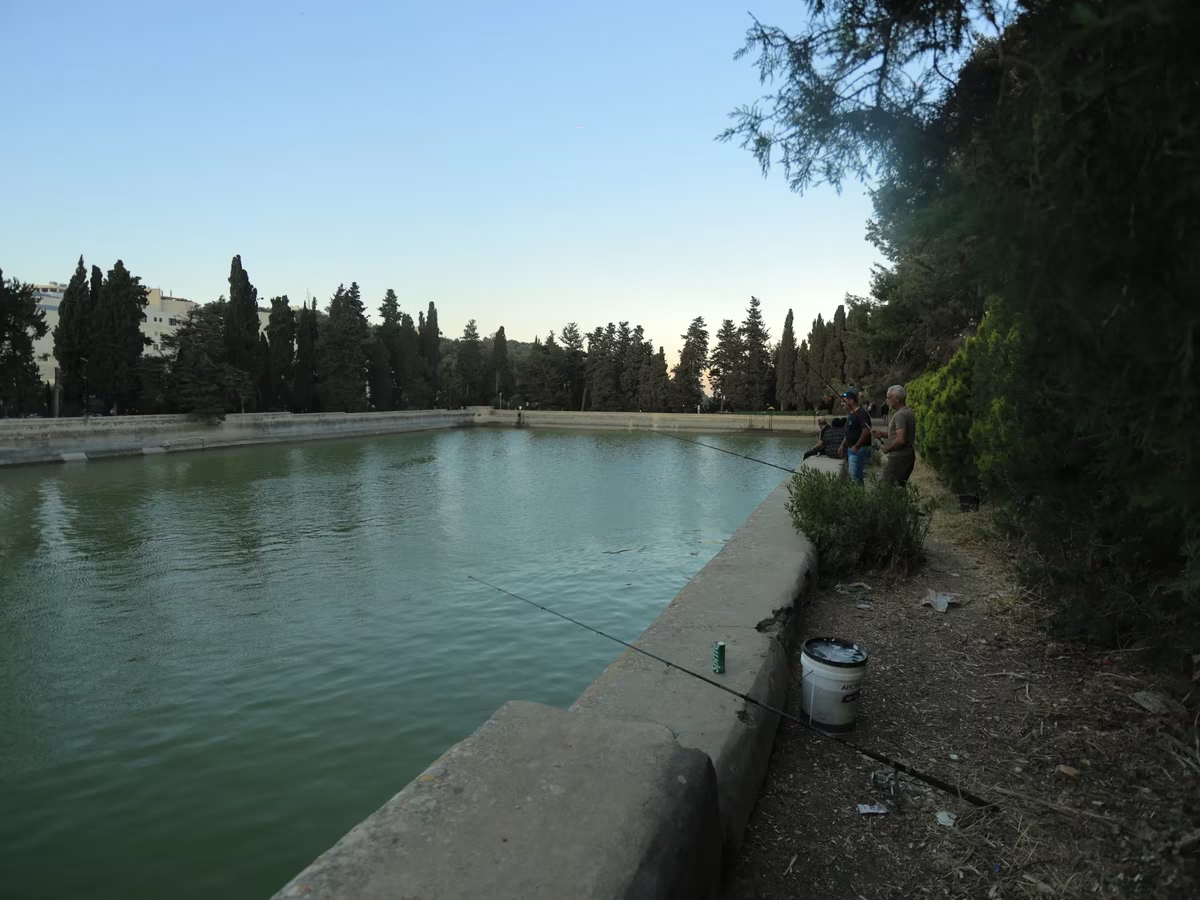
In conclusion, sources emphasized the need to be cautious of digital content of unknown origin that targets the morale of Palestinians. They clarified that public awareness in Gaza was the impenetrable barrier against the success of these campaigns, which are managed from operations rooms in capitals far from the reality of the field and its true suffering.

Analysis showed the presence of inauthentic digital behavior, coordinated and synchronized from outside the Gaza Strip, exploiting humanitarian conditions to direct popular anger.

PALESTINE

Mon 29 Jun 2026 7:50 am - Jerusalem Time

Turkey attacks Israel's recognition of 'Armenian genocide', considers it an attempt to cover up Gaza crimes

The Turkish Ministry of Foreign Affairs expressed its strong condemnation of Israel's decision to recognize the massacres suffered by Armenians during World War I as 'genocide'. The ministry affirmed in an official statement that this Israeli move has clear political objectives and is inseparable from the current diplomatic confrontation between the two countries.\n\nAnkara considered that Tel Aviv's resort to this sensitive historical issue is primarily aimed at covering up the crimes committed by Israeli forces in the Gaza Strip. The statement indicated that the Israeli government, which is facing international accusations of committing genocide before the International Court of Justice, is striving to divert the international community's attention from its current practices.\n\nThis diplomatic escalation comes amid an unprecedented deterioration in bilateral relations between Turkey and Israel since the outbreak of the war on Gaza in October 2023. Turkish positions have been sharp regarding Israeli military operations, with President Recep Tayyip Erdoğan continuing his scathing criticisms of what he describes as 'terrorism' practiced against Palestinian civilians.\n\nIn its statement, the Turkish Ministry of Foreign Affairs stressed that Ankara will continue to work firmly to confront what it described as Israeli expansionist policies that destabilize the entire region. Sources believe that the timing of Israel's recognition of the Armenian issue represents a political pressure card in response to Turkey's continuous support for the Palestinian cause in international forums.\n\nRegarding the historical roots of the crisis, Armenians demand comprehensive international recognition of what they describe as a 'genocide' that led to the killing of about 1.5 million people in the late Ottoman era. In contrast, the Turkish state completely rejects this description, asserting that that period witnessed tragic events in which victims from both Turks and Armenians fell as a result of civil war and famine conditions.\n\nTurkey affirms that addressing the issue of the 1915 events should be done through academic historical research, away from the political exploitation practiced by some countries. Sources emphasize that Israel's attempts to exploit this issue will not deter Ankara from its principled stances regarding the rights of the Palestinian people and the necessity of stopping the war in the Gaza Strip.\n\n"The Israeli government is trying to exploit the issue of the 1915 events to divert attention from its current policies in the Gaza Strip.

PALESTINE

Mon 29 Jun 2026 7:50 am - Jerusalem Time

The grip of settlement tightens on West Bank farmers: Infiltration of lands and vehicle bans

Israeli military gates and checkpoints in the West Bank have exceeded their traditional role of separating areas, transforming into a tool of collective punishment aimed at suffocating Palestinian farmers and preventing them from accessing their livelihoods. This suffering is clearly evident in the town of Halhul, north of Hebron, where residents face severe restrictions preventing them from tending to their grapevines in areas classified as 'C'.

Local sources reported that farmers in Halhul are now forced to enter their lands stealthily and avoid military patrols to carry out necessary plowing and pruning. These lands are under full Israeli control according to the Oslo Accords, which gives the occupation authorities a permanent pretext to pursue landowners and prevent them from agricultural use.

These repressive measures have led to the destruction of vast areas of land and damage to crops that constitute the primary income for hundreds of Palestinian families. While Palestinians are denied access to their land, full facilities are granted to settlers to expand their aggressions and pursue farmers under the protection of occupation forces.

The chapters of suffering in Halhul began to escalate sharply since 2020, with the occupation starting to build the 'Ma'ale Halhul' settlement outpost on top of Jabal al-Jumjuma (Skull Mountain). This mountain is one of the highest peaks in historical Palestine, making it a coveted target for settlement associations that incited the Israeli government to confiscate it and turn it into a settlement center.

The initial settlement outpost expanded into seven other outposts, spreading like an octopus over private citizens' lands, leading to the detention of about 14,000 dunams behind barbed wire. This rapid settlement expansion aims to create a new geographical reality that isolates Palestinian villages from their vital agricultural surroundings.

Faced with this bitter reality, farmers are left with only difficult options to access their fields, either by sneaking in under the cover of darkness at the risk of being subjected to soldier attacks, or through complex security coordination that rarely succeeds. Farmers confirm that the land, which used to be teeming with thousands of workers, is now only reached by dozens with great difficulty.

Farmers are forced to walk long distances, several kilometers, due to the occupation authorities' refusal to allow vehicles or agricultural machinery through military gates. This waste of time and physical effort negatively impacts the quality of agricultural work, with some contenting themselves with taking quick photos of their lands before leaving for fear of arrest.
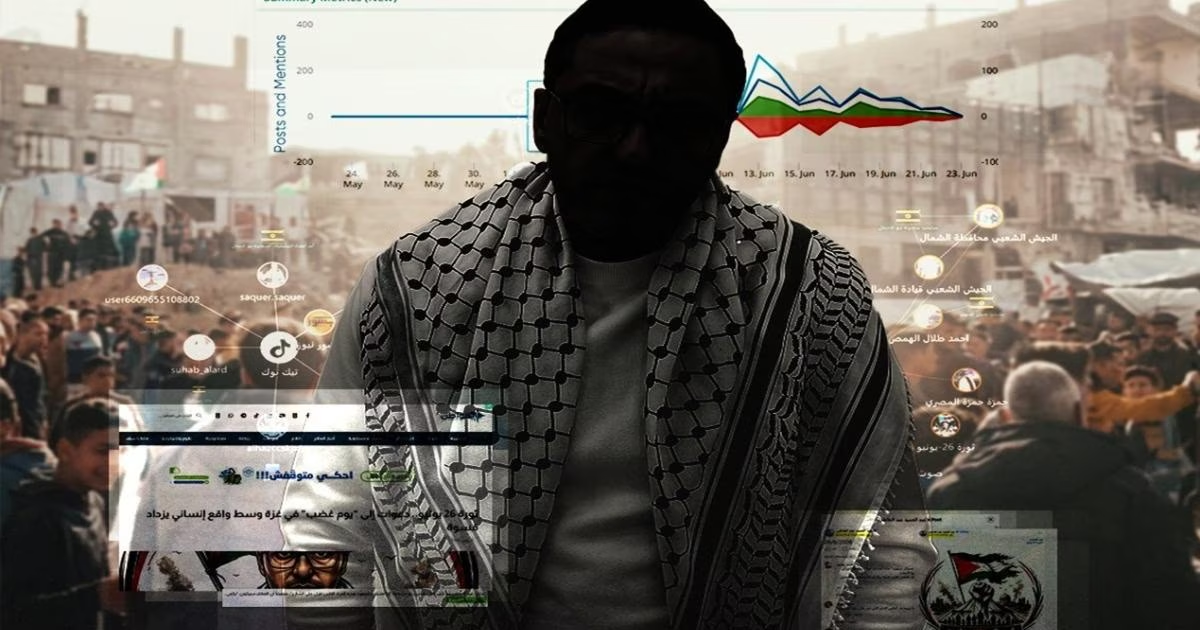
Israeli restrictions have directly impacted agricultural production, with the quantities of crops supplied to local markets significantly declining compared to previous years. Traders in the central vegetable market confirmed that the delayed arrival of products leads to the spoilage of large parts of them and a decrease in their market value, exacerbating the economic losses for farmers.
In the Qalqilya governorate, north of the West Bank, the occupation authorities issued a new military decision preventing farmers from bringing their vehicles into lands located behind the apartheid wall. This decision threatens to destroy the agricultural sector in one of the most fertile areas of Palestine, known for its production of guava, avocado, and citrus.

Farmers in Qalqilya explained that this decision would take them back to primitive times, as they would be forced to use animals to transport crops over long distances, which is impractical for large quantities intended for export. Qalqilya contributes about 20% of the total Palestinian agricultural production, making its targeting a severe blow to national food security.

Data from the Wall and Settlement Resistance Commission indicates the presence of 916 checkpoints and military gates spread throughout the West Bank, turning it into isolated cantons. Since October 7, 2023, the occupation has intensified the placement of obstacles by erecting 243 new gates, in a move aimed at imposing a comprehensive siege on Palestinian movements.

Farmers and human rights organizations have appealed to the international community and humanitarian organizations to intervene immediately to stop these policies aimed at displacing Palestinians from their land through starvation and intimidation. The Palestinian farmer remains steadfast on his land, trying to harvest the fruits of his labor despite the iron gates and rifles that lie in wait for him at every turn.

In my 30 years of working in the market, I have never seen a worse situation than this, as the occupation continues to build settlement outposts at the expense of our land.

PALESTINE

Mon 29 Jun 2026 7:50 am - Jerusalem Time

The occupation changes the name of 'voluntary displacement' to 'freedom of movement' to circumvent international pressure

Hebrew media sources revealed that the Israeli occupation authorities are resorting to a new linguistic strategy to market plans for the displacement of Palestinians from the Gaza Strip, by replacing the term 'voluntary migration' with a new name: 'freedom of movement plan'. This step comes in an attempt to circumvent the widespread international rejection faced by previous plans, which were considered by world countries and human rights organizations as a form of internationally prohibited forced displacement.

Channel 13 Hebrew reported that official directives were issued to officials of the security services and the 'Mossad' agency to immediately abandon the use of the old term in all official correspondence and discussions. This change aims to alleviate the intensity of international criticism that caused many countries to refrain from cooperating with Israel on the issue of absorbing migrants from the Strip's residents, which led to the practical freezing of the plan in recent months.

The sources explained that decision-making circles in Tel Aviv believe that the new name 'freedom of movement plan' may contribute to a radical shift in the positions of the concerned countries, as it gives the process a false humanitarian and legal cover. Through this maneuver, Israel seeks to revive communication channels with international parties that had explicitly objected to the idea of displacement under the name of voluntary migration.

In a related context, sources quoted a senior Israeli official as confirming that the strategic goal of the occupation remains constant, which is to push the largest possible number of Gaza residents to leave the Strip. Officials in Tel Aviv believe that reducing the Palestinian population density in Gaza is a fundamental pillar for any future security or political arrangements that the occupation seeks to impose after the cessation of large-scale military operations.

On the security front, the new head of the Israeli National Security Council, Shmuel Ben Ezra, held an emergency meeting with representatives of the security establishment to discuss ways to activate 'encouraging migration'. During the meeting, representatives of the Mossad agency frankly expressed the extent of the challenges they face, confirming the failure of previous efforts to find any country willing to accept Gazans under the current pressures.

Press reports indicated that the security establishment was surprised by the urgent summons to discuss this file, especially since the plan had been shelved for a long time due to field and political complexities. However, it appears that the new political leadership in the National Security Council is placing the file of emptying the Strip of its residents at the top of its priorities at the current stage, exploiting the state of widespread destruction that has afflicted the infrastructure.

About 2.4 million Palestinians live in the Gaza Strip under harsh living conditions exacerbated by the continuous blockade since 2007 and the recent aggression that destroyed about 90% of vital and civilian facilities. Despite the ceasefire agreement that began on October 10, 2025, the occupation continues to search for non-military means to achieve its demographic goals in the region.

Statistics indicate that the Israeli aggression since October 2023 has left a heavy toll of victims, exceeding 73,000 martyrs and 173,000 injured, turning the Strip into an uninhabitable area in the eyes of Israeli planners. Israel is betting that this tragic reality may push residents to accept the alleged 'freedom of movement plan' as the only option to escape the deteriorating conditions.

For their part, Palestinians in the Gaza Strip continue to express their steadfastness in remaining in their land despite all pressures and plans targeting their existence, affirming their absolute rejection of any displacement projects, no matter how many names they take. Palestinian national forces consider that the change in Israeli terminology is nothing but 'visual deception' aimed at beautifying the crime of ethnic cleansing before the international community.

Israel is interested in leading a process that would result in the displacement of the largest possible number of Gaza residents from the Strip, to support any future plan that is developed.