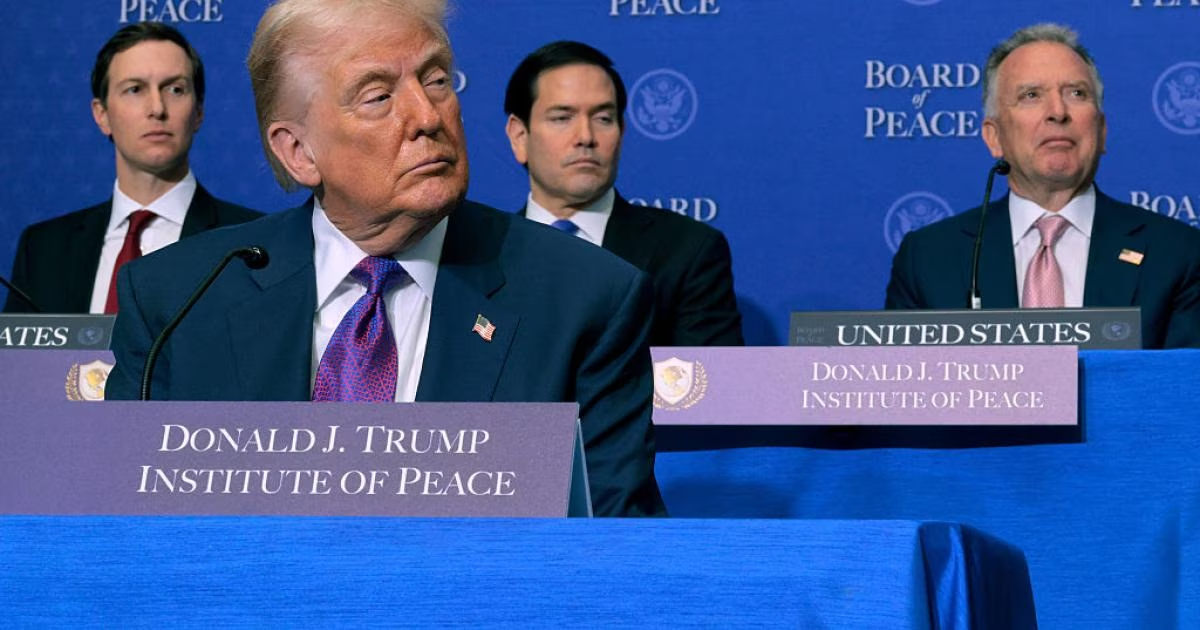







International journalistic sources have revealed a leaked four-page draft resolution outlining a proposed framework for the administration of the Gaza Strip under the umbrella of the so-called 'Peace Council'. This document, classified as 'sensitive but unclassified' and dated June 2026, grants broad legal immunities to the council members and its staff, raising deep questions about accountability.
According to the draft, the proposed immunity covers council members and its administrative body, as well as Palestinian technocrats, international forces, and foreign contractors involved in operations. These measures aim to prevent the arrest, detention, or prosecution of these individuals before any local judicial authorities within the Gaza Strip, providing them with absolute legal protection during the performance of their duties.
According to the document, the authority to lift immunity from any covered individual is exclusively limited to the head of the council, and subject to the approval of the majority of members. This arrangement places legal decision-making power in the hands of the council's administrative structure itself, away from any independent or local judicial authorities that might attempt to prosecute potential abuses.
The draft grants the 'Peace Council' an absolute right to use public headquarters, facilities, and properties in the Gaza Strip without paying any financial compensation. This step is part of the proposed administrative and security arrangements, including securing the needs of the international force planned for deployment in the Strip, which has raised concerns about the disposal of public state assets.
Leaked details indicate ambitious plans to establish an integrated security and logistical structure for an international force, whose primary mission will be to disarm the Islamic Resistance Movement (Hamas). This move comes within a broader framework aimed at managing the reconstruction phase, although the funding arrangements for these massive operations have not yet been finalized.
Prominent American figures appear in the council's executive committee, including Jared Kushner, son-in-law of US President Donald Trump, and special envoy Steve Witkoff. The committee also includes US Secretary of State Marco Rubio and Susie Wiles, reflecting direct American political weight in shaping the administrative and security future of the Strip.
In initial reactions, the White House referred inquiries regarding the document to the 'Peace Council' administration, which in turn quickly denied the existence of an effective framework granting immunities in this manner. The council stated in brief remarks that all participants would be subject to legal rules and oversight mechanisms, but did not provide clear details about the nature of these mechanisms or the oversight body.
For their part, legal experts who reviewed the draft warned that the proposed framework establishes a closed internal legal system that grants immunity from criminal and civil prosecution to those working within it. The experts pointed out that the document includes an internal mechanism for considering claims related to damages, whether physical injuries, deaths, or property losses resulting from the council's activities.
Observers criticized the document's lack of any independent external oversight, noting that it differs from traditional 'status of forces' agreements that regulate the work of foreign forces in conflict zones. They believe that the absence of a clear legislative framework makes it difficult to assign legal responsibility to any party in the event of human rights violations or field abuses.
The experts concluded that these arrangements practically pave the way for the creation of a parallel legal system specific to the 'Peace Council', which will handle disputes and claims internally, away from international law mechanisms. This approach raises doubts about the extent to which these plans are consistent with Palestinian sovereignty and international justice rules, especially in the absence of any effective external judicial oversight.
The proposed draft establishes an internal legal system that grants the Peace Council broad immunity from prosecution, and lacks any independent external oversight.
Share your opinion
Leaked Document Reveals Features of Gaza Administration: Broad Immunities for 'Peace Council' and Absolute Security Powers