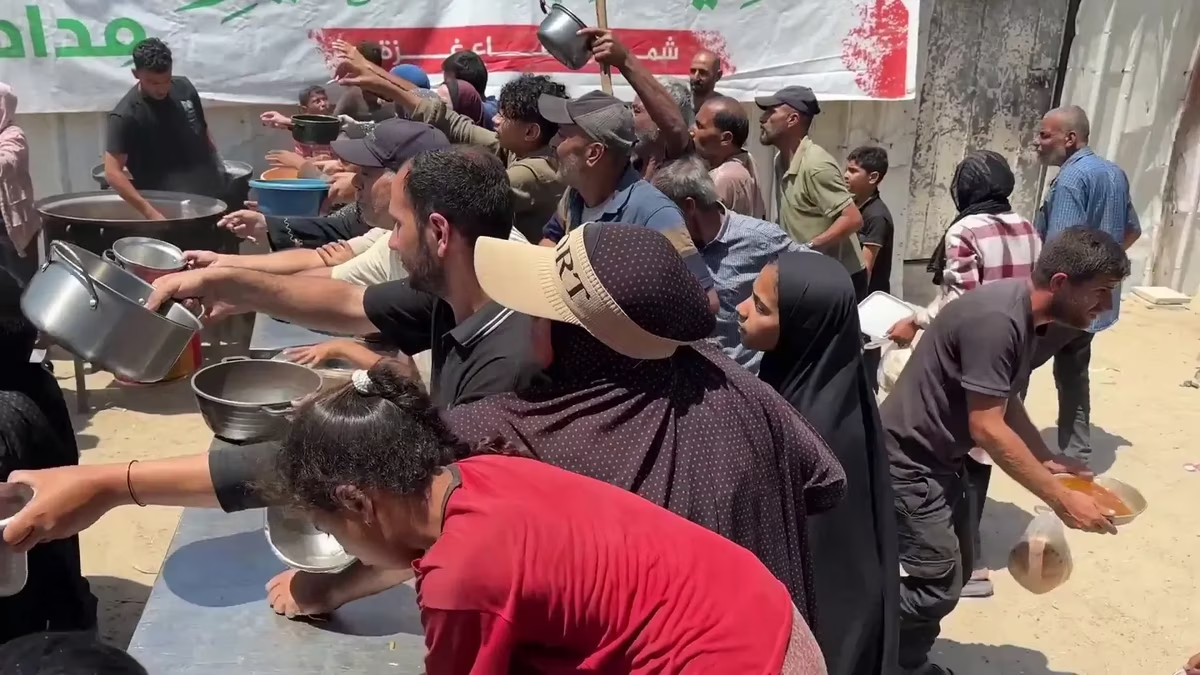







The humanitarian crisis in the Gaza Strip is escalating rapidly, with charitable kitchens becoming the last and only refuge for thousands of displaced families to secure a livelihood. This increasing reliance comes at a time when the region is experiencing a severe shortage in the flow of humanitarian aid and a significant decline in the activities of both international and local relief organizations.
Field sources from within the displacement camps west of Gaza City reported harsh scenes of queuing and jostling in front of food distribution points in the 'Ansar' camps. Citizens are forced to wait from the early hours of dawn, hoping to get a limited meal, amidst a growing sense of despair due to the severe shortage of basic food supplies.
For his part, the general director of the 'Ansar' camps, Abu Muhammad Al-Mansi, confirmed that the reduction in support for food programs has driven huge numbers of people towards the kitchens, making the pressure far exceed their operational capacity. Al-Mansi explained that these initiatives, which were designed to serve a narrow scope, have now become a destination for displaced people from multiple and distant geographical areas.
Al-Mansi pointed to diligent efforts to establish additional distribution points in an attempt to alleviate congestion and reduce the risks resulting from jostling. He issued an urgent appeal to the international community and donor institutions for the necessity of resuming full support for relief programs, describing the living conditions inside the camps as having reached an indescribable level of bitterness.
In a testimony reflecting the depth of the tragedy, a displaced woman spoke about her daily suffering, as her son was martyred and her husband suffers from amputation of his limbs, making her the sole breadwinner searching for food. She said that she stands for long hours in extended queues, but often returns to her tent 'empty-handed' without getting a piece of bread or a meal.
Other citizens described their conditions as extremely harsh, with one of them indicating that he waited for more than five continuous hours to get a small amount of food that was not enough to feed his family. The displaced demanded the necessity of opening the crossings and introducing basic needs regularly, stressing that what is currently available covers only a small part of the actual needs.
Field reports also observed large numbers of children and adolescents waiting in long queues amidst severe overcrowding. Observers warned of the danger of these children being injured as a result of jostling around large cooking pots and crowded distribution points, in the absence of sufficient organization due to the massive size of the crowds.
Displaced families spend most of their day on a difficult journey that begins with searching for water sources and ends with long waits in front of the kitchens, without a real guarantee of getting food in the end. This crisis remains likely to explode further unless immediate intervention is made to increase the pace of food aid and expand the scope of relief work in the northern and central parts of the Strip.
The kitchen, which used to serve a limited number of people, now receives displaced people from multiple areas, which has led to unprecedented overcrowding that exceeded our capacity.
شارك برأيك
Famine intensifies in Gaza: Charitable kitchens unable to meet the needs of thousands of displaced people