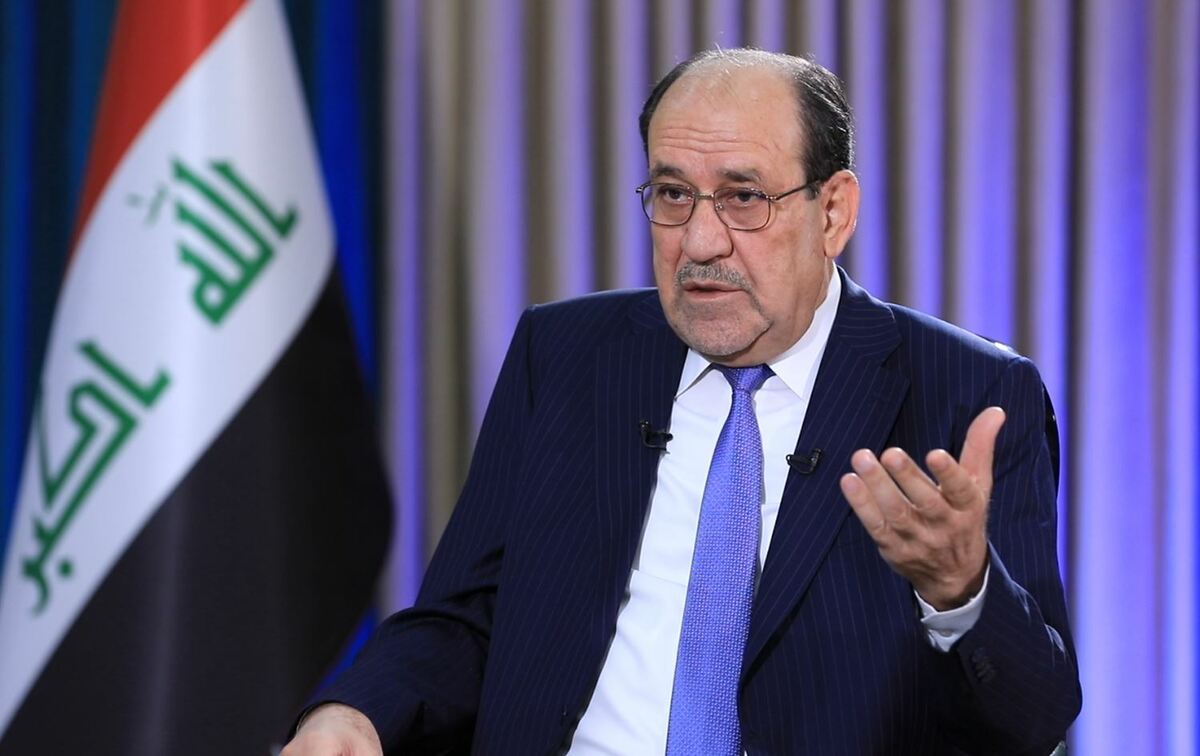








US President Donald Trump's warning about the potential return of Nouri al-Maliki to the premiership has once again shed light on a highly sensitive chapter in Iraqi political history. Maliki is not merely a name put forward in the race for power, but rather a symbol of an era characterized by sectarian polarization, state fragility, and the erosion of trust in the political process in post-American occupation Iraq.
Trump, known for his direct rhetoric, stated in a social media post that Iraq "slipped into poverty and chaos" during Maliki's rule, adding that the United States "will not provide any support" to Baghdad if the man returns to office. According to political analyses, the message was not directed solely at Maliki, but rather targeted the entire Iraqi political class, which continues to recycle the same faces more than two decades after the American invasion.
Nouri al-Maliki, leader of the Islamic Dawa Party, served as prime minister for two consecutive terms between 2006 and 2014. These years witnessed the entrenchment of the sectarian quota system, the expansion of security apparatus influence, and widespread marginalization of social components, particularly in Sunni areas. This period also saw the peak of sectarian violence, severe tensions with the Kurdistan Region, and ended with the sudden collapse of the military institution in the face of ISIS in the summer of 2014.
Today, Maliki's name returns to the forefront with the support of the Shiite "Coordination Framework," which holds parliamentary weight and advocates for his nomination under the pretext of "political and administrative experience." However, this experience, in the eyes of his critics, has been associated with the politicization of state institutions, the instrumentalization of the judiciary, and the exclusion of opponents, making Maliki a symbol of the failure of the national state project launched after 2003.
The last parliamentary elections, held last November to elect 329 representatives, did not break this cycle. Shiite alliances maintained their majority with 187 seats, while the electoral process seemed more like a mechanism for recycling elites than for renewing them. In this context, Iraqi President Abdul Latif Rashid's congratulation to Maliki on his nomination, and the call to "strengthen national partnership," raised questions about the gap between official rhetoric and the actual experience of governance.
Maliki was born in 1950 and joined the Dawa Party early on. He was forced to leave Iraq in the late 1970s after being sentenced to death under Saddam Hussein's regime. After the American invasion in 2003, he returned from exile as part of a political wave that rose under a system hastily crafted by Washington, based on the equation of quotas and sub-identities under the banner of "building democracy."
Analysts believe that Maliki's rise was not separate from American will. After 2006, Washington considered him a "manageable" partner in terms of security, even at the expense of internal balance. This support, according to those readings, was a narrow-minded pragmatic choice that ignored early indicators of an authoritarian tendency and contributed to deepening societal division, making the United States an indirect partner in the failures of that period.
The 2010 elections are considered a pivotal moment, when the "Iraqiya" list led by Ayad Allawi won the largest number of seats, but Maliki retained power with American and regional support. This circumvention of ballot box results dealt, in the eyes of many Iraqis, a severe blow to the credibility of the democratic path and reinforced the conviction that the final decision is not made within the country alone.
Trump's warning about Maliki's return presents a clear paradox: How can Washington today warn against a figure who was part of the engineering of his rise? Is it a belated acknowledgment of the failure of American policy in Iraq, or a selective use of political memory? Between these two interpretations, the question remains open about Iraq's ability to break the cycle of the past, or whether the balances of yesterday still hold the threads of the future.
شارك برأيك
Trump's Warning Against Maliki's Return: A Recall of the Era of Division and Failure in Post-Occupation Iraq