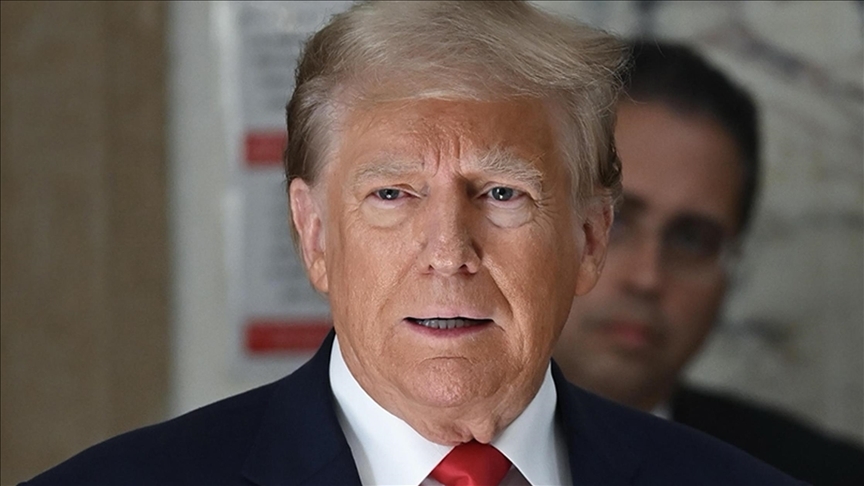







US President Donald Trump said on Monday, "We are going well in Gaza," and that "we may have something to talk about soon."
It's worth noting that three weeks ago, Trump predicted that a ceasefire would take effect "next week," meaning the first week of July, which coincided with Israeli Prime Minister Benjamin Netanyahu's visit to the White House, without an agreement being reached so far.
Speaking to reporters in the Oval Office, Trump described Israel's unilateral withdrawal from Gaza in 2005 as "one of the worst real estate deals ever," something he has not said about Trump in the past.
"They gave up the oceanfront property... and it was supposed to bring peace... but it did the opposite," Trump said.
Trump said on Sunday that he hoped to reach a ceasefire agreement in Gaza soon between Israel and the Palestinian Hamas movement.
"Gaza — we're talking, and hopefully we'll get it sorted out over the next week," Trump told reporters at Joint Base Andrews, Maryland.
Trump had previously announced that Israel had accepted the terms of a 60-day ceasefire in Gaza, as proposed by Qatar and Egypt to Hamas.
Hamas responded positively, stating that it was ready to move forward with negotiations to implement the ceasefire agreement and prisoner exchange.
Although Israel claimed that Hamas's amendments to the Qatari proposal were unacceptable, its delegation traveled to Doha for talks.
The negotiations in Doha focused on a temporary 60-day ceasefire, the release of 10 living Israeli prisoners and 18 deceased, and discussions on a permanent truce. While many issues were reportedly resolved, the main sticking point remained Israel's insistence on maintaining control of a buffer zone around Gaza.
Even if a ceasefire is reached, Netanyahu insists he intends to maintain the Israeli military presence in Rafah and establish a "concentration camp" as part of his goal of deporting Palestinians to other countries.
Former Israeli Prime Minister Ehud Olmert described the "city" as a concentration camp, drawing parallels between the Jewish concentration camps in Nazi Germany.
US and Israeli officials expressed optimism last week about the prospects for an imminent agreement, but negotiations have remained stalled over the past four days regarding the scope of the Israeli military withdrawal from Gaza.
Netanyahu, who met twice last week at the White House with Trump and his officials, insisted that the war cannot end until Hamas loses its military or civilian capabilities, and until Gaza no longer poses a threat to Israel. Netanyahu pledged to achieve these goals and secure the return of all 50 hostages, 20 of whom are believed to be alive, still being held in the Strip.
According to experts, Netanyahu is making public statements that an agreement is possible and imminent in order to relieve pressure on him, but this appears to be merely a delaying tactic.
Experts point out that Netanyahu's priority throughout his political career has been to remain in power and to use all available means to achieve this goal. Since the beginning of the current war on Gaza, following the attack on October 7, 2023, Netanyahu has viewed the war as an unmissable opportunity to overcome domestic opposition and the administration of former President Joe Biden, which opposed his formation of a far-right government and boycotted him until the war began in November 2023. Perhaps what the New York Times (Friday, July 11, 2025) said in a lengthy article titled "How Netanyahu is prolonging the war to stay in power," in which the newspaper relied on documents and statements by Netanyahu and Israeli officials, is further evidence of Netanyahu's adherence to this goal.
It is also clear that the ceasefire negotiations in Gaza are facing a "stumbling block" as a result of Israel's insistence on presenting a withdrawal map that would keep about 40 percent of the Strip under its military control. This is what Netanyahu hinted at when he denounced on Sunday (July 13) the criticism related to the ceasefire negotiations and the release of detainees in the Gaza Strip. In response to reports that his government rejected the deal, Netanyahu criticized the news channels, claiming that the international media is repeating Hamas propaganda, and that he accepted the deal; the deal of (US envoy) Steve Witkoff, and it was rejected by Hamas, which indicates that Netanyahu does not agree with Trump or Witkoff regarding the proximity of an agreement.
Israeli sources reported that Netanyahu was preventing a breakthrough before the Knesset recess, which runs from July 27 to October 19, 2025, as it is difficult to dissolve parliament during that period. The extreme right-wing wing of his coalition strongly opposes ending the war while Hamas remains in control of Gaza and has threatened to withdraw over the issue, leaving Netanyahu vulnerable to losing power.
شارك برأيك
Trump: Ceasefire talks between Israel and Hamas going "well"