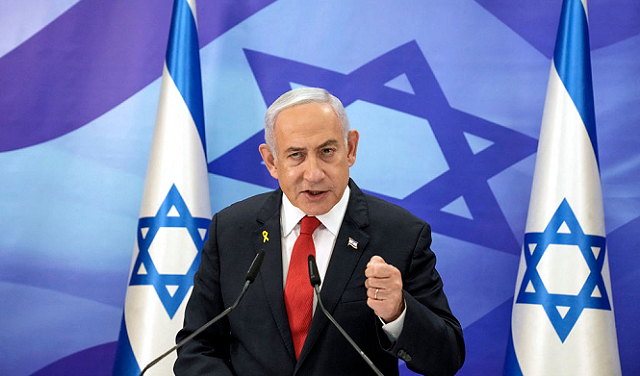







In a statement issued Sunday, The New York Times rejected Israeli Prime Minister Benjamin Netanyahu's denial of a lengthy report published on Friday, July 11, that he is prolonging the war on Gaza in order to remain in power, stressing that this response "does not refute the facts."
According to the newspaper's extensive report, Netanyahu prolonged the war on Gaza to serve his political goals of improving his domestic image and remaining in power.
Among the actions cited in the New York Times report were Netanyahu's cancellation of a Gaza truce that would have secured the release of at least 30 hostages, due to threats by far-right Finance Minister Bezalel Smotrich to bring down the government, and his obstruction of White House efforts to secure Israeli-Saudi normalization conditioned on an end to the Gaza war, over the opposition of far-right National Security Minister Itamar Ben-Gvir.
In a statement issued Saturday, Netanyahu's office claimed that The Times' coverage "defames Israel, its people, its brave soldiers, and its prime minister," praising Netanyahu's decisions after October 7, which he said led to "the greatest military victories in history."
In its response on Sunday, The Times stated that its investigation was based on "dozens of government records, military documents, and interviews with more than 110 officials in Israel, the United States, and the Arab world."
The newspaper said in its statement: "Our role as independent journalists is to report and expose vital information in the public interest, and to hold leaders accountable regardless of their party affiliation. The Prime Minister's Office statement does not refute the facts of this report." The newspaper emphasized that "what The Times investigation shows in detail is how prolonging the Gaza war helped Mr. Netanyahu remain in power."
In its report, The Times noted that Netanyahu's office "refused multiple interview requests and did not respond to a detailed list of findings" in the article.
According to the report, the Gaza truce proposal that Netanyahu canceled in April 2024 would have provided an opportunity to permanently end the war and release the remaining hostages, similar to the agreement currently under discussion in Doha.
The report added that moving forward with the agreement would have increased the chances of reaching a normalization agreement with Saudi Arabia, whose leadership had been secretly indicating its willingness to accelerate peace talks with Israel if the Gaza war ended.
The Times also touched on Netanyahu's "troubled relations with senior security officials," noting that he repeatedly rejected their assessments that growing internal rifts stemming from his government's controversial judicial reform were viewed by Israel's opponents as an invitation to attack in the run-up to the Hamas attack on October 7, 2023.
During the war, Netanyahu's suspicions of security officials grew so strong that he ordered generals to be screened before meeting him to ensure they were not recording the conversations, according to the report.
شارك برأيك
The New York Times insists that Netanyahu is prolonging the war to stay in power and rejects his denial.