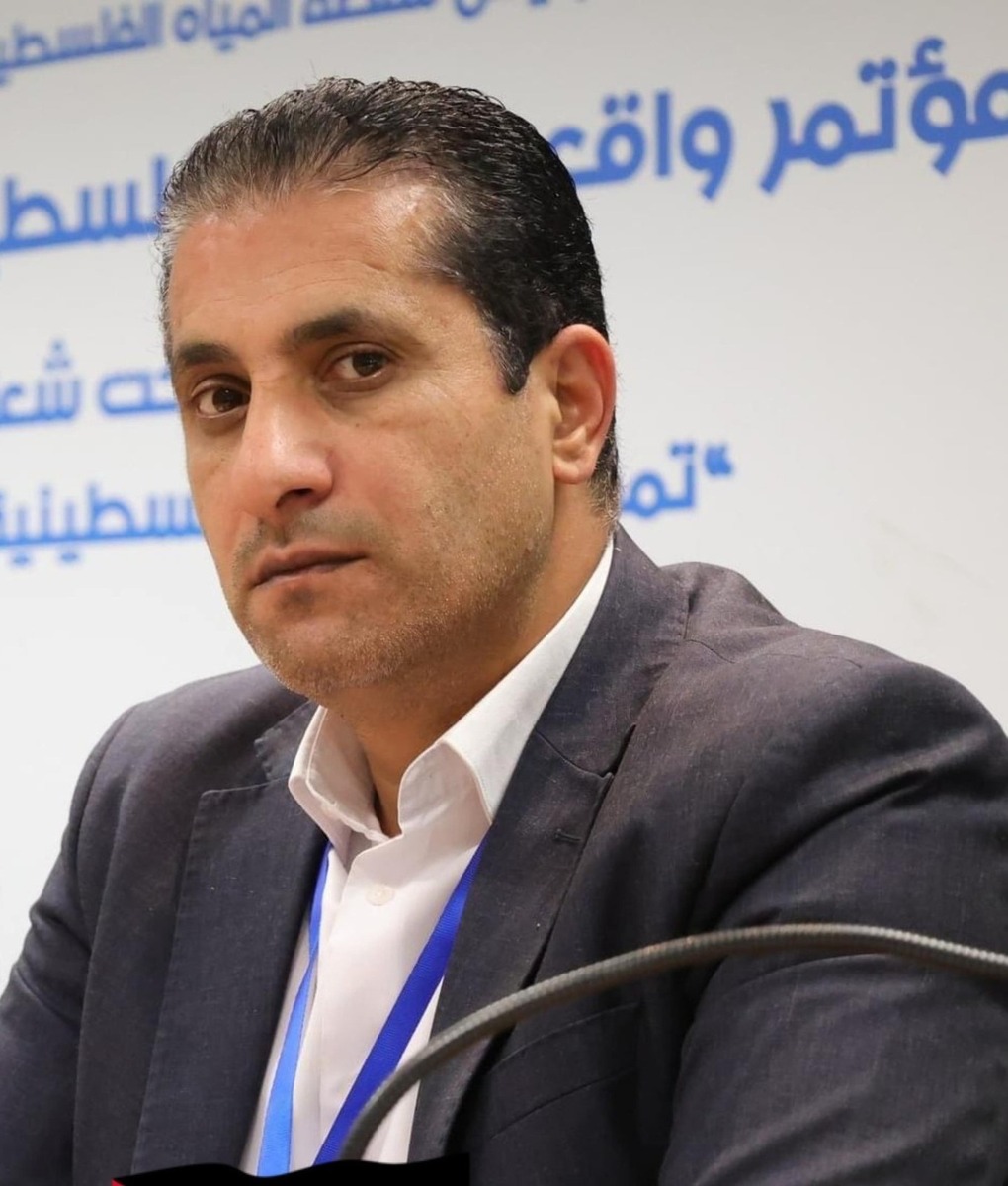







Amin Al-Hajj
With the smoke of aggression rising over Gaza, talk of a ceasefire is becoming more like a repetition of a tragic scene the region has been experiencing for decades. It's a term frequently repeated in the media and in politicians' speeches, but it's gone beyond being a humanitarian demand to halt the ongoing massacre. It's become a complex political game aimed at deferring the crisis rather than resolving it. It's controlled by international and regional players, while leaving Palestinians trapped between the hammer of genocide and the anvil of negotiation. Gaza is meant to remain an open wound, a bargaining chip.
Since the renewed aggression last March, initiatives and mediations have poured in, and the ceasefire file has turned into an arena for bargaining and deals, in which regional and international interests clash at the expense of the Palestinians' suffering. It has become clear that the ceasefire has lost its moral and humanitarian significance and has become a tool for political blackmail between parties with conflicting interests. An occupation that wants to impose its "security" conditions and achieve the greatest possible amount of its military "goals" or establish new deterrence equations, rejects any formula that constitutes a victory for the Palestinians, and treats the issues of prisoners and aid as bargaining chips, not a humanitarian entitlement. In contrast, the Palestinian resistance uses its legendary steadfastness to strengthen its position and impose new equations, to which the region is not accustomed, driven by a firm belief that the enormous human and material costs paid must inevitably open the door wide to the unprecedented extortion of rights.
Regional mediators, meanwhile, are playing a dual role, balancing pressure from the peoples supporting Gaza with the delicate calculations of capitals. They push for calm, but they also play along with American and Israeli red lines, amid a deep fear of a regional explosion that could spiral out of control.
The international position, as usual on the Palestinian issue, has also remained selective. While media and popular pressure to stop the war has escalated, political and military support for the aggression has been the only "constant." International law and its applications are subject to interests and alliances, and the West, in general, is exerting superficial pressure that does not touch on the essence of the crisis, nor address its roots. It is content with managing global anger to preserve its strategic interests. This is evident in its double standards, while the Palestinians remain the perpetual victim of the absence of justice and the rule of the law of the jungle.
The current situation reveals the fragility of the ceasefire concept itself. It is either imposed with an iron fist or accompanied by flimsy pledges that quickly collapse under the first test. After each round, Palestinians often discover that the reality remains unchanged: a renewed siege, conditional reconstruction, an increasingly uncertain political future, while the threat of renewed aggression remains only a matter of time.
The ongoing negotiations are characterized by ambiguity, inertia, and even evasion and buying time. The terms of a ceasefire are no longer limited to stopping the massacre alone, but include new security arrangements and perhaps charting Gaza's political future, or a plan for the day after. This makes the humanitarian tragedy an additional card used to pressure the Palestinians, without a real commitment to saving lives, reconstruction, or lifting the siege. Gaza is thus turning into a laboratory for deals that go beyond Palestinian geography: restructuring the authority, introducing international forces to monitor, opening the door to scenarios of displacement and internationalization, and perhaps imposing security and economic arrangements that deepen the separation between the West Bank and Gaza, legitimizing the reality of a long-term occupation.
As for the future, it hinges on a series of fateful questions: Will the agreement lead to reconstruction and the lifting of the blockade? Or is it merely a fragile truce paving the way for a new round of destruction? To date, there are no real guarantees for the Palestinians, only temporary promises that evaporate with the first crisis, given the absence of a political solution that restores rights to their rightful owners. This is especially true now that the ceasefire in Gaza has lost its humanitarian meaning and become hostage to regional and international calculations.
On the horizon, the Palestinian cause will remain a fire under the ashes, reigniting whenever some think it has been extinguished. This is because the Gaza tragedy is not an inevitable fate, but rather a direct result of transforming human suffering into numbers in the calculations of the big players. As for hope, it depends on the Palestinians' ability to transform this steadfastness into a comprehensive national project that redefines the cause beyond the game of nations, and restores the Palestinian person to consideration as a value and a right, not a negotiable commodity at the tables of the mean, or in the market of cheap deals.
شارك برأيك
Gaza ceasefire: a glimmer of hope or a political trap?