





Israel has moved from the stage of "conflict management" to the stage of "conflict resolution" to liquidate the Palestinian issue once and for all.
The war on Gaza has made the Palestinian issue a global focus, and Palestinian options are narrow but serious if invested properly.
The PLO must be expanded to include all forces, including Hamas and Islamic Jihad, under a unified political program focused on the two-state solution.
A unified transitional government must be formed that reflects the unity of the Palestinian cause and presents itself to the world as a unified voice for the Palestinian cause.
We must move towards "open and flexible international diplomacy" by expanding relations with all international and regional parties, not just the United States.
Activating the Saudi role after the Al-Aqsa flood hindered the liquidation of the Palestinian cause and the displacement of our people from Gaza and the West Bank.
Saudi Arabia has many pressure keys and power cards that it can activate, and it has not yet said its final word on the Palestinian issue.
Since the war on Gaza in October 2023, Palestinian demographics have risen to the forefront of Palestinian national security challenges. On the Israeli side, Palestinian demographics have become the most troubling issue, outweighing all other concerns and components.
Three foundations have been relied upon by the Zionist movement since its inception: the geography of historical Palestine, Palestinian demography, and the sale and marketing of a false narrative to the world, particularly the Western Atlantic. The central goal was "a land without a people, for a people without a land."
Today, 53% of the Palestinian population and 47% of the Jewish population live in historic Palestine. This reality greatly troubles the leaders of the Zionist dream. In an in-depth study by three Israeli researchers at Reichman University in Herzliya, prepared for the Israeli National Security Council in 2022, they described the demographic situation as a "revolution" that will undermine the Zionist dream later on. This is especially true with the decline in Jewish immigration to Palestine and the rise in negative migration from Israel abroad over the past two decades, especially after 2015. This trend deepened significantly with the onset of the judicial coup, and the situation worsened after October 7, 2023.
In contrast, we have witnessed a major shift in Israel's security doctrine, which was based primarily on the following formula: "More Jewish settlements no longer guarantee the individual and collective security of Israeli society!" This doctrine has collapsed in the Gaza Strip, the northern Galilee region along the Lebanese border, and in the West Bank as well. We have witnessed this time and time again.
Given this new situation and a number of military changes in modern warfare, such as the role of drones, ballistic missiles, and other weapons, it was necessary to reformulate a new security doctrine for the Zionist dream on Palestinian soil.
Three stages of looking at Palestinian demographics
First - From the Nakba of 1948 until the Kafr Qasim massacre of 1956.
Israel relied on a combination of: nibbling away at Palestinian geography, systematic ethnic cleansing to displace the indigenous Palestinian population, and selling a false Zionist narrative that was successfully marketed to global public opinion after World War II. During this period, 520 Palestinian towns were completely destroyed, their inhabitants displaced, their landmarks, trees, cemeteries, mosques, and churches destroyed. Not content with that, Israel expanded to occupy Palestinian territory not stipulated in the UN Partition Plan of November 29, 1947, annexing it to "Israel." The most prominent of these areas was the Galilee, extending to the Lebanese-Syrian border. It expanded into the Triangle region, Wadi Ara, and the city of Umm al-Fahm.
Even after the establishment of the State of Israel, the Israeli military continued to expel the population. In 1951, it expelled the residents of Iqrit, Kafr Baram, al-Aramshi, and Sahmata under security pretexts. Israel pledged to return them once the situation calmed down, based on a Supreme Court ruling, but to no avail to this day. Israel committed dozens of massacres after its establishment to intimidate the Palestinians and push them to emigrate, whether by force or by choice. It confiscated the remaining Arab lands in the Galilee, the Triangle, and the coast. Ben-Gurion concluded that a massive expulsion of Arabs was necessary, as the remaining Arabs had become a nuisance to the Israeli establishment. A pretext was needed, and so the opportunity arose to prepare for the tripartite aggression (Israeli, French, and British) against Egypt in 1956, in response to Gamal Abdel Nasser's nationalization of the Suez Canal. Israel exploited this security situation to commit the horrific Kafr Qasim massacre, executing 49 citizens in cold blood and with a pre-arranged decision, according to the court protocols that followed the massacre.
Following the international scandal of the Kafr Qasim massacre, world public opinion rose up against Israel and increased international scrutiny of the massacres, genocide, and ethnic cleansing, especially with the decline of the role and influence of Britain and France in the region, and the significant rise of the American role.
In this era, the balance between geography, demographics, and narrative selling was balanced and equal, with no one superior to the other.
Second - from 1956 to 2015.
After the Kafr Qasim massacre, Israel moved from resolving the national issue to managing the Israeli-Palestinian conflict. It began to downplay Palestinian demographics, while simultaneously increasing its focus on Palestinian geography and continuing to sell a false narrative to gain international legitimacy for its position and policies. During this period, we witnessed the occupation of the West Bank, the Gaza Strip, and Jerusalem following the 1967 aggression, and the beginning of the establishment of Jewish settlements. This was the largest land grabbing operation of that period, even within the 1948 borders. Projects such as the Judaization of the Galilee and the Negev were renewed, leading to the declaration of a general strike on Land Day, March 30, 1976, followed by clashes, martyrs, and injuries in all Palestinian cities and villages within the Green Line. The number of settlers in the West Bank reached 122,000 in 1982, and now stands at approximately 800,000.
The security doctrine during this period was based primarily on "Palestinian geography" and less on Palestinian demographics.
Third - 2015-2025.
In the last decade, major changes have taken place, including at the regional, internal Israeli, and international levels, which have led to the following conclusions:
1. Israel must move from the stage of managing the conflict to the stage of resolving the conflict and liquidating the Palestinian issue.
2. The way to do this is through reaching settlements with the regional axes, not with the Palestinians.
3. Any settlement must be based on complete Israeli hegemony over the entire region.
4. Israel will not allow any axis to compete with it militarily and security-wise in the region, not Iran, not Turkey, not Egypt, and not Saudi Arabia. Israel wants to turn all of them into failed states that will later engage in what has been called the "Abrahamic Peace."
During this period, Israel entered a major political impasse, with five elections in six years, a judicial coup, unprecedented internal divisions, and an economic crisis. The 2021 Battle of Sword of Jerusalem, followed by the Al-Aqsa Intifada, shattered prevailing security and political assumptions and taught Israeli society new things.
The most important Israeli conclusion is that it is impossible to liquidate the Palestinian issue by relying solely on geographical annexation and the establishment of settlements. There must be a way out, and that way out is to deal with Palestinian demographics and employ methods of genocide, displacement, ethnic cleansing, subjugation, displacement, and every means that would eliminate the Palestinian people and bury anyone who raises their voice to demand political solutions that guarantee the right to self-determination and the establishment of an independent state.
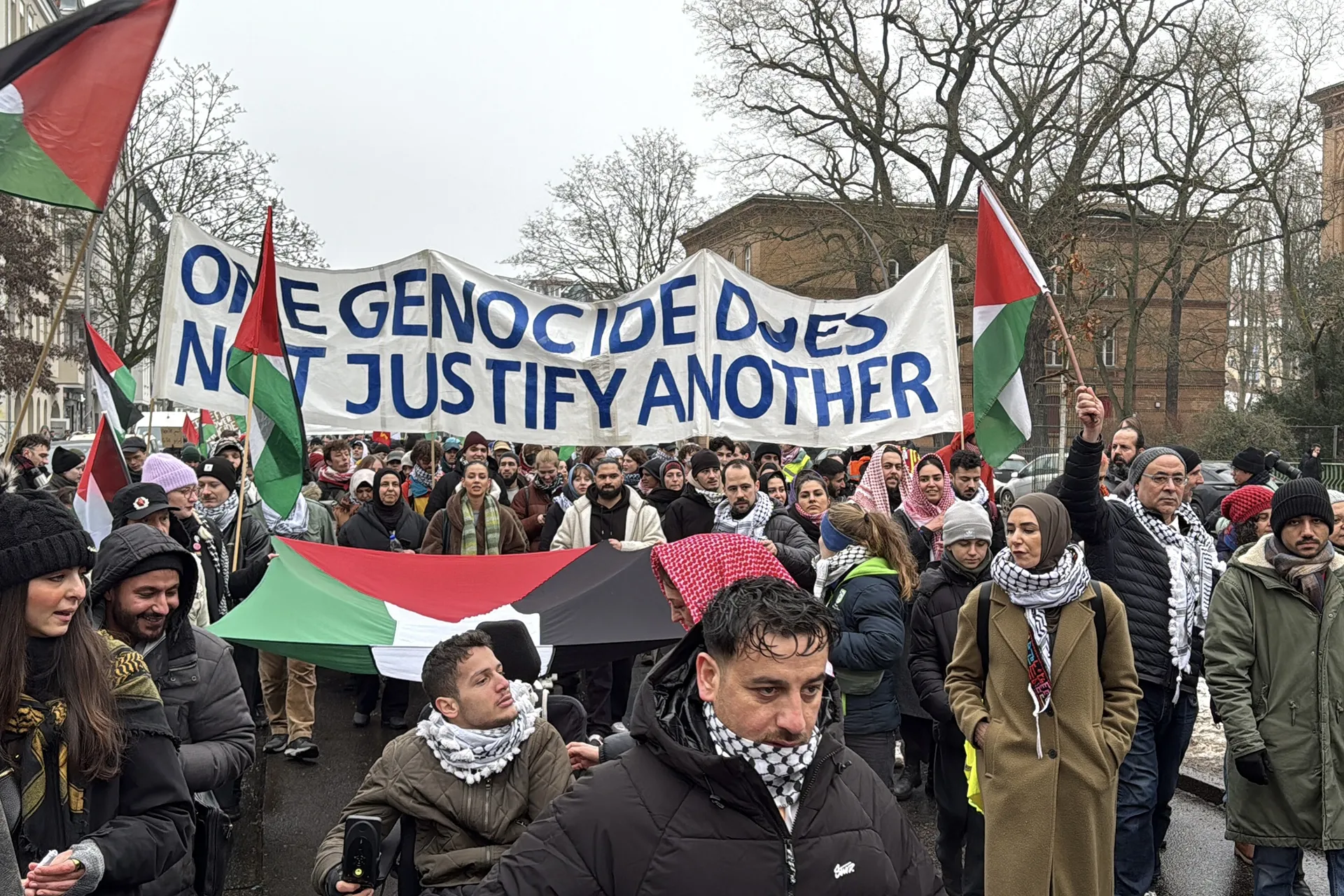
The genocide began in Gaza, spread to the West Bank and Jerusalem, and will continue to spread throughout the country and to the diaspora. The goal is for the Palestinians to meet the same fate as the Native Americans in America and Canada.
Adherence to the two-state solution undermines the Zionist dream
Is there a Palestinian strategy to confront this demographic threat?
In my opinion, and based on my understanding of the profound changes within Israeli society after October 7, I recommend examining the following recommendations:
1. Adherence to the two-state solution is the most influential factor in undermining the Zionist dream. Establishing any Palestinian entity within Palestinian geography (the West Bank, Gaza, and Jerusalem) would mark the beginning of the countdown to the Zionist dream.
2. Deepening measures that would enhance geographical, economic, and educational unity between the West Bank, Jerusalem, and the Gaza Strip.
3. Deepening the process of establishing community support institutions, local authorities, and associations that oversee agricultural affairs, as well as international and Arab partnerships for in-kind production projects. All efforts should contribute to strengthening Palestinian citizens' attachment to their land, defending it, and committing to preserving it.
4. Strengthening the internal unity of the Palestinian people, and uniting all Palestinian factions under the umbrella of the Palestine Liberation Organization, based on the two-state solution agenda and international legitimacy.
5. Adopting open international diplomacy to recognize the Palestinian state and engaging with all international axes without exception to support Palestinian rights.
6. Flexibility and careful handling of seismic changes in the region, most importantly ensuring that Palestine does not become a partner or party to any of the axes—neither Turkish, Iranian, or Saudi—but rather influences all axes in favor of the Palestinian cause. Prioritizing the Palestinian agenda over any ideological or factional agenda.
Israel today suffers not only from negative migration, but also from the identity of those who emigrate from Israel abroad. Most studies indicate that most of these people are young, unmarried people, high-tech professionals, and from a brain drain that has expanded significantly since October 7. These factors underscore the depth of Israeli anxiety about the demographic balance in historic Palestine. In contrast, the indigenous Palestinian people are attached to their land, refusing to emigrate despite the genocide, and growing more resilient despite everything they endure.
Palestinian options facing Israeli strategies
Israel, led by Netanyahu and his right-wing coalition, has reached new conclusions following the war on Gaza regarding its approach to the Palestinian issue. The most prominent conclusion is that Israel has transitioned from the phase of "conflict management" to the phase of "conflict resolution," with the goal of eliminating the Palestinian issue once and for all.
There are five strategic steps that Israel is adopting in this context:
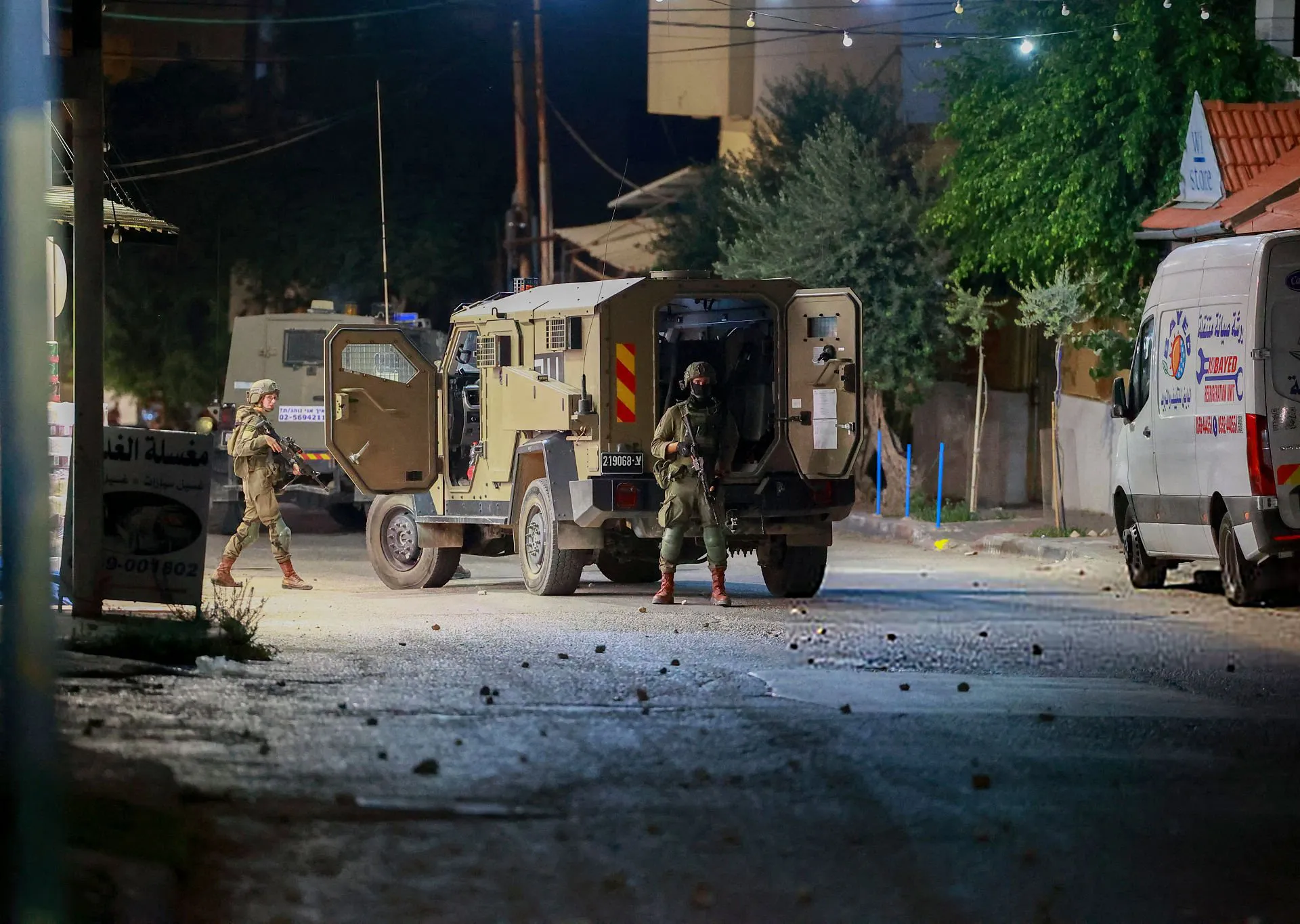
First: Erasing the borders between Areas A, B, and C in the West Bank, and extending Israeli military influence over all areas.
Second: Focus on Area C, which contains the majority of settlers and a limited number of Palestinians, making it easier for Israeli control to be imposed over it.
Third: Facilitating the migration of Palestinians, whether by encouraging them to move between areas of the West Bank or by displacing them outside of it if the opportunity arises.
Fourth: The incoming Trump administration will trade the annexation of parts of the West Bank, especially Area C, to Israel in exchange for any solution in the region.
Fifth: A complete shift to the priority of confronting Palestinian demographics as a threat to Israeli national security.
Implementing this plan requires the elimination of any Palestinian political entity, and this is what Israel seeks to achieve by escalating its security and military policies in the West Bank after the end of the war on Gaza.
The war on Gaza has made the Palestinian issue a global focus. In this complex landscape, the options available to the Palestinian Authority are limited, but they are serious if they are properly utilized.
The first of these options is to expand the Palestine Liberation Organization to include all forces, including Hamas and Islamic Jihad, under a unified political program focused on the two-state solution and the establishment of a Palestinian state within the 1967 borders, including the West Bank, Gaza Strip, and East Jerusalem.
The second option is to form a unified transitional government that reflects the unity of the Palestinian cause and presents itself to the world as a unified voice for the Palestinian cause. If it is not possible to form a government in the occupied territories, a "government in exile" could be established as a strategic option to pressure global public opinion, capitalizing on the momentum gained by the Palestinian narrative after the recent war on Gaza.
The third option is to shift to "open and flexible international diplomacy," by expanding relations with all international and regional parties, not just the American track, and engaging with international parties and regional axes, regardless of their proximity or distance to the Palestinian cause and the national rights of the Palestinian people.
Strengthening the Palestinian presence before the European Union
In freedom and independence, there is a need to strengthen the Palestinian presence before the European Union, whose position is showing signs of divergence from that of the United States, as well as Russia, China, and Arab and Islamic countries.
The fourth option, in the regional context, is for the Palestinians to strengthen cooperation with influential Arab countries, especially Saudi Arabia, given its historical, political, religious, and economic standing. The Kingdom of Saudi Arabia is key to any regional project, especially in light of the growing interest of the Turkish and Qatari axis in gas pipelines from the Middle East to Europe. Moreover, Saudi Arabia is setting a key condition for any US regional settlement: the necessity of finding a just solution to the Palestinian issue.
Regarding the regional situation following the Syrian crisis, the decline of the role of the resistance axis led by Iran and Hezbollah, coupled with the rise of the Turkish-Qatari axis, and the benefits Israel and the United States have gained from the new situation.
We must beware that Israel will seek to calm the Lebanese and Gaza fronts in the coming period to focus on the West Bank and Iran via Syria. Israel fears the "domino syndrome" that could spread from Syria to Jordan and the West Bank, prompting it to escalate its security measures in the West Bank.
The Palestinians' success in unifying their ranks and prioritizing the national agenda over any regional, factional, or ideological considerations will strengthen the Palestinian position and prevent Israel from achieving its goals. Palestinians are not required to follow or be part of any of the regional axes. Rather, they must engage with these axes based on how closely each axis supports Palestinian rights, while ensuring the preservation of the independence of Palestinian decision-making.
The Kingdom of Saudi Arabia and the Palestinian issue!!
There is no doubt that the Al-Aqsa Intifada has exposed several prevalent assumptions in the Middle East. It has removed the illusion that peaceful solutions can only come through negotiations and avoiding military resistance. It has also removed the illusion that the United States can be an honest mediator, and it has become clear that it is an active party covering for Israel. It has also removed the illusion that the Palestinian issue can be marginalized and bypassed, and that it can be compensated for by regional peace or even more ambiguous economic peace.
The Kingdom of Saudi Arabia's regional and international economic, political and religious weight carries great importance, and it is considered the most influential regional state.
In recent years, the Kingdom of Saudi Arabia has sought to transform its economic wealth in the oil and energy sectors on several levels, the most important of which are:
First, transforming the Kingdom into a modern, civilized place for the well-being of Saudis, especially the youth, and a capital for global economic investment, attracting investors. Developing major economic sectors, rather than merely relying on oil, is crucial, especially through developing tourism, technology, and artificial intelligence.
Second, the young leadership in Saudi Arabia is well-versed in the regional and international landscape. On the one hand, it doesn't want to place all its cards in the hands of the West, as it has for many years, and on the other hand, it doesn't want to boycott the West. It has begun to embrace multilateralism in its economic relations, from China to Russia, the United States, and Europe. It has joined the BRICS group and begun to adopt more flexible positions toward all parties.
Third, the Kingdom is aware of the importance of its elevated geopolitical position and the political significance of the surrounding waterways. It is also aware of the importance of its position in global trade, and is aware that activating a significant role requires a great deal of security stability and resolving hotspot issues through diplomatic means. We have seen this in the Yemen and Syria crises, as well as in the Saudi-Iranian rapprochement mediated by China.
Fourth, the Kingdom seeks to deepen its pivotal role in leading the Islamic world, particularly the Sunni world, which requires it to adopt broad, consensual positions.
The historical Saudi vision for resolving the Palestinian issue
In light of all this, the Saudi position on the Palestinian issue has gained significant momentum, based on the principle that "the key to regional calm" begins with a just solution to the Palestinian issue, passing through three critical stages:
First, the Kingdom's historical position, which sees the importance of resolving the Palestinian issue with a just solution based on an independent state within the 1967 borders and with Jerusalem as its capital.
Second, successive Saudi initiatives, the most recent of which was in 2002, when the Arab League adopted a historic resolution to the Palestinian-Israeli conflict in exchange for recognition of Israel as a normal, modest state in the Middle East.
Third, after the Al-Aqsa Intifada, Saudi Arabia's role was unprecedentedly activated in support of Palestinian rights, beginning with its rejection of normalization with Israel before the establishment of an independent Palestinian state and the cessation of aggression against Gaza. This stance, objectively speaking, hindered the liquidation of the Palestinian cause and the displacement of our people in Gaza and the West Bank.
Saudi Arabia has many levers of influence and leverage that it can deploy, but it has yet to say its final word on the Palestinian cause and the Palestinian people.
With Trump's election, Saudi Arabia has put forward three main points of contention in its relationship with the Trump administration: the Kingdom is determined to establish a Saudi nuclear reactor for civilian purposes despite Israeli opposition; the Kingdom is determined to maintain the mutual defense agreement with the United States, similar to the agreement with Israel; and the Kingdom is determined that the key to regional stability begins with the establishment of a Palestinian state in accordance with international law.
This position of the Kingdom will ultimately lead to the reduction of Israeli hegemony and the establishment of a stable, multipolar, and balanced region comprised of Saudi Arabia, Iran, Egypt, Turkey, and Israel. Such a region would necessarily undermine the unilateral hegemony that Israel dreams of.
The Kingdom acted wisely before the flood by not rushing into gratuitous normalization with Israel. It was also correct when it pursued rapprochement with the Iranian axis.
................
The Palestinians' success in unifying their ranks and prioritizing the national agenda over any regional, factional, or ideological considerations will strengthen the Palestinian position and prevent Israel from achieving its goals. Palestinians are not required to follow any of the regional axes or be part of them.

الثّلاثاء 20 مايو 2025 9:46 صباحًا - بتوقيت القدس
Demographic Challenges and the Regional Landscape: A Policy Paper for Decision-Makers in Palestine

شارك برأيك
Demographic Challenges and the Regional Landscape: A Policy Paper for Decision-Makers in Palestine