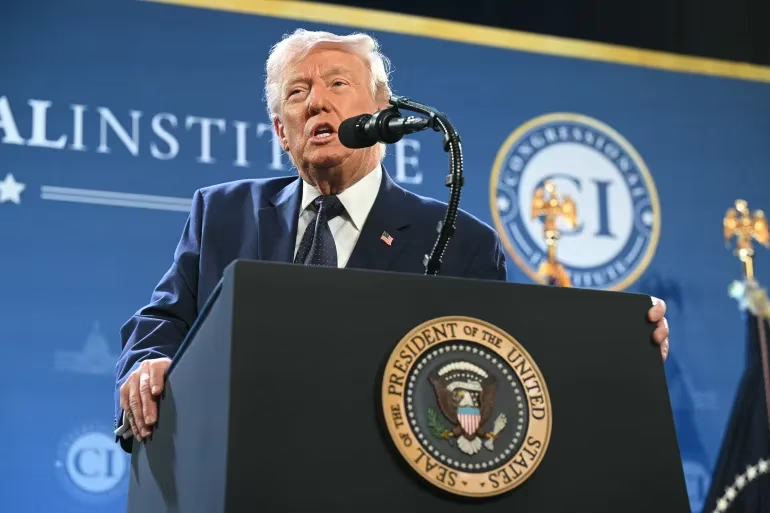
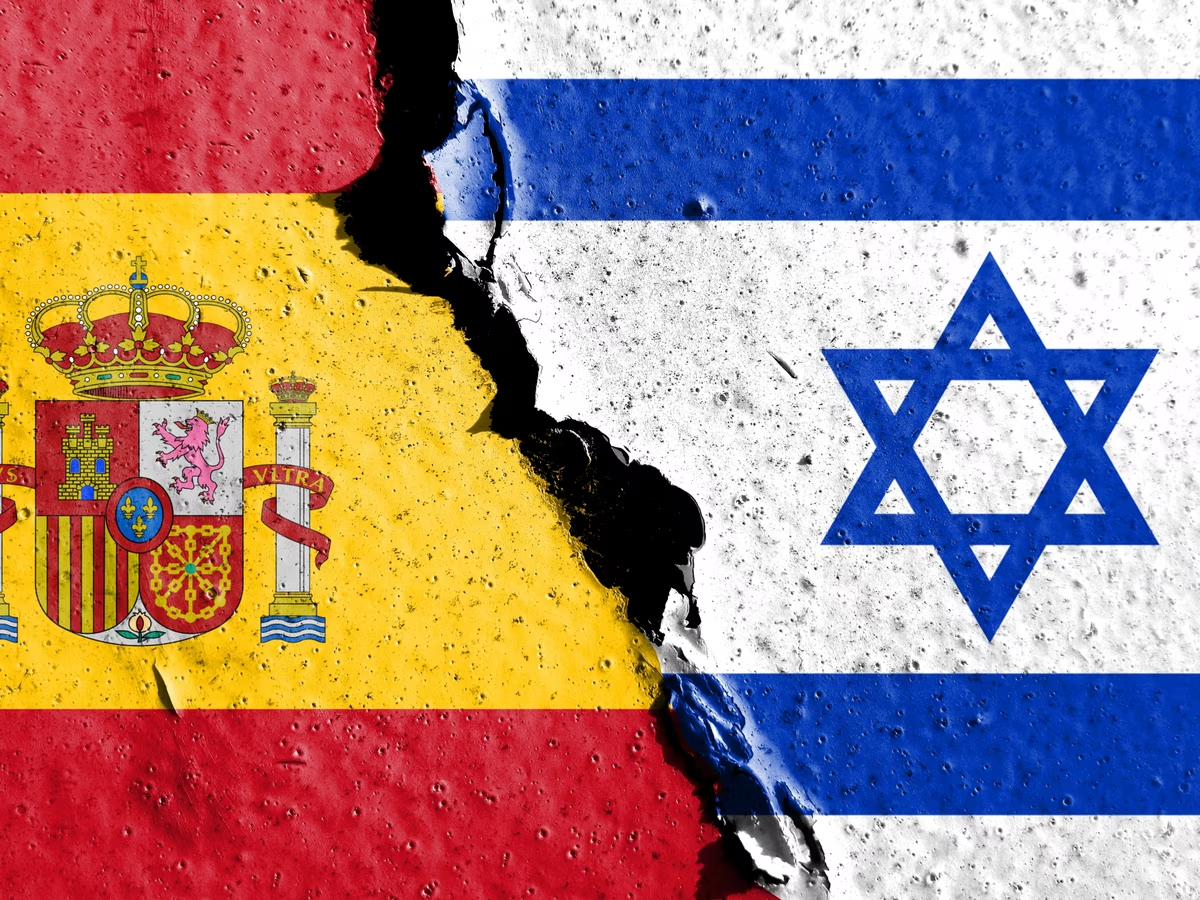
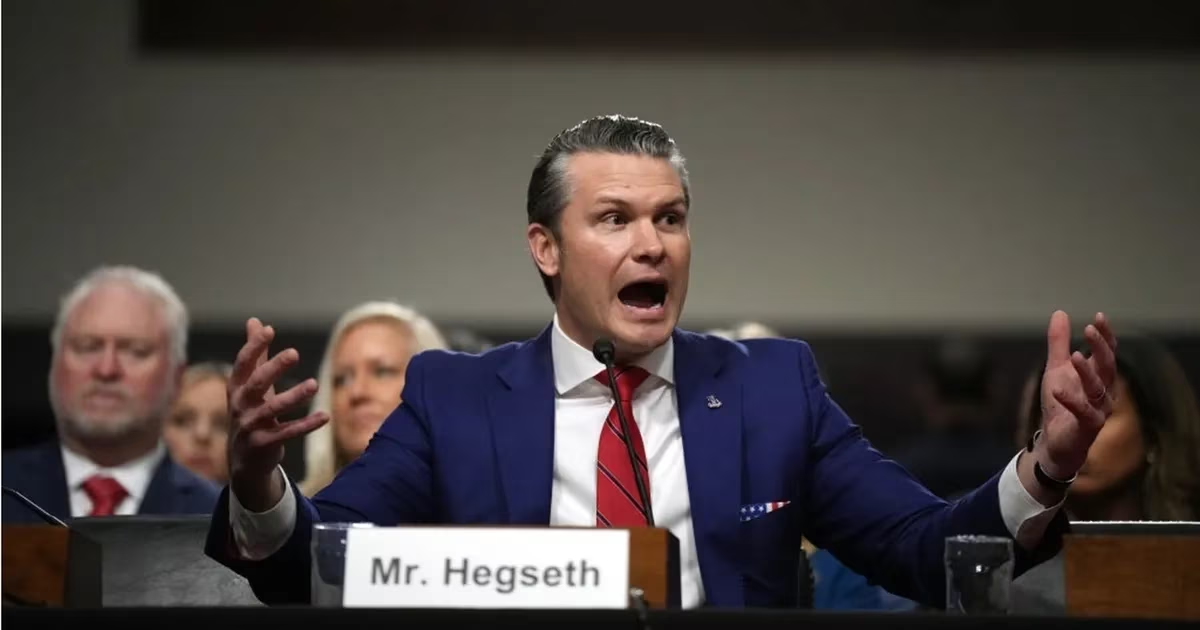
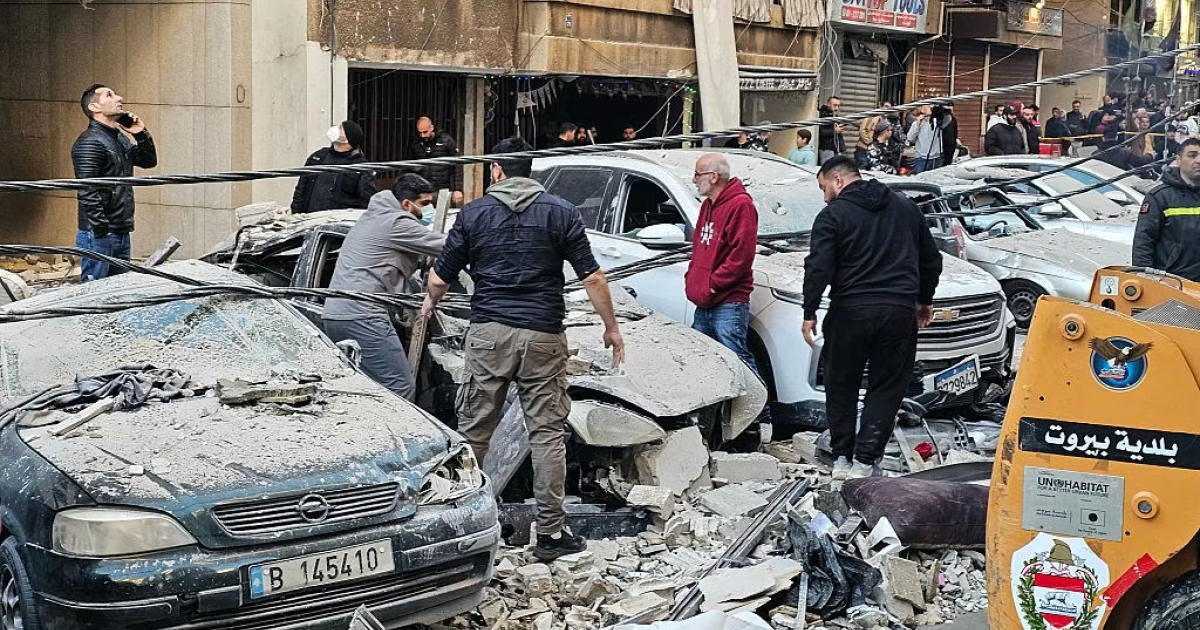
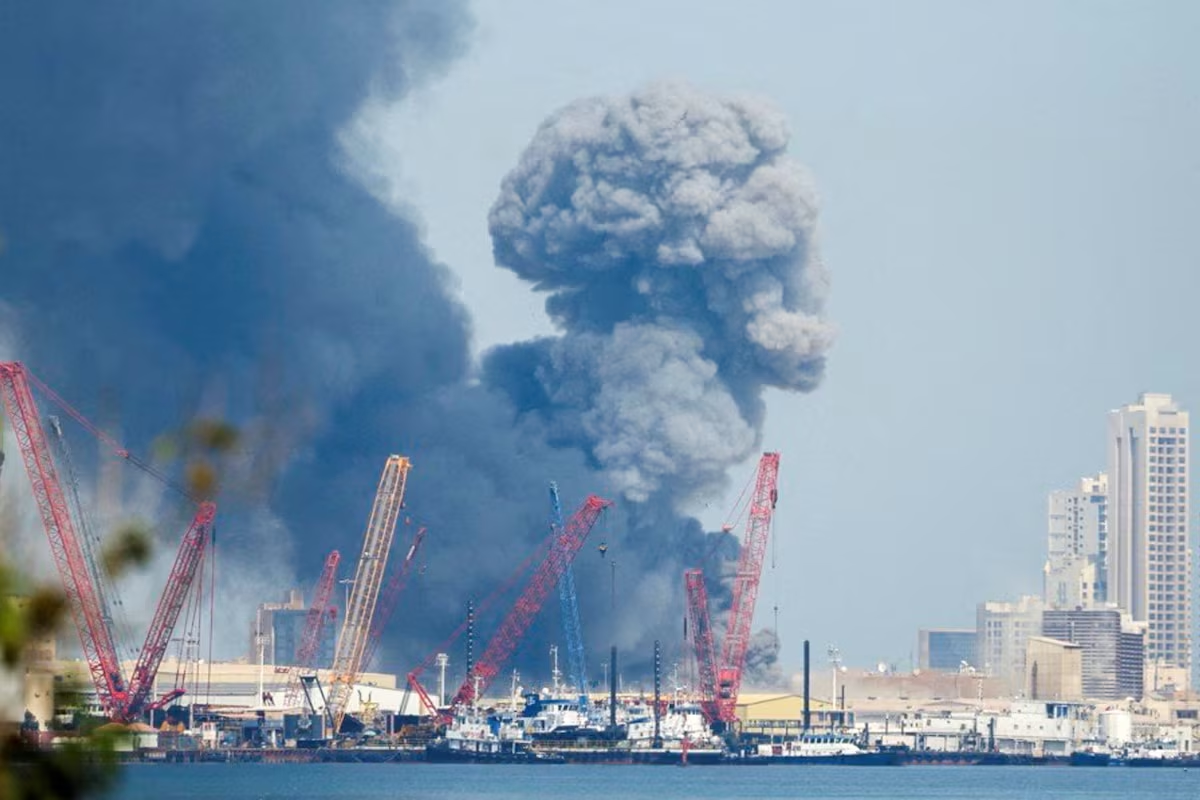
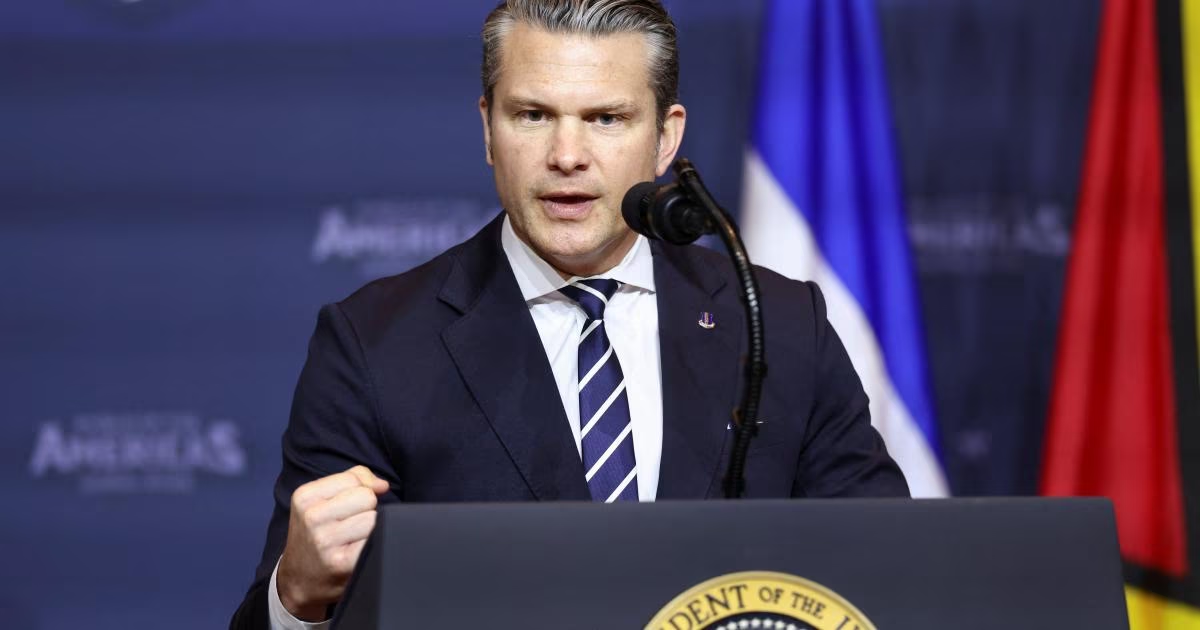
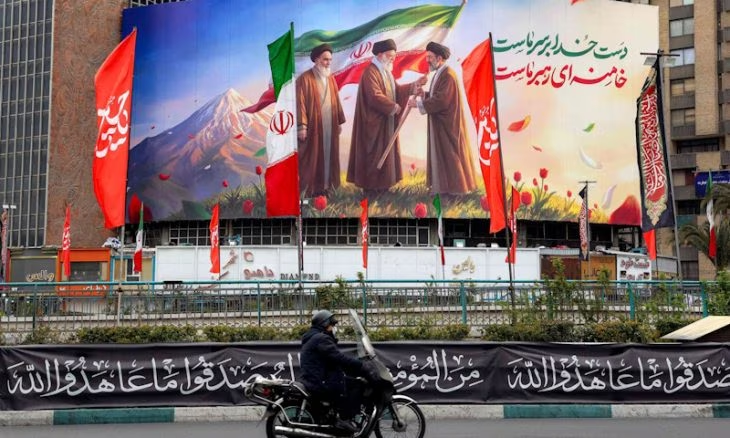
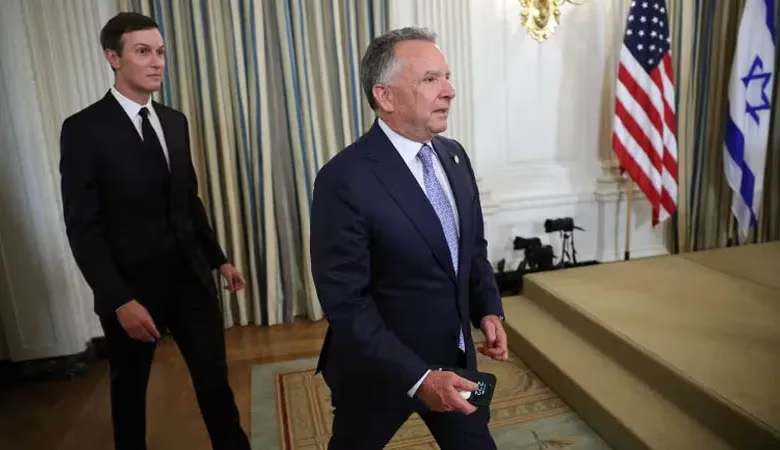
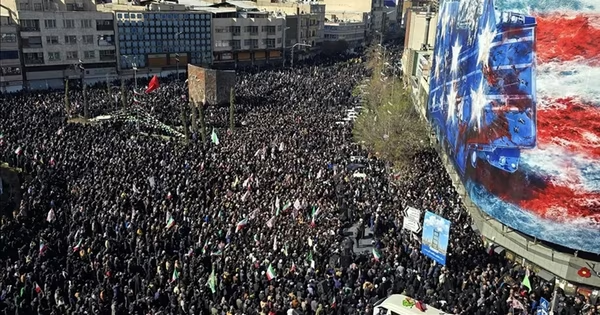
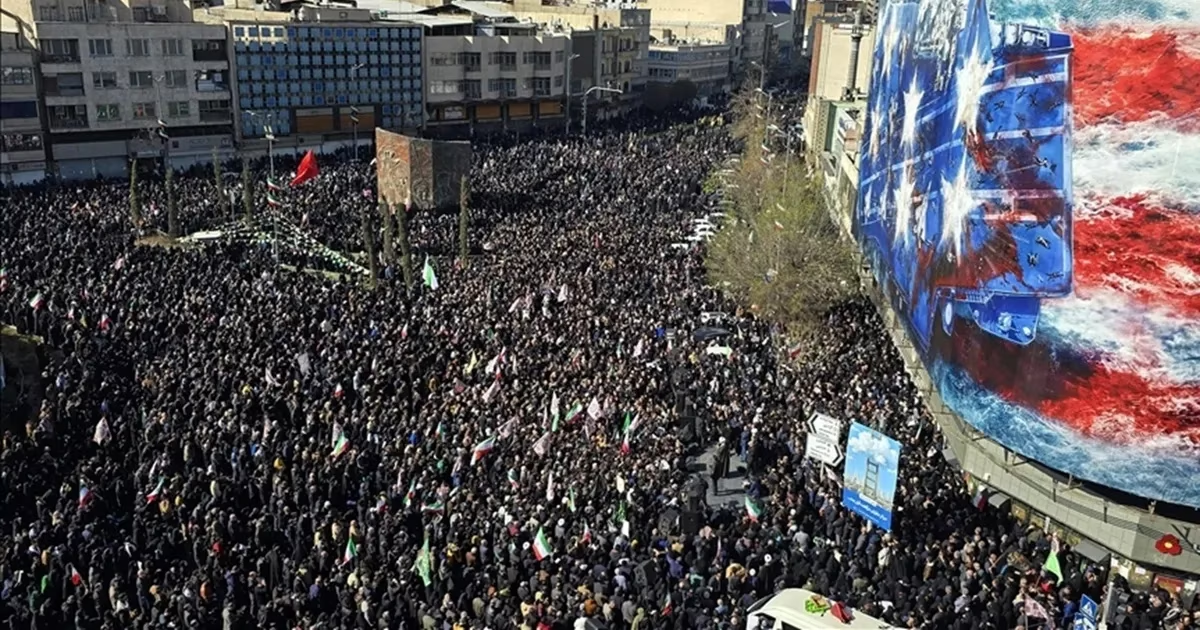
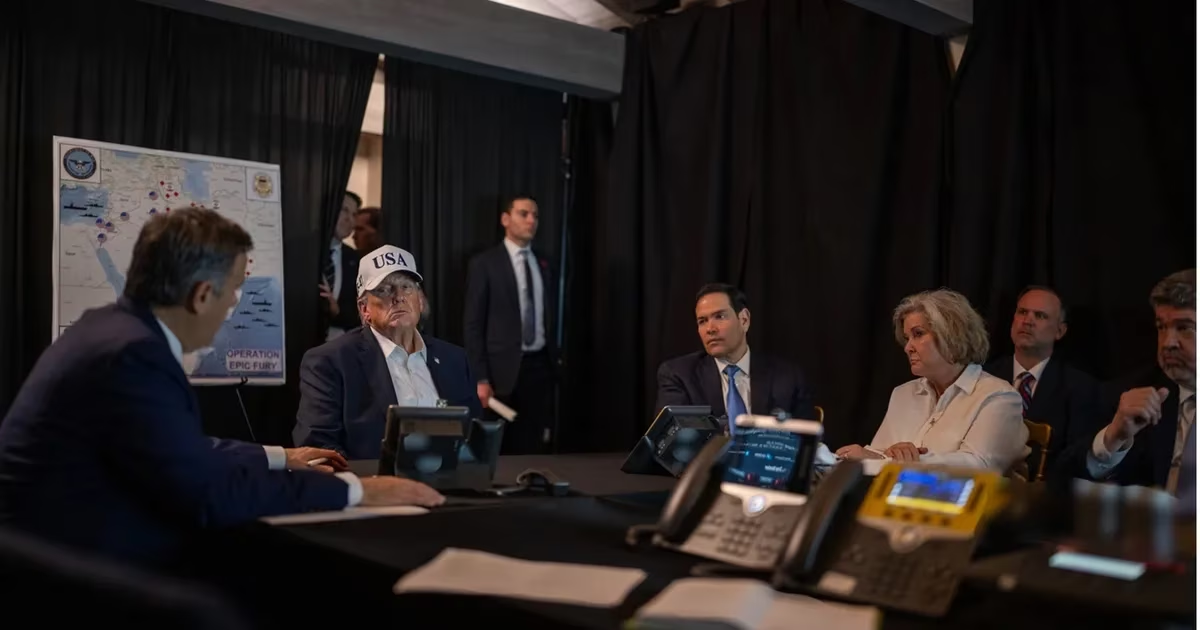
Dr. Thaer Abu Ras: It seems that the Americans have backed down from the option of overthrowing the Iranian regime, which is something Israel does not want, while Tehran will seek to change its tactics. Dr. Khaled Al-Ezzi: Clear confusion in Trump's statements, and no observer can imagine their contradictory implications and the multiple signals they carry. Moein Odeh: The impact of the first strike was significant on Trump's mood, but in the end, Iran may consider the regime's survival a victory for it, in addition to striking Israeli and American sites. Dr. Abdel Wahab Al-Qassab: Trump would not have spoken with such a high degree of confidence had he not been convinced of the decline in Iran's resilience capabilities, but the scene is still open to several possibilities. Dr. Khalil Jahshan: Trump speaks as if he is an emperor dictating to countries what they should do, and this policy has harmed America's relations even with its closest allies in Europe. Dr. Mohamed Najib Bou Taleb: Trump is known for relying on provocation, incitement, and even lies, and there is a tendency towards a dictatorship based on individual decision-making and the behavior of a chameleon-like political gang. Exclusive to "Al-Quds" dot com - US President Donald Trump's multiple and varied speeches and statements continue, carrying arrogance and contradiction, regarding the ongoing war on Iran. He sometimes escalates, as if he is an emperor who wants to dictate to Iran and other countries what to do, while at other times he delivers a more moderate speech, indicating that he is still in a state of confusion and does not yet realize what the final outcome of this war will be. Writers and observers for "Al-Quds" believe that the impact of the first strike was significant on the US President's mood, meaning that the ability of the United States and Israel to eliminate senior leaders in Iran clearly raised the pace of American statements in general, and Trump's statements in particular, noting at the same time that this clearly reveals the American position based on a fanatical and anti-Islam background and the countries of the region, in addition to a tendency towards a political dictatorship based on individual decision-making. Trump in a state of confusion and scenarios multiply. Dr. Thaer Abu Ras, a researcher at the Regional Thinking Forum and an expert on American affairs, confirms that US President Donald Trump's statements during the war on Iran were numerous, and many of them were contradictory. He points out that he sometimes escalates his rhetoric, as when he says he wants Iran to surrender, which is a clear type of escalation, and he used to say that he wanted to participate in choosing the Iranian leader, then he came back and said that he did not care much if he was a democratic figure, and even if he was a cleric, that would be acceptable to him, provided that he dealt with the United States and Israel in good faith. Abu Ras believes: Trump is still in a state of confusion and does not yet realize what the final outcome of this war will be. At every moment, and depending on whether he wants to escalate or de-escalate his rhetoric or deliver a more moderate speech, he seems to have ready statements for each of these situations. Abu Ras points to several scenarios from the perspective of the United States. The first scenario, which is the best for it, is that the intensive strikes carried out by the United States and Israel will practically push the Iranian regime to raise the white flag, whether it announces this publicly or sends a message through intermediaries to the United States stating its readiness to fully concede on the nuclear project, as well as on the ballistic missile program, and seek a quick agreement with Washington. As for the second scenario, Abu Ras says: It is based on Iran continuing the confrontation, but at the same time sending a message to the Americans that it is ready to reach an agreement on the nuclear file at least, meaning a return to the situation that existed before February 28, i.e., before the start of the Israeli-American strike. As for the third scenario, according to Abu Ras, which is an uncomfortable scenario for the United States, it is that the Iranians continue this war for several additional weeks, benefiting from the transformations taking place in the energy market, and from the growing global public opinion opposing this war, in the hope that after a week or two, pressures will practically push Donald Trump to back down from this military strike without achieving a major strategic achievement or breakthrough. Abu Ras believes that the fourth scenario will later reveal that Iran has prepared itself for a long-term war of attrition, and when we say long-term, we mean a war that may last for months, so that Iran presents a new weapon or a new military tactic every day or every few days that was not in the calculations of the United States until now. He adds: Everything remains subject to change, but current estimates indicate that the situation falls between the second and third scenarios, as no one believes that this war will extend for a very long time, and at the same time, no one sees the option of Iranian surrender as a realistic option at this moment. Abu Ras says: We are facing different Iranian and American desires; the Americans, so far, have backed down from the option of overthrowing the regime, which is something Israel does not want, while it seems that the Iranians will seek to change their tactics. Instead of relying on intensive missiles against their opponents, they may resort to other strategic steps, such as closing the Strait of Hormuz, or trying to mobilize Shiite minorities in the Arab world, in the hope that these steps will lead to counter-pressures on President Trump. He explained that the United States has lost a large part of its missile inventory in recent days, especially since it was forced to distribute it to several regions around the world, and this equipment needs a period of time to be replenished. Abu Ras points out that there are many American bases around the world that need sufficient missile stockpiles, as the United States cannot keep its bases near China without missile stockpiles. If Chinese intelligence knew about this, it might encourage China to take a step such as occupying Taiwan, especially since Taiwan is, after all, strategically more important than Iran. Margin for Iranian movement in different directions. Dr. Khaled Al-Ezzi, a Lebanese expert in international relations and foreign policy, confirms that the American attack on Iran indicates clear confusion in the statements made by the US President, whose contradictory implications and multiple signals cannot be imagined by any observer. Al-Ezzi says: These statements leave a margin for the Iranian regime to move in different directions, right and left, because the US President has not clearly stated that he wants to uproot the regime, nor has he stated that he seeks to restructure the regime or clip its claws. He explains that Trump's proposal lies between threat and negotiation; he sometimes raises his tone and advances in his political and media attack, then returns to turn around and offer certain exits or margins for movement. Therefore, when he said that he wanted to intervene in the selection of the Supreme Leader, this does not mean that Trump will be part of the Shura Council through which the Supreme Leader is chosen according to the Iranian constitution, but rather he wanted to set clear points, meaning that he does not want the new Supreme Leader to be more hardline and more influential. He explains that Trump said he wants to escalate the military and industrial production process in the United States, explaining that a large percentage of ammunition and weapons went to Ukraine, but what remains is enough for the United States to fight long battles. However, he indicated that he will meet next week with arms manufacturing companies to determine new military needs. Washington uses the "carrot and stick" policy. Al-Ezzi explains that the United States uses the "carrot and stick" policy in this context, meaning that the Iranians must bear the responsibility of choice: either continue the confrontation and the accompanying bombing and destruction, or preserve their country by adopting a moderate line that requires restructuring the regime and re-floating it internationally. He explains that the American message is based on the idea of "disciplining the regime's behavior," whether militarily or politically. In return, the new Iranian leadership must deal with these messages seriously, despite the clear contradiction in the statements issued by Iranian officials, as it has become clear that everyone is making hardline statements, even the foreign minister, whose statements are supposed to be diplomatic, as his statements sometimes seem fiery as if he were a commander in the Iranian Revolutionary Guard. He points out that there is a scenario based on military escalation, through the use of new weapons aimed at destroying Iran's military industrial infrastructure and perhaps also its infrastructure. However, this scenario will not necessarily lead to regime change, because it will not happen through an internal coup or ground intervention, especially since the United States does not yet want ground intervention. As for the other scenario, according to Al-Ezzi, it relates to an attempt to bring about internal change by pressuring centers of power within the regime, including the Revolutionary Guard, in addition to using the card of nationalities, as appears in some Kurdish movements and external support for them. This scenario is based on keeping the army in its barracks, with an internal political change in which minorities, the opposition, some clerics, and bazaar merchants participate, leading to a transitional phase during which a new constitution for Iran is prepared. Al-Ezzi points out that the battle is still in its early days, and the picture is still incomplete, especially with a clear blackout on the extent of losses, which makes it difficult to accurately determine the course of military operations. Trump's statements to gauge reactions to them. Moein Odeh, a lawyer specializing in American affairs, believes that the impact of the first strike on the US President's mood was significant, meaning that the ability of the United States and Israel to eliminate senior leaders in Iran clearly raised the pace of American statements in general, and Donald Trump's statements in particular. Odeh says: This can be interpreted in two ways. The first is that Trump is known for making statements or ideas public to gauge reactions to them, which some see as evidence of instability, while others believe it is a political method based on presenting ideas or media demands and then adjusting them later according to reactions and the situation on the ground. He believes that the message that may currently be directed to the Iranian leadership is that any leader chosen without American approval may be subject to targeting, although this remains within the framework of political messages and psychological deterrence. He points out that there are currently more than one scenario on the ground. The first is the talk about the possibility of continued American and Israeli strikes at a high level, which naturally requires large quantities of ammunition, raising questions about the ability of military depots to meet this demand, or to refill them again in a short period. On the other hand, Odeh points out that military statements, especially Israeli and American, indicate that smart munitions are currently being used, launched from long distances, and have succeeded in targeting Iranian air defenses and destroying a large part of them. There is even talk of almost complete control over Iranian airspace. If this is true, it is expected that in the next few days, conventional munitions available in large quantities will be used, in addition to non-stealth bombers and aircraft, meaning that there will be no shortage of this type of ammunition. He explains that the potential shortage may be concentrated in interceptor missiles used to counter Iranian ballistic missiles and drones targeting Israel or some countries surrounding Iran. In this context, even the Ukrainian experience has entered the fray; reports indicated that experts from Ukraine recently visited Washington and presented models of the technologies they use to shoot down Iranian drones used by Russia in the war in Ukraine. As for the Iranian side, Odeh points out that fiery statements are still continuing, along with continued shelling, albeit at a different pace, of some areas in Israel or in the Gulf. However, no casualties that can be described as very significant have been recorded so far, at least at the media level. Iran announces daily that its missiles have hit their targets accurately and deeply, but these statements often seem to be directed at the media more than reflecting a clear military reality. Odeh also points out that the issue of continued military strikes and the ability of each party to continue the confrontation remains linked to several factors, including economic impacts. Targeting oil refineries or energy storage facilities in Iran, or targeting oil facilities in Gulf countries, could lead to a significant rise in global oil prices, which will affect the global economy, including the American economy. Odeh adds: Initial estimates indicated that the war could last between two and three weeks, and perhaps up to four weeks. The first week has now ended, and it is still too early to definitively say what the developments will lead to. He says if the strikes expand inside Iran and Israel or the United States succeed in achieving the announced goals, we may see moves to end the war faster. However, if Iran is able to absorb the strikes and continue to respond, the confrontation may continue for a longer period. Odeh believes that Iran will ultimately declare that the survival of the regime itself represents a victory for it, and that it was able to strike Israeli and American bases or sites. In return, Israel will announce that it has achieved significant strikes and destroyed important Iranian military capabilities, whether in the navy or air force. The next phase will reveal the features of Iran's role in the region. Dr. Abdel Wahab Al-Qassab, a political expert and visiting fellow at the Arab Center in Washington, confirms that US President Donald Trump would not have spoken with such a high degree of confidence had he not been convinced that Iran's capabilities to resist and confront had declined to low levels. He adds: Most of Iran's neighboring countries almost agree that Tehran has exhausted a large part of its capabilities, and can no longer continue to endure for a long time, which explains the confident tone with which Trump spoke in his statements. Al-Qassab points out that a deeper analysis of the situation may lead to conclusions related to the current and future course of events in Iran, noting that the available indicators suggest that Iran in the next phase may not be in a position to interfere in the affairs of neighboring countries, especially after targeting the central authority that was guiding the regime. Political expert Al-Qassab expects that the situation in Iran will move towards a phase of change, especially if the influence of the Revolutionary Guard declines and its capabilities are weakened, stressing that Iran in the next phase will not be similar to the Iran of yesterday. Al-Qassab concludes that the scene is still open to several possibilities, and that the next phase will reveal new features of Iran's role in the region. The arrogant tendency in Trump's speeches. Dr. Khalil Jahshan, Executive Director of the Arab Center in Washington, points out that Trump's various and arrogant statements are not surprising, whether since the beginning of this crisis or even since the beginning of his second term. He confirms that this arrogant tendency, which observers have become accustomed to, contradicts diplomatic and political methods and approaches according to international law, and even some American laws and customs. Jahshan adds that Trump speaks as if he is an emperor who wants to dictate to other countries what they should do, not only to Iran, but as he did previously with Venezuela, and as he is currently threatening Cuba, and speaks in a threatening tone towards Canada and Greenland, in addition to many other countries. Jahshan points out that this policy has harmed the United States' relations even with its closest allies in Europe, and he is now threatening Spain because of its stance on the war. Jahshan believes that this arrogant rhetoric has no practical value on the ground, but it proves that Trump is not qualified to lead a superpower. Regarding the impact of these statements on the American public, Jahshan explains that American society is divided on this issue. There is a wide segment of Americans who do not sympathize with Iran for many reasons, some of which are historical, dating back to many years of tension and confrontation between the United States and Iran. He says: This segment, which usually tends to support Trump, supports his hardline positions towards Iran, including talk of regime change, or demanding Iran's complete and unconditional surrender, or disarming it, and even imposing an alternative leadership on it. In contrast, Jahshan believes that a slight majority of Americans do not want to fight new wars that they consider futile, especially those that they see as coming in the context of supporting Israeli policies or Israeli Prime Minister Benjamin Netanyahu's old plans, which he had been calling for for decades. Jahshan explains that this opposition to the war may increase over time, especially if the confrontation expands or its human and economic costs increase. However, American society is still divided on this issue so far. Arrogance... a deeply rooted tendency in upbringing. Tunisian writer and analyst in political sociology, Dr. Mohamed Najib Bou Taleb, says that Trump is a well-known figure for relying on provocation, incitement, and even lies, and he seems psychologically caught up in a street fight, in an attempt to cover up his scandals. He points out that this tendency is deeply rooted in upbringing, and represents part of the American personality, especially when it is in a position to display what it imagines to be arrogant power. Bou Taleb explains that, regardless of whether this falls within the framework of psychological warfare and attacking others without regard for any standards, the essence of American policy today is based on preemptive intervention and excessive economic selfishness. He says: If we analyze this discourse psychologically and culturally, we will find that it is built on a great deal of condescension towards others, as a result of ignorance of the nature of peoples and their civilizations. A fanatical and anti-Islam religious background. Bou Taleb adds: We also clearly discover the American position based on a fanatical and anti-Islam religious background, stemming from ignorance of the history of its peoples and its principles, in addition to a tendency towards a political dictatorship based on individual decision-making and behavior similar to that of a chameleon-like political gang. He points out that the proof of this is the insistence on joining hands with the extremist religious government in Israel. Bou Taleb confirms that Trump and his entourage do not respect any cultural, religious, or diplomatic values, noting that the most dangerous thing in this is that this type of megalomania may push them towards a scenario that is actually implemented, but with dire consequences, represented by the outbreak of a world war over oil, gas, and uranium sources. Bou Taleb continues: The only deterrent to Trump's approach may be the abandonment of Western countries around him as a result of the damage that may befall their economic interests, which is unlikely, or China's intervention when its energy funding sources from the Middle East are threatened, which is the more likely possibility. Bou Taleb believes that the biggest problem is an intellectual one, asking: How can Western revolutions that shattered the world with the principles of democracy and human rights turn today into a state of dictatorship and human destruction?