PALESTINE

Thu 02 Jul 2026 9:23 am - Jerusalem Time

Israeli Plan to Expand Aggression in West Bank: Military Reinforcements and Major Settlement Projects

The Israeli security establishment is preparing to launch a new phase of intensive military operations in the occupied West Bank, with a special focus on refugee camps in the north. These moves come under the pretext of preemptive operations ahead of the Jewish holiday season next September, amid an escalation in the pace of field resistance and the expansion of confrontations in various governorates.

According to security assessments, Benjamin Netanyahu's government seeks to shift military weight back to the West Bank arena, exploiting the relative calm on other fronts. This approach aims to achieve political and electoral gains ahead of the Knesset elections scheduled for 2026, by keeping the Palestinian security file at the forefront of the public scene.

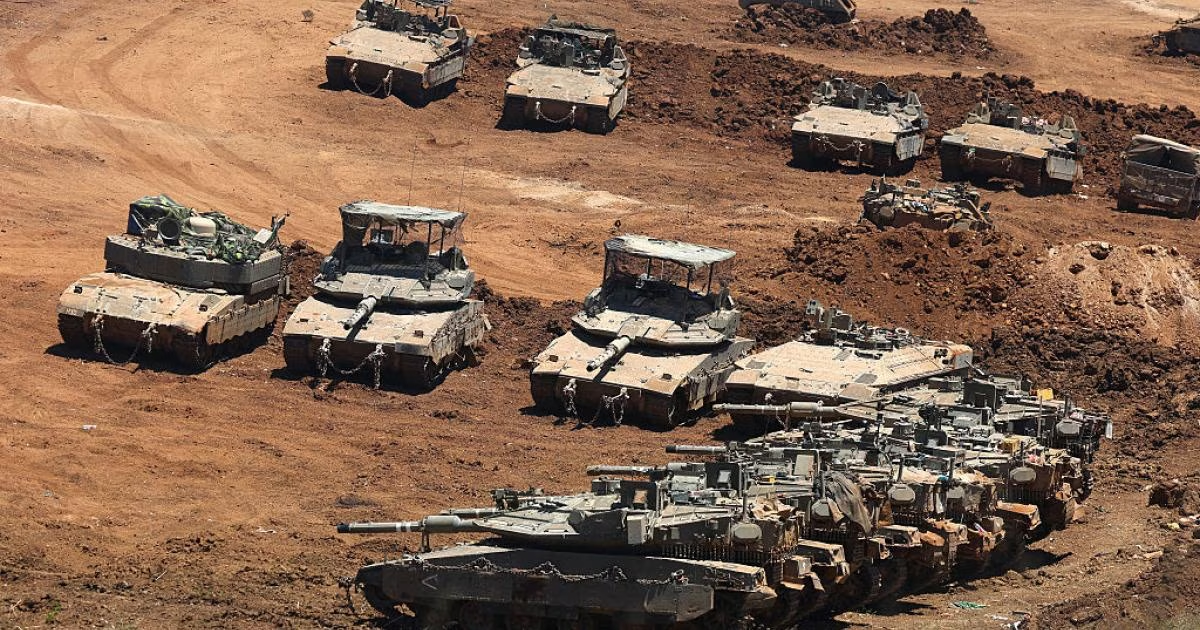
Journalistic sources reported that the Israeli army intends to strengthen its field deployment, bringing the number of active battalions in the West Bank to 26, an increase of three battalions from the current situation. Reinforcements include elite brigades such as the Paratroopers and 'Nahal,' indicating preparation for extended military operations that go beyond routine raids.

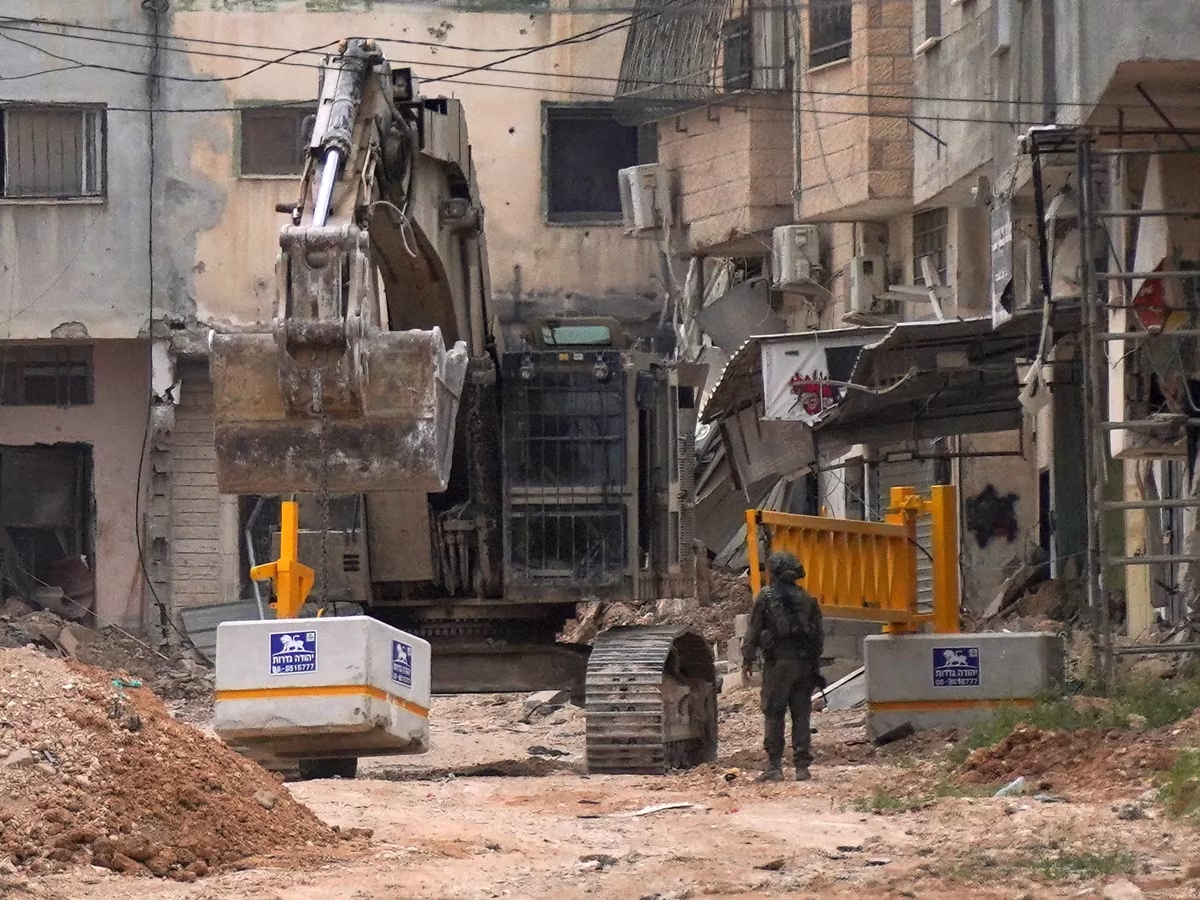
These military movements coincide with a massive settlement project aimed at redrawing the demographic map in the northern West Bank. The plan includes establishing 18 new settlements and eight military bases, a step that restores a permanent Israeli presence to areas evacuated nearly two decades ago under the disengagement plan.

In a related context, international reports revealed the extent of the humanitarian catastrophe resulting from repeated incursions, with more than 40,000 Palestinians displaced from the Tulkarm, Jenin, and Nur Shams camps. Military operations caused widespread destruction of infrastructure and the demolition of dozens of homes, as part of a policy aimed at tightening the noose on the Palestinian presence.

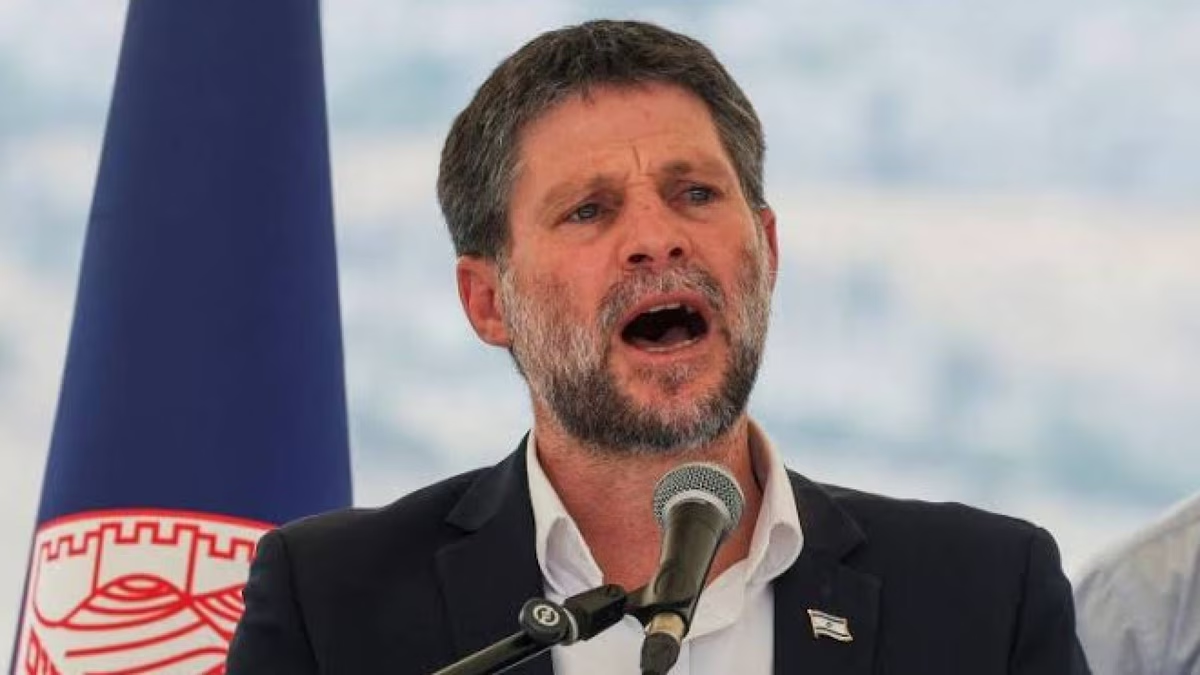
For his part, Israeli Finance Minister Bezalel Smotrich stated that his government is leading a historic transformation aimed at bringing one million settlers to the West Bank. Smotrich confirmed the approval of more than 100 additional settlements and the allocation of huge budgets for developing infrastructure that serves the settlement project and entrenches control over the land.

Israeli security agencies claim increasing links between regional powers such as Iran and Turkey and resistance groups in the West Bank. These sources allege that funding operations are carried out via cryptocurrencies, while combat equipment is smuggled across the eastern borders, which Israel uses as a pretext to escalate its operations.

Military sources also expressed concerns about the development of Palestinian resistance capabilities, especially regarding the potential use of explosive drones. Although no actual use of this technology has been detected so far, the army treats any drone in the West Bank sky as a direct threat requiring confiscation and investigation.

The new military plan, revealed by media sources close to the right-wing, includes redeployment in the evacuated 'Kadim' settlement. Observers believe that this link between military action and settlement expansion aims to create a field reality that is difficult to reverse in any future political settlements.

Israeli Defense Minister Israel Katz described refugee camps as 'terror camps,' announcing the army's intention to expand the targeting circle to include new areas. These statements pave the way for a new wave of incursions that may affect Palestinian centers of gravity that have not seen significant escalation in recent months.

In the context of economic tightening, the Central Command of the army is launching a campaign to pursue sources of funding for Palestinian factions and confiscate 'dual-use' materials. These measures included confiscating agricultural fertilizers and civilian materials, under the pretext of their potential use in manufacturing explosives, exacerbating the suffering of farmers and residents.

The security establishment places released prisoners under strict surveillance, carrying out repeated raids on their homes in Nablus, Hebron, and Ramallah to deliver warning messages. Intelligence reports claim that released prisoners are the main drivers for rebuilding armed cells, which justifies their continued pursuit and abuse.

Analysts believe that the reduction of operations on the northern front with Lebanon allowed the army to withdraw regular units and direct them towards the West Bank. This surplus in military manpower is now being used to implement the vision of the far-right in resolving the conflict on the ground through forced displacement and the expansion of settlement outposts.

Israeli fears remain of a comprehensive explosion of the situation, especially if qualitative operations are carried out that cross the line of contact. The army command considers the West Bank to be in a state of high susceptibility to explosion, making any field friction a spark for a wide confrontation whose repercussions Israel may not be able to contain.

We want to bring one million settlers to Judea and Samaria so that Hamas does not control it, and current policies have radically changed the face of the region.
PALESTINE

Thu 02 Jul 2026 9:23 am - Jerusalem Time

Escalation in the West Bank: Occupation Arrests Dozens, Imposes Full Siege on Sinjil Town

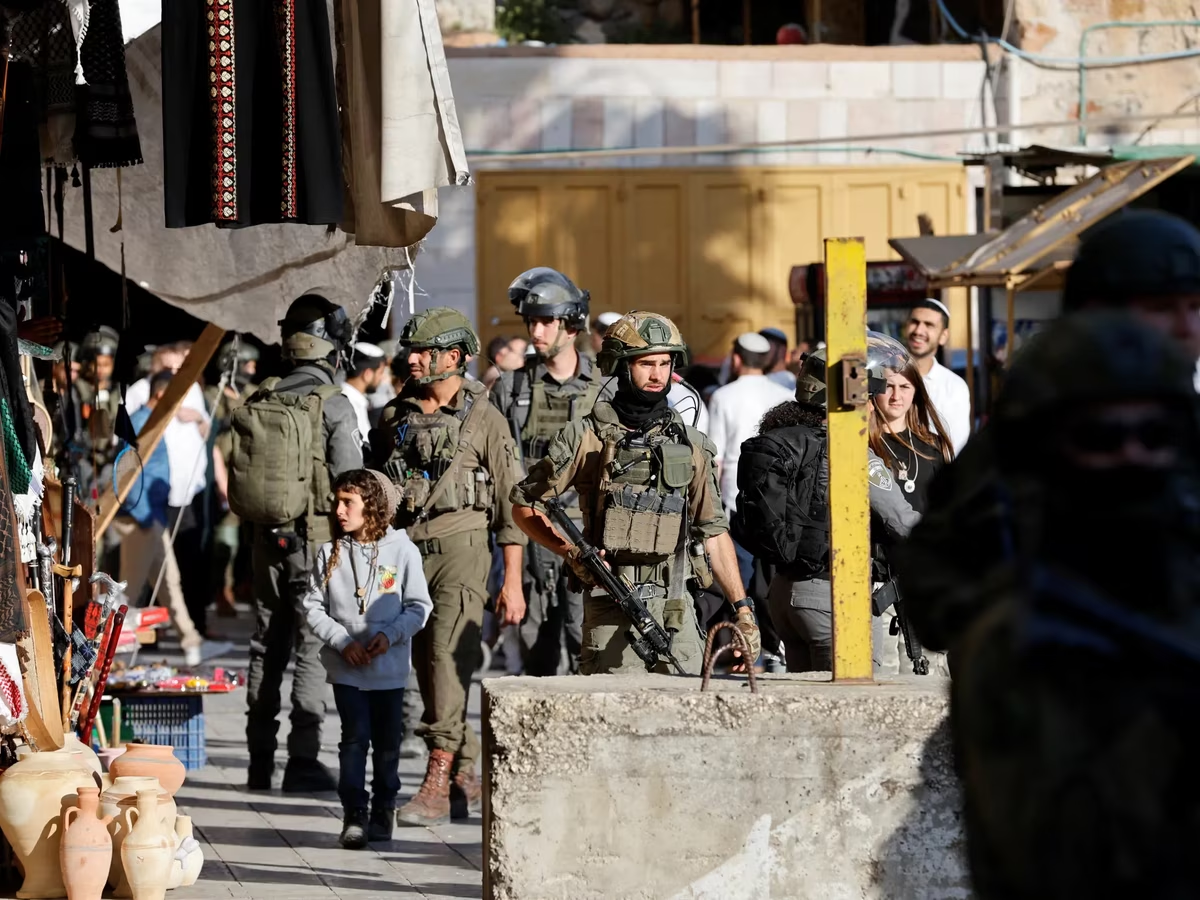
Israeli occupation forces carried out a series of widespread raids in various areas of the occupied West Bank early Wednesday, resulting in the arrest of at least 20 Palestinian citizens. Human rights sources confirmed that among those arrested were five women, as part of an ongoing escalation targeting various Palestinian social groups.

The arrest campaign included journalist Hassan Abdel Jawad from Bethlehem, raising the number of journalists held in occupation prisons to 42. This step comes amid systematic restrictions on journalistic work and attempts to obscure the Palestinian narrative of ongoing field violations.

The Palestinian Prisoners' Society clarified that these daily incursions fall under the policy of 'collective punishment' pursued by the occupation authorities against civilians. The society noted that arrest operations are usually accompanied by property destruction and intimidation of residents in targeted cities and camps.

Palestinian women face increasing targeting, with human rights reports documenting the arrest of more than 765 women since last October, including minors and elderly women. Detained women are subjected to harsh interrogation conditions, and in some cases, they are held hostage to pressure their family members to surrender.

In a shocking statistic, the Palestinian Prisoners' Society estimated that the total number of Palestinian detainees since the start of the genocide war on October 7 has reached approximately 24,000. These figures reflect the unprecedented scale of the offensive launched by the occupation army in parallel with ongoing military operations in the Gaza Strip.

On the ground, occupation bulldozers closed all entrances to Sinjil town, located north of Ramallah, with earth mounds and stone barriers. These measures aim to completely isolate the town from neighboring villages and towns, leading to a near-total halt in traffic to and from the area.

Moataz Abdel Rahman, mayor of Sinjil, stated that the occupation closed 6 main entrances and 16 secondary and agricultural roads that were used as an outlet for residents. Abdel Rahman confirmed that this siege hinders patients' access to hospitals and prevents students and workers from reaching their workplaces and studies.

The West Bank is experiencing a state of severe tension amid continued settler and occupation army attacks that have led to the martyrdom of 1,173 Palestinians since October 2025. These attacks coincide with tightened military restrictions at checkpoints and the deployment of more security points that sever the Palestinian geography.

Closure measures exacerbate the suffering of citizens and impede the movement of patients, students, and workers, affecting various aspects of daily life.

OPINIONS

Thu 02 Jul 2026 9:22 am - Jerusalem Time

Behind the Economic Curtain.. Did Trump Surrender to Iranian Threats with a 'Water Pistol'?

In his recent speeches, coinciding with the signing ceremonies of memoranda of understanding with Tehran, the American president reiterated what he considered a compelling economic argument in favor of this diplomatic path. Trump claimed that the signing would inevitably lead to a sharp drop in global oil prices, which would stimulate a stock market boom and restore lost economic prosperity.

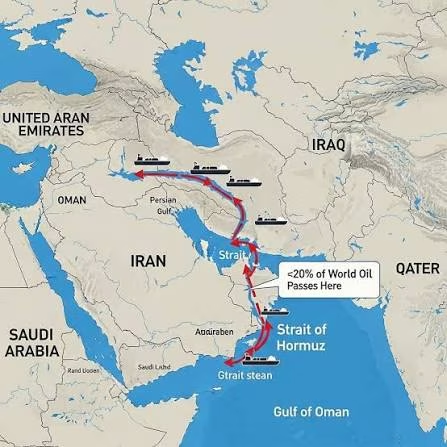
The American president showed a willingness to make substantial concessions to the Iranian regime, justifying this by the desire to avoid what he described as a 'global economic catastrophe.' He indicated that continued tension in the Strait of Hormuz could lead to a collapse of energy supply chains, causing a global recession, mass unemployment, and uncontrollable waves of inflation.

These justifications resonated widely with some investors and politicians who recalled the bitter oil crises of the 1970s. However, analytical sources indicate that this discourse ignores the radical transformations that the global energy sector has witnessed over the past five decades, which have reduced oil's political dominance.

In 1980, oil contributed about 40% of global electricity production, while data from the last quarter of 2025 indicates that this percentage has fallen to a negligible level not exceeding 2%. This shift means that fluctuations in crude prices no longer directly and deeply affect production and service costs as they did in the past.

The global transport sector, in turn, has witnessed a revolution in energy efficiency, with a steady increase in reliance on electric and hybrid vehicles. This development has significantly reduced oil consumption per unit of GDP, making the global economy more resilient to threats of waterway closures.

Contrary to the claims of the US administration, stock markets showed stability and growth during the months of conflict in the Strait of Hormuz, while recording a 4% decline immediately after the agreement was signed. This contradiction weakens the argument that an agreement with Tehran was an inevitable necessity to save global financial markets from imminent collapse.

Economic figures confirm that Iran is suffering from suffocating internal crises, with a per capita GDP not exceeding $3,400, which represents a tiny fraction compared to American income. This structural weakness makes the Revolutionary Guard's ability to threaten international navigation freedom merely a media maneuver rather than a real existential threat.

It appears that Trump consciously chose to exaggerate economic fears to serve as political cover for his sudden shift towards Tehran and his preference for dialogue over confrontation. This political choice, despite its legitimacy, could have been marketed without the need to fabricate economic justifications that observers describe as unrealistic and ignoring the realities of the digital age.

The regime in Iran is on the verge of collapse and is effectively incapable of threatening America or the Western economy; it is waving a water pistol.

ARAB AND WORLD

Thu 02 Jul 2026 9:22 am - Jerusalem Time

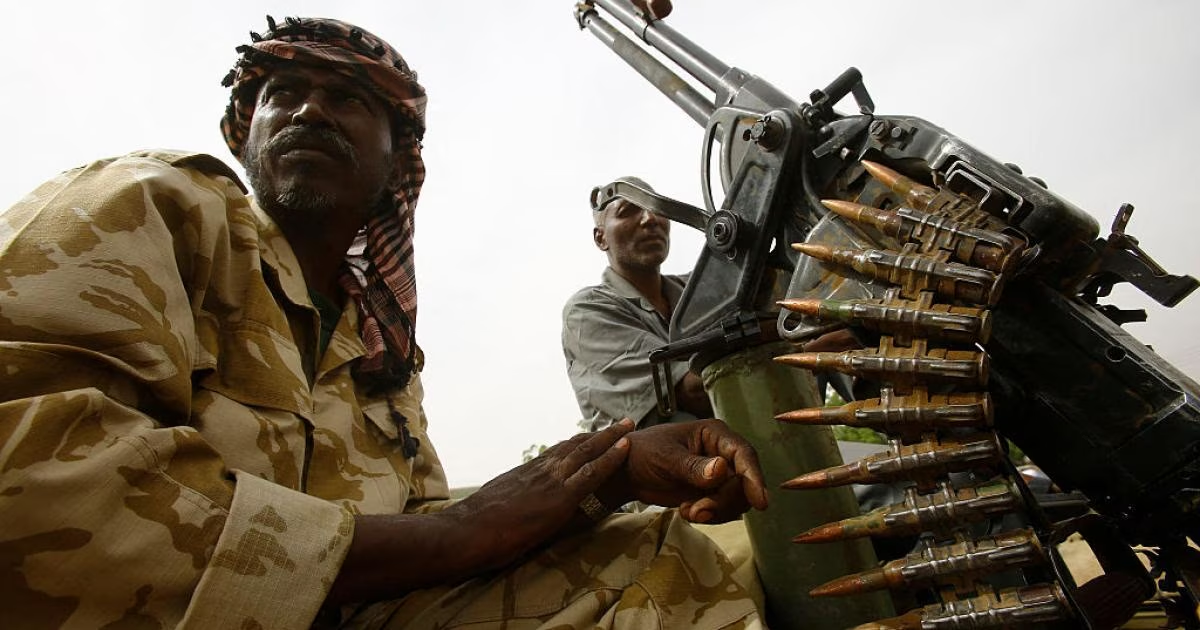
Amnesty International accuses 'Rapid Support Forces' of committing ethnic cleansing and crimes against humanity in El Fasher

Amnesty International has leveled serious accusations against the Rapid Support Forces, confirming their involvement in committing crimes against humanity and widespread ethnic cleansing in the Sudanese city of El Fasher. In a recent report issued today, Wednesday, the organization clarified that these violations occurred in the context of an intense military offensive to seize control of the capital of North Darfur State during the period between 2024 and 2025.

The field investigations conducted by the organization were based on live testimonies and in-depth interviews with approximately 247 victims and eyewitnesses in the region. The findings concluded that the military operations were not merely armed confrontations, but included direct targeting of civilians on ethnic grounds, which elevates these violations to the level of international crimes that necessitate accountability.
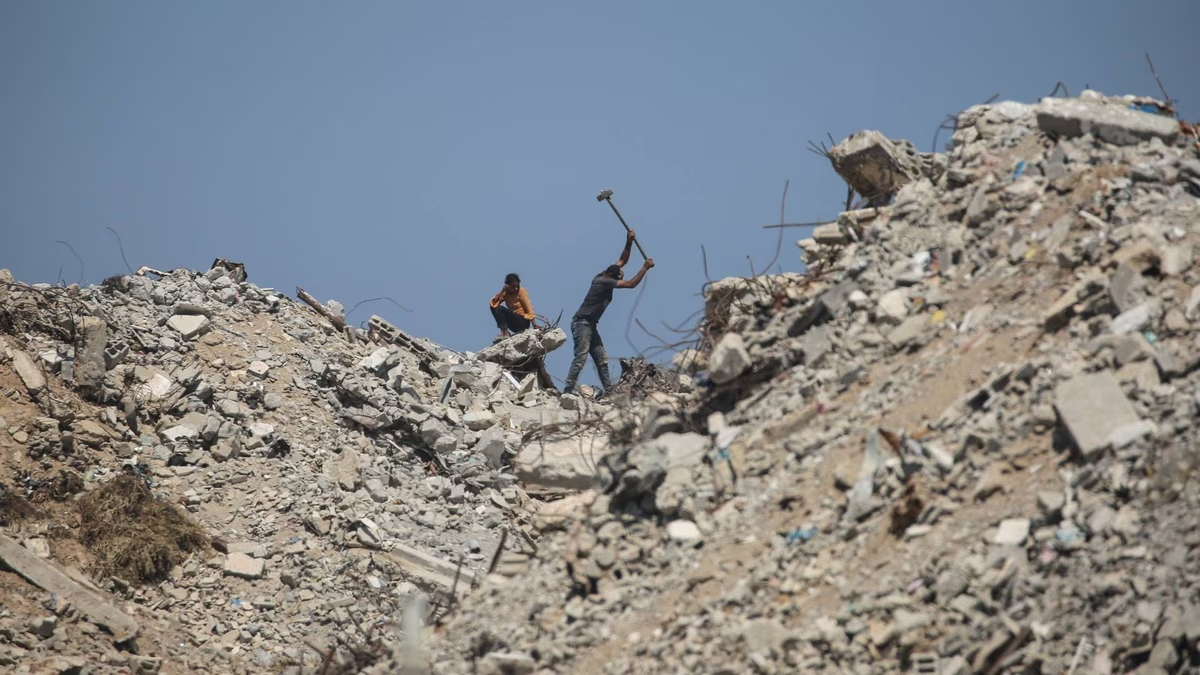
The report revealed a criminal pattern represented by systematic attacks on population centers surrounding El Fasher, especially those inhabited by the Zaghawa ethnic tribe. The violations were not limited to killing, but extended to include horrific and deliberate acts of violence against children, including abduction, forced recruitment, and rape, in flagrant violation of all international human rights conventions.

For her part, the Secretary-General of Amnesty International, Agnès Callamard, described what is happening in Darfur as a “stain on the conscience of humanity.” She affirmed in an official statement that the evidence indicates a premeditated intention to render the targeted areas uninhabitable by burning homes and destroying property after displacing their residents, which entrenches the concept of ethnic cleansing on the ground.

Regarding the recent escalation in October 2025, the organization documented the cold-blooded execution of hundreds of civilians as they attempted to flee the inferno of battles in El Fasher. Many detainees were also subjected to brutal torture, amid clear negligence from military leaders who were aware of these transgressions and did nothing to stop them or hold their perpetrators accountable.

The international organization warned that these actions may be directly linked to the crime of genocide, given their systematic nature and targeting of specific ethnic groups. It demanded an immediate cessation of hostilities, calling on the international community to take urgent action to deploy an independent international force to protect unarmed civilians in conflict zones.

This report comes at the same time as diplomatic movements in Geneva, where the United Nations Human Rights Council held an emergency session to discuss the deteriorating security situation in the city of El Obeid in North Kordofan. International concerns are growing about a repeat of the El Fasher scenario in other Sudanese regions, in light of the ongoing attacks by the Rapid Support Forces and the expanding scope of the conflict.

What happened in El Fasher represents a stain on the conscience of humanity, where the attacks were carried out with a clear intention of ethnic cleansing.

PALESTINE

Thu 02 Jul 2026 9:22 am - Jerusalem Time

Smotrich reveals engineering plans to establish 3 settlements north of the Gaza Strip

Israeli Finance Minister Bezalel Smotrich revealed today, Wednesday, that engineering teams have completed preparing the necessary plans for the construction of three new settlements in the northern areas of the Gaza Strip. Smotrich explained that the Settlement Administration of the Ministry of War, which is under his supervision, has completed all technical and preparatory arrangements, stressing that the commencement of implementation now depends on a political decision and official approval from Prime Minister Benjamin Netanyahu.

Smotrich made these statements during a field tour of the settlements adjacent to the Strip, where he met with the mayor of Sderot, Alon Davidi, to discuss rehabilitation efforts following the events of October 7. The Israeli minister emphasized his vision of the necessity of imposing permanent military control over about 70% of the Strip's area, considering that the settlement presence inside Gaza represents a supreme security necessity to protect Israeli towns in the envelope.

These moves come in the context of a political escalation aimed at changing the geographical and demographic reality of the Strip, as Smotrich linked the end of military operations with Israeli territorial expansion. These statements intersect with directions previously announced by Netanyahu regarding issuing orders to the army to enhance field control over large areas of Gaza, which puts the region before a new stage of conflict over the future of the Strip.

Where there is no settlement, there is no security; the army must maintain its current control, which exceeds 70% of the Gaza Strip's territory.

PALESTINE

Thu 02 Jul 2026 9:22 am - Jerusalem Time

4 Martyrs in 13 New Violations of the Truce Agreement in Gaza Strip by the Occupation

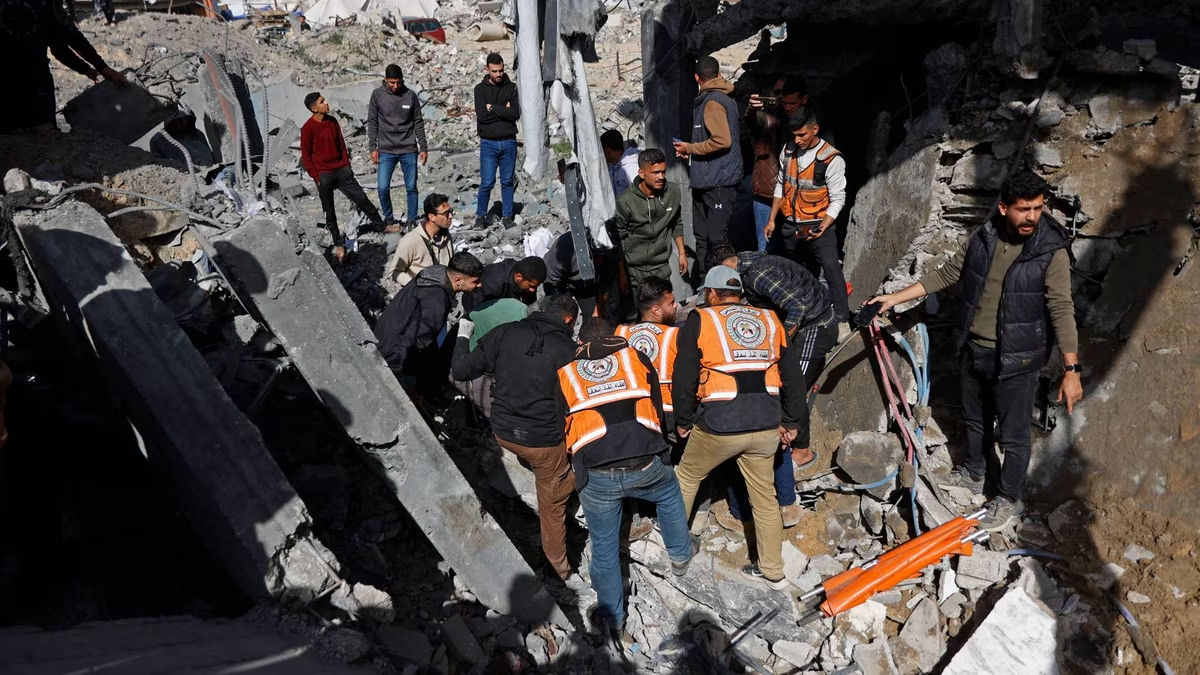
Palestinian medical and field sources reported today, Wednesday, the martyrdom of four individuals and the injury of several civilians due to a series of new violations carried out by the occupation forces of the ceasefire agreement in the Gaza Strip. The sources recorded thirteen violations since the early morning hours, with their intensity concentrated in the eastern areas of Khan Yunis city and Mawasi Rafah to the south, in addition to direct targeting of residential neighborhoods in the northern Gaza city.

Regarding the casualties, young Tamer Saeed Abu Nahal was martyred after a drone targeted a group of citizens near Dar Al-Arqam school in Sheikh Radwan neighborhood. Citizen Amr Jumaa Al-Lawah was also martyred by direct fire from occupation soldiers towards displaced persons' tents in the Mawasi Rafah area. In another airstrike, young Mohammed Naim Jundiya was martyred due to shelling that targeted civilians near the Gaza Municipality Park, reflecting an escalation in the direct targeting of civilians.

On the ground, these attacks coincided with intense artillery shelling that targeted Sheikh Nasser neighborhood and the eastern areas of Khan Yunis, amidst movements of occupation military vehicles to expand their control in what is known as the 'Yellow Line' in the Qizan Rashwan area. Warships also participated in these violations by opening machine gun fire towards the southern coast of the Strip, causing panic among displaced persons and fishermen.

These field developments deepen fears of the collapse of the truce agreement signed on October 10, 2025, with Arab and American mediation in the Egyptian city of Sharm El Sheikh. Observers believe that the continuation of these violations empties the agreement of its humanitarian and security content, especially with the occupation's deliberate targeting of densely populated areas of displaced persons that were previously classified as safe zones.

According to official statistics, the total number of martyrs since the truce came into effect has risen to 1053, in addition to 3406 others injured with varying degrees of severity. Today's toll comes after another bloody day that saw the martyrdom of three individuals in fourteen violations, putting the political path of the agreement to a real test amidst the continued military escalation on the ground.

The total number of martyrs since the truce came into effect has jumped to 1053, threatening a complete collapse of the political path of the agreement.

ARAB AND WORLD

Thu 02 Jul 2026 9:22 am - Jerusalem Time

Lebanon Awaits Implementation of Security Annex: Intense Contacts for Israeli Withdrawal from Nabatieh to Begin

Lebanese diplomacy is currently active through open communication channels with the American administration, aiming to accelerate the implementation of the security annex stemming from the framework agreement. These moves come amidst a state of field anticipation for the start of the Israeli occupation forces' withdrawal from the agreed-upon areas, in preparation for the Lebanese Army to extend its sovereignty over them according to the proposed timelines.

Sources reported that the current focus is on determining the zero hour for Lebanese military units to enter the first experimental areas included in the plan. Despite these arrangements, field reports indicate that Israeli forces still maintain their positions in their current locations, and no actual withdrawal movements have been observed so far.

Discussions led by the President of the Republic and the Commander of the Lebanese Army, in coordination with the US Central Command, include establishing precise mechanisms for the security transition process in the South. The first phase targets the Western Zawtar area and its surroundings, part of the Nabatieh district, which the occupation army is supposed to evacuate to come under the full supervision of the Lebanese state.

The security plan includes a commitment to remove all manifestations and military structures belonging to Hezbollah in those areas, to be done under the supervision of a third international party to ensure transparency and adherence to the agreement. The American side is currently working to finalize these executive mechanisms, which are considered a prerequisite for the start of Israeli military movements backward.

On the ground, the Lebanese front has recorded relative calm and a clear decline in the intensity of combat operations over the past three days, as air raids on towns outside the direct Israeli control zone have ceased. However, some localized explosions are still heard within what is known as the 'Yellow Line,' which are areas experiencing limited sweeping or booby-trapping operations.

This relative stability has positively impacted civilian movement, as life has gradually begun to return to a number of southern villages that their residents had abandoned due to shelling. This development has contributed to alleviating logistical pressures on local authorities, who had been suffering from a suffocating displacement crisis in the capital Beirut and its surroundings over the past weeks.

In a related context, data from the Central Operations Room at the Prime Minister's office revealed a sharp decrease in the number of residents in shelters in Beirut, where the number dropped from 51,000 displaced persons to only about 19,000. This coincided with a campaign to dismantle displaced persons' tents in the 'BIEL' area and transfer the remaining ones to equipped shelters, indicating the gradual recovery of the humanitarian scene.

The start of the Israeli withdrawal will be linked to the completion of the implementation mechanism for the security annex, which the American side is working on intensively.

PALESTINE

Thu 02 Jul 2026 9:21 am - Jerusalem Time

Spain receives new batch of wounded Gaza children and affirms: Their care is a moral duty

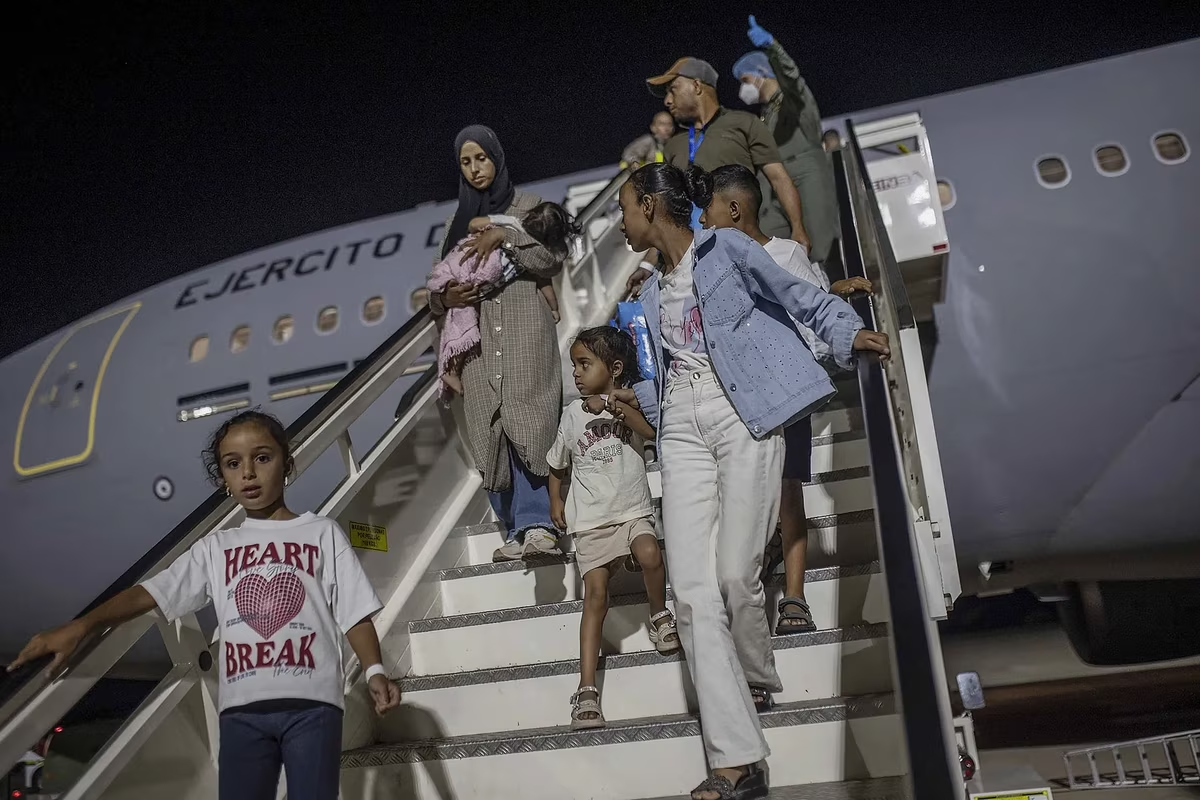
The sixth batch of wounded Palestinians from the Gaza Strip has arrived in Spanish territory, comprising 20 children accompanied by their families to receive necessary medical care. The Spanish Minister of Health affirmed that these children are leaving the brutality of living conditions in the Strip in search of hope and treatment in Spanish hospitals, considering this step a source of national pride for her country.

For his part, Spanish Prime Minister Pedro Sánchez stressed that hosting wounded Palestinians, whose total number has reached 100 people so far, falls within a moral and humanitarian duty. Sánchez pointed to the necessity of protecting children from the horrors committed in Gaza, while also emphasizing their inherent right to return to their homes safely once their health conditions improve.

This humanitarian step comes in the context of a growing Spanish political stance against the Israeli war on the Gaza Strip, with Madrid adopting the most stringent approach within the European Union. The Spanish government has translated this orientation through a series of diplomatic measures, including withdrawing its ambassador from Tel Aviv and prohibiting the entry of those involved in war crimes into its territory.

Madrid did not stop at traditional diplomatic measures but formally demanded the suspension of the partnership agreement between the European Union and Israel, an agreement that regulates trade exchange and scientific cooperation. The Spanish side believes that the continuation of this agreement contradicts the necessity of holding Israel accountable for its continuous human rights violations in the occupied Palestinian territories.

The most prominent historical moment in the course of bilateral relations occurred in May 2024, when Spain announced its official recognition of the State of Palestine. This decision prompted the Israeli government to lower its diplomatic representation and recall its ambassador, exacerbating the political tension between the two countries, which are experiencing an unprecedented rift.

On the ground, Spain has taken firm decisions to prevent cargo ships carrying weapons destined for Israel from docking in its national ports. It has also imposed strict restrictions on the passage of any activities related to the Israeli army over its territory, in an attempt to pressure for a halt to ongoing military operations in Gaza and Lebanon.

By early 2026, the scope of Spanish measures expanded to include closing airspace to aircraft linked to regional military operations, especially those related to the escalation against Iran. This stance provoked a wave of sharp Israeli criticism, with political circles in Tel Aviv describing the Spanish government as the most hostile to Israeli policies on the European continent.

Spain continues to present a different model for European engagement with the Palestinian issue, blending medical relief support with political and diplomatic pressure. Official sources in Madrid affirm that this policy stems from a principled commitment to international law and human rights, far from the narrow political calculations that govern the positions of other countries.

Our country today hosts 100 Palestinians, including 20 children, with their families to receive necessary treatment; providing care for them is a moral duty, and there is no room for neglect.

PALESTINE

Thu 02 Jul 2026 9:21 am - Jerusalem Time

For the 997th consecutive day.. Japanese activist continues his solo protest in Tokyo in solidarity with Gaza

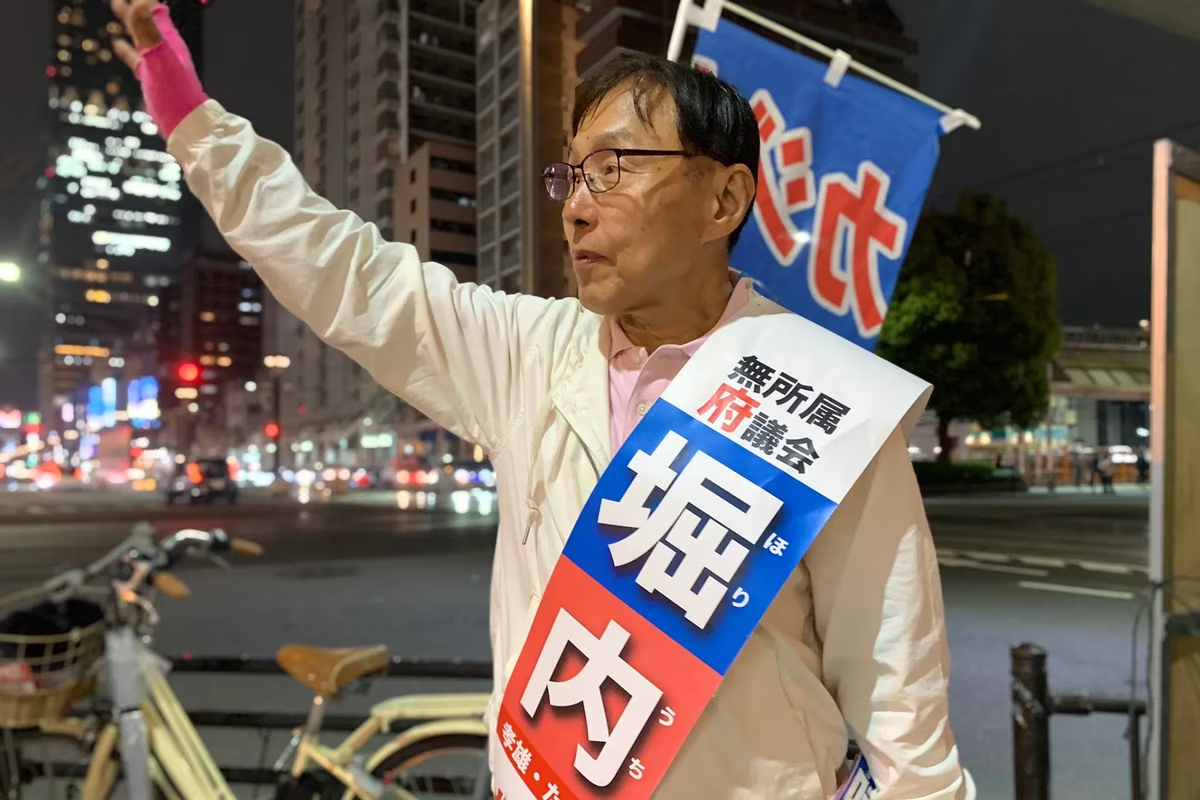
Despite the vast distances separating the Japanese capital Tokyo from the Gaza Strip, Japanese activist Yusuke Furusawa continues to embody the highest meanings of human solidarity through his solo protest. Furusawa has maintained his daily presence in the streets and squares for 997 days, becoming a steadfast voice refusing silence in the face of the ongoing aggression against the Palestinian people.

The name of this activist has prominently emerged on social media platforms and in Japanese circles, where he is seen as one of the most prominent voices condemning the Israeli war of extermination. Despite the decline in public momentum for protests in many world capitals over time, Furusawa has demonstrated his adherence to his principled stance, emphasizing that his primary motive is to defend human dignity and fundamental rights.

The Japanese activist deliberately chooses the most vital and crowded locations in Tokyo for his protest, especially at major train stations bustling with commuters daily. Through this strategic choice, he aims to convey his message to the largest possible segment of Japanese society, ensuring that the humanitarian tragedy in Gaza remains alive in global public consciousness and is not forgotten under the weight of time.

Furusawa is keen to document his daily activities through his personal account on the 'X' platform, where he posts photos and videos showing him holding banners in several languages demanding an immediate ceasefire. His slogans include explicit phrases such as 'Free Palestine' and 'Stop the Genocide,' messages that attract the attention of passersby and prompt many of them to stop and take souvenir photos with him, expressing their support for his stance.

In statements to media sources, Furusawa explained that his struggle began on October 7, 2023, noting that he moves through the streets driven by his hatred of racism and his deep belief in justice. The Japanese activist stressed his determination to continue this protest approach tirelessly, affirming that the liberation of Palestine is the ultimate goal he seeks through this long steadfastness.

This ongoing protest comes at a time when the latest data from the Palestinian Ministry of Health in the Gaza Strip indicates the scale of the unprecedented humanitarian catastrophe, with the death toll rising to over 73,000 martyrs and 173,500 injured. These tragic figures coincide with massive destruction affecting all infrastructure, amidst a tight siege that exacerbates the suffering of millions of civilians facing the Israeli war machine.

"I will continue to protest until Palestine is liberated, as I believe it is my duty to defend humanity and human rights and reject racism."

ARAB AND WORLD

Thu 02 Jul 2026 9:21 am - Jerusalem Time

Araghchi Threatens Israel with 'Iranian Discipline' as Doha Talks Address Frozen Assets and Hormuz

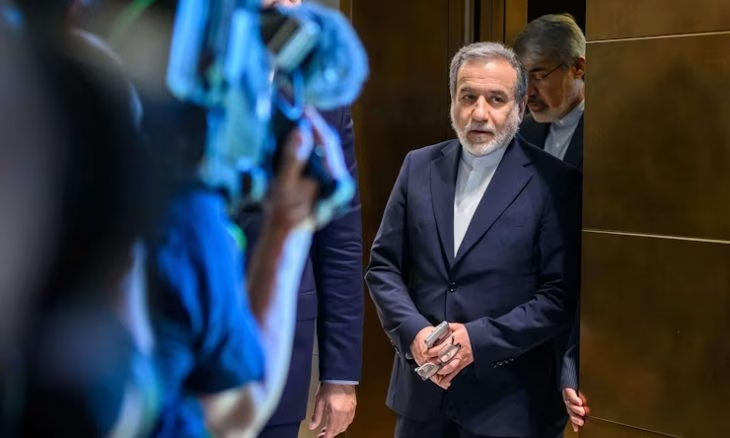
Iranian Foreign Minister, Abbas Araghchi, issued fiery statements via the 'X' platform, affirming that Tehran would not hesitate to respond immediately and strongly to any threat targeting its people or leadership. Araghchi considered that the current US administration is now obliged to rein in its allies in Tel Aviv, describing them as 'pets' that need to be tamed.

The head of Iranian diplomacy warned that any Israeli transgression of American orders would be met with a firm Iranian reaction aimed at 'disciplining them'. These statements come at a time when the region is witnessing escalating tensions, coinciding with intensive diplomatic efforts in the Qatari capital, Doha, to de-escalate.

In a related context, informed sources revealed that a new round of indirect technical talks between Tehran and Washington began in Doha on Tuesday evening. These meetings aim to establish executive mechanisms for the provisions of the memorandum of understanding signed last June to end the conflict in the Middle East.

Sources reported that the current discussions primarily focus on two thorny issues: the release of frozen Iranian assets abroad and the regulation of navigation in the Strait of Hormuz. Technical delegations from both sides are participating in these sessions, which are being conducted through mediators from Qatar and Pakistan to ensure no direct friction occurs.

Doha witnessed high-level diplomatic movements, where US envoy Steve Witkoff and Jared Kushner, son-in-law of President Donald Trump, met with Qatari Prime Minister Sheikh Mohammed bin Abdulrahman Al Thani. The meeting focused on laying the necessary foundations for the technical sessions, despite the direct non-participation of the US political delegation in those sessions.

From the Iranian side, Deputy Foreign Minister Kazem Gharibabadi heads the team of experts participating in the negotiations, where he held intensive meetings with Qatari officials. Gharibabadi affirmed that the current focus is on reviewing the implementation of the interim agreement reached at the previous summit in Lucerne, Switzerland.

Diplomatic sources clarified that the technical talks seek to build on the progress made in previous rounds, with a focus on the precise details of the memorandum of understanding. These details include timelines for lifting the blockade on Iranian ports and resuming oil exports normally without legal or military obstacles.

Despite these movements, Iranian Foreign Ministry spokesman, Ismail Baghaei, stressed the exclusion of any direct contact with US officials at present. Baghaei affirmed that Tehran would not hold any direct negotiation meetings at any level, preferring indirect diplomatic channels through mediators.

The memorandum of understanding signed on June 17 included provisions for a ceasefire on various fronts ablaze in the region. It also stipulated the need for continuous negotiations to reach a final and comprehensive agreement within a timeframe not exceeding 60 days, extendable with the consent of both parties.
Reports indicate that the meetings in Doha also addressed the ceasefire in Lebanon, emphasizing the importance of stabilizing it to ensure regional stability. Mediators seek to create a safe environment that allows for the implementation of the economic provisions of the agreement, including Tehran's recovery of a large portion of its frozen funds.

Regarding the field situation, Iran insists that the security of the Strait of Hormuz is linked to the lifting of economic sanctions imposed on it. Tehran considers that freedom of navigation must be reciprocal, which constitutes a cornerstone in the ongoing technical talks between experts from both sides.

Observers believe that Araghchi's sharp statements aim to strengthen Iran's negotiating position and send reassuring messages to the domestic audience that negotiations do not mean compromising military deterrence. These statements also reflect the extent of the trust gap between Tehran and Tel Aviv, despite the existence of a diplomatic path with Washington.

Qatar and Pakistan play a pivotal role in bridging viewpoints, as envoys work to convey technical proposals between closed rooms in Doha. These efforts aim to avoid any misunderstanding that could lead to the collapse of the initial understandings reached in Switzerland weeks ago.

The biggest challenge facing these negotiations remains the extent of commitment of the field parties to cease hostile operations, especially in light of mutual threats. International circles are awaiting the results of this technical round, which may pave the way for the announcement of a broader agreement that ends the ongoing tension in global energy corridors.

The US President has committed the United States to taming its pets in Tel Aviv, and if they disregard their master's orders, Iran will teach them a harsh lesson.

PALESTINE

Thu 02 Jul 2026 9:21 am - Jerusalem Time

Knesset preliminarily approves law banning the call to prayer, Hamas warns of religious war

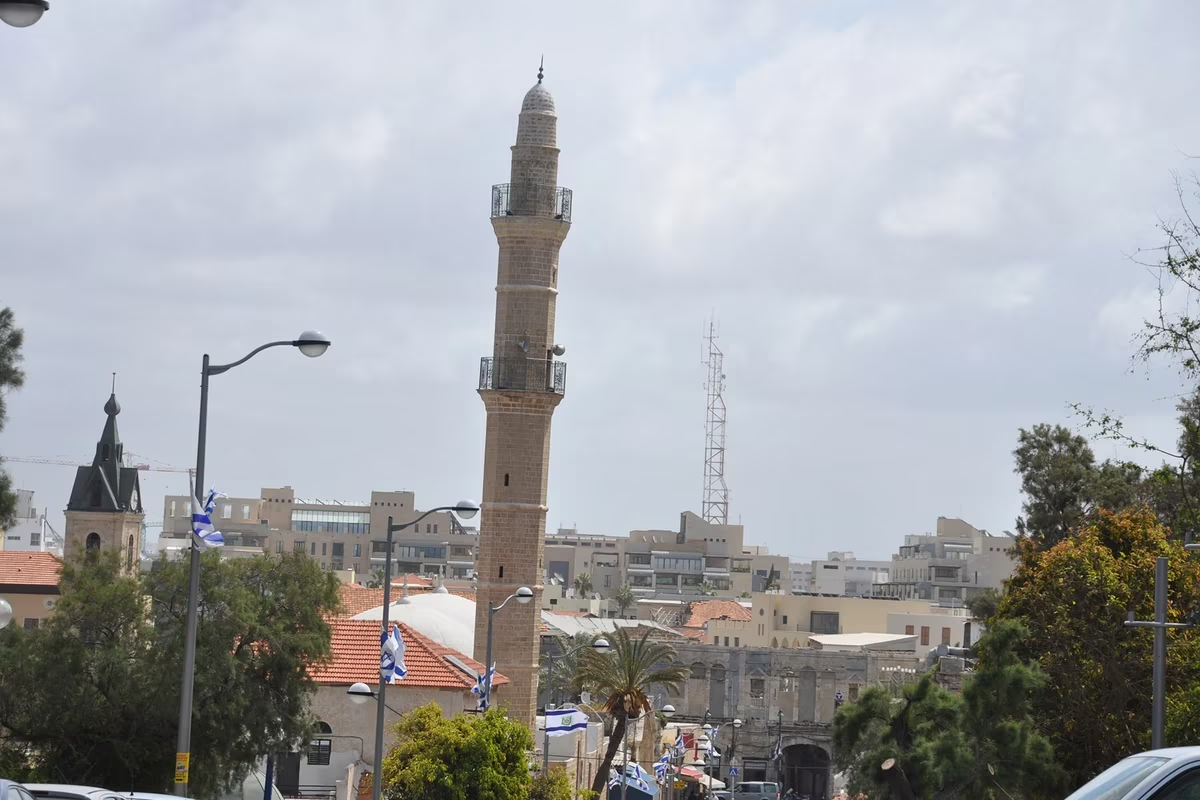
The Israeli Knesset took a controversial step on Wednesday evening by preliminarily approving what is known as the 'Muezzin Law,' which aims to ban the call to prayer (Adhan) via loudspeakers in occupied Jerusalem and Palestinian towns within the Green Line. The bill received the support of 50 members against the opposition of 36, a move that reflects the extreme right-wing orientation of the current government and its allies in the opposition.

This legislative move comes at the initiative of the 'Otzma Yehudit' party, led by National Security Minister Itamar Ben-Gvir, and with notable support from the opposition 'Yisrael Beiteinu' party, led by Avigdor Lieberman. The law, according to its draft, aims to tighten control over what Israeli sources described as 'mosque noise,' requiring complex prior licenses to operate sound systems.

Procedurally, the bill still needs to pass three additional readings in the Knesset before it becomes a final, enforceable law. However, the preliminary approval gives the green light for parliamentary committees to begin drafting the executive provisions that grant the police broad and unprecedented powers to intervene directly inside places of worship.

The bill stipulates the prohibition of installing any sound system in mosques without obtaining an explicit license, where license applications will be subject to strict criteria related to the mosque's location and its proximity to residential areas. Hebrew sources claimed that these measures aim to reduce sound effects on settlers and residents in areas adjacent to mosques.

If the law is approved, police officers will be granted the right to demand an immediate halt to the call to prayer if they deem it to violate the conditions, with the authority to confiscate sound equipment entirely. The legislation also includes hefty financial penalties, with a fine for installing a sound system without a permit reaching approximately $17,000, while a fine for a simple violation is about $3,500.

For his part, Itamar Ben-Gvir expressed his strong welcome for this step, considering the sound of the muezzin to be 'annoying noise' that affects the quality of life and health of residents, as he put it. Ben-Gvir affirmed that the police had already begun, during his tenure, to take field measures against this phenomenon, and that the new law would provide them with the necessary legal tools to eliminate it permanently.

In the same context, Environmental Protection Minister Idit Silman considered that the law would enhance state sovereignty and grant her ministry's inspectors broad powers, in cooperation with the police, to enforce quiet. Silman indicated that this legislation ends years of what she described as citizens' suffering from loud noises, thanking the National Security Minister for promoting this proposal.

In contrast, the decision was met with widespread Palestinian condemnation, with the Islamic Resistance Movement (Hamas) describing the bill as a dangerous escalation within the framework of the 'religious war' waged by the occupation against Islamic identity. The movement affirmed in a statement that the call to prayer will remain an integral part of the land's identity and history, and that these racist laws will not succeed in obliterating the cultural landmarks of Jerusalem.

Hamas called on the Palestinian masses and the Arab and Islamic peoples to take urgent action to protect holy sites and expose Israeli practices in international forums. The movement stressed that proceeding with these legislations reflects the forced Judaization approach pursued by the extremist government to impose a new reality that infringes upon freedom of worship guaranteed by international laws.

In turn, the head of the Palestinian National Council, Rawhi Fattouh, described the approval of the law as 'legislative terrorism' and a heinous crime that violates the Universal Declaration of Human Rights. Fattouh explained that Israel employs its legal system to entrench the apartheid system by practicing religious and cultural persecution against the Palestinian people in their land.

Fattouh called on the international community and the United Nations to intervene immediately to stop these policies that contradict the International Covenant on Civil and Political Rights. He pointed out that targeting the call to prayer is not merely an administrative measure, but rather part of a comprehensive strategy to morally and materially displace Palestinians from their historic cities and villages.

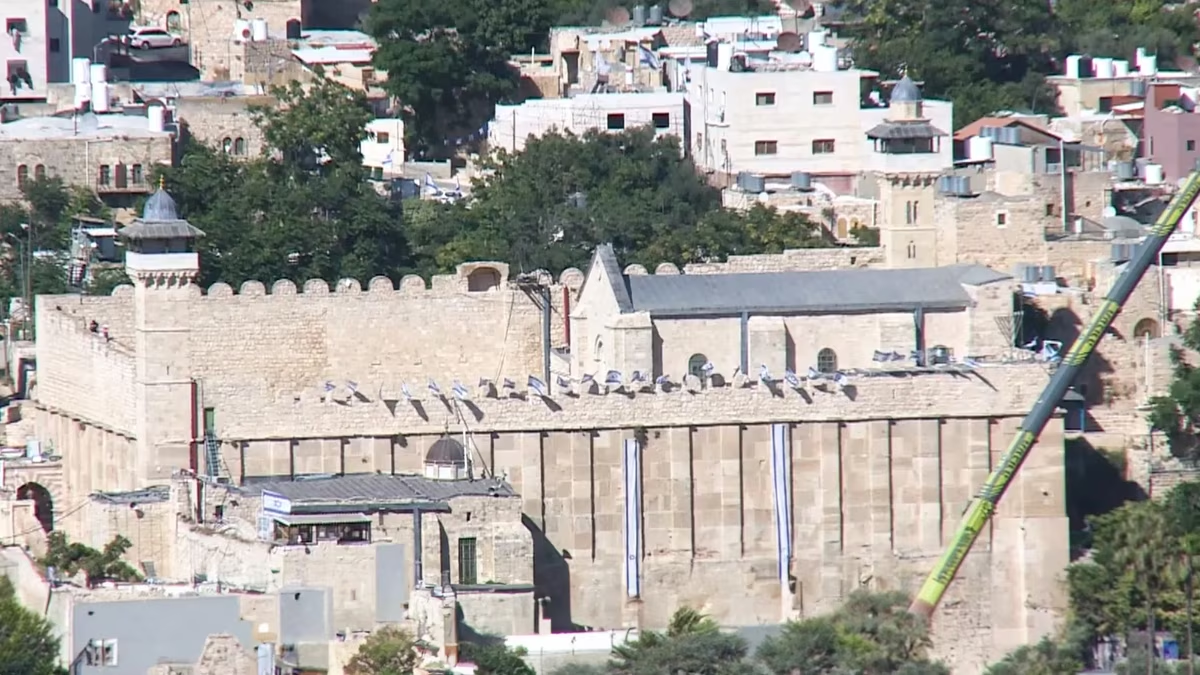
Field data indicates that the occupation is actually implementing this restriction on the ground, as sources reported that the call to prayer was banned in the Ibrahimi Mosque in Hebron more than 74 times in just one month. This figure reflects the extent of the systematic targeting of Islamic holy sites in the West Bank and occupied Jerusalem, which the new law seeks to legitimize and generalize.

It is worth noting that attempts to ban the call to prayer are not new; in 2017, a similar attempt saw the Knesset preliminarily approve a similar bill, but it later faltered due to widespread protests. However, the current composition of the Israeli government, dominated by the extreme right, increases the chances of the law passing definitively this time.

There is a state of popular anger in Arab cities and towns within the Green Line, where this law is seen as a direct assault on Palestinian existence and the specificity of Arab society. Observers warned that the implementation of this law could lead to an escalation of the field situation, given the extreme sensitivity related to religious symbols and the freedom to practice rituals in mosques.

This legislation reveals the true nature of the occupation as an apartheid system that employs its legal tools to impose religious and cultural oppression.

PALESTINE

Thu 02 Jul 2026 9:21 am - Jerusalem Time

Israeli Security Alert After Loss of Sensitive Military Device in Daraa Countryside

A state of confusion and concern prevailed within Israeli military circles following the revelation that a soldier lost a sensitive military device during an incursion into southern Syria. Field reports indicated that the device fell into the hands of civilians in Daraa province, raising serious fears of a leak of intelligence data and precise geographical information stored on the digital system.

Media sources reported that the incident occurred after clashes in the western Daraa countryside, where Israeli forces attempted to infiltrate the area before encountering popular resistance from residents. This field engagement led to a rapid retreat of the Israeli force, resulting in some military equipment and personal belongings being left on the battlefield.

The details of the incident began when the occupation army attacked Syrian territory, targeting the town of Tal al-Maghar with artillery shells and helicopter machine guns in an attempt to impose a new field reality. As the forces approached the Tal Kudna point, dozens of residents gathered in a popular confrontation that forced the soldiers to withdraw, leaving behind advanced technical devices that aroused the curiosity of the residents.

Preliminary investigations revealed that the lost device belongs to a sophisticated digital system known as 'OLAR', which is exclusively designated for military field use. This device is not like traditional smartphones; rather, it functions as an independent platform that provides high-precision digital maps to help soldiers navigate complex environments without the need for internet connection.

The 'OLAR' system is characterized by its ability to operate away from traditional communication networks, making it immune to external electronic breaches under normal conditions. The Israeli army has relied heavily on this system during its ongoing aggression on the Gaza Strip, where it provided ground units with 3D models of terrain and residential buildings.

The importance of the device lies in its ability to simulate the movement of military vehicles and estimate the best possible routes for advancement in the field and avoiding geographical obstacles. According to military experts, the access of this device to unfriendly parties could reveal the operational mechanisms of Israeli units and their methods for identifying targets and field movement.

Immediately after confirming the loss of the device, the Israeli military command quickly activated emergency protocols to remotely disable the system in an attempt to close security loopholes. Despite this step, concerns remain about the ability of technical experts to recover some data actually stored on the device's hard drive, such as previous navigation logs and checkpoints.

Informed sources reported that the Israeli army tried through several means to recover the lost device before residents reached it, but the swift movement of the area's residents prevented that. This failure led to a comprehensive internal investigation within the responsible military unit to identify those responsible for failing to protect sensitive equipment during external operations.

On social media platforms, the discovery of the device sparked a wide wave of interaction and debate among Syrian users who circulated photos of the military device. Comments varied between those who considered it a valuable intelligence catch and those who warned of the security consequences of retaining such complex technological devices.

Field activists, including Khaled al-Zaher, warned that the device might be a technical 'bait' designed by the occupation to track the locations of individuals who found it. Al-Zaher pointed to the possibility of using the device as a means to penetrate the inner circles of local groups and learn about their capabilities and logistical potential by monitoring the device's movement.

For his part, Hussam al-Ayoubi stressed the need to deal with the device with extreme caution, suggesting that it might be booby-trapped or contain sensitive listening devices that work even after being turned off. Al-Ayoubi called on residents not to operate the device or attempt to charge it, emphasizing that the occupation monitors the signals of these devices with extreme precision via satellites.

In a related context, some commentators, such as 'Abu al-Fadl', called for the necessity of thoroughly examining the digital content of the device by specialists, considering that it might contain evidence incriminating the occupation. He pointed out that the stored data could reveal details related to crimes committed in the Gaza Strip, given the use of this system in managing combat operations there.

The lost device is not a traditional phone, but a secure field platform containing digital maps and secret military navigation information.

PALESTINE

Thu 02 Jul 2026 9:20 am - Jerusalem Time

'Peace Council' Plan in Cyprus: Behind the Scenes of Article 17 to Re-engineer the Gaza Strip

Diplomatic movements are accelerating behind closed doors in the Cypriot city of 'Ayia Napa,' where representatives of the US-led Peace Council are holding intensive meetings to shape the next phase in the Gaza Strip. These meetings are chaired by prominent international figures, including Nikolay Mladenov and Tony Blair, with the aim of establishing executive mechanisms for what is known as Article 17 of US President Donald Trump's plan.

This plan primarily aims to isolate Hamas from its popular base, financial resources, and logistical support, by establishing humanitarian shelter areas not subject to the movement's control. The strategy relies on providing extensive relief and medical services in specific areas, as a form of field and political pressure to pass American proposals to end the war.

Journalistic sources reported that the Peace Council is preparing to launch a pilot project in the coming weeks in the 'Tel Sultan' area near Rafah. The project includes establishing shelter complexes for civilians classified as unarmed, with a multinational force taking over supervision and organization tasks within these complexes.

These international forces are scheduled to be stationed at the 'Amitai Camp' located on the border, equipped only with non-lethal weapons to maintain internal order and avoid armed clashes. In return, the Israeli army will strengthen its military presence in the areas behind the so-called 'Yellow Line' to ensure comprehensive security control over the perimeter.

Military analysts describe this approach as a 'pincer movement,' where the army seeks to control the land and expand its influence, while the Peace Council manages the population and vital resources. This equation aims to strip Hamas of its means of survival, ultimately leaving it without land, people, or financial resources to support its continuation.

Brigadier General (res.) Erez Wiener, an expert in Israeli security, believes that implementing Article 17 represents the optimal choice for defeating armed organizations given current international constraints. Wiener pointed out that this plan circumvents obstacles that prevent involvement in a comprehensive and open war, by creating an alternative administrative reality on the ground.

In contrast, an opposing camp within Israel, led by the 'Gaza Envelope Forum,' describes these steps as an uncertain security gamble. The forum warns that starting any reconstruction efforts, even temporary ones through caravans, before achieving a complete military defeat of Hamas, will give the movement an opportunity to regain its strength.

Opponents of the plan believe that previous 'consciousness engineering' experiments have proven unsuccessful in separating the Strip's residents from Palestinian factions. They assert that any international movement within Gaza's borders while Hamas's military structure remains will necessarily strengthen the movement and increase its ability to recruit new members and repair its tunnel network.

On the executive front, the Cyprus meetings focus on sensitive issues including training a Palestinian police force in Egyptian territories to assume civilian security tasks. Discussions are also underway regarding the formation of a technocratic committee to manage the daily affairs of the population, away from direct political tug-of-war between the warring parties.

However, these ambitions face significant financial obstacles, as a number of donors have withdrawn financial pledges totaling $17 billion. These withdrawals are attributed to regional instability and escalating tensions with Iran, posing a challenge of sustainable funding for the Peace Council's projects.

In addition to the financial crisis, the Israeli 'veto' emerges as an additional obstacle, as the Israeli government refuses the entry of the technocratic committee into Gaza without the complete disarmament of Hamas. Israeli security circles fear that this committee could become a political cover allowing for a repeat of the 'Hezbollah model' in the Gaza Strip.

For its part, the Palestinian resistance is banking on crystallizing a unified Arab and Islamic stance to pressure the US administration during ongoing negotiation rounds in Cairo. The factions demand real guarantees from mediators to prevent the transformation of humanitarian projects into tools for political control or a cover for the continuation of military operations.

Mohammed Halsa, an expert in Israeli affairs, indicates that the gap between the demands of the two sides remains very wide, especially regarding the disarmament issue. Halsa believes that Israeli Prime Minister Benjamin Netanyahu fears that any concession on this issue would lead to the loss of his right-wing electoral base, reinforcing the stalemate.

In a related context, previous reports confirmed that the Peace Council seeks to completely replace UNRWA in distributing aid and managing camps. This has gone as far as giving donor countries a choice between continuing to fund the UN agency established in 1949, or directing support to the new Peace Council projects.

Article 17 paves the way for what can be called temporary reconstruction in areas free of Hamas, where concrete will not be poured, but rather service convoys will be deployed.

OPINIONS

Wed 01 Jul 2026 8:03 am - Jerusalem Time

After the Doha Negotiations Stalled… An Omani-Iranian Project for Strait of Hormuz Fees Opens a New Front of Conflict with Washington

Washington's Message

Washington – Saeed Erikat – 1/7/2026

News Analysis

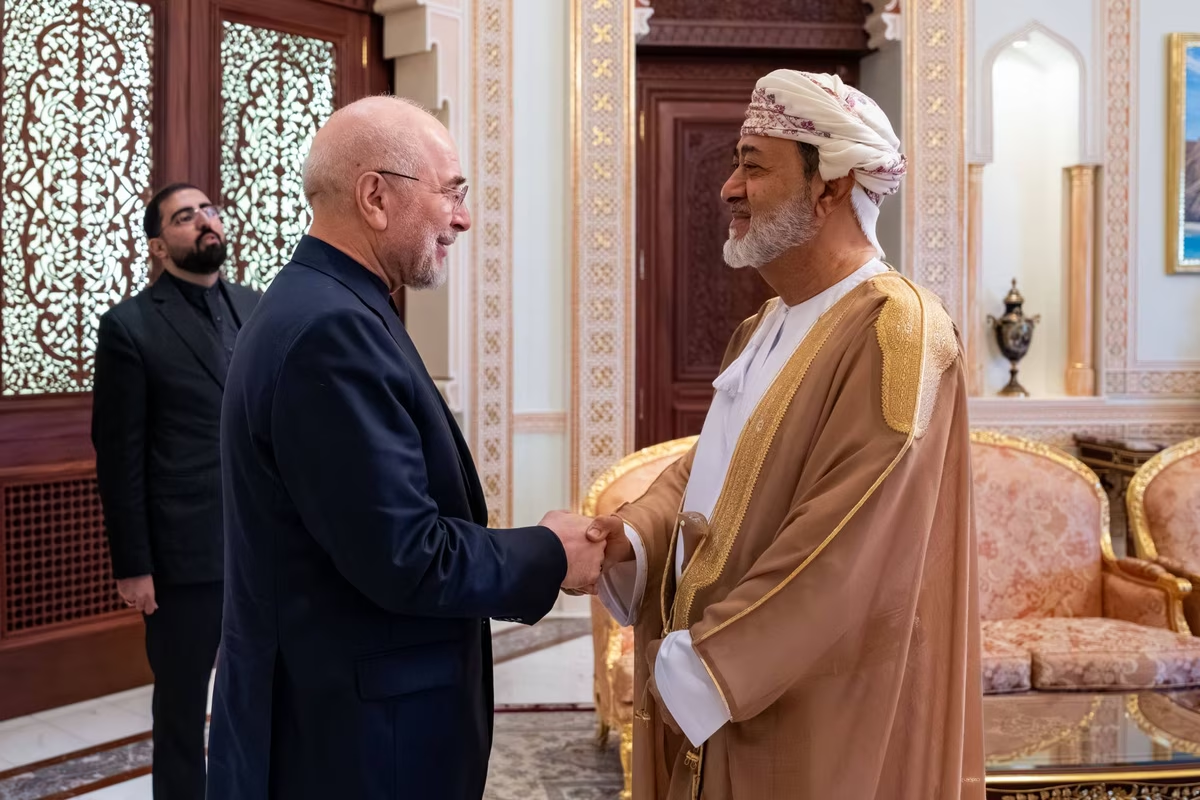
After it became clear that the anticipated US-Iranian meeting in Doha on Tuesday, June 30, 2026, would not take place, despite the presence of chief US negotiators Steve Witkoff and Jared Kushner in the Qatari capital, attention quickly shifted from the stalled diplomatic track to an equally sensitive issue, one that could have an even greater impact on the global economy and energy security: the future management of the Strait of Hormuz. At a time when direct talks between Washington and Tehran have halted, new information has emerged indicating progress in consultations between the Sultanate of Oman and Iran regarding the establishment of a joint mechanism for collecting fees or service charges from ships transiting the Strait. This move carries political, legal, and strategic dimensions far beyond the financial aspect, and opens a new diplomatic confrontation between the United States and Iran, with ramifications extending to Europe and the Gulf states.

Information circulating among diplomatic and Iranian sources indicates that the Omani proposal is not, from a legal standpoint, based on imposing fees for the right of passage itself, but rather on establishing a system to fund navigation services, including maritime pilotage operations, emergency response, marine environmental protection, and maintenance of infrastructure related to navigation security. Muscat states that the proposed model is inspired by arrangements in place in the Straits of Malacca and Singapore, where navigation services are funded through contributions linked to the use of maritime lanes without prejudice to the principle of freedom of passage.

However, this formula did not resolve the dispute; instead, it elevated it to a more complex level. While the Sultanate of Oman asserts that contributions will be voluntary, Iran believes they should be mandatory as part of the new arrangements resulting from the recent war. Washington, meanwhile, rejects both principles if they directly or indirectly set a precedent allowing financial burdens to be imposed on transiting vessels in one of the most important international maritime passages.

The American position was made clear by Secretary of State Marco Rubio, who affirmed that the United States opposes the imposition of any payments on navigation traffic, regardless of the terminology used, whether described as fees, contributions, donations, or service charges. From the American perspective, this could open the door to restricting freedom of navigation, which is one of the fundamental principles of international maritime law.

This crisis gains additional importance because it comes as the temporary arrangements stipulated by the ceasefire agreement between Washington and Tehran are nearing their end. That agreement guaranteed freedom of passage in the Strait of Hormuz for only sixty days, during which a permanent understanding on the management of the maritime passage was to be reached. With the political track stalled, this issue appears to be gradually becoming one of the most complex in the relationship between the two parties.

Tehran believes that the recent US-Israeli war fundamentally altered the balance of power in the Gulf, and that during the confrontation, it succeeded in imposing effective control over navigation traffic within the Strait. This led to significant disruptions in global energy markets, raising oil prices to over one hundred dollars per barrel, and also impacted fuel prices within the United States and several major industrial economies. From this perspective, the Iranian leadership believes that the influence gained in the Strait should not be relinquished with the end of military operations, but rather should be transformed into a permanent political and strategic gain.

In contrast, President Donald Trump's administration views the Omani-Iranian project as a new test of its ability to protect the principle of freedom of navigation, which has for decades been a cornerstone of American policy in the Gulf. However, Washington also recognizes that the Sultanate of Oman still represents the most acceptable mediator to both parties, and that losing its role could lead to the closure of one of the last existing diplomatic channels between the United States and Iran. Therefore, American sources confirm that dialogue with Muscat is ongoing, and that the current disagreement does not rise to the level of threatening strategic relations between the two countries, while acknowledging that reaching a consensual formula will require complex technical and political negotiations.

On the European side, the approach appears quite different. European capitals do not support imposing navigation fees, but they tend to seek a legal solution that preserves the flow of global trade and avoids a new confrontation in the region. Therefore, Europeans are focusing on the possibility of developing a voluntary formula that does not constitute legal recognition of Iran's right to impose fees, but at the same time allows for the funding of maritime services in a way that does not conflict with the rules of international law.

Within the Gulf context, the Omani-Iranian project raises a significant degree of reservation. Saudi Foreign Minister Prince Faisal bin Farhan stressed the necessity of restoring the Strait to its pre-war status, considering that the international community should not accept new arrangements imposed by the results of a military confrontation, as this could entrench precedents that would be difficult to reverse later, and grant regional powers additional tools to influence global trade.

Observers believe that the current debate is not about the fees themselves, but about who has the right to set the rules for the new security order in the Gulf. Iran seeks to transform what it considers a field achievement into a permanent political reality, while the United States tries to prevent the entrenchment of any new equation that could be interpreted as an acknowledgment of the decline of its traditional influence in the region. Between these two positions, the Sultanate of Oman attempts to maintain its role as a trusted mediator by offering compromises that prevent the collapse of the understandings reached after the war.
Estimates suggest that the most likely scenario is the establishment of a temporary mechanism based on voluntary contributions to fund navigation services, allowing each party to present the agreement as a political victory without compromising stated positions. However, the possibility of these efforts failing remains, which could push Iran to take unilateral steps within the waters it considers under its sovereignty, potentially opening the door to legal disputes and perhaps new maritime friction.

Should a direct understanding prove impossible, European powers, in coordination with the International Maritime Organization, might push for the establishment of an independent international mechanism to manage and fund navigational services, thereby reducing direct friction between Iran and Western countries. A number of diplomats also suggest that the Strait of Hormuz issue will become one of the main bargaining chips in any upcoming round of US-Iranian talks, so that the future of fees becomes part of a broader deal addressing sanctions, the nuclear program, and security arrangements in the Gulf.

Thus, the Strait of Hormuz is no longer merely a passage for oil tankers; it has become a symbol of a broader struggle over the shape of the regional order in the post-war era. The confrontation is no longer just about freedom of navigation, but about who has the authority to set the new rules in the Gulf, and whether the military balance of power created by the war will translate into permanent political and legal arrangements, or if diplomatic pressure will succeed in restoring the Strait to its traditional rules. In this context, the Hormuz crisis appears poised to be the first test of the nature of the new balances generated by the war, and of Washington and Tehran's ability to manage their rivalry without sliding into a new military confrontation.

OPINIONS

Wed 01 Jul 2026 8:00 am - Jerusalem Time

Rethinking the Strait of Hormuz: Why Geography, Law and Strategy Resist Simple Solutions


By: Said Arikat


July 1, 2026


News analysis


Washington, D.C- Every few years, usually during periods of heightened tension in the Gulf, discussion resurfaces about how to manage the strategic vulnerabilities of the Strait of Hormuz. The latest reported idea—attributed to Omani diplomatic channels—suggests a framework involving closer coordination between Oman and Iran over aspects of maritime management in the Strait, potentially including new mechanisms affecting passage arrangements for vessels transiting one of the world’s most critical energy chokepoints. Whether such ideas are formal policy proposals or speculative reporting, their significance lies in what they reveal: the persistent search for stability in a waterway that sits at the center of global energy flows and regional rivalry.


The debate quickly follows a familiar pattern. Analysts and commentators reach for analogies—the Strait of Malacca, the Singapore Strait, the Dardanelles, the Suez Canal, the Panama Canal. Each comparison captures part of the truth, but none fully reflects the unique legal and strategic structure of Hormuz. The result is often analytical compression: distinct systems of governance are treated as interchangeable models, and policy conclusions are drawn from flawed equivalences.


Unlike the Suez or Panama Canals, the Strait of Hormuz is not an engineered waterway administered by a single sovereign operator. It is a natural maritime passage linking the Persian Gulf to the Gulf of Oman and onward to the Arabian Sea. Roughly one-fifth of global seaborne oil trade, along with substantial volumes of liquefied natural gas, passes through its narrow shipping lanes. Any disruption—actual or even anticipated—feeds immediately into energy markets, freight rates, insurance pricing, and broader macroeconomic expectations.


This economic centrality is underpinned by a distinct legal regime.


Under the United Nations Convention on the Law of the Sea, international straits used for navigation between two parts of the high seas or exclusive economic zones are subject to the principle of transit passage. This framework allows vessels and aircraft to pass continuously and expeditiously, without prior authorization from coastal states. While Iran and Oman retain sovereignty over their respective territorial waters, that sovereignty is legally constrained by the obligation not to impede lawful transit.


In practice, this places Hormuz in a category very different from most coastal waters. It also explains why comparisons with other maritime passages are only partially useful.


The Suez Canal and Panama Canal are often cited as precedents for toll systems, but both are artificial infrastructures built, maintained, and operated by their respective states. Fees in those cases are payments for the use of engineered transport systems that reduce global shipping distances and require constant operational investment. Their logic is contractual and infrastructural, not territorial.


Hormuz, by contrast, is not a service provided by a state. It is a geographical necessity governed by international legal norms.


The Strait of Malacca offers a different but still limited analogy. Malaysia, Indonesia, and Singapore cooperate extensively on safety, navigation, environmental protection, and anti-piracy coordination. Yet they do not impose mandatory transit fees on vessels merely passing through the strait. Governance is cooperative rather than monetised.


The Dardanelles come closer to a legal analogue, governed by the 1936 Montreux Convention, which balances Turkish sovereignty with international navigation rights. But that arrangement is a historically specific settlement shaped by interwar geopolitical realities, not a general template for global application.


Against this backdrop, any suggestion of introducing formal transit fees or joint sovereign control over Hormuz would represent a significant departure from prevailing international practice. It would almost certainly encounter resistance from major maritime stakeholders, including the United States, Europe, China, Japan, South Korea, India, and others whose energy security depends on uninterrupted passage through the Strait.


Yet legal structure alone does not fully explain the strategic reality.


From Iran’s perspective, the Strait of Hormuz has long represented one of the few enduring strategic assets capable of offsetting conventional military asymmetry. Following periods of heightened confrontation with external powers, including episodes of direct military escalation and the breakdown of diplomatic momentum, Iranian strategic thinking has increasingly reflected a belief that economic pressure and military vulnerability cannot be separated from geographic leverage.


From Iran’s perspective, the aggression waged against it in a full-fledged war by the United States and Israel on February 28, marked a decisive turning point in its strategic environment. Iranian officials argue that the combination of military strikes and the breakdown of diplomatic engagement reinforced their long-held view that external pressure cannot be separated from security vulnerabilities. In that reading, the Strait of Hormuz assumed renewed importance not as an abstract legal corridor, but as one of the few tangible assets available to impose costs in a highly asymmetric confrontation. The gradual “weaponisation” of the Strait, in this sense, is presented in Tehran as a response to circumstances rather than an original strategy.


In that context, Hormuz is not merely a commercial corridor. It is a deterrence instrument embedded in geography.


This does not imply a constant or automatic intention to disrupt maritime traffic. Rather, it reflects a structural logic: states operating under sustained external pressure tend to reassess the value of any asset that can raise the costs of escalation for adversaries. The Strait of Hormuz, given its global importance, inevitably occupies a central place in that calculation.


The uncomfortable implication is that coercive pressure can sometimes amplify the strategic value of the very instruments it seeks to neutralize. What may be intended as containment can, in certain circumstances, reinforce the salience of chokepoints as tools of deterrence.


This helps explain why proposals involving structured governance or coordination mechanisms periodically surface. For Oman, which has built a diplomatic identity around mediation and de-escalation, the appeal of institutionalizing stability in such a sensitive corridor is understandable. Muscat has long maintained balanced relations with Iran while preserving close ties with Western and Gulf partners, positioning itself as a facilitator rather than a partisan actor.


In that sense, any Omani initiative is best understood as risk management rather than geopolitical redesign.


Still, the distinction between cooperation and control remains fundamental.


Practical collaboration on maritime safety, environmental monitoring, search-and-rescue operations, and navigational coordination is both feasible and already present in various forms across global straits. The challenge arises when cooperation moves toward mechanisms that resemble authority over transit rights or the monetization of passage itself.


At that point, the issue shifts from technical governance to foundational principle: the idea that international straits are shared arteries of global commerce, not assets from which passage rights can be extracted.


Even modest charges would introduce uncertainty into a system that depends heavily on predictability. Shipping firms would adjust risk premiums, insurers would reprice exposure, and energy markets would incorporate new geopolitical variables. The cumulative impact would extend far beyond the region, feeding into global price structures.


There is also a broader precedent concern. Altering the implicit norms governing one critical chokepoint could encourage pressure to revisit others, undermining the stability of maritime commerce more generally.


Ultimately, the Strait of Hormuz resists simple classification because it sits at the intersection of geography, law, and strategy in unusually concentrated form. It is at once a local maritime space and a global economic artery; a zone of sovereign adjacency and international legal constraint; and a commercial corridor that doubles as a latent instrument of deterrence.


That combination explains why analogies to canals or other straits repeatedly fall short. Hormuz is not another Suez, Panama, Malacca, or Dardanelles. It is a singular case whose stability rests on a delicate equilibrium between legal norms and strategic realities.


Any attempt to recalibrate that equilibrium—whether through cooperation or competition—will therefore require not only regional consent but broad international acceptance. The consequences of misjudging that balance would not remain confined to the Gulf. They would be transmitted through the core infrastructure of the global economy itself.


And we must all keep in mind that the Strait of Hormuz was open before the U.S and Israel waged their unnecessary, unprovoked war of aggression on Iran on February 28.

PALESTINE

Wed 01 Jul 2026 7:53 am - Jerusalem Time

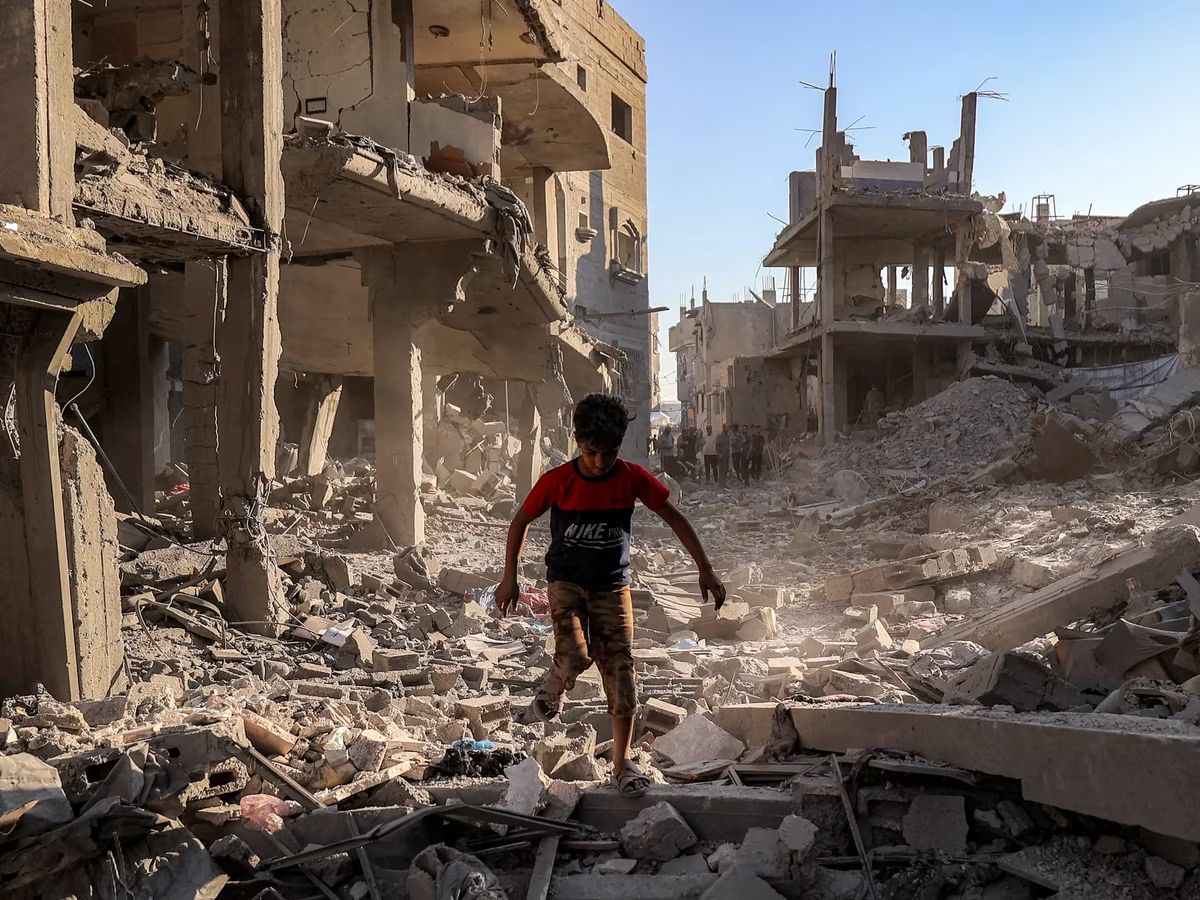
Martyr in Gaza and extensive demolition operations targeting residential neighborhoods in the Strip

A young Palestinian man was killed by Israeli occupation forces' bullets this Tuesday morning while he was in the Salah al-Din Street area, south of Gaza City. Medical sources at the Baptist Hospital confirmed the arrival of the martyr's body after he was directly targeted by snipers positioned around the infiltration axes, amidst ongoing escalating field tensions.

In a remarkable field escalation, engineering units of the occupation army carried out three massive demolition operations targeting the remaining homes and civilian facilities in the northeastern areas of Khan Yunis city, south of the Strip. These explosions were accompanied by intense gunfire from military vehicles that infiltrated the vicinity of the area, causing panic among displaced people near the bombing sites.

Al-Tuffah neighborhood, east of Gaza City, witnessed a massive explosion that shook the area, resulting from the systematic destruction of residential buildings around the Al-Sanafoura intersection. Local sources reported that occupation vehicles heavily fired their machine guns towards the edges of Al-Tuffah and Al-Shuja'iyya neighborhoods, coinciding with the sound of successive explosions inside the areas controlled by the Israeli army.

Regarding military movements, the occupation army continued to expand its field control by removing the concrete blocks that define the 'Yellow Line' westward. This step led to the seizure of more Palestinian lands and their transformation into prohibited military zones, forcing hundreds of families into new forced displacement to escape the Israeli military expansion.

Field estimates indicate that the occupation authorities now effectively control more than 70% of the Gaza Strip's area, by imposing security belts and buffer zones that prevent citizens from accessing them. This military expansion coincides with continuous targeting of displaced persons' tents, where a woman and her daughter were martyred in a bombing that targeted the Al-Mawasi area west of Khan Yunis, which was previously classified as a safe zone.

Regarding human casualties, the Ministry of Health in Gaza announced that hospitals received 8 martyrs and 26 injured in the past twenty-four hours due to scattered raids. Since the start of what was called the ceasefire agreement last October, medical sources have recorded the martyrdom of 1053 Palestinians and the injury of thousands of others, in Israeli violations that have not stopped since the announcement of the supposed truce.

Considering the total statistics since the outbreak of the aggression in October 2023, the number of martyrs has exceeded 73,000, while the number of injured has reached more than 173,000. The ongoing military operations have caused the destruction of about 90% of the civilian infrastructure, including hospitals, schools, water and electricity networks, making the Strip an uninhabitable area.

Attacks were not limited to the Gaza Strip, as 15-year-old child Amir Ahmed Jaber was martyred by occupation bullets in the Umm Al-Sharayet area of Al-Bireh city in the West Bank. The Palestine Medical Complex announced the child's death due to a critical head injury, thus raising the number of victims of the comprehensive Israeli escalation in all occupied Palestinian territories.

The occupation continues its scorched-earth policy by demolishing the remaining residential facilities and expanding the security buffer zone at the expense of citizens' lands.

PALESTINE

Wed 01 Jul 2026 7:52 am - Jerusalem Time

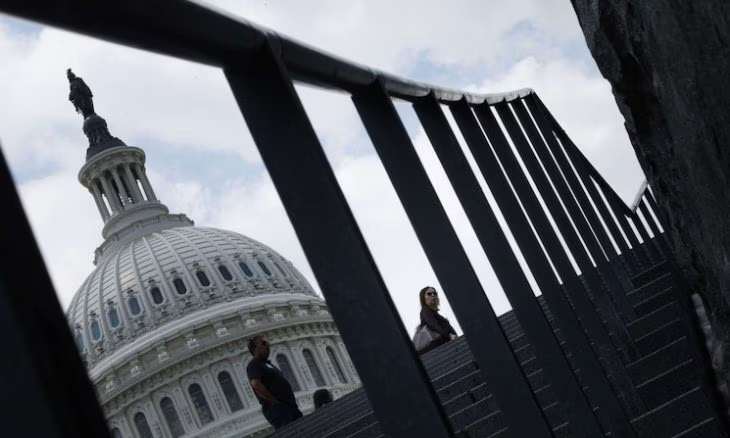
US House of Representatives to Vote on Resolution to End Military Support for the War in Lebanon

The US House of Representatives is preparing for a crucial vote on Tuesday on a resolution aimed at halting US military support for Israeli military operations in Lebanon. This legislative move is based on the War Powers Act and comes amid growing concerns that ongoing attacks could undermine current diplomatic efforts between Washington and Tehran to achieve a comprehensive de-escalation in the region.

Democratic Representative Rashida Tlaib is leading this proposal, which calls on President Donald Trump to end any form of US military involvement in hostilities related to attacks on Lebanese territory. The draft resolution points to the high human cost of the conflict, as military operations have resulted in the deaths of over four thousand people and forced approximately 1.2 million others to flee their homes.

This move is the second of its kind within the House of Representatives this June, following a previous attempt that failed to secure the required majority. Despite the previous failure, that attempt garnered significant support from 91 Democratic representatives in addition to Republican Representative Thomas Massie, paving the way for the issue to be re-introduced with greater political pressure.

Estimates from political organizations in Washington suggest that the new bill could receive broad support ranging from 160 to 210 Democratic representatives. This optimism is driven by the joining of prominent Democratic Party leaders to the list of supporters, most notably Minority Leader Hakeem Jeffries and his deputy Katherine Clark, although final passage would require a breakthrough within the Republican bloc.

For his part, Eric Sperling, Executive Director of 'Just Foreign Policy,' affirmed that merely bringing this resolution to discussion represents a historic development in US foreign policy towards Lebanon. He explained that this is only the second time Congress has seriously discussed ending military involvement on this front, reflecting a shift in political public opinion within Washington D.C.

On the ground and politically, observers believe that the continuation of Israeli military operations has become the biggest obstacle to the Trump administration's ambitions to conclude an agreement with Iran. While initial understandings call for a ceasefire on all fronts, Tehran insists that any agreement will not see the light of day without a complete Israeli withdrawal from the Lebanese territories that have been encroached upon.

In contrast, the Israeli government shows clear intransigence towards these international moves, with Prime Minister Benjamin Netanyahu stating that his forces will not withdraw from Lebanon as long as he remains in office. Defense Minister Israel Katz further reinforced this position by asserting that Tel Aviv has not received any official requests from the American side for withdrawal, indicating a gap in the declared coordination between the allies.

Despite a recently reached US-sponsored framework aimed at enabling the Lebanese army to control the south, the situation on the ground remains complex. Israeli airstrikes continue to target various areas, while Tel Aviv stipulates the complete disarmament of Hezbollah before discussing any withdrawal, a condition that the party rejects outright.

Supporters of the resolution in Congress emphasize that the United States remains deeply involved in the conflict through continuous intelligence coordination and approval of military operations. They believe that the vote on the resolution is in fact a referendum on the success of the diplomatic path with Iran, where its rejection means giving the green light for continued military escalation at the expense of political solutions.

The vote on the bill essentially represents a vote on the chances of success of the agreement with Iran, and its rejection means prioritizing military operations over a political settlement.

PALESTINE

Wed 01 Jul 2026 7:52 am - Jerusalem Time

Occupation closes Al-Tadamon Charitable Society in Nablus and escalates incursions in the West Bank

Israeli occupation forces stormed the city of Nablus in the northern occupied West Bank early this Tuesday morning, targeting the headquarters of Al-Tadamon Charitable Society on Al-Adl Street. The military forces confiscated all contents of the headquarters, including computers, offices, and technical equipment, in addition to seizing in-kind aid designated for needy families and orphans in the area.

Following the search and confiscation operation, which lasted for several hours, the occupation authorities issued a military order to close the society for a full year, citing security pretexts claiming the institution supports hostile entities. The invading forces left widespread destruction in the building's facilities before withdrawing, which sparked a wave of local condemnation of practices targeting the infrastructure of humanitarian work.

For his part, Nablus Governor Ghassan Daghlas, during an inspection tour of the headquarters, stressed that these repressive measures will not succeed in deterring national institutions from fulfilling their duty towards vulnerable groups. Daghlas explained that targeting charitable societies is part of a broader plan to undermine the steadfastness of citizens and deprive them of essential services provided by civil society organizations amidst difficult economic conditions.

In a related context, local sources reported that occupation forces carried out a military operation in the town of Yatta, south of Hebron, which included a strict closure of main and secondary entrances. Military bulldozers used earth mounds and concrete blocks to cut off the road connecting Yatta and Samu, obstructing the movement of citizens and preventing them from reaching their workplaces and health centers.

Similar incursions occurred in the town of Beitunia, west of Ramallah, where a military force raided the home of the Awadallah family, searched it, and tampered with its contents before arresting 24-year-old Anas Awadallah. These arrests are part of an intensive daily campaign launched by the occupation in various governorates of the West Bank for several months.

Israeli incursions extended to include the town of Abwein and a number of villages and towns in the western countryside of Ramallah, where military vehicles patrolled the streets amidst searches of several homes. Field sources confirmed that these movements aim to intimidate residents and impose a policy of collective punishment, coinciding with escalating field tensions throughout the Palestinian territories.

Human rights reports indicate that the pace of targeting civil society institutions and relief organizations has significantly increased in conjunction with the ongoing aggression on the Gaza Strip. Observers believe that the occupation seeks, through these closures, to dry up the sources of charitable and social work, exacerbating the humanitarian crises suffered by Palestinians under the weight of the occupation.

Targeting charitable institutions will not stop their work in helping the poor and orphans, and the closure falls within a systematic policy to undermine social services.

OPINIONS

Wed 01 Jul 2026 7:52 am - Jerusalem Time

Corruption in the Land of Black!

Dr. Ibrahim Melhem

Editor-in-Chief

The Iraqi News Agency reported two days ago that the authorities in Mesopotamia had launched a wide-ranging arrest campaign, targeting political and security officials, parliamentarians, businessmen, and governors, on the back of files related to suspicions of corruption and abuse of influence; According to the agency, 47 defendants, including 12 parliamentarians, were arrested as part of an anti-corruption campaign in which the three authorities participated: judicial, executive, and legislative. The news indicates a serious move by the new Iraqi government to address corruption, after it became a phenomenon, and a parallel state, draining resources, and doubling the belts of unemployment and pockets of poverty in a country floating on a sea of oil. After the fall of Saddam's regime, an Iraqi delegation of incoming leaders went to Washington to discuss with President Bush Jr. the files of security, economy, and electricity, and Bush told them: Leave the electricity, and let's discuss the files of security and economy. In a meeting that brought me together, on the sidelines of a media forum in the Jordanian capital, I asked an Iraqi journalist about the situation in the land of black, and he said: "The Americans have adopted a policy based on enriching the elites and impoverishing the homeland." This is a policy that seems to have turned into a cross-border "catalogue", which many elites have enjoyed, seeing homelands as mere spoils. We thank God that we do not have parliamentarians who engage in corruption! And if there are corrupt people among us, God has blessed them with blind justice due to its extreme integrity, transparency, and sensitivity; for the corrupt person is innocent until he reaches the peak of his wealth, satisfies his desire for riches, and reaches, by God's grace and care, his safe havens, laden with vast quantities of gold, silver, branded horses, and crops, before she begins to initiate a lawsuit demanding his extradition and the recovery of his money which he earned from his toil, sweat, and lifelong hardship.. for his throat has always resounded before the masses: "We die, we die, and long live the homeland!".

PALESTINE

Wed 01 Jul 2026 7:52 am - Jerusalem Time

Investigation reveals occupation's plans to bury the two-state solution through 103 new settlement outposts

A recent journalistic investigation has revealed an escalation in the pace of settlement construction in the occupied West Bank, with the occupation government commencing the construction of 103 new settlement outposts under the guise of 'legality'. This systematic step aims to impose geographical and demographic realities that will be difficult to change in the future, effectively killing any chance of implementing a two-state solution.

Media sources indicated that the occupation is proceeding with a strategic plan to Judaize the West Bank by distributing settlements in vital and sensitive locations. Experts believe that this settlement expansion is designed to be a permanent obstacle to any potential political settlement, making it difficult for any future government to reverse these radical changes on the ground.

These moves are a practical translation of statements by extremist ministers in the government, led by Bezalel Smotrich, who affirmed that the Palestinian state is being erased from reality through actions on the ground. Smotrich considered every new housing unit built in the West Bank as an additional nail in the coffin of Palestinian national aspirations.

The danger of undermining the two-state solution is not limited to the practices of the far-right alone but also extends to the absence of any alternative political vision among the opposition camp in Israel. Previous governments have contented themselves with managing the conflict and escalating military operations in the West Bank, providing cover for the silent continuation of settlement expansion.

'Pastoral farms' are emerging as a new strategic tool to reshape the geopolitical landscape in the West Bank, having transformed from individual initiatives into a supported government policy. These farms receive extensive financial, legal, and security support, as part of the occupation's vision for long-term food security until 2050.

Since the 1990s, the settlement movement has developed the model of outposts and farms to circumvent international pressure and the decline of official construction. Ariel Sharon's call in 1999 to seize the hilltops marked a pivotal turning point, with the state providing logistical support to settlers to control strategic heights.

The 'Givat Olam' farm, established in 1996, is considered the first model upon which settlement farms spread across various areas of the West Bank. These farms have become a breeding ground for what is known as 'Hilltop Youth,' groups that carry out systematic attacks against Palestinians to displace them from their lands.

Data indicates that these farms gained double importance after 2009, as part of a counter-plan to Palestinian construction projects and institutions. Through them, settlers aim to prevent any Palestinian urban expansion in open areas and to consolidate full Israeli control over natural resources.

In the Jordan Valley region, the spread of settlement outposts near military training areas and nature reserves has accelerated since 2016. The number of these farms has reached about 130, currently controlling over 780,000 dunams, which is equivalent to half the area classified by the occupation as state land.

In a dangerous development, the Civil Administration of the occupation allocated an additional 16,000 dunams to these farms in February 2025. These settlement entities play a central role in intimidating Palestinian Bedouin communities and forcing their coercive displacement from their historical pastures through continuous violence and threats.

Reports reveal the gradual integration of these farms into the occupation's economic and agricultural system, where they have transformed into investment projects utilizing advanced technologies. Extremist ministers, such as Avi Dichter, oversee the provision of official cover for these projects, asserting that agricultural policy no longer recognizes the Green Line boundaries.

During field visits to settlements, officials in the occupation government stated that government support now extends from the sea to the river without distinction. This trend reflects a genuine desire to erase legal differences between the lands occupied in 1948 and those occupied in 1967, paving the way for the de facto annexation of the West Bank.

On the other hand, researchers and former leaders in the occupation army warn that these policies are leading Israel towards an undemocratic 'one-state' reality. They believe that the elimination of the two-state solution will return the conflict to its starting point in 1948, threatening the identity that Israel seeks to preserve before the world.

Observers affirm that continued settlement will ultimately transform Israel into an apartheid system where a minority controls a demographic majority. Former leaders warned that this reality will not withstand increasing international pressure and may end in demographic and political transformations that do not serve the Zionist project in the long run.

Every settlement, every neighborhood, and every housing unit is an additional nail in the coffin of the idea of a Palestinian state.

OPINIONS

Wed 01 Jul 2026 7:51 am - Jerusalem Time

Is the Private Sector Losing Patience?

The question today is no longer: How does the Palestinian private sector survive the crisis? Rather: How long can it continue to carry the economy on its shoulders?

Over the past two years, the private sector has not merely been a recipient of the economic crisis's repercussions; it has been the pillar that maintained the continuity of economic activity, preserved thousands of establishments, and sustained tens of thousands of jobs despite the sharp contraction and decline in economic activity. However, this sector's resilience is no longer limitless, and signs of exhaustion have become evident in the markets, in investor behavior, and in the decisions of companies that are now leaning towards caution rather than expansion.

The private sector represents the backbone of the Palestinian economy; it employs more than 80% of the workforce and leads the majority of productive, commercial, and service activities. Data from the Palestine Monetary Authority indicates that private sector deposits account for about 93.3% of the total deposits in the banking system, which reflects the close link between the stability of the banking system and the sustainability of private sector activity.

But what this sector faces today is not a single crisis, but a series of intertwined crises. While approximately 17 billion shekels are accumulating within the banking system due to Israeli restrictions on shipping surplus cash, markets are suffering from a lack of operational liquidity necessary for the continuation of commercial activity.

The problem is no longer merely banking; it has become a daily dilemma for traders, industrialists, and investors. The difficulty of depositing cash has forced many companies to keep large sums within their establishments, which entails increased costs for protection, insurance, and money transfer, the disruption of part of the working capital, and delays in settling obligations to suppliers.

The crisis has extended to payment instruments themselves. Commercial checks, which represent one of the most important means of settlement between companies, have become more difficult for a number of traders due to some banks tightening procedures for issuing checkbooks or controls on their use amid the shekel accumulation crisis. Thus, trade slowed down, trust among dealers weakened, and reliance on cash increased at a time when the banking system suffers from an un-employable cash surplus.

Here lies the real paradox; the problem is no longer a lack of funds, but rather the disruption of money movement within the economy. The accumulation of shekels limits deposits, the difficulty of depositing disrupts companies' liquidity management, the disruption of payment instruments slows down trade, and the high cost of financing limits investment, while weak demand leads to reduced production and employment. When these factors combine, the business environment becomes more costly, riskier, and less capable of growth.

Amidst these circumstances, the announcement came regarding the implementation of financing agreements worth 395 million US dollars through five Palestinian banks, as part of the European Facility valued at 400 million Euros to support micro, small, and medium-sized enterprises. This is an important initiative that deserves appreciation, but it requires distinguishing between two different goals: enhancing the liquidity of the banking system on the one hand, and improving private sector access to finance on the other.

Liquidity reaching banks does not automatically translate into cheaper loans for investors. The cost of financing will remain linked to global benchmark interest rates, risk margins, and operating costs, unless these initiatives are reflected in interest rates, collateral requirements, and lending terms. Therefore, the success of these programs will not be measured by the amount of money injected into banks, but by their ability to enable companies, especially small and medium-sized ones, to access affordable financing that helps them invest and grow.

However, even if financing conditions improve, investors will not expand if they do not find a market that can absorb their production. Local demand has declined due to reduced purchasing power, delayed salaries, and slowed consumer spending, which has led many establishments to operate below their production capacity and postpone expansion plans.

Declining confidence remains the most serious challenge. When investors cannot predict the business environment, traders hesitate to expand their activities, and industrialists postpone their investments, the economic cycle enters a contractionary loop that is difficult to break.

It cannot be overlooked that the banking system itself bears part of the burden of this crisis. It holds significant un-employable cash liquidity, while the banking system's deposits exceed 19 billion dollars and the credit facilities portfolio amounts to about 12 billion dollars, which confirms that the problem is not a shortage of financial resources, but rather the disruption of their ability to reach the real economy.

Protecting the private sector is no longer a demand of an economic group, but a national necessity. Every establishment that ceases to operate means fewer jobs, less investment, less tax revenue, and weaker economic growth.

What is required today is an integrated economic vision that begins with addressing the shekel accumulation crisis, ensuring the smooth flow of cash, developing loan guarantee programs, reducing the cost of financing, accelerating the transition to digital payments, stimulating local demand, supporting productive investment and exports, and rebuilding confidence in the business environment.

The Palestinian private sector is not asking for subsidies or exceptional privileges, but rather demands the removal of obstacles that prevent it from playing its natural role in investment, production, and employment.

The question that should occupy decision-makers today remains:

If the private sector loses its ability to lead the economy, who will lead the recovery phase?

Protecting the private sector is no longer an issue for businessmen alone; it has become an issue that affects every Palestinian family. Every establishment that continues to operate means a job preserved, income generated, and investment remaining within the homeland. As for exhausting the private sector, its price will not be paid by the investor alone, but by the worker, the consumer, the public treasury, and the entire Palestinian economy.

Economies do not recover by increased spending alone, but when their private sector regains its confidence and ability to invest and produce.

PALESTINE

Wed 01 Jul 2026 7:51 am - Jerusalem Time

Occupation forces blow up residential blocks in Gaza and expand their field control

Israeli occupation forces escalated their field operations early Tuesday morning, with engineering units carrying out widespread demolition operations targeting remaining homes and facilities in the northern and southern areas of the Gaza Strip. These explosions were concentrated in the northeastern part of Khan Yunis city, accompanied by heavy gunfire from military vehicles stationed around the targeted areas.

In Gaza City, local sources reported hearing a massive explosion that shook the Al-Tuffah neighborhood to the east, resulting from a demolition operation carried out by the occupation army near the Al-Sanafour intersection. This coincided with artillery shelling targeting the northwestern areas of Rafah, causing panic among displaced persons in those areas, which continue to experience tensions despite truce agreements.

Intense gunfire from Israeli vehicles was witnessed on the outskirts of the Al-Shuja'iyya and Al-Tuffah neighborhoods, in a move apparently aimed at preventing any Palestinian movements in areas close to military concentrations. These field movements come as part of a series of continuous violations of the ceasefire agreement announced in October of last year, threatening the collapse of fragile understandings.

Regarding geographical expansion, the Israeli army has, in recent weeks, moved the barriers and concrete blocks associated with what is known as the 'Yellow Line' westward. This measure has effectively encroached upon new areas of the Strip's land and increased the scope of areas prohibited to Palestinians, forcing hundreds of families to displace again from their residential areas.

Palestinian field estimates indicate that the occupation authorities now exercise effective control over more than 70% of the total area of the Gaza Strip through the extended security strip. This intensive military presence hinders citizens' access to their agricultural lands and properties, turning large parts of the Strip into closed military zones under constant surveillance.

According to data issued by the Ministry of Health, Israeli aggressions since the start of the ceasefire have led to the martyrdom of more than a thousand people and injuries to thousands with varying degrees of severity. This toll is in addition to tens of thousands of victims who have fallen since the outbreak of the war in October 2023, amidst widespread destruction of infrastructure and vital facilities in all governorates of Gaza.

The Israeli army currently controls more than 70% of the Gaza Strip's area by moving security barriers.

PALESTINE

Wed 01 Jul 2026 7:51 am - Jerusalem Time

Smotrich's Plan to Judaize the West Bank: 100 New Settlements and a Road Network to Fragment Palestinian Geography

Recent Israeli reports have revealed an unprecedented acceleration in the pace of settlement expansion within the occupied West Bank, as part of a systematic strategy led by Finance Minister Bezalel Smotrich. These moves aim to impose a new geographical and political reality that thwarts any opportunity for the establishment of a Palestinian state in the future, amidst human rights warnings that these policies are turning into de facto annexation of lands.

Smotrich clarified in press statements that the current government has brought about what he described as a 'revolution' in the settlement project, where approximately 160 settlement farms have been established and over 100 new settlements approved. The measures also included the return of settlement to areas in the northern West Bank after the cancellation of clauses from the Disengagement Law, supported by massive investments amounting to billions of shekels.

The new Israeli vision relies on transforming settlement farms from mere isolated residential clusters into tools for creating 'territorial continuity' that connects settlements to each other. This plan seeks to fragment Palestinian geographical contiguity and transform Arab towns and villages into isolated enclaves besieged by Jewish construction.

The Israeli minister indicated that this plan crystallized after reviewing previous maps that showed a superiority in Palestinian geographical connectivity, which the current government is working to completely reverse. Israeli authorities are racing to legalize the status of the largest number of settlement outposts before any potential political change, to ensure the difficulty of their evacuation in the future.

In a related context, Smotrich accused parties in the Israeli opposition of attempting to resume the political process with European officials, warning that any government change could threaten the settlement project. He considered that the events of October 7 changed the general Israeli mood, where the discussion about the West Bank became linked to national security, not just ideology.

For its part, press reports confirmed that what is happening in the West Bank goes beyond traditional expansion, representing an organized project to completely redraw the political and geographical map. Sources explained that the current government alone approved the establishment of 103 new settlements, compared to 127 settlements established from 1967 until it took power.

Data indicates the existence of over 300 settlement outposts being worked on for legitimization, 140 of which are close to receiving official recognition, raising the total number of settlement sites to 470. This shift came as a result of granting Smotrich broad powers within the Ministry of Defense to directly oversee planning and land files in 'Area C'.

Under the new administrative amendments, the role of the Minister of Defense in granting building permits has been reduced, which has led to an unprecedented acceleration in the approval of settlement projects. These measures aim for complete control over 'Area C', which constitutes about 60% of the West Bank's area according to the Oslo Accords divisions.

According to announced plans, the government approved the construction of 60,000 new housing units in settlements by the end of 2025, a huge number compared to previous decades. These constructions are accompanied by the strengthening of the security system, which currently includes 925 military checkpoints restricting Palestinian movement daily.

UN sources confirm that the roads connecting Palestinian areas suffer from continuous deterioration, while huge budgets are allocated to develop highways serving only settlers. The movement of Palestinians between their villages has become a complex task subject to the whims of checkpoints that open and close without prior notice.

Observers believe that the density of settlements along main roads confines Palestinians to gradually shrinking areas, deepening the separation between Arab population centers. This strategic distribution of settlements aims to prevent any geographical contiguity necessary for the establishment of a viable Palestinian state.

The 'Peace Now' movement warned that the last three years have witnessed a radical transformation through the injection of billions of shekels into settlement infrastructure and the weakening of the Palestinian Authority. The movement explained that these policies impose heavy security and political burdens on the region and increase Israel's international isolation.

Estimates from Israeli research institutes also indicated that the ongoing expansion carries strategic risks, as it increases the dispersion of army forces to protect distant outposts. Reports stated that the government allocated approximately 19.8 billion shekels to develop road networks linked to settlements, reflecting the scale of investment in the annexation project.

In conclusion, unprecedented phenomena emerge, such as the legalization of settlements within military firing zones or on private Palestinian lands by political decisions. While some believe that the scale of the expansion has made reversing it impossible, other experts believe that the political and security costs of these policies will continue to escalate.

The settlement project implemented by the current government has brought about a revolution in the West Bank by creating territorial continuity that prevents the establishment of a Palestinian state.

PALESTINE

Wed 01 Jul 2026 7:51 am - Jerusalem Time

Israeli parliamentary failure to pass a law prohibiting Red Cross visits to Palestinian prisoners

Last night, the Israeli Knesset's General Assembly witnessed the defeat of a controversial bill that aimed to prevent representatives of the International Committee of the Red Cross from visiting Palestinian prisoners or obtaining information about their detention conditions. This failure occurred in the first reading after 41 members voted against the bill, compared to only 36 in favor, reflecting the depth of the crisis within the ruling coalition, which lost control of the vote due to the withdrawal of significant parliamentary blocs from the session.

Sources reported that the main reason for the failure to pass the law was the decision by 'Haredi' parties to boycott the voting process, in protest against the government's failure to pass other previously agreed-upon legislation, most notably the military conscription law. This internal division thwarted the efforts of the far-right, which sought to circumvent the Supreme Court's decision issued earlier this month, which allowed the resumption of Red Cross visits to detainees.

The tension was not limited to voting numbers; the Knesset hall turned into an arena for physical confrontations and violent verbal altercations between members. Sources reported that a clash occurred between coalition chairman Ofir Katz and MP Ayman Odeh, involving harsh accusations and vulgar descriptions, which necessitated urgent intervention by Knesset security to separate the parties and prevent the scuffle from escalating into physical injuries.

Ministers and MPs from the far-right, including Itamar Ben-Gvir and Tally Gotliv, participated in the verbal brawl, accusing Arab MPs of supporting terrorism, while opponents responded by describing government policies as reflecting a 'Jewish Nazi' mentality. The proposed law directly targets detainees from the Gaza Strip who were held during the ongoing war, in an attempt to tighten their isolation and prevent any international oversight of their living and health conditions.

For their part, Palestinian and international human rights organizations affirmed that attempting to legislate such a law constitutes a blatant violation of the Geneva Conventions and international humanitarian law, which guarantee the Red Cross the right to monitor detention standards. These organizations stressed that the defeat of the law, even if for internal political reasons, represents a temporary victory for international transparency amid escalating reports of torture and systematic violations suffered by prisoners in occupation prisons.

This project represents an attempt to obscure transparent international oversight of what is happening inside detention centers, especially in light of the escalation of reports of egregious violations.

PALESTINE

Wed 01 Jul 2026 7:51 am - Jerusalem Time

Peace Council.. Unprecedented Powers Raise Questions About the Future of Gaza's Administration

Dr. Dalal Erekat: The most dangerous aspect of these arrangements is that they allow the appropriation of Palestinian properties and rights and their disposal without oversight mechanisms or legal accountability.Akram Atallah: The most dangerous aspect of the draft is granting the council broad powers to dispose of public properties within the Strip, which revives the "Gaza Riviera" project proposed by Trump.Dr. Hussein Al-Deek: Imposing a new legal framework may lead to a reduction in litigation means and make accountability for officials and contractors for any violations more difficult.Mohammed Joudeh: Granting the council powers to use public facilities and properties may open the door to disputes related to property rights, compensation mechanisms, and the limits of the new administration's authority.Dr. Reham Odeh: The Peace Council members' pursuit of broad legal immunity indicates their concern about the legality of their work within the Gaza Strip.Talal Awkal: What is being proposed represents an attempt to confiscate the Gaza Strip, seize land and rights, and turn Palestinians into mere residents or visitors on their own land.Ramallah – Exclusive to "Al-Quds" – The leaked document concerning the so-called "Peace Council" for the administration of the Gaza Strip, and the increase in its powers and the immunity of its members and employees, is raising a wide wave of warnings, amidst fears that it will establish an exceptional governance formula that grants the council unprecedented legal, administrative, and security powers, including broad immunities for its staff, and the right to use public facilities and properties, which raises questions about the future of the Strip's administration and the limits of Palestinian sovereignty in the post-war phase.Writers, political analysts, specialists, and university professors, in separate conversations with "Al-Quds", believe that what was included in the draft published by "The Guardian" goes beyond the framework of reconstruction, to reflect a comprehensive political project that links the rebuilding of Gaza with the reshaping of its political, security, and legal reality, through the establishment of an interim administration with broad powers and independent operating mechanisms, which may limit oversight and accountability, and raise legal problems related to the legitimacy of this administration, property rights, compensation mechanisms, and the future of Palestinian institutions in the Strip.They warn that granting the council broad legal immunities and powers to dispose of public facilities and lands may open the door to violations of Palestinian rights, and lead to legal and political complications at local and international levels, as well as threaten reconstruction efforts if they are not based on a recognized legal framework that preserves Palestinian sovereignty and ensures the protection of individual and public rights, stressing that any future arrangements for the Strip should be based on international law, respect Palestinian rights, and be carried out with Palestinian national consensus.A Highly Dangerous ShiftDr. Dalal Erekat, a member of the Fatah Revolutionary Council and Professor of Diplomacy and Conflict Resolution at the Arab American University, confirms that what was stated in the leaked document regarding the Gaza Strip's governing council, if proven true, represents a highly dangerous shift in the nature of the proposed project for the Strip, as it goes beyond the idea of reconstruction and investment to establish an entity with exceptional powers and immunities outside the framework of national and international law.According to Erekat, this step reflects a transition from promoting Gaza as an investment project under the slogan of the "Middle East Riviera" to an attempt to establish a "free investment zone" with broad legal immunity, which places it outside the system of legal accountability.A Parallel Authority with Privileges Above the LawErekat clarifies that this establishes a parallel authority with privileges above the law, directly affecting Palestinian sovereignty, by creating an independent legal framework not subject to oversight or accountability.Appropriation of Palestinian Properties and RightsErekat points out that the most dangerous aspect of these arrangements is that they allow, under legal cover, the appropriation of Palestinian properties and rights, and open the way for the administration of lands and public facilities, the use of force, and the disposal of properties without oversight mechanisms or legal accountability, which practically means transforming the Gaza Strip into an exceptional area where legal guarantees and Palestinian rights are suspended, in clear violation of the principles of international humanitarian law and international human rights law.Erekat emphasizes that the reconstruction of the Gaza Strip cannot constitute a justification for establishing a special legal system or granting any entity the authority to seize public properties or administer the population outside the framework of Palestinian sovereignty and the provisions of international law. She stresses that any project proposed under the title of peace or reconstruction loses its legitimacy when it turns into a cover that grants broad immunities, establishes an administration without sovereignty or accountability, or allows the investment of resources and lands at the expense of Palestinian national rights, considering that respect for international law and Palestinian rights must be the basis of any future arrangements related to the administration and reconstruction of the Strip.The Importance of Fatah's and the Palestinian Authority's RoleErekat stresses the importance of Fatah and the Palestinian Authority playing a role in restoring leadership of the national project and intervening immediately on behalf of the Palestinian people.A Practical and Integrated Plan to Control the StripWriter and political analyst Akram Atallah believes that what was stated in the leaks regarding the draft of the Gaza Strip's governing council, if adopted, reflects a practical and integrated plan to control the Strip, emphasizing that the matter is no longer just concepts or political proposals, but has become a project that includes a clear system of laws, powers, and procedures for the post-war phase.Atallah clarifies that these facts negate the impressions that prevailed recently regarding a decline in interest in the council or its failure due to a lack of funding or a decline in US President Donald Trump's interest in it, pointing out that what the draft reveals indicates the existence of an integrated vision that knows its goals and implementation mechanisms, and works to prepare the necessary legal and administrative framework for its application.Broad Powers to Dispose of Public PropertiesAtallah stresses that the most dangerous aspect of the draft is granting the council broad powers to dispose of public properties within the Gaza Strip, including lands, public facilities, and the seashore, considering that this is linked to the project that Trump previously spoke about regarding the future of the Strip and what he then called the "Gaza Riviera," and may open the door to seizing or confiscating these properties, even without providing compensation.Atallah points out that the draft also grants broad immunity to the council's staff, employees, and those in charge of it, exempting them from prosecution or trial, which means giving them free rein to act within the Strip without being subject to accountability procedures or Palestinian legal oversight, which grants them broad freedom in managing the Strip and dealing with its resources and properties, whether these procedures relate to administrative decisions or other actions, in the absence of Palestinian legal mechanisms to review their actions or hold them accountable.Broad Immunity for Council StaffDr. Hussein Al-Deek, Professor of Political Science and specialist in American affairs and international relations, believes that what was stated in the leaked draft resolution regarding the Peace Council for Gaza's administration, if proven true, reflects an attempt to grant the council exceptional powers that go beyond the administrative framework, foremost among them broad legal immunity that allows its members, employees, international forces, and contractors working with it to carry out their duties without being subject to prosecution, arrest, or trial before local courts in the Gaza Strip.Al-Deek clarifies that this immunity may negatively affect the rights of Palestinian residents, as it will limit their ability to resort to justice in the event of harm or violations affecting their persons, properties, or interests, at a time when the council justifies these powers by stating that they aim to ensure freedom of movement and the accomplishment of tasks related to serving the residents of the Strip.Use of Buildings Without CompensationAl-Deek points out that the draft grants the council the right to use public buildings and facilities necessary for carrying out its work without compensation, including benefiting from government buildings, ports, crossings, and logistical facilities, in addition to allocating lands or establishments to set up headquarters for the forces and the transitional administration or to serve reconstruction projects.Al-Deek emphasizes that using some public facilities to facilitate services is different from employing them in a way that gives the council broad influence or leads to their misuse, noting that the legally authorized entity to dispose of these properties are the Palestinians themselves, which may raise disputes with citizens, Palestinian factions, and the Palestinian Authority.Broad Legal ImplicationsAl-Deek believes that this formula carries broad legal implications, because the legal system in force in the Gaza Strip is based on Palestinian laws, in addition to some historical laws and military orders, while international law regulates the conditions of occupied territories according to specific agreements, foremost among them the Geneva Convention.Al-Deek believes that imposing a new legal framework may lead to a reduction in litigation means, and make accountability for officials and contractors for any violations more difficult, in addition to raising disputes related to public ownership, the limits of facility use, and the authorized entity to dispose of them.Violation of International LawAl-Deek confirms that international law grants UN missions and international organizations limited functional immunities restricted by official agreements and clear accountability mechanisms, while the immunities contained in the draft, in addition to the powers to use public properties, exceed what is stipulated in international law and the UN Charter. Al-Deek believes that this formula may raise widespread debate about the future of the Gaza Strip's administration, and whether the intention is to establish a temporary transitional administration, a new governance model, or a permanent administration, which may negatively affect reconstruction efforts, and lead to legal, political, and administrative complications in the short, medium, and long term, in the absence of a clear vision for the legal framework governing the council's work.An Attempt to Establish an Exceptional Governance ModelWriter and political analyst Mohammed Joudeh considers that what was included in "The Guardian" report regarding a draft resolution granting the so-called "Peace Council" tasked with administering the Gaza Strip broad powers and immunities, if the information contained therein is correct, does not reflect mere administrative arrangements for the post-war phase, but rather indicates an attempt to establish an exceptional governance model within the Strip that enjoys political, security, and legal powers that go beyond the traditional frameworks of reconstruction missions or international forces.Joudeh clarifies that granting the council, its members, its forces, and its contractors comprehensive legal immunity reflects the project's proponents' awareness of the complex environment in which it will operate, and their endeavor to immunize themselves in advance from any legal accountability that may result from their decisions or field operations in the future.Joudeh emphasizes that this step suggests that the project goes beyond the administrative dimension and moves towards establishing a transitional authority with broad executive tools in administering the Strip.Joudeh points out that the council's demand to obtain public facilities and properties without compensation reveals a vision that grants it actual executive authority within Gaza, and not just an advisory or coordinating role, meaning that the management of security, administrative, and economic affairs may be transferred to a transitional body that oversees various files, linking the reconstruction process with the reshaping of the political and security environment in the Strip.A Vision for Re-engineering Reality in GazaJoudeh notes that the draft shows that reconstruction, according to this vision, is not an independent humanitarian project, but part of a broader political vision aimed at re-engineering reality in Gaza, so that security, disarmament, and the management of public institutions become interconnected components within one project, which explains the presence of prominent American political and security figures in the executive council, and not just specialists in development or relief.Establishing an Exceptional Legal SystemJoudeh believes that the most dangerous aspect of this step is the possibility of establishing an exceptional legal system that limits oversight and accountability mechanisms, and creates a gap between the administering entity and the entities capable of monitoring or holding it accountable.Joudeh clarifies that granting broad immunity without clear legal controls or independent oversight mechanisms may raise concerns about the difficulty of holding officials accountable for any violations or errors that may occur during security operations or reconstruction projects.Joudeh believes that establishing an administration with broad powers without Palestinian consensus or internationally recognized legal cover may raise problems related to the legitimacy of this administration, and increase the likelihood of its rejection by Palestinians and regionally, which may affect its ability to carry out its tasks even if financial and security support is available.Legal and Political Disputes Related to Property RightsJoudeh warns that granting the council powers to use public facilities and properties may open the door to legal and political disputes related to property rights, compensation mechanisms, and the limits of the new administration's authority, especially in light of the widespread destruction and the complexity of land issues in the Gaza Strip.Joudeh points out that the future of reconstruction has also become linked to the conflict over the entity that will administer the Strip and determine the form of authority and political and security decisions during the post-war phase.Sensitivity of the Legal EnvironmentPolitical writer and analyst Dr. Reham Odeh believes that what "The Guardian" newspaper revealed regarding a draft resolution granting the so-called "Peace Council" tasked with administering the Gaza Strip broad legal immunity and powers to use public facilities and properties, reflects the council's proponents' awareness of the sensitivity of the legal environment in which they will operate, in light of the ongoing Israeli violations in the Strip and the legal responsibilities that may result from them in the future.Odeh clarifies that the council members' pursuit of broad legal immunity indicates their concern about the legality of their work within the Gaza Strip, especially in light of ongoing Israeli military operations, the bombing of residential areas, and the control of what is known as the "Yellow Zone," which are practices considered a violation of international law. Odeh believes that the council members seek legal guarantees that prevent them from being held responsible in the future or implicated in files related to Israeli violations, which may expose them to international trials or penalties related to human rights violations, which prompts them to demand an international legal framework that provides them with protection while carrying out their duties.Non-Recognition of Existing AuthoritiesOdeh confirms that the council's demand to obtain headquarters and public facilities without compensation is also linked to legal problems related to land ownership within the Strip, as the council does not recognize the existing government authorities in Gaza, which would allow it to contract with them to rent official headquarters, while the occupation controls large areas of the Strip, most of which are private properties of citizens.According to Odeh, the council fears using these lands and then facing legal or financial claims later from their owners, so it seeks to exempt itself from any legal obligations or compensation that may arise from the use of these properties.Odeh also points out that the council seeks to provide immunity for local employees and members of the planned technocratic administration, fearing their arrest by the ruling authority in the Strip or future legal accountability by the Palestinian Authority, thereby ensuring their freedom to work within Gaza.Impact on Land and Property OwnersOdeh warns that the most dangerous repercussions of these arrangements will affect Palestinian citizens, especially owners of lands and properties located in areas controlled by the occupation, as they may be treated as public or common lands, allowing their use in reconstruction projects without the consent of their owners or compensation, which may lead to the confiscation of individual property rights under the pretext of reorganizing the urban environment in the Strip.Importance of Reaching Understandings with the Palestinian AuthorityOdeh stresses the need to reach clear understandings between the Palestinian Authority and the council to ensure that no land or property is disposed of without referring to the original owner, and to prevent any pressure that may be exerted on citizens to waive their properties. Odeh emphasizes the importance of any reconstruction plans being coordinated with the relevant Palestinian authorities, especially the Land Authority, the Ministry of Public Works, the Ministry of Local Government, and municipalities, and for the Palestinian technocratic committee to play an effective role in protecting property rights and defending national interests, in addition to launching diplomatic action with donor countries to ensure that no projects are funded that do not include legal and human rights guarantees that ensure the protection of the rights of the residents of the Gaza Strip.A Project Beyond the Concepts of Mandate or GuardianshipWriter and political analyst Talal Awkal warns of the danger of what was contained in the leaks regarding the draft of the so-called "Peace Council" for the administration of the Gaza Strip, considering that if proven true, it reveals a project whose danger exceeds the concepts of mandate or guardianship, and reflects a trend consistent with what US President Donald Trump previously announced regarding his desire to buy the Gaza Strip.According to Awkal, what is being proposed, according to these leaks, is not about the reconstruction or development of the Strip, but rather represents an attempt to confiscate Gaza and seize land and rights, and turn Palestinians into mere residents or visitors on their own land, after stripping them of property rights through procedures and documents based on illegal pretexts.Control of Natural ResourcesAwkal emphasizes that the true goal of the project is not reconstruction or turning Gaza into a tourist area, but rather controlling natural resources, foremost among them gas and oil fields off the coast of the Strip.Awkal believes that in the best-case scenario, this trend may lead to the displacement of large numbers of Palestinians, while those who remain become a workforce serving investors.Awkal confirms that the law being discussed goes beyond all international laws and norms, and establishes a special legal system that lacks oversight and transparency, and deprives those affected of any means of access to justice or reliance on international institutions.Awkal calls on the national committee tasked with managing the situation in the Gaza Strip to reject any engagement with such schemes and not to cover them up, stressing the need to unify the Palestinian position to confront and thwart them.

ARAB AND WORLD

Wed 01 Jul 2026 7:50 am - Jerusalem Time

Qatar clarifies nature of Witkoff and Kushner's visit to Doha and denies direct negotiations with Iran

The spokesperson for the Qatari Ministry of Foreign Affairs, Majed Al-Ansari, announced that US envoys Steve Witkoff and Jared Kushner are on an official visit to the capital, Doha. Al-Ansari clarified that the purpose of this visit is to discuss the latest developments in ongoing negotiations with Qatari mediators, emphasizing that these meetings do not currently include any direct negotiation channels with the Iranian side.

The Qatari spokesperson denied any arrangements for high-level meetings between officials from the United States and Iran in Doha during this period. He also indicated that Doha does not expect the arrival of high-level Iranian delegations in the foreseeable future, affirming that the current diplomatic path focuses on traditional mediation channels led by Qatar to bridge the views between the two parties.

Regarding technical aspects, official sources revealed the continuation of technical talks between Washington and Tehran through various forms addressing thorny issues. These discussions are topped by issues of the Iranian nuclear program and the frozen Iranian funds file, with Al-Ansari confirming that the recent field escalation in the Strait of Hormuz region has not led to the suspension of these vital technical tracks.

Concerning the frozen funds file, the Qatari official explained that these amounts are exclusively allocated to finance humanitarian needs in accordance with previously concluded agreements between the two parties. The State of Qatar plays the role of a financial guarantor mediator for managing these funds, but Al-Ansari noted that a final agreement allowing the actual commencement of procedures for transferring them to the beneficiary parties has not yet been reached.

On the level of navigation security, Doha affirmed the existence of intensive daily coordination with the Sultanate of Oman and regional countries to ensure the safety of ship movement in the Strait of Hormuz. Qatar reiterated its firm stance rejecting any unilateral steps that could threaten the freedom of international navigation, considering that the utmost priority now lies in securing safe passage and removing mines, which it described as a technically complex operation.

The Qatari Ministry of Foreign Affairs stressed that regional stability requires the formulation of comprehensive regional solutions that take into account the security concerns of all concerned parties. Doha is conducting intensive and continuous contacts with both parties to the conflict and international mediation partners, with the aim of advancing negotiations and avoiding any slide towards comprehensive confrontations that could undermine global energy security.

For his part, US President Donald Trump indicated via his private platform that the Iranian side requested a meeting in Doha, which coincided with the White House's confirmations of Witkoff and Kushner's travel to the region. These diplomatic moves aim to follow up on the commitments of the recently reached memorandum of understanding, mediated by Qatar and Pakistan, to end the state of tension in the Middle East.

In Tehran, the Iranian Ministry of Foreign Affairs confirmed sending technical teams to Doha to follow up on the implementation of the provisions contained in the latest memorandum of understanding. The spokesperson for the Iranian Foreign Ministry, Ismail Baghaei, stated that the primary goal of these delegations is to ensure compliance with technical agreements, at a time when mediators are seeking to reach a final and comprehensive agreement within the specified sixty-day period.

Technical meetings between the American and Iranian sides continue in various forms, covering various issues including the nuclear program and frozen funds.

PALESTINE

Wed 01 Jul 2026 7:50 am - Jerusalem Time

Hamas Delivers Unified Faction Response to Mediators in Cairo, Adheres to Humanitarian Protocol

A high-level delegation from the Hamas movement, led by leader Zaher Jabarin, arrived in the Egyptian capital, Cairo, on Tuesday for pivotal discussions with Egyptian officials and international mediators. These diplomatic moves aim to complete the implementation of the ceasefire agreement and discuss arrangements related to shaping the future of the Gaza Strip in light of current field developments.

Taher Al-Nono, political advisor to the head of the Hamas movement, stated that the visit primarily focuses on discussing the 'roadmap' drafted by Nikolay Mladenov, the High Representative for the Peace Council, in coordination with mediators. This plan aims for a smooth transition to the second phase of the agreement, which includes complex administrative and security arrangements to ensure stability in the Strip.

The proposed second phase includes the entry of a specialized administrative committee and international protection forces into the Gaza Strip, as a preparatory step before a full Israeli withdrawal from all areas of the Strip. Through these discussions, the movement seeks to ensure the implementation of provisions that guarantee Palestinian sovereignty and protect civilians from any future aggressions.

Informed sources confirmed that the movement's delegation will deliver the official and unified response of the Palestinian factions to the 'amended paper' that the leadership received about two weeks ago from international mediators. The past week witnessed intensive consultations to bridge viewpoints, including new ideas proposed in coordination with the American side to overcome obstacles hindering the negotiation process.

Regarding the arms file, which is considered one of the most sensitive and complex issues, sources stressed the firm Palestinian position rejecting any Israeli occupation interference in this matter. The movement insists that the 'National Committee for the Administration of Gaza' be the sole authority authorized to inventory and address the arms file, considering it an internal matter subject to national consensus.

This new round of negotiations comes at a time when parties are exchanging accusations of violating the ceasefire understandings signed last October. Medical and field reports have monitored the continued fall of casualties, with more than 1050 Palestinians killed by occupation forces since the presumed truce began, putting previous agreements to the test.

On the other hand, sources recorded the killing of 5 Israeli soldiers during the same period, reflecting the fragility of the field security situation and the continuation of tensions despite diplomatic efforts. Palestinian factions demand an end to the daily assassinations carried out by occupation forces and full adherence to what was agreed upon in previous Sharm El Sheikh understandings.

1. The movement places the activation of the 'Humanitarian Protocol' as a fundamental and essential condition for moving to any future political or security steps in the negotiation process. This protocol includes ensuring the entry of all basic needs for the population, providing necessary materials for restoring dilapidated infrastructure, and supporting hospitals and bakeries suffering from severe resource shortages.

Intensive meetings held by the Hamas leadership with mediators from Egypt, Qatar, and Turkey have resulted in the crystallization of a unified national position representing all active Palestinian forces. This consensus aims to present a comprehensive vision to mediators that guarantees the rights of the Palestinian people and puts a definitive end to the military aggression and siege imposed on the Gaza Strip for years.

The current meetings in Cairo revolve around transforming the war cessation agreement from mere paper understandings into a tangible reality on the ground. The Palestinian negotiator focuses on the necessity of a comprehensive cessation of all aerial and artillery bombardment operations, and an end to the policy of field assassinations targeting cadres and activists in various areas of the Strip.

In the relief dimension, the factions demand the permanent opening of all border crossings and the facilitation of humanitarian and medical aid flow without Israeli restrictions or obstacles. This step is considered a fundamental pillar for alleviating the escalating humanitarian suffering and enabling international and local institutions to play their role in assisting displaced persons and rebuilding what the occupation has destroyed.

The discussions also seek to enable the 'National Committee' to assume its official duties in managing the affairs of the Gaza Strip, ensuring the unity of the administrative and political position. The Palestinian side affirms that the success of any agreement depends on the extent of the occupation's commitment to the strict implementation of the first phase's provisions and the cessation of all forms of military aggression as a gesture of goodwill towards international efforts.

Hamas insists that the National Committee for the Administration of Gaza exclusively handle the process of inventorying and addressing arms, with an absolute rejection of any role for the occupation in this sovereign file.

PALESTINE

Wed 01 Jul 2026 7:50 am - Jerusalem Time

Occupation begins roofing the courtyard of the Ibrahimi Mosque: A plan to erase landmarks and threaten the safety of the historical structure

The Ibrahimi Mosque in Hebron is facing a new and dangerous chapter in attempts to alter its historical features and Islamic architectural identity. The Israeli occupation authorities have actually begun constructing a massive iron roof over the open area of the mosque, known as the 'courtyard of the sanctuary,' using heavy machinery and cranes that were brought into the courtyards simultaneously with repressive measures that included preventing the call to prayer.

Field sources reported that these moves aim to impose a new reality on the religious and historical landmark, amidst growing fears from the Palestinian Endowments and Hebron Municipality. These measures are intended to strip national bodies of their legal and administrative powers, and to cancel their original role in managing and maintaining the sanctuary in favor of expanding the surrounding settlement outposts in the heart of the Old City.

For his part, the Mayor of Hebron, Yousef Al-Ja'bari, affirmed that the warnings previously issued by the municipality regarding the withdrawal of powers have now become a tangible reality. Al-Ja'bari explained that the roofing of the courtyard represents a blatant assault on the historical powers of the Endowments and the Municipality, and a deliberate step to erase the Islamic architectural art that has distinguished the sanctuary for many centuries.

In the context of technical warnings, Tawfiq Jahshan, head of the legal department at the Hebron Rehabilitation Committee, pointed to the significant structural risks posed by the roofing project. He explained that the open courtyard represents the natural breathing and ventilation lung for the ancient archaeological building, and that its closure will inevitably lead to moisture retention within the historical walls and erosion of its stones, which could cause dangerous cracks that threaten the safety of the mosque.

This step was not accidental, but rather the culmination of an escalating process that began early this year under the direct patronage of Israeli Finance Minister Bezalel Smotrich. Last January, the so-called Higher Planning Council of the Civil Administration approved the withdrawal of planning powers related to the sanctuary from the Hebron Municipality, in order to bypass the municipality's repeated refusal to grant licenses for Judaization projects inside the mosque.

These measures were reinforced last February by decisions from the mini-cabinet 'Kabinett,' which included the annulment of historical laws that regulated land ownership in the West Bank. This was followed by the transfer of all building permit powers in Hebron from the Palestinian Municipality to the Israeli Civil Administration, in a step aimed at legitimizing settlement expansion within Arab neighborhoods.

By mid-June, Smotrich officially announced the completion of procedures for transferring planning responsibility entirely to the Israeli side, considering it part of a plan to impose field sovereignty. Israeli machinery began on the twenty-third of the same month to remove the historical canopy in the courtyard, as a preliminary step to install the new iron roof that changes the features of the place.

This Israeli move represents a blatant violation of the 'Hebron Protocol' signed in 1997 between the Palestine Liberation Organization and Israel, which divided the city into two security zones. Despite the sanctuary being located within the Israeli security control area 'H2,' the agreement explicitly stipulated that civil powers, including planning, construction, and infrastructure, would remain in the hands of the Palestinian Hebron Municipality.

The occupation seeks through its recent decisions to permanently cancel this legal clause, as it approved the construction of a Jewish religious school with an area of up to one thousand square meters near the 'Beit Romano' settlement. These constructions are taking place without any coordination or approval from the relevant Palestinian authorities, reflecting the occupation's desire to reduce the role of Palestinian national institutions to their lowest levels.

Palestinian officials warn that these changes aim to place the Ibrahimi Mosque, listed on UNESCO's World Heritage in Danger list since 2017, in a direct threat circle. The architectural change not only affects the religious sanctity of the place but also disregards international laws that protect archaeological and historical sites in occupied territories.

The roots of this Judaization plan date back to 1994, following the horrific massacre committed by a settler inside the sanctuary that led to the martyrdom of 29 worshippers, where the occupation exploited the incident to divide the mosque temporally and spatially. Since then, measures have continued to tighten the noose on worshippers by deploying more than 120 military checkpoints and inspection points surrounding the Old City and preventing freedom of worship.

Observers believe that the transfer of planning powers to the religious council of the 'Kiryat Arba' settlement represents the final stage in the plan to isolate the Ibrahimi Mosque from its Palestinian surroundings. This policy aims to transform the mosque into a Jewish synagogue by imposing full constructional and administrative control, intensifying electronic barriers to restrict Palestinian access, and securing settlement expansion in the heart of Hebron.

What the municipality previously warned about regarding the withdrawal of powers is now being implemented through the roofing of the courtyard to erase the Islamic architectural features of the sanctuary.

PALESTINE

Wed 01 Jul 2026 7:50 am - Jerusalem Time

Israeli Incitement Campaign Targets 'Prada' Brand and its Palestinian Ambassador Over 'Palestine Map' Necklace

Social media platforms witnessed a widespread wave of attacks targeting the famous Italian fashion house 'Prada', following the appearance of Palestinian singer Marwan Abdelhamid, known as 'Saint Levant', as an advertising face and ambassador for the brand. This tension arose after the company's official account posted a video of the artist during the men's fashion show in Milan, where he appeared wearing a necklace depicting the historical map of Palestine.

Accounts supportive of the Israeli occupation considered the appearance of the necklace to be a political message calling for what they described as 'the erasure of Israel', claiming that the map, which includes the land from the river to the sea, constitutes direct incitement. The campaign was not limited to criticizing the visual symbol but extended to accusations against the global brand of adopting anti-Semitic political stances and explicit calls to boycott its products.

Monitoring sources reported that the controversy began immediately after the launch of the Spring/Summer 2027 fashion show hashtag, with Hebrew and English comments focusing on the details of Saint Levant's appearance. These accounts claimed that Prada was promoting a product bearing a 'fake map', which they considered a 'punch in the gut' and a deep disappointment for occupation supporters around the world.

The digital campaign escalated, with influential figures demanding that 'Prada' clarify its official position on choosing a Palestinian artist as its ambassador. Some posts went as far as to consider this step an explicit declaration of the company's leanings, leading to a wave of interactions that ended with farewell phrases to the brand as a form of consumer protest.

The pressure did not stop at the necklace; the inciting accounts brought up previous stances of the artist Marwan Abdelhamid regarding the Gaza Strip and the Palestinian cause. The instigators tried to link the artist's name to the Amsterdam events that occurred in late 2024, in an attempt to frame his global appearance as support for what they describe as violence or hostility towards Jews.

The former spokesperson for the Israeli government, Eylon Levy, participated in the incitement campaign by reposting photos of the artist with a sarcastic comment inspired by a famous movie, saying: 'The devil wears Prada sometimes.' This type of discourse aims to exert moral and political pressure on global companies to deter them from cooperating with influential Palestinian figures.

A technical analysis of the interaction network showed that the campaign was not spontaneous but was led by organized accounts active in monitoring what they call 'anti-Semitism'. These accounts were distributed across several languages, including Italian, German, and Hebrew, indicating an attempt to internationalize pressure on the Italian company in its main European markets.

In Italy, posts in the local language accused 'Prada' of promoting political symbols calling for the removal of Israel through its new ambassador. In Germany, the same narrative was repeated, considering the historical map of Palestine an unacceptable symbol in international forums, demanding that the company immediately review its advertising contracts.

Open-source data revealed that 'Prada's' official account became the largest node in the interaction network, not as a participating party but as a direct target for thousands of replies and quotes. This digital tactic aims to flood the brand's accounts with criticism to push it towards issuing an apology or canceling cooperation with the Palestinian artist.

Names like 'Hen Mazzig' and 'Heidi Bachram' emerged as active elements in pushing this narrative and expanding its reach among Western followers. These accounts worked to transform a minor detail in a fashion show into an international public opinion issue related to the conflict in the Middle East, warning of the consequences of 'politicizing fashion'.

Artist Saint Levant, born in Jerusalem and of Gazan and Jordanian descent, is known for his clear stances supporting the rights of the Palestinian people in his songs and statements. It appears that his arrival on a global platform like 'Prada' has provoked the circles supportive of the occupation, which seek to obscure the Palestinian narrative from cultural and aesthetic spaces.

The campaign, which included more than 2,800 posts, attempted to exert 'intellectual terrorism' on brands that provide space for Palestinian creators. The interactions included direct messages to international organizations demanding their intervention against what they described as 'promoting extremist agendas' through the facade of high fashion.

Despite significant pressure, 'Prada' has not yet issued an official statement retracting the choice of Saint Levant, which Palestinian activists considered a stand against cancellation attempts. Observers confirm that this campaign reflects growing Israeli concern about the infiltration of Palestinian national symbols into global popular culture.

The 'historical Palestine' necklace remains a symbol of identity for millions of Palestinians and supporters of their cause around the world, despite attempts to criminalize it. This incident reveals the extent of the challenges faced by Palestinian artists in the international arena, where political accusations pursue them even in the fields of art and fashion.

Sometimes the devil wears Prada... a sarcastic comment from Eylon Levy attempting to link the brand to political stances hostile to the occupation.

PALESTINE

Wed 01 Jul 2026 7:50 am - Jerusalem Time

Widespread destruction in the town of Haris, and Netanyahu conditions withdrawal from southern Lebanon on ending Hezbollah's presence

A field tour in the town of Haris, located in the Bint Jbeil district of Nabatieh Governorate, revealed the extent of the massive destruction inflicted by the Israeli occupation on homes and private properties. This town is considered one of the last points civilians are allowed to access before entering what is called the security zone, which Israel controls.\n\nThe occupation authorities refer to the security zone as a buffer strip extending several kilometers deep into Lebanese territory along the land border. Israel has worked to establish and expand this strip during the extensive military operations it launched in 2024 and 2025, under the pretext of securing the residents of the north.\n\nIn a clear defiance of international agreements, Israeli Prime Minister Benjamin Netanyahu announced his adherence to continuing the occupation of this security strip. These statements came despite the entry into force of the Iranian-American agreement in mid-June, which emphasizes the necessity of respecting Lebanon's sovereignty and territorial integrity.\n\nOn June 26, Beirut and Tel Aviv signed a US-sponsored framework agreement aimed at regulating a gradual Israeli withdrawal. This process begins from two pilot areas, but ambiguity still surrounds the final timetable for a complete withdrawal from all occupied Lebanese territories.\n\nThe Israeli side links any withdrawal step to the Lebanese army assuming full security responsibility in those areas. The occupation also stipulates the disarmament of all non-state armed groups, in a direct reference to Hezbollah's weapons, which complicates the implementation of the agreement on the ground.\n\nField sources from the town of Haris reported that civilian movement stops at a Lebanese army checkpoint located at the end of the road leading to the town. Beyond this checkpoint, access is prohibited to the town of Hadatha, which the occupation army has turned into a center for incursions and command towards other southern towns.\n\nThe sources observed completely destroyed homes at the last available border point, where some residents are trying to return to inspect their properties using heavy machinery to clear roads blocked by rubble. These scenes reflect the extent of suffering experienced by residents of border areas amid ongoing airstrikes and artillery shelling.\n\nThe town of Haris suffers from an almost complete lack of basic services, as water and electricity supplies have been cut off due to direct targeting of infrastructure. Israeli military operations have caused widespread and undeniable destruction, raising serious concerns about the situation of towns still under direct occupation.\n\nEstimates indicate that the area currently occupied by the Israeli army in southern Lebanon amounts to about 600 square kilometers. There is concern that the extent of destruction in cities and villages that cannot be accessed is much greater than what has been documented in areas accessible to civilians.\n\nIn a related context, Netanyahu conducted an inspection tour accompanied by his security minister, Yisrael Katz, within the occupied security strip areas. During the tour, Netanyahu reiterated his assertion that Israeli forces would remain in the south as long as Hezbollah's presence continued, considering that the threat still exists.\n\nNetanyahu issued strict instructions to his soldiers to act immediately upon detecting any threat without waiting for additional orders. These statements come at a time when Israeli forces have penetrated more than 10 kilometers into Lebanon, thus exceeding the traditional occupation areas that date back many years.\n\n"As long as Hezbollah is here and threatens us, we will remain here. Our instructions to the fighters are: If you detect a threat, act.