ARAB AND WORLD

Thu 20 Jun 2024 5:39 pm - Jerusalem Time

A prominent American senator says that inviting Netanyahu to attend Congress is a mistake

US Senator Chris Van Hollen (Democrat from Maryland), a prominent US lawmaker and member of the House Foreign Relations Committee, criticized the decision of the leadership of the House of Representatives and the Senate to invite Israeli Prime Minister Benjamin Netanyahu to deliver a speech before Congress next month.


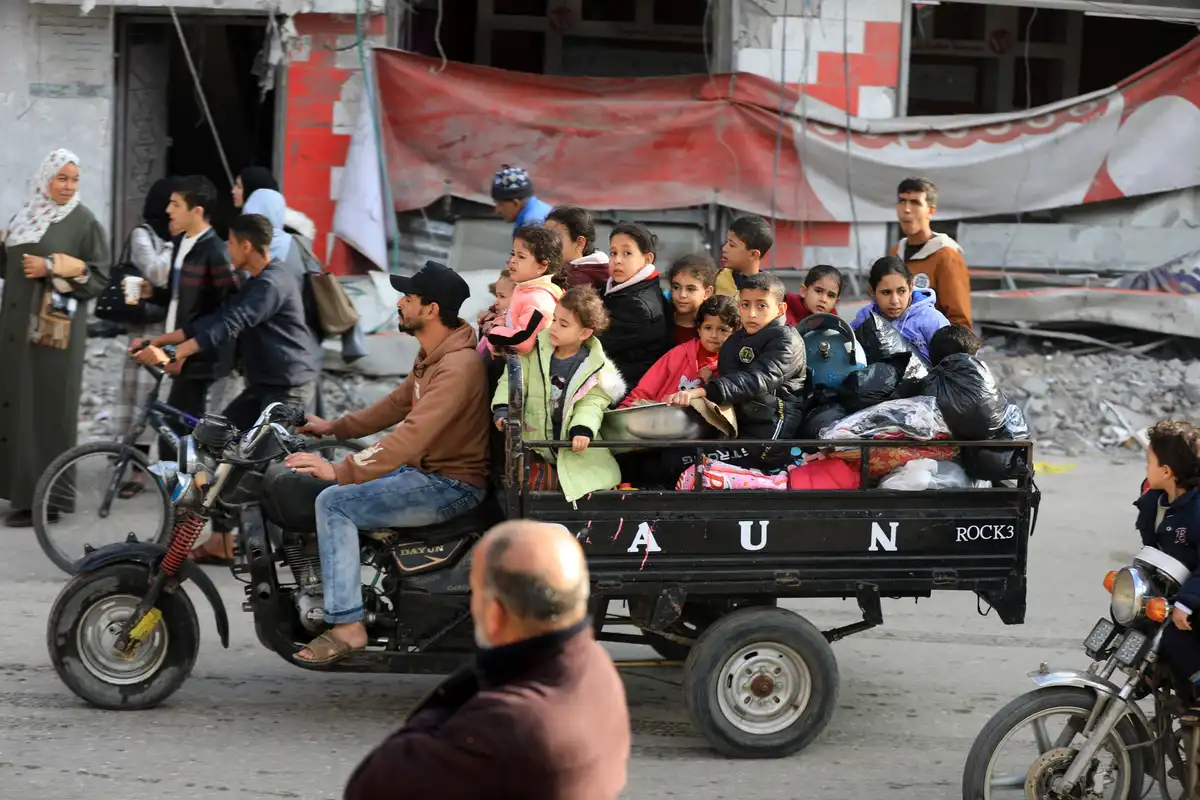
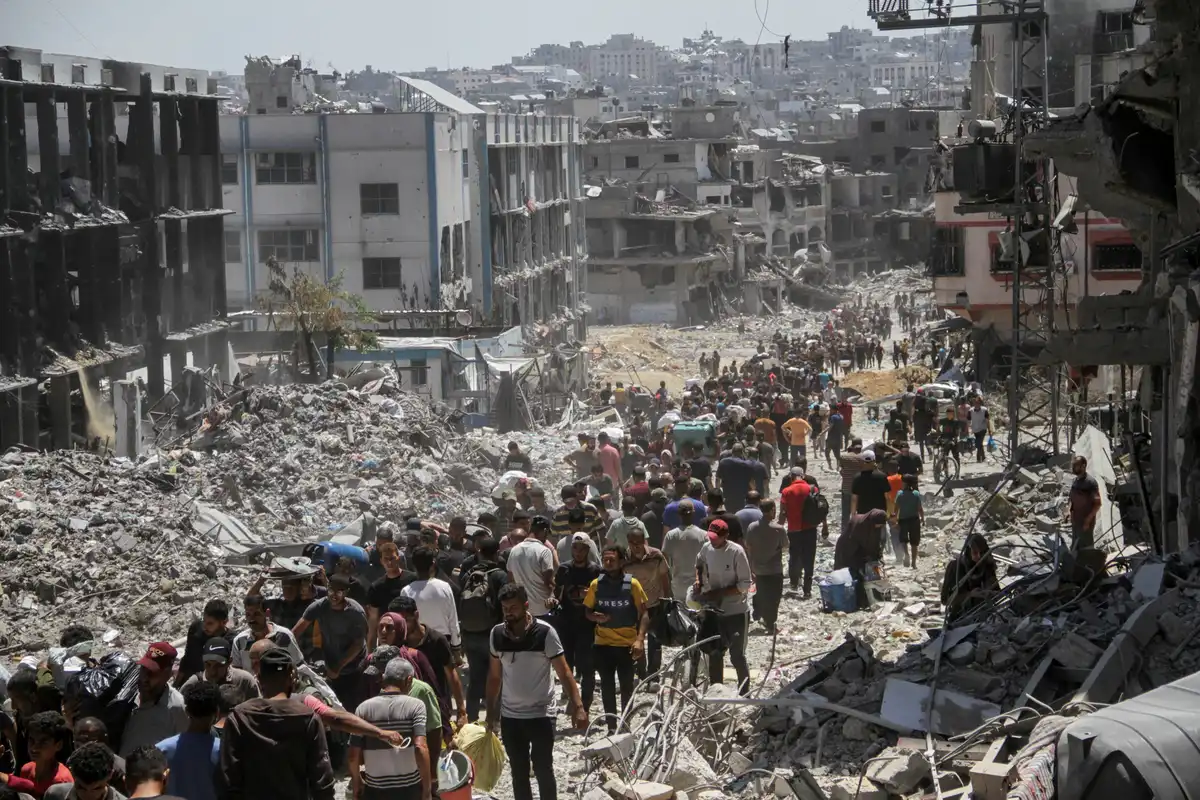
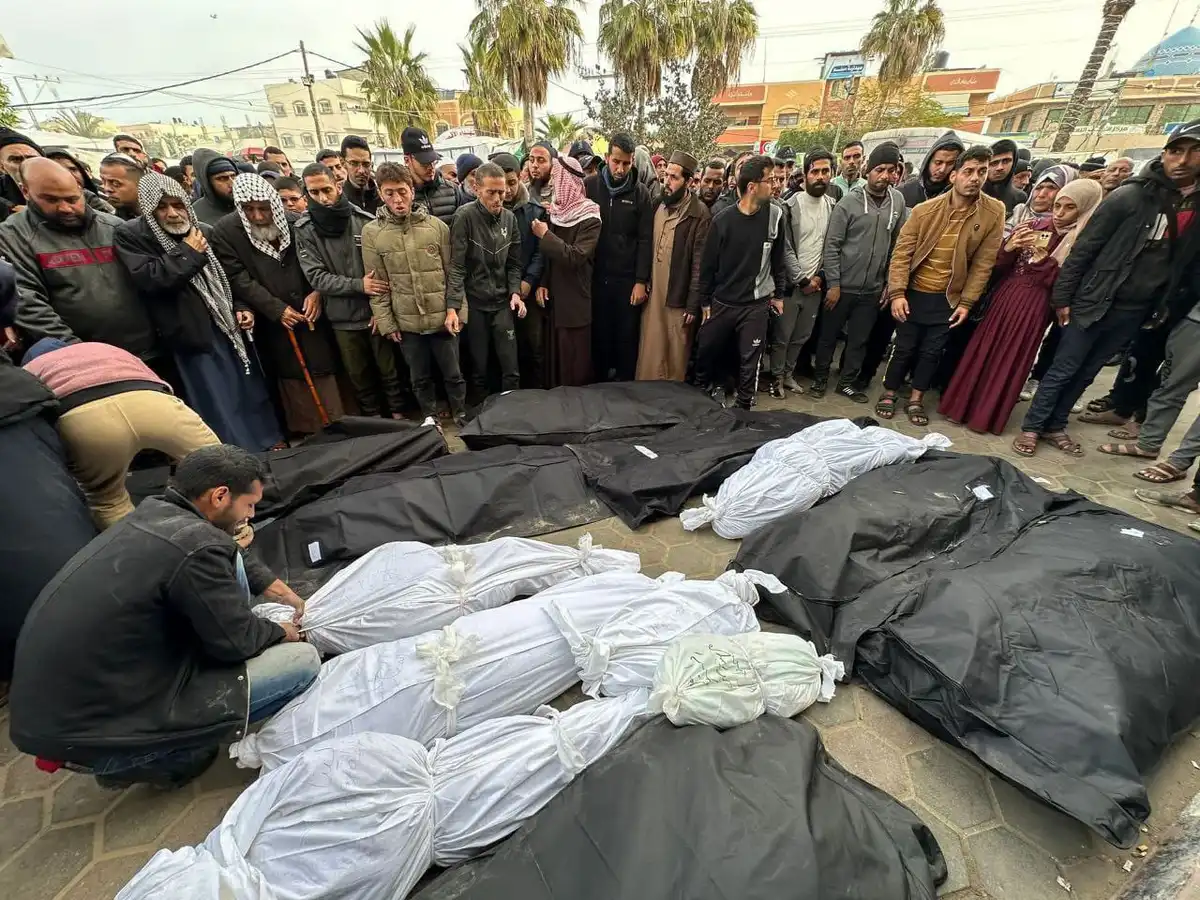
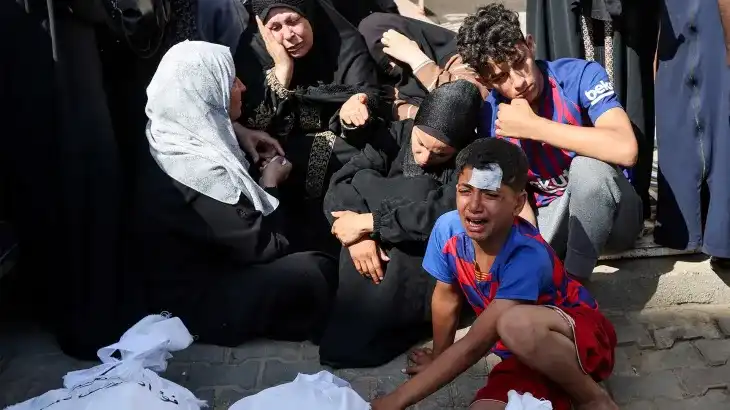
Speaking to Bloomberg newspaper published on Wednesday, Van Hollen said that Netanyahu’s speech before Congress risks signaling that Washington supports his war strategy in Gaza, which has claimed the lives of more than 37,000 Palestinians, most of whom are women and children, and wounded eighty thousand others, most of whom are also women and children. So far, it has destroyed more than 70% of the buildings and infrastructure, and forced the entire population of the Strip to flee.


The senator warns that the invitation to address Congress sends a message to Netanyahu that he can continue to avoid repeated demands by Democrats (in the Senate and House of Representatives) for the Israeli army to do more to protect the lives of civilians in Gaza.


Van Hollen said: “I am not sure why the United States wants to reward the Prime Minister (Netanyahu), who has repeatedly boasted about rejecting the requests of the President of the United States.”


“Netanyahu wants to come here and pretend to be Winston Churchill – and he is not Winston Churchill.”


These statements appear to be a reference to a video clip published by Netanyahu, in which he criticized the administration of US President Joe Biden for keeping a shipment of 1,800 2,000-pound bombs and 1,700 500-pound bombs for Israel.


In the video, Netanyahu compared Israel's war on Gaza to Britain's World War II battle against Nazi Germany, quoting an iconic speech by Winston Churchill in which he called on the United States to supply Britain with new weapons.


“Give us the tools and we will finish the job much faster,” Netanyahu said.


Van Hollen's statements are noteworthy given that he is closer to the center of the Democratic Party, has received hundreds of thousands of dollars from pro-Israel donors, and is less critical of Israel's war efforts than more progressive lawmakers (in the House), such as Rashida Tlaib of Michigan and Cory Bush of Missouri, or Jamaal Bowman from New York, and in the Senate such as Senator Bernie Sanders (from Vermont) and Senator Richard Durbin (from Illinois).


The leaders of the Senate and House of Representatives, both Democratic and Republican, invited Netanyahu to address a joint meeting of Congress on July 24.


“We join the State of Israel in your fight against terrorism, especially since Hamas continues to detain American and Israeli citizens and its leaders endanger regional stability,” the lawmakers said in a letter to Netanyahu.


The invitation comes despite mounting criticism of Netanyahu's handling of the war on Gaza, which included public disagreements with the White House.


Several lawmakers announced plans to boycott the speech, including Senators Bernie Sanders and Elizabeth Warren. Fifty-eight lawmakers were absent from Netanyahu's speech to Congress in 2015.


It is noteworthy that the famous American journalist in the New York Times, Thomas Friedman, who is close to President Joe Biden, criticized in his article on Wednesday Netanyahu’s invitation, and criticized the Democrats who went ahead with the invitation, pointing out that the undeclared goal of this initiative by Republicans in Congress is “to divide the Democrats and provoke Loud insults from their more progressive representatives, which will alienate American Jewish voters, donors and donors, and turn them toward Donald Trump.”


Friedman adds: “Netanyahu knows that it is all about domestic American politics, and for this reason his acceptance of the invitation to speak represents an act of betrayal to Joe Biden - who went to Israel to hug him in the days after October 7 and hugged him tightly” and continued to support him unconditionally. The limited scope of the Israeli war on Gaza.


In addition to criticizing the idea of inviting Netanyahu to visit Washington, Van Hollen repeated his call to halt the transfer of offensive weapons to Israel, until it receives guarantees that Israel will not obstruct the delivery of humanitarian aid to Gaza.


“When it comes to offensive weapons systems, I don't think we should have a blank fingerprint policy,” Van Hollen said.

PALESTINE

Thu 20 Jun 2024 5:26 pm - Jerusalem Time

Gaza: Israeli army claims the assassination of a leader in the elite forces of Hamas

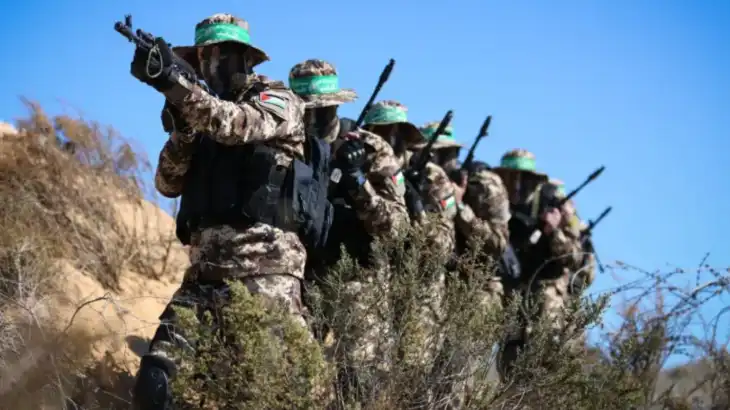
The Israeli occupation army claimed, on Thursday, that it had assassinated a leader in the elite forces of the Hamas movement, Ahmed Hassan Salama Al-Sawarka.


The occupation army said in a statement, “Based on intelligence information, an aircraft carried out a precise and targeted strike to liquidate Al-Sawarka in the Beit Hanoun area in northern Gaza.”


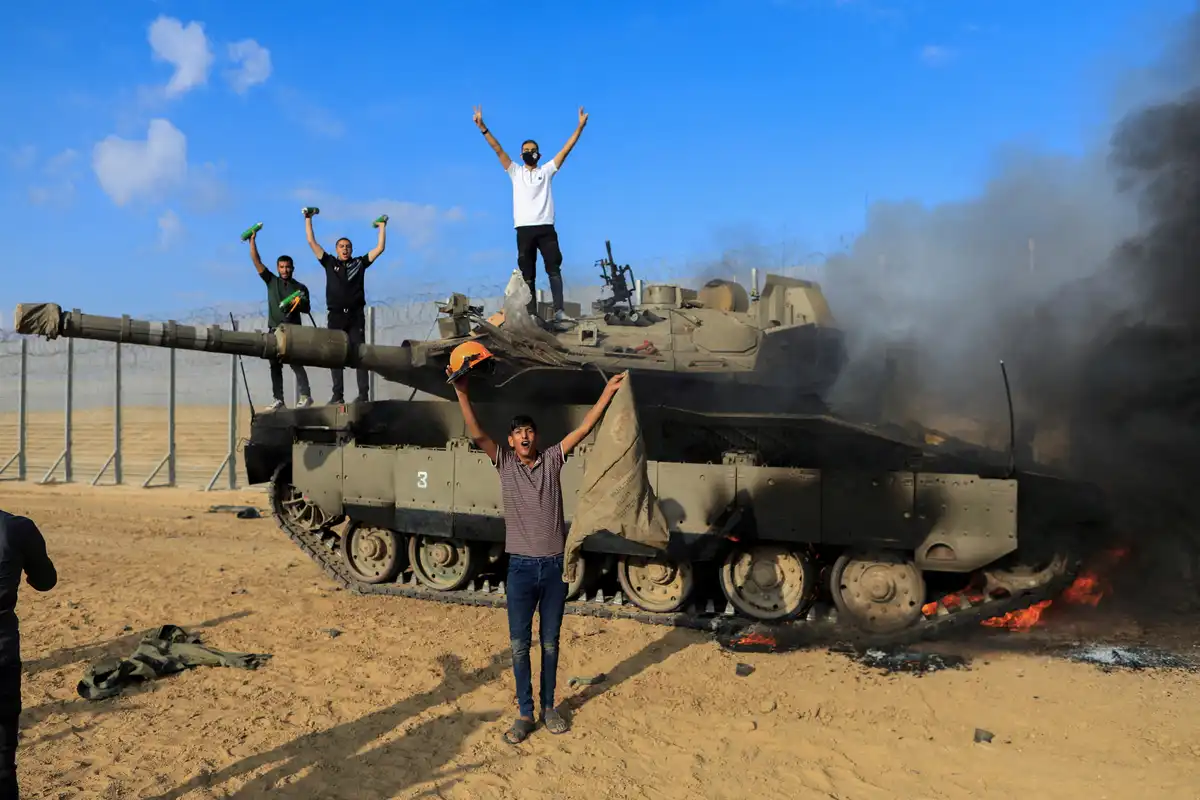
The occupation army claimed that Al-Sawarka was a division commander in the elite forces, who infiltrated the settlements adjacent to Gaza and carried out attacks during Operation Al-Aqsa Flood on October 7 last year.


Itadded, "Al-Sawarka led and managed sniper operations in the Beit Hanoun area and participated in operations against the occupation army."


The occupation army indicated that after an intensive search operation, Al-Sawarka was identified and eliminated in the Beit Hanoun area, as it claimed.


The occupation army also claimed that “before the raid, a number of steps were taken in order to mitigate the harm caused to civilians during the operation. As a result, no civilians were injured during the raid.”


PALESTINE

Thu 20 Jun 2024 4:53 pm - Jerusalem Time

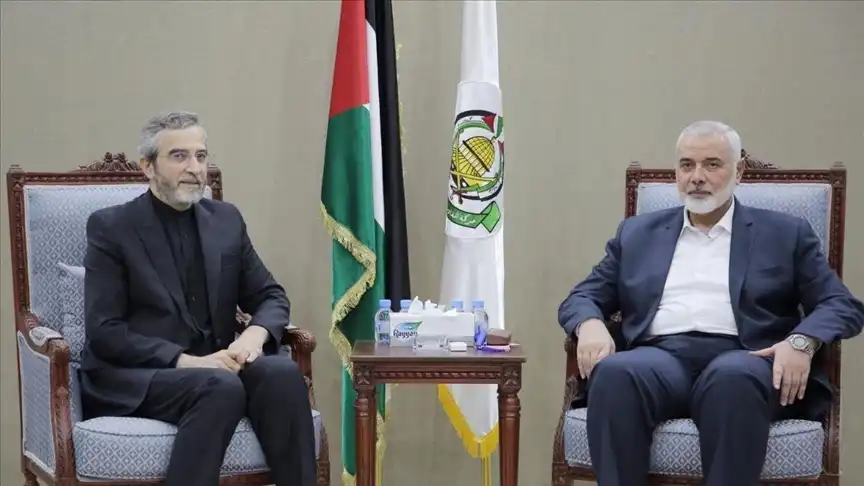
Hamas Haniyeh and Iran's Foreign Minister discuss efforts to stop the "genocide" in Gaza

The head of the Hamas political bureau, Ismail Haniyeh, and the acting Iranian Foreign Minister, Ali Bagheri Kani, discussed in the Qatari capital efforts to stop the ongoing Israeli “war of annihilation” on the Gaza Strip.


The movement said in a statement on the Telegram platform on Thursday: “Haniyeh and a delegation from the movement’s leadership received Iranian Foreign Minister Ali Bagheri Kani and the accompanying delegation last night in Doha.”


The two parties discussed "the political and field developments related to the Al-Aqsa flood (an operation launched by Palestinian factions in Gaza on October 7 last), the overall situation of the Palestinian issue, and efforts to stop the war of genocide and Israeli aggression."


According to Hamas, Bagheri reviewed “the efforts made by Iran to support the Battle of the Flood, especially through regional and international institutions,” including the BRICS, Shanghai, and Organization of Islamic Cooperation groups.


It continued: "As well as through bilateral meetings with foreign ministers of the region and many international actors, all of which aim to stop the Israeli aggression and support the position of the resistance and the Palestinian people."


Haniyeh praised "Iranian efforts, positions and diplomacy" and reviewed "the situation in Palestine, specifically in the Gaza Strip on the humanitarian level and the achievements of the resistance and political movements related to efforts to stop the aggression."


With the mediation of Egypt and Qatar, and with the participation of the United States, Israel and Hamas have been conducting faltering indirect negotiations for months to conclude a prisoner exchange and ceasefire agreement.


Hamas and the rest of the Palestinian factions accuse Israel and its ally, the United States, of not wanting to end the war, and of seeking through negotiations to buy time, hoping that Tel Aviv will achieve gains.


Last May, the Palestinian factions agreed to a proposed agreement put forward by Egypt and Qatar, but Israel rejected it, claiming that it did not meet its conditions.


Haniyeh also reviewed "the conditions in Jerusalem, the West Bank, and inside the occupation prisons, and the daily crimes of the enemy, including invasions, killings, and confiscations," and stressed that "Jerusalem constitutes the address and axis of the conflict with the occupation," according to the statement.


ARAB AND WORLD

Thu 20 Jun 2024 4:14 pm - Jerusalem Time

Hebrew media: 10 missiles were launched from Lebanon at northern Israel

A Hebrew channel said, on Thursday, that more than 10 missiles were launched from Lebanon, at northern Israel, coinciding with the sound of sirens in a number of settlements.


Channel 12 said: “More than 10 missiles were monitored from Lebanon at the towns of Shumira and Zarit in northern Israel.”


It explained that a missile hit a house in the town of Zarit in the Western Galilee.


The Hebrew channel indicated that sirens sounded in a number of Israeli towns near the Lebanese border, including Zarit, Shomira, and Arab Al-Aramshe.


In turn, Hezbollah said in a statement: “We bombed the Israeli Zarit barracks with dozens of Katyusha rockets, in response to the assassination carried out by the (Israeli) enemy in Deir Kifa.”


The Israeli army previously announced in a statement the assassination of “Fadl Ibrahim, the commander of Hezbollah’s operations in the Joya region, who was responsible for planning and carrying out attacks against Israeli territory. At the same time, he worked in command of infantry forces in the Joya region,” he said.


This came after Hezbollah, in a previous statement, mourned “Abbas Ibrahim Hamza Hamada (Fadl Ibrahim), born in 1985, from the town of Shehabiya in southern Lebanon, who rose as a martyr on the road to Jerusalem,” which is an expression the party uses to refer to those killed in the ongoing battles. With the Israeli army.


With the death of Hamada, the death toll of Hezbollah rose to 347 since last October 8, according to party data successively monitored by Anatolia.


Earlier Thursday, the official Lebanese News Agency said that a person was killed in a raid launched by an Israeli march on a car on the road from the town of Derkiva towards the town of Srifa in southern Lebanon.


It reported that the raid launched by the drone on a car on the Derkiva Road towards the town of Srifa “resulted in the fall of a dead”


In recent weeks, the “Blue Line” separating Israel and Lebanon has witnessed a remarkable escalation, and the United States has repeatedly called for it to be contained.

PALESTINE

Thu 20 Jun 2024 3:58 pm - Jerusalem Time

West Bank: A Palestinian boy was killed by Israeli forces in Qalqilya

The Ministry of Health announced the death of the child Naeem Abdullah Naeem Samha (15 years old) this afternoon, Thursday, as a result of being shot by Israeli occupation forces in the city of Qalqilya.


The child, Samha, was wounded by occupation bullets in the chest, which stormed the “Sufin” area, east of the city of Qalqilya. He was taken to the hospital, where he was admitted to the operating room, and his death was later announced.

PALESTINE

Thu 20 Jun 2024 3:20 pm - Jerusalem Time

UN official: What is happening in Gaza is a war on women

The Special Representative of the United Nations Women's Office in Palestine, Maris Guimond, said after a week-long visit to Gaza that what is happening in the Strip is a "war on women", given the high number of Palestinian women killed by occupation fire.


This came in an interview she conducted with United Nations News from Jerusalem via Zoom, in which she described “the profound impact of the scenes of destruction and displacement,” and highlighted “the disproportionate impact of the war in Gaza on women,” as more than 10,000 women have been killed since its beginning.


Guimond said: “I returned from Gaza yesterday, and this was the first time I had returned to the Strip since the beginning of the war. The last time I was there was on October 4.”


She continued: "We have been watching (the war) on television for 9 months. We have a team in Gaza and partners with whom we have been in contact, but I do not think that gives us the complete truth until you find yourself surrounded by what the war caused in Gaza from the moment you entered the Strip."


ARAB AND WORLD

Thu 20 Jun 2024 3:17 pm - Jerusalem Time

A senior American-Israeli meeting today at the White House regarding the Gaza war

ABC News quoted senior officials in the administration of US President Joe Biden as saying that Israeli National Security Advisor Tzachi Hanegbi and Minister of Strategic Affairs Ron Dermer will meet Thursday in Washington with US National Security Advisor Jake Sullivan at the White House.


The move comes amid new tensions between the Biden administration and Israeli Prime Minister Benjamin Netanyahu over a video in which he complains that the United States is blocking arms shipments amid Israel's war with Hamas in Gaza — a claim the United States denies.


Israeli Defense Minister Yoav Gallant will also meet with Defense Secretary Lloyd Austin in the coming days.


But another high-level meeting focused on Israel's security, including the threat posed by Iran, was canceled by the United States, according to administration officials (due to a video released by Israeli Prime Minister Benjamin Netanyahu in which he complained about the United States and US President Biden, accusing the Americans... By not handing over the weapons and ammunition necessary to Israel to achieve its goals in Rafah.


According to what the network reported, the United States is looking forward to rescheduling this meeting, which the administration considers extremely important, especially since it deals with Iran and its efforts to spread unrest in the region, either directly or through its agents.


While Biden administration officials say this high-level meeting has not been completely cancelled, other sources inside the White House say there is frustration over Netanyahu's video and that it actually influenced the decision not to hold the meeting, according to the network.


Administration officials said what Netanyahu said in his video "beyond acceptable limits," as no other country supports Israel more than the United States, and the United States has held back only one shipment of the 2,000-pound bombs over concerns that the weapons are imprecise. It could cause widespread civilian deaths, and all kinds of weapons and other munitions continue to flow into Israel.

PALESTINE

Thu 20 Jun 2024 3:15 pm - Jerusalem Time

West Bank: Israel arrests 20 Palestinians, raising the number of arrests since October 7 to 9,300

Since yesterday evening and today, Thursday, the Israeli occupation forces have arrested at least 20 citizens from several governorates in the West Bank, including children and former prisoners.


Thus, the total number of arrests after October 7 rose to more than 9,300, and this total includes those who were arrested from homes, or through military checkpoints, or those who were forced to surrender themselves under pressure, or those who were held hostage.


The Prisoner's Club explained, in a statement, that the data related to arrest cases includes those whom the occupation maintained in detention, and those who were later released.


PALESTINE

Thu 20 Jun 2024 1:03 pm - Jerusalem Time

67% of water, sanitation, and infrastructure facilities in Gaza are destroyed or damaged

UNRWA announced that approximately 67% of water, sanitation, and infrastructure facilities in the Gaza Strip were destroyed or damaged as a result of about 9 months of the devastating war waged by Israel.


The United Nations Relief and Works Agency for Palestine Refugees (UNRWA) said on the


PALESTINE

Thu 20 Jun 2024 1:02 pm - Jerusalem Time

Hamas: The Al-Aqsa flood restored the Palestinian refugee issue to its global presence

On Thursday, Hamas affirmed its adherence to the right of return of Palestinian refugees, and its rejection of Israel’s attempts, with the support of the United States, to abolish the role of the United Nations Relief and Works Agency for Palestine Refugees (UNRWA).


This came in a statement by the movement on the occasion of World Refugee Day, corresponding to June 20 annually, which was approved by the United Nations General Assembly in 2000.


Hamas said that the “Al-Aqsa Flood” attack restored the Palestinian refugee issue’s global presence, highlighted its justice and legitimacy, and thwarted its absence and obliteration.


PALESTINE

Thu 20 Jun 2024 1:00 pm - Jerusalem Time

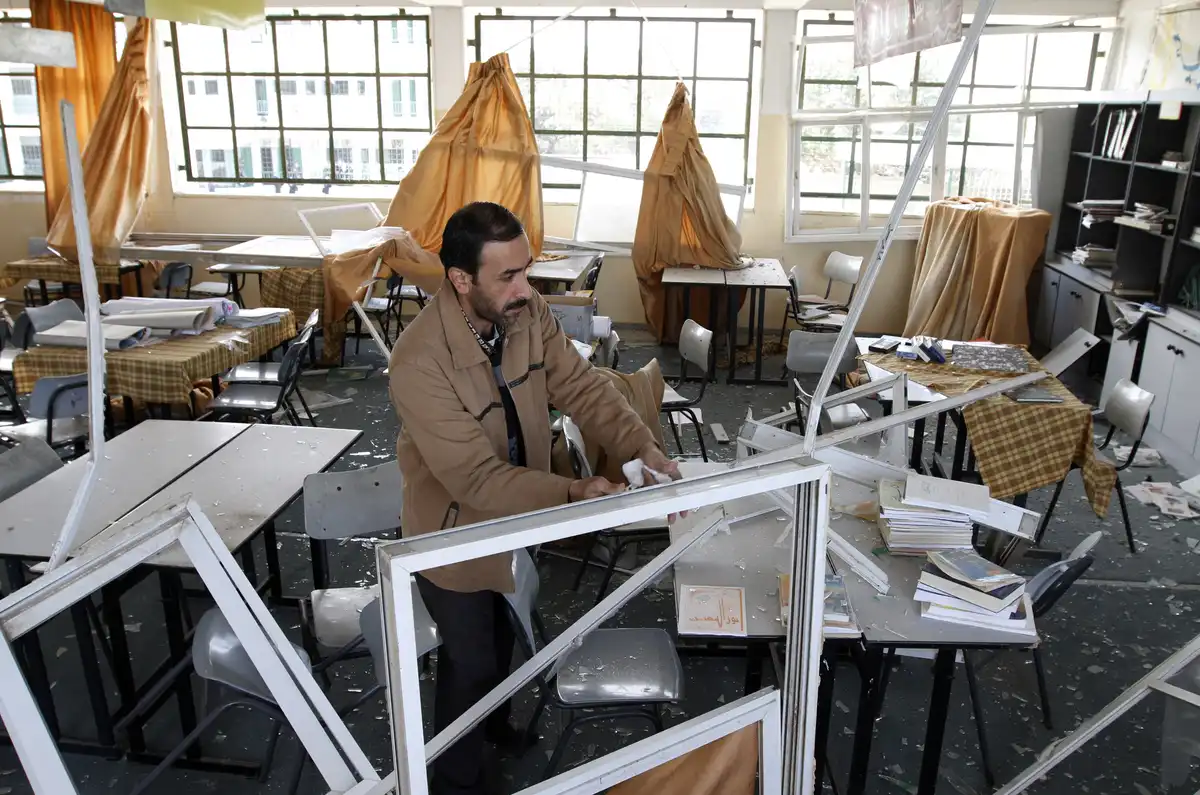
Palestine education: The awar deprives 39 thousand students in Gaza from taking the “Tawjihi” exams

50 thousand students will take the exam next Saturday


The Ministry of Education said that the ongoing bloody Israeli war on the Gaza Strip for the 258th day has deprived about 39,000 male and female students from taking the high school exams, which are scheduled to begin the day after tomorrow, Saturday.


Ministry spokesman Sadiq Al-Khadour explained in a press statement today, Thursday, that 450 high school students became martyrs this year as a result of the aggression, including 20 students from the West Bank.


He pointed out that 1,320 students, both male and female, are scheduled to take the Tawjihi exams in 29 Arab countries, including 1,090 in the Arab Republic of Egypt, noting that the ministry’s teams have opened the largest hall in Egypt, in addition to opening private halls in Russia, Turkey, and Qatar. Tests at the embassies of other countries.


Al-Khadour said that the number of students who will take the exam is 50,000 male and female students, including students from the West Bank, and students from our five schools outside the country (Turkey, Qatar, Romania, Bulgaria, and Russia), who number 216 students, distributed among 506 halls, in addition to students from the Gaza Strip. Those who left the Gaza Strip outside the country are distributed among 29 countries, most of them in the Arab Republic of Egypt.


He pointed out that we have 6 correction centers that begin their work, with the first exam starting at exactly nine o’clock in the morning local time in the city of Jerusalem, and students who will take the exam abroad are committed to this timing, because the exam is unified, while the total number of workers is about 20 thousand, distributed between Observer, corrector, administrator, technician, and worker in the exam.


Regarding the students of the Gaza Strip who were prevented by the occupation from taking the first session of the exam, Al-Khadour said, “The Ministry is committed to holding the exam for them when the aggression ends, even if it requires holding a special session for them. Therefore, we reassure them of our full commitment to saving the academic year for them.”


Al-Khadour also reassured the students who will take the exam next Saturday, stressing that it will proceed according to the normal level, and there will be no delay in the questions.


OPINIONS

Thu 20 Jun 2024 11:29 am - Jerusalem Time

Hamas is bound by international law. But compliance is a different matter.

New York Times

New York Times

Opinion Writer

By Amanda Taub

Oct. 7, every legal expert I have asked has shared one conclusion: Hamas’s attacks on civilians that day, including killing, torture, and hostage-taking, were war crimes. And because many hostages are still being held, that crime remains ongoing.

Tom Dannenbaum, a Tufts University professor, told me just days after the attack that there was “no question” Hamas’s attack had involved multiple war crimes. “Those are not close calls,” he said.


Since then, evidence has continued to mount. Last month, the prosecutor of the International Criminal Court announced that he was seeking warrants for the arrest of three Hamas leaders on charges of war crimes and crimes against humanity relating to the Oct. 7 attack on Israel, as well as the hostage-taking that followed. He also sought warrants for two Israeli officials. All of the subjects of the warrant requests have denied the accusations against them.

Last week, a U.N. commission concluded that there was credible evidence that members of Hamas and other armed Palestinian groups committed war crimes on Oct. 7, including by killing civilians, carrying out torture, and taking hostages. The commission also found evidence of Israeli war crimes, including the use of starvation of civilians as a weapon of war.

There are a lot of misperceptions about Hamas’s obligations under international law, so I thought I would use today’s column to explain those rules, how they apply to Hamas, and the surprising incentives they might create. Hamas declined to comment for this article but in past statements the group has claimed its fighters have a “religious and moral commitment” to avoid harm to civilians.

A quick note: I’m not going to write about Israel’s alleged war crimes in this post. I have written about a number of those issues previously however, including the use of starvation as a weapon of war, and the legal questions raised by the Israeli military’s attack on the World Central Kitchen aid convoy.

Hamas isn’t a state. Does it still have to follow international law?Hamas is an armed Islamist group that was founded in 1987, and has been designated as a terrorist organization by the United States and the European Union. It won legislative elections in Gaza in 2006 and has held power there since 2007 without holding further elections. But it’s not a state government: Even countries that have recognized Palestinian statehood do not recognize Hamas as its government.

There are two main things you need to know to understand Hamas’s obligations under international law. The first is that even though it is not a state government, it is still bound by the laws of war.

“The applicability of the law is triggered by the existence of an armed conflict,” said Janina Dill, co-director of the Oxford Institute for Ethics, Law, and Armed Conflict. Once conflict begins, every organized armed group participating is bound by international humanitarian law.

The second point is that those laws are universal, not reciprocal. Violations by one party to a conflict do not change the obligations of the other. Conversely, no military cause is so just that it allows its proponents to violate international humanitarian law in order to achieve it.

“The law of armed conflict has a very clear position,” said Marko Milanovic, a professor of public international law at the University of Reading in England, “which is that all parties have the same obligations regardless of how just their overall cause is, and regardless of whatever legitimacy or alleged illegitimacy of that entity.”

In addition, all individuals are subject to international criminal law regardless of whether they are affiliated with a government or nonstate armed group.

That equal application can seem outrageous to people who believe one side of a conflict has a just cause. After the I.C.C. prosecutor announced he was seeking warrants for leaders of Hamas and Israel, both Israel and Hamas issued irate statements about being placed in the same category as their opponents in the war.

But the core purpose of those laws is to shield civilians, who are entitled to the same protections regardless of whether a state military or a nonstate armed group threatens them. So there is no number of Palestinians detained by Israel that would make it legal for Hamas to take Israelis hostage, just as there is no number of Israelis killed on Oct. 7 that would make it legal for Israel to kill Palestinian civilians indiscriminately or disproportionately.

If there are no cops to enforce international law, does it still matter?When I write about these issues, I often receive messages from people who want to know why they should take international law seriously, given that there is no international equivalent of the FBI to arrest miscreants or enforce court judgments.

I can understand that sentiment: Given the broad consensus that Hamas committed war crimes, the inability of the international legal system to address those acts immediately can make it seem like an ineffective or even futile institution, particularly when compared to domestic legal systems. When a murder is committed in a country with a functioning judicial system, we hope the perpetrator will be brought to justice — though of course that often doesn’t happen — and we know who has the power to do so. The lack of enforcement authority in the international system can be jarring.

But international law relies more on diplomacy and negotiation than top-down enforcement. If states do not voluntarily carry out arrest warrants or abide by the judgments of international courts, there is no central authority to force them to comply.

That doesn’t mean international law is pointless. On a basic level, the rules that govern conflict can act as a deterrent, creating standards for legitimacy that can become a source of external and internal pressures on armed groups.

Dill, who researches compliance with international law, has found that when militaries receive legal training, they often internalize those norms as a measure of their own professionalism. She said U.S. service members, for instance, often told her that they saw themselves as “professionals” who fought according to the law, which they believed distinguished them from their opponents, whom they described as terrorists and murderers.

And Tanisha Fazal, a political scientist at the University of Minnesota, has found that armed groups trying to establish new independent states often complied with international humanitarian law as a way to “signal their capacity and willingness to be good citizens of the international community to which they seek admission.”

When it comes to Hamas and the current conflict, it’s fair to say those incentives do not seem to be working.

Palestinian statehood is one of Hamas’s goals. But the Palestinian Authority, not Hamas, is treated as Palestinians’ representative on the international stage, making that a crowded field in which to compete. Hamas, as a designated terrorist organization, may see little prospect of international acceptance.

Nor does the group appear to believe that support from ordinary Palestinians depends on demonstrating compliance with international law. Its fighters filmed themselves carrying out the Oct. 7 attacks and Hamas posted some of the material publicly, which suggests it may have anticipated gaining legitimacy as a result of the violence.

But while many Palestinians took to the streets as the attacks were unfolding on Oct. 7 to celebrate what they saw as a humiliation for an occupier, the boost to Hamas’s popularity seems to have proved temporary. Today, many in Gaza hold the group responsible for starting a war that has brought catastrophic harm to civilians.

Will Hamas ever be held to account?A recent article in The Wall Street Journal suggested that Yahya Sinwar, the leader of Hamas, made what it called a “brutal calculation” that civilian deaths in Gaza would help the group by increasing pressure on Israel. The article cited correspondence from Sinwar, including a message in which he reportedly described civilian losses as “necessary sacrifices.”

The New York Times has not seen these messages or been able to independently confirm them. But if Hamas was deliberately putting civilians in harm’s way by, for instance, hiding fighters inside crowded refugee camps, schools or hospitals — as some evidence suggests — it would be in breach of international law, which forbids the use of human shields, or the placement of military installations in densely populated civilian areas.

That said, even if one side uses human shields, this does not exempt the other side from its obligations: Civilians remain entitled to protection even if one party to the conflict has already endangered them by violating the law.

For now, the gap between the apparent evidence of war crimes committed by Hamas and the accountability of its leaders in a court of law can feel impossibly wide. But it may not always be so.

The I.C.C. has a track record of prosecuting members of nonstate armed groups and its arrest warrants do not expire. Even if the war ends, the potential criminal liability of Hamas’s leaders will not.


PALESTINE

Thu 20 Jun 2024 11:26 am - Jerusalem Time

War in Gaza: foreign investors turn away from Israel

By Pascal Brunel

More than eight months of war in the Gaza Strip have caused a brutal drop in investments in Israel, as well as the start of a flight of local capital.

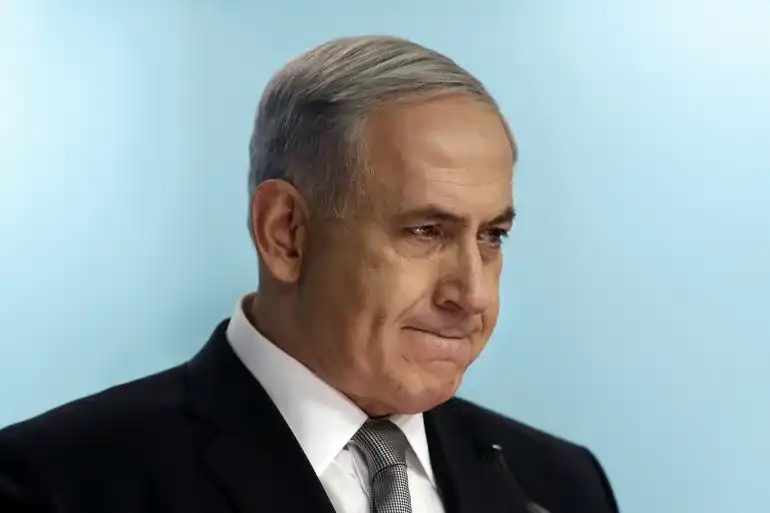
The Israeli economy is paying a heavy price after eight months of war in the Gaza Strip and on the border with Lebanon. Images of the fighting caused a sharp 55.8% drop in foreign direct investment (FDI) in Israel during the first quarter of this year. They barely passed the $1 billion mark while reaching a quarterly average of $4.8 billion over the previous four years.


This retention is no longer a simple accident. It comes as during the last three months of 2023, when war broke out following massacres committed by Hamas on October 7 in southern Israel, foreign direct investment had already suffered a decline of 50%, according to official data from the Israeli statistics office released Tuesday.

High-tech very affected

“This regression is all the more worrying as it concerns long-term establishment operations of foreign companies in the form, for example, of the creation of subsidiaries and takeovers of companies in Israel,” underlines an official from the Ministry of Finance. According to him, these investments “make it possible to mobilize capital, but also to offer access to new technologies which promotes innovation and productivity, as well as management methods”.


The growing reluctance of investors is all the more painful as 80% of it is concentrated in high-tech, the jewel in the crown of the Israeli economy. This sector alone provides half of the exports of the Jewish state, which readily presents itself as the “start-up nation” par excellence. The American Intel has thus suspended work on the expansion of a microprocessor production factory in Israel, which was to constitute the largest foreign investment ever made in the country.


Another worrying sign: the Israelis themselves are starting to look for new, calmer horizons, especially in the United States. The amount of their direct investments abroad jumped by a quarter in the first quarter of this year to $3.6 billion, more than three times the number of such operations carried out by foreigners in Israel.


Disenchantment

For the Israeli economic daily “Calcalist”, it is also an act of defiance towards the economic policy of the government of Benjamin Netanyahu and his Minister of Finance, Bezalel Smotrich, leader of an ultranationalist party facing an explosion budget deficit to finance a war whose total cost could reach some $67 billion by 2025, according to projections by the Bank of Israel.


This disenchantment was also felt among the “millionaires”. For the first time in decades, Israel no longer appears in the list of ten most attractive countries for wealthy foreigners, according to the British firm Henley & Partners specializing in “the most sought-after migration and investment programs in the world ". “The current war has not only tarnished the image of Israel as a safe haven for this type of foreign investors, but also constitutes a threat to the economic results of this country”, according to the diagnosis established by this firm.

PALESTINE

Thu 20 Jun 2024 11:19 am - Jerusalem Time

UNRWA: Israel destroyed 67% of the infrastructure of the Gaza Strip

The United Nations Relief and Works Agency for Palestine Refugees (UNRWA) said that the Israeli occupation has destroyed 67% of the infrastructure of the Gaza Strip since the start of the aggression on October 7, which includes roads, public facilities, parks, water wells and sewage pumps.


Local sources reported that the occupation completely destroyed all water wells and sewage pumps, and that the sewage pumping process has been halted for eight months, due to the occupation’s destruction of infrastructure and the depletion of fuel, which caused large areas of the Gaza Strip to be flooded with sewage.


It confirmed that all areas of the Gaza Strip are without water after 90% of the wells stopped, due to Israeli bombing and the depletion of fuel.

PALESTINE

Thu 20 Jun 2024 11:18 am - Jerusalem Time

Hebrew media: Hagari's statements regarding Hamas angered Netanyahu

Israeli Channel 12 revealed that statements by Israeli army spokesman Daniel Hagari regarding the inability to eliminate Hamas angered Prime Minister Benjamin Netanyahu.


The channel explained that "Netanyahu and Defense Minister Yoav Gallant asked the office of Chief of Staff Herzi Halevy to provide clarification regarding Hagari's statements."


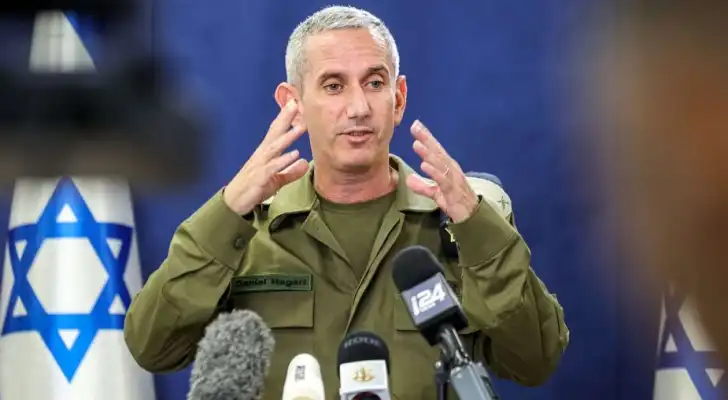
Israeli army spokesman Daniel Hagari said on Wednesday that the Hamas movement is an idea that cannot be eliminated, stressing that not all kidnapped persons can be returned by military means.


According to Israeli Channel 13, Hagari said: “Hamas is an idea and a party, and it is implanted in the hearts of the people, and whoever believes that we can hide it is mistaken,” adding, “Talk about eliminating Hamas is deceiving the public.”


The Hebrew newspaper "Haaretz" pointed out that "the empty promises that Israel would be able to destroy Hamas and return Lebanon to the Stone Age were exposed," adding that "the army is not prepared for any scenario in Gaza or Lebanon."


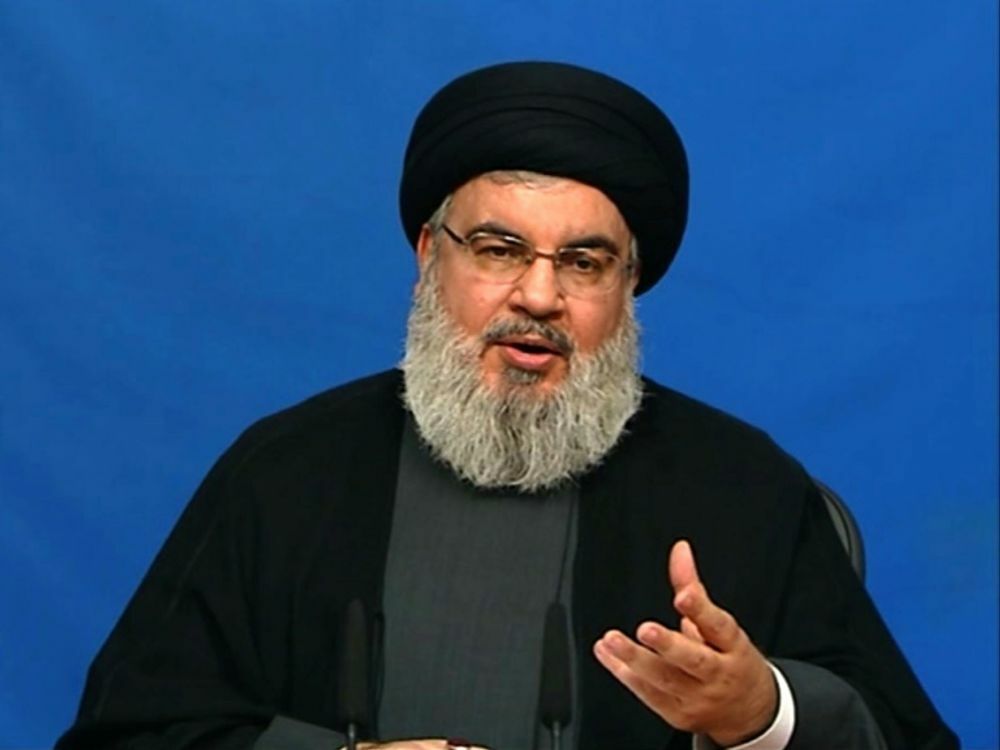
Hagari's statements came after a speech by Hezbollah Secretary-General Hassan Nasrallah in which he threatened that the invasion of the Galilee was still on the agenda, and said: “The Lebanon Front blocked the enemy forces from participating in Gaza, and some of them are elite forces, because there is a fear among the enemy of The entry of the resistance into the Galilee is a matter that remains on the table if the confrontation develops.”


For his part, Israeli Defense Minister Yoav Galant stated that "Hezbollah" was the one who started the war, stressing that it is "Israel's duty" to change the situation, according to the Hebrew Channel 12.


He added: "The situation in the north will change with a settlement or a large-scale military operation, and we have a duty to return citizens safely to their homes."

ARAB AND WORLD

Thu 20 Jun 2024 11:15 am - Jerusalem Time

Fabricating lies...Martin Indyk demands canceling Netanyahu's invitation to deliver a speech in Congress...

Former US ambassador to the occupation, Martin Indyk, called on Thursday to withdraw the invitation to Israeli Prime Minister Benjamin Netanyahu to deliver a speech before Congress, so that he could apologize for accusing the administration of President Joe Biden of withholding weapons from “Israel,” while the Hebrew media said that Netanyahu prefers a public confrontation with Washington.


Indyk stressed that Netanyahu is attacking the United States “based on a lie he invented,” while Israel is waging a war on four fronts with “Hamas, Hezbollah, Yemen, and Iran.”


Netanyahu is scheduled to deliver a speech before both chambers of Congress on July 24, under the pretext that this symbolizes the permanent relationship between the United States and Israel, and will give him the opportunity to share “his government’s vision of defending democracy, combating terrorism, and establishing a just and lasting peace in the region,” according to House Speaker Mike Johnson.


Indyk's statements came after a conference by Netanyahu last Tuesday in which he attacked the United States, saying, "It is unreasonable for the US administration over the past few months to withhold weapons and ammunition from Israel, which is the United States' closest ally, fighting for its life, and fighting Iran and our other common enemies."


Netanyahu called on the US administration to lift the restrictions imposed on military support for “Israel”, with the aim of completing the mission faster, as he put it, without referring to the type and quantity of weapons that the United States is withholding.


He also said that US Secretary of State Anthony Blinken assured him that the Biden administration is working to cancel restrictions imposed on arms shipments to Israel, which Blinken refused to confirm.


Last May, the Biden administration halted a shipment of 2,000-pound and 500-pound bombs due to concerns about the impact they could have in densely populated areas, but Israel is still scheduled to receive billions of dollars in American weapons.


For his part, Blinken said after Netanyahu's conference that "weapon shipments, with the exception of a large bomb shipment, are moving forward given that Israel faces security threats from outside the Gaza Strip, such as Hezbollah and Iran," noting that Washington is keen to ensure that "Israel has enough for defense itself."

PALESTINE

Thu 20 Jun 2024 9:23 am - Jerusalem Time

West Bank: Israeli forces arrest 7 Palestinians from Beit Sira, west of Ramallah

Today, Thursday, Israeli occupation forces arrested 7 Palestinians from the town of Beit Sira, west of Ramallah.


Local sources reported that the occupation forces arrested the two freed prisoners, Montaser Ali Hamdan and Muhammad Yasser Hamdan, and the two brothers Jihad and Nihad Hamdan, Khalil Muhammad Abu Safiya, Akram Ali Alqam, and Ahmed Ayoub Akl, after they raided and searched their homes.


PALESTINE

Thu 20 Jun 2024 9:23 am - Jerusalem Time

West Bank: Israeli forces storm Jenin and clash with resistance fighters

On Thursday morning, Israeli occupation forces stormed the city of Jenin and its camp.


The governor of Jenin said in an interview with Al-Arabi TV that clashes were taking place with the occupation forces in the Al-Marah neighborhood in Jenin, speaking about Israeli military reinforcements arriving in the city and its camp.


Wafa News Agency quoted eyewitnesses as saying that special forces belonging to the occupation army, “Musta'arabiun,” infiltrated the Al-Marah neighborhood in the center of Jenin. Immediately upon discovering them, the occupation forces sent reinforcements to the place, which led to the outbreak of confrontations.


PALESTINE

Thu 20 Jun 2024 9:23 am - Jerusalem Time

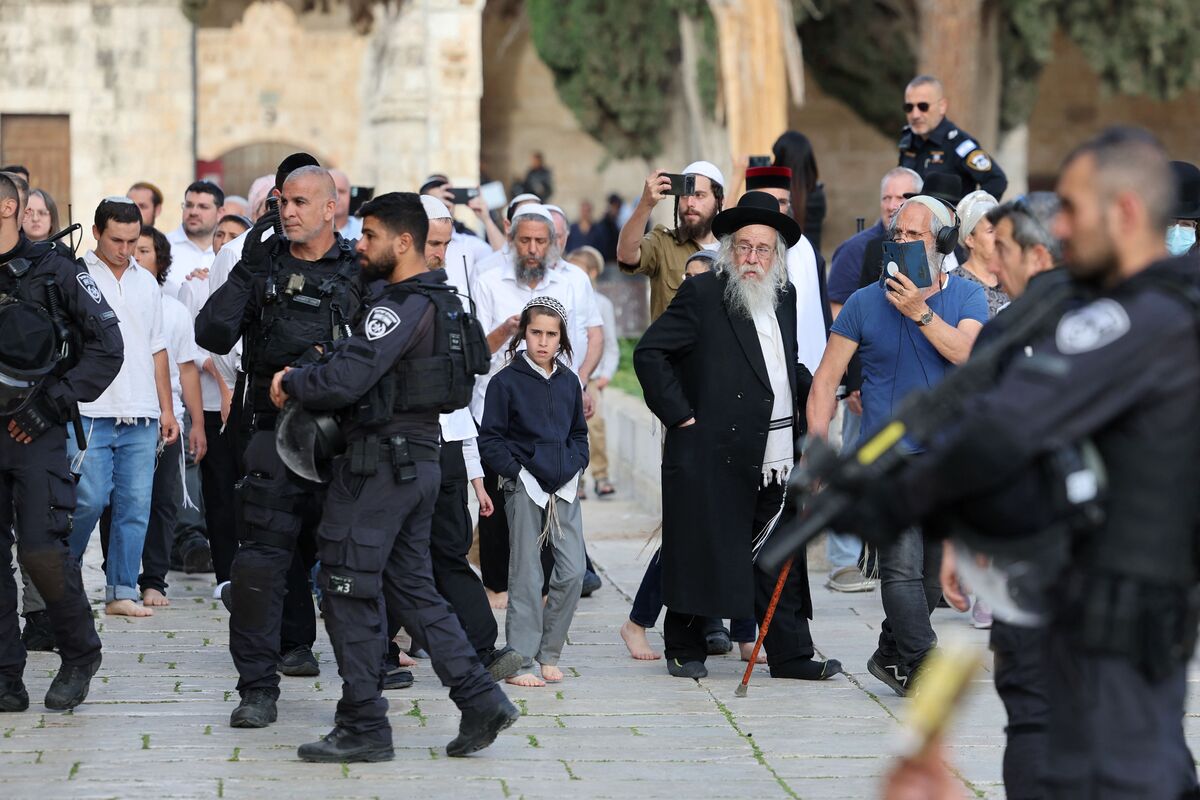
Israeli settlers storm the holy Al-Aqsa Mosque

Today, Thursday, settlers stormed the courtyards of the blessed Al-Aqsa Mosque, under the protection of the Israeli occupation police.


Wafa Agency quoted eyewitnesses as saying that dozens of settlers stormed Al-Aqsa Mosque in groups, carried out provocative tours of its courtyards, and performed Talmudic rituals.


The occupation police imposed restrictions on the entry of worshipers to Al-Aqsa, and tightened their military measures at the gates of the Old City, which they turned into a military barracks.


PALESTINE

Thu 20 Jun 2024 9:23 am - Jerusalem Time

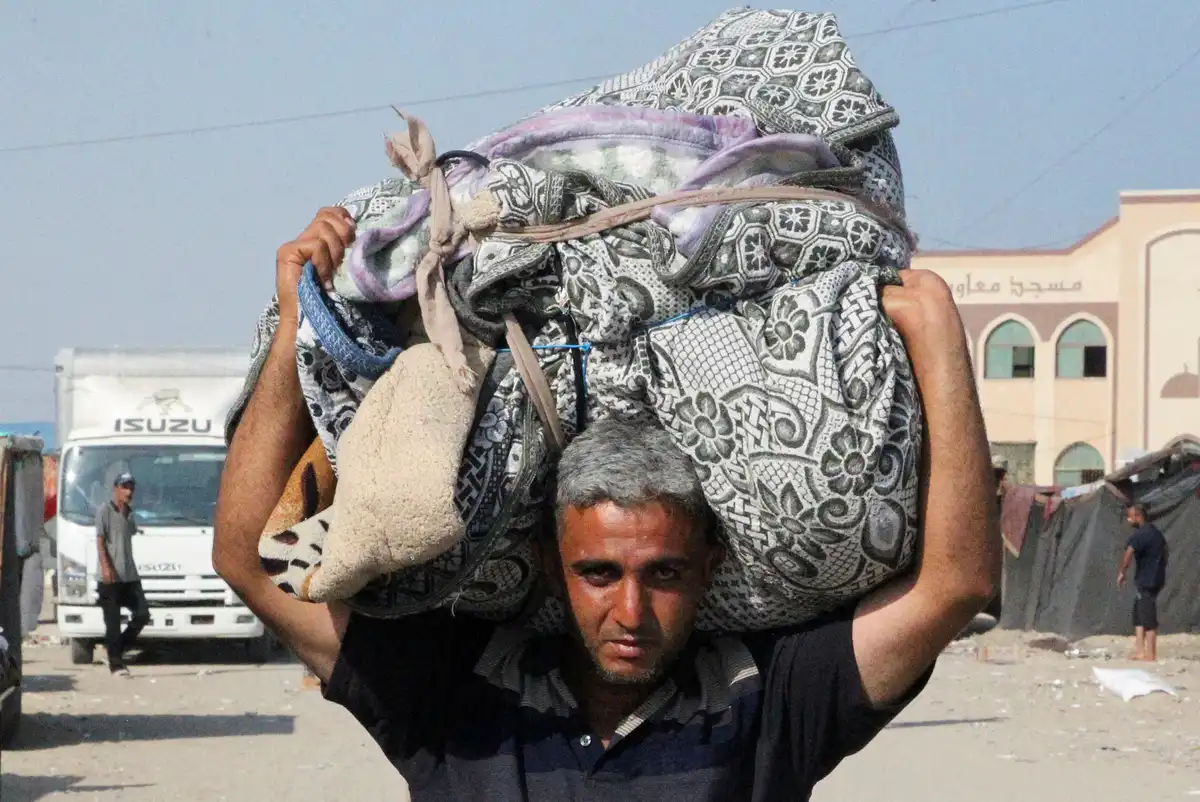
On World Refugee Day: More than 6 million Palestinian refugees suffer from asylum

Today, June 20 of each year, is World Refugee Day, which was approved by the United Nations General Assembly in 2000.


This day is devoted to introducing the issue of refugees, highlighting their suffering and needs, and discussing ways to support and assist them in light of the increasing crises and numbers of refugees.


According to the data available to the Central Bureau of Statistics, more than 6 million refugees are still registered with the Relief and Relief Agency in Palestine and the Diaspora, and are suffering from asylum as a result of their forced displacement from their lands during the Nakba of 1948.


UNRWA records indicate that the number of Palestinian refugees registered with it in January 2022 was about 5.9 million Palestinian refugees, including about 2.5 million in the West Bank and Gaza Strip, and thus they constitute about 42% of the Palestinian refugees (15% in the West Bank compared to 27% in the Gaza Strip).


At the level of Arab countries, the percentage of Palestinian refugees registered with the UNRWA in Jordan reached about 40% of the total Palestinian refugees, while in Lebanon and Syria this percentage reached about 8% and 10%, respectively.


These estimates represent the minimum number of Palestinian refugees, considering the presence of unregistered refugees, as this number does not include those Palestinians who were displaced after 1949 until the eve of the June 1967 war “according to UNRWA’s definition,” and it also does not include Palestinians who left or were deported in 1967 according to The background of the war and those who were not refugees in the first place.


About 66% of the total population in the Gaza Strip are refugees


The percentage of the refugee population in the State of Palestine was about 42.2% of the total Palestinian population residing in the State of Palestine in 2017. 26.3% of the population in the West Bank are refugees, while the percentage of refugees in the Gaza Strip was 66.1%.


More than 136,000 have been martyred in defense of Palestinian rights since the Nakba of 1948

The number of Palestinian and Arab martyrs since the Nakba in 1948 until today (inside and outside Palestine) has reached more than 136 thousand martyrs, while the number of martyrs since the beginning of the second intifada in 2000 until 04/30/2024 was about 46,500 martyrs, and there are more than 37,500 martyrs. During the Israeli aggression on the Gaza Strip from October 7, 2023 until June 13, 2024, including more than 15,162 children and 10,018 women, along with more than 147 journalists.


While more than 7,000 citizens are missing, most of them women and children, according to the records of the Palestinian Ministry of Health in the Gaza Strip, and in the West Bank, 520 martyrs have died since the start of the Israeli occupation aggression on October 7, 2023. Nearly 2 people have also been displaced. One million citizens inside the Strip, far from their places of residence.


Difficult conditions for Palestinian refugees and non-refugees in the State of Palestine


In general, there are no significant differences attributable to the social and economic conditions of Palestinian refugees and non-refugees at the regional level. Education indicators indicate that the illiteracy rate among Palestinian refugees in the West Bank reached about 1.9% compared to 2.3% for non-refugees, and in the Gaza Strip this rate reached this rate. For refugees, 1.7% compared to 2.0% for non-refugees.


Unemployment rates in 2022 among refugees in the Gaza Strip reached 47%, compared to 42% for non-refugees, while the unemployment rate among refugees in the West Bank reached 14%, compared to 13% for non-refugees.


In light of the ongoing Israeli aggression against the Gaza Strip since October 7, 2023, unemployment rates have jumped to unprecedented levels (estimates indicate that unemployment rates will rise to reach 75% in the fourth quarter of 2023, compared to 46% in the third quarter of 2023), which means The loss of at least 200,000 jobs during the first three months of the aggression.


Accordingly, the number of unemployed people increased to 317 thousand in the fourth quarter of 2023, compared to about 129 thousand in the third quarter of 2023 before the aggression. Unemployment rates among individuals participating in the labor force in the West Bank in the fourth quarter of 2023 also increased to about (32%). ) compared to about 13% in the third quarter of 2023.


As a result of the continuous bombing and violent raids on the Gaza Strip, the death toll of students and teachers, and the destruction of the infrastructure of a significant number of schools, the educational process in the Gaza Strip has been disrupted since the beginning of the aggression, and about 620,000 students were deprived of their right to school education for the academic year 2023. /2024.


The number of martyrs among students enrolled in schools in Palestine reached 6,050 martyrs, 5,994 martyrs in the Gaza Strip, and 56 martyrs in the West Bank. While the number of wounded students enrolled in schools in Palestine reached 10,219 wounded, with 9,890 wounded in the Gaza Strip and 329 wounded in the West Bank.


Regarding the detained students enrolled in schools, 105 students were arrested, all of them from the West Bank.


PALESTINE

Thu 20 Jun 2024 9:23 am - Jerusalem Time

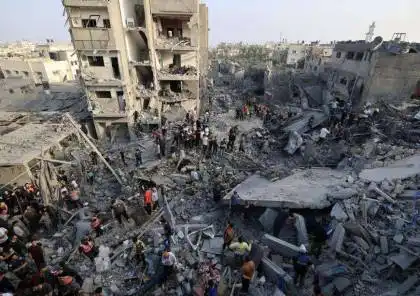
War on Gaza: The death toll from the Israeli war rose to 37,431

The Ministry of Health in Gaza announced that the number of victims of the Israeli aggression on the Gaza Strip has risen to 37,431 citizens and 85,653 injured since October 7.


The Ministry of Health in Gaza said that the Israeli occupation committed 4 massacres in the Strip,leaving 35 killed and 130 injured who arrived in hospitals within 24 hours.


As the aggression enters its 258th day: two martyrs and one wounded in the ongoing occupation bombing of the Gaza Strip

Two women were killed, and others sustained various injuries, at dawn today, Thursday, in the ongoing occupation aggression against the Gaza Strip, which enters its 158th day.


Local sources reported that two women were killed and 12 others were injured, including children and women, in the occupation’s missile strike on a house in the Al-Hasayna area, west of the Nuseirat camp in the central Gaza Strip.


The occupation army fired artillery shells at the southern areas of the Al-Zaytoun neighborhood, southeast of Gaza City.


The occupation artillery also targeted the areas east of the Bureij and Al-Maghazi camps in the central Gaza Strip, while the occupation warplanes launched a series of raids on the northern areas of the Nuseirat camp.


Meanwhile, Apache helicopters and Quadcopter drones fly in the western airspace of the city of Deir al-Balah in the central Gaza Strip.


The central and western areas of the city of Rafah, south of the Gaza Strip, are also witnessing artillery shelling and heavy gunfire.


In an infinite toll, the number of killed in the Gaza Strip since the start of the Israeli occupation aggression on the 7th of last October reached 37,396people, in addition to 85,523 wounded, the majority of whom were children and women. A number of victims are still under the rubble and on the roads, and crews cannot Ambulance and rescue reach them.


ARAB AND WORLD

Wed 19 Jun 2024 10:31 pm - Jerusalem Time

Gallant: The situation in the north will change with a settlement or with broad military action

Israeli Security Minister Yoav Galant said on Wednesday evening that the situation in the north on the Lebanese border will change with a political settlement or a broad military operation.


This came at the end of an assessment of the situation conducted by Gallant at the headquarters of the Northern Command in the city of Safed in the Upper Galilee near the border with Lebanon, according to a post on his account on the “X” platform and Hebrew media.


Galant wrote: “At the end of the assessment of the situation in the Northern Command, with the Chief of Staff (Herzi Halevy), the Commander of the Northern Command (Uri Gordin), and the Commander of the Air Force (Tomer Bar), I said that the IDF forces are prepared and continue to be prepared against every threat that comes to us, whether in defense or attack.” ".


He added: "The situation in the north will change with a political settlement or a large-scale military operation, and we have a duty to return citizens safely to their homes."


PALESTINE

Wed 19 Jun 2024 10:26 pm - Jerusalem Time

Israeli media: The intelligence document about the October attack raises chills in its accuracy

The Israeli media highlighted the details of a document, allegedly in the possession of Israeli intelligence, warning of a possible attack by the Palestinian resistance to storm the Gaza Strip, but it was ignored. He also discussed the possibilities of escalation on the northern front, and the state of attrition in the occupation army, in light of its urgent need to recruit increasing numbers of reserves.


Regarding the document, Kan 11 reported that it had obtained “a document that raises chills in its accuracy in describing the extent of the knowledge of the army and intelligence services about the plan of the Islamic Resistance Movement (Hamas) to storm Israeli territory.”


She said that the document was drafted in the Gaza Division under the title “Detailed storming exercises from beginning to end” and distributed on September 19, 2023, noting that whoever wrote the document “addressed the details of a series of training exercises for the elite unit in Hamas.”


She added that the Israeli intelligence personnel who followed the training "developed the next steps after storming Israeli territory and taking control of the military sites."


The military sites being raided were also specified in this document, which Maswad, the political affairs correspondent for Kan 11, quoting Israeli officials, said, “was known to at least the intelligence commanders in the Gaza Division and the Southern Command.”


Itai Blumenthal, military affairs correspondent for the same channel, said that the Gaza Division prepared before the October 7 attack for “the most extreme scenario, which is dozens of saboteurs storming only 3 sites.”


According to Or Heller, military affairs correspondent for Channel 13, “The basic lesson from the events of October 7 is that after the war, army forces will be doubled on the Gaza border and on the border with Lebanon.”


As for Channel 12, it reported on the state of exhaustion in the ranks of the reserve forces, the army’s maximum alert, and a shortage of weapons and ammunition, in addition to the absence of American cover or from other countries.


The channel indicated through its guests that Israel needs a settlement in the north (Lebanon) without war, but before that it must reach a settlement in the south (Gaza) and return the prisoners.


For his part, Eliyahu Revivo, a member of the Knesset from the Likud Party, acknowledged that the current government coalition did not achieve any achievements and that most of Israel was stuck on many fronts, stressing the necessity of going to elections even if his party loses power.


Source: Al Jazeera

PALESTINE

Wed 19 Jun 2024 10:23 pm - Jerusalem Time

International newspapers: Israel must end the war, and Washington is forced to change its policies

The topics that international newspapers and websites focused on in their coverage of the Gaza war varied between calling on the American administration to accept the demand of the Palestinian resistance, searching for a new strategy for the world, and anticipating an increase in protests against the Israeli government.


Writer Thomas Friedman said in his article in the New York Times that American officials must stop humiliating themselves for the sake of Israel, considering that extremists in Israel have caused a lot of damage.


Friedman added, "President Joe Biden must ask Israel to accept the main demand of the Islamic Resistance Movement (Hamas), which is to immediately end the war and withdraw from Gaza in exchange for the return of all Israeli hostages."


For his part, Ben Rhodes, former US Deputy National Security Advisor, saw - in an article published in Foreign Affairs magazine - that President Biden "is required to search for a new American strategy for the world, because the rules of the old international order no longer exist."


A previous meeting between US President Joe Biden and Israeli Prime Minister Benjamin Netanyahu (Reuters)

He added, "The Gaza war must represent a shock to Washington and force it to change its policies by committing to the right of all people everywhere to live in dignity," stressing that Israel's goal of destroying Hamas cannot be achieved at all.


For its part, The Times newspaper expected that protests would increase in the coming days against Benjamin Netanyahu's government after calls for early elections intensified in recent weeks, with demonstrations taking place throughout Israel on roads, bridges and outside ministers' residences.


Always on the subject of Israel, writer Alon Pinkas in The Guardian newspaper considered that dissolving the war council “harmed Netanyahu, reduced his legitimacy, and narrowed his room for maneuver.”


In the Wall Street Journal, Jonathan wrote, “Israel needs a comprehensive strategy to confront the threat coming from Lebanon.”


On the other hand, the Times of Israel newspaper indicated that the Stockholm International Peace Research Institute expressed its belief that Israel has worked in recent months to modernize its nuclear weapons arsenal and has activated nuclear production facilities in southern Israel.


Source: Al Jazeera

PALESTINE

Wed 19 Jun 2024 9:56 pm - Jerusalem Time

Israeli army spokesman: Hamas is an idea that cannot be eliminated

Israeli occupation army spokesman Daniel Hagari said that talk about destroying the Islamic Resistance Movement (Hamas) is ashes of dust, and as long as the government does not find an alternative to Hamas, the movement will remain, before the Israeli Prime Minister’s Office hastened to respond to that.


Hagari added - in an interview with the Israeli Channel 13 - that "the belief that it is possible to destroy the Hamas movement and hide it is ashes of dust in the eyes of the Israelis."


He pointed out that Hamas is an idea and a party, and that it is implanted in the hearts of people, and whoever believes that we can hide it is mistaken, and he continued, saying, "It is an idea that cannot be eliminated, as the Muslim Brotherhood exists in the region."


He went on to explain, "We are paying a heavy price in the war, but we cannot remain silent and do everything we can," pointing out the difficulty of reaching the leader of Hamas in Gaza, Yahya Sinwar, but he said that "Shin Bet and Military Intelligence will find the way and kill him, and this is our goal." .


He pointed out that the army is working around the clock to return the "kidnapped" (captives) in Gaza alive despite the risks, and stressed that it is not possible to return all detainees by military means.


Regarding the Israeli operation in Rafah, south of the Gaza Strip, Hagari pointed out that the Rafah Brigade, affiliated with the Al-Qassam Brigades - the military wing of Hamas - was part of the October 7 attack, and that it served as oxygen for the movement.


He added, "We are close to eliminating it, and we will explain to the political level, and then the public, the military achievements that have been achieved."


PALESTINE

Wed 19 Jun 2024 9:50 pm - Jerusalem Time

11 Palestinians killed in Israeli air and artillery bombardment of Gaza and Rafah

At least 11 citizens were killed and others were injured, this evening, Wednesday, in a raid launched by Israeli occupation aircraft east of Rafah, south of the Gaza Strip.


Medical sources reported that 11 citizens were killed and 30 others were injured, in a raid launched by the occupation air force on a gathering of citizens on Salah al-Din Street, east of Rafah. The bodies of the martyrs and the wounded were transported to the European Gaza Hospital in the neighboring city of Khan Yunis.


Earlier, two citizens were killed in Israeli occupation artillery shelling around Al-Alam Roundabout, west of the city of Rafah, bringing the number of dead in the city since dawn today to 23.


Local sources reported that the occupation destroyed more than 70% of the city's facilities and infrastructure, including burning and destroying all the Rafah crossing halls and its facilities.


The occupation forces continue to close the crossing after they occupied the Palestinian side of it on May 7, the day after the start of their ground invasion of the city of Rafah.


In Gaza City, two citizens were killed after being targeted by a missile from an Israeli drone.


A medical source at Al-Ahly Al-Arabi Hospital "Al-Maamdani" reported that two dead arrived at the hospital after they were targeted by a missile from an Israeli drone on Al-Sikka Street in the Al-Zaytoun neighborhood, southeast of Gaza City.


In an infinite toll, the number of dead in the Gaza Strip since the start of the Israeli occupation aggression on the 7th of last October reached 37,396 killed, in addition to 85,523 wounded, the majority of whom were children and women. A number of victims are still under the rubble and on the roads, and crews cannot Ambulance and rescue reach them.


OPINIONS

Wed 19 Jun 2024 8:05 pm - Jerusalem Time

Fayyad: Biden's plan and some difficult facts about Gaza

Written by: Salam Fayyad

Written by: Salam Fayyad

Opinion Writer

The days that have passed since the United Nations Security Council adopted the vision announced by the US President regarding ending the war that has been raging in Gaza for more than eight months have demonstrated the validity of not counting on an imminent end to this war, despite the enormity of the calamities it has brought, and continues to bring, to the people. The people of Gaza and political and security setbacks that are rare at the regional and international levels. Since, from the beginning, it seemed legitimate to question the possibility of a vision that was completely identical to the Israeli position, according to what was stated by Biden himself, that it would constitute a breakthrough sufficient to raise hope in an imminent end to the war, especially at a time when the Israeli government does not miss any opportunity to emphasize its insistence. To continue its aggressive war until achieving goals whose realism has become questionable even in Israel itself.


It is clear that the successive failure of previous attempts to reach an agreement that would lead to stopping the war and paving the way for a sustainable calm is not due to ignorance of the facts of the matter as much as it is the result of hesitation to accept them or give them the attention they deserve. If this is the case, it is due to the difficulty of accepting these facts by one or more of the parties influencing the course of matters. Below is a brief analytical review of the most prominent of these facts.


First: The illusion of the possibility of eliminating the Hamas movement has been dispelled. It has become widely and increasingly expected that the movement will be an integral part of the political and field scene when the war ends. And since Hamas has succeeded in continuing to withstand for nearly nine months in the face of the tyranny of the Israeli war machine in the Gaza Strip, which the same machine only needed a few hours to tighten control over in 1967, it is almost certain that it will be established, “the next day.” The feeling of believing that she emerged victorious from this war. It is worth noting that this feeling did not arise out of nowhere, but rather began to form from the early stages of the war, when it became clear that the October 7 attack was preceded by careful preparation for a long-term battle. There is no doubt that this matter contributed to enabling Hamas to effectively confront repeated waves of skepticism, locally as well as regionally, about the validity of its decision to launch the aforementioned attack.


Second: Israel's failure to achieve any of its declared goals from the war it launched in the wake of the October 7 attack. Indeed, beyond what was clear from the beginning about the impossibility of eliminating a political movement such as Hamas, today there is no longer much room for belief that Israel will succeed even in simply removing Hamas from power in the Gaza Strip. The Hamas movement, as it was before last October, is still today the most prominent political force in the Gaza Strip, and its political standing is expected to strengthen significantly, at least during the first post-war phase. To demonstrate this, it may suffice to think, even in passing, about the features that are likely to dominate the field scene the “next day.” Perhaps the most prominent features of this scene will be the immediate reappearance of the institutional presence of the Hamas movement, through the deployment of police personnel, and in a gradual manner in other aspects of public administration. However, this should not be understood as assuming that the movement will be able to deal with the urgent requirements for restoring life to the Strip, especially with regard to shelter and reconstruction. This is another difficult fact, but it must be accepted.


Third: Israel’s frantic pursuit of “complete victory” has pushed it into a tunnel of war without an end, or even without any goal that it can continue to try to achieve without incurring additional heavy, and likely permanent, losses on the international scene, due to what resulted from its aggression, and still is, From the systematic destruction of life and its means in the Gaza Strip. It has become clear that Israel's repeated resort to using accusations of anti-Semitism in the face of its increasing accusation of war crimes and genocide has become reprehensible and underestimates, at least by some, the extreme danger of true anti-Semitism.


Fourth: In practice, the banner of Palestinian representation has passed to the Hamas movement. This came against the backdrop of the failure of the Palestine Liberation Organization’s bet on the political path it adopted in 1988 as a way to achieve the rights of the Palestinian people, especially with regard to the establishment of an independent Palestinian state on the borders of June 4, 1967, and its involvement in a negotiating process that is not based on acknowledgment of any of these. Rights under the Oslo Accords. Not only that, but this process established a deep rift in the Palestinian political system, and was accompanied by Israeli failure and inertia in transforming the framework of self-rule represented by the Palestinian Authority into an empowering tool for the Palestinian people in their struggle to obtain their rights. Against the backdrop of the consequent erosion of the PLO’s representative capacity, the position of self-distancing that was actually adopted by the organization’s leadership in the wake of the October 7 attack deprived it of any influential representative role, whether at the local or regional and international levels. This unfortunate end would not have happened if the organization’s leadership had taken the initiative to expand its representation base to include all the influential political factions and forces, most notably Hamas and Islamic Jihad, especially since these two movements announced, along with other forces, their agreement to join the PLO without insisting on changing its political program. As well as the formation of a national consensus government for a transitional period ending with general elections. If this had actually been done, it would have made the possibility of the National Authority assuming its responsibilities in the Gaza Strip an additional tool in pushing to spare Gaza and its people from the further scourges of Israel’s aggression and its destructive war.


Fifth: It is extremely naive to even think that reforming the Palestinian Authority in the technical sense, despite its importance and necessity, can replace the political reform required to enable the Authority to become a symbol of national consensus that enables it to exercise its duties in the Gaza Strip and the West Bank alike. If it is not surprising that the influential powers on the international scene, led by the United States, ignore this fact in order to avoid publicly acknowledging the necessity of not excluding Hamas, in particular, and other political forces opposed to the political program of the PLO, in general, then it is not at all acceptable to accept this logic. Twisted by the political entity that is supposed to be the unifying home for all Palestinians and their only legitimate representative. Then, and there is no claim of innocence in this question, what happened for the world to discover only after the seventh of last October that the Palestinian Authority needs to improve its administrative and technical efficiency? Related to this question, of course, is the question of what prompted the authority, after claiming the ideality of its administration, to adopt the international call for renewal and reform and change its government to achieve this. What's the point in any of this?


Sixth: There is no realistic or logical option to deal with the situation in the Gaza Strip other than the National Authority assuming responsibility for governing it. However, the mere fact that this option is realistic, or even that it is a national necessity to achieve the unity of the nation and its institutions, does not make it automatically implementable. It is also not at all acceptable to allow even the thought of imposing it by force, especially since achieving national consensus on it passes through the gateway to enabling the PLO to be in deed, and not just in word, the sole legitimate representative of the Palestinian people. It is a matter of regret that the continued ignoring of this fact and the reluctance to act responsibly regarding it has opened the door to discussing proposals and alternatives for dealing with the situation in Gaza, united by Israeli political thought that aims to keep the Gaza Strip separate from any unifying Palestinian entity. In addition, what most of these alternatives are based on employing an international administration supported by a multilateral military force in preparation for establishing a local administration in Gaza involves a lot of naivety, if not extreme danger. Which countries are prepared to send their forces to the Gaza Strip without an official invitation from an inclusive Palestinian framework that includes the Hamas movement, or, in the absence of that, at least with the movement’s approval? Then how does keeping the Gaza Strip separate from the West Bank, even for what is said to be temporary but is likely to be otherwise, is consistent with a goal whose importance Arab and world leaders do not miss an opportunity to emphasize, which is the establishment of an independent Palestinian state on the Palestinian land occupied since 1967? ?


Seventh: The return of the issue of finding a sustainable solution to the Palestinian issue, after many years of revolving in one vicious circle after another, to the spotlight and global attention, at both the civil and official levels, constitutes a qualitatively positive development that must be built upon and benefited from. There is also great positivity in the position that has become the subject of an Arab consensus regarding the necessity of there being an irreversible and irreversible path to a process that leads to the establishment of a sovereign Palestinian state on the 1967 borders. In order to translate this position into a plan and program of action, urgent work must be done to define the basic components of such a path, while taking into account from the beginning that there is no point in trying to obtain Israeli approval, neither on the aforementioned Arab position nor on its highest components, at the present time, or Even in the foreseeable future. How can the current Israeli government be expected to commit to something that completely contradicts its political program that strongly opposes the establishment of a Palestinian state, no matter how ridiculous or weak it may be, and at a time when some of its members declare their intention to eliminate even what remains of national authority, several governments in Israel have intended to weaken it so that it does not become... A day for a future country? However, this does not mean at all abandoning the idea of developing a Palestinian action program that enjoys Arab support for a political move capable of enabling the Palestinian people to achieve their national aspirations. Quite the opposite.


As a first step towards establishing a national action program with the desired specifications for the next stage, it may be useful to actively seek international recognition of the national rights of all the Palestinian people, including specifically the right to establish an independent state with full sovereignty over the entire Palestinian territory occupied since 1967, and including This recognition is in a UN resolution issued by the UN Security Council. As for negotiating with Israel on any issue related to the embodiment of the desired state, the initiation of this should be conditional upon a prior official Israeli acknowledgment of the Palestinian right to establish this state, as well as the other national rights of the Palestinians as a people, and as an issue whose roots go back to the Zionist project’s denial of the reality of the existence of the Palestinian people. It should be noted that crystallizing a Palestinian political vision like this makes it possible to immediately begin unifying the Palestinian leadership within the framework of the Liberation Organization without any need to change any component of the Palestinian political system to change its political vision. It is not possible, especially in light of the failure of the Oslo negotiating process, to continue to accept the condition that all Palestinians accept the form of any solution to the Palestinian issue that is not based on Israel’s prior recognition of the national rights of the Palestinian people.


It is clear that it is not possible to advance towards adopting a comprehensive Palestinian national vision that would pave the way for its Arab adoption and the effort to consolidate it internationally without beginning to achieve leadership unity within the framework of the PLO. In the absence of this, it will not be possible to deal with any of the difficult facts related to the tragic situation in Gaza, and Gaza, which has long been described as the largest prison in the world, will likely become its largest camp for decades on end. This is a difficult truth that should never be accepted.


PALESTINE

Wed 19 Jun 2024 7:36 pm - Jerusalem Time

Hamas: More than 40 children were killed by hunger in Gaza due to the war

Hamas said on Wednesday that famine in the Gaza Strip has killed 40 children, while 3,500 children face the risk of death due to malnutrition and a lack of nutritional supplements and vaccinations due to the Israeli siege.


Izzat Al-Rishq, a leader of the movement, said in a statement: “More than 40 children were killed by hunger in Gaza, while 3,500 children face the risk of death due to malnutrition and lack of nutritional supplements and vaccinations.”


Al-Rishq warned of "the deterioration of the humanitarian conditions in the Gaza Strip, with the worsening suffering of residents who lack the most basic necessities of human life in light of the ongoing siege and continuous bombing."


He pointed out, "While Muslims around the world celebrate Eid al-Adha, our people in the Gaza Strip are living a real tragedy, as they suffer from hunger and thirst, and the massacres committed by the Nazi occupation continue against them."


ARAB AND WORLD

Wed 19 Jun 2024 6:17 pm - Jerusalem Time

Nasrallah: Any place in Israel “will not be immune” from our missiles

Hezbollah Secretary-General Hassan Nasrallah warned on Wednesday that no place in Israel "will be safe" from the missiles of his fighters if a war breaks out, the day after the Israeli army announced its approval of "operational plans for an attack" in Lebanon.


Nasrallah said in a speech he delivered during a memorial service for a prominent leader in his party, who was martyred last week by an Israeli bombing: “The enemy knows very well that we have prepared ourselves for the worst days (...) and he knows that there will be no place in the entity safe from our missiles,” adding: “ "He must wait for us by land, air and sea."


Nasrallah warned Cyprus of the consequences of opening its airports and bases to Israel to launch an attack on Lebanon, threatening that this would make it “part of the war.”


Nasrallah said in a speech he delivered during a memorial service for a prominent leader in his party, who was martyred last week in an Israeli raid, “Opening Cypriot airports and bases for the Israeli enemy to target Lebanon means that the Cypriot government is part of the war and the resistance will deal with it as part of the war.”


PALESTINE

Wed 19 Jun 2024 3:16 pm - Jerusalem Time

Haaretz: The amazing story of how Netanyahu planned to prolong the war in Gaza

An Israeli writer claimed that Israeli Prime Minister Benjamin Netanyahu held a secret consultation with strategic advisers a few days after the outbreak of war, telling them that his goal was to wage a long war to delay an investigation into his role in the military disaster and ensure the survival of his government.


Netanyahu admitted, according to the author, that the goal of destroying the military and authoritarian capabilities of the Islamic Resistance Movement (Hamas) is unrealistic, but any realistic goal would shorten the duration of the war.


Yagil Levy continued in an article in Haaretz newspaper that the Prime Minister asked the participants how to ensure that the center-left camp would not raise objections to the war if it continued and the price of blood rose to the sky, leading to its end, and that he received proposals to expand the government, stop the judicial coup, and obliterate the goals of the war. War, organizing a propaganda campaign to blame the center left and the army.


Advisor A argued - in the writer's view - that the basic strategy should depend on diverting the center-left's attention from the political goals of the war and its price, and therefore recommended "avoiding the return of detainees as much as possible, and carrying out rescue operations here and there, and limited deals with Hamas... while keeping The issue of detainees is on the political agenda.”


When the audience wondered about the meaning of his words, “A” explained, “There are already preliminary indications that this issue will quickly become the left’s main protest tool against the war, requiring deals and preparations for the mass release of Palestinian prisoners, but they will not propose ending the war in order to release a few.” Dozens of hostages before achieving the goal of destroying Hamas. Therefore, it is better for the left to focus on this issue rather than the goals of the war and how to achieve them.


“Moreover, the longer the war lasts, the number of living detainees will decrease, as will the number of parties involved,” the advisor quietly whispered. Riding the same wave, Advisor C said, “The issue of ultra-Orthodox Jewish recruitment will explode soon, and it is expected that the Supreme Court will take advantage of the war to develop a plan.” Recruiting more equitably. I suggest you do the opposite, which is to maintain inequality."


In response, Chancellor S asked, “Is this an issue that the center left will fight for, especially in wartime?”, to which Chancellor C replied, “I hope so. That is exactly the point because a discussion about burden-sharing would be better than a discussion about On the goals of the war. Let us leave the center left digging into its comfort zone, demanding that it bear the just burden.”


“R” asked, “What happens if this measure harms recruitment into the army?”, and “C” replied, “This also has advantages.” First, he will turn the fire on the army, which is struggling to recruit the evading left. Secondly, the army will try to adapt the war to the forces it has.”


Thus, the participants continued to put forward more proposals on how to undermine the internal opposition during the war and disrupt its ideas.


Here, the book concluded its article by clarifying that “what was mentioned in the above article is fiction, but it embodies a real reality.”


Source: Haaretz