PALESTINE

Sat 03 May 2025 12:53 pm - Jerusalem Time

Prisoners' Institutions: 180 cases of arrest and detention of journalists have been recorded since the genocide.

Prisoners' organizations stated that the Israeli occupation regime continues to target Palestinian journalists through a systematic policy of arrest and killing since the beginning of the ongoing genocide and comprehensive aggression, and continues to terrorize them using all means.

The prisoners’ institutions (the Commission of Prisoners’ and Ex-Prisoners’ Affairs, the Palestinian Prisoners’ Club, and the Addameer Prisoner Support and Human Rights Association) stated in a statement today, Saturday, on the occasion of World Press Freedom Day, which falls on the third of May of each year, that this stage is the bloodiest in the history of the Palestinian press. According to the Palestinian Journalists’ Syndicate, more than 200 journalists have been killed since the beginning of the genocide, while the prisoners’ institutions recorded about (180) cases of arrest and detention among their ranks since the genocide. The occupation continues to detain (49) of them to this day, and they are only those who were arrested after the genocide, in addition to (6) others whom the occupation continues to detain before the genocide.

She added, "Targeting Palestinian journalists has been, and remains, one of the most prominent policies pursued by the occupation throughout its history. This is in addition to the assassinations it has pursued, which have escalated to an unprecedented level. Since the genocide, it has systematically targeted their families, with many journalists and their families killed during the genocide as part of the revenge operations."

The institutions indicated that the occupation continues to impose the crime of enforced disappearance against journalists (Nidal Al-Wahidi and Haitham Abdul Wahid). Since October 7, 2023, the occupation has refused to disclose their fate, despite the efforts made by many human rights organizations and the ongoing demands to this day. It is noteworthy that the occupation has adopted the crime of enforced disappearance against all detainees from Gaza, and this continued until some legal amendments were made that allowed the disclosure of the fate of detainees in prisons and camps. However, this crime has not stopped to this day, and many detainees from Gaza are still subject to enforced disappearance.

The institutions added that among the detained journalists (19) are under administrative detention, which constitutes the most prominent crime that the occupation has escalated after the genocide, and has affected thousands of our people, in a continuous attempt to impose more control and censorship, deprive them of their right to freedom of opinion and expression, and prevent them from revealing the crimes of the occupation that control all aspects of Palestinian life. The crime of administrative detention has affected many journalists, some of whom were released, and some of whom remain under detention to this day, pointing to the administrative detainee, journalist Nidal Abu Aker from Bethlehem, who spent about 20 years in the occupation prisons, most of which were under administrative detention.

The organizations pointed out how the occupation has transformed social media platforms and journalistic work from a tool for freedom of opinion and expression into a tool for oppression and a pretext for arrest, under the so-called "incitement." The occupation deliberately formulated the terms of what it claims to be "incitement and sympathy" in a vague manner, without clear definitions, in order to be able to use them as a weapon against journalists in particular, and other Palestinians in general, and throw them into prison.

Journalists detained in the occupation's prisons and camps face all the same crimes as prisoners, including systematic torture, severe beatings, starvation, and medical crimes, in addition to the humiliation and abuse they are subjected to on a momentary basis, in addition to the ongoing policies of deprivation and deprivation against them, and their detention in harsh and humiliating detention conditions.

The prisoners' institutions renewed their demands for the urgent release of journalists detained in Israeli occupation prisons, and to reveal the fate of detained Gaza journalists who are facing the crime of enforced disappearance. They called on the United Nations and all international institutions to assume their responsibilities regarding the crimes committed by the occupation against prisoners and detainees, and not to be satisfied with publishing reports and testimonies, announcing them and warning about them, and to stop the systematic state of helplessness in the face of the ongoing genocide and comprehensive aggression.

ARAB AND WORLD

Sat 03 May 2025 12:52 pm - Jerusalem Time

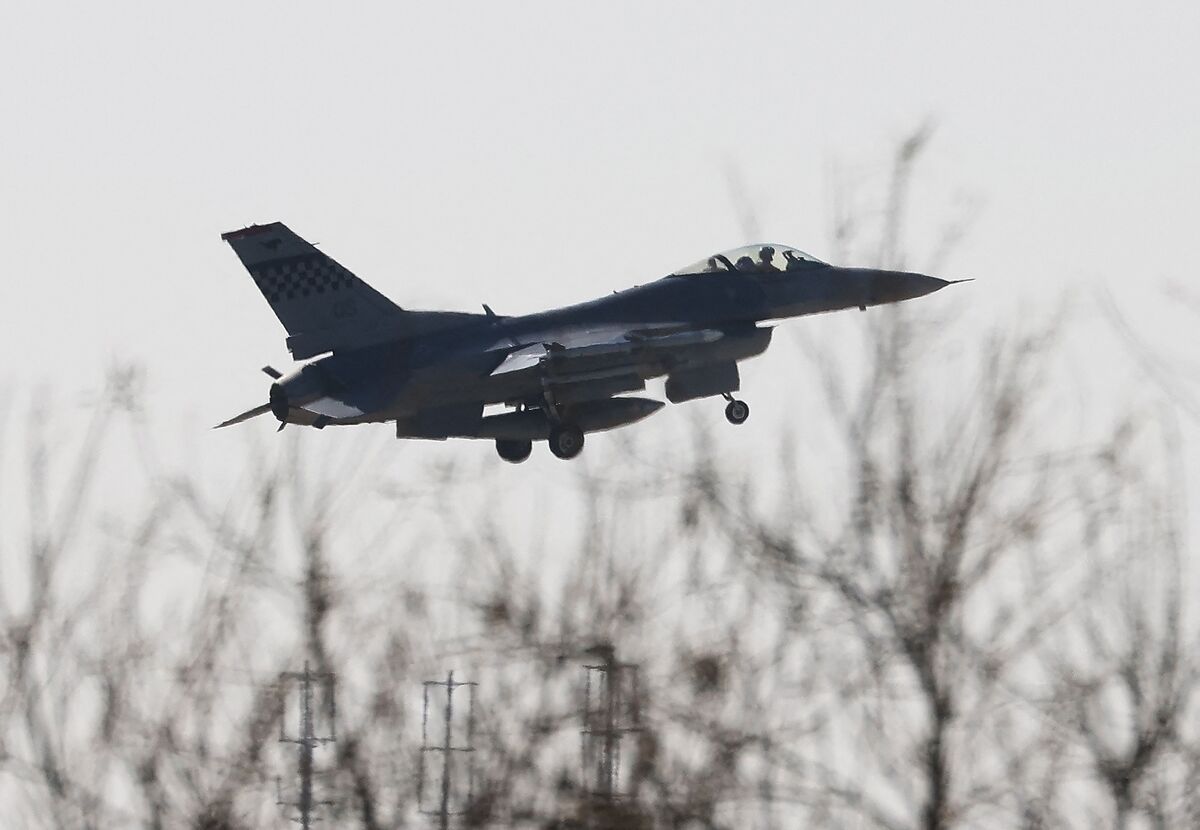
Washington approves $3.5 billion missile sale to Saudi Arabia ahead of Trump's visit.

The United States has given preliminary approval for a $3.5 billion sale of air-to-air missiles for Saudi fighter jets, the latest proposed arms deal to the region ahead of President Donald Trump's scheduled visit to the region later this month.

The sale, announced early Saturday, is likely to be one of several Trump will announce during his visit to the kingdom. Saudi Arabia has already said it wants to invest $600 billion in the United States over the next four years, likely as a way to woo Trump into choosing the kingdom again for his first official visit as president. Trump traveled briefly to Italy to attend the funeral of Pope Francis.

Trump's visit to Saudi Arabia in 2017 marked a break from the tradition of recent US presidents, who typically head to Canada, Mexico, or the United Kingdom on their first foreign trip. The visit also underscored his administration's close ties with the rulers of the oil-rich Gulf states, as his eponymous real estate company has made deals across the region.

The arms sale includes 1,000 AEM-120C-8 medium-range air-to-air missiles, guidance components, and other technical support. The missiles will be manufactured by RTX Corporation of Tucson, Arizona.

It is noteworthy that the Royal Saudi Air Force possesses the second largest fleet of F-16 fighter jets in the world, after the United States.

The US Defense Security Cooperation Agency said in a statement, "This proposed sale will support the foreign policy and national security objectives of the United States by improving the security of a partner nation that contributes to political stability and economic progress in the Gulf region."

(dad)

OPINIONS

Sat 03 May 2025 11:06 am - Jerusalem Time

Palestinian workers at the heart of the disaster

Ramallah - “Alquds ” dot com

Ramallah - “Alquds ” dot com

Opinion Writer


Baha Rahal

The class that was crushed during the months of war was the working class. It had fallen below the threshold of poverty and destitution, was ravaged by long days and months, was deprived of the most basic elements of a decent life, and lived in oppressive and difficult conditions without the most basic rights.

The working class, who used to earn their living day by day, found themselves overnight without work or income, and no one cared about their well-being. They are the workers of my country who fell victim to the raging war, as well as weak government plans aimed at rescuing them from their state of distress. Their conditions deteriorated, they lost their jobs, and were left to face their fates alone, without aid or support, job opportunities, social security, or health insurance. Emergency plans did not do them justice, and those who bear the responsibility of saving them did not come to their rescue.

May 1st of this year came, and the situation of my country's workers was dire, and their economic conditions were impossible, while the workers of Gaza, between martyrs, wounded, and displaced, were living through a catastrophe under the genocide from which no factory or facility, no company or institution was spared. Nothing was spared: not people, trees, or stones.

This is the difficult reality of my country's workers, a difficult and extremely dangerous reality due to the deterioration of these important sectors. They are the backbone of society and one of the pillars upon which the cycle of production and the market in the Palestinian economy depends. Some statistics issued by the Palestinian Workers' Union indicate that, before this war, the number of workers was close to half a million. After the war, they became unemployed, and a large percentage of them entered a phase of destitution and poverty.

Similarly, just as the occupation has bombed and destroyed economic facilities in Gaza with warplanes, military checkpoints, gates, and earth mounds have forced many economic facilities in the West Bank to close or reduce their workforce. This is due to declining purchasing power and a declining economy that is experiencing unprecedented daily decline, threatening more economic sectors.

These are frightening and shocking figures, foretelling dire economic consequences and a clear failure to address the situation, given the imposed blockade, Israel's piracy of Palestinian Authority funds, the cessation of international aid, the ongoing war of extermination in Gaza, and the policies of annexation, Judaization, and confiscation in the West Bank and Jerusalem. This calls for serious, responsible, and practical action, within the framework of urgent solutions.

Saving Palestinian workers is an urgent national and moral responsibility, requiring real action that goes beyond slogans and embraces realistic policies that restore this group's resilience and role in building the nation.

Palestinian workers are not well, workers of the world. They live without work, without health insurance, without rights, without available work. Their sustenance and the sustenance of their children are scarce. In Gaza, they are dying and being killed in displacement camps and shelters. This is the reality of Palestinian workers this year, workers of the world.

PALESTINE

Sat 03 May 2025 9:42 am - Jerusalem Time

When Thinking Becomes Resistance... "On the Meaning of Thinking Politically in Palestine Today"

When Thinking Becomes Resistance... "On the Meaning of Thinking Politically in Palestine Today"

Social science researcher Khaled Odeh Allah urges thinking from scratch.

We are busy with life and the spinning of events and the acceleration of their pace has deprived people of the opportunity to think

What happened on October 7 and what followed is a temporal break in Palestinian history and a turning point that should not be easily overlooked.

"Political realism" is a concept that has been used to suppress radical alternatives, and everyone with power tries to define what is real according to their own standards.

Our crisis lies in the disconnect between politics and society. Politics does not begin with slogans, but with the people.


Thinking about the time of disappointment

In a time teeming with events, where the world presses on your nerves like one breath after another, one call seems difficult, heavy, but necessary: to think. To really think. Not to respond, not to comment, not to curse or cheer, but to think about what is happening and what is not happening. Here, in this narrow corner of the world, where death is collective and betrayal is also collective, thinking becomes resistance.

This is what Khaled Odeh Allah, a researcher in social sciences and their philosophy, sought to capture in a symposium titled "On the Meaning of Thinking Politically in Palestine Today." The symposium, organized by the Suleiman al-Halabi Department for Colonial Studies in collaboration with the Khalil Sakakini Cultural Center, was held the evening before yesterday at the center's headquarters in Ramallah.

But don't expect to find a polished roadmap or a ready-made recipe for God's return. Rather, what you will find is "a dose of awareness carefully arranged, charged with the pain of history and its heavy questions," as he himself described it. A discourse that doesn't reassure, but rather disturbs; it doesn't entertain, but rather encourages a rethinking of the situation from scratch.

The painful scarcity of thinking

God's return begins with a shocking fact: that thinking, especially political thinking, is a rare and difficult act, and one that is not always possible. He says, "Thinking is a very difficult task, and if a person reflects on himself over a long period of time, he will discover that he does not think all the time. Indeed, thinking, in its deepest sense—that is, examining one's premises and measuring their logic—is not an everyday occurrence, but a rare occurrence."

We live in a consumerist age, not just in food and clothing, but also in attitudes and emotions. The return of God describes this reality by saying, "We are preoccupied with life and the fast pace of this age. Something is happening all the time, but not every event is important. In fact, the recycled nature of events and their accelerating pace have deprived people of the opportunity to reflect."

Genocide as a research file

But the moment of October 7th broke this rhythm. It was not a passing event, but a moment of rupture. He said, "What happened on October 7th and what followed is a temporal rupture in Palestinian history, a turning point that should not be easily overlooked." It was a moment that exploded everything we considered constant, and brought us face to face with the weakness of our tools and the limited understanding of our enemy and ourselves.

What's more difficult, according to Awdatallah, is that the genocide in Gaza, despite its horror, has not been sufficiently invested in reconstructing a genuine political action. On the contrary, "genocide has become a subject of research, emptied of its moral and existential dimensions, and treated as an academic field, rather than as a crime requiring accountability and radical political action."

Realism as a tool of oppression

Awdat Allah warns against the repetitive talk of massacres becoming a means of perpetuating helplessness: “The constant focus on genocide can be used to reinforce a collective sense of helplessness, as if it were a major crime that no human effort could counter, thus justifying inaction and inaction.”

Awdatallah did not neglect to question the concept of "political realism," which has long been used to suppress radical alternatives. He said, "There is no such thing as realism in its absolute sense. Realism is not what exists, but rather what is established through struggle. Everyone who possesses power tries to define what is real according to their own standards."

He then turns to the question of will, saying, "One of the biggest questions we must face is: Why did we fail? Why couldn't we stop the massacre? This is a question that concerns not only elites, but all of society." He added, "Political failure at an institutional moment like this must be dismantled, not hushed up, and must be confronted, not postponed."

Politics starts with the people

Politics, in his view, is not merely an institutional or organizational project, but rather "a collective practice linked to society, beginning with its foundations, its daily relationships, and the rebuilding of broken ties." Hence his sharp criticism of the idea of reducing the crisis of the Palestinian national project to a crisis of political representation. He says, "Our crisis is not only in who represents whom, but in the severing of the relationship between politics and society, and in the disruption of the foundation upon which the elites are based."

Therefore, he calls for a return to "politics as a life practice, beginning at the university, the neighborhood, the small gathering, the cultural encounter, and building new solidarity relationships." Politics, he asserts, "does not begin with slogans, but with the people."

He then arrives at a crucial point when he says, "If consciousness is not translated into a change in human existence, then consciousness turns into schizophrenia." By this, he means that a person may possess a revolutionary consciousness, but live a life unrelated to it, resulting in a distortion of self and a formal sense of belonging.

Thinking on the brink of extinction

Awda Allah concluded with a subtle reference to our current situation: “We have reached a moment where preserving what remains of Palestinian society itself, not the state project, is the essence of political action,” emphasizing that “rebuilding politics does not begin with grand solutions, but rather with a new foundation, with encounter, with recognition of a threatening reality, and with a long-term commitment that does not demand immediate results, but rather requires seriousness, honesty, and clarity.”

So, what does it mean to think politically about Palestine today?

Perhaps, as God's return said, it is to "rethink from scratch." To re-deconstruct what we take for granted and refuse to accept what we are told is "realistic." To practice politics not as a profession, but as a moral responsibility before death, before history, and before those who remain.

To think, not because thinking is a luxury, but because it is the last thing left before extinction.

OPINIONS

Sat 03 May 2025 9:35 am - Jerusalem Time

No to a Palestinian state...and the engineers

Jihad Harb

Jihad Harb

Opinion Writer


(1) No to the Palestinian state

Israeli Prime Minister Benjamin Netanyahu's statement the day before yesterday that there is no Palestinian state between the Jordan River and the Mediterranean Sea brings the conflict between Palestinians and Israelis back to its roots: the refusal to recognize the Palestinian people's right to exist and the denial of their right to self-determination. This rejection of the establishment of a Palestinian state is not due to security threats to the Israeli state, as Netanyahu has repeatedly claimed (and most Israeli parties, especially after the Israeli Knesset voted on July 18, 2024, by a majority of 68 votes, to consider the existence of a Palestinian state west of the Jordan River "an existential threat to the State of Israel and its citizens"), but rather to deny the rights of the Palestinian people in principle.

The issue today imposes a different way of thinking for the Palestinians in light of the Israeli massacre in the Gaza Strip and the assault on the West Bank, in order to rearrange the Palestinian cards; in a way that strengthens positive steadfastness and the actions it entails and restores the ability to act, i.e. developing the tools of Palestinian action within the framework of confronting the manifestations of Israeli colonization of the lands of the State of Palestine, on the one hand, and preventing the penetration of what is known as negative steadfastness among the Palestinians, on the other hand. The mere presence of Palestinians on this land is not sufficient to say that the Palestinian people are steadfast and resisting the Zionist project, on the other hand.

Indigenous peoples threatened with extinction through genocide or ethnic cleansing carried out by colonialism with the aim of ending and uprooting their existence need a collective understanding of this danger and its magnitude, an awareness of the tools for collective self-preservation, and the means and methods of confrontation that are consistent with their intrinsic strength or subjective circumstance and its preparation, and a deep understanding of the objective circumstance; with the aim of bringing about change in the objective circumstance by overthrowing the manifestations of power enjoyed by the colonizers in harmony with the collective goals of the indigenous group and its right to self-determination.

Today, Palestinians are in dire need of reconsidering their collective consciousness and the strengths and weaknesses of their own capabilities, and of deeply understanding the objective situation by identifying the goals, means, methods, and tools capable of influencing and changing it.


(2) Engineers Syndicate elections

Fatah's candidates won thirteen seats in the Engineers Syndicate elections last Wednesday, including the position of head of the syndicate. Rather, the position was restored to Fatah, as it has been in successive electoral cycles, with the exception of the previous one in 2021. At that time, I wrote to understand the implications of Dr. Nadia Habash's exceptional victory, competing with a Fatah candidate for the position of head of the syndicate.

Holding elections is a significant milestone, especially if it is accompanied by healthy preparations and implementation conditions that ensure peer competition, regardless of the winner's academic, professional, or scientific standing, or their professional history, even if it is significant. However, it is more important to understand the significance of each sectoral or professional election milestone and not overburden them or generalize them to broader political issues. Voting factors and motivations in sectoral or professional elections do not depend solely on partisanship or political support, despite its importance in the Palestinian context. They are also linked to aspects related to professional needs, the social aspirations of some professionals, the ability to achieve financial gains for union members against other parties, and the ability to help improve the conditions of professionals.


ARAB AND WORLD

Sat 03 May 2025 9:29 am - Jerusalem Time

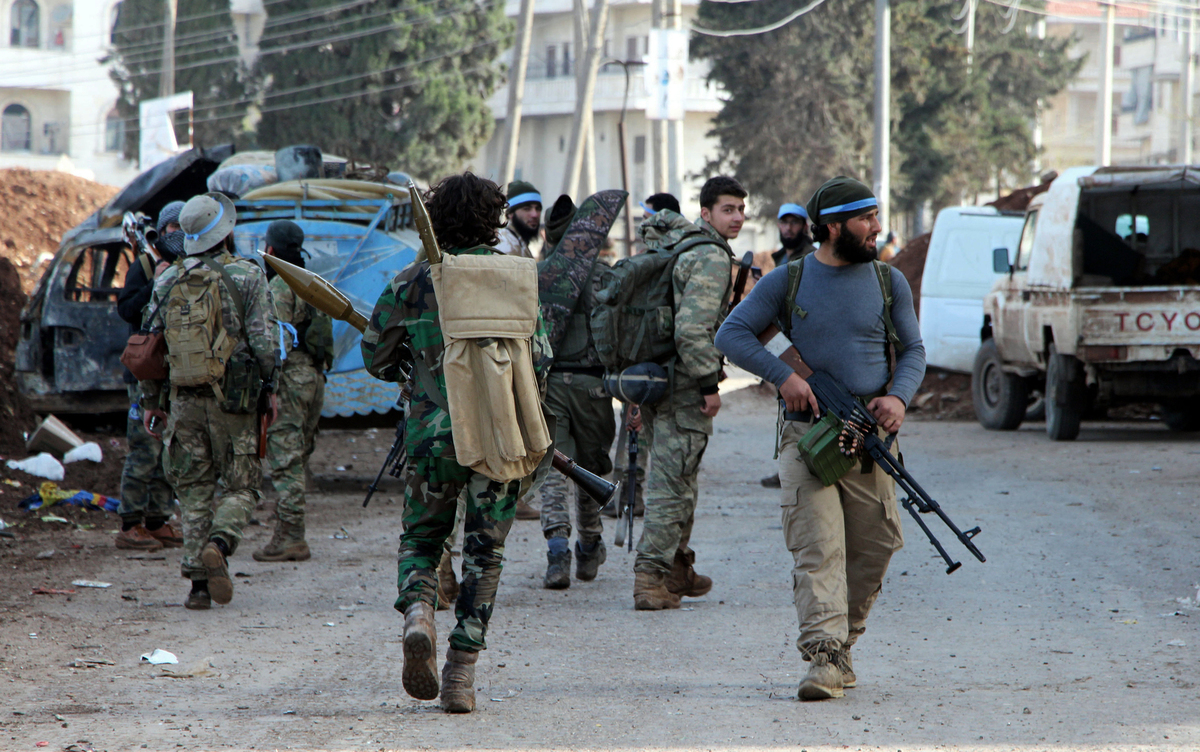
Israel launches new raids on Syria amid tensions between Damascus and the Druze

Israeli warplanes launched more than 20 raids targeting military sites across Syria overnight Friday, according to the Syrian Observatory for Human Rights. This comes after Israel had previously announced a strike near the presidential palace in Damascus.

The official Syrian news agency, SANA, reported that a civilian was killed in the raids, while the Israeli military confirmed that it targeted military infrastructure around Damascus and other areas of Syria, with which Israel remains at war.

The Syrian Observatory for Human Rights, which maintains an extensive network of sources on Syrian soil, reported "more than 20 Israeli raids on Daraa, the Damascus countryside, and Hama, targeting warehouses and military centers," in addition to raids on the Hama and Latakia countrysides.

The Observatory described the raids as "the most violent since the beginning of the year."

AFP correspondents in the Syrian capital reported hearing the roar of aircraft and several explosions.

SANA reported that "a civilian was martyred as a result of Israeli airstrikes on the outskirts of Harasta city in the Damascus countryside."

Since the fall of ousted President Bashar al-Assad in December, Israel, which views the new authorities in Damascus with suspicion, has carried out hundreds of attacks on military sites in Syria, justifying this by saying it seeks to prevent weapons from reaching the new authorities, which it describes as "jihadist."

Israel also sent forces to the demilitarized zone in the Golan Heights.

"A clear message"

An Israeli airstrike targeted Damascus early Friday morning, reverberating throughout the capital, according to AFP correspondents and residents.

Israeli military spokesman Avichay Adraee said in a post on the X platform that “warplanes raided… the area adjacent to the Ahmed Hussein al-Sharaa Palace in Damascus.”

In a statement, the Syrian presidency condemned the bombing, which it said targeted the presidential palace, considering it "a dangerous escalation against state institutions and sovereignty."

UN Secretary-General António Guterres also condemned "Israel's violations of Syria's sovereignty," adding, through his spokesperson, that "it is imperative that these attacks cease and that Israel respect Syria's sovereignty."

These raids follow clashes between Druze militants, security forces, and fighters affiliated with the Syrian government near Damascus and in the south of the country, along the border with Israel. According to the Syrian Observatory for Human Rights, clashes left more than 100 people dead in two days.

Following the raid, Israeli Prime Minister Benjamin Netanyahu, in a joint statement with Israeli Defense Minister Israel Katz, said: "This is a clear message to the Syrian regime. We will not allow the deployment of (Syrian) forces south of Damascus or any threat to the Druze community in any way."

"stage"

The Qatari Foreign Ministry condemned the Israeli airstrike near Damascus, describing it as a "blatant aggression against Syria's sovereignty."

Hours after Israel announced it had launched airstrikes on Damascus, the German Foreign Ministry declared in a statement that "Syria must not become a theater for tensions in the region."

On Thursday, Israel renewed its threats, with Katz warning that "if attacks on the Druze resume and the Syrian regime fails to prevent them, Israel will respond with great force."

Following the overthrow of Assad, who had presented himself as a protector of minorities in Syria, armed Druze factions, which are not united under a single umbrella, failed to reach a full agreement with the new authorities. However, hundreds of fighters from two major factions joined the ranks of the General Security and the Ministry of Defense.

The Druze are distributed between Lebanon, Syria, Israel and the occupied Golan Heights.

On Friday, Sharaa met in Damascus with Lebanese Druze leader Walid Jumblatt, who had called on his sect in Syria on Wednesday to "reject Israeli intervention."

The Syrian Observatory for Human Rights reported that four Druze were killed in a drone strike that hit a farm in Kanaker in southern Syria.

"fear"

Clashes began Monday night in Jaramana and spread the next day to Sahnaya, two predominantly Druze and Christian towns near Damascus. Tensions also spread to the southern province of Sweida.

The Syrian Observatory for Human Rights and Druze residents said that government fighters and security personnel attacked the two cities following the spread of an audio recording deemed offensive to the Prophet Muhammad. They clashed with Druze militants in the area.

Over the course of two days, clashes left more than 100 people dead, including Druze militants on one side and security personnel and fighters affiliated with the government on the other, in addition to 11 civilians, according to the Syrian Observatory for Human Rights.

On Thursday evening, Sheikh Hikmat al-Hajri, the most prominent spiritual leader of Syria's Druze community, denounced an "unjustified genocidal attack" against his community, demanding "the immediate intervention of international forces to maintain peace, prevent the continuation of these crimes, and halt them immediately."

The authorities accused "outlaw groups" of provoking the clashes by launching attacks on their forces.

The new authorities pledged to protect all sects amid concerns among minorities, while the international community urged the inclusion of all components in the transitional phase.

The escalation against the Druze comes more than a month after bloody violence in the Syrian coastal region, during which approximately 1,700 people were killed, the vast majority of them Alawites. This highlighted the challenges facing the administration of interim President Ahmed al-Sharaa.

Following two truce agreements between Druze representatives and government officials, security forces deployed to Sahnaya and reinforced their security measures around Jaramana on Thursday night. According to authorities, the agreement stipulated "the immediate surrender of heavy weapons and an increased deployment of General Security forces in the city."

But Arej, a 35-year-old resident of Sahnaya, said, “But we are afraid,” adding, “A large number of Christians and Druze have fled to Damascus.”

(AFP)

PALESTINE

Sat 03 May 2025 9:24 am - Jerusalem Time

A baby is born "without a brain" as the phenomenon of "fetal deformities" increases in the Gaza Strip.

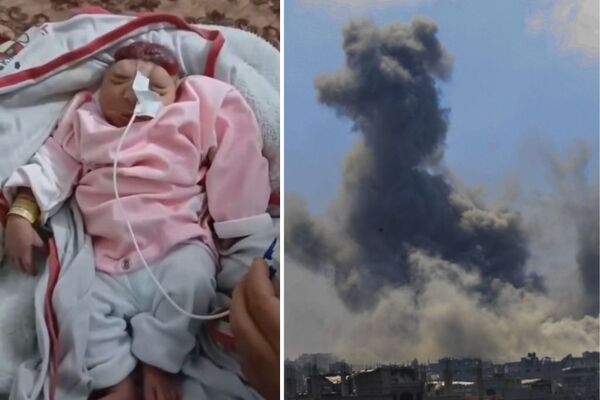
As the Israeli occupation forces continued their airstrikes on the Gaza Strip, a baby girl, Malak Ahmed Al-Qanou, was born "without a brain" at Al-Awda Hospital in northern Gaza.

Medical sources said that the two-day-old baby, Al-Qanou, is one of the "shocking cases of fetal deformities in the womb," suggesting that the cause is likely radiation from the bombardment with weapons that Israel, the occupying power, is testing in the Gaza Strip against civilians and children.

Videos and photos documenting the condition of the little girl, Al-Qanou, who appeared to have a head without a brain, with her skull extending only above her eyes.

This case comes amid a significant increase in the phenomenon of "fetal deformities" in the Gaza Strip, according to medical sources.

Throughout the months of genocide, doctors and human rights reports warned of the dangers posed to pregnant women in Gaza by exposure to toxic gases emitted by Israeli shells and missiles, fearing fetal deformities.

The sources indicated that "what is happening in Gaza brings to mind what was documented in Iraq after the invasion, where rates of birth defects increased due to pollution and radiation resulting from the bombing," calling for an international investigation "into the causes of these recurring cases of fetal deformities and the nature of the weapons used."

Residents of the Gaza Strip recently reported noticing a change in the sounds of explosions caused by the relentless Israeli bombardment, indicating the use of new weapons. This confirms the occupation's use of internationally prohibited weapons during the war of extermination it has been waging since October 7, 2023.

On January 28, 2025, a Human Rights Watch report stated that pregnant women in Gaza are at risk due to Israel's ongoing genocide.

She added, "Israel imposes conditions that threaten pregnancy, childbirth, and the lives of newborns in Gaza."

In its report, the human rights organization highlighted Israel's deliberate targeting of the health sector, undermining pregnant women and newborns' access to necessary healthcare, without addressing the issue of fetal deformities.

In this context, the organization stated that maternal health experts reported last July that the rate of spontaneous abortions had reached 300 percent since October 7, 2023.

On February 12, 2024, Jordanian pediatric surgeon Bilal al-Azzam, who was part of an American-European medical delegation that visited the Gaza Strip between January 19 and February 5, told the Turkish Anadolu Agency that they were treating cases of congenital malformations arriving at hospitals during the war.

Earlier on Friday, the United Nations Children's Fund (UNICEF) warned that children in the Gaza Strip face an increasing risk of hunger, disease, and death.

This came in a statement by UNICEF Executive Director Catherine Russell, highlighting the situation of children in the Gaza Strip after two months of Israeli blockade and the denial of humanitarian aid.

Russell reiterated her call for the protection of children, the lifting of the siege on Gaza, and the allowing of commercial goods to enter.

PALESTINE

Sat 03 May 2025 9:22 am - Jerusalem Time

19 Palestinians killed in Israeli occupation's bombing of citizens' homes in Khan Yunis

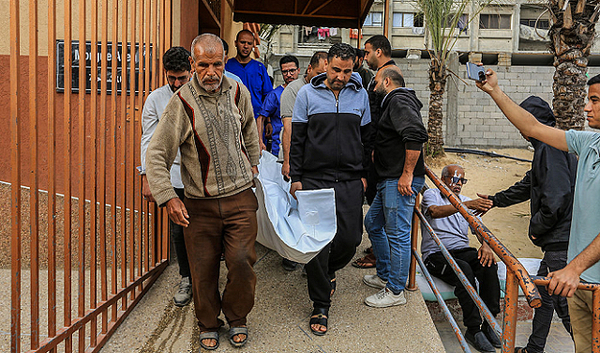
Nineteen citizens were killed and others injured early Saturday morning when the occupation forces bombed civilian homes and displaced persons' tents in Khan Yunis, south of the Gaza Strip.


The official WAFA news agency reported that the occupation warplanes bombed the home of the Al-Bayram family in Khan Yunis camp, which led to the death of 11 citizens, including: Ayman Ahmed Al-Bayram (57 years old), Abeer Ayman Al-Bayram (23 years old), the child Muhammad Ayman Al-Bayram (11 years old), the infant Alma Yasser Khaled Awad (one year old), An’am Muhammad Al-Bayram (44 years old), Hiba Zidan Asaf (19 years old), the infant Saif Abdul Rahman Al-Sinwar (one year old), and the infant Yahya Abdul Rahman Al-Sinwar (one month old).


IT added that a martyr, Bassem Al-Qudra, arrived at Nasser Medical Complex after his tent was targeted on the complex's street, and his wife and two sons were injured.


A citizen was also killed and others were injured in the bombing of a tent sheltering displaced people in the Al-Mahta area in Khan Yunis, in addition to the martyrdom of the child Hassan Abdul Tuman (4 months) as a result of the bombing that targeted a tent for displaced people in the Asdaa area to the north.


An Israeli drone targeted the Abu Hijris family home in Khan Yunis, killing pregnant Nadine Abu Lahia (Hijris), and injuring another.


The death toll from the attack on the Za'rab family home in the Batn al-Sameen area has risen to four, while rescue crews continue their searches under the rubble.

In Rafah, ambulance and rescue crews recovered the decomposing body of a martyr from the Rafah beach.

Since October 7, 2023, the occupation has been committing genocidal crimes in the Gaza Strip, leaving more than 170,000 citizens dead or wounded, most of them children and women, and more than 11,000 missing, amid massive destruction.

ARAB AND WORLD

Fri 02 May 2025 10:20 pm - Jerusalem Time

SEE Institute Launches OGA: A New Hub for Sustainable Influence in the UAE

Dubai, UAE: 30 April 2025// A new media agency is making waves in the UAE with a mission to reshape the influencer landscape through education, innovation, and sustainability. OGA (Olive Green Academy) has officially launched at the prestigious SEE Institute in The Sustainable City, Dubai, becoming the region’s first AI and sustainability-focused influencer academy dedicated to environmental advocacy and impactful digital storytelling.


OGA merges cutting-edge AI technologies with real-world sustainability expertise, helping creators build authentic, purpose-driven brands. As AI continues to evolve, many people remain uncertain about its potential. However, OGA is guiding the conversation on how to harness AI for the greater good, ensuring that it works in harmony with humanity’s best interests. With responsible stewardship, AI can become a powerful tool to amplify efforts to address pressing global challenges, including climate change.


Identifying a critical gap in the influencer industry, OGA is pioneering a unique model that combines networking opportunities, specialized training courses, and practical initiatives to empower influencers with the tools and knowledge they need to use their platforms responsibly and drive real change in the fight against climate change.


“At OGA, we believe influencers and content creators hold the power to inspire true environmental action,” said Nadeen Ayoub, co-founder of OGA. “Our academy is not just focusing on growing audiences, but growing impact, and now with the rise of AI we can utilize it to make a positive change in the world.”


OGA offers a range of professional courses, certified by the Knowledge and Human Development Authority (KHDA), designed for both established professionals and aspiring influencers. Courses include the Certified Sustainability Content Creator program and the Professional Certificate in Sustainability Communication. The academy teaches participants how to turn sustainability topics into powerful content, utilize AI tools to enhance production and reach, and create sustainability reports aligned with GRI (Global Reporting Initiative) and ESG (Environmental, Social, and Governance) standards.


By harnessing AI insights, OGA provides personalized strategies for content creation, audience engagement optimization, and measurable impact assessment, ensuring that every graduate contributes meaningfully to global sustainability goals. With its launch, OGA sets a new benchmark for how media, technology, and advocacy can converge, reinforcing Dubai’s position as a global hub for innovation and climate leadership.

-ends-


PALESTINE

Fri 02 May 2025 8:42 pm - Jerusalem Time

UNICEF: Gaza's children face the risk of hunger, disease, and death

The United Nations Children's Fund (UNICEF) warned on Friday that children in the Gaza Strip face an increasing risk of hunger, disease, and death, and nothing can justify this after two months of a stifling Israeli blockade.

This came in a statement by UNICEF Executive Director Catherine Russell, highlighting the plight of children in the Gaza Strip after two months of Israeli blockade and the denial of humanitarian aid. Russell reiterated her call for the lifting of the blockade on Gaza, the allowing of commercial goods, and the protection of children.

“For two months, children in the Gaza Strip have faced relentless bombardment, deprived of essential goods, services, and life-saving healthcare,” the UN official said. “With every day that passes under the Israeli blockade on aid, they face an increasing risk of hunger, disease, and death. Nothing justifies this.”

PALESTINE

Fri 02 May 2025 8:41 pm - Jerusalem Time

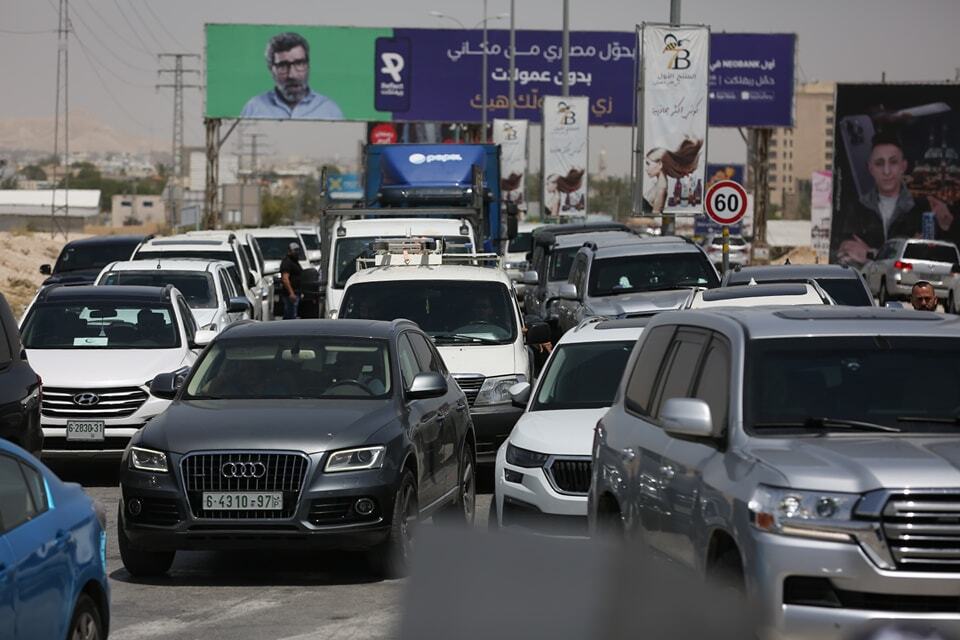
Israeli occupation forces close the entrances to Jericho in both directions.

Israeli occupation forces closed the entrances to the city of Jericho, east of the West Bank, on Friday.


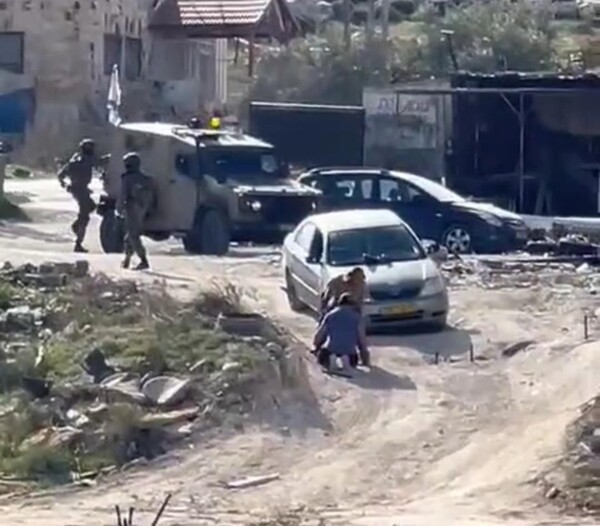
Eyewitnesses reported that the occupation forces closed the entrances to Jericho with military gates in both directions, forcing passing vehicles to wait in queues amid a large presence of occupation soldiers, and turning back a number of vehicles at their checkpoints.

A group of settlers also blocked the road leading to the city of Jericho from the northern entrance at the end of Al-Ma'rajat Road, parking their vehicles crosswise in the middle of the road and forcing citizens' vehicles to turn back.

PALESTINE

Fri 02 May 2025 8:38 pm - Jerusalem Time

A child and a young man were killed in an Israeli airstrike on Gaza City.

A child and a young man were killed Friday evening when the Israeli occupation forces bombed the Al-Zeitoun and Al-Shuja'iya neighborhoods in Gaza City.


Local sources reported that the child, Aoun Nizar al-Deeb, was killed and his grandfather, Aoun al-Deeb, was injured as a result of the occupation's bombing of al-Sikka Street in the Shuja'iyya neighborhood in eastern Gaza.


A citizen was killed and others were injured when Israeli warplanes bombed "Baraksa" in the Al-Zeitoun neighborhood, south of Gaza City.

PALESTINE

Fri 02 May 2025 3:10 pm - Jerusalem Time

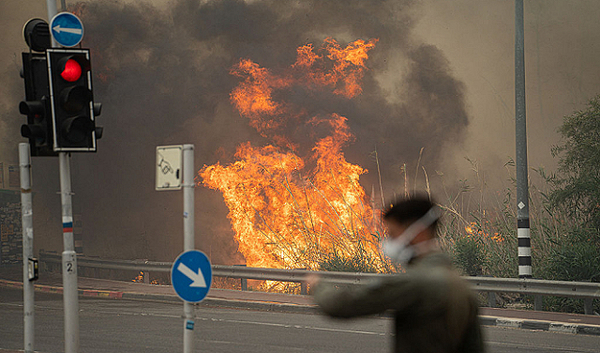
The Latrun fire in the Jerusalem mountains has renewed.

Reports indicated that the Latrun fire in the Jerusalem Hills flared up again on Friday, just hours after the Israeli Fire and Rescue Authority announced it had been brought under control after more than 30 hours of blazes. The fire authority confirmed that "the situation is under control."


The Israeli Fire and Rescue Authority said in a statement issued after the reports that "there are no dramatic events in the fire areas at this time."


She added, "Several smoke points are being monitored, and firefighting forces and firefighting aircraft are continuing their work," noting that "everything is under complete control."


"We continue to monitor and update, as necessary," she said.


This comes as the commander of Israel's fire and rescue teams announced Thursday evening that "the large fire that broke out yesterday in the Jerusalem area has been brought under control. Accordingly, the Fire and Rescue Authority has begun gradually withdrawing forces, while maintaining a strong presence on the ground to prevent a resurgence of the flames."


According to a statement issued by the official Arabic media spokesperson for the Fire and Rescue Authority, "a special investigation team has begun examining the causes of the fire, and will continue to work at a reduced pace over the coming hours."


Seventeen firefighters were injured while fighting the fire, two of whom were taken to hospital for treatment.


The fire is estimated to have consumed approximately 24,000 acres, making it one of the largest in the country's history.


Several European countries, including Romania, France, Spain, Croatia, Italy, and Ukraine, have announced they will send firefighting aircraft to support the firefighting efforts. However, a firefighting source indicated that international assistance may not be effective on a large scale, given that the fire was declared under control before the aid arrived.

PALESTINE

Fri 02 May 2025 2:51 pm - Jerusalem Time

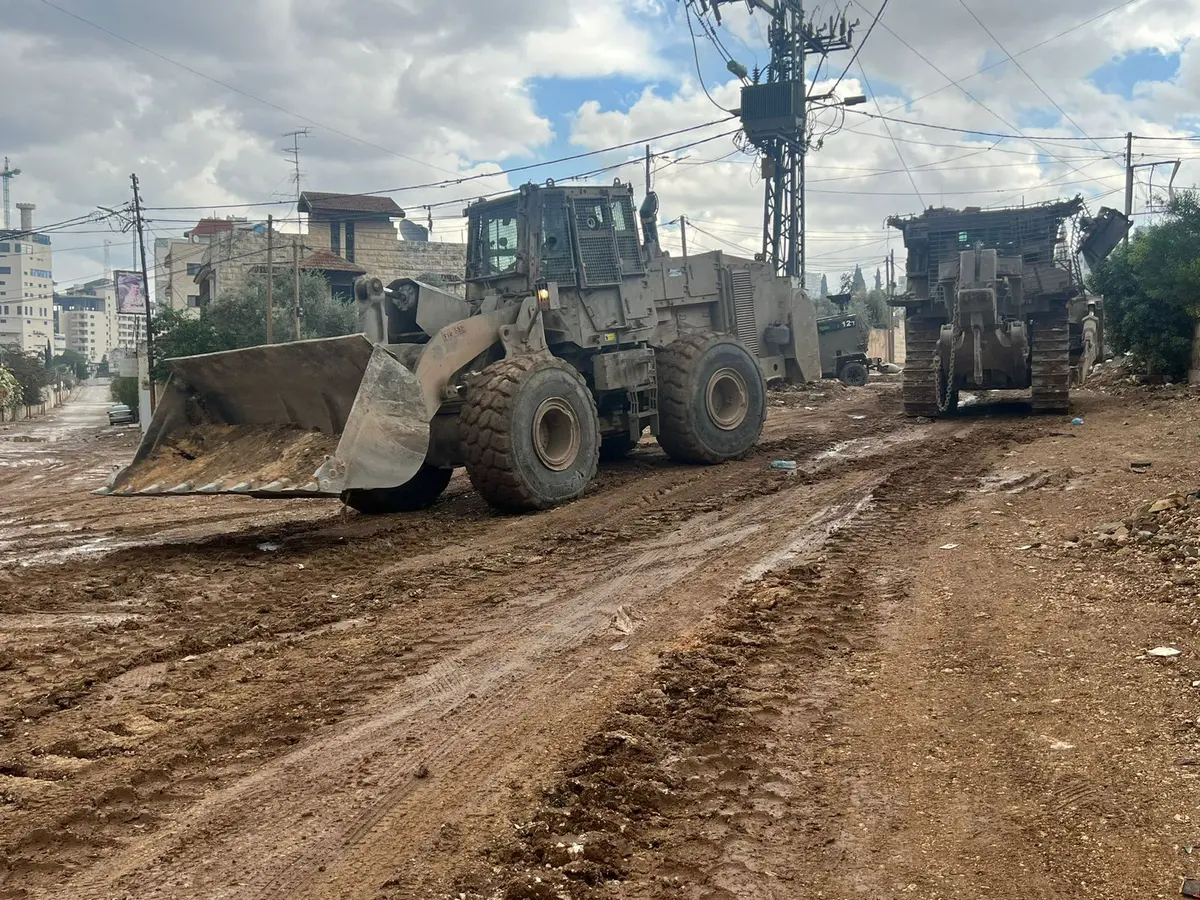
The occupation continues its aggression on Jenin and its camp for the 102nd day.

The Israeli occupation forces continue their aggression against the city of Jenin and its camp for the 102nd consecutive day, expanding their bulldozing and destruction operations inside the camp with the aim of changing its features and structure, while continuing to prevent entry or access to it.


Official estimates indicate that all homes and facilities in the camp have been damaged, either completely or partially, as a result of the ongoing aggression and destruction. The city of Jenin has also suffered significant damage to facilities, homes, and infrastructure, particularly in the eastern neighborhood and the al-Hadaf neighborhood.


Families from the camp, along with hundreds of families from the city and its surrounding areas, remain forcibly displaced to this day. The Jenin Municipality reports that the number of displaced persons from the camp and the city has exceeded 22,000.


The economic situation in Jenin continues to deteriorate, with heavy commercial losses resulting from the aggression. This has led to the closure of numerous shops and a decline in the city's incoming trade. Furthermore, bulldozing and destruction of infrastructure and streets have also occurred, with a large number of businesses damaged, particularly in the western neighborhoods, which are experiencing near-total economic paralysis.


The occupation forces continue to send additional military reinforcements toward the camp and its surroundings, while infantry divisions are deployed in several neighborhoods in the city. Daily military activity is being recorded in most of the governorate's villages, along with the constant presence of occupation patrols and vehicles.


Since the start of the assault on the city and camp on January 21, 40 people have been killed, along with dozens more injured and arrested.

PALESTINE

Fri 02 May 2025 2:46 pm - Jerusalem Time

The Jerusalem Endowment Fund office was closed by Ben-Gvir's decision.

Israel's so-called National Security Minister, Itamar Ben-Gvir, issued a decision to close the Jerusalem Endowment Fund's office in Jerusalem.


The Jerusalem Governorate said the decision to close the Jerusalem Waqf office is "an aggressive step that falls within the occupation's systematic policy to undermine the Palestinian presence in the occupied capital."


The Jerusalem Governorate emphasized that the allegations made by the occupation to justify this unjust decision, claiming that the Waqf and Fund are working for the benefit of the Palestinian National Authority, are completely false and baseless. The work of the Jerusalem Waqf and Fund is limited to social, humanitarian, and charitable work, and has no connection to any political activity. Their goal is to support the steadfastness of our people in Jerusalem and enable them to live with dignity in the face of the occupation's daily practices of oppression and ongoing violations.

The Jordanian Ministry of Foreign Affairs and Expatriates condemned the Israeli occupation authorities' closure of the Jerusalem Fund and Endowment, an independent Palestinian institution in Jerusalem. The closure, the Ministry said, is a "clear extension of Israel's systematic policy of imposing new facts on the ground aimed at undermining the Palestinian presence and obliterating the Arab identity of occupied Jerusalem."

PALESTINE

Fri 02 May 2025 2:17 pm - Jerusalem Time

Settlers attack citizens' vehicles south of Nablus

Today, Friday, settlers attacked citizens' vehicles south of Nablus.


Local sources reported that settlers attacked citizens' vehicles and threw stones at them on the road near the Yitzhar settlement, built on citizens' land south of Nablus.

PALESTINE

Fri 02 May 2025 2:15 pm - Jerusalem Time

Israel prepares for a massive mobilization to escalate the war on Gaza.

Israel is calling up tens of thousands of reservists for active duty as the occupying army wages a war of annihilation in besieged Gaza and other wars in Syria, Lebanon, and the occupied West Bank. Many Israeli reservists have already served in multiple deployments and are threatening to ignore redeployment orders.


According to Haaretz, Tel Aviv is preparing tens of thousands of call-up orders for reserve soldiers for active duty. The Israeli military is planning to expand its military operations in Gaza and needs more soldiers.


Reserve soldiers are expected to be deployed in Lebanon, Syria, the West Bank, and Gaza. These additional forces will allow more Israeli forces to participate in operations during the war on Gaza.


Meanwhile, the military leadership is preparing plans to evacuate the town of Al-Mawasi along the Gaza coast. Israeli forces have forced hundreds of thousands of Palestinians to live in the area, which has become a tent city. Now, Tel Aviv claims that Al-Mawasi has become a safe haven for Hamas and must be cleansed of all Palestinians. While Israel claims its goal is to free its hostages held by Hamas, the cleansing of Al-Mawasi, which Tel Aviv has designated as a safe zone, is further evidence that Israel's goal is to cleanse the Strip of all Palestinians.


It is unclear how many Israeli reservists will return to active duty. In March, Haaretz reported that it had spoken with Israeli military officers who had been told by reservists that they would not return if called up. Most of them said they opposed Israeli Prime Minister Benjamin Netanyahu's judicial reforms and his efforts to oust Shin Bet security service chief Rosen-Bar.


Among those unwilling to return to active duty are officers and commanders in key positions. A total of 12,000 reservists have signed letters stating that they will not return to combat, with some estimates suggesting that up to 50% of Israeli reservists will not report for duty when called up.

PALESTINE

Fri 02 May 2025 1:44 pm - Jerusalem Time

Bethlehem: Occupation forces attack worshippers in Beit Fajjar

Israeli occupation forces attacked worshippers on Friday during a raid on the town of Beit Fajjar, south of Bethlehem.


Local sources reported that an Israeli occupation army force stormed the town and took up positions in several neighborhoods. They raided the area of the town's grand mosque, threw sound bombs and tear gas at worshippers, and climbed onto the roofs of neighboring houses.

PALESTINE

Fri 02 May 2025 1:02 pm - Jerusalem Time

25 dead in the Gaza Strip since dawn today

A number of civilians were killed and injured on Friday in Israeli raids on various areas in the Gaza Strip.


According to medical sources, 25 citizens have been killed in the Gaza Strip since dawn today.


In the northern Gaza Strip, nine cousins from the al-Masry family were killed in the space of two days. Some were killed yesterday, Thursday, while others were killed today while attending a funeral in the northern Gaza Strip.


Local sources reported that "nine cousins were martyred in two consecutive massacres," noting that "three martyrs were killed yesterday, and today their funeral home was bombed, leaving six new martyrs."


She added that among the martyrs was "a father who bid farewell to his son yesterday and was martyred today, and a son who bid farewell to his father yesterday and was martyred today."


She stated that the martyrs of the Al-Masry family funeral massacre on Friday were: Adnan Al-Masry, Sari Al-Masry, Bilal Nabil Al-Masry, Mohammed Adnan Al-Masry, Sameh Wael Al-Masry, and Sami Abdel Raouf Al-Masry.


The family members who were martyred yesterday, Thursday, are: Wael Abdel Raouf Al-Masry, Murad Hamed Al-Masry, and Wissam Adnan Al-Masry.


In the southern Gaza Strip, three civilians were killed and others injured when Israeli warplanes bombed tents belonging to displaced people near the city of Asdaa, northwest of Khan Yunis.


Meanwhile, two citizens were killed as a result of Israeli shelling on the Qizan al-Najjar area, south of Khan Yunis, in the southern Gaza Strip.


In the east of Gaza City, the occupation forces continue to launch fire belts on the eastern areas of the city.


PALESTINE

Fri 02 May 2025 12:09 pm - Jerusalem Time

UNRWA: The blockade on Gaza is killing more children and women every day.

The United Nations Relief and Works Agency for Palestine Refugees (UNRWA) warned on Friday that the Israeli occupation's blockade of the Gaza Strip will silently kill more children and women every day, in addition to those killed by bombing.


This came in a post by UNRWA Commissioner-General Philippe Lazzarini on the X platform, in which he stated that "children, women, and the elderly in Gaza are being collectively punished," with two months of a stifling blockade and the denial of humanitarian aid.


The UN official continued: "Israel must lift the blockade on the Palestinians and allow the flow of essential supplies into the Gaza Strip."


He highlighted that "with each passing day, the Israeli blockade on Gaza will silently kill more children and women every day, in addition to those killed by bombing."


Since March 2, the occupation authorities have closed the Gaza Strip's crossings to relief aid and fuel, resuming their genocide.


The 2.4 million residents of the Gaza Strip are entirely dependent on such aid after 19 months of genocide rendered them impoverished, according to World Bank data.


This humanitarian crisis comes amidst the displacement of more than 90% of citizens from their homes, some of whom have experienced this more than once. They now live in overcrowded shelters or in the open without shelter, which has increased the spread of diseases and epidemics.

PALESTINE

Fri 02 May 2025 11:56 am - Jerusalem Time

Red Cross: The humanitarian response in Gaza is on the verge of complete collapse.

The International Committee of the Red Cross (ICRC) has warned of an imminent collapse of the humanitarian response in the Gaza Strip, given the sharp deterioration in the situation on the ground and the ongoing Israeli aggression.


The committee said in a statement on Friday that the deteriorating security situation in the Gaza Strip is significantly hampering the work of its staff and humanitarian partners, stressing that "without immediate action, Gaza will descend into chaos that humanitarian efforts will not be able to alleviate."


She added that civilians in the Gaza Strip were left without the basic necessities needed for survival, stressing that the immediate resumption of aid deliveries was imperative, otherwise the implementation of the ICRC's programs in the Strip would be impossible.


The ICRC stressed that medical personnel and facilities must be respected and protected under all circumstances, calling for immediate access for humanitarian aid to the besieged enclave.

PALESTINE

Fri 02 May 2025 10:58 am - Jerusalem Time

A Palestinian was shot dead by the occupation forces east of Nablus.

A young man was killed this Friday morning by Israeli occupation forces in Balata camp, east of Nablus.


The General Authority of Civil Affairs informed the Palestinian Ministry of Health of the martyrdom of Omar Mustafa Abu Lail (39 years old).


It pointed out that the occupation forces had detained his body.

PALESTINE

Fri 02 May 2025 10:46 am - Jerusalem Time

Netanyahu and the army's positions on the priorities and objectives of the war on Gaza are contradictory.

The Israeli military announced its position on the priorities of the war on Gaza on Friday, contradicting Prime Minister Benjamin Netanyahu's statement yesterday. An Israeli officer said today that 2025 will be a "year of fighting," with the focus on the Gaza Strip and Iran.


Netanyahu said, "Returning the kidnapped soldiers is a very important goal, but the ultimate goal is victory over our enemies." The Israeli army announced in a statement today that, "The ultimate goal we are carrying out is our moral duty to return the kidnapped soldiers. The second goal is to defeat Hamas. We are working to advance both goals, foremost among them the return of the kidnapped soldiers."


Earlier this week, Israeli Chief of Staff Eyal Zamir stated that "the two missions of the war are linked," even though it has been proven since the beginning of the war that these two missions are contradictory.


Israeli Army Radio noted today that Netanyahu's position on the war's priorities expressed yesterday is closer to that of Finance Minister Bezalel Smotrich, who declared that "the kidnapped soldiers are not the war's most important target."


Meanwhile, Israeli media quoted an army officer today as saying that this year will be a "year of fighting," with the focus on the Gaza Strip against Hamas and Iran. He added that the "two most important tasks of the Israeli army are returning the kidnapped soldiers and eliminating Hamas."


The officer added that the Israeli army has killed more than 400 Palestinian fighters since the resumption of the war on Gaza on March 18, and has attacked thousands of "terrorist targets."


According to the same officer, Zamir's position on humanitarian aid to the Gaza Strip "has not changed. The Israeli army will allow the distribution of aid, but it will not distribute it itself." He claimed that "the army will not allow famine in the Gaza Strip," even though famine has already occurred due to the blockade of aid entering the Strip since the resumption of the war, according to international relief organizations operating in the Gaza Strip.

The officer addressed the situation in the West Bank. According to him, there has been a decline in armed attacks, and cooperation between the army and the Shin Bet security service is "close to thwarting attacks before they are carried out." He added that the Israeli army has killed more than 100 Palestinian militants and arrested hundreds of others since the beginning of the military operation in the northern West Bank.


Regarding Israeli attacks on Lebanon since the ceasefire began on November 27, the officer said the Israeli army has attacked approximately 350 Hezbollah targets across Lebanon and killed more than 140 Hezbollah members.


The Israeli officer added, threateningly, "The army will maintain its freedom of action and will continue to work to eliminate threats. The military positions it established during Operation Northern Arrows will continue to be used as a forward security zone, allowing operational control and a defensive zone over Israeli citizens."


The Israeli officer said that the Israeli army "will maintain freedom of air operations, thwart threats, and prevent the destruction of strategic weapons in Syria. The military positions established by the Israeli army in the buffer zone, from the southern Golan Heights to Mount Hermon, will continue to form a forward defensive zone."


He added, "The (Israeli) forces present in the buffer zone are targeting the capabilities remaining in this area since the period of the Syrian army's (presence), in order to prevent weapons and capabilities from falling into the hands of hostile parties trying to position themselves in this area."


ARAB AND WORLD

Fri 02 May 2025 10:32 am - Jerusalem Time

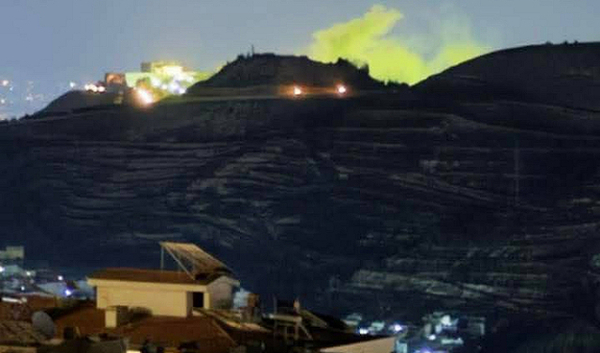
Lebanon: 5 injured in Israeli attack on gas station on Houla road

Five people were injured in Israeli airstrikes targeting a fuel station in southern Lebanon on Friday, in continuation of successive Israeli violations of the ceasefire with Hezbollah.


This came according to what was confirmed by the Lebanese National News Agency, which reported that "a hostile drone targeted a fuel station on the Houla road with three missiles."


She added that this "led to the injury of five people in a prefabricated room on the station's roof."


This comes as four people were killed on Thursday in two Israeli attacks in southern Lebanon, according to the Lebanese National News Agency and the Lebanese Ministry of Health.


The Lebanese Ministry of Health announced Thursday evening that a second Israeli airstrike targeting the town of Mays al-Jabal in southern Lebanon resulted in the death of one citizen and the injury of another. The Ministry of Health had previously announced that an Israeli airstrike on the town of Mays al-Jabal resulted in the death of three people, a Lebanese citizen and two Syrians, after their vehicle was targeted near the road linking the towns of Mays al-Jabal and Blida.


This raid is part of a series of attacks launched by the Israeli Air Force in southern Lebanon, which over the past few weeks have included the targeting of civilian vehicles, motorcycles, and homes, resulting in a number of deaths and injuries, including civilians, in a clear violation of Lebanese sovereignty and a blatant infringement of international law.


Israel is also intensifying its use of drones to target individuals and vehicles, a tactic that has become a prominent feature of its aggression against Lebanon. This exacerbates tensions and threatens to expand the scope of the confrontation with Hezbollah, given the international community's inability to curb this dangerous escalation.


The targeting of civilians and vehicles comes amid Israel's continued policy of field assassinations and repeated violations of the Lebanese border. The United Nations continues to warn of the deteriorating situation on the southern front, but this has yet to translate into concrete steps to halt the attacks.


ARAB AND WORLD

Fri 02 May 2025 9:40 am - Jerusalem Time

The Israeli army launches raids near the Syrian presidential palace.

The Israeli military launched airstrikes near the Syrian presidential palace in the capital, Damascus, early Friday morning.


In detail, the Israeli Air Force launched airstrikes near the Syrian presidential palace in the capital, Damascus, early Friday morning, following Syrian authorities' warning not to advance toward villages inhabited by members of the Druze community in southern Syria.


Israeli Prime Minister Benjamin Netanyahu and Defense Minister Yisrael Katz said in a joint statement, "Israel attacked tonight near the presidential palace in Damascus. This is a clear message to the Syrian regime."


The statement added, "Israel will not allow the deployment of forces south of Damascus or any threat to the Druze community."


Netanyahu's office added in the statement that "Israel will not allow the deployment of forces south of Damascus or any threat to the Druze community," referring to recent security developments in the region.


He pointed out that the attack came within the framework of a deterrent policy to prevent what he described as a "threatening military positioning."

OPINIONS

Fri 02 May 2025 9:32 am - Jerusalem Time

Is there a solution to the Palestinian issue?

Jawad Al-Anani

Jawad Al-Anani

Opinion Writer

Anyone following the developments of the Palestinian issue and listening to Arab and international channels will notice a wide divergence of opinions surrounding its likely outcomes. Part of this ambiguity stems from the conflicting and converging forces, making it difficult to determine the direction they might take. Likewise, the other side (Israel) seeks to convince itself and others that it has emerged victorious from the successive wars, especially in the occupied Gaza Strip and the West Bank.

As for the Arab countries, I can almost be certain that they all want to see the issue resolved, and that a lasting peace has been achieved between the Arabs and Palestinians and the Israelis. However, their visions and the scenarios they adopt differ from one country to another. There is no doubt that all Arab countries seek to allocate their resources to development, restructuring, and social protection instead of war. This includes the richest Arab countries in the Gulf region and the poorest Arab countries in the two African wings, east and west of the continent. These aspirations for a permanent solution in Palestine are not exempt from these aspirations for a permanent solution, neither the countries furthest from the epicenter of the conflict nor those closest to it, such as Jordan, Egypt, Syria, and Lebanon. These countries are the countries most affected by the outcomes of war or peace in Palestine.

Therefore, we must raise the following question: What are the basic steps required to reach a serious negotiating stage that ultimately leads to a schedule of measures required to be implemented by both sides, the Palestinians and the Israelis (most of which are required by Israel) in order to reach that horizon that opens the door to hope for a reasonable solution that gives the Palestinian people their full rights on a land over which they have full sovereignty, and which is capable of life and development?

First, now that the Gaza war is almost over, it is clear that the fighters and the resistance are not the party that should be negotiating. In my opinion, these factions must maintain their combat doctrine in anticipation of a situation in which the negotiations might fail and the Israeli army might return to its evil role, which the world witnessed vividly on television screens about 19 months ago. To complete this point, the negotiations must be undertaken by a delegation experienced in this matter, along with a team of researchers and advisors, including representatives from Jordan and Egypt. As for Hamas, it is also beginning to prepare itself to become a non-governmental organization that participates in elections, and it seeks to have a role in the governments and administration of the future state in the future.

The second required point is the restructuring of the Palestinian Authority and the building of a system for it capable of participating in the administration of the state while enjoying sovereignty and general authority. Late last week, Palestinian President Mahmoud Abbas made a long-awaited decision, which came after much pressure, which is to appoint a vice president, Hussein al-Sheikh, the politician or pragmatist as some call him. Although some criticism was directed at him due to his Machiavellian ways - as they say - in managing the affairs of the country and its people, we are not here to analyze Hussein al-Sheikh, but rather to appoint him to be the next president after President Mahmoud Abbas.

This is the first step, which must be followed by many more, the most important of which is the process of linking the Gaza Strip to the West Bank as a single unit. All the men in power are determined to do this, but no one expresses any fear about it. I was reminded of this when I was watching an Arab satellite news channel interviewing Bangladeshi President Dr. Muhammad Yunus, my classmate at Vanderbilt University in the United States. I remember that when he was cheering inside the university at the time, welcoming Bangladesh's withdrawal from the union with Pakistan, I shouted at him, reprimanding him for being a separatist. We remember that West Pakistan (currently Pakistan) and East Pakistan (currently Bangladesh) were separated from each other by Indian territory. This is a likely scenario in the future if Gaza and the West Bank are not closely linked without Israeli control, or if the Israeli crossings become the only route connecting the two wings of the awaited Palestinian state. This may require crossing through Jordan to Sinai and Gaza, preferably by railway.

The third step is to consider a project to rebuild Gaza and some areas in the West Bank, where Israel has committed numerous acts of systematic destruction, demolition, and terrorism, leading to the deterioration of infrastructure and superstructure, and the weakening of many public facilities in the water, electricity, and communications sectors. This is something that many countries around the world must pledge to fund, as they have remained silent about the injustice inflicted on the Palestinian people and the brutal acts committed by Israel in Palestine.

The fourth necessary step in this region is to consider making Israel part of the Middle East. However, many analysts do not see any specific meaning in the term Middle East. In the opinion of Prince Hassan bin Talal, a thinker and entrepreneur, the term Middle East or Near East (like other British terms) does not give the Arab countries a continental identity. Although he believes that a term like MENA has a continental dimension limited to Africa, he denies the identity of the Arab countries in West Asia. Therefore, he believes that the term WANA, or West Asia and North Africa (WANA), is the better term. As for the Arab East, he sees it as composed of Arabs, Persians, Kurds, and Turks, and we may add the term Jews to it in the future.

In order to achieve these advanced steps, the Arab world must take a coherent position, insisting that the solution to the Arab-Israeli conflict must embody the solution accepted by the Arabs in 2002 at the Beirut Summit in Lebanon. They must all bear the responsibility of adhering to this matter and not enter into any agreements with Israel until it accepts the two-state solution based on the Arab Initiative, which is identical to Security Council Resolutions 242 and 338 of 1967, which were accepted by the major powers, and none of which voted against it.

After the Palestinian and Israeli sides sign this agenda, both parties will be given five years to implement the required steps, including an Israeli withdrawal from the territories it occupied and established settlements and agricultural kibbutzim on, and returning them to their owners, whether the government or the local population. By the end of the five years, all Arab states will have recognized Israel, followed by Islamic states, which will open official, commercial, and other relations with it. Within this framework, a code of ethical conduct will be established, to which both sides will adhere, pledging not to take any measures that might undermine the dignity, sanctities, or ideals of the other party. The major powers will pledge and guarantee that Israel will implement all the resolutions it has committed to, as will the Arab states, particularly those that have signed peace treaties with Israel.

If the Arabs, through their determination and unified stance, are able to reach a final peace agreement with Israel by the end of 2030 or 2031, then time will be on their side to restructure their economies and implement production and distribution projects and decisions that will contribute strongly and directly to the development of their economies, enhance their productivity, and confirm their competitiveness, which will enable them to become independent of oil by around 2040, or when oil and natural gas are transformed from primary energy sources into various raw materials used in the petrochemical industry, which may continue to be used until the end of the twenty-first century.

Thus, the Arabs have achieved their dream of developing their economies away from fossil fuels (shale oil, crude oil, or gas), using the surpluses they generate from selling these materials in the near term. They will do so most efficiently if the Arabs begin now to improve their internal relations and restructure the joint Arab institutions, most, if not all, of which are on the verge of collapse, so that these institutions become more effective, especially in addressing common Arab problems, resolving the divisive issues between Arab countries, and achieving continuous cooperation among them. Without this, their future will not be bright, and peace with Israel will mean Israeli economic control over Arab decisions, something that no one would accept from anyone else. Ask Trump about that if you wish.

PALESTINE

Fri 02 May 2025 9:18 am - Jerusalem Time

Israeli attack on a ship seeking to break the blockade of Gaza near Malta

An Israeli drone attacked a ship near Malta, claiming it was trying to break the blockade on the Gaza Strip, which is being subjected to an ongoing Israeli war and genocide.


CNN quoted the Freedom Flotilla Coalition, which is heading to Gaza, as saying that "the flotilla ship that was attacked by a drone is now sinking."


The media official for the Freedom Flotilla Coalition heading to Gaza said, "There is a hole in the ship, and we sent out distress calls."


Other reports indicated that the ship was attacked by an Israeli drone, indicating that the ship was anchored in international waters near Malta.


Reports indicated that the ship "caught fire as a result of the Israeli attack." According to some reports, the ship sent a distress signal, but only southern Cyprus responded.


On May 31, 2010, the Israeli Navy launched an attack on the Mavi Marmara ship in international waters off the coast of the Gaza Strip, killing 10 Turkish activists.


The Mavi Marmara was part of the Freedom Flotilla, a group of six ships, two of which belong to the Turkish Humanitarian Relief Foundation (IHH).


The six ships carried approximately 10,000 tons of relief supplies and humanitarian aid, in addition to approximately 750 human rights and political activists, including journalists representing international media outlets.


In early March 2025, the first phase of a ceasefire and prisoner exchange agreement between Hamas and Israel, which had gone into effect on January 19, 2025, concluded. However, Israel reneged on the agreement, resuming the war on the 18th of the same month.


Since March 2, Israel has closed the Gaza Strip's crossings to the entry of food, relief, medical aid, and goods, causing a significant deterioration in the humanitarian situation.


This humanitarian crisis comes amid the displacement of more than 90 percent of Gaza's population from their homes. Some have experienced this situation more than once, living in overcrowded shelters or out in the open without shelter, which has increased the spread of diseases and epidemics.


The war on Gaza left more than 170,000 dead and wounded, most of them children and women, and more than 11,000 missing, amid massive destruction.

PALESTINE

Fri 02 May 2025 9:04 am - Jerusalem Time

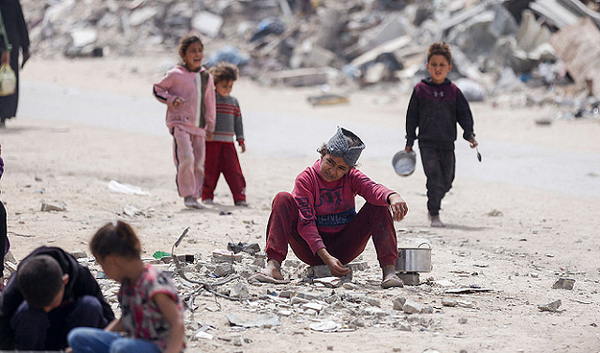
Starvation as a tool of war: Gaza's children are experiencing a complex humanitarian catastrophe amid international silence.

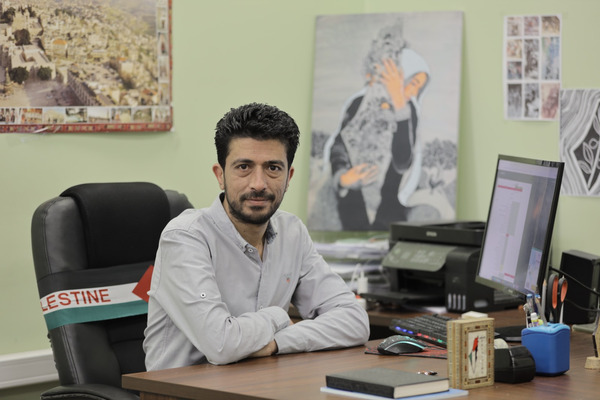
Kazem Abu Khalaf: The child malnutrition crisis in Gaza has reached catastrophic levels, and what is happening is a crime that cannot be ignored.

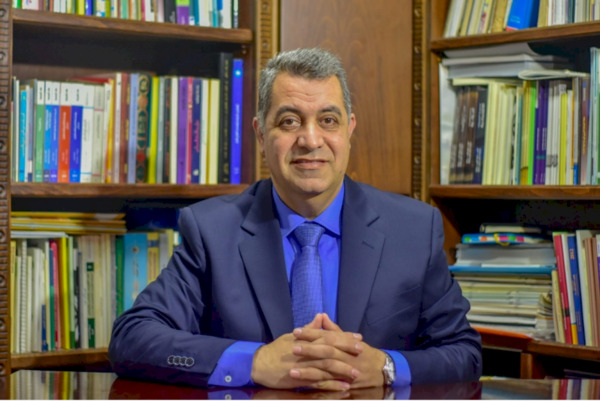
Dr. Aql Salah: The war of starvation is no less dangerous than genocide. Israel is using it as a new tool, taking advantage of the lack of international accountability and the silence of the Arab regimes.

Noman Abed: Countries exploit humanitarian aid for political blackmail and base their positions on economic and political interests rather than moral principles.

Dr. Tamara Haddad: The international system is turning a blind eye to the genocide and starvation in Gaza for political reasons and the strategic interests of major powers.

Nihad Abu Ghosh: The international system, as it currently stands, is designed to serve the powerful, with international laws and treaties being subjugated to the benefit of dominant states.


As the war of extermination continues in the Gaza Strip, Gaza, and especially its children, are facing systematic starvation. The blockade of humanitarian aid has continued for more than two months, and the situation is worsening catastrophically, amid repeated international warnings of the threat of mass famine and the complete collapse of the health system.


UN reports indicate a sharp rise in malnutrition rates among children, with cases of severe wasting reaching life-threatening levels.


Officials, writers, and experts, speaking separately to Al-Quds, say that in the absence of international political will to compel the occupation to open the crossings and allow the entry of vital supplies, humanitarian aid is becoming a political bargaining chip, manipulated at the expense of civilian lives. What is happening today is not just a humanitarian crisis, but a full-fledged crime that violates all international laws and ethical conventions.


They point out that despite repeated statements by international organizations and UN officials calling on the international community to take action to prevent famine and the dangers it poses to the people of Gaza, the global response remains limited to statements of condemnation and expressions of concern, with no concrete measures to halt this tragedy. Meanwhile, Israel continues to pursue a policy of mass starvation and forced displacement, amid blatant international complicity or inaction.


Humanitarian aid has been blocked for 61 days.


UNICEF spokesperson Kazem Abu Khalaf asserts that preventing the entry of humanitarian aid into the Gaza Strip for more than 61 days constitutes a flagrant violation of international humanitarian law, considering what is happening to children in Gaza a crime that cannot be tolerated.


Abu Khalaf explains that this period is the longest since the war began on October 7, 2023, as "what is happening is taking place in full view of the entire world. Indeed, aid has become a bargaining chip, even though, according to international law, it should be delivered even during the darkest days of war, especially to civilians."


Abu Khalaf points out that international humanitarian law explicitly stipulates the need to "provide civilians with what will keep them alive, whether they choose to stay or flee." But in Gaza, Abu Khalaf asserts, "neither of these are available. Aid is prohibited, orders are issued to evacuate areas, and citizens are given the choice between leaving Gaza or starving to death."


Abu Khalaf asserts that what is currently happening represents increasing pressure on the people of Gaza, explaining that there are belated attempts, but they are beginning to take shape, to pressure the Israeli side to allow the entry of aid.


Abu Khalaf says, "Despite Israel's attempts at bargaining and pressure, it is legally obligated to allow aid into the country, and this is a settled matter."


Abu Khalaf stresses that what is currently required of the international community is to move from statements to action, saying, "Real pressure is what can bring about change. We don't just want condemnations, but practical steps that lead to the immediate delivery of aid."


Abu Khalaf asserts that there are active and influential parties in the international community that have the capacity and will, but are not taking action to protect their political interests.


Abu Khalaf says: "Unfortunately, some parties are watching and not caring if there is famine or children are targeted in Gaza."


The malnutrition crisis has reached catastrophic levels.


Abu Khalaf warns that the malnutrition crisis in Gaza has reached catastrophic levels, noting that there was a 172% increase in rates of moderate malnutrition among children in the first quarter of 2025 compared to the first quarter of 2024, according to UN reports. This in itself is an indicator that things will deteriorate, and deaths due to malnutrition are increasing daily.


Abu Khalaf adds, "Malnutrition can only be treated with two main factors: time and nutritional supplements, and treatment requires six to eight weeks of continuous care."


Abu Khalaf explains that reaching the stage of severe emaciation in children is the most dangerous stage of malnutrition, a stage that directly threatens the child's life. He points out that the resulting damage extends far into the future, affecting the child's physical and psychological structure and overall development, and may even lead to irreparable damage.


Starvation war and extermination war


For his part, writer and political researcher Dr. Aqel Salah says that Israel is committing crimes of genocide and starvation against the Palestinian people. He considers what has been happening in the Gaza Strip for more than a year and a half to be a comprehensive, multifaceted war that constitutes a flagrant violation of international law and amounts to war crimes, amidst a suspicious international silence and unlimited support from the United States and Western countries.


Salah explains that the starvation war, which has been ongoing for nearly two months, is no less dangerous than a war of extermination, noting that Israel is using this policy as a new tool in its struggle against the Palestinians, taking advantage of the lack of international accountability and the silence of the official Arab regimes.


Salah believes that Israel is completely confident that it will not be held accountable, given the unwavering support it receives from the United States and the West. This explains its continued perpetration of crimes against Palestinians for 78 years without pause.


Salah explains that the Zionist ideology that governs Israel's behavior "loves killing, destruction, and siege," and during this war has transformed into a "criminal ideology," committing its crimes in full view of a world that applies double standards.


Crimes that transcend all values and principles


Salah points out that these crimes violate all the humanitarian and democratic values and principles long touted by Western countries. He explains that more than 50 Palestinian children have died of starvation so far, in a humanitarian catastrophe that could threaten the lives of more than two million Palestinians in the Gaza Strip.


Salah criticizes the Arab position, describing it as "deplorable and shameful," due to the lack of serious action to halt the tragedy, even in terms of providing food aid. This has encouraged Israel to escalate its operations against defenseless civilians.


Salah asserts that Israel's starvation policy aims to destroy the health and psychological well-being of Palestinians, causing fatal diseases such as malnutrition, anemia, and gastrointestinal and lung infections, all aimed at pressuring Palestinians.


Salah points out that among the most heinous crimes is Israel's bombing of civilians searching for food, amidst the silence of international organizations that have morally and legally failed in the face of these massacres and no longer possess any moral legitimacy to speak out on behalf of human rights.


Children in the Gaza Strip are "most affected"


For his part, writer and political analyst specializing in international relations, Noman Abed, warns of the humanitarian catastrophe facing Palestinian children in the Gaza Strip, asserting that they are "the most affected" by the genocidal war waged by the Israeli occupation.


Abed asserts that the siege, which began before October 7, 2023, and worsened afterward, specifically targets children by targeting hospitals, cutting off electricity, and using the most brutal weapons.


Abed explains that premature babies were among the first victims, many of whom died as a result of the failure of hospital life support equipment due to power outages.


Abed points out that the intense Israeli bombardment using missiles, aircraft, and bombs is turning children's lives into a daily hell, as they live in fear of the terrifying sounds of attacks.


Abed asserts that the comprehensive blockade imposed on Gaza, which intensified after October 2023, has led to a sharp deterioration in health and environmental conditions, exacerbating the suffering of children, women, and the elderly.


Abed points out that the occupation's closure of crossings and the denial of humanitarian aid have exacerbated malnutrition, particularly among breastfeeding mothers and children. He also points to warnings from international organizations that point to the dangers of mass death from hunger and epidemics.


Low immunity in children


Abed asserts that children's low immunity due to malnutrition, coupled with deteriorating health and environmental conditions, exposes them to deadly diseases, threatening an unprecedented humanitarian disaster.


Discussing the international situation, Abed criticizes the international community's silence and disregard for human values, noting that countries have become "slaves to their own interests," as savage capitalism and American influence dominate the international system.

Abed explains that countries exploit humanitarian aid for political blackmail, basing their positions on economic and political interests rather than moral principles.


Abed points out that this trend has been partly reflected in the positions of some peoples who have begun to identify with their governments' policies, ignoring the scenes of genocide and starvation facing 2.4 million Palestinians in Gaza.


Abed asserts that international and humanitarian warnings indicate that Gaza is facing the threat of mass death, amid the ongoing Israeli blockade and suspicious international silence. He calls for urgent action to save Palestinians, especially children, from this tragedy.


Double standards in the application of international laws


For her part, Palestinian writer and political researcher Dr. Tamara Haddad warns against the continued silence of the international community regarding the genocide being perpetrated against the Gaza Strip, particularly the systematic starvation policy that disproportionately affects children. She asserts that this silence stems from political and strategic motives related to the interests of major powers.


Haddad emphasizes that this silence reflects the prioritization of the political, security, and economic interests of Western countries, led by the United States and a number of European Union countries, over humanitarian principles and international law.


Haddad points to key reasons for this international silence, most notably the political and strategic motives that drive Western countries, particularly the United States, to prioritize their strategic alliance with Israel, which is considered a key ally in the region. This alliance goes beyond adherence to international humanitarian law, as Western countries justify Israel's actions as part of their "right to self-defense."


Haddad points to another reason: the double standards in the application of international law, whereby weak states are punished while strong or supported states, such as Israel, are granted immunity from punishment. She notes that the war on Gaza did not attract sufficient international pressure to halt the aggression, reflecting this selectivity.


The phenomenon of "normalization with tragedy"


Haddad emphasizes another reason: the institutional failure of international organizations, such as the United Nations, whose decisions are bound by the will of the permanent members of the Security Council, particularly the United States, which uses its veto power to block any resolutions condemning Israel or demanding an end to the war. This failure hinders effective action to stop the massacres and deliver humanitarian aid to combat the systematic starvation targeting civilians.


Haddad points to the phenomenon of "normalization of tragedy" as another reason for the current situation. The repetition of horrific scenes from Gaza has dulled the response of governments and people, diminishing the effectiveness of international pressure to halt the aggression. This normalization also extends to other violations in various parts of the world, exacerbating indifference to the humanitarian suffering in Gaza.


Haddad points to another reason: biased Western media coverage, which promotes the Israeli narrative by justifying military operations as a means to recover hostages or eliminate Hamas rule.


This narrative, according to Haddad, diminishes the West's horror of the policies of starvation and killing of civilians, especially children and women, and negatively impacts international public opinion against Israel.


Haddad points to the ineffectiveness of international human rights organizations, such as those concerned with women's and children's rights, which suffer from a persistent paralysis in dealing with the Gaza issue.


A system not governed by the values of truth and justice


Haddad believes that the world is shifting towards a system governed not by the values of truth and justice, but by political and economic interests.


Haddad asserts that the application of international law in the Gaza conflict is selective and conditional on the interests of powerful states. The war on Gaza will not cease unless Israel meets its conditions, such as the release of hostages and the removal of Hamas from power. It may not cease even after these conditions are met. He links the continuation of the war to Israeli Prime Minister Benjamin Netanyahu remaining in power until mid-2026, as a cessation of the war could mean the collapse of his political career.


Haddad emphasizes that the decline in the status of international law is due to the lack of deterrence against international criminals, which encourages the continuation of violations without accountability.


This reality, according to Haddad, is leading to a humanitarian, legal, and moral crisis, as people's confidence in international law erodes, reinforcing the law of the jungle, where the strongest dominates militarily and economically.


Haddad cites statements by US President Donald Trump promoting the imposition of peace through military force.

Despite the pessimistic outlook, Haddad gives hope in popular pressure and its ability to change international positions, albeit slowly.


Haddad points to the importance of the advisory opinion to be issued by the International Court of Justice regarding the entry of humanitarian aid into Gaza, which could be adopted as a recommendation to the UN General Assembly and then submitted as a draft resolution to the Security Council to halt the aggression and end the famine that threatens 98% of Gaza's population with food insecurity.


Haddad asserts that these steps are crucial to confronting the policy of starvation and forced displacement imposed by the occupation, creating a new reality in the Gaza Strip.


Between direct partnership and silent complicity


Palestinian writer and political analyst Nihad Abu Ghosh, who specializes in Israeli affairs, says that the genocide being perpetrated against the Palestinian people in the Gaza Strip is not merely a future threat, but rather comes within the context of a larger, horrific reality that the Strip's residents experience daily.


Abu Ghosh points out that this crime is manifested through continuous Israeli bombardment, daily massacres, forced displacement, starvation, cold, and diseases that are devastating civilians, amid international silence and the complicity of some international parties.


Abu Ghosh explains that the positions of countries and international bodies vary between direct partnership in support of Israel, as the US administration does, providing financial, military, and political support to the occupation, and silent complicity or impotence, represented by positions of condemnation and denunciation that fall short of the reality of the situation.


Abu Ghosh criticizes those positions that hold the Palestinian people and their resistance responsible for Israeli crimes, or that limit themselves to verbal condemnations without severing ties with the occupying state or imposing sanctions on it.


Although he praises the global solidarity movements with the Palestinian people, Abu Ghosh asserts that their impact remains limited compared to the speed and brutality of the Israeli war machine.


The need for real pressure on governments


Abu Ghosh calls for transforming these movements into effective pressure on governments to take serious positions and refuse to submit to US-Israeli hegemony, which portrays Palestinian suffering as an inevitable fate.


Abu Ghosh asserts that the international system, as it currently stands, is designed to serve the powerful, with international laws and treaties being subverted to benefit dominant states, led by the United States.


Abu Ghosh points out that this system, which was formed after World War II, was transformed after the collapse of the Soviet Union into a unipolar system dominated by Washington, which imposes its interpretation of international law and controls institutions such as the United Nations.


Abu Ghosh believes that attempts to move toward a multipolar system face fierce American resistance, especially under President Donald Trump, who seeks to re-divide the world according to his country's interests.


Abu Ghosh believes that Israel, exploiting its close ties to the United States, views the current situation as a historic opportunity to eliminate the Palestinian issue once and for all and impose its hegemony over the Middle East through peace terms backed by military force.


Abu Ghosh stresses the need to intensify popular and international efforts to stop these crimes against the Palestinian people and hold their perpetrators accountable.


PALESTINE

Fri 02 May 2025 9:02 am - Jerusalem Time

America wants to resume humanitarian aid to Gaza while continuing to support the war.

The United States has said it wants to resume humanitarian aid to the Gaza Strip, while continuing to support Israel in its war of extermination against the Palestinians. The United States has continued to close the Gaza Strip's crossings since March 2.


"We want to resume humanitarian aid," US State Department spokeswoman Tammy Bruce said during a press conference Thursday evening, commenting on the humanitarian situation in Gaza.


She indicated that Washington wants to resume the delivery of humanitarian supplies and aid "as long as they can be transported safely, as long as there is no looting, and as long as people are not robbed."


Since March 2, Israel has closed the Gaza Strip's crossings to the entry of food, relief, medical aid, and goods, causing a significant deterioration in the humanitarian situation for Palestinians, according to government, human rights, and international reports.


With full American support, Israel has been committing genocidal crimes in Gaza since October 7, 2023, leaving more than 170,000 Palestinians dead or wounded, most of them children and women, and more than 11,000 missing, amid massive destruction.

PALESTINE

Fri 02 May 2025 8:59 am - Jerusalem Time

The occupation forces arrested two citizens, one of whom was injured, in Nablus and Hebron.

This Friday morning, Israeli occupation forces arrested two citizens, one of whom was injured, in Nablus and Hebron.


In Nablus, occupation forces arrested a citizen after besieging a house in Balata camp.


According to the Red Crescent, the occupation forces withdrew from the camp and arrested an injured person, the nature of whose injury is unknown.


Local sources reported that Israeli special forces stormed the vicinity of Balata camp and surrounded a house there, followed by reinforcements of Israeli military vehicles.


She added that the occupation forces closed all entrances and exits to the camp.


In Hebron, occupation forces arrested Akram Fahd al-Ja'bari after raiding his home, searching it, and ransacking its contents.