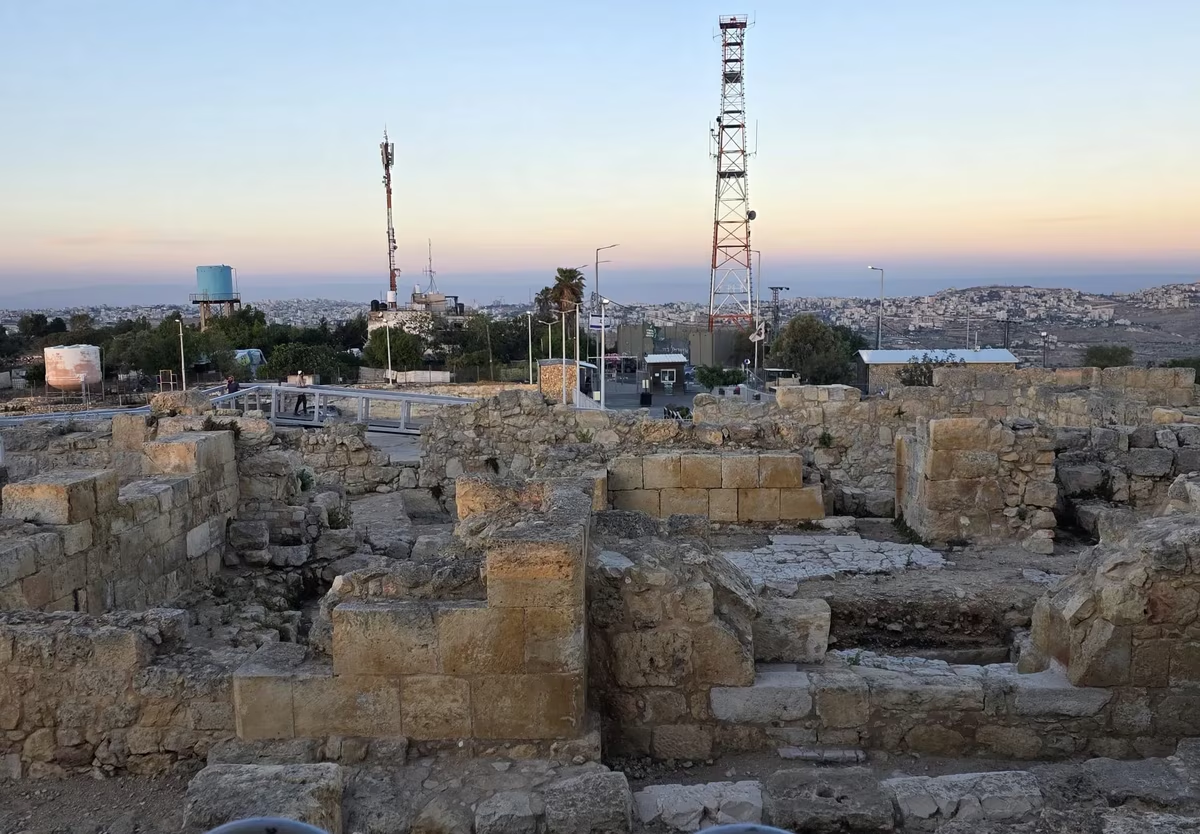







The village of Nabi Samuel, located northwest of occupied Jerusalem, is engaged in a bitter existential struggle that extends beyond land to the core of Palestinian identity. Once a strategic link between Jerusalem and Ramallah, the occupation's measures have transformed the village into an isolated enclave inhabited by approximately 400 Palestinians living under a strict siege and suffocating military restrictions.
In the latest chapter of this targeting, the occupation authorities issued a decision to confiscate about 110 dunams of land from the village and the neighboring town of Beit Iksa, directly targeting the vicinity of the ancient Nabi Samuel Mosque. These confiscations include endowment lands and historical shrines, raising serious concerns about changing the geographical and demographic landscape of the area under the pretext of tourism development.
Local sources reported that the occupation seeks, through this step, to tighten its control over the mosque, whose lower floor was previously converted into a synagogue. These moves come within the context of a systematic policy to seize Palestinian archaeological sites and replace the Islamic historical narrative with a settlement narrative that imposes a new reality by force of arms.
For its part, the Nabi Samuel Village Council warned that the occupation has given residents a short deadline to object to the confiscation decisions before Israeli courts, procedures that are considered superficial in the absence of justice. The council clarified that the plan aims to transform the area into a tourist facility including hotels and restaurants serving settlers, thus entrenching the permanent Judaization of the surroundings.
The roots of suffering in the village date back to 1971, when residents were subjected to forced displacement from the vicinity of the mosque to the eastern side, followed by a series of restrictions. The village's land area has shrunk from 4500 dunams to only about 2261 dunams as a result of settlement expansion and the construction of the apartheid wall that tore apart the region.
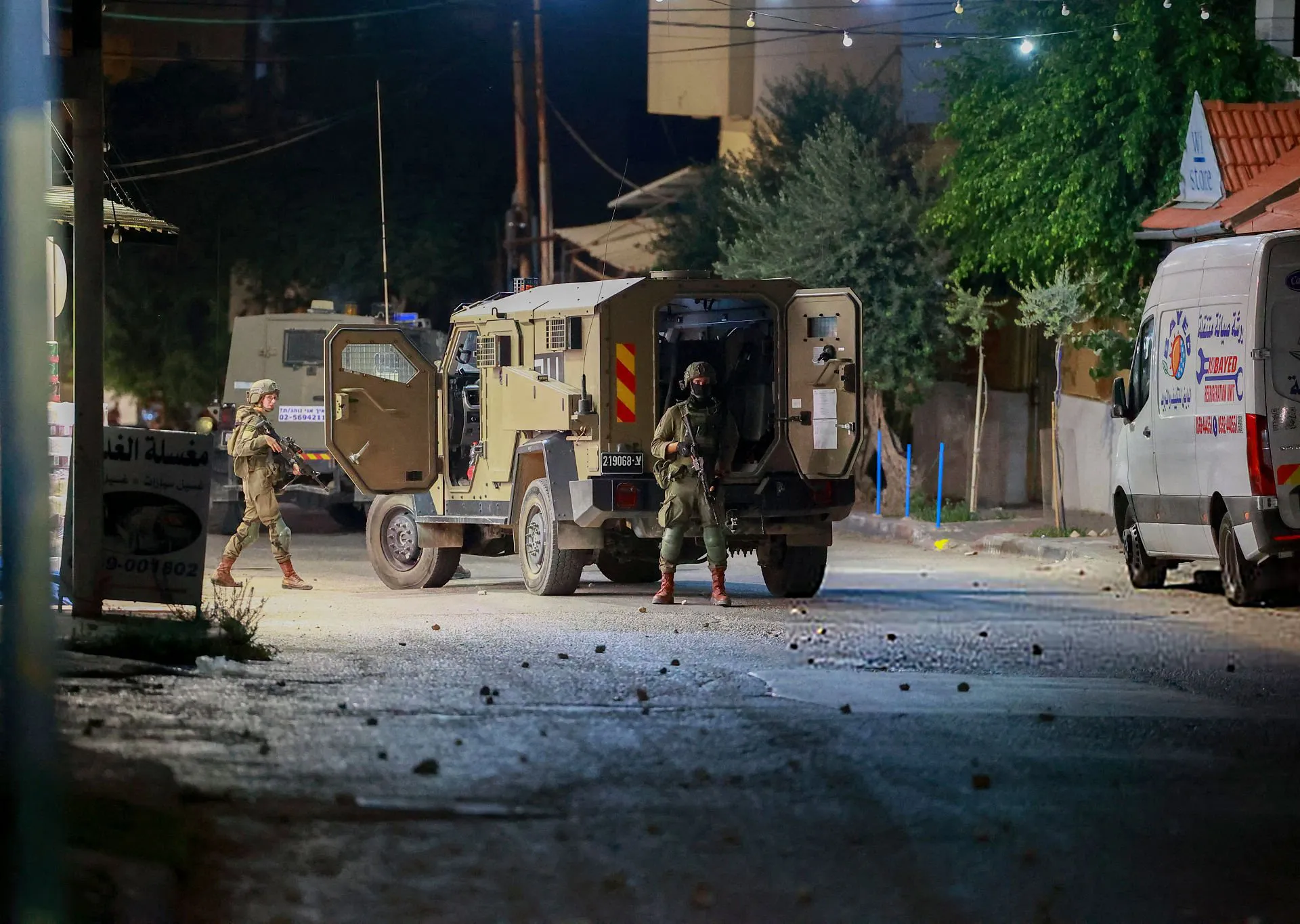
On the ground, the residents of Nabi Samuel live in what resembles an 'open prison,' where they can only enter or exit through the 'Jib' military checkpoint. The occupation authorities require residents to possess special magnetic cards that classify them as 'new residents,' and their daily movement is subject to the whims of the soldiers stationed at the village's only entrances.
Citizens from the village confirmed that military restrictions have affected the simplest details of life, including preventing the reception of first-degree relatives or the entry of electrical appliances and furniture without prior security coordination. This siege has led to the social and economic isolation of the village and has turned the lives of resilient families into a series of arduous daily challenges.
In a related context, previous excavations carried out by the occupation authorities themselves revealed the presence of artifacts dating back to Islamic and Crusader eras, without finding any evidence to support Israeli historical claims. Despite this, the occupation institutions continue to falsify historical facts to justify control over the site and convert it into a 'national park' affiliated with the occupation municipality.
Observers believe that the Israeli Knesset's approval of the 'Heritage Authority in Judea and Samaria' project represents a green light for accelerating creeping annexation operations in the West Bank. This new legal trend grants settlement civil institutions broad powers to manage Palestinian archaeological sites away from traditional military frameworks, thus facilitating the imposition of Israeli sovereignty.
The village of Nabi Samuel acquires extreme strategic importance as it constitutes a geographical 'connecting node,' and controlling it is an essential part of the 'Greater Jerusalem' project. This project aims to connect the major settlement blocs surrounding Jerusalem, such as 'Givat Ze'ev' and 'Ma'ale Adumim,' to create a geographical settlement continuum that disrupts Palestinian connectivity.
Human rights sources indicated that what is happening in Nabi Samuel is not isolated from what is happening in other sites such as Sebastia and the Ibrahimi Mosque, where 'antiquities laws' are employed as political tools par excellence. These policies are considered field tests to impose a similar reality in the future on the blessed Al-Aqsa Mosque in the heart of occupied Jerusalem.
Farmers in the village face severe difficulties in cultivating their remaining lands, as they are prevented from erecting any fences or agricultural facilities to protect their crops. This economic constriction aims primarily to push residents to voluntarily leave their lands after it became impossible for them to live a dignified life under the arbitrary measures of the 'Civil Administration.'
The conversion of the mosque into a synagogue and the isolation of residents behind walls and checkpoints reflect the ugliest face of the apartheid policies practiced by the occupation authorities in Jerusalem. Despite all these pressures, the people of Nabi Samuel cling to their existence, considering their steadfastness in their homes as the last line of defense for the identity of the place and its ancient history.
In conclusion, the Nabi Samuel file remains a testament to attempts to erase Palestinian memory and falsify geography, amidst international silence regarding the violation of conventions that protect heritage sites. The village continues to resist the 'silent annexation' plans led by the far-right government, striving to preserve what remains of Palestinian space in the vicinity of the Holy City.
The occupation employs heritage and antiquities laws as tools to control Palestinian sites and redefine their identity according to the Israeli narrative.
شارك برأيك
Prophet Samuel: A Jerusalemite Village Swallowed by Settlement Under the Guise of 'Heritage'