







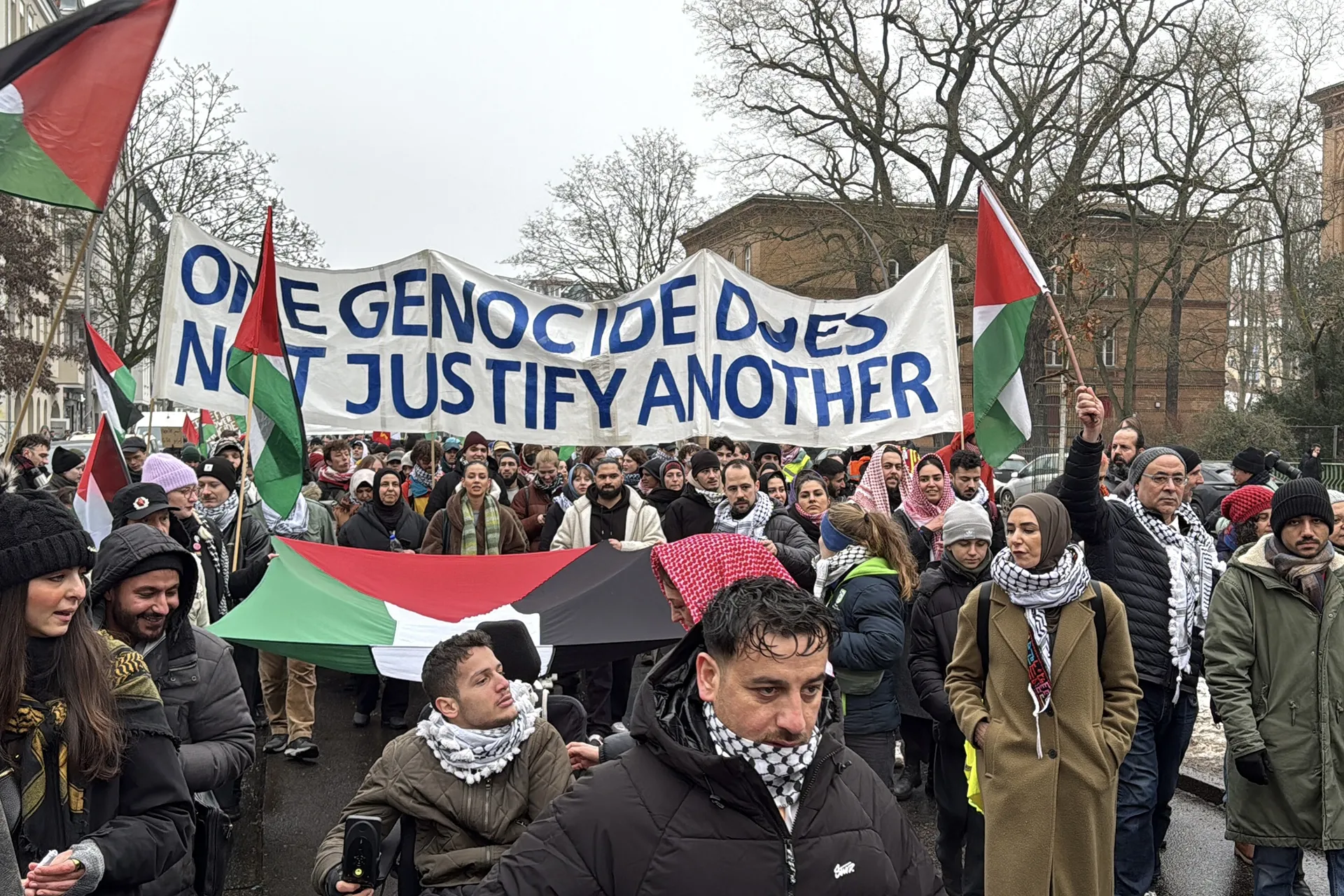
Palestinian and Arab analysts and politicians discussed what is known as the "Gaza Peace Council" in a space on the X platform, amid questions about whether it constitutes a beginning for reconstruction or a framework for imposing international guardianship. Speakers agreed that the future of Gaza cannot be separated from the broader political context of the Palestinian issue, and warned against attempts to confine the issue to humanitarian and economic dimensions, at the expense of ending the occupation and the Palestinians' right to self-determination. US President Donald Trump announced the establishment of the "Peace Council" on January 15, as part of his 20-point plan for a ceasefire in the Gaza Strip, which was adopted by the UN Security Council last November. On January 22, Trump officially launched the "Peace Council" by signing its charter during the Davos Forum in the presence of a number of world leaders who agreed to join this initiative, which is scheduled to focus on the reconstruction of Gaza.
During the discussion session on the X platform, Dr. Sami Al-Arian, Director of the Center for Islam and International Affairs Studies, said that the international discussion has witnessed a shift from a near-consensus on a comprehensive political solution to approaches focusing only on reconstruction. Al-Arian considered that what is being proposed today "is not a peace project," but rather an attempt to achieve political gains that the occupation failed to impose militarily. He also warned that turning Gaza into a humanitarian file separate from the context of national liberation "is a dangerous deviation in the nature of the conflict" with the occupation.
In turn, Palestinian writer and political analyst Moein Naim believed that the fundamental problem is not related to the Peace Council alone, but to the collapse of the international system and the inability of its institutions to enforce international law. He pointed out that the International Court of Justice itself "is being punished" when it tries to hold Israel accountable. He added that the Peace Council was built to serve Israel's interests and future projects, noting that the reconstruction of Gaza has turned into an arena of international economic interests, "shared by major players, while only the minimum reaches the Palestinians."
As for the spokesperson for the Palestinian National Liberation Movement (Fatah), Jamal Nazzal, he warned that the administrative models proposed for Gaza represent a broader Israeli vision, not limited to the Strip alone. He stressed that bypassing the Palestinian National Authority would lead to the dismantling of the unity of Palestinian land. Nazzal emphasized that the Palestine Liberation Organization represents the legitimate framework for Palestinian political existence, and that any attempt to create alternatives or temporary entities "will not stand the test of reality and history."
For his part, Osama Abu Irshaid, Executive Director of "Americans for Justice in Palestine," considered that the Peace Council "is entirely reduced to the United States, which in turn is reduced to Trump." He pointed to direct coordination between Washington and Israeli Prime Minister Benjamin Netanyahu regarding the Peace Council. He also warned against the overlap of politics with economic interests, explaining that companies linked to influential American circles may benefit from reconstruction projects, which turns Gaza into an "international testing ground" instead of being part of a national liberation issue.
In the intervention of former Egyptian Ambassador to Israel Hazem Khairat, he stressed that the Council suffers from a political problem, adding that the absence of genuine Palestinian representation places additional responsibility on the Arab role, especially the Egyptian one. He pointed out that any Arab involvement in these paths must be conditional on preventing the imposition of solutions that undermine Palestinian rights, and on seeking paths that stop Israeli violations and protect Palestinian civilians.
From Gaza, writer and political analyst Iyad Al-Qara affirmed that all economic proposals presented as solutions will fail, just as their predecessors failed, because the core of the crisis is political, linked to the continued occupation of the Strip's lands and Israeli policies. He stressed that the priority for Palestinians today is not councils or administrative structures, but rather ensuring the withdrawal of the Israeli army, the flow of aid, and preventing the return of war.
What is being proposed today is not a peace project, but an attempt to achieve political gains that the occupation failed to impose militarily.


شارك برأيك
Gaza Peace Council.. Does it reduce the Palestinian issue to a humanitarian file?