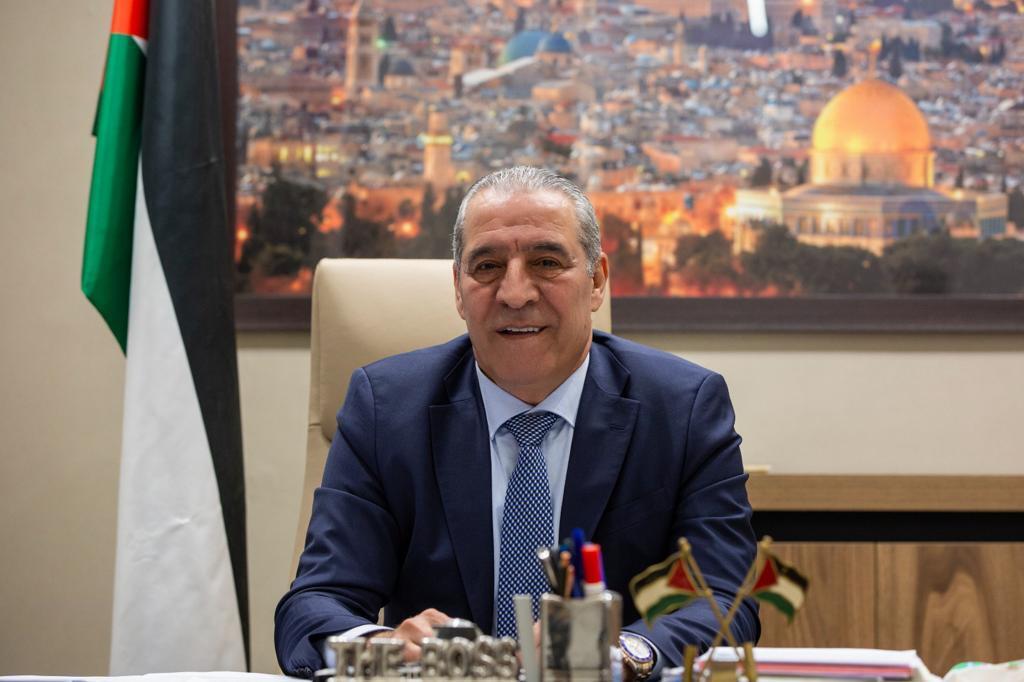







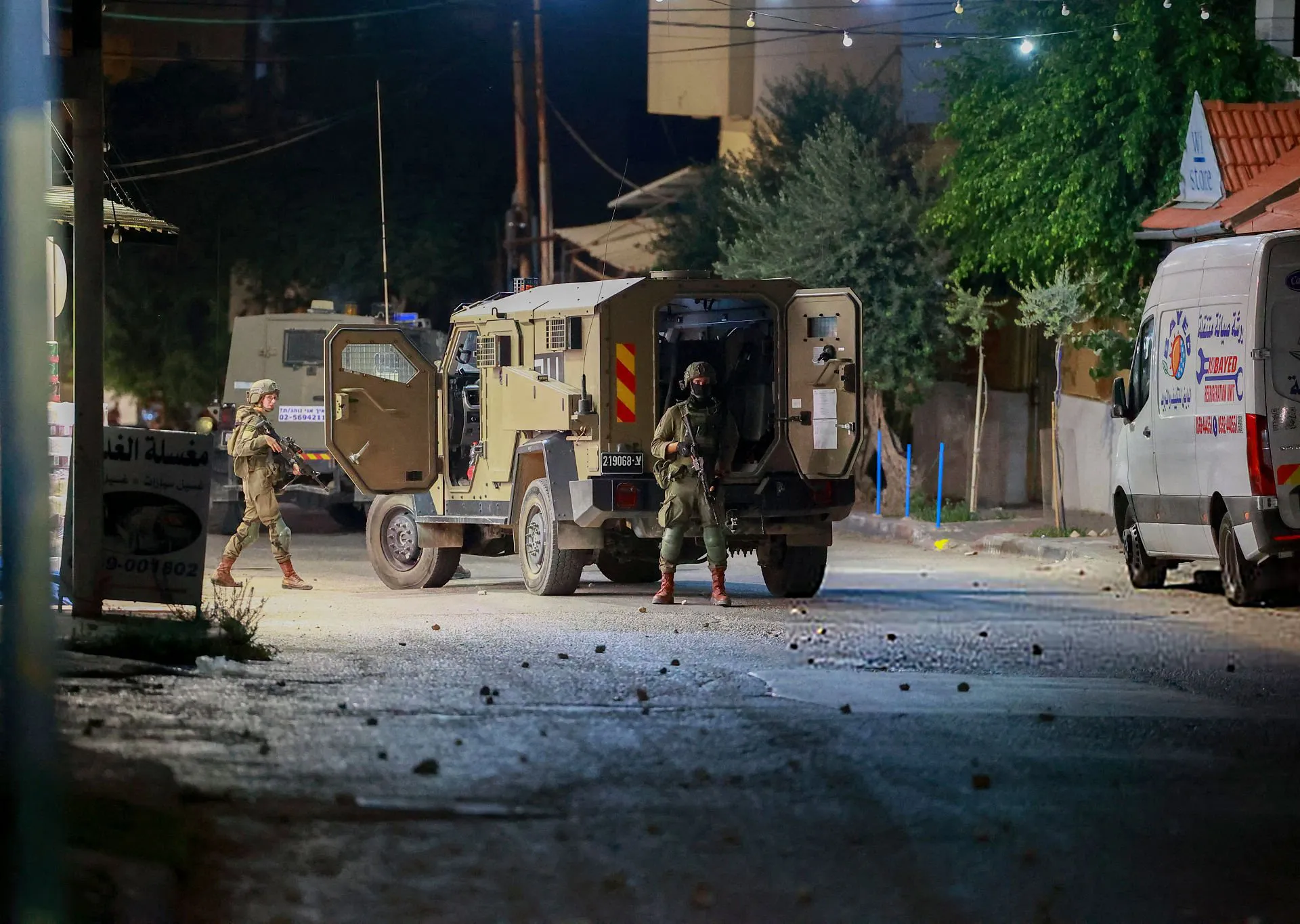
In a rare yet revealing scene, the U.S. Ambassador to Israel, Mike Huckabee, met with Palestinian Authority Deputy Chairman Hussein Al-Sheikh in Ramallah, a step that reflects the confusion in U.S. policy more than it reflects a genuine shift in its approach to the conflict. The meeting, only the second since the start of U.S. President Donald Trump's second term, came at a moment of slow explosion in the West Bank, where settler violence escalates unchecked, Israeli military operations expand, while Washington settles for the role of a concerned observer rather than an influential actor.
The meeting was not the fruit of a well-studied U.S. political initiative, but rather a forced response to a field deterioration that threatens the collapse of what remains of the fragile "stability" in the West Bank. Nevertheless, the content of the discussion reveals the limits of the U.S. role: verbal concern, behind-the-scenes pressures, and the near-total absence of any real coercive tools toward Israel, the ally that is practically granted freedom of action.
One of the most prominent files discussed was settler violence, which has transformed from a marginal phenomenon into a fait accompli policy enjoying implicit protection from the Israeli army. Despite U.S. officials' acknowledgment that Washington urges Israel to act, this "urging" has not gone beyond soft diplomatic rhetoric, at a time when the U.S. administration refuses to use available pressure tools, from conditional aid to political accountability. Thus, U.S. policy appears as a passive partner in perpetuating impunity.
The financial file is no less indicative of this approach. Israel's continued withholding of Palestinian clearance funds, which constitute the backbone of the Authority's budget, has turned the political crisis into a suffocating livelihood crisis. Despite Washington's knowledge that this measure pushes the Authority toward paralysis and possibly collapse, its intervention remained superficial, governed by internal U.S. calculations and a constant fear of any clash with the Israeli government, especially given the influence of the far-right within it.
The paradox is that the U.S. administration claims concern over the weakness of the Palestinian Authority, yet it tolerates Israeli policies that undermine this Authority daily. This contradiction reveals the essence of the U.S. approach: preserving the Authority as an administrative and security apparatus without empowering it politically or financially, ensuring the management of occupation rather than its end.
The religious and humanitarian aspect of the meeting, related to the freedom of movement for Palestinian Christians during the holidays, also reveals the narrow horizon of U.S. intervention. Instead of addressing the structure of Israeli control that chokes the West Bank with checkpoints, the issue is reduced to seasonal facilitations, as if the problem is a temporary humanitarian one rather than a structural political one.
Politically, the meeting carries an additional significance related to redefining the U.S.-Palestinian relationship. The closure of the U.S. Consulate in Jerusalem during Trump's first term was not just an administrative measure, but a political declaration of downgrading the Palestinians' status in U.S. calculations. Today, despite the resumption of dialogue, this downgrading remains in place, as relations with the Palestinian Authority are managed from the U.S. Embassy to Israel, practically consecrating the Israeli narrative.
The Palestinian Authority's acceptance of this reality does not reflect satisfaction, but compulsion. Political isolation, financial pressure, and declining international interest have pushed Ramallah to adopt a pragmatic approach based on the minimum communication with Washington, even if at the expense of the political position. However, this pragmatism may turn into an internal burden if it continues without tangible results.
In conclusion, the Huckabee-Al-Sheikh meeting does not appear as an indicator of a shift in U.S. policy, so much as additional evidence of a crisis management policy instead of resolving it. Washington, preoccupied with its internal calculations and traditional alliances, prefers to keep the conflict in a state of "fragile balance," even if the price is more violence and political erosion in the Palestinian territories.
The fundamental problem in U.S. policy lies in its separation between diagnosis and action. Washington fully understands the risks of settler violence and the collapse of the Palestinian Authority, but it lacks, or feigns the lack of, the political will to use its real influence. This hesitation does not reflect weakness, but a conscious choice to prioritize the alliance with Israel over any commitment to international law or long-term stability.
As for the Palestinian side, the continued reliance on a biased U.S. role has proven its failure repeatedly. Engagement with Washington, without rebuilding political and popular strength cards, turns the Authority into a party receiving promises instead of imposing facts. Amid the blockage of the political horizon, this approach may become one of the factors eroding internal legitimacy, rather than an entry point to alleviate the crisis.
شارك برأيك
The West Bank and the United States: Managing the Explosion, Not Preventing It