






In a much-anticipated development, U.S. President Donald Trump announced a plan to end the war in Gaza. This plan received immediate endorsement from the Arab and Islamic group that met with him on the sidelines of the United Nations General Assembly, in addition to support from several Western capitals.
It also resonated widely within Israel, where polls showed that about 72% of Israelis support it as an opportunity to end the war and achieve the goal of recovering hostages held by Hamas.
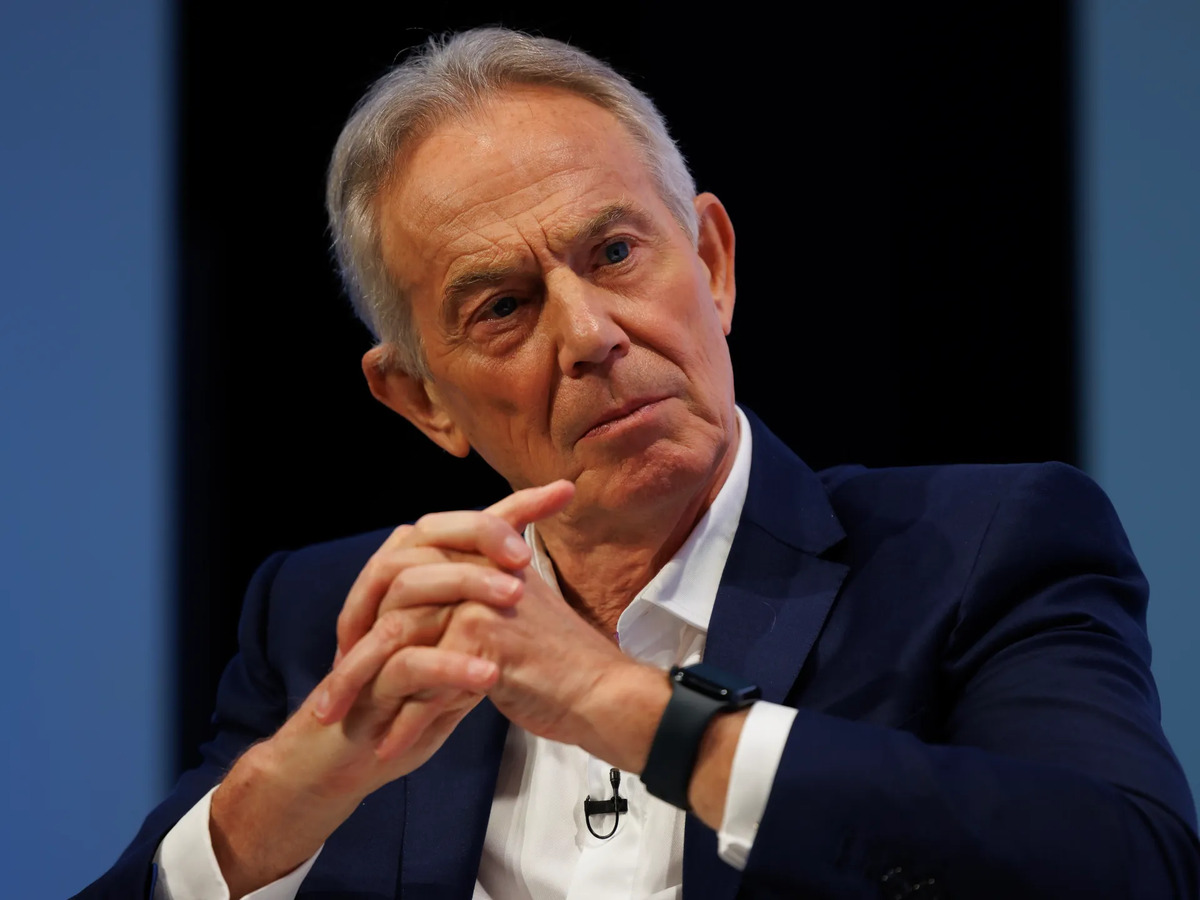
This new political climate opens the door for in-depth discussions about the potential shape of transitional arrangements in Gaza, including a proposal supported by the U.S. administration to appoint former British Prime Minister Tony Blair to head an international transitional authority to manage the Gaza Strip in the "day after" the end of military operations.
This proposal is now a stage for interpretations and discussions in political and media circles, with some viewing it as an opportunity for reconstruction and building modern institutions, while others describe it as an attempt to impose external guardianship over the Palestinians.
The features of the proposed transitional authority, according to publicly circulated proposals, are expected to carry the name of the International Transitional Authority for Gaza (GITA), similar to transitional experiences witnessed in regions like Kosovo and East Timor.
The authority will be responsible for managing the sector administratively and politically for a period ranging from three to five years, until conditions are prepared for the return of a unified Palestinian administration.
It will include a supervisory council and an executive body, along with international peacekeeping forces and trained local police elements.
Why Tony Blair? The choice of Tony Blair is not random. The man has complex but extensive relationships in the region.
He played a role in mediating between Israel and the Palestinians during his time as the Quartet's envoy, and he has close contacts with many Arab and Western capitals.
Supporters of the idea believe that these characteristics qualify him to be a mediator capable of managing a sensitive phase that requires multi-party agreements.
Since leaving the British premiership in 2007, Tony Blair has established a think tank/political foundation based in the British capital, London, called the Tony Blair Institute for Global Change (TBI), which has offices and partnerships in several countries around the world.
The activities of TBI focus on providing consultations to governments, particularly in the areas of: government administration reform, digital transformation, combating extremism, and supporting economic and developmental policies.
Under the banner of this institute, Blair has become an influential figure involved in shaping the strategic economic and political visions of many countries, allowing him to maintain a wide network of personal relationships with the leaders and influential figures of these countries.
Blair also participates in informal diplomatic initiatives (Track II diplomacy). He regularly appears at global forums (Davos, Munich Security Conference, Gulf Investment Summits).
Supporters of placing Blair at the head of an international temporary administration in the "day after" the end of the war in Gaza believe that this step could help separate the humanitarian and administrative aspects from the political conflict within the sector, providing a framework for organized reconstruction, establishing the foundations of good governance, and building non-partisan professional institutions, paving the way for the return of the Palestinian Authority or a unified national entity to manage the sector.
It could also help attract international funding, as donor countries tend to provide support for projects overseen by relatively neutral entities.
Restructuring the security apparatuses in the Gaza Strip represents one of the fundamental pillars for rearranging the situation there, through the establishment of a non-political local police force, alongside international peacekeeping forces, likely to be led by Arab forces.
The goal is to ensure stability during the transitional phase and prevent a return to chaos or the dominance of armed factions.
On the economic front, the temporary authority will manage the crossings, rehabilitate infrastructure, and encourage investments.
In contrast, there is cautious rejection within Palestinian circles of these proposals.
Assigning the management of Gaza to an authority headed by Tony Blair, a figure seen by many as a symbol of interventionist Western policies, is viewed as undermining Palestinian sovereignty.
Moreover, the exclusion of Palestinian factions or the Palestinian Authority from actual management during the transitional phase raises fears that the authority could become a permanent parallel power, as has happened in other international experiences, and one cannot ignore the negative memory associated with Tony Blair regarding the war in Iraq in 2003.
He played a pivotal role in supporting the U.S. invasion of Iraq and marketing false information about Saddam Hussein's regime possessing weapons of mass destruction, which subsequent investigations (the Chilcot Report in 2016) later proved to be untrue
شارك برأيك
Why did Trump choose "Tony Blair" in the Gaza plan?