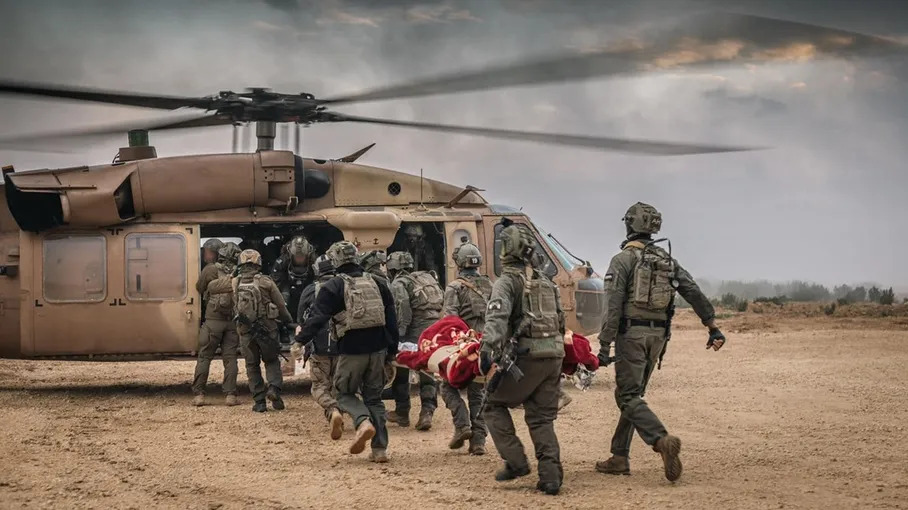







The Israeli newspaper Haaretz revealed in an extensive investigation that lasted several months the extent of the psychological trauma suffered by regular soldiers in the Israeli occupation army due to the war on the Gaza Strip, confirming that thousands have left service since the outbreak of military operations, some permanently, under the weight of psychological exhaustion, and sometimes as a result of a moral awakening.
The newspaper reported testimonies from several soldiers, including a soldier in the Nahal Brigade known as "Yoni," who worked to secure engineering units in the Beit Lahiya neighborhood, recounting his experience of shooting at a woman and her children, all of whom were killed due to his belief that an attack was being launched by the Al-Qassam Brigades.
Yoni said: "The blood filled the area... I felt like vomiting, but the officer coldly told me: They entered the forbidden zone. It's their fault. That's how war is."
He added: "Their faces still haunt me. I don't know if I will ever be able to forget them."
Haaretz confirmed that these cases are not isolated, but include thousands of soldiers who felt unable to perform combat duties due to psychological exhaustion or their consciences refusing to participate in acts of killing.
According to sources in the military's human resources department, the number of soldiers discharged due to deteriorating mental health is significant, while a limited number have been transferred to logistical roles or back-office jobs.
Another soldier, named "Benny," recounted that he was responsible for securing humanitarian aid in northern Gaza and was forced to shoot at civilians according to imaginary lines drawn by the army, which caused him severe psychological trauma, stating: "I fired fifty to sixty bullets a day... I stopped counting, and I don't know how many I killed."
He added that the officers did not care about what was happening to the children, and that the experience left lasting psychological effects, including night terrors and a constant feeling of danger to his life.
Another soldier, "Aharon," said he suffered from repeated trauma due to explosions and combat in Beit Hanoun, leading to severe fear of sudden noises and difficulty controlling himself, until he had to transfer to the psychological support department after two weeks of repeated requests.
Haaretz pointed out that the Israeli army is reluctant to disclose the number of soldiers suffering from psychological disorders or who have attempted suicide, noting that official information showed that 1,135 soldiers from regular and reserve forces were exempted from service due to post-traumatic stress symptoms, while journalists estimate that the actual number is much higher and does not include attempts that occurred after discharge or due to other psychological issues.
The newspaper stated that the army refuses to publish details of suicide attempts, only confirming that there are cases that ended in actual death, including an engineering officer who served in southern Gaza, who committed suicide after writing to his family that he was fine.
These testimonies come at a time when pressure on the Israeli occupation army is increasing from both inside and outside, reflecting the growing psychological crises among soldiers and the fragility of military leadership narratives regarding control over the war, raising questions about its implications for the army's ability to perform its combat duties.
Their faces still haunt me. I don't know if I will ever be able to forget them.
شارك برأيك
Haaretz: Enormous psychological pressure within the occupying army and a denial of its leadership's narrative.