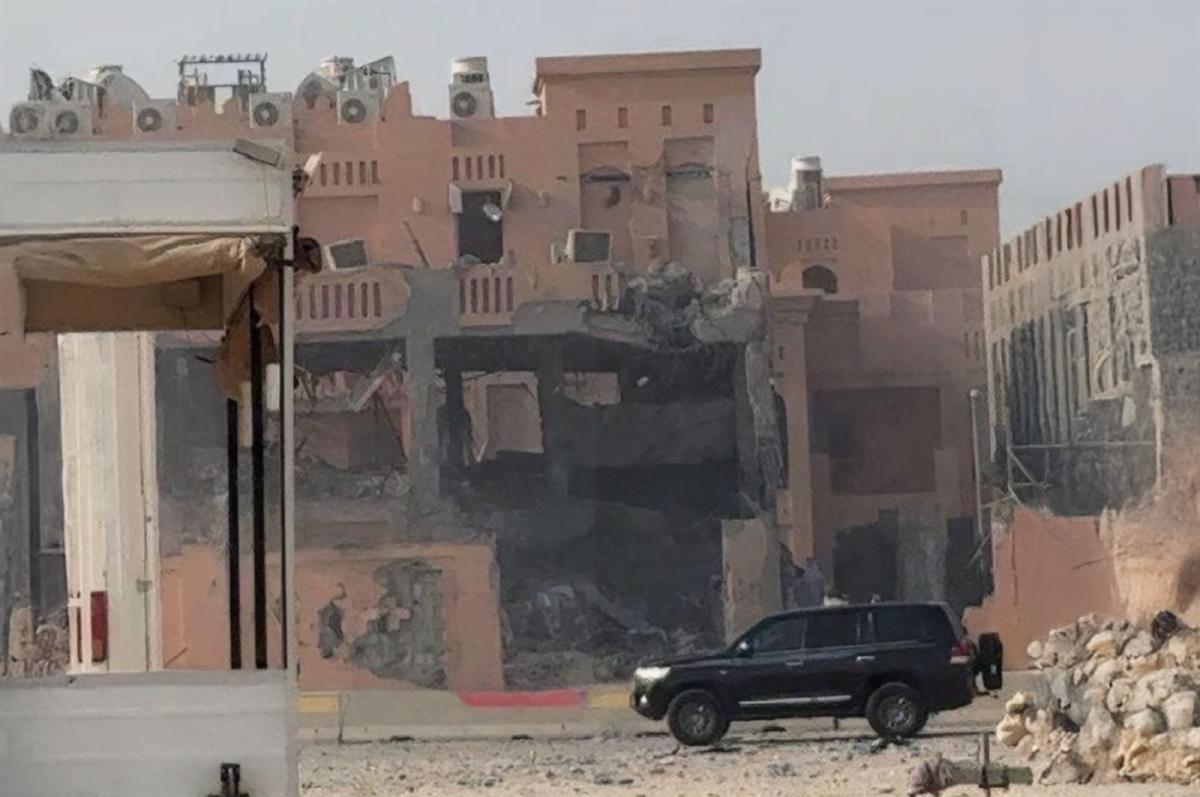







The Washington Post revealed on Friday that the Israeli intelligence agency, Mossad, refused to carry out an operation on the ground in Qatar to assassinate Hamas leaders in Doha, fearing that the operation would disrupt ceasefire talks and harm the agency's relations with Qatar, the main mediator in the Middle East.
Instead, Israel was forced to carry out airstrikes that failed to kill any of the senior Hamas leaders who were gathered at the strike site on Tuesday in Doha.
The newspaper states: "When Israel announced on Tuesday that it had launched a strike against senior Hamas leaders in Qatar, there was one security agency notably absent from the official statements: Mossad. This is because the Israeli foreign intelligence agency refused to implement a plan it had devised in recent weeks to use agents on the ground to assassinate Hamas leaders, according to two Israelis familiar with the matter who spoke on condition of anonymity to discuss sensitive information."
Mossad director David Barnea opposed the killing of Hamas officials in Qatar partly because such an action could tear apart the relationship he and his agency had built with the Qataris, who were hosting Hamas and mediating ceasefire talks between the movement and Israel, according to these individuals.
Mossad's reservations about the ground operation ultimately affected how the airstrike was carried out and possibly its chances of success. It reflected a broader opposition within the Israeli security establishment to the attack ordered by Israeli Prime Minister Benjamin Netanyahu. "While Israeli security officials widely agree on the need to pursue all Hamas leaders, including those residing abroad, and ultimately kill them, many questioned the timing of the operation, given that Hamas officials were meeting in Qatar, a key U.S. ally, and that these officials were considering a proposal from President Donald Trump to free Israeli hostages held in Gaza in exchange for a ceasefire in the Gaza war," according to the newspaper.
The newspaper reveals that instead of deploying Mossad agents, Israel resorted on Tuesday to a secondary option: launching 15 fighter jets that fired 10 missiles from a distance. Hamas stated that the airstrike failed to kill senior officials, including its acting leader Khalil al-Hayya. Hamas added that the attack resulted in the deaths of several of al-Hayya's sons, relatives, and aides, as well as a Qatari officer. Israeli officials have so far refused to publicly disclose their assessments of the outcome, although immediately following the operation, it appeared that "Israel did not get who it wanted," according to a person familiar with the details of the operation who spoke on condition of anonymity because they were not authorized to speak to the media.
It is unclear whether a ground operation would have had a greater chance of success, but last year, Mossad agents planted a bomb in the bedroom of Hamas leader Ismail Haniyeh in Tehran, resulting in his death. One Israeli familiar with the matter said: "This time, Mossad was not prepared to do that on the ground," adding that the agency considered Qatar an important mediator in talks with Hamas.
Another Israeli familiar with the agency's opposition questioned Netanyahu's timing. The Israeli told the newspaper, referring to the possibility of secretly assassinating Hamas leaders anywhere in the world: "We can assassinate them in a year or two or four years from now, and Mossad knows how to do that. Why do it now?"
Analysts say that Netanyahu, who is heading towards a full ground invasion of Gaza City, did not want to reach a ceasefire agreement or release Israeli prisoners from the start.
The newspaper revealed that alongside Barnea, the Chief of Staff of the Israeli occupation army, General Eyal Zamir, who urged Netanyahu to accept a ceasefire agreement, opposed the timing of the strike for fear of jeopardizing negotiations, while Strategic Affairs Minister Ron Dermer and Defense Minister Israel Katz agreed with Netanyahu's move to proceed, according to one Israeli familiar with the matter. "Nitsan Alon, the senior officer in the Israel Defense Forces responsible for hostage negotiations, was not invited to a meeting on Monday to discuss the Doha operation because senior political leaders assumed he would express his opposition to a strike that could endanger the lives of the hostages," according to the newspaper.
Current and former Israeli officials, including Netanyahu, acknowledged that they were pushed to carry out the airstrike on Qatar on Tuesday because they had a rare opportunity to have key Hamas leaders, who were behind the October 7, 2023 attacks on Israel, in one place. "They also said they had to respond to an attack by Palestinian militants on Monday that resulted in the deaths of six Israeli civilians in Jerusalem, which Hamas claimed responsibility for, and an ambush in Gaza that resulted in the deaths of four Israeli soldiers on the same day," according to the Washington Post. Some Israeli officials say they calculated that Israel would repair its relations with Qatar over time, just as it overcame the international outrage it faced during the 197
شارك برأيك
Washington Post: Mossad rejected Netanyahu's orders to assassinate Hamas leaders in Qatar.