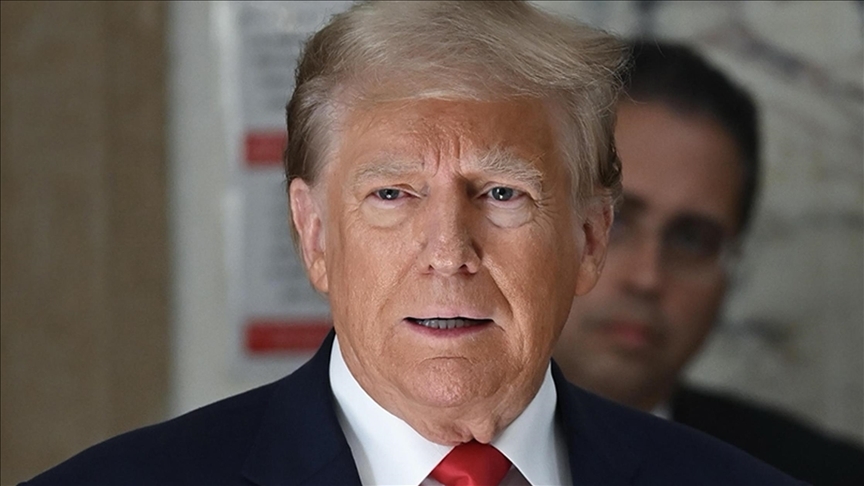







US President Donald Trump announced on Friday that Hamas is not interested in reaching a prisoner exchange agreement and expressed his support for Israel's continued military operations against the movement.
"Hamas really didn't want to make a deal. I think they want to die," Trump told reporters outside the White House, a day after the United States and Israel announced they were withdrawing their negotiating teams from Doha, where indirect talks with Hamas had been taking place for nearly three weeks.
According to White House sources, Hamas angered Washington and Tel Aviv with its response on Thursday to the latest proposal for a 60-day truce in Gaza and a prisoner release agreement. According to Israeli media, Egypt and Qatar took a more nuanced approach, noting that Hamas's response already included numerous requests for changes to the proposal. However, they insist that the gaps can be filled.
Trump painted a bleaker picture, even appearing to acknowledge that the United States may not be able to secure the release of the remaining 50 hostages – 20 of whom are believed to still be alive.
"I said this would happen," Trump told reporters, claiming he predicted the current stalemate.
"We've released many hostages," he said. "But when the number reaches 10 or 20, I don't think Hamas will make a deal because that means they're defenseless. And that's basically what happened."
"I think what will happen is that they will be hunted down," he added. "It has reached a point where Israel will have to finish the job."
"Israel will have to fight, and it will have to cleanse itself. You will have to get rid of Hamas," he said, acknowledging that the situation is "somewhat disappointing."
It is noteworthy that Israel has been waging a devastating war on the Gaza Strip and its people for 660 days, and has not yet been able to eliminate the Hamas movement, which is fighting the occupation forces fiercely and without pause, according to experts.
It's worth noting that Trump allowed Netanyahu to cancel the previous ceasefire and release of Israeli prisoners in March, instead of entering the second phase, which included a permanent end to the war. Israel subsequently launched a new offensive aimed at occupying 75% of the Gaza Strip to pressure Hamas.
Israel has also blocked all aid from entering the Gaza Strip for more than four months, which aid organizations say has created the current famine crisis.
The United States then helped Israel establish the Gaza Humanitarian Foundation (GHF), designed to try to exclude international organizations from the aid distribution process when Israel finally began allowing aid into Gaza again in late May. But the GHF's work was soon marred by near-daily reports of fatal shootings of Palestinians seeking food boxes; more than 1,000 civilians have been killed since May 26.
The US- and Israeli-backed organization still boasts of providing nearly 90 million meals, but the aid boxes it distributes are dry food products that need to be prepared in other parts of the Strip, where clean water, cooking gas, and kitchen utensils are increasingly scarce.
In addition to the barriers Trump removed regarding Israel's war of annihilation in Gaza, the United States also adopted Netanyahu's approach to reaching a gradual hostage deal in recent negotiations. Hamas offered to release all hostages in one go in exchange for Israel agreeing to a permanent end to the war, but Netanyahu refused, arguing that this would keep Hamas in power.
Instead, the two sides engaged in months of arduous negotiations, during which Hamas agreed to release nearly half the hostages in exchange for a temporary 60-day ceasefire, but in return demanded a long list of conditions aimed at preventing Israel from resuming fighting even after the truce ended.
Trump's comments on Friday indicated that he had all but abandoned the Doha negotiations, a significant shift for the US president, who for months had expressed a desire to quickly end the war and who only a week earlier had announced the imminent release of 10 hostages.
US Special Envoy Steve Witkoff issued a statement on Thursday saying that the United States and Israel would pursue other means to rescue the hostages. When the Jerusalem correspondent asked the acting State Department spokesman, Tommy Piggott, on Thursday what other means and methods might be, he declined to answer.
But a senior Israeli official told The Times of Israel on Friday that there are no new ideas for securing the release of the hostages, and that the only military strategies yet to be pursued would put the captives at risk.
Meanwhile, Egypt and Qatar issued a joint statement on Friday affirming their continued mediation efforts to secure a ceasefire. They explained that the United States and Israel had recalled their negotiators "for consultations before resuming dialogue." They added that this step is "normal in the context of these complex negotiations."
The two countries confirmed that some progress had been made in the latest round of negotiations, and that they remained committed to ensuring a ceasefire in Gaza and a prisoner release agreement.
Egyptian media reported earlier on Friday that the talks would resume next week, and Hamas official Bassem Naim told reporters the same.
However, the source involved in the mediation efforts and the Arab diplomat denied that prisoner negotiations would resume next week. The two sources said that no date has yet been set, and that Egypt and Qatar are still awaiting instructions from Witkoff.
شارك برأيك
Trump gives Netanyahu the green light to continue the brutal war on Gaza.