ARAB AND WORLD

Fri 13 Mar 2026 9:15 pm - Jerusalem Time

Between betting on popular movement and military action.. Trump's and Netanyahu's strategies to confront Iran

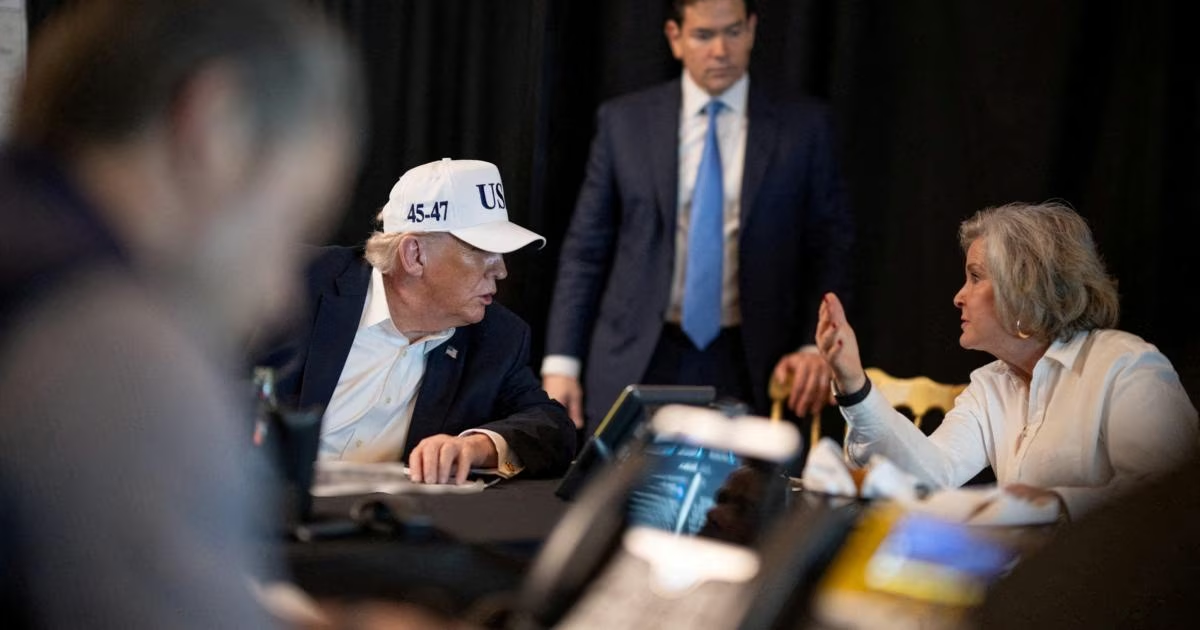
US President Donald Trump expressed his conviction in the Iranian people's ability to act to overthrow the ruling regime in Tehran, considering that current military pressures may pave the way for this transformation. Trump explained in radio statements that the absence of weapons among civilians represents a major obstacle at present, which may delay the expected results of this popular movement.

Regarding the nuclear file, Trump indicated that Washington does not prioritize seizing Iranian uranium at this stage, but he did not rule out focusing on this goal in the future. These statements come at a time when the region is witnessing unprecedented escalation, including targeting vital sites and high-ranking leaders in the Iranian regime's structure.

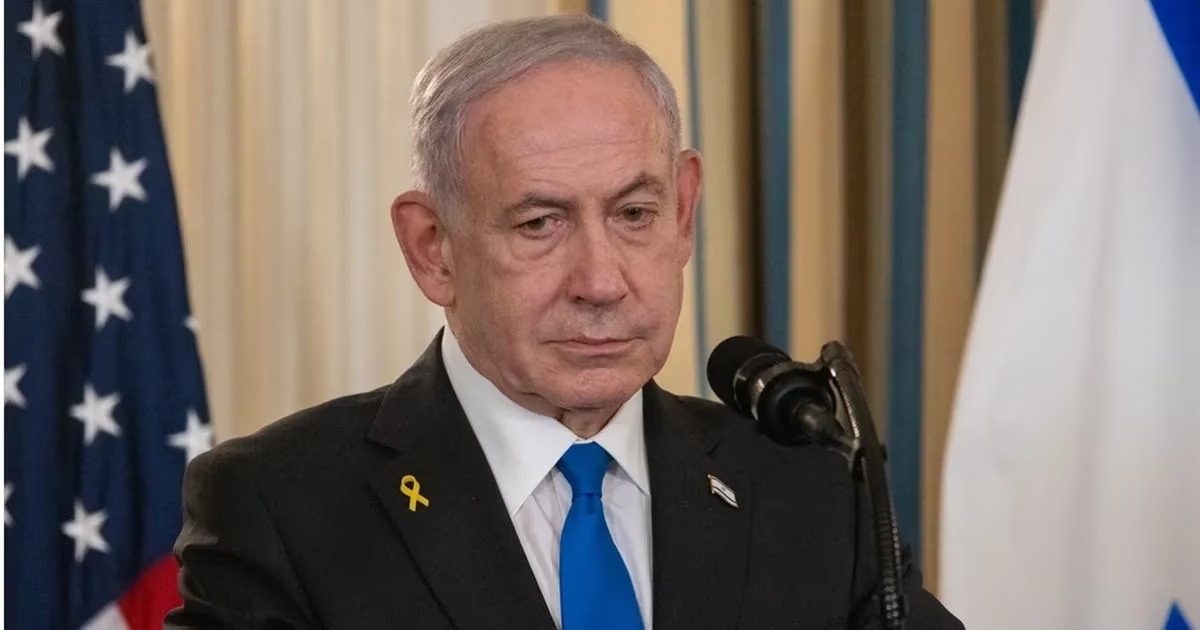
For his part, Israeli Prime Minister Benjamin Netanyahu expressed reservations about the speed of the regime's collapse in Tehran, emphasizing his uncertainty about it happening in the foreseeable future. Tel Aviv is currently adopting a dual strategy aimed at weakening security forces and the regime's infrastructure, to reduce obstacles to any potential internal protests that may erupt in the Iranian street.

Informed sources indicate that the Israeli leadership places the uranium file at the top of its priorities, with hints of operational surprises that may include elite units. Security circles in Tel Aviv are studying three scenarios for dealing with nuclear reactors, ranging from concentrated air strikes to swift ground operations by commando forces.

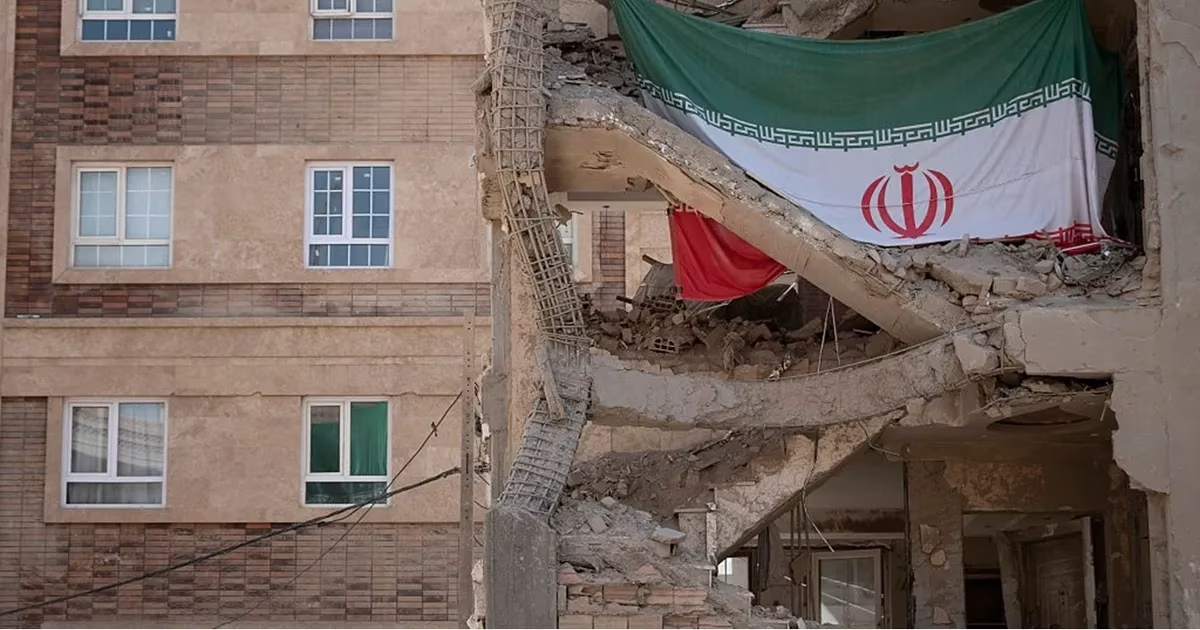
On the ground, media reports revealed the extent of the widespread destruction caused by recent attacks, with about 9,000 targets inside Iranian territory being hit during the first ten days of the confrontation. This figure represents a huge leap compared to previous rounds of escalation, reflecting a desire to completely and quickly cripple Iranian military capabilities.

In contrast, Tehran is adopting an asymmetric warfare strategy to exhaust the Washington-led coalition, exploiting the large differences in the cost of military equipment. While the cost of an Iranian drone is a few thousand dollars, air defenses are forced to use interceptor missiles worth millions of dollars, raising the cost of daily American operations to about one billion dollars.

International concerns extend to global energy security, as the Strait of Hormuz represents a strategic pressure card in Iran's hand, being a passage for 20% of global oil supplies. Sources reported that Tehran aims, by prolonging the conflict, to drain the massive US military budget and use the 'alliance trap' to destabilize the financial stability of countries participating in military operations.

Israel faces a strategic dilemma in balancing intense military pressure with avoiding a comprehensive regional war whose consequences cannot be controlled. Intelligence agencies are closely monitoring any signs of a return of popular demonstrations, considering that weakening the grip of the Revolutionary Guard is the real key to changing the political equation in Tehran, away from traditional military solutions.

In conclusion, the diplomatic path remains an option, although its chances of success have diminished amid continued mutual shelling and targeting of vital interests in the region. With the parties adhering to their positions, the confrontation appears to be heading towards further escalation, awaiting the results of economic and military pressures on the structure of the Iranian regime and its ability to withstand.

I really think it's a big obstacle that is difficult to overcome for those who don't have weapons.. that (the fall of the regime) will happen, but perhaps not immediately.

PALESTINE

Fri 13 Mar 2026 5:05 pm - Jerusalem Time

20 Dead in Intense Israeli Raids on Lebanon, Guterres Calls for End to War

The intensity of Israeli aggression on Lebanese territories has escalated since dawn on Friday, with at least 20 people martyred and dozens injured in a series of airstrikes targeting towns in the South, Bekaa, and the southern suburbs of Beirut. These deadly attacks come in the context of an expanded military campaign launched by the occupation army since the beginning of March, leaving widespread destruction in residential facilities and infrastructure.

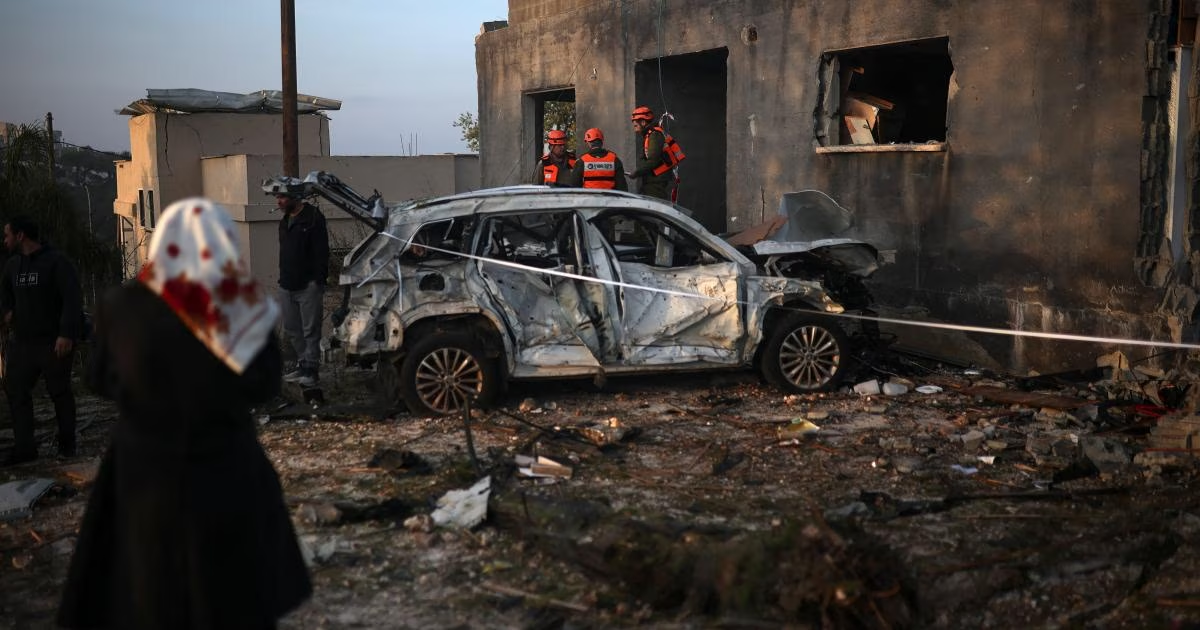
In the city of Sidon, in the south of the country, occupation aircraft committed a massacre in the eastern suburbs of the city, where an airstrike targeted a populated residential building, resulting in the martyrdom of 8 citizens and the injury of 9 others with varying degrees of wounds. Search and rescue operations continued in the town of Qleileh in the Tyre district, where specialized teams were able to extract two people from under the rubble of a destroyed building, while the search for missing persons is still ongoing.

Nabatieh district witnessed concentrated targeting by drones, one of which targeted a motorcycle on the road connecting the towns of Kafr Tibnit and Arnoun, leading to the immediate martyrdom of its driver. The raids also hit the town of Yater in the Bint Jbeil district, and the towns of Shaqra and Kafr Dunin, as part of a policy of direct targeting of both civilian and military movements in the border areas.

In the central Bekaa region, eastern Lebanon, an Israeli raid targeted a residential apartment in the town of Bar Elias, leading to the martyrdom of the two sons of Youssef Dahouk, an official in the Islamic Group, and injuring him and two others seriously. Warplanes also launched simultaneous raids on various areas in the Hermel district, causing damage to many homes and public and private properties in the region.

The capital Beirut was not spared from targeting, as one person was martyred in a raid that targeted a civilian car in the Jnah area of the southern suburbs, amidst a state of panic among residents. In the border town of Shebaa, an Israeli drone targeted two citizens, Mahmoud Akrama Nassif and Hadi Mohammad Kanaan, on the outskirts of the town, leading to their immediate martyrdom at the attack site.

In the town of Nabatieh Fawqa, local activists mourned Sheikh Hassan Ghandour, who was martyred as a result of an airstrike that directly targeted his home, leading to its complete destruction. The town of Abba in the Nabatieh district also recorded the martyrdom of citizen Ataf Maalem Sabra and the serious injury of her husband, following an aerial bombardment that hit their home at dawn today, as part of a series of attacks targeting southern villages and towns.

On the ground, an Israeli drone also targeted a car on the Shaaitiyeh road in the Tyre district, resulting in one martyr and injuries among passersby, coinciding with intense artillery shelling that hit the outskirts of the towns of Qawzah and Ramiya. Field sources reported that warplanes carried out a raid between the towns of Siddiqin and Ramadieh, and another targeted the town of Tayr Felsay near the vital bridge, leading to the قطع of some secondary roads.

Official statistics issued by the Lebanese authorities indicate that the toll of the expanded Israeli aggression reached 687 martyrs and 1774 injured by Thursday evening, while the number of displaced persons exceeded 822,000. These figures reflect the scale of the humanitarian catastrophe that Lebanon is experiencing amidst the continued daily and regular aerial and artillery bombardment affecting most Lebanese governorates.

Diplomatically, UN Secretary-General Antonio Guterres, during a press conference in Beirut, called on both Israel and Hezbollah for an immediate cessation of hostilities and to reach a comprehensive political agreement. Guterres affirmed, after meeting with Lebanese President Joseph Aoun, the necessity of respecting Lebanon's sovereignty and independence, stressing that the Lebanese people have been drawn into a war they do not want and that does not serve their national interests.

Guterres expressed his full solidarity with the Lebanese people in these difficult circumstances, hoping that his next visit would be at a time of peace and when the state is the sole authority and decision-maker. He noted that the United Nations is making strenuous efforts to secure humanitarian aid for the displaced and affected, emphasizing that a military solution will only lead to more destruction and suffering for both sides.

For his part, Lebanese President Joseph Aoun affirmed that the Lebanese state is looking for all possible ways to stop the war and protect civilians from the Israeli killing machine. Aoun stressed that negotiations under the auspices of the United Nations are the optimal path to reaching a sustainable solution, emphasizing the necessity of confining weapons to the hands of the Lebanese state to ensure its ability to make decisions of peace and war in a way that serves the supreme national interest.

In a notable development, occupation aircraft dropped leaflets over the capital Beirut, specifically in the areas of Verdun, Hamra, and Ain El Mreisseh, coinciding with intense low-altitude flights that caused a tremendous boom. These leaflets contained inciting messages calling on Lebanese to disarm Hezbollah, and also contained electronic scan symbols (QR Codes) belonging to Unit 504 of Israeli military intelligence for information gathering.

Local sources reported that the sound of the sonic boom was repeated four times in a short interval, causing a state of terror and panic among residents and students in schools around the capital. This Israeli move comes within the framework of psychological warfare practiced by the occupation in parallel with field military operations, in an attempt to pressure the popular base and stir up internal public opinion.

Amidst this escalation, civil defense and ambulance teams continue their work in extremely dangerous conditions, as some teams are directly targeted while performing their humanitarian duties in recovering victims. The field situation remains prone to further escalation in the absence of any signs of an imminent ceasefire agreement, and the continuation of Israeli threats to expand ground operations deep into Lebanese territory.

I call on Israel and Hezbollah to achieve a ceasefire, and for the war to stop and an agreement to be reached that enables Lebanon to be an independent and sovereign country.

ARAB AND WORLD

Fri 13 Mar 2026 5:05 pm - Jerusalem Time

Iranian military advisor expects end of confrontation before 'Nowruz' amid new wave of missiles

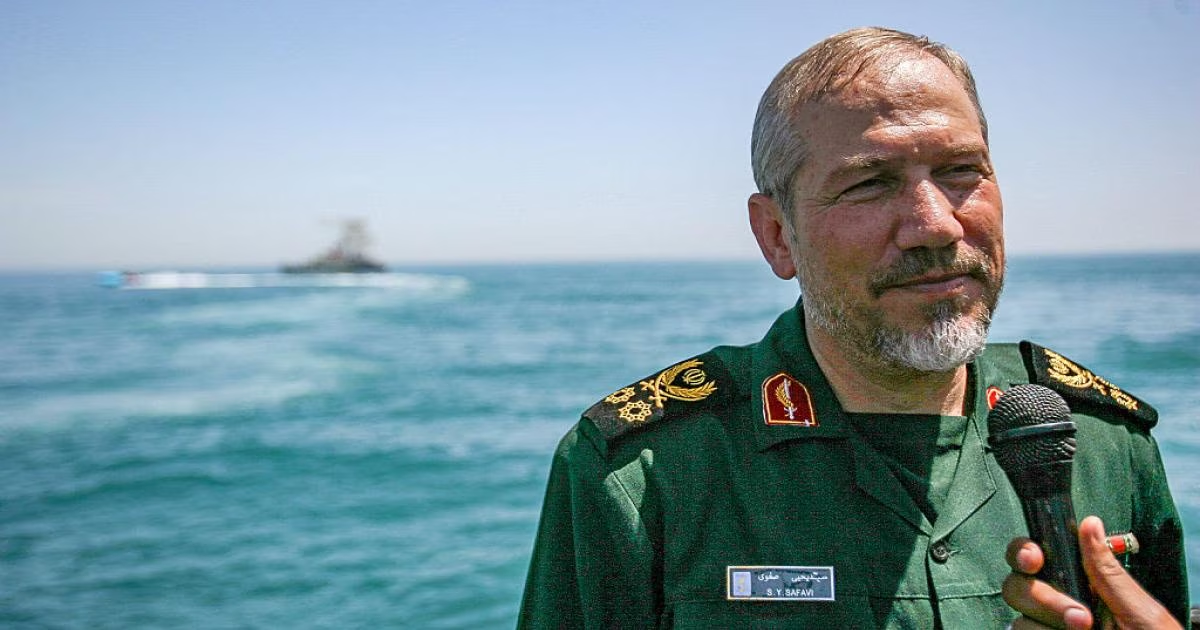
Rahim Safavi, military advisor to the Iranian Supreme Leader, predicted that the ongoing military confrontation would end before Nowruz, which marks the beginning of the new Iranian year in about ten days. Safavi explained that this assessment is based on a field reading indicating a relative decline in the pace of exchanged strikes between the parties involved in the conflict over the past few days.

Meanwhile, media sources in Tehran reported the launch of a third wave of Iranian missile attacks, targeting sites described as strategic. The sources stated that these strikes coincided with the launch of other missile barrages directed towards US military bases and vital targets deep within Israeli territory, in a remarkable field escalation.

Despite the absence of a detailed official statement specifying the nature of the losses, initial estimates indicate that the attacks targeted radar systems and sensitive military installations. This wave comes as part of a series of successive operations through which Tehran seeks to respond to the targeting of its facilities, confirming the entry of new sites into the direct confrontation circle.

In parallel with the military operations, Iranian media published detailed images and data of economic and military facilities inside Israel, in addition to sites in the Gulf region. This step aims to convey a political and military message that the Iranian target bank is expanding to include vital centers capable of influencing the economic and security balance of power in the region.

Tehran accuses the US administration of working to expand the scope of military operations to include infrastructure and vital facilities within Iranian territory. Political circles in Iran believe that this American approach aims to double the economic pressures on the country, which is already suffering from the consequences of severe international sanctions that have been ongoing for years.

The question remains about the realism of Safavi's predictions of an imminent end to the war, given the continued exchange of missile barrages and ongoing military buildup. While Tehran speaks of a decline in pace, on-the-ground data indicates that the confrontation may take new forms of a war of attrition targeting the economic and military nerve of all parties.

Our estimates indicate the possibility of ending the war before Nowruz, given the noticeable recent decline in the intensity of mutual military operations.

ISRAELI AFFAIRS

Fri 13 Mar 2026 5:05 pm - Jerusalem Time

Harel: Washington and Tel Aviv's bets on the collapse of the Iranian regime from within have failed

The military analyst for Haaretz newspaper, Amos Harel, confirmed that direct military confrontation with Iran has entered a phase of reviewing expectations after major bets evaporated. He explained that Washington and Tel Aviv built their strategies on the premise that military pressure would generate a popular uprising leading to the overthrow of the regime, which did not happen.

Harel pointed out that intelligence estimates indicated that delivering devastating blows to vital regime apparatuses, such as the Revolutionary Guard and the Basij, would paralyze their ability to suppress. This state of security weakness was supposed to give the masses an impetus to take to the streets, but two weeks of intense bombing did not change the internal scene.

The military analyst touched on another disappointment related to the Kurdish component in Iran, where expectations prevailed that the Kurds would move from the mountains to ignite a rebellion in the cities. Despite widespread media promotion of this hypothesis in Hebrew circles, the reality on the ground proved the inability of these groups to change the internal balance of power.

Regarding the nuclear file, Harel noted that air strikes, despite their intensity, did not completely end the Iranian threat. Iran still retains about 440 kilograms of 60% enriched uranium, a sufficient quantity to produce a rudimentary nuclear weapon if a political decision is made to do so.

The analysis warned that Tehran has succeeded in distributing its nuclear stockpile and sensitive facilities to fortified underground sites, making their elimination by traditional means complex. Iran's technical capability to resume military manufacturing appears to remain intact and strong despite the damage to infrastructure.

On the level of missile capabilities, sources revealed that Iran resumed accelerating its ballistic missile program immediately after the previous fighting subsided. Estimates indicate that Tehran could succeed within just two years in possessing an arsenal of thousands of missiles capable of reaching deep into the occupied territories with high accuracy.

In the context of American motives, Harel explained that President Donald Trump was initially hesitant about the idea of a comprehensive attack. But Washington's success in overthrowing Maduro in Venezuela, and previous protests in Iran, stimulated his desire to repeat the experience to dominate the global energy market and compete with China.

The military analyst believes that there is a recurring pattern in joint military campaigns, where they begin with technological and intelligence surprises that provide a temporary advantage. But the adversary quickly absorbs the shock and begins to implement counter-plans aimed at expanding the conflict and exhausting the attacking forces in a long-term war.

Economic data indicates a huge gap in costs, with the US military budget amounting to 886 billion dollars compared to only 25 billion for Iran. However, Tehran succeeds in draining these huge budgets by using inexpensive weapons such as drones, which cost no more than 50,000 dollars.

In contrast, air defenses are forced to use interceptor missiles, each costing up to two million dollars, making continued confrontation a heavy financial burden. Sources estimate that the daily cost of US military operations in the region has reached about one billion dollars, which serves the strategy of 'exhausting the adversary'.

The Iranian strategy relies primarily on asymmetric warfare and targeting vital global system joints such as shipping lanes and oil supplies. The Strait of Hormuz, through which 20% of the world's oil passes, represents a strategic pressure card in Tehran's hand that it can use to disrupt the global economy at any moment.

Harel noted that Hezbollah in Lebanon also proved to be less vulnerable than initial estimates indicated before the operations began. This steadfastness on the fronts supporting Iran contributed to dispersing Washington and Tel Aviv's military efforts, and led to prolonging the fighting and increasing damage on the home front.

The analysis concluded that the current outcome indicates an escalation of risks for the Gulf states and the internal front of the occupation in the face of an adversary with long endurance. It appears that the 'alliance trap' set by Iran has begun to bear fruit in draining the military and financial capabilities of the United States and its allies in the region.

The new reality forces decision-makers to conduct a comprehensive reassessment of future plans, especially with the failure of the bet on change from within. Iran has proven its ability to adapt to military strikes, while maintaining a pace of military production that threatens the security of the region for years to come.

Hope for Kurdish action or Iranians taking to the streets was dashed, and reality proved that the regime was not affected by the harsh blows as expected.

ISRAELI AFFAIRS

Fri 13 Mar 2026 4:14 pm - Jerusalem Time

Netanyahu threatens to assassinate Mojtaba Khamenei and warns of the danger of 'extremist Islam'

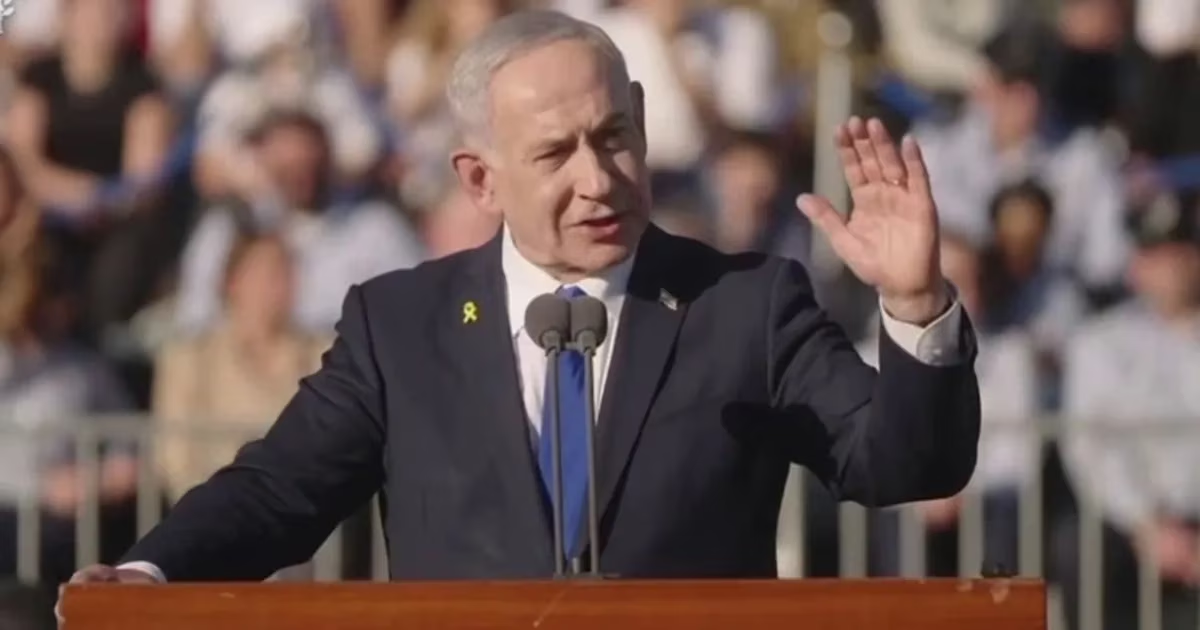
The Prime Minister of the Israeli occupation government, Benjamin Netanyahu, issued direct threats against the new Iranian Supreme Leader, Ayatollah Mojtaba Khamenei, hinting at assassination as an unprecedented escalation. During his first press conference since the outbreak of widespread military confrontations, Netanyahu claimed that Tel Aviv had succeeded in achieving major strategic accomplishments that would fundamentally reshape the balance of power in the Middle East.

Netanyahu affirmed that the Israeli army forces continue to launch intensive strikes against the headquarters and checkpoints of the Iranian Revolutionary Guard and the 'Basij' mobilization forces, noting that Tehran's current situation has completely changed from what it was before the start of joint military operations with the United States. He added that Israel is gradually transforming into a dominant regional power, and even aspires to strengthen its position as a global power in specific fields, based on new alliances that sources described as unattainable just a few weeks ago.

In a striking context, Netanyahu touched upon religious and political dimensions, stating that the arrival of the 'return of the Messiah' is possible but requires facing grave challenges, ruling out its occurrence in the very near future. He warned that what he described as 'extremist Islam,' both Sunni and Shiite, poses an imminent danger threatening global stability, emphasizing that this dilemma will not find a solution without direct and decisive intervention to confront its roots.

Netanyahu stressed that military action against Iran was an urgent necessity to prevent the fortification of its underground military industries, which he considered the greatest threat to Israel's existence. He also claimed that Tel Aviv is systematically working to create suitable conditions for the Iranian people to enable them to overthrow the ruling regime, asserting that the moment for Iranians to gain their freedom is near, despite his emphasis that this change remains the responsibility of the people alone.

On the international relations front, Netanyahu boasted about building an exceptional and unprecedented alliance with the current American administration, highlighting the strength of his ties with President Donald Trump. Netanyahu described this relationship as surpassing in its strength and coordination any previous relationship witnessed in the history of ties between American presidents and Israeli prime ministers, which provides Tel Aviv with broad political and military cover.

Netanyahu concluded his statements by affirming that the ongoing operations aim to ensure Israel's long-term security by dismantling the threats surrounding it from all fronts. Sources indicated that Netanyahu's tone reflects a desire to leverage absolute American support to achieve political and military goals that transcend the traditional boundaries of the conflict, in light of the rapid changes taking place in the region.

Extremist Islam, whether Sunni or Shiite, poses a threat to the entire world, and it cannot be assumed that this problem will solve itself.

PALESTINE

Fri 13 Mar 2026 4:14 pm - Jerusalem Time

Why are the Houthis hesitant to directly engage in the regional war against Iran?

Questions are escalating in political circles regarding the Houthi group's stance in Yemen on the ongoing war in the region, which erupted following intense American and Israeli airstrikes on Iran. Despite Tehran's allies in Lebanon and Iraq directly engaging in the confrontation, the Houthis, who possess a missile arsenal capable of threatening international navigation, have not yet officially announced their entry into the battle.\n\nThe Houthi group is a military and political movement rooted in northern Yemen, which fought years of guerrilla warfare before seizing control of the capital Sana'a in 2014. Since then, the group has developed advanced military capabilities in drones and ballistic missiles, enabling it to target vital facilities deep within neighboring countries in recent years.\n\nAfter the events of October 7, 2023, the Houthis began a series of attacks in the Red Sea targeting commercial vessels, declaring that this was in support of Palestinians in the Gaza Strip. These attacks prompted a military response from the United States and Israel, who launched airstrikes on the group's positions in Yemen, further complicating the field situation.\n\nIn a recent speech, the group's leader, Abdul-Malik al-Houthi, affirmed that his forces are on high alert and ready for military action at any moment dictated by field developments. However, observers note that the group has not issued an official statement of full involvement in the war, unlike other factions in the Iran-led axis.\n\nExperts on Yemeni affairs indicate that the Houthis, despite their political rapprochement with Tehran, have their own internal agenda and do not absolutely adhere to the Iranian Supreme Leader's authority. This doctrinal and political distinction gives the group room for maneuver away from direct external dictates, and makes its decisions linked to its interests within Yemen.\n\nEconomic pressures and difficult humanitarian conditions in Yemen play a crucial role in curbing Houthi escalation, as the group fears the collapse of the fragile truce in place since 2022. Entering a full-scale war could mean further destruction of the dilapidated infrastructure in areas under their control, threatening their internal stability.\n\nOn the other hand, concerns arise about violent international and regional reactions if the Houthis target global energy corridors, especially the Strait of Hormuz, through which 20% of the world's oil passes. Any disruption to navigation in this vital artery would lead to global economic repercussions that could prompt major powers to launch an uncompromising military campaign against the group.\n\nIntelligence reports suggest that Iran may prefer to keep the Houthis as a reserve deterrent force, rather than exhausting them in an early confrontation. Iran's strategy relies on asymmetrical 'war of attrition,' using inexpensive drones to force opponents to use interceptor missiles costing millions of dollars.\n\nIn a related context, regional concerns have increased in countries such as Egypt, Turkey, and Saudi Arabia about the expansion of the conflict and its impact on energy supplies. These countries seek to strengthen their strategic cooperation to confront the security challenges arising from the escalation between Iran and Israel, and to try to contain any repercussions that may result from the intervention of non-state actors like the Houthis.\n\nAmerican sources claim that recent military operations have significantly reduced Iran's missile capabilities, which may affect the logistical support provided to the Houthis. However, the Houthis consistently deny being proxies for Tehran, asserting that they develop their weapons independently.\n\nAnalysts believe that the Houthis may choose to distance themselves from direct conflict amid increasing economic pressures in Yemen. The possibility of intense attacks from the United States, Israel, and even Saudi Arabia, represents a strong deterrent preventing them from full engagement in the war.\n\nConversely, some diplomats believe that the Houthis may carry out sporadic and limited attacks on targets in neighboring countries to increase pressure. These attacks, though limited, aim to show solidarity with Iran without provoking a comprehensive and destructive military response.\n\nEstimates indicate that the daily cost of American military operations in the region reaches one billion dollars, placing enormous financial pressure on Washington. The strategy of Iran and its allies aims to prolong the conflict and use the 'alliance trap' to exhaust Western military budgets.\n\nIn conclusion, the Houthis' position remains subject to field and political developments in the region, and their ability to balance their commitments to the 'axis of resistance' with their internal interests. Any decision to directly enter the war will change the rules of the game in the Arabian Peninsula and will have unpredictable global repercussions.\n\n"Our fingers are on the trigger regarding escalation and military action at any moment developments require."\n

PALESTINE

Fri 13 Mar 2026 4:13 pm - Jerusalem Time

British Judiciary Rules in Favor of Journalist Who Exposed 'Israeli Propaganda' Within BBC Corridors

The British High Court has issued a significant ruling in favor of journalist Owen Jones, in response to a defamation lawsuit filed against him by Rafi Berg, the Middle East affairs editor for the BBC's website. This decision came after Jones published an investigative article accusing Berg of playing a pivotal role in entrenching a culture of bias in favor of the Israeli occupation within the esteemed media institution.

The court based its decision on the premise that the material published by Jones on 'Drop Site News' expresses a legitimate professional opinion, supported by real-world examples of Berg's editorial practices. The judges clarified that the article provided a logical basis for this opinion by reviewing the editor's role in guiding news coverage related to the Israeli-Palestinian conflict.

In his report, Jones cited testimonies from within the BBC newsroom, where Berg's fellow journalists described his practices as part of 'systematic Israeli propaganda.' These employees indicated that the editor constantly seeks to highlight the Israeli military narrative, while marginalizing the humanitarian aspect and the suffering of Palestinians in published reports.

The court rejected the argument put forth by Berg's lawyers, which claimed that the article portrayed him as a 'rogue' journalist who disregards standards of accuracy and impartiality. The judiciary considered that proving defamation now requires Berg to present evidence refuting the sincerity of Jones's belief in his opinion, or to prove that no honest person could adopt this position based on the available facts.

In his first comment after the ruling, Owen Jones affirmed on the 'X' platform his commitment to continuing his journalistic work exposing the truth. Jones expressed full readiness to defend his article should Berg decide to proceed with litigation, emphasizing that the integrity of media institutions must remain paramount.

The investigations published by Jones included accusations against Berg of direct interference in headline formulation and image selection to serve the Israeli narrative. Sources confirmed that facts inconsistent with the interests of the occupation were repeatedly removed from reports he supervised, threatening the professional credibility of the British institution.

For his part, Berg's lawyer claimed that the article caused severe damage to his client's professional reputation and led to him being subjected to campaigns of hatred and threats. Nevertheless, Jones's case received widespread public support, with 'Drop Site News' managing to raise over $100,000 in legal donations in one day to cover defense costs.

This case brings to light Rafi Berg's background and his close ties with Israeli intelligence agencies, as he previously stated his pride in being part of a 'circle of trust' with Mossad agents. This was evident in his book 'Red Sea Spies,' which covered secret Mossad operations in Ethiopia during the 1980s.

The summary of Berg's book indicates that it was written in direct cooperation with agents who participated in those operations, and included an epilogue written by a former Mossad commander. Berg had also previously published celebratory photos showing his book on the shelves of the occupation Prime Minister Benjamin Netanyahu's office, which further fueled doubts about his professional impartiality.

These developments come at a time when the BBC faces sharp criticism for its coverage of the ongoing war on the Gaza Strip. Observers believe that the court's ruling represents a victory for voices calling for an end to the blackout of Israeli crimes and accountability for those responsible for distorting public awareness in Western media.

In a related legal context, the British High Court rejected an appeal filed by the government against Irish singer Liam O'Hana, known as 'Mushara.' Authorities had charged the singer with terrorism for raising a Hezbollah flag during one of his musical performances, in an attempt described as silencing pro-Palestinian voices.

The government's lawsuit against 'Mushara' was rejected for procedural reasons related to exceeding the six-month time limit for filing the complaint. The band 'Nikab,' to which the singer belongs, considered that these legal prosecutions are primarily aimed at intimidating activists and creators who express solidarity with the Palestinian cause.

These successive rulings reflect a state of legal and human rights activism within Britain to counter attempts to restrict freedom of expression regarding Palestinian affairs. Human rights activists affirm that the British judiciary has become an arena for confronting the influence that Israeli pressure groups try to exert on media and political institutions.

In conclusion, the court's ruling in favor of Owen Jones places the BBC before a moral and professional imperative to review its internal editorial policies. As the war on Gaza continues, popular demands for fair and equitable media coverage, free from the dictates of political propaganda, are increasing.

This ruling is crucial in protecting journalistic work that exposes the behind-the-scenes crafting of biased narratives within major media institutions.

ISRAELI AFFAIRS

Fri 13 Mar 2026 4:13 pm - Jerusalem Time

Sharp criticism of the occupation army: Accusations of systematic lying and misleading public opinion about the results of attacks

The Israeli propaganda machine is facing scathing internal criticism, accusing it of spreading misleading 'propaganda' about the results of military attacks on Lebanon and Iran. Hebrew reports stated that a number of writers and analysts dared to publicly accuse the government and the army of lying to the Israeli public, considering that the continuation of strikes coming from abroad proves the falsity of official claims of achieving decisive victories.

Writer Nir Kipnis, in an analysis published on the Hebrew website 'Walla', pointed out that news headlines talking about the destruction of dozens of Hezbollah platforms and attacking headquarters in the Dahiyeh have become repetitive and lacking credibility. He explained that this news lacks realistic conclusions after more than two years of war, as the level of threat has not changed despite the intensity of the announced raids.

The analysis accused the Israeli military spokesman of relying on imaginary numbers when talking about destroying percentages ranging between 60% and 90% of Iranian or Lebanese missile launchers. It considered that these numbers aim to falsely reassure the Israeli public, while missiles continue to fall on cities and settlements without stopping.

Kipnis strongly criticized the media coordination that promotes the army's readiness for all scenarios, describing it as a 'trick' in which military correspondents participate. He stressed that this type of deception has become very disturbing, especially after the public became accustomed to doubting politicians' promises, and now the doubt has shifted to the leaders of the military establishment who previously enjoyed absolute trust.

The article recalled previous statements by Prime Minister Benjamin Netanyahu in November 2024, when he claimed that Israel had set Hezbollah back decades. The writer considered that this 'fantasy' that Netanyahu sold to the public clashed with a completely different reality on the ground, as Hezbollah proved its ability to continue to drain the Israeli home front.

The analysis pointed out that the danger lies in accepting generals' statements as absolute facts simply because they wear military uniforms, even though events have proven the inaccuracy of their information. He gave an example of the army's claims about missile defense systems providing 100% protection, stressing that the chance of surviving a direct hit still exists despite all interception systems.

The writer called on the Israeli public to question the statements of high-ranking military officials and not to 'buy' their lies, which aim to embellish the bitter reality. He explained that military leaders, unlike politicians who lie as an instinct for survival, seek to hide their operational failures through polished press releases that have no basis on the ground.

The article also revealed the overlap of interests between the military and politics, as it indicated that some military leaders are involved in partisan games to ensure their promotions and appointments to senior positions. This link has made military discourse a political tool that serves specific agendas instead of presenting the bare truth to the settlers who live under threat.

Nir Kipnis called on army leaders to start telling Israelis the unvarnished truth, warning that disasters often occur immediately after military reassurance statements are issued. He considered that false claims of constant readiness would be rich material for any official investigation committee that might be formed in the future to hold those responsible for the failure to manage the confrontation accountable.

The analysis concluded that the occupation state has lost its credibility with its internal public opinion due to the wide gap between what is announced in military briefings and what actually happens on the ground. He stressed that continuing the deception approach will only lead to more shocks when any widespread escalation occurs that exposes the reality of the army's defensive and offensive capabilities.

Reality has proven that those who wear official military uniforms also lie to us, or that they do not know exactly what they are talking about.

OPINIONS

Fri 13 Mar 2026 4:13 pm - Jerusalem Time

Trump's War Raises Oil Prices: Profits for Energy Companies, a Harsh Bill for Americans

Said Erikat

Opinion Writer

Washington – Said Arikat - 3/13/2026

News Analysis

US President Donald Trump attempted to present the rise in oil prices, which followed the outbreak of the US-Israeli war against Iran, as a positive development for the American economy. In a comment he posted on Thursday on the Truth Social platform, he said that the United States “makes a lot of money” when oil prices rise, based on the fact that the United States has become the world's largest oil producer. However, this statement comes at a time when Americans are already paying significantly more to fill their car tanks, raising serious questions about the contradiction between the White House's rhetoric and the economic reality for citizens.

Trump wrote: "The United States is the largest oil producer in the world, by far; so, when oil prices go up, we make a lot of money." He added that what matters to him “much more as president” is preventing Iran, which he described as an “evil empire,” from possessing nuclear weapons or threatening the Middle East and the world. According to Trump, the ongoing war represents a strategic necessity to ensure global security, even if it comes with direct economic costs to citizens.

But the irony is that the US president himself, in the weeks and months leading up to the war, consistently repeated that low fuel prices were one of his most important economic achievements during his second term. He used the decline in prices as evidence of the success of his economic policies, citing figures in his election speeches and media statements.

Just one day before the war began, Trump was speaking in Corpus Christi, Texas, noting that the price of gasoline there was less than $2.30 per gallon. He said that two weeks earlier he had visited Iowa, where he found the price of gasoline at $1.99 (per gallon), and even $1.85 at another station. He added then: "It's really happening now," referring to what he considered a clear economic success.

However, the developments of the war quickly changed the equation. According to GasBuddy data, the national average price of gasoline in the United States was $2.94 per gallon on March 1, the first day of the war. Just 11 days later, the price rose to $3.61, an increase of nearly 23 percent, a rapid rise reflecting the fragility of the energy market to geopolitical shocks.

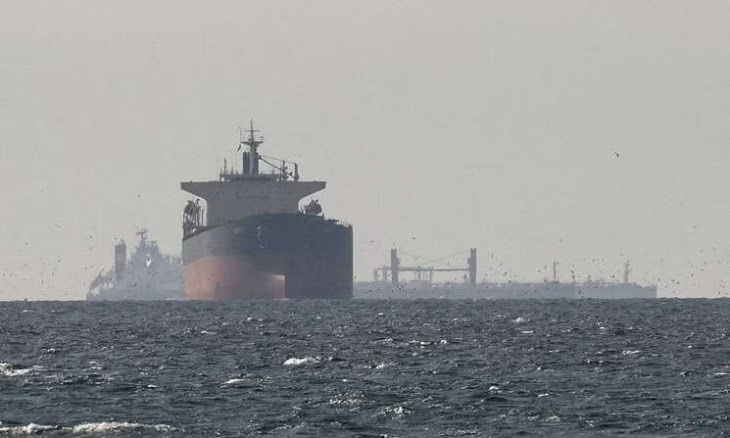
This rise is partly attributed to the escalation in the Gulf region, where Iran effectively closed the "Strait of Hormuz," the maritime passage through which about 20 percent of the world's seaborne oil passed in 2025. Iran's "Revolutionary Guard" forces announced that only ships with Iranian permits are allowed to pass, while oil tankers were subjected to drone targeting attempts while crossing the strait.

In fact, Trump's rhetoric about "benefiting" from rising oil prices reveals a deep contradiction in the economic policy logic of the war. While American energy companies may benefit from high prices, the American consumer bears the direct cost through increased fuel, transportation, and goods prices. Here lies the difference between the macroeconomic picture the administration talks about and the daily economy citizens experience. The profit Washington talks about does not appear in Americans' pockets, but in the budgets of large corporations.

The second contradiction lies in the way the war is politically exploited. Trump built a large part of his domestic rhetoric on low gasoline prices, presenting it as evidence of the success of his economic policies. But the war in which the United States participated alongside Israel turned this equation upside down in a few days. Here the question becomes legitimate: How can one boast about low prices as a political achievement, and then justify their rise as evidence of economic strength?

The third contradiction relates to the strategic logic of the war itself. The closure or threat to the Strait of Hormuz has always been the most anticipated scenario in any confrontation with Iran, something energy and security experts have warned about for years. Nevertheless, the US administration seems to have treated this possibility as a minor detail, even though it affects one of the most important arteries of the global economy. The result is that the decision to go to war not only created a regional crisis but also unleashed a series of economic shocks whose effects extend to every gas station in the United States.

ARAB AND WORLD

Fri 13 Mar 2026 4:13 pm - Jerusalem Time

Drone theft from US military base raises speculation about 'fabricated attack' to justify war on Iran

American media reports revealed a state of security alert following warnings issued by the Federal Bureau of Investigation regarding potential Iranian threats. These warnings concern the possibility of carrying out attacks using drones targeting vital sites on the West Coast of the United States, which has put security agencies on high alert.

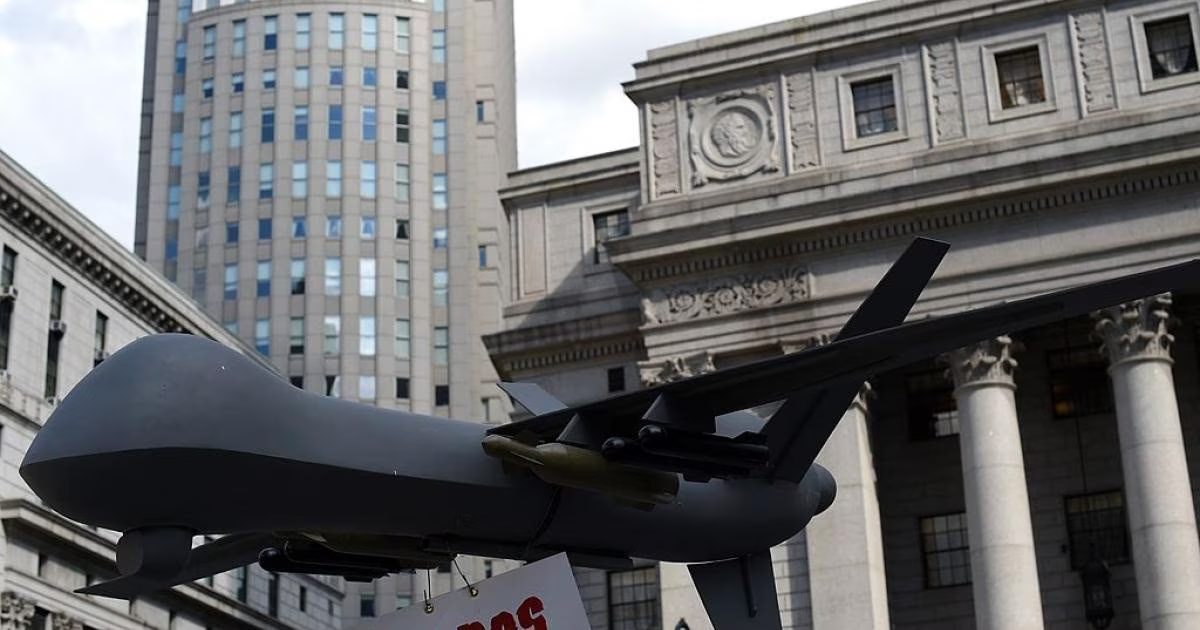
These warnings coincided with the announcement by the US Army's Criminal Investigation Division of a mysterious theft incident at 'Fort Campbell' base in Kentucky. Four advanced 'Skydio X10D' drones were stolen from a military building belonging to the base, raising questions about the timing and identity of the perpetrators.

Military authorities offered a reward of five thousand dollars for information leading to the arrest of those involved in this operation, which occurred in late November. Surveillance camera footage showed two individuals suspected of involvement in the theft, in addition to tracking the vehicle used to transport the stolen military equipment from the site.

In a related context, media sources reported that the Federal Bureau of Investigation had circulated a secret warning to police departments in California in February. The warning indicated the possibility of Iran launching retaliatory attacks via drones launched from commercial or unknown ships sailing off the American coasts, without specifying particular targets.

These rapid developments raised a wave of doubts among observers and officials, as the hypothesis of paving the way for a 'fabricated' attack, or what is known as 'false flag' operations, emerged. This scenario, according to analysts, aims to push American public opinion to support military action against Tehran, especially in light of opinion polls confirming the majority's opposition to any new war.

For his part, Iranian Foreign Ministry spokesman, Esmail Baghaei, entered the crisis, questioning the reality of these threats via social media platforms. Baghaei hinted that Washington possesses replica models of Iranian drones, which reinforces the hypothesis of their use in artificial attacks to pin the blame on his country and justify military escalation.

On the American domestic front, White House spokeswoman, Karoline Leavitt, quickly denied the existence of any real Iranian threat targeting American territory at present. Leavitt demanded that media outlets that published the reports delete them immediately, considering that circulating such information aims to spread unjustified panic among citizens and mislead the public.

In California, Governor Gavin Newsom confirmed that the state had not received official reports of imminent threats, but remains fully prepared to deal with any emergencies. These conflicting statements between security agencies and the White House add to the ambiguity of the scene regarding the reality of threats coming from abroad or those related to internal thefts.

Is this paving the way for another potential false flag incident? They already have plenty of replica Iranian drones.

ARAB AND WORLD

Fri 13 Mar 2026 4:12 pm - Jerusalem Time

White House Divided Over 'Saga of Fury': Economic Fears Clash with Desire to 'Finish the Job' Against Iran

The White House is experiencing a sharp division among President Donald Trump's advisors on how to manage the military confrontation with Iran and determine the appropriate moment to declare objectives achieved. Sources indicate that this divergence comes as the President continues to adjust his public stances on the course of the conflict and its timing.

Economic concerns top the agenda for a team of advisors who warn of the dire consequences of continued war on global energy markets. Officials at the Treasury Department and the National Economic Council believe that a steady rise in fuel prices could erode public support for military operations within the United States.

In contrast, a hardline faction within the administration and the Republican camp is strongly pushing to continue military operations under the name 'Saga of Fury'. This approach is led by prominent lawmakers such as Lindsey Graham and Tom Cotton, who believe that any retreat now would give Tehran an opportunity to restore its nuclear and military capabilities.

President Trump's recent statements reflect this hesitation, as he shifted from discussing broad strategic goals to describing the campaign as limited and having achieved most of its objectives. Despite declaring 'victory' at a rally in Kentucky, he later re-emphasized in closed meetings the necessity of not ending operations quickly to ensure 'the job is finished'.

Reports indicate that White House Chief of Staff, Susie Wiles, and her deputy, James Blair, are inclined to narrow the scope of declared objectives and present the operation as a swift campaign nearing its end. This approach aims to protect the administration's political standing from any economic shocks that might result from disruptions to oil supplies through the Strait of Hormuz.

The American strategy faces field challenges related to the nature of the asymmetric warfare waged by Iran, which relies on targeting the global financial system and shipping traffic. Approximately 20% of global oil supplies pass through the Strait of Hormuz, making any threat to this waterway a major shock to the international economy.

Financially, there is a huge gap in the cost of the confrontation, with daily US operations estimated at about $1 billion, while Iran relies on low-cost weapons. An Iranian drone costs between $20,000 and $50,000, while the US military is forced to use interceptor missiles, each costing up to $2 million.

Despite US claims of destroying large parts of the Iranian fleet and reducing missile launch capabilities by 90%, there is concern about the 'alliance trap' strategy. Through this strategy, Iran aims to prolong the conflict to exhaust the US military budget, which stands at $886 billion.

Political advisors warn that continued conflict could turn the 'Saga of Fury' into a long-term attrition similar to the military interventions Trump promised to avoid. These advisors are trying to persuade the President of the need to formulate a 'victorious exit' that preserves the prestige of the United States, even if the Iranian leadership remains in power.

For her part, White House spokeswoman, Caroline Leavitt, described reports of divisions as mere 'speculation and rumors' from unknown sources. Leavitt affirmed that President Trump is the ultimate decision-maker and that he listens to multiple opinions to ensure the full achievement of the ongoing military operation's objectives.

Lawmakers in Congress are cautiously monitoring the course of operations, with hawks believing that now is the most opportune time to deliver a decisive blow to prevent Tehran from developing a nuclear weapon. They believe that any de-escalation at this time would be interpreted as American weakness in the face of attacks targeting vital interests in the region.

Gasoline prices at American stations remain the most sensitive indicator for the White House operations room as political deadlines approach. American political history proves that rising living costs associated with foreign wars often lead to a sharp decline in the popularity of the incumbent president.

Under these varying pressures, the US administration appears to be seeking a delicate balance between demonstrating military power and maintaining economic stability. The question in Washington's corridors remains: when and how will Trump decide to end the 'Saga of Fury' without it appearing to be a retreat from his electoral promises?

President Trump emphasized during closed discussions his unwillingness to withdraw early, stressing the necessity of completing the military mission entirely.

ISRAELI AFFAIRS

Fri 13 Mar 2026 4:12 pm - Jerusalem Time

Details of the 'Golden Information': How Did Israel Assassinate 40 Iranian Leaders and the Supreme Leader in 40 Seconds?

Hebrew press sources revealed dangerous intelligence details about Israel's success in carrying out a widespread assassination operation that targeted 40 Iranian leaders, including Supreme Leader Ali Khamenei, in just 40 seconds. Intelligence analyst Ronen Bergman explained that the operation relied on exploiting a state of security relaxation on the Iranian side, which enabled Israeli aircraft to surprise decision-making centers at a critical moment.

According to the report published in the supplement of the 'Yedioth Ahronoth' newspaper, the joint planning between Tel Aviv and Washington stipulated that the attack would begin on the evening of Saturday, February 28, 2026. However, the arrival of intelligence information indicating that the meeting of the Iranian Supreme National Security Council had been moved forward prompted the military leadership to advance the strike by 12 hours to ensure all targets were hit in one location.

Bergman pointed out that the 'golden information' that changed the course of the operation was the detection of Ali Khamenei's presence inside his personal home, not in his fortified bunker. This information reached military intelligence shortly before the planes took off, leading to the inclusion of his home and military office among the immediate targets for the first strike.

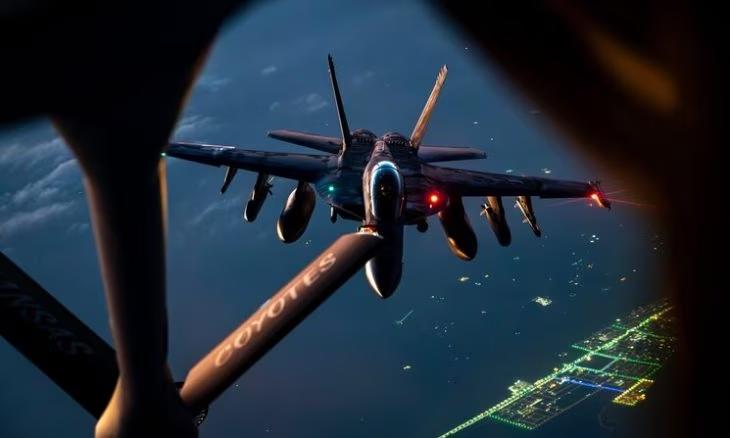
In this attack, the Israeli Air Force used advanced and secret 'Rocks' ballistic missiles, characterized by their ability to be launched from long distances via 'F-15' aircraft. The use of this type of weapon aimed to maintain the element of absolute surprise and prevent Iranian radars from detecting the attack seconds before it occurred.

Strikes focused on the fortified 'Baster' area in Tehran, where the leaders of the security agencies were supposed to gather for their weekly meeting. Sources reported that the purpose of bombing the building at that time was to create widespread chaos in the Iranian leadership structure, thereby depriving the regime of the ability to make a quick decision for a military response.

The Israeli narrative indicates that luck played a significant role when intelligence learned of a parallel meeting of Iranian military intelligence chiefs at an adjacent location. Accordingly, the bombing plan was adjusted to include all contiguous sites, allowing for the elimination of dozens of officials in one precisely coordinated strike.

According to the report, Israeli aircraft launched about 30 missiles towards the Supreme Leader's home and military headquarters, completely destroying them. Sources claimed that Khamenei remained in his home despite warnings due to his desire to deny accusations of hiding, which the report described as 'arrogance' that led to the bloody end.

Bergman revealed that Khamenei was a target for assassination in a previous confrontation in June, but the US administration under Donald Trump opposed the move at the time. Washington feared that killing the Supreme Leader would prolong the war, betting that tactical strikes might force Tehran to return to the negotiating table with new conditions.

The report also quoted informed security sources as saying that the Israeli military establishment was aware of the falsity of political statements that claimed to have previously destroyed the Iranian nuclear project. The sources confirmed that the June strike was a limited tactical success and did not end the real threat, making the second round of the war a strategic necessity from Netanyahu's perspective.

Iranians learned lessons from previous confrontations, focusing on strengthening their missile capabilities after the effectiveness of their proxies in the region declined. Iranian planning was heading towards accelerating uranium enrichment to reach the brink of a nuclear weapon, which prompted Israel to prepare a comprehensive military plan that included 'cutting off the snake's head' as a first option.

Despite Iran's attempts to close intelligence gaps, Israel succeeded in penetrating the inner circles of leaders by tracking the personal guards' phones. Although officials stopped using mobile phones, long-planted espionage devices continued to operate efficiently within sovereign headquarters in the heart of Tehran.

The Israeli military plan included several stages, beginning with major political and military assassinations to clear the atmosphere of any organized reaction. This was followed by a phase of destroying defensive systems, then 200 aircraft took off to hunt ballistic missile platforms in the western regions of Iran to ensure the protection of the Israeli home front.

Israeli experts involved in the planning concluded that destroying the 'underground city' beneath Tehran would require immense firepower and the use of special gases. The plan called for simultaneous bombing by 50 aircraft to demolish fortifications above those inside, with a focus on causing structural collapses that would prevent survivors from escaping or communicating with military units.

In conclusion, the report believes that the success of the operation is due to a combination of advanced technology and accurate human intelligence, coupled with clear Iranian misjudgment. While the world awaited war, the supreme leadership remained above ground in known locations, making them easy targets for missiles that did not even need to penetrate deep trenches.

The golden information about Khamenei's presence inside his home reached intelligence a few hours before the planes took off, so the assassination was added to the target list at the last minute.

ISRAELI AFFAIRS

Fri 13 Mar 2026 4:12 pm - Jerusalem Time

Netanyahu's Hexagonal Axis: An Attempt to Revive the 'Periphery Strategy' and Encircle the Region

Israeli Prime Minister Benjamin Netanyahu's statements about forming a hexagonal alliance in the Middle East were not mere casual remarks, but rather a carefully prepared speech at the opening of a government session. Netanyahu deliberately formalized this future vision, coinciding with preparations for an upcoming visit by Indian Prime Minister Narendra Modi, reflecting an Israeli desire to expand media coverage of this project.

This proposal brings to mind the 'Periphery Theory' established by Ben-Gurion in the 1950s, which aimed to bypass the Arab confrontation states and build alliances with regional powers and ethnic minorities. Historically, this strategy seeks to weaken the Arab center by engaging it in side conflicts and tensions with neighboring countries such as Turkey, Iran, and Ethiopia, to ensure the depletion of the Arab environment away from confronting the occupation.

Observers believe that Netanyahu is now trying to compensate for the previous failure of this strategy, especially after the fall of the Shah's regime in Iran and the shift in Turkish policy. Despite Israel's success in normalizing relations with several central Arab countries, the need to 'tighten the periphery' has re-emerged as a tool for political pressure and ensuring absolute hegemony amid rapid regional changes.

These moves come at a time when the region lacks what is called the 'radical Sunni axis,' as the powers Netanyahu alludes to, such as Saudi Arabia, Pakistan, and Turkey, adopt moderate positions. Sources confirm that these countries have strategic relations with Washington and support the peaceful settlement process and the two-state solution, which makes Netanyahu's claims about a radical threat an artificial situation for political purposes.

Israeli brutality and the war of annihilation in the Gaza Strip have raised the level of concern among regional regimes, including those that have pursued normalization. These countries are now questioning the feasibility of building relations with a political system that relies on the 'big stick' to impose its hegemony, and seeks to transform the supposed partnership into a relationship between an Israeli 'master' and an Arab 'subordinate.'

American behavior during the Trump era increases the fears of Washington's allies in the region, given his pragmatic mindset that sanctifies power and interest and disregards international laws. This climate of uncertainty has pushed countries like Saudi Arabia and Egypt to try to diversify their arms sources and slow down normalization processes, which has triggered a 'red light' for the Israeli leadership that rejects any margin of Arab independence.

Netanyahu aims, by announcing this axis, which includes India, Greece, Cyprus, and Ethiopia, to present himself to the Israeli public as a strategic leader capable of breaking international isolation. Through this vision, he tries to repair his image, which was damaged after the Al-Aqsa Flood events, demonstrating his ability to form regional alliances that isolate potential external risks and ensure his continued stay in power.

The fabrication of an 'imaginary enemy' reflects Netanyahu's continuous need to ensure internal tension within Israeli society and justify aggressive policies. This behavior also aims to find permanent justifications for rejecting the political path or making any real sacrifices related to the two-state solution, by claiming that Israel faces existential threats on multiple fronts.

Israel's existential anxiety after the Al-Aqsa Flood was manifested in the shift of security theory from 'deterrence by threat' to 'deterrence by total destruction.' The occupation is currently seeking to strike risks at their roots and prevent them from growing, while attempting to reshape the Middle East according to purely Israeli security standards, without regard for the reality of the region or the interests of its peoples.

Statements by US Ambassador Huckaby, in which he considered Egypt and Jordan potential fronts due to the presence of Islamist currents, caused confusion in diplomatic circles. Despite these countries' commitment to the settlement path, the current Israeli mindset has become hostile even to normalized parties, revealing a desire to exert political blackmail that prevents any independent movement from the American-Israeli will.

Netanyahu's behavior contains a self-contradiction that could lead to counterproductive results, as alienating potential partners increases their fears and shows Israel as an untrustworthy party. Instead of breaking isolation, these policies may expand the circle of hostility against the Zionist project, even among regimes that were described as the most moderate and closest to the West.

In conclusion, it appears that the hexagonal axis project faces significant realistic obstacles, given the intersection of the interests of the countries nominated for membership with the Arab and Islamic environment. It is unlikely that countries like India or Greece will fully mortgage their policies to the Israeli will, which makes Netanyahu's words fall within the framework of political exaggerations and personal wishes to strengthen his internal position.

Calls remain for Arab regimes to review the feasibility of settlement and normalization projects in light of this expansionist Israeli mindset. Current developments necessitate a reconsideration of Arab national security priorities, and considering the steadfastness of the Palestinian people and their resistance as the essential and strategic line of defense that protects the region from Zionist hegemonic ambitions.

Netanyahu's attempt to revive 'tightening the periphery' by pitting India against Pakistan, and Ethiopia against Egypt, reflects a desire to fuel regional conflicts. However, the growing awareness of the dangers of this project requires counter-Arab and Islamic coordination that protects common interests and prevents Israel from turning the region into an arena for its security and political experiments.

Netanyahu is trying to adapt the Middle East to Israeli standards, instead of adapting Israel to the realistic environment of the region.

ARAB AND WORLD

Fri 13 Mar 2026 4:12 pm - Jerusalem Time

Two killed in Oman, dozens of Iranian drones intercepted over Saudi Arabia, UAE, and Turkey

Authorities in the Sultanate of Oman announced today, Friday, human casualties due to a drone attack targeting the north of the country. Security sources confirmed the death of two expatriate workers and the injury of others after a drone fell in the 'Al-Owehi' industrial zone in the wilayat of Sohar, while a second drone fell in an open area without additional damage.

In the Kingdom of Saudi Arabia, the Ministry of Defense revealed the interception of one of the largest waves of aerial attacks since the recent escalation began in the region. Sources explained that air defenses successfully intercepted and destroyed 56 drones launched by Iran towards the Kingdom's territory since midnight yesterday, confirming the thwarting of attempts to target vital sites.

Saudi interception operations covered wide areas, with drones being shot down while attempting to approach the Diplomatic Quarter in the capital, Riyadh. Targeting attempts also extended to Al-Kharj governorate and the Empty Quarter region, in addition to sites in the Eastern and Central regions, amidst widespread security and military alert.

As for the United Arab Emirates, the Dubai Government Media Office reported that one of the buildings in the center of the emirate sustained direct hits. Sources explained that the damage resulted from falling shrapnel from successful interception operations of an aerial attack targeting the area, with no human casualties reported so far.

On the broader regional level, the effects of the escalation extended to Turkish territory, where air raid sirens sounded at the NATO-affiliated 'Incirlik' Air Base. This alert came after suspicious aerial movements were detected in the area where American forces are stationed, raising a state of alert at the military base.

For its part, the Turkish Ministry of Defense confirmed the success of NATO air defense systems in shooting down an Iranian ballistic missile over the country's airspace. The official statement indicated that the missile was neutralized by systems stationed in the Eastern Mediterranean, in the third incident of its kind in eight days.

These rapid field developments come as part of a series of strikes launched by Tehran since February 28th. Iran claims that these attacks target American bases and interests in the region, in response to previous military operations carried out by the United States and Israel against Iranian targets.

Competent authorities in the affected countries continue their field investigations to assess the extent of the damage and collect evidence from the wreckage of the downed drones and missiles. International concern prevails about the region sliding into a comprehensive confrontation amidst the continued waves of mutual shelling and the expansion of targeting to include civilian and economic centers.

Ballistic ammunition launched from Iran and entering Turkish airspace was neutralized by NATO air and missile defense systems.

PALESTINE

Fri 13 Mar 2026 10:59 am - Jerusalem Time

International Reports: Record Rise in Civilian Casualties in Lebanon from Women, Children, and Migrants

International press reports have revealed an alarming surge in casualties among women, children, and migrants due to ongoing Israeli attacks on Lebanon. Sources indicated that this increase is primarily due to intensified targeting of densely populated urban areas, leading to severe human losses among civilians compared to previous rounds of escalation.\n\nAccording to data released by the Lebanese Ministry of Public Health and the World Health Organization (WHO) office, recent days have witnessed a bloody shift in the nature of injuries. Figures recorded up to mid-last week show 83 children killed and 254 injured, representing approximately 23 percent of the total casualties in these confrontations.\n\nThe total number of killed and injured in less than two weeks reached about 1524 people, with statistics showing that women constitute 21 percent of this toll. Reports also noted that migrants, mostly Syrian and Palestinian refugees, account for 10 percent of the victims, reflecting the scale of the tragedy affecting the most vulnerable groups.\n\nDr. Abdalnasir Abubakar, WHO Representative in Lebanon, affirmed that strikes targeting densely populated residential areas cause widespread collateral damage. He pointed out that many civilians were unable to leave danger zones despite warnings, due to a lack of alternative options or safe shelters to resort to under current circumstances.\n\nSources spoke of tragic conditions faced by migrants and foreign workers, some of whom were left to tend farms in southern areas under bombardment. In other cases, these migrants faced difficulties accessing public shelters overcrowded with displaced people, making them directly vulnerable to shrapnel and explosions, which are the primary cause of fatalities.\n\nOn the medical front, the UN official explained that the organization had prepared in advance for potential escalation by supplying hospitals with necessary equipment to treat severe injuries. Despite these preparations and training undergone by medical teams, the continuous influx of wounded places immense pressure on the already strained health system, exhausted by successive economic crises.\n\nAbubakar warned that health authorities are developing scenarios to cope with the possibility of casualties reaching ten thousand people, which could lead to a complete depletion of medical supplies. He added that the biggest challenge lies in securing the necessary international funding to replenish essential supplies, in the absence of new international donations commensurate with the scale of the disaster.\n\nRegarding displacement, official estimates indicate approximately 700,000 displaced persons, but field projections suggest the number exceeds one million. These displaced individuals live in harsh conditions, with many forced to sleep in the open or in rudimentary tents lacking the basic necessities for a dignified life in the streets of the capital, Beirut.\n\nThe humanitarian crisis is exacerbated by displaced persons, especially the elderly, losing access to their essential medications for chronic diseases such as diabetes and high blood pressure. Medical sources confirmed a severe shortage in some areas of insulin and blood transfusion equipment, in addition to the urgent need for psychological support services for those affected by bombing and forced displacement.\n\nIn addition to direct injuries, the risk of infectious disease outbreaks looms due to overcrowding in shelters and the absence of sanitary conditions. Medical teams have recorded an increase in respiratory tract infections among children, with serious concerns about the spread of epidemics such as cholera, measles, and polio, posing an additional threat to public health.\n\nReports indicated that the risk of polio in Lebanon has become "very high," especially after cases of the disease were detected in the Gaza Strip some time ago. This threat requires a rapid response and widespread vaccination campaigns, which is increasingly difficult amidst ongoing military operations and the targeting of health infrastructure in the country.\n\nThe health sector has not been spared from direct targeting, with 49 primary care facilities and five hospitals in the south forced to close completely. Four other hospitals suffered varying degrees of damage, reducing the capacity of the medical system at a time when every available bed is desperately needed.\n\nIn a heavy toll for ambulance crews, 16 healthcare workers were killed and 29 others injured while performing their humanitarian duties. Most of these victims fell during strikes targeting emergency teams and paramedics who were trying to rescue the injured from under the rubble at targeted sites.\n\nSources concluded by issuing an urgent appeal for the necessity of protecting medical workers and ensuring the safety of health facilities in accordance with international laws. They stressed that continued targeting of paramedics hinders rescue operations and increases the number of avoidable deaths if necessary protection were provided to field teams.\n\nCivilians in Lebanon deserve better, and the country faces a series of successive crises, and this is the last thing the Lebanese needed.

PALESTINE

Fri 13 Mar 2026 10:59 am - Jerusalem Time

For the first time since 1967.. The occupation closes Al-Aqsa Mosque on the last Friday of Ramadan

Occupied Jerusalem today recorded a historical precedent, the first of its kind since 1967, as worshippers were absent from the blessed Al-Aqsa Mosque on the last Friday of the month of Ramadan. The Israeli occupation authorities continue to close the mosque for the fourteenth consecutive day, preventing Palestinians from accessing it or performing religious rituals on the holiest days of the holy month.

The occupation's security apparatuses justified their actions by imposing a state of emergency in the country due to the ongoing military developments since the Israeli-American attack on Iran on February 28th. Despite these claims, local sources confirmed that the measures exclusively target the Palestinian presence in Al-Haram Al-Sharif, while life continues differently in other areas.

For its part, the Jerusalem Governorate warned of the seriousness of this escalation, indicating that what is happening goes beyond temporary security measures to a systematic political and ideological path. The Governorate clarified that the real goal is to attempt to change the existing religious, historical, and legal reality in Al-Aqsa Mosque, exploiting the world's preoccupation with the current military circumstances.

Field sources observed an escalation in the incitement discourse led by what are known as extremist 'Temple organizations,' which call for imposing full control over the mosque. These calls coincide with tightening the noose on the Old City, where its alleys have turned into a military barracks preventing the entry of any worshipper from outside the residents of the narrow area.

Video clips documented attacks by occupation forces on youth groups that tried to gather at Bab Al-Sahira to perform the Isha and Tarawih prayers. The forces imposed a strict security cordon to prevent any attempt to break the siege imposed on the mosque, which led to clashes at several points of contact in the occupied city.

This comprehensive closure, which affected Tarawih prayers and I'tikaf, sparked a wave of widespread anger in the Palestinian street and on social media platforms. Activists considered that depriving Muslims of praying in Al-Aqsa during the last ten days represents a blatant assault on freedom of worship and a transgression of all red lines.

In an attempt to defy the prohibition decisions, hundreds of Palestinians resorted to what they described as 'worship of defiance,' where they performed prayers at the thresholds of the mosque and in the streets leading to it. These gatherings began with dozens of worshippers before expanding to include hundreds who insisted on remaining at the closest possible point to Al-Aqsa Mosque.

Observers believe that the occupation seeks to impose new realities in Al-Haram Al-Sharif, exploiting the ongoing war with Iran to pass plans for temporal and spatial division. They pointed out that international silence and the weak Arab stance encouraged the occupation authorities to extend the closure to include all days of the last ten days of Ramadan.

Bloggers and Jerusalemites described these moments as the most difficult in the city's history, as the mosque, for the first time in decades, misses the voices of worshippers and the supplications of those in I'tikaf on Laylat al-Qadr and the unique Friday. They affirmed that the Israeli bet on Palestinians getting used to the scene of a closed Al-Aqsa will fail in the face of the steadfastness of those stationed at the gates.

Jerusalemite sources concluded by warning that the continuation of this situation could lead to an explosion of conditions in the city, especially with the approach of Eid al-Fitr. They stressed that Al-Aqsa Mosque represents the core of the conflict, and that harming its sanctity under any security pretext will lead to unpredictable repercussions in the entire region.

Closing Al-Aqsa is an act of war with soft tools, and closing it is a war objective that must be thwarted.

PALESTINE

Fri 13 Mar 2026 10:58 am - Jerusalem Time

Strategic Oil Reserves: Back to the Forefront to Contain the Repercussions of War

Dr. Fadi Jumaa: Neutralizing the impact of oil on markets may reduce international pressure that could push for an end to the war and remove Iran's power card of threatening energy supplies.

Ayham Abu Ghosh: The step of resorting to strategic oil reserves is important to calm markets, but geopolitical risks remain the most important factor in determining prices.

Dr. Walaa Qudaimat: The move is a clear attempt to influence the global oil market and limit price volatility amid the war and its disruption of global energy supplies.

Dr. Thabet Abu Al-Roos: Trump's move does not guarantee price stability in the long term with the continuation of the war and the inability of the reserves to withstand any major shock.

Mohammed Al-Rajoub: This step reflects an American realization that the war may continue for a long time because countries only resort to this when they expect the crisis to continue for an extended period.

Dr. Amjad Bashkar: This step reflects growing concern about the economic repercussions of the war, not only on the United States but on the entire global economy.

Ramallah - Exclusive to "Al-Quds"-

With the escalation of the war on Iran and tensions in the Gulf region, strategic oil reserves have returned to the forefront of the international scene as a key tool to try and contain the repercussions of the conflict on energy markets and the global economy, as evidenced by statements from US President Donald Trump regarding resorting to these reserves.

Political writers, analysts, specialists, economic experts, and university professors, in separate interviews with "Al-Quds", believe that fears of oil supply disruptions, especially with threats to navigation in the Strait of Hormuz, have led to a significant rise in energy prices, prompting the United States and its allies to seek urgent measures to calm markets and prevent a global economic shock.

They point out that resorting to oil reserves aims to increase supply in global markets and send reassuring messages to investors and consuming countries that energy supplies can be compensated in the event of any sudden shortage due to the war, as well as an attempt to contain the escalating economic repercussions of the conflict, especially given the sensitivity of fuel prices and their direct impact on the global economy and financial markets.

On the other hand, geopolitical risks remain the most influential factor in determining the trajectory of oil prices, given the continuation of the war and the potential for its expansion in a region considered one of the most important centers of energy production and export in the world.

This is confirmed, according to writers, analysts, specialists, experts, and university professors, that the use of strategic reserves represents a temporary measure to contain the crisis, while market stability remains dependent on the course of the war and the future of global oil supplies.

Limiting the sharp rise in oil prices

Dr. Fadi Jumaa, Professor of Political Science at the Arab American University, explains that US President Donald Trump's recourse to strategic oil reserves amid the war on Iran is a decision with intertwined political, economic, and strategic dimensions related to managing the war and its repercussions on the global economy and the American domestic front.

Jumaa points out that, from an economic perspective, the move primarily aims to curb the sharp rise in oil prices resulting from wars and geopolitical tensions in the region, especially with escalating fears of threats to oil supplies from Gulf countries, in addition to the risks facing navigation in the Strait of Hormuz, one of the most important maritime passages for oil flow in the world.

Jumaa notes that pumping quantities from oil reserves into the market sends a clear signal to global markets that the United States is capable of compensating for any potential supply shortage in the current phase, which contributes to calming markets and limiting price volatility.

Attempt to contain internal American conditions

Domestically, Jumaa emphasizes that the decision is particularly important because fuel prices are a sensitive factor in the political and economic mood of the American voter. Rising fuel prices negatively affect public opinion and can impact the image of the American administration and the ruling party among citizens, especially with midterm elections approaching.

Tools to curb Iranian pressure cards

On the external level, Jumaa believes that the decision carries a direct message to Iran and its allies that the United States possesses economic tools capable of reducing the impact of any attempt to use oil or threaten navigation in the Gulf as a pressure weapon.

According to Jumaa, Washington is thus seeking to weaken what is known as the "energy weapon" and demonstrate that disrupting oil flow or targeting navigation in the Strait of Hormuz will not be a decisive card in the conflict.

Jumaa points out that this step has indirect repercussions on the course of the war, as neutralizing the impact of oil on markets may reduce international pressure that could push for an end to the war due to rising prices, and also removes one of Iran's power cards related to threatening global energy supplies.

Wider scope in managing the conflict

Jumaa affirms that stable energy prices give the United States a wider scope in managing the conflict, whether in continuing military pressure or later transitioning to a diplomatic path.

Jumaa stresses that the use of strategic oil reserves remains a temporary measure that cannot be relied upon for long periods, which may indicate that Washington does not expect a long-term war, as resorting to oil reserves is usually used as a short-term tool to contain crises, not as a permanent solution for managing extended conflicts.

A step to calm markets

Ayham Abu Ghosh, a journalist specializing in economic affairs, believes that the International Energy Agency's move to resort to strategic oil reserves is an important step to calm markets, but geopolitical risks remain the most important factor in determining prices.

Abu Ghosh emphasizes that energy, especially oil and gas, plays a significant role in this war and other crises as they are essential drivers of global industry, and their prices significantly determine the trajectory of the global economy and the prices of many goods and services. Therefore, economic data clearly emerge as a pressing factor in ending the war on Iran or in its continuation.

Abu Ghosh points to significant fluctuations in oil prices since the start of this war, as the Iranian side realizes that it has cards of strength and is using them to the maximum in an attempt to raise the cost to the global economy, whether by controlling the Strait of Hormuz, through which about 20% of global oil imports pass, or by pushing through military steps to reduce production, which will inevitably lead markets to read these risks as a rise in oil prices, raising fears of significant global inflation in addition to a period of recession.

Reassuring markets with inverse steps

According to Abu Ghosh, on the other hand, the United States is trying to reassure markets with inverse steps by sending messages that the war is nearing its end, or by pushing oil-producing countries to increase their production, or by pushing countries to use their strategic reserves.

Abu Ghosh believes that this step can calm markets and lead to relative stability in oil prices, but at the same time, it indicates a relative Iranian success in that its steps in managing the battle are indeed affecting the global economy.

Abu Ghosh points out that the International Energy Agency's announcement to release (400 million) barrels of oil through (32 countries) is the largest strategic operation in the agency's history, and this will lead to a relative calming of markets for a certain period, because this quantity only means pumping an increase equivalent to the world's consumption of oil for about (4 days) or (20 days) of the shortage that may occur from the cessation of supply through the Strait of Hormuz, even if its supply will be through about (120) days as in the American case.

Abu Ghosh explains that this step will contribute to relatively calming markets, but the matter will later depend more on geopolitical risks and the extent and duration of this war. The longer it extends and lasts, the more prices will rise again, and the closer its end or at least the secure supply of oil and gas, the prices will fall or stabilize.

Possibility of agreement with Russia

Abu Ghosh believes that these circumstances will push the United States to one of two things: either accelerating the end of the war with Iran through military or peaceful means, or an agreement with Russia to lift sanctions on it, especially regarding oil and gas exports, because that would be a decisive factor in determining prices.

A clear attempt to influence the global oil market

Political writer and researcher Dr. Walaa Qudaimat explains that US President Donald Trump's recourse to strategic oil reserves usually comes in the context of major wars and crises that lead to disruptions in energy markets and rising oil prices, noting that this tool was previously used during US President Joe Biden's administration amid the Ukrainian war, a measure that was criticized by Trump and his party at the time.

Qudaimat points out that the renewed discussion about using oil reserves in the current phase comes in the context of proposals put forward by the International Energy Agency calling for drawing from oil reserves to mitigate the sharp rise in energy prices.

Qudaimat notes that Trump's recourse to this step reflects a clear attempt to influence the global oil market and limit price volatility, especially amid escalating tensions related to the war with Iran and the potential disruption of global energy supplies it may cause.

Qudaimat believes that the goal of this step is not limited to the economic dimension, but also extends to the domestic dimension in the United States, where Trump seeks to calm American public opinion, which is directly affected by rising fuel prices and their repercussions on living and economic conditions.

Qudaimat indicates that the American administration may resort to additional measures, in addition to using strategic reserves, to ensure the continued flow of oil to global markets and to reduce fears associated with rising prices.

Managing the oil supply crisis resulting from the war

Regarding the repercussions of this step on the course of the war, Qudaimat believes that the American administration seems to be trying to move from managing direct military war to managing the oil supply crisis resulting from it, considering that the energy crisis has become one of the most prominent reflections of the ongoing conflict. Qudaimat explains that this approach reflects an attempt to invest in the repercussions of the war in a way that serves the American role and protects the domestic front, especially since the United States has one of the largest oil reserves in the world.

Qudaimat affirms that this step can also be read within the framework of Washington's attempt to manage the conflict through various means, which may include gradually moving from direct military confrontation to using more flexible political and economic tools, allowing for a rearrangement of the regional scene according to the American vision.

Largest withdrawal operation in the history of the International Energy Agency

Economic expert and analyst Dr. Thabet Abu Al-Roos confirms that US President Donald Trump's move to strategic oil reserves comes amid the escalating war on Iran and its unprecedented impact on rising global oil prices, where prices exceeded $120 per barrel, prompting the American administration to act urgently to calm markets.

Abu Al-Roos explains that the United States decided to pump about 400 million barrels from oil reserves, which is the largest withdrawal operation in the history of the International Energy Agency, with the aim of forming an international safety net that protects markets from sudden price increases.

However, Abu Al-Roos stresses that the actual daily pumping capacity does not exceed about 2 million barrels, which represents 18-20% of the daily quantity, limiting the direct impact of the reserves on markets completely.

A message of reassurance to the Gulf and Middle Eastern countries

Regarding the repercussions of the decision, Abu Al-Roos points to three main dimensions: the political dimension, as it represents a message of reassurance to the Gulf and Middle Eastern countries that the United States is capable of absorbing any shortage in oil supplies and controlling markets. The economic dimension, according to Abu Al-Roos, aims to form a safety net by resorting to reserves, but it is limited in its ability to provide oil for long periods, as the actual reserve is only 415 million barrels out of a total reserve of 750 million barrels.

Abu Al-Roos points to the commercial dimension, which combines the political and economic vision to maintain relative balance in the market.

Resilience of reserves in controlling prices

Abu Al-Roos questions the ability of the reserves to remain resilient in controlling prices for a long time, emphasizing that the reserves are not enough to address the ongoing shock, especially with the continuation of the war and the targeting of oil facilities in Iraq and Gulf countries, as well as obstacles in the Strait of Hormuz. Abu Al-Roos points out that these combined factors may create a new wave of price increases despite the pumping of reserves, reflecting the fragility of global markets in the face of any continuous disruption in energy supplies.

Abu Al-Roos believes that Trump's move aims to calm markets in the short term, but it does not guarantee price stability in the long term, given the continuation of the war and the inability of strategic reserves to withstand any major shock.

Deeper shifts in the nature of the conflict

Academic and researcher in public administration and political science Mohammed Al-Rajoub believes that US President Donald Trump's recourse to strategic oil reserves amid the escalating war on Iran reveals deeper shifts in the nature of the conflict, with its gradual transition to what can be described as an "energy war" and its increasing impact on the global economy.

Al-Rajoub points out that this step confirms that the outcome of the battle will not depend solely on military power, but also on the ability to manage the global economy and control the energy lifeline on which it relies.

Managing wars with economic tools

Al-Rajoub explains that major wars are not only managed with military tools and means, but also with economic tools, foremost among them oil. When energy markets are shaken and oil prices approach very high levels, strategic oil reserves become a political and economic tool no less influential than military power, and from this perspective, Trump's decision can be understood as aiming to curb rising energy prices.

Al-Rajoub points out that strategic oil reserves are one of the most important tools of US economic national security, as they are usually used in emergencies when global oil supplies are subject to significant disruptions or serious threats.

However, resorting to it at this time reflects, according to Al-Rajoub, that the war is no longer just an external matter, but has begun to directly affect the American domestic front and the global economy.

Al-Rajoub explains that the military escalation in the Gulf has led to disruptions in energy movement and rising global oil prices, with the price per barrel approaching high levels due to fears of supply disruptions, especially amid threats related to the Strait of Hormuz, through which about 20% of the world's oil passes.

Al-Rajoub believes that this reality has prompted the American administration to search for quick tools to contain the market shock and calm economic fears.

Al-Rajoub points out that the use of strategic reserves also carries a message of reassurance to global markets, as pumping additional quantities of oil into the market increases supply and curbs the acceleration of price increases.

According to Al-Rajoub, such steps are often taken in coordination with allies, as the International Energy Agency and G7 countries have discussed the possibility of releasing additional quantities from global reserves to counter market disruption resulting from the war.

The war may continue for a long time

Al-Rajoub believes that this step reflects an American realization that the war may continue for a long time, because countries usually only resort to their strategic reserves when they expect the crisis to continue for an extended period.

Al-Rajoub affirms that the decision reflects a shift in the way the war is managed, so that the confrontation is no longer only military, but has also become economic. Al-Rajoub explains that the American administration is now managing the battle on two parallel levels: militarily through direct strikes, and economically by trying to control energy markets and prevent Iran from using oil as an economic weapon in the conflict.

Al-Rajoub points out that Iran indeed possesses an influential capability on the global economy through its geographical location in the Strait of Hormuz, through which millions of barrels of oil pass daily, as the mere threat of closing the strait or disrupting navigation in it is enough to cause a shock in global markets.

Temporary impact

Despite the importance of strategic reserves, Al-Rajoub warns that their impact remains temporary, as the quantities that can be released represent only a few days of global consumption, and therefore their use may alleviate the shock in the short term but does not address the root cause of the crisis, which is the continuation of the war and tensions in the Gulf.

Three scenarios

Regarding potential scenarios, Al-Rajoub puts forward three main possibilities; the first is Washington and its allies succeeding in pumping sufficient quantities of oil to calm markets and prevent prices from reaching record levels, which would relieve internal pressure on the American administration without ending the war.

The second scenario, according to Al-Rajoub, relates to the expansion of attacks in the Gulf and perhaps the closure of the Strait of Hormuz, which could push oil prices to exceed $100 or even $200 per barrel and create a real global energy crisis.

Al-Rajoub points to the third and most complex scenario, which is the transformation of the conflict into a comprehensive economic war, especially if Washington fails to curb prices or protect navigation in the straits. The United States may resort to bolder steps, such as militarily protecting oil tankers or imposing new arrangements for global energy supplies.

Growing concern about the economic repercussions of the war

Professor of Political Science Dr. Amjad Bashkar confirms that developments related to the ongoing war with Iran have begun to clearly reflect on the global economy and energy markets, noting that US President Donald Trump's statements regarding resorting to strategic oil reserves primarily aim to reassure the global market and curb rising oil prices, amid fears of the price per barrel exceeding $100, a level it has already reached amid escalating military tensions in the region. Bashkar affirms that this step reflects growing concern about the economic repercussions of the war, not only on the United States but on the entire global economy.

Bashkar points out that the continuation of the war may open the door to shifts in global energy policies, noting the increasing discussion in international circles about a potential bill or resolution related to lifting or easing sanctions imposed on Russia regarding oil exports.

Compensating for the shortage in global oil supplies

According to Bashkar, such an approach may aim to compensate for any potential shortage in global oil supplies resulting from the war between the United States and Israel on one hand and Iran on the other, especially since the repercussions of the conflict are not limited to Iran only, but extend to the entire Gulf region, which represents one of the most important centers of energy production and export in the world.

Bashkar points out that voices within Russian circles have begun to demand not to increase oil exports even if sanctions are lifted, with the aim of increasing economic pressure on the United States.

Bashkar believes that this stance may complicate global energy market calculations and exacerbate the economic crisis associated with the war.

Economic pressure strategy on the international community

Bashkar notes that Iran's targeting of oil fields in the Gulf, according to what is circulated in political analyses, may be part of an economic pressure strategy on the international community, so that the world is pushed to pressure the United States and Israel to stop the war by affecting global oil supplies.

Bashkar believes that any escalation in the Strait of Hormuz, which is the primary artery for energy movement in the world, could lead to serious repercussions on the international economy.

Bashkar explains that the circulating talk about the possibility of using explosive boats or planting naval mines in the strait could pose a direct threat to navigation and oil supplies, which could lead to significant price increases and deepen the global energy crisis.

Bashkar affirms that the continuation of these developments may ultimately lead to increased international pressure on the United States to stop the war, making it likely that Washington will declare victory unilaterally as a formula for exiting the conflict, similar to what happened in Yemen when the United States stopped its strikes against the Houthis without an agreement or official announcement.


OPINIONS

Fri 13 Mar 2026 10:58 am - Jerusalem Time

Seizing the Strait of Hormuz... Iran's Economic Nuclear Option

In terms of description, the raging and ongoing confrontation between Iran, America, and Israel currently is not a limited confrontation or a fleeting test of strength. Rather, it is an existential conflict in which each party seeks to reshape the regional landscape according to its vision and long-term interests.\n\nNor is this confrontation a war of attrition or merely a tactical point-scoring operation. Instead, it is a bone-breaking round with all the military and strategic connotations the word carries, where major objectives intersect with the field calculations that each party seeks to achieve.\n\nHence, for Iran to thwart the direct and indirect objectives of aggression against it, it adopted two strategies: a policy of blinding and overwhelming air defense systems, thereby enabling the depletion of precision munitions and air interception missiles, and reaching a critical stage where America and its partner cannot continue the war, and must seek a settlement to bring them down from their high horse. Therefore, it launched attacks targeting American bases, missile platforms, radar systems, and security and intelligence centers spread across Arab countries in the Gulf, Jordan, and Iraq. It also carried out intense launches of missiles and kamikaze drones at the beginning of the aggression, using older, imprecise missiles to achieve this goal, paving the way for the use of precise missiles with heavy warheads, such as the Fattah, Emad, Qadr, Khorramshahr, and Kheibar Shekan models.\n\nConversely, it resorted to what is known as the economic nuclear option, which is not just a tool for political pressure, but a criterion for victory and defeat, by controlling the global energy lifeline, by seizing the Strait of Hormuz and ensuring maritime navigation within it, according to the Iranian vision that states: either security for all or security for none.\n\nAmerica sought to neutralize the Strait from the war to ensure the stability of the global economy, and Iran sought not to turn it into a tool of political pressure, but rather transformed it into a strategic leverage beyond the military field.\n\nThe American confusion, disarray, and lies, especially from the President who lies as he breathes and issues contradictory statements, became clear through the American assertion that maritime navigation in the Strait of Hormuz is safe and unobstructed, that America destroyed the Iranian navy, and that it succeeded in neutralizing the Strait from the war and preventing Tehran from using it as an economic weapon.\n\nThe facts on the ground, however, said otherwise. Iranian responses to the American rhetoric were not delayed, especially from the Iranian Revolutionary Guard, which stated that the security of navigation in the Gulf is linked to Iran's security, and that any attempt to impose military control over the Strait would turn the entire region into a confrontation arena. This rhetoric was not merely a political stance, but a declaration of a military doctrine based on transforming the Strait into a strategic leverage if the war expanded.\n\nThe positive reaction of oil markets to American statements about safe navigation in the Strait, and that America would ensure navigation there by force if necessary, through warships escorting oil tankers—Trump's "heresies" and lies, which pushed oil prices back down—quickly dissipated. Iran stated that it controls the Strait of Hormuz and only prevents navigation for American and Israeli tankers, and that countries that expel American and Israeli ambassadors would have their oil tankers allowed to cross the Strait.\n\nWhen an Israeli and another American oil tanker did not comply with the Iranian decision, they were targeted by Iranian boats, disproving the American narrative that navigation in the Strait is safe, and America could not impose its control over the Strait by military force, nor did American warships escort oil tankers to ensure their passage.\n\nThe Iranian targeting of those two tankers, besides carrying Iranian political and military messages, stated that the passage through which approximately five percent of global oil trade passes daily does not need to be completely closed to become a factor of economic disruption; it is enough for passage to become risky for insurance and transport prices to rise and for shipping and navigation traffic to decline, to cause an earthquake in energy markets.\n\nAmerica failed to establish its equation that the war must remain confined to military aspects and not extend to the global energy lifeline. Iran stated that the Strait is part of the war and a strategic leverage, and it holds this card firmly. Incidentally, America's partner in the war, Israel, did not commit to preventing the war from extending to the global energy lifeline, as it deliberately bombed Iranian oil refineries and storage facilities, which prompted an Iranian response by bombing the port and oil refinery of Haifa, which produces 40% of Israel's energy. This forced Washington to ask its ally not to target Iranian oil refineries and storage facilities, because that would lead to adverse repercussions on oil prices in terms of their increase.\n\nIt is clear that the current scene indicates that the war has entered a different phase, where the global economy itself is becoming part of the confrontation arena. If pressure on navigation in Hormuz continues, the conflict may gradually shift from a direct military confrontation to an indirect global economic war, fueled by energy and its markets.\n\nThe Strait of Hormuz is no longer just a geographical detail in this war; it has become the key to interpreting its outcomes. If the United States can restore full stability to navigation there, it will have succeeded in neutralizing Iran's most important leverage and can prepare to declare its victory. However, if the Strait remains an area of continuous threat, it means that Iran has succeeded in bringing the stranglehold of the global economy into the heart of the battle, a development that could redraw the balances of the war in the coming weeks, making the opening of the Strait a primary global issue, which will not happen without an agreement with Iran, whose bill must be paid in exchange for recognizing its demands regarding its nuclear file and missile program, and these are the announced conditions for compliance.

ARAB AND WORLD

Fri 13 Mar 2026 10:58 am - Jerusalem Time

80 Injured and Widespread Destruction in Galilee.. and the Occupation Prepares for Weeks of Fighting

The town of Zarazir in the Galilee region witnessed widespread destruction and significant human casualties early this Friday morning, following the fall of a missile launched from Iranian territory. Medical and media sources confirmed that the number of injured rose to about 80 people, some of whom were described as being in varying conditions, in one of the most violent strikes targeting the region recently.\n\nField inspections showed the extent of the severe material damage to infrastructure and residential buildings in the town. Press reports indicated that nearly 80 homes were directly and indirectly damaged, leading to a state of panic and confusion among settlers and local residents.\n\nThis targeting came as part of three consecutive waves of missile barrages launched from Iran towards the northern part of the country within just one hour. These attacks included wide areas in Haifa, Galilee, and the occupied Golan, necessitating the activation of air defense systems on several simultaneous fronts.\n\nIn a related context, Hebrew sources announced the interception of another ballistic missile targeting the city of Eilat and the Wadi Araba region in the far south. Despite the activation of sirens, the interception prevented any human casualties or significant material damage in that desert area.\n\nAttacks also targeted the Kiryat Tivon area near the city of Haifa, where a missile directly hit a residential building. The attack resulted in significant structural damage to the building, but no human casualties were recorded among the residents who took refuge in fortified rooms.\n\nField sources explained that the Iranian attacks coincided with intense shelling by Hezbollah from southern Lebanon targeting the settlement of Kiryat Shmona and its surroundings. This synchronization, which has been repeated for the third consecutive day, indicates a high level of operational coordination between Tehran and the party in managing the battle.\n\nAgainst the backdrop of this escalation, internal pressure on the Israeli government from local authority heads in the north increased. These officials demanded the evacuation of residents an additional two kilometers from the border, given the inability of defense systems to provide full protection from intense barrages.\n\nFrom a military perspective, media reports revealed that the Israeli army has drawn up plans to continue fighting for at least an additional three weeks. These preparations come amid a conviction among security circles that the current confrontation could slide into a broader regional war than it is now.\n\nIn the political dimension, there is a state of suspicion regarding the American position, as Israeli circles believe that Washington is pushing for an expansion of the war. Despite public statements by President Donald Trump calling for calm, Israeli assessments consider them directed at domestic consumption and to reassure global financial markets.\n\n"The Israeli army is preparing for an additional three weeks of fighting, amid a perception of an American tendency to expand the scope of the war."\n

PALESTINE

Fri 13 Mar 2026 10:58 am - Jerusalem Time

Soumaya Ghannouchi: Trump trades Gulf security for Israeli agenda, lures Washington into new labyrinth

Tunisian writer Soumaya Ghannouchi affirmed that US President Donald Trump has betrayed his traditional allies in the Gulf region by fully complying with the Israeli agenda. She explained that the head of the occupation government, Benjamin Netanyahu, succeeded in luring American military power back into the shifting sands of the Middle East, something Washington elites repeatedly vowed not to repeat since the 2003 invasion of Iraq.

In her analysis, Ghannouchi pointed out that Netanyahu exploited his influence and close ties with Trump's inner circle, especially his son-in-law Jared Kushner, to direct US foreign policy towards a direct confrontation with Iran. This approach disregards Trump's promises during his election campaigns to end 'endless wars' and avoid involvement in costly regional conflicts.

The writer considered that what is happening now represents a repetition of the scenario of the neoconservatives who pushed for the invasion of Iraq under the pretext of the 'New American Century,' which ended with the decline of American hegemony and the draining of trillions of dollars. Today, Trump finds himself in the same labyrinth that his predecessors, including Barack Obama, tried to atone for and gradually withdraw from.

Ghannouchi touched upon the deep economic aspect of this relationship, where Gulf states injected massive investments exceeding $3 trillion into the US economy during Trump's 2025 tour. These funds were not limited to official channels but also extended to personal projects linked to Trump and his family, such as the 'World Liberty Financial' cryptocurrency project.

She also highlighted the role played by Jared Kushner's company, 'Affinity Partners,' which manages billions of dollars from sovereign wealth funds in Saudi Arabia, Qatar, and the UAE. Despite this close financial link, the analysis suggests that Trump prioritized Israeli interests over the security and stability requirements sought by these allied and investing countries.

Ghannouchi explained that the decision to escalate militarily against Iran was made without genuine consultation with the Gulf states, even though they are on the front line and will bear the brunt of any retaliatory action. This marginalization reflects a shift in American security doctrine, which now views military bases in the region as a tool for joint Israeli-American attack rather than a shield to protect allies.

The writer conveyed the growing concern in Gulf circles, citing criticisms from Emirati businessman Khalaf Al Habtoor, who publicly questioned the extent of collateral damage that would be inflicted on the region's countries as a result of this escalation. These statements reflect a growing realization that the American 'protector' has, due to Israeli pressure, become a direct threat to regional security.

In the same context, voices of Gulf analysts such as Musaed Al-Maghnam emerged, who considered that the equation had been reversed, where the countries of the region are now defending the American presence, not the other way around. This frustration stems from a feeling that American promises of protection in exchange for investments and military bases have evaporated in the face of Israel's desire to settle scores with its regional adversaries.

Ghannouchi warned that the strategic Israeli goal goes beyond merely striking Iran, extending to a desire to create a regional vacuum and re-divide the region along sectarian and tribal lines. She cited articles in the Hebrew press that explicitly speak of 'Sykes-Picot 2026' to redraw maps to ensure Israel's absolute superiority amidst fragmented and weak entities.

She referred to the warnings of Saudi journalist Adhwan Al-Ahmari about the possibility of Gulf states falling into an American-Israeli 'entrapment' trap, where the region is dragged into an open confrontation, and then Washington withdraws after achieving its own goals. This scenario leaves neighboring countries in direct confrontation with the repercussions of a devastating war they were not party to the decision to ignite.

The writer believes that the unprecedented overlap between American and Israeli military operations has blurred the lines that separated Israel's private wars and traditional American support. Today, US forces are directly involved in implementing Netanyahu's security vision, making military bases in the Gulf legitimate targets in any widespread regional conflict.

The current policy of the Trump administration risks destabilizing the infrastructure of American influence in the Middle East, which for decades has been based on the principle of 'access for security.' By fully aligning with Netanyahu, Washington sacrifices its credibility with its partners, who represent a fundamental pillar in global energy markets and international investments.

Ghannouchi concluded her analysis by emphasizing that the lesson learned by the Gulf states has become clear and painful: the old security equation is no longer valid to protect them. While Israel seeks to enhance its influence through regional chaos, the United States finds its influence gradually eroding by becoming a tool to implement strategies that do not necessarily serve its highest national interests.

The pressing question remains in the corridors of international politics about Washington's ability to regain its balance before a full slide into a comprehensive regional war. Continuing on this path could lead to a strategic rupture with Arab allies, opening the door for other international powers to fill the vacuum that will be left by the decline of American reliability in the region.

Netanyahu succeeded in achieving what many in Washington swore would never happen again: luring American military power back into the Middle East.

ANALYSIS

Fri 13 Mar 2026 10:58 am - Jerusalem Time

The 'Tree of Patience' Strategy: How Iran Manages Its Asymmetric Conflict with Washington?

Statements from military officials in the United States are escalating regarding achieving field successes against Iranian capabilities, with reports indicating a significant decrease in missile launches, recently reaching 90%. However, observers believe that this American optimism may not reflect the reality of the long-term conflict that Tehran is managing according to a strategic vision completely different from traditional calculations.

The Iranian leadership recognizes the enormous gap in conventional military power balances, as the US defense budget is approximately $886 billion, which is many times the Iranian budget, which does not exceed $25 billion. Based on these figures, Tehran adopts the principle of 'asymmetric warfare' that does not seek direct military victory, but rather aims to undermine the pillars upon which American influence globally rests.

Iran's strategy involves targeting three fundamental pillars of the international system: energy flows, maritime navigation routes, and the global financial system. By pressuring these sensitive nerves, Tehran seeks to generate immense economic and political pressures that will ultimately force Washington to reconsider its military options and end the state of conflict.

The Strait of Hormuz stands out as the most important strategic card in Iran's hand, as about one-fifth of the world's oil production and one-third of liquefied natural gas trade pass through it. Iranian control here does not necessarily require destroying ships; rather, creating a state of security uncertainty is sufficient to prompt insurance companies to raise their fees or cease coverage, leading to navigation paralysis and a crazy rise in energy prices.

In the technological dimension, Iran relies on low-cost drone aircraft, valued between $20,000 and $50,000 per unit. These drones pose a significant attritional challenge, as defense systems are forced to use interceptor missiles, each costing up to $2 million, making the defense process a financial burden that far exceeds the cost of the attack.

Iranian objectives extend beyond merely striking military bases to include causing disruptions in regional oil production, which immediately reflects on global supply chains from Asia to Europe. This type of economic pressure is described as 'more deadly than missiles,' as it directly affects the stability of global markets and the economic growth of major countries.

Tehran also benefits from what is known in international relations as the 'alliance trap,' where the United States finds itself compelled to defend multiple allies across vast geographical areas. This excessive strategic overextension exhausts American resources and makes forces deployed in regional bases vulnerable to continuous attrition on different fronts simultaneously.

Estimates indicate that the daily cost of US military operations under current tensions could reach $1 billion, a figure that does not include indirect consequences on the macroeconomy. This financial attrition represents the core of the Iranian gamble, where the confrontation is shifted from the battlefield of bullets to the battlefield of budgets and financial endurance.

'Strategic patience' is considered the psychological cornerstone of this doctrine, as Iran bets on the time factor to generate popular and political pressure within Western countries due to rising living costs and fuel prices. The longer the conflict lasts, the greater the likelihood of cracks appearing in the international front supporting US military actions.

In conclusion, the battle between Washington and Tehran appears to be a conflict between excessive technological power and Iran's 'bee sting' strategy. While the United States boasts of its destructive capabilities, Iran continues to work to destabilize the financial and energy systems, believing that the bitter fruits of the 'tree of patience' will ultimately be in its favor.

Iran does not seek to defeat the United States on the battlefields; it is enough for it to defeat the global system that supports American power.

ARAB AND WORLD

Fri 13 Mar 2026 10:58 am - Jerusalem Time

US refueling plane crashes in western Iraq amid conflicting reports on causes

The US Central Command (CENTCOM) acknowledged, in an official statement issued on Thursday evening, the loss of a 'KC-135 Stratotanker' aerial refueling aircraft while performing military missions in the western region of Iraq. Military sources clarified that the incident involved two aircraft on a joint mission, where one crashed in the field while the second aircraft was able to land safely at a nearby base.

CENTCOM affirmed in its initial account that the plane crash occurred within what it described as 'friendly skies' during an operation it named 'Epic Fury'. The Central Command denied that the wreckage resulted from direct targeting by hostile fire or even friendly fire, noting that search and rescue teams immediately began operations to determine the fate of the crew and the aircraft wreckage.

In contrast, the 'Islamic Resistance in Iraq' movement issued a statement early Friday morning, explicitly claiming responsibility for shooting down the American plane. The statement mentioned that its fighters targeted the plane while it was violating Iraqi airspace, affirming that the operation comes within the framework of defending the country's sovereignty and confronting the military movements of the occupation forces in the region.

The Iraqi resistance emphasized in its statement that the weapon used in the operation succeeded in accurately hitting the target over the western areas, leading to the direct crash of the plane. This announcement completely contradicts the American narrative, which attempted to classify the incident within a technical or accidental framework, far from direct combat operations.

This incident is a new link in the series of aerial losses suffered by US forces recently amid escalating tensions in the region. According to observers, this plane is at least the fourth lost by the United States since the beginning of the recent military escalation involving multiple international and regional parties.

Field reports indicate that 'KC-135' aircraft are the backbone of aerial supply operations, as they refuel fighters such as 'F-18s' to ensure their continued flight for long periods. Therefore, the loss of such an aircraft represents a logistical blow to ongoing US air operations in Iraqi and Syrian airspace.

A state of anticipation prevails in political and military circles regarding the repercussions of this incident, and whether it will lead to a change in the rules of engagement between US forces and Iraqi factions. Field sources continue to monitor US rescue efforts in the western desert of Iraq, amid media blackout on the extent of human losses among the crew.

The mujahideen of the Islamic Resistance in Iraq shot down a KC-135 aircraft belonging to the American occupation in western Iraq with a weapon.

ISRAELI AFFAIRS

Fri 13 Mar 2026 10:58 am - Jerusalem Time

30 Israelis injured after rocket falls in Galilee amid Iranian bombing wave

The Galilee region in the northern occupied territories witnessed a dangerous field escalation today, Friday morning, as medical and media sources confirmed that the number of injured rose to 30 people after a rocket directly hit the Zarazir area. The missile strike caused extensive material damage to properties, while ambulance and rescue teams rushed to the site to deal with the injured and transport them to nearby hospitals.

This attack came within the framework of successive waves of rockets launched by Iran towards various Israeli targets, which prompted the occupation army to declare a state of maximum alert among its defensive systems. The army spokesman explained via social media platforms that radars detected the launch of missiles from Iranian territory, noting that aerial interception attempts are still ongoing in several areas to confront this widespread aerial threat.

In a related context, official data issued by the Israeli Tax Authority revealed the extent of economic and material losses caused by the ongoing confrontation, as the compensation fund received more than ten thousand compensation claims since the end of last February. These claims relate to direct damage to buildings, vehicles, and facilities as a result of rockets and drones that targeted the Israeli interior during the past two weeks.

Regarding human losses, the Institute for National Security Studies at Tel Aviv University indicated that the current military confrontation with the Iranian side has so far resulted in the death of 14 Israelis in separate incidents. These figures reflect the extent of security and military pressure faced by the occupation in light of the continued missile barrages that have reached populated areas and sometimes bypassed air defenses.

There is a state of anticipation in Israeli political and military circles regarding the nature of the upcoming response, at a time when sirens continue to blare in the northern and central towns. Field reports confirm that the latest missile wave was among the most intense, leading to partial paralysis in some vital facilities and an increasing state of panic among settlers in the targeted areas.

The Israeli army detected missiles launched from Iran towards the territory of the State of Israel, and defensive systems are currently working to intercept the threat.

PALESTINE

Fri 13 Mar 2026 10:57 am - Jerusalem Time

Critical injury to an Israeli religious official in a stabbing attack near Tel Aviv

Media sources reported today, Thursday, that a prominent religious official in the Bnei Brak municipality sustained very critical injuries after being subjected to a stabbing attack in the Ramat Gan area, located east of Tel Aviv. The sources clarified that the target is "Gedalia Ben Shimon," who holds the position of head of the Religious Council in the area and is a member of the municipal council, and he was transferred to the hospital in a difficult health condition.

According to Hebrew media reports, the perpetrator of the attack is a young Palestinian from the town of "Jatt" in the territories occupied in 1948. Video documentation showed the young man approaching the Israeli official and surprising him with several stabs in different parts of his body, followed by assaulting him with blows before leaving the scene.

Following the attack, Israeli occupation forces launched extensive search operations in the area surrounding the attack site, which resulted in the arrest of the perpetrator at a nearby point. This operation comes amidst a state of escalating security tension within the occupied cities and areas adjacent to the economic and political center of gravity in Tel Aviv.

The perpetrator surprised the Israeli official by delivering successive stabs before beating him and withdrawing from the scene.

ANALYSIS

Fri 13 Mar 2026 3:47 am - Jerusalem Time

Between Deterrence and the Nuclear Taboo: Why is the Use of Tactical Nuclear Weapons by Israel Against Iran a Remote Possibility?

Said Erikat

Opinion Writer

Washington – Said Arikat – 3/13/2026

News Analysis

As the war between Israel and Iran expands, and the exchange of strikes between the two sides intensifies, a highly sensitive question has returned to the forefront of strategic discussions in Washington: Could Israel consider using a tactical nuclear weapon against Iran? In recent days, talk of this scenario has increased on a number of American media networks and think tanks, not as a likely option, but as a possibility that must be analyzed in light of the ongoing escalation.

However, the majority of strategic experts and former diplomats believe that the possibility of Israeli Prime Minister Benjamin Netanyahu resorting to this option remains very low, even if the war expands and Iran continues to deliver painful blows to Israel. These experts link their assessment to several strategic, political, and military factors related to the nature of Israel's nuclear doctrine, international balances, the limited military utility of any tactical nuclear strike, as well as the serious repercussions of breaking the nuclear taboo that has been established in the international system since the end of World War II.

The first of these factors relates to the nature of the role played by the Israeli nuclear arsenal in the strategic thinking of the Hebrew state. Israel does not officially admit to possessing nuclear weapons, but for decades it has followed a policy known as “nuclear ambiguity,” meaning refraining from confirming or denying possession of such weapons. Most strategic studies estimate that Israel possesses between eighty and two hundred nuclear warheads. However, the primary goal of this arsenal, according to experts in Washington, is not to use it on the battlefield, but to deter any existential threat that might threaten the state's survival.

In Israeli security literature, nuclear weapons are sometimes associated with what is known as the "Samson Option," meaning their use only if the state faces a real existential threat. Even with the expansion of the war with Iran, many analysts believe that the current conflict does not reach the level of an existential threat that might push Israel to break the nuclear taboo.

The second factor relates to the enormous political and diplomatic cost of using nuclear weapons. If Israel were to take this step, it would be the first country to use such weapons since 1945. This would likely lead to an almost complete wave of international condemnation and the imposition of harsh economic and political sanctions. Strategic relations between Israel and the United States could also be severely shaken, as Washington has for decades turned a blind eye to Israeli nuclear ambiguity within an unstated understanding based on not using these weapons. Breaking this understanding would also place Israel in unprecedented international isolation and reopen its nuclear file in international institutions, including the Security Council and the International Atomic Energy Agency.

In this context, some experts in Washington point out that for decades Israel has been able to move in the region with a great degree of strategic freedom, supported by extensive American political and military protection, which has made it consistently act as if it were above international accountability. However, this reality could fundamentally change if Israel were to break the nuclear taboo. The mere use of a nuclear weapon, even if tactical and limited, could overturn the political and diplomatic environment surrounding Israel and place it under unprecedented international pressure, including from its Western partners, including the United States.

The third factor relates to the limited military utility of such a strike. Major Iranian nuclear facilities, such as the Fordow and Natanz facilities, are located deep underground and fortified with layers of protection. Even the use of a tactical nuclear weapon does not necessarily guarantee the complete destruction of these facilities.

In contrast, Israel already possesses a wide range of advanced conventional American military tools, including bunker-buster bombs, cyber capabilities, and precise air strikes, in addition to covert intelligence operations. For this reason, a number of experts believe that conventional options could achieve the same military objective without risking nuclear escalation.

The fourth factor is the continuation of what researchers call the "nuclear taboo," which is the unwritten rule that emerged since the end of World War II, under which nuclear states refrained from using these weapons in armed conflicts. Even major nuclear powers avoided using them despite fighting numerous wars over the past decades.

For Israel, which relies heavily on Western political and military support, breaking this taboo could entail an enormous political and moral cost.

The fifth factor relates to the risk of regional escalation and nuclear proliferation. Israel's use of a nuclear weapon against Iran could open the door to a series of dangerous developments in the Middle East. This could include widespread Iranian missile responses or through its allies in the region, in addition to an accelerated nuclear arms race.

Major regional powers such as Egypt, Saudi Arabia, and Turkey might see such a development as an impetus to accelerate their nuclear programs or seek to acquire similar deterrent capabilities, which could turn the Middle East into one of the most dangerous regions in the world in terms of nuclear weapons proliferation.

The sixth factor is related to the nature of Iranian geography itself. Iran is a vast country with a political and military structure distributed over a large geographical area. Even if Israel were to use a tactical nuclear weapon, the strike would likely be very limited in terms of the number of targets. Practically, Israel might only be able to target one or two sites, but this would not completely paralyze the Iranian state. Tehran might be able to absorb the blow and reorganize its military and political capabilities, which reduces the strategic value of any nuclear use.

The seventh factor relates to Israeli military traditions, which tend towards conventional preemptive strikes rather than nuclear escalation. In the past, Israel has relied on precise military operations to destroy hostile nuclear programs, such as the destruction of the Iraqi nuclear reactor in 1981 and the strike on the Syrian nuclear reactor in 2007. These precedents reflect Israel's preference for limited and precise operations that achieve strategic objectives without sliding into catastrophic escalation.

Amidst this debate, a number of analysts in Washington point out that the increasing discussion in the American media about the possibility of using a tactical nuclear weapon partly reflects the concern within decision-making centers about the course of the war. The mere raising of this scenario in public discussion indicates a growing awareness that escalation could spiral out of control. However, most former officials and experts present this possibility within the framework of theoretical analysis, and not as a political option actually on the table for decision-makers.

Some researchers also point out that Israeli nuclear ambiguity has historically been part of a precise deterrence equation in the Middle East, based on possessing the capability without using it. If Israel were to break this balance through the actual use of nuclear weapons, it might undermine one of its most important sources of strategic power. Ambiguity gives deterrence psychological and political strength, while actual use might transform nuclear weapons from a deterrent tool into a heavy strategic burden.

In purely military calculations, experts believe that a tactical nuclear strike does not provide a quick solution to the dilemma of the Iranian nuclear program. The distributed and fortified nature of Iranian facilities, in addition to the Iranian state's ability to rebuild, means that any strike, no matter how severe, might only delay the program and not end it. Rather, it might give Tehran a domestic and international political justification to accelerate the public development of its nuclear capabilities.

In conclusion, Israel might resort to a widespread military escalation using advanced conventional tools if the war continues to expand. But the use of a tactical nuclear weapon would carry an enormous strategic and political cost, in return for limited military benefit. For this reason, despite the increasing discussion about it in some media and analytical circles, the possibility of resorting to this option remains very low.

ARAB AND WORLD

Fri 13 Mar 2026 3:47 am - Jerusalem Time

Three Scenarios for Iran's Future: Will Trump Succeed in Imposing 'The Day After' Following 'Epic Rage'?

International press sources reported that Iran, in the eyes of external powers, has been stripped of a large part of its traditional military capabilities, yet it still maintains internal control despite losing a number of its most prominent political and military leaders. The rapid developments raise fundamental questions about the nature of 'the day after' if US President Donald Trump declares a final victory in his operation, which he dubbed 'Epic Rage'.

Through this operation, Trump seeks to achieve a historic accomplishment that changes the balance of power in the Middle East, something his predecessors did not dare to contemplate. The US President has set broad goals ranging from destroying Iran's military infrastructure to inciting the Iranian people to seize power and radically change the existing regime.

Reports indicate that a prolonged war faces internal obstacles in Washington, as military operations enjoy only limited support from the American public, not exceeding 30%. The rapid rise in energy prices and declining jobs are also pressuring the US administration as the midterm elections approach next November.

On the diplomatic front, the anticipated meeting between Trump and Chinese President Xi Jinping emerges as an additional pressure factor to end military operations. China, which has strategic and energy ties with Tehran, strongly criticized the American attack, which may push Washington to declare victory before the end of March to facilitate the bilateral summit.

The first scenario, promoted by some circles in Washington, is the spontaneous collapse of the regime under the pressure of external bombing and internal protests. In this case, the Revolutionary Guard and Basij may abandon fighting, paving the way for the return of the monarchy, represented by Reza Pahlavi, to manage a transitional phase leading to general elections.

The second scenario appears darker, as the regime may be shaken without completely falling, opening the door to widespread chaos. With internal opposition and escalating demands from ethnic minorities such as Arabs, Kurds, and Baloch for self-rule, the country may slide into a slow civil war amid the spread of weapons.

Mojtaba Khamenei, who was appointed Supreme Leader to succeed his father, emerges as a figure representing the hardline wing of the Iranian regime. However, questions are raised about his health status and leadership ability, especially with his disappearance from public view since his father's death last February and the loss of several family members in air attacks.

The third scenario proposes the 'Venezuelan model' as a possible solution, where the regime remains in place but strikes a secret deal with the United States. Under this agreement, Tehran permanently abandons its nuclear program and reduces its missile arsenal in exchange for a gradual lifting of the suffocating economic sanctions that are debilitating the state.

This diplomatic path requires a strong figure within the regime capable of negotiating with the West, and Ali Larijani's name is being circulated as a potential candidate for this role. However, the major obstacle remains the extent to which the hardline wing associated with the Revolutionary Guard would accept such fundamental concessions that touch the core of the regime's ideology.

Sources indicate a divergence of views between Washington and Tel Aviv on the ultimate goals of the war. While the US administration wishes to end military operations quickly to avoid economic repercussions, Israel seeks to exhaust the Iranian regime as much as possible to ensure it does not rise again.

Declaring victory in this war may be unilateral, unless Tehran explicitly admits defeat, which is unlikely given the regime's political culture. This ambiguity may keep the region in a state of constant tension even after direct air strikes on vital targets cease.

Analyses confirm that Iran will emerge from this confrontation weaker regionally, especially after the damage it sustained in previous confrontations in 2025. This external weakness may push the regime to tighten its internal security grip, making the regime an increasing threat to the Iranian people themselves.

Amid infrastructure destruction, Iran will face enormous challenges in rebuilding itself economically and politically in the post-war phase. Any future leadership will have to deal with a heavy legacy of destruction and debt, in addition to a society suffering from deep divisions between loyalists and opposition.

In conclusion, Iran's future remains suspended between Trump's ambitions to change the region's political map and a complex internal reality that refuses to fully comply with external dictates. The 'day after' that everyone talks about may not be as rosy as some imagine, but rather the beginning of a new chapter of conflicts in the heart of the Middle East.

Declaring victory, if it happens, will most likely be a unilateral declaration by the United States and perhaps Israel, unless Tehran admits defeat.

PALESTINE

Fri 13 Mar 2026 3:47 am - Jerusalem Time

Israeli escalation targets Dahiyeh and Jnah, Hezbollah rockets ignite internal disputes in the North

The southern Dahiyeh of the Lebanese capital, Beirut, witnessed a new wave of violent aerial raids early this Friday morning, as Israeli aircraft targeted at least two locations. Thick plumes of smoke rose into the sky over the area, causing panic among local residents who have been facing continuous escalation for days.

In a significant field development, an Israeli drone targeted a civilian vehicle in the Jnah area of Beirut, causing it to completely catch fire. Firefighting and civil defense teams rushed to the scene to extinguish the blaze, amid reports of injuries resulting from this direct targeting in the heart of the capital.

The shelling did not stop at the capital's borders but extended to towns and villages deep in southern Lebanon, where media sources reported that the towns of Doueir, Ansar, and Abba were subjected to intense aerial raids. These attacks resulted in a number of injuries, while ambulance teams continued evacuation and search operations under the rubble.

Diplomatically, the State of Qatar expressed its strong condemnation of these aggressions, describing them as a blatant violation of the rules of international humanitarian law. The Qatari Ministry of Foreign Affairs affirmed in an official statement that what is happening represents a clear breach of UN Security Council Resolution 1701, which aims to maintain stability in the region.

Doha called on the international community to take immediate action and fulfill its responsibilities to compel the Israeli occupation authorities to stop their repeated attacks. It also emphasized its firm and supportive stance for Lebanon's unity and territorial integrity, affirming its support for all efforts aimed at enhancing Lebanese security and stability.

On the other hand, media reports revealed a sharp verbal altercation between the heads of local authorities in northern Israel and the commander of the Galilee Division in the army, Yuval Gaz. This tension came against the backdrop of intense rocket barrages launched by Hezbollah, which caused a complete paralysis in the northern settlements.

Local officials accused the army leadership of misleading them and providing incorrect security assessments about the nature of imminent threats. They expressed their dissatisfaction with the long duration of the sirens, which lasted for ten continuous minutes, reflecting the extent of the failure to contain the recent rocket attacks.

Informed sources indicated that the Northern Command had reassured the mayors hours before the attack that there were no intentions of escalation from Hezbollah's side. However, the reality on the ground was completely different, as the area was subjected to heavy shelling with projectiles and rockets throughout the night.

Thousands of settlers in the north were forced to remain in fortified shelters for long hours due to the continuous shelling, which increased the intensity of popular and official anger against the army. The heads of authorities considered that what happened proves the falsity of military claims that promoted the absence of a direct Hezbollah threat from the border.

Press sources quoted senior officials in the Northern Command as saying that the army's current strategy focuses on the defensive aspect in confronting Lebanon. These officials added that the Israeli strategic focus remains directed towards Iran as the main arena for confrontation, not the Lebanese front.

Despite these military justifications, settlement leaders believe that the army failed to protect them from anti-tank missiles and Hezbollah's offensive capabilities. They affirmed in their confrontation with the military commander that the promises made to them throughout the past year regarding border security were nothing but illusions that dissipated with the first real test.

Mutual military operations continue on the Lebanese-Palestinian border in the absence of any prospect for de-escalation, with the scope of targeting expanding to include vital areas in Beirut. Observers fear that these developments could lead the region to slide into a comprehensive confrontation that goes beyond the currently applicable rules of engagement.
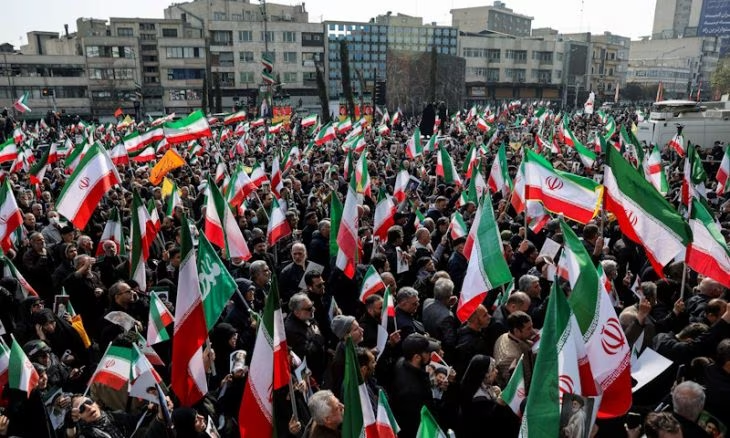
What happened adds to the lie you promoted for a whole year, which is that there is no Hezbollah near the border.

PALESTINE

Fri 13 Mar 2026 3:46 am - Jerusalem Time

Al-Aqsa in the Last Ten Days of Ramadan.. Empty Courtyards and Unprecedented Closure Decisions Since 1967

The last ten days of the blessed month of Ramadan this year have arrived at Al-Aqsa Mosque with a scene completely different from what the city of Jerusalem has known for decades, as the courtyards, which used to be bustling with tens of thousands of worshippers in seclusion, appeared empty and desolate. The occupation authorities closed the doors to worshippers, preventing them from reaching the mosque or even entering the Old City, in a measure considered the first of its kind since the occupation of East Jerusalem in 1967.

Under these strict restrictions, prayers inside the mosque were limited to only five people: the Imam, the muezzin, the prayer leader, the pulpit guard, and the mosque director, while the voices of the worshippers who used to fill the corridors and courtyards were absent. Field sources reported that a tone of sadness prevailed in the performance of the imams due to the absence of worshippers who were accustomed to answering the call to prayer in this sacred space.

One of the imams of Al-Aqsa Mosque, who has been leading prayers for over four decades, described the current situation as 'forced absence' of worshippers, noting that the mosque used to be crowded with visitors from Jerusalem, the Palestinian interior, and from outside the country as well. The imam expressed his deep sorrow at seeing the first of the two Qiblas empty at a time when the mosque was supposed to be filled with remembrance and seclusion around the clock.

Since the outbreak of the recent military tensions in the region on February 28, prayers in Al-Aqsa have been limited to internal loudspeakers only, depriving the residents of the Old City from hearing the call to prayer and the prayers. The Dome of the Rock prayer hall also remained completely closed, which increased the mosque's isolation and stripped it of its usual spiritual and social symbolism during Ramadan.

Jerusalemites express deep anguish over this deprivation, as imams are forced to pray in mosques near their homes to compensate for their forced absence from the mihrab of Al-Aqsa. These imams face urgent and painful questions from worshippers about when the mosque will reopen, questions that remain without clear answers amidst the ongoing 'state of emergency' imposed by the occupation.

For his part, Jerusalemite doctor Majd Al-Hadmi, who has volunteered as an imam and muezzin for 15 years, considered what is happening to be 'unreasonable deprivation' and a clear politicization of security measures. Al-Hadmi affirmed that the pretexts put forward by the occupation regarding the absence of shelters are illogical, given the robustness of the historical prayer halls, which are more fortified than modern shelters, indicating other objectives behind the emptying.

Al-Hadmi stressed that Al-Aqsa represents a unique social and spiritual space where Palestinians from different regions meet, which the occupation seeks to undermine by cutting off the lifeline to the city. He believes that the absence of Arab and Islamic identity from Jerusalem in these blessed days is a carefully planned matter to impose a new reality that ends the collective Palestinian presence in the mosque.

Historical data indicate that the closure of Al-Aqsa Mosque and the prevention of Friday prayers there has occurred only five times since 1967, the last of which was in recent days coinciding with the ongoing military attack. This recent recurrence reflects an acceleration in the use of comprehensive closure as a punitive and political tool against Jerusalemites and Islamic holy sites.

The Governorate of Jerusalem warned that these measures fall within a systematic plan to impose direct occupation control over the mosque's administration and marginalize the role of the Islamic Endowments Department. The Governorate clarified that the occupation is exploiting the current circumstances to change the existing legal and historical status quo that recognizes Islamic custodianship over the holy sites.

Omar Al-Rajoub, Director of the Media Department in the Governorate, affirmed that the closure aims to consolidate Israeli influence and prepare the ground for future Judaization schemes in Al-Haram Al-Sharif. He considered that preventing worshippers from accessing the courtyards of Al-Aqsa during the holiest times represents a blatant violation of internationally guaranteed religious rights and a challenge to the international community.

The recent Israeli restrictions included a complete ban on seclusion (I'tikaf), stopping the entry of necessities for worshippers and staff, in addition to activating armed military patrols inside the courtyards. The measures also affected 'Dar Al-Hadith Al-Sharif' by preventing scientific circles, in a clear attempt to dry up cultural and religious sources within Al-Aqsa Mosque.

In contrast to the restrictions on Muslims, local sources observed an increase in the times settlers stormed the mosque, and the issuance of hundreds of eviction orders against those stationed there, activists, and endowment employees. This duality in treatment reveals a premeditated intention to enable Jewish presence in the mosque at the expense of authentic Islamic rights, exploiting the declared state of war.

Jerusalemite activities believe that the occupation is sending political messages that complete control over Al-Aqsa has become possible, and that it has the ability to impose a new reality without deterrence. These messages are considered a dangerous signal to the local and international communities about the future of the holy city and its holy sites, which face an unprecedented existential threat under the guise of 'security'.

In conclusion, Al-Aqsa Mosque remains captive in these blessed nights to military measures that have turned its courtyards into a barracks, while Palestinians await an Eid whose joy may not be complete until they return to the embrace of their mosque. Questions remain about the extent of popular and diplomatic resilience to restore the status quo and protect Jerusalem's identity from ongoing distortion and Judaization.

Al-Aqsa is sad and there is no one in its courtyards; I never imagined that I would see the first of the two Qiblas empty of its inhabitants on the holiest nights of the year.

ARAB AND WORLD

Fri 13 Mar 2026 3:46 am - Jerusalem Time

Washington anticipates risks accompanying oil tankers in the Strait of Hormuz amid Iranian threats

The American administration announced that it has not yet begun implementing military escort operations for oil tankers crossing the Strait of Hormuz, despite escalating tensions in the region. This step comes amid warnings of the danger of the maritime passage, which has become a potential confrontation arena, as Washington fears its ships will be subjected to direct attacks by drones or cruise missiles launched from nearby Iranian coasts.

US President Donald Trump had earlier proposed using naval force to secure navigation and reopen the strait, with the aim of avoiding a global energy crisis resulting from rising oil prices. However, US military movements so far have been limited to carrying out limited strikes targeting ships accused of planting naval mines near vital passages in the region.

For his part, US Treasury Secretary Scott Bessent clarified that there is no specific timetable for the start of naval escort missions, noting that the US Navy seeks to build an international coalition for this purpose. Bessent affirmed that operations will begin as soon as full military readiness and the ability to confront direct threats surrounding commercial vessels are available.

Military experts believe that the biggest challenge lies in the complex geography of the region, where Iranian missile launch platforms are located very close to shipping lanes. The distance at some critical points is less than 4 miles, meaning that missiles and drones can reach their targets within a few minutes, making interception difficult.
The Strait of Hormuz is the world's most important energy artery, connecting the Arabian Gulf to the Gulf of Oman and the Arabian Sea, with about 20% of total global oil consumption passing through it. The de facto closure of the strait by the Iranian side about two weeks ago led to severe disruptions in global markets and a significant increase in shipping and insurance costs.

The past few days have witnessed a field escalation, as six oil tankers were attacked in Gulf waters, some of which were directly attributed to the Iranian Revolutionary Guard. These attacks come as part of the pressure strategy adopted by Tehran in response to ongoing US and Israeli military operations against targets associated with it in the region.

In a related context, the Iranian Revolutionary Guard affirmed that it would not allow any oil shipments to pass through the strait unless external attacks ceased, a position supported by the new Supreme Leader Mojtaba Khamenei. This Iranian insistence places the US administration before difficult choices between direct military escalation or accepting the continuation of the naval blockade.

Former military commanders at the Pentagon indicate that the narrowness of the waterway, which is no more than 21 miles wide at its narrowest points, makes ships easy targets for naval mines and guided missiles. They explained that the mere feeling of danger prompted many international shipping companies to avoid passing through the strait even before actual attacks occurred, which further complicated the crisis.

Proposed US plans to secure navigation include providing continuous air support and surveillance patrols of launch sites on the Iranian coast for proactive intervention when necessary. Despite White House attempts to reassure global markets that the situation is under control, the field reality indicates that the mission is fraught with risks that could lead to a wider conflict.

The mission is costly, complex, and not guaranteed to succeed, as drone and missile attacks can cause significant damage even to a single ship.

ARAB AND WORLD

Fri 13 Mar 2026 3:46 am - Jerusalem Time

6 French Soldiers Injured in Drone Attack Targeting Military Base South of Erbil

The French Army General Staff announced that six of its soldiers were injured in a drone attack targeting a military site in the Erbil region of Iraqi Kurdistan. Military sources clarified that the injured soldiers were carrying out joint training missions with Iraqi forces as part of counter-terrorism efforts, and they were urgently transferred to nearby medical facilities for necessary care.

According to field data provided by the Governor of Erbil, the aerial attack was carried out by two suicide drones, targeting a military base located in the 'Mahla Qahra' area. This base is approximately 40 kilometers southwest of the regional capital and is considered one of the sites where international forces operating in Iraq conduct advisory and training activities.

This field escalation comes shortly after a similar incident targeted an Italian military base located within a security complex that includes units of various foreign nationalities in Erbil. Although the previous attack did not result in casualties or human injuries, it raised widespread security concerns among the command of international forces present in the region.

In a swift reaction to the repeated targeting, Italian authorities announced their decision to temporarily withdraw all their military personnel from the targeted base to ensure their safety. These forces, including French and Italian units, have been present in Iraqi Kurdistan since 2014, with their missions focused on providing logistical and training support to local security forces within the international coalition to confront ISIS.

The region is experiencing a state of increasing security tension, as Iraqi Kurdistan has been subjected to a series of similar attacks attributed to armed factions active in the Iraqi arena. These developments coincide with broader regional unrest, placing foreign forces and military facilities in the region under constant threat from drone and missile attacks.

The injured soldiers were participating in counter-terrorism training with Iraqi partners and were immediately transferred to the nearest medical center for treatment.