ARAB AND WORLD

Sun 29 Sep 2024 9:22 am - Jerusalem Time

The Israeli army used 2,000-pound bombs in its attack on Nasrallah.

A video released by the Israeli military showed that the aircraft it said were used in the attack that killed Hezbollah leader Hassan Nasrallah on Friday evening were carrying 2,000-pound bombs, the American-made “shelter buster” bombs designed to pound caves in Afghanistan during the 20-year American war, according to munitions experts and a New York Times analysis.


The video showed eight aircraft carrying at least 15 2,000-pound bombs (for a total of 35,000 pounds, or 18 tons) including the American-made BLU-109 bomb with a JDAM kit, a precision guidance system attached to the bombs, according to Trevor Paul, a former U.S. Army explosive ordnance disposal technician, who spoke to the newspaper. The bombs, a type of munition known as a bunker-buster, can penetrate underground before exploding.


Wes Bryant, a former U.S. Air Force targeting specialist who also reviewed the video, agreed with the analysis. In text messages with The Times, he said the bombs were “exactly what I would expect” to be used in what Israel said was an attack on Mr. Nasrallah at Hezbollah’s underground headquarters.


Last May, the Biden administration announced that it had halted a shipment of 2,000-pound bombs to Israel over concerns about the safety of civilians in Gaza.


The video, posted Saturday on the IDF’s official Telegram channel with the caption “IDF fighter jets taking part in the elimination of Hassan Nasrallah and Hezbollah’s central headquarters in Lebanon,” shows at least eight planes in a row armed with 2,000-pound bombs. Some are too far away to clearly identify the exact model, but the closest planes are seen armed with BLU-109 bombs. This bomb model can also be identified when the video shows two planes taking off, one carrying six of the munitions. The video then shows one plane returning to the Israeli airbase at dusk without any bombs.


While the video does not show the planes dropping the bombs, Mr. Paul said videos showing explosions in Beirut’s densely populated southern suburbs, as well as the damage, were consistent with the 2,000-pound bombs carried by Israeli aircraft in the video. A New York Times analysis of verified videos, photos and satellite imagery showed that the attack destroyed at least four apartment buildings, each at least seven stories tall.


Two senior Israeli defense officials told The New York Times that more than 80 bombs were dropped over several minutes to kill Mr. Nasrallah, but they would not confirm what type of munitions were used. The Israeli military did not respond to questions from The New York Times about the bombs seen in the video or used in the attack on Mr. Nasrallah. American government officials referred questions about the munitions to the Israeli military.


Israel continued to bombard Beirut’s southern suburbs on Saturday. Visual evidence analyzed by The New York Times shows that at least 13 sites were hit on Friday and Saturday across at least three miles of the densely populated city. The full extent of the strikes is not yet clear.


Lebanon's health ministry said on Saturday that at least 33 people were killed and more than 195 injured in the strikes, and the death toll is expected to rise with many dead still buried under the rubble.


The assassination of Mr. Nasrallah was a stunning escalation of Israel’s campaign against Hezbollah in a conflict that has been going on for nearly a year. Hezbollah began firing into northern Israel on October 8 in solidarity with Hamas, which is also backed by Iran, and Israel responded repeatedly, dramatically stepping up its attacks over the past two weeks. That has raised fears of a full-scale regional war that could draw in bigger players like Iran.

PALESTINE

Sun 29 Sep 2024 8:48 am - Jerusalem Time

West Bank: An arrest campaign launched by Israeli occupation

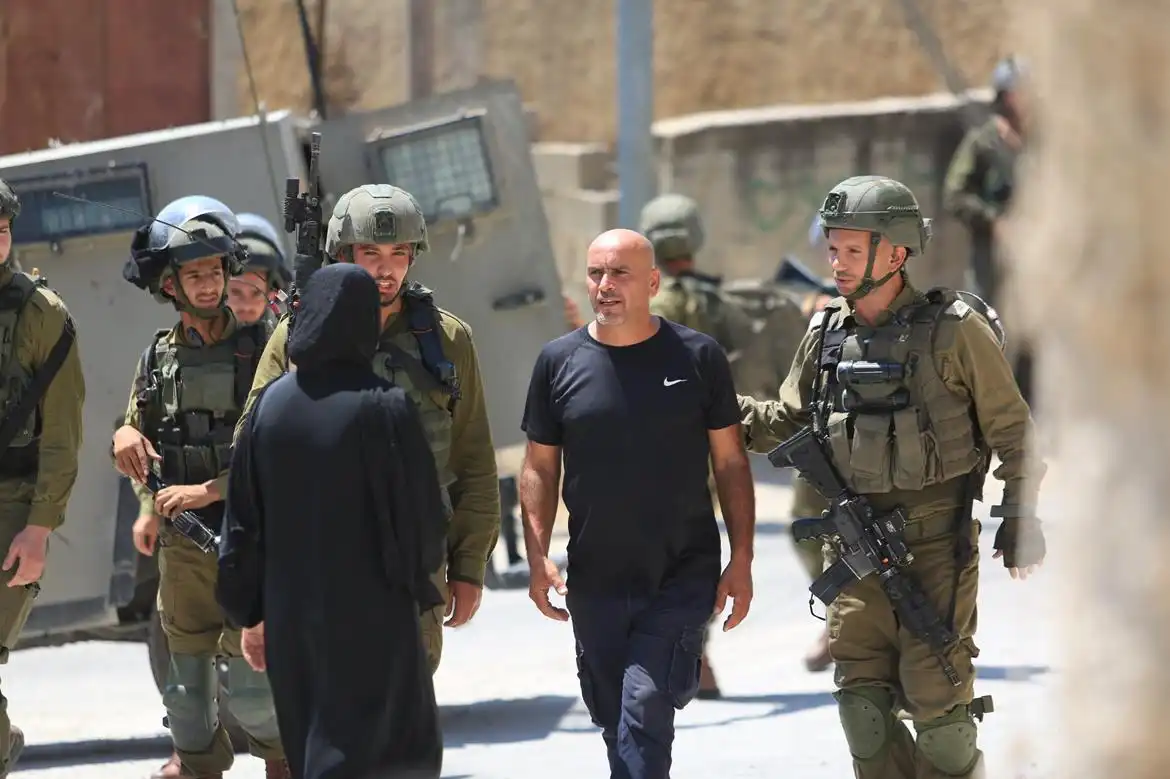
The Israeli occupation forces launched a wide-scale arrest campaign in the West Bank at dawn and this Sunday morning.


In Ramallah, the young man Khaled Ahmed Qad was arrested from his home in the town of Abu Qash, while the freed prisoner Yahya Ali Qadah was arrested from the village of Shaqba.


The two young men, Ramzi Hamed and Mohamed Abdel Hamid Hamed, were also arrested after their homes were raided and their contents were tampered with.


In Al-Amari camp, the occupation forces arrested: Asem Muhammad Al-Buraiji, Yousef Al-Ashqar, and Moamen Al-Tawkhi, after raiding their homes and tampering with their contents.


In Hebron, Osama Zaid al-Junaidi, Ahmed Khaled al-Junaidi, Ashraf al-Junaidi, and Amir Fanoun were arrested, while Khalil Musa al-Faroukh, Majed Muhammad Jaradat, and Yazid Ziad Jabarin were arrested from the town of Sa’ir, and Yahya Issa al-Amur from the town of Yatta in the south.


In Bethlehem, the occupation forces arrested Ibrahim Hussam Abdullah (21 years old) from the Al-Saff Street area in the city, and Khaled Saleh Musa (23 years old) from the town of Al-Khader in the south.


In Tubas, three young men were injured by the occupation forces’ bullets during the raid on the town of Aqaba, while the occupation forces arrested a man who had been shot several times while providing first aid to him. The medical teams transferred a man who had been injured in the thigh, while preventing access to a third injured man on the roof of a house.


The occupation forces stormed the town in the early morning hours, surrounded the house of the freed prisoner Qutaiba Al-Shawish, and detained his wife and mother, to pressure him to surrender himself, and they are still surrounding the house until now.


In Nablus, the occupation forces stormed the western region and the Rafidia neighborhood in the city of Nablus, raided several homes, and arrested the citizen Abeer Baara from Al-Marih Street, and the young man Izzat Al-Tamam.


In Jenin, the occupation forces arrested Mahmoud Nayef Mahmoud Al-Arada, Hamza Farouk Jamil Abu Obeid, and Munther Issa Aref Aridi, after raiding their homes and tampering with their contents.

PALESTINE

Sun 29 Sep 2024 8:46 am - Jerusalem Time

For the 359th day, "Israel" continues its war of extermination on the Gaza Strip

Three citizens were killed today, Sunday, in an Israeli airstrike in the northern and central Gaza Strip.


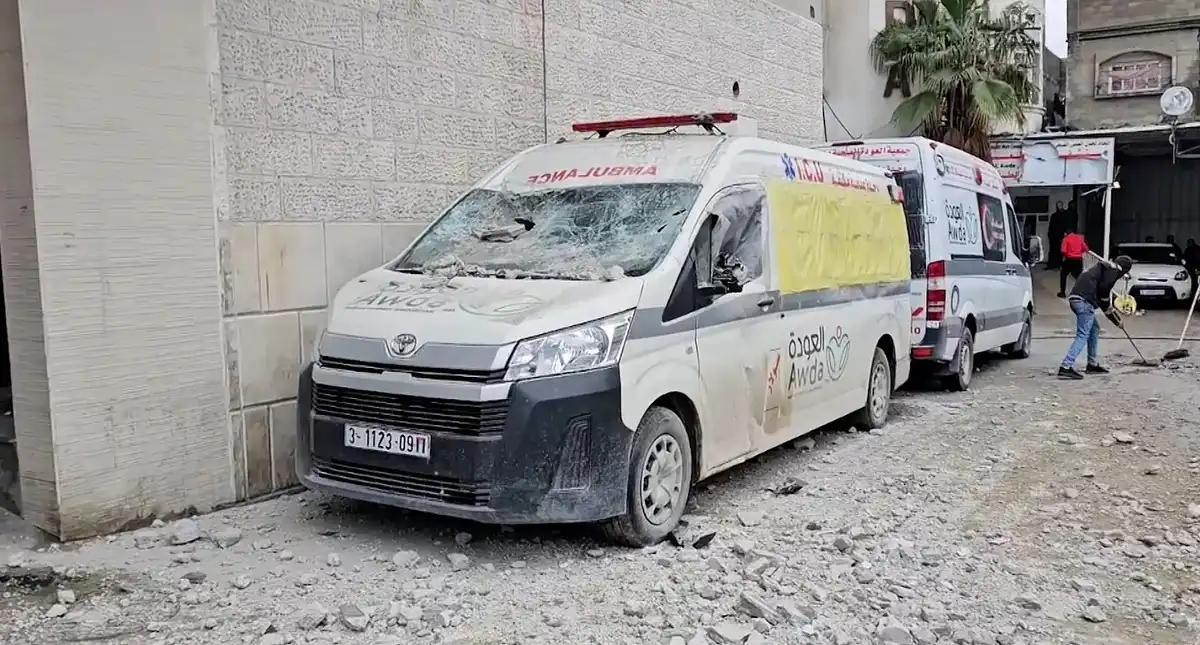
Medical sources reported that two citizens were killed in the bombing of the occupation aircraft around Kamal Adwan Hospital in Jabalia camp.


The same sources added that a young man was martyred after being targeted by an occupation drone in the middle of the Nuseirat camp.


Local sources reported that at least three citizens were killed and several others were injured in an Israeli bombardment that targeted a residential apartment near the Al-Shaabiya intersection in central Gaza City.


A citizen was also killed, at dawn on Sunday, after the occupation bombed a house in Jabalia camp.


Medical sources reported that a young man was killed and several others were injured after the Israeli occupation forces targeted the Abu Nasr family home in the Al-Alami area of Jabalia camp, north of the Gaza Strip.


Israeli gunboats also fired shells at citizens' homes in Al-Shati camp, west of Gaza City.


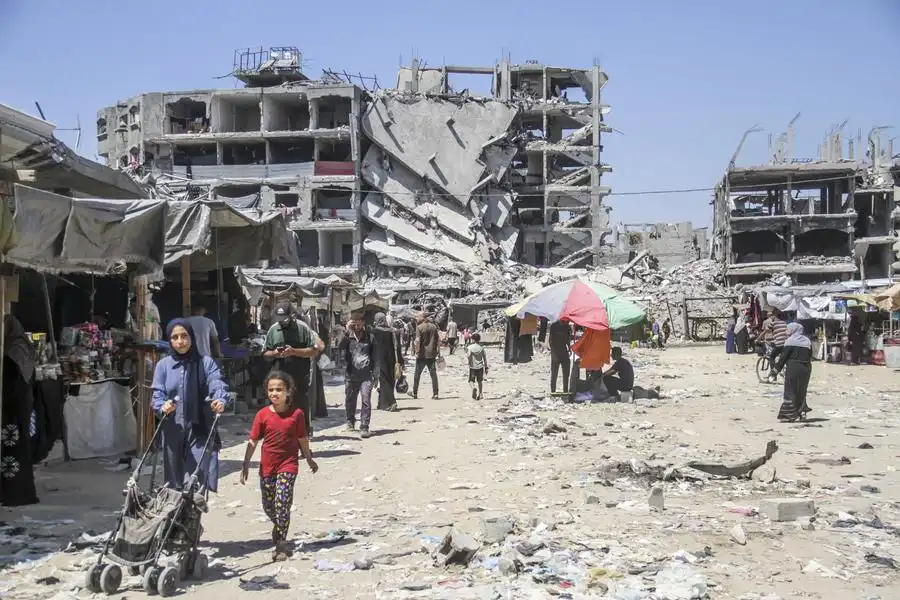
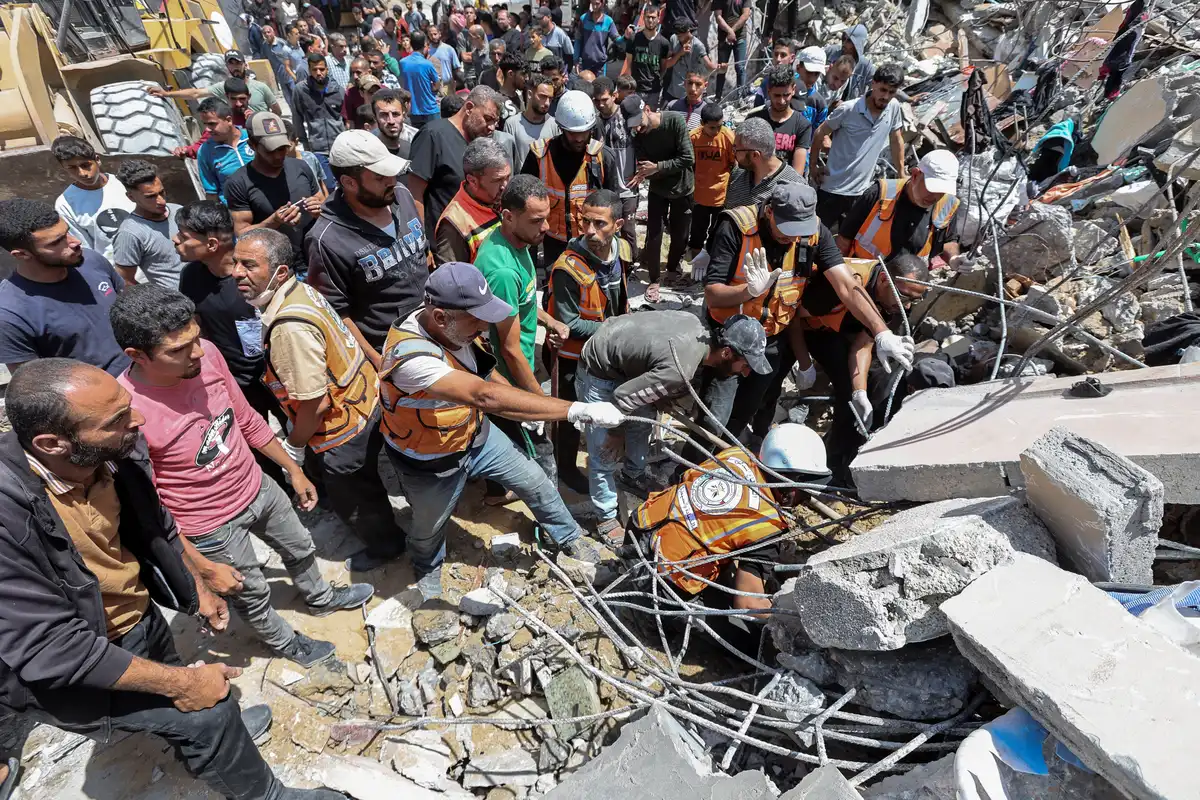
The number of killed in the Gaza Strip, since the beginning of the aggression on October 7 of last year, has risen to 41,586, the majority of whom are children and women, while the number of injuries has reached 96,210, in an incomplete toll, as thousands of victims are still under the rubble, and ambulance and rescue crews cannot reach them.

PALESTINE

Sun 29 Sep 2024 8:41 am - Jerusalem Time

American initiatives for calm... ineffective recipes to vent international objections

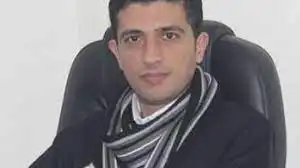
Dr. Abdul Majeed Suwailem: American initiatives to cease fire are a cover for the crimes of the occupation and to give Netanyahu more time

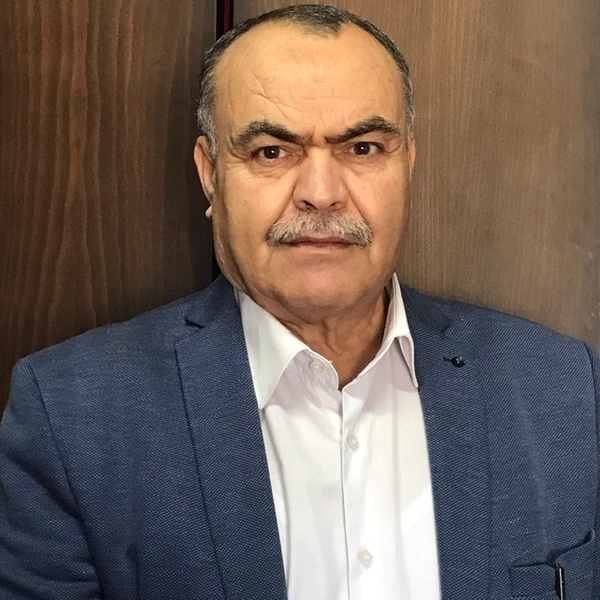
Akram Atallah: Israel may eventually have to accept what it previously rejected regarding stopping the war in Gaza

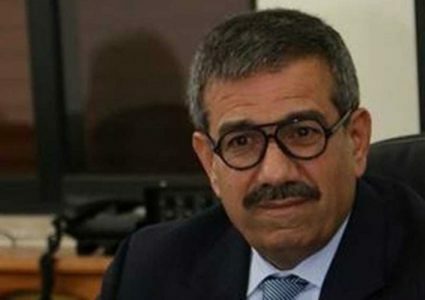
Sari Samour: The ongoing war is essentially American and Israel is merely a tool of the Western colonial project in the region

Hamada Faraana: The Biden administration is working to separate the war in Lebanon from Gaza, in line with the Israeli desire to separate the two fronts

Imad Moussa: The United States is no longer playing the role of mediator, but has become part of the ongoing aggression against Lebanon and Gaza

Talal Okal: The United States has been a full partner of Israel since day one, and their differences are tactical about how to manage the war


There are many concerns and doubts about the nature and objectives of the initiative that the United States intends to put forward to stop the fighting in Lebanon and resume the Gaza negotiations, as US Secretary of State Anthony Blinken warned of the danger of escalation in the Middle East, claiming that Washington and its allies are working tirelessly to avoid the outbreak of a comprehensive war between Israel and Hezbollah.


These concerns come in light of the long experience of American efforts to stop the criminal Israeli war on the Gaza Strip, which were characterized by a lack of seriousness to say the least, if not complete complicity, which is an accurate description of the situation. Otherwise, how can we explain the United States’ abandonment of what its President Joe Biden himself proposed in his initiative, which was accepted by Hamas, only because these proposals were met with Israeli rejection? The matter does not stop there, but American officials went so far as to hold Hamas responsible for the failure of the initiative?


In separate interviews with Al-Arabiya, writers and political analysts said that the United States is seeking to achieve a delicate balance between maintaining its strategic support for Israel and avoiding the current war from expanding into a large regional war. Meanwhile, a question is being raised about the seriousness of international initiatives to stop the fighting, amid widespread skepticism about American intentions.


According to the book and analysts, Washington appears at this stage as a major supporter of Israel, providing it with military equipment, political and diplomatic cover in international institutions, and yet it continues to talk about ceasefire efforts, which has led some to point fingers at the United States for exploiting the time factor to give Israel more opportunities to achieve its strategic goals in the region.


Israel's defeat means America's defeat


The writer and political analyst Dr. Abdul Majeed Suwailem believes that the initiatives announced by the United States to end the war in Gaza and Lebanon are due to the United States’ realization that any ceasefire agreement in Gaza would be considered a defeat for Israel, and thus a defeat for itself.


Suwailem pointed out that Israeli Prime Minister Benjamin Netanyahu succeeded during his recent visit to Washington in convincing the US administration and Congress not to rush into a ceasefire, assuring them that this would lead to their defeat as well, and that he needed additional time to avoid his military defeat in Gaza.


According to Suwailem, Netanyahu believes that his success in Gaza can only be achieved by destroying Hezbollah’s power in Lebanon, as he believes that victory over the axis of resistance requires eliminating Hezbollah in order to achieve any achievement within the framework of the “New Middle East” project.


He said: “From this standpoint, the American position adopts ‘backstage support’ for the war, considering this as complicity from Washington in supporting Netanyahu and his crimes in Lebanon and Gaza, as the United States wants to give him another chance so that he does not appear defeated, and so that he can later enter into any future agreement from a position of strength.


Suwailem believes that the American ceasefire initiatives are nothing but a cover for the crimes of the Israeli occupation, and that they only aim to give Netanyahu more time.


He pointed out that a ceasefire in Lebanon will not be achieved except through a tight coordination between the Gaza and Lebanese fronts, which is what Hezbollah and the axis of resistance insist on.


Just political maneuvers

Suwailem pointed out that the US administration and France, which proposed an initiative to cease fire in Lebanon, are well aware that reaching an agreement to stop the war on Lebanon is out of reach, if not impossible, and that these initiatives are nothing but political maneuvers.


Suwailem stressed that the real fear of the United States is losing control over the course of the war, which could lead to the outbreak of a wider regional war that Washington cannot control.


According to Suwailem, this fear increases as the US presidential elections approach, which explains the US administration's reluctance to allow Israel to expand the scope of the war, stressing that the United States will not hesitate to support Israel if a regional war breaks out.


Suwailem stressed that the dispute between the United States and Israel, if it exists, does not go beyond tactical differences with some Israeli leaders such as Netanyahu, but it does not touch the essence of the strategic relationship between Tel Aviv and Washington. The United States is committed to ensuring that Israel remains strong and dominant, whether Netanyahu is in power or not, and works to protect Israel from any existential threat, especially with the American fear of Israel’s disappearance from the map of the Middle East.


Regarding the current battle in Lebanon, Suwailem said there are two possibilities: either Israel may try to accelerate the process of destroying infrastructure and homes in Lebanon, but Hezbollah’s response may stop it from this escalation. The second possibility is that Israel may try to engage in a limited ground maneuver, not a large-scale invasion, as the Israeli army realizes that a war on Lebanon will not achieve its strategic goals, which it has proposed to return the residents of the northern settlements.


Hezbollah suffered a very big blow


On another level, Suwailem considered that Hezbollah was subjected to the biggest blow in the history of modern warfare after its communications network was targeted, its devices were blown up, and a number of its leaders were assassinated, but it succeeded in containing the shock and recovering from it, pointing out that if any other country had been subjected to such an attack, it would have collapsed, but Hezbollah proved its strength and ability to withstand.


"Israel found itself in a predicament as a result of its decision to wage war in Lebanon," Suwailem said, likening what is happening now to the policy of the Nazis, who resorted to adventure when they failed.


Suwailem pointed out that Hezbollah succeeded in dragging Israel into this predicament, and that it is not clear how Netanyahu or even the United States will be able to get it out of it.


Suwailem believes that the situation in the Middle East will not find its way to a solution except through a new American administration that stops the war, as the continuation of the war will lead to strategic losses for the United States. Suwailem expected that things will escalate in the Middle East, and the deterioration may lead to the entry of China and Russia as major players in the region on the economic, military, and political levels.


The United States is a direct partner in the war.


In turn, writer and political analyst Akram Atallah said that the war waged by Israel on the Gaza Strip cannot be separated from the American supportive role, as the United States provided Israel with money and weapons, including bombs, missiles and aircraft, in addition to using the veto in the Security Council in favor of Israel, which confirms that the United States is a direct partner in the war on Gaza.


Atallah described this participation as not just political or diplomatic support, but actual military intervention that contributes to the continuation of the genocide against the Palestinian people.


Regarding the initiatives, Atallah pointed out that what is being talked about regarding American and French initiatives to cease fire in Lebanon is nothing more than an attempt to calm things down, but he doubts the seriousness of these attempts.


According to Atallah, the next stage will be more complicated, as Israel refuses to cease fire in the Gaza Strip as demanded by Hezbollah.


Atallah explained that the United States is seeking to create the impression that it does not want escalation in Lebanon, in order to preserve its interests, which may be harmed if the war there extends.


Potential implications for US interests


Atallah pointed out that Washington gives Israel complete freedom of action in the Gaza Strip, including financing and arming, but the situation in Lebanon is very different due to the potential repercussions on American interests.


On the other hand, Atallah said that Israel may eventually be forced to accept what it previously rejected regarding stopping the war in Gaza, and he sees it as the most prominent scenario for the next stage.


Atallah considered that Hezbollah's current battle is nothing but a solidarity battle aimed at supporting Gaza, citing what happened during the humanitarian truce last November, when Hezbollah stopped firing rockets and shells for eight days automatically, as Hezbollah's responses are nothing but a reflection of the events in Gaza, and are not the main motive for the war.


Atallah believes that the solution to end this war is known as stopping the war on the Gaza Strip, but it is not expected from Israel, which will continue to cling to strategic locations such as the Netzarim and Philadelphi axes, which means closing the door to any possibility of concluding a deal between Hamas and Israel.


Atallah concluded by saying, "This scenario will also apply to Lebanon, as Hezbollah, after paying such a high price, cannot accept separating Gaza from Lebanon or withdrawing its support for the Strip.


America is able to stop the war if it wants to


For his part, writer and political analyst Sari Samour said that the current war is essentially American, as if the United States were truly interested in stopping the war on the Gaza Strip, Lebanon, or any region where Israel is waging war, it would have been able to do so easily.


Samour pointed out that the claim that "Washington is unable to curb Israel" is inaccurate, as the United States is the one that encourages Israel, directs it, and controls its actions, considering that Israel is nothing but a tool of the Western colonial project in the region.


Regarding the ongoing initiatives and negotiations, Samour said: They must be dealt with with caution, noting that the possibility of the American initiative to stop the war succeeding is very slim.


Samour relies on previous experience, as Gaza witnessed a war that lasted a whole year and was full of futile negotiations, which he considered an Israeli means of deception and committing more crimes, which was proven by practical experience.


Sammour pointed out that what was tried in Gaza is being tried to be applied in Lebanon through proposals that seem like a waste of time, and not a real solution to the crisis or a way to stop the war.


Samour explained that the administration of US President Joe Biden is about to leave the White House, and if a new Democratic administration comes, it may not be the same as the current staff and may move towards a solution, but there is a possibility of Donald Trump returning to power, whose policy is not known exactly what it will be yet.


Samour pointed out that the Biden administration is seeking to try to calm things down relatively before its departure, adding, “Some rational voices in American and Western institutions, despite their support for Israel, sometimes intervene to save Israel from itself, due to its arrogant behavior and excessive use of force, which could lead to disastrous repercussions for its existence, especially in light of the Arab and Islamic situation.”


Three possible scenarios


Regarding the possible scenarios, Sammour made several predictions, the first of which is that the current initiatives will die as previous initiatives did, and the circle of war will expand to include more operations and mutual bombing, which is the most likely scenario.


He added: As for the second scenario, it is Iran's entry into the confrontation line, with the possibility of Israel expanding the scope of its military operations to Syria and occupying some of its lands, exploiting the weakness of the Syrian regime in order to achieve its colonial goals.


He continued: The third scenario, although unlikely, is the possibility of reaching a comprehensive deal through which Israel is curbed, especially after it realized that destroying homes and killing civilians and children will not break the will of the Palestinian or Lebanese people or the Arab and Islamic peoples.


In this scenario, Samour pointed out that Israel might accept what is available and reconsider its plans, especially in light of its attempt to return its settlers in the north and south, and in light of the ongoing threat to Israeli security in the deep areas, but if this scenario does not happen, we will be facing an ongoing war.


Deep political alliance between America and Israel


In turn, writer and political analyst Hamada Faraana considered that relations between the United States and Israel extend to a deep political alliance, but on the military side, the Israeli army is considered an integral part of the United States army, as if it were a battalion of the American army.


Faraana explained that the American military capabilities in the region are being used to support the Israeli army, which makes the alliance between them strategic. Also, all the wars waged by the Israeli occupation forces enjoy full support and agreement from the American army. From here, it is understood that the war currently being waged by the Israeli forces is nothing but a war supported in advance militarily, logistically, technically and intelligence-wise by the United States.


On the political level, Faraana pointed out that there are differences in positions between the Israeli and American governments, especially with regard to the war on the Gaza Strip and Lebanon.


Netanyahu and the shock of October 7


Faraana believes that the United States is seeking to avoid expanding the scope of the war in the region, while Israeli Prime Minister Benjamin Netanyahu rejects all American and international initiatives to cease fire in Gaza.


Pharaohs attributed Netanyahu's rejection of these initiatives to his shock at the October 7 attack and his failure to achieve his goals despite occupying the entire Gaza Strip, as he failed to end the Palestinian resistance and failed to discover the locations where the Israeli detainees were hidden and release them without an exchange. Netanyahu also fears that stopping the war will lead to his trial and political end, as happened with Golda Meir in 1973 and Menachem Begin in 1982. This is why he seeks to continue the battles so that his failure does not turn into a complete defeat.


In the context of his choice to continue escalating the conflict, Faraana indicated that Netanyahu transferred the war to Lebanon, with the aim of weakening Hezbollah as one of the most prominent symbols of resistance in the Arab region.


He said: Although the United States does not see any interest in expanding the war to Lebanon, it considers targeting Hezbollah's communications network and assassinating a number of its leaders sufficient, but Netanyahu seeks to achieve greater goals, which are the complete elimination of Hezbollah.


Initiative to separate the Gaza and Lebanon fronts


In the context of political initiatives, Faraana explained that the Biden administration presented a new initiative focusing on the war in Lebanon, completely separate from any initiatives related to the Gaza Strip. This initiative comes in line with the Israeli desire to separate the Gaza front from the Lebanon front, which reflects a joint Israeli-American strategy aimed at preventing the unification of the fighting fronts in the region.


Faraana put forward several possible scenarios for the developments of the next stage. The first scenario expects the clashes to continue without any significant achievement by either party, and the second scenario assumes the escalation of attacks leading to a ground invasion either by Hezbollah in northern Palestine or by the Israeli army in southern Lebanon.


Faraana added: As for the third scenario, it is the possibility of Arab parties from the axis of resistance intervening to support Hezbollah, which may require the United States to intervene to support Israel indirectly.


He continued: As for the fourth scenario, which is the least likely, it is the possibility of reaching an initiative to stop the war. Despite this, the Pharaohs tend to believe that the situation will witness a greater escalation, especially by the Arab parties supporting Hezbollah.


Giving Netanyahu the opportunity to destroy and displace Lebanese villages


Writer and political analyst Imad Moussa believes that the United States no longer plays the role of an honest mediator in any initiatives regarding the Israeli war on Lebanon or the Gaza Strip, but has rather become part of the ongoing aggression on Lebanon and Gaza.


Musa based his opinion on previous experiences, as he believes that the United States is exploiting the time factor to give the Israeli government, headed by Benjamin Netanyahu, the opportunity to destroy the Lebanese Shiite villages and displace their residents.


Musa said that the aim of these steps is to create a humanitarian crisis represented by the problem of housing thousands of displaced persons, which will ultimately lead to fueling internal conflicts and the population’s rejection of the presence of forces they consider to represent Iran.


Moussa considered that this crisis would provide an opportunity for some forces supported by the West, America and Israel to ignite a civil war in Lebanon, under the pretext of rejecting Iranian influence in the country.


Musa noted that the Palestinian camps will become a target for destruction as part of the plan to eliminate the Palestinians' right of return.


American strategy aims to establish facts on the ground


Regarding the repeated American initiatives to cease fire, whether in Gaza or Lebanon, Moussa said that these initiatives are part of a fixed American strategy aimed at establishing facts on the ground imposed by Israel through destruction and genocide.


Musa believes that the Israeli army is seeking to achieve comprehensive subjugation through the use of excessive force, and that this war will not stop in the near future. Rather, Musa believes that Netanyahu aspires to drag NATO into a broader war targeting Iran after the confrontation with Hezbollah is completed.


Musa pointed out that the genocide operations in the Gaza Strip are continuing without receiving much media or political resonance on the Arab and international levels, while the Israeli army continues to destroy Shiite villages in Lebanon, in an attempt to remove these villages from the circle of strategic threat posed by Hezbollah to Israel.


Washington continues to provide political and military support to Israel


As for the writer and political analyst Talal Okal, he believes that the United States has been a full partner with Israel since the first day of the war, both in terms of goals and methods used.


Awkal explained that Washington continues to provide political and military support to Israel, including supplying it with weapons and mobilizing its forces in the region to protect it.


However, Awkal pointed out that there are tactical differences between Israel and America on how to manage the war and its continuity, especially after a year of war without achieving the basic goals that Israel was seeking.


Awkal considered that the diplomatic interventions led by the US administration aim primarily to limit the spread of the circle of fire in the region, in order to maintain stability of the situation, not to mix up the cards, and to prevent any escalation that might threaten the interests of the United States or Israel.


Awkal stressed that these interventions do not necessarily aim to stop the war, but rather to contain it and prevent it from getting out of control.


The region is not approaching any cessation of war.


Awkal believes that the region is not approaching any cessation of war, pointing out that the first week of the aggression on Lebanon aims to isolate the Lebanon file from the Gaza file, and also seeks to separate Hezbollah from the Lebanese popular environment that sympathizes with it, but Hezbollah succeeded in convincing the Lebanese people that it did everything in its power to spare the country the scourge of war, and that it is fighting for Lebanon’s sovereignty and to protect the rights of its people.


In this context, Awkal referred to Washington and Paris’ attempts to incite the Lebanese opposition and government in order to pressure Hezbollah, considering that these efforts come within the framework of American motives related to the presidential elections, as the United States seeks to gain the support of voters, whether they are supporters of Israel or opponents of it, through these policies.


Despite these efforts, Awkal does not believe there is a real possibility of stopping the war before the US elections, noting that if the Biden administration wanted to stop the war, it had the ability to achieve that.


Awkal believes that the war is heading towards further expansion, especially since Israeli Prime Minister Benjamin Netanyahu is counting on continued American support in all its forms. Awkal stresses that he is not one of those who surrender to the idea of defeat, noting that how the situation will eventually stabilize remains unclear so far.

ARAB AND WORLD

Sun 29 Sep 2024 8:29 am - Jerusalem Time

The assassination of Hassan Nasrallah

Adnan Al-Sabah: The resistance axis has two options: either turn Nasrallah’s assassination into a tragedy or into a victory

Hani Abu Al-Sabaa: Targeting Nasrallah indicates Israeli insistence on changing the political reality in Lebanon

Firas Yaghi: Israel seeks to undermine Hezbollah from within by targeting its leaders, destroying its weapons depots, and striking its popular base

Dr. Saad Nimr: Israel sought to demonstrate its deterrent power and involve America in a regional war to eliminate the Iranian nuclear program

Fayez Abbas: The question now is how Israel was able in a short period of time to annihilate the military and political leadership of Hezbollah?


Hezbollah had barely absorbed the Israeli strikes that targeted many of its military leaders, such as: Wissam Hassan Tawil, Sami Taleb Abdullah, Fouad Shukr, Ibrahim Aqil, Muhammad Surur and others, when the assassination of its Secretary-General, Sayyed Hassan Nasrallah, occurred on Friday afternoon in a planned bombing operation with F-35 aircraft and the latest American missiles designed to penetrate fortifications, which targeted Hezbollah’s headquarters, during a meeting of its leadership staff in the southern suburb of the capital, Beirut.


Despite Hezbollah's extreme secrecy after the unprecedentedly severe attack took place after six o'clock in the afternoon on Friday, the occupation army confirmed yesterday morning, Saturday, that it had succeeded in assassinating Nasrallah, while Hezbollah mourned its Secretary-General, the martyred leader Hassan Nasrallah, in an official statement in the afternoon without revealing the identity of the martyrs who were also targeted in the assassinations.


In separate interviews with “I”, writers, political analysts and specialists believe that Israel seeks, through this successive attack on Lebanon, especially the southern suburbs of Beirut, and the assassination of Nasrallah, to deal a strong moral blow to Hezbollah, its supporters and its popular base, and to exploit the first anniversary of the events of October 7 as an opportunity to confirm its control in the region and break the symbols of the resistance.


Writers, analysts and specialists explained that these attacks come as part of an Israeli strategy aimed at changing the equation in the region and striking the resistance movements, especially in Lebanon, Syria and Palestine. Israel is also interested in dragging the United States into a war that could expand into a regional war.


The sensitivity and danger of the northern front


Writer and political analyst Adnan Al-Sabah said: Expectations indicated that the Israeli occupation would escalate in Lebanon, and whoever thought otherwise had his calculations wrong.


Al-Sabah pointed out that Israel is fully aware of the danger of the northern front, and that its focus on confronting Gaza only is not useful, because the continued strength of Hezbollah poses an increasing threat to Israel from the north.


He added: Israel targeted the southern suburb of Beirut intensively and continuously because it is a stronghold of Hezbollah, in an attempt to strike the party's leadership and its popular base.


Al-Sabah pointed out that the occupation cannot apply the same methods it used in Gaza to Lebanon, because Lebanon is a sovereign state and has relations with influential countries, which makes the escalation there completely different, and therefore it is not possible to reach the heart of Beirut except through strikes of this type.


Al-Sabah explained that the Israeli escalation in Lebanon came with the aim of restoring the Israeli deterrent force that was affected, as Israel seeks to achieve accomplishments before the first anniversary of October, as it wants to turn that anniversary into a victory for it and suffering for the axis of resistance.


Al-Sabah considered that Hassan Nasrallah, the Secretary-General of Hezbollah, has become a global symbol of resistance, and the world is awaiting his words with interest, and for this reason Israel sought to target him not only in person, but also in his symbolism and ideas.


In this context, Al-Sabah believes that Nasrallah's martyrdom is a great loss, as he was viewed as one of the wise men of the nation and the resistance, and it was necessary to analyze his speeches in depth.


Hezbollah will stand firm and grow stronger after Nasrallah


He added: "Despite Nasrallah's assassination, Hezbollah will continue to stand firm and grow stronger, as ideological resistance movements are not greatly affected by the loss of their leaders, and adherence to the organization's approach may even appear stronger."


Al-Sabah expected a greater escalation by Israel against Lebanon and Hezbollah in the coming period after the assassination of Nasrallah, stressing that the axis of resistance has two options: either to turn Nasrallah’s martyrdom into a tragedy, or to turn it into a victory and greater escalation with the occupation.


Al-Sabah addressed the speech of Israeli Prime Minister Benjamin Netanyahu before the United Nations General Assembly, considering it a declaration of war on Lebanon from the heart of the United Nations, including what was included in the speech.


Al-Sabah pointed out that Iran, despite its close relationship with Hezbollah, may not intervene directly in this war, despite its support and reserve for the resistance, basing his belief on previous statements by the martyr Hassan Nasrallah, who indicated that he did not want Iran to intervene, because this intervention might require American intervention, which would complicate the situation, and Iran has been facing an economic blockade for many years, and has major economic problems that affect its capabilities.


Al-Sabah expected that Israel would move towards carrying out a ground attack on southern Lebanon, but it might not reach Beirut, so the strikes were on the southern suburb.


Al-Sabah pointed out that Israel seeks, through the ground attack on southern Lebanon, to remove Hezbollah from the northern borders of occupied Palestine and provide security for the settlements established in the north.


Harming Hezbollah's popular base


In turn, the writer and political analyst specializing in Israeli affairs, Hani Abu Al-Sabaa, said: The Israeli air raids on the southern suburb, in which bunker-busting missiles were used and which led to the martyrdom and injury of hundreds, aim to send a bloody message to Hezbollah’s popular base, as Israel believes that this base, which felt safe in the suburb, helped provide a suitable environment for the work of the party’s cadres.


Abu Al-Sabaa believes that these violent strikes aim to dismantle this popular incubator and make it feel that its support for Hezbollah carries dire consequences.


Abu Al-Sabaa pointed out that Israel is trying, through its media, to convey the idea that the world will be better after eliminating Hezbollah.


Abu Al-Sabaa expressed his belief that Hezbollah's delay in announcing the fate of its Secretary-General Hassan Nasrallah may be linked to internal security arrangements, as the party must quickly fill this void and send a clear message confirming the continuation of the resistance line.


He believes that targeting Nasrallah indicates an Israeli insistence on changing the political reality in Lebanon, in line with Israel's goals of creating an environment capable of coexisting with it.


Abu Al-Sabaa referred to the statements of Israeli Prime Minister Benjamin Netanyahu and his government ministers, who repeatedly stressed that Israel will continue targeting Iran's arms in the region until it cuts all ties with Tehran.


Disabling control towers at Beirut airport


Abu Al-Sabaa pointed to the recent step taken by Israel to disable the control towers at Beirut International Airport to prevent Iranian flights, stressing that this step comes within the framework of its vision to change the situation in Lebanon, a vision that Israel says it has obtained implicit approval from the US administration, despite the latter’s opposition to any ground invasion.


Despite Washington's failure to de-escalate, Abu al-Sabaa said the UN Secretary-General called on the international community to pressure Israel through channels other than the United States.


On the Hezbollah side, Abu Al-Sabaa predicted that after targeting the southern suburb, Hezbollah would wage an unrestricted war, which would herald a long phase of war of attrition.


Regarding Iran, he pointed out that Tehran is focusing on its current interest, which is to remove sanctions and return to the political track regarding its nuclear program.


Abu Al-Sabaa pointed out that the new Iranian president sent calming messages when he stated that possessing nuclear weapons is not part of Iran's military doctrine, stressing the peaceful nature of its nuclear program.


Iran will not enter into a direct confrontation with Israel


Accordingly, Abu Al-Sabaa believes that Iran will not enter into a direct confrontation with Israel, and will remain an indirect supporter of the resistance fronts, realizing that its direct intervention will drag it into a confrontation with the United States and NATO.


Regarding military escalation on the ground, Abu Al-Sabaa indicated that Israel may be forced to resort to ground intervention, despite the high cost that this option may impose, especially in light of the declared goal of pushing Hezbollah back beyond the Litani River.


However, according to Abu Al-Sabaa, Israel is not prepared to pay this price now, and therefore prefers to rely on its air superiority to establish or restore the image of deterrence, an image that has been severely damaged since the events of October 7.


Preventing Hezbollah from reorganizing its ranks


In turn, writer and political analyst Firas Yaghi said that Israel's continued bombing and targeting of the southern suburbs of Beirut, in particular, and other areas of Lebanon, aims to prevent Hezbollah from reorganizing its ranks.


Yaghi pointed out that Hezbollah, despite these attacks on the suburb and the assassination of its Secretary-General, has several sectors, each of which operates independently, which explains the continued firing of rockets towards Israel.


Yaghi explained that Israel, according to its vision, seeks to achieve three main steps: the first is to undermine Hezbollah from within by targeting its leaders, and the second focuses on destroying the weapons and missile stores that Israel believes exist, claiming that it has destroyed 50% of Hezbollah’s capabilities. However, Yaghi doubts the veracity of this claim, pointing out that if the number is accurate, the party still possesses about 75,000 missiles, according to what the occupation estimates.


The third step, according to Yaghi, is to strike Hezbollah’s popular base, and fourth, to target specific locations in the southern suburb based on intelligence information.


Divide the suburb into squares and collect accurate data.


Yaghi pointed out that Israel targeted the southern suburb of Beirut after dividing it into small squares not exceeding 400 square meters, as part of a plan that took 15 years, during which accurate data was collected on everyone who lives in or visits these areas. In this operation, Israel relied on modern technology (tracking cameras, voice identification features, drones, and internet hacking), in addition to the human element (local and foreign spies). The social needs of the residents and their digital fingerprints were determined, which allows Israel the ability to monitor and accurately identify people.


According to Yaghi, every residential block in the southern suburb is under the surveillance of a special group of Mossad, Shin Bet and the Israeli army (Unit 8200) tasked with monitoring and carrying out assassinations. In addition, Israel has penetrated Lebanese ports and airports and daily records of passenger movement, as well as landline and cellular communications networks, making all of Lebanon exposed to it.


Regarding Israel’s assassination of Hezbollah Secretary-General Hassan Nasrallah, Yaghi says: Israel aimed to create a “shock” within Hezbollah after a series of assassinations targeting its leaders and the bombing of its communications devices, with the aim of weakening the party’s morale and convincing its popular base that it had been infiltrated. However, Hezbollah, contrary to what Israel wanted, maintained its cohesion and continued its qualitative strikes and support for the Gaza front.


As for future scenarios, Yaghi believes that things may head towards a comprehensive escalation following the assassination of Nasrallah, and the escalation may reach a regional war targeting Iran, which is what Israeli Prime Minister Benjamin Netanyahu seeks.


Although Hezbollah was trying to avoid sliding into a comprehensive war, Israel had made a prior decision to go to war to ensure its security in the north, indicating that Hezbollah was wrong about its precautions to prevent a regional war because Israel wanted it.


Iran's entry into the battle alongside Hezbollah is unlikely


Yaghi considered that Iran entering the battle alongside Hezbollah is currently unlikely, but Israel may try to provoke Iran and lure it into war even if it strikes deep inside Lebanese territory, and it sees this as an opportunity to strike its nuclear and oil facilities and drag the United States into this battle.


Yaghi pointed out that Israel considers this battle important for it in order to change all the geopolitical features in the region, and it changed the name of the battle from "Arrows of the North" to "Regime Change", which means that it wants to put an end to the Iranian role in the region by striking all the resistance movements, specifically the resistance movements in Lebanon, Palestine and Syria, as Israel is trying to impose new conditions on the region.


Regarding the possible Israeli ground attack on Lebanon, Yaghi said: Israel currently tends to exaggerate more than actually implement it, and Hezbollah is still strongly present in the areas of southern Lebanon and its capabilities are present, as it has launched short-range artillery shells from areas close to the border, and it has not only fired missiles.


Yaghi cited Israel's experience in Gaza, where it bombed the Strip for three weeks before gradually beginning a ground invasion, and he expected that it would try to repeat this in Lebanon, but he doubts Israel's ability to succeed in this scenario in the first stage due to the difference in field conditions in Lebanon from Gaza.


Hizbullah lured into a response that would lead to a comprehensive war


Dr. Saad Nimr, Professor of Political Science at Birzeit University, believes that the continued Israeli strikes on the southern suburbs of Beirut come within the framework of a systematic escalation by Israel, with the aim of pushing Hezbollah to respond more strongly, leading to a comprehensive confrontation and perhaps a regional war.


Nimr said that Israel seeks, through this increasing escalation, to drag the United States into direct involvement in the conflict, which would allow Israel to achieve its primary goal in the region, which is to eliminate the Iranian nuclear program or at least destroy it to a large extent.


Nimr explained that Israel is well aware that it cannot fight a regional war alone, and seeks to ensure direct American participation in the event that such a war breaks out, especially if the threat reaches a level that poses an existential threat to Israel. Therefore, the current Israeli escalation can be interpreted as an attempt to prepare the ground for greater American participation, and not to leave Israel alone in a potential regional confrontation.


accurate intelligence


Regarding the assassination of Hezbollah Secretary-General Hassan Nasrallah, Nimr believes that Israel likely had accurate intelligence information that enabled it to carry out this operation quickly at the beginning of the recent escalation.


Nimr pointed out that Israel had previously used this approach with prominent Palestinian figures, such as Ismail Haniyeh and other leaders, as it had resorted to organized assassinations for decades as part of its policy to weaken the resistance movements, but it had not succeeded in weakening the organizations or ideologies associated with them.


Nimr stressed that the assassination of Nasrallah, for Israel, is not just targeting a leading figure, but rather an attempt to show that its deterrent power still exists and that it is capable of controlling the region. Through this operation, Israel seeks to send a clear message that it still has control over the region and that it is capable of carrying out effective assassinations and targeting major leaders when it deems it necessary, even though it has not yet achieved any tangible victory on the ground, whether in Gaza or Lebanon.


As for the expected scenario after Nasrallah’s assassination, Nimr believes that Hezbollah will significantly escalate its attacks, and may begin targeting Israeli cities, including Tel Aviv and vital sites inside Israel.


Nasrallah's assassination is a turning point in the war


Nimr stressed that the assassination of Nasrallah could be a turning point in the war, as there are no longer any red lines in the confrontation, which portends an unprecedented escalation.


He pointed out that Israel is not willing to enter into a ground war with Hezbollah, because it knows very well that this would be very costly for it, and despite the assassination of Nasrallah, Hezbollah remains a cohesive military force capable of launching harsh attacks, which makes Israel avoid the ground option.


Instead, according to Nimr, Israel is seeking a political solution or an agreement that may include a truce in Gaza as well, to achieve gains without entering into ground confrontations that could weaken its position.


In the Israeli domestic context, Nimr said: Prime Minister Benjamin Netanyahu has benefited greatly from this escalation on the political level, as opinion polls have confirmed that his popularity has increased after his decision to escalate against Lebanon, and this puts him in a stronger position before Israeli society, especially the Israeli opposition, as he can end the war without major losses. On the contrary, it may enhance his political chances and ensure his continued presence in power.


As for Iran, Nimr believes that it is not interested in entering into a regional war at this stage, because it realizes that such a conflict would make it vulnerable to devastating strikes by Israel and the United States.


Therefore, Nimr believes that Iran will maintain its support for Hezbollah through military supplies without getting involved in a direct confrontation, for reasons related to the Iranian internal situation and regional balances in the region.


Ending Hezbollah's ability to fire rockets at Israel


In turn, the expert on Israeli affairs, Fayez Abbas, believes that the destruction of the southern suburb of Beirut, for Israel, means the elimination of Hezbollah’s basic base, including its military and political leadership.


He said: In addition, these strikes aim to end Hezbollah's ability to bombard Israel with long-range, accurate missiles, as Israeli intelligence believes that the key to these missiles and their launch sites are located in the southern suburb, which makes strikes on them a crucial part of Israel's strategy to paralyze the party's military capabilities.


Abbas stressed that the recent strikes launched by Israel against Hezbollah represent a military and moral achievement that Israel was unable to achieve in previous wars, such as the fighting in Gaza that lasted for about a year without similar results.


He pointed out that the Israeli achievement against Hezbollah was achieved in a relatively short time, which is considered an important shift in the military equation between the two parties.


I know that he believes that the message that Israel wanted to convey through the assassination of Hassan Nasrallah is clear: no one who opposes Israel has immunity, and Israel can reach any place in the Middle East.


According to Abbas, Hassan Nasrallah was a very dangerous figure for Israel, and he had been fighting Israel for many years. Israel failed to reach him and succeeded this time in dropping 80 tons of explosives on his location. But the question now is not how Nasrallah was killed, but how did Israel succeed in a short period of time in annihilating the military and political leadership of Hezbollah?

PALESTINE

Sun 29 Sep 2024 8:15 am - Jerusalem Time

International unions sue Israel before the ILO for withholding workers' wages

Trade unions have accused the Israeli occupation authorities of violating international labor law by withholding wages and benefits from more than 200,000 Palestinian workers since October 7, 2023, stressing that the blatant violations of wage protection established by the International Labor Organization have pushed many workers into the clutches of extreme poverty.


Nine international unions filed an official complaint against the Israeli occupation authorities before the International Labor Organization on behalf of about 200,000 Palestinian workers.


According to the Associated Press, the complaint demands that the occupation authorities pay compensation to thousands of Palestinian workers who did not receive their wages after the start of the Israeli war of extermination on Gaza in October 2023.


The complaint focuses on violations suffered by Palestinian workers, including delayed payment of wages and harsh conditions under which they work.


The complaint aims to recover wages for Palestinian workers who previously worked in the occupied Palestinian territories. The trade unions behind it represent some 207 million workers in more than 160 countries.


The complaint includes the Building and Wood Workers' International, Education International, IndustriALL Global Union, International Federation of Journalists, International Trade Union Confederation, International Transport Workers' Federation, International Union of Food, Agriculture, Hotel, Restaurant, Catering, Tobacco and Allied Workers' Associations, and Public Services International. The OECD Trade Union Advisory Committee also signed the complaint.

According to a legal memorandum on the complaint, the occupation authorities revoked the work permits of about 13,000 Palestinian workers from the Gaza Strip to work legally in the occupied Palestinian territories, following the start of the war on Gaza, leaving these workers with unpaid wages since September 2023.


Moreover, the occupation has not allowed an additional 200,000 Palestinian workers from the occupied West Bank who work in the occupied territories to enter, and they have not received any notices of termination of service, according to the memo, which explains that they are entitled to the wages stipulated in the work contracts for their previous and subsequent months of work.


The unions accuse the occupation authorities of violating the International Labour Organization's Protection of Wages Convention, which was ratified by 100 member states, including Israel, in 1959.


The complaint comes in the context of escalating international efforts aimed at improving the conditions of Palestinian workers and holding Israel accountable for the violations committed against them.


According to the International Labor Organization, more than 500,000 people have lost their jobs in Gaza and the occupied West Bank, exacerbating an already deteriorating economic landscape for Palestinians.

OPINIONS

Sun 29 Sep 2024 7:57 am - Jerusalem Time

Assassination of Nasrallah is the opening of new gates of hell!

Imad Eddin Adeeb

Imad Eddin Adeeb

Opinion Writer

If the American-made K-83 bombs that Israel launched on the party’s headquarters in the southern suburbs are what killed His Eminence the Secretary-General of the party and his companions, then the killer is Iran before it is Israel!


His Eminence “Sayyed” and his companions, may God have mercy on them, were killed after the man carried on his shoulders, alone and without anyone else, the burdens of support and troublemaking, without Iranian or Syrian participation.


The Iranian adheres to the rules of engagement in order to obtain a prize, which is the lifting of international sanctions on the best terms, and the Syrian seeks to distance himself after the suffering of the civil war.


This is how the man loved and fell under the slogan: “Go, you and your party, and fight.” He carried the burden of war in front of his Shiite audience and in front of the anger of the Lebanese political force opposing him.


Tehran’s instructions to him were: “Be tough internally and discipline yourself on the front lines in the fighting.”


The instructions were: “Obstruct the election of the president until we negotiate its price with the West, and do not use your long-range missiles.”


The reality of the man's situation is that he wanted to save his reputation at home as one who obstructs the political settlement, and he wanted to prove his party's ability to wage jihad against Israel.
 

Netanyahu realized the dilemma the man was experiencing, so he decided to play the game skillfully and insisted on taking it to the last extent.
 

How did Netanyahu market his policy?


Netanyahu tried to market his policy to the Americans as follows:


1- This is not a battle or a round, but what is known in English as a game changer. That is why the code name for the recent assassination operation was: Operation "New Order".


2- Weakening the party is weakening the agents, and weakening the agents is weakening Iran. A weak Iran makes it easier and more malleable to pressure it.


According to the Israeli Likud concept, it is not in the interest of the Hebrew state now to reach any agreement on the Gaza or southern Lebanon fronts.


In the Likud concept, it is not possible to negotiate with Yahya Sinwar or Hassan Nasrallah until their military machine is destroyed and they are brought to the negotiating table, not for a peace agreement but for a surrender document.


There is a strong feeling in Washington that the current Netanyahu is not the Netanyahu he was in the first months after October 7

3 Strategic Goals for Netanyahu


In the concept of Netanyahu and his alliance, this is the golden time locally, regionally and internationally to achieve three strategic matters:


First: Ending any threat from the allied Iranian arms against the security and safety of the Hebrew state.


Second: Ending the strategic leaderships that Hamas, Hezbollah, the Popular Mobilization Forces and the Houthis rely on, which manage the command system of security and military operations against Israel's borders.


Third: Ending the strategic stockpile of missiles and drones held by these forces so that Israeli targets are not in danger and Israel is not forced to displace any settlers, whether in the Gaza Strip or on the northern front.


The Party


Bibi Netanyahu and his ruling coalition want to go down in modern history as the only ones who succeeded in bringing about this strategic change that relies on military force, then securing Israel with security buffer zones that enable the occupation authority to control security, energy, services, taxes and all aspects of life requirements in Gaza and ensure that the border with Lebanon is free of any threats.


“Bibi” achieves America’s interests


Informed sources here in Washington say that Israel wants to impose two things:


1- Securing the occupation in Gaza and the West Bank.


2- Securing the borders on the northern border.


These sources say that one of Netanyahu’s national security advisors confirmed to American officials during his recent visit to the American capital that striking Iran’s agents in the region has a great strategic benefit for the next American administration, regardless of whether it is Republican or Democratic, which is that weakening them will make Iran more flexible and less hardline in any future nuclear negotiations.


The philosophy of this type of thinking is based on the following idea: “Iran without strong and influential arms in the region will be more obedient to negotiations.”


Netanyahu realized the dilemma the man was experiencing and decided to play the game skillfully and insisted on taking it to the last extent

We are fighting Iran for you


The Israeli logic or narrative is based on the following vision:


We have proven to you, the Americans, and to the world our ability to strike them deeply or penetrate their leadership and carry out qualitative intelligence operations that will be taught in security academies. We have destroyed their strategic weapons. We have eliminated their masterminds and field commanders. We have dealt a fatal blow to their strategic stockpile of weapons. All of this is not aimed at weakening them alone, but primarily and inevitably to weaken Iran.


In every meeting between American and Israeli security officials, an Israeli official intervenes to correct and rectify the dialogue, repeating the phrase: “Remember, gentlemen. We are not fighting Hamas, Hezbollah, the Houthis, or the Popular Mobilization Forces. “We are fighting Iran directly, but through its agents who receive its funding and guidance”


Washington…and the new Netanyahu


There is a strong feeling in Washington that the current Netanyahu is not the Netanyahu he was in the first months after October 7.


The new Netanyahu has been feeling for seven weeks that he has an excess of power due to his successes in stalling to buy time and reach the threshold of a few weeks before the decisive battle for the American presidency because he realizes that the current Washington is under a president who has disabled his powers, and his vice president and candidate need the Jewish vote and Israeli support. And Trump is the strategic friend of the Hebrew state.

Netanyahu's surplus power is due to his success in qualitative operations (killing Hamas leaders. Assassinating Haniyeh in Tehran... to assassinating Fouad Shukr, Aqil, Al-Qubaysi, Surur and other leaders, all the way to the Secretary-General, and the pager and walkie-talkie bombings. The massacres in Khan Yunis, Rafah and the Lebanese border villages. And the large Lebanese exodus from the south to Tripoli, Sidon and Beirut to make Nasrallah's supporters turn against him).


This surplus power is supported by three things:


1- The support of all forces, even the opposition inside Israel, and their belief in the necessity of completing the operations on the northern front to return the residents of these areas.


2- The agreement between Netanyahu, Galant and the military level on the necessity of completing the operations.


Weakening the party is weakening the agents, and weakening the agents is weakening Iran. A weak Iran makes it easier and more malleable to pressure it.


3- The threat of ministers Itamar Ben Gvir and Bezalel Smotrich and their faction in the ruling coalition to resign if Netanyahu concludes a ceasefire agreement.


Recent polls in Israel indicate that Netanyahu's popularity is on the rise, and that if parliamentary elections were held now, his coalition would win by a comfortable margin.


Read also: Power Deficit: The Victories of Rome and Hulagu No Longer Exist


I remind the honorable reader that I wrote here on this site four months ago, quoting an Arab official, about a warning he had given Washington about the necessity of advising Israel not to seek to kill His Eminence "the Sayyed", because that, according to the Arab official, would open the gates of hell in the region.


Killing Nasrallah is not the end of hell, but the beginning of a more blazing hell.

Source: Assas Media

OPINIONS

Sun 29 Sep 2024 7:13 am - Jerusalem Time

Biden’s Legacy – The wars in Gaza and Lebanon, or ending the Wars in Gaza and Lebanon?

Gershon Baskin

Gershon Baskin

Opinion Writer

Only President Joe Biden can bring the hostages home and end the war in Gaza. Will this be his legacy or will it be the President who fueled the war in Gaza?


Even after the assassination of Hezbollah leader Hassan Nasrallah, the war between Israel and Hezbollah will continue and only end when the war between Israel and Hamas ends in Gaza. As opposed to what Israeli leaders and some US official spokespeople are saying, there is a deal on the table to end the war in Gaza in three weeks that the entire Hamas leadership agrees to. This was transmitted to me directly by a senior member of the Hamas leadership and a member of the Hamas negotiating team. This is what he wrote to me and then verified it with a voice message:


September 10, 2024


Gershon, what you are now receiving from me is an official and approved position of the Hamas movement regarding reaching an agreement/deal.


Ghazi Hamad, Member of Shura Council and the Hamas Negotiating Team


General principles for stopping the war in Gaza

Submitted by Hamas


1- Work to complete all the procedures mentioned below within one phase of three weeks.

2- Return all Israeli hostages, civilians and military, alive and dead, in exchange for the release of an agreed number of Palestinian prisoners from Israeli prisons.

3- Permanent ceasefire and cessation of all military actions and activities

 4- Withdrawal of Israeli forces from the Gaza Strip, and return to what it was before October 7.

5- Guarantee a truce between the two parties for a period of 5 years during which all military actions and activities are stopped by both parties.

6- Existence of international guarantees to follow up on the implementation of the agreement.

7- Guarantee the entry of relief materials and the start of the reconstruction process in the Gaza Strip allowing only relief and reconstruction materials to enter and allowing the reconstruction process to begin in the Gaza Strip under the supervision of an international committee.

8 - This matter may require certain details and mechanisms to implement the agreement, but if official approval is received, we are ready to enter into the details.


I have known this Hamas leader for 18 years during which time I have negotiated with him on and off, officially and unofficially.  Our most famous negotiation led to the breakthrough that brought home the captive Israeli soldier in October 2011, Gilad Schalit after more than five years in Hamas captivity in exchange for 1027 Palestinian prisoners, including more than 300 who had murdered Israelis, including four who murdered my wife’s first cousin. Prime Minister Netanyahu and nearly 80% of Israelis supported the deal back then.


The current deal on the table was negotiated by me with the help of retired Israeli General Amiram Levin, in order to grant it more legitimacy than just coming from an Israeli veteran peace activist. In follow up discussions with Hamas, with questions coming from the White House West Wing, the Hamas leader also stated: “Gershon, we have no objection to forming a civilian government, technocrats, of independent and professional people to manage the affairs of Gaza, and enjoy all the powers that guarantee security, order and management of the crossings.” 


Further clarifying this message, I received confirmation from a former Fatah senior Palestinian non-Hamas personality in exile that the messages that I have received are confirmed by another senior member of the Hamas leadership including noting that Hamas agrees that issues of internal security and their weapons would be in the hands of the new non-Hamas technocratic professional government. 


All of this was first conveyed to the three heads of the Israeli negotiating team – the head of the Mossad, the head of the Shin Bet, and a retired general brought into to coordinate the negotiations. One of those three responded to this proposal: “but the Prime Minister does not agree to end the war.”  This is something well known in the Israeli public, but this was an official comment from one of the three official Israeli negotiators. Netanyahu does not want to end the war; he is willing to sacrifice the remaining 101 Israeli hostages (and no know knows how many of them remain alive) on the altar of his own political survival.


But ending the war must happen. Too many people have been killed, too must destruction has occurred. More than 1200 Israelis were killed on October 7, 2023 by the atrocious crimes of Hamas and too many innocent Palestinians, tens of thousands have been killed since then. Gaza is in destroyed. Gaza is in ruins with a humanitarian distaste unfolding every minute. More than 200,000 Israelis are homeless and Netanyahu spoke about total victory in the United Nations.  There is no military solution to these conflicts and there have never been.  And now Lebanon and the north of Israel are in flames. 


There is one person in the world who has the power to bring an end to these horrendous wars – President Joe Biden. President Biden had the fortitude to say “DON’T” to Iran and then backed it up with US aircraft carriers and the might of the US military. Israel is so completely dependent on the United States and the US diplomatic tool box is so packed with powerful diplomatic carrots that Israel has enjoyed for many years, but it is also very full with many diplomatic sticks. It is time to take out the sticks.  I, without knowing all of the details, can come up with many suggestions for leverage that the US has over Israel. I am sure that those in the know can come up with a very significant list of extreme pressure points of leverage that can impose the US demand to Prime Minister Netanyahu to end the wars and pick up the agreement that is on the table.


President Biden needs to decide if the nickname “Genocide Joe” is going to be his long-lasting legacy, or will it be the man who brought an end to the wars in Lebanon and Gaza and who brings home the Israeli hostages.   President Biden has dedicated more time to the families of Israeli hostages than every member of the Israeli government. Now it is time to finish the task and to bring them home.


Dr. Gershon Baskin has been in negotiations with Hamas for 18 years. He is the director of Middle East operations for the UK based NGO International Communities Organization and has lived in Israel for 46 years.

ARAB AND WORLD

Sat 28 Sep 2024 10:37 pm - Jerusalem Time

Netanyahu: Not only Hezbollah, but the axis of evil from Iran and its arms are all disappointed

Israeli Prime Minister Benjamin Netanyahu confirmed in his recent statements that "not only Hezbollah, but also the axis of evil from Iran and all its arms have been disappointed."


Netanyahu added that "Israel stands firm," sending a message to Iran.


"Whoever hits us, we will target him," he said.


Netanyahu also claimed that they are winning and are determined to continue striking their "enemies," noting that "the score has been closed with those who killed countless Israelis."


He said that they face many challenges in the coming days.


He considered that the liquidation of Nasrallah is the basic condition for the return of the settlers to their homes and the return of those held by Hamas.


PALESTINE

Sat 28 Sep 2024 7:46 pm - Jerusalem Time

Suffocation injuries during Israeli storming of Balata camp east of Nablus

Two young men and a girl suffocated on Saturday evening, during the Israeli occupation forces' storming of Balata camp, east of Nablus.


According to the Palestinian Red Crescent Society, its crews dealt with three injuries caused by toxic tear gas, including an injury to a two-month-old infant girl, and they were transferred to the hospital.


The occupation forces had stormed the camp earlier, which led to the outbreak of clashes, during which they fired bullets and tear gas canisters at the citizens and their homes, before withdrawing.

ARAB AND WORLD

Sat 28 Sep 2024 7:17 pm - Jerusalem Time

Yedioth Ahronoth: The timing of the conflict between Israel and Hezbollah is not suitable for Iran

The Israeli newspaper Yedioth Ahronoth said that the intensive strikes launched by the Israeli army on Hezbollah do not give Iran any reason to participate in the fighting, noting that the new phase of the conflict puts Tehran at an inappropriate diplomatic moment.


The newspaper stated that Iran is currently focusing on a diplomatic campaign with the aim of reaching a political solution with the United States regarding its nuclear program.


However, according to the newspaper, it is still too early to ascertain what the Iranian leadership, headed by Supreme Leader Ali Khamenei, wants, and whether it is truly seeking to resolve the nuclear issue or whether its goal is merely to buy time until October 2025, the date of the expiration of the clause that allows European countries to renew sanctions on Iran without veto power in the Security Council.


The last thing it wants

In both cases, as the newspaper says, the last thing Iran wants amid its current diplomatic campaign is to be dragged into a direct military confrontation with Israel, let alone the United States.


Iran has sought a ceasefire since the beginning of the war in Gaza, but as the war has continued, it has sought to exhaust Israel in a long, multi-front war without paying too high a price. It has strongly condemned Israel’s actions and called on the international community to work to stop the strikes launched by Israeli forces on Hezbollah targets.


The Iranian president told CNN that Lebanon should not be left to become “another Gaza” at the hands of Israel, and explained that Hezbollah cannot stand alone against a state like Israel, which possesses advanced weapons and enjoys the support of the United States.


Foreign Minister Abbas Araghchi, who was part of the nuclear negotiating team that led to the historic 2015 agreement with the United States, confirmed to New York that Iran will not remain indifferent to the Israeli attacks and said that it will support Lebanon, but it is clear - according to the newspaper - that Iran will not intervene militarily directly on behalf of Hezbollah at this stage, especially since senior Iranian officials have warned in recent days against falling into a trap set by Israel for Iran.


Evasive measures

Pezeshkian accused Israel of seeking a large-scale war in the Middle East and trying to create a situation that would drag his country into a comprehensive confrontation. His foreign minister said that Iran is fully aware that Israel is trying to escape the predicament it faces in Gaza by dragging Iran and the United States into the war, but Tehran has no intention of falling into this trap.


Yedioth Ahronoth expected that Iran would drag Israel into a long-term war of attrition with Hezbollah if Tel Aviv decided to launch a ground operation in Lebanon, which could drain Israel militarily and on the home front, and prevent it from achieving its goals both in Gaza and on the northern front.


However, the severe and prolonged damage to Hezbollah's strategic capabilities could lead to a change in Iran's assessment of its ability to maintain Hezbollah as a primary strategic arm to deter Israel and respond in the event of an attack on its nuclear facilities.


This scenario - according to Raz Zimmt, a researcher and expert on Iranian affairs at Israel's Institute for National Security Studies - may force Iran to intervene directly to save the Hezbollah project that it has sponsored for decades, unless a ceasefire is reached before Iran needs to intervene.


Source: Yedioth Ahronoth+ Al Jazeera

ARAB AND WORLD

Sat 28 Sep 2024 5:57 pm - Jerusalem Time

Concentrated raids on the southern suburb of Beirut

The Israeli occupation warplanes launched concentrated raids on the southern suburb of Beirut, on Saturday evening.


In contrast, the occupation army radio quoted a military source as saying that there was an assassination attempt on a second-tier Hezbollah leader in the suburb, and his fate is not yet clear.

PALESTINE

Sat 28 Sep 2024 5:44 pm - Jerusalem Time

Israeli settlers attack a Palestinian shepherd in Deir Istiya and threaten him with weapons

Today, Saturday, settlers attacked a shepherd while he was grazing his sheep, north of the town of Deir Istiya, northwest of Salfit, and threatened him with weapons.


Anti-settlement activist Nazmi Salman said that four armed settlers attacked citizen Ghassan Salman (28 years old) while he was grazing his sheep in the pastoral land in the Ad-Duhur area. They beat him and sprayed pepper gas in his eyes.


He added that the settlers threatened Salman with weapons to make him leave the land, and tried to steal his sheep.


In turn, the mayor of Deir Istiya, Firas Diab, explained that the Salman family, which has been working in livestock breeding for years, is constantly exposed to attacks by settlers residing in the outpost they established in the Ad-Duhur area months ago.


He stressed that settler attacks have been repeated, especially in recent days, on shepherds in the Salfit Governorate.

PALESTINE

Sat 28 Sep 2024 2:53 pm - Jerusalem Time

The death toll from Israeli occupation's aggression on Gaza rises to 41,586 and 96,210 wounded

Medical sources announced today, Saturday, that the death toll in the Gaza Strip has risen to 41,586, the majority of whom are children and women, since the beginning of the Israeli occupation aggression on October 7.

The sources added that the number of injuries has risen to 96,210 since the beginning of the aggression, while thousands of victims are still under the rubble.

It pointed out that the occupation forces committed 4 massacres against families in the Gaza Strip, 52 dead and 118 wounded people arrived at hospitals during the past 48 hours.

It explained that a number of victims are still under the rubble and on the roads, and ambulance and civil defense crews cannot reach them.

PALESTINE

Sat 28 Sep 2024 2:52 pm - Jerusalem Time

Prisoners Club: Detainee Walid Khalifa died in Israeli prisons hours after his arrest


The Commission of Prisoners' Affairs and the Prisoners' Club confirmed the death of the detainee Walid Ahmed Khalifa (30 years old) from Al-Ain camp in Nablus, after his arrest two days ago.

They explained in a statement issued today, Saturday, that Khalifa's martyrdom was confirmed after his family's home was stormed last Thursday, he was shot and arrested.

They pointed out that Khalifa is the brother of the martyr Amir Khalifa and the brother of the administrative detainee Khaled Khalifa, and that the occupation committed a complex crime against him, by shooting him directly with the aim of executing him, after storming his family’s home in the camp. The nature of his injury was not known at the time, and they were not able to confirm the place to which he was later transferred, until information reached his family on Thursday evening stating that he had been martyred, and then the family was later informed by the Palestinian liaison.

According to his family, the occupation army took Walid out of the house while he was injured, and he was transferred on a stretcher specially designed for transporting the injured. Walid was screaming and calling for his family at the moment of his arrest, which confirms that Walid was conscious at the moment of his injury and arrest.

The Authority and the Club continued that the crime committed against the martyr Khalifa is part of a targeting operation that has affected the family since the assassination of his brother Amir Khalifa in August 2023, and the administrative detention of his brother Khaled Khalifa several months ago.

They stressed that the crime of executing the martyr Khalifa - who is a father of four children (two girls and two boys), one of whose children is one month old - is added to the record of the occupation's crimes that have been ongoing for decades, and which have reached their peak with the continuation of the war of genocide against our people in Gaza, and the comprehensive aggression against our people in all Palestinian geographies, and against our male and female prisoners in the prisons of the Israeli occupation.

The Commission and the Club held the occupation fully responsible for the martyrdom of the detainee Walid Khalifa, and the Commission and the Club renewed their continuous demands for international human rights organizations to restore their necessary and required role and stop the terrifying state of helplessness that has affected all of human society, in the face of the size of the horrific crimes that the Israeli occupation continues to carry out within the framework of the war of extermination, one of the aspects of which is the comprehensive aggression against prisoners and detainees in the occupation prisons and camps.

It is worth mentioning that since the beginning of the war of extermination after October 7, and within the framework of the escalation of systematic arrest campaigns, the occupation has also escalated field executions and direct shooting of citizens during their arrest. There are dozens of wounded people inside prisons who were targeted by the occupation’s bullets during their arrest, as they face dire and tragic conditions with the escalation of medical crimes, some of whom have developed chronic and permanent health problems.

It is noteworthy that with the martyrdom of the detainee Khalifa, the number of martyred detainees who were martyred after the seventh of October rises to (25), and the number of martyrs of the prisoner movement since 1967 rises to (262), who are the detainees who were martyred inside prisons and detention centers, or were injured and martyred hours or days after their arrest in the occupation hospitals, and their identities were known to the relevant institutions and they were announced, and to them are added dozens of detainees from Gaza who were martyred inside the prisons and camps of the occupation after the war, and the occupation continues to conceal their identities and data until today, in light of the crime of enforced disappearance that has continued since the beginning of the war.


PALESTINE

Sat 28 Sep 2024 2:03 pm - Jerusalem Time

Reuters: Iranian Supreme Leader transferred to safe place with strict security measures

Iran's Supreme Leader Ayatollah Ali Khamenei has been moved to a safe location inside the country, with tight security measures in place, two officials told Reuters. The officials, both from the Middle East, said Iran was in constant contact with Hezbollah to determine its next move, after Israel announced the assassination of Hezbollah Secretary-General Hassan Nasrallah in a strike on Beirut's southern suburbs on Friday.

The New York Times reported yesterday, Friday, that Iranian officials said that Iranian Supreme Leader Ali Khamenei called for an emergency meeting of the Supreme National Security Council at his home to discuss the response to the Israeli strike in Beirut that targeted the Secretary-General of the Lebanese Hezbollah, Hassan Nasrallah.


For his part, Ali Larijani, advisor to the Iranian Supreme Leader and former parliament speaker, said in an interview with Iranian television on Friday that Tehran will stand by the resistance in all circumstances, adding that "Israel has crossed Iran's red lines and the situation will become serious." He explained that Hezbollah won the July 2006 war, "although the crises and attacks were more severe than today, and we still have other chapters ahead of us in which we hope the Lebanese people will win," stressing that "with the assassination of the resistance leaders, others will take their place. The assassination will not solve Israel's problem, but will increase the resolve of the Lebanese people."

Today, in a letter to Lebanese Prime Minister Najib Mikati, Iranian Vice President Mohammad Reza Aref described the attacks on Lebanon as “a clear crime against humanity that exposed the nature of state terrorism of this entity.” Aref stressed that the barbaric bombing of Lebanon “is a flagrant violation of all international laws, including the territorial integrity of Lebanon,” noting that it “also reflects the inability of the international community to stop the Israeli war machine.”

Earlier, during a meeting of the UN Security Council, Iranian Foreign Minister Abbas Araghchi called for "a global campaign to stop the bloodthirsty criminal Netanyahu, who is no less than Adolf Hitler," stressing that the Security Council must immediately intervene to stop Israel and issue an arrest warrant for Netanyahu and those close to him in the International Court of Justice.

OPINIONS

Sat 28 Sep 2024 11:38 am - Jerusalem Time

After the assassination of Nasrallah, does Israel really not know where the Sinwar is?

Ibrahim Ibrash

Ibrahim Ibrash

Opinion Writer

The Gaza Strip was completely occupied by the Israeli enemy since 1967, and even with the establishment of the Palestinian Authority in 1994, it was a limited self-rule authority without sovereignty.

Hamas' control over the Strip in 2007 did not change the reality of the occupation except slightly, but rather added a siege. During this long period, the borders were open between the Strip and the occupied territories for the entry of goods, workers, and people of all nationalities under strict supervision by the occupation, especially with regard to developing its technological capabilities. Hamas and the resistance factions were developing their military capabilities and announcing the development of their missile capabilities under the enemy's eyes, and they were allowing satellite channels to enter and film the tunnels and military sites. Their leaders were holding press conferences adopting military operations and threatening the enemy with woe and destruction of its state, while Qatari aid and money entered, which prolongs the life of their authority, through Israel and with its approval! During the rule of Hamas, many security breaches were discovered in its ranks, some of them at the leadership levels and ordinary elements, some of whom were executed and others fled to Israel, while Hamas spy cells were discovered for Israel in Turkey and Lebanon.

With all of the above, the war of extermination and cleansing has continued for a year, during which 75% of the buildings and infrastructure were destroyed and about a quarter of a million people were killed, missing, wounded and captured under the pretext of eliminating the leadership of Hamas and its military capabilities and releasing its kidnappers, whose whereabouts it claims it does not know, nor the whereabouts of Al-Shanwar, the leader of Hamas!! As if the movement is a superpower fortified militarily, technologically and economically, and the enemy is unable to eliminate it!

In contrast, Hezbollah, which is the most armed, superior and economically powerful, is present in an open land, has sovereignty and is open to the world, etc., has been penetrated and most of its leaders have been targeted, including Hassan Nasrallah, and its main sites have been destroyed.

If Israel has these technological and intelligence capabilities to penetrate the party and assassinate its most important military leaders, has it been unable throughout a year of war to know the location of Hamas leader Sinwar and the location of the kidnapped Israelis? Or is it lying and knowing his location and the location of the kidnapped but wants a justification to continue a war with strategic goals that go beyond Gaza? Is it a coincidence that these accelerating events coincide with Netanyahu's offer of a deal that includes the exit of Sinwar and the remaining military officials in exchange for the release of the kidnapped Israelis?

OPINIONS

Sat 28 Sep 2024 11:36 am - Jerusalem Time

Israel and Hezbollah Are Escalating Toward Catastrophe

Foreign Affairs

Foreign Affairs

Opinion Writer

How to Avert a Larger War That Neither Side Should Want

By Dana Stroul

Within 24 hours of Hamas’s October 7 terror attack, Hezbollah followed with an attack of its own, launching projectiles from Lebanon into northern Israel. Hassan Nasrallah, Hezbollah’s leader, explained that the campaign was intended to strain Israel’s resources and force the Israel Defense Forces (IDF), then preparing its response to Hamas in Gaza, to fight on two fronts. Hamas leader Yahya Sinwar hoped that Hezbollah, along with other Iranian-backed groups across the Middle East, would encircle Israel in a “ring of fire,” overwhelm its defenses, and threaten its existence.

Yet Nasrallah instead chose a middle-ground approach of incremental escalation—a pragmatic effort to signal solidarity with Hamas without risking Hezbollah’s survival as the most sophisticated and lethal arm of Iran’s proxy network. Since then, Hezbollah has continued to design its attacks to stay below the threshold of a full-scale conflagration. The group has continuously pressured northern Israel, forcing an estimated 80,000 civilians to evacuate their homes (creating a political challenge for the Israeli governing coalition) and forcing the IDF to allocate limited air defense, air power, and personnel to the north. But the confined geographic scope of the attacks; their target selection of military sites rather than civilian areas; and the choice of weapons used, refraining from drawing on an arsenal of precision-guided missiles, are telling.

Until recently, Israel’s leaders opted for retaliatory strikes that didn’t reach the scope or scale to trigger a full-scale war in the north. With each Hezbollah attack, Israel responded with its own pattern of incremental escalation that saw the IDF strike deeper into Lebanon, employ more lethal tactics against higher-profile Hezbollah targets, and create a civilian-free buffer zone in southern Lebanon, from which tens of thousands of Lebanese civilians have been displaced. These daily exchanges always carried a high risk of a miscalculation or accident that would result in a mass casualty event, sending escalation spiraling upward. But for months after October 7, both sides seemed able to keep that risk in check.

Now, however, the violent choreography of incremental escalation and calculated strikes may no longer be sustainable. The shift started in late July, when a Hezbollah rocket attack killed 12 Druze children playing soccer in the Israeli town of Majdal Shams. Israel responded by targeting Hezbollah’s second-in-command, Fuad Shukr, in a residential building in Beirut. At first, the dynamic appeared to be little changed: Israel used precision weapons against Shukr to minimize collateral damage. And after Israel, in late August, preemptively struck Hezbollah missile launchers set to attack military sites in Israel, Hezbollah’s response signaled a limited willingness to escalate. Nasrallah made clear shortly after that he was ready to return to the incrementalism of the status quo ante.

Yet in recent weeks, IDF strikes and targeted assassinations have been occurring at a pace and on a scale that indicate a higher risk tolerance and a readiness to enter a new phase of the conflict with Hezbollah. Back-to-back operations on September 17 and 18, in which Hezbollah pagers and walkie-talkies exploded, set a new record for Hezbollah casualties, with at least 30 dead and thousands injured. Although the operation was designed to limit civilian casualties, since only senior Hezbollah operatives would have been utilizing devices capable of receiving the messages, the group’s integration into the fabric of Lebanese society meant that many of the explosions occurred in civilian areas. On September 20, Israel executed another targeted assassination strike on a group of elite Hezbollah forces meeting in a residential building in a Beirut suburb. This time, an estimated 30 civilians were killed.

The two sides appear locked in an upward military spiral, but both would lose more than they would gain from a full-scale war right now. The incentive structures in Israel and Lebanon should compel both sets of leaders to de-escalate and energize diplomatic arrangements to restore calm on the border. The experience of the 2006 war between Israel and Hezbollah and the reality that a war today would be exponentially more devastating—in loss of lives, collateral damage, and the risk of regional spillover—offer additional reasons for both sides to back down. This is also why U.S. negotiators, including the White House envoy Amos Hochstein, have received consistent high-level access in both Israel and Lebanon as they work to negotiate the parameters of a diplomatic arrangement to end hostilities.

The problem is that Nasrallah has linked Hezbollah’s campaign to the war in Gaza. For months, he has received little serious pushback to the notion that de-escalation cannot happen without a cease-fire between Israel and Hamas. This effectively holds Israel and Lebanon hostage to the decision-making of Sinwar, bound to the decisions of one man hiding in the tunnels beneath Gaza despite clear incentives to de-escalate.

HEZBOLLAH’S ERODING BASE

Hezbollah would lose far more than that it would gain from a full-scale war with Israel. Following the 34-day war in 2006, Nasrallah said he regretted Hezbollah’s cross-border kidnapping of Israeli soldiers, which prompted a severe Israeli military response and the deaths of at least 1,000 Lebanese civilians. Nasrallah appears to recognize that an Israeli air campaign or ground incursion in 2024 would be significantly more devastating for Lebanon, resulting in heavy civilian casualties and collateral damage and risking the already weakening support for Hezbollah across Lebanese society.

An Israeli campaign that intends not to deter Hezbollah but to dislodge it from its entrenched positions and destroy its arsenal would not be limited to military targets or to the country’s south. Hezbollah has long worked to shield its weapons by embedding them in urban and civilian areas throughout Lebanon, assuming that Israel would not risk the reputational harm and accusations of violating international law that would arise from an air campaign that targets civilian areas. But since October 7, Israel has been much more willing to tolerate such criticism, as its offensive in Gaza has made clear. Israel would likely strike Hezbollah’s long-range missile arsenal, much of which is situated in densely populated areas including Beirut and the Bekaa Valley, even if it meant a greater risk of civilian harm.

Meanwhile, Hezbollah’s support within Lebanon’s multiethnic and religiously diverse society is already weak. Hezbollah is widely viewed as responsible for storing the powerful explosives in Beirut’s port that led to a 2020 explosion, killing several hundred, and the subsequent intimidation of judges and investigators seeking to ensure accountability. A recent Arab Barometer survey indicated that 55 percent of Lebanese have “no trust at all” in Hezbollah. The only part of Lebanese society in which support for Hezbollah remains strong is within the Shiite population, the communities in southern Lebanon reliant on the organization for social and economic support. By failing to take steps to prevent a full-scale war with Israel, the costs of which would be carried by all Lebanese, Hezbollah would receive considerable blame.

What’s more, Hezbollah has incurred heavy operational and leadership losses over the past 11 months, which should prompt serious questions as to how long it can afford to be on the receiving end of Israeli action before the organization suffers generational degradation. These losses would increase exponentially in a full-scale conflict. In April, the IDF said that it had killed six Hezbollah brigade-level commanders and over 30 battalion-level commanders. As of September 20, Israel had assassinated Hezbollah’s operational commander, Ibrahim Aqil, and dozens of commanders in Hezbollah’s elite Radwan force. A September 21 IDF statement claimed that “Hezbollah’s military chain of command has been almost completely dismantled.” IDF airstrikes also targeted Hezbollah military bases, command-and-control infrastructure, runways, and weapons caches across southern Lebanon. No military organization can sustain this level of losses without experiencing a significant impact on morale and operational effectiveness. Nasrallah’s refusal to delink his organization’s fate from a cease-fire in Gaza is pushing Hezbollah to the tipping point of operational collapse.

ISRAEL’S MISSING STRATEGY

For Israel, the incentives also argue against a large-scale war with Hezbollah. After nearly a year of fighting in Gaza, the IDF is tired, munitions stockpiles are depleted, public support for Israel’s leaders is weak, Israel’s economy is suffering, and its international and regional standing have significantly eroded. And IDF military planners are well aware that Hezbollah’s more advanced fighting capabilities and sophisticated weapons arsenal would make the Gaza campaign look like child’s play.

Hezbollah’s missile, rocket, and drone arsenal would strain Israel’s defensive capabilities, especially when targeting shifts from military to civilian areas. A Reichman University war game shortly before Hamas’s October 7 attack predicted that Hezbollah can launch 2,500 to 3,000 missile and rocket attacks into Israel per day for weeks. Some estimates calculate Hezbollah’s missile, rocket, and drone arsenal to be at least 150,000 strong—ten times the number of munitions it had during the 2006 war—and it now includes precision-guided munitions that could threaten strategic sites within Israel. Israel’s stock of Iron Dome and David’s Sling missile interceptors would be depleted within days. The Reichman war game also anticipated volleys of precision-guided and loitering munitions targeting Israel’s critical infrastructure and civilian centers; it was assumed that U.S. military assistance would not be sufficient or timely enough to back up strained Israeli air defenses, forcing the IDF to defend only priority areas.

Given the anticipated strain on Israel’s air defenses, Israeli military planners have long assessed that large-scale offensive and preemptive operations would be necessary against Hezbollah. A massive air campaign could take out rocket and precision-guided munitions sites, but even this effort would be complicated by Hezbollah’s network of underground tunnels, which, according to a report from the Alma Research Center, is even more developed than Hamas’s tunnel network in Gaza. Israel might be compelled to use heavier ordnance against these tunnels, increasing the level of destruction across Lebanon. And a ground campaign would ultimately be necessary to clear fighters, weapons caches, and launch sites village by village and tunnel by tunnel, a departure from the recent approach of using just air power and artillery.

The two sides are trapped in an escalatory cycle.

The Biden administration’s May 2024 decision to pause the delivery of certain munitions highlighted a critical vulnerability for Israel: its depleted weapons caches after months of war in Gaza. In July, the IDF acknowledged that it was suffering from a shortage of tanks, after many were damaged in Gaza, as well as ammunition and personnel. There are also reported shortages of spare parts, none of which can be replenished as quickly as an expanded war in Lebanon would require. Some Israeli tanks in Gaza are not fully loaded with shells because of strains on supply. Given the expectation that a war in Lebanon would not be limited in time, scope, or geography, no military would want to initiate a second front with such low levels of operational readiness.

The IDF should also be concerned about the impact on Israel’s manpower. In June, an Israeli organization that provides support to IDF reservists reported that 10,000 reservists had requested mental health support, thousands had been laid off from civilian jobs, and some 1,000 businesses operated by reservists had shut down. It also reported that a significant number of reservists had failed to report for duty after being called up for a second or third time because of burnout. Exhaustion is also prevalent among active-duty forces. In July, four IDF commanders met with Israeli Prime Minister Benjamin Netanyahu to sound the alarm about the state of their forces. Low morale and growing fatigue across Israel’s fighting force should give Israeli decision-makers pause as they consider an expanded war.

Israel’s economy has also incurred significant losses, which would be compounded if the country was embroiled in a follow-on war in Lebanon. Data from the Organization for Economic Cooperation and Development indicate that Israel’s economy is experiencing the sharpest slowdown among wealthy countries today, with its gross domestic product contracting 4.1 percent since October 7. Rating agencies such as Fitch have lowered Israel’s credit score, assessing that military spending will increase the country’s deficit. Adding an expanded campaign in Lebanon to the ongoing one in Gaza would considerably exacerbate the strain on Israel’s economy.

THE TOLL OF ESCALATION

Despite the clear incentives for both Israel and Hezbollah to de-escalate, the two sides are trapped in an escalatory cycle. On September 22, Hezbollah responded to Israel’s recent attacks with a barrage of rockets, missiles, and drones targeting what it claimed to be military zones near Haifa—pushing the geographic boundaries of previous Hezbollah strikes and showing a willingness to target areas that are also home to civilians. To date, Israel has refrained from striking Hezbollah precision-guided munitions arsenals that are located in populated civilian areas, yet both sides are showing a willingness to expand targets that would have greater collateral damage and reach further into the other’s territory. Immediately after Hezbollah’s attack, Lebanese civilians received messages instructing them to evacuate areas where Hezbollah stores weapons, and the IDF launched its largest set of strikes since the 2006 war, with more than 300 Lebanese already reported killed. If this scope and scale of strikes continues, it will make clear that Israel has decided to enter a new phase of the war.

Nasrallah trapped Hezbollah when he insisted that its campaign would continue until there is a cease-fire in Gaza. But Sinwar’s maximalist approach to negotiations puts a cease-fire further out of reach, and there is every reason to believe that the IDF will not fully disengage from Gaza for some time, given both Israel’s refusal to agree to a new Palestinian civilian governance structure and the low odds that an international mission or Arab security force would provide security in the absence of a path toward Palestinian statehood. The conditions are set for an ongoing IDF presence in Gaza, which, by Nasrallah’s logic, will prevent Hezbollah from standing down.

Yet Israeli leaders are also trapped. Last week’s pager and walkie-talkie operations and the current phase of Israeli strikes have dealt a significant blow to Hezbollah, and the United States continues to maintain a strong military posture in the region. As a result, Israeli policymakers may be tempted to believe that they can deal a once-in-a-generation below to Hezbollah and rely on the United States for back up should Iran come to Hezbollah’s aid. Yet the Israeli government has not provided the IDF with specific, achievable military goals or articulated a realistic end state for Hezbollah—laying the groundwork for an extended offensive with ill-defined objectives prone to mission creep. (Recently, the government said that one of its war goals is returning displaced Israelis to their homes in northern Israel—a strategic end state, not a military objective that offers operational guidance.) And without international consensus on how to deal with Lebanon given Hezbollah’s stranglehold on the state, Israel risks locking the IDF into another scenario in which military tools are expected to resolve fundamentally political questions.

While the United States enhances efforts to de-escalate, it should also continue to convey its commitment to Israel’s defense.

There are still ways to prevent a full-scale war. The U.S. government has worked for months to negotiate a diplomatic framework in which Hezbollah’s forces move some four miles away from the Israeli border and United Nations and national Lebanese forces move into southern Lebanon. Yet this U.S.-endorsed de-escalation framework is tied to a cease-fire in Gaza, and no one can afford to wait for that outcome. A regional pressure campaign should bring in other parties to press Nasrallah to delink his negotiations from Hamas and Gaza. And the U.S. diplomatic strategy should also shift, moving de-escalation messaging into intelligence rather than traditional diplomatic channels and coordinating more closely with key European governments, such as Paris and Berlin, which retain meaningful leverage in Lebanon. This new engagement format should push for informal understandings rather than official commitments.

While the United States enhances efforts to de-escalate, it should also continue to convey its commitment to Israel’s defense. Nasrallah must understand that escalation will not drive a wedge between Jerusalem and Washington. Hezbollah and its patron Iran will be more likely to consider de-escalation if it is understood that Israel is not isolated. Iranian senior leaders have spent the past 11 months pressuring Israel while seeking to stay below the threshold of a full-scale war. They should recognize that if Iran enters into this conflict, the United States is likely to as well, threatening, among other things, Tehran’s primary insurance policy against Israel—Hezbollah’s weapons arsenal and army.

Finally, the United States should continue to push Israel to articulate its plan for winding down military operations against Hamas and prioritizing Palestinian civilians in Gaza. Movement on this front will deny Hezbollah, Iran, and the rest of the axis of resistance the upper hand in a regional narrative that paints Hamas as a legitimate defender of Palestinian interests. Such progress is essential to Israel’s long-term security—something that its leaders, trapped by short-term decision-making, have seemed unable to grasp.

PALESTINE

Sat 28 Sep 2024 11:32 am - Jerusalem Time

Israeli army confirms 'eliminating' Hezbollah leader Hassan Nasrallah in Beirut strike

The Israeli occupation army announced, on Saturday, the liquidation of Hezbollah Secretary-General Hassan Nasrallah, after bombing the southern suburb with dozens of raids throughout the hours of last night, in light of the escalation of aggression on Lebanese territory.

The occupation army also announced the assassination of the commander of the southern front in Hezbollah, Ali Karaki, and a number of other leaders in the Lebanese party.

The Chief of Staff of the Israeli occupation army, Herzi Halevi, said that "the liquidation of Nasrallah is not the end of the capabilities and means available to us," stressing that the assassination of the Secretary-General of Hezbollah sends a "clear message" that "we will reach everyone who threatens the citizens of Israel," according to his claim.

Hezbollah has not yet issued any comment on the Israeli announcement.

The Israeli occupation launched dozens of violent raids on the southern suburb of Beirut last night as part of its ongoing aggression against Lebanon, demanding that its residents evacuate it successively during the night hours.

OPINIONS

Sat 28 Sep 2024 11:27 am - Jerusalem Time

The BBC is weaponising its Lebanon reporting to help disguise Israel's crimes

Jonathan Cook

Jonathan Cook

Opinion Writer

Western publics are being subjected to an unprecedented campaign of media propaganda to conceal Israel’s true goals as it expands the slaughter

The more Israel expands its war across the Middle East, the more the western media intensifies its war on our minds. 

Establishment media outlets like the BBC are weaponising the language of their reporting against audiences no less effectively than Israel weaponised primitive pieces of technology against the people of Lebanon. 

Thousands of Lebanese were maimed by exploding pagers and walkie-talkies last week. Likewise, the media coverage is mangling the ability of western publics to understand how and why Israel is dangerously stoking fires across the region. 

Words like "audacious", "escalation" and "targets" have become tools to conceal meaning, not to illuminate – and for good reason. Because Israel’s actions are so obviously criminal, so obviously horrifying, so obviously genocidal. Language becomes a weapon to hide the truth.

The media chorus goes like this: Israel is attacking Lebanon to stop Hezbollah rocket fire and allow the residents of Israel’s most northerly communities to return home. Or in the blunter, Orwellian language of Israeli officials framing this horror show: Israel must "escalate to de-escalate". 

Lebanese civilians are paying the heaviest price: some 550 of them were killed in the first day of Israel’s bombing campaign alone. Many tens of thousands have been driven – ethnically cleansed – from the territory of south Lebanon. 

Why? Because, says Israel, Hezbollah has hidden its cache of rockets in their homes. Those homes must therefore be destroyed. Strangely, Hezbollah seems to have forgotten that it has extensive rocky terrain across south Lebanon where it could more safely and wisely hide its arsenal.

If this story sounds familiar, that’s because it is. It is the same script used to justify the slaughter in Gaza. Then, the media mindlessly reheated Israeli talking points about Israel destroying Gaza to "eliminate Hamas".

Some 2.3 million Palestinians needed to be forced out of their homes for their own safety, even as Israel killed them in those very "safe zones".

Then, as now, the media subjected us to Israeli CGI-generated propaganda videos of underground "control and command centres" supposedly under hospitals and other vital infrastructure Israel wanted destroyed.

This time the media are uncritically broadcasting no less ridiculous Israeli propaganda videos of Hezbollah rockets stashed in Lebanese living rooms.

Whose right to defend?

In fact, graphs showing "cross-border attacks" since 7 October last year – when Hamas broke out for one day from the concentration camp Israel had made of Gaza over decades – suggest how entirely bogus Israel’s narrative of its bombing Lebanon to "stop the Hezbollah rocket fire" really is. 

Of the 9,600 cross-border attacks, Israel committed 7,845 of them – or four-fifths – and began doing so on 7 October itself. Israel actually stepped up its attacks on Lebanon in early September, just as Hezbollah was dramatically reducing its rocket fire.

What the graphs cannot convey is the asymmetrical nature of those exchanges.

Hezbollah rockets caused far less damage to Israel than Israel’s far larger number of, and far more powerful, bombs and missiles.

By the third week of September, Israel had killed more than 750 Lebanese, compared to 33 Israelis. The differential is even starker now.

And yet the western media has not framed Hezbollah’s attacks as its "right to defend itself" – a right we are continuously reminded Israel has.

Why has the priority been Israel’s need to "stop" Hezbollah’s fewer and mostly non-lethal rockets, rather than Lebanon’s need to stop Israel’s more plentiful and far more lethal Israeli bombs?

But more importantly, Israel does not want western publics to be exposed to other, more plausible reasons why Hezbollah has been firing rockets for the past year – or what it would take to make it stop. And the western media are ably assisting Israel in keeping those reasons shielded from view.

Hezbollah has repeatedly noted that its rocket fire would stop if Israel withdraws from Gaza and ends the slaughter of tens of thousands of Palestinians there, as it is required to do under international law.

In two separate decisions, the International Court of Justice (ICC) has ruled that Israel’s decades-long occupation of the Palestinian territories is illegal and an act of aggression against the Palestinian people that must end, and that a "plausible" case has been made that Israel is committing genocide in Gaza.

Though no one at the BBC or elsewhere would ever admit it, Hezbollah is actually much closer to upholding international law than western states like the United States, Germany and Britain, all of whom are helping to arm and sustain Israel’s "plausible" genocide.

Filling the vacuum

With western media refusing to provide any meaningful context for Hezbollah’s actions, Israel’s self-serving narrative fills the vacuum: the assumption is that Hezbollah – and possibly all "Arabs" – are driven only by an irrational, antisemitic desire to murder Jews in Israel.

The implication is that Lebanon deserves whatever it gets from Israel.

The BBC’s Middle East editor Jeremy Bowen helpfully oiled that particular wheel on Monday’s evening news this week by describing Hezbollah in the following terms: "Fighting Israel is in their DNA, why they exist."

Let’s ignore Bowen’s conflation of the military wing of Hezbollah and its political and welfare arms – precisely the Israel-centric view of Hezbollah imposed by the British government in designating the entire movement as "a terrorist organisation". 

Do Hezbollah’s politicians, and the civil servants, police officers, doctors, teachers and adminstrators it employs to run Lebanon’s institutions – the "state within a state", as media outlets call it – exist only to "fight Israel?" Is that really the sole reason they exist? 

But even if we ignore all the civilians involved with Hezbollah and focus exclusively on its military wing, is Bowen’s characterisation impartial, fair, or even accurate.

Hezbollah isn’t driven by a simple bloodlust to "fight Israel", as the BBC’s Middle East expert suggests. For many Lebanese citizens, it is there to protect their country from an Israeli military that has aggressively interfered in its affairs for decades, long before Hezbollah even existed.  

Israel has invaded Lebanon repeatedly, overseen horrifying massacres such as those at Sabra and Shatilla, occupied Lebanon’s southern lands for nearly two decades, bombed its infrastructure, meddled in its politics, littered its territory with cluster bombs, and carried out aggressive flights by fighter jets over its territory, violating Lebanese airspace, non-stop all that time. 

Hezbollah exists because Lebanon needed a credible military fighting force to push out Israel’s occupation army – as it eventually managed to do in 2000 – and prevent any reoccurence. 

It exists to deter Israel from continuing to meddle in Lebanon – just as Hamas exists to try to exact a price for Israel’s otherwise profitable brutalisation of Palestinians under occupation.

But if Bowen really imagines this kind of reductive reasoning about Hezbollah is fair, he should be consistent and describe Israel’s military similarly. Does the so-called Israel Defence Forces exist only to "fight its Arab neighbours?"

War of aggression

There are many probable reasons why Israel is attacking Lebanon that have nothing to do with "ending the rocket fire" – and yet they all go unmentioned by the BBC and other western outlets.

Israel has much to gain from expanding its genocidal war on Gaza to the wider region. 

The new war is usefully deflecting attention from Israel’s failure to realise its professed goal of "eliminating Hamas" in Gaza, and its war crimes, and at the very moment when the ICC is reported to be preparing to approve an arrest warrant against Israeli Prime Minister Benjamin Netanyahu and his defence minister, Yoav Gallant, for crimes against humanity. In the current climate of war fever, those warrants may barely register.

Gaza’s immense and ever-deepening suffering has entirely dropped off the news radar.

The regional war is usefully lifting the – admittedly minimal – pressure on Netanyahu from western allies to end the slaughter in Gaza.

Netanyahu cannot afford to ease up on his war-mongering, because any moves towards a ceasefire would put his coalition in danger of collapse, potentially oust him from power, and accelerate his corruption trial and the likelihood of his being jailed.

The widening war has already revived support for Netanyahu and his government at a time when it was coming under growing strain domestically, led by the families of the Israeli hostages in Gaza, to reach a ceasefire.

Now talk of a ceasefire in Gaza has been swamped by cheerleading for a second campaign of mass slaughter, this time in Lebanon.

And most importantly of all, a regional war provoked by Israel, one that drags in not just Hezbollah but also Iran, would force Washington to become even more actively involved in a region in which it was gradually trying to outsource its massive military footprint to other actors, especially in the Gulf.

The US would have to not just step up its arming of Israel’s slaughter but join the slaughter directly. 

Israel wants its war to become a US war, and hopes US muscle will force other regional players, not least the Gulf states, to join Israel’s fight too.

Unlike the pretext of "stopping the rockets" supplied by Israel and echoed by the western media, all of these other reasons are transparently not defensive. They suggest Israel is waging a war of aggression. Which is precisely why they are unmentioned and unmentionable by the western media.

'Audacious' terrorism

That was the context missing as Israel began raising the temperature dramatically in Lebanon by exploding pagers and walkie-talkies, killing dozens of people, including two children, and maiming thousands. 

As Alistair Crooke, a former British diplomat based in Beirut, has observed, those using these old-tech devices were not elite Hezbollah fighters, as the western media has followed Israel in suggesting.

Many of those who lost hands and eyes were likely to be civilians working in emergency and civil service roles for Hezbollah’s "state within a state": administrators, medical staff, teachers and police officers. 

Booby-trapping mobile devices is in clear breach of international law – that is, it is a war crime. That is so obvious that even a former director of the CIA, Leon Panetta, readily conceded of Israel’s pager attacks: "I don’t think there’s any question it’s a form of terrorism."

Which meant the media faced a tricky task in reporting on what amounted to an act of state terrorism – and one that set a terrifying precedent for the rest of us: that the electronic devices we spend much of the day holding or carrying can be transformed into bombs to harm us.

That is not some idle worry. Warning that Israel had let a terrifying genie out of the bottle, Panetta urged states to find a way to reverse course. Without curbs on the weaponisation of electronic devices, he noted: "It is the battlefield of the future."

Had any other state caused this much random, dystopian carnage – what if this had happened while a target was airborne in a plane? – the shock and revulsion would have been immediate and overwhelming.

But for the western media, Israel’s act of monstrous terrorism was uniformly greeted, not with abhorrence but with sneeking admiration. As if reading from a script, western outlets settled on exactly the same term to describe Israel’s move: it was "audacious".  

Like its right-wing counterparts, the supposedly liberal Guardian newspaper breathlessly recounted the details of what it called a "careful planned", "sophisticated" and "audacious" operation by Israel to maim thousands of Lebanese. 

The BBC followed suit. Bowen once again assisted Israel, celebrating its terrorism as a "tactical triumph" and "the sort of spectacular coup you would read about in a thriller".

Weaponised words

The BBC has been exemplifying the weaponisation of language to erase Israel’s crimes in Lebanon, just as it earlier did in Gaza.

On the BBC News at Ten on Monday, as Israel launched a massive bombing campaign days after it had blown up pagers across Lebanon, the anchor led with this assessment: "Nearly 500 people are killed after heavy Israeli bombardment of Hebollah targets."

The next day its website took the same tack. A BBC headline all but answered its own question: "Where did Israeli strikes on Hezbollah hit yesterday?" 

On Wednesday’s evening news, the BBC’s Anna Foster, based in Beirut, stated breezily that Israel had "hit more than 2,000 Hezbollah targets". She added that the waves of bombing had destroyed "rocket launchers, weapons storage sites and other infrastructure". All unverified Israeli claims treated as facts.

Meanwhile, she noted Hezbollah was striking "civilian and military sites". 

Similarly in the rest of its reporting, the BBC’s default assumption has been identical to Israel’s: that whatever Israel hits is a Hezbollah “target” by definition. Israel’s claim is proof enough.

But if that were really the case, why have so many Lebanese women and children been killed by Israeli bombs – a repeat of Israel’s slaughter over the past year of tens of thousands Palestinian women and children in Gaza?

Could it be that Israel is randomly attacking south Lebanon to terrorise its inhabitants into flight – to ethnically cleanse them – just as it earlier terrorised the population of Gaza out of their homes? Might that explain why at least 90,000 Lebanese are reported to have fled their communities so far?

Could it be that Israel’s assertion that Hezbollah is hiding weapons in south Lebanon’s homes is just as self-serving and deceitful as its earlier claim that every hospital, university and mosque in Gaza had a Hamas command and control centre underneath? 

Could it be Israel’s claim that Hezbollah, like Hamas, has turned its civilian population into “human shields” is a one-size-fits-all excuse, designed to obfuscate the very genocidal war crimes the World Court has put Israel on trial for. 

More to the point: why is it so inconceivable to western media outlets like the BBC that any of these possibilities are worthy of consideration?

Good guys 'escalate'

On Monday night’s news, Bowen appeared to weigh the wisdom of Israel’s actions while actually advancing its favourite talking point: "Israel effectively is gambling. What it is hoping is that by doing what it’s doing it will coerce Hezbollah to stop firing into Israel. I think that is probably unlikely. It means Israel will have to continue escalating."

But in his "analysis", Bowen, like the rest of the western media, was also weaponising the language of "conflict" in ways to help cloud Israel’s more likely goals. What exactly did the BBC editor mean by "escalating?"

The word is metamorphosing in disturbing ways.

Once, "escalation" was invariably invoked in negative ways against Israel’s regional foes. Israel would strike with overwhelming force.

Only when an Arab state or group struck back, usually in fairly limited ways, would western politicians and media suddenly worry about a "dangerous escalation". 

The logic was clear: Arabs being killed by Israeli firepower was the norm; it was the background noise of the Middle East. But if Israel suffered a response, or simply faced threats of blowback, then concerns about “escalation” were fully merited. Arabs escalated, Israel responded or retaliated.

But the BBC is now widening the use of "escalation" in novel ways to help disguise Israel’s crimes.

It is impossible for the media to ignore the fact that large numbers of civilians in Gaza and Lebanon are being slaughtered for no clear purpose. So a euphemism is needed to obscure those crimes. 

"Israeli escalation", in Bowen’s revised terminology, actually means "massacring civilians", or "terrorising civilians from their communities", or "destroying their homes" – or maybe all three. “Escalation” sounds more reasonable than the reality it obscures.

On Tuesday’s News at Ten, Orla Guerin, reporting from Tyre, reinforced this new usage, rooted in Israel’s preposterous claim that it must "escalate to de-escalate".

First, she too stressed Israel’s central talking point, intoning: "Hezbollah managed to fire 300 rockets across the border – the very thing that Israel wanted to stop."

Notice: not what Israel says or claims it wants to stop. Guerin allows no possibility that Israel’s professed war aim might conceal other, less wholesome agendas. 

Hezbollah’s DNA, remember, is "fighting Israel". Israel’s DNA, apparently, is trying to stop rockets, trying to protect its citizens from Lebanese violence. 

In the looking-glass world created by the BBC, the good guys are the ones committing a "plausible" genocide. The bad guys are the ones opposing a genocide.

Guerin continued that Hezbollah had chosen not to fire its larger, longer-range, precision-guided missiles, which are capable of hitting anywhere in Israel. 

She concluded: "It seems that still Hezbollah does not want an all-out war. Its sponsor Iran does not want an all-out war and has been saying so. The question is: can a way be found to avoid this escalation getting even worse?"

There was that word "escalation" again. And once again it meant, if one could clear away the intentional fog shrouding it, the danger that Israel would murder more Lebanese civilians, even as Hezbollah and Iran were showing great reticence to be drawn into Israel’s escalatory trap.  

Perplexed by restraint

Back in Beirut, Anna Foster again underlined the same point. She asked reporter Paul Adams in Jerusalem: "Israel has said that part of the idea behind this latest escalation is to enable people in the north to return to their homes. Is it likely to achieve that?"

Could she have been clearer? Israel’s "idea" was to escalate – kill and ethnically cleanse the Lebanese population in south Lebanon – so Israelis could return home. The only question worth considering was, would its "idea" work?

Adams’ response, like Guerin’s, was telling. He was perplexed by why Hezbollah was being so restrained – after all, "fighting Israel" is in its DNA. He suggested that there were only two possible answers: because Israel had destroyed most of Hezbollah arsenal, "or because they [Hezbollah] are holding back for some reason".

That "for some reason" was as far as BBC analysis dares go in trying to see things from Lebanon and Hezbollah’s perspective.

By Wednesday’s News at Ten, Adams was up at Israel’s border with Lebanon. 

Embedding with the Israeli military, the BBC began conditioning its audience to accept an imminent slaughter of Lebanese civilians in an Israeli ground invasion. Footage – supplied by the Israeli military? – showed a general, Herzi Halevi, tell his troops that they would soon be invading villages in Lebanon that “Hezbollah has prepared as large military outposts”. 

In other words, Halevi was warning that the Israeli army would soon be behaving, just as it did in Gaza, as if there are no civilians in Lebanon, just "large military outposts". Men, women and children would all be treated as legitimate military targets.

Adams didn’t interject a note of caution, or expand for his audience on what the general’s assessment would actually entail. Instead, Adams once again restated as objective fact Israel’s pretext for mass slaughter and ethnic cleansing in Lebanon. The threatened ground invasion’s “purpose is clear: to allow civilians to return to border communities evacuated a year ago”.

Next, Adams ventured to one of Israel’s near-empty border communities: Kiryat Shmona. There, Doron Spielman, an Israeli military spin doctor, told Adams: "The only way these people [residents of Kiryat Shmona] are ever going to come back home is if Hezbollah is nowhere even close to where they can shoot at them again."

What did he mean? Adams did not seek clarification or appear concerned. But the intent could not have been clearer: That the people of south Lebanon – hundreds of thousands of them – must be ethnically cleansed for good, made homeless and landless, and their homes destroyed to let the residents of Kiryat Shmona come home.

That was what Israel meant by “escalation”.

Fresh blood vs old story

There was no time on Wednesday’s News at Ten for reporting more on the fresh trails of blood in both south Lebanon and Gaza – the possible trigger for a regional conflagration – because the BBC had more urgent matters to address.

It dedicated nearly 10 minutes of its half-hour programme to revisiting yet again the events of 7 October last year, when Hamas violently invaded southern Israel for one day. 

In unprecedented fashion, it showed an extended clip from a new documentary on Hamas’ attack on the Nova rave next to the concentration camp of Gaza. Hundreds of Israeli partygoers were killed that day. 


Jonathan Cook 

Gaza's children have no voice. Their tears evaporate in the summer heat, and merge with the winter rain. No one comes to make a documentary about them. No one comes at all. 


It is a story we have heard and reheard endlessly over the past year. For months the one day of atrocities committed by Hamas – and some that were simply invented, such as its "beheading babies" and carrying out "mass rapes" – were reheated daily, presumably in the interests of supposed "balance" as Gaza endured days, then weeks, then months, and now almost a year of unmitigated death, pain and suffering.

On a day when Lebanese women and children were being killed in Israeli "escalations", BBC viewers were encouraged to forget all that misery and cast their minds back nearly a year to historical crimes in which Israelis were the victims, not the perpetrators. 

Doubtless, Israel could not have been more delighted had it been put in charge of setting the BBC’s news schedule itself. 

A BBC spokesperson responded to these criticisms in a short statement to MEE: "The BBC holds itself to the highest editorial standards and reports without fear or favour. This conflict is a challenging and polarising story to cover. We listen carefully to feedback and are committed to providing impartial reporting for audiences in the UK and across the world."

And yet I could have filled whole books deconstructing the BBC’s assault over the past few days on its viewers’ critical faculties – its constant oiling of the path to mass slaughter, ethnic cleansing and genocide. In a single article, it is possible only to scratch the surface of the media’s falsehoods, omissions, deceptions and misdirections. 

But one more should be noted.

On Tuesday, Sarah Smith was in New York reporting on the “international” dimension, meaning how the White House was handling matters as the world stands on the brink of a regional conflagration that could quickly turn into global or nuclear war. 

Remember, Israel is entirely a creature of western colonial interference in the Middle East, an outpost of the West there, and today Washington’s foremost client state. 

President Joe Biden, assuming this frail, confused figure is still capable of runnning the country, could stop Israel’s wars on Gaza and Lebanon at the drop of a hat. All he has to do is to refuse to send US weapons causing all the death and destruction and to signal to his European allies that they must do likewise.

But that is unmentionable too by the BBC, of course, for an all-too-obvious reason: it would remind viewers of who is really in charge of the genocide in Gaza and the wanton destruction of Lebanon.

Instead Smith’s job was to pretend to know Biden’s innermost thoughts, and reassure viewers that his intentions were entirely noble and kindly. 

She told us: “President Biden really dearly wanted to try and achieve a ceasefire in Gaza and the release of the hostages before he left office.”

It is only because our minds have been so completely conditioned by this relentless battering of western propaganda that we neither laugh nor scream at our screens when this childish make-believe world of geopolitics – "really, dearly" – is presented as serious news reporting.

Israel is far from standing alone in waging a war on the region. And to gain the consent of western publics, or at least an absence of opposition, we must have our critical faculties pounded into submission just as aggressively as Israeli bombs are pounding the homes of Palestinians and Lebanese into rubble and tearing their bodies apart. 

For the killing to end, we have to stop believing this storybook world presented to us by our media – one that benefits only a tiny western elite invested in endless war and resource grabs. 

For the killing to end, we have to awaken from the dream world we have been lulled into over a lifetime.

OPINIONS

Sat 28 Sep 2024 11:21 am - Jerusalem Time

The Looming Catastrophe in the Middle East (w/ Gideon Levy) | The Chris Hedges Report

CHRIS HEDGES

CHRIS HEDGES

Opinion Writer


It has become quite rare to hear any meaningful accountability for Israel’s actions from Israeli citizens themselves. Israeli journalist Gideon Levy is an anomaly in Israel by today’s standards, as for his entire career he has challenged the apartheid and occupation of the Israeli state. On today’s episode of The Chris Hedges Report, Levy joins host Christ Hedges to discuss his book, The Killing of Gaza: Reports on a Catastrophe, and explain the spiritual destruction, both of Israel and Palestine, that the current genocide in Gaza is causing as well as the implications of new military operations in Lebanon.

The worst change, according to Levy, is that Israel has lost its humanity. “Everything is acceptable,” Levy tells Hedges as he describes the ongoing slaughter of Palestinian civilians in Gaza, the brutal killing of prisoners, the censorship at the hands of the state and the overall indifference to it all.

“There is practically only one camp in Israel, the camp which supports apartheid and occupation,” Levy says.

There isn’t even any room left for empathy of the innocent victims in Gaza, according to Levy. Teachers have been subject to interrogation and termination because they “express[ed] empathy with the children of Gaza, with the victims of Gaza. Even this is not legitimate anymore in Israeli society 2024,” Levy contends.

Although the horrors following October 7 are devastatingly unprecedented, Levy asserts that this entire catastrophe was years in the making and the meaningless gestures of advocating for a two-state solution, for example, will perpetuate it further.

In the first years following the war in 1967, the occupation of Palestinians as a way of life quickly became normalized, according to Levy. “[Palestinians] clean our streets, they build our buildings, they pave our roads and they will never have citizenship. The only people in the world without any citizenship of any state,” Levy says.

As Israeli society attempts to continue this way of living, only disruptive movements and moments, such as the First Intifada, the Yom Kippur war and now October 7, will bring meaningful attention to the Palestinian struggle most of the world is okay with ignoring.

As Levi writes in his book,

“The way of terror is the only way open to the Palestinians to fight for their future. The way of terror is the only way for them to remind Israel, the Arab states and the world, of their existence. They have no other way. Israel has taught them this. If they don't use violence, everyone will forget about them, and then a little later, only through terrorism will they be remembered. Only through terrorism will they possibly attain something. One thing is certain, if they put down their weapons, they are doomed.”

Levy says that history has told the Palestinians and the world something crucial about Israel: “the message is, if you want to achieve anything from us, only by force. And the message for the world is the same, if you want the world to care about you, raising your voice is not enough. You have to take measures. You have to take actions, and unfortunately, many times violent ones, aggressive ones, and many times even barbarian ones, like on the seventh of October.”

OPINIONS

Sat 28 Sep 2024 9:44 am - Jerusalem Time

Israeli aggression does not stop at borders

op-ed - Al-Quds dot com

op-ed - Al-Quds dot com

Opinion Writer


There was a huge difference between the statements made by the Israeli Prime Minister Netanyahu, the deceitful one who speaks lies and nonsense, when he said from the podium of the United Nations General Assembly that Israel seeks peace and will continue to achieve it, and what is happening on the ground of the brutal and sinful aggression that Lebanon is being subjected to and the ongoing war on the Gaza Strip.

The Israeli aggression knows no bounds, and knows nothing but brutality and random killing. Despite the fact that a large number of delegations left the UN hall where Netanyahu delivered his speech in disapproval, denunciation and protest against Israel’s unjust practices against the Palestinians and Lebanese everywhere, this is not enough. It is time for Netanyahu to be arrested as a war criminal and for the International Criminal Court’s decisions to be implemented on the ground, instead of allowing him to ascend the UN platform to spread poison and games.

The United States, as usual, has opened its corridors and hotels to Netanyahu, and has put all means of technology at his disposal. Yesterday evening, he was seen giving the decision to carry out the targeting operation of an entire residential block in the southern suburb of Beirut, in a clear indication of the United States’ partnership in the aggression, and its complete coordination with the Israeli entity to continue the war on our Palestinian people and their Lebanese brothers.

Yesterday, Israel committed a new massacre against Lebanese civilians, adding to the series of previous massacres. Israel is trying to pass off a narrative and hypothesis that the target of the raids that destroyed the entire residential block, as a result of bombs and shells weighing thousands of tons, accompanied by concussion missiles, is Sayyed Hassan Nasrallah, Secretary General of Hezbollah, so that this crime will pass like dozens, even hundreds of other crimes and massacres without punishment from the international community, which is silent like a mute devil about the crimes of the occupation against children and women, which are crimes that rise to the level of war.

The Israeli attack on the southern suburb of Beirut proves that Israel does not care about international calls for a ceasefire, and that it will continue the aggression and may escalate its pace to another advanced stage, perhaps reaching preemptive strikes larger in size than what we have seen, and in deeper and wider targets towards the Lebanese center, in preparation for a possible ground invasion, while continuing to commit massacres that claim the lives of hundreds of innocent Lebanese.

Despite Israeli estimates that the attack was successful, awaiting confirmation of the assassination of Nasrallah and the party’s senior leaders who met underground, Hezbollah is maintaining silence regarding what happened, regardless of the results of this Israeli bombing and targeting. In addition to being considered a new violation of all red lines, it cannot be ignored that the security breach of Hezbollah’s sensitive privacy has reached a very high level approaching the point of being considered a dangerous conspiracy committed against the party. Despite all of this, the rules of the game have changed and it is likely that Israel will await a stronger response. Hence, Netanyahu cut additional hours from his visit to the United States and decided to return to Israel. Will Hezbollah change the rules and equations of the battle, expand the scope of its bombing, intensify it and increase its pace, in response to the Israeli violations and aggression that has no limits, or will it continue to be careful not to drag Lebanon into a comprehensive and deadly war and will it be satisfied with its declared position and explicit decision to continue its role as a support front only for the resistance in the Gaza Strip?

Critical hours await us, and they will most likely bring more escalation.

OPINIONS

Sat 28 Sep 2024 9:44 am - Jerusalem Time

As the US elections approach: The reality in the US arena and the required Palestinian, Arab and Islamic role?

Dr. Asaad Abdul Rahman

Dr. Asaad Abdul Rahman

Opinion Writer

We do not deny the brilliance of AIPAC and its sister organizations and their enormous ability to raise and spend money to support Israel, but we believe that this octopus-like “lobby” is going through an “identity crisis” and that its life has become complicated, especially after all these remarkable transformations taking place in the American political system and society, and after a coalition of progressive interest groups launched an initiative called “Reject AIPAC.”

According to polls - and despite the greater influence of the "Zionist lobby" in the American elections - there are calculations that say that the votes of Arab Americans this time - in addition to other minorities, may have an impact in the "swing states" which are described as "battleground" states.


And then, let us ask why the US political elite would ignore its vital interests in the Middle East in order to support Israel with absolute support? Indeed, this answer does not stop at the dimensions inherent in the close religious relationship that brought together the Christian Zionist movement (read: the Zionist Christians) with Zionism, but it also brings them together in a convergence of political, strategic, economic and historical interests, which are matters that cannot be overlooked.

As recent years have witnessed a decline in Israel's popularity, especially since the beginning of the Israeli aggression on the Gaza Strip in October 2023, the Palestinian cause has attracted more sympathy within emerging sectors of the Democratic Party, such as: youth, progressive forces, ethnic minorities, and even within the Republican Party, and the increasing frequency of voices calling for American disengagement from Israel and the Arab-Israeli conflict, reducing the American role in the Middle East, and giving priority to internal issues and national interests, with a significant segment of independent voters preferring an isolationist foreign policy and a neutral American position in the Arab-Israeli conflict. The events have led to the establishment of a broad alliance between many forces rejecting American support for the Israeli aggression on the Gaza Strip, demanding a complete ceasefire, finding a just solution to the Palestinian issue, and boycotting companies cooperating with Israel... etc. In addition to this, there is the relative and immediate success of the student movement in American universities (especially the elite universities that govern and graduate the ruling class in the United States and the next generation of leaders), which represented an unprecedented revolution in the world of the Palestinian/Israeli conflict, and will have repercussions after the discovery of the “true, ugly face” of Israel, and the old/new theft of the basic rights of the Palestinian people.

The shift in public opinion from quantitative to qualitative needed a detonator, which came in the form of the ongoing Israeli war of extermination and atrocities, primarily in the Gaza Strip (and the West Bank and Jerusalem as well). The issue exploded, which contributed to a qualitative shift in the American political and societal debate on the Palestinian issue, as for the first time the issue of support for Israel became a controversial issue among the political forces in American society. It is expected that these developments will have an impact on American foreign policy in the medium and long term, especially with the exit of the older generations, who are more loyal to Israel, from the political sphere, and the rise of the younger generations to leadership positions.


What is required after this global exposure is to invest in it in a way that ensures its sustainability and builds on it from the moment until its institutionalization. This is almost the only way that would consecrate, strengthen and consolidate the ugly image of the Zionist entity, and thus the victory of the Palestinian truth over the Israeli narrative, after this truth has become, for the first time, clashing with and dismantling the Israeli narrative that has long dominated American society since the founding of the Zionist state. The process of investing in all this exposure is primarily a Palestinian responsibility, and it does not come and bear fruit except with the necessary support of the Arab and Islamic systems and all the official and popular global forces that witnessed this exposure. It goes without saying that the aforementioned "investment process" requires, first and last, ending the state of Palestinian division, with Palestinian national unity, based on a foundation of "soft" political and diplomatic struggle, in parallel with the various types of "non-soft" resistance (read: armed struggle) that national liberation movements have always used in their battles against occupation, colonialism and oppression in all its forms... and certainly in accordance with what international laws and charters have approved.

Just as Christian Zionism plays a vital role in directing Western policy in general and American policy in particular towards unlimited support for Israel, and its victory whether it is unjust or unjust; there is no alternative but to create and strengthen a Palestinian/Arab/Islamic lobby (in cooperation with honorable Americans) in the United States of America to remove the negative effects created by the American Zionist lobby - and there are many of them - that are not in favor of Arab issues, foremost among which is the Palestinian issue. (Also, see my article entitled "The Fading of Zionist Hype and the Exposure of Israeli Hype", published on several websites starting Thursday 7/4/2024).

The eternal question remains: When will we establish and found an Arab “committee” to confront “AIPAC” and its sisters, especially after the Palestinian cause has acquired more areas of support in American public opinion, and even the world as well?


OPINIONS

Sat 28 Sep 2024 9:43 am - Jerusalem Time

Existential struggle

Hamada Faraana

Hamada Faraana

Opinion Writer

Arab capitals are deluding themselves if they think that they will be immune to the Israeli colony’s plans to control the Arab region and dominate its political, security and economic decisions. Its program is moving towards this plan in a gradual, multi-stage manner.

First: It seeks to control the entire land of Palestine through successive cumulative steps: A- Unified Jerusalem as the capital of the colony, B- The Palestinian West Bank, Judea and Samaria, i.e. part of the map of the colony, C- Working to Judaize, Israelize and Hebraize Jerusalem and the Palestinian West Bank, D- Reducing the number of Palestinian residents through forced and voluntary displacement through studied and prepared programs, E- Gradually ending the Palestinian Authority, undermining its position by feeding and maintaining manifestations of division, and waiting for the departure of the Palestinian president.

Second: Weakening Lebanon, ending Hezbollah’s influence, fueling Lebanese divisions, and strengthening the influence of political forces allied with the American and European West, which adapt to Israeli realities.

Third: Weakening Syria and continuing to feed divisions within it with its internal wars.

Fourth: Weakening Iraq and tearing it apart between Arabs and Kurds and between Sunnis and Shiites.

Fifth: Normalizing Israeli-Gulf relations.

Sixth: Confronting Iranian influence and confronting its allies from Arab parties and organizations.

Hezbollah, in its initiative to side with Palestine, does not only aim to support and back the Palestinian resistance, its steadfastness, and thwart the Israeli expansion project on the land of Palestine, but also aims to undermine and thwart the Israeli expansion project to control and expand at the expense of Lebanon and its Arab surroundings. The motives for the Israeli-Lebanese clash are exposed to both parties, to both sides of the conflict.

The Jordanian leadership has the understanding and awareness, and has exposed the plan of Israeli expansionist ambitions in the entire region, and for this reason it is working to thwart the Israeli endeavor that targets Jordan from two aspects: first: the expulsion and displacement of the Palestinians towards Jordan, and second: weakening Jordan’s position so that it becomes smaller in front of the Israeli program and submits to it.

The battle in Lebanon is an extension of the battle in Palestine, and the colony’s conflict with the resistance factions is not motivated by ideology, or a struggle for influence, or an Israeli-Iranian conflict as Netanyahu wants to call it, but rather it is, as he described it: “a struggle for existence.”

This existential struggle is what explains the speeches of King Abdullah, the Emir of Qatar, the Palestinian, Algerian and Egyptian presidents before the United Nations General Assembly, each in his own way and understanding, but flowing into one stream: the cause of tension, wars and instability in our Arab world and our Arab region is the existence of the Israeli colony and its expansionist plans at the expense of the Arabs, their countries, their dignity and the unity of their components on the path to restoring their heritage and history and ending the fragmentation of the unity of their land and nationality.

The conflict in our region is truly an existential conflict: to be a unified nation facing one enemy, the colony, or not to be.

Hezbollah understands its own motives and the motives of the colony, and that is why it works and fights with the Palestinian people.


OPINIONS

Sat 28 Sep 2024 9:41 am - Jerusalem Time

Israel will burn!!

Ahmed Siam

Ahmed Siam

Opinion Writer

The rapid course of events, most of which are fabricated by Israeli Prime Minister Benjamin Netanyahu, his military staff, and members of his far-right coalition, led by Ben Gvir and Smotrich, are nothing but indicators of an impending fire that will devour everything in Israel, and perhaps indicators of the beginning of the end of the Zionist project and the Jewish dream, which makes it possible to see a world without Israel.

Netanyahu, in order to cover up his failure so far to undermine the determination and will of the resistance in Gaza, and by the Palestinian people, and to achieve the goals he announced with the start of his aggression shortly after the October 7 operation, and to reach the Israelis held by the resistance and free them, and his failure also to drag the West Bank into the square he desires, to justify committing more crimes against people and stones as is happening and still happening in the Gaza Strip, here he is moving to the Lebanese front in perhaps his last attempt to save face, and break the back of the Lebanese Hezbollah, which has been waging a war of attrition since the start of the aggression on the Gaza Strip, exhausting Israel on all levels, and displacing its residents, especially in the north, and the party is still fighting and refusing to surrender to Netanyahu’s dictates despite the heavy price it paid in the blood of its leaders, members, supporters and facilities, and is adhering to his conditions represented by stopping the aggression on the Gaza Strip, but Netanyahu sees things from a different perspective, and insists on dragging the region into a regional war in which he will implicate America and its allies, and in which Iran will be involved, and what It calls itself the Axis of Resistance, saving it from failure, impunity and accountability from its people first and then from international law.

Therefore, he continues to ignite fires and use deception, lies and evasion as a weapon to cover up his failure, and he does not pay any attention to the psychological state of his soldiers, the state of exhaustion that has begun to destroy their nerves, the displacement that the people of the north are suffering from, the very low status that his country has reached in the world, and the bad and dirty reputation, as described by many in the West, that has been formed among the peoples of the world about his country and his army as a result of the heinous crimes committed against defenseless civilians in Gaza, the West Bank and Lebanon. These are scenes that shock humanity and humanity, and confirm the lies of Netanyahu and his war pillars in targeting military sites for what he describes as “terrorists.” No one is fooled anymore by the fact that these crimes against humanity are nothing but war crimes, in violation of all the rules known in wars, and their perpetrators will inevitably be held accountable, and gallows will be erected for them, and the protection that the United States of America and its allies from the rest of the Persians and the cowardly Arabs are trying to provide them will not benefit them.

Netanyahu, who is controlled by the bloody expansionist mentality, is now living in a state of euphoria over an alleged victory, after his formal control over the Gaza Strip and the reduction of the resistance strikes - although they have not stopped - and his killing of dozens of West Bank residents in Tulkarm, Jenin, Tubas, Nablus and various parts of the occupied West Bank. More important than all of this is the success of his intelligence and what it achieved in directly targeting the leaders and members of the Lebanese Hezbollah in operations - without a doubt qualitative - but he realizes that they targeted civilians more, and does not realize that the Lebanese Hezbollah is a purely institutional organization that has capabilities that no other resistance movement has and that it can rise above its wounds and heal quickly and continue to fight. What confirms this is that after the Israeli targeting of a group of its leaders, it launched hundreds of missiles deep into Israel, strikes that reached places that had not been targeted before, despite his failure to reveal until now what strategic weapons he possesses. The occupying state is trying to use its strikes to pressure him to use them and bring them to the surface, and it fears that they will surprise it if the scope of the war in Lebanon expands, which is an Israeli intelligence failure to know what the party possesses. Strategic weapons.

Netanyahu is still clinging to his extremist mentality, and feeding it with the ideas of his allies from the most extremists in Israel, in addition to the direct feeding he gets from the arrogance of his wife Sara, who is trying to become "Sarah Ibrahim" that the Israelis sanctify. Therefore, he will not stop his bloody aggression, perhaps at the latest until the end of the upcoming American elections in November. He does not care about his society, which is disintegrating and dividing, and he is continuing on the path dearest to his heart, which is bloody, and which has begun to create problems for the Israelis, and at the forefront of them him and his spearheads, from which they will not be able to escape, especially the International Criminal Court and the International Court of Justice, in addition to doubling the accumulations of the hostile state in the Arab societies surrounding the occupying state, which have begun to form in their consciousness the Zionist ambitions and Jewish dreams that threaten their livelihood and societal security, which are no longer a secret. Perhaps the operation carried out by the Jordanian martyr Maher Al-Jazi on the King Hussein Bridge, killing three Israeli security men, and the participation of hundreds of thousands of Jordanians in his funeral procession, are the most prominent evidence of the state of anger and resentment. Growing in the Arab community, with the continuation of the aggression, even at the official Arab level, there are fears that have begun to surface about the danger of these ambitions that threaten Arab national security, which was expressed on more than one occasion by Arab leaders, most notably Jordanian King Abdullah II and Egyptian President Abdel Fattah el-Sisi, and their warnings that Israeli practices outside international norms will create a tense atmosphere that will sweep the entire region, and Israel will not be immune from them.

The coming days may be very rainy, but they will not always remain cloudy. There are factors that are intertwining with each other, suggesting that Israel is facing a coming fire that will ignite from within after the war ends. The excessive brutality that the occupying state has practiced and continues to practice, from the government, parliamentarians, army and settlers, has begun to bear fruit in undermining the Zionist dream, fragmenting the state and classifying it among the world’s outcasts. Israeli society has begun to fully realize the dangers looming over it, caused by the extremist trinity that rules the state, and seeks self-interests and daydreams that will lead it to disintegration, collapse and isolation, and hasten an imminent collapse. This is evident from the increasing global support for the legitimate national rights of the Palestinian people, and the necessity for the Palestinians to enjoy their freedom and end the occupation, even from close allies of the occupying state, who have begun to think about their interests that have been harmed with the Arab world, so they have begun to consider banning the supply of weapons to it.

The indicators suggest a race against time waged by the Israelis, who have become afraid to pack their bags and leave a land to which they came from different environments and societies, settled it by force and separated its people from it, took it from their hearts and did the impossible to make it a reality for them. They rebelled against all values, betrayed those who once provided them with a refuge from the brutality they were subjected to and whose blood was shed without mercy, but this land rejected them before its inhabitants rejected them, who consider it part of their faith. The Zionist dream is at the peak of its weakness, and from here the Arab and Islamic nations are exploiting what they did not support well from the Palestinian struggle and fight, and taking the necessary measures and working to develop it in a way that serves the interests of their peoples, and pouring more fuel so that the fires burn even more in Israel to get rid of a nightmare that threatens their national security, regional security and even global security.


.....

Indicators suggest that the Israelis are in a race against time, as they are now afraid to pack their bags and leave a land to which they came from different environments and societies.

PALESTINE

Sat 28 Sep 2024 9:38 am - Jerusalem Time

American initiatives for calm... ineffective recipes to vent international objections

Dr. Abdul Majeed Suwailem: American initiatives to cease fire are a cover for the crimes of the occupation and to give Netanyahu more time

Akram Atallah: Israel may eventually have to accept what it previously rejected regarding stopping the war in Gaza

Sari Samour: The ongoing war is essentially American and Israel is merely a tool of the Western colonial project in the region

Hamada Faraana: The Biden administration is working to separate the war in Lebanon from Gaza, in line with the Israeli desire to separate the two fronts

Imad Moussa: The United States is no longer playing the role of mediator, but has become part of the ongoing aggression against Lebanon and Gaza

Talal Okal: The United States has been a full partner of Israel since day one, and their differences are tactical about how to manage the war


There are many concerns and doubts about the nature and objectives of the initiative that the United States intends to put forward to stop the fighting in Lebanon and resume the Gaza negotiations, as US Secretary of State Anthony Blinken warned of the danger of escalation in the Middle East, claiming that Washington and its allies are working tirelessly to avoid the outbreak of a comprehensive war between Israel and Hezbollah.

These concerns come in light of the long experience of American efforts to stop the criminal Israeli war on the Gaza Strip, which were characterized by a lack of seriousness to say the least, if not complete complicity, which is an accurate description of the situation. Otherwise, how can we explain the United States’ abandonment of what its President Joe Biden himself proposed in his initiative, which was accepted by Hamas, only because these proposals were met with Israeli rejection? The matter does not stop there, but American officials went so far as to hold Hamas responsible for the failure of the initiative?

In separate interviews with Al-Arabiya, writers and political analysts said that the United States is seeking to achieve a delicate balance between maintaining its strategic support for Israel and avoiding the current war from expanding into a large regional war. Meanwhile, a question is being raised about the seriousness of international initiatives to stop the fighting, amid widespread skepticism about American intentions.

According to the book and analysts, Washington appears at this stage as a major supporter of Israel, providing it with military equipment, political and diplomatic cover in international institutions, and yet it continues to talk about ceasefire efforts, which has led some to point fingers at the United States for exploiting the time factor to give Israel more opportunities to achieve its strategic goals in the region.


Israel's defeat means America's defeat


The writer and political analyst Dr. Abdul Majeed Suwailem believes that the initiatives announced by the United States to end the war in Gaza and Lebanon are due to the United States’ realization that any ceasefire agreement in Gaza would be considered a defeat for Israel, and thus a defeat for itself.

Suwailem pointed out that Israeli Prime Minister Benjamin Netanyahu succeeded during his recent visit to Washington in convincing the US administration and Congress not to rush into a ceasefire, assuring them that this would lead to their defeat as well, and that he needed additional time to avoid his military defeat in Gaza.

According to Suwailem, Netanyahu believes that his success in Gaza can only be achieved by destroying Hezbollah’s power in Lebanon, as he believes that victory over the axis of resistance requires eliminating Hezbollah in order to achieve any achievement within the framework of the “New Middle East” project.

He said: “From this standpoint, the American position adopts ‘backstage support’ for the war, considering this as complicity from Washington in supporting Netanyahu and his crimes in Lebanon and Gaza, as the United States wants to give him another chance so that he does not appear defeated, and so that he can later enter into any future agreement from a position of strength.

Suwailem believes that the American ceasefire initiatives are nothing but a cover for the crimes of the Israeli occupation, and that they only aim to give Netanyahu more time.

He pointed out that a ceasefire in Lebanon will not be achieved except through a tight coordination between the Gaza and Lebanese fronts, which is what Hezbollah and the axis of resistance insist on.


Just political maneuvers

Suwailem pointed out that the US administration and France, which proposed an initiative to cease fire in Lebanon, are well aware that reaching an agreement to stop the war on Lebanon is out of reach, if not impossible, and that these initiatives are nothing but political maneuvers.

Suwailem stressed that the real fear of the United States is losing control over the course of the war, which could lead to the outbreak of a wider regional war that Washington cannot control.

According to Suwailem, this fear increases as the US presidential elections approach, which explains the US administration's reluctance to allow Israel to expand the scope of the war, stressing that the United States will not hesitate to support Israel if a regional war breaks out.

Suwailem stressed that the dispute between the United States and Israel, if it exists, does not go beyond tactical differences with some Israeli leaders such as Netanyahu, but it does not touch the essence of the strategic relationship between Tel Aviv and Washington. The United States is committed to ensuring that Israel remains strong and dominant, whether Netanyahu is in power or not, and works to protect Israel from any existential threat, especially with the American fear of Israel’s disappearance from the map of the Middle East.

Regarding the current battle in Lebanon, Suwailem said there are two possibilities: either Israel may try to accelerate the process of destroying infrastructure and homes in Lebanon, but Hezbollah’s response may stop it from this escalation. The second possibility is that Israel may try to engage in a limited ground maneuver, not a large-scale invasion, as the Israeli army realizes that a war on Lebanon will not achieve its strategic goals, which it has proposed to return the residents of the northern settlements.


Hezbollah suffered a very big blow


On another level, Suwailem considered that Hezbollah was subjected to the biggest blow in the history of modern warfare after its communications network was targeted, its devices were blown up, and a number of its leaders were assassinated, but it succeeded in containing the shock and recovering from it, pointing out that if any other country had been subjected to such an attack, it would have collapsed, but Hezbollah proved its strength and ability to withstand.

"Israel found itself in a predicament as a result of its decision to wage war in Lebanon," Suwailem said, likening what is happening now to the policy of the Nazis, who resorted to adventure when they failed.

Suwailem pointed out that Hezbollah succeeded in dragging Israel into this predicament, and that it is not clear how Netanyahu or even the United States will be able to get it out of it.

Suwailem believes that the situation in the Middle East will not find its way to a solution except through a new American administration that stops the war, as the continuation of the war will lead to strategic losses for the United States. Suwailem expected that things will escalate in the Middle East, and the deterioration may lead to the entry of China and Russia as major players in the region on the economic, military, and political levels.


The United States is a direct partner in the war.


In turn, writer and political analyst Akram Atallah said that the war waged by Israel on the Gaza Strip cannot be separated from the American supportive role, as the United States provided Israel with money and weapons, including bombs, missiles and aircraft, in addition to using the veto in the Security Council in favor of Israel, which confirms that the United States is a direct partner in the war on Gaza.

Atallah described this participation as not just political or diplomatic support, but actual military intervention that contributes to the continuation of the genocide against the Palestinian people.

Regarding the initiatives, Atallah pointed out that what is being talked about regarding American and French initiatives to cease fire in Lebanon is nothing more than an attempt to calm things down, but he doubts the seriousness of these attempts.

According to Atallah, the next stage will be more complicated, as Israel refuses to cease fire in the Gaza Strip as demanded by Hezbollah.

Atallah explained that the United States is seeking to create the impression that it does not want escalation in Lebanon, in order to preserve its interests, which may be harmed if the war there extends.


Potential implications for US interests


Atallah pointed out that Washington gives Israel complete freedom of action in the Gaza Strip, including financing and arming, but the situation in Lebanon is very different due to the potential repercussions on American interests.

On the other hand, Atallah said that Israel may eventually be forced to accept what it previously rejected regarding stopping the war in Gaza, and he sees it as the most prominent scenario for the next stage.

Atallah considered that Hezbollah's current battle is nothing but a solidarity battle aimed at supporting Gaza, citing what happened during the humanitarian truce last November, when Hezbollah stopped firing rockets and shells for eight days automatically, as Hezbollah's responses are nothing but a reflection of the events in Gaza, and are not the main motive for the war.

Atallah believes that the solution to end this war is known as stopping the war on the Gaza Strip, but it is not expected from Israel, which will continue to cling to strategic locations such as the Netzarim and Philadelphi axes, which means closing the door to any possibility of concluding a deal between Hamas and Israel.

Atallah concluded by saying, "This scenario will also apply to Lebanon, as Hezbollah, after paying such a high price, cannot accept separating Gaza from Lebanon or withdrawing its support for the Strip.


America is able to stop the war if it wants to


For his part, writer and political analyst Sari Samour said that the current war is essentially American, as if the United States were truly interested in stopping the war on the Gaza Strip, Lebanon, or any region where Israel is waging war, it would have been able to do so easily.

Samour pointed out that the claim that "Washington is unable to curb Israel" is inaccurate, as the United States is the one that encourages Israel, directs it, and controls its actions, considering that Israel is nothing but a tool of the Western colonial project in the region.

Regarding the ongoing initiatives and negotiations, Samour said: They must be dealt with with caution, noting that the possibility of the American initiative to stop the war succeeding is very slim.

Samour relies on previous experience, as Gaza witnessed a war that lasted a whole year and was full of futile negotiations, which he considered an Israeli means of deception and committing more crimes, which was proven by practical experience.

Sammour pointed out that what was tried in Gaza is being tried to be applied in Lebanon through proposals that seem like a waste of time, and not a real solution to the crisis or a way to stop the war.

Samour explained that the administration of US President Joe Biden is about to leave the White House, and if a new Democratic administration comes, it may not be the same as the current staff and may move towards a solution, but there is a possibility of Donald Trump returning to power, whose policy is not known exactly what it will be yet.

Samour pointed out that the Biden administration is seeking to try to calm things down relatively before its departure, adding, “Some rational voices in American and Western institutions, despite their support for Israel, sometimes intervene to save Israel from itself, due to its arrogant behavior and excessive use of force, which could lead to disastrous repercussions for its existence, especially in light of the Arab and Islamic situation.”


Three possible scenarios


Regarding the possible scenarios, Sammour made several predictions, the first of which is that the current initiatives will die as previous initiatives did, and the circle of war will expand to include more operations and mutual bombing, which is the most likely scenario.

He added: As for the second scenario, it is Iran's entry into the confrontation line, with the possibility of Israel expanding the scope of its military operations to Syria and occupying some of its lands, exploiting the weakness of the Syrian regime in order to achieve its colonial goals.

He continued: The third scenario, although unlikely, is the possibility of reaching a comprehensive deal through which Israel is curbed, especially after it realized that destroying homes and killing civilians and children will not break the will of the Palestinian or Lebanese people or the Arab and Islamic peoples.

In this scenario, Samour pointed out that Israel might accept what is available and reconsider its plans, especially in light of its attempt to return its settlers in the north and south, and in light of the ongoing threat to Israeli security in the deep areas, but if this scenario does not happen, we will be facing an ongoing war.

Deep political alliance between America and Israel


In turn, writer and political analyst Hamada Faraana considered that relations between the United States and Israel extend to a deep political alliance, but on the military side, the Israeli army is considered an integral part of the United States army, as if it were a battalion of the American army.

Faraana explained that the American military capabilities in the region are being used to support the Israeli army, which makes the alliance between them strategic. Also, all the wars waged by the Israeli occupation forces enjoy full support and agreement from the American army. From here, it is understood that the war currently being waged by the Israeli forces is nothing but a war supported in advance militarily, logistically, technically and intelligence-wise by the United States.

On the political level, Faraana pointed out that there are differences in positions between the Israeli and American governments, especially with regard to the war on the Gaza Strip and Lebanon.


Netanyahu and the shock of October 7


Faraana believes that the United States is seeking to avoid expanding the scope of the war in the region, while Israeli Prime Minister Benjamin Netanyahu rejects all American and international initiatives to cease fire in Gaza.

Pharaohs attributed Netanyahu's rejection of these initiatives to his shock at the October 7 attack and his failure to achieve his goals despite occupying the entire Gaza Strip, as he failed to end the Palestinian resistance and failed to discover the locations where the Israeli detainees were hidden and release them without an exchange. Netanyahu also fears that stopping the war will lead to his trial and political end, as happened with Golda Meir in 1973 and Menachem Begin in 1982. This is why he seeks to continue the battles so that his failure does not turn into a complete defeat.

In the context of his choice to continue escalating the conflict, Faraana indicated that Netanyahu transferred the war to Lebanon, with the aim of weakening Hezbollah as one of the most prominent symbols of resistance in the Arab region.

He said: Although the United States does not see any interest in expanding the war to Lebanon, it considers targeting Hezbollah's communications network and assassinating a number of its leaders sufficient, but Netanyahu seeks to achieve greater goals, which are the complete elimination of Hezbollah.


Initiative to separate the Gaza and Lebanon fronts


In the context of political initiatives, Faraana explained that the Biden administration presented a new initiative focusing on the war in Lebanon, completely separate from any initiatives related to the Gaza Strip. This initiative comes in line with the Israeli desire to separate the Gaza front from the Lebanon front, which reflects a joint Israeli-American strategy aimed at preventing the unification of the fighting fronts in the region.

Faraana put forward several possible scenarios for the developments of the next stage. The first scenario expects the clashes to continue without any significant achievement by either party, and the second scenario assumes the escalation of attacks leading to a ground invasion either by Hezbollah in northern Palestine or by the Israeli army in southern Lebanon.

Faraana added: As for the third scenario, it is the possibility of Arab parties from the axis of resistance intervening to support Hezbollah, which may require the United States to intervene to support Israel indirectly.

He continued: As for the fourth scenario, which is the least likely, it is the possibility of reaching an initiative to stop the war. Despite this, the Pharaohs tend to believe that the situation will witness a greater escalation, especially by the Arab parties supporting Hezbollah.


Giving Netanyahu the opportunity to destroy and displace Lebanese villages


Writer and political analyst Imad Moussa believes that the United States no longer plays the role of an honest mediator in any initiatives regarding the Israeli war on Lebanon or the Gaza Strip, but has rather become part of the ongoing aggression on Lebanon and Gaza.

Musa based his opinion on previous experiences, as he believes that the United States is exploiting the time factor to give the Israeli government, headed by Benjamin Netanyahu, the opportunity to destroy the Lebanese Shiite villages and displace their residents.

Musa said that the aim of these steps is to create a humanitarian crisis represented by the problem of housing thousands of displaced persons, which will ultimately lead to fueling internal conflicts and the population’s rejection of the presence of forces they consider to represent Iran.

Moussa considered that this crisis would provide an opportunity for some forces supported by the West, America and Israel to ignite a civil war in Lebanon, under the pretext of rejecting Iranian influence in the country.

Musa noted that the Palestinian camps will become a target for destruction as part of the plan to eliminate the Palestinians' right of return.


American strategy aims to establish facts on the ground


Regarding the repeated American initiatives to cease fire, whether in Gaza or Lebanon, Moussa said that these initiatives are part of a fixed American strategy aimed at establishing facts on the ground imposed by Israel through destruction and genocide.

Musa believes that the Israeli army is seeking to achieve comprehensive subjugation through the use of excessive force, and that this war will not stop in the near future. Rather, Musa believes that Netanyahu aspires to drag NATO into a broader war targeting Iran after the confrontation with Hezbollah is completed.

Musa pointed out that the genocide operations in the Gaza Strip are continuing without receiving much media or political resonance on the Arab and international levels, while the Israeli army continues to destroy Shiite villages in Lebanon, in an attempt to remove these villages from the circle of strategic threat posed by Hezbollah to Israel.


Washington continues to provide political and military support to Israel


As for the writer and political analyst Talal Okal, he believes that the United States has been a full partner with Israel since the first day of the war, both in terms of goals and methods used.

Awkal explained that Washington continues to provide political and military support to Israel, including supplying it with weapons and mobilizing its forces in the region to protect it.

However, Awkal pointed out that there are tactical differences between Israel and America on how to manage the war and its continuity, especially after a year of war without achieving the basic goals that Israel was seeking.

Awkal considered that the diplomatic interventions led by the US administration aim primarily to limit the spread of the circle of fire in the region, in order to maintain stability of the situation, not to mix up the cards, and to prevent any escalation that might threaten the interests of the United States or Israel.

Awkal stressed that these interventions do not necessarily aim to stop the war, but rather to contain it and prevent it from getting out of control.


The region is not approaching any cessation of war.


Awkal believes that the region is not approaching any cessation of war, pointing out that the first week of the aggression on Lebanon aims to isolate the Lebanon file from the Gaza file, and also seeks to separate Hezbollah from the Lebanese popular environment that sympathizes with it, but Hezbollah succeeded in convincing the Lebanese people that it did everything in its power to spare the country the scourge of war, and that it is fighting for Lebanon’s sovereignty and to protect the rights of its people.

In this context, Awkal referred to Washington and Paris’ attempts to incite the Lebanese opposition and government in order to pressure Hezbollah, considering that these efforts come within the framework of American motives related to the presidential elections, as the United States seeks to gain the support of voters, whether they are supporters of Israel or opponents of it, through these policies.

Despite these efforts, Awkal does not believe there is a real possibility of stopping the war before the US elections, noting that if the Biden administration wanted to stop the war, it had the ability to achieve that.

Awkal believes that the war is heading towards further expansion, especially since Israeli Prime Minister Benjamin Netanyahu is counting on continued American support in all its forms. Awkal stresses that he is not one of those who surrender to the idea of defeat, noting that how the situation will ultimately stabilize remains unclear so far.

PALESTINE

Sat 28 Sep 2024 9:37 am - Jerusalem Time

Analysts to Al-Quds: The occupation's continued targeting of Jenin and its camp is an embodiment of displacement plans

Within 16 hours of aggression...destruction, sabotage and punishment of civilians

Analysts to "I": The occupation's continued targeting of Jenin and its camp is an embodiment of displacement plans


During the recent occupation aggression on the city and camp of Jenin last Wednesday, the occupation inflicted, within 16 hours, losses that were many times greater than the previous aggression at the beginning of this month, which lasted 10 days, due to the extent of the destruction and sabotage carried out.

The occupation bulldozers are in all aspects of life and infrastructure. They did not just re-destroy the already destroyed streets, but they also isolated several areas and neighborhoods. The three main entrances to the camp have become closed, and citizens cannot move or pass through them. The center of the eastern neighborhood has also been isolated along Khalid bin al-Walid Mosque Street, and communication has been cut off. Al-Naseem Street, which connects Jenin to the eastern villages, has also been destroyed.

The head of the Chamber of Commerce, Ammar Abu Bakr, explained in his interview with “I” that the aggression aimed at destruction and planned sabotage to paralyze people’s lives and commercial movement and isolate neighborhoods and communities, which exacerbates the suffering of citizens.

He added: "Movement has become paralyzed and even the road to schools and inside the camp has become impossible and vehicles cannot pass, while the aggression has led to the destruction of water and sewage networks and a complete water outage, because the occupation has destroyed the main sources of water supply."

He added: "The occupation wanted to make life impossible, as part of the siege and pressure on citizens and destroying their lives. Hundreds of citizens were detained inside their homes, and shops and homes in Jenin and the camp were destroyed."

The occupation forces continue to target the city and camp of Jenin, under the pretext of pursuing those they call wanted persons, in light of the failure of their previous campaigns to strike the infrastructure of the resistance that confronts the occupation in every aggression. The development of their capabilities in manufacturing local explosive devices has proven to be the most important weapon in resisting the occupation, which has led to heavy losses, whether in the killing and wounding of soldiers or the destruction of military vehicles. Therefore, the occupation focused in its latest aggression last Wednesday on targeting the popular incubator and imposing sanctions on it by targeting its homes and commercial interests, including shops, stalls, vehicles and other necessities of life.

Throughout the aggression, Israeli bulldozers did not stop destroying, vandalizing and attacking homes. According to the mayor, Nidal Obeidi, the occupation practiced a policy of iron fist and collective punishment to pressure citizens and double their suffering and losses in light of the tragic conditions and economic collapse that Jenin and its camp are experiencing, which has become unprecedentedly compounded by the measures and restrictions imposed before October 7, which have become more severe after the war on Gaza. He added, “Jenin Governorate is today a disaster area in every sense of the word. There are no longer any elements of life or infrastructure. The occupation practiced systematic destruction until the water was cut off and there are no longer any sewage networks, and the commercial market is on the verge of collapse.”

The people of Jenin and its camp view with great concern the aggression practiced by the occupation during the last raid, even though it only lasted a few hours. Everyone is wondering about the dimensions and messages of the occupation from this operation in light of its rapid withdrawal in light of the ongoing threats and incitement from the leaders and ministers of the extreme right in Netanyahu’s government to wipe out Jenin and its camp from existence.

Writer and analyst Adnan Al-Sabah believes that what is happening in the West Bank, especially Jenin, is the true face of the occupation government’s project to implement the plan of forced displacement and expulsion of Palestinians from the West Bank.

The aggression on Jenin and its camp coincided with the height of the Israeli aggression on Lebanon and the continuation of the war of genocide in Gaza. Al-Sabah told “Y”: “The occupation finds a golden opportunity for itself in light of the global preoccupation with what is happening in both Gaza and Lebanon, and the world’s preoccupation with many issues. Therefore, the story in the West Bank and Jenin has become much smaller for the world to be preoccupied with. Therefore, this is its opportunity that allows it to do whatever it wants and desires to make the lives of Palestinians in the West Bank an impossible, difficult and harsh life and push them backwards in all forms.”

He continued: "The real project of the occupying state and the United States is in the West Bank. This is the project, and everything that is happening on the other fronts is to prevent any force from obstructing the Zionist project in the West Bank. The occupying state may make concessions in any place in one way or another, but it cannot give up its project in the West Bank."


The project and its objectives..


Al-Sabah saw that this project is the original one for it and is based on eliminating the Palestinian presence in the West Bank, and he said: “It is not necessarily eliminating the presence in the individual and personal sense, but eliminating the presence of the cause, and this is what it has been striving for since its existence and since the setback of 1967. Any project proposed, any issue proposed, any solutions proposed, eliminates the Zionist project, as the occupation has always been against it and in confrontation with it.”

He added: "The occupation seeks to achieve this by all means, and what is happening in Jenin is an example of what the occupying state is planning, to make the lives of Palestinians impossible on the ground in the Palestinian territories, and to push them towards individual salvation. It does not want mass displacement, which is not considered a solution for it, because mass displacement is survival in the collective sense. If you take the Palestinians, for example, even if they could, to Jordan or Egypt, this means the existence of the same group, the same culture, and the same issue together, but on the borders and not inside the land, and this will not end the issue in any way."


The Israeli General War..


Researcher and writer Sari Samour considered that what is happening in Jenin is part of the general Israeli war in the region, in Palestine and outside it. He told “Y”: “Israel has reached the stage of applying Jabotinsky’s theory, which means that Israel’s borders include all of Mandatory Palestine in addition to Sinai, part of Jordan, and southern Lithuania, i.e. part of Lebanon, from the Euphrates to the Nile. This is what the Europeans promised them.”

He added: "The circumstances facing Israel, its strategic and military circumstances, do not allow it to do so, but the crazy and unlimited American support for it has given it arrogance, unnatural strength and excess power to implement what it wants. The aggression on the West Bank comes because it is considered part of their state."

He continued: "There are 800 to 850 thousand settlers in the West Bank, including Jerusalem, which is home to more than 3 million or 3.5 million Palestinians, and they want to deport them, but at the current stage there is no room, so they want to turn areas in the West Bank into uninhabitable areas."

Researcher Samour said: “What angers and oppresses the Israelis is the absence of settlements in Jenin, due to its history of resistance. Therefore, they want Jenin to have a special status in the displacement plan. Therefore, the aggression against it is repeated, and we notice that the living and life of the citizen in Jenin has become difficult, and cannot be compared to the West Bank.”

“The people of Jenin see that their reality cannot be compared to the tragedies and setbacks of Gaza, and this is a matter that is practically established, and this is a constant feeling among the people of Jenin, who are known for being perhaps the area that has shown the most solidarity with Gaza, and they consider this a duty, but as for the normal life that Jenin is accustomed to, it has changed, and everything has become difficult and bad due to the occupation and its practices,” he added, “All these circumstances in light of an economic situation that is gradually collapsing in Jenin, with the interruption of salaries, closure, siege, and successive attacks and their effects of victims and destruction, to which is added an aggression that lasted 16 hours, preceded by incursions and an invasion that lasted 10 days and the increase in the number of martyrs, with the size of the attacks and the geography of Jenin since 2002, the goal is to turn Jenin into an area that is unfit for life.”


Continuous failure of the occupation..


Researcher Sammour confirmed that the occupation's move to re-destroy what it had previously destroyed in Jenin and its camp aims to prevent people from living their lives normally, as they no longer have any special roads to the gates of winter.

He said: "All practices lead to the complete disruption and destruction of the life system, under the pretext of fighting terrorism, which the people call legitimate resistance. These arguments have become ridiculous and vulgar. In the last aggression, there was no targeting or achievement of military objectives, the resistance, individuals or places used by the resistance, but rather the destruction of the lives of citizens to strike the popular incubator, which confirmed its support for and rallying behind the resistance."

He added: "The citizens are clearly aware of the objectives of the occupation's methods and policies of collective punishment to implement a plan to forcibly displace and empty the land of its inhabitants. Therefore, their message is clear: steadfastness, solidarity, and rallying around the resistance no matter the cost. This means continued failure for the occupation."


long term process


Writer and analyst Dr. Mahmoud Khalouf, an expert in communications and public relations, told “Y”: “What happened is part of a long-term process that took place over multiple stages. The occupation seeks to strike the popular incubator of the resistance, and on the other hand, it wants and is determined to make Jenin and its camp a repellent environment, lacking the minimum requirements for a decent human life.”

He added: “In every raid, there is a plan to monitor from the air and from the ground any valuable target in order to assassinate it, and this happened in previous raids, but this time God has been merciful, but part of what Israel is practicing is implementing two types of pressure on the authority that is imposed on it to contribute to compensation, as well as pushing local authorities, municipalities, electricity and telephone companies towards economic crises, so that they are almost unable to provide a distinctive quality service, and this is linked to the goal that the occupation is pushing the northern West Bank to be an environment that repels residents, hoping that it will push the indirect immigration plan forward.”

ARAB AND WORLD

Sat 28 Sep 2024 9:33 am - Jerusalem Time

International unions sue Israel before the ILO over withholding workers' wages

Trade unions have accused the Israeli occupation authorities of violating international labor law by withholding wages and benefits from more than 200,000 Palestinian workers since October 7, 2023, stressing that the blatant violations of wage protection established by the International Labor Organization have pushed many workers into the clutches of extreme poverty.

Nine international unions filed an official complaint against the Israeli occupation authorities before the International Labor Organization on behalf of about 200,000 Palestinian workers.

According to the Associated Press, the complaint demands that the occupation authorities pay compensation to thousands of Palestinian workers who did not receive their wages after the start of the Israeli war of extermination on Gaza in October 2023.

The complaint focuses on violations suffered by Palestinian workers, including delayed payment of wages and harsh conditions under which they work.

The complaint aims to recover wages for Palestinian workers who previously worked in the occupied Palestinian territories. The trade unions behind it represent some 207 million workers in more than 160 countries.

The complaint includes the Building and Wood Workers' International, Education International, IndustriALL Global Union, International Federation of Journalists, International Trade Union Confederation, International Transport Workers' Federation, International Union of Food, Agriculture, Hotel, Restaurant, Catering, Tobacco and Allied Workers' Associations, and Public Services International. The OECD Trade Union Advisory Committee also signed the complaint.

According to a legal memorandum on the complaint, the occupation authorities revoked the work permits of about 13,000 Palestinian workers from the Gaza Strip to work legally in the occupied Palestinian territories, following the start of the war on Gaza, leaving these workers with unpaid wages since September 2023.

Moreover, the occupation has not allowed an additional 200,000 Palestinian workers from the occupied West Bank who work in the occupied territories to enter, and they have not received any notices of termination of service, according to the memo, which explains that they are entitled to the wages stipulated in the work contracts for their previous and subsequent months of work.

The unions accuse the occupation authorities of violating the International Labour Organization's Protection of Wages Convention, which was ratified by 100 member states, including Israel, in 1959.

The complaint comes in the context of escalating international efforts aimed at improving the conditions of Palestinian workers and holding Israel accountable for the violations committed against them.

According to the International Labor Organization, more than 500,000 people have lost their jobs in Gaza and the occupied West Bank, exacerbating an already deteriorating economic landscape for Palestinians.

ARAB AND WORLD

Sat 28 Sep 2024 9:30 am - Jerusalem Time

The failure of Israeli intelligence in Gaza and its success in Lebanon

The Wall Street Journal reported Friday that a year ago, Israel suffered its worst intelligence failure in its history when Hamas launched a surprise attack, killing 1,200 people, including 311 soldiers, and taking some 250 hostages. Today, a wave of strikes against Hezbollah has put Israel’s long-vaunted spy agencies and spies back in the spotlight.


“This shift reflects how Israel has invested its time and resources over the past two decades. Since fighting its last war with Hezbollah in Lebanon in 2006, Israel has been meticulously preparing for another major conflict with the militant group — and possibly with its backer, Iran,” the newspaper said.


Hamas, by contrast, was seen as a much less potent threat, the paper says. Even shortly before the October 7 incursion into the Gaza Strip, senior Israeli officials were dismissive of signs of an imminent attack. Last September, the Israeli military confidently described Gaza as in a state of “stable instability,” and “intelligence assessments concluded that Hamas had shifted its focus to stoking violence in the West Bank and wanted to reduce the risk of direct Israeli retaliation,” the paper says.


The pro-Israel newspaper quotes Carmit Valensi, a senior researcher at the Institute for National Security Studies in Tel Aviv and an expert on Lebanese militias, as saying: “Most of our focus was on preparing for a confrontation with Hezbollah. We somewhat neglected the southern arena and the developing situation with Hamas in Gaza.”


A series of Israeli attacks in Lebanon over the past two weeks has left Hezbollah stunned — shocked by Israel’s ability to penetrate the group and struggling to close the gaps. Thousands of Hezbollah radios exploded almost simultaneously on consecutive days last week, killing 37 and wounding about 3,000. Shortly afterward, an airstrike in Beirut killed a group of more than a dozen elite military commanders.


On Friday, Israel targeted what it described as Hezbollah's main headquarters in a Beirut suburb.


“But Hezbollah’s security remains tenuous. On Tuesday, another Israeli airstrike in southern Beirut killed Hezbollah’s top missile commander.”


The operations came nearly two months after Israel demonstrated its ability to penetrate Hezbollah by killing its top commander, Fouad Shukr, who had puzzled the United States for four decades. He was killed in an airstrike on his apartment on the top floors of a Beirut apartment building, where he had been summoned by phone shortly before.


An intensive campaign by Israel’s foreign spy agency, Mossad, and military intelligence units has destroyed Hezbollah’s leadership and degraded its weapons arsenal. The Israeli air force has followed up with a bombing campaign that has hit more than 2,000 targets this week.


Israel's military chief of staff said Wednesday the intensive efforts were in preparation for a ground invasion. The United States and its allies have been pressing both sides to halt the fighting, hoping to avoid another war or even a regional conflagration as fighting in Gaza drags on for its 12th month.


The Lebanese Health Ministry says more than 600 people have been killed in this week's air strikes on Lebanon, and about 2,000 injured, adding to the heavy toll on Gaza.


According to the newspaper, “Israel’s success against Hezbollah compared to its failure with regard to Hamas comes because the country’s security services are better at offense than defense, according to Avner Golov, a former director in Israel’s National Security Council who now works with MIND Israel, a national security consulting group.”


"The essence of the Israeli security doctrine is to take the war to the enemy. With Gaza, it was completely different. We were surprised, so it was a complete failure," Golov said.


Israel has watched Hezbollah’s buildup of its arsenal since the two sides signed a truce in 2006 after a month-long war. At the time, many in Israel’s security establishment were disappointed with the army’s performance in the war, which failed to inflict significant damage on Hezbollah, which had begun to rebuild its position in the south. As a result, the military sought to better understand Hezbollah and try to curtail Iranian military and financial support for the group, including through a campaign of airstrikes in Syria that became known as the “war between the wars.”


“In contrast, Prime Minister Benjamin Netanyahu has adopted a strategy of containing Hamas in Gaza in recent years, believing that the Palestinian group is focused on ruling Gaza and is not interested in a war with Israel. The two sides had fought a series of brief conflicts following Hamas’s takeover of the Gaza Strip in 2007, and the Israelis believed that the group’s leader in the territory, Yahya Sinwar, was more interested in improving the economic conditions of the Palestinian people,” the paper says.


The newspaper points out that "there were signs and evidence indicating that Hamas was planning the attack, including military exercises that indicated methods almost identical to those used by Hamas in its incursion into Israel on October 7."


But Israeli intelligence downplayed the exercises (which were being conducted by Hamas) as displays for domestic consumption, and the army felt very confident in the strength of the technologically advanced wall that the Israelis had built to separate Gaza from Israel.


“Gathering information from human sources that might have warned of an attack has become more difficult since Israel unilaterally withdrew from the Gaza Strip in 2005 and handed it over to Palestinian control,” said Uzi Shaya, a former Israeli intelligence official. “The ability to create human intelligence in Gaza, in a very dense and small area where everyone knows everyone, where a stranger appears immediately, makes life much more difficult,” Shaya said. “It has become easier to reach people in Lebanon or outside Lebanon who are connected to Hezbollah.”


But intelligence gains are limited, and ultimately Israel’s success against either group will be determined on the battlefield. “In the confines of the Gaza Strip, the IDF has defeated Hamas and destroyed the urban landscape. But it will face a different enemy in the hills of Lebanon.”


“There is a risk that Israel’s recent successes could make it overconfident,” said Valensi, a senior fellow at the Institute for National Security Studies. Invading Lebanon with troops could give Hezbollah the opportunity to demonstrate its military superiority on the ground, she said. “We’ve seen how challenging and difficult it is to take down a complex organization like Hamas. Hezbollah is a different story.”

PALESTINE

Sat 28 Sep 2024 9:27 am - Jerusalem Time

Four palestinian dead victims in an Israeli bombing in the central Gaza Strip

Four citizens were killed, at dawn on Saturday, in the occupation's bombing of the Maghazi and Nuseirat camps in the central Gaza Strip, coinciding with the demolition of residential buildings in Gaza City.

Local sources reported that civil defense crews recovered two dead, in addition to a number of injuries, as a result of shelling that targeted a populated house belonging to the "Harb" family in Block C in Nuseirat in the central Gaza Strip, coinciding with the occupation forces' detonation of residential buildings in the town of Al-Maghraqa.


A citizen was killed as a result of the occupation artillery shelling that targeted Salah al-Din Street opposite the Nuseirat camp.

Another citizen was killed in an Israeli artillery attack that targeted the road separating the Al-Maghazi and Al-Bureij camps in the central Gaza Strip.


It added that the occupation warplanes launched a raid on the Al-Zeitoun neighborhood, southeast of Gaza City.

The occupation artillery bombed the southern areas of Al-Sabra neighborhood, south of Gaza City.

Since October 7, 2023, the occupation army has continued its comprehensive war on the Gaza Strip by land, sea and air, leaving 41,534 people dead and 96,092 others injured, the majority of them women and children, in a toll that is still not final. Thousands are still missing under the rubble, in light of the difficulty of ambulance and rescue crews reaching the targeted sites.