PALESTINE

Sun 10 Nov 2024 3:50 pm - Jerusalem Time

Prisoners: Israel practices brutal violations against detainees in the Gaza Strip

The Palestinian Prisoners' Affairs Authority and the Palestinian Prisoners' Club said that the Israeli occupation authorities are committing brutal violations against detainees from the Gaza Strip.


The Commission and the Prisoners Club explained in a joint statement, today, Sunday, that these violations are committed by the occupation forces specifically during the process of arresting them, and in the first period of detention inside the camps.


They pointed out that their teams were able to visit about 30 detainees from the Gaza Strip in the Negev and Ofer prisons under difficult conditions and strict restrictions, including a number of medical teams who were arrested from Al-Shifa Hospital in Gaza, whether they were arrested inside the hospital or through the so-called “safe passages.” The detainees’ testimonies once again reflected the level of brutality practiced by the occupation forces against them.


The statement indicated that the visit took place on the 6th and 7th of November, and confirmed the set of systematic and proven crimes that form the basis for all Gaza testimonies, especially with regard to methods of physical and psychological torture, and systematic humiliation.


He continued: Based on the visits that were made to a group of detainees in the Negev prison, the issue of scabies emerged in their testimonies. Hundreds of detainees from Gaza are infected with the disease, as are hundreds of prisoners from all regions. Today, the Negev detainees are actually facing a real health disaster, in light of the continued spread of the disease among the prisoners. This is met by the prison system continuing to carry out systematic medical crimes, by depriving them of treatment, and its intention to put an end to the reasons that have contributed and continue to contribute to the continued spread of the disease.


The detainees also focused on the first period of detention, as a result of the torture they were subjected to in the army camps. Here we review brief testimonies from a number of them.


The prisoner (D.W.), who has been detained since March 2024, during the aggression on Al-Shifa Hospital, reported that he was detained in the Gaza Envelope area for four months before being transferred to the Negev prison, where he faced difficult and extremely harsh conditions. He was detained throughout that period blindfolded and handcuffed, and was subjected to severe beatings, in addition to insults and intimidation using police dogs. The beatings resulted in rib fractures. Today, although the frequency of beatings has decreased, the suffering has doubled after hundreds of detainees were infected with sciatica, which has become a tool of physical and psychological torture.


He added that he has not changed his clothes for 6 months, and that the prison administration deliberately takes away the mattresses and blankets at dawn and returns them late at night, and the crime of starvation is still ongoing, along with many other systematic crimes.


As for the detainee (L.R), he confirmed that out of (145) detainees held in one of the sections of the (Naqab) prison, (100) of them are infected with (scabies), and suffer from extremely difficult conditions, and systematic medical crimes are being practiced against them. His testimony included the same details that all the detainees mentioned about the first stage of detention, as he was subjected to the most heinous types of torture, insults and beatings, through daily assaults, which caused him fractures in the chest.


All detainees also called for the need to work on bringing them clothes before the onset of winter, as the bitter cold began to prevail in the sections, especially in the Negev prison, during the night hours, as the detainees do not have winter clothes, and each detainee only has a light blanket that does not protect him from the cold. The prison administration also deliberately removes the mattresses and blankets at dawn and returns them late at night. What contributed to the continued spread of scabies is the collection of blankets from all sections and from infected and uninfected rooms, and the blankets became a source of the spread of the disease, in addition to the lack of personal hygiene.


Among the detainees who were visited was a detainee who suffered from hearing loss, diabetes, fractures resulting from torture, and pain all over his body. He sent the lawyer a painful message in which he said, “I cannot sleep, from the cold and hunger. I am dying every moment and I do not know what they want from me. I can no longer bear this torture.”

ARAB AND WORLD

Sun 10 Nov 2024 3:28 pm - Jerusalem Time

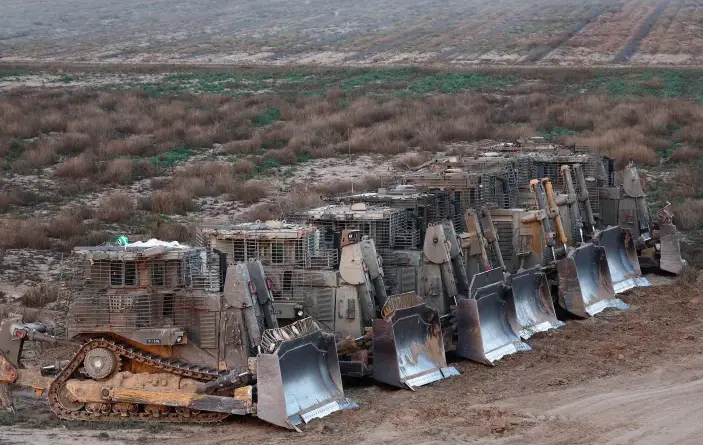
US freezes shipment of military bulldozers to Israel

Yedioth Ahronoth newspaper reported on Sunday that the United States has decided to freeze a huge shipment of D9 armored bulldozers that the Israeli Ministry of Defense had previously purchased from the American company Caterpillar. The number of bulldozers that had been ordered was 134 bulldozers.


She pointed out that this freeze may be temporary, but its effects began to become clear on the battlefield after the Israeli army was forced to use the available bulldozers, many of which were destroyed as a result of what she described as "heavy consumption" of them during the war on Gaza.


Destruction of homes

The newspaper suggested in a report by its military correspondent, Yoav Zeitoun, that the increasing popular pressure within the United States against supplying these bulldozers resulted in the deal being frozen, due to their use in home demolitions in the Gaza Strip.


He added that this situation poses major challenges to the Israeli army, which relies heavily on this equipment to secure safe paths for its forces on the ground, especially in mined areas.


Soldiers killed

He said that the shortage of bulldozers threatens soldiers in Gaza, pointing to the killing of 21 Israeli soldiers last month in Jabalia, north of the Gaza Strip, quoting military leaders as saying that "most of these soldiers were killed by explosive devices, as a result of the shortage of D9 bulldozers in those operations."


The reporter assumed that the freeze on bulldozer shipments would delay the establishment of new buffer zones in northern and southern Gaza, and even on the northern front on the border with Lebanon, with the Israeli army adopting other alternatives to destroying buildings, including air strikes and explosions.


The report indicated that the Israeli army is facing a shortage of heavy bombs weighing one ton, as the United States froze a shipment containing about 1,300 bombs after half of them arrived, and quoted an Israeli security source as saying that "the delay in these shipments is forcing the army to rent additional equipment from local contractors."


Other weapons influx

However, the report stated that the United States had agreed to complete a huge deal to supply Israel with about a thousand JLTV armored personnel carriers, which would enhance the ability of elite units to move flexibly in different combat zones, especially with the presence of 30 mm machine guns within the equipment of these vehicles.


Zaitoun asserts that the tensions in Israeli-American military relations come in light of the current administration facing internal pressures from human rights organizations, noting that "there are American reservations from the State Department and the Pentagon about meeting all Israeli requests for advanced weapons."

ARAB AND WORLD

Sun 10 Nov 2024 3:17 pm - Jerusalem Time

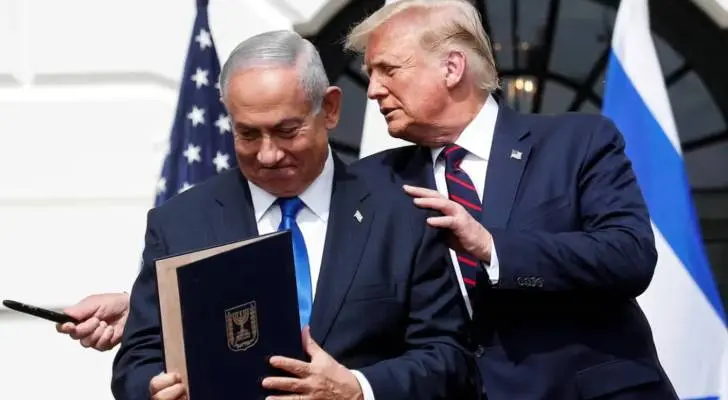
Maariv: Trump will not give Israel a blank check

Maariv newspaper downplayed expectations that US President-elect Donald Trump would support Israel on sensitive regional issues, particularly with regard to the Iranian file, the war on the Gaza Strip, and efforts to expand the peace agreements, known as the "Abraham Accords." Possible changes At the beginning of the report, written by the newspaper's political correspondent, Anna Brasky noted that many in the Israeli government prayed for Trump's victory, and considered his presidency to be in Israel's interest.


Brasky says that Trump supported Israel during his first term with decisive decisions, such as moving the US embassy to Jerusalem, recognizing Israeli sovereignty over the Golan Heights, and signing the Abraham Accords, which strengthened Israel’s relations with a number of Arab countries. But she raises an important question: “Will Trump be as tough on Middle East issues in his second term, or will he take a more cautious approach?”


She answers this question by saying that it is likely that there will be changes in the positions of the new American president, citing as evidence the fluctuations in the policy of the former hardline Israeli Prime Minister Ariel Sharon, who changed from supporting the settlers to taking the decision to withdraw from the Gaza Strip and dismantle its settlements in 2005 during his second term.


She points out that one of the most prominent questions that attempts to anticipate Trump’s policies relates to his position on Iran. Despite his statements during his election campaign that he does not oppose Israel attacking Iran, and that he will not tie its hands, this position may not necessarily translate into full American support for this step. Advertisement Brasky confirms that “Israel cannot launch such attacks without effective American support, which means that any neutrality on Trump’s part will not be enough” to enable Tel Aviv to attack Iran.


“For Trump, a businessman who prefers deals, opening new negotiations with Iran may be a more attractive option than getting involved in a new war,” she continues. “So, Trump may be inclined to renegotiate a modified nuclear agreement rather than engage in a direct confrontation, which raises concerns among Israeli officials about the possibility of making concessions to Iran.”


The price of expanding the Abraham Accords


Maariv's correspondent also believes that Trump's return to the White House may witness an attempt to revive and expand the Abraham Accords, especially with the focus on concluding a peace agreement between Saudi Arabia and Israel. But the question the newspaper poses is, "What price might Saudi Arabia demand in exchange for normalization?"


She explains that one of the conditions that Riyadh could impose is recognition of a Palestinian state, an issue that could spark widespread controversy within Israel. She points out that Trump’s peace plan, known as the “Deal of the Century,” included the establishment of a Palestinian state on about 70% of the territory as part of the peace agreement, but the ability to actually implement this clause remains questionable.


The writer also draws attention to the fact that “the relationship between Trump and Netanyahu may be an influential factor in American policy towards Israel,” and believes that “despite the close alliance between them in the past, their relationship has gone through difficulties. Benjamin Netanyahu is currently making efforts to re-establish his relationship with Trump, and has risked provoking the Biden administration in the process.” Advertisement She says that “what will happen after Trump is officially inaugurated may reveal whether the relationship between them will return to its best state, especially since Trump may treat Netanyahu either as a true friend or as a former ally.”


The report concludes that Israel is cautious in its expectations regarding Trump’s handling of the Middle East and Israel, especially in light of the lack of clarity about his future plans. “While Israel hopes for comprehensive American support, it realizes that Trump may take more moderate and cautious positions than he has previously, and may prefer to explore new deals that seek to achieve stability in the region without military escalation,” Brasky concludes by saying that “Trump’s return to the White House may not be the same approach that Israel was accustomed to during his first term, and may impose a heavy price on the Israeli government to achieve some of its strategic goals in the region.”

ARAB AND WORLD

Sun 10 Nov 2024 2:41 pm - Jerusalem Time

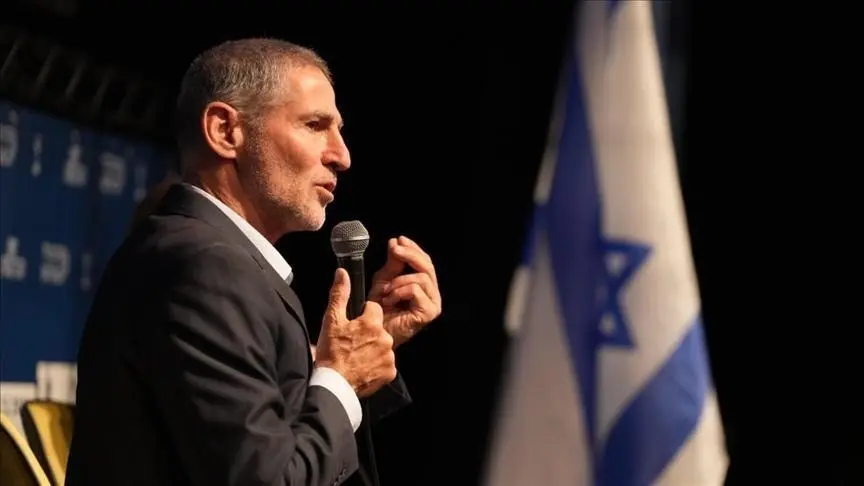
Yair Golan: Netanyahu seeks settlement in the north despite Hezbollah's strength

Israeli Democratic Party leader Yair Golan said on Sunday that Benjamin Netanyahu's government is trying to reach a settlement in the north, despite not eliminating Hezbollah, while endangering the lives of prisoners and soldiers in the Gaza Strip by refusing a ceasefire on the grounds that Hamas has not been eliminated.


This came in a post on the X platform by Golan, who previously held several military positions, including Deputy Chief of Staff of the Israeli Occupation Army and Commander of the Northern Region.


"Hezbollah, which is much stronger than Hamas, has not been completely eliminated, but the Israeli government is trying to reach a settlement in the north," said the head of the Democratic Party, an alliance of the left-wing Labor and Meretz parties.


He added: "The government itself refuses to reach an agreement to release prisoners, including a settlement in the south, on the grounds that Hamas has not been completely eliminated."


Golan continued: "This is illogical and unprofessional and puts the lives of prisoners and our soldiers (in the Gaza Strip) at risk in vain."


He concluded by saying: "Every Jewish mother will know that the Israeli government prefers its political survival over the security of its children."


On Sunday, the Hebrew newspaper Yedioth Ahronoth said that Minister of Strategic Affairs Ron Dermer headed to Washington to hold talks with senior White House officials regarding reaching a settlement with Hezbollah in the north.


Meanwhile, the Israeli Army Radio said that Dermer secretly visited Russia last week to push for a ceasefire agreement with Hezbollah.


She added in a report: "Dreamer is working with the Americans on settlement negotiations in the north, and Russia is expected to play a major role in the ceasefire."


Netanyahu's government refuses to reach a deal to return prisoners held in the Gaza Strip that includes stopping the war there, amid threats by extremist ministers, including National Security Minister Itamar Ben-Gvir and Finance Minister Bezalel Smotrich, to withdraw from the government if the war in Gaza stops.


ARAB AND WORLD

Sun 10 Nov 2024 2:25 pm - Jerusalem Time

Seoul braces for shifts in Washington policy after Trump's victory

South Korean President Yoon Suk-yeol held a meeting with senior officials on Sunday to study the impact of US President-elect Donald Trump's return to the White House.


Bloomberg reported that Yoon ordered officials to form an advisory body headed by Finance Minister Choi Sang-mok that would focus on policies related to financial, trade and industrial affairs to prepare for possible shifts in U.S. policy.


If the new US administration takes a flexible approach on fossil fuels, it could have a positive impact on the petrochemical sector, Yun said.


On security, Yoon made clear that there could be "structural changes" without elaborating, and called for comprehensive readiness to maintain an active alliance with the United States.

ARAB AND WORLD

Sun 10 Nov 2024 2:01 pm - Jerusalem Time

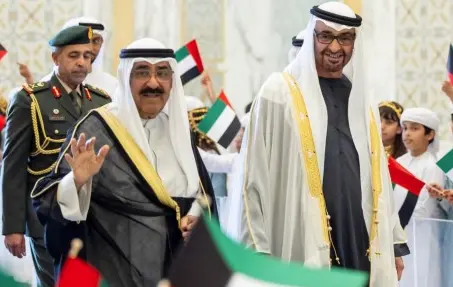
UAE President, Kuwait Emir call for ceasefire in Gaza, Lebanon

UAE President Sheikh Mohammed bin Zayed Al Nahyan and Kuwaiti Emir Sheikh Meshal Al-Ahmad Al-Jaber Al-Sabah called on Sunday for intensifying international efforts to stop the ceasefire in the Gaza Strip and Lebanon, which have been witnessing an ongoing Israeli war since October 2023.


This came during talks between the two Gulf leaders, at Bayan Palace in the Kuwaiti capital, as part of an open-ended state visit that the UAE President began to Kuwait on Sunday, according to the official UAE news agency, WAM.


The agency explained that the two sides "discussed fraternal relations and paths for developing cooperation and joint work in various fields, in a way that serves mutual interests."


The two sides stressed their "keenness to continue building on the deep-rooted historical relations that unite the two countries and their peoples."


During the talks session, they reviewed "developments on the regional and international arenas, most notably the situation in the Middle East, especially the developments in the Gaza Strip and Lebanon," according to WAM.


President bin Zayed and Prince Mishaal stressed "the importance of intensifying international efforts to cease fire in the Gaza Strip and the top priority of providing full protection for civilians in accordance with the rules of international humanitarian law, and pushing joint efforts to respond to the humanitarian conditions experienced by the population."


They stressed "the UAE and Kuwait's firm stance towards preserving Lebanon's unity, sovereignty and territorial integrity, and their support for the brotherly Lebanese people in various circumstances."


They called for "urgent international action to stop the fire in Lebanon and provide protection for civilians there," according to the Emirati agency.


The two leaders stressed the "need to intensify efforts to prevent the expansion of the conflict in the Middle East region and spare it the consequences of new crises that threaten its security and stability."

PALESTINE

Sun 10 Nov 2024 1:39 pm - Jerusalem Time

Israel prevents citizens from picking olives in the middle of Hebron

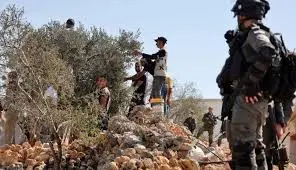
Today, Sunday, the Israeli occupation forces prevented citizens in the Tel Rumeida area in central Hebron from picking olives and entering their lands.


Local sources reported that the occupation forces prevented the Qunaibi family from picking olives from their lands in Tel Rumeida, seized the olives, and forced them to leave.


It is noteworthy that the occupation has continued to prevent citizens since the beginning of the aggression against our people on October 7, 2023, from entering their lands to pick olives, which negatively affected the season, which was severely damaged in various governorates.

ARAB AND WORLD

Sun 10 Nov 2024 1:24 pm - Jerusalem Time

Dozens of dead in Israeli raids on Tyre, Baalbek and Jbeil district in Lebanon

Israeli raids on eastern and southern Lebanon and northern Beirut, on Sunday, resulted in dozens of deaths and injuries.


Israeli warplanes launched a raid on a house in the city of Baalbek, eastern Lebanon, according to what was reported by the official Lebanese National News Agency, without prior evacuation warning.


The agency reported that "enemy aircraft launched a raid on a house in the Al-Laqees neighborhood in the city of Baalbek."


Meanwhile, the Lebanese Ministry of Health announced the death of 20 people, including children, in an Israeli airstrike on a town in the Jbeil district, north of Beirut. The ministry said in a statement that "the Israeli enemy's raid on Almat in the Jbeil district led, according to an updated toll, to the death of 20 people, including three children, and the injury of six others."


Earlier today, the National News Agency reported that 17 people were killed in an Israeli bombardment that targeted the village of Deir Qanoun Ras al-Ain in southern Lebanon.


According to the agency, "Civil defense teams affiliated with the Islamic Message Scouts Association, the Islamic Health Authority, and the Red Cross are still searching for a number of missing persons under the rubble in the building that was destroyed by the Israeli enemy in the town of Deir Qanoun Ras al-Ain yesterday evening."

PALESTINE

Sun 10 Nov 2024 12:47 pm - Jerusalem Time

Tel Aviv expects a Security Council resolution calling for an end to the war in Gaza

Channel 12 confirmed, quoting informed sources, that the occupation government expects a resolution from the Security Council calling for a halt to the war in Gaza.


The Hebrew newspaper said on Sunday that the government is likely to issue a Security Council resolution soon to stop the fighting in Gaza and restrict the activity of the occupation army.


She pointed out that the government has concerns about the possibility that Washington will refrain from using its veto to protect Tel Aviv's interests in the Security Council.


Aggression on Gaza

The occupation war machine continues its aggression for the first day after four hundred in the Gaza Strip, where the bombing and shelling of residential buildings has been renewed, especially in the northern part of the Strip.


The Palestinian Ministry of Health in Gaza announced yesterday, Friday, that the death toll from the aggression had risen to 43,552 martyrs, in addition to 102,765 others injured since October 7, 2023.


The number of occupation soldiers killed is rising

According to the latest tally, the occupation army announced that the number of its dead has risen to 782 officers and soldiers in the aggression on Gaza, since October 7, and 368 have been killed since the start of the ground operation on October 27.


According to the occupation army, 5,299 soldiers have been injured since the beginning of the aggression on Gaza, including 3,204 minor injuries, 1,319 moderate injuries, and 776 critical injuries.


ARAB AND WORLD

Sun 10 Nov 2024 12:44 pm - Jerusalem Time

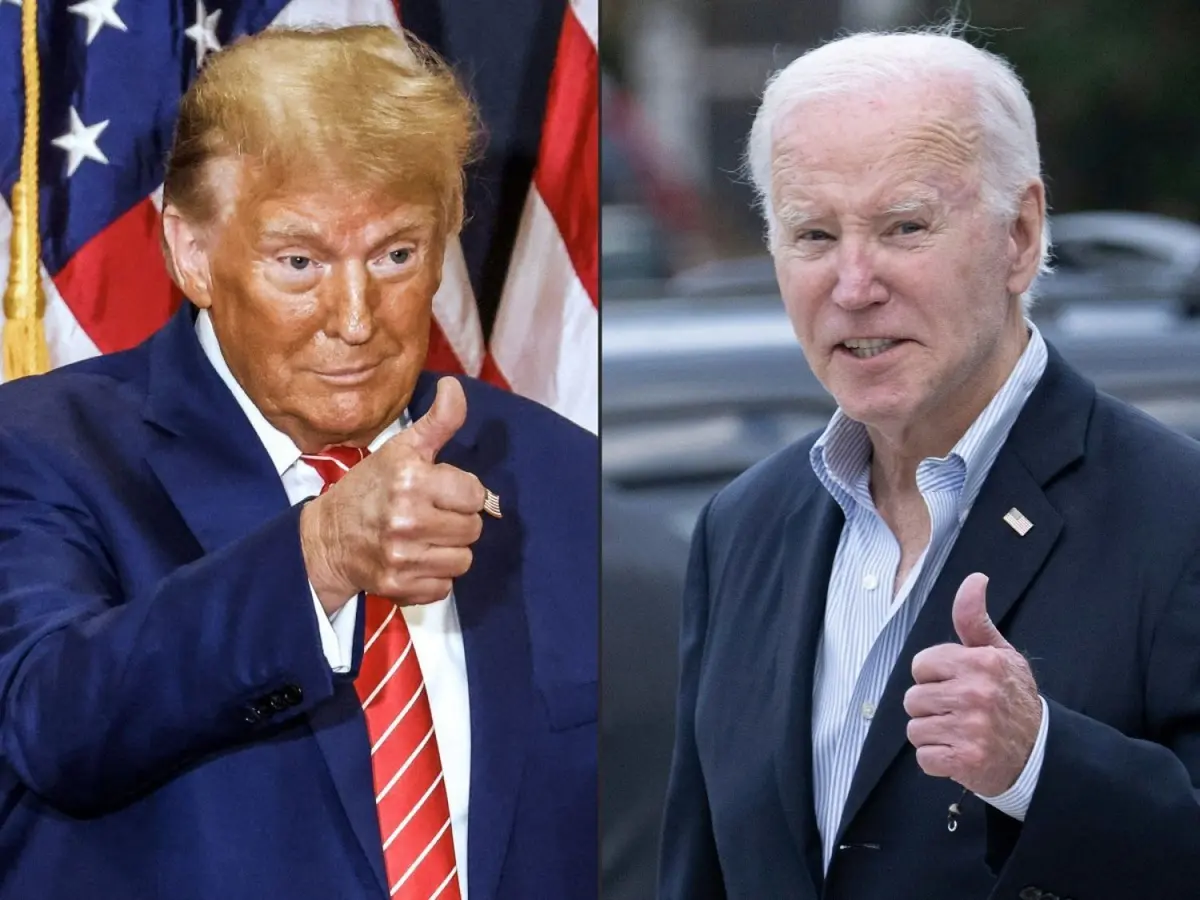
Biden to host Trump at White House on Wednesday

Joe Biden plans to welcome his successor, Donald Trump, to the White House on Wednesday, after the US president pledged a peaceful and orderly transfer of power to the Republican president-elect he lost to in the presidential election four years ago.


Trump, who has never acknowledged his loss in the 2020 election, scored a historic victory on November 5 that returned him to the White House, capping nearly a decade of political activism marked by his hardline positions.


Biden will join a small club of US presidents who have returned power to a predecessor in the White House.


The Democratic president will meet with Trump at 11:00 a.m. (16:00 GMT), according to a White House statement yesterday (Saturday), as the countdown begins for the former president's return to power in January.


Trump won Arizona in the US presidential election this week, US television networks predicted yesterday (Saturday), completing the Republican sweep of all seven swing states.


After four days of counting votes in this southwestern state with a large Hispanic population, CNN and NBC projected that Trump would win 11 electoral votes.


Trump ruled out yesterday (Saturday) the possibility of asking his former Secretary of State Mike Pompeo and the US Ambassador to the United Nations during his term, Nikki Haley, to be part of the administration that he is scheduled to form after being elected president for a second term.


“I will not be inviting former Ambassador Nikki Haley or former Secretary of State Mike Pompeo to join the Trump administration being formed,” the president-elect wrote on his social network, Truth Social.


“I have loved and appreciated working with them in the past, and I want to thank them for their service to our country,” the Republican billionaire added, attaching his message with his slogan “Make America Great Again.”


Democratic leader Nancy Pelosi told the New York Times on Saturday that “if the president had dropped out sooner, there might have been other candidates” besides Harris, adding that Biden’s immediate endorsement of Harris prevented a primary. However, the former House speaker praised the “enthusiasm” Harris generated during her campaign.


The 78-year-old real estate mogul and former reality TV star won by a wider margin this time, despite a criminal conviction, two impeachment attempts by Congress while in office and being accused of fascism by a former official.


Polls showed that voters' main concern was the economy and inflation, which has risen to high levels under Biden.


Biden, who dropped out of the race in July over concerns about his age, 81, called Trump on Wednesday and congratulated him on his election victory.


Second management

Trump began selecting the people for his second administration, announcing the appointment of his campaign manager, Susie Wiles, as White House chief of staff.


Wiles is the first woman to hold the prominent position, and her position is the Republican president's first appointment in his new administration. Trump described the 67-year-old Florida native as "strong, smart, innovative, loved and respected globally," adding: "Suzy will continue to work tirelessly to Make America Great Again."


Other candidates for positions in a second Trump administration reflect the big changes they are set to make.


“I’m not going to deny vaccines to anybody,” Robert F. Kennedy Jr., a prominent figure in the anti-vaccine movement whom Trump has pledged to give a “big role” in health care, told NBC News on Wednesday.


Elon Musk, the owner of SpaceX, Tesla and Platform X, who has enthusiastically backed Trump, may have a role in the Trump administration by taking on the role of scrutinizing government waste and cutting costs.


Trump is expected to reverse many of the policies that have been associated with Biden. He also returns to the White House as a climate change denier, ready to dismantle Biden’s green policies, and give the go-ahead to drill oil wells.

PALESTINE

Sun 10 Nov 2024 12:37 pm - Jerusalem Time

Al-Qassam Brigades announces the killing of 15 occupation soldiers north of Beit Lahia

The Al-Qassam Brigades announced targeting an Israeli force of 15 soldiers today, Sunday, confirming that they were eliminated from zero distance.


Al-Qassam Brigades said, via its Telegram account, that the Israeli force was eliminated with light weapons and hand grenades west of the Al-Shimaa area, north of Beit Lahia, north of the Gaza Strip.


Al-Qassam confirmed that its fighters reported, after returning from the battle lines, that they had targeted two Israeli troop carriers with "Al-Yassin 105" and "Tandem" shells, and that they had targeted a military bulldozer with a "Thunder" explosive device near the Martyr Imad Aql Mosque in the middle of Jabalia camp in the northern Gaza Strip.


The Al-Quds Brigades noted that it, in cooperation with the Al-Nasser Salah al-Din Brigades, bombed with mortar shells an Israeli occupation command and control center inside the civil administration east of Jabalia camp.

OPINIONS

Sun 10 Nov 2024 12:29 pm - Jerusalem Time

Implications of Trump's victory on the foreign policies of the Arab East

Christine Hanna Nasr

Christine Hanna Nasr

Opinion Writer

Trump's recent victory in the US presidency was a landslide victory against candidate Harris, as he won by a large margin, in addition to the clear control of the Democratic Party over the US Senate and Congress, a historic success, as Trump's policy is radically different from Biden and Harris' policy, whether in domestic or foreign policy. When Trump decides, he implements it quickly and decisively, especially with regard to the US domestic economic situation, as well as with regard to the external economic and security situation, as he always seeks peace.


During Biden's term, compared to Biden's economic policy, what we see today of this inflation did not exist, as the inflation rate in America was about 1.4%, and when compared to the rate during Biden's term, we find that it has reached about 9% today, which constitutes a great burden on the American citizen, and this inflation has also negatively affected the world, as Biden prevented the production of American oil, as they have a reserve that represents the largest reserve in the world, and when Trump takes over, he will allow the production of local American oil, which will affect the reduction of the price of oil globally, and this will of course have a positive impact on the American and global economies.


Trump's main goal is to bring peace and security to the world, and this was clear when he was President of America in 2016. There was no war between Russia and Ukraine and there was no war now raging in the Middle East. I believe that he will seek to end the war in Ukraine. He also has good relations with Russian President Putin, and he promised that he will also seek to stop the war in Gaza and Lebanon, and to calm the conflicts, especially in the Middle East. The Arab East region will be clean and calm from wars during his term.


Americans realize that Trump is the most successful economically, and this was clear since his childhood, as he has a successful career in the field of real estate. He is the American president who knows how to manage economic affairs locally, and his success will certainly have a direct impact on the world economically, especially in the field of the speed of his impact on the global price of oil.


The foreign policies that Trump can play and the very important role that America will play that will inevitably affect the Arab East are: First, I believe that Trump wants to reach an understanding with Putin, i.e. Russia, regarding the Ukrainian war, which has a major impact on natural gas prices and its repercussions on Europe, as well as what is related to the pipeline coming from Russia to Ukraine, Europe and NATO countries, and all these countries that have suffered from the problem of the availability and security of natural gas.


Second: American relations with the Arab East, especially with the Kingdom of Saudi Arabia, which has distanced itself from the United States of America, specifically during the Biden administration, and opened its doors and diplomacy to expand relations with Russia and President Putin, as well as the Saudi openness with China and the BRICS countries, which are controlled by a diplomacy that follows the same political line, compared to America, which changes its policy based on the ruling party and the winner of the American presidency (Democratic or Republican), as each party changes its policy with the Gulf states, as well as the American relationship with the countries of the Arab East, such as Syria and Iraq, which are suffering today from Iranian influence and the Iranian militias present in them. For example, Biden's policy was smooth with Iran and returned to them the financial amounts related to the nuclear file, as political flexibility or a tone of flirting is noted in the statements exchanged between them, and flirting with a confrontation on the issue of launching timid missiles between them.


Trump's policy will change with regard to the Islamic Republic of Iran, and he will be harsh and firm in his decisions with it. Trump will rely in his new policy on the strategy of economically strangling Iran, due to its support for its allies in the Arab region, namely Hezbollah and the Houthis, and regarding their presence in Iraq as well. Most importantly, the American endeavor, through the upcoming Trump administration, to contain Iran's nuclear ambitions and reduce its military influence in the Arab East region. This is the policy that Trump has adopted in the past with Iran.


For example, the Trump administration's policy was to assassinate Qassem Soleimani and thus eliminate his growing influence in Iraq. I believe that Trump's relationship will be worse than it was in the past, as he will increase and tighten US sanctions on Iran again. During Trump's election campaign, he stated several times that Iran was behind the assassination attempt that did not succeed, but only injured his ear. He stated: "God saved him in order for him to serve his country." Things will definitely escalate with Iran and must be resolved, even militarily. Trump's policy is based on resolving matters with Iran in particular, and it is linked to ridding the Arab region in the Arab East of Iranian influence completely and decisively, represented by Iran's arms in Syria, Iraq, Lebanon and Yemen, and preventing it from expanding its influence in the Arab countries that Iran always covets to control. With the new US administration now, represented by the incoming President Trump, America has warned the Iraqi state and asked it not to allow Iran to use Iraqi territory to strike Israel. Iraq's sovereignty over its territory is a red line, and it is unacceptable for the new administration to have a state of threat. From Iran to the interests of America's allies in the region, such as Jordan and Saudi Arabia, and of course to prevent missiles targeting America's strongest ally, Israel.


The important issue is that Trump addressed the Iranian people, not the Iranian state, and promised them that he would do them justice against this tyrannical rule and would liberate them from it. It has become clear that Iran is witnessing massive demonstrations by its people, especially Iranian women, who have demonstrated several times regarding their opposition to the re-imposition of the hijab on them, and demonstrations against the rule represented by the turbaned men who are harsh and oppressive towards the Iranian people, who have begun to suffer greatly.


I expect that there will be an upcoming revolution in Iran, and the Iranian people will continue to revolt against the policy of oppression under which they live, as Trump promised them that they deserve a better life. It is clear that Trump has succeeded in the past in eliminating terrorist organizations in the Arab region, such as ISIS in Syria, especially its presence in the northern Syrian region. I also believe that Trump will continue his efforts to eliminate all types of factions and will seek to end their role in the Arab East, and they will not affect Arab security in the future from today, and in the entire region in Iraq, Syria, Lebanon and others. Most importantly, Trump's policy will seek to achieve a vision of a new, safe Middle East, and will impose a new global economic will in it, especially since America constitutes a third of the global economy and is the strongest economy in the world, with a budget of about 33 trillion dollars. This American economic power, from Trump's point of view, instead of being used in costly military wars in the world, especially the Arab East, should be exploited in the American domestic economy, which is suffering from challenges due to the current Biden policy and administration.

Today, for example, Iraq is suffering economically, despite being an oil country. Where do the oil revenues and money go while the people are suffering economically? Unfortunately, some Iraqi banks are smuggling dollars to Iran. In the past, during Trump's previous term, he imposed financial sanctions on these banks that smuggle money to Iran, but it seems that these sanctions were not enough, and I believe that he will work to renew their imposition in order to deter these Iraqi banks. Thus, he will succeed in stopping the smuggling of money to Iran at the expense of the oppressed Iraqi people, who deserve a decent and better life instead of those who live on them and their money.

There is also a complex reality, which is the war in Gaza that has been raging since October 7, 2023, and the battles that followed on October 8, an ongoing war in southern Lebanon, and its subsequent expansion within what is called the unity of arenas in Yemen and Iraq, and its repercussions on the Bab al-Mandab Strait region and its economic effects on the entire region, including the cessation of trade in the Red Sea, which had an economic impact on the prices of goods and commodities in the region, and was also accompanied by a significant rise in oil prices, and we are still living its repercussions now. Likewise, missile strikes continue between Iran and Israel and the countries of the Arab East that are living in the midst of this conflict. Iran strikes Israel, Israel responds, Hezbollah responds, and ground battles in the Gaza Strip and southern Lebanon, and no one knows where all this is going? All of this has clearly affected the American economy, which sends weapons from it, and they are taken from American taxpayer money. In light of the increase in arms shipments when Iran increases its escalation by launching missiles, in addition to Biden’s administration of the war in the Arab East and the Russian-Ukrainian war, the American people and their economy are the ones paying the price. The impact of this was clear when Hurricane Harvey struck the state of Miami and the Biden administration did nothing to provide relief to this stricken region, while all the money went to wars in Biden and Harris’s policy.


Instead of spending on wars and their direct impact on a reality that shows the deterioration and damage of the American and global economy, especially the situation in the Arab East, which is economically deteriorating due to the raging wars, Trump's policy seeks to adopt a policy that relies on striving to extinguish wars, working to develop the economy and promote local development in America, and working to keep oil prices from rising. There is no doubt that all of this will be reflected positively locally and internationally, especially if Trump reaches a solution to the conflict in Gaza and Lebanon. Trump says that he will be fair to all the conflicting and warring parties, and he does not hide his strong relationship with Netanyahu and the interests of Israel, especially since it is America's spoiled son. Despite all of this, Trump will be fair, as he promised the Arab and Islamic community in America in his efforts to stop the war, and I believe that he will achieve this goal until he succeeds in creating and finding a Middle East free of wars and conflicts. After that, the Middle East will enter a new phase that I believe will witness an economic recovery for the Arab peoples, and with it will be the security and peace that Trump is striving hard to achieve.

PALESTINE

Sun 10 Nov 2024 12:06 pm - Jerusalem Time

The death toll in the Gaza Strip has risen to 43,603

Medical sources announced today, Sunday, that the death toll in the Gaza Strip has risen to 43,603, the majority of whom are children and women, since the start of the Israeli occupation aggression on October 7, 2023.


The same sources added that the number of injuries has risen to 102,929 since the beginning of the aggression, while thousands of victims are still under the rubble.


She pointed out that the occupation forces committed 3 massacres, which resulted in the death of 51 citizens and the injury of 164 others.

PALESTINE

Sun 10 Nov 2024 11:58 am - Jerusalem Time

Israeli Settlers storm Al-Aqsa Mosque

Today, Sunday, settlers stormed the blessed Al-Aqsa Mosque, under the protection of the occupation police.


According to local sources, a number of settlers stormed Al-Aqsa from the Al-Maghariba Gate, carried out provocative tours in its courtyards, and performed Talmudic rituals.

PALESTINE

Sun 10 Nov 2024 11:23 am - Jerusalem Time

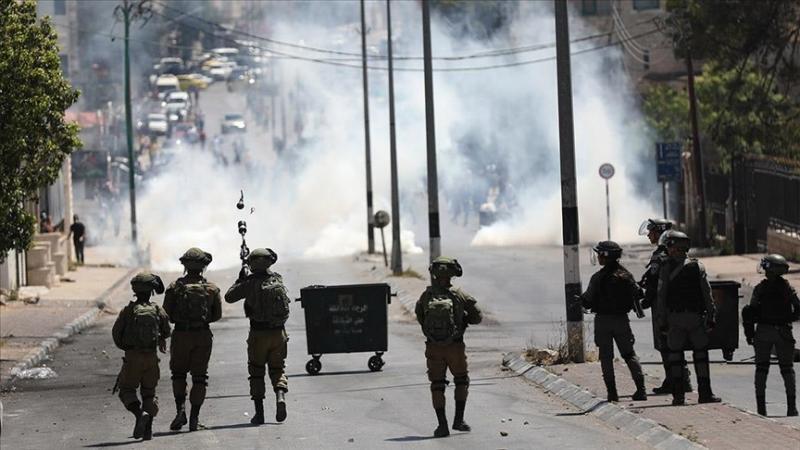
Palestinians suffocate during Israeli army raids in the West Bank

A number of Palestinians suffered from suffocation during Israeli army raids on Saturday in the south and center of the occupied West Bank, while settlers raided a residential area and a school.


The official Palestinian news agency (WAFA) said that suffocation injuries were recorded during the army's storming of the town of Al-Khader, south of Bethlehem in the southern West Bank.


She added that the occupation forces stormed Al-Khader and set up a military checkpoint where they stopped vehicles, searched them and checked the identities of the passengers. The occupation soldiers also fired sound bombs and toxic gas at a number of shops, which led to a number of citizens suffering from suffocation, and they were treated in the field.


Also in the southern West Bank, the agency reported that the Israeli army stormed the Al-Fawar camp, south of the city of Hebron, and fired live bullets and tear gas canisters at citizens' homes, without reporting any injuries or raids on homes.


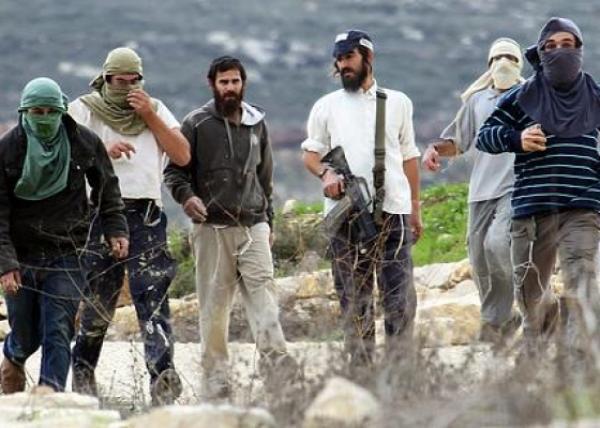
South of Hebron, WAFA reported that a group of settlers stormed the small village of Al-Fakhit (east of the town of Yatta) and conducted provocative tours around the homes of citizens.


She added that the settlers raided the school and toured its courtyards and corridors.


To the west of Hebron, eyewitnesses told Anadolu Agency that an Israeli infantry force stormed the town of Idhna, raided and searched a house.


In the central West Bank, WAFA reported that the Israeli army stormed the town of Abu Dis, east of Jerusalem (governorate), and fired a heavy barrage of tear gas canisters at citizens and their homes, causing a number of them to suffocate from inhaling the gas, and they were treated in the field.


Storming Nablus

The Israeli occupation forces stormed, at dawn on Sunday, the new Askar camp east of the city of Nablus, shortly after Israeli forces stormed the city of Qalqilya and towns and villages in Beit Ramallah and Bethlehem.


In parallel with the war of extermination in the Gaza Strip, the Israeli army expanded its operations, and the settlers escalated their attacks in the West Bank, including East Jerusalem, resulting in a total of 780 martyrs and about 6,300 wounded since October 7, 2023, according to official Palestinian data.


With American support, Israel has been committing genocide in Gaza since October 7, 2023, leaving more than 146 Palestinian martyrs and wounded, most of them children and women, and more than 10,000 missing, amid massive destruction and famine that killed dozens of children and the elderly, in one of the worst humanitarian disasters in the world.

ARAB AND WORLD

Sun 10 Nov 2024 10:13 am - Jerusalem Time

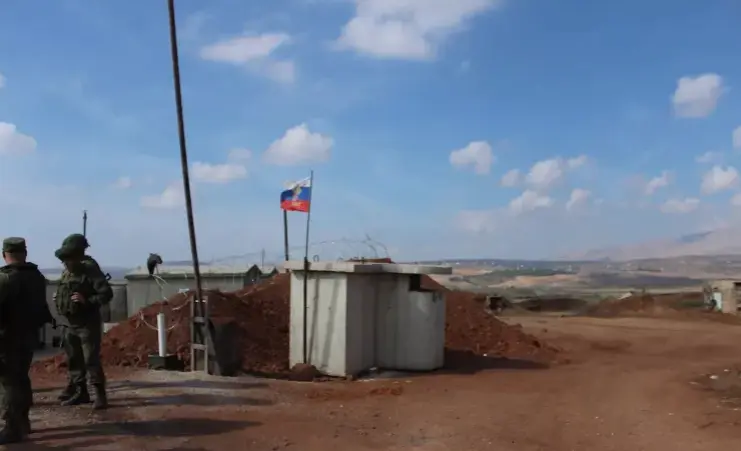
Russia establishes observation point between Syria and Israel in the Golan Heights

The Russian flag was raised at a new observation point opposite the disengagement zone between the Syrian and Israeli armies in the occupied Golan Heights in southern Syria.


"A Russian military point along the separation zone in the Quneitra region in southern Syria was opened on Saturday as part of agreements to prevent violations of the UN disengagement zone," General Alexander Rodionov, deputy commander of the Russian forces operating in Syria, told Sputnik.


General Rodionov added, "With this new point, we have opened 8 observation points in order to complete the operation and maintain the security and peace of Syrian territory from any violations."


He explained that "the forces tasked with completing this operation are the tank battalion of the Russian military police, based on the orders of the commander of the Russian forces in Syria."


The deputy commander of the Russian forces operating in Syria confirmed that the Russian military crews are present in their designated locations at the observation points along the UN line for disengagement between the Syrian and Israeli armies, and that there is no withdrawal from them as rumored in some reports, adding: "We are still present, and we are carrying out all our tasks along the Bravo Line."


The new Russian observation point is located above the "Tel Ahmar" site, along the "Bravo" line that defines the eastern bank of the separation zone between the Syrian and Israeli armies. This zone was established in accordance with the United Nations resolution issued in 1974 following the end of the October 1973 war.

ARAB AND WORLD

Sun 10 Nov 2024 10:04 am - Jerusalem Time

US Expectations of Reaching a Ceasefire Agreement in Lebanon

US officials said the chances of reaching a ceasefire agreement in Lebanon are increasing under the leadership of US envoy Amos Hochstein, and with the encouragement of President-elect Donald Trump.


The Israeli news website Ynet quoted unnamed officials as saying that efforts are underway to reach a limited deal between Israel and Hamas to release a number of prisoners and detainees.


Officials said that Qatar's announcement of suspending mediation efforts in negotiations between Israel and Hamas aims to intensify pressure on the movement and show seriousness, especially with the expectation of Trump's intervention in the matter.


The news website quoted US officials as saying that President Joe Biden's administration will likely not impose an arms embargo on Israel during the remainder of its term.

PALESTINE

Sun 10 Nov 2024 9:21 am - Jerusalem Time

UNRWA warns of imminent famine in northern Gaza

The Commissioner-General of the United Nations Relief and Works Agency for Palestine Refugees (UNRWA), Philippe Lazzarini, warned yesterday, Saturday, of the possibility of a famine in the northern Gaza Strip, which has been witnessing an Israeli siege and ethnic cleansing since October 5, while Israel rejected the warning of a famine.


Lazzarini expressed regret that the possibility of famine "is not surprising," noting that Israel has used hunger as a weapon, depriving people in Gaza of basics, including food to survive.


He pointed out that the aid entering the Gaza Strip is not sufficient, and is an average of just over 30 trucks per day, representing only about 6% of the daily needs of the Palestinians.


Lazzarini called for urgent steps, including political will to increase the flow of humanitarian and commercial supplies into Gaza, and political decisions to allow convoys to enter northern Gaza regularly and without interruption, calling for political will to address and eliminate the hunger crisis because "it is not too late."


International warning

And the day before yesterday, Friday, a report by the Famine Review Committee of the Integrated Food Security Phase Classification (a team of leading independent international experts in the field of food security and nutrition) warned of a strong possibility of imminent famine in areas in northern Gaza, while the Israeli occupation continues its annihilation of the northern Gaza Strip.


The report stressed that the humanitarian situation in the Gaza Strip is extremely dangerous and is deteriorating rapidly, calling for urgent action in the coming days, "not weeks."


The occupation authorities rejected the international report, saying, "Researchers continue to rely on partial and biased data and superficial sources with special interests," according to its description.


American concern

Asked about the Famine Review Board's warning, a State Department spokesman said Washington was concerned about the limited amount of aid reaching civilians in Gaza, and that the report highlighted the seriousness of the situation.


"We have made clear to Israel and will continue to make clear that it must do more to facilitate the entry and delivery of aid into Gaza," he added.


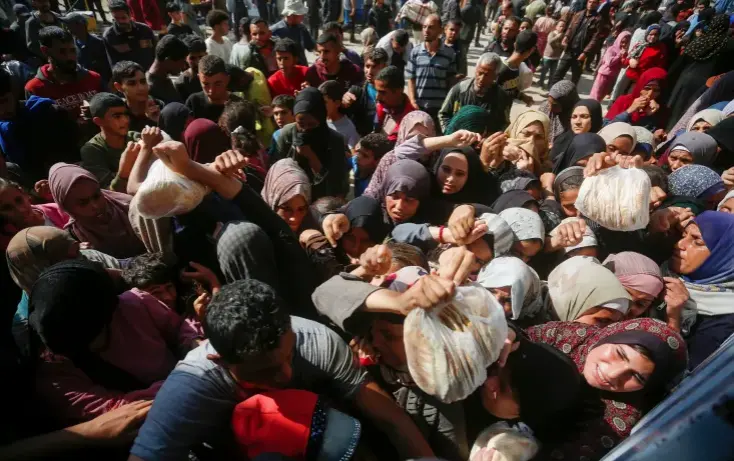
In the past weeks, a real crisis has begun to loom in the central and southern Gaza Strip as well, due to the depletion of flour and basic materials in the markets and homes of Palestinians, forcing them to use spoiled flour to feed their families, and to search for unhealthy alternatives.

The residents of Gaza, and the north in particular, are suffering from hunger due to the scarcity of food, water, medicine and fuel, as a result of the siege imposed by Israel on the two governorates since the start of its ground operation on October 27, 2023, which has caused the death of a number of children and the elderly.


The Palestinians believe that Israel wants to occupy the northern Gaza Strip and turn it into a buffer zone after displacing its residents, under the pressure of continuous bloody bombing and a tight siege that prevents the entry of food, water and medicine.

OPINIONS

Sun 10 Nov 2024 9:18 am - Jerusalem Time

400 days of genocide... and what's coming is more dangerous

op-ed "AlQuds" dot com

op-ed "AlQuds" dot com

Opinion Writer

The days have been difficult, bitter and harsh for the citizens of the Gaza Strip due to the brutal Israeli aggression on Palestinian life, targeting its components and all its details. After 400 days of bombing, killing, destruction, starvation, displacement, arrests and abuse, the world is still without a conscience, despite the fact that things have reached the point of madness, in light of the horrific massacres committed by Israel against the Palestinians. However, this world cannot take a single bold decision to stop what is happening, because the ruler of the world, the United States, has an interest in the continuation of the Israeli war, and this explains the enormous volume of daily attacks carried out by Israel, because there is no deterrent party to stand in the face of the occupation, as everyone is complicit, and this is what gives it the green light to continue the war of extermination.


Every day, Israel commits heinous massacres, in which dozens are killed. The pretext it tries to hide behind, that it is targeting armed cells and activists, no longer convinces anyone. Despite this, it continues its campaigns of revenge against all aspects of life in the Gaza Strip, seeking to eliminate this life, targeting shelters and asylum centers, tents for the displaced, medical and health centers, and volunteers from relief organizations and institutions.


During the 400 days of war, Israel dropped tens of thousands of explosives on the Gaza Strip, which exceeded the Hiroshima atomic bomb by about five times, which led to the martyrdom of more than 43,554 citizens and the injury of more than 102,800, most of whom were women and children, as the numbers and data indicate.


Israel is not satisfied with killing and destruction, but rather seeks to continue its racist policy aimed at uprooting Palestinian civilians from the northern Gaza Strip and not returning them to their homes.


These practices constitute a serious violation of the laws of war, and are even real war crimes, in light of the war on a defenseless people. The idea has become clear, which means not allowing the citizens of northern Gaza to return to their homes and houses at all, within the framework of military decisions to deport them, and it has purely political dimensions, as indicated by statements by official spokesmen that suggest the intention to prevent the return of the Palestinians, and to evacuate and prepare the place for normalizing the idea of returning settlement to Gaza step by step, and this is what Israel has been planning for a long time, after thinking about returning settlements to Gaza became in the minds of officials, including ministers and officials, where it was previously limited to the margins of the settlers.


What is being planned for the next stage is undoubtedly very dangerous in all directions, especially the settlement issue, which must be fought by force, because it truly expresses a very long colonization and occupation. In addition, the continuous Israeli statements regarding the exchange deal are merely partial solutions, through which Israel seeks to obtain the detainees, and then continue and double the aggression, which is the trap that our people and their resistance reject.

PALESTINE

Sun 10 Nov 2024 9:14 am - Jerusalem Time

Settlers cut down trees in Nahalin, west of Bethlehem

Today, Sunday, settlers cut down dozens of trees in the town of Nahalin, west of Bethlehem.


Local sources reported that settlers cut down 40 various trees in the Ein Fares area, west of the town, belonging to citizen Ahmed Shakarna.


It is noteworthy that two days ago, in the same place, the settlers cut down 70 olive, grape and almond trees.

PALESTINE

Sun 10 Nov 2024 9:12 am - Jerusalem Time

What price will Jerusalem pay during Trump's new term?

  1. Eleven months after his inauguration as President of the United States of America, former US President Donald Trump said on December 6, 2017, that Israel is a sovereign state, and has the right, like any other sovereign state, to determine its capital, and that recognizing this as a reality is a necessary condition for achieving peace.


In his famous announcement, Trump said, “Today we finally recognize the obvious: Jerusalem is the capital of Israel. This is nothing more than a recognition of reality. It is also the right thing to do. It is the right thing to do.”


In the same announcement, Trump instructed the US State Department to prepare for the transfer of the US embassy from Tel Aviv to Jerusalem, and indicated that contracting with architects, engineers and planners would begin immediately so that the new embassy - when completed - would be a magnificent tribute to peace.


Israel's hand is free..

This announcement was not surprising from a person like Trump, and the people of Jerusalem did not count on his administration or the previous and subsequent American administrations.


Although the Judaization of Jerusalem and the violation of the status quo in Al-Aqsa Mosque is an old Israeli policy that has been followed since the occupation of East Jerusalem in 1967, Trump’s declaration has given Israel more freedom to implement its racist plans and policies in the occupied city.

With Trump assuming a new term after winning the presidential elections over Democratic candidate Kamala Harris, Al Jazeera Net asked academic and expert on Israeli affairs Muhammad Halsa about his expected positions on Jerusalem and the holy sites over the next four years.


Halsa began his speech by saying, “We have a long experience with Trump’s relationship with Israel, specifically with Netanyahu, when he offered him a number of privileges, one of which was the title deed regarding the occupied Syrian Golan Heights, and the important privilege related to moving the US embassy from Tel Aviv to Jerusalem, in addition to fabricating the path of the Abraham Accords and dragging Arab regimes into normalizing relations with Israel.”


Halsa stressed that President Trump's ideological positions, his general arrogant behavior, and everything he did during his first term were fundamentally reflected on the Palestinian issue, and will be reflected this time as well due to his positions and considerations regarding everything that is happening on the one hand, and due to his view of the Arab world, which feels liberated from its need for him on the other hand.


More escapism..

Halsa added, "During his new term, we will see more licentiousness towards everything that is Arab and Islamic, and this licentiousness will also be reflected towards Jerusalem in particular and the Israeli desires therein, and the right that rules in Israel will intersect with the licentiousness of the right-wing force that will rule the United States, represented by Trump, the Republican Party, and the Christian right as well."


This will lead, according to academic Halsa, to the continuation of the Israeli expansion in the region, and to the breaking of the Arabs and Muslims in light of the weak, silent and defeated Arab position in the face of the Israeli advance.


“The Arabs have proven over the course of more than a year of genocide in Gaza that they are unable to impose a position on Israel to prevent it from at least stopping the massacres it is committing. If Netanyahu and his right wing decide to implement their agenda in the Holy City and Al-Aqsa Mosque in particular, Trump will not feel threatened by the Arab and Islamic world, as he has evidence of what happened over the past year,” according to Halsa.


The Jerusalemite researcher and academic believes that “within the framework of the exchanges that will take place between Trump and Netanyahu, it is possible that the latter will offer Trump a gift by stopping the war, and in return Trump will promise him privileges related to normalization with other countries, or the annexation of the West Bank, or a qualitative leap in the issue of Al-Aqsa Mosque.”


Halsa believes that Al-Aqsa will be in the eye of the storm, and that Jerusalem will witness new violations because Trump will go to any lengths to impose the Israeli narrative, and what could push him to retreat - such as if US interests were threatened by Arab pressure and position - is absent and non-existent, and therefore he will not hesitate to say that Jews have the right to pray in a special and independent place in Al-Aqsa Mosque by imposing spatial division at an official level.


"No Arab regime will say no to Trump, and the movement of peoples in the Arab world is now zero. Will Al-Aqsa be more valuable than tens of thousands of lives being lost in front of the cameras? Certainly not, unfortunately," the Israeli affairs expert adds.


Al-Aqsa division..

The same spokesman concluded by saying that during Trump's second term, "we will witness a complete spatial division of the Al-Aqsa Mosque, and this will not be announced only through the pages of Temple activists, but it may be announced officially, which will be considered a great achievement for the ruling Israeli right, and changes may be implemented on the ground by cutting off an area through placing barriers and barriers, similar to what was imposed in the Ibrahimi Mosque in Hebron."


As for the Jerusalemite writer and political analyst Rasem Obeidat, he told Al Jazeera Net that Trump’s policy is more consistent with Israeli policy, and both parties will continue to violate and contravene international law during the next four years, as they did during the first term, because there is no one to deter them.


Obaidat does not believe that Trump will exert serious pressure on Netanyahu to stop the war, but rather will be more generous than the Biden administration in financial, political and military support, "and this will inevitably be reflected in the issue of Jerusalem and Al-Aqsa Mosque, which witnessed many unprecedented violations during the year of war."

About Al Jazeera

OPINIONS

Sun 10 Nov 2024 9:09 am - Jerusalem Time

Threats and risks of searching for an alternative to UNRWA

Fadi Abu Bakr

Fadi Abu Bakr

Opinion Writer

On October 28, 2024, the Israeli Knesset voted overwhelmingly in favor of a resolution submitted by members of the Likud party, banning the activities of the United Nations Relief and Works Agency for Palestine Refugees (UNRWA) within the territories controlled by Israel.


The decision prohibits UNRWA from carrying out any activity or providing any services in the areas controlled by Israel, and will come into effect after 90 days from its date, which threatens to disrupt essential humanitarian assistance to approximately 2.2 million people in Gaza, who are suffering from difficult humanitarian conditions due to the blockade, hunger, lack of medicine, and the ongoing genocidal war for more than a year, in addition to endangering humanitarian assistance in the West Bank, East Jerusalem, Lebanon, and Syria.


The decision has sparked widespread concern among humanitarian organizations, who have warned of disastrous consequences for Palestinian refugees, especially in the absence of an alternative to UNRWA. UN Secretary-General Antonio Guterres, in a letter to Israeli Prime Minister Benjamin Netanyahu, stressed that banning UNRWA would have a significant impact on the Palestinians, and that Israel, as an occupying power, was obligated to meet their needs. In response, Israeli Ambassador Danny Danon said that Israel would continue to provide humanitarian aid, accusing UNRWA of bias in favor of Hamas. The Israeli Coordinator of Government Activities in the Territories (COGAT) announced its support for the work of other UN agencies in Gaza, while the United Nations denied the existence of any alternative that would match UNRWA’s role.


In conjunction with these developments, Norway announced its intention to submit a request to the UN General Assembly to obtain a legal opinion from the International Court of Justice on Israel’s obligation to facilitate the entry of aid provided to the Palestinians by international organizations, whether from the United Nations or other countries. Despite Norway’s sincere intentions, which recognize the Palestinian state and the rights of the Palestinian people, the ongoing debate about finding an alternative to UNRWA poses a major threat to the Palestinian refugee issue, as the agency’s mission is not limited to providing humanitarian aid only, but is also considered a symbol of the Palestinians’ right of return. On the other hand, talking about an alternative role for UNRWA, especially in the Israeli context, represents a major challenge under the current circumstances, as the Israeli occupation will inevitably exploit the humanitarian aid file as a pressure card on the Palestinians instead of adhering to the principles of international humanitarian law, which it has never respected.


The ban reflects the desire of the extreme right-wing movements in Israel to establish the concept of Jerusalem as the unified capital of Israel, free of refugee camps, UNRWA offices, and any evidence of Palestinian identity. There seems to be a clear trend towards promoting the idea of displacement and settlement of Palestinian refugees in neighboring countries such as Jordan, Lebanon, and Syria, which contributes to reducing international support for the Palestinians’ right to self-determination.


The decision to ban UNRWA comes as part of a broader Israeli-American plan aimed at eliminating the agency’s role and ultimately liquidating the historical rights of Palestinian refugees. The US administration has already begun exploring alternatives to UNRWA, according to statements by US State Department spokesman Matthew Miller in March 2024 about Washington’s search for alternative agencies to UNRWA to provide aid. It is most likely that these agencies will be of American nationality, as part of a US strategy aimed at consolidating and expanding its influence, in the face of the rise of China and Russia in the region.


This decision constitutes a new link in the chain of Israeli efforts and endeavors to reduce the role of UNRWA and liquidate the rights of Palestinian refugees. As the ban is about to be implemented, it becomes necessary to strengthen Palestinian, Arab and international action to protect UNRWA and support the rights of refugees. The next stage requires concerted efforts to break this decision and emphasize the importance of UNRWA as a fundamental pillar for providing humanitarian aid and defending the rights of refugees in the face of the ongoing escalation of the occupation, away from any pressure or political blackmail.

OPINIONS

Sun 10 Nov 2024 9:08 am - Jerusalem Time

Arafat was a model...and they killed him! The model of resistance in the face of the discourse of crisis and normalization

Taha

Taha

Opinion Writer

  1. What distinguishes the official Arab discourse is that it tends to adapt and coexist with various defeats, occupations and massacres. It is a discourse of breadth, flexibility and deceit that can turn facts upside down and distort events, which leads to saying that the adaptive discourse is usually a lying, deceptive and suspicious discourse that does not read reality on the one hand, nor interpret or analyze it on the other hand. Therefore, the adaptive discourse is usually fabricated and conciliatory in a way that provokes pity, laughter, tears or all of these things combined. Fabrication appears in this discourse through the presentation of models with multiple references and contradictory ideologies, to the point that this discourse tolerates everything at the same time. It is strange that such models are presented to the masses without a sense of guilt, error or remorse, and it is also strange that they are presented by the man of thought, religion, media and politics, to form a political and cultural regulatory space that gains legitimacy due to the power of official levers and pumps, and those who volunteer with them, seducing and enticing them and desiring to integrate and gain. If fabrication is a characteristic of discourse, it applies to everything else. Education ranges between indoctrination and imitation and claims of creativity and research. City planning fluctuates between randomness and planning, and even the relationship with the masses, where the final vision for dealing with the public is absent. Democracy is a dazzling claim used according to standards and criteria that perpetuate oppression, or is reproduced in a very deceptive and fraudulent way, such that democracy - as a Western concept with a long history and traditions - turns into a deceptive political behavior through which the same centers of power are established. Thus, the concept of democracy turns into a sword that slaughters its bearer. Democracy itself is the effective recipe for fragmentation and dismantling instead of being a concept and a tool for political and social stability, because fabricating the concept leads to fabricating the application and thus fabricating the results.


Documentation appears in our official discourse when it equates mistakes, and practices a real process of deception so that the differences between actions, men, and ideas are eliminated, and when settlements are made on a vague general basis, and when accountability and disclosure are absent, and when problems are solved in a tribal manner in which right and wrong are equal to the point that blood is equal to a cup of coffee, which is something that is repeated in politics, where homelands are transformed into real estate and not a symbol of dignity and pride.


The conciliatory discourse is a ridiculous and miserable discourse at the same time, because it does not seek persuasion as much as it desires safety and compromises that are not valid. This discourse does not seek legitimacy as much as it seeks artificial consensus, no matter the cost.


The discourse that coexists and adapts to defeat and massacres, relying on composition and fabrication, is a discourse of crisis par excellence. It is a crisis of dealing with reality, a crisis of questioning and challenge, a crisis of identity, a crisis of legitimacy, and a crisis of development. It is a discourse of crisis because it is a discourse of coexistence with defeat. It is a discourse of coexistence with defeat because it is a discourse of crisis. All of this cannot be overcome except by overcoming the crisis by rejecting defeat. Creating victory, preparing for it, getting ready for its causes, and maturing its conditions and terms is a long, arduous, and exhausting process. Because it is so, it is capable of separating the bad from the good, the real from the fake. The process of victory itself is a process that cleanses, purifies, and restores. The process of victory is neither a process of fabrication nor compromise. Victory is a real bias toward the place of original power and sources of energy that are usually absent or distorted in the discourse of crisis. The discourse of victory is clear and simple. Even its slogans are simple, clear, and modest. They do not jump over reality, but dream of changing it. They do not distort reality, but demand a coup against it. Even the language of victory is precise because it knows the weight of the price paid for victory, and it is humble because it knows the meaning of unity and the difficulty of the work that has been accomplished. Unlike the language of fabrication and reconciliation, which contains all the pretense in it, the language of victory is brief, goes straight to its goals, and calls things by their names.


We say all this in order to say that our official discourse, which coexists and adapts to defeat, completely excludes the option of liberating Jerusalem. Isn’t that strange?! Isn’t not talking about liberation coexistence with defeat, adaptation to it, and acceptance of it?! When we speak in a language we don’t believe in or trust, this language turns into flexible but thick and long threads, enough to compose plots that lack honesty, frankness, and boldness. When we don’t talk about liberating Jerusalem, which is the essence of our faith, we are betraying something or something that tastes like betrayal. When we beautify defeat or coexist with it, we are even betraying our language. We must admit that we are defeated, and this admission does not call for self-flagellation as much as it calls for self-revival, nor does it call for frustration as much as it calls for opening our eyes wide to read reality as it is, not as we want or as we dream.


Admitting defeat is the first step towards acknowledging reality. Our situation is not good, our societies are not good, our governments are not good, and our wealth is not good. The problem here is that this talk is almost repeated and hackneyed, and is known to everyone. We all know that Palestine is occupied and being destroyed, without the world blinking an eye! And many other Arab lands are suffering from a hideous and destructive occupation, and some of these occupations are almost turning into a reality that cannot even be discussed, and this is what hurts on a personal level to the utmost degree. The Gaza Strip is being wiped out, and Jerusalem is being Judaized at a rapid pace to the point that the situation may turn into the situation experienced by Ceuta or Iskenderun. We do not want another lost paradise, and we do not want a new Andalusia. We do not want to be the nation that gets used to slaps, because habit and habit are normalization of another kind. We do not want to be the nation that nations laugh at its ignorance. I say this out of religious and national pride, and I say this because we have a message that we carried and spread and that was good for all of humanity. Apart from a historical review of our Arab world from the beginning of the last century until today, the reasons for our various defeats in war, thought, development, and building healthy societies did not exceed two reasons: that our enemy is strong, prepared, greedy, and has long experience, and that we were not up to the challenge. Our defeat was not the defeat of a class, thought, person, entity, party, or faction; it was the defeat of an entire nation. By the way, our days are witnessing occupations, sieges, attacks, bombardment, an open holocaust, and the desecration of more than one Arab capital, and we are not talking here about Jerusalem only. By the way, our Arab world is witnessing its worst periods of defeats these days, as the defeat has reached the point of robbing even the will to protest, denounce, or break away from this situation! I say the worst period of his defeats because some of us started fighting each other for the sake of our common enemy, that is, we reached a situation where we started financing our enemy’s wars. This is truly amazing.


To overcome the crisis discourse, there must be a living example or model that can fill in the gaps and provide theoretical and practical content for the idea. All ideas are great without application, and all ideas are subject to criticism when applied. Because of the crisis and the disappointments and stumbles it brings, we had three models, each of which presented an attempt to overcome the crisis. The first model was Gamal Abdel Nasser, who was afforded circumstances that no Arab leader in the modern era had. Abdel Nasser turned into a legendary symbol, and hopes and dreams were pinned on him. Benefiting from the international circumstances and the popular mood in the Third World at least, Abdel Nasser tried to be the incubator for the revolutions of the Arab world and its neighbors, reaching a unified entity in some way. Regardless of our debate with Nasserism, its mistakes and achievements, this experience was struck, then besieged, and finally dried up. Here, we do not want to evaluate the experiences and models that we present, because our goal is the fate of those models and attempts. The second model was Saddam Hussein, who wanted to create development with iron and fire, and wanted to present a living embodiment of the theory of the just tyrant, who wanted to present himself to the public as if he were Saladin and Bismarck at the same time, but this experience or this model was used, besieged, struck and then eliminated. The third model is the martyr Yasser Arafat, who was able to establish a revolution that swept the Arab world over decades! Yasser Arafat, who wanted to be a symbol of revolutionaries and the renaissance of peoples, and who wanted to be the conscience of the world with the suffering of his people, was also not tolerated by the West despite everything, so it besieged him and then killed him. These are three models that were struck by force by the West or its tools. This means that these three models, regardless of our dialogue with them or our argument about them, are models that wanted to go beyond their reality, ceilings and conditions. Was it too adventurous? Was it too dreamy? Was it too deceived? Whatever the answer, the West could not tolerate these models, even if they compromised, entered into settlements, or even colluded in some way.


By induction only, we expect the fourth model to be different from Saddam’s iron-fistedness, Nasser’s compromise, and Arafat’s flexibility. We expect this model to face more difficulties, because the West will be more alert and vigilant, and this model will face non-governmental organizations that are not subject to the state, a normalization discourse that accepts defeat and exploits it, governments that betray their people, and many direct occupations, more than the current ones.


Our fourth model is the “resistance” that will not coexist with defeat because living with defeat is certain and shameful death, and because the adaptation called normalization is worse than surrender, because surrender does not assume acceptance of the occupier, while normalization or adaptation is acceptance of the occupier in terms of existence, narrative, interests, and illusions.


Our fourth explosive model that has swept the world will reject the language of ambiguity, flexibility, and false eloquence, because it uses a simple and crystal clear language, in which it says that the occupation must end and that coexistence with it or adaptation to it is only an extension of its life and a participation in its survival.


It may take a long time for this model to be achieved or to reach its goals, because the West is no longer content with managing affairs from overseas. The West has begun to come here with its warships and is present among us. It no longer asks for secret agents, but has become so impudent as to ask for public agents who collect their wages in front of all the people and in front of the camera lenses. Therefore, it may take a long time for the fourth different model to triumph.


We say normalization, this is an inaccurate term for accepting surrender, normalization is adapting to the occupation, to the interests of the occupation, and to the dream of the multiple and different occupation with many names. When we say normalization, we are practically saying satisfaction, submission, and life under the roof of the occupying power.


Normalization is a demand of the strong, not the weak. That is why the weak are usually cornered into defending themselves and explaining motives and reasons, and in this way the weak turns into a victim that no one believes or respects. The discourse of the weak victim is a discourse of a real crisis, as he cannot even convince himself. That is why normalization is a demand of the strong, because this demand includes, among other things, accepting the condition and demands of the strong. Normalization here is accepting the other’s narrative, as it has been said, because the other’s narrative about himself is too lofty to be a demand of the strong here for the weak. Rather, simply put, the normalization required is not to revolt, not to protest, and to accept becoming a mere living creature, whose only virtue is that it keeps quiet in the face of massacres, consumes food, and excretes it.


The crisis discourse accepts and rejects normalization, because the crisis discourse places everything next to everything else, and this is one of the most severe and worst diseases. The occupier who follows, studies and researches knows that we are in moments of real badness, and for this reason, he has reached the point of impudence, arrogance and haughtiness that he imposes a humiliating equation that says normalization in exchange for nothing. This is where we arrive, that the occupier collects the price in advance in order to promise something that may not happen for any reason. Normalization is worse than surrender, in a sense, in order to stop an illegal and illegitimate act. This is where the crisis discourse brings us. This is where the absence of models brings us.

OPINIONS

Sun 10 Nov 2024 9:07 am - Jerusalem Time

Where did the Arab and Muslim votes go in the US presidential elections?

Ramzi Awda

Ramzi Awda

Opinion Writer

The votes in the US presidential election held on November 5 have not yet been officially counted, but it is possible to roughly predict the voting trends of the Arab and Muslim community in this major election, based on opinion polls and some interviews with a significant and influential number of members of this community.


In general, Trump's sweep of all 50 US states, both in the Electoral College and in the general vote, indicates that Trump has been largely successful in obtaining the votes of communities and minorities in the United States, which was the preserve of Democrats in previous elections. For example, in the previous presidential elections, 75% of Jews, Arabs and Muslims gave their votes to Biden, and in some cities such as Dearborn, Michigan, Biden won 90% of the Arab and Muslim votes against Trump.


In general, the voting system in the United States (the electoral college points system) does not give significant weight to the votes of ethnic and religious minorities, including Arabs and Jews. However, in some states with a demographic weight, such as New York, which is home to more than two million Jews, or Michigan, which is home to about 300,000 Arabs and Muslims, these minorities can have an influential voice, especially if the voting percentages between the Democratic and Republican candidates are close. This is almost what happened in the previous presidential elections, as Trump won Michigan by about ten thousand votes in 2016 when he defeated Hillary Clinton, and then Trump lost the state by about one hundred thousand votes to Biden in 2020.


In fact, it seems that the golden rule that the Democrats relied on in the American presidential elections, considering that the votes of minorities, including Arab and Muslim ones, would inevitably go to the Democrats, has begun to crack, and there are several factors that have led to the reversal of this rule, the most important of which are:


First: The poor economic conditions that Americans went through during the Biden administration, as tax rates and inflation rose very significantly, leading to the spread of poverty and unemployment. In return, Trump promised voters to reduce taxes, reduce inflation, and increase jobs, which is something they witnessed during the first Trump administration.


Second: The continuation of the Israeli aggression on the Gaza Strip, and the expansion of the war in the Middle East region under the weak Biden administration, which was unable to stop the killing of civilians in Gaza, but on the contrary, provided Israel with the largest strategic military arsenal that Israel had not obtained in any previous presidential term. In contrast, President Trump, who appeared strong and confident, promised to end the war and achieve stability. In this context, a campaign was launched in Arab and Islamic circles a year ago under the slogan "Abandon Biden", because he was held responsible for the Gaza war and did not stop it.


This campaign, led by several Arab imams and activists, quickly morphed into the “Ditch Harris” campaign.


Third: A significant percentage of Arab and Muslim votes went to Green Party candidate Jill Stein despite the impossibility of her winning, as a punishment for the Biden administration and Trump’s bad history in dealing with the Palestinian issue. This was absolutely in Trump’s favor due to the nature of the vote counting system. In this context, NBC News forecasts show that thanks to the anger of the Arab and Muslim community over the Biden-Harris administration’s handling of Israel’s aggression on Gaza, Trump was able to win a majority of the votes in Dearborn – 47% compared to 28% for Vice President Kamala Harris, who only beat Green Party candidate Jill Stein by six percentage points.


Fourth: A large percentage of the Arab and Muslim community refrained from giving their votes to Kamala Harris for fear that she would win and pass a law allowing freedom to change gender under the age of 18. This is a very sensitive issue for Arab and Muslim conservatives. On the other hand, this issue is absolutely rejected by conservative Republicans.


Fifth: Trump's interest in minorities has increased significantly, in contrast to his behavior in his first term. He has organized more than 15 campaign meetings among Arabs and Muslims, and allowed them to participate and speak at these festivals. One of the most prominent examples of this is Trump's personal attendance to receive direct support from the Yemeni mayor of Hamtramck. Trump's campaign leaders have also personally contacted many cadres of the Arab and Islamic communities, some of whom were fortunate enough to meet Trump in person. On the other hand, Trump's Arab son-in-law, Massad Boulos, is effectively coordinating Trump's electoral activity in communicating with Arab and Muslim Americans. This effective effort contributed to the formation of the "Arab Americans for Trump" movement, a small Arab lobby that emerged in Michigan in favor of Trump's nomination and victory.

In fact, our previous analysis shows that Arabs and Muslims bet on Trump’s victory because they felt he was able to end the hot and important files in their public affairs, such as the Israeli aggression and others. However, the important question remains whether this bet will succeed in influencing Trump to change his policy that is completely biased towards Israel and of course his policy of liquidating the Palestinian cause, which was tried during his first term in office. The answer to this big question will be determined over the next four years, although initial indications point to the exact opposite, especially after the Trump campaign invited the Settlements Council to attend the president’s inauguration ceremony.

OPINIONS

Sun 10 Nov 2024 9:05 am - Jerusalem Time

How does the Palestinian leadership deal with the Trump administration?

Dalal Saeb Erekat

Dalal Saeb Erekat

Opinion Writer

He treated the Palestinians as a minority that does not have the right to self-determination, recognized Jerusalem as the capital of Israel. He imposed the facts of settlement and annexation of land, and closed the US consulate in Jerusalem that had been there since 1844. He closed the PLO office in Washington, and attacked UNRWA in preparation for its closure to get rid of the refugee issue and remove the file from Israel's responsibility, in addition to his recognition of the Golan Heights under Israeli sovereignty, and removed the status of occupied territories from the West Bank. In contrast, the Joe Biden administration and the Democrats did not back down from any of Donald Trump's decisions, which are considered to be a reversal of facts and the stripping of rights. The international reaction came in rejection by holding an emergency session of the United Nations Security Council, where 14 out of 15 members rejected Trump's decision to determine the fate of Jerusalem. The emergency session was more like an international rebuke session against Trump, after representatives from (China, France, Britain, Russia, Italy, Uruguay, Ukraine, Bolivia, Egypt, Japan, Senegal, Sweden, Ethiopia and Jordan) spoke, rejecting Trump’s decision to consider Jerusalem the capital of Israel for several reasons, the legal violations of the decision and its inevitable negative effects. First: A unilateral act that is in clear violation of the agreements signed between the two parties (specifically Article 7 of the Interim Agreement of 1995 “No party shall take steps that would preempt the outcome of the final status negotiations, which determined Jerusalem, borders, settlements, refugees, security and water.” Second: Trump’s decision is in clear violation of the United Nations resolutions preserving the right of the Palestinian people to East Jerusalem and all the territories occupied in 1967, including (Resolution 242 of 1967, Resolution 253 of 1968, Resolution 267 of 1969, Resolution 298 of 1971, Resolution 476 of 1980, Resolution 478 of 1980, and the latest Resolution 2334 of 2016), all of which declared the measures taken by Israel to change the status of Jerusalem invalid. All of these resolutions and others view East Jerusalem as an occupied city, and affirm the right of the Palestinians to the 1967 lands, and that determining its fate comes through negotiations between the Israelis. And the Palestinians, and any unilateral action that would change the legal and administrative status of Jerusalem is considered null and void. On top of all that, he came up with what he called the “Deal of the Century,” a strategic mistake, as the businessman believed that money deals could bring security and stability to the region by neutralizing the Palestinian side of the equation.


Now that Donald Trump is back in power and the genocide supported by Democrats continues, the question is how will the Palestinian leadership deal with the Trump administration? It is imperative to learn from the lessons of the past; the boycott adopted by the PLO did not serve Palestinian interests. After Donald Trump’s victory in the presidency, the PLO must adopt a pragmatic approach that focuses on national interests and established rights, and strengthens its position as an active player in the region. President Abbas’s congratulations to Trump are an important traditional diplomatic move to open channels of communication and show goodwill in accordance with the basic rule of diplomacy, which is to build international alliances rather than create hostilities in foreign policy.


Internally, this requires preparation at the national level, starting with the necessity of forming a team specialized in diplomacy and foreign policy that is able to deal consciously and nationally without concessions with the new American administration, a team that is fluent in Trump’s language, and here we do not mean only English, but the language of the Harvard School of Negotiation in making deals and mapping innovative solutions based on a purely profit base, which opens constructive channels of communication that serve the interests of the Palestinians. The Palestinians will not be able to deal seriously with this administration without strengthening national unity by forming a national consensus government that rises to the political challenges with a national spirit, which strengthens the Palestinian position internally, regionally, and internationally. Under the new American administration, pragmatic communication with Washington is essential, with a focus on continuing efforts to end the war and ensuring that Gaza remains part of the Palestinian state without any transitional or partial solutions that are specific to the Gaza Strip as a separate entity. Any change in US policy towards Palestine requires careful preparation by a specialized Palestinian team that rises to the level of the Palestinians’ previous experience with the Trump administration, which focused on security dealings, which led us to the Abraham Accords of normalization that ignored the Palestinian side as a key player in maintaining stability in the region.


The Palestinian leadership is required to benefit from the previous experience with the Trump administration, which proved that dealing with security or economic issues in isolation from political and legal issues and excluding Palestinians does not contribute to real peace. Everyone realizes that the Trump administration and its history are a major challenge, and from previous experience, the Palestinians must transform these challenges into opportunities. This requires review, evaluation, and preparation to confront the pragmatic commercial scenario adopted by Trump through deals that will often return in a regional form based on interests, far from values, international law, or rights. This requires a Palestinian team that masters soft power, speaks in a national diplomatic language, and the power of logic, and does not accept submission to a commercial or security solution path far from a political path that guarantees Palestinian rights. In the event that Trump revives the "regional deal of the century", taking into account the international coalition led by the Kingdom of Saudi Arabia. We must deal with caution to ensure the achievement of realistic solutions, as the goal of the Palestinian people in the right to self-determination is not merely recognition of the state, but rather achieving full sovereignty that guarantees the end of the occupation, defining the borders of the state, freedom, and independence.

OPINIONS

Sun 10 Nov 2024 9:04 am - Jerusalem Time

Dutch Motives for Solidarity with Palestine

Hamada Faraana

Hamada Faraana

Opinion Writer

Translated for me by my friend Barhoum Jaraisi, from Nazareth. Written by Yitzik Crombie on Twitter, he is a religious Jew, commenting on the events in Amsterdam. He says:


“In the last year I have traveled around Europe, always with a Jewish skullcap on my head, and I have never been subjected to anything by anyone, I have never felt any fear, I have never faced any assault, and I have certainly never been subjected to any violence.”


He addresses the Israelis and says: “Do not act in Europe as if you are fans of the Israeli team Beitar against the Arab team Sakhnin, incited and supervised by Ben Gvir. If you do that, you will cry because you received blows. Just learn like Israelis in Europe. If you walk in the streets, do not lower the flags (meaning the Palestinian flags) and do not sing (against the Arabs). If you do not do that, then no one cares who you are or where you are from.”


This is not only a linguistic translation, from Hebrew to Arabic, but it is a translation by an Israeli Jewish person, of what Israeli "thugs" did in the streets of Amsterdam by taking down the Palestinian flag and tearing it up, which led to Dutch reactions, primarily towards the fans of the Israeli football team, and in response to their chants against Arabs and Palestinians.

Europe seemed divided, first, between the traditionalists who control the positions of their governments and still support the Israeli narrative, sympathizing with them because of the massacres they were subjected to by the German Nazis, the Italian Fascists, and the Russian Tsarists, and a sector of them is happy to get rid of the Jews and their departure from Europe to Palestine, and all of them belong to the old colonial heritage, and second, between the progressive democratic forces and trends that do not harbor hostility towards the Jews or Semites, but reject their expansionist colonial program in Palestine at the expense of its people, and the heinous, blatant, racist, fascist crimes they commit against the Palestinian Arab people, which they did previously in 1948, and they seek through their criminal actions once again to achieve the motives of what they did previously, which is the deportation, expulsion and displacement of the remaining Palestinians, especially from the Gaza camps and the West Bank camps, and thus achieve two goals: 1- Getting rid of the manifestations of the 1948 Nakba, from the refugees, UNRWA and the right of return, 2- Getting rid of the factor The Palestinian demographics are designed to keep the smallest possible number of Palestinians on their homeland, in order to achieve the goal of an Israeli majority.


No Palestinian, Arab, Muslim or Christian hates Jews, because they are Jews. They are part of our heritage, values and nationality, and they are followers of a heavenly religion. However, we all hate colonialism, injustice and oppression, regardless of who does it: Muslim, Christian, Jewish, non-religious, Arab or non-Arab. We do not accept the oppression of Kurds, Amazighs or blacks in our Arab countries. Now, Jews are living with us as Arabs in Bahrain, Yemen and Morocco, and none of them are subjected to any shameful act. However, we struggle against some Arab governments because they are not democratic or authoritarian, even though their leaders are Arabs and Muslims.


An Arab-Islamic summit is being held, and the Palestinian people and the Arab and Islamic peoples are counting on it for the importance of holding this summit, so that it may constitute a real, serious lever supporting and backing them, and perhaps sending a message to the rulers of the world so that they pay attention to their inhumane positions and suspicious silence, which encourages the leaders of the colony to continue their heinous crimes against the Palestinian people and against the Lebanese people.

PALESTINE

Sun 10 Nov 2024 8:57 am - Jerusalem Time

Israeli forces arrest 6 citizens in Bethlehem and Jerusalem

Today, Sunday, the Israeli occupation forces arrested 6 citizens in Bethlehem and occupied Jerusalem.


In Bethlehem, the two brothers, Yazan Abdul Jamil Shakarna (260 years old) and Khattab (22 years old), were arrested after raiding and searching their parents’ home in the town of Nahalin.


In occupied Jerusalem, the occupation forces arrested the brothers Qais and Yazid Alian, Jaber Hamdan, and Muhammad Al-Saray’a, after raiding and searching their homes.

PALESTINE

Sun 10 Nov 2024 8:47 am - Jerusalem Time

Night of Rage in Amsterdam.. A message from free peoples to advocates of racism and genocide

Dr. Ashraf Badr: Israeli fans tried to send a racist message that reflects the colonial mentality and confirms their superiority over others

Firas Yaghi: Racism is a fundamental issue rooted in Israeli society, and there are attempts to export it to Europe, but they have failed.

Suleiman Basharat: The Amsterdam incident is an indication that Israel’s policies in the Palestinian territories are producing increasing effects in the arenas of the world

Dr. Abdul Majeed Suwailem: The Amsterdam incident reflects the shaky psychological state that Israeli society is experiencing in light of the repercussions of October 7

Adnan Al-Sabah: The world's silence on Israel's crimes and the support of America and its allies have contributed to the consolidation of its racial superiority mentality

Samir Anabtawi: Israeli society is now trying to forcefully re-impose its narrative after it collapsed due to the ongoing war of extermination on Gaza


The recent Amsterdam incident, which involved violence and provocation by Maccabi Tel Aviv fans, highlights the effects of Israeli racism and criminality, which appear to be spreading to Europe.


In exclusive interviews with “I”, writers and political analysts confirm that the racist practices carried out by the Israeli fans reflect an ingrained colonial mentality, as their actions, including raising anti-Arab slogans and removing the Palestinian flag, are part of a hate speech rooted in Israeli society, based on a vision that presents Israelis as the vanguard of Europe in the face of “Eastern backwardness”, a message that is in line with the political discourse of Prime Minister Benjamin Netanyahu, who exploits this narrative to bolster European support.


The writers and analysts assert that the Israeli strategy based on violence and discrimination no longer convinces international communities, and that the world has begun to reject the contradiction between Israel’s declared values and its practices on the ground, as demonstrated by the masses supporting the Palestinians by confronting those Israelis in Amsterdam. They also pointed out that Israeli racism, which is clearly evident at home and exported abroad, is facing major challenges today, with a gradual shift in international positions and increasing popular pressure to hold Israel accountable for its practices.

Behaviors rooted in the culture of Israeli society

Dr. Ashraf Badr, a writer, political analyst and specialist in Israeli affairs, believes that any colonial movement carries racist ideas at its core, and that the behavior of the Maccabi Tel Aviv fans during their mission to Amsterdam reflects this colonial mentality.


Badr points out that the actions of these fans, which included bragging about the violence and crimes against Palestinians in Gaza and chanting anti-Arab slogans, are rooted in the culture of Israeli settler society.


This culture, according to Bader, is not new, but rather predates the current war, as it has always included racist chants, such as “death to Arabs,” as part of the hate speech that characterizes Israeli society.


Badr confirms that the message that the Maccabi Tel Aviv fans tried to send through their racist chants and removing the Palestinian flag from a building in Amsterdam, carries self-importance and superiority over others, as the Israelis view themselves as the vanguard of the “European nation” in their battle against what they consider “Eastern obscurantism.”


Badr points out that this trend is not far from the speech of Israeli Prime Minister Benjamin Netanyahu, which is based on a narrative that begs for European support by presenting Israel as a bulwark against the supposed “barbarism” in the Middle East, against the obscurantism and backwardness of the East.


These supremacist concepts, according to Bader, are embodied in the behavior of individuals within the Israeli settler society and show the depth of the colonial mentality.

Official European systems under the influence of Zionist lobbies

Regarding the European position, Badr confirms that the official systems in Europe are still under the strong influence of the Zionist lobbies, which enjoy wide influence that varies in intensity from one country to another.


However, Bader believes that there is a gradual change in European public opinion, as the increasing demonstrations in European capitals indicate a shift in popular attitudes towards the Palestinian-Israeli conflict.


However, Badr points out that this change has not yet been reflected in radical government policies, while Badr believes that steps such as some countries recognizing the State of Palestine may occur in the future if popular pressure and public opinion in those countries continue.


As for the Arab and Islamic communities in Europe, Badr points out that they still face constant accusations from official political systems, as a result of the influence of the Zionist lobby.


However, Badr stresses that these communities were not effective enough in the past, due to their lack of institutional organization similar to that of the Zionist lobbies.


But Badr expresses his hope that these communities will be able to strengthen their collective action, which may allow them to confront the fierce Zionist attack more effectively in the future.

A racist view that finds its depth in the extreme Israeli right

Writer and political analyst Firas Yaghi believes that racism is a fundamental issue rooted in Israeli society, which raises its generations as “the most superior of human beings,” reinforcing the idea that non-Jews are viewed as inferior and of lesser value.


Yaghi explains that this view finds its depth in the prevailing mentality of the extreme Israeli right, especially in the current government with its strict religious tendencies. This government believes that it has the right to act with absolute freedom, thereby ignoring international and humanitarian laws.


He confirms that this racist mentality was clearly evident recently in demonstrations held in Amsterdam, where slogans were chanted that exceeded all limits of humanity and morality. In these demonstrations, some spoke openly about the absence of schools in Gaza due to the deliberate killing of children, a statement that expresses shocking intellectual cruelty.


Yaghi explains that these movements are not merely a reflection of a certain policy, but rather show a widespread pattern within Israel, reflecting the superior view of Israeli society towards others, especially the Palestinians.


Despite these Israeli efforts to export racism to Europe, Yaghi points out that these attempts have failed, citing the Amsterdam demonstrations that faced strong opposition from Arab and Islamic communities there.


Yaghi asserts that the European street in general shows increasing sympathy for the Palestinian cause, despite the European governments’ support for Israel. This contradiction between the positions of governments and public opinion becomes more apparent with the continuation of the occupation’s crimes in Gaza and Lebanon, which reinforces popular hostility towards Israel.


Yaghi stresses that the Israeli racists and anarchists, who seek to impose their hegemony and vision, face dire consequences on the international scene, referring to the statements of the Amsterdam Police Director, who described the clashes between Israeli demonstrators and their opponents from Arab and Islamic communities as “dangerous” and ringing the alarm bell.

Yaghi explains that Europeans are very sensitive to the concepts of racism and human rights, and are very sensitive to any violations in this area, which poses a major challenge to the Israelis who seek to export their extremist ideology.


Yaghi asserts that the Israeli political system, which is dominated by the Zionist movement, is aware of the danger of these moves. However, Israel continues to try to exploit the historical racism against Jews in Europe to push Western political systems to support it, realizing that the Europeans fear the return of historical waves of hostility against Jews to their countries.


But this governmental support, according to Yaghi, clashes with the fact that European public opinion, especially in countries such as Spain, Norway, Ireland and Belgium, has begun to change in favour of the Palestinians.

New European positions characterized by criticism of Israel

Yaghi believes that there are new European positions characterised by more severe criticism of Israel, which contributes to the escalation of its international isolation.


Yaghi points out that one of the most prominent examples of international transformations is the Boycott, Divestment and Sanctions (BDS) movement, which is achieving great successes in Europe and America, and that Israeli governments and their allies in the West are trying to confront this movement by all means, including passing laws to criminalize BDS activities.


Yaghi explains that Israel is aware of the danger of changing European public opinion and is trying to contain it by imposing strict restrictions, stressing that racist Israeli campaigns find clear expression inside Israel, through groups such as “La Familia,” a racist organization composed of fans of the soccer team “Beitar Jerusalem.”


This group, according to Yagi, practices violence against Palestinians in Jerusalem and is allied with other racist groups in the West Bank.


Yaghi stresses that these organizations pose a major threat to the Palestinians, and work to promote chaos and violence against them.


Yaghi highlights the importance of the Palestinian role in confronting these movements, pointing out that the Palestinian movement in Europe is currently taking place thanks to the efforts of the Arab and Islamic communities without sufficient support from the official Palestinian political system.

Call on the PLO to rebuild its relations with Arab and Islamic communities

Yaghi calls on the Palestine Liberation Organization to rebuild its relations with these communities and to strengthen communication with European parties and movements that oppose Zionism and criticize Western and American policies.


Yaghi believes that the PLO should return to its previous approach before the Oslo Accords in 1993, so that it would be more independent in its international movements.


Yaghi praises some of the Palestinian embassies that play an active role, such as the embassy in London, led by Ambassador Hussam Zomlot, who works in close coordination with British popular efforts to confront Israeli racism.


But Yaghi stresses that this effort must be part of a comprehensive plan that is circulated to all Palestinian embassies around the world.


This plan, according to Yaghi, must reconnect with Arab and Islamic communities, strengthen the Palestinian presence in the international arena to confront Zionist propaganda, and defend the rights of the Palestinian people in the face of Israeli racism.

The Israeli narrative is beginning to face challenges on the global level

Writer and political analyst Suleiman Basharat believes that the events witnessed in the Dutch capital, Amsterdam, are an indication that Israel’s policies in the Palestinian territories are producing increasing effects in the arenas of the world, which people can no longer tolerate. The Amsterdam incident came as a response to the racism that the fans of the “Maccabi Tel Aviv” team tried to transmit there.


Basharat explains that since the Nakba in 1948, Israel has relied on a strategy of violence, killing and destruction, along with a methodology of denial of the other, racism and the ongoing persecution of the Palestinians, promoting its actions as legitimate self-defense. This Israeli narrative, which sought to portray the Palestinians as if they did not deserve life, was accompanied by claims of Jewish racial superiority, in contrast to calls to deprive Arabs and Palestinians of their basic rights.


Basharat points out that the Israeli narrative has begun to face challenges at the global level, as international communities no longer easily accept Israeli explanations, but have begun to clearly see the gap between the values and principles that Israel claims, and its practices on the ground.


He stresses that these contradictions have contributed to the accumulation of a state of anger and resentment among peoples and societies around the world, and that it is no longer possible to ignore Israel's violations, especially in light of the increasing calls from human rights and international organizations to hold war criminals accountable.


However, Basharat points out that Israel has not actually been held accountable, which has sparked global popular outrage not only over the Palestinian issue, but also over US and Israeli policies that have led to decades of international oppression and persecution.

Gaza War: A Critical Turning Point in Changing the World's View of Israel

Basharat believes that the current war on Gaza represents a decisive turning point in the world’s view of Israel as an entity that transcends human rights principles. At the beginning of this war, the UN Secretary-General declared that international humanitarian law is being put to a real test.


Therefore, Basharat believes that the war will produce global societal segments that oppose Israeli and American policies, and these groups will not wait for justice in its traditional form, but will begin to express their positions through various means, including protests and marches, the use of the media, and even direct confrontation if the opportunity arises.


Basharat highlights the incident of the Maccabi Tel Aviv sports team, where its fans tried to humiliate the Palestinian flag, which has gone beyond being a mere symbol of the Palestinians to become a symbol of global liberation. These provocative attempts led to widespread reactions, and these reactions are expected to double as the horrific facts regarding the destruction and genocide practiced by the Israeli occupation in Gaza are revealed.


He points out that Israel may find itself constrained in the future, due to the growing international resentment against its practices.

Basharat highlights Israel's rapid efforts to shift attention from objections to its policies after the Amsterdam incident to accusations of anti-Semitism. In an attempt to distort the global movement rejecting it, it resorted to accusing groups, individuals and the Hamas movement, with the aim of diverting attention from the real criticism.


This shift, according to Basharat, reveals the extent of the embarrassment that Israel is facing as a result of the increasing popular solidarity with the Palestinians, while Basharat explains that these shifts will not be short-term, but will leave an impact in the medium and long term.


Basharat says: It is true that European political systems still support Israel, but they will find themselves in confrontation with their societies that reject colonial policies and racial discrimination.


These popular pressures, in Basharat's opinion, will force regimes to take more balanced positions, or at least push them to make gradual changes.


Basharat compares the current situation with the former apartheid regime in South Africa, which collapsed under pressure from popular and international movements.


Basharat believes that the historical model of South Africa may be repeated in the context of the Palestinian issue, when global communities impose a new balance of justice that confronts Israeli and American policies towards human rights.

Israeli society is now displaying behaviors characterized by organized fascism.

Writer and political analyst, Dr. Abdul Majeed Suwailem, describes the Amsterdam incident as reflecting the shaky psychological state that Israeli society is experiencing in light of the repercussions of October 7.


Suwailem explains that this society, which is plagued by megalomania, arrogance and racism, has begun to display behaviours characterised by organised fascism, with groups turning into gangs that practice violence against any party they consider an enemy.


Suwailem believes that the Israelis are suffering from a great shock after October 7, which they have not been able to overcome until now, especially with the continued attacks on them, which makes them feel helpless and defeated.


Suwailem describes the Israelis’ feelings of complete inability to achieve the victory they had previously boasted about, noting that this moral defeat stimulates aggressive behavior directed against others, even in simple sporting events.


Israeli society, according to Suwailem, reflects a state of psychological chaos and instability, and is always looking for justifications for its behavior, including the claim that the world is hostile to them due to anti-Semitism, without asking themselves why the people’s reactions are escalating against them and against Zionist fascism.


Suwailem points out that the Israelis are reinforcing their sense of superiority at the expense of others, ignoring the real question: why is the world mobilizing peoples against Zionism?


In a comparison with European fascism, Suwailem says that Israeli society has shown clear copies of the behavior of German and Italian fascism, where violence becomes a normal pattern, stressing that this behavior expresses a state of moral decadence.


He points to Israel's attempts to justify its aggressive behavior and distort the facts, as happened in Amsterdam, when the Israelis tried to portray things as if they were the victims, even though they were the aggressors.


Suwailem attributes these lies to the confusion of Israeli society, which lives in constant anxiety about threats and always thinks that the world should respect its privacy, even if that leads to accusing those who criticize it of anti-Semitism.


Suwailem asserts that Europeans no longer see Zionism and Israel as a threat to the Palestinians only, but also to world peace, and this global understanding is increasing despite the systematic support of official European regimes for Israel, which Suwailem described as being subject to the Zionist movement and the United States, and content with slogans of human rights without real action to change this support.

Careful organization of Arab and Islamic communities in Europe

On the other hand, Suwailem praises the role of the Arab, Islamic and Palestinian communities in Europe, pointing to their precise organization and their ability to support the Palestinian cause in a brilliant and great way.


Suwailem confirms that these communities have provided a lot of support to the Palestinian people in Gaza, the West Bank, and Lebanon, noting that their role was greater than many expected.


Suwailem believes that it is not necessary to demand more support from these communities, but it is enough for them to continue their firm positions against the increasing racism and fascism in Europe.


Suwailem asserts that the European regimes will remain allies of Israel, whatever the consequences. These regimes only offer honeyed statements about peace and human rights, but they do everything possible to keep the Middle East region in a state of instability, as long as it serves Israel.


Suwailem believes that official European support for Israel maintains global tension and hinders any real opportunity to achieve peace.

Israeli Hegemonic Messages to the World

Writer and political analyst Adnan Al-Sabah believes that in the context of the controversial international stance towards Israeli crimes against the Palestinians and the Lebanese, the global silence and the continued support from the United States and its allies have contributed to the consolidation of the mentality of racial superiority among the Israelis, which demonstrated the attempts at this superiority in the Amsterdam incident.


Al-Sabah points out that Israel considers itself the supreme race, and holds the belief that it possesses a divine mandate that places it above the rest of humanity, where all those outside the circle of this superiority are viewed as having been created only to serve its interests, regardless of their religious or ethnic backgrounds.


Al-Sabah points out that the unlimited international support, which includes military, political and diplomatic support, reinforces this Israeli sense of superiority. Instead of confronting its practices with firm decisions or raising a “red card” to stop the violations, the international community continues to remain silent, which encourages Israel to continue its aggressive policies.


Al-Sabah highlights that what is happening in Palestine and Lebanon is a direct result of this global collusion, which makes the Israelis believe that they have the right to carry out their actions without accountability or oversight. This belief is not limited to the Palestinian people, but extends to include all peoples, as if the Israelis are the masters of the earth.


Al-Sabah cites what happened in the Netherlands as an example of the messages of dominance that Israel sends to the world, as in the scenes of protests in Europe, the Israeli message is clear: We are your masters, and you must submit to our will and stop objecting. They do not tolerate any dissenting voice, and they view objection to their policies as objection to divine will.


Al-Sabah believes that these Israeli convictions cannot be curbed by silence or by providing support, but rather require a real and frank confrontation from the international community, as the world’s silence on what is happening in the Gaza Strip and Lebanon has pushed Israel to feel superior to everyone.


Al-Sabah discusses the impact of this racist mentality on international relations, stressing that the United States and Europe will continue to support Israel, because the world is now governed by the logic of economic and political interests, not human values and principles.

An alliance between money, knowledge and weapons

Al-Sabah stresses that in an era known as the “era of the knowledge economy,” international laws and ethics no longer have any real value, as interests dominate global decisions, and knowledge, which is considered the new weapon, has become a tool in the hands of the powers that control money and weapons, making this era the most dangerous period in history.


Al-Sabah believes that this alliance between money, knowledge and weapons heralds a global catastrophe that threatens all human values.


Al-Sabah asserts that control over knowledge has transformed the world into a scene where imperialism and modern technologies intersect, undermining borders and nation-states, and even threatening the existence of religions.


Al-Sabah believes that these powers see religion as a tool for achieving hegemony, and that the real religion for them is the religion of power and money represented by the United States and global Zionism.


Al-Sabah also criticizes the Arab position, pointing out that some Arab elites have become subject to the politics of interests. Instead of defending the issues of freedom and democracy, loyalty has become to money and gains, which has contributed to the decline of the national and moral sense among some Arab leaders.


He stresses that this dangerous equation threatens the Arab entity, and makes it necessary to confront this global challenge before it is too late.

Declining European public support for traditional Israeli narrative

Writer and political analyst Samer Anabtawi confirms that in light of the escalation of events, the intensification of the war of extermination on the Gaza Strip, and the ongoing Israeli crimes, Israeli society has become clearly aware of the change in Israel’s image and the decline in popular support in many European countries for the traditional Israeli narrative.


He points out that European societies have begun to adopt the Palestinian narrative more broadly, after realizing that Israel, which had portrayed itself as a democratic state facing threats from “terrorist groups,” is in fact carrying out systematic and widespread genocide against Palestinian civilians, including killing children, targeting women, and striking vital facilities such as hospitals.


This shift in the European peoples’ view that Israel is practicing genocide has made Israelis feel angry and frustrated, as Anbatawi asserts that Israeli society is now trying to forcefully reimpose its narrative after it fell following the war of genocide on the Gaza Strip, through violent and biased protest actions, such as removing Palestinian flags and promoting violence.


These actions, according to Anabtawi, reflect a state of descent into chaos and violence, in a desperate attempt by the Israelis to impose their vision, but they face clear resistance from European societies that stand in solidarity with the Palestinian people.


Anbatawi points out that the Israeli government and the Israeli Mossad may be behind these extremist movements by Israelis in Europe, with the aim of showing life there as difficult and unsafe for Israelis, which may contribute to reducing the phenomenon of reverse migration sought by hundreds of thousands of Israelis who aspire to move to Europe to escape the deteriorating conditions in Israel.


However, Anbatawi points out that these actions may extend to affect the internal European situation, as waves of tension and rioting may spread to other European cities, which may force European countries to take strict measures related to licensing demonstrations and restricting them for security reasons.


He points out that the confrontation between Maccabi Tel Aviv fans in the Netherlands showed a dangerous side of this conflict. In his opinion, the Dutch police made a mistake when they allowed pro-Israel marches to be held while at the same time preventing counter-pro-Palestinian marches, which sparked further anger among supporters of the Palestinian cause and led to violent confrontations.


These confrontations, according to Anabtawi, have angered the European authorities, who are now seeking to stop these disturbances amid fears that they will spread to other places. They may take measures by restricting the freedom to demonstrate and implementing strict security measures.


In a related context, Anabtawi sheds light on the role of Arab and Islamic communities in Europe, which have come to play an important role in influencing public opinion, including election results, as happened in the United States. These communities, which have realized the falsehood of the Israeli narrative, are currently seeking to organize their ranks and unify their efforts to confront racist Israeli movements and refute Israeli propaganda.


It is believed that the war of extermination on the Gaza Strip, with all its brutality and destruction, has helped unite the Islamic and Arab communities in Europe and made them more resilient in confronting attempts to distort the facts, especially amid fears of expanding the Israeli attack in the region and perhaps Europe.


Anbatawi asserts that Israel, despite all its attempts supported by the Zionist movement and the United States, is finding it increasingly difficult to improve its image before the world. The crimes committed in Gaza and other occupied territories have become clear and cannot be hidden, which has led to the collapse of the Israeli narrative that it has promoted for decades as the “victim.”


Anbatawi also believes that this shift may not be temporary, but rather represents a long-term change in the world’s view of Israel, with the conviction deepening that it is a state based on policies of genocide and racism.


PALESTINE

Sun 10 Nov 2024 8:42 am - Jerusalem Time

Israel commits a massacre in Jabalia, killing 33 Palestinians

33 citizens, including 13 children, were killed today, Sunday, while a number of others are still missing, in a new massacre committed by the Israeli occupation army in the town of Jabalia, north of the Gaza Strip.

Local sources reported that the occupation warplanes bombed a house crowded with residents and displaced persons belonging to the "Alloush" family in the Jabalia al-Balad area.


She added that the bombing led to the complete destruction of the house, and 33 martyrs were recovered, including 13 children, in addition to a large number of injured people, who were transferred to the Baptist Hospital, while a number of missing persons are still under the rubble of the destroyed house.


In an unofficial tally, the number of martyrs since the beginning of the aggression on the Gaza Strip on October 7, 2023 has risen to about 43,552 dead and 102,765 wounded, the majority of whom are women and children, while thousands of victims are still under the rubble and on the roads, where they cannot be reached.

PALESTINE

Sun 10 Nov 2024 8:40 am - Jerusalem Time

Medical sources at Kamal Adwan Hospital: We are losing lives every day due to lack of care and resources

Medical sources at Kamal Adwan Hospital urgently called for the provision of basic supplies and ambulance services, in addition to lifting the siege on northern Gaza.


She explained, "Cases of malnutrition and famine have begun to appear in the region, and northern Gaza is being subjected to a war of extermination, and we are suffering as a result of the deliberate silence on the crimes committed against us."


She pointed out that the health system and the rights of our people are under severe threat, and we are in dire need of medical support. The crisis continues in northern Gaza, which is characterized by a systematic attack on our health system, where we lose lives every day, due to the lack of specialized care and resources.


She expressed her regret at the inability to help those trapped under the rubble, saying: “Just yesterday, we received reports of children and women trapped in difficult conditions, and today we mourn their loss as martyrs. This reality is unbearable.”


She noted that medical teams are witnessing alarming cases of malnutrition among children and adults, and we are struggling to provide even one meal a day for hospital workers, amid a severe shortage of food and medical supplies.


She called on the international community to urgently help at this difficult time.