PALESTINE

Mon 30 Sep 2024 1:34 pm - Jerusalem Time

Israeli occupation releases 12 Palestinian detainees from the Gaza Strip

Today, Monday, the Israeli occupation authorities released 12 detainees from the Gaza Strip.


According to local sources, the occupation released the detainees through the Kerem Abu Salem crossing, east of Rafah city.


Recently, the occupation released a number of detainees from the Gaza Strip in several batches, who revealed the extent of torture, abuse and violations they were subjected to during their detention, as they were subjected to severe torture, continuous severe beatings and electric shocks, while the detainees remain handcuffed and blindfolded around the clock, and are prevented from raising their heads, and they are crammed into narrow rooms that lack the most basic necessities of life.


Since the outbreak of the aggression on the Gaza Strip, the occupation forces have arrested hundreds of citizens during their ground invasion of the north, center and south of the Strip, and released a number of them after detaining them for months, weeks or several days, while the fate of a large number of them remains unknown.

During its ground invasion of Gaza, the occupation forces published several times horrific pictures and scenes of hundreds of people being arrested naked and detained in conditions that degrade human dignity, which constitutes an additional indicator of what is more dangerous and greater in terms of the level of crimes being committed against them.

ARAB AND WORLD

Mon 30 Sep 2024 1:10 pm - Jerusalem Time

UNICEF: The situation in Lebanon and Gaza is very difficult and children are paying the price

UNICEF spokesman Salim Aweys confirmed today, Monday, that the situation in Lebanon is very difficult, especially for children who pay the highest price in these circumstances.


He pointed out that the organization is present in the field, whether in Lebanon or Gaza, and is trying with all its might to provide assistance and communicate with all parties to try to reach a cessation of hostilities.


According to the organization's official website, Awis said in a press statement, "Since the first days of the conflict, we have begun moving important supplies as a form of preparation, which amounted to about 100 tons of medical supplies, and basic supplies are being distributed to the displaced and the maximum possible provision is being made, especially life-saving aid that includes the basics of living."


He added that the United Nations always calls for the need to stop conflicts in the region, but the primary role remains with the parties to the conflict and the member states of the United Nations to take political action to stop the conflicts, which is a matter that depends on political will, noting that the role of humanitarian institutions will remain in delivering aid and submitting reports to help decision-makers in making important decisions.


Regarding the educational process in the Gaza Strip and Lebanon, Awis explained that there are more than 600,000 children in the Gaza Strip who have missed a school year, and more than 45,000 children who have not attended their first year of school. In Lebanon, too, there are large numbers who have stopped studying due to the closure of schools under the current circumstances, stressing that the organization is trying to carry out some educational interventions in Gaza, but it is hindered by the lack of a safe place to ensure the safety of children.

PALESTINE

Mon 30 Sep 2024 12:54 pm - Jerusalem Time

War on Gaza: 20 Palestinians killed and 108 injuries in the past 24 hours in Gaza

The Ministry of Health in Gaza announced today, Monday, that the death toll in the Gaza Strip has risen to 41,615, the majority of whom are children and women, since the beginning of the Israeli occupation aggression on October 7.


The ministry added in a brief statement that the number of injuries has risen to 96,359 since the start of the aggression, while thousands of victims are still under the rubble and on the roads, as the occupation prevents ambulance and civil defense crews from reaching them.


She pointed out that the occupation forces committed two massacres against families in the Gaza Strip, which resulted in the death of 20 citizens and the injury of 108 others, during the past 24 hours.

ARAB AND WORLD

Mon 30 Sep 2024 12:43 pm - Jerusalem Time

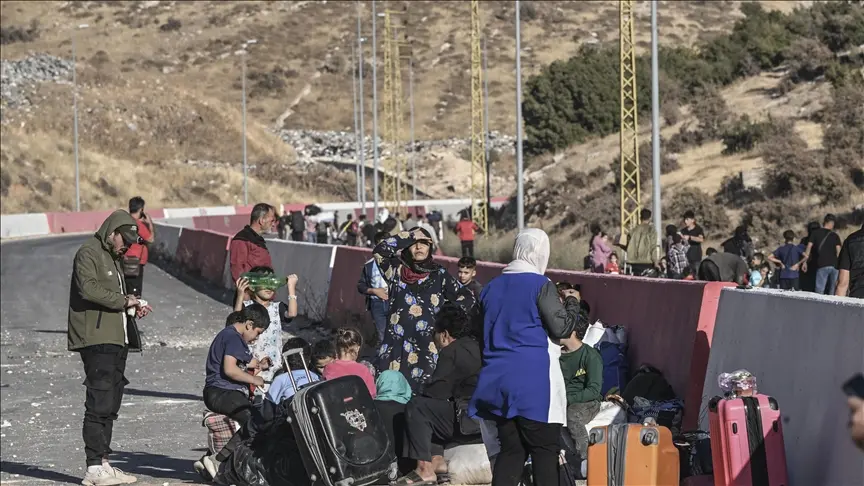
100,000 displaced persons crossed from Lebanon to Syria due to the occupation aggression

The United Nations High Commissioner for Refugees, Filippo Grandi, said that the number of people who fled the Israeli occupation aggression and crossed from Lebanon to Syria reached 100,000 people.


This came in a post by Grandi on the X platform, today, Monday, regarding the Israeli aggression on Lebanon.


He added, "The number of Lebanese and Syrians who fled the Israeli air strikes and crossed from Lebanon to Syria reached 100,000."


He pointed out that UNHCR officials are stationed at four crossing points, in addition to local authorities and the Syrian Red Crescent to support those crossing into Syria.

ARAB AND WORLD

Mon 30 Sep 2024 11:07 am - Jerusalem Time

What to know after Israel’s assassination of Hezbollah leader Hassan Nasrallah

  • - It remains to be seen whether his death will be a trigger for an all-out war between the two sides
  • - Iran is the main backer of Hezbollah and other anti-Israeli militant groups in the region

Israel’s assassination of Hezbollah leader Hassan Nasrallah is a monumental and hugely demoralizing blow to the group he led for 32 years, marking a significant inflection point for Lebanon and the region. Hezbollah’s announcement of his death Friday triggered tears and celebrations across the Arab world, pointing to the widespread reach and influence of a divisive man who has been at the forefront of Middle Eastern politics for decades. The 64-year-old Nasrallah headed arguably the most powerful paramilitary force in the world — also a US-designated terror organization — that is now left without a clear successor at a critical juncture. It remains to be seen whether his death will be a trigger for an all-out war between the two sides that could potentially drag in Iran and the United States. Here are some things to know about the situation:

 Is it a decapitating blow?

 Nasrallah’s assassination is a severe blow to the group, not a decapitating one. But analysts say Hezbollah will need some time to absorb the shock and recover. “Nasrallah’s killing is a significant setback for Hezbollah, not only because of the pivotal role he played in Hezbollah’s strategy but also because his elimination reveals the extent of the group’s vulnerability vis-à-vis Israel,” said Lina Khatib, an associate fellow at Chatham House, an international affairs think tank. “This will shake the confidence of Hezbollah’s Iran-backed allies across the Arab world, from the Houthis in Yemen to the Popular Mobilization Forces in Iraq, as well as Iran itself, sparking a tectonic shift in Iran’s network of influence in the Middle East,” she added. It is not the first time Israel has killed a Hezbollah leader. Nasrallah took over from Abbas Mousawi, who was killed by an Israeli helicopter attack in 1992. But Hezbollah today is very different from the ragtag organization it was in the ‘90s. In recent years, he has presided over an army-like group estimated to have tens of thousands of fighters and a sophisticated arsenal capable of reaching anywhere inside Israel. It has become the chief part of a cluster of Iranian-backed factions and governments of the self-named “Axis of Resistance.” “Hezbollah will not back down following the killing of its leader, as it will need to convey steadfastness in the face of Israel if it’s going to retain its credibility as the strongest ‘resistance’ actor in the region,” said Khatib.

 Iran’s dilemma

 In his first remarks Saturday following Nasrallah’s death, Iran’s supreme leader gave no indication of how Tehran will respond. In a vague statement, Supreme Leader Ayatollah Ali Khamenei said, “all regional resistance forces” support and stand beside Hezbollah, but he did not elaborate. Iran is the main backer of Hezbollah and other anti-Israeli militant groups in the region, but it has largely avoided clashing directly with Israel due to domestic considerations. Hezbollah, however, is Iran’s chief ally and proxy group, and Tehran may have to respond to retain its credibility with its partners in the axis. “Iran is very much in a policy dilemma right now,” said Firas Maksad, of the Middle East Institute. On one hand, clearly it very much has wanted to avoid an all-out and direct confrontation, given its long-standing preference for asymmetric warfare and using proxies. “But on the other hand, a lack of a worthy response given the magnitude of the event will only encourage Israel to push deeper past Iran’s red lines,” he said. Not responding also sends a signal of weakness to its regional proxies. Any direct Iranian involvement risks dragging Israel’s chief ally, the US, into the war, just over a month before the US elections and at a time Iran has signaled its interest in renewing negotiations with the US over its nuclear program. Maksad said one possible scenario is a coordinated response from the entire axis. Whether that will be coupled with a direct response from Iran itself is an open question.

 Who will succeed Nasrallah?

 There is no one nearly as influential and respected among the group’s remaining leadership as Nasrallah. The man widely regarded as his heir is Hashem Safieddine, a cousin of Nasrallah who oversees the group’s political affairs. It is not known if he survived Friday’s attack, and the Hezbollah statement announcing Nasrallah’s death Friday made no mention of a successor. The group’s Shoura Council will have to meet in the coming days or weeks to choose its new leadership. Lebanese journalist and writer Maher Abi Nader said Safieddine or Nabil Kaouk, a member of the group’s executive council, were the likely successors. Whoever ends up replacing Nasrallah in the current atmosphere will have to contend with a deeply weakened force facing growing anger and frustration on the home front. In just over 10 days, the Iran-backed group has been hit by a series of devastating attacks that dealt a severe blow to its military structure and exposed deep intelligence failures. Explosives hidden in the group’s pagers and walkie-talkies killed dozens of people and wounded thousands — many of them Hezbollah members. Israel has also rained down missiles on residential areas where the group has a strong presence, killing hundreds and displacing tens of thousands of people. Nasrallah was regarded by supporters as a charismatic and shrewd leader. Despite being a divisive figure, he is credited with pushing Israeli forces from south Lebanon in 2000 following an 18-year occupation, as well as transforming the organization from a local militia to a major political player in Lebanon and a top armed force in the region. He held tremendous sway over the group and the country’s Shiite community. Orna Mizrahi, a senior researcher at the Tel Aviv-based think tank Institute for National Security Studies, noted that Nasrallah was sometimes a “voice of reason” who was interested in engaging Israel in a war of attrition, holding the militant group back from using the full force of their formidable arsenal against Israel. Filling those shoes will be a tough act, analysts say.

 Growing tensions in Lebanon

 Any new Hezbollah leader will also have to contend with rising resentment and frustration among a significant section of the Lebanese population. For years, critics say, Hezbollah deprived Lebanon of its sovereignty by behaving as a state within a state and making unilateral decisions involving war and peace. Many Christians and Sunnis, as well as a portion of the Shiite community, are opposed to the war and what they regard as Nasrallah’s unilateral decision to attack Israel in support of the Gaza front on Oct. 8, a day after the Hamas attack on Israel that ignited the war in the Palestinian territory. Tensions are extremely high in tiny Lebanon, which is already drowning under the force of an economic meltdown and multiple other crises. A humanitarian crisis has rapidly unfolded with tens of thousands of people displaced, many of them sleeping in parks and makeshift shelters. Dozens of schools designated as sheltered became full within days. The country is bankrupt and has been without a president and functioning government for two years. In the void, sectarian tensions and frustrations within the country could spiral into armed violence. Maha Yahya, director of the Beirut-based Carnegie Middle East Center, said Hezbollah now has to contend with all of that as it struggles to regroup. “And it will have to be more accommodating to Lebanon’s other political parties and communities,” she said.

OPINIONS

Mon 30 Sep 2024 9:55 am - Jerusalem Time

360 days of aggression.. Gaza remains the story of the greatest pain

op-ed - Al-Quds dot com

op-ed - Al-Quds dot com

Opinion Writer

Three hundred and sixty days and the sinful Israeli aggression on the Gaza Strip continues without mercy or compassion, and the occupation is oppressing the chests of our people with its brutality that has stripped away all the necessities of life, and snatched the joy from the children, replacing it with regret, sadness, sorrow and anguish.


We are on the verge of a full year of the most brutal aggression witnessed by humanity, and although there are other fronts and major challenges in bright spots of the Arab world, most of which is enveloped in the darkness of the stage, Gaza remains the story of the greatest pain, which the world has abandoned, as it no longer hears or sees the extent of the massacres committed against civilians, especially children and women, whom Israel kills without guilt in the most hideous images that make the forehead of humanity blush.


Yesterday, 28 citizens were killed in the random Israeli attacks targeting civilians, and the stories and tales of the displaced continue, but they are full of pride, steadfastness and patience despite the tragedies and pain. There is a woman trying to collect what remains of her husband’s body, and another crying over her martyred sons who were killed together, and saying to them (May God make it easy for you.. you have preceded us to heaven), and students leaving while they are on the verge of high school, so the hearts of fathers and mothers turn from moments of joy that gladden the hearts to broken and oppressed hearts, bleeding from shells, missiles and bombs of death.


The Israeli war and destruction machine destroyed all the beautiful stories, but it revealed the extent of the spirit of perseverance, patience and steadfastness that our great people have accustomed us to, who have not been broken and will not be broken, and will continue their struggle until victory is achieved.


The war is painful and its results are expanding and increasing the area of pain with the number of martyrs rising to 41,595 martyrs, about 100 thousand wounded, and about ten thousand missing under the rubble due to the destruction.


All this and no food, medicine, electricity, and living without shelter. Even the martyrs are carried by their families in handcarts, and there is a shortage of gasoline and diesel, and no humanitarian aid is entering the sector.


These are some of the stories of Gaza that are not imaginary, but rather the truth of a bitter and painful reality that the citizen lives with tears every day. The occupation has not had enough of the blood of our people, and despite that, the Gaza Strip, with its patient and steadfast people, represents a model and a title for a people who remain in their place and do not budge until they achieve their clear victory over the defeated occupation army. Indeed, Gaza remains the story of the greatest pain, among all the stories of the world.

OPINIONS

Mon 30 Sep 2024 9:53 am - Jerusalem Time

Did Israel defeat us?!

Ahmed Rafeeq Awad

Ahmed Rafeeq Awad

Opinion Writer

In his recent meetings, Netanyahu tried to convince his audience, the region, and the world that Israel has regained everything it lost after October 7 of last year. He issued threats, sent angry and harsh messages, and painted for himself the image of a victorious, capable hero, and perhaps a spiritual leader, not just a political one.


The question is: Does Israel think it has triumphed over the entire region?! Has it triumphed over its resistance and moderates, its neutrals and its accomplices, its far and near, its poor and rich?!


Does Israel believe that with the killing, assassination, bulldozing, starvation, emptying and destruction it has done, it has ended its crisis and dilemma?! And that with the surplus power it possesses and the surplus support, silence and solidarity from allies and friends, it has obtained the security, stability and peace it wanted?!


Does Israel really believe that with this stupidity, stubbornness and brutality, it will reserve a quiet place and a remote corner where it can obtain free recognition and normalization because of the recent image it has painted as an usurping, crazy and resentful entity?!


The question is: After about a year since the start of this violent wave of killing, displacement and aggression, and after Israel clashed with all parties in the world, its international bodies and civil organizations, and violated all norms and laws, can it be said that Israel is about to impose a security settlement on the Palestinian and Lebanese people and the rest of the Arab and Islamic region?!


Do you really think that it can do that by reoccupying the Gaza Strip in some way?! And do you really think that it can extract recognition from the region and the world of its control over the Strip, partial or complete control?!


What is being said about the generals’ plan of emptying, starving and besieging the northern Gaza Strip is nothing but the hateful occupation in its worst form, and remaining in the Netzarim and Philadelphi axes and the Rafah crossing is nothing but a reproduction of the occupation and the besiegement once again.

Not only that. Israel truly believes that it can get rid of two major strategic threats forever: Hezbollah in the north and Hamas in the south. It also believes that it can implicate Iran, weaken it, besiege it, strip it of its nuclear project, or stir up unrest and strife within it, thus threatening its ruling regime. Israel believes that through the image of anger, madness, and killing, it can regain everything it has lost. Not only that, but it also believes that it can impose its security settlement, as we said, and the security settlement is a prelude to changing the Middle East, as Netanyahu says. The new Middle East that Israel wants or is working to establish includes not the establishment of a Palestinian state but rather reoccupation, and includes increasing the area of Israel in the north and south if it can, and includes demographic displacements, and includes a network of roads and transportation including railways, ports and long roads that cut across geography to create a new phase, and the new Middle East also includes Iran without influence, parties without weapons, people without ambition, domesticated groups, and a free peace that does not include rights or aspirations, and the new Middle East that Israel seeks is to be a base and protector of the region and to represent the colonial West in preserving interests and controlling behavior. In short, an unpopular but frightening policeman, a corrupt policeman but he does the job.


By the way, the idea of the New Middle East is not Netanyahu’s brainchild, but rather an old, new idea, of American origin, implemented by the Israelis with success once and failure many times. This vision, for which the region is paying the blood of its sons to prevent or achieve, is a corrupt and invalid vision, characterized by simplification, ignorance and arrogance. It is a gift awarded to an adventurous, obsessive contractor who could not, and will not, be able to accomplish the mission, because the idea of the New Middle East that we dream of is an East in which all its peoples enjoy security, dignity and independence.

OPINIONS

Mon 30 Sep 2024 9:51 am - Jerusalem Time

Hassan Nasrallah's departure

Hamada Faraana

Hamada Faraana

Opinion Writer

On the same road that the martyrs: Yasser Arafat, Ahmed Yassin, Abu Ali Mustafa, Fathi Shaqaqi, Ismail Haniyeh, and dozens of their comrades and leaders of the resistance factions, departed because of it and took. Before him, Abbas al-Moussawi, the Secretary-General of Hezbollah, was assassinated on February 16, 1992, by Israeli helicopters that lay in wait for his convoy on its way back to Beirut from a ceremony commemorating the martyrdom of his comrade Sheikh Ragheb Harb. They fired incendiary heat-seeking missiles at his car, killing him, his wife Siham al-Moussawi, and their son Hussein.


Martyr Abbas al-Moussawi succeeded Sheikh Hassan Nasrallah in 1992 as Secretary-General of the party, with the aim of continuing on the path until the day of his assassination by Israeli bombardment via missiles that penetrated the fortifications on Friday, September 27, 2024. He was born in the village of al-Yazouriya in southern Lebanon on August 31, 1960.


So, the martyr Hassan Nasrallah was not the first secretary who lost his life as a price for his bias, support and solidarity with the Palestinian people, with the people of Gaza, with the Palestinian resistance. Rather, he was preceded by those who chose this path, the path of confronting and standing up to the colony, regardless of their national identity and from which country they were. And whoever walked this path and chose to side with the cause of the Palestinian people to eliminate injustice and occupation, paid with his life in exchange for this national, religious, humanitarian bias in confronting the colony’s plans and its expansionist occupation programs, which targeted Palestine first and then Lebanon, and every Arab, Islamic, Christian, and historical site, to impose the colony’s hegemony and control over the rights of Arabs, Muslims and Christians in Palestine, Jerusalem, Bethlehem and Nazareth, to extend to the Syrian Golan and southern Lebanon, on the path of gradual, systematic occupation, militarily, politically and in terms of influence, so that the colony would be the sole, dominant force controlling our land, our holy places and our dignity, and preventing our right to development, progress and a stable future based on freedom and independence for our world and our Arab homeland.


The martyrdom of Hassan Nasrallah is a loss for his party and his people, just as it is a loss for Palestine, its path and its resistance, as a lever integrated into its cause, raising the slogan and behavior of support and backing for its people in Gaza, the steadfastness and resistance that was exposed to the harshest epic, massacre, tragedy, unprecedented in its size and losses and the destruction of its landmarks, making it unfit for life and normal living, after the destruction of its infrastructure of schools, buildings, streets, mosques and churches, the result of an earthquake caused by heavy shells and missiles, with deliberate intent.


What the colony did, through bombing, continued assassinations, destruction of neighborhoods and killing of civilians in an attempt to dissuade the Lebanese people from supporting and backing the Palestinian people, transferred their solidarity concerns to the act of participation, as Lebanon became a target, and made the Lebanese people and pushed them and will push them through their resistance, to the act of tangible practical participation in confronting and confronting the actions of the colony.


The colony’s success in assassinating Hassan Nasrallah was an additional episode in the series of killing leaders, in the face of those who stand against it. This is a choice that will continue, not because of adventure and hatred of life, but because these people chose to be with their people, towards exercising the right to self-determination, and in rejecting injustice and the usurpation of rights, which is what the colony represents and does against the Arab people of Palestine, and against those who stand with it.


The path to freedom has a victorious ending, no matter what obstacles, complications, obstructions and sacrifices those who walk it face. Its conclusion is victory, as happened with all peoples who struggled and gained their freedom and independence.

OPINIONS

Mon 30 Sep 2024 9:48 am - Jerusalem Time

Three and a half threats

Al Mutawakel Taha

Al Mutawakel Taha

Opinion Writer

The brutal, rabid Zionist-American alliance, extending from Rafah to Beirut, passing through the West Bank, is the scandal of the era, and there is no place for the murderer among nations. These massacres will remain present in the consciousness of humanity and on people's tongues, and their embers will not be extinguished soon. The unity of the arenas is the only thing that will achieve steadfastness for the resistance, and prevent Israel from achieving its criminal goals, meaning that Gaza indicated, from the first moment, a resistance system on many arenas and fronts (Lebanon, Yemen, Iraq and beyond), meaning that the steadfastness of Gaza and the support of the Lebanese resistance will prevent the occupation from annihilating the West Bank, displacing Gaza, and liquidating the Palestinian cause. In other words, what happened prevented the realization of the Zionist dream aimed at ethnic cleansing and transferring citizens outside Palestine, which would have been possible had it not been for the resistance and steadfastness. That is, I cannot be a "Palestinian" only, but I must be one, organically connected to this extended and explosive front, because my fate is necessarily and actually linked to it.


After eleven months of aggression, and on the Lebanese support front, the occupation went to blow up the front without a harmful, violent, deep and unexpected attack, which pushed the resistance to a measured and patient response, because it does not want an open war for which Lebanon will pay a terrifying price, and does not want to risk its strength. But I see that the Lebanese front is more likely to explode, and the occupation will take risks and send its soldiers to storm Lebanese territory, and will strike fiercely and randomly, which will ignite the north and the south, and open the horizons for regional interventions, and make the Lebanese scene blazing and tragic, in a dramatic way. It seems that the arc of war will be released, and we will see the red hell in the north, and the resistance's responses will be unexpected and wild, and in other places, i.e. in the region and outside it, because what happened will shake the region. Wait!


Here I would like to remind you that the occupation has announced, more than once, and for a few years now, that it is facing three and a half strategic threats! They are; Iran-Hezbollah-Gaza, the West Bank, and half of the threat is the Palestinians inside Israel. I believe that the occupation, in full partnership with the American administration, has decided to confront these threats, so they started with Gaza; extermination, erasure and burning, and without mercy. Then they turned to the resistance in Lebanon, and began to reproduce the holocaust there.. I believe that the occupation will not stop until it has destroyed every herb, scum and bullet in Lebanon, and without mercy as well! Here I point out that the resistance threat in Lebanon will not end easily, because the occupation miscalculated this time, as it imagined that Lebanon is like Gaza, (which has not ceased to be patient and fight)! And it can repeat the same scorched earth scenario, without great expense! Despite the unlimited American support and the Arab silence supporting the occupation.. because there are completely different factors in the war on Lebanon, the most important of which are; The Lebanese resistance has a secure base, it is an open arena, not subject to siege or starvation, despite the military cordon imposed on Lebanon! Weapons can flow without interruption, there is a qualitative, trained human reserve, and qualitative weapons capable of shaking the occupation. Accordingly, the occupation cannot win or achieve its goals in Lebanon, because Lebanon is not Gaza, with its capabilities, regional depth, and borders that can receive thousands of volunteers from all sides.


Perhaps the occupation thought that the time was right and suitable for it to get rid of the threat of the Lebanese resistance, which it considers a strategic threat that keeps it up at night. For this reason, it went with its military payload, with the participation of the American air force, to do its deed and achieve "calm and security" for Israel, in light of the international silence, Arab collusion, and hateful conspiracy inside Lebanon. I believe that the occupation, after Lebanon, if it can, will turn to the West Bank, to pour its lava on it, to achieve what it seeks from transfer, even if partially, and eliminate all aspects and protrusions of the resistance, and impose its formula on it. In other words, the defeat of the occupation in Gaza is a victory for the Lebanese resistance, and that the defeat of the occupation in Lebanon is a victory for the West Bank and Gaza, and that the defeat of Israel is a blow to the depths of American interests, and a victory for the axis supporting the resistance in Lebanon and Palestine.


I believe that the free talk that America is marketing about the solution (ceasefire, calm, exchange deal, political solution, etc.) will be lost in the shadow of the explosions of bombing and planes, and the ignition of southern Lebanon and the occupied Palestinian north. It is talk to buy time and camouflage, as America is the one fighting directly, attacking, bombing and assassinating, and all its talk is lies, misleading and mixing up the facts.


I remind you that the West Bank is the next target of the occupation, and it is planning for it as it did in Gaza and Lebanon, and it will not spare a tree, a house, an infant, or an authority.. Let us be careful! And let our people in the occupied territories of 1948 be careful, because they are also strategically targeted, as they are the most annoying to Zionism because they are in its entrails.


Meaning; we must support all fronts facing the Israeli machine of destruction, and side with steadfast, resistant Lebanon, so that the fire does not reach the West Bank. If the occupation "wins" in Gaza and Lebanon - God forbid - there will be no West Bank. But it will be disappointed - God willing, then steadfastness - and the killer will return, dragging the tails of defeat, and this is what explains his barbarism and insane fascism.


Therefore, on the Palestinian scene, the occupation will not resort to any formula for a solution or compromise until the mountains of smoke clear and the matter becomes clear. No Palestinian should be preoccupied with any talk about the second day in Gaza, or the future of the West Bank. What may be available to the Palestinians later, after Israel’s failure, after this killing, violations and annihilation, may be, in the best of cases: reproducing a Palestinian political system on the terms of the occupation and under its umbrella, and the liberal noise accompanying it will be highlighted (elections, reforms, reconstruction, improving the economic situation, etc.) as compensation for giving up the essence. Perhaps all Palestinian forces will engage in this only option, and will turn a blind eye to the abyss they are heading towards, in order to preserve their existence and interests.


The occupying state, and America behind it, have set scenarios for the future, and have set a mission for all existing Palestinian forces, i.e. what do they want from this or that movement, and what is the response if it rebels? Do Fatah, Hamas, and the rest of the factions have their own scenarios towards friends and enemies, and their vision for the movement’s future, national, and political? Are they individual scenarios, or collective national scenarios? Especially after Hamas’s message to the United Nations, bypassing the PLO? And after what is happening in Lebanon?


The state of weakness and fear for the future, in addition to the pressures that besiege the Palestinian factions, without exception, will make them rush towards any path that the region paves with American sponsorship and agrees upon, under the pretext of realism and interest... and nothing but this is proposed and possible!

Any voice that opposes, at that time, will be referred to as absurd and outside the national ranks.


The surrounding balance of power, the state of Palestinian weakness, and the current harsh crises will not produce a reasonable solution for the Palestinian people, as much as they will reproduce the existing one, with new touches, names, and formulas that will keep us under occupation.

The only acceptable political framework for dealing with it in Palestine is a Palestinian state with Jerusalem as its capital, return, independence and complete salvation. Dealing with it in any formula other than that will be a waste of blood and sacrifices, and submission to the killer.


The world must realize that the occupation has made the only relationship with us a relationship of conflict, at all levels. Anyone who lays another basis for our future relationship with the occupation other than contradiction and conflict, is betraying the martyrs, and washing the occupation’s hands of our blood.


The most dangerous thing that some people do is to pass off essential concessions with nationalistic terms that claim to be cautious.


What is required is a Palestinian state on the ruins of the occupation, not a state under occupation. This will not happen except after breaking Israel, within the framework of a decisive struggle; political, diplomatic and national. The Palestinian leadership must be one, not scattered forces, and under one title and umbrella.


In the midst of what we are going through, some may forget an axiom: that we are under occupation! Meaning, if the occupying Israel wants to remain in Gaza... why would we want to be there, a government, an administration, or anything... Why? Or have some become accustomed to working under the occupation condition, as is the case in the West Bank?

Certainly, despite American hegemony, the world will not tolerate the slaughtering occupation, the holocaust, and those who ignited it. It will spit them out. I fear that we will save the murderer with a trivial political appeasement, after which we will wash his hands of the blood of infants and birds!

Perhaps the killer will save some of us with a disgusting, disgusting crumb, and this disappointed one will save him with another handshake. Then the arrogant killer will say to the world: Look; the one in charge and the blood avenger has forgiven me, and he will laugh... until his mouth is stained with the bubbles of our forbidden blood.


This protrusion called “resistance” in Gaza, the West Bank, or southern Lebanon cannot be acceptable to the enemies of life, in the midst of this American-Zionist world that dominates wealth and decisions, meaning that any attempt to change the reality, the scene, and the map will be confronted by the force of injustice and arrogance, with the most powerful forbidden weapons, regardless of the name of the resistance, which has opened the door for new air to enter.

OPINIONS

Mon 30 Sep 2024 9:40 am - Jerusalem Time

The assassination of Hezbollah's Secretary-General and the Israeli war calculations

Osama Khalifa

Osama Khalifa

Opinion Writer

The axis of resistance suffered painful blows, most notably the assassination of Hezbollah Secretary-General Sayyed Hassan Nasrallah, as the American-Zionist F35 aircraft of hatred dropped about 85 bunker-busting bombs, each weighing a ton of explosives. There was also a great loss in the assassination of other prominent leaders from the first rank of the military leadership, “Fouad Shukr, Ibrahim Aqil, Muhammad Hussein Surur, Ibrahim Qubaisi, and others...”, and the bombing of a building in the southern suburb of Beirut in an operation that led to the martyrdom of a number of senior Hezbollah leaders, and the blow of the explosion of Hezbollah’s communications devices. The resistance is an institutional approach and work, and the martyrdom of leaders is a great loss that the resistance cannot easily replace, especially in the circumstances of the escalation of the war and the ferocity of the battle. So who will play their role? The role that should not be absent even for a moment, and we are all hopeful and confident that the alternative will be with the competence and determination capable of continuing the difficult journey. The revolution is born, and the resistance will not be affected by the absence of a leader. The matter does not depend on mere individuals, no matter how great their role is. Sayyed Hassan Nasrallah has established a solid organization. The blow that does not kill it strengthens it, and his martyrdom will not be the end of the resistance strategy and its role, as the enemy thinks.


September 27 will not be the same as the day before, and the martyrdom of the leader will not be the same as before. The assassination is a historical turning point and an exceptional event that qualifies for a new stage of struggle and combat, determined by the strategy and nature of the resistance axis, revenge and liberation, and insistence on following the path of resistance, the path for which the leader Hassan Nasrallah lived and was martyred, returning to the strategy of balanced deterrence that requires placing the approach of revenge in the calculations of the resistance. The blood of the martyr will not be in vain. This is what we anticipate from the fate of the resistance in the coming fateful stage, and confronting its developments and challenges. A resistance that can bear the burdens, continues to support Palestine. The continuation of the resistance operations the next day, the launching of its rockets, and the expansion of the circle of its targeting, confirms that it is completing its mission in supporting Palestine, and that things are proceeding as if Sayyed Hassan Nasrallah is still alive among us, and the Lebanese front will not stop supporting until the aggression on Gaza is stopped.


There is no doubt that the enemy is now feeling the euphoria of victory. Netanyahu presents these tactical successes as an important victory to the Israeli public, thirsty for Palestinian and Lebanese blood, as if they were the final blow to the resistance. He boasts about the displacement of the southerners from their homes and villages, the destruction of the infrastructure in areas where Hezbollah is present, and Israel’s success in the assassinations of senior leaders.

It is true that assassinations are important tactical achievements, but the resistance will remain fine. Hezbollah has more than forty years of experience in the struggle, and is capable of filling the void left by the martyrdom of leaders, especially in difficult circumstances. It is true that the assassination of Sayyed Abbas al-Moussawi on February 16, 1992, the former Secretary-General of the Lebanese Hezbollah, was compensated for with the required speed and efficiency, but the assassination of Sayyed Hassan Nasrallah came in difficult, critical and dangerous circumstances that may allow the enemy to exploit the great confusion within the ranks of Hezbollah, and the turbulent internal situation caused by the absence of a number of leaders, and the void they left.


The enemy may believe that the concentrated and extensive air raids will complete the state of imbalance in the ranks of the Islamic Resistance. We do not deny that the enemy has achieved something when the occupation army began its aggression with waves of intensive air raids and heavy bombs. It may be planning for it to be a prelude to a ground war, which it is preparing for and encouraging with the success of the recent assassination operations. The occupation army violated the controls and rules of the war that has been ongoing for about a year since October 7, 2023, and expanded its scope, and broke the equation of mutual strikes. By declaring on September 18, 2024 a new phase of the war to achieve the goal it declared, "returning the residents of the north to their homes safely." This means, according to the enemy, that Israel aims primarily from any possible incursion into southern Lebanon to push Hezbollah fighters north of the Litani River, stop the firing of short-range missiles towards the settlements, and prevent the recurrence of an attack similar to the October 7 attack in the north.


What comes after the escalation of the extensive air strikes on areas extending from the south to the Bekaa, the mountains and the Lebanese coast, and directing concentrated strikes on the southern suburb of the capital Beirut? On Monday, September 23, 2024, Netanyahu escalated the aggression by expanding the scope and size of the Israeli raids in Lebanon. What suggests what the enemy is thinking, and is evidenced by the statements of the enemy's leaders, and its movements that show its intention to move from the stage of concentrated and extensive air strikes to the stage of ground war "a comprehensive war or a limited ground incursion", Sayyed Hassan Nasrallah did not want escalation, not for fear of a comprehensive war, but rather he did not want it out of concern for Lebanon from destruction and for civilians from a war of extermination. If a brutal war of aggression is imposed on Lebanon, the Islamic Resistance will plunge his army into a war of attrition that will lead to a crushing defeat for the enemy. If he thinks of crossing the Litani, it will allow Hezbollah elements to prove their efficiency and courage in exhausting the enemy, as the Palestinian resistance did in the Gaza Strip. The war of attrition is the worst thing that Israel could face if it launched a ground war and its tanks and armored vehicles invaded southern Lebanon. The resistance must remain cohesive and heal its wounds, bear the burden of the current situation, and prepare for all possibilities. The martyred leader threatened the Zionist invasion with a war without rules or controls if it dared to embark on a comprehensive war.


Yedioth Ahronoth reported that the army decided to transfer the Israeli "Commando 98" Brigade from Gaza to the northern front, in preparation for the possibility of expanding the war against Hezbollah in southern Lebanon. Meanwhile, the Israeli army announced that it had called up two reserve brigades in preparation for the ground war, whose operations require several military divisions unless they are limited to some "operational missions" in the north. On Wednesday, September 25, the Israeli Chief of Staff called on his soldiers to prepare for a possible entry into Lebanon, and he expects that this incursion will not be a walk in the park, and will be met with harsh attrition operations, which will result in Israeli soldiers being killed, captured, or wounded.


The tone of threats has escalated from Israeli officials, led by Prime Minister Benjamin Netanyahu, Defense Minister Yoav Galant, and Chief of Staff Herzi Halevi, regarding dealing more severe blows to Hezbollah and entering the war on Lebanon into a new phase. It is known that Israel will resort to pressure, brutality, and random bombing that targets civilians and inflicts the greatest losses among them.


The war against civilians with devastating aerial bombardment aims to pressure the Lebanese Islamic Resistance to disengage from the Palestinian arena. An Israeli official said: “We decided to kill Nasrallah after we concluded that he would not accept a solution that was not linked to ending the war on Gaza.” He added: “Nasrallah rejected all demands to stop linking himself to Gaza and expanded the scope of attacks on Israel.” Minister Gila Gamliel said: “The assassination of Nasrallah was a necessary condition for achieving the goals of the war.”


After the martyrdom of the leader, the Islamic Resistance is able to thwart all the enemy’s goals. Sayyed Hassan Nasrallah challenged the enemy that they are not able to return the settlers to their homes in the north unless the displaced Palestinians return to the northern Gaza Strip and the occupation army withdraws from the entire Strip.

PALESTINE

Mon 30 Sep 2024 8:29 am - Jerusalem Time

Israeli occupation forces launch arrest campaign in the West Bank and Jerusalem

The Israeli occupation forces launched, at dawn and this morning, Monday, an arrest campaign that included various areas in the West Bank and occupied Jerusalem.


In Nablus, the occupation forces arrested the two brothers, Abdul Rahim and Shadi Fayez Bashkar, after raiding their home in Askar camp.


These forces also stormed the areas of Al-Makhfiyya, Rafidia, and New Nablus in the city, fired sound bombs, destroyed the Martyrs' Monument in the Al-Makhfiyya area, raided a number of residential buildings and homes and wreaked havoc on them, before arresting the young men Abdullah Arafat and Iyad Othman from Rafidia, and Subhi Al-Lidawi from the New Nablus area.


In occupied Jerusalem, the occupation forces stormed Qalandia camp, raided and searched a number of citizens' homes, and arrested two young men from their homes.


In Bethlehem, the following were arrested: Mutlaq Suleiman Al-Amur (37 years old), Muhammad Rabhi Al-Amur (28 years old), Musa Al-Amur (25 years old), Mahmoud Anwar Al-Amur (16 years old), Muhammad Zaki Al-Amur (16 years old), Muhammad Maher Al-Amur (17 years old), Ayoub Samir Al-Amur (35 years old), Muhammad Fathi Al-Amur (18 years old), Muhammad Hassan Hajjaj (30 years old), and Othman Hassan Al-Amur (29 years old), after raiding and searching their families’ homes.


The occupation forces also handed over two notices to the children, Muhammad Yusef Al-Amur (12 years old) and Omar Ahmad Al-Amur (14 years old), to review their intelligence, after raiding their parents’ homes and searching them.


In Qalqilya, the occupation forces arrested the two young men, Majd Hourani and Hussam Abu Labda, after raiding and searching their homes.


PALESTINE

Mon 30 Sep 2024 8:25 am - Jerusalem Time

Israeli occupation begins to demolish commercial facilities in occupied Jerusalem

Israeli occupation bulldozers began demolishing commercial facilities in the Shuafat camp in occupied Jerusalem at dawn on Monday.


According to local sources, these bulldozers, accompanied by large forces of the occupation police, stormed the camp and began the demolition operations.

PALESTINE

Mon 30 Sep 2024 8:18 am - Jerusalem Time

For the 360th day... Israel continues the war of extermination on the Gaza Strip

The Israeli occupation continues its war of extermination on the Gaza Strip for the 360th consecutive day, leaving thousands of killed and wounded.


In the latest developments: Two citizens were killed, at dawn on Monday, when the occupation warplanes bombed a school housing displaced persons west of the city of Beit Lahia, north of the Gaza Strip.


Local sources reported that the occupation warplanes bombed Abu Jaafar School in the Al-Sultan neighborhood, west of Beit Lahia, which is sheltering displaced people, leading to the death of two citizens and the injury of others.


In Deir al-Balah, a woman and her child were killed this morning in an occupation bombing that targeted a house in the city.


Local sources reported that the occupation warplanes bombed a house in the Hakr al-Jami’ area in the city of Deir al-Balah, which led to the death of a woman and her infant child.


The occupation forces have continued their aggression on the Gaza Strip by land, sea and air since October 7, 2023, resulting in the death of 41,595 citizens and the injury of 96,251 others, most of whom are children and women, in an incomplete toll, as thousands of people are still missing under the rubble.

PALESTINE

Mon 30 Sep 2024 8:17 am - Jerusalem Time

Earthquake and its aftermath!

In politics and ideology, as in geology, earthquakes, storms and volcanoes have aftershocks, repercussions and surges that go beyond expectations.


There is no doubt that the assassination of Hezbollah Secretary-General Hassan Nasrallah caused an earthquake that is many times more powerful than the bombs that were dropped to hunt him down, and it will have repercussions in all places of his presence and influence, most notably his incubators and supply lines, and the balances and structures that will be formed willingly or unwillingly in response to the aftershocks that will roll in, which may equal or exceed the strength of the earthquake fault in its degrees and expected fragments.


The man gained his presence and popularity from the credibility of his narrative, and his skill in using his body language to deter his enemies and warn his opponents.

All of this was carried by a linguistic dress that linked words with actions, and a rhetorical tone that captivated his listeners, his opponents and enemies, before his lovers.


What happened to the party in the last ten days made it lose some of its prestige, and encouraged its enemies to attack it more, and its wisdom in keeping the exchange of blows within the rules of engagement, above zero under entanglement, did not help it from its lurking enemy inflicting more blows on all the leadership arms, until it reached the top of the pyramid.


What applies to the party applies to the state sponsoring it, which believes that the policy of distancing itself from the ally and leaving it alone in the event of exposure will spare it the postponed confrontation to settle the score with it, after it has lost its arms and its reactions have been tested, which seemed more tempting to pounce on it and abort its nuclear fetus before it is born.

ARAB AND WORLD

Mon 30 Sep 2024 8:10 am - Jerusalem Time

Expected scenarios for the confrontation.. Will Israel go to a ground war, boasting about the assassination of Nasrallah?

Professor Saleh Abdel Jawad: Israel has actually expanded the confrontation, and if it does not obtain its demands or some of them, we will be facing a quantitative and qualitative escalation.

Dr. Kholoud Al-Obeidi: It is not in Israel’s interest to embark on a new adventure in which it might lose the gains it achieved after eliminating Hezbollah leaders

Dr. Muhammad Najib Bou Taleb: It is unlikely that Israel will resort to a ground war scenario, especially in light of its air superiority and the bitterness of its experience in southern Lebanon.

Hani Al-Jamal: The assassination of Hassan Nasrallah may be a prelude to a large-scale military operation that begins with the announcement of a limited Israeli ground attack

Osama Al-Sharif: Israel seeks to destroy the environment that supports the resistance and ignite sectarian strife that may push Lebanon towards a second civil war

Muhand Oglu: Escalation is likely to increase and Iran does not seek to engage in a direct confrontation with Israel, but rather achieve its goals through its arms

Dr. Abdullah Nehme: Hezbollah was left alone to face its fate, and what is happening is part of the ongoing arrangements between Iran and America regarding the nuclear agreement


In light of the escalation of military attacks launched by the Israeli army on Lebanon, after a series of violent bombings and shelling operations targeting Hezbollah leaders and cadres, starting with the bombing of pagers and then wireless communication devices, and the resulting assassination of a number of the party’s first-rank military leaders, and the subsequent assassination of Sayyed Hassan Nasrallah and many of the party’s leaders, a number of questions arise about future scenarios, especially the possibility that Israel will carry out a large-scale ground military operation in southern Lebanon, how Hezbollah will respond, what the next confrontation will look like, and whether Iran will intervene or has it left Hezbollah to face its fate alone.


In this context, analysts and academics who spoke to “I” believe that Israel has already expanded the confrontation with Hezbollah, and that it may indeed resort to a ground military operation. Some of them expected it to be limited, while others believed that all options are open to Israel, which is supported by the US and the West, and is intoxicated by the “victory” it achieved on the Lebanese front, especially since it seems that Iran prefers to preserve its strategic interests and its nuclear program rather than enter into a direct confrontation with Israel.


Any ground military operation is an escalation of the confrontation.


Historian and political science professor, Professor Saleh Abdel Jawad, believes that any ground military operation is an escalation of the confrontation.


“We must not forget that Israel has actually expanded the confrontation for several weeks through a series of massive offensive operations (blowing up pagers and wireless devices, assassinating the leaders of the Radwan Brigade, and ending with the assassination of Hezbollah Secretary-General Sayyed Hassan Nasrallah and his comrades at the party’s headquarters in the southern suburb), while the party wanted from the beginning just a disciplined confrontation that would pressure Israel to ease the pressure on our people in the Gaza Strip who are being subjected to an unprecedented war of extermination, and to push the Israelis to accept a ceasefire. We are therefore facing a real Israeli escalation,” he told .


Abdul Jawad wondered: Will there be a greater escalation of the confrontation? He explained that "we must here recall the saying of the German military strategic thinker Clausewitz, 'War is a continuation of politics', meaning when diplomatic means fail, you resort to war and violence."


He pointed out that "the Israelis wanted Hezbollah to sever its ties between the Gaza front and the southern Lebanon front and return the displaced settlers and towns of the north, and when Nasrallah strongly rejected the matter in his last speech, the button was pressed."


“The Israelis prefer to achieve these goals through diplomatic means if possible, because they know that any confrontation is costly economically and humanly, not to mention the deterioration of Israel’s reputation due to the brutal killing of civilians. In light of the blows that the party has received and that have certainly weakened it, the Israelis have raised the ceiling of their demands, including the absence of a Hezbollah military presence south of the Litani, and even the disarmament of the party,” he said, expressing his belief that they are betting on the position of the Lebanese government and international pressure, especially American, to achieve a diplomatic breakthrough.


He said: "If the Israelis do not obtain these demands or some of them, I am certain that we will be facing a new, additional, quantitative and qualitative escalation."


As for launching a ground operation, Professor Abdul Jawad explained: “The Israelis are afraid of that, especially since the air strikes achieved part of their goals, and they have not yet forgotten the experience of their ground invasion in 2006. They know that Hezbollah is still a major force that is to be reckoned with, despite the blows it has received in the area of control and command. Therefore, if a ground operation is launched, it will be relatively limited (it will not be similar to the invasion of Lebanon in 1982, which ultimately led Israel to disaster).”


Regarding Iran, Abdul Jawad said: “We must know that Iran is serious in its support for the people of Palestine and Lebanon, but Iran has a calm and patient long-term strategy, and does not want to get involved in uncalculated or undetermined confrontations that would thwart this strategy.”


He added: The Iranians were not aware of the October 7 attack, but my information indicates that they were embarrassed by it, fearing what is happening now and the risks of getting involved in a major regional war that they know the United States will be a party to in the absence of reliable international allies.

Abdul Jawad stated that Iran did not practically respond to the assassination of Qassem Soleimani and its nuclear scientists, so the Iranian position is understandable and I believe it is wise.


"This does not mean that Iran will not be harmed in terms of its status and reputation, and even its relationship with Hezbollah, but this is something else," he said.


Multiple fronts and their unity to relieve pressure on Gaza


Dr. Kholoud Al-Obaidi, a political science and international law specialist from Iraq, told “I” that “since the Al-Aqsa flood, the resistance has relied on more than one front against Israeli attacks, until their number reached eight fronts, and that the unity of the fronts aimed to reduce the pressure on the Gaza Strip and support the Palestinian resistance.”


She pointed out that "Lebanon was one of the important fronts, especially since it occupied the Israeli army and led to the displacement of large numbers of settlers in northern Palestine and the closure of schools. Therefore, Netanyahu headed to carry out operations that can only be described as immoral to liquidate the northern Palestine front."


“After the assassination of Hezbollah leaders and the party’s Secretary-General, Sayyed Hassan Nasrallah, and the destruction of its weapons depots, the invasion of Lebanon has become unjustified. The Israeli army needs a new mobilization. It is unimaginable that the five divisions in Gaza are ready for war after the Gaza front has calmed down. The United States of America does not want to expand the war either. The Israeli government, including the prime minister and the army, is not in their interest to embark on a new adventure in which they might lose the gains achieved by the operation to eliminate Hezbollah leaders, especially since the balance of power appears in Israel’s favor at the present time,” she said.


Iraq is the critical front...and more than one Iranian direction


Al-Obaidi continued: "Then the management of the wars waged by Israel depends on what is called the fifth generation of weapons that rely on high technology, while the occupation of Lebanon requires conventional forces. In addition, achieving victory in a mountainous topography like Lebanon is difficult for the Israeli army." Therefore, Al-Obaidi expected the Lebanese front to calm down in the coming period, and said: "Iraq represents the critical front at the present time. Israel is planning to strike dear Iraq. I warn against this with all sorrow, as the Iraqis cannot bear to see their country targeted and struck by missiles in a new war."


She believed that "Iran has more than one trend in the government. The conservative trend represented by Khamenei is contrasted by the liberal trend that calls for rapprochement with the United States of America, which is represented by President Pezeshkian."


She pointed out that "at the beginning of the war, Iranian officials declared that they would not interfere, and this is a good position that expresses the independence of the resistance's decision, and not an abandonment of it. During the negotiations period, Iran announced its support for the resistance to strengthen its negotiating position."


She stressed that "the Iranian president is now seeking in the United States to obtain gains or spoils through diplomatic means, and countries behave differently from resistance movements, so Iran is acting as a state that has duties and responsibilities that it bears under international law, and it does not need to put itself in a position where it is condemned and sanctions are tightened on it," noting that "Iran uses means of distributing roles in foreign policy, and it has influence, and some consider it a dependency on the armed wings present in Lebanon, Yemen and Iraq."


Dr. Al-Obaidi concluded by saying: “In fact, Iran is referred to as the reason for what happened to Hezbollah. What happened was a clear betrayal, but I believe that the issue should not concern us. Didn’t we call on Iran to stay away from the region, so why do we blame it when it abandons Hezbollah? The question in my opinion is: Why don’t we take the initiative to contain Hezbollah and the Arab arms of the resistance? Iran does not spend a lot of money on arms, and many Arab parties can embrace the arms of the Arab resistance.”


Ground invasion scenario ruled out


For his part, the writer and analyst in political sociology, Dr. Muhammad Najib Bou Taleb from Tunisia, told “Y”: “From previous experiences and due to the balance of power and the nature of these powers, it seems unlikely that the Israeli army will enter southern Lebanon, especially in light of its superiority in reconnaissance and bombing aircraft.”


He pointed out that from a tactical standpoint, there is also Israeli superiority due to American and Western support. Also, "the estimates of the ground war, if it occurs, the indicators lean in favor of Hezbollah and the national, Islamic and Palestinian resistance in Lebanon, and Israel has bitter memories in southern Lebanon."


Bou Taleb stressed that "Iran understood that its intervention in the war, despite the painful blows it received in Tehran and in the locations of its allies, would only be a lure to destroy it with known American support. We see in this position a great deal of shrewdness, as it will be satisfied with supporting its allies in the region."


From a strategic perspective, Bou Taleb pointed out that “Israel’s being dragged into waging war on Gaza and Lebanon in a barbaric manner is not in its favor at all because for the first time it has lost several cards, the most important of which are: the state of peace and the democratic state in the region, the fall of the Zionist ideology and the practical threat to the strongholds of the state that it built and claimed for decades to be immune, the increase in economic losses (tourism, industry and trade) and social losses (counter-migration externally and internal migration and displacement from the south and from the north to the center), and its loss of a large part of global public opinion, including in the Western world.”


Bou Taleb pointed to the demographic problem in Israel, as it is experiencing a large deficit in the number of recruits, which has led it to resort to Jewish extremists and religious people with all the temptations of mercenaries and agents.


Israel may expand military operations in Lebanon


Egyptian political analyst Hani al-Gamal predicted that the assassination of Sayyed Hassan Nasrallah, the leader of the Lebanese Hezbollah, might be a prelude to a large-scale military operation led by Israel against Hezbollah, noting that this operation might begin with an Israeli announcement of a limited ground attack, but would soon expand to include wider areas of Lebanese territory.


Al-Jamal pointed out in an interview with “I” that “Hezbollah’s supply chains, which come from the north, represent a strategic threat to Israel, which will push it to move its military operations from the south to the east, and Israel may target strategic sites such as Rafik Hariri Airport or Beirut Port.”


The Egyptian analyst considered that the assassination may be part of an Israeli plan to expand control over the region and establish a buffer zone in southern Lebanon, which may extend beyond the Litani River, in parallel with the absence of official Lebanese deterrence in light of the presidential vacuum that the country is experiencing.


Analyst Al-Jamal stressed that the United States supports these Israeli steps, citing statements indicating that the assassination of Nasrallah represents a blow to one of the "most important terrorist elements" in the region.


He pointed to the possibility of expanding Israeli operations to include Syria with the aim of eliminating Hezbollah elements and Iranian forces present there.


Regarding Iran, Al-Jamal believes that Iran may prefer to preserve its strategic interests and nuclear program rather than enter into a direct confrontation with Israel, especially after the assassination of prominent figures such as Ismail Haniyeh on Iranian soil without any major response.


Egyptian analyst Al-Gamal stressed that Israel seeks to change the political geography of the Middle East in line with the American vision of “creative chaos,” which could lead to the elimination of the dream of establishing an independent Palestinian state and the strengthening of the idea of “Greater Israel.”


The psychological war continues


Jordanian political analyst Osama Al-Sharif believes that the Israeli intelligence role played a decisive role in directing painful blows to Hezbollah, whether in the field or organizationally, which changed the deterrence equation that had been in place since the 2006 war, while this intelligence success enabled Israel to achieve important gains at the expense of the axis of resistance without incurring major losses.


He pointed out that the psychological war waged by Israel against the axis of resistance will continue, and its goal is to sow doubt and despair in its ranks, in addition to raising phobia of Israel's ability to carry out similar breaches inside Iran.


He expressed his belief that Tehran realizes that Israeli Prime Minister Benjamin Netanyahu is trying to lure it into a military response and escalate the situation, but Iran's current strategy focuses on absorbing what happened in Lebanon and avoiding repeating it on its territory.


Al-Sharif added to "Y": Israel's current goal is not limited to achieving military victories, but extends to destroying the environment that supports the Islamic resistance in Lebanon.


According to Al-Sharif, Israel seeks to ignite sectarian strife that could push Lebanon towards a second civil war, which could end with the division of the country on a sectarian basis and the end of the Lebanese state as we know it.


Al-Sharif warned the Lebanese political forces of this real danger threatening the country, pointing out that Israel does not need a broad ground intervention at the present time, because its goals are achieved through other means, including intelligence and psychological warfare.


Israel seeks to achieve two main goals


In turn, Turkish political analyst Muhannad Hafizoglu told the newspaper "I": The escalation in the region is likely to increase, in light of the efforts of Israeli Prime Minister Benjamin Netanyahu and his government to achieve two main goals. The first goal is to extend his political life, as Netanyahu seeks to confirm his ability to lead Israel, after he claimed that assassinating about 20 Hezbollah leaders in two weeks is impossible without him, and thus strengthens his position inside Israel by securing Israel, including protecting hostages and residents of the north.


The second goal is to intensify field pressure on the “axis of resistance” by expanding Israeli military movements.


Oglu explained that Iran does not seek to engage in a direct confrontation with Israel, but rather works to achieve its goals in the region through its agents from the Arab movements and groups that implement its nationalist agenda.


Despite repeated Iranian statements of support for Hezbollah, Oglu believes that this support remains limited to statements only, and that Iran wants to avoid getting directly involved in this crisis.


He pointed out that the change in Iranian leadership, including the replacement of the Iranian president and foreign minister, reflects Tehran's desire to avoid escalation with Israel, noting that the Iranian president's statements about opening up to the United States indicate that Iran prefers to focus on its interests, most notably the nuclear file, rather than getting involved in a dangerous confrontation with Israel.


Oglu stressed that the Israeli field intervention in Lebanon aims to send a message to Hezbollah that Israel is capable of a limited and quick ground incursion to demonstrate its strength, but it does not want to engage in a large-scale ground operation. However, if Hezbollah is able to achieve goals against Israel during this incursion, southern Lebanon could witness a dangerous escalation, with civilians paying the price as usual.


Lifting the Iranian cover from Hezbollah


Lebanese political analyst Dr. Abdullah Nehme said in a statement to “I”: “We all know that the assassination of Sayyed Hassan Nasrallah is an Israeli intelligence operation that was planned a long time ago, and the Israeli occupation army has acknowledged this. The timing of the assassination is not a coincidence, and it is clear that Hezbollah and Sayyed Hassan Nasrallah were left alone to face their fate, which is what the Lebanese felt in Sayyed Nasrallah’s last speech before his assassination, especially after the Iranian statements at the United Nations that showed rapprochement with the Americans.”


"There is a clear disagreement between Iran and Hezbollah, as Iran does not want war with Israel, while Sayyed Hassan Nasrallah is waging this war. Netanyahu is also known for being difficult to reach an understanding with, and the assassination of Sayyed Hassan Nasrallah came after the Iranian cover was lifted from him, and it is part of the ongoing arrangements between Iran and America regarding the nuclear agreement," Nehme added.


He stressed that "the Lebanese people today stand united in their solidarity with the resistance and Hezbollah, and we Lebanese are all against Israel, which continues to destroy and kill the Lebanese, and our conflict with it began before the existence of Hezbollah."


Israel will not stop attacking us since 1948, and this conflict will not end.


It is true that Hezbollah is suffering after a series of successive blows, and the assassination of Sayyed Hassan Nasrallah was an earthquake for it, but the determination of Hezbollah members and the Lebanese people to resist Israel remains strong.


Nehme concluded by saying: “We are never used to bowing before this criminal entity. Our war with Israel is long, and we must stand together and unite to protect ourselves and our country. May God protect Lebanon and the Lebanese people. It is certain that Israel will carry out a partial ground invasion in the south, especially since it imposed a land, sea and air blockade on Lebanon yesterday.”

ARAB AND WORLD

Mon 30 Sep 2024 8:03 am - Jerusalem Time

Who will fill the leadership vacuum? Will Hezbollah rearrange its cards and restore its prestige?

Suleiman Basharat: Whoever will succeed Nasrallah in leading the party needs to create a delicate balance between political and field challenges

Dr. Ashraf Badr: The strikes that Hezbollah was subjected to require it to re-evaluate and address the gaps in its security system

Samah Khalifa: Hezbollah has ready scenarios to deal with the loss of its leaders and may reconsider its relations with Iran

Mohammad Jaradat: Hezbollah will not be shaken by the assassination of Nasrallah and many of its leaders and will remain cohesive on the battlefields

Daoud Kuttab: Despite the successive strikes, Hezbollah has leaders, cadres, and a solid doctrine capable of filling the void

Samir Anabtawi: The assassination of Nasrallah, with its great symbolism, will lead to an escalation in the confrontation between Hezbollah and Israel


The Lebanese Hezbollah party is facing major challenges after a series of blows it has received recently, which may be linked to security breaches, raising questions about the party’s ability to maintain its internal security and organizational future, and the possibility of its recovery and continued confrontation in light of the Israeli aggression on Lebanon, and Israel’s attempt to deter Hezbollah and force it to give up being a support front for Gaza.


Writers and political analysts said in separate interviews with “I” that these breaches indicate the existence of a technological and intelligence breach on the part of Israel, which succeeded in targeting the party in unconventional ways such as blowing up the “pager” communications devices, then the series of assassinations that targeted its leaders, reaching the top of the pyramid, its Secretary-General Hassan Nasrallah.


These writers and analysts expressed their belief that Hezbollah may recover from these blows in the long run, but the impact of Nasrallah’s absence may leave a temporary psychological and moral void, as he had a great charismatic presence and the ability to communicate with his audience.


Writers and analysts pointed out that the new Secretary-General of Hezbollah will have to face dual challenges, namely rearranging the party’s cards internally to confront security breaches, and at the same time preserving its role in the resistance and ensuring the continuity of the party’s cohesion.


Fundamental questions about the nature of the security breach


Writer and political analyst Suleiman Basharat said: “There are fundamental questions about the nature of the security breach that led to the assassination of Hezbollah Secretary-General Hassan Nasrallah, and the assassinations and bombings of Hezbollah’s pager communications devices that preceded it.”


Basharat pointed out that there is a "missing link" in explaining these operations, especially in light of Hezbollah's ability to maintain its security for decades.


Basharat stressed that this breach reveals several basic dimensions, the first of which relates to the advanced technology used by Israel, especially with regard to the pager device explosions. These devices may have been used as observation points to collect information about Hezbollah’s movements, which enabled Israel to create a comprehensive database about the party and its leaders.


He added: The second dimension of the penetration is related to the open social and economic structure of Lebanon since the 2006 war.


This openness allowed Israel, in cooperation with international intelligence agencies - led by the United States - to collect extensive information about the party's activities.


As for the third dimension, according to Basharat, with Hezbollah’s expansion into political and social life in Lebanon, its movements and communications have become more vulnerable to penetration.


The party's participation in supporting the Syrian state


Basharat pointed to another dimension, which is Hezbollah’s entry into the Syrian war since 2011 and the resulting exposure to more surveillance by international intelligence agencies, as Israel benefited from this involvement to expand its information about the party’s structure and tactics. Basharat wondered whether the party would be able to address this breach in the future?


Basharat pointed to the growing relations between Hezbollah and Iran, as another security dimension, which may have opened more channels for penetration, especially in light of the targeting of prominent Iranian figures before October 7.


Basharat stressed that the Israeli Mossad has extensive relations with global intelligence agencies, which makes the process of gathering information about Hezbollah more effective and comprehensive since 2006 until now.


Despite the severe blows Hezbollah has received, Basharat believes that the party has an inherent ability to recover, pointing out that resistance forces are naturally capable of regaining their health, and he cited the experiences of Palestinian factions that were subjected to numerous assassinations of their leaders, but were able to rise again.


But Basharat pointed out that the absence of a figure of the stature and presence of Hassan Nasrallah may affect morale within the party for a period of time, as Nasrallah is a charismatic figure close to his popular base, which makes his loss a blow not only military but also psychological.


Goals and ideology transcend people.


He stressed that the party will remain based on its goals and ideology that transcend individuals.

Regarding Nasrallah’s successor, Basharat said: The biggest challenge that the new Secretary-General will face is the ability to rearrange the party’s cards under these difficult circumstances, and his mission will be dual: maintaining the party’s internal cohesion, while ensuring decisive and courageous decisions are made in the face of upcoming challenges.


Basharat pointed out that any figure who assumes the position of Secretary-General of Hezbollah will need to strike a delicate balance between political and field challenges, and maintaining the party’s popular standing and its ability to continue the resistance.


Basharat stressed that Hezbollah is currently standing at an important crossroads, as the coming weeks and months will determine whether the party is able to fully recover and restore its organizational capacity as it was before, or whether the assassination of Nasrallah will leave a void that cannot be easily filled.


According to Basharat, the next successor may be more hardline and ready to make decisive decisions about the party's future directions.


Gaps due to technology or human element


As for the writer and political analyst Dr. Ashraf Badr, he believes that the recent attacks on Hezbollah, including the assassination of its Secretary-General Hassan Nasrallah, require the party to carefully re-evaluate and address the gaps that have appeared in its security system.


Badr pointed out that these loopholes may be related to either technology or the human element, explaining that Hezbollah has not been subjected to a real test of the strength of its security system since the 2006 war, and it seems that there is a state of security relaxation within the party, which contributed to the occurrence of these breaches.

Badr expected Hezbollah to be able to recover after the severe blows it received, based on previous experiences.


Badr stressed that resistance movements, in general, are not based on individual figures, but rather have a large human reserve that can be relied upon to recover from any losses in leadership and cadres.


Badr believes that resistance movements are able to effectively reorganize their ranks even if the symbolism of the leadership figures is high.


Strong charisma and leadership potential


Badr explained that Nasrallah had strong charisma, leadership capabilities, experience, and the ability to address the masses. It is difficult to find a replacement for him easily, but the circumstances that the party is experiencing after his assassination may lead to the rise of a new, more “hawkish” figure to assume leadership.


Badr pointed out that armed organizations tend to highlight strong-willed, resolute figures in times of war to assume leadership positions. An example of this is the experience of the Hamas movement after the assassination of Ismail Haniyeh, where the movement chose Yahya Sinwar, known for his firmness and strong will, as head of its political bureau.


Badr expected that Hezbollah might take a similar step in the near future, as a new leader would emerge with leadership capabilities that match the requirements of the current stage.


Netanyahu's Dreams of a 'Sweeping Victory'


Writer and political analyst Samah Khalifa considered that Hezbollah received a painful blow, as Israel targeted the party’s leadership arms, leading to the assassination of its Secretary-General Hassan Nasrallah, in a move through which the occupying state, led by Benjamin Netanyahu, seeks to achieve what he described as a “sweeping victory.”


Khalifa pointed out that Netanyahu seeks, through this strike, to show great progress to the Israeli people by eliminating the major leaders of the movements hostile to Israel, whether in Hamas or Hezbollah.


However, Khalifa stressed that what the Israelis may overlook is that these organizations do not rely on individuals as much as they are based on a firm belief and a fixed idea that does not die with the death of the leaders, referring to previous statements by both the head of the Hamas political bureau, Yahya Sinwar, and the Secretary-General of Hezbollah, Hassan Nasrallah: “Every leader or member of the party is a potential martyr.”


Khalifa considered that the assassination of Nasrallah indicates the existence of a major security breach within the ranks of Hezbollah, and this breach may be the result of international intelligence cooperation, as Israel supports its information through a global network of intelligence agencies, in addition to its use of advanced espionage technologies and satellites that provide it with accurate information.
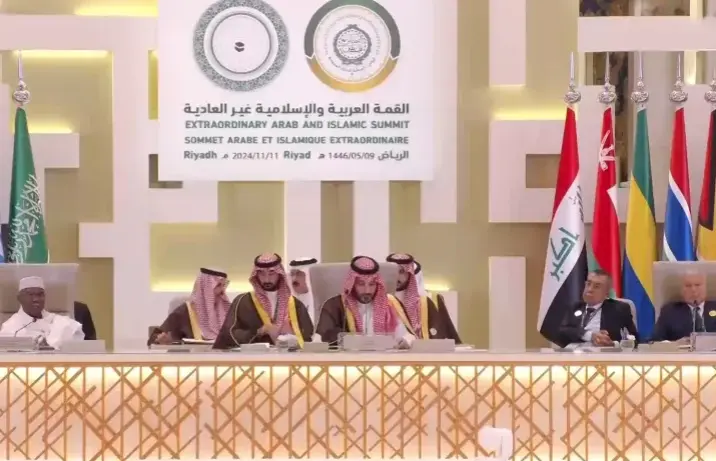

Breakthroughs and international investigations into the Hariri assassination


Khalifa linked this breach to previous international investigations, specifically into the assassination of Lebanese Prime Minister Rafik Hariri in 2005, where the intervention of external parties led to the disclosure of huge amounts of information about various communications systems, which Israel may have taken advantage of to obtain information about Hezbollah leaders and cadres.


Khalifa believes that Hezbollah's participation in the Syrian war in 2011 also contributed to exposing the party's movements and communications, which made it easy for Israel to track the activities of the party's members during that period.

Khalifa pointed to the recent "pager" incident as further evidence of the extent of Israel's close monitoring of Hezbollah's movements.


"Despite this severe blow, Hezbollah will be able to recover, as it did in the aftermath of the Second Lebanon War in 2006, when the United States supported Israel under the slogan 'Towards a New Middle East,'" she said.


That war, which witnessed a naval and air blockade of Lebanon, and the displacement of half a million Lebanese, ended with the party returning to its strength after reorganizing its ranks and learning lessons from the confrontation.


Ready-made scenarios for dealing with the loss of senior leadership


Khalifa believes that the assassination of Nasrallah, although a strong blow, is only part of a series of previous attacks. The party has ready-made scenarios for dealing with the loss of its senior leaders, and has clear instructions for carrying out operations even in the absence of leaders.


Khalifa stressed that Hezbollah will continue its resistance against the Israeli occupation, and will support Hamas in Gaza, while defending Lebanon and its people.


Khalifa touched on an issue related to Hezbollah's orientations in the next phase, as the party may rethink the extent of its connection to Iran, which is its main source of strength.


She pointed out that despite Hezbollah possessing an advanced missile arsenal, the party has not yet used its full capabilities in confronting Israel, which may raise questions about its hesitation.


Khalifa added: "Hezbollah is subject to Iran's directives and cannot disobey them, which explains its caution in using its missile force."


Khalifa Nasrallah


Regarding Nasrallah’s successor, she said: “The next phase will be greatly affected by the personality who will assume leadership of the party. Previously, Hassan Nasrallah assumed leadership of the party after the assassination of Abbas al-Moussawi, and was subjected to four assassination attempts since assuming the position. After Nasrallah’s assassination, he must be succeeded by someone close to his personality. The most prominent candidate to succeed him is Hashem Safi al-Din, who enjoys great confidence within the party and is considered one of the closest figures to Nasrallah. Alongside him, there is Naim Qassem, the deputy secretary-general, who supervises the party’s parliamentary and governmental work. The event will continue to contain surprises that may not have been expected by observers of the event, in order to confuse the enemy.”


Obligatory questions about security breaches


In turn, writer and political analyst Muhammad Jaradat said that the region witnessed an unprecedented development in the course of the conflict with Israel, after the assassination of Hezbollah Secretary-General Hassan Nasrallah, in a shocking and unexpected incident.


Jaradat explained that the assassination of Nasrallah raised necessary questions about the security breaches that the party, which is known for its security strength in the region, was exposed to, which makes this assassination, which came after a series of assassinations targeting the party’s military leaders, an exceptional event.


Jaradat raised several profound questions about this event, including: “Did a high-level security breach occur within Hezbollah’s structure? Or has Israel, with technological support from the United States, reached a tremendous technical development that enables it to target anyone it wants?”


"This mystery may remain unsolved for years, whether Hezbollah reveals it or Israel brags about it later," Jaradat added.


Jaradat stressed that the coming days may reveal more surprises regarding the conflict between Israel and Hezbollah, pointing out that “the security conflict is no less important than the military and political conflict, as the events, including the (Al-Aqsa Flood) war, carry many security puzzles that cannot be easily deciphered, except through analyses and relative estimates.”


Significant impact on the party in the short and long term.


Jaradat believes that the blows Hezbollah received, including the bombings of its communications devices and the series of assassinations, up to the assassination of Nasrallah, shook the party’s organizational structure, as Nasrallah was a figure of great religious, political, and spiritual stature, and this assassination will have a major impact on the party in the short and long term.


Jaradat referred to a similar incident, when Israel assassinated the former Secretary-General of Hezbollah, Abbas al-Moussawi, in 1992, and boasted about it, but later it became clear that the new leadership in the party was more developed and deeper, especially with the development of Iran’s capabilities in the region, which brought the idea of resistance into a new phase that changed the political and military scene in the region.


Despite all these challenges, Jaradat stressed that Hezbollah will remain cohesive, especially on the battlefields, where its fighters show great commitment under the party's leadership.

Jaradat believes that the party is facing major challenges, especially since these strikes may push it towards taking qualitative responses, and perhaps pushing the fighting towards a new, more complex phase.


Regarding Nasrallah’s succession, Jaradat explained that Hashem Safieddine is the most likely candidate to lead the party, as he is the leader of the executive authority in Hezbollah and a descendant of the Prophet’s family, which is an advantage that gives him preference, according to the Twelver Shiite doctrine, over his deputy, Naim Qassem.


Jaradat stressed that Hezbollah will not be shaken by the assassination of a person, as organizations are measured by their organizational structure and not by the presence of a specific individual.


Unprecedented challenges faced by Hezbollah


In turn, writer and political analyst Daoud Kuttab considered that Hezbollah is facing unprecedented challenges since the bombing of its communications devices, including pagers and walkie-talkies, through a series of assassinations targeting its cadres, and up to the assassination of the party’s Secretary-General, Hassan Nasrallah.


These strikes, according to the writers, revealed the existence of high-level breaches within Hezbollah, which will require time for Hezbollah to rearrange its internal papers.

Writers pointed out that Hezbollah, despite the successive blows it has received, has leaders, cadres, and a solid doctrine capable of filling the void left by these losses. However, the nature of these blows was harsh and requires the party to reconsider the organization’s structure and objectives.


Writers said that when the new leadership of Hezbollah takes over, it will need to plan on two levels: the first is to reorganize the party from within in terms of organization and equipment, and the second is to re-evaluate its relations with the Lebanese state and the international community.


It is not easy to choose a new Secretary General.


On the leadership front, writers stressed that choosing a new Secretary-General for the party would not be an easy task, especially since Hassan Nasrallah had charisma, wisdom, and the ability to manage matters with firmness and rationality that are rarely found in a single leader.


Writers pointed out that this absence of Nasrallah will put the new leadership in front of great challenges, as it will not be able to make decisions with the same freedom and comfort that Nasrallah enjoyed.


Writers believe that the new leadership must make decisive decisions regarding the conflict with Israel, the resistance’s relationship with Gaza, in addition to relations with the Lebanese state and its Syrian neighbors.


He stressed the need to reconsider the relationship with Iran, the main supporter of Hezbollah, which prefers to stay away from engaging in a direct war with Israel, which is an additional factor that increases the pressure on the next leadership.


Writers expected that Hezbollah would resort to a temporary collective leadership in the immediate period following Nasrallah’s assassination, with this leadership working to regain support and endorsement from the party’s cadres and the local and international community, especially countries related to Hezbollah.


More radical and radical changes in the coming period


Writer and political analyst Samer Anabtawi said: The Israeli occupation, since the 2006 war until now, has not entered into a direct confrontation with Hezbollah, but the occupation has focused its efforts on gathering intelligence information about the Lebanese resistance at all levels. In contrast, Hezbollah has been acting as if it were a state in itself, as its movements and work in its institutions and offices were largely normal. This state of "routine" has allowed Israel to carry out a series of attacks and assassinations, including blowing up the party's communications devices, and carrying out a series of assassinations, leading to the assassination of its Secretary-General, Hassan Nasrallah.


Anabtawi suggested that these attacks were carried out with intelligence assistance from other countries, such as the United States, and that Hezbollah did not take sufficient security precautions to protect its leaders and members.


Anbatawi said: "Although these strikes were painful and influential, the party possesses enormous capabilities, whether in terms of human cadres, weapons, or revolutionary mobilization, which will enable it to overcome these losses and regain its strength."


On the other hand, Anabtawi pointed out that the assassination of Hassan Nasrallah, who was considered a charismatic symbol and an influential leader at the regional level, will undoubtedly lead to an escalation in the confrontation between Hezbollah and Israel.


Party school with strict organizational rules


He added: Despite Hezbollah losing this influential figure, Nasrallah had established a school within the party based on strong organizational rules and strict party education, which means that the party will remain able to rearrange its papers and regain its health, even if that will require time and continuous efforts.


Anbatawi believes that Hassan Nasrallah’s absence will leave a huge void in the party, especially since Nasrallah was known for his wisdom, modesty, and ability to control balances locally and regionally, and his speeches were awaited and anticipated by everyone.


However, Anbatawi pointed out that Hezbollah may move towards more radical and extremist transformations in the coming period, as there were reports that Nasrallah might be succeeded by Hashem Safieddine, who is known for his extremism and desire to confront Israel.


Anbatawi pointed out that Safi al-Din is starting his term strongly by organizing the party’s ranks and conducting comprehensive reviews of the organizational structure. These changes may push the party toward further escalation with Israel, benefiting from its long experience in dealing with crises and restoring its strength after the assassination of its leaders.


He pointed out that the assassination of Nasrallah may give Hezbollah a new impetus to continue the confrontation, and that the party is capable of restoration and renewal, which may make it stronger in the long run.


Anbatawi pointed out that experiences have proven the ability of resistance movements to constantly review themselves and restore themselves when one of their leaders is assassinated, and therefore I believe that Hezbollah will recover.

ARAB AND WORLD

Sun 29 Sep 2024 10:35 pm - Jerusalem Time

Netanyahu: As it is written in the Torah, I will pursue my enemies and destroy them

Israeli Prime Minister Benjamin Netanyahu has once again resorted to the Torah to justify and explain the aggression that Israel is waging against Palestine, Lebanon and Yemen, threatening to change the equations in the region.


"As it is written in the Torah, I will pursue my enemies and destroy them," Netanyahu said at a press conference with new Israeli cabinet minister Gideon Sa'ar.


He added, "We are working systematically to assassinate Hezbollah leaders and change the strategic reality in the entire Middle East."


He stressed that changing the balance of power brings with it the possibility of new alliances in the region because then Israel will win.


He continued, "We are living a war on 7 fronts. We have crushed Hamas in Gaza, struck Hezbollah, and an hour ago we struck the Houthis in Yemen."


Commenting on the attacks launched by Israel this evening on the city of Hodeidah in Yemen, Netanyahu said, "We struck the Houthis in Yemen and we all saw the targets and the price paid by all those who attack us."


He stressed the need for internal unity, saying, "Unity of ranks is the necessary condition for us to be able to stand up to our enemies and eliminate Hamas."


ARAB AND WORLD

Sun 29 Sep 2024 9:12 pm - Jerusalem Time

Lebanese Health: 70 killed and more than 80 wounded in intensive Israeli raids

The death toll from Israeli bombing of areas in southern and eastern Lebanon rose to 70 killed and 80 wounded on Sunday.


Earlier today, the Lebanese Ministry of Health reported, through a series of statements, that 45 people were killed and 76 injured in Israeli raids on villages in Sidon (south) and Baalbek (east).


It later reported that the intensity of the Israeli bombing had escalated, raising the number of victims to 70 killed and 80 wounded, in an incomplete toll.


The official Lebanese News Agency said that for the first time since October 8, Israeli warplanes launched a raid on the town of "Jab Janin" in the Western Bekaa (east), which led to the death of 4 people and the injury of 4 others.


It also reported the death of a family of 17 people in an Israeli raid that targeted the town of Zboud in the northern Bekaa, in addition to the presence of missing people under the rubble.


The agency also reported that 4 people were killed in 3 raids that targeted a building in the village of Halbata in the Bekaa (east).


The Ministry of Health's Emergency Operations Center said in a statement that "the Israeli occupation raids on the Baalbek-Hermel district (east) led, in an initial toll, to the martyrdom of 21 people and the injury of 47 others."


In Sidon (south), 24 people were killed and 29 others were injured, as a result of an Israeli raid that targeted a residential building in the Ain al-Delb area, according to the center.

PALESTINE

Sun 29 Sep 2024 8:26 pm - Jerusalem Time

UAE - Continuous support for the Palestinian people and ongoing humanitarian initiatives in Gaza

The United Arab Emirates is one of the most prominent countries that have supported the Palestinian people in various humanitarian crises, based on its historical and humanitarian approach in supporting the Palestinians, which was established by the late Sheikh Zayed bin Sultan Al Nahyan, may God bless his soul. This upward trajectory has continued in the approach of the current Emirati leadership, as the UAE has continued to provide support to Palestine for decades.


The UAE's aid extended to several areas in Palestine, including the Gaza Strip, Jerusalem, Jenin, and the entire West Bank. It included building residential cities, providing health services, providing financial support, and implementing development projects, in addition to the urgent aid provided by the UAE in crises, such as the one currently facing the Gaza Strip, where the UAE provided urgent aid to those affected and the people in Gaza who have been suffering from the burden of difficult conditions and major daily challenges for nearly a year.


Emirati initiatives to support Gaza

Since the beginning of the war, the UAE has rushed to launch humanitarian initiatives to alleviate the suffering of the people of the Gaza Strip, alleviate the pain of the sick, treat the injured, and lift the suffering of the Palestinian people. These initiatives included providing food, medicine, and medical supplies, in addition to emphasizing the need to provide protection for civilians, spare them the dangers of war, and preserve the lives of civilians and life facilities in accordance with international humanitarian law.


air bridges

Air bridges were launched to transport humanitarian aid from UAE airports to El Arish Airport in Egypt, as part of Operation "Gallant Knight 3" under the directives of His Highness Sheikh Mohammed bin Zayed Al Nahyan, President of the UAE, to provide humanitarian and relief support to the people of the Gaza Strip, and to develop various initiatives to meet the needs of those affected. This operation included dropping aid through air operations under the title "Birds of Goodness", and implementing relief campaigns. Cooperation was also made with international charitable organizations, most notably the Central Kitchen Foundation, by sending aid shipments to the Gaza Strip via the previously existing sea corridor.


Collective efforts

Emirati charitable institutions, such as the Emirates Red Crescent, Emirates Humanitarian City, Khalifa bin Zayed Al Nahyan Foundation, Zayed bin Sultan Charitable and Humanitarian Foundation, and other humanitarian and charitable institutions in the UAE, worked in complete harmony to implement the objectives of Operation “Gallant Knight 3”. The door to volunteering was opened to many doctors registered with the Ministry of Health and the Department of Health in Abu Dhabi, and volunteers registered with the Emirates Red Crescent and charitable institutions in the UAE.


Treatment outside the sector

The UAE established the Emirati floating hospital off the coast of the city of Arish, which has 100 beds and has received hundreds of cases for treatment. It also established the Emirati field hospital in southern Gaza under the supervision of an Emirati medical team, with more than 100 medical and pharmaceutical cadres and laboratory technicians working in it. The hospital has treated more than 48,320 cases since its opening on December 2, 2023.

His Highness the President of the UAE also directed the treatment of 1,000 children from the Gaza Strip in the UAE’s hospitals, and the provision of all types of medical and health care they need, until they recover and return, in addition to hosting 1,000 Palestinians suffering from cancer from the Strip of different age groups, to receive treatment and all types of health care they need in the country’s hospitals, and hosting patients and their families in the Emirates Humanitarian City, which is a pioneering model in charitable work, where more than 1,500 of the targeted cases have arrived.


In the context of financial support, the UAE provided $20 million through UNRWA, in addition to other donations to support the health and food sectors in Gaza, such as allocating financial contributions to support the efforts of Sigrid Kaag, the United Nations Senior Coordinator for Humanitarian Affairs and Reconstruction in Gaza, in addition to providing two grants to support the food and health sectors in the Gaza Strip to provide direct food support, and to support the health sector in Gaza, especially for children, in cooperation with the World Health Organization.


"Mercy for Gaza" Campaign

The UAE Ministry of Foreign Affairs, in cooperation with the Emirates Red Crescent and the World Food Programme, launched the "Compassion for Gaza" campaign, in which more than 24,000 volunteers participated. During the campaign, 71,000 relief packages were prepared through events organized in Abu Dhabi, Dubai, Sharjah and Ajman, with the participation of 20 charitable institutions. In addition, $15 million was allocated to support the "Amalthea Fund", with the aim of supporting the former maritime humanitarian corridor between Cypriot ports and Gaza.


Infrastructure and water support

As part of its ongoing efforts, the UAE has provided automatic bakeries to provide it to tens of thousands of residents in Gaza, in addition to establishing water desalination plants that provide more than one million gallons of water daily, benefiting hundreds of thousands of residents of the Strip.


In terms of food aid, the UAE has delivered more than 2,000 tons of food supplies by sea to the Gaza Strip, in cooperation with the United States Agency for International Development, the United States, Cyprus, and the United Nations, in partnership with ANERA, in addition to 300 tons of food aid to the northern Gaza Strip, via the sea corridor, in cooperation with the World Central Kitchen Foundation. It has also sent 8 aid ships to the port of El Arish, carrying more than 18,500 tons of food supplies, to enter the Strip and deliver them to residents in various areas.


ARAB AND WORLD

Sun 29 Sep 2024 8:14 pm - Jerusalem Time

Iran cautious after Israeli strikes on Hezbollah

The New York Times reported that leaders in Tehran indicated that the Lebanese resistance movement (Hezbollah) is the one that will respond to Israel after the killing of Hassan Nasrallah and the bombings in Beirut, in a hint that Iran is distancing itself from a possible confrontation with Israel and the West.


In the turbulent landscape of the Middle East, Iran’s aging supreme leader, Ayatollah Ali Khamenei, could always count on the close alliance, unwavering loyalty and deep friendship of Hassan Nasrallah, the leader of Lebanon’s Hezbollah. So when Israel killed Mr. Nasrallah in a massive airstrike on Friday, it suddenly eliminated a single force in Khamenei’s hierarchy of close associates.


For 40 years, Iran has nurtured Hezbollah as the main arm of its affiliated forces and militias as a forward defense against Israel. But in the past two weeks, Hezbollah’s capabilities have begun to crumble under wave after wave of Israeli attacks on its leadership, arsenal and communications.


The newspaper claims that “now, differences have opened up within the Iranian government over how to respond to the killing of Mr. Nasrallah, with conservatives arguing for a strong response, while moderates, led by the new Iranian president, Masoud Pezeshkian, are calling for restraint,” and that this has left Iran, and its supreme leader, in a weak position.


The newspaper quotes four Iranian officials who knew Mr. Nasrallah personally and were briefed on the events, including two members of the Islamic Revolutionary Guard Corps, (who asked not to be identified because they were not authorized to speak publicly) as saying that Khamenei was deeply affected by his friend’s death and was in mourning, but he took a calm and practical stance.


Khamenei has taken the same tone in public. Instead of attacking Israel, he issued two restrained statements, praising Mr. Nasrallah as a leading figure in the Islamic world and the axis of resistance, and saying that Iran would stand by Hezbollah.


It is worth noting that Khamenei indicated that Hezbollah, not Iran, would lead any response to Israel, and that Iran would play a supporting role. Khamenei said: “All resistance forces stand with Hezbollah. Hezbollah, at the head of the resistance forces, will be the one that determines the fate of the region.”


Some analysts said it was a telling sign that Khamenei may have no way to respond effectively at the moment to an Israeli attack on his number one ally in the region. “Faced with a choice between all-out war with Israel or hiding for self-preservation, he appears to have chosen the latter,” the paper said.


“They have been completely reined in by Israel at the moment,” Sanam Vakil, Middle East director at Chatham House in London, was quoted as saying by the newspaper. “Khamenei’s statement signals the gravity of the moment and caution, but he is not publicly committing to anything he cannot implement.”


Khamenei’s remarks were followed by a wave of reactions from senior Iranian officials and military leaders in the same cautious tone, calling on other militia groups in the region to retaliate. Brigadier General Hossein Salami, commander-in-chief of the Revolutionary Guards, said that “Hezbollah, Hamas and other Palestinian militants” would be the ones to strike Israel.


In Tehran, the news of Mr. Nasrallah’s death cast a shadow of shock and anxiety over senior officials, who wondered in private phone calls and during emergency meetings whether Israel would strike Iran next, and whether Khamenei would be its next target, the four Iranian officials said in telephone interviews.


“This was an incredibly hard blow, and realistically, we have no clear path to recovery from this loss,” Mohammad Ali Abtahi, a former Iranian vice president, said in an interview from Tehran on Saturday with The New York Times. “We are not going to war, that is out of the question. But Iran will not back down from its support for militant groups in the region, nor from de-escalating tensions with the West. All of these things can be pursued at the same time.” The collective sentiment among Iranian officials, Abtahi said, was “shock, anger, sadness and a lot of anxiety.”


But this was not entirely different from the sentiment that prevailed after Hamas’s attacks on Israel on October 7, when Iran and its other allies celebrated the surprise incursion. Hezbollah then almost immediately attacked northern Israel with rockets and continues to exchange fire. Iran has gradually activated its network of “resistance axis” to open fronts against Israel and create chaos in the region in order to pressure the United States and Israel to cease fire with Hamas.


For Iran, experts say, the bet was to keep the pressure on without igniting a full-scale regional war.


“In many ways, the year-long confrontation between Iran, its proxies, and Israel reached its violent climax when Mr. Nasrallah was killed. Iran’s efforts to weaken Israel through its proxies appear to have backfired, delivering a disastrous blow against its most strategic ally.”


When news broke that Israel might have killed Mr. Nasrallah, Khamenei called an emergency meeting of the Supreme National Security Council at his home, Iranian officials said. During the meeting, people were divided over how to respond. Conservative members, including Saeed Jalili, an influential former presidential candidate, argued that Iran needed to quickly establish deterrence by striking Israel before Israeli Prime Minister Benjamin Netanyahu brought war to Tehran, according to officials familiar with the meeting.


Iran’s new president, Masoud Pezeshkian, who spent the past week telling world leaders at the United Nations General Assembly that his government wanted to defuse tensions and align with the West, argued against such a response, saying Iran should not fall into a trap set by Mr. Netanyahu for a wider war, Iranian officials said.


Other moderate voices in the council claimed that Netanyahu had crossed all red lines, and that if it launched attacks on Israel, Iran could face horrific attacks on its vital infrastructure, something the country could not afford, these officials said, especially given the dire state of the economy.


According to experts, Iran has faced a series of challenges domestically, from public discontent with government corruption, economic mismanagement and widespread hardship to Israeli infiltration into the ranks of the Iranian military and politics.


It is noteworthy that in New York, during the 79th session (which was covered by Al-Quds newspaper), Pezeshkian told reporters that Iran was ready to "lay down its weapons if Israel lays down its weapons," and called for the intervention of an international force to bring peace to the Middle East.


Pezeshkian has had to deal with two major crises during his two months in office: Israel’s assassination of Hamas political leader Ismail Haniyeh in Tehran on the night of his inauguration, and the killing of Sayyed Nasrallah on Friday, September 27, 2024.


According to experts, the twin crises have made him an easy target for conservatives in Iran, who have criticized his conciliatory message in New York, saying it showed weakness and encouraged Israel to kill Mr. Nasrallah. The conservatives have argued that Iran should deploy fighters to Lebanon, as it did to the Syrian government in its civil war, to help Hezbollah in the event of a full-scale war with Israel.


“Israel has attacked the core cell of the resistance, so we cannot remain indifferent,” said conservative cleric Ayatollah Mohammad Hassan Akhtari, head of the Iranian Committee for Supporting Palestinians and former head of international relations in Khamenei’s office.


Two members of Iran’s Revolutionary Guard Corps — including a strategist who has been in planning meetings over the past two days about how Iran might respond — said in interviews with The New York Times that Iran’s immediate priority is to help Hezbollah get back on its feet, name a successor to Mr. Nasrallah, form a new command structure and rebuild a secure communications network. After that, Hezbollah can plan its response to Israel, they said.


Two members of the Revolutionary Guard said Iran was planning to send a senior Quds Force commander to Beirut via Syria to help guide Hezbollah's recovery.

PALESTINE

Sun 29 Sep 2024 7:19 pm - Jerusalem Time

Israel arrests foreign activists and attacks a family south of Hebron

Today, Sunday, the Israeli occupation forces arrested foreign activists while they were documenting settler attacks in Masafer Yatta, south of Hebron.


Activist Osama Makhamreh said that the occupation forces stormed the village of Al-Tuwani in Al-Masafir, assaulted the family of Hafez Al-Harini, and arrested foreign activists after preventing them from filming and documenting the ongoing violations against citizens in the area.

ARAB AND WORLD

Sun 29 Sep 2024 6:18 pm - Jerusalem Time

24 killed and 29 wounded in a new Israeli attack on Lebanon

The Public Health Emergency Operations Center of the Lebanese Ministry of Public Health issued a statement announcing that the Israeli occupation's attack on Ain al-Delb led, according to a preliminary toll, to the martyrdom of 24 people.


The statement explained that the aggression left 29 people injured.


During the past half hour, the occupation's warplanes launched 4 raids on the town of Naqoura.


The warplanes also launched a raid targeting the town of Alma al-Shaab.


According to local sources, there is an intensive flight of drones over Beirut and the southern suburbs at a very, very low altitude.

ARAB AND WORLD

Sun 29 Sep 2024 5:56 pm - Jerusalem Time

Israel launches raids on Al-Hodeidah Governorate, western Yemen

Today, Sunday, the Israeli occupation air force launched a series of raids on Al Hudaydah Governorate, west of Yemen.


A security source told the Yemeni News Agency, Saba, that the occupation's warplanes targeted oil tanks in Ras Issa port and areas near Hodeidah port.


The source indicated that the occupation targeted the current power station in the city of Hodeidah with several raids.

PALESTINE

Sun 29 Sep 2024 5:49 pm - Jerusalem Time

UN issues report on impact of Gaza war on women's health

UN Women has released a report on the health situation in Gaza, entitled “Gaza: War on Women’s Health.” The new report provides a comprehensive analysis of the health sector crisis in Gaza and its impact on the physical and mental health of women and girls.


The report, according to a statement issued by the Authority on Sunday, which is the Authority’s fifth since October 7 of last year, reveals the increasing health risks facing women in Gaza, especially with regard to non-communicable diseases among the elderly, cancer, infectious diseases, and the health and nutrition of pregnant and lactating mothers, in light of the disruption of medical services and the inability to access medicines.


The Commission warned of the invisible damage of the war on Gaza, indicating that after more than 11 months of war, the health care system there has almost collapsed, as 84% of health facilities have been destroyed, while those still in service lack medicines, ambulances, basic life-saving treatment, electricity and water.


She added that estimates indicate that more than 177,000 women face life-threatening health risks, in addition to 162,000 women suffering from non-communicable diseases or at risk of developing diseases including diabetes, cancer, cardiovascular diseases or high blood pressure, as 15,000 pregnant women stand on the brink of famine.


“Many women in Gaza are at risk of death from medical complications after months of no medication, limited access to doctors and no treatment for serious illnesses such as diabetes or cancer, and it is imperative that we act quickly to save their lives,” said Moez Doraid, Acting Regional Director for Arab States of UN Women.


He pointed out that an immediate and sustainable ceasefire, the provision of safe and unhindered humanitarian assistance, and access to medicines and health services throughout Gaza are essential to prevent further deterioration.

ARAB AND WORLD

Sun 29 Sep 2024 4:21 pm - Jerusalem Time

Israeli army announced the names of Lebanese leaders assassinated in Friday's raid

The Israeli occupation army announced the assassination of 20 leaders from the circle of the Secretary-General of Hezbollah, the martyr Hassan Nasrallah, in raids it launched on the southern suburb of Beirut last Friday.


The occupation army said that it assassinated Abdul Amir Muhammad Sablini, who was responsible for building Hezbollah’s force; Ali Nafi Ayoub, who was responsible for coordinating Hezbollah’s firepower; Samir Tawfiq Deeb, Nasrallah’s advisor; and Ibrahim Hussein Jazini, the head of Nasrallah’s special security unit.


In a press statement, Hezbollah mourned Nabil Qaouk, the commander of Hezbollah's Preventive Security Unit, who was assassinated by the Israeli occupation.


The New York Times reported, quoting officials in Tel Aviv, that they said: “We decided to strike Nasrallah at his location, which we had known for three months.”


In addition, American media confirmed that Hezbollah retains thousands of experienced fighters and a large arsenal that it can use despite Nasrallah's assassination.


The Hebrew newspaper Haaretz reported that the Ministry of Interior in the Israeli occupation entity is planning to recruit asylum seekers into the army in exchange for granting them permanent residency.


The Hebrew newspaper added that there are estimates that the occupation army suffers from a shortage of about 10,000 soldiers, as it faces a multi-front war and exhaustion among the soldiers.

ARAB AND WORLD

Sun 29 Sep 2024 3:34 pm - Jerusalem Time

17 killed from one Lebanese family as a result of Israeli bombing of the eastern Bekaa

17 citizens from one family were killed on Sunday afternoon, as a result of the Israeli occupation's bombing of the towns of the eastern Bekaa.


Our correspondent reported that 17 people from a Lebanese family were martyred this afternoon, as a result of the occupation bombing of a residential building in the town of Zboud in the Bekaa.


He pointed out that the occupation raids continued on a number of Lebanese regions, targeting the city of Baalbek, and the towns of Nabi Sheet, Tamnin al-Tahta, al-Kharibeh, al-Hermel, Halbata, Sahmar, al-Ain, and Ayat, al-Ain in the Bekaa.


The occupation warplanes also raided the cities of Tyre and Nabatieh, and the towns of Marjeyoun, Zoutar al-Sharqiya, al-Tira, Tayr Harfa, al-Aytaniyah, Yahmor, Aba, Maaroub, Ainata, al-Qasimiyeh, Bdayas, Shaqra, al-Jumaijmeh, Houmin al-Fawqa, Tayr Dibba, Qabrikha, Majdal Salm, Rashkaniya, al-Qasiba, Qaqaiyat al-Jisr, al-Sawan, Aita al-Shaab, al-Mahmoudiya, al-Aishiyya, al-Bissariyya, Beit Lif, Bint Jbeil, Arabsalim, Yahun, al-Kharayeb, al-Qantara, Markaba, Alman, al-Zrarieh, and the hills and heights of Iqlim al-Tuffah in southern Lebanon.

PALESTINE

Sun 29 Sep 2024 1:42 pm - Jerusalem Time

War on Gaza: 4 killed and 15 wounded inIsraeli bombing of a school in Beit Lahia

Four citizens were killed and others were injured, Sunday afternoon, when the occupation bombed a school housing displaced people in Beit Lahia.


According to local sources, 4 citizens were killed and 15 others were injured, most of them children and women, when the occupation warplanes bombed two classrooms in Umm al-Fahm School, located in the Sultans area west of Beit Lahia town in the northern Gaza Strip, with two missiles.


The Ministry of Health in the Gaza Strip reported that the total number of martyrs since the beginning of the Israeli aggression on October 7 has risen to 41,595, including a large percentage of children and women. The number of wounded has also risen to 96,251, while thousands of victims are still under the rubble, as ambulance and civil defense crews face great difficulties in reaching the wounded due to the ongoing Israeli bombardment.


It pointed out that 9 people were killed and 41 others were injured in the past 24 hours alone. A number of victims are still under the rubble or in the streets, with ambulance crews unable to rescue them in light of the ongoing targeting.


Since October 7, Gaza has been witnessing an escalating Israeli aggression that has mainly targeted civilians and infrastructure.


This aggression has led to widespread destruction and the deaths of tens of thousands of people, while the humanitarian situation is worsening with the continuation of the siege, displacement and migration.

OPINIONS

Sun 29 Sep 2024 9:52 am - Jerusalem Time

Israeli aggression has no boundaries

op-ed - Al-Quds dot com

op-ed - Al-Quds dot com

Opinion Writer

There was a huge difference between the statements made by the Israeli Prime Minister Netanyahu, the deceitful one who speaks lies and nonsense, when he said from the podium of the United Nations General Assembly that Israel seeks peace and will continue to achieve it, and what is happening on the ground of the brutal and sinful aggression that Lebanon is being subjected to and the ongoing war on the Gaza Strip.


The Israeli aggression knows no bounds, and knows nothing but brutality and random killing. Despite the fact that a large number of delegations left the UN hall where Netanyahu delivered his speech in disapproval, denunciation and protest against Israel’s unjust practices against the Palestinians and Lebanese everywhere, this is not enough. It is time for Netanyahu to be arrested as a war criminal and for the International Criminal Court’s decisions to be implemented on the ground, instead of allowing him to ascend the UN platform to spread poison and games.


The United States, as usual, has opened its corridors and hotels to Netanyahu, and has put all means of technology at his disposal. Yesterday evening, he was seen giving the decision to carry out the targeting operation of an entire residential block in the southern suburb of Beirut, in a clear indication of the United States’ partnership in the aggression, and its complete coordination with the Israeli entity to continue the war on our Palestinian people and their Lebanese brothers.


Yesterday, Israel committed a new massacre against Lebanese civilians, adding to the series of previous massacres. Israel is trying to pass off a narrative and hypothesis that the target of the raids that destroyed the entire residential block, as a result of bombs and shells weighing thousands of tons, accompanied by concussion missiles, is Sayyed Hassan Nasrallah, Secretary General of Hezbollah, so that this crime will pass like dozens, even hundreds of other crimes and massacres without punishment from the international community, which is silent like a mute devil about the crimes of the occupation against children and women, which are crimes that rise to the level of war.


The Israeli attack on the southern suburb of Beirut proves that Israel does not care about international calls for a ceasefire, and that it will continue the aggression and may escalate its pace to another advanced stage, perhaps reaching preemptive strikes larger in size than what we have seen, and in deeper and wider targets towards the Lebanese center, in preparation for a possible ground invasion, while continuing to commit massacres that claim the lives of hundreds of innocent Lebanese.


Despite Israeli estimates that the attack was successful, awaiting confirmation of the assassination of Nasrallah and the party’s senior leaders who met underground, Hezbollah is maintaining silence regarding what happened, regardless of the results of this Israeli bombing and targeting. In addition to being considered a new violation of all red lines, it cannot be ignored that the security breach of Hezbollah’s sensitive privacy has reached a very high level approaching the point of being considered a dangerous conspiracy committed against the party. Despite all of this, the rules of the game have changed and it is likely that Israel will await a stronger response. Hence, Netanyahu cut additional hours from his visit to the United States and decided to return to Israel. Will Hezbollah change the rules and equations of the battle, expand the scope of its bombing, intensify it and increase its pace, in response to the Israeli violations and aggression that has no limits, or will it continue to be careful not to drag Lebanon into a comprehensive and deadly war and will it be satisfied with its declared position and explicit decision to continue its role as a support front only for the resistance in the Gaza Strip?

Critical hours await us, and they will most likely bring more escalation.

OPINIONS

Sun 29 Sep 2024 9:40 am - Jerusalem Time

Iran Sells Its Cards... to Save Its Head

Badi Younes

Badi Younes

Opinion Writer

The international conflict has always intensified in every corner of the world and every land without exception. The conflict has intensified within Europe over the demarcation of borders and the affiliation of nationalities and minorities...


Suddenly, Iranian Leader Ali Khamenei proposed moving from the principle of "strategic patience" to a new principle he called "tactical retreat", at a time when the battle was raging and Israel was advancing and bombing the party and Lebanon daily, and continuing to target the party and its leaders.


Originally, it was never proposed that Iran would sacrifice for its arms. The equation is not equal between them, nor is it a Win Win equation, but rather an Iran Win equation at the expense of countries and its arms therein. These arms are tasked with securing Tehran's regional and international interests and protecting Iranian territory. As for the logistical, material and military support, it was only for that purpose.


For 4 decades, the Iranian regime has been creating tools for itself in the region and the world. It provides it with money, weapons, and all the necessary supplies to sustain its “strategic steadfastness” and to endure its “strategic patience” with the aim of achieving victories in its countries, so that Tehran can later employ these victories throughout the region according to its interests. So it is not surprising that Iranian Foreign Minister Abbas Araqchi came out, in the wake of the strikes that the party is being subjected to in Lebanon, and declared that “the focus with European countries is currently on talks.”


Iran sells papers... to save its head


According to the theory of “strategic patience” and strategic steadfastness, the regime in Tehran supported all its allied forces, and was proud that it had lifted them from a primitive stage to a stage of militarization and transforming them into armed organizations parallel to armies that influence their countries, their region, and the geography of the region, pushing them to seize the reins of power or influence them effectively. It exploited their sacrifices and losses to negotiate with the West in general, and with Washington in particular, over the lives of their fighters and the destruction of the countries it controls.


But today's changes have made Tehran jump off the ship before it sinks. It has been subjected to successive blows that have made it start selling papers to gain their price before they burn.


According to the theory of "strategic patience" and strategic steadfastness, the regime in Tehran supported all its allied powers

Iraq began its "independence"


In Iraq, the regime in Tehran believed that its control over the neighboring country was permanent and eternal. It did not test the Iraqi popular mood, which, although it had previously suffered from injustice and oppression, would not accept replacing one occupation with another, and would not accept the continued looting of its wealth by anyone inside through corruption or in the surroundings through the investment and exploitation of armed organizations. There is no astonishment in front of our vision of the regime in Iraq paving its way towards independence, nor is there astonishment in its steps towards Iraqi sovereignty, even if slowly, carefully and patiently.


In contrast, Tehran did not hide its annoyance with Baghdad's steps, and its multiple pressures were clear financially, economically, and security-wise, perhaps to bring it back into its sphere of influence, as it constitutes the first bridge to the arms and the last fortress of Iranian territory.


Syria is out of the game


Tehran invested in its expansionist projects in Syria, spent billions on the regime, and supported it with human, security, and military resources to survive and endure. It was said that the debts owed by Damascus to Iran during the civil war exceeded 35 billion dollars. Meanwhile, the Syrian citizen still stands in line for more than 48 hours to get a few liters of gasoline because Tehran refused to provide additional shipments of petroleum products.


In addition, after the "Al-Aqsa Flood", Damascus informed Tehran that it would not participate in any military confrontation with Tel Aviv of any kind. Rather, Syria is waiting for the circumstances that will distance it from the axis of resistance, and the positive Arab approach towards it motivates it to take this direction.


… The Party Alone


The party alone took upon itself the task of “confronting and steadfastness” despite the diminishing forces involved in the Iranian axis, linking the fate of Lebanon to the fate of the Gaza Strip. Despite Gaza becoming a thing of the past, the party continued what it called the “war of support” for Gaza, which turned into a destructive war for the southern suburbs of Beirut and the villages and towns of the south, all the way to the Bekaa and a large number of other Lebanese regions in the Chouf, Jbeil and Keserwan...


Originally, it was never proposed that Iran would sacrifice for its arms, as the equation is not equal between them.


From the attack on the southern suburb that targeted the party’s secretary-general, to the pager and wireless bombings, to the assassination of the leaders of the Radwan Force and others, this new war carries within it a radical change in all the prevailing theories about deterrence and the rules of engagement, and what is related to the previous calculations and estimates of the nature of the conflict and the narratives of the “collapse of the enemy entity,” and its weakness described as “weaker than a spider’s web.”


Today, the party is caught between the Tel Aviv trap and the humanitarian and organizational catastrophe. He is in a very critical predicament, as he cannot declare a ceasefire and abandon the support war and his support for Hamas, after Tehran pushed him to adopt it and relied on him to repel Israeli attacks on it. At the same time, he is no longer able to bear more human losses, whether within the organization or within the environment that supports it.

The new war changed traditional readings, including what was said about the deterrence system, and about continuing to receive similar strikes, and about responding to responding, and the equations of Tel Aviv versus Dahiyeh, and civilian versus civilian. This war, with its timing, expansion, and human and geographical reach, constituted a great moral, military, and security harm within the party's ranks, its surroundings, and its environment, especially since Tel Aviv has deliberately prepared the ground for a war of varying weight, in which the party has no effective tools and weapons, while the attacker suffers "zero losses."


Iran did not sell the party, but rather sold its card now. It may need it again one day, but at least today it has offered it as a sacrifice on the altar of negotiations.


A "new" war by all standards


This war has eliminated the means of communication and ways of communicating between cadres and leaders, amidst the continuous assassinations of party leaders. On the one hand, it is difficult to remain silent about the damage, calamities and woes that have occurred, and on the other hand, being lured into a violent response leads to where Tel Aviv wants.


This difficult situation, coupled with the ongoing difficulties in the Red Sea, the port of Hodeidah and Jurf al-Sakhar in the Iraqi province of Babylon, the assassinations in the southern suburbs of Beirut and in the heart of Tehran, the questions that accompanied the downing of Raisi’s plane, and the technological electronic enemy “attached to the bodies of the fighters” caused… led Ali Khamenei to elect Masoud Pezeshkian as president of his regime, and will lead him further to adopt a policy of “tactical retreat”.


Iran did not sell the party, but rather sold its card now. It may need it again one day, but at least today it has offered it as a sacrifice on the altar of negotiations. This is no secret to anyone. The statements of Iranian leaders have not yet been erased from the newsreels. The party remains alone. There is no salvation for it and its environment except by waking up and returning to their Lebanese identity, away from Tehran and its interests. They have nothing left but Lebanon and the Lebanese people, who are healing their wounds today and opening their regions and arms to them, despite all the accumulated differences and disagreements.

Source: Assas Media


OPINIONS

Sun 29 Sep 2024 9:39 am - Jerusalem Time

It's an Arab battle, not Iran's

Hamada Faraana

Hamada Faraana

Opinion Writer

Whether Iran's friends and those who side with it, or its opponents who are happy to record observations or shortcomings in its performance, both look at Iran with interest, either by providing justification and searching for excuses for its shortcomings in confronting the Israeli colony, or by recording condemnation for not adhering to what duty dictates to it in directing a strike or strikes on its part in response to the aggression against it or its allies by the Israeli occupation forces.


The battle is not Iran's battle, but rather the Arabs' battle. If there is any blame, it should be directed at Arab negligence, not at Iran. Iran is an independent state that understands its interests and acts on this basis. It would be an unbalanced adventurer if it fought battles for the sake of others, for the sake of the Arabs, if it had no interest in doing so.


We do not have relations with Hamas or Hezbollah. We disagree with them. However, Jordan understands where its national and regional interests lie. The head of state and the foreign minister act in expressing our feelings and interests by siding with Palestine and Lebanon, because directing strikes against Hamas and Hezbollah, undermining their position, ending their role and eliminating their leaders, is being done by the hands of the colony and in the interest of its domination and hegemony over the Arab East region. Do we have an interest in that even if we disagree with the policies of Hamas and Hezbollah?


We disagreed with the regimes of Saddam Hussein and Hafez al-Assad, and yet Hussein used to say with determination and insistence: “We will not participate in the slaughter of Iraq under the American flag.” Hussein recorded for us the honor of our armed forces that they did not participate in the slaughter of Iraq, and did not harm it, and we paid a price for this noble nationalist stance that our country took, and that our political system practiced with loftiness and dignity, and likewise with Syria, we refused to contribute to undermining the Syrian regime or harming it.


Iran acts according to its interests. It has no interest in clashing with the United States for several reasons: First, it seeks to end the state of estrangement with Washington, perhaps to end the state of siege and sanctions imposed on it. Second, to implement the nuclear agreement reached in 2015, perhaps to reach membership in the nuclear club. Third, so that Washington does not push towards contributing to the bombing of the colony’s forces of: 1- The Iranian nuclear reactor that will produce a nuclear bomb for it, and 2- The oil refineries that produce energy and financial resources for it by selling oil. Therefore, it acts according to its interests, and its interests only, and not for the interests of the Arabs, even if they are its friends, allies, or followers.


Hezbollah provided interaction and sacrifice in support of Palestine, and now it is paying the price. Therefore, it deserves appreciation for what it did. This is the first time that there has been actual Arab participation at this level, contributing to alleviating the burden on the people of Gaza and its resistance.


The battle is the battle of the Palestinian people first and foremost, and those Arab brothers who stand with them. Netanyahu is the one who evades the formula of the Palestinian-Israeli conflict over the entire land of Palestine, or the Arab-Israeli conflict by occupying the Syrian Golan Heights and southern Lebanon, and he describes the conflict as “Israeli-Iranian” in an attempt to show his role in protecting American and European interests in the Arab world in the face of Iran and its “terrorist” tools.


The battle is the Arabs’ battle, and Iran has no role in it unless its direct interests are harmed. Otherwise, do not bet on any Iranian intervention in the interest of the Arabs and the liberation of their lands occupied by the Israeli colony.