ARAB AND WORLD

Sat 12 Oct 2024 7:48 pm - Jerusalem Time

The death toll from Israeli aggression on Lebanon rises to 2255

The Lebanese Ministry of Health announced, on Saturday evening, that the death toll from the ongoing Israeli aggression on the country since October 8, 2023, has risen to 2,255 dead and 10,524 wounded.


The ministry said in a statement that "during the past 24 hours, 26 dead and 144 wounded were recorded," according to the Lebanese News Agency.


Since September 23, Israel has expanded the scope of the genocide it has been committing in Palestine since October 7, 2023, to include most of Lebanon’s regions, including the capital Beirut, through unprecedentedly violent and intense airstrikes. It has also begun a ground incursion into the south, disregarding international warnings and UN resolutions.


These raids, until Saturday evening, resulted in 1,437 dead and 4,123 wounded, including a large number of women and children, and more than 1,340,000 displaced persons, according to official Lebanese data.

PALESTINE

Sat 12 Oct 2024 6:26 pm - Jerusalem Time

Six dead in the occupation's bombing of Al-Maghazi and Jabalia camps

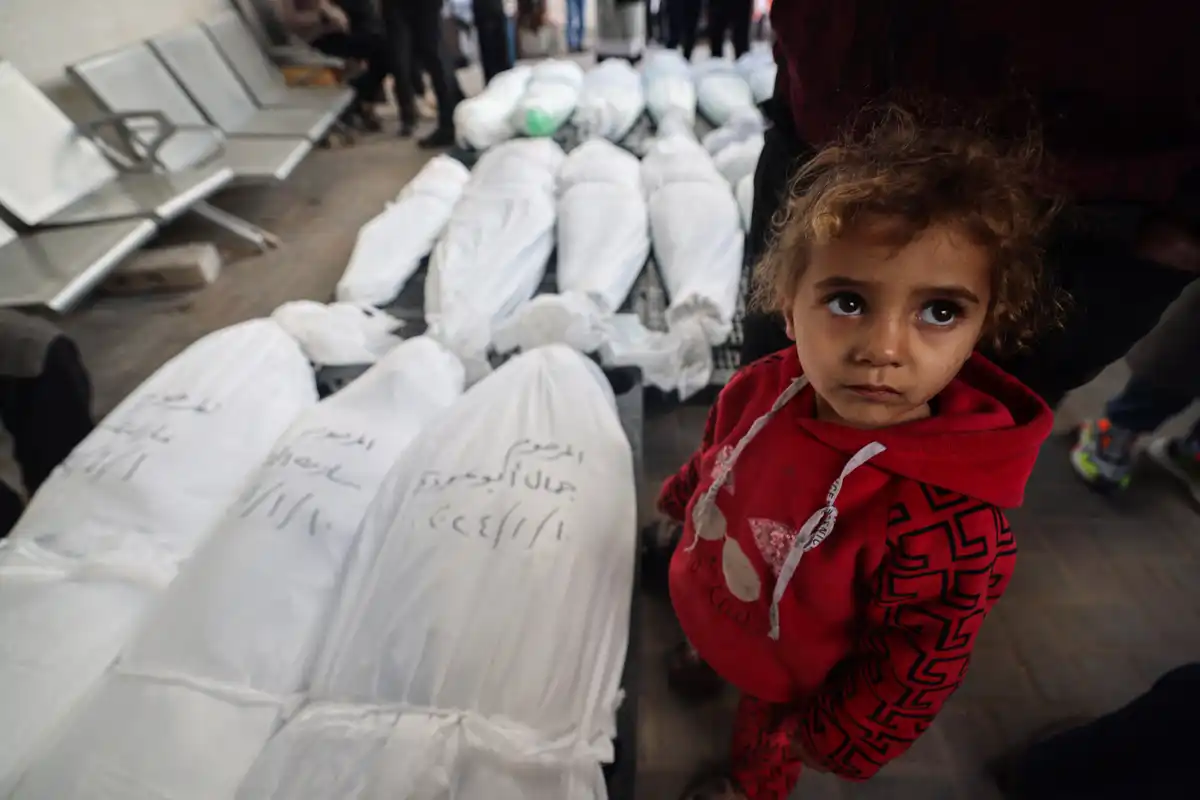
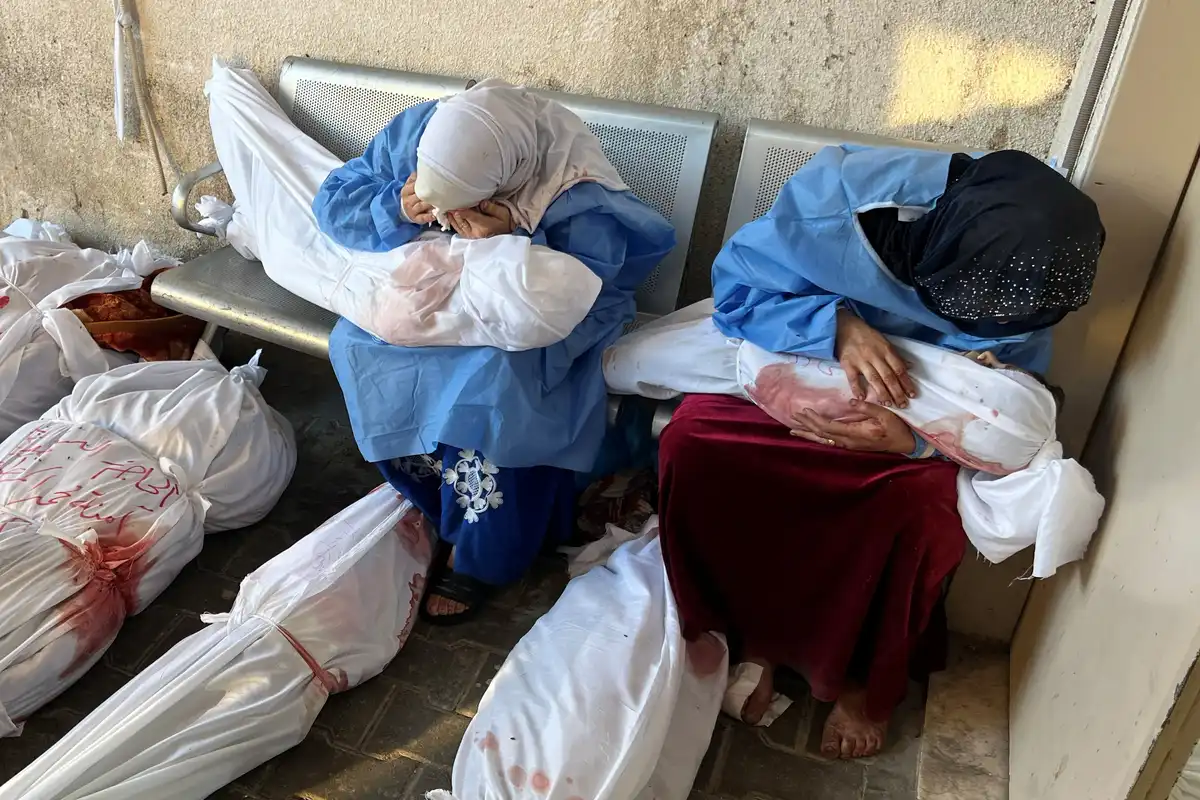
Six citizens, including at least one woman, were killed and others were injured on Saturday evening when the occupation bombed a house in Jabalia camp in the northern Gaza Strip and Al-Maghazi camp in the center.


According to local sources, an occupation drone targeted a group of citizens in the vicinity of the Al-Wusta Center in Al-Maghazi camp in the central Gaza Strip, which led to the death of two citizens and the injury of others.


The sources added that the occupation warplanes bombed the house of the Al-Harshi family in the Al-Yafiya neighborhood in the center of Jabalia camp in the northern Gaza Strip, which led to the martyrdom of four citizens, including a woman, and the injury of others, in conjunction with the launching of a barrage of smoke bombs in the skies of Al-Jalaa Street in the north.


The occupation warplanes bombed a house in the Al-Tuffah neighborhood east of Gaza City, and a group of citizens in the Al-Zeitoun neighborhood in the south, which led to the injury of a number of citizens.


The occupation forces continue their aggression on the Gaza Strip, by land, sea and air, since October 7, 2023, which resulted in the death of 42,175 citizens and the injury of 98,336 others, the majority of whom are children and women, in an incomplete toll, as thousands of missing people are still under the rubble.

PALESTINE

Sat 12 Oct 2024 5:23 pm - Jerusalem Time

Suffocation injuries during the occupation's storming of southern Bethlehem

A number of citizens were suffocated by toxic gas, Saturday evening, during the Israeli occupation forces' storming of the town of Beit Fajjar, south of Bethlehem.


According to local sources, the occupation forces stormed the town, took up positions in the Triangle area, and fired tear gas canisters at the citizens, which led to suffocation injuries.

PALESTINE

Sat 12 Oct 2024 4:01 pm - Jerusalem Time

EU: Concerned over possible Israeli ban on UNRWA

The European Union has expressed deep concern over a draft law banning the work of the United Nations Relief and Works Agency for Palestine Refugees (UNRWA) in Jerusalem, which is likely to reduce aid distribution in the war-ravaged Gaza Strip.


In a statement issued on Saturday, the Union urged Israel to ensure that UNRWA is allowed to continue its important work in the Gaza Strip and the West Bank, in line with its mandate from the United Nations.


Last July, the Knesset approved in the first reading three bills classifying UNRWA as a terrorist organization. Last Thursday, the occupation authorities seized the land on which the UNRWA headquarters is located in the Sheikh Jarrah neighborhood in occupied East Jerusalem, transforming the site into a colonial outpost containing 1,440 housing units.


The European Union said in its statement: “If the draft law is adopted, it will have serious consequences, as it will prevent the United Nations agency from continuing to provide its services and protection to Palestinian refugees in the occupied West Bank, including East Jerusalem, and the Gaza Strip.”

PALESTINE

Sat 12 Oct 2024 2:48 pm - Jerusalem Time

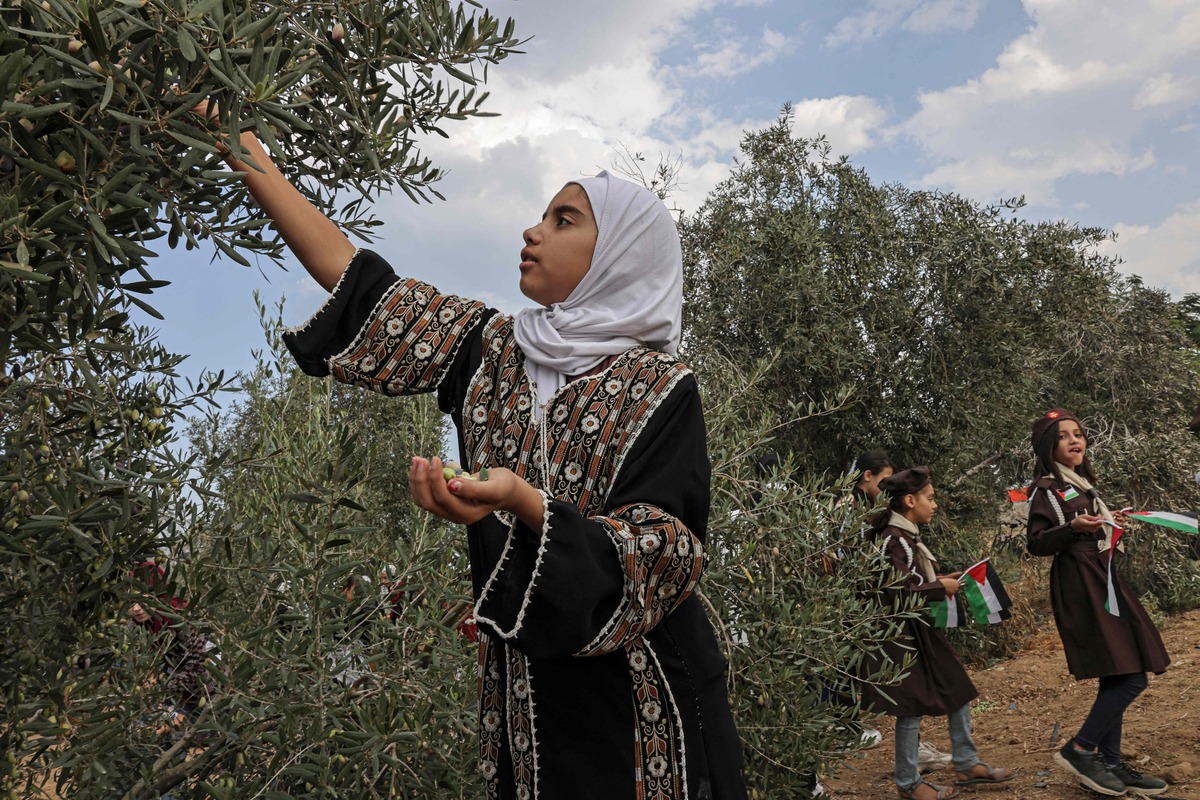
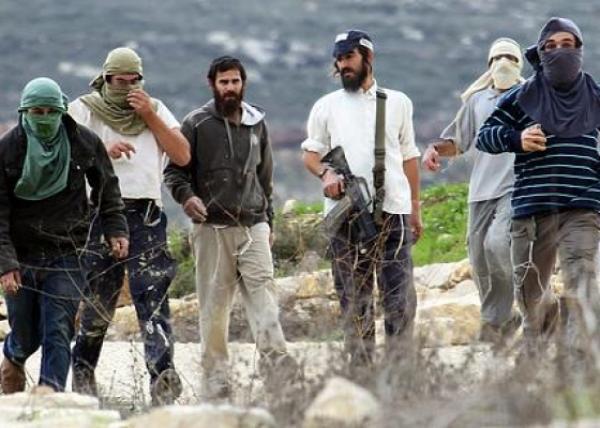
Israeli settlers attack Palestinian olive pickers in several West Bank governorates

Today, Saturday, settlers attacked olive pickers in various parts of the West Bank, in a scene that is repeated every olive season. However, this period in particular is witnessing a series of brutal attacks against citizens, reaching the point of shooting them directly, in a blatant exploitation of the state of preoccupation in light of the successive developments of the Israeli aggression against our people in the Gaza Strip and the West Bank.

In Salfit, settlers broke about 7 olive trees this morning, which are more than 20 years old, in the Wadi area north of the village of Yasouf, east of Salfit, and are owned by citizen Abdul-Muati Khalil Yassin.

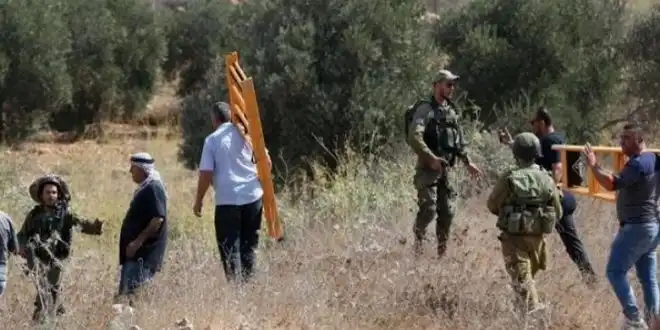
In Nablus, settlers, under the protection of the occupation forces, attacked olive pickers in the village of Jalud and the town of Qusra, south of Nablus, and forced them to leave their lands, under threat of arms.

In Ramallah, armed settlers attacked olive pickers in the villages of Al-Mughayyir and Turmus Ayya, northeast of Ramallah.

The settlers attacked the olive pickers in more than one area in Al-Mughayyir, especially the plain area (Marj Al-Dhahab), Al-Hajar area, and Al-Rafid area, in an attempt to prevent them from picking the olives, but the residents forced them to flee the place.

In Turmus Ayya, dozens of settlers attacked olive pickers and forced them to leave their lands in the Dalja area east of the village.

ARAB AND WORLD

Sat 12 Oct 2024 2:47 pm - Jerusalem Time

Mexican President Calls for Recognition of State of Palestine

Mexico's new President Claudia Sheinbaum called for recognition of the State of Palestine, in order to achieve peace in the Middle East.

"The Palestinian state must be recognized just like the state of Israel. This has been Mexico's position for many years," she said in her first statement on the subject since taking office on October 1.

During her daily press conference, Sheinbaum also condemned the violence in the Middle East, saying that "war will never lead to a good destination."

PALESTINE

Sat 12 Oct 2024 2:46 pm - Jerusalem Time

WFP: Food aid lines to the northern Gaza Strip cut off since the beginning of this month

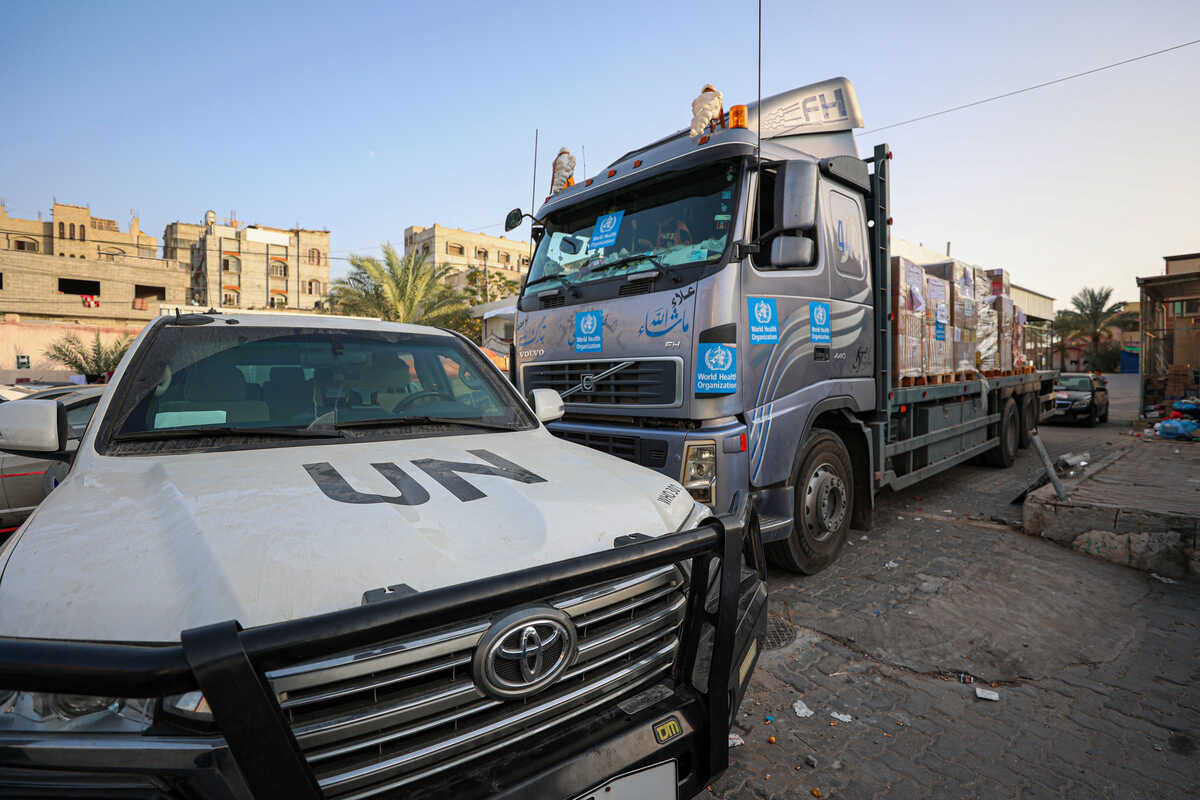
  1. The World Food Program announced today, Saturday, that food aid lines to the northern Gaza Strip have been cut off, stressing that the risk of famine "still exists" in the Strip.
  2. He explained in a post on the "X" platform: "No food aid has entered northern Gaza since October 1, stressing that the repercussions of what is happening are catastrophic for the food security of thousands of Palestinian families."
  3. The World Food Programme added that food distribution points in northern Gaza were forced to close due to the ongoing shelling and evacuation orders, noting that a fire broke out in the only operating bakery in Jabalia after it was hit by explosive ammunition.

ARAB AND WORLD

Sat 12 Oct 2024 2:45 pm - Jerusalem Time

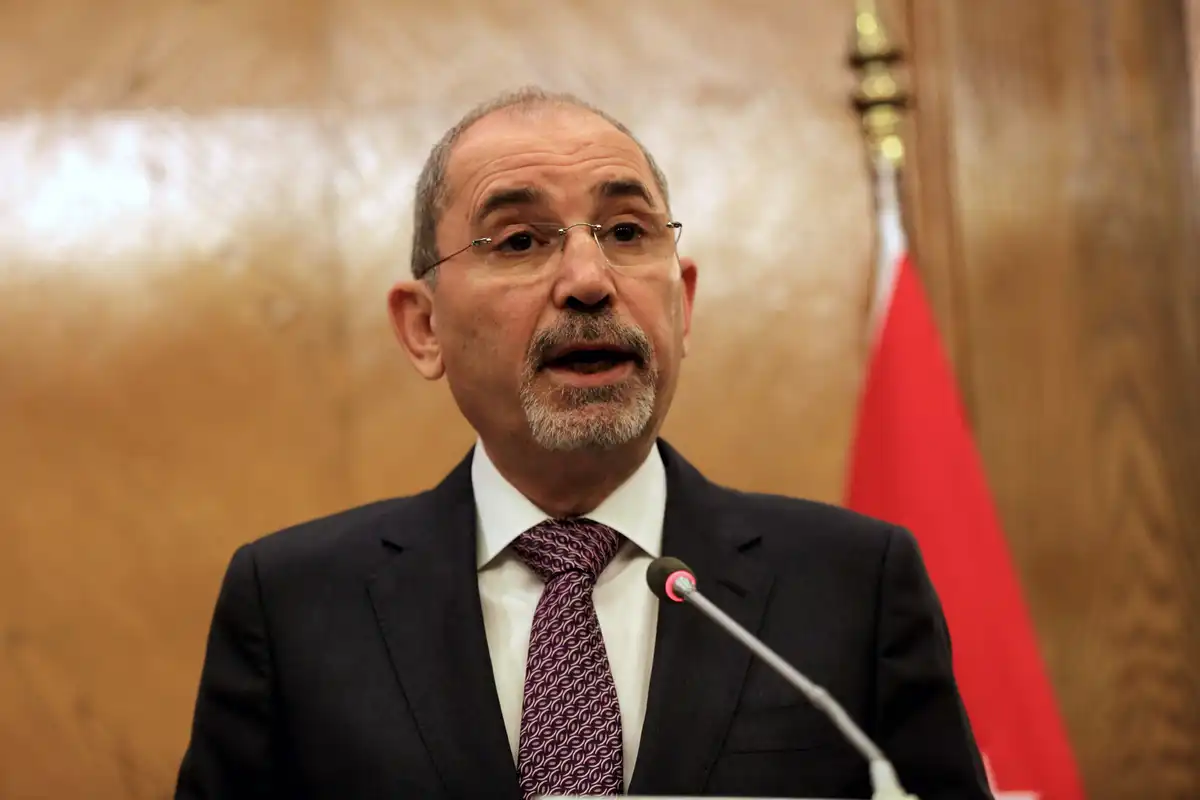
Jordan: Israel's crimes will not stop unless Netanyahu and his extremist ministers are held accountable

Jordan's Deputy Prime Minister and Minister of Foreign Affairs and Expatriates Ayman Safadi said that Israel will not stop its war crimes in Gaza, the West Bank and Lebanon unless Netanyahu and his extremist ministers are held accountable.

“They would not have been able to carry out all these attacks, including against UNIFIL units, without impunity and the weapons that many countries continue to send them,” Safadi added via the X platform on Saturday. “After a year of war, massacres and ethnic cleansing in Gaza, and with thousands displaced, killed and wounded in the West Bank and Lebanon, including journalists, humanitarian workers, Lebanese soldiers and UNIFIL members, the Security Council has no excuse for not fulfilling its duties and must lift Israel’s immunity and ban all arms sales to it,” he continued.

He pointed out that countries that truly want to end the dangerous regional escalation and seek peace and security in the Middle East must immediately stop supplying Israel with the weapons it uses in its aggression, and Chapter VII must be enacted to force Israel to comply with international law and end all its illegal wars immediately. Otherwise, this extremist Israeli government will undermine the credibility of international law and international institutions, and drag the region deeper into the abyss of a comprehensive regional war, the repercussions of which will reverberate far beyond the borders of the region.


PALESTINE

Sat 12 Oct 2024 11:30 am - Jerusalem Time

Gaza Health: The death toll has risen to 42,175 since October 7, 2023


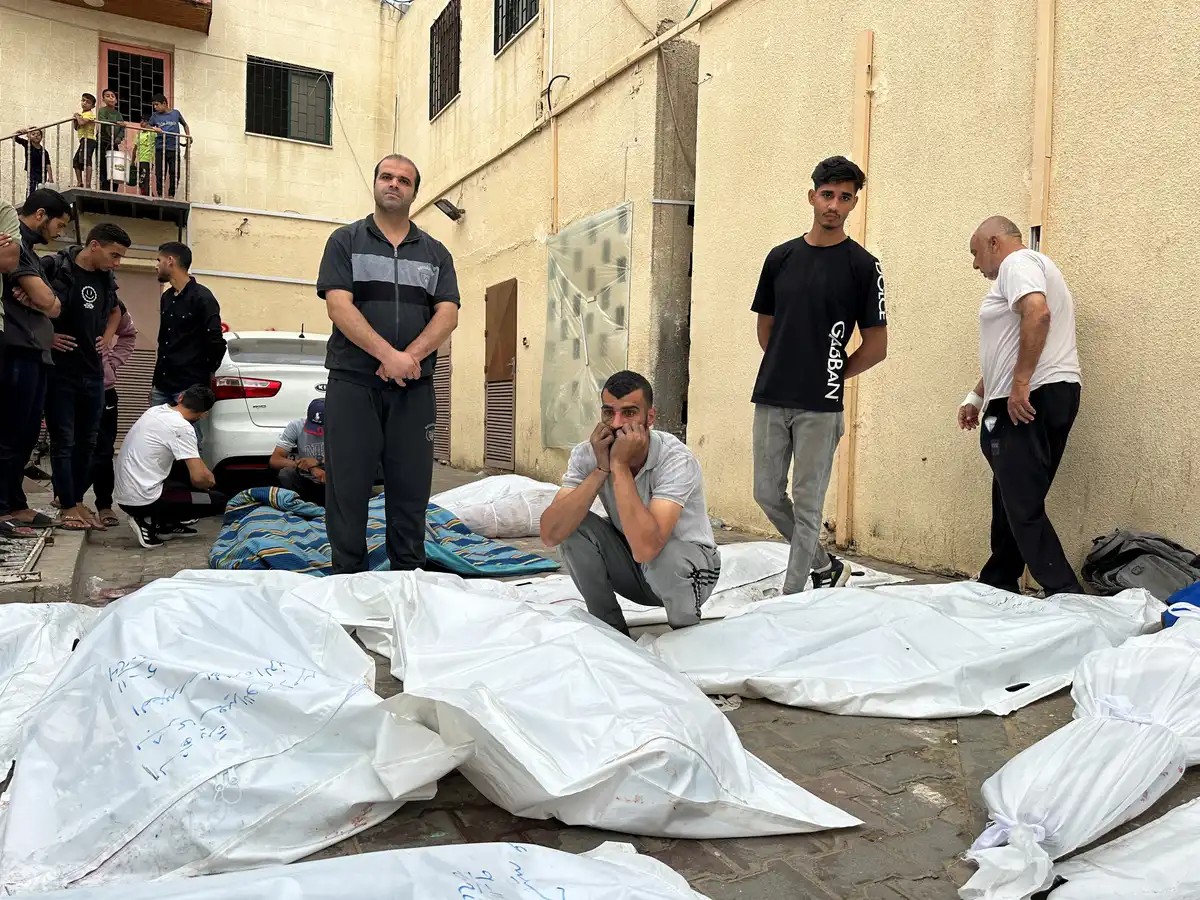
The Ministry of Health in the Gaza Strip announced, on Saturday, that the death toll from the genocide committed by Israel against the Palestinians has risen to "42,175 dead and 98,336 wounded" since October 7, 2023.


The ministry said in its daily statistical report on the victims of the Israeli genocide: “49 martyrs and 219 wounded arrived in Gaza Strip hospitals, as a result of 5 massacres committed by the Israeli occupation against Palestinian families during the past twenty-four hours.”


It confirmed that "a number of victims are still under the rubble and on the roads, and ambulance and civil defense crews cannot reach them."

PALESTINE

Sat 12 Oct 2024 10:02 am - Jerusalem Time

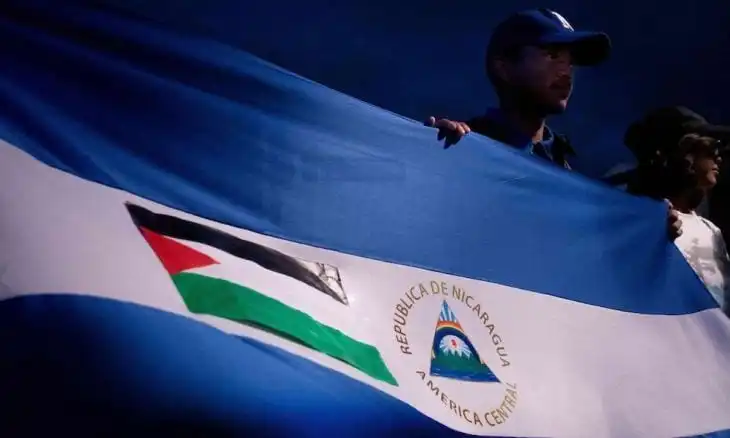
Nicaragua to cut diplomatic ties with Israel


Nicaragua is moving to sever diplomatic ties with Israel, which has been publicly criticized by the government of Daniel Ortega over its aggression in Gaza, the country's vice president announced Friday.


"Our president has asked the Foreign Ministry... to move forward with severing diplomatic relations with the fascist and criminal government of Israel," Rosario Murillo, Ortega's vice president and wife, told state media.

PALESTINE

Sat 12 Oct 2024 10:00 am - Jerusalem Time

For the seventh day: The occupation continues to commit massacres in Jabalia, leaving dozens of martyrs and wounded

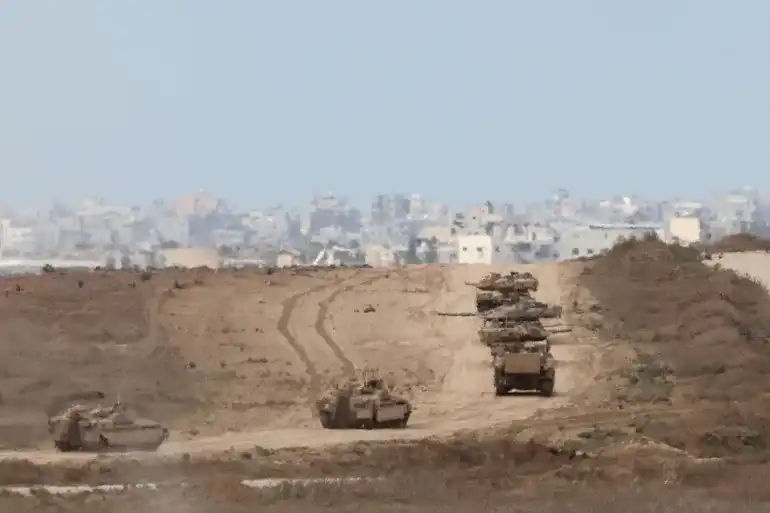
The Israeli occupation continues to bomb Jabalia and its camp in the northern Gaza Strip by air and land, leaving dozens of martyrs and wounded, amidst the demolition of residential blocks, in light of the ongoing siege for seven days.

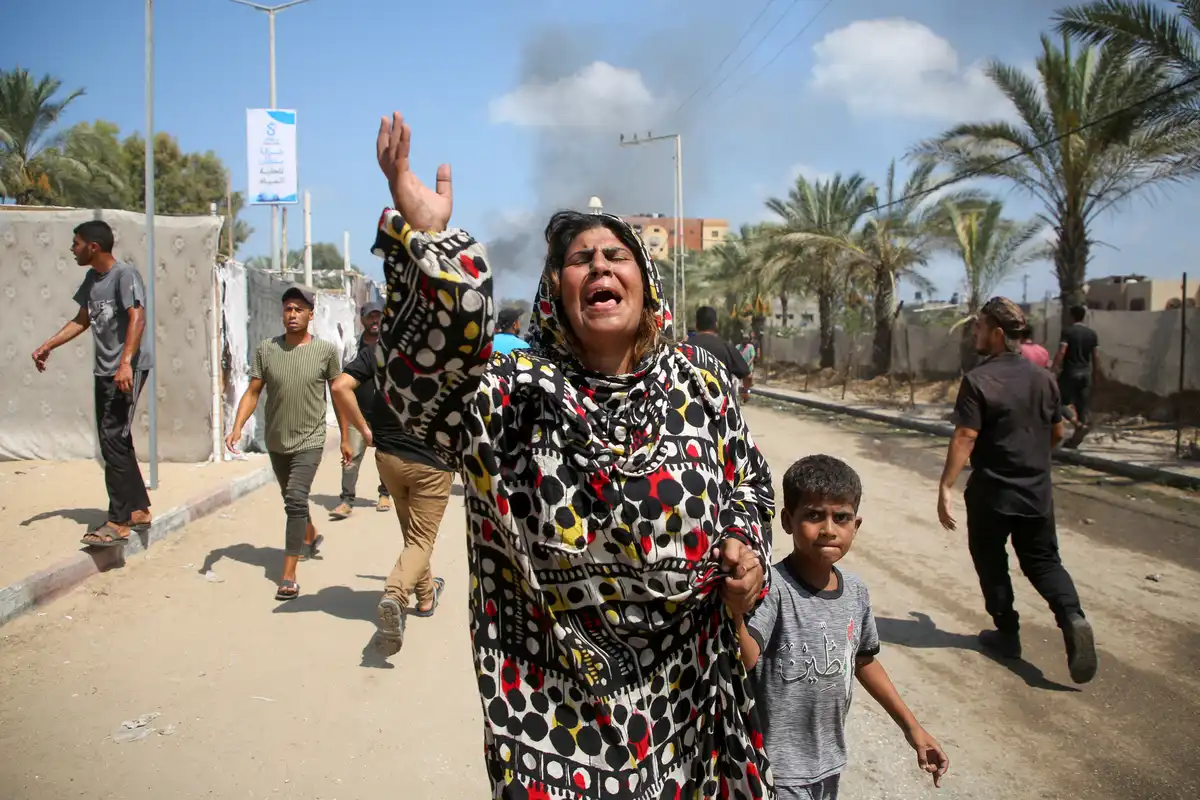
Dozens of citizens, including children and women, have been killed and injured since dawn on Saturday in rocket and artillery shelling of Jabalia and its camp, and the areas of Saftawi and Al-Tawam, in the northern Gaza Strip.

This morning, the occupation army issued new evacuation orders for the residents of Jabalia, but the citizens insist on staying and not moving to the south.

In a bloody massacre committed by the occupation last night in Jabalia al-Balad, 22 citizens were martyred and more than 90 others were injured, after the occupation bombed a residential area in the vicinity of the Omari Mosque.

The humanitarian situation in Jabalia camp is becoming more dangerous with time, with food, medicine and water supplies being prevented from entering the camp for the citizens, and with the difficulty of ambulance crews entering to retrieve the bodies of the martyrs and transport the wounded.

On October 6, the occupation army announced the start of a military operation in Jabalia, hours after the start of a fierce attack on the eastern and western regions of the northern Gaza Strip, the most violent since last May.

The occupation army attacked Jabalia on land twice before, in November and December of last year.

This is the third ground operation carried out by the occupation army in Jabalia camp since the beginning of the genocidal war on October 7, 2023.

The northern Gaza Strip is witnessing a violent aggression targeting infrastructure, roads, and what remains of citizens’ homes, in addition to isolating areas from each other.

This is accompanied by a systematic and organized starvation campaign, which includes preventing the entry of food, medicine, water and fuel supplies, and targeting bakeries.

In the air, the occupation's drones target any movement of citizens on the ground by firing bullets intensively and randomly.

The occupation forces continue their aggression on the Gaza Strip, by land, sea and air, since October 7, 2023, which resulted in the death of 42,126 citizens and the injury of 98,117 others, the majority of whom are children and women, in an incomplete toll, as thousands of missing people are still under the rubble.

ARAB AND WORLD

Sat 12 Oct 2024 9:58 am - Jerusalem Time

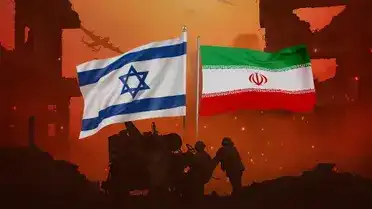
A clear change in Iranian strategy towards Israel

News Analysis


Experts believe that Iran’s second missile strike on Israel on October 1 marks a major escalation in the conflict between the two regional powers. After Israel assassinated Hamas leader Ismail Haniyeh in Tehran on July 31, and Hezbollah leader Hassan Nasrallah and General Abbas Nilforoushan of the Islamic Revolutionary Guard Corps in Beirut on September 27, Iran launched a direct and open attack on its archenemy. Now the conflict between Iran and Israel threatens to push the entire Middle East to the brink of a full-blown regional war.


Regardless of whether this war occurs, the exchange of attacks between Iran and Israel has already created a new regional power equation that will persist well beyond this specific confrontation. “Seven far-reaching strategic consequences of the Iran-Israel conflict have become clear,” according to Foreign Policy, a magazine specializing in American foreign affairs.


First, the foundation of Iran’s national security and military strategy is gradually shifting from reliance on non-state military allies in the region to a new form of deterrence. This profound shift can be seen in the replacement of key figures in Iran’s military organization: from General Qassem Soleimani, the former commander of the IRGC’s Quds Force who was responsible for Iran’s extraterritorial military operations in the region, to General Amir Ali Hajizadeh, the commander of the IRGC’s Aerospace Force. This suggests that Iran’s gray zone strategy, which prioritized indirect conflict by non-state allies including Hamas and Hezbollah, is now a complementary approach.


Second, according to the magazine, Iran has also abandoned its stance of “strategic patience.” Since the end of the bloody eight-year war with Iraq, Iranian military leaders have adopted a covert strategy of absorbing great pain while retaliating at a time of their choosing. However, decades of continued Israeli sabotage on Iranian soil have reduced Iran’s “strategic ambiguity” to what has come to be known as passive strategic patience, characterized by the absence of retaliatory action. Despite its apparent reluctance to make bold domestic policy decisions, Iran has now abandoned its strategic patience for a second time. It has concluded, under intense pressure from influential supporters and the broader public at home, that failure to respond would constitute a strategic turning point.


Third, Iran has now established a clear policy of deterrence.


The powerful response by the IRGC also demonstrated Iran’s will and ability to carry out a devastating attack on Israel. In contrast to the first strike on April 13, in which most of the Iranian missiles and drones were intercepted, the second missile strike proved successful, penetrating advanced Israeli defense systems.


“Despite Israel having one of the most defended airspaces in the world, equipped with the latest anti-missile technology, several Iranian missiles have managed to hit major airports in Israel,” according to the magazine.


This highlights the centrality of missile power to Iran’s national security strategy, and reinforces the fact that its missile capabilities are likely to remain non-negotiable in future talks with the West. Tehran may now be more motivated to enhance its military capabilities, which could include deploying Sukhoi Su-35 fighter jets, purchasing Russian-made missile defense systems, and expanding military cooperation with Moscow.


Fourth, Iran’s new red line with Israel has been set. For nearly 15 years, Tel Aviv has carried out devastating strikes on Iranian military bases in Syria, even directly targeting top Iranian generals. However, Israel’s bombing of the Iranian consulate in Damascus on April 1 crossed a critical threshold, prompting Iran to hit Israel again with a barrage of less advanced missiles and drones two weeks later. This marked the collapse of Iran’s traditional red lines with Israel.


In response to continued Israeli actions, including the assassination of a Hamas leader in Tehran and a Hezbollah leader in Beirut, Iran’s response was aimed at reestablishing a level of deterrence. Next time, Iran crossed two important red lines: striking Israeli territory from its own territory and targeting a nuclear-armed state. Interestingly, Iran struck another nuclear power, Pakistan, less than ten months ago. Tehran’s message was clear: the sanctity of its territory is a fundamental red line for both the government and society, even if it cannot fully protect its military bases in the Levant from Israeli airstrikes. In the absence of a firm red line to contain the Iranian-Israeli rivalry, both sides are likely to seek to redraw the lines through continued tit-for-tat strikes, especially in the run-up to this year’s U.S. presidential election.


Fifth, Iran’s influence on the Arab street appears to have increased. The soft power gains from this latest offensive are likely to restore Iran’s popularity in the Muslim world, which has been tarnished in recent years.


Sixth, an Israeli retaliatory strike against Iran could lead to a radical shift in Tehran’s nuclear policy. There are powerful voices in Iran, mostly from the hardline camp, who advocate pursuing nuclear energy as a strategic means of restoring the country’s full deterrence. These advocates argue that Iran’s most effective tool to deter Israeli aggression is its strategic decision to fully develop nuclear weapons. This argument could gain significant traction in the wake of a potential Israeli retaliatory strike on Iran’s nuclear infrastructure.


As a result, the prospect of an Israeli military strike could serve to accelerate Tehran’s pursuit of nuclear energy. The West’s obsession with a complete Iranian disarmament, combined with giving Israel a blank check to pressure Iran’s non-state allies in the Levant and even Iranian territory, could lead to an unintended consequence: a nuclear-armed Iran.


Seventh, this conflict highlights the clash between technological power and geopolitical power. While Iran benefits from significant geopolitical advantages, Israel’s vulnerability lies in its geopolitical vulnerability, confined to a small area between the Jordan River and the Mediterranean Sea. This geopolitical difference has shaped their strategies, with Iran favoring gray zone operations supported by its network of non-state allies, while Israel relies on a strategy of first shock and preemption rooted in technological superiority.


Although technology plays an increasingly important role in military revolutions, geopolitics remains essential in shaping the course of regional rivalries. Technology erodes the weight of enduring geopolitical realities, but it can never completely erase them. In this sense, the escalating Iran-Israel conflict also challenges simplistic narratives about the “end of the Middle East” in American foreign policy.


In a broader context, the fate of Washington’s major rivalries in the Indo-Pacific and Euro-Atlantic regions is increasingly oriented toward the Persian Gulf and Levant, as Tehran works to strengthen its ties with Moscow and Beijing. This dynamic is refocusing Middle Eastern geopolitics. The Iran-Israel conflict is an early manifestation, but it is far from the final chapter.

OPINIONS

Sat 12 Oct 2024 9:11 am - Jerusalem Time

Families were wiped out and generations were erased!


This is what a report by UN human rights experts concluded, describing the situation in the Gaza Strip as “the most severe humanitarian crisis the world has experienced since World War II.”

The report includes shocking information about the level of brutality in the mass killing of the population, their starvation, and their confinement in crowded and unsafe shelters, while the continuous bombing of inhabited homes, shelters and tents has turned “humanitarian areas” into shooting fields and killing places.

The report called on the international community to take urgent action to prevent the region from sliding into a comprehensive war, after the flames spread to Lebanon and Iran.

We realize that the imbalance of justice and the absence of accountability will make the UN report confined to the framework of freedom of opinion and expression, and will not receive any attention, like all the decisions issued by the United Nations and the International Court of Justice, whether related to the raging war of extermination or related to the legal fatwa on the illegitimacy of the occupation of the Palestinian territories.

The United States bears full responsibility for this savagery that is unchecked by any controls or restraints to curb its impulses, and we see its expressions in the targeting of UNIFIL forces, which were attacked for the second time, and two of its members were killed.

It is the bullying that leans on the American shoulder, suckles from its breast, and feeds on its money and the latest products of its weapons factories.


Stop the war of extermination.. Stop the open massacre in Gaza, the West Bank and Lebanon..!

PALESTINE

Sat 12 Oct 2024 9:09 am - Jerusalem Time

Implications of the Delay in the Israeli Counterstrike on Iran.. Netanyahu is Trying to Bring the United States into the Confrontation Arena

Dr. Dalal Erekat: Israel’s delay in responding to Iran is due to complex strategic calculations linked to sensitive regional and international balances

Daoud Kuttab: The gap between Netanyahu’s ambitions, geopolitical reality and international support is a decisive factor in thwarting his plans regarding Iran

Fayez Abbas: Attack on Iran would be much more dangerous than previous Israeli military responses to Hamas or Hezbollah

Major General Wasef Erekat: Israel faces advanced Iranian capabilities versus weaker capabilities of its own, which makes the decision to strike more complicated

Hani Abu Al-Sabaa: The United States seeks to maintain a level of escalation that does not lead to a large-scale conflict


Ramallah - Exclusive to Al-Quds


The delay in the Israeli response to the recent Iranian attacks raises questions about the motives and complex strategic plans behind it, and whether Israel has retreated or is there American rejection of it?

In separate interviews with “I,” writers, analysts, specialists, and university professors indicate that Israel is dealing with such an escalation with extreme caution, driven by sensitive regional and international calculations that include political and military balances in the region.

They point out that considerations related to relations with the United States and Europe, in addition to possible reactions from regional countries such as Turkey and the Gulf states, play a pivotal role in delaying the response, and it seems that Israel seeks to achieve maximum readiness and ensure international cover before carrying out any military operation against Iran, while cyber attacks and advanced technology remain part of its strategy.


Complex strategic calculations


Dr. Dalal Erekat, Professor of Diplomacy and Conflict Resolution at the Arab American University, explains that the Israeli delay in responding to the Iranian attack may reflect complex strategic calculations related to sensitive regional and international balances.

Erekat points out that Israel, from a diplomatic perspective, deals with every escalation with a sensitive balance, not limited only to military considerations, but also includes the positions of the major countries and regional powers surrounding it.

Erekat believes that Israel is not seeking an uncalculated escalation that could lead to a long-term conflict and upset the balance in the region, so the Israeli decision regarding a military response depends on careful calculations that include relations with the United States, Europe, and Arab countries, as well as possible reactions from regional powers, such as Turkey and the Gulf states.

The Israeli goal of the delay, according to Erekat, may sometimes be to keep the doors open to diplomatic solutions or to allow enough time for negotiations through back channels.

She points out that Israel has mastered the art of procrastination as a means of gaining time, which strengthens its position on the ground, and the Israeli response goes beyond being a mere military reaction, but rather constitutes a political and strategic message both internally and externally.

Erekat believes that the Israeli moves take into account the repercussions of any reaction from the Iranian side, and seek to ensure that the response is decisive and thoughtful, while maintaining the ability to deter without inciting strong Iranian reactions.


Israel exploits Iran's 'threat' to strengthen regional and international alliances


Erekat points out that Israel is exploiting the Iranian threat to strengthen its regional and international alliances, especially in light of the ongoing settlement project.

Regarding Israel's use of artificial intelligence, Erekat confirms that Israel uses it as an advanced tool in its strategic and defensive planning, as artificial intelligence works qualitatively in identifying targets and carrying out cyber operations that are used to disable Iranian defense systems or target its vital infrastructure.

Erekat sees these cyber attacks as part of a broader approach to achieving military and diplomatic goals without being drawn into a full-scale conflict.

Regarding the US position on responding to the Iranian attack, Erekat clarifies that America is neither absolutely opposed to nor fully supportive of any Israeli response to Iran.

According to Erekat, although the United States supports Israel's right to defend itself, and sometimes provides intelligence or technological assistance to ensure the accuracy of the Israeli response, it remains wary of any major escalation that could destabilize the region and affect its strategic interests, such as protecting oil pipelines and containing Russian and Chinese influence.

Erekat stresses that the Israeli approach to dealing with the escalation against Iran is characterised by complexity and caution, as Israel is keen to ensure that any future steps are thoughtful and balanced within the framework of regional and international balances.


The gap between Netanyahu's words and actions is becoming clear.


The writer and political analyst Daoud Kuttab explains that the gap between the words and actions of Israeli Prime Minister Benjamin Netanyahu has become clear, pointing out that Netanyahu seeks to drag the United States into a confrontation with Iran, similar to what happened with former US President George Bush when he led a war against Iraq with Netanyahu’s involvement after he declared before the US Congress that the Middle East would enjoy peace if Saddam Hussein was eliminated.

Writers point out that with America's announcement of its categorical refusal to participate in any attack against Iran, Netanyahu began looking for alternative ways to achieve the same goal.

Writers believe that the gap between Netanyahu's ambitions, geopolitical reality and international support may be the decisive factor in thwarting his plans regarding Iran.

Writers confirm that Netanyahu's interest is not focused on the calculations of a military response as much as he is interested in involving the United States in a confrontation with Iran.

As for the talk about Israel preparing a strong military response, writers explain that any country that has military departments develops different plans and projects, and Israel is no exception, but the biggest challenge it faces is the geographical distance from Iran, in addition to the United States’ rejection, and the Gulf states and Jordan refuse to allow Israel to use their lands or waters for military purposes that serve Netanyahu’s “daydreams.”

On the other hand, writers point out that artificial intelligence will not be the solution to the major challenges facing Israel, whether logistically or politically, or those related to Washington’s refusal to participate in a regional war.


Will America be satisfied with the opposition?


In addition, writers explain that the position of the United States is clear, as it strictly opposes any attack on Iran, but the question that arises is: Will America be satisfied with opposition, or is it able and willing to prevent Israel from carrying out a military attack?

In this context, writers believe that the United States has the ability to prevent Israel from launching any attack, but it may not want to do so explicitly, preferring to provide strong advice to Israel regarding the repercussions of such an attack.

More importantly, according to the writers, is that American advice is not limited to opposing the Israeli attack before it happens, but may also extend to refusing to provide support to Israel during and after the attack is carried out, which puts Tel Aviv in an awkward position if it decides to escalate without full coordination with Washington.


Israel's delay is not a coincidence


Israeli affairs expert Fayez Abbas believes that Israel's delay in responding to Iran is not a coincidence, but rather is linked to several main factors, the most important of which is the pursuit of full readiness and ensuring international cover to protect it from Iranian missiles and those of its allies.

According to Abbas, Israel is working around the clock to strike Iran, targeting its nuclear facilities and oil and gas facilities, but it realizes that this attack requires broad support from the United States and some European countries, as well as Arab cooperation to ensure protection from any retaliatory attacks that might hit strategic sites in Israel.

Abbas points out that an attack on Iran would be much more dangerous than previous Israeli military responses to Hamas or Hezbollah, with Israeli Defense Minister Yoav Galant stating that the Israeli response to Iran would be “deadly and surprising” to the point that Tehran would not be able to absorb it.

However, Abbas stresses that Netanyahu will not move without the full partnership and support of the United States, which is Israel's most prominent ally in this conflict.

On the other hand, Abbas explains that Israel seeks to exploit all available means, including advanced technology, artificial intelligence, and even internationally banned weapons, to carry out a devastating and intensive strike against Iran. This strike, according to Netanyahu’s vision, represents a historic opportunity to achieve a goal he has been seeking for many years, which is to drag the United States into a comprehensive war against Iran and destroy its nuclear facilities.

Abbas believes that if Netanyahu succeeds, he will consider this his greatest political achievement, as he will regain his strength and popularity at the expense of Iranian blood, especially after his failure to achieve his goals in Gaza and Lebanon so far.

He points out that the United States will be the main partner in any attack on Iran, whether through providing military support or direct participation in bombing or potential military operations, stressing that the American-Israeli partnership will be decisive in determining the fate of any future confrontation with Tehran.


Netanyahu has been threatening since 2008


Retired Major General Wassef Erekat, a strategic military and security expert, explains that Israeli Prime Minister Benjamin Netanyahu has been threatening to strike Iran’s nuclear reactors since 2008, but these threats have not materialized, despite the opportunity being presented several times, especially during the war on the Gaza Strip and the subsequent regional tension that extended to Iran.

Erekat attributes this to Netanyahu’s inability to make a decision of this magnitude without American approval, noting that the decline in Israeli deterrence was clear after the failure of the Israeli military, security and intelligence system to confront the Palestinian resistance attack on October 7, which caused Netanyahu to lose the initiative.

Erekat asserts that the Israeli leadership, which used to make its decisions unilaterally in the past, now relies more on coordination with the American leadership. This is considered evidence that Israel has become in dire need of American support, which was confirmed by the continued statements of the Israeli leadership about the necessity of coordination with Washington.

Erekat refers to the bombing of the Iraqi Osirak reactor in 1981, when Israeli F-16 fighters, accompanied by F-15 aircraft, struck the reactor without informing the administration of then-US President Ronald Reagan until after the attack had been carried out.

Erekat explains that Israeli calculations today are completely different from that era, as Israel faces advanced Iranian capabilities versus weaker capabilities of its own, which makes taking a decision to strike Iran more complicated.


Crazy Israeli leadership


Commenting on the current situation, Major General Erekat described the Israeli leadership as “crazy,” as Israeli General Yitzhak Brick described it, referring to figures such as Netanyahu, Defense Minister Yoav Galant, and Chief of Staff Herzi Halevi.

Erekat believes that this leadership may make ill-considered decisions that may lead to unwanted escalations, especially in light of the major changes in Iranian military capabilities.

Regarding the use of artificial intelligence in potential Israeli military operations against Iran, Erekat explains that this technology has positive aspects in the fields of reconnaissance, surveillance, and intelligence data analysis, as well as in identifying a target bank. Artificial intelligence can also be used in autonomous weapons to reduce reliance on the human element. However, there are significant risks related to non-compliance with international law, as artificial intelligence may not be able to differentiate between military and civilian targets, which could lead to unintended casualties and unexpected escalations.


Israel needs American military, security and intelligence support


Erekat stresses that Israel is in dire need of military, security and intelligence support from the United States, especially with regard to long-range B-52 heavy bombers. Israel also needs close cooperation with Washington in all stages of planning and implementing any potential strike against Iran, in addition to logistical and intelligence support.

However, the biggest challenge, according to Erekat, is the political cover that Israel needs to carry out such operations, which may be difficult to achieve in light of the current political situation in the United States, as the country approaches the presidential elections.

Erekat explains that coordination between Israel and the United States also includes sharing the potential consequences of any attack, which puts Washington in a complex position, as it wants to curb Iran's influence in the region without getting involved in a major conflict that could affect the stability of the region, while the United States remains hesitant to provide full support to Israel at this sensitive stage.


Multiple factors delay Israeli response


The writer, political analyst and specialist in Israeli affairs, Hani Abu Al-Sabaa, points to several reasons behind Israel’s delay in responding to Iran, despite repeated threats from the Israeli political and military leadership that the response is coming and will be deterrent. According to observers, the delay is based on several factors related to geographical, political and military considerations.

Abu Al-Sabaa explains that the reasons for the delay in the Israeli response to the Iranian attack include: First, it may be due to the geographical factor, as there is a distance of more than a thousand kilometers between Israel and Iran, which poses a major challenge to the Israeli military capabilities in carrying out an attack on distant targets deep inside Iranian territory. In addition, Israel faces another difficulty, which is the vast area of Iran, as its nuclear and military facilities are spread out in scattered locations, some of which are up to 600 kilometers deep inside the country, which increases the difficulty of targeting them accurately.

Secondly, according to Abu Al-Sabaa, there is information from inside Iran indicating that the Islamic Republic carried out a nuclear test in the desert that caused a 4-magnitude earthquake, which further complicates the situation and raises questions about the extent of Iran’s progress in its nuclear program. This information may be an additional reason for delaying the Israeli response, as it requires new recalculations regarding Iranian capabilities.

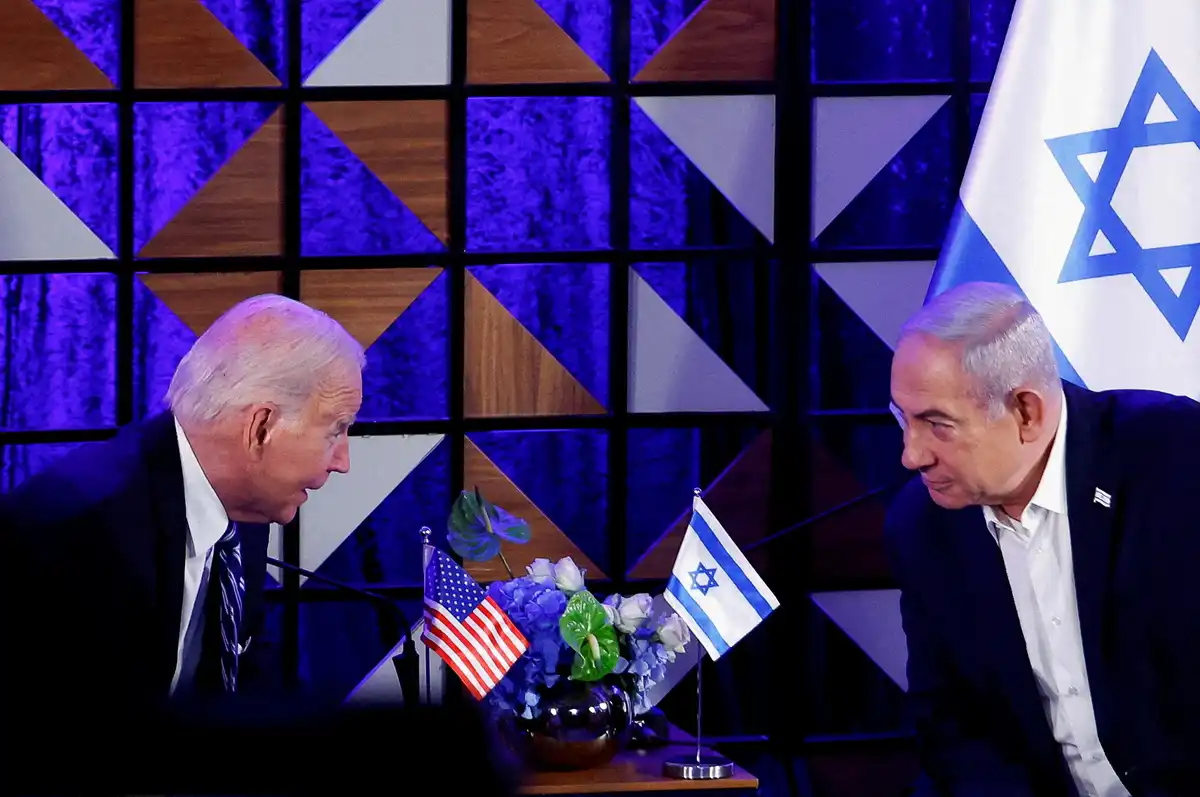
The third reason, Abu Al-Sabaa believes, is that Israeli-American coordination was slow, as contact between Israeli Prime Minister Benjamin Netanyahu and US President Joe Biden only recently took place, which is crucial for any Israeli move towards Iran, especially since the United States opposes bombing Iranian nuclear reactors, and without coordination with Washington, Israel will not be able to carry out the attack alone.

As for the fourth reason, Abu Al-Sabaa believes that the Russian factor played a role in delaying the response, as Moscow provided Iran with advanced air defense systems, which increases Tehran’s ability to confront any potential Israeli air attack.

On the other hand, Abu Al-Sabaa points out that there are increasing calls in Israel for a military response to Iran during Yom Kippur, which falls on the 12th of this month, but this option carries great risks, as it may lead to a mutual military escalation that may develop into a long war.


$68 billion is the cost of the war in its first year


Abu Al-Sabaa points to the statements of the Governor of the Israeli Central Bank, which indicate that the cost of the war in its first year has reached 68 billion dollars, which means that Israel is not ready to bear the burdens of a long war, neither militarily nor economically.

On the other hand, Abu Al-Sabaa points to what Israeli Defense Minister Yoav Galant confirmed that any Iranian response would be unexpected, while the Iranian president announced that his country is not seeking escalation, but is ready for a major response if necessary. The deputy commander of the Iranian Revolutionary Guard also warned that Israel could be “wiped off the map” if it decided to strike Iran, which increases tensions and mutual threats between the two sides.

On another level, Abu Al-Sabaa points out that there is talk within Israeli circles about using a technological response as an alternative to direct armed confrontation, and US President Joe Biden hinted at this option when he said that if he were in Israel’s place, he would consider an “alternative response.”


Technology and Cyber Attacks as a Means of Responding to Iran


Abu Al-Sabaa points out that the incident of disrupting train traffic in Israel a week ago may be part of this trend towards using technology and cyber attacks as a means of responding to Iran without being drawn into a large-scale military confrontation.

Regarding the American position, Abu Al-Sabaa believes that the United States seeks to manage the crisis between Israel and Iran without becoming a direct party to it. The United States realizes that Israel cannot carry out any military response without American support, and at the same time Washington seeks to contain Iranian influence in the region without being dragged into a comprehensive war.

According to Abu Al-Sabaa, therefore, the United States is working to maintain a level of escalation that does not lead to the outbreak of a large-scale war, but rather to manage the crisis in a way that ensures that it does not escalate to an uncontrollable extent.

Abu Al-Sabaa believes that Israel faces a major challenge; if it does not respond to Iran, it will appear weak in the face of its enemies, and if it decides to respond, it will open the door to an uncalculated escalation that may include a barrage of Iranian missiles, which will increase the complications that Israel faces in making a decisive decision on how to deal with Tehran.


PALESTINE

Fri 11 Oct 2024 10:58 pm - Jerusalem Time

22 dead in the occupation's bombing of the town of Jabalia, north of the Gaza Strip

22 citizens were killed and dozens of others were injured, Friday evening, in an Israeli air strike on the town of Jabalia, north of the Gaza Strip.


The official news agency "Wafa" said, "22 martyrs and dozens of injuries and missing, as a result of the Israeli occupation air force bombing a residential area in Jabalia al-Balad, north of the Gaza Strip."


It added that the bombing targeted 4 houses, confirming that there were missing people under the rubble, and that among the martyrs were elderly people and infants.

PALESTINE

Fri 11 Oct 2024 9:09 pm - Jerusalem Time

Israel prevents Palestinians from picking olives in the West Bank


The Israeli occupation army prevented dozens of Palestinian farmers in the occupied West Bank from picking olives, and forced them to leave their fields.


The head of the local council of the village of Duma, south of Nablus (north), said, "Occupation army forces stormed the farms of citizens who were picking olives, chased them, prevented them from staying on their land, and informed them that they were prohibited from being in the area."


He stated that "the occupation army asked the farmers to obtain prior coordination to enter their lands, estimated at an area of about 250 dunams (one dunam equals one thousand square meters)." The same thing happened again in the village of Budrus, west of Ramallah.

ARAB AND WORLD

Fri 11 Oct 2024 7:55 pm - Jerusalem Time

Spanish Prime Minister Calls on International Community to Stop Arms Exports to Israel

Spanish Prime Minister Pedro Sanchez called on the international community on Friday to urgently stop arms exports to the Israeli occupation government, and condemned the attacks launched by the occupation against the United Nations peacekeeping forces "UNIFIL" in Lebanon.

"In light of everything that is happening in the Middle East, the international community must stop exporting weapons to the Israeli government," Sanchez said at a news conference at the Royal Spanish Academy in Rome, after meeting with Pope Francis at the Vatican.

He added that he would address this call to the international community when he had the opportunity, saying: "Allow me at this stage to criticize and condemn the attacks launched by Israel on UNIFIL forces in Lebanon."

Sanchez noted that Spain stopped selling arms to Israel in October 2023, and urged other countries to do the same to prevent further escalation in the region, adding: "I think it is urgent to look at what is happening in the Middle East."

PALESTINE

Fri 11 Oct 2024 5:31 pm - Jerusalem Time

Trapped in northern Gaza: Water and food shortages threaten our lives and our children

For the sixth consecutive day, thousands of families in the northern Gaza Strip are suffering from a severe shortage of water and food, as a result of the strict siege imposed by the Israeli occupation during its ongoing aggression, in which it is committing massacres and atrocities against civilians.

The besieged citizens are appealing through social media platforms and by phone to their relatives in the rest of the Gaza Strip, for urgent relief to save them and their children from death by hunger and thirst.

For about two weeks, the distribution of relief aid has stopped in most areas of the northern Gaza Strip, due to the Israeli army preventing the entry of aid trucks provided by international and local organizations, according to an Anadolu Agency correspondent.

The World Food Programme complained on Thursday of its inability to distribute food in the North Gaza Governorate due to a shortage of supplies.

This comes amid tight restrictions imposed by Israel, the occupying power, on aid access to the Gaza Strip, which several organizations complain make providing a humanitarian response extremely difficult, if not impossible.

“We are no longer able to distribute food in any form in North Gaza Governorate,” the World Food Programme said in a statement on the X platform.

He added, "The shortage of supplies in Gaza forces us to stop distributing food parcels during October."

The UN programme added: "There is no distribution of food parcels, and flour is running out in bakeries in southern and central Gaza."

In this context, the United Nations Relief and Works Agency for Palestine Refugees (UNRWA) announced that the Israeli occupation is besieging at least 400,000 Palestinians in the northern Gaza Strip.

Since the start of its aggression and new ground invasion of the northern Gaza Strip on October 6, the Israeli occupation has been besieging the town of Jabalia and its camp, preventing residents from fleeing to the neighboring city of Gaza, and ordering them to flee only via Salah al-Din Street, which extends along the eastern Gaza Strip from north to south.

This is the third ground invasion carried out by the Israeli occupation forces in Jabalia camp since the beginning of the genocidal war on Gaza on October 7.

Citizens in the northern Gaza Strip rely on some random wells that operate on solar energy, and mobile water carts in the streets, to meet their basic needs for consumable water.

These methods have become the primary source of water, after the Israeli occupation deliberately destroyed most of the public water wells and infrastructure networks during the war of extermination that has been ongoing for more than a year.

With the start of the current aggression on the town of Jabalia and its camp, the random water wells stopped working, and water transport vehicles were unable to reach the besieged people to provide relief.

Ahed Mousa, a young man who is trapped in Jabalia camp with his father, told Anadolu Agency: “The water ran out yesterday, and there are only 20 liters left that we use for drinking and everything.”

He added: "If the water runs out, we and our children will die of thirst, and we will not forgive the world for that," stressing that "going out to get water poses a great danger because the occupation targets any movement."

He added: "The bodies of a number of our neighbors and residents of our neighborhood are lying in the streets, and they cannot be recovered, as they were killed by the Israeli occupation army."

He continued: "If the concerned authorities do not intervene to provide water, a real disaster will occur, as thousands are still trapped in their homes and shelters."

In the “Happy Yemen” shelter center west of Jabalia camp, citizen Samia Khater and her family of 8, including 4 children, are displaced, as they suffer from a shortage of water and food.

She told Anadolu Agency: "We have not had water for a week. We are using the minimum we have."

She explained that they drink small amounts to reduce the need to use toilets, and they cannot wash dishes due to the lack of water, fearing that it will run out before the siege is lifted.

For his part, citizen Adham Hijazi from the besieged Beit Lahia Project area said, “Some wealthy families have stored enough food for weeks and are consuming it now, while poor families are suffering severely.”

He explained that the remaining food for his family of 9 is enough for two or three days, after which he and his children will face the risk of starvation.

He added that international and local relief organizations left the area under bombardment, and their warehouses are empty because the occupation prevented trucks from arriving.

He pointed out that "charitable hospices have stopped, and people in shelters are starving to death, waiting for aid."

With the start of the ground invasion, farmer Yousef Al-Radhi’ was displaced with his family and neighbors from the border town of Beit Lahia to the heart of Jabalia camp.

"We could not carry food or luggage with us, there is no food for sale in Jabalia, and the besieged people have nothing to eat," he said.

The "infant" had planted his land with eggplant and pepper crops to achieve self-sufficiency and sell the surplus, but he was forced to leave it behind without harvesting the crop, certain that the occupation forces had bulldozed the land.

He appealed to international bodies to intervene urgently to provide relief to him and his family of 7, and to pressure Israel to allow food aid, medical supplies and medicine into the region.

Medical sources announced that the situation in hospitals in the northern Gaza Strip has reached a "catastrophic" stage that threatens the lives of children in the intensive care unit, and poses a threat to the lives of 400,000 people, as the occupation forces' ground invasion continues for the sixth consecutive day.

The Israeli genocidal war in Gaza, which has been ongoing for more than a year, has left more than 139,000 dead and wounded, and more than 10,000 missing, amid massive destruction and famine that has killed dozens of children and elderly people.

Israel, the occupying power, continues its massacres, ignoring the UN Security Council resolution to end them immediately, and the orders of the International Court of Justice to take measures to prevent acts of genocide and improve the catastrophic humanitarian situation in Gaza.

ARAB AND WORLD

Fri 11 Oct 2024 5:30 pm - Jerusalem Time

Mikati: We submitted a request to the Security Council to issue a ceasefire resolution


Lebanese Prime Minister Najib Mikati confirmed that a request has been submitted to the UN Security Council to issue a resolution to cease fire in Lebanon.


After a government session, he indicated that he had discussed by phone with US Secretary of State Anthony Blinken the necessity of a ceasefire in Lebanon, noting that Lebanon is committed to implementing UN Resolution 1701.


He stressed the need to elect a president for the Lebanese Republic as soon as possible.


Mikati condemned the Israeli attack on UNIFIL forces, and revealed that about 595 schools are receiving displaced persons in various Lebanese regions.


He said: "A ceasefire is necessary and the Lebanese army must prove its role in enhancing security on the southern border."

ARAB AND WORLD

Fri 11 Oct 2024 4:35 pm - Jerusalem Time

Biden, Netanyahu near agreement on attacking Iran


US President Joe Biden and Israeli Prime Minister Benjamin Netanyahu came close to an understanding on Israel's plans to attack Iran during their phone call on Wednesday, Axios reported on Thursday.


The report, which cited US and Israeli officials, said the US has accepted that Israel will soon launch a major attack on Iran and is only concerned that hitting certain types of targets could escalate matters significantly. However, Iran has vowed to respond to any type of Israeli attack, and the situation could easily escalate into a full-blown war involving the US.


An Israeli official told Axios that Israel’s plans are still more aggressive than the United States would like. The United States has been wary of hitting nuclear facilities or oil infrastructure, and recent media reports have suggested that Israel is more likely to target military infrastructure.


Netanyahu convened his security cabinet on Thursday to update them on the situation with the United States and is expected to get approval from him and Israeli Defense Minister Yoav Gallant to set a timetable for an Israeli attack. The Times of Israel reported that the United States and Israel will continue talks on the plans in the coming days, suggesting that an attack is not imminent.


NBC News reported Tuesday that the United States was considering supporting Israel's attack with direct airstrikes of its own, although U.S. officials said intelligence support was more likely.


The Jerusalem Post reported that the US was offering Israel a “compensation package” of military aid and full diplomatic support if it only struck US-approved targets in Iran. The US also committed to defending Israel from any Iranian retaliation.
ARAB AND WORLD

Fri 11 Oct 2024 2:17 pm - Jerusalem Time

Israel targets a site of the international emergency forces in southern Lebanon

Today, Friday, the Israeli occupation artillery shelled the main entrance to the UNIFIL command center in the town of Naqoura, south of Lebanon, causing damage at the entrance.


The occupation artillery bombed one of the UNIFIL towers on the main road linking Tyre to Naqoura in front of the Lebanese army checkpoint, which led to the injury of soldiers from the Sri Lankan battalion.


The Lebanese Ministry of Foreign Affairs condemned the systematic targeting by the Israeli occupation army of the United Nations forces operating in Lebanon and its bombing of the headquarters of the Sri Lankan battalion.


It considered that the repeated Israeli attacks on these forces and the illegal demand that they evacuate their positions in southern Lebanon contrary to their mandate as determined by the Security Council, constitute a dangerous precedent, and confirm once again Israel’s violation of international legitimacy and its failure to comply with international laws and charters and international humanitarian law, and may constitute a war crime, in addition to its flagrant and ongoing violation of UN Security Council Resolution No. 1701.


The Lebanese Foreign Ministry called on the Security Council, the international community and the countries contributing to the UNIFIL mission to call for an investigation into the matter and to take a firm and strict stance against these attacks and strongly condemn them, because failure to deter Israel and put an end to its violations will allow it to continue its attacks on UNIFIL and will send a wrong message that could have serious consequences for the UN peacekeeping missions around the world and for the safety of its personnel and property.


The Israeli aggression on Lebanon continues, leaving dozens of martyrs and wounded, amid widespread destruction of buildings, facilities and infrastructure.


The occupation aircraft and artillery targeted the towns of: Khiyam, Barashit, Shaqra, Zrarieh, Naqoura, Alma al-Shaab, Qana, Mahrouna, Jibshit, Shebaa, Burj Qalawieh, Zebqin, Boudai, Kfar Tibnit, Blat, and Tyre Harfa in southern Lebanon and the Bekaa.


Yesterday evening, Thursday, the occupation aircraft launched raids on two buildings in the center of the Lebanese capital, Beirut, which resulted in the martyrdom of 22 people and the injury of 117 others, in an incomplete toll.

PALESTINE

Fri 11 Oct 2024 2:13 pm - Jerusalem Time

A Palestinian was injured during Israeli settler attack east of Ramallah

A young man was injured by live bullets, today, Friday, during a settler attack on the village of Burqa, east of Ramallah.


Local sources reported that armed settlers stormed the northern part of the village, near Al-Nour Mosque, which led to clashes between them and a number of unarmed young men who came out to confront them, which resulted in a young man being shot in the foot and being taken to the hospital.


The occupation forces stormed the village this morning and arrested the young man, Ahmed Fares, after raiding and searching his house.

PALESTINE

Fri 11 Oct 2024 2:10 pm - Jerusalem Time

The death toll from the occupation's aggression on Gaza rises to 42,126

Medical sources announced today, Friday, that the death toll in the Gaza Strip has risen to 42,126, the majority of whom are children and women, since the start of the Israeli occupation aggression on October 7.


The sources added that the number of injuries has risen to 98,117 since the beginning of the aggression, while thousands of victims are still under the rubble.


It pointed out that the occupation forces committed 4 massacres against families in the Gaza Strip, resulting in 61 dead and 231 injuries arriving at hospitals during the past 24 hours.


It explained that a number of victims are still under the rubble and on the roads, and ambulance and civil defense crews cannot reach them.

PALESTINE

Fri 11 Oct 2024 12:08 pm - Jerusalem Time

Israel classifies Gaza as a "secondary battlefield" for the first time since October 7

Yedioth Ahronoth reported that the Israeli army has turned the Gaza Strip into a "secondary battlefield" for the first time since October 7, 2023, when Israel began its devastating war on the besieged Strip.


The newspaper added on Friday that most of the occupation army's attention and resources are currently directed to Lebanon.


She said that the army had turned Gaza last week into a secondary battlefield with the start of the ground operation in southern Lebanon, but left the regular forward division of the Southern Command to raid Jabalia in the northern Gaza Strip for an expected period that could extend to several weeks.


Israel has expanded its declared goals for its ongoing war on Gaza to include enabling Israeli residents in the north to return to their homes, despite US warnings against expanding the war.


This came after calls in Israel to wage war on Hezbollah in Lebanon increased, with the escalation of its missile attacks on northern settlements, which caused tens of thousands of settlers to flee.


Since September 23, Israel has actually expanded the scope of the war it is waging on Gaza to include most of Lebanon’s regions - including the capital Beirut - through unprecedentedly violent and intense air strikes. It has also begun a ground incursion into the south, disregarding international warnings and UN resolutions.


The current Israeli escalation against Lebanon has resulted in the killing of about 1,300 people, the injury of thousands - including a large number of women and children - and the displacement of more than 1.2 million people, according to official Lebanese data.


Hezbollah responds to the Israeli attack on Lebanon by firing missiles, drones and artillery shells targeting military sites, cities and settlements across Israel.


For more than a year, Israel has continued its war on Gaza, which has led to the martyrdom and injury of more than 139,000 Palestinians - most of them children and women - and the loss of more than 10,000 people, amid widespread destruction and a worsening famine that has claimed the lives of dozens of children, in one of the worst humanitarian crises in the world.


PALESTINE

Fri 11 Oct 2024 12:04 pm - Jerusalem Time

The occupation prevents farmers from picking olives east of Tulkarm

Today, Friday, the Israeli occupation forces prevented farmers in the town of Ramin, east of Tulkarm, from picking olives, and forced them to leave their lands.


According to local sources, the occupation soldiers stormed the Ramin Plain area east of the town, and prevented the farmers from continuing to pick olives under threat of arms, and from returning to their lands until they obtained coordination and permits to enter their lands, under the pretext that the area is military.


It pointed out that the soldiers were accompanied by a settler who had seized areas of the plain area some time ago, and had established a colonial pastoral outpost on it where he grazes his sheep, and assaults farmers while they are working on their lands, forcing them to leave at gunpoint.


The region witnesses many attacks by settlers on the plain lands, by burning and destroying its trees.

PALESTINE

Fri 11 Oct 2024 10:51 am - Jerusalem Time

WHO: Health services are almost non-existent in northern Gaza

There are almost no health services left in northern Gaza, as Israel continues to prevent aid missions from reaching the area, said World Health Organization Director-General Tedros Adhanom Ghebreyesus.


In a post on the X platform tonight, Ghebreyesus indicated that Israel had prevented two World Health Organization missions from reaching northern Gaza again.


He called on Israel to stop the forced displacement orders and not to attack hospitals, adding: "There is almost no health service left in northern Gaza, people have nowhere to go."


He called on Israel to "facilitate humanitarian aid missions, because lives depend on them."


He added: "We call on Israel to work towards a ceasefire. All those caught up in this conflict need peace."


In a joint statement, 18 international relief organizations, including British, French, American and Swiss organizations, warned that the increasing tension in northern Gaza would lead to a humanitarian disaster.


The organizations stated that Israel's displacement of Palestinians in northern Gaza would worsen the humanitarian situation and hinder relief operations.

OPINIONS

Fri 11 Oct 2024 10:02 am - Jerusalem Time

Aggression everywhere

op-ed - Al-Quds dot com

op-ed - Al-Quds dot com

Opinion Writer

Israel continued its aggression against humanity and the human spirit, targeting Arab nationalism and their historical origins, including the Palestinian cause, which is considered the first and greatest strategic goal that Israel seeks to liquidate and undermine.


As we are in the second year of the aggression on the Gaza Strip, we are living with the most delicate and difficult reality witnessed by our present Palestinian history, and all fronts are interconnected, and in them Israel prevents anyone from raising his voice to cry out loudly calling on nations and peoples to stand in the face of the Israeli aggression through which Israel is committing war crimes against humanity, represented in genocide through continuous and deliberate attacks against citizens, in all areas of their presence, so that Israel commits its crimes from the north of the Strip to its south, and dozens of martyrs have risen as a result, and there are still remains and bodies that cannot be reached due to the continuous and violent Israeli bombardment, amid calls from inside the besieged homes, crowded with martyrs and the wounded, and in the most prominent challenges, the occupation prevents the entry of basic supplies to the northern Gaza Strip Governorate, due to the siege and isolation of the northern Gaza Strip from Gaza City, and the targeting of health workers and the deliberate killing, detention and torture of them, in attempts to destroy and undermine the health care system, which is the last stronghold that can provide care and treatment to citizens.


The United Nations International Commission of Inquiry on the Occupied Palestinian Territories commented on what is happening in the Gaza Strip, describing it as a crime against humanity in every sense of the word.


These serious attacks are a confiscation of the Palestinians’ right to live and work, and they have major and long-term negative consequences.


Israel's aggression against all areas and all the necessities of life pushed it to carry out a terrible massacre in the center of Nablus the day before yesterday, its repeated attacks against Tulkarm and Nour Shams yesterday, and its decision yesterday to confiscate the headquarters and offices of UNRWA established on the lands of Lifta, whereby Israel is targeting the Sheikh Jarrah neighborhood, returning the issue of the neighborhood's citizens to square one, and eliminating the Palestinian issue by ending the role of the refugees and the agency responsible for millions of them, and eliminating the right of return, which calls for an international and Arab stand to take sanctions against Netanyahu's government and stop the procedures to confiscate UNRWA offices.


The Israeli aggression, which is still ongoing in Lebanon amidst the rise of more martyrs, crossed the red lines yesterday through bombing operations on the capital, Beirut.


Israel's aggression continues everywhere, and the next target is Iran. Who will stop the entity's madness?

OPINIONS

Fri 11 Oct 2024 9:59 am - Jerusalem Time

Israel.. The approach of "mass slaughter" leads to "self-suicide"!

Asaad Abdul Rahman

Asaad Abdul Rahman

Opinion Writer

Genocide, or the genocide of other peoples, is a complex and painful concept that reflects some of the most bloody conflicts that the world has witnessed throughout history, and carries within it the seeds of suicide for groups or countries with a bloody tendency that carry out this genocide, seeking to erase another group or people from existence (for various reasons ranging from religious and ethnic conflicts, to political and economic ambitions, etc.). The issue of Israel and the Palestinians stands out as a living example of this concept, and that policies that aim to oppress another people; often carry within them an existential threat to the oppressing society itself.

Israel, which was established on land inhabited by its Palestinian citizens, followed, in its colonization (read: its settlement of the settlement), a consistent approach to seizing land and expelling the indigenous population. It was, and still is, trying systematically to expel or subjugate the indigenous population through various forms of control, domination and extermination (wholesale or in installments), using various means including: various types of military force, control of the economy and the cultural sphere, etc. The latter are acts that can be described as cultural genocide, since the acts of genocide were not limited to the military aspect, but extended to an attempt to erase the Palestinian identity, and to cling to historical narratives (read: nonsense) that justify these acts/crimes. In the eyes of an elite group of Israeli intellectuals, politicians and military personnel, this policy of genocide carries the seeds of self-suicide, because it undermines much of Israel’s legitimacy and reputation internationally, and has led and continues to lead to global rejection of its policies, which are seen as immoral and rogue. Moreover, it unleashes a “flood” of deserved resistance from the forces targeted for genocide to protect themselves and their rights.


In its quest to shatter the Palestinian existence, Israel is pushing Israeli society into isolation; whether through the loss of international support, or through internal conflicts between different groups within the Zionist entity, which suffers from cracks as an inevitable result of the repercussions of this aggressive policy. Continuing with these policies increases hostility and tension, and makes “peaceful solutions” out of reach, which threatens the future of the oppressive Israeli state and harms the future of the entire region.

On the other hand, we can review exceptions in which settler colonial policies have been successful, such as in the United States, Canada and Australia. The latter were able to implement policies of genocide and marginalization against indigenous peoples, and impose their culture and values on those lands. Although these countries are today considered among the most “stable” and “advanced” countries in the world, this “success” that was built on a history of injustice based on violence and genocide against indigenous peoples; still carries within it a violent racist legacy that the tyrants themselves will suffer from (in the long run).

It is clear that the policy of mass slaughter (read: genocide), despite achieving short-term tactical successes, carries within it long-term repercussions that threaten the future of the society that chooses this approach, as "slaughter" carries the seeds of "suicide", as attempts to exterminate other peoples ultimately lead to destabilizing the oppressive society and causing it to lose legitimacy and values, and push it towards moral decadence that is rejected and condemned internationally, especially in light of the world of mass communication and interaction on the global level. Accordingly, societies that adopt these policies must realize that violence and oppression cannot be the basis for building a sustainable and secure future for themselves, and that the path to true peace begins with recognizing the rights of all and stopping the cycle of violence, hatred and acts of extermination. Will the "Jews of Israel" and their allies listen to the voice of truth and justice in the logic of history? They have not done so, neither in the past nor in the present, and therefore we expect them - sooner or later - to pay a high price for their existence according to the accepted equation: "Genocide is Suici"

OPINIONS

Fri 11 Oct 2024 9:57 am - Jerusalem Time

North Gaza: Hunger, massacres and siege

Bahaa Rahal

Bahaa Rahal

Opinion Writer

Nothing is more cruel than hunger and thirst, except death by hunger and thirst. This policy has been followed since the beginning of the genocidal war in Gaza, and it is still continuing with the massacres committed against hungry people with empty stomachs, and severe and dangerous physical dehydration. After a year and more, the occupation continues to besiege northern Gaza tightly from all sides, preventing people from moving or leaving their homes, without water or food, without milk for children or medicine for adults. The people of Gaza write about what is happening to their brothers in the north, and in every letter and word there is pain, suffering and a thousand regrets, as people are exposed to bloody massacres under the pressure of the severe siege, the goal of which is to displace everyone who has refused to leave until today, in order to empty the north to control it according to the vision of the occupation, which was announced within the coercive and oppressive plans that it seeks to impose on the tired and exhausted land of Gaza, but it is patient and able to survive and reject the projects of displacement, displacement and expulsion.


The occupation continues its war and siege, and continues its policies of killing and starvation in order to implement its plans to narrow the area of the Gaza Strip, nibble away at parts of it, and impose a new geography in a way that serves its expansionist colonial interests. In the face of this, the people in the northern Gaza Strip are without help, and all international and non-international organizations are unable to bring in a drink of water, food, and nourishment.


The plan announced by the occupation in its map to nibble away at the area of northern Gaza, which represents nearly a third of the area of the already small Gaza Strip, and the most densely populated in terms of its small area, and this plan is not alone, but the nibbling plans are continuing lengthwise and breadthwise, by land, sea and air, and this is what the leaders of the occupation declare, Netanyahu, Galant, Ben Gvir and others, whose ambitions in Gaza extend from the north to the Philadelphi Corridor, and they express their desire to displace the residents of the Strip outside Gaza, and they seek to do so and have not stopped those plans, even if they have calmed down in their statements, their operations on the ground and their ongoing war are clear evidence that they are continuing in their attempts, with all their rampage, bloodshed and racist extremism.


The appeals of the residents of the north, and the calls for help that we hear, have not yet received any international or Arab action, to bring in food and medical supplies, and to stop the massacres and slaughters that are being committed against them, and against the entire population of Gaza.


North Gaza is being subjected to mass death, amidst an ongoing siege, a complete absence of global conscience and international voice, and the prevention of media presence with the aim of obscuring the image and implementing what was planned, away from anyone’s sight and hearing. What the residents of North Gaza write and say does not fully describe the reality, of the real terror that is overwhelming their time, and of death that is chasing them in all directions.


The policy of starvation and killing to displace people and force them to flee and leave the remains of their homes has been ongoing since the first day of the massacre, but people refuse to flee and continue to stay waiting for the aggression to stop. They live in conditions that no human being can bear and that no human being can endure. Their inner voice says, is it not time for this massacre to stop? Is it not time for the world to seriously intervene to put an end to the madness of the occupation? And how long will the global voice remain absent, afflicted with blindness and bias, fleeing from its humanitarian duties to lift this injustice and stop this massacre?


OPINIONS

Fri 11 Oct 2024 9:54 am - Jerusalem Time

What is happening in the Gaza Strip is part of a genocide plan.

Sari Al Qudwa

Sari Al Qudwa

Opinion Writer

It is time to act to stop the brutal war and provide international protection for the Palestinian people, because the failure of the international community to shoulder its responsibilities towards the crimes of the occupation is what encourages it to continue committing more crimes of genocide and implementing displacement plans and establishing settlements. The evacuation orders dropped by the occupation warplanes on the northern Gaza Strip are part of a plan to displace citizens and commit more ethnic cleansing and genocide, and aim to increase the suffering of citizens in the northern Gaza Strip who insisted on staying despite the destruction and genocide.


The plan of the occupation leaders in the northern Gaza Strip aims to implement deportation policies that include a complete siege and stopping all humanitarian aid to put citizens between two options: departure and displacement or death by starvation, as the number of remaining citizens is estimated at about 300,000.


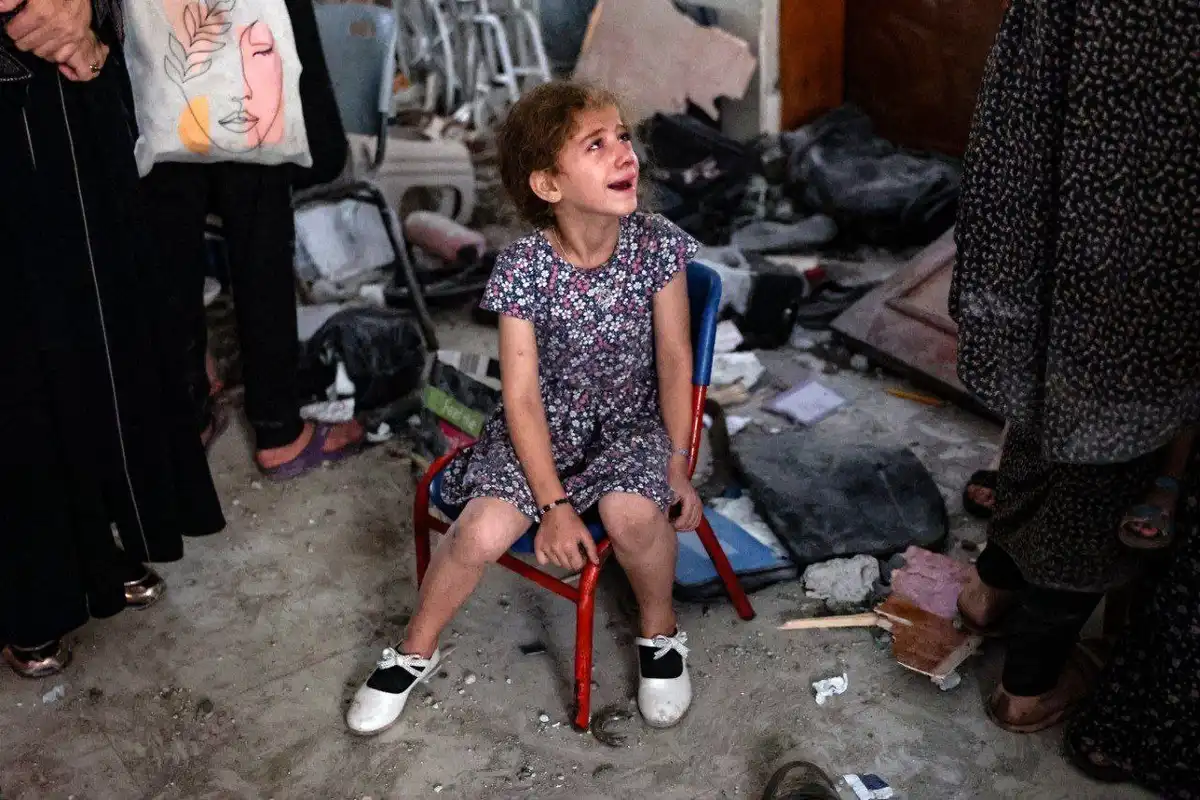
The Israeli attacks and crimes taking place in the Gaza Strip constitute psychological terrorism and part of a plan for genocide. The psychological health of the residents of the Gaza Strip has deteriorated as a result of the ongoing war, and the level of anxiety and shock among the residents of Gaza has reached abnormal levels. Access to health care and treatment services has deteriorated, leading to an entire generation of children who have died, or barely survived, before they even received their birth certificates.


After a year of destruction and deadly war, it has become important to develop an international plan agreed upon by the UN Security Council in order to end the war of extermination, and to discuss the day after the war, and the importance of the international community assuming its legal and moral responsibilities in respecting its decisions and imposing an immediate ceasefire and the war of extermination and displacement against the Palestinian people.


The international silence and the state of inaction regarding the massacres and genocide that our people are being subjected to in the Gaza Strip are no longer acceptable and cannot continue in light of the escalation of aggressive military attacks. The aerial bombardment and ground aggression on the northern Gaza Strip, especially in Jabalia and the central region, and the bombing of the tents of the displaced, coinciding with the first anniversary of the war of extermination, are acts of revenge and genocide.


Efforts must continue, hopes must not be lost, and more efforts must be made to mobilize the broadest international pressure front to stop the war of extermination. It is important to move and work with all international trends to expose the dimensions of the conspiracy, and the violations, crimes, and illegal unilateral steps that the Palestinian and Lebanese people are being subjected to as successive links in an expansionist, racist, colonial Israeli project that aims to re-settle the Gaza Strip, annex the West Bank, and impose the military security policy with excessive force that the extremist Israeli government uses to implement its colonial programs in Palestine.


There is no doubt that activating all possible ways and means and ensuring the continuation of international political, diplomatic and legal activity with the aim of translating the international consensus to stop the war into binding practical steps that force the occupying state to implement the relevant international legitimacy resolutions, precautionary orders and the advisory opinion issued by the International Court of Justice, which was adopted by a resolution of the United Nations General Assembly.


The international community must realize the nature of the existing reality and that the realistic and real approach to resolving the Palestinian issue is the establishment of the State of Palestine, which is the correct approach to achieving security and stability in the region and the world, ending violence and the cycle of existing conflict, putting an end to the continuation of violence and wars, and achieving security, peace, stability and prosperity for the peoples of the region.