
OPINIONS

Fri 11 Oct 2024 9:51 am - Jerusalem Time

Seven points in understanding Zionist extremism

Bakr Abu Bakr

Bakr Abu Bakr

Opinion Writer

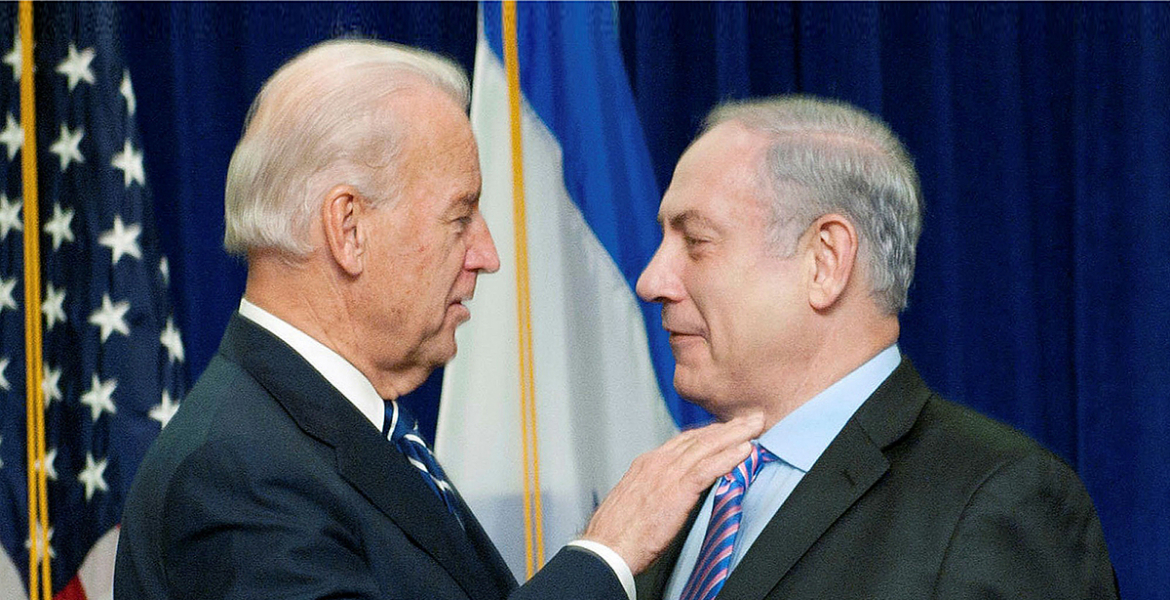
After giving permission to assassinate Hassan Nasrallah, Benjamin Netanyahu climbed the stairs of the United Nations headquarters in New York to deliver his usual loud speech. He did not expect that a large crowd of people who rejected his demagogic approach to speaking, his bloody way of resolving fateful issues, and his central mind, which is the focus of events, would be waiting for him. Many delegations withdrew from the hall, and demonstrations were taking place everywhere, chanting in the name of Palestine and in the name of peace between the Palestinian people and the Jews of the world. Meanwhile, neither he nor his propaganda and misleading media machine were able to accuse the demonstrators of canned accusations of hatred of Jews under the term “anti-Semitism,” which is in fact hostility to Netanyahu’s eradicationist approach to the Palestinian Arab people and their cause, and to universal human values.


Netanyahu did not stop pouring curses and accusations in his speech, which is well-known for its wording, the extent of the deceptions and frauds contained in it, and his known tendency to follow the operations of showmanship and dazzle, including in his described speech the accusation of President Abu Mazen that he is leading a diplomatic war against him, and thus he is practicing terrorism, which means an implicit threat not only to the person of the president, but also to the peace process, which he publicly disavows every day, and will always remain, as he is not ashamed to declare his victory over it.


Speeches of place: Netanyahu bypasses Palestine in all his speeches and almost closes the curtain on the Palestinian cause, which has been his quest for more than 30 years since he published his book, “A Place Under the Sun” or “A Place Among the Nations,” on the assumption that there is no people, nationality, or nation to which the Palestinians deserve to belong, especially since Palestine does not exist in his dictionary or in Zionist and right-wing Jewish thought.


It is Palestine, whose name he has never uttered since he was taught by his father and his great extremist teacher, Ze’ev Jabotinsky, who has never read Herodotus, the father of history, who saw Palestine and wrote about it and its Palestinian people in the first historical book. What he did not see or write about is what is popular in the terms or titles of the Zionist narrative today, because it never existed in the first place.

Netanyahu stood at the UN podium, filled with ecstasy, reminding the audience of his "glorious" past in defending Israel and his own axis, the axis of goodness, grace and blessing! Especially since, with the dazzle of his performances in his speeches, whether inside Palestine or abroad, he resorts to metaphors, examples and interpretive incitement verses taken from the Torah, and even refers to some Quranic verses such as the "spider's web" with a mentality that understands and comprehends, without a doubt, but is imprisoned in the drawers of dense papers that have been produced over time in the form of myths and legends included in a book that is no longer valid as history at all, as Israeli researchers themselves have said, such as Ze'ev Herzog, Israel Finkelstein, Shlomo Sand, Ilan Pappe and many enlightened Jews, progressives and specialist scholars in the world.

In the last elections, "Abu Yair" stood to put forth a strange, misleading slogan for the Palestinian Arabs inside, that he is explicitly "committed to achieving equality between Arabs and Jews in the country"!? And Netanyahu, "Abu Yair", spares no effort in deepening the racist, apartheid "Jewish Nation-State Law", on the one hand, and in continuing to clip the wings of the Palestinians inside, and to that, he claims that his "vast" Arab audience is the one who gave him the nickname Abu Yair, as is the Arab custom with nicknames out of affection!

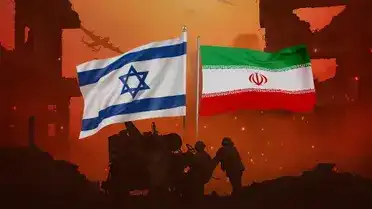
Abu Yair stood on the UN platform to raise two maps, both of which dropped the State of Palestine as usual, and trying to jump over the great knot (where peace begins in Palestine and war begins in Palestine, as the immortal Yasser Arafat said), so he created two axes, which he wrote at the top of the two maps: the axis of blessing or grace (goodness), on which he appointed himself as the “supreme guide” in contrast to the “supreme guide” of the axis of curse or vengeance (evil), represented by the guide of the Islamic Revolution in Iran.

Benjamin Netanyahu did not hesitate to continue his exclusionary approach to opponents, whether in Palestine or within his Israeli political framework. This is a well-established approach with a historical, “divine” principled character, according to his convictions, and alongside him are all the Zionists like him, and the right wing afflicted with dark interpretations, which played the largest role in the killing of General Rabin and then the immortal Yasser Arafat, and what this means in terms of the necessity of throwing accusations in all directions at the outside opponents, whether those who are within the axis of the curse or those who are within the axis of Palestinian or Arab moderation.

Zionist extremism: The mission of skipping over the central or main issue, which is the issue of Palestine, is the Zionist and right-wing exclusionary endeavor that sees before it nothing but scattered people residing (without his will or desire) in Palestine, which he refuses to call Palestine, insisting without any historical evidence of his presence, that of his father and his descendants in it for thousands of years, even though the land knows its owners and speaks their name every day.

Benjamin Netanyahu, who was intoxicated by his victories over thousands of skulls, was practicing extremism (radicalism) since he entered the political arena and became extremely extremist or haughty (relative to those who are haughty and arrogant on earth according to the Quranic context, and not just the ancient extinct tribe) until the moment he was waiting for to find the great justification to achieve his dreams of destroying and crushing the Palestinian people, whose existence he does not even recognize (Ben Gvir, Smotrich and others used the term crushing against the Palestinians, and then recently against Hezbollah and the Lebanese), and that it is a “dream” or “reality” of the establishment of an independent Palestinian state with Jerusalem as its capital, and the return of the refugees, so he took the surprise on October 7, whose anniversary falls, as a platform and justification to pounce even on what he had done through the “slap of the century” with which he crossed the neck of Palestine with his companion, the former US president, to emerge from the cloak of the Arabs, thinking with all his might that the fruit he fed through the “Trump-Abraham Accords” to those who agreed with him would be sweet to the mouth of the Saudi government, which is not the case. It is not.

Netanyahu did not receive the huge prize expected from the country of the two holy mosques, while we are in Palestine, where the third holy mosque is, and it will not reach him, so he confirmed with full confidence that he was and will remain the tyrant dominating the Arab region or what the West calls the "Middle East". He is the founder of the empire (which the Israeli writer Amos Harel warned him in Haaretz newspaper against thinking about, and that it would be better for him to look at his reality) and the Lord of the blessing, and whoever follows him will eat the honey, armed with his achievements that only an ingrate would deny! And represented by the effort to annihilate the Palestinian people - who do not exist in his opinion! - and to displace them and annihilate their land, as is happening in Gaza and the West Bank, and recently in the same manner in our brotherly Lebanon.

American victories: It is clear that all the aggressive operations carried out by the Israeli army allied with the American army throughout the gloomy and bloody year in Palestine were with loud or gentle American approval, which may appear to refrain or raise limitations or highlight some differences in the media, but it quickly follows the “victories” achieved by “Netanyahu” at the expense of the blood of the Arab Palestinian people, then the Lebanese (and the Syrians through the raids on Syria), and America adopts them without argument, as is the case recently with what we see of American approval (perhaps for the hundredth time) of the Israeli decisions to invade Lebanon, assassinate the leaders there, and respond to the Iranians.

And before that, there were dozens or hundreds of approvals for every move and step he took to occupy the entire Gaza Strip, which despite the huge number of innocent civilian victims, has never happened before, within the specified time and space in the history of all wars, to prove that the Palestinian people and their heroes in confronting this fascist are capable, standing and great people and will not sit back from confronting him in all forms of confrontation. But Netanyahu and his gang have not been deterred so far in a terrible moral failure, where the option of escalation, destruction, hatred and malice is the only strategy he knows, “and he still has a face to go to the United Nations and talk about imaginary matters, a beautiful country whose only obstacle to world peace is the same absent partner,” as the Israeli writer Yona Gonen reminded him.

We observe, reflect and learn.

We can observe, reflect and learn when looking at the reasons behind the depth of the Israeli Prime Minister’s extremism, fanaticism, tyranny and imperial dream of dominating our region, especially in the recent period, and among those who support him from among the people of the extremist Zionist and religious mind, based on factors including the following:

1- Historical and mythical exaggeration and superiority: Netanyahu’s superiority or exaggeration (exaggeration and fanaticism) and extremism in thought and action is linked to a narrative, history and faith that we said is historical, mythical and legendary, which he keeps repeating at all times, without considering the extent of the scientific abandonment of this legacy among scientists first, then among the peace-loving peoples of the world, especially its students and rising youth, who see in his words and actions what contradicts the values of religions in general, and the values of truth, freedom and human justice. On the other hand, the Arab and Islamic side finds fragmentation, ambiguity and weakness even in formulating the unified narrative, let alone the consistency in political positions related to influential actions!

2- Dealing with the Allies: The American regime, with its Democratic and Republican wings, is the regime that contributed to the establishment of the Zionist entity on the land of Palestine since its approval of the Balfour Declaration in 1917 AD. It had the precedence in adopting Israel as a fortress of America’s fortresses and a state of its states, despite some occasional displays of force between the two sides, but they support each other, so America boards the sea within minutes and positions itself in the Mediterranean within a period of time with its fleets, planes, and destructive weapons, and its entire intelligence and support with “trillions” of money, which clarifies the meaning of the great alliance.

On the other hand, on the axis of resentment or curse, as Netanyahu called it, you will not find anyone who does the same, whether by using force, economic activity, or even fruitful diplomacy. Let us return to the view of the “progressive” Arab regimes of the Palestinian revolution and resistance, that the mission of the resistance is nothing but serving this or that regime, which is what Yasser Arafat revolted against, creating the independence of the Palestinian national decision within the framework of the Arab depth, and what does not correspond to the reality that exists today.

Who will achieve his goals within the framework of this understanding? Is it the alleged axis of blessing or the axis of curse?

3- The wisdom of victory and rounds: We have to learn, so it is useful to repeat the reference to what the Secretary-General of Hezbollah said in his first speech after the famous surprise on October 7, 2023, when he said two clear wisdoms, the first of which is that you (meaning Hamas) achieved victory on the first day. He repeated it as he repeated the independence of the faction’s decision, and it has many symbolic meanings, including that you have a world war ahead of you, which I think he was aware of to whisper through these words in their ear to think, review and understand that the victory achieved on the first day and period, does not mean that the wise person should continue on the same path in light of the terrible imbalance in the level of forces, but rather it means that you should think about the next day when alternatives and scenarios must be available, so review and think and perhaps change the path, embrace your people and activate the alternatives. The future is imminent inevitably and that is what happened.

We have already pointed this out since the first month, as for the second piece of wisdom that he threw at those who were hoping that the party would launch an attack that would “leave nothing behind” on northern Palestine! “This war is not won by a knockout blow,” and so victory is achieved by points, and there are rounds and then rounds, meaning that it is time for this round to end in preparation for the next round, unless awareness of it is clear in light of the rush that was met with incitement, mobilization, and media exaggeration of the capabilities of an organization (or organizations) that is waging a guerrilla war against the strongest army in the world, i.e. the American-Israeli army, and the result, as we see it, is massive destruction and daily annihilation.

4- The real concept of power: Israeli power did not come from its superior and advanced military power only, but it came coupled with tremendous power on the economic level, including agriculture and industry, and through supporting the mind and the methodology of directed and even highly directed education, and supporting thinking and research in all fields.. And you can look at the power of the myth and the narrative, whether historical, biblical, or modern, with all clarity, and what surrounded it from exploiting the terms “Holocaust” and “anti-Semitism”, “the only democracy in the Middle East”, “the moral army”, “the right to self-defense”, etc., and of course the technological power in which it is superior by light years to the scientifically stagnant ocean, and, as previously mentioned, to all neighboring and non-neighboring Arab countries.

Add to that the depth of its alliances, which were based on the awareness of the first founder, Chaim Weizmann, the first president of the Israeli state, when he said without evasion and clearly, attributing the credit to himself and being honest: We achieved the establishment of the State of Israel first through international recognition, and then by force. Meaning all forms of force, the first of which was military, and then what was linked to it. But he made it clear that international recognition of the importance, necessity and essentiality of the existence of the entity is the origin, even if in truth Netanyahu and his gang today have not learned that the Palestinian state exists despite their noses and will also be independent and liberated despite their noses raised in arrogance and haughtiness. Netanyahu will know that the ongoing threat to the Jewish community within the entity will not benefit him, in light of the international concepts that make freedom, justice and the rights of peoples the basis of their movement, which will not rest until the evil tree is uprooted.

5- Shattering preconceptions and assumptions: One of the reasons for the Zionist extremism during this bloody, tearful and black-crowned year is the lack of awareness among us Palestinians or Arabs in general regarding the course of the terrible events in the Gaza Strip, which since the first week have taken on a global character, i.e. the confrontation with America.


In the shadow of this world war, many assumptions fell one after the other among many analysts, including that the killing of Israeli soldiers in the field would curb any advance of the invading Israeli army, and therefore it should enter by land, for it would not dare to enter the city of Gaza! But it did, and it would not dare to enter the city of Khan Yunis by land! But it entered it, and it would not dare to enter the city of Rafah! So it destroyed, killed, and devastated, reaching the Salah al-Din axis, and returned the sector to the Stone Age, as the racist Israeli right said.


At the same time, he shattered other assumptions or hypotheses that he would collapse under internal popular pressure, or that the Israeli political context that was against him would topple him! And here he is today, kneeling and repentant, just as his arch-friend "Sa'ar" did.


The assumptions that the major role of the International Court of Justice and the International Criminal Court would be a brake on the tyranny of his power and his supremacy on earth have also fallen, but as usual he has ignored all of that, just as he has ignored hundreds of UN resolutions, and he has not found from the American who defends him, whether he is an oppressor or an oppressed person, anything but some public blame and deep, uninterrupted support.


6- Breaking taboos and technological superiority: The Israeli army was able to break all human taboos on the one hand when it threw the bag of ethics from the first call to war - its habit, and broke all the assumptions or axioms that said its field weakness and inability to bear human losses on the other hand, and was able to deepen its intelligence and technological superiority in what appeared from its use of artificial intelligence in killing thousands in the Gaza Strip, then what happened with the bombing of the automatic pagers in Lebanon, and what followed and preceded it from special operations of a surgical nature on the one hand, and destructive on the other hand by killing the leadership of "Hamas" and other factions including the "Fatah" movement, and recently by assassinating most of the first-rank leadership in Hezbollah, which was exposed politically, militarily and popularly when it fell into the sin of invading Syria and siding with one party against the other, then what were the negative signals it sent to the Lebanese people in general when it occupied Beirut, gathering perhaps more enemies than friends around it, and despite the recent attempt to support Palestine in the Gaza war, the depth of human pain Then the penetration, as reports indicate, of the party and Iran, and in the Syrian arena, gave the Israelis the superiority they had been seeking since their defeat in Lebanon in 2006.


7- The axis of blessing versus the axis of curse: Benjamin Netanyahu, who gained experience in tyranny, arrogance, and the pursuit of greatness, was able to crown himself king of Israel, and recently supreme guide of the axis of “blessing,” as he called it, and sends deep, deadly, resounding missile messages to countries that have not yet joined the train of subservience to the blessing of his dominant fascist and racist regime.


Netanyahu has been able to maintain the stability of his ideas and principles (if they can be called principles) and achieve a solidity that is unparalleled with any other leader. He has rejected his masses who are thirsty for dialogue and a deal to release the kidnapped soldiers, only to put this matter behind everyone’s back with his successive aggressive military initiatives instead of his intellectual (ideological) stability when he erases the Palestinian issue forever, as he dreams. There is no place for a state or a people in Palestine other than his state, which was created by the United Nations, which he hates.


And his right-wing, racist, dreamy "Kahanist" audience supports him. He (and the Zionist extremists and the ruling right) are searching for a place among the nations or under the sun that should not shine on the Arab in general, or the Palestinian Arab. In addition to receiving the banner of "blessing" and great guidance to crush the Arab nation, then when he achieves his dream of transforming present-day Iran into friendly Iran as was the case during the Shah's days, his "victory" will last and he will achieve the greatest dream.


OPINIONS

Fri 11 Oct 2024 9:47 am - Jerusalem Time

Is a ceasefire approaching?

Jawad Al-Anani

Jawad Al-Anani

Opinion Writer

Does the intensification of the fighting with the Palestinian and Lebanese sides indicate that these battles will soon end? Are pressures being exerted on the warring parties, especially Israel, that the time has come for the war to end and for the civilian victims to be given the attention they deserve so that a window of hope can open before them?


It seems that there are Jewish groups in the world who do not want the war to continue and have begun to actively approach the Arabs with whom they can communicate, and who fear for the future of Israel from the bloodbath in which the extremist, unjust government is drowning. They have begun to say that the time has come to stop this bloodshed and move forward towards a solution that will restore what remains of the glimmer of hope for the possibility of reaching a just peace that will end this great tragedy in the twenty-first century.


It has been noted recently that news television channels have begun to focus more on the effects of the war on the global economy, from chaos and confusion in global stock markets, to the rise in the prices of gold and precious metals, and the recovery in oil prices, the price of which in the North Sea has reached more than eighty dollars, compared to approximately seventy dollars a few days ago.


There is a fear within the United States, especially the Democratic administration, that the continued rise in prices will accumulate economic burdens on poor and middle-class American families, who will either refrain from voting in the upcoming November elections, or will side with Republican candidates in their states, especially the so-called swing states, in which Kamala Harris has begun to make some slight progress at the expense of her competitor, Donald Trump.


Moreover, the continuation of the war will increase the pressure on international supply chains, because this continuation will mean that Israel will strike Iran, even if this strike has not been agreed upon in detail. If the matter is left to Netanyahu’s unilateral decision, he, his army and his government will strike Iranian oil depots and facilities, or he may go so far as to seek to destroy the Iranian nuclear facilities that are said to be located in Isfahan and Tabriz.


In this case, Iran will send hundreds, if not thousands, of ballistic missiles to Israel, causing great destruction there, embarrassing the Biden administration and the Starmer government in the United Kingdom, to the point that it will join Israel in striking Iranian military bases. And what if Russia then exploits the dangerous results of this war to expand its occupation of Ukrainian territory or occupy Kiev and neutralize the Zelensky regime, or China occupies islands in the Pacific Ocean.


A commentator on an Arab news channel said that Iran has nuclear weapons and can produce them.


Although such a matter is not settled or definitive, such as the claim of killing the new Hezbollah leader Hashem Safieddine, or killing the leader of Hamas forces in Gaza Yahya Sinwar, Iran could produce a dirty bomb, according to what some experts say, because such a bomb would be highly effective but less harmful and easier to produce than a regular nuclear bomb.


Therefore, the risk of the continuation of the war according to multiple scenarios harms the major interests of many parties in the region and the world, and even Israel, whose leaders are eager to continue the war, expand its scope and intensify its violence, is exposed to such a risk. However, the battles taking place at the present time remain limited in their harm, compared to the use of missiles with high-intensity explosive warheads, or nuclear bombs, even if their enrichment rate is lower than the level at which they are called nuclear bombs.


I had the opportunity to watch an important television interview on the American CNN channel, in which the host of the program "Connecting the World" met with the mediator for the exchange of the prisoner Gilad Shalit for Palestinian prisoners. The name of this mediator is Gershon Baskin, in which he presented a formula for an agreement that he said Hamas had agreed to.


The agreement includes a ceasefire for twenty-one days, during which Israeli military and civilian prisoners, estimated at one hundred or one hundred and one, will be exchanged for a large number of Palestinian prisoners. During this period, Israel will withdraw from Gaza, and there will be an agreement to begin a political process that will lead to a just and acceptable solution to the Palestinian issue, in which Hamas will not participate. The resistance movement will pledge not to return to war or acts of resistance.


Baskin stated in the interview that the Arab negotiating parties had accepted this proposal, but the Netanyahu government and its prime minister were the ones who obstructed this deal. Had it been completed, the prisoners would have been returned to their families, the war would have stopped, the battle in the north on the Lebanese border would have ended, the Iranian ballistic attack on Israel would not have occurred, and Hassan Nasrallah would not have been killed. It seems that the military leader of Hamas, Yahya Sinwar, accepted this and did not mind moving to a safe place.


In light of Baskin's words, the movement demanding an agreement with the resistance in order to stop the fighting and release the prisoners has grown stronger, and peaceful demonstrations have returned to the streets of Israeli cities and many European and Arab countries.


Baskin prepared a letter from Israeli Prime Minister Netanyahu to US President Joe Biden, informing him that the Israeli government agrees to the framework agreement approved by Hamas, and includes the most important points he presented during the interview with CNN, including providing international guarantees after the complete Israeli withdrawal from the Strip that no attack against Israel will be repeated, such as the one that occurred on October 7. However, Netanyahu did not sign this letter.


It seems that activists, Israelis and Jews in many Western countries who want to end the bloody war have begun to move, and are demanding that Arab countries like them do the same. Some of them have spoken to me from the United States and the United Kingdom to confirm that they are ready to visit Jordan and talk to opinion leaders and politicians there, to convince them that there is a large sector of Jews and Israelis who do not see the current Israeli government as representing them, but rather seek to exonerate themselves from it, and that they are ashamed of the positions and language it adopts, and of the threats it issues.


We are now standing on the threshold of the door of Radad, either it opens towards light and hope, or it closes on darkness whose extent and calamities only God knows.


A few days ago, I had the opportunity to listen to Prince Hassan bin Talal during an Iftar meal on Saturday, October 5, 2024. He presented an in-depth analysis of the reality in the region, and the need for Jordanian researchers to develop strategic studies to put Jordan’s internal house in order and confront its problems and challenges, and to organize regional and international relations. He stressed the need for the role of strategic research in Jordan to contribute to developing its vision on this subject.


The basic lesson we have learned is that our future must not remain hostage to decisions made by others, of which we are the victims and forced to deal with, because they will directly and undeniably affect our strategic interests.

ARAB AND WORLD

Fri 11 Oct 2024 9:39 am - Jerusalem Time

Iran Secretly Warns America's Arab Allies: Don't Help Israel or You'll Be Next

The Wall Street Journal revealed on Friday that Arab officials said that Tehran is threatening through secret diplomatic channels to target oil-rich Gulf Arab states and other American allies in the Middle East if their territory or airspace is used to launch an attack on Iran.


Israel has threatened Tehran with a severe response after Iran fired some 180 ballistic missiles at Israel earlier this month, with some Israeli officials and commentators calling for devastating strikes on Tehran’s nuclear facilities or oil infrastructure. In that case, Iran has warned that it would respond with devastating strikes on Israel’s civilian infrastructure and would retaliate against any Arab state that facilitates the attack, the officials said.


The Arab officials said the countries Iran has threatened include Jordan, the United Arab Emirates, Saudi Arabia and Qatar, all of which host U.S. forces. The officials said those countries have told the Biden administration they do not want the United States or Israel to use their military infrastructure or airspace for any offensive operations against Iran.


While the Iranian threats are vague, they have raised concerns in energy-rich Gulf states that their oil facilities — long considered protected by a U.S. security umbrella — could be hit, Arab officials said. U.S. facilities and military forces in the region could also be at risk in an area with one of the highest concentrations of U.S. troops in the world, they added.


The escalating conflict in the Middle East is straining and draining the existing and potential Arab alliance with Israel, all of which oppose Iran’s military posture in the region. The United States is the backbone of this bloc, and hopes that in the future it will form a kind of Middle Eastern NATO that includes Arab states and Israel, allied to confront Iran instead of Russia. Arab states, including Jordan, helped shoot down Iranian projectiles heading toward Israel in April, but supporting a direct Israeli strike on Iran may be a step too far.


U.S. defense officials acknowledged that some regional partners have told the Pentagon they do not want Israeli warplanes to fly over their territory or U.S. forces to launch offensive operations from within or over their airspace. The officials said the Arab countries have said U.S. forces are allowed to conduct self-defense operations. A U.S. defense official said the Arab countries’ requests remain informal. Defense officials said that since the war between Israel and Hamas in Gaza began last year, Arab countries have repeatedly added and removed restrictions on U.S. operations. But the officials said they have been more assertive as the war has expanded into clashes between Israel and Iran, including Israeli attacks in Lebanon.


US President Joe Biden and Prime Minister Benjamin Netanyahu discussed Israel’s expected military response to Iran on Wednesday in their first call since August 21. US officials said they did not yet know the timing of a strike or what Israel might target. Israel’s security cabinet was scheduled to meet, where members were presented with options for responding to the Iranian attack, according to an Israeli official.


“Israel likely has other ways to send warplanes to attack Iran, including over Syria, where its air force has freedom of movement, and Iraq, where air defenses are no match for Israeli stealth technology,” the newspaper said.


However, any restrictions on how the U.S. military can move around the region make it difficult to secure or resupply its assets, such as aircraft carriers operating in the Red Sea.


The US Central Command, responsible for US military operations in the Middle East, referred questions to its Arab allies to inquire about Iran.


Earlier this month, Iran's mission to the United Nations publicly warned that "any state that provides assistance" to an Israeli attack "will also be considered an accomplice and a legitimate target," but did not provide any specific details.


The United States has supported Israel with a huge amount of weapons, equipment, political and diplomatic cover, under the pretext of “Israel’s right to self-defense,” which gives Israel the right to commit genocidal massacres against the Palestinians since October 7, 2023, and now in Lebanon as well.


In April, when Iran first targeted Israel in a direct attack, American forces largely intercepted most of the Iranian drones and missiles. “But they were able to do so in part because Arab states passed on intelligence about Tehran’s attack plans, opened their airspace to warplanes, shared radar tracking information or, in some cases, provided their own forces to help, officials said at the time,” the paper reported.


With Iran warning it will respond if Israel attacks, Arab leaders worry that an escalation could force the United States to intervene to help Israel, its closest ally in the Middle East.


Arab mediators are trying to calm tensions as they relay messages between Israel and Iran — a back channel that has been open since April, when Iran hit Israel with 300 rockets, the newspaper said. The covert diplomacy has intensified since Israel assassinated Hassan Nasrallah, the leader of the Iranian-backed Lebanese Hezbollah group, and launched a ground offensive in Lebanon. Iran fired its latest ballistic missile at Israel days later.


The threatening messages underscore the risks facing the United States if a counterstrike between Israel and Iran gets out of hand. U.S. officials say they are beefing up their military presence in the region, including increasing the number of warplanes deployed to the Middle East and keeping the Abraham Lincoln carrier strike group in the region.


The newspaper notes that during an emergency meeting last week in an attempt to avert any attack by Tehran, the Gulf states, including Saudi Arabia and the United Arab Emirates, promised not to allow their territories or airspace to be used in any potential strikes on Iran.


Some Arab countries fear that an expanding war could choke off oil exports passing through the Strait of Hormuz - the narrow waterway that connects the Gulf to the wider world - which could push oil prices higher, Arab government officials said.


Public rhetoric between Israel and Iran has also become more strident, with both sides issuing harsher direct threats, and officials from both countries continuing to target non-military infrastructure on the table. Previously, threats focused mostly on military targets or proxies.


The tone of the private messages was tougher than it had been in April, after Iran’s previous missile and drone attack, when Israel’s tough public rhetoric was accompanied by backchannel messages aimed at calming tensions. At that time, Israel, under pressure from the United States to temper its response, targeted Iranian air defense systems.

PALESTINE

Fri 11 Oct 2024 9:19 am - Jerusalem Time

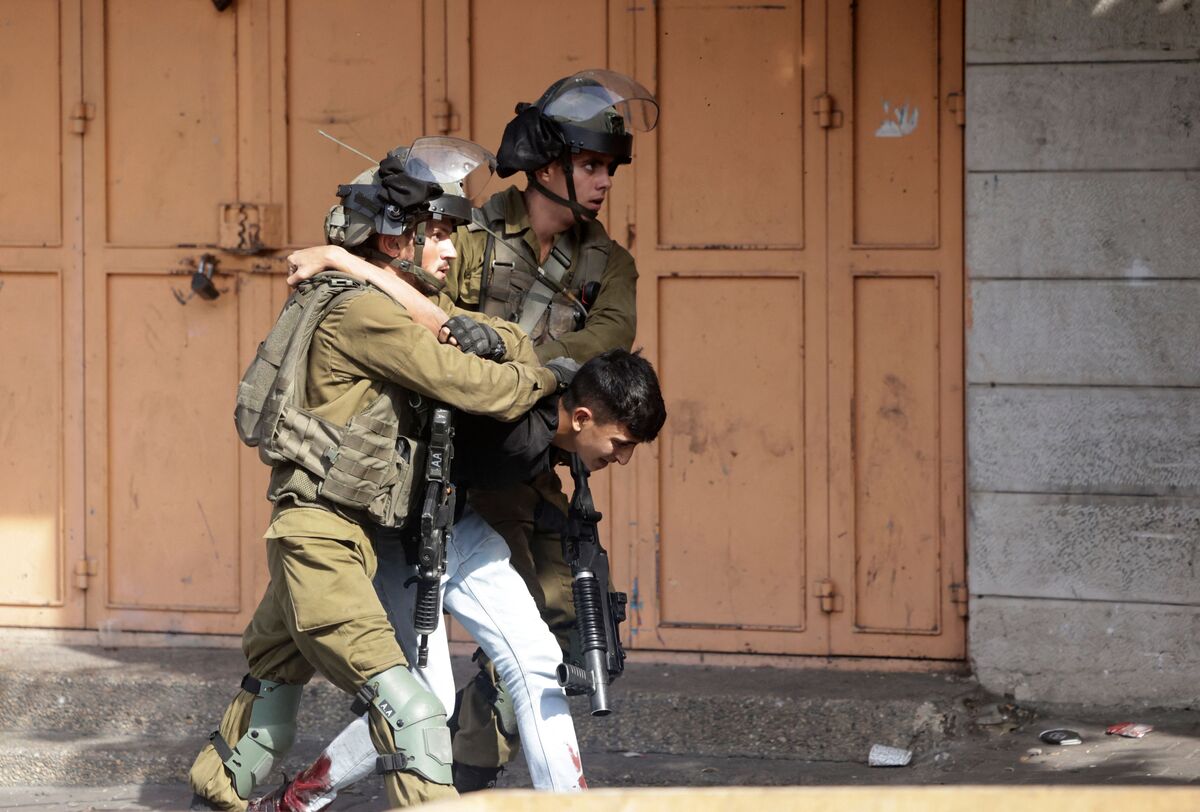
Israeli forces arrest 4 young men from Qalqilya and Ramallah

Today, Friday, the Israeli occupation forces arrested 4 young men from Qalqilya and Ramallah.


Local sources reported that the occupation forces arrested the young man Imad Nader Abu Eid and Firas Zahran after raiding and searching their homes in Qalqilya.


The occupation forces stormed the city from its eastern entrance, and deployed in several residential neighborhoods.


In Ramallah, the occupation forces arrested the two young men, Muhammad Nasri Abu Aliya and Haitham Fathi Abu Naim, after raiding their homes in the town of Al-Mughayyir.

PALESTINE

Fri 11 Oct 2024 9:12 am - Jerusalem Time

The file of Israeli detainees in Gaza.. Will Abu Obeida’s warnings bring the file back from the shadows to the forefront?

Kamal Tarabieh: No real American pressure to stop the Israeli military campaign in the Gaza Strip and Lebanon

Dr. Jamal Al-Shalabi: America is the decision maker in this war, and Israel is playing the role of the executive contractor on its behalf

Hatim Abdel Qader: The US administration, despite its desire to conclude a deal, is not able to pressure Netanyahu

Ihab Jabareen: Netanyahu's initiative to return prisoners is a maneuver to strengthen his positions at home and justify the continuation of the war

Dr. Munther Al-Hawarat: Israel does not want any steps that would enhance the Democratic administration’s chances of winning

Dr. Tawfiq Taama: Netanyahu is not interested in resolving the prisoners’ issue even if it leads to the death of all detainees in Gaza


The warnings issued by Abu Obeida, the spokesman for the Qassam Brigades, regarding the Israeli detainees held by the resistance in the Gaza Strip, have stirred up this file, which is no longer a priority in Israel, in light of the unprecedented escalation on the northern front and the expansion of the circle of fire on the two fighting fronts, which is evident in the brutal Israeli attacks on the cities and villages of southern Lebanon and the Bekaa, reaching the capital Beirut and its southern suburb, and in contrast, the missile attacks by Hezbollah, which extend to Haifa, Safed, Afula, and even Tel Aviv and its surroundings.


Rabbis from the far-right Religious Zionism party on Tuesday called on Israeli Prime Minister Benjamin Netanyahu to do everything possible to return the captives in the Gaza Strip, even if it was through a “responsible agreement that does not endanger Israel’s security,” as they put it.


This came in a letter sent by these rabbis to Netanyahu, the day after Abu Obeida warned, in a speech he gave on the first anniversary of the Battle of “Al-Aqsa Flood,” that he does not rule out the file of Israeli prisoners in Gaza entering a “dark tunnel,” in reference to the complexity of their file and the difficulty of Tel Aviv knowing their fate in the future.


America is busy with the upcoming presidential elections


Lebanese media figure and researcher in Arab and European affairs Kamal Tarabieh told Al-Monitor: Israeli Prime Minister Benjamin Netanyahu and his government do not pay much attention to the positions of the United States of America.


He pointed out that America's preoccupation with the upcoming presidential elections, which will be held in a month, provided Netanyahu's government with space to continue its policies in Gaza and Lebanon without real pressure from the US administration.


Tarabieh stressed that Netanyahu supports former US President Donald Trump, and therefore will not take steps that might give current President Joe Biden or the Democratic Party political gains, such as agreeing to a hostage exchange deal that might contribute to boosting Biden's popularity during the elections.


As for the Lebanese situation, Tarabieh pointed out that Israel had received a “green light” from the United States to continue its military operations in Lebanon, and that the American demands for a ceasefire were “verbal demands” that were not binding, given the lack of real pressure being exerted on Israel to stop these operations.


Tarabieh touched on the French-American initiative to sign a truce in Lebanon two weeks ago, but Netanyahu backed down from his commitment to it after initially accepting it. During this time, the Israeli bombing of Hezbollah sites continued, resulting in the killing of the party’s Secretary-General, Sayyed Hassan Nasrallah.


Netanyahu exploits US electoral vacuum


He stressed that there is no real American pressure to stop the Israeli military campaign in the Gaza Strip and Lebanon, especially in light of the ambiguity surrounding the results of the upcoming presidential elections, and whether the new administration will be Democratic or Republican.


He added: "This vague situation allowed Netanyahu to continue his war on the Gaza and Lebanese fronts, as it seems that the war in Lebanon has now become the main front for Israel."


Tarabieh referred to recent information he received from French sources confirming that Netanyahu has escalated his demands towards Lebanon, as he is now demanding the complete disarmament of Hezbollah, in addition to the implementation of international resolutions 1701 and 1559. Netanyahu also threatened to stop cooperation with France if it recognizes the Palestinian state.


Tarabieh stressed that Netanyahu is exploiting this international political vacuum to continue his military adventure, and that the United States, which is the only international party capable of stopping this campaign, is not exerting any real pressure at this time, especially in light of the American commitments to fully support Israel.


US-Israeli maneuvering tactics to prolong the war


In turn, Dr. Jamal Al-Shalabi, Professor of Political Science at the Hashemite University of Jordan, confirmed in an interview with “I” that Israel and its leadership use repeated psychological tactics in their dealings with the Palestinians, especially in the Gaza Strip, in parallel with the Qatari and Egyptian efforts to secure a truce or ceasefire agreements in light of the beginning of the movement as a result of the war on Lebanon and Gaza, the Iranian response, and the atmosphere of ambiguity that prevails in the region.


Al-Shalabi explained that these tactics come within the framework of maneuvers aimed at prolonging the current crisis, noting that the war may extend for more years, in light of Israel's readiness to continue military operations until the end of the US elections in 2025.


Al-Shalabi pointed out that the next US president will have a major role in determining the future of the war, whether it is Kamala Harris, who may seek to pressure Israel to reach an agreement that preserves its interests, or Donald Trump, who is expected to provide absolute support for the policies of Israeli Prime Minister Benjamin Netanyahu and extend the war until the Israeli elections in 2026, an option he has ruled out.


Gaza Strip will need decades to recover


Regarding the current situation, Shalabi expressed his belief that Israel has destroyed the Gaza Strip in a way that hinders any future threat from the southern front, noting that the Strip will need decades to recover.


He added: This opens the way for the future US administration to play a decisive role in determining the course of events.


He explained that American support for Israel extends to multiple levels, from the huge financial support that exceeded $40 billion in one year, to the provision of advanced weapons such as F35 aircraft and phosphorous bombs used in bombing fortified sites in Beirut, southern Lebanon and Gaza. He said: “Without this support, Israel would be in a completely different position.”


Al-Shalabi stressed that Israel benefits from comprehensive American support, including political, military, and media support, which enables it to carry out its military operations with full American cover. Although the United States tries to show some modesty in front of its Arab allies, such as Egypt and Jordan, the real support remains with Israel.


Al-Shalabi expressed his belief that the United States is the decision maker in this war, and that Israel is playing the role of executive contractor to implement American interests in the region, pointing out that this strategic cooperation aims to keep Israel as the strongest country in the Middle East, especially after the weakening of major Arab armies such as Iraq, Syria and Egypt, which is in the interest of both Israel and America.


The US administration has become a "lame duck"


For his part, member of the Fatah Revolutionary Council, Hatem Abdel Qader, told Al-Arabiya: The US administration has now become like a "lame duck", after losing the ability to influence the decisions of Israeli Prime Minister Benjamin Netanyahu.


Abdul Qader stressed that the US-Israeli relationship is witnessing clear transformations, as Netanyahu has become unbridled and not subject to any American pressure.


He pointed out that the United States bears responsibility for this situation, after it flooded Netanyahu with money and weapons, which made him act as an ungrateful ally of the United States. Despite the repeated attempts by the US administration to reach a ceasefire and conclude a deal, Netanyahu is the one who constantly obstructs these efforts, which further complicates the scene in the Gaza Strip.


Abdul Qader explained that the US administration, despite its desire to conclude a deal, is not able to exert real pressure on Netanyahu to accomplish it.


He expressed his lack of optimism about the possibility of reaching a swap deal in the near future, noting that any deal must include a cessation of aggression and Israel's withdrawal from the Gaza Strip, which Netanyahu rejects.


Abdel Qader also believes that Netanyahu is trying to buy time and is betting on the results of the US elections, trying to procrastinate until then. He stressed that the region is sliding towards chaos, as Netanyahu is trying to destabilize the Middle East and bring about changes in the regional balances, but he is so arrogant that he believes he is able to achieve this, while the Israeli people will be the ones who pay the price for this recklessness in the end.


Abdul Qader stressed that the issue is no longer limited to Gaza or even Lebanon, but is now related to Netanyahu's attempt to change the equations of the entire Middle East, pointing out that these aggressive policies will lead to serious repercussions in the region.


Netanyahu's position on the issue of returning detainees is not serious


In an interview with “I”, the expert in Israeli affairs, Ihab Jabareen, considered the position of Israeli Prime Minister Benjamin Netanyahu on the issue of returning the prisoners held in Gaza to be unserious, and aims primarily to strengthen his positions inside Israel and justify the continuation of the war before the Israeli street and the international community.


Jabareen pointed to the timing of Netanyahu's announcement of his position two days before the expected event, noting that this step came as a preemption of the anniversary of October 7, which still affects the Israeli consciousness.


However, Jabareen stressed that Netanyahu is not showing any real seriousness towards returning the detainees, citing the pressures the Israeli Prime Minister was subjected to after the recovery of six bodies during the past period.


He added: This event put a lot of pressure on Netanyahu, but he chose to escape to the northern front to ease internal tensions.


Jabareen said that Netanyahu's position on the prisoners held in Gaza is nothing more than a pretext that he uses in front of the Israeli public and the international community, as he presents it as a preemptive step that justifies the war, and in order to throw the ball into Hamas's court, especially with the strict conditions that Netanyahu has set, such as demanding safe areas and the withdrawal of the Israeli army from the Gaza Strip, which are conditions that he will not give up.


Escape to the Northern Front


Regarding how Netanyahu bypassed the October 7 anniversary, Jabareen stressed that the northern front represented a great opportunity for the Israeli Prime Minister to bypass this sensitive date, which justifies the continued disregard for Gaza’s basic objectives, as the issue of prisoners has become a marginal priority in Israeli consciousness.


Jabareen also pointed out that "Netanyahu will not seek to achieve any form of surrender victory, as he cannot now, at this moment, provide any legitimacy to either Hezbollah or Hamas, as that would contradict his ongoing rhetoric over the past months."


Regarding US-Israeli relations, Jabareen stressed that the US administration, despite its current weakness, is not limited to President Biden. Relations with Israel are subject to the influence of US national security policies and the State Department, which gives Israel great freedom in its actions between the sea and the river. He also stressed the importance of cutting off Iran’s arms in the region, but at the same time the United States will not directly confront Iran as long as its goals can be achieved without that.


Jabareen pointed out that recent months have proven that the United States still fully supports Netanyahu's policies, even if Iran is not directly targeted.


The initiatives being talked about are not serious.


For his part, Jordanian writer and political analyst Dr. Munther Al-Hawarat told “Y”: There are initiatives being talked about at the present time, but they do not rise to the level of seriousness.


He pointed out that such initiatives come during the US election period with the aim of improving the image of the current administration before voters, especially in light of the attempts to release the six American hostages.


He added: These efforts aim to improve the position of the current US administration, whose candidates, Kamala Harris and Donald Trump, seem to have very close chances of success in this crucial period.


The dialogues made it clear that the Israeli side does not seem ready to listen to the Biden administration at this critical stage, as Israel considers the current US administration a "lame duck" for several reasons, most notably its belief that it is achieving successes on the ground and wants to complete these achievements.


Israel doesn't want Harris to win


He added that Israel does not want any steps that would enhance the Democratic administration's chances of winning the upcoming elections. On the contrary, it prefers that votes be directed towards Donald Trump, who criticizes the Biden administration for its failure to manage conflicts in the Middle East, including the hostage file.


The dialogues pointed out that Israel currently has a great ability to influence the US administration, pressure it, and reject its requests. This situation changes the equation significantly, especially since the Israeli government led by Netanyahu and the Israeli right believe that its agenda is proceeding successfully and in an organized manner.


Benjamin Netanyahu faces great pressure from within


In turn, the US-based political analyst Dr. Tawfiq Taama told “Ya”: Israeli Prime Minister Benjamin Netanyahu is facing great pressure from within Israel due to the protests calling for a ceasefire and a prisoner exchange deal.


He added: Despite these pressures, Netanyahu is not interested in resolving the prisoners' issue, even if this leads to the death of the detained Israeli prisoners.


Taama pointed out that a number of Israeli detainees were killed due to the indiscriminate Israeli attacks on the Gaza Strip, and that Israel tried to carry out operations to rescue the detainees, but failed, which resulted in the killing and wounding of many Palestinians in those attempts.


"The Palestinian resistance changed its strategy in dealing with the prisoners it holds, which pushed Netanyahu to a single option, which is negotiations. His attempts to free the Israeli detainees through military solutions proved to be a failure, especially after a number of them were killed as a result of Israeli bombing," Taama added.


He stressed that the prisoner exchange deal reached last November was through negotiations, and is the only successful way to resolve this issue.


Hamas showed great flexibility in the negotiations


He explained that Hamas showed great flexibility in the negotiations, but Netanyahu rejects the conditions, while the Biden administration seems unable to pressure Israel to conclude the deal, as is the case with the Qatari and Egyptian parties.


Taama stressed that Netanyahu is the one who runs Israel's foreign policy, not US President Joe Biden, in light of what he described as the clear dependence on the United States to support Israel.


He pointed out that Biden provides full support to Israel, and that all of Israel's steps in the region come with an American green light.


Taama added: Biden's statements, which include his full support for Israel, reflect the weakness of his ability to pressure it, especially in light of the approaching US elections and his need to maintain the votes of Jewish voters and the support of Jewish donors to the Democratic Party.

PALESTINE

Fri 11 Oct 2024 9:01 am - Jerusalem Time

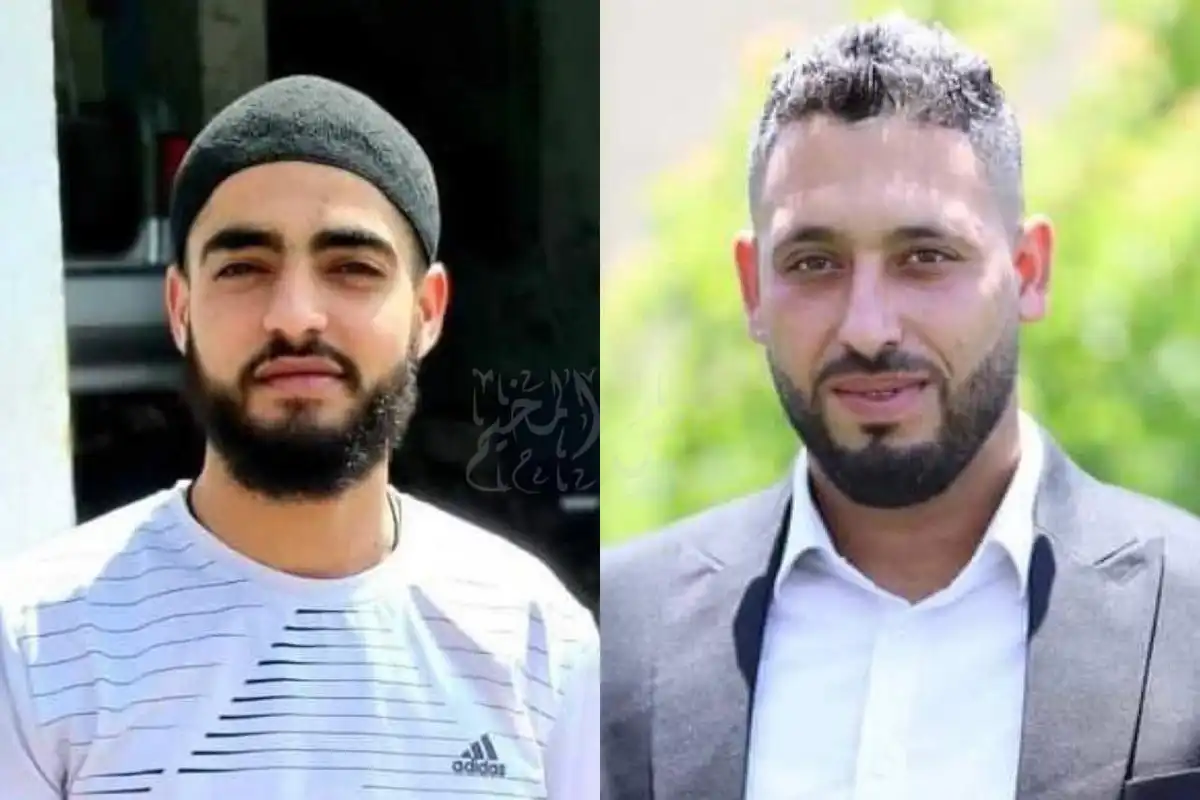
Two dead in the occupation's bombing of a vehicle east of Tulkarm

Two citizens were killed, Thursday evening, when Israeli occupation aircraft bombed a vehicle east of Tulkarm.


According to local sources, the two young men, Iyad Muhammad Abdullah from Nour Shams camp, and Awad Jamil Saqr Omar from the town of Bal'a, were killed in an Israeli drone strike on a vehicle in the Jabal al-Salihin area between the Dhnaba suburb and Nour Shams camp.


The sources indicated that the occupation forces stormed the area immediately after the vehicle was bombed, retrieved the bodies of the two dead, and detained them before withdrawing from the area.


Thus, the death toll in the West Bank since the beginning of the occupation's comprehensive aggression against our people on October 7, 2023, has risen to 751, including 164 children.


The occupation aircraft launched several raids on a vehicle in the Jabal Al-Salihin area, east of Tulkarm.


PALESTINE

Fri 11 Oct 2024 8:53 am - Jerusalem Time

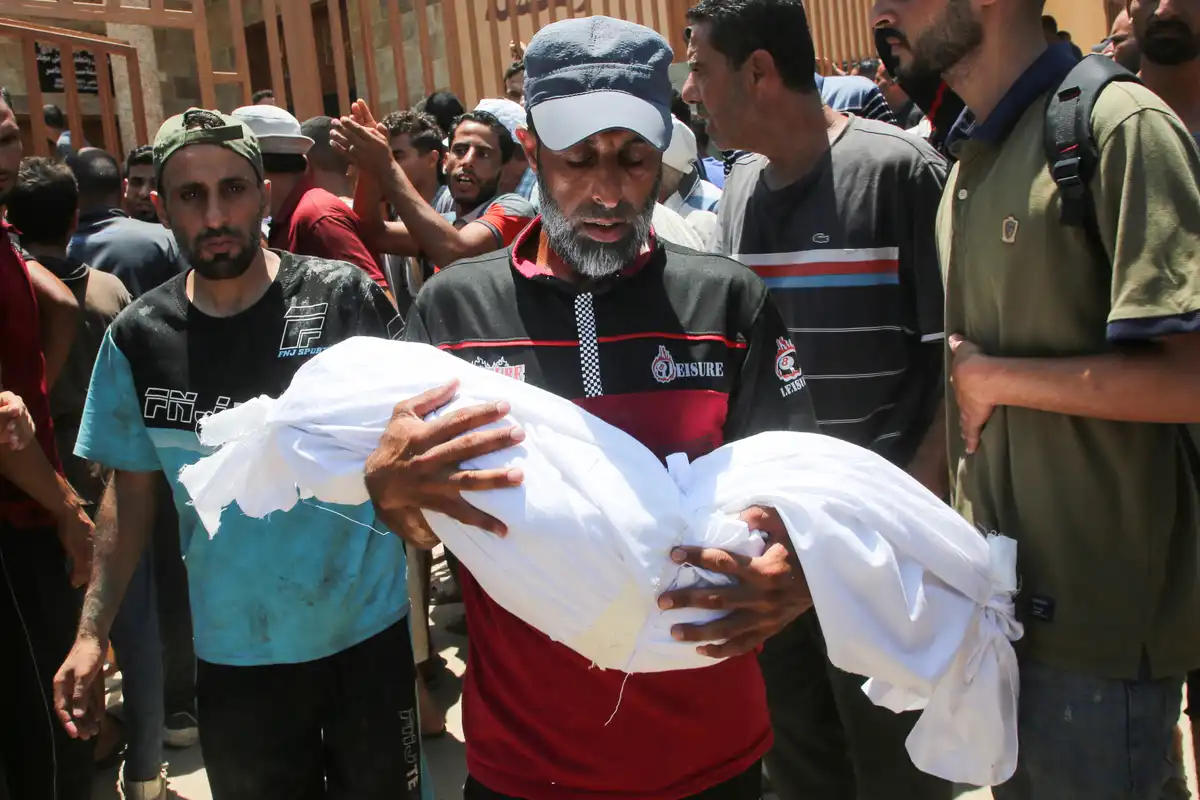
Three dead in an occupation bombing in the central Gaza Strip

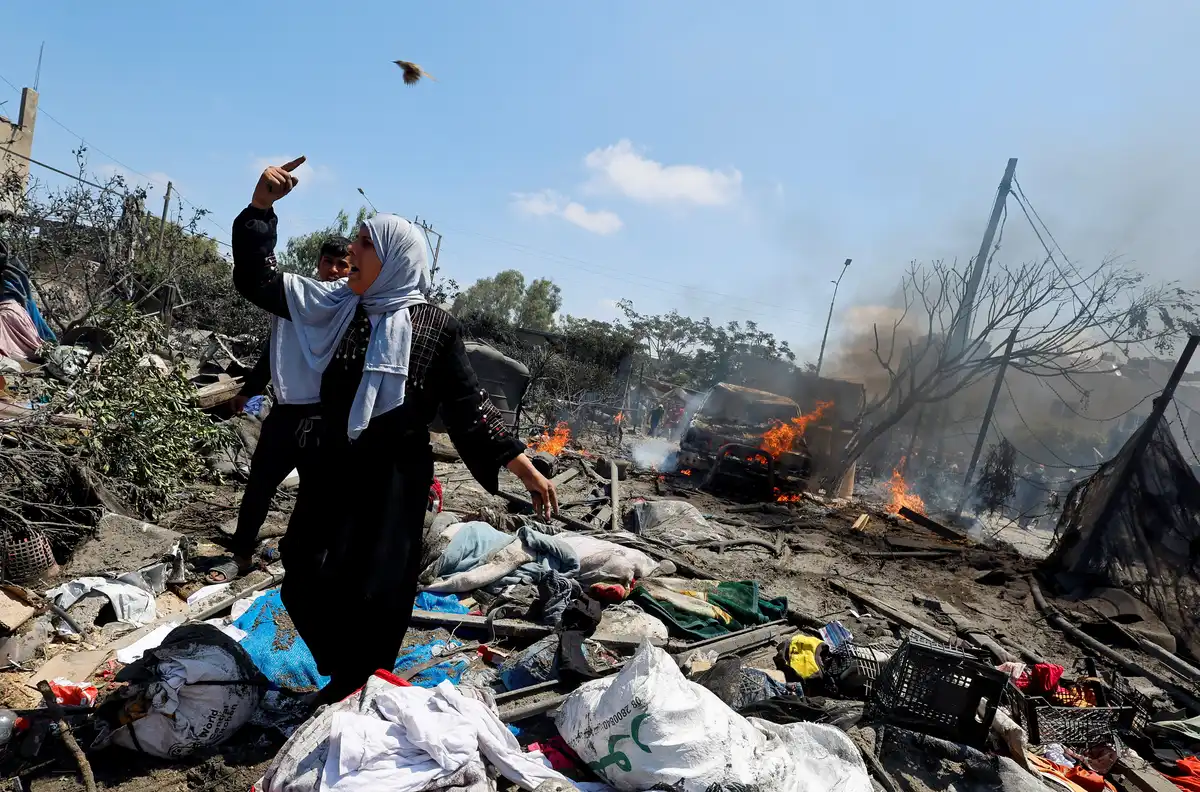
Three citizens, including a woman, were killed at dawn on Friday in an Israeli bombing that targeted a house in Deir al-Balah and a group of citizens in al-Maghazi camp in the central Gaza Strip.


Local sources reported that two citizens were killed and others were injured after an occupation drone targeted a group of citizens in Al-Maghazi camp in the central Gaza Strip. They were transferred to Al-Aqsa Martyrs Hospital in Deir al-Balah.


It added that the occupation warplanes bombed a house of the Kurd family, which was sheltering displaced people in Deir al-Balah, which led to the death of a female citizen and the injury of others, who were transferred to the Al-Aqsa Martyrs Hospital in the city.


The occupation warplanes bombed the house of the Al-Dweik family in the Nuseirat camp, which led to the injury of at least 4 citizens who were transferred to Al-Awda Hospital in the camp.


Red Crescent paramedics transferred a number of wounded people to Kamal Adwan Hospital in Jabalia camp, north of the Gaza Strip, after Israeli warplanes bombed a house near Al-Ihsan Mosque in Jabalia Al-Balad.


The occupation artillery launched intensive shelling and heavy gunfire on citizens' homes in the Al-Zeitoun neighborhood, southeast of Gaza City.


In a clarification from the management of Kamal Adwan Hospital in Jabalia in the north, it confirmed that there is no evacuation of the hospital and there will be no evacuation, and we are focusing on bringing in fuel and strengthening the health system in the north.


It explained that some sick children and wounded people were evacuated to Gaza City hospitals in order to relieve pressure on northern hospitals, but we will continue to provide health services to citizens.


The occupation forces continue their aggression on the Gaza Strip, by land, sea and air, since October 7, 2023, which resulted in the death of 42,065 citizens and the injury of 97,886 others, the majority of whom are children and women, in an incomplete toll, as thousands of people are still missing under the rubble.

PALESTINE

Thu 10 Oct 2024 10:00 pm - Jerusalem Time

Israeli army admits the killing of 3 of its soldiers in northern Gaza

The Israeli occupation army announced, on Thursday, the killing of three of its soldiers during violent clashes in Jabalia, north of the Gaza Strip.


The army said the dead soldiers were: Staff Sergeant (res.) Uri Moshe Bornstein, 32; Major (res.) Netanel Hershkovich, 37; and Staff Sergeant (res.) Zvi Matityahu Marantz, 32. The statement said the soldiers were killed when an explosive device exploded targeting a military jeep, in addition to mortar shells being fired in the area.


On the other hand, Palestinian medical sources reported an increase in the number of victims in an "Israeli" attack that targeted the Rafidah School in Deir al-Balah, which was sheltering displaced people.


The Palestinian Red Crescent said the attack killed 28 people and injured 54 others, according to Reuters.

ARAB AND WORLD

Thu 10 Oct 2024 9:26 pm - Jerusalem Time

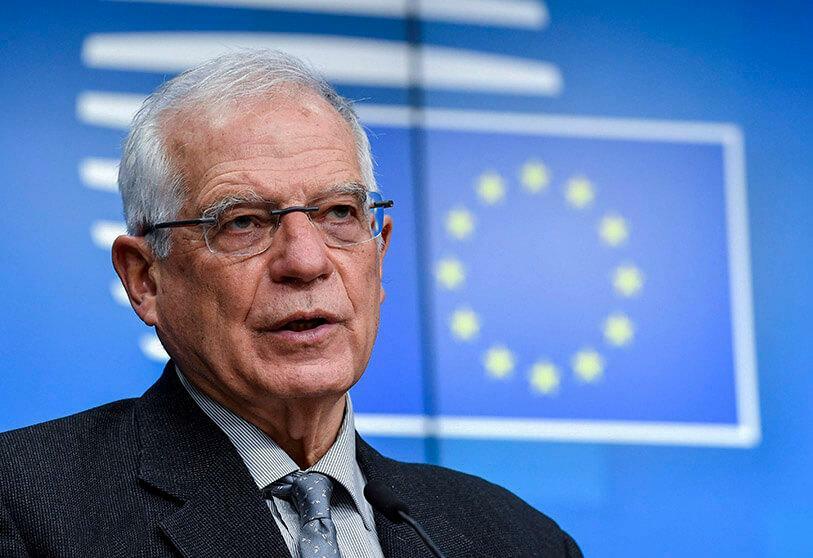
Borrell: UN force bombing in southern Lebanon is unacceptable and unjustified

The High Representative of the European Union for Foreign Affairs and Security Policy, Josep Borrell, said on Thursday that the Israeli occupation forces' bombing of the United Nations Interim Force in Lebanon (UNIFIL) in southern Lebanon is "unacceptable and unjustified."


Borrell added, in a post on his account on the "X" platform, "A new line has been dangerously crossed in Lebanon, through the Israeli forces' bombing of UN peacekeeping forces, whose locations are known."


The European official expressed his condemnation and rejection of this act, saying that "there is no justification for it." He added that "the European Union affirms its full support for UNIFIL forces and its mission, mandated by the United Nations Security Council."


Earlier on Thursday, UNIFIL announced in a statement that "the Israeli army repeatedly shelled its headquarters in Naqoura and the sites adjacent to it, reminding Israel of its obligations to ensure the safety and security of UN personnel and property and to respect the sanctity of its buildings."

ARAB AND WORLD

Thu 10 Oct 2024 8:01 pm - Jerusalem Time

Updated: 11dead and 48 wounded in two occupation raids on downtown Beirut

11 people were killed and 48 others were injured, Thursday evening, in two raids by Israeli occupation aircraft on the Ras al-Nabaa and Basta neighborhoods in the center of the Lebanese capital, Beirut.


The Lebanese News Agency reported that the first raid targeted the third floor of an 8-storey building in Talat al-Nuwairi, while the second raid targeted a 4-storey building in Fatah Allah Street in al-Basta al-Fouqa, which completely collapsed.


The Lebanese Ministry of Health's Public Health Emergency Operations Center announced, in a preliminary toll, that 11 people were killed and 48 others were injured in the two raids on downtown Beirut.


Earlier, the Lebanese News Agency reported that the Israeli occupation targeted the vicinity of the Ras al-Nabaa-Nuwairi area in Beirut, and ambulances immediately rushed to the area, while smoke clouds covered the sky of the area.


For its part, the Turkish Anadolu Agency reported that the occupation aircraft launched two raids on the Ras al-Nabaa and Basta neighborhoods in the heart of Beirut, and columns of smoke were rising from one of the buildings in a densely populated area.

PALESTINE

Thu 10 Oct 2024 7:33 pm - Jerusalem Time

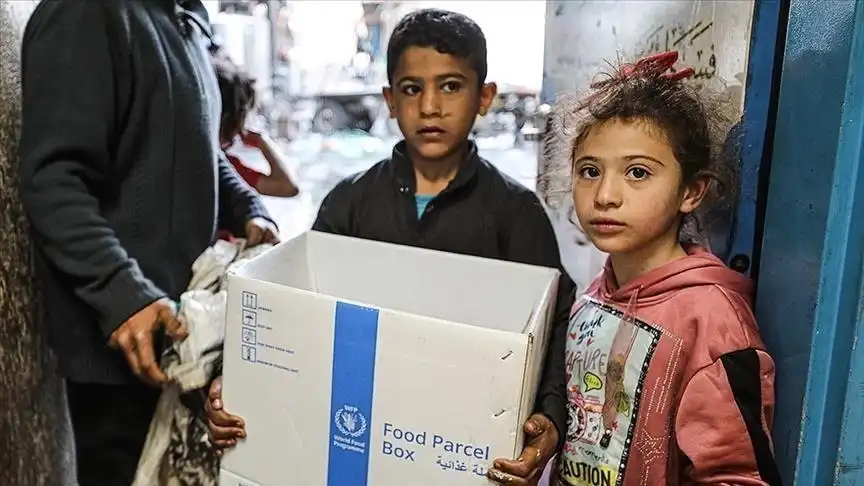
WFP: We are no longer able to distribute food in North Gaza Governorate

The World Food Programme complained on Thursday that it was "no longer" able to distribute food in the northern Gaza Strip due to a shortage of supplies.


This comes amid tight restrictions imposed by Israel on aid access to the Gaza Strip, which several organizations complain make providing a humanitarian response extremely difficult, if not impossible.


The World Food Program said in a statement via the X platform: “We are no longer able to distribute food in any form in the North Gaza Governorate.”


He added, "The shortage of supplies in Gaza forces us to stop distributing food parcels during October."


The UN programme added: "There is no distribution of food parcels, and flour is running out in bakeries in southern and central Gaza."


For the fifth consecutive day, Palestinians in the eastern and western areas of the northern governorate, especially in the Jabalia camp, are being subjected to an operation of "genocide and ethnic cleansing", as the Israeli army imposes a land siege, carries out killings, blows up homes, and forced displacement that the residents reject, as part of its war on the Strip since October 7, 2023.


With American support, the Israeli genocidal war in Gaza resulted in more than 139,000 Palestinian martyrs and wounded, and more than 10,000 missing, amid massive destruction and famine that killed dozens of children and elderly people.


Tel Aviv continues the genocide, ignoring the UN Security Council resolution to end it immediately, and the International Court of Justice’s orders to take measures to prevent acts of “genocide” and improve the dire humanitarian situation in Gaza.

ARAB AND WORLD

Thu 10 Oct 2024 6:07 pm - Jerusalem Time

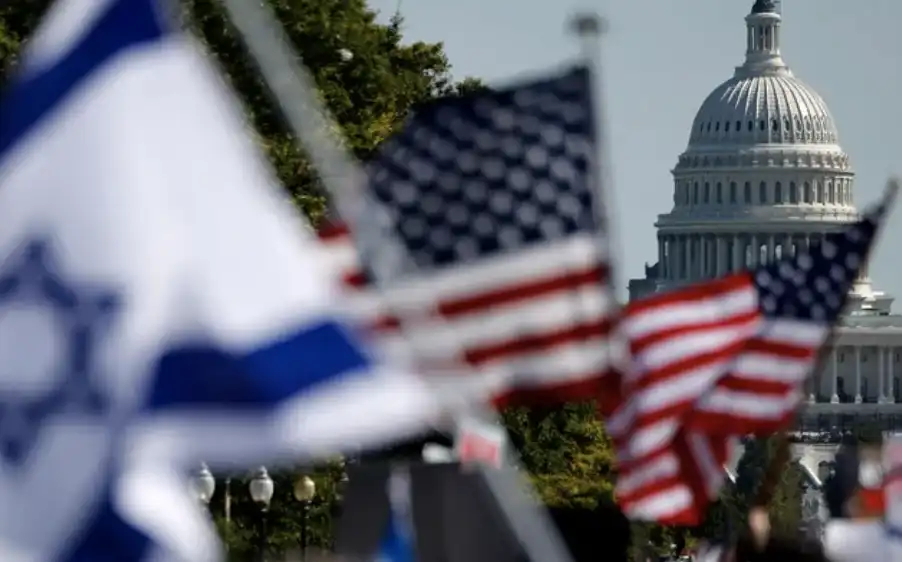
Significant decline in American support for Israel a year after the war on Gaza

It has been a year since October 7, 2023, when Hamas launched an attack on Israel, killing 1,200 Israelis, including 311 soldiers, and taking about 250 hostages — nearly 100 of whom are still in Gaza, including the bodies of at least 33 people who are not believed to be alive, according to Israeli officials.


Since then, Israel's war on Gaza has killed at least 42,000 Gazans, mostly women and children, and wounded more than 80,000 Palestinian civilians, mostly women and children. Israel has also been engaged in escalating clashes over the past year with Hezbollah, a Lebanese militant group backed by Iran.


Israel is also launching fierce airstrikes on Lebanon and invading and penetrating its territory. Most recently, Iranian missile strikes on Israel last week have widened the circle of war, while the Israeli response to Iran is expected to be massive. US President Joe Biden and his vice president, Kamala Harris, the Democratic presidential candidate facing former President Donald Trump, have condemned the attacks, once again raising the issue of US involvement in the conflict, a hot topic over the past year.


According to pollsters, the American public has long been generally supportive of Israel, and was largely supportive of sending U.S. military aid to Israel at the start of the war on the besieged Gaza Strip. But polls since then indicate that support has declined markedly as the war has dragged on. Instead, many Americans are concerned about the harshness of the Israeli government’s response to the attacks, and want the U.S. government to help mediate a diplomatic end to the conflict.


Americans still support Israel, but they also sympathize with Palestine


Last year, an analysis by the 538 Foundation (a number that includes U.S. lawmakers in the House and Senate) found that sympathy for Israelis rose shortly after the attacks despite a longer-term trend toward increased sympathy for Palestinians, especially among Democrats and independents. In an average of polls at the time, a majority of Americans said they sympathized more with the Israelis than with the Palestinians.


But today, Americans are more divided about who they sympathize with. In a September 12-16 poll by The Associated Press-NORC-Pearson, 25 percent of Americans sympathized more with the Israelis, 15 percent said they sympathized more with the Palestinians, 31 percent answered the two questions equally, and 26 percent said they sympathized with neither.


Part of this shift has been driven by a growing number of Americans who feel that Israel’s military actions in the conflict have been too harsh. About a week after the October 7 attack, a YouGov/Economist poll found that a 32% majority of Americans thought Israel’s response to the attack was “appropriate,” 22% thought it was not harsh enough, and 18% thought it was too harsh:


But as the civilian death toll in Gaza has risen, attitudes have turned more critical of Israel. A YouGov/The Economist poll in late September found that 32 percent now think the Israeli government’s response has been too harsh, 22 percent think it has been about right and 17 percent think it has not been harsh enough. Other polls suggest that more Americans disapprove of Israel’s actions, though the number may not have changed much since last year: For example, 42 percent of Americans thought the Israeli military’s response went too far in an AP-NORC/Pearson Institute poll last September, up two points from a similar AP-NORC poll in November 2023.


But all this is despite the fact that most Americans consistently view Hamas, not Israel, as the primary culprit for the conflict. In an Atlas Foundation poll conducted on September 11-12, about 60 percent of Americans said that Hamas was the “main culprit” in the current conflict, while 14 percent blamed Israel (the rest said they did not know). But when given the chance, Americans have also blamed others: A September poll by the Associated Press-NORC-Pearson found that about three-quarters of Americans believe that the Israeli government, Hamas, and the Iranian government each bear at least some responsibility for the continuing conflict between Israel and Hamas—though a larger percentage said that Hamas bears “a lot” of responsibility (52 percent, compared with 44 percent who said the same of the Israeli government). The conflict between Israel and Hamas has had a major impact on politics here at home, with different groups clashing over U.S. support for Israel—the United States has sent more than $18 billion in military aid to Israel since the attacks—in the face of a growing humanitarian crisis in Gaza. Whether and how the United States should continue sending aid to Israel is a question that has proven to be a political minefield for American leaders.


Last May, Biden halted an arms shipment to Israel to discourage its assault on the Gaza city of Rafah—a move that prompted most House Republicans and a handful of Democrats to vote and pass a bill that would condemn the decision and advance the deal (though the move was purely symbolic and without support from the Senate’s Democratic majority). But while Republicans have been vocal in their criticism of the administration’s handling of the conflict, the Israel-Hamas conflict is also unfolding at a time when Donald Trump has continued to push the Republican Party toward a more isolationist view of world affairs, despite its unequivocal support for Israel.


On the other side of the political aisle in Congress, tensions over U.S. aid to Israel have helped fuel the National Uncommitted Movement, a protest movement to pressure the Biden administration to commit to a ceasefire and arms embargo against Israel. The group has publicly declined to endorse Vice President Kamala Harris for president over her perceived inaction on the issue, and the intraparty conflict over Israel played a role in the loss of two progressive members of Congress in the party’s primary, Rep. Jamaal Bowman of New York and Rep. Cori Bush of Missouri. (Harris, for her part, has called for a ceasefire and said she would work toward a two-state solution.) Public views of U.S. military aid to Israel have shifted over the course of the conflict. In YouGov/The Economist polls over the past year, the number of Americans who believe the United States should increase its military aid to Israel has fallen over time, from 24% in November 2023 to 18% in September 2024. Over the same time period, the share who felt the United States should send more humanitarian aid to the Palestinians has risen from 26% to 32%:


Americans' attitudes about sending money to the Middle East have changed


Share of Americans who support increased US military aid to Israel and who support increased US humanitarian aid to Palestinians, in YouGov/The Economist polls since November 2024


A look at the battles in Congress over funding over the past year suggests that money is a big part of the fight. In a September poll by the Associated Press, NORC, and Pearson, 41 percent said the United States spends too much on aid to Israel. Moreover, 38 percent believe Israel is committing genocide against the Palestinians, according to the latest YouGov/Economist poll—furthering the arguments used by Uncommitted and other pro-Palestinian protesters for restrictions to ensure that U.S. military aid is not used against civilians in Gaza. But Americans remain invested in the United States helping resolve the conflict in some way, according to a September poll by The Associated Press, NORC, and Pearson: While only 27 percent said it was very or extremely important for the United States to help the Israeli military against Hamas and 42 percent said the same about providing humanitarian aid in Gaza, 57 percent wanted the United States to play a role in recovering the remaining hostages held by Hamas in Gaza, and 52 percent wanted the United States to help negotiate a permanent cease-fire. A Pew Research Center poll last month found that 61 percent of Americans want the United States to play a “major” role in resolving the conflict diplomatically, up from 55 percent in February. That trend may continue given current events. As Israel continues to pressure Lebanon, foreign countries have begun evacuating their citizens, and both Israel and Iran have threatened harsh retaliation for further attacks. According to a YouGov/The Economist poll conducted in late September, more than half of Americans believe the conflict is very likely to spread into a wider regional war (and 12% say it has already happened).


When it comes to the upcoming US presidential election, Trump has had an advantage on the issue of handling the war between Israel and Hamas, with 52% in a Fox News poll in late September saying they had more confidence in him, compared with 45% who chose Harris. In a YouGov/The Economist poll in September, 31% said Trump’s position on the conflict was “about right,” compared with just 22% who said the same of Harris.


Still, both Trump and Harris may have some room for persuasion here: Many Americans were unclear about the candidates’ approaches to the current conflict — 37% in the same poll said they were “not sure” whether Harris was too pro-Israel, not supportive enough or right, and 38% said the same of Trump.


Overall, Trump’s advantage over Harris may reflect the fact that Trump is out of office and not currently making decisions on the conflict, or the fact that he has repeatedly claimed to be the most pro-Israel president in history, which appeals to the pro-Israel stance shared by much of his base. Harris, on the other hand, faces pressure from both wings of her party, and her role in the current administration could pose a challenge to her campaign if the conflict continues to escalate and the United States struggles to respond.

PALESTINE

Thu 10 Oct 2024 4:33 pm - Jerusalem Time

UN experts: 'International order is collapsing in Gaza'

"The international legal order is collapsing in the face of atrocities in the Gaza Strip," a group of independent UN human rights experts said on Thursday.


The experts said in a statement, marking a year since the war of extermination against our people, that last year witnessed genocidal attacks, ethnic cleansing and collective punishment of the Palestinians, which threatens the collapse of the multilateral international system.


“Nearly all of the survivors of displacement are trapped in ever-shrinking parts of the small area, crammed into overcrowded camps and shelters with nowhere to escape. The relentless bombardment has turned humanitarian areas into killing fields,” they continued.


“The tightened blockade, restrictions on aid and the continued targeting of homes and key civilian infrastructure have led to famine at an unprecedented rate. The destruction of health infrastructure has made preventable diseases incurable and has accelerated the spread of disease and epidemics, while the massive destruction of educational, cultural and heritage institutions and the land itself is profoundly endangering Palestinian culture, national identity and existence on the ground,” the experts added.


Experts warn of a deliberate pattern of behaviour that threatens the extinction of Palestinians, through mass displacement, death, destruction and annexation of land emerging in the West Bank, including occupied East Jerusalem, while the world watches the people of Gaza live in constant terror of impending annihilation, broadcast and shared on social media.


“Nothing can justify these actions,” the experts said. “For a year, we have called on States to intervene, in line with their moral and legal obligations, to prevent these atrocities and uphold the international legal order, human rights and humanity. But our calls have gone unheeded, along with those of millions of people around the world who have used their platforms to advocate for an end to the violence, and who continue to face repressive tactics to silence and punish their voices, in a number of countries.”


They stressed that “this cycle of destruction must end. The international community must act with the utmost urgency to change the course of violence if we are to avoid an all-out war with unimaginable consequences, especially for children.”


They called on “all leaders to move beyond dehumanizing and polarizing narratives, and work actively towards an immediate cessation of all hostilities and crimes.”


They stressed that the failure of the international community to secure a ceasefire and hold accountable all those responsible for or complicit in the heinous crimes, not only allowed the unprecedented brutality to continue, but also extended it to the wider region, igniting Lebanon with violence and destruction.


They called for immediate provision of life-saving humanitarian assistance to all those affected, and for the international community to ensure this access.


They called for prioritizing respect for international law and human rights without discrimination or double standards, quickly directing the moral compass towards justice and freedom for all, and renewing the commitment to international peace, which will not be achieved until everyone has the opportunity to live in equal dignity and freedom.

PALESTINE

Thu 10 Oct 2024 1:09 pm - Jerusalem Time

Israeli forces withdraw from Al-Far'a camp, leaving extensive destruction in the infrastructure

The Israeli occupation forces withdrew from Al-Far'a camp, south of Tubas, leaving behind extensive destruction to the infrastructure.


The occupation forces stormed the camp for about 10 continuous hours, during which they raided several homes and detained a number of citizens. The occupation bulldozers also caused widespread destruction to the infrastructure and citizens’ property, in addition to the occupation soldiers committing violations against ambulance crews.


The director of the Prisoners Club in Tubas, Kamal Bani Odeh, reported that the occupation forces raided many citizens’ homes, arrested and detained a number of them, and carried out field investigations with most of them before releasing them later.


He added that a case of arrest was recorded for the young man, Rabie Zaid Sarhan, who was not released, as the soldiers took him with them.


The occupation forces committed violations against the ambulance crews during the storming of the camp. Red Crescent sources reported that the occupation forces fired live bullets at the Red Crescent ambulance point inside the camp, and demanded that the crews and volunteers close the outpost and withdraw from it.

PALESTINE

Thu 10 Oct 2024 1:06 pm - Jerusalem Time

Israel commits new massacre in Rafidah School in Deir al-Balah, 26 dead and more than 92 wounded

26 citizens were killed and more than 92 others were injured, today, Thursday, in the Israeli occupation's bombing of a school sheltering displaced persons west of the city of Deir al-Balah.


According to the government media office in Gaza, the Israeli occupation army committed a terrible massacre by bombing the "Rufaidah" school for displaced people in Deir al-Balah, which resulted in 26 dead and more than 92 wounded, most of whom were children and women.


A citizen was also killed and others were injured when the occupation aircraft bombed a group of citizens in the Saftawi area, north of the Jalaa area, northwest of Gaza City.


In the same context, the Ministry of Health in Gaza announced that the death toll from the occupation's aggression on the Gaza Strip has risen to 42,065 dead and 97,886 wounded, since October 7, 2023.


It added that the occupation forces committed 5 massacres against families in the Gaza Strip, resulting in the death of 55 citizens and the injury of 166 others during the past 24 hours.


OPINIONS

Thu 10 Oct 2024 1:04 pm - Jerusalem Time

Our Weak Memory: Draft Laws to End UNRWA’s Work Are Not New

Sami Mshasha

Sami Mshasha

Opinion Writer


@We did not move against it months ago, and now the entity state will implement it, reassured that our reactions will be constructive and rhetorical, waiting to read a new cup of tea by Michel Hayek!


Palestine - On May 30, I published an article entitled "UNRWA is burning before our eyes. Official, popular and Palestinian diplomatic paralysis to support and save it. The process of expelling the agency from the presidential headquarters in Jerusalem and the law declaring UNRWA a terrorist organization as evidence of the path to destroying the right of return." In it, I said, "The most dangerous and influential development is the approval by the Israeli Knesset General Assembly on Wednesday, May 29, of three laws with similar content and purpose, namely the cancellation of the immunity granted to UNRWA according to the Comay-McClmore Agreement of 1967, signed by the entity's government and UNRWA, and the declaration of the institution as a "terrorist" organization and preventing it from operating in Jerusalem. The preliminary decision for the three laws - which will be followed by three readings to become an effective law - received the support of the Zionist parties included in the government coalition and the opposition parties and won a majority in the vote. The approval of the law, even if its implementation was delayed for political and diplomatic considerations, is the clearest manifestation of the intention to burn down UNRWA and a statement to the public that the goal of ending UNRWA has reached advanced and practical stages.


The striking idea in the previous article is:

The enactment of the law will be implemented even if it is delayed "for political and diplomatic considerations." We all know the entity's method. They launch a project, make a decision, or implement an order on the ground, and then monitor the reactions of the Palestinians, Arabs, Muslims, Arab countries, Western countries, the United Nations, etc. Based on these reactions, they decide whether to continue implementing the decision or project, develop what they started, or wait for another opportunity. If the reaction is strongly or violently rejecting, or if its implementation weakens their relationship with their supporters or weakens, for example, the normalization efforts with this or that Arab country, they suspend implementation for a period. This is their effective method that has been followed successfully for decades.


Regarding their strategic plan to end the agency in some of its areas of operation, and to limit it in other areas, and with the aim of demonizing it and rationing its financial support to the bare minimum, and in order to double the collective awareness of the right of return and float the idea of settling refugees in Jordan, Syria and Lebanon and encouraging the migration of Palestinian youth - for all these goals, the entity embarked on its rolling plan against UNRWA. They imposed fundamental changes on the curricula adopted in UNRWA schools in occupied Palestine. Our reactions were weak, so the conciliatory curriculum became a reality. Incitement campaigns began against UNRWA employees and we did not care, and they demonized them and forced UNRWA to dismiss some of them falsely and slanderously and we did not care, and many countries stopped their donations and formed investigation committees and imposed crippling restrictions on UNRWA and its employees, and we expressed our displeasure verbally and then went to sleep. The entity killed dozens of UN employees and targeted UNRWA facilities and killed the displaced to it, and we clapped our hands together, and our fields and went to sleep. The mayor of occupied Jerusalem announced that the agency must leave its headquarters in Jerusalem, pay outstanding debts, and withdraw its privileges and immunity, and we did nothing. The commissioner and his staff were prevented from entering Jerusalem and Gaza, and he was declared persona non grata. A few days ago, the UN Secretary-General also declared him persona non grata, and their representative, in his speech inside the corridors of the United Nations in New York, wished for the building to be demolished on the heads of its employees, and no one uttered a word.


Yesterday's news, which was reported by the Palestinian media as if it were new news, about the Knesset bills to expel UNRWA and withdraw its immunity is the same endeavor proposed six months ago. They proposed it, voted on it, and waited. In the meantime, they escalated their attacks and accusations against UNRWA, its employees and officials, diminished its role, starved it financially, and waited. They received no real responses, neither from the Secretary-General, nor from the crumbling Arab League, God forbid, nor from the Palestinian parties, nor from the countries hosting the refugees, nor from the donor countries.


Then they said to themselves: The lentils are cooked! Now the dish is ready.


What was approved by the Israeli Knesset’s Foreign Affairs and Defense Committee is the following: Two bills aimed at ending the work and privileges of UNRWA (after UNRWA was previously declared a terrorist organization). The bills are a compilation of a set of laws proposed several months ago by parties opposing the current government and bills by parties in the current government coalition. In other words, there is complete consensus against UNRWA’s existence and services. The first bill (submitted by Likud and right-wing parties) calls for preventing UNRWA from providing any service to refugees or carrying out any direct or indirect activity in “Israel” or the ability to manage and operate any facility or site. The second bill (submitted by Yisrael Beiteinu, Yesh Atid, Likud and others) stipulates the cancellation of the headquarters and immunity agreement signed in 1967 (the Comay-McClmore Agreement), which expires in October 2024. The legislators gave the government the authority not to renew the agreement (which effectively ends UNRWA’s presence in occupied Palestine in its entirety). Today is October 7! Or wait until the second and third readings are voted on (most likely the final vote will take place once the Knesset convenes and begins its winter session on the 28th of this month) and officially adopt the two bills for immediate implementation. If the bills are passed, any Israeli government body or its representatives will be prohibited from communicating with UNRWA, and all privileges, immunities and tax exemptions will be withdrawn from UNRWA employees, and they will be banned from working.


The most the Secretary-General did was send a letter to Netanyahu last Sunday, urging him not to pass the two bills and threatening him that if the law was passed in the Knesset, he would draw the attention of the General Assembly to the seriousness of this decision!!! (Isn’t this an empty threat?). Bless you, Secretary-General. Netanyahu ignored him and instructed his representative at the United Nations, Danny Danon, to respond by lecturing the Secretary-General that the international institution did not lift a finger against UNRWA’s connection to “terrorism” and that it had failed professionally and morally!!


What do we do? Answer: Nothing

OPINIONS

Thu 10 Oct 2024 11:24 am - Jerusalem Time

Three upcoming scenarios that will determine the future of the region

Ahmed Al-Hila

Ahmed Al-Hila

Opinion Writer

Israel expanded its aggression against Lebanon after transferring the weight of its military operations to the north, and assassinated Sayyed Hassan Nasrallah, Secretary-General of Hezbollah, after assassinating Fouad Shukr, Chief of Staff of the party, and Ibrahim Aqil, Commander of the Radwan Special Forces, thus opening a wave of insane bombing of the southern suburb, Hezbollah’s stronghold.


These successive strikes on the party’s leadership, headquarters, and political and civil structures, in addition to the occupation forcing all the residents of the south, the natural incubator of the resistance, to migrate north of the Litani River towards Beirut, Sidon, and the north, indicate that Israel has taken an advanced step with the intention of dismantling Hezbollah and disarming it, which means influencing the internal and regional Lebanese equation, which is what Netanyahu indicated after the assassination of Sayyed Nasrallah, in terms of redrawing the map of the Middle East.


The Israeli occupation's political and field behavior has pushed Iran to change its position on the strategic patience equation that it has adopted over the past years, and move towards escalation; to restore deterrence and balance, after it was disturbed as a result of the occupation's qualitative strikes on Hezbollah, especially the assassination of Sayyed Hassan Nasrallah.


What prompted Iran to make this change is that the Israeli occupation understood strategic patience as a weakness coupled with its unwillingness to go to war, which prompted it to attack the party harshly, which constitutes an important structural element in the relationship with Iran and its national security in the region.


If Israel succeeds in eliminating the party, this will be a prelude to weakening Iran, if not striking it directly with military force. This will necessarily have direct repercussions on the Palestinian cause, in terms of Israel’s return to settling its accounts with Hamas and the Palestinian resistance in the Gaza Strip through an existential decision, to end the Palestinian cause, annex the West Bank and Judaize Jerusalem, and then go with ease to redraw the map of the Middle East under American sponsorship, as they were planning before October 7, under the title of normalization and the Abraham Accords, which Netanyahu revealed in his last speech before the United Nations General Assembly.


Scenarios

The region is living on a hot plate, and walking on a tightrope. In this context, the region is heading towards one of the following scenarios:


Scenario 1: Political solution through negotiations

Starting from stopping the aggression on Gaza and a comprehensive withdrawal from the Strip, then stopping the fighting with Hezbollah and returning the displaced settlers to their settlements in the north, this is a very weak matter; because it constitutes a resounding defeat for Netanyahu and the extreme Zionist right and their theological political program, and it is a scenario that is not a priority for the American administration after the start of the aggression on Lebanon, as Washington wants Israel to create a new reality by force.


Scenario Two: Continuation of the War of Attrition

This is between the Israeli occupation and Hamas and Hezbollah, with the help of Yemen, Iraq, and Iran. This option is currently in place, and its continuation depends on the absence of a regional war, i.e. Israel being satisfied with a limited strike in response to the recent Iranian attack on Israel, which hit a number of military bases, most notably the Nevatim base in the Negev in southern Palestine, which houses the advanced American F-35 aircraft.


The war of attrition is a costly and draining scenario for Israel, and if it continues for a long time, Netanyahu will eventually be forced to return to the option of negotiations, because the Israeli home front will not be able to bear the repercussions of attrition on the human, economic, security and social levels, which may cause, in the foreseeable future, the migration of competencies, minds and capital outside Israel.


Scenario 3: Regional War

This scenario involves Iran entering into a direct confrontation with Israel, which may be incited and prompted by a major Israeli attack on Iranian infrastructure, especially the economic and oil infrastructure, or Iranian nuclear facilities.


Motivating factors

• Netanyahu and the ruling theological Zionist right in Israel have important factors driving the regional war, including:

• The first and second scenarios bring failure to Netanyahu, his government, and his allies from the extreme right, a historic failure for them and for their theological political program, which is represented at the very least by annexing the West Bank and occupying the Gaza Strip. This will practically lead to the failure of redrawing the map of the Middle East according to the terms of the Israeli occupation.

• There is a Zionist majority in Tel Aviv that supports the option of war against Hezbollah, which may extend to striking Iran. This majority was not available to Netanyahu except in the first months following the Battle of the Flood of Al-Aqsa, as a result of the anger and existential fear that Netanyahu promoted after October 7, and expressed by saying that he is waging a second war of independence for Israel.


• The existence of American political cover, based on Israel’s right to defend itself, and Washington providing full material and military support to it, not to mention the presence of American forces on alert in the region. If war breaks out, the United States has announced more than once that it will stand behind and with Israel, in the face of any country that attacks it.


The war scenario, despite its danger, provides Israel, and specifically Benjamin Netanyahu, with a historic opportunity to strike Iranian nuclear facilities with American support, something he has dreamed of for the past decade.


The regional war may seem tempting to Israel, and a historic opportunity for Netanyahu and the extreme right to achieve their dream of imposing occupation sovereignty over all of Palestine. It is not unlikely that they will consider annexing other Arab lands by military force, as a development of the war’s goals, if the Israeli feels that he is winning, and the Arab countries are witnesses who are controlled by anxiety about the consequences of the war and their fear of the entry of the great America with all its military power, which may constitute a new Israeli “Sykes-Picot”.


A regional war means Iran's entry into it with all its strength, which will open the field of war geographically from Iraq, to Syria, to Lebanon, to Palestine, and with Yemeni partnership.


The most dangerous thing about this scenario for Israel is Hezbollah’s use of its missile force in abundance and intensity, and its bombing of vital areas and sensitive infrastructure in Israel, in parallel with the Iranian bombing, and the attack of the Radwan Special Forces from the north, with Palestinian movement inside occupied Palestine, which will put Israel in a difficult situation from within and without.


The repercussions of this war - if it happens - will be enormous for the region, and will change the features of the Middle East and its political geography. Israel's victory over the resistance axis bloc is doubtful, and Israel's failure in it will mean an existential defeat for it.

PALESTINE

Thu 10 Oct 2024 10:30 am - Jerusalem Time

Israel continues the siege of Jabalia camp and carries out killings and forced displacement

Citizens in Jabalia camp, north of the Gaza Strip, are being subjected to an act of "genocide and ethnic cleansing" for the fifth consecutive day, as the occupation imposes a land blockade, carries out killings, house demolitions, and forced displacement.


Citizens insist on not moving to the southern Gaza Strip, despite the war of extermination and the intense pressure exerted by the occupation, and its efforts to put the health system in the northern Gaza Strip out of service, after it asked the "Kamal Adwan, Indonesian, and Al-Awda" hospitals to evacuate within 24 hours, as the deadline ends today.


This is the third ground operation carried out by the occupation in Jabalia camp since the beginning of the genocidal war on October 7, 2023.


Last Sunday, the occupation army announced the start of a ground military operation in Jabalia, hours after the start of a fierce attack on the eastern and western regions of the northern Gaza Strip, including Jabalia, which is the most violent since last May.


On Monday, the occupation warned citizens to evacuate their homes in Jabalia, and the towns of Beit Hanoun and Beit Lahia, and head south.


Areas in Beit Lahia and the surrounding areas of Al-Tawam and Al-Atatra are also being subjected to continuous shelling by land, sea and air.


Of the 1.2 million people who lived in the Gaza and North governorates, there are currently about 700,000 people who refused to move to the southern Gaza Strip, according to official Palestinian data.


Most of the axes surrounding Jabalia camp are witnessing an incursion by the occupation forces, which imposed a siege on the area this morning, Thursday, according to eyewitnesses.


In an unofficial tally, the number of martyrs since the beginning of the aggression on the Gaza Strip on October 7, 2023 has risen to about 42,010dead, and 97,720 wounded, the majority of whom are women and children, and thousands of victims who are still under the rubble and on the roads where they cannot be reached.

PALESTINE

Thu 10 Oct 2024 9:25 am - Jerusalem Time

Israeli forces launch arrest campaign in the West Bank and Jerusalem

The Israeli occupation forces launched an arrest campaign in the West Bank and occupied Jerusalem at dawn and on Thursday morning.


In Ramallah, the occupation forces arrested journalist Maher Haroun during their raid on the Amari camp in the city of Al-Bireh, and also arrested the young man Ahmed Al-Suqi during their raid on the Umm Al-Sharait neighborhood in the city.


In the village of Deir Ibzi’, west of Ramallah, the two young men were arrested: Ahmed Mustafa Hajir (21) years old, and Raed Samir Ibrahim (21) years old, while the young man Samed Abdul Aziz Abdo (28) years old was arrested from the village of Kafr Na’ma, west of the city.


In occupied Jerusalem, the occupation forces arrested the young man Majd Fikri Hamid from the town of Beit Anan, northwest of occupied Jerusalem, after raiding his home and assaulting him and his family.


In Hebron, the occupation forces arrested from the town of Al-Shuyukh, east of the city, the following: Secretary of the Fatah Movement, Muhammad Issa Tafesh, and his two sons, Sand and Qusay, Muhammad Adnan Halayqa, Mujahid Abdullah Halayqa, and Shadi Atiya Halayqa.


The same sources added that these forces arrested from the town of Idhna, to the west, each of: Ahmed Muhammad Al-Batran, Muhammad Al-Asoud, the father of the martyr Muhannad, his brother Mahmoud Al-Asoud, the cousins of the martyr Omar, and Tayseer Khalil Al-Asoud, and abused the citizens, and vandalized the contents of the homes.


Media activist Mohammed Awad pointed out that the occupation forces arrested the two boys, Yousef Ahmed Mahmoud Al-Alami (17 years old), and Iskandar Nasser Abdul Hamid Abu Maria (16 years old), and transferred them to an occupation army camp inside the "Karmi Tzur" settlement, south of Beit Ummar.

PALESTINE

Thu 10 Oct 2024 9:24 am - Jerusalem Time

Israeli forces demolish two houses and three facilities in Salfit and Nablus

  1. Today, Thursday, the Israeli occupation forces demolished two houses under construction and two tourist facilities in the town of Az-Zawiya, west of Salfit.

  2. Local sources reported that the occupation military bulldozers demolished two houses under construction in the eastern region, each consisting of two floors, owned by citizens Mahmoud Ali Sand and Walid Thaer Ali Sand, in addition to demolishing two tourist facilities.


In Nablus, the Israeli occupation forces demolished an agricultural pond in the village of Furush Beit Dajan.


Local sources reported that the occupation forces stormed the village of Furush Beit Dajan and demolished an agricultural pond built of sheet metal, used for irrigating crops, and owned by citizen Hani Abu Jash.

PALESTINE

Thu 10 Oct 2024 9:22 am - Jerusalem Time

War on Gaza: Israeli occupation's bombing of Khan Yunis leaves 5 dead

Five citizens from one family were killed in the Israeli occupation's bombing of Khan Yunis city, south of the Gaza Strip.


Local sources reported that the occupation bombed the house of citizen Saqr Al-Amur in the Al-Fakhari area east of Khan Yunis, which led to the death of him, his wife and his three children, the youngest of whom was an infant girl who was no more than 7 months old.


The occupation artillery targeted citizens' homes north of Al-Nuseirat camp, Al-Bureij camp in the central Gaza Strip, the vicinity of Al-Tawam and Al-Atatra areas in the town of Beit Lahia in the northern Gaza Strip, and the vicinity of Street 8 south of Al-Zeitoun neighborhood southeast of Gaza City.


The occupation army also blew up residential buildings in the Al-Tawam area, north of the Gaza Strip, while the occupation aircraft launched a raid targeting Al-Barawi land opposite the Bank of Palestine in the Sheikh Zayed area, north of the Strip.


In the same context, local sources reported that the occupation is imposing a strict siege on the northern Gaza Strip, isolating it completely from Gaza City, and has been preventing the entry of basic supplies into the northern Gaza Strip since last Sunday.


The occupation forces continue their aggression on the Gaza Strip, by land, sea and air, since October 7, 2023, which resulted in the death of 42,010 citizens and the injury of 97,720 others, the majority of whom are children and women, in an incomplete toll, as thousands of missing people are still under the rubble.

ARAB AND WORLD

Thu 10 Oct 2024 9:14 am - Jerusalem Time

The foul sparring between Biden and Netanyahu.. A hidden disagreement that does not spoil “US continuous support”

Dr. Hassan Ayoub: Showing the current differences between Biden and Netanyahu is linked to interference in the US elections

Dr. Hussein Al-Deek: Netanyahu is taking advantage of the weakness of the Biden administration and working to enhance Trump’s chances of winning

Nihad Abu Ghosh: Netanyahu used to lie, but despite that, US-Israeli relations were not affected

Dr. Amjad Abu Al-Ezz: The strategic security interests between Israel and America are more important than the differences between Netanyahu and Biden

Akram Atallah: Netanyahu has a history of clashing with Democratic administrations because they believe in the two-state solution

Imad Ghayatha: Netanyahu caused embarrassing situations for the US administration...and provided it with inaccurate information


The relationship between US President Joe Biden and Israeli Prime Minister Benjamin Netanyahu is marked by ongoing tension that is reflected in US policy towards the Middle East, but all this conflict will not hide the established fact of continued US support for Israel, especially in the war of extermination on the Gaza Strip.

This comes after CNN revealed the tension in the relationship between US President Joe Biden and Prime Minister Benjamin Netanyahu, noting that the famous American writer Bob Woodward, who overthrew former President Richard Nixon 50 years ago, explained in his new book “War” that Biden described Netanyahu as a “damn liar and a son of a bitch” after the Israeli occupation army forces entered Rafah on May 6, “and he also shouted at the Israeli prime minister after an Israeli air strike led to the assassination of a senior Hezbollah leader.”


In separate interviews with “I”, writers, political analysts, university professors and specialists believe that the differences that were recently revealed regarding Biden’s accusation of lying against Netanyahu and his use of obscene language against him are differences related to the US presidential elections and the results that will result from them.


They believe that Netanyahu is trying to maintain Israel's regional influence and wants to decide its role in the region, and all American administrations realize that Netanyahu aims to involve Washington in regional conflicts.


Despite the differences, writers, political analysts, specialists and university professors confirm that US-Israeli relations remain rooted, supported by an ideological, strategic, religious and political vision from the United States, noting that Netanyahu is exploiting the sensitive situation in the United States to strengthen his position and support his traditional ally, Donald Trump.


Similar Controversies Under Obama


Dr. Hassan Ayoub, Professor of Political Science at An-Najah National University, points out that the quarrels and disagreements between US President Joe Biden and Israeli Prime Minister Benjamin Netanyahu, which emerged a few days ago, are not new, as similar disagreements had previously emerged during the era of former US President Barack Obama, especially when Netanyahu threatened to launch a military strike against Iran.


Ayoub asserts that all US administrations are well aware that Israel seeks to involve the United States in a regional war, which Washington rejects, especially in light of the current circumstances that the United States is going through, as it is only a few weeks away from the presidential elections.


He explains that Israel seeks to gain the greatest amount of influence at the regional level, which explains the recurring disagreements between Netanyahu and the US administration.


However, Ayoub believes that these differences do not reflect American inability as much as they reflect participation in decision-making, as it is inconceivable that Washington, which supplies Israel with weapons and defends it in international forums, is unable to manage affairs and pressure Israel.


According to Ayoub, the United States considers Hamas and Hezbollah to be a threat to its interests in the region. With the occurrence of Operation “Noah’s Flood,” the American administration and Western countries expressed deep shock at the events, and Washington decided to support Israel in confronting these threats.


A broader vision for re-arranging the region


Ayoub explains that there is a clear American diplomatic policy that aims to prevent other countries from intervening to prevent war, and works to eliminate Hamas and Hezbollah, within the framework of a broader vision to reorganize the region.


Ayoub points out that the current disagreements between the US administration and Netanyahu may be directly related to the US presidential elections and his interference in them, as this is not the first time that information has been leaked about disagreements between the democratic governments in Washington and Netanyahu, as happened during the Obama era.


Ayoub believes that what Netanyahu is doing now is exploiting the sensitive situation the United States is going through to achieve political gains, but Ayoub did not rule out that the Biden administration would take a position similar to the Obama administration in 2016, when it abstained from voting on a resolution condemning Israeli settlements in the Security Council.


However, Ayoub stresses that the relationship between the United States and Israel remains rooted in politics and religion, as Washington views support for Israel as an ideological part and as part of its strategy to protect its interests in the region.


Clear American weakness under the Biden administration


Writer, political analyst and specialist in American affairs, Dr. Hussein Al-Deek, explains that the United States, under the administration of President Joe Biden, suffers from a clear weakness in its ability to take decisive action against Israel and the government of Benjamin Netanyahu, such as stopping the supply of weapons to it or abstaining from voting in its favor in the UN Security Council.


Al-Deek attributes this weakness to the fact that the Biden administration, which he described as one of the “weakest administrations” in the history of the United States, has not presented any political plan to manage the Palestinian-Israeli conflict, unlike previous administrations that always tried to present proposals to launch a political process between the two parties.


Al-Deek believes that the Biden administration's weakness in dealing with Israel is evident from its lack of seriousness in exerting any pressure on Netanyahu's government, whether to stop its plans towards Iran or its ongoing crimes against the Palestinian and Lebanese peoples.


Al-Deek points out that although the strategic goals between Washington and Tel Aviv are agreed upon, the differences appear in tactics and priorities.


Al-Deek believes that Netanyahu is benefiting from the weakness of the Biden administration, especially with the approach of the US presidential elections, as Biden is going through a stage that does not qualify him to make decisive decisions against Israel, as he will not run for a new term.


Al-Deek explains that talk about the weakness of the US administration comes with the approach of the decisive elections, which are only a few weeks away.


Al-Deek stresses that the claim of the Biden administration's complete impotence towards Israel is unrealistic, because the United States is still a strategic partner in the Israeli war on Gaza.


The United States is not a runner-up.


Al-Deek asserts that describing the United States as a “mediator” in the conflict between the Israelis and the Palestinians is a mischaracterization, pointing out that Biden and his Secretary of State and Defense participated in meetings of the Israeli War Council, which oversees military operations in Gaza, making them an essential part of this war.


Al-Deek explains that American support for Israel exceeded 9 billion dollars during one year of the war on Gaza, in addition to the political cover that the United States provides for Israel in the UN Security Council, as well as the pressure that Washington exerts on the International Criminal Court and the International Court of Justice.


All this proves, according to Al-Deek, that the United States is not only an ally of Israel, but is a key partner in trying to bring about geopolitical and geostrategic changes in the Middle East region, in a way that serves its future interests and limits the expansion of Russian and Chinese influence.

Al-Deek points out that Netanyahu is exploiting this situation to strengthen his position and support his traditional ally, former President Donald Trump, who is fighting a decisive election battle.

As opinion polls indicate a close tie between the Republican and Democratic parties, Al-Deek explains that Netanyahu is working to boost Trump's chances of winning the upcoming US presidential elections, putting the Democratic Party and the Biden administration under great pressure.


US-Israeli relations are not affected by changes in governments


Writer and political analyst Nihad Abu Ghosh explains that relations between the United States of America and Israel are not affected by changes in governments in the two countries, as absolute American support for Israel is based on the functional roles played by Tel Aviv, and not on the basis of who rules.


Abu Ghosh points out that the statements of US President Joe Biden, who described Israeli Prime Minister Benjamin Netanyahu as a liar and that he does not have a clear strategy, are not new, and are repeated even by Israelis themselves about Netanyahu’s nature.


Abu Ghosh points out that Netanyahu is accustomed to lying, which makes him far from being shocked if he is described as a liar, and his lies have not affected his popularity at home. On the contrary, it seems that the Israeli right has united around supporting him.


It addresses Netanyahu's lies about the crimes and atrocities that occurred on October 7, as he and his government continue to repeat those lies, and even represent their repetition and adoption by the United States.


Abu Ghosh believes that the US administration may adopt positions on Netanyahu's policies, but this has not been reflected in continued strategic support for Israel.


Abu Ghosh points out that Netanyahu does not hide his bias towards former President Donald Trump, despite the fact that the Biden administration provided him with significant military aid, so he came to declare that the Trump administration will support him.


According to Abu Ghosh, Netanyahu seeks to get closer to Trump to achieve his strategic goals, especially those related to the ambitions and plans to establish a “new Middle East.”


Abu Ghosh points out that the Biden administration may take positions towards Israel before leaving the White House, but American support will not stop, which confirms the continuation of strategic relations between the two countries.


Biden's personality frequency


Professor of International Relations at the Arab American University, writer and political analyst Dr. Amjad Abu Al-Ezz points to the hesitation of US President Joe Biden’s personality, stressing that he has not yet surpassed the role of Vice President in the Barack Obama administration.


Abu Al-Ezz believes that Biden's personality, which did not emerge from its cloak during the Obama administration, was reflected in many political and economic files during his term as President of the United States of America, which ultimately led to the decline of the United States' role on the international scene and the emergence of new poles competing with it.


Abu Al-Ezz points out that although the administration of former President Donald Trump avoided entering into new wars, it made qualitative decisions that had a major impact on global politics, while Biden is not taking bold steps that contribute to maintaining America's position.


Regarding US-Israeli relations, Abu Al-Ezz explains that despite the relationship between Biden and Netanyahu, it has not been affected as two countries, and America considers Israel a fundamental pillar in confronting Russian and Chinese influence in the Middle East region.


Abu Al-Ezz points out that Israeli Prime Minister Benjamin Netanyahu serves the American strategy, but he also embarrassed the Biden administration and shuffled the cards in the region, which affected all US strategies in the Middle East.


American interests will always remain tied to Israel.


Abu Al-Ezz's predictions indicate that American interests will always remain linked to Israel, which is considered more beneficial than Arab alliances, as Israel is linked to security, politics and religion for America.


Abu Al-Ezz believes that Netanyahu is seeking not to offer "free gifts" to the Biden administration before the upcoming US presidential elections in a few weeks, as he plays cleverly in the American domestic arena, taking advantage of his diplomatic experience gained during his tenure as ambassador to the United States.

At the same time, Abu Al-Ezz points out that Biden seeks to respond to these moves by Netanyahu by interacting with figures in the Israeli arena.


But according to Abu Al-Ezz, the relationship between America and Israel as two countries will not be affected by changes in bilateral relations.


On the other hand, Abu Al-Ezz believes that the Biden administration will not take any measures against Israel before leaving, given Netanyahu’s emphasis on imposing new facts on the ground before the elections, which may affect the future strategies of any new administration.


America seems helpless in the face of Netanyahu's behavior


Writer and political analyst Akram Atallah believes that the United States seems helpless in the face of Israeli Prime Minister Benjamin Netanyahu's behavior during the recent war, as it was unable to impose its vision on him.


Atallah explains that this deficit is due to several factors, most notably Netanyahu's history of clashing with Democratic administrations, and his exploitation of the current political circumstances, including the elections.


Atallah points out that Netanyahu has clashed with all previous Democratic administrations, and believes that their political program is based on the two-state solution, which he is working to undermine as a far-right politician who does not believe in this solution.


Atallah stresses that the United States' support for Israel puts Democratic administrations in a dilemma, as they must protect and support Israel, despite the complexities of the relationship with Netanyahu, but he remains the Prime Minister of Israel.


He stresses that this situation complicates the options of the current US administration, and thwarts any attempts to pressure Netanyahu, who is aware of the weaknesses of that administration.


If Trump wins, the Biden administration may take steps


Atallah expects that if the Republicans win the upcoming elections, and specifically if Donald Trump returns to power, the Biden administration may take steps before leaving, but if the Democrats continue to rule, especially with the election of Kamala Harris, there will be no punitive action against the Netanyahu government.


Atallah cites what happened at the end of former President Barack Obama’s term, when a “red card” was raised in Netanyahu’s face, but after Trump’s victory, no punitive measures were taken.


Atallah explains that Biden may avoid taking any tough decisions against Israel so that his Democratic successors will not be forced to implement them, and if the Republicans win, the Democrats will be in a more difficult and tough position.


Netanyahu's policies in the region threaten American interests


Imad Ghayatha, a professor of political science at Birzeit University, believes that relations between the administration of US President Joe Biden and the government of Israeli Prime Minister Benjamin Netanyahu are witnessing great tension for several reasons, most notably the situation in the Gaza Strip and Netanyahu’s interference in US internal affairs, especially with regard to the upcoming presidential elections.


He points out that Netanyahu has caused embarrassing situations for the US administration, including providing inaccurate information, which has damaged the image of Vice President Kamala Harris during the election campaign, and contributed to the decline in Arab and Muslim support for the Democrats, which represent important votes in the elections.


Ghayatha asserts that Netanyahu's intervention in favor of former US President Donald Trump during the presidential elections was a major reason for the tension in relations between the two parties.

Ghayatha points out that Netanyahu's policies in the region represent a threat to American interests, which a number of Arab countries have conveyed to the American administration.


Ghayatha points out that Netanyahu is using a blackmail strategy towards the Biden administration and the Democratic Party, both on a personal level for Biden and a political level for Republicans.


This blackmail, according to Ghayatha, is unprecedented on the part of any Israeli government, as Netanyahu's government seeks to pressure the US administration at a sensitive stage with the approach of the presidential elections, which the US administration rejects.


On the other hand, Ghayatha believes that since the tripartite aggression in the fifties, the Democratic Party has not put strong pressure on Israel in its policies, unlike the Republicans who have historically been the most daring in pressuring Israel.


Ghayatha does not expect the Biden administration to take any real steps towards Israel before leaving the White House.


Ghayatha points out that the Democrats' experience with the administration of former President Barack Obama led to the loss of their candidate, Hillary Clinton, to Trump, and the Democrats do not want to repeat this scenario again, especially since their potential candidate this time is the president's wife, Kamala Harris.

PALESTINE

Thu 10 Oct 2024 9:06 am - Jerusalem Time

The Journalists Syndicate issues the “Freedoms” and “Silencing Voices” reports

1639 crimes and violations against the press in Palestine since the beginning of the war of extermination

167 journalists and media workers martyred, including 21 female journalists

357 journalists were injured by rockets, bullets, and attacks by the occupation and its settlers

125 journalists arrested, including 16 female journalists, and two are subject to "enforced disappearance"

73 media institutions destroyed by the occupation in Gaza and 15 closed in the West Bank


The head of the Journalists Syndicate, Nasser Abu Bakr, described the Israeli war on Palestinian journalists as a “war of extermination against the media, journalists and their institutions,” noting that more than 10% of Gaza’s journalists have been killed, and 100% of their media institutions have been destroyed since October 2023.


The Palestinian Journalists Syndicate said that the Israeli occupation committed the largest and most horrific massacre against the press in the world throughout history during a year of the Israeli war of extermination against our Palestinian people.


The Syndicate demanded the issuance of clear decisions by the United Nations and the UN Security Council calling on the Israeli occupation government to stop killing journalists, stressing that the International Court of Justice has a professional, moral and humanitarian responsibility to take action and take a series of decisions to protect Palestinian journalists.


She said: The reputation and professionalism of the International Criminal Court is at stake, and it has not yet considered the series of cases brought before it by the union regarding previous Israeli crimes, such as the assassination of journalist Shireen Abu Akleh and some of our colleagues in the Gaza Strip who were martyred in previous years.


She also called on the International Federation of Journalists to continue its support and provide a trade union and human rights network in order to put more pressure on the International Criminal Court to try the political and security leaders of the occupation and settlers, so that they do not escape punishment for their crimes.


She stressed the need for the Arab Journalists Union to lead a movement that includes Arab parliaments, the Arab League, unions and human rights institutions to support Palestinian journalists in practicing their profession and exposing the crimes of the occupation.


It also called for activating the Palestinian national mechanism to prevent impunity to continue providing protection for journalists at the Palestinian level in cooperation with the Palestinian Ministry of Foreign Affairs, the Ministry of Justice, departments of the Palestine Liberation Organization, the Palestinian Bar Association, the Union of Writers and Authors, the Independent Commission, the Haq Foundation, and all relevant sectors.


The local and Arab media demanded that press coverage of the occupation’s crimes against journalists should show their suffering and that of their families in a clear humane way, rather than being mere numbers. The Journalists’ Syndicate also stressed on all crews working in the media sector to maintain a state of commitment to professional safety standards to preserve their lives, as well as to adhere to all ethical standards for the quality of sound news reporting.


Journalists Syndicate Report on the First Anniversary of the Genocide


The Syndicate said in its report on the occasion of the first anniversary of the Israeli war of extermination on October 7, 2023, issued by the Freedoms Committee, "The occupation committed 1,639 crimes against journalists and media institutions, especially in the Gaza Strip, including the martyrdom of 167 journalists and workers in the media sector."


According to the monitoring and follow-up of the Freedoms Committee in the Syndicate, the occupation has killed 167 journalists and workers in the Palestinian media sector since October 7, 2023, including 21 female journalists and one male journalist in the West Bank governorates, Ibrahim Mahameed from Nour Shams Camp in Tulkarm. These figures indicate that the occupation has killed 11% of Gaza journalists.


The Syndicate said that the Knights of Truth, fellow journalists, paid the price for the message of truth and conveying it to the world, and that the Israeli occupation carried out the largest assassination massacre against them to bury the truth and its witnesses.

The union pointed out that a number of colleagues were martyred and their bodies remained with their families under the rubble of their homes for months, as happened with colleagues Hiba Al-Abdallah (who is still under the rubble to this day), Salam Meema, and Ayat Khadura.


The Syndicate's report revealed 357 cases of injury among journalists during the year of the war of extermination, due to the occupation's missiles and direct bullets, in addition to toxic gas bombs and settler attacks.


The Syndicate explained that 101 injuries were caused by the occupation targeting journalists with missiles and bullets, the last of whom was fellow journalist Ahmed Al-Zard (photographer of Al-Kofiya Channel), who was seriously injured, along with his mother, and his brother and a number of his family members were martyred as a result of an Israeli bombardment that targeted their home in Khan Yunis.


The report added: "A number of journalists sustained serious injuries that led to the amputation of their feet, such as our colleague Sami Shehadeh, whose right foot was amputated by the occupation's bombing of him while he was covering the displacement movement in the Nuseirat camp in the middle of the Gaza Strip, in addition to injuries among journalists in deadly places, which indicates the desire to kill on the part of the occupation army."


The right leg of Al Jazeera correspondent Ismail Abu Omar was amputated during a bombing in the Miraj area north of Rafah city, and his left leg was seriously injured. The same was true for photojournalist Abdullah Al-Hajj while covering the news in Al-Shati refugee camp in Gaza, which led to the amputation of one of his legs. The photographer Mohammed Al-Zaanin was injured in his left eye after being targeted by a drone that dropped explosive bombs on him near Nasser Hospital in Khan Yunis.


The union indicated that the remaining injuries were distributed between 21 direct injuries from gas and sound bombs, 26 attacks by settlers, and 121 injuries from suffocation from toxic gas.


The Israeli occupation arrested 125 journalists


The Syndicate's data indicated that the occupation authorities have arrested 125 journalists in the West Bank and Gaza Strip since October of last year, 61 of whom are still in occupation prisons.


The Syndicate said that 16 Palestinian female journalists were arrested by the occupation, 6 of whom are still under arrest. The occupation also denied the entry of journalist Siqal Qaddum (51 years old) from Hebron, who works for Palestine TV, to the Gaza Strip via the Kerem Abu Salem crossing.


The Syndicate noted that 33 journalists were subjected to what is called "administrative detention", and that the occupation courts exploited the so-called Israeli emergency law and accused some imprisoned journalists of incitement through the media.


And social media platforms such as colleague Rasha Harzallah (editor at Wafa Agency) and colleague journalist Ali Dar Ali, correspondent for Palestine TV.


Since October 7, 2023, journalists Nidal Al-Wahidi (works with Al-Najah TV and New Press platform) and Haitham Abdul Wahid (Ain Media Foundation) have been forcibly disappeared, and the occupation refuses to release any information about their fate or respond to all international and human rights efforts to find out their circumstances.


According to the union, the testimonies of the released journalists and their lawyers, which were documented by the union, speak of their exposure to unprecedented torture in history.


“The testimonies from detained male and female journalists are horrifying,” Abu Bakr said. “They talk about beatings with sharp objects, prolonged suspension, forced stripping, sexual harassment of both men and women, and death threats. It is slow torture that takes place over hours, days, and sometimes months. These are the conditions experienced by more than a hundred journalists who are supposed to be protected by international law while trying to do their job.”


“The protection of journalists is guaranteed under international humanitarian law, international human rights law, the Geneva Conventions and their Additional Protocols, as well as the International Covenant on Civil and Political Rights. Journalists are considered civilians and are entitled to the same protection as the civilian population. Therefore, their arrest, torture and killing because of their professional work constitutes a flagrant violation of international law and may constitute war crimes,” Abu Bakr added.


Punishing journalists for performing their professional role


The Journalists Syndicate said: “From the statements that the Syndicate obtained from journalists, they agreed that the occupation’s policy aims to punish them for their professional role and create a state of fear and intimidation among all journalists so that they stop performing their role and professional work.


The occupying state disregards all international agreements and treaties, especially those related to the protection of journalists, despite being a party to them, including Article 19 of the Universal Declaration of Human Rights, which enshrines the right to freedom of opinion and expression. Journalists see all this systematic targeting as creating a hostile environment for the profession of journalism and journalists, adopted by the occupying state, as happens daily in Gaza, the West Bank, Jerusalem and the territories of 1948, which makes the profession of Palestinian journalism a major challenge. However, Palestinian journalists cover the situation courageously.


She considered that "the prevention of freedom of the press by the Israeli occupation using military methods also constitutes a challenge to the values and principles of freedom of the press, opinion and expression, and to the foundations of a free press, and a challenge to international law and international bodies authorized to implement and prevent the perpetrators of these crimes from escaping punishment."


Total destruction of media institutions in Gaza and closures in the West Bank


The Israeli occupation destroyed 73 media institutions in the Gaza Strip, according to documentation by the Freedoms Committee in the Syndicate, including 21 local radio stations, 3 broadcast towers, 15 news agencies, 15 satellite channels, 6 local newspapers, and 13 media and press services offices.


The occupation also closed 15 institutions in the West Bank, most notably Palestine TV in Jerusalem, and Al-Mayadeen and Al-Jazeera channels, in addition to closing 12 press printing presses in various governorates of the West Bank.


514 martyrs from the families of journalists in Gaza


Journalists’ families paid a heavy price as a result of their sons’ profession, as figures from the Syndicate’s Freedoms Committee indicate that 514 members of journalists’ families were killed in Gaza as a result of missile attacks on journalists’ homes and places of displacement.


The report added that the Israeli occupation targeted about 115 homes of Palestinian journalists’ families in the Gaza Strip with aircraft missiles and artillery shells. The families of a number of journalists were completely erased from the civil records of the population, such as Al-Quds Channel journalist Hussam Al-Dabaka, after his apartment was targeted and his wife, children and a number of other family members were killed in Al-Maghazi camp, Palestine TV correspondent Mohammed Abu Hatab and 11 of his family members, including his wife, children and brother, and journalist Salam Meema, her husband and three children Hadi, Ali and Sham, in the bombing of their home in Jabalia camp.


The most widespread attack in the West Bank since the beginning of the war of extermination was the direct shooting at press crews, as 198 members of press crews were monitored and were exposed to these dangerous incidents, most of which were in Jenin and Tulkarm, which put their lives in danger of death.


For example, the last quarter of 2023 saw 26 incidents in this regard, while the third quarter of this year saw 106. Many colleagues were harmed by these attacks, as were their equipment (cameras and vehicles).


Settler terrorism with government legitimacy


About 26 journalists were subjected to brutal attacks by settlers in the West Bank, and on many occasions this happened in the presence of the occupation police and army, without their intervention to protect the journalists and without any of them being held accountable by any party.


Examples of these incidents include brandishing weapons and threatening to kill, as happened with Palestine Post Agency correspondent Shurooq Issa, who was threatened with death after an Israeli settler brandished his rifle at her while she was covering events in the town of Beit Ummar, north of Hebron. Beating and smashing with the intent to kill also happened with Al Jazeera English cameraman and photojournalist Joseph Handal, who was assaulted by a group of settlers while passing through the “Container” checkpoint east of Bethlehem. They attacked him physically and smashed his car with stones and sticks, and sprayed him with pepper spray in the face, causing him injuries and fractures.


In Jerusalem, a large group of settlers were attacked and burned, such as what happened to the Al-Asima website correspondent, Saif Al-Qawasmi, who suffered burns to his hand as a result of settlers deliberately putting out cigarettes on his hands. Also, the Al-Hayat Al-Jadida newspaper correspondent, Diala Juwayhan, was attacked and beaten, as well as her colleague, journalist Malak Arouq, and Al-Arabiya channel correspondent, Bara’a Abu Ramouz, and a large group of their colleagues.


The report stated that 152 journalists were injured by gas bombs, 140 of whom were injured by inhaling toxic gas and 19 of whom were injured by gas bombs hitting the journalists’ bodies, as happened with journalist Sidqi Rayyan, who was injured by a gas bomb in the head after the occupation targeted journalists in Jabal Sabih, where the “Avitar” settlement outpost is located in the town of Beita, Nablus. The same happened with Reuters photographer Raneen Sawafta, who was injured by a gas bomb in the face and was transferred to the hospital in Jenin after the occupation forces fired gas bombs at journalists.


A flood of crimes preventing crews from working

The Freedoms Committee report stated that there were 396 cases of detention of individuals and press crews, preventing them from working, and pursuing them with verbal threats and threats of shooting and arrest in the event of non-compliance, with a clear escalation in cases of prevention, even with pursuit and attempts to run them over with heavy bulldozers and military vehicles.


For example, on the road near the city of Tubas, an Israeli military jeep hit the car of journalists Majdi Ashtiyeh and Ali Ashtiyeh while they were covering the news in the “Tayasir” area near the city of Tubas. Military vehicles also tried to run over Al Jazeera correspondent Guevara Al-Badri, photographer Aref Tuffaha, Palestine TV correspondent Amir Shaheen, and a group of journalists.


A number of journalists were also subjected to an attempted run-over by an Israeli military bulldozer while covering the demolition of streets in the city of Jenin. Al-Arabiya TV correspondent Ameed Shehadeh, Al-Ghad TV correspondent Diaa Hoshiya, Roya TV correspondent Hafez Abu Sabra, and Al-Quds newspaper correspondent Ali Samoudi were among those who were at their home.


Other forms of crime and assault


The Israeli occupation uses many methods to persecute, harass and target journalists, such as travel bans, confiscation of personal and professional belongings, summons for investigation, unfair military courts, financial fines, threats, incitement and house arrest.


The submission of the Supreme Court, the highest judicial authority in the occupation system, and its collusion with the Israeli occupation government and army reflects the rejection of the Foreign Journalists Association’s request to allow them to enter to work and cover the Gaza Strip.


OPINIONS

Wed 09 Oct 2024 10:09 pm - Jerusalem Time

Rashid Khalidi, America’s foremost scholar of Palestine, is retiring: ‘I don’t want to be a cog in the machine any more’

The Guardian

The Guardian

Opinion Writer

History has a striking capacity to intrude on the present day, as it does when I meet Rashid Khalidi. The Palestinian American professor’s retirement from his position as the Edward Said chair of modern Arab history at Columbia University was imminent, and that morning he has received alarming news: a gang of extremist Israeli settlers had stormed a house on Silsila Road in Jerusalem, a property that had been in his family’s possession since the time of his great-great-great grandfather in the 18th century.

The property had recently been briefly uninhabited after a cousin living there had died. The plan was to convert the house into an extension of the Khalidi library, just across the road, which houses more than 1,200 manuscripts, some dating back to the early 11th century.

Khalidi says he believes the settlers were being strategic, that they had been watching the property, or perhaps the obituaries, and were ready to act. While his family has the ownership documents relating to the property, Khalidi says he is full of doom: “We had a court decision in our favor, saying that we own the property, but these people trample all over legality, law and courts, and they are supported by the police and the government.”

Rashid Khalidi turns 76 this year; he is the same age as the state of Israel, and this incident was the latest example of what has been happening to Palestinians since the founding of Israel: in his words, “systematic, massive dispossession and theft”.

Khalidi cuts a friendly professorial figure when I speak to him in the south of France. He is in a contemplative mood and being away from the US is a welcome respite from what has been among the most tumultuous of semesters at Columbia University, in his more than two decades there.

The student protest movement against Israel’s actions in Gaza after Hamas’s 7 October attack began on Columbia’s campus, and brought together two strands that have dominated his life: the politics of Palestine and Israel, and being a scholar of the Middle East at an elite college.

The day after police were sent in to break up the Columbia encampment this spring, Khalidi appeared with a megaphone in hand to support the students. Ever the historian, he reminded his audience that, as with the Vietnam protests, history would judge the students to have been on the right side, that their valor would be vindicated.

In the year since 7 October, his voice and narrative authority on the subject of Palestine have been sought extensively, mainly because of his most recent book, The Hundred Years War on Palestine: A History of Settler Colonial Conquest and Resistance.

Khalidi has enjoyed a life dedicated to education, politics and family. But that life has also been laced with the agony of watching what has happened in and to Palestine. As he looks ahead to retirement and an emeritus position at Columbia, he does so as the pre-eminent Palestinian intellectual of his generation in the west – a mantle inherited from Edward Said, and not just because he has for so long occupied the chair created in Said’s name.

It’s arguable, though, that Khalidi has been more influential than Said in recent months. The Hundred Years’ War On Palestine has been in the top five in the New York Times’ nonfiction bestseller list for more than 30 weeks. It is a double-edged sword, says Khalidi, wanting your book to sell and also knowing that its success stems from a need to understand the history of the region in the wake of tens of thousands of Palestinian deaths. He gives his royalties to charity.

The book presents a persuasive framing that what has happened to Palestine is the consequence of a settler-colonial project, and the resistance that that has prompted. It also doubles up as the story of his own prominent family’s history: his father being sent by his uncle to deliver a message to King Abdullah I of Jordan to speak on behalf of Palestinians underlines the absence of diplomatic channels for Palestinians. Their voices were silenced. The opening of the book describes a prescient letter written by his great-great-great uncle, Yusuf Diya al-Din Pasha al-Khalidi, to Theodor Herzl, the founder of the modern Zionist movement, in 1899. Yusuf Diya argues in the letter that the fulfillment of the Zionist project would entail the dispossession of the Palestinian people.

His ancestor’s prophecy is borne out in the book and on the ground.

Khalidi’s grandfather lost the family home in Jaffa in the Nakba, or catastrophe – the mass displacement and dispossession of Palestinians during the 1948 Arab-Israeli war. His family scattered. At the time, his parents were in New York, where his father was finishing his education. Unable to return to Palestine, they stayed in New York, where Rashid was born.

At Yale University, Khalidi was part of the class of 1970, the first that didn’t have quotas for Black or Jewish students. Those limits had crumbled after the civil rights movement. “We were the first class that was not made up of mainly white Anglo-Saxon Protestant prep school boys. And I almost dropped out after the first year,” Khalidi says. “It was hard to feel at ease around people like George W Bush, who was a senior.”

Khalidi did eventually find his people, who were involved in Palestinian activism, anti-Vietnam war organizing and the Black Panthers. He recalls a visit to Yale in the late 1960s by Golda Meir, Israel’s prime minister. She said that there was no such thing as Palestinians, that they did not exist. Meir received a rapturous reception from about a 1,000 students, and only four people, including Khalidi, stood in opposition to her visit.

“Now,” he says, “the situation would be reversed. There would be thousands of students protesting and a few in favor.”

He attributes this change to a shift on several levels. In the academy and in serious scholarship, the way that the subject of Israel-Palestine is taught has changed. There is also what he describes as utter contempt on the part of the younger generation for traditional media. His son, a playwright, urges him constantly to rescind his subscription to the New York Times, telling him it’s a disgrace that he pays the paper.

“They are deeply skeptical of the shibboleths and myths and lies and distortions that the politicians and the media and the institutions that dominate western societies cherish and hold dear, and enforce by law on everybody else if you demonstrate in favor of something they don’t like,” says Khalidi.

And then there is what happened on 7 October.

“There were two things that were taking place at the same time. The horrors of that day shocked people for weeks, and then there were those who said chickens had come home to roost. They were, of course, punished, those who said an explosion was inevitable when you impose a brutal occupation or blockade on people for four or five generations. Alongside that, people started to see a genocide being played out, and were watching it in real time on their phones; that had a profound effect.”

What did he make of the shift that took place immediately after 7 October, when young people around the world rose up in support of Palestine? “Understanding the traumatic experience of Israelis is essential to understand what is going on now. And also what else it might do. And I also think people say a dead child is a dead child. On the one side you have a dozen or two dozen dead children, and on the other side you have thousands of dead children. And if you are angry about this, you have to be outraged about that. That it wasn’t the case with the media or politicians – well, that was noticed. Within a couple of weeks, there were as many Palestinians dead, but somehow the deaths of Israelis was more horrifying, more atrocious, and the rank, racist hypocrisy behind those attitudes is now stark for many people.”

The impact of the protests at universities is likely to be felt for some time. Three presidents of elite colleges lost their jobs, some students still have court cases hanging over them, and questions about the role that universities play in civil society will continue to be debated. But Khalidi, who has dedicated his life to the pursuit of learning, has had enough of the routine life of an academic.

“I didn’t want to be a cog in that machine any more. For some time now, I have been both disgusted and horrified by the way higher education has developed into a cash register – essentially a money-making, MBA, lawyer-run, hedge fund-cum-real estate operation, with a minor sideline in education, where money has determined everything, where respect for pedagogy is at a minimum,” Khalidi says. “Research that brings in money, they respect. But they don’t care about teaching, even though it is the students with their tuition who provide a huge proportion of private universities’ budgets.”

His personal disappointment aside, Khalidi is beloved by his students: more than 60 of those whose PhDs he supervised over his career turned up from all over the world to pay moving tributes to him in New York last summer. It was part of a two-day seminar looking at his academic legacy – and a new venue had to be found at short notice, as Columbia was under lockdown.

Khalidi resists questions that demand a crystal ball. He is a historian who prefers to focus on analyzing what past actions tell us. His next book will focus on Ireland, and how it was a laboratory for Palestine. It stems from a fellowship he had recently at Trinity College, Dublin. He says that to understand Palestine, you have to understand British colonialism more broadly. He is hoping to examine key figures in the British aristocracy whose Irish experience was central to everything they did afterwards – people such as Arthur James Balfour, Sir Charles Tegart and Gen Sir Frank Kitson. He is hoping to show how the Irish experience was exported to India, Egypt and Palestine, and then returned to Ireland again during the Troubles, having been magnified in the colonies. “It is astonishing how personnel and counter-insurgency techniques, like torture, assassination, find their roots with the British in Ireland,” Khalidi says.

His personal family history, his scholarship and the front row seat he had as part of the Palestinian advisory group during talks in Madrid in the early 1990s show him that until the US shifts its total, uncritical support for Israel, the Palestinians will not get anything close to sovereignty. “It’s never statehood, it’s never self-determination,” he says. “It is an extension into the future of the status quo with epaulets.”

When he looks back at the 1990s, he is reminded of what the Palestinians were up against, and why they didn’t stand a chance. And why the peace efforts of the time were destined for failure. Not only did Israel have its own lawyers, combing over every detail, it had the backing of the US too. Khalidi understands that it was a fundamental error on the part of Yasser Arafat and his team to think that the US could be an honest broker.

“That is what drives me: Israel cannot do any of this – killing this number of Palestinians [more than 40,000 at the time of writing] without the US and western European countries. The US gives Israel the green light. It is a party to the war on Palestine. That is what drives me as an American. I am not just at this because I am a Palestinian. It is because I am an American. Because we are responsible.”

PALESTINE

Wed 09 Oct 2024 9:21 pm - Jerusalem Time

Suffocation injuries during clashes with the occupation west of Bethlehem

Citizens suffocated on Wednesday evening during clashes with the Israeli occupation forces in the village of Husan, west of Bethlehem.


According to local sources, the occupation forces stormed Husan and took up positions in the "Al-Matina" area at the eastern entrance to the village, where they fired bullets and tear gas canisters at the citizens and their homes, which led to a number of citizens suffering from suffocation due to inhaling the tear gas, and they were treated in the field.

ARAB AND WORLD

Wed 09 Oct 2024 9:00 pm - Jerusalem Time

Guterres calls on the Lebanese state to increase its efforts to achieve a monopoly on arms possession

UN Secretary-General Antonio Guterres stressed the importance of increasing international support for the Lebanese Armed Forces and government security institutions, noting that this is necessary for Lebanon's stability.


Guterres expressed his continued encouragement of Lebanese actors to intensify their efforts to establish a comprehensive national dialogue, with the aim of addressing outstanding issues.


Guterres welcomed the Lebanese Cabinet's decision to increase the number of armed forces to enhance their control over all Lebanese territories, calling on the Lebanese state to intensify its efforts to achieve a monopoly on arms possession and ensure the rule of law.

PALESTINE

Wed 09 Oct 2024 6:35 pm - Jerusalem Time

Israeli settlers assault a citizen and seize his vehicle east of Ramallah

This evening, Wednesday, settlers attacked a citizen and seized his vehicle near the town of Deir Dibwan, east of Ramallah.


According to local sources, a number of settlers set up a checkpoint on the outskirts of the town of Deir Dibwan, assaulted citizen Jamal Ahmed Ayesh from the village of Barqa, and seized the vehicle he was driving while he was passing near the “Sheikh Ammar” area.


In a related context, the occupation forces stormed the town of Turmus Ayya, and set up a checkpoint at the entrance to the village of Abu Falah, northeast of Ramallah, and another checkpoint at the entrance to the village of Ein Siniya, to the north, without any arrests being reported.

PALESTINE

Wed 09 Oct 2024 6:13 pm - Jerusalem Time

4 Palestinians shot dead by undercover Israeli soldiers in the eastern market of Nablus

Four Palestinian youths were killed today, Wednesday, by undercover Israeli soldiers in the eastern market of Nablus.


According to local sources, undercover soldiers opened fire at a vehicle carrying a number of young men in the city of Nablus.

PALESTINE

Wed 09 Oct 2024 4:28 pm - Jerusalem Time

Israeli army deploys armored vehicles near the West Bank settlements

The Hebrew Channel Kan said that the occupation army will begin deploying armored personnel carriers in the West Bank settlements today, in a move considered the first since the Second Intifada.


The Hebrew channel reported that the army's decision came out of fear of a recurrence of the attacks of October 7, 2023.


In a related context, the Al-Quds Brigades - the military wing of the Islamic Jihad Movement - announced that it had bombarded the "Netiv Ha'asara" settlement in the Gaza envelope with a number of rockets.

PALESTINE

Wed 09 Oct 2024 4:03 pm - Jerusalem Time

15 Palestinians killed in theIsraeli bombing of displaced people's tents in Jabalia

15 citizens were killed today, Wednesday, when the Israeli occupation forces bombed the tents of displaced people in Jabalia, north of the Gaza Strip.


According to local sources, the occupation aircraft bombed a group of tents housing displaced people in the courtyard of the "Al-Yaman Al-Saeed" Hospital in the town of Jabalia, which led to the death of 15 citizens and the injury of others.


Medical sources explained that the number of dead in the Gaza Strip has risen since dawn today to 60, 47 of them in the northern Gaza Strip, and that 120 martyrs have risen during the 5 days of aggression on the northern Gaza Strip.


The United Nations Relief and Works Agency for Palestine Refugees (UNRWA) announced the evacuation of 7 of its schools that were housing displaced persons in the northern Gaza Strip, adding that the aggression on the northern Gaza Strip forced it to stop life-saving services.


According to UNRWA, the aggression resulted in only two of the eight water wells in Jabalia camp remaining operational.


The occupation forces continue their aggression on the Gaza Strip, by land, sea and air, since October 7, 2023, which resulted in the death of 42,010 citizens and the injury of 97,720 others, the majority of whom are children and women, in an incomplete toll, as thousands of missing people are still under the rubble.