PALESTINE

Sun 13 Oct 2024 8:46 pm - Jerusalem Time

Suffocation injuries during the occupation forces' storming of southern Bethlehem

A number of citizens suffered from suffocation, Sunday evening, as a result of the Israeli occupation forces storming the town of Al-Khader, south of Bethlehem.


According to local sources, the occupation forces were stationed in the gate area and around the Grand Mosque, and fired tear gas and sound bombs towards citizens' homes, which led to a number of citizens suffering from suffocation as a result of inhaling the gas.


The town of Al-Khader is witnessing repeated confrontations between citizens and the occupation forces, which are intensifying their raids on residential neighborhoods.

PALESTINE

Sun 13 Oct 2024 8:24 pm - Jerusalem Time

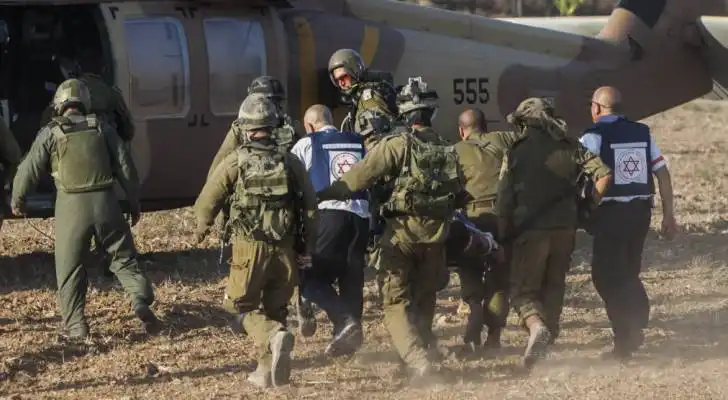
Deaths and injuries in the occupation army in a drone attack on a military base near Haifa

Twenty-five Israeli soldiers were injured Sunday evening in an attack targeting the Binyamina area south of Haifa, including 10 seriously and three critically, according to Eli Bin, director general of the Magen David Adom.


According to Channel 12, the attack was carried out by a drone that exploded in the area.


The occupation army radio said that the operation resulted in the death of 3 soldiers and 24 injuries, including 9 in critical condition, as a result of a drone explosion in Binyamina, south of Haifa.


The occupation authorities called in helicopters to evacuate the injured, according to our correspondent.


The Hebrew media said about the incident: "The alarm was not activated when the drone was penetrated, and the Israeli army will need to investigate why it was not intercepted, as well as the Home Front Command about why the alarm was not activated."


He explained that the march was launched towards Haifa under the cover of a barrage of rockets towards the Galilee, explaining that the "Israeli" ambulance dealt with 22 injuries, including 3 critical, 5 serious and 14 moderate.


Videos showed ambulances transporting injured and dead soldiers.


Israeli journalist Amit Segal confirmed that the attack targeted a base belonging to the Golani Brigade, one of the brigades of the occupation army.

PALESTINE

Sun 13 Oct 2024 6:19 pm - Jerusalem Time

A child was injured during clashes with the occupation forces east of Nablus

A child was injured, Sunday evening, with live bullets, during clashes with the Israeli occupation forces in the town of Beit Furik, east of Nablus.


According to local sources, the occupation forces stormed the town and clashes erupted in its western part.


The Red Crescent explained in a brief statement that its crews dealt with a 15-year-old child who was injured by live bullets in the foot and shrapnel in the back.

PALESTINE

Sun 13 Oct 2024 5:10 pm - Jerusalem Time

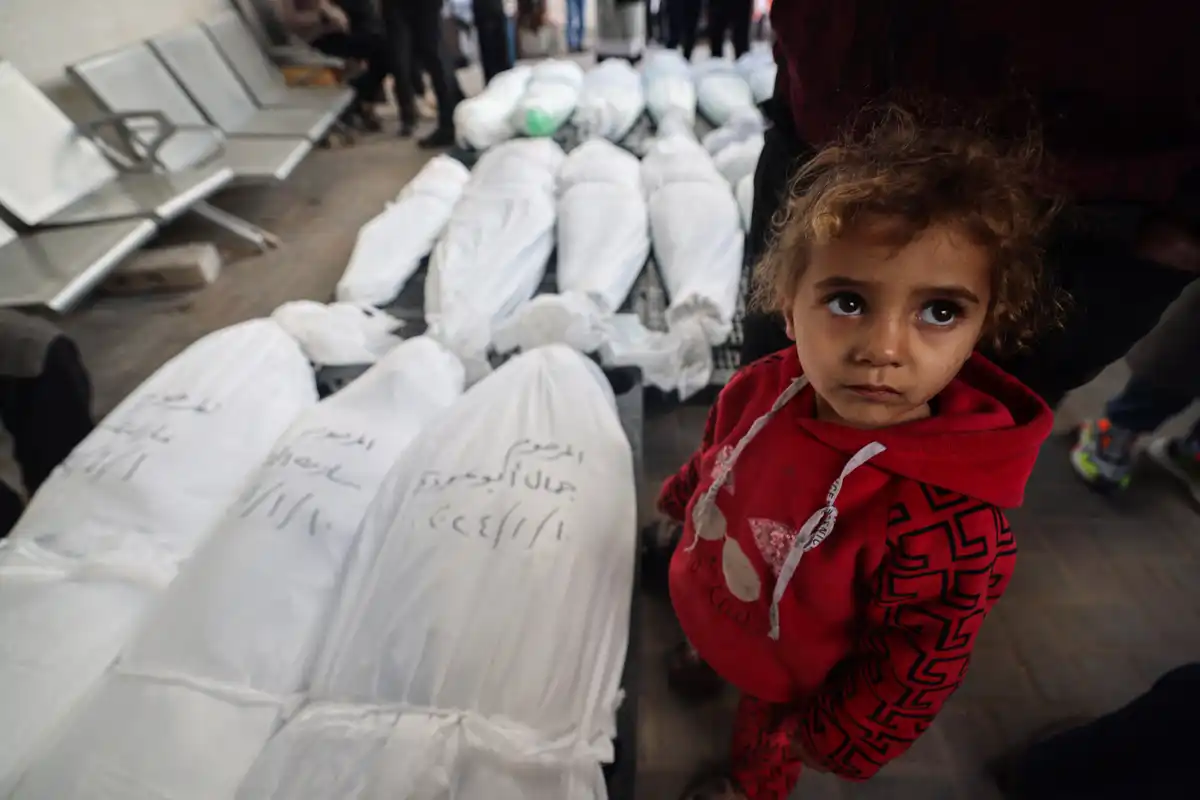
5 children killed in occupation bombing of Al-Shati camp

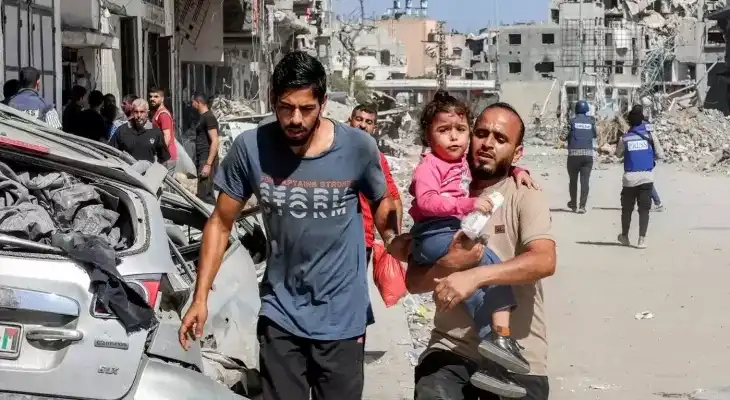
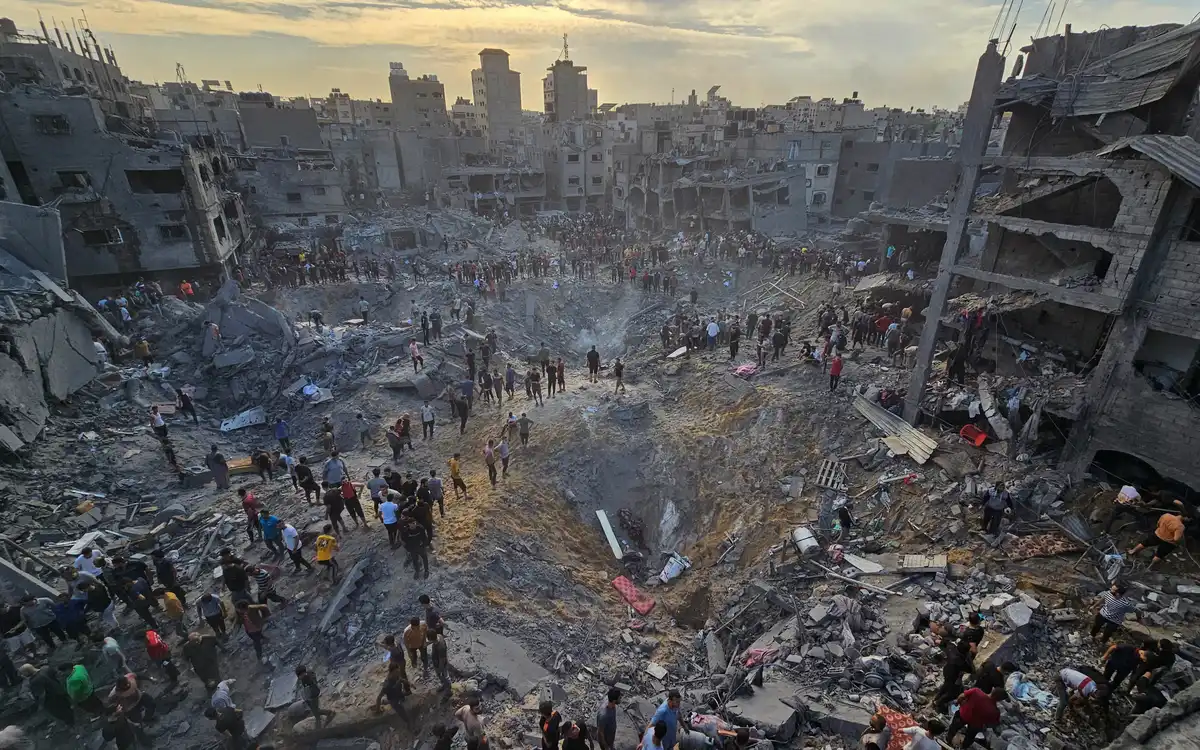
Five children were killed and others were injured, Sunday evening, in a new massacre committed by the occupation army west of Al-Shati camp, north of Gaza City.


According to local sources, an occupation drone targeted a group of children who were playing around the Ghaban Café in Al-Shati camp, which led to the immediate death of 5 children, and the injury of others who were near them.


The occupation forces have continued their aggression on the Gaza Strip, by land, sea and air, since October 7, 2023, which has resulted in the death of 42,227 citizens and the injury of 98,464 others, the majority of whom are children and women, in an incomplete toll, as thousands of people are still missing under the rubble.

ARAB AND WORLD

Sun 13 Oct 2024 3:33 pm - Jerusalem Time

Deaths and wounded in renewed occupation bombing of Lebanon

A number of Lebanese citizens were killed and injured today, Sunday, as a result of the Israeli occupation aircraft bombing several towns in Lebanon, amid widespread destruction of buildings, facilities and infrastructure.


The occupation warplanes and artillery targeted the towns of Khiyam, Kfar Kila, Shama, Al-Bazourieh, Al-Dhahirah, Yater, Rshaf, Qana, Al-Sittiniyah, Kfar Shuba, Alma Al-Shaab, Miqdoun, Shaqra, Dab’al, Sarbin, Al-Mansouri, Beit Lif, Aita Al-Shaab, Al-Sharhabeel, Ramyeh, Rmeish, Kafra, Haris, Al-Safri, Yahmor, Maroun Al-Ras, Kfar Tibnit, Rumin, Shebaa, Wadi Al-Hujayr, and Wadi Al-Saluqi in southern Lebanon and the Bekaa.


Yesterday evening, the occupation raids destroyed the ancient market in the city of Nabatieh, south Lebanon, which was built about 400 years ago.

PALESTINE

Sun 13 Oct 2024 2:42 pm - Jerusalem Time

The occupation prevents farmers from reaching their lands west of Dura

Today, Sunday, the Israeli occupation forces prevented farmers from reaching their lands west of the town of Dura, south of Hebron.


Local sources said that the occupation forces prevented farmers from reaching their lands in the areas of "Khalat Taha" and "Al-Abed" from reaching their lands and picking olives.


For years, these lands have been subjected to continuous attempts to impose the occupation’s control over them. The occupation forces recently demolished a number of homes there, in addition to bulldozing the lands, uprooting trees, destroying water wells, and poisoning grazing lands, in order to force the citizens to leave.

PALESTINE

Sun 13 Oct 2024 1:35 pm - Jerusalem Time

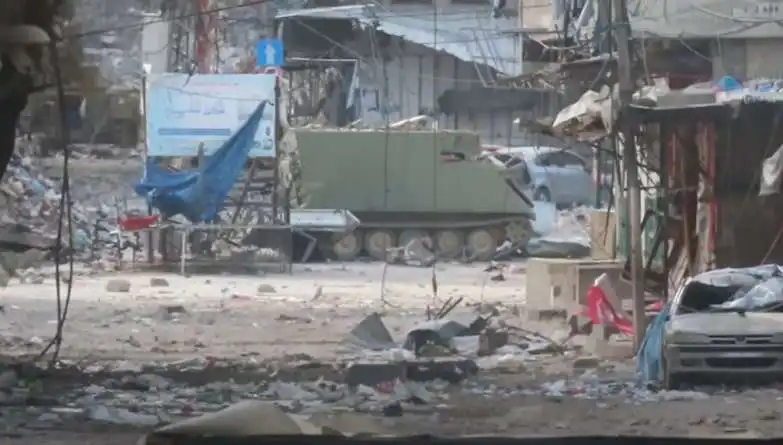
Israeli army detonates booby-trapped robots loaded with tons of explosives to expand the circle of killing and destruction in northern Gaza

Israeli army detonates booby-trapped robots loaded with tons of explosives to expand the circle of killing and destruction in northern Gaza

A screenshot taken from scenes broadcast by Al Jazeera News Channel of an Israeli booby-trapped robot in a neighborhood in Jabalia camp, northern Gaza Strip - May 2024

October 13, 2024 Israel-Palestinian Territories Share on

Palestinian Territories - The Euro-Mediterranean Human Rights Monitor said that the Israeli occupation army is using booby-trapped robots loaded with tons of explosives in the extensive destruction and killing operations it is carrying out in northern Gaza, during its ongoing invasion for the ninth consecutive day, with the escalation of the crime of genocide against the Palestinians there by committing massacres, premeditated murder, starvation, and large-scale forced displacement.


The Euro-Mediterranean Human Rights Monitor explained that the Israeli army completely separated the northern Gaza governorate from Gaza City, by positioning vehicles, placing sand barriers and rubble of destroyed homes, in addition to fire cover from drones.


This robot destroys about 6 or 7 homes at once. The occupation army blows up the robot in homes without knowing whether there are civilians inside or not

Eyewitness in Jabalia camp, northern Gaza Strip

The Euro-Mediterranean Human Rights Monitor highlighted that it received numerous testimonies about the Israeli army's use of booby-trapped robots and their remote detonation, causing widespread damage to homes and surrounding buildings and significant loss of life, at a time when the work of ambulance and civil defense crews is almost completely disrupted, except for a narrow area in some neighborhoods.

The Euro-Mediterranean Human Rights Monitor said that Israel's use of booby-trapped robots is prohibited under international law, as these robots are considered random weapons that cannot be directed or their effects limited to military targets only. Due to their nature, they directly hit civilians, or hit military targets, civilians or civilian objects indiscriminately. Therefore, it is considered a prohibited weapon under international law, and its use in residential areas constitutes an international crime in itself.


In his testimony to the Euro-Mediterranean team, one of the people trapped in one of the neighborhoods near the "Al-Qassabi" neighborhood southwest of Jabalia camp in the northern Gaza Strip (the name of the witness is being withheld by Euro-Mediterranean for security reasons) said: "On Wednesday evening (October 9), a huge explosion occurred in the Al-Qassabi neighborhood, close to where we were. The sound of the explosion was very loud, I had never heard it before, we have become able to distinguish between the sounds of explosions, we know whether this sound is from bombing by aircraft, artillery, or something else. In fact, the sound of the explosion was many times louder than the sound of air strikes, to the point that white dust covered the entire area. We later found out that this explosion was the result of the detonation of a robot loaded with tons of explosives, and that this robot destroyed about 6 or 7 houses at once. The occupation army detonates the robot in the houses without knowing whether there are civilians inside them or not."


The Euro-Mediterranean field team documented the Israeli army blowing up two other robots in the "Tawam" area and in the "Zahraa" neighborhood adjacent to the Civil Defense west of Jabalia camp, and another robot in the vicinity of the "Abu Ali Mustafa" intersection in "Bir al-Naja" in the western areas of Jabalia camp. Another witness trapped in the Faluja area told the Euro-Mediterranean Human Rights Monitor: “There were huge explosions in the area where we are trapped near the Al-Sharafi roundabout, and we cannot tell what they are,” adding that more than 50 people are currently trapped in a house, three of whom were injured but could not be transferred to the hospital.”


The Israeli army began using these robots for the first time in Gaza last May, during the second incursion into Jabalia camp. This led to the killing of a number of civilians and the destruction of several homes in the camp. At the end of last May, images emerged from the “Tamraz Station” area in the middle of Jabalia camp of two booby-trapped robots prepared for detonation.


The Euro-Mediterranean Human Rights Monitor confirmed that the Israeli army has expanded its operations to destroy and blow up homes and residential buildings in the areas of its incursion in northern Gaza, using three methods: aerial bombardment, booby-trapped robots, and planting homes with explosives and blowing them up.


The Euro-Mediterranean Human Rights Monitor indicated that despite the difficulty of obtaining an accurate number of The population in the North Gaza Governorate, however, estimates indicate that there are more than 200,000 people in the remains of destroyed homes and shelters, and they reject the systematic and public Israeli plans to forcibly displace them, as the Israeli forces issued no less than six displacement orders within a week, including dropping leaflets calling on residents to head to the southern Gaza Strip.


The Euro-Mediterranean Human Rights Monitor warned that there are about 200,000 others in the Gaza Governorate who are also suffering from the ongoing bombing and hunger as a result of the cessation of the entry of aid and goods, which means that more than 400,000 residents in the northern Gaza Valley are exposed to various types of killing, displacement and starvation.


The Euro-Mediterranean Human Rights Monitor warned that those who survive the killing and direct bombing remain at risk of death by hunger or thirst, as the Israeli forces prevent the entry of any aid to the north of Gaza, and have destroyed and burned bakeries there, in addition to bulldozing what remained of water wells. Moreover, the population trapped in their homes and shelters cannot move to search for any food in their surroundings, and some of them have been forced to be internally displaced several times, forcing them to abandon their belongings and their food and water supplies. Therefore, most of them are trapped without food or the necessities of life.

The Euro-Mediterranean Human Rights Monitor stated that despite the Israeli occupation army’s request for residents to move south via Salah al-Din Street, they are targeted as soon as they leave their homes or shelters. Israeli aircraft have also fired at several shelters, wounding dozens of displaced people inside them.


The Euro-Mediterranean Human Rights Monitor indicated that the health situation in northern Gaza is catastrophic, as Kamal Adwan Hospital, which is partially operating, has become the main hospital receiving victims, despite the Israeli occupation army’s order to its management to evacuate it completely. Al-Awda and Indonesian hospitals are also partially operating due to the small number of medical staff. Ambulance and civil defense crews face difficulties in moving to transport victims after the Israeli attacks, either as a result of roads being cut off after more homes were destroyed, or because they were targeted by Israeli quadcopter fire.


The Euro-Mediterranean Human Rights Monitor called on the United Nations and the international community to intervene immediately to save hundreds of thousands of residents of northern Gaza, stop the genocide committed by Israel for the second year in a row, impose a comprehensive arms embargo on it, hold it accountable and punish it for all its crimes, and take all effective measures to protect Palestinian civilians there.


ARAB AND WORLD

Sun 13 Oct 2024 1:27 pm - Jerusalem Time

Netanyahu and his ministers attack 130 soldiers who demanded a deal with Hamas

Israeli Prime Minister Benjamin Netanyahu and several members of his government have attacked 130 Israeli soldiers who announced a few days ago that they would refuse to serve unless the government sought to reach a prisoner exchange agreement with the Islamic Resistance Movement (Hamas).


Haaretz newspaper quoted informed sources as saying that Netanyahu called during security discussions to end this issue forcefully and firmly and to use all measures permitted by law to confront this disobedience, stressing that these soldiers have lost their "national conscience."


In turn, Transportation Minister Miri Regev said during the meeting that if this was a rebellion, these soldiers should be sent to prison.


Defense Minister Yoav Galant stressed that the figures presented by the media regarding this message do not reflect reality, and that the Israeli army responds forcefully to any sign of disobedience.


While representatives of the Israeli army confirmed at the meeting that they had not received the message sent to the media.


Soldiers' Message

A few days ago, Haaretz published a letter signed by 130 Israeli soldiers warning that they would no longer serve unless the government worked to reach an agreement regarding the detainees in Gaza.


The newspaper added that the letter was signed by reserve soldiers from the Armored Corps, Artillery Corps, Home Front Command, Air Force and Navy.


The letter stated that "it is now clear that the continuation of the war in Gaza not only delays the return of the hostages from captivity, but also puts their lives in danger: many more hostages have been killed by IDF strikes than those rescued in military operations."


"We who serve faithfully, and at the same time risk our lives, hereby declare that if the government does not immediately change course and work to reach an agreement to return the hostages home, we will not be able to continue serving," the letter added.


Israel estimates that there are 101 detainees in the Gaza Strip, while Hamas announced that dozens of them were killed in random Israeli raids.


Despite the ongoing joint mediation efforts of Qatar, Egypt and the United States for months, and the presentation of one agreement proposal after another to end the war on Gaza and exchange prisoners, Netanyahu continues to set new conditions, including continued control over the Philadelphi Corridor on the border between Gaza and Egypt, the Rafah crossing in Gaza, and preventing the return of Palestinian faction fighters to northern Gaza by inspecting returnees through the Netzarim corridor in the middle of the Strip.


For its part, Hamas insists on a complete Israeli withdrawal from the Strip and a complete cessation of war to accept any agreement.


PALESTINE

Sun 13 Oct 2024 1:20 pm - Jerusalem Time

A citizen was injured by the occupation forces' bullets north of Tulkarm

Today, Sunday, a citizen was injured by Israeli occupation forces' bullets, near the racist separation and expansion wall, north of Tulkarm Governorate.


According to local sources, ambulance crews dealt with the injury of a young man from Tulkarm (24 years old) with live bullets in the feet, in addition to a fracture in them, fired at him by occupation soldiers in the vicinity of the racist separation and expansion wall west of the town of Deir al-Ghusun, north of the governorate.


He added that the injured person was transferred to Thabet Thabet Governmental Hospital in Tulkarm.

PALESTINE

Sun 13 Oct 2024 1:18 pm - Jerusalem Time

52 dead and 128 injuries in the past 24 hours in Gaza

The Ministry of Health in Gaza reported today, Sunday, that the Israeli occupation committed 4 massacres against families in the Gaza Strip, resulting in 52 dead and 128 injuries arriving at hospitals during the past 24 hours.


In a brief statement, it confirmed that the death toll from the Israeli aggression has risen to 42,227 dead and 98,464 injuries since October 7.

PALESTINE

Sun 13 Oct 2024 1:13 pm - Jerusalem Time

Anin Village: Land Looting, Isolation of Vast Areas Behind the Wall, and Rising Unemployment

Due to its border location on the armistice line, and the nature and topography of its lands that extend inland, the occupation has constantly targeted the lands of the border and wall village of Anin, northwest of the city of Jenin. During the Nakba of 1948, it devoured and confiscated large areas of its lands. Since the Nakba, the confiscation and looting operations have not stopped, and they continued after the construction of the racist separation wall, until vast areas planted with olives, which are considered a source of income and livelihood for its residents, became besieged behind the wall. During the past year, the occupation prevented the residents from picking olives, and with the beginning of the current olive season, hundreds of citizens are still waiting to be granted permits so that the season is not lost. In the midst of all this, the village is exposed to attacks and arbitrary practices, especially the siege that has raised unemployment rates, as the vast majority of its residents are farmers and workers.


The head of the village council, Mohammed Issa, expresses the residents’ ongoing concern over the daily arbitrary practices of the occupation against the residents of his village, whose population, according to the village council’s statistics, is 5,500 people. He considers his border and besieged village marginalized and deprived of support and many of its rights, despite the repeated appeals and demands, especially to support the workers affected by the war on Gaza.


The village of Anin is 17 km away from the city of Jenin. It is bordered to the north by the village of Taybeh, to the south by the Shaked settlement, to the west by the "Me'ame" settlement, and to the east by the village of Ta'anek and the apartheid wall that was built within its borders.


Speaking to Al-Quds, the head of the council, Mohammed Issa, explained that the Israeli ambitions for his village and its lands are old and date back to the beginning of the Nakba in 1948. Before that, its historical area was 47,000 dunams, and during the Nakba, the occupation rushed to steal and confiscate 30,000 dunams. He said, “These policies destroyed the lives and livelihood of the residents in the field of agriculture, due to the fertility of its lands and its strategic location. After the construction of the racist separation wall, the occupation did not stop its harassment and settlement plans that aim to gradually annex and confiscate the land.” He added, “The wall was a major disaster for the village, as it isolated 11,600 dunams of land planted with olive trees, and the occupation prevented farmers from accessing them except with official and specific permits and according to a destructive system. During the past year, farmers were deprived of picking olives and lost the season completely.”


At the same time, the people of Anin faced great suffering that affected all the farmers whose lands are located adjacent to the racist separation wall on the village side. Issa explained that agricultural lands with an area of 1,200 dunums are owned by their owners with fences and identification papers, and are closed and it is forbidden to approach or enter them because they are adjacent to the wall. Their owners have suffered heavy losses and no one has compensated them. He added, “The occupation completely monitors this area and practices arbitrary policies against herders and farmers, including persecution, detention, suppression and abuse. The occupation soldiers fired live bullets at the citizen Moatasem Fawaz Mustafa Issa years ago while he was tending the livestock on his land and he was martyred, as a threatening message to the citizens and farmers.”


An atmosphere of anxiety and fear has prevailed among farmers since the beginning of the current olive season, with the occupation not issuing permits that allow them to reach their lands and pick the olives. Issa says, “Coordination was made through the Palestinian liaison, in order to grant us permits for farmers to pick olives this year, and we are still waiting for a response and approval, knowing that our agricultural lands behind the wall are considered the food basket for the villagers.”


Gate 214..

After the completion of the construction of the apartheid wall within the village’s lands, the occupation installed a permanent military checkpoint known as Gate 214, which is a source of great suffering for farmers and owners of isolated lands. The soldiers control the lives and movements of farmers even though they have obtained permits. Issa says, “Entering and exiting through the gate is a disaster and a major and dangerous setback in light of the arbitrary practices of detaining citizens in long lines waiting for long hours in the summer and winter, amidst humiliation and inspection. Sometimes even permit holders are prevented from passing without reason. We are currently waiting for the gate to open so we can work inside and pick olives so that we do not lose the season.”


Arbitrary practices..

The head of the council stated that the occupation practices arbitrary policies to harass and oppress the residents, even within the village’s borders and areas far from the wall. The most dangerous of these, he explained, is the method of confiscating homes and turning them into military barracks and imposing coercive measures on their residents without knowing the reasons. He said, “Recently and until today, the occupation has been storming the village, raiding and occupying homes and turning them into mobile military barracks. For a week now, soldiers have been moving from one house to another without taking into account the people’s living conditions.” He added, “The occupation controls the targeted house and deals with its residents in inhumane ways, then expels them and forces them to leave until the end of the operation and the evacuation of the barracks, which causes them terrible suffering, especially since the targeted families have no other shelter.” He continued, “The continued presence of the barracks without knowing the reasons and the expulsion of its residents, and the night raids accompanied by gunfire, have turned into terrifying nightmares for the residents.”


Wild pigs..

The people of Anin complained about the occupation releasing wild pigs from the gate of the wall into their village, which poses a threat to the lives of the villagers. Issa explains that the pigs attack and destroy agricultural crops, causing farmers huge losses, and causing fear and panic among the citizens, especially children, who live under a curfew and are prevented from leaving their homes all night long for fear of the wild pigs that are spreading widely and all attempts to eliminate them have failed.


Unemployment and suffering..

The occupation's policies against land and agriculture have pushed many citizens to turn to labor, especially inside the country. They have lost their jobs due to the restrictions and siege imposed by the occupation after the war on Gaza. Issa believes that the labor sector is a marginalized and destroyed group since the war. The majority of citizens in the village of Anin were working continuously inside the country, but after the war they became unemployed and unable to support their families and have no other source of income. He added, "We have demanded and are demanding that the Palestinian government and all ministries and institutions pay attention to the workers of our village and stand by them, support them, and provide projects to protect them from poverty, destitution, and unemployment."


Issa said that his village is marginalized and does not receive support or projects. It needs programs and plans like those implemented by the government in the border and wall areas to advance, develop, and strengthen the people’s steadfastness. The village also needs a project to rehabilitate the main street and the village entrance to relieve the suffering of the citizens.


Other pictures..

Issa stated that the occupation restricts the movement of construction and urban expansion in the village, and prevents construction, especially in the lands located opposite the settlement and the racist separation wall, indicating that the harassment of citizens is multiple and continuous, including the confiscation of agricultural equipment, pagers and construction tools, because they completely prevent construction in several areas, and the goal, as he says, is "to displace people and turn their lives into suffering to expel them and facilitate the confiscation of our lands." He added, "We demand that President Abu Mazen issue his instructions to all relevant ministries to include our marginalized and afflicted village within their priorities and plans, and to support it with important and vital projects to thwart the occupation's plans, as we are steadfast and steadfast and we are resisting alone and everyone must support us in every way."


ARAB AND WORLD

Sun 13 Oct 2024 11:47 am - Jerusalem Time

15 killed in Israeli raids, Hezbollah bombs Haifa, Tiberias and the occupied Golan

The Israeli army said that 40 rockets were fired from Lebanon in the past few hours towards Haifa, Tiberias and the occupied Golan Heights, and some of them were intercepted. In return, Israeli raids targeted several towns in southern, central and northern Lebanon, leaving dead and wounded among civilians.


The Lebanese Ministry of Health announced yesterday, Saturday, the killing of 15 people and the injury of dozens of others, in 3 Israeli raids that targeted Mount Lebanon Governorate in the center of the country and the town of Deir Bella in Batroun in the northern region.


While Al Jazeera's correspondent said that an Israeli fighter jet raided a residential building in the town of Barja in the Chouf Coast area in Mount Lebanon, destroying part of the building.


An Israeli fighter jet also raided a house in the town of Al-Maaysra in the Keserwan district in Mount Lebanon.


In the northern region of Lebanon, the town of Deir Bella in the Batroun district was subjected to an Israeli raid that led to the destruction of two houses and their leveling to the ground.


In the past hours, Israeli fighters launched simultaneous raids on several towns in the Baalbek region in eastern Lebanon, including the towns of Tamnin and Younin in the Bekaa region.


40 missiles

In contrast, the Israeli army said it had detected the launch of about 40 rockets towards Haifa Bay and the Upper Galilee and intercepted some of them.


Israeli media reported that about 30 rockets were launched from Lebanon towards the Upper Galilee, including two rocket salvos launched towards Acre and Haifa Bay.


Hezbollah announced that it had attacked the air defense base in Kiryat Eliezer, west of Haifa, and Ein Margaliot with a squadron of suicide drones, and hit the targets accurately.


He said that he bombed an explosives factory south of Haifa with a barrage of qualitative missiles, and the city of Tiberias with a missile salvo, and targeted gatherings of occupation forces in several locations in northern Israel and the occupied Syrian Golan.


Targeting soldiers

Hezbollah also announced that it had targeted a gathering of Israeli soldiers in the vicinity of Moqi al-Marj and Ramim with missiles, and that it had bombed an Israeli infantry force that had tried to infiltrate from the direction of the Ramiyah site with a guided missile, killing and wounding its members.


It is noteworthy that since September 23, Israel has expanded its aggression on the Gaza Strip to include Lebanon and the capital Beirut, by launching unprecedented air strikes. It also began a ground incursion into southern Lebanon, disregarding international warnings and UN resolutions.


These raids have resulted - until Saturday evening - in 1,437 deaths and 4,123 injuries, including a large number of women and children, and more than 1,340,000 displaced persons, according to official Lebanese data.


Hezbollah responds daily with missiles, drones and artillery shells targeting military sites and settlements, and while Israel announces some of its human and material losses, military censorship imposes a strict blackout on most of the losses, according to observers.

PALESTINE

Sun 13 Oct 2024 9:58 am - Jerusalem Time

Israeli army implements the "General's plan" for ethnic cleansing in northern Gaza

The American CNN network said that the Israeli occupation army has begun implementing a large-scale operation in northern Gaza, as it issued evacuation orders for the more than 400,000 Palestinian citizens in the area, and is preventing food supplies from reaching it, just weeks after reports that Israeli Prime Minister Benjamin Netanyahu studied and discussed the plan with the "mini-war cabinet", based on blockading the area, starving its people, and forcing Hamas to release hostages.


The network notes that the Israeli occupation forces launched the operation this week following intelligence information that it said showed “the presence of terrorists and a terrorist infrastructure in the Jabalia area in the northern Gaza Strip, as well as Hamas’s efforts to rebuild its operational capabilities in the area.” In fact, the renewed attack was much more widespread than just the Jabalia refugee camp.


Four sources told CNN that the Israeli cabinet has not approved the blockade proposal put forward by retired Gen. Giora Eiland. But the operation currently underway is similar to the plan Eiland presented (known as the General’s Plan) in a public video, and in a private session of the Israeli cabinet and the Knesset.


A former senior military official familiar with the thinking of the Israeli government and security leadership — though not directly involved in decision-making — told CNN that the cabinet had adopted a “version” of Eiland’s proposal, which became known as “the general’s plan.”


Eiland told CNN the claim was "absolutely true" but said there were significant differences between his proposal and what was implemented on the ground. The operation comes at a time when the Israeli government is known to be considering several plans to reset the war in Gaza.


Last month, Eiland proposed forcing all civilians out of northern Gaza, including Gaza City, and then cutting off all supplies to the area. He said the goal was to force a reset on the war and throw off the calculations of Hamas leader Yahya Sinwar. “The reality today in Gaza is that Sinwar is not really nervous,” he said in a video released at the time. “What [the government] embraced was the need to do more in Gaza, to change Sinwar’s mindset,” the former military official told CNN. “And that proposal was embraced without any conceivable means of violating international law.”


Retired Maj. Gen. Gershon Hacohen, who helped draft the proposal, told CNN that Eiland’s proposal did not include any plan to allow civilians in Gaza to return to northern Gaza. That would seem likely to raise accusations of ethnic cleansing, something that has already been raised by academics such as Omer Bartov, an Israeli-born professor of Holocaust and genocide studies at Brown University in Rhode Island.


"The cabinet is already acting on my recommendation to take control of northern Gaza, but I have recommended a blockade (after evacuating civilians) and stopping supplies from entering this area. None of this is happening," Eiland told CNN via text message.


On Monday, the IDF’s Arabic-language spokesperson ordered all Palestinians in the northernmost areas of Gaza—Beit Hanoun, Jabalia and Beit Lahiya—to leave and move to Mawasi, an Israeli-declared “humanitarian” zone in southern Gaza that has nevertheless been subjected to heavy aerial bombardment for months. On Saturday, the army added additional mandatory evacuation zones, dropped leaflets and posted on X, and ordered people in the Nazla area and more areas of Jabalia to leave. “The army is operating with great force against the terror organizations and will continue to do so for a long time,” Avichay Adraee said on X. “You must evacuate the area immediately via Salah a-Din Street to the humanitarian zone.”

PALESTINE

Sun 13 Oct 2024 9:56 am - Jerusalem Time

Settlers cut down dozens of trees south of Nablus

Settlers cut down dozens of olive trees in the town of Qusra, south of Nablus, at dawn on Sunday.


According to local sources, settlers cut down dozens of olive trees in the eastern area of the town of Qusra, following an attack on the area since yesterday morning.


He added that the settlers attacked the farmers and olive pickers, and expelled them from the area at gunpoint, under the protection of the occupation army.

PALESTINE

Sun 13 Oct 2024 9:52 am - Jerusalem Time

UNICEF: Children's lives in the Middle East are unraveling in an unimaginable way

The United Nations Children's Fund (UNICEF) said that the lives of children in the Middle East are being destroyed by ongoing conflicts.


This came in a statement by UNICEF Executive Director Catherine Russell, today, Sunday, regarding the ongoing conflicts in the Middle East, published on the UN organization's website.


She stressed the need for all parties to commit to protecting civilians, especially children, humanitarian workers, schools and health facilities.


The UN official stressed the need for all parties to allow unrestricted access to life-saving aid.

She said these commitments were “flagrantly ignored” in the region, and that “children do not start wars and do not have the power to end them, but their lives are being destroyed by conflicts.”


"Tens of thousands of children have been killed, and thousands are still in captivity, displaced, orphaned, out of school, and traumatized by violence and war," she continued.


UNICEF Executive Director called for an end to violence against children.

OPINIONS

Sun 13 Oct 2024 9:45 am - Jerusalem Time

"Al-Aqsa Flood" and its repercussions on the Arab region

Christine Hanna Nasr

Christine Hanna Nasr

Opinion Writer

October 7 and Operation Flood of Al-Aqsa were undoubtedly an unexpected surprise and a security shock for Israel, as thousands of rockets were launched from the Gaza Strip, coinciding with an incursion by Hamas fighters using gliders, and then the border was stormed by armed units who penetrated the border barrier after blowing it up, to enter the headquarters of the Southern Command, and what is known as the Gaza Division of the Israeli army. This was also accompanied by electronic jamming of the communications devices of the military leaders, and as a result of this operation some were killed and some of them were transferred as prisoners to Gaza.


The previous brief field explanation constitutes the beginning of the conflict that continued after October 7, 2023 until today, and the facts turned into a devastating war between the two parties in Gaza, for matters and events to develop to open new fronts, such as the main front after Gaza in southern Lebanon, and what was known as the term unity of arenas, in Syria, Yemen and Iraq, represented by factions supported by Iran. All these rapid and successive developments and the repercussions of October 7 have exceeded a year and more in their time period until today. The fuse of the ongoing war is still lit and the rockets are burning everyone. October 7, after a year of fighting, has turned into a regional war in the region, and its ongoing fires are difficult to extinguish until now.


Unfortunately, what we and the world have witnessed of the worsening results of this conflict, especially in Gaza, including the destruction, killing and heavy losses of victims among the missing and wounded, including those who died of hunger, confirms that the Palestinian people have suffered a lot and are the biggest losers from this ongoing conflict. From a military perspective, Israel has defined and declared its goal, which is to eliminate the Hamas movement, especially its military capabilities in the Gaza Strip, in a way that ensures that in the future it will not pose a threat to Israeli national security, specifically to the settlements in what is known as the Gaza Envelope. In addition to these Israeli goals, there is the pursuit of returning the kidnapped Israelis and returning the residents to their homes, which is the same goal intended from the conflict with Hezbollah and the northern border region.


October 7, 2024, which marks the first anniversary of the conflict, saw clear messages sent, represented by what we saw of a wave of rocket attacks by Hamas on Israel, which was linked in terms of its timing and implications to simultaneous rocket attacks also coming from southern Lebanon, Yemen and Syria, in a way that indicates the continuation of this conflict. Regarding the political and military situation of the conflict with Israel, it is clear that some of Israel’s goals have been achieved in Gaza, in addition to killing some of Hamas’s military leaders, such as the martyr Ismail Haniyeh, and destroying vast areas in the Gaza Strip. As for the raging conflict in southern Lebanon, some of the leaders of the Radwan Unit have been killed, leading to the assassination of the commander-in-chief of Hezbollah, in addition to his martyrdom along with others. Israel has declared that its goal is to eliminate the armed resistance fighters on its northern borders, eliminate their military combat capabilities, and work to establish a weapons-free zone, in addition to implementing UN Resolution No. 1701. Despite all these assassinations and great destruction, it is clear that the conflict continues even after a year of fighting. It seems clear today that calm is absent from this conflict, and the unity of the arenas continues. In fact, we have practically entered an advanced state of war, most notably its expansion to include neighboring countries. Among its features are the greater use of missiles and fighters, and the entry into the stage of the Israeli army’s ground invasion of southern Lebanon, and the scenes of killing and destruction that accompanied these developments. And the displacement in Lebanon, in a manner similar to what happened in Gaza to some extent, and recently we notice a broader flare-up on the Syrian front and to a greater extent than the internal wars that it is already suffering from, including a more prominent flare-up in the area parallel to the Golan, as the war in Iraq expanded, and this included Iranian militias striking targets in Israel, and thus it can be said, through the map of conflicts, that the security situation worsened after October 7 and turned into a bloody regional conflict in the region, and the question that imposes itself on our reality today is where are the situations heading? What are the repercussions and dimensions of this raging conflict between the resistance and what is known as the unity of the arenas on the one hand, and Israel on the other hand, in a manner that witnesses non-stop missile bombardment?


The anniversary of October 7 coincided with the speech of the Iranian Supreme Leader Khamenei and the Friday sermon in Tehran. The speech included two parts in Persian and Arabic, with the intention of addressing the Arab peoples. In his speech, he stressed Hezbollah’s right to defend Gaza, saying: “Fight the aggressor and defeat it.” He praised the October 7 earthquake and urged the Lebanese (Hezbollah) and the Palestinians to fight and continue the support war.


I believe that the war of support and assistance today needs someone to support it because of the difficult circumstances it is going through. The Guide also explained that “it is all faith that victory is coming,” but unfortunately the people in Gaza and southern Lebanon do not have the basic requirements. They are sleeping in the open and cannot find food, shelter, or the necessary treatment. The displaced people in the southern suburbs had their homes destroyed and turned into piles of cement and iron. Unfortunately, the partnership has become clear that it is only in gains and profits with the unity of the arenas. The partnership is never clear in the losses, victims, and blood that was especially in the Arab countries and from Arab blood.


The Supreme Leader also said in his speech: "Removing the entity stained with shame from the arena of existence", but in all realism and according to the results and after a year of ongoing conflict, we notice that the military power between the militias on the one hand and Israel supported by military capabilities from several countries on the other hand, is clear and does not need explanation, especially with what we see of destruction in Lebanon and Gaza, and of course this painful field situation does not include Iran itself, which was limited to missile strikes from time to time, and unfortunately the Arab people are fighting and do not know exactly where their fate and current future will be, and what we noticed of the severity in the speech of the Supreme Leader Khamenei put the region in a position far from any political solution that could help extinguish the raging fires, and it also does not contribute to saving the lives of Arabs in the unity of the arenas that we are losing every moment, and the question that is repeated is do we Arabs know where our future and the future of our region are heading, the signs of which are clear from the killing and extreme destruction in Lebanon, Syria, Iraq and Yemen? So where are our Arab countries heading? While we find that others are negotiating to gain and protect interests, without exposing their countries to destruction and sabotage, such as Iran’s interests and its negotiations with America related to the nuclear file and the financial sums due to Iran, the problem here, after October 7, has become clear, and is related to the extent of our awareness in the Arab countries of the reality of the balance of power in this war, and the destruction it has left behind in our Arab cities and countries, unfortunately.


Where is the current conflict heading? What is the future of the Middle East, specifically in this ongoing devastating war? Will October 7 continue for years to come? And if it does, what are its consequences for the economic, social, health and educational conditions in our Arab countries, which have not benefited or won yet? Which leads us to another question: Will we win or lose? What are the repercussions of success or failure on us? And if we win, what is the future of cities destroyed by war, as is the case in Syria, Lebanon and Yemen?


The current tense geopolitical situation in our region poses an important question: Will the situation remain tense? Are we really witnessing a phase of changing influence or a phase of changing maps on the ground in terms of borders, politics and economy? There is no doubt that the answers to these questions will be given in the coming days, as they alone are capable of clarifying the results based on what the conflicts will leave behind on the ground and in the military arena.


PALESTINE

Sun 13 Oct 2024 9:34 am - Jerusalem Time

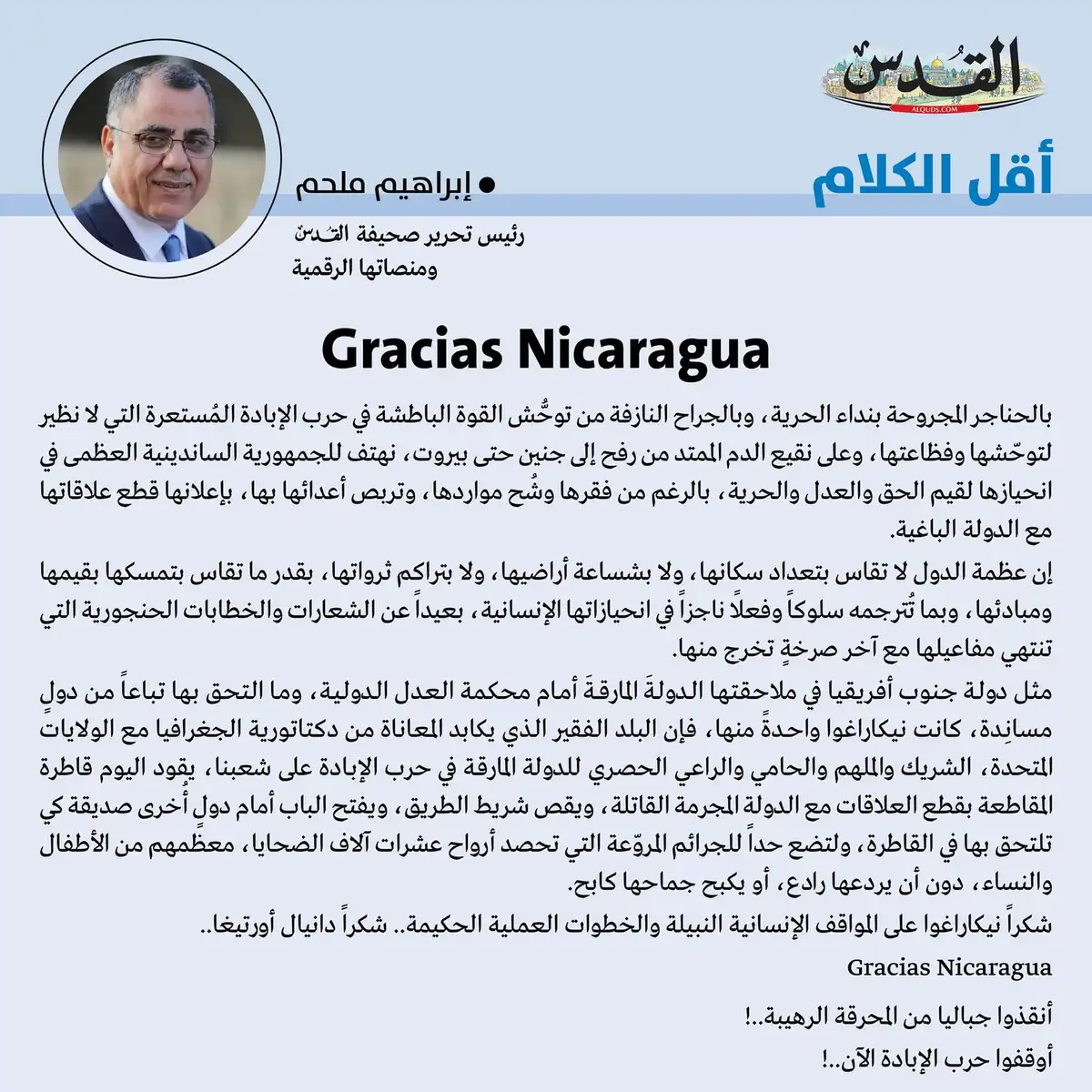
Thank you Nicaragua

With throats wounded by the call for freedom, and with the bleeding wounds of the brutality of the overwhelming force in the raging war of extermination that is unparalleled in its brutality and horror, and with the blood that extends from Rafah to Jenin to Beirut, we cheer for the Great Sandinista Republic in its adherence to the values of truth, justice and freedom, despite its poverty and scarcity of resources, and the ambush of its enemies, by announcing the severing of its relations with the oppressive state.


The greatness of nations is not measured by their population, the vastness of their lands, or the accumulation of their wealth, but rather by their adherence to their values and principles, and what they translate into behavior and accomplished action in their humanitarian biases, far from slogans and throaty speeches whose effects end with the last cry they utter.


Like South Africa in pursuing the rogue state before the International Court of Justice, and the countries that followed it, Nicaragua being one of them, the poor country that suffers from the dictatorship of geography with the United States, the partner, inspiration, protector and exclusive sponsor of the rogue state in the war of extermination against our people, is today leading the boycott locomotive by severing relations with the criminal, murderous state, cutting the ribbon, and opening the door for other friendly countries to join it in the locomotive, and to put an end to the horrific crimes that are claiming the lives of tens of thousands of victims, most of whom are children and women, without being deterred or curbed.


Thank you Nicaragua for the noble humanitarian stances and wise practical steps.. Thank you Daniel Ortega..


Save Jabalia from the terrible holocaust..!

Stop the war of extermination now

PALESTINE

Sun 13 Oct 2024 9:27 am - Jerusalem Time

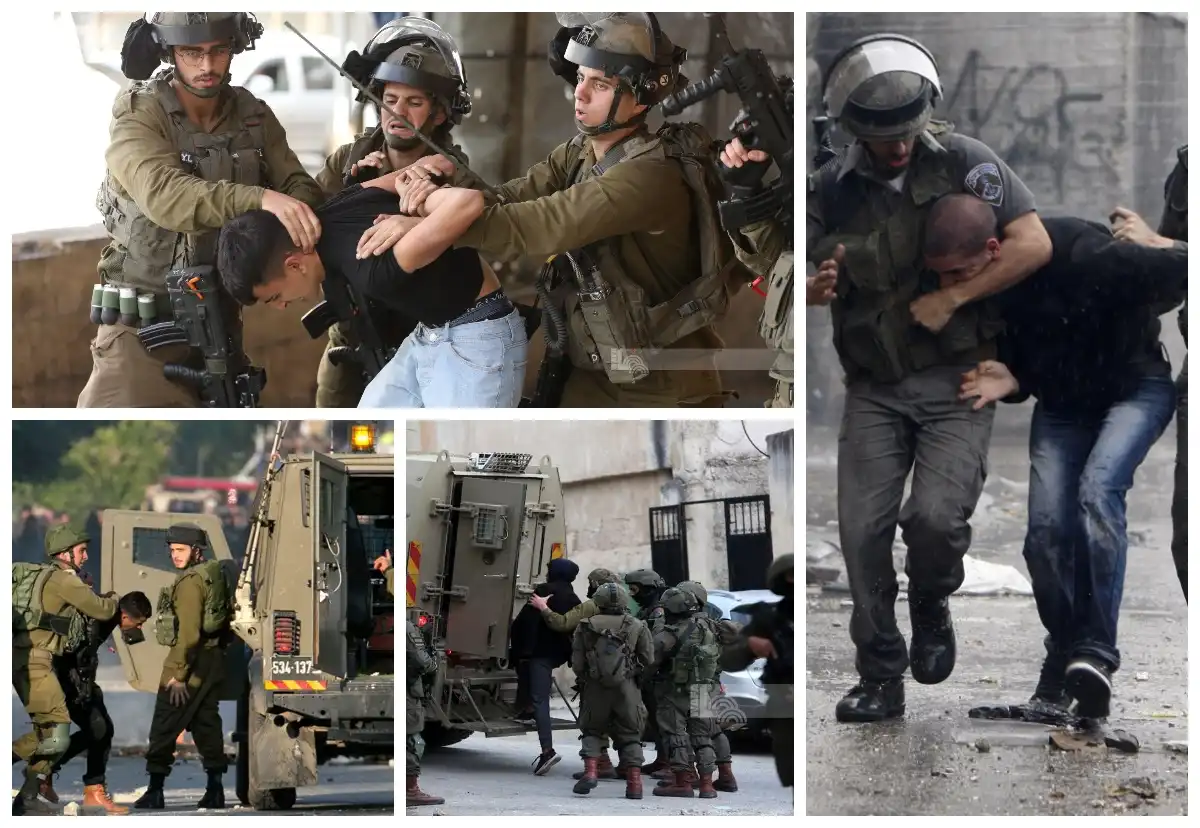
Israeli occupation forces launch arrest campaign in the West Bank

The Israeli occupation forces launched an arrest campaign in the West Bank at dawn and this morning, Sunday.


In Nablus, they stormed the village of Beit Iba, raided a house, searched it, wreaked havoc on it, destroyed some of its contents, and arrested the young man, Muhammad Abdullah Ismail.


In Bethlehem, the occupation forces arrested the young man Saad Jaber Abayat from the Al-Saff Street area, after raiding and searching his family’s home.


The family of the young man, Yazan Muhammad Al-Ahmar, from Al-Saff Street, also handed over a notice to turn himself in to its intelligence, after raiding and searching the house.


In Hebron, the occupation forces stormed the town of Sa'ir, raided and searched several homes, vandalized their contents, and abused citizens. They arrested the following: Alaa Ayed Al-Froukh, Yazan Jamal Suleiman Al-Froukh, Riyad Sami Jaradat, Basil and Abdul-Moneim Jaradat, Sayel Tayseer Shaheen Jaradat, Nidal Ishaq Jaradat and his son Abdullah, Iyad Ishaq Hamed Jaradat, Ishaq Iyad Ishaq Jaradat, and Ahmed Nasr Al-Froukh.


The occupation forces also raided the town of Bani Naim, east of Hebron, and arrested Ali Yaqoub Sawalha, Baha Mazen Balout, Abdul Yousef Marai, and his brother Hussam.


In Jenin, the occupation forces arrested the young man Shams Bilal Muhammad Yassin Jaradat (17 years old) after raiding his family’s home in the town of Silat al-Harithiya.

PALESTINE

Sun 13 Oct 2024 9:20 am - Jerusalem Time

A prisoner from Bethlehem died in Israeli Soroka Hospital

The Palestinian Prisoners' Affairs Authority and the Palestinian Prisoners' Club announced the death of prisoner Muhammad Munir Musa (37 years old) from Bethlehem, in Soroka Hospital the day before yesterday, Friday, according to what the Civil Affairs Authority was informed by the occupation.


The Commission and the Club said in a joint statement today, Sunday, that prisoner Musa has been detained by the Israeli occupation authorities since April 20, 2023. This is his first arrest, as he was held, according to the available information, in (Ramon) prison, and he is still detained. He is married and the father of three girls.


The Commission and the Club said, "Prisoner Musa did not suffer from any chronic health problems before his arrest, and there is not enough information available about the circumstances of his martyrdom. However, we confirm that the systematic crimes of the occupation, including torture crimes, medical crimes, and starvation crimes, were the main reasons for the martyrdom of (40) prisoners and detainees after October 7. They are the martyrs whose identities and data are known to the relevant institutions and those whose identities have been announced. In addition to them is the martyr Musa, who was announced today, bringing the number of martyred prisoners and detainees after October 7 to (41).


The Authority and the Club continued, "Since the beginning of the war of extermination, the Israeli occupation has committed systematic crimes - unprecedented in their level and intensity historically, and continues to practice these crimes on an instant basis in its prisons and camps with the aim of killing and liquidating prisoners by political orders from the highest echelons of the occupation system, and one of the faces of this system is the fascist minister (Ben Gvir), who continues to carry out crimes against prisoners and brags about them in front of the camera lenses, and even documents them for publication with the aim of satisfying the desire for revenge in Israeli society, inciting the killing of prisoners, and targeting the Palestinian prisoner in the collective consciousness of struggle."


The Authority and the Club pointed out that the continuation of the occupation system’s crimes, which have reached their peak since the beginning of the war of extermination, will inevitably lead to the martyrdom of more prisoners, in light of the terrifying global state of helplessness in the face of the crimes of extermination and comprehensive aggression against our people, which takes on a more dangerous meaning for human society with the passage of more time and the rise of more dead.


The Authority and the Club added that this crime is added to the record of crimes committed by the occupation for decades until today's war of extermination.


The Authority and the Club stated that more than ten thousand and one hundred prisoners and detainees in the occupation prisons, in addition to hundreds of Gaza detainees in the army camps, are facing horrific and terrifying crimes that affect their lives around the clock, within the framework of the war of extermination that takes several forms, including aggression against prisoners.


The Prisoners' Affairs Authority and the Prisoners' Club held the occupation fully responsible for the martyrdom of prisoner Moss. The two institutions called on international human rights institutions that have historically been incapable of facing the crimes and brutality of the occupation, which reached its peak with the continuation of the war of extermination, to restore their necessary and real role and to establish their will to hold the leaders of the occupation accountable for their crimes and put an end to them, which affect all of humanity.


It is worth noting that the number of dead arrested after the date of October 7, announced as we confirmed above, rose to (41), including (24) from Gaza, in addition to dozens of martyrs from Gaza detainees, whose identities the occupation continues to conceal, and this number of dead is the highest historically compared to previous years in which many prisoners were killed.


With the death of prisoner Musa, the number of martyrs of the prisoner movement whose identities are known has risen since 1967 until today to (278).


PALESTINE

Sun 13 Oct 2024 8:55 am - Jerusalem Time

8 dead from one family as a result of the occupation's bombing in the central Gaza Strip

Eight citizens from one family were killed today, Sunday, when the occupation warplanes bombed their home in Al-Nuseirat in the central Gaza Strip.


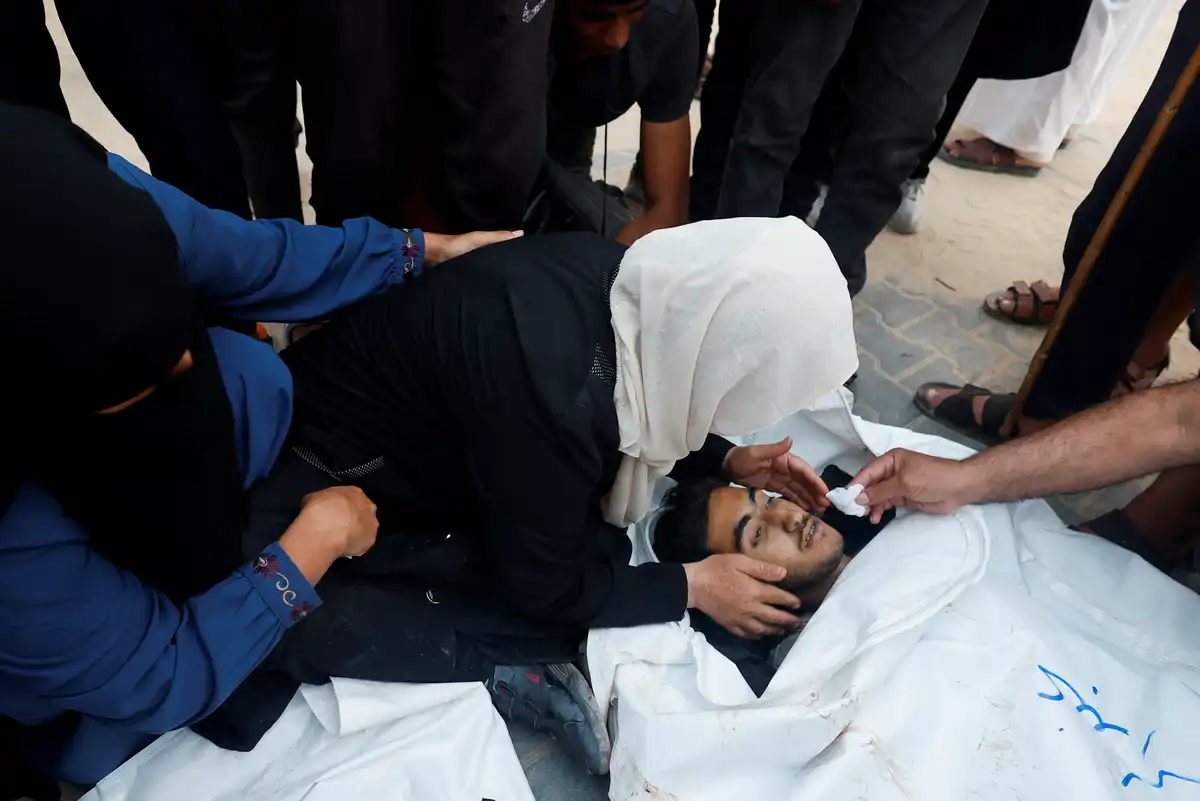
Local sources reported that the occupation warplanes bombed the house of the Abu Dalal family in Nusairat, which led to the death of eight citizens from the Abu Ghali family who had previously been displaced to the Abu Dalal family house. They were the husband Walid Abu Ghali, his wife Shahira, and their six children Muhammad, Ahmad, Yasmine, Samah, Yara, and Tala. They were transferred to Al-Awda Hospital.


The occupation continues its siege of Jabalia camp in the northern Gaza Strip for the eighth consecutive day, and today it blew up a number of citizens' homes using explosive robots, coinciding with the outbreak of fires in many areas of the camp as a result of the repeated shelling.


Local sources reported that a fire broke out in the house of the Abu Hashem family as a result of a missile attack at the Abd al-Aal junction on al-Jalaa Street, northwest of Gaza City.


An occupation drone of the "Quadcopter" type opened heavy fire, in addition to artillery shelling of citizens' homes on Al-Sikka Street, east of Al-Zeitoun neighborhood, southeast of Gaza City.


Six citizens, most of them children, were injured in the occupation's bombing of a house in the Al-Tuffah neighborhood, northeast of Gaza City.


The occupation forces continue their aggression on the Gaza Strip, by land, sea and air, since October 7, 2023, which resulted in the death of 42,175 citizens and the injury of 98,336 others, the majority of whom are children and women, in an incomplete toll, as thousands of missing people are still under the rubble.

PALESTINE

Sun 13 Oct 2024 8:55 am - Jerusalem Time

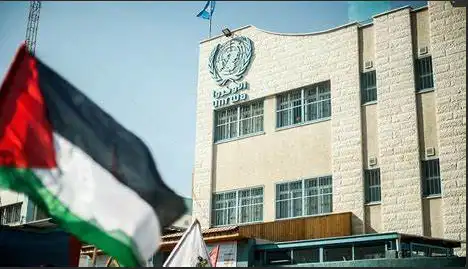
Seizing UNRWA headquarters in Jerusalem...an attempted murder of the case's seal bearer

Adnan Al-Husseini: Seizing UNRWA headquarters in Sheikh Jarrah is political bankruptcy and a challenge to international community institutions

Adnan Abu Hasna: The intended headquarters is a main center for UNRWA operations in the West Bank, and we have not received any official decision yet.

Sami Mshasha: The lands on which UNRWA headquarters and facilities are built in Jerusalem have been rented from the Jordanian government since 1950.

Jawdat Manna: The Israeli decision to seize UNRWA headquarters is a blatant challenge to the United Nations and a threat to its future

Rassem Obeidat: Israel targets UNRWA because it is a witness to the crime of displacing our people and wants to eliminate it and liquidate the right of return

Hani Al-Issawi: UNRWA headquarters is a thorn in the side of the occupation because it separates the settlements that were established after the 1967 war


The decision of the occupying state to seize the headquarters of the United Nations Relief and Works Agency for Palestine Refugees in the Sheikh Jarrah neighborhood in occupied Jerusalem was neither the first nor the last to liquidate the existence of this international institution, which is considered a witness to one of the greatest humanitarian issues that began in the middle of the twentieth century, which is the issue of the Palestinian refugees who were displaced from their homes and lands in the Nakba of 1948.


Such a decision and the decisions that would follow it to liquidate UNRWA’s existence and liquidate a major political and humanitarian issue should have been felt from the first moment of the Israeli war of extermination on the Gaza Strip, when it rushed to accuse many UNRWA employees of participating in the attack of October 7, 2023, without any evidence, and major countries, led by the United States, followed suit in these accusations without verifying them, but subsequent investigations proved the falsehood of these accusations.


Then the Israeli practices continued, bombing UNRWA headquarters, restricting its movement and preventing it from performing its humanitarian role. Even the schools that it follows and that house displaced civilians were not spared from the bombing. Then the attack that its senior employees were subjected to in the Gaza Strip, and the arrests of its workers and the killing of many of them, until the UN Secretary-General Antonio Guterres was deemed an undesirable person.


Attempts to liquidate the Palestinian refugee issue


Adnan al-Husseini, head of the Jerusalem Affairs Department in the Palestine Liberation Organization, condemned the Israeli occupation’s decision to seize the headquarters of the United Nations Relief and Works Agency for Palestine Refugees (UNRWA) in the Sheikh Jarrah neighborhood of occupied Jerusalem, noting that this decision shows the bankruptcy of the occupation and its loss of the ability to continue.


Al-Husseini confirmed to “I” that this targeting constitutes a challenge to the institutions of the international community and the International Court of Justice, and that it is not evidence of Israel’s strength but rather of its political weakness.


Al-Husseini added: The Israeli targeting of UNRWA comes in the context of attempts to liquidate the issue of Palestinian refugees and the right of return, describing it as a flagrant violation of international law and human rights.


He stressed that Israel seeks to silence anyone who defends the rights of Palestinians or confronts its illegal practices.


He pointed out that the existence of UNRWA is linked to an international resolution issued by the United Nations, and therefore this targeting represents a challenge to international legitimacy, warning that the policies of Israeli Prime Minister Benjamin Netanyahu will drag the region into new wars, which will have serious repercussions for everyone.


Al-Husseini called on the international community to take serious action to put an end to these repeated violations by Israel against UNRWA and the Palestinians in Jerusalem.


A major breach of the agreement signed between UNRWA and Israel


Adnan Abu Hasna, spokesman for the United Nations Relief and Works Agency for Palestine Refugees (UNRWA), expressed the agency's concern over media reports that the Israeli occupation intends to seize UNRWA's operations headquarters in the Sheikh Jarrah neighborhood of occupied Jerusalem, stressing that the agency has not received any official notification of this step yet.


Abu Hasna explained to "I" that the targeted headquarters is a main center for UNRWA operations in the West Bank, and includes sections of the agency's headquarters in the Middle East region and the five areas of operations.


He stressed that this targeting constitutes a major violation of the agreement signed between UNRWA and Israel following the occupation of the West Bank, Gaza Strip and East Jerusalem in 1967, which guarantees immunity for the agency and its employees.


Abu Hasna pointed out that this major escalation would hinder the implementation of humanitarian operations carried out by UNRWA, and increase the difficulty of providing vital services to Palestinian refugees in the region.


A stab to the Palestinian refugees politically and in terms of services


In turn, Sami Mshasha, an expert in international institutions, considered the decision of the Israeli occupation authorities to confiscate the land on which the main headquarters of UNRWA is located in the Sheikh Jarrah neighborhood in occupied Jerusalem, and to transform the site into a settlement outpost comprising 1,440 housing units, a fatal nail in UNRWA’s coffin.


He described the recent Israeli decision to expel UNRWA from its vital headquarters in the Sheikh Jarrah neighborhood in occupied Jerusalem and build a settlement outpost as a direct stab at the Palestinian refugees politically and in terms of services.


Mshasha pointed out that this step represents the first shot towards expelling the agency from Jerusalem, from the Shuafat camp and the rest of UNRWA headquarters in the city, which includes its important medical headquarters within the walls of the Old City.


Mshasha explained that the Israel Lands Authority claims that the 36 dunams on which UNRWA headquarters are located in Jerusalem, which include 7 dunams of the official headquarters of the Commissioner-General and the operational headquarters of the West Bank region of UNRWA, claim that these lands were confiscated by the occupation in 2006.


He pointed out that the lands on which UNRWA headquarters and facilities are located in Jerusalem were given to it as a tenant by the Jordanian government when UNRWA was established in 1950, noting that the claim of the occupying state that these lands are owned by the "Israel Lands" Department is a false claim since they are part of occupied lands.


Imposing financial fines on UNRWA


He added: "To add salt to the wound, the Israel Lands Authority is demanding that UNRWA pay fines of tens of millions of shekels for violating the terms of the lease and building facilities in its headquarters without permits."


Mshasha warned that this step precedes the more dangerous step when the Knesset recess ends on the 28th of this month, as it is expected that members of the government coalition and the opposition will vote in the second and third readings on two decisions to declare UNRWA a terrorist organization and to cancel the headquarters agreement (the Comay-McClmore Agreement of 1967) between UNRWA and Israel, which gave UNRWA diplomatic immunities and privileges and the right to exist and provide services.


He also expected that the occupation authorities would follow this step by imposing new restrictions on UNRWA's work in the West Bank and other areas, which would constitute an existential threat to the right of Palestinian refugees to return.


A step that will be followed by rapid steps and procedures to restrict UNRWA's work


He said: These steps will be followed by rapid steps and procedures to restrict UNRWA's work in Areas B and C of the West Bank, where most of the refugees, camps and UNRWA facilities are located. This was preceded by ending UNRWA's presence in northern Gaza, restricting its work and preventing aid from entering southern and central Gaza except in small drops. This is in addition to the tireless efforts to demonize UNRWA, limit financial aid to it, and gradually work to transform it into an institution that seeks to settle refugees in Syria, Lebanon, Jordan or any other country.


Mshasha added: This is the beginning of the end of the right of return, and those who believe that international law, international agreements, the United Nations, its General Assembly and its Security Council will curb and deter Israel are mistaken and living in a dream world.

"It is the law of the jungle," said Mshasha. "A comprehensive genocide broadcast live did not move the world to deter them, so neither our prayers against them, nor the slapping of hands, nor the hollow condemnation and false concern, nor the Secretary-General's annoyance, nor the anger of the Arab League and the statements of condemnation are of any use, and perhaps they will be humiliating to the refugees, and therefore their silence and silence will be much better."


The International Campaign to Defend Jerusalem Condemns the Occupation’s Decision


For his part, the General Coordinator of the International Campaign to Defend Jerusalem, Jawdat Manna, denounced the decision of the occupation authorities to seize the headquarters of the United Nations Relief and Works Agency for Palestine Refugees (UNRWA) in the Sheikh Jarrah neighborhood in occupied Jerusalem, with its entire area estimated at 36 dunams, to build 1,440 settlement units on it, noting that the campaign issued a statement in which it considered the Israeli decision a blatant challenge to the United Nations, and poses a threat to its future.


Manaa told “Ya”: “The campaign is following up on the repercussions of this decision against a high-level diplomatic body, and what preceded it, and warns against infringing on the rights of Palestinian citizens in the Sheikh Jarrah neighborhood, and calls on its residents to be vigilant and unite to confront the ongoing and supposed dangers of their deportation.”


Manaa considered the confiscation of UNRWA headquarters in Jerusalem as a cessation of its services to millions of Palestinian refugees living in 28 camps in the West Bank and Gaza Strip, and the cancellation of the right of return for millions of Palestinian refugees living in Arab countries and in the diaspora since the Nakba in 1948.


He also urged local leaders in the refugee camps to play a leading role in confronting the Israeli decision that targets their human and national rights, stressing the importance of the role of the Government of the Hashemite Kingdom of Jordan in deterring Israel by taking legal measures and other means to prevent the confiscation of UNRWA offices and the land on which they are located, as they are officially registered in the Kingdom’s treasury, and are land belonging to the Palestinian Al-Jaouni family before they were confiscated by the British Mandate Government.

Manaa called on the Arab League to hold an emergency meeting to discuss the response to this Israeli decision in coordination with Jordan, the party that owns the land, calling on the United Nations to also take rapid legal measures to prevent the implementation of this plan.


He said: “The campaign urged in its statement the UN Security Council, the executive arm of the United Nations, to impose deterrent sanctions against rogue states, to prevent the Israeli occupation from implementing its plan for reasons, the most important of which are: First: The headquarters is located on the northwestern shoulder of the Old City of occupied Jerusalem. Second: The occupying state aims, by seizing the UNRWA headquarters, to besiege the Palestinian neighborhood of Sheikh Jarrah next to the headquarters, which means returning the issue of the Palestinian residents of the neighborhood to square one in defending their homes and properties.


The third reason, according to Manaa, is that occupying the headquarters and controlling it for settlement purposes is the end of the battle between the United Nations and Israel, which means ending its services in a blatant challenge to the highest international body whose mission is to punish countries that rebel against its decisions and laws.


He continued: The fourth reason is that this decision comes in the context of liquidating the Palestinian cause through the war of genocide in the Gaza Strip and the West Bank, including Jerusalem, and the ongoing attacks on UNRWA's service, health, and educational institutions, and the killing of employees, and the arrest of a number of them, including Israeli incitement against UNRWA.


War on the right of return


For his part, Rasem Obeidat, a member of the National and Civil Action Committee in Jerusalem, confirmed that Israel is seizing the main headquarters of the United Nations Relief and Refugee Agency (UNRWA) in Jerusalem, and will instead establish a settlement outpost that includes 1,440 settlement units.


He added: The Knesset's Foreign Affairs and Security Committee had taken a decision to "demonize" UNRWA, and consider it an illegal organization, and stressed the severing of relations between Israel and UNRWA, and considered its employees to be working with a "terrorist" organization that has the right to prosecute them, and also recommended the withdrawal of all political and economic privileges granted to UNRWA, thus canceling the agreement signed with the agency after the June 1967 war, which allowed it to work in Jerusalem.


He stressed that Israel did not just control the agency's headquarters, but also wanted to make the agency pay tens of millions of shekels, under the pretext that the land belongs to the so-called "Israel Lands Authority" and was used by the agency without its desire or consent.


"We realize that Israel is targeting the agency as a witness to its crime, expulsion and displacement of our Palestinian people. It wants to eliminate the agency and liquidate the right of return, and also so that no institutions of that agency remain in Jerusalem, in camps like Shuafat or educational, service and health institutions and community centers, because it considers Jerusalem its capital. How can it be its capital when there are refugee camps, activities and institutions of the Relief Agency?" Obeidat said.


Obaidat added: "It is a war on the right of return, and by liquidating the agency they want to transform the Palestinian issue into a humanitarian relief issue devoid of its political and national dimensions, and without placing burdens and repercussions on Israel as an occupying state that practiced expulsion, displacement and ethnic cleansing against the Palestinian people."


A systematic Israeli plan to liquidate the refugee issue


In turn, the Jerusalemite political analyst Hani Al-Issawi told “Y”: The targeting of the United Nations Relief and Works Agency for Palestine Refugees (UNRWA) by Israel comes within a systematic Israeli plan to liquidate the Palestinian refugee issue once and for all.


He explained that the Israeli demands to end UNRWA's work are part of its efforts to end the refugee issue, push the world to abandon it as if it no longer exists, and not to leave institutions that remind the international community of this problem.


Al-Issawi pointed out that the seizure of UNRWA headquarters in the Sheikh Jarrah neighborhood of Jerusalem is part of these ongoing attempts, and is also linked to the ongoing incitement campaign against the agency, especially in the Gaza Strip, where UNRWA is accused of an alleged role in supporting the Palestinian resistance, despite the fact that the facts have proven the falsehood of these Israeli allegations.


Al-Issawi pointed out that Israel is targeting the main headquarters in Jerusalem because it is a thorn in the side of the Israeli occupation, as it separates the Israeli settlements that were established after the 1967 war from each other.


He pointed out that the occupation seeks to seize this vital site, as part of its plan to erase the refugee issue from its roots.


Al-Issawi stressed that the continuation of these attacks confirms that Israel will not back down from its attempts to end the existence of UNRWA, which represents a symbol of the continuation of the Palestinian refugee issue.


OPINIONS

Sun 13 Oct 2024 8:22 am - Jerusalem Time

Netanyahu's 'new Middle East' has arrived - but it's not what he envisioned

Middle East Eye

Middle East Eye

Opinion Writer

Sansom Milton

The war on Gaza has reshaped the region by fostering a stronger sense of unity across the Arab world in opposition to Israeli crimes

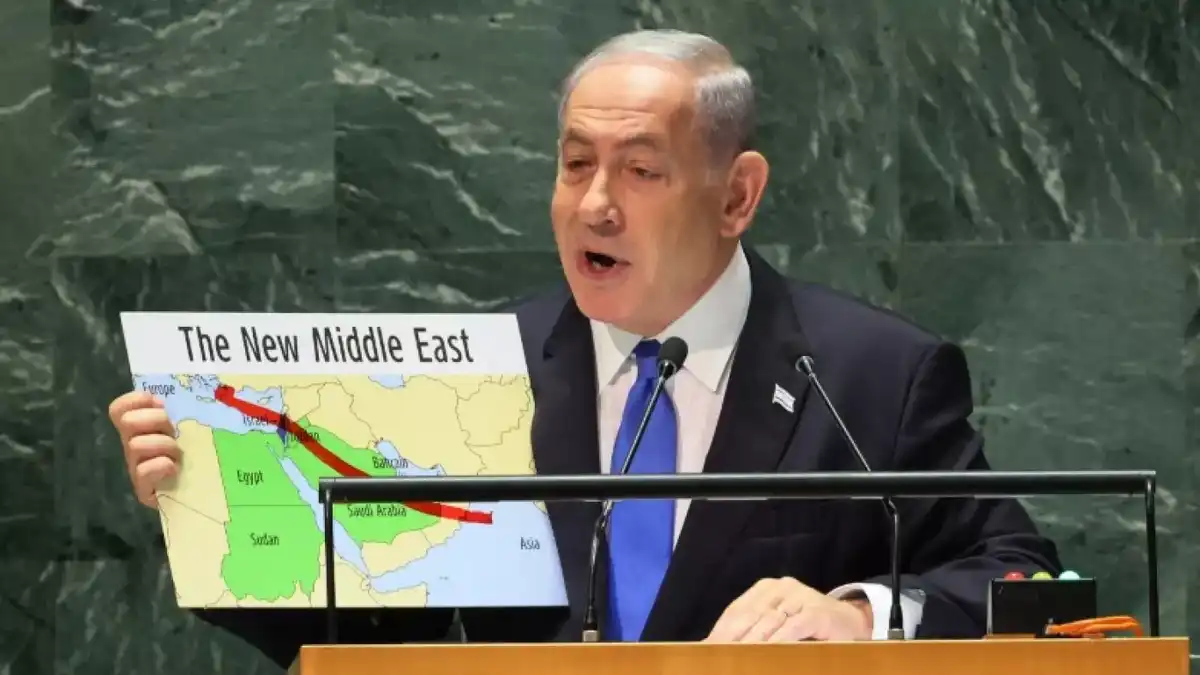
Ayear ago, Israeli Prime Minister Benjamin Netanyahu stood before the UN General Assembly with a map depicting the “New Middle East”. 

It presented a vision of regional transformation anchored on the Abraham Accords, through which neighbouring Arab states have been working to normalise relations with Israel. 

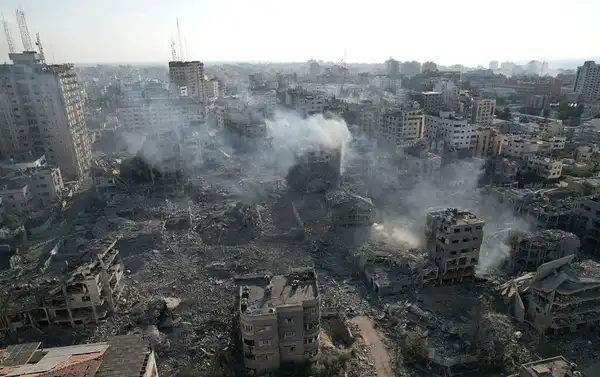
But instead of a new regional order achieved through diplomacy and trade, the past year has instead witnessed a devastating Israeli campaign of war and genocide.  

Israel’s year-long offensive on multiple fronts has shattered the region’s tentative progress towards peace. The Middle East’s relative stability at the start of this decade has been decimated by Israel’s genocidal onslaught in Gaza, aerial bombardments in Syria and Yemen, and now the ground invasion of Lebanon. 

In 2003, neocon ideologues envisioned Iraq as a democratic beacon that would spread change throughout a new Middle East. 

Bottom of Form

Two decades later, that transformation is happening at the hands of an ethnocratic, extremist settler state, through genocide, invasion and mass expulsion.  

Israel has expanded the boundaries of what is both possible and tolerated in regional armed conflicts, through routine violations of international humanitarian law and by testing how far Arab states can be pushed without major escalation. 

Western double standards

The genocide in Gaza, which has rendered the territory largely uninhabitable, has been met with calls from regional governments for ceasefire and de-escalation. Yet, with the exception of non-state armed groups, Arab countries have been mostly passive actors. 

Former “red lines” - such as the mass displacement of Palestinians, or targeted killings in hospitals and schools - no longer muster a significant response.

But the year-long war in Gaza has indeed heralded the development of a “new Middle East” in terms of the region’s relations with western countries, as the double standards of American and European diplomats have been on full display.

As confidence in western leadership wanes, the region has increasingly looked to China to broker political agreements, and as a partner for technological advancement and rebuilding efforts.

In Netanyahu’s revised map of the Middle East, occupied Palestine was conspicuous by its absence. The past year has demonstrated the folly of this warped vision. 

For this renewed popular consciousness to spur lasting change, Arab states must reclaim their agency and momentum in reshaping the future of the region

Central to the Israeli vision of a new region was the potential for normalisation with Saudi Arabia. But Palestine remains an obstacle to this goal, with Saudi Crown Prince Mohammed bin Salman recently vowing that his country will never normalise relations with Israel until a Palestinian state is established, with East Jerusalem as its capital. 

Crucially, the crown prince was reportedly influenced on this issue by the popular demands of young Saudis, which reflects a wider regional trend of youth becoming engaged on Palestine for the first time because of their exposure to the year-long genocide.  

In this sense, the war on Gaza has indeed reshaped the region, fostering a stronger sense of unity across the “Arab street” in opposition to Israeli occupation and ethnic cleansing. But for this renewed popular consciousness to spur lasting change, Arab states must reclaim their agency and momentum in reshaping the future of the region, refusing to allow a settler-colonial outpost and its imperial backers to dictate the course of events. 

Only by leading decisively can they ensure a just and sovereign future for Palestine and the wider Middle East.

OPINIONS

Sun 13 Oct 2024 7:47 am - Jerusalem Time

War on Gaza: Israel has lost its humanity as it celebrates its power to kill

Middle East Eye

Middle East Eye

Opinion Writer

Gideon Levy


A hundred innocents, a thousand, even ten thousand dead Palestinian children - none of this changes the new Israeli mindset

The 7 October Hamas attack overwhelmed Israel and utterly changed its face. The country experienced a tactical defeat after a colossal failure by Israeli security forces, but it quickly recovered to launch a campaign of mass killings, population expulsions, territorial occupations, assassinations, and other operations, such as the pagers epic in Lebanon. 

Let’s not argue here over the value or cost of these violent actions, many of which were immoral and illegal. What cuts much deeper is the shift in morality and values that Israel has undergone since 7 October. 

The country’s ability to recover from this transformation is highly doubtful. No military victory can return Israel to what it was before 7 October.

Over the past year, Israel has united around several assumptions: firstly, that the massacre of 7 October had no context whatever, occurring solely because of what they percieved to be the innate bloodthirstiness and cruelty of Palestinians in Gaza. 

Secondly, all Palestinians bear the burden of guilt for Hamas’ massacre of Israeli civilians. And a third assumption relies on the first two: after this terrible massacre, Israel is allowed to do anything. No one anywhere has the right to try to stop it. 

Bottom of Form

In the name of the right to self-defence, which from the perspective of Israeli values is a right reserved exclusively for Israelis but never for Palestinians, Israel may embark on unbridled campaigns of revenge and punishment for what Hamas did to it. 

In the name of its right to self-defence, Israel is allowed to expel hundreds of thousands of people from their homes in Gaza, perhaps never to return; wreak destruction indiscriminately across the territory; and kill more than 40,000 people, including many women and children. 

In the name of its right to self-defence, Israel is also permitted to eliminate the leaders of Hamas without any regard for “collateral damage” - which has not been “collateral” for a long time now - and to kill hundreds of people during assassination missions that Israel views as legitimate operations. 

Barbaric discourse

Given the unprecedented death toll on 7 October, Israel felt it could free itself from the shackles of political correctness, while legitimising barbarism in both Israeli discourse and the army’s behaviour. 

As barbarism thus became justified, humanity was removed from the public conversation, and at times even ruled unlawful. It’s not that the discourse within Israel was previously humane and attentive to the plight of the Palestinian people; but after 7 October, all remaining restraints were removed.

It began by criminalising any display of compassion, solidarity, sympathy or even pain in response to the terrible punishment of Gaza. Such views are considered treasonous. Israelis expressing compassion or humanity on social media have been monitored and summoned for police investigation. Some have been fired from their jobs. 

This form of McCarthyism has mainly harmed Palestinian citizens of Israel, but sympathetic Jews, too, have evoked a harsh response from authorities. In essence, compassion has been outlawed. It cannot be expressed towards Palestinians - not even dead, wounded, hungry, disabled or orphaned babies. All are rightfully being subjected to the punishments Israel inflicts.

The Israeli media, which has been more disgraceful over the past year than ever before, voluntarily carries the flag of incitement

Losing its collective humanity vis-a-vis the Palestinian people may prove irremediable for Israel. That the country will reclaim it after this war is exceedingly doubtful. 

The loss of humanity in public discourse is a contagious and sometimes fatal disease. Recovery is very difficult. Israel has lost all interest in what it is doing to the Palestinian people, arguing that they “deserve it” - everyone, including women, children, the elderly, the sick, the hungry and the dead. 

The Israeli media, which has been more disgraceful over the past year than ever before, voluntarily carries the flag of incitement, inflaming passions and the loss of humanity, just to gratify its consumers.

The domestic media has shown Israelis almost nothing of the suffering of Palestinians in Gaza, while whitewashing manifestations of hatred, racism, ultra-nationalism, and sometimes barbarism, directed at the enclave and its population. 

Celebrating Nasrallah's killing 

When Israel killed 100 people by bombing a school sheltering thousands of displaced people in Gaza City, claiming it was a Hamas facility, most of the Israeli media did not even bother to report on it.

The killing of 100 displaced people, including women and children, by the Israeli army is neither important nor interesting as an editorial option in Israel. Nobody thought to protest, or to criticise, or even to ask whether this was a legitimate action - since, after all, the Israeli army described it as a Hamas site, and thus, everything is permissible.

The nadir in Israeli public discourse, however, followed the assassination of Hezbollah leader Hassan Nasrallah in Beirut. The Israeli media celebrated - there is no other word - his assassination, while ignoring the price many Lebanese people paid with their lives. Since when is the death of any person, even a bitter and cruel enemy, a reason to party?

Nasrallah's death evoked an outpouring of joy. When such joy is not just expressed, but also encouraged and driven by the media as a whole, the result is a barbaric discourse.

The morning after Nasrallah’s assassination, a reporter for Channel 13, one of the country’s leading television channels, walked around the streets of a city in Israel’s north and handed out chocolates to passers-by in a live broadcast. Never before had there been a live broadcast of handing out candy to celebrate a targeted killing. 

This was a new low. Another journalist, a much more prominent one who represents the self-styled “moderate centre”, wrote on X (formerly Twitter): “Nasrallah was squashed in his den and died like a lizard … a fitting end” - as if the reporter himself had smashed the underground bunker with his own hands. Other newscasters toasted the assassination with arak live on-air.  

This barbaric patriotism was enthusiastically run up the flagpole, and Israel rejoiced. 

The Nazis called Jewish people rats, and Nasrallah is "a lizard" in the eyes of Israel.

Even the dimensions of death sown by 80 bombs in Beirut does not change this calculus. A hundred innocents, a thousand, even 16,000 dead children - none of this affects the new Israeli mindset.

OPINIONS

Sun 13 Oct 2024 7:47 am - Jerusalem Time

How Netanyahu stole defeat from the jaws of victory

Middle East Eye

Middle East Eye

Opinion Writer

David Hearst

Netanyahu's brutal response to 7 October has undone decades of increasingly successful efforts by Israel and the US to convince Arab governments to abandon the Palestinian national cause

No commentator on 7 October last year - myself included - would have predicted that the war would still be being fought with the utmost ferocity a year on.

No one would have predicted a year ago that Israel would be fighting for longer than it did when it established its state in 1948. All wars Israel has fought since have been brief shows of absolute strength.

Not for want of trying. 

Israel has bombed Gaza into the stone age. More than 70 percent of its homes have been damaged or destroyed. Israel is in the process of doing the same to Tyre, the southern suburbs of Beirut and many other parts of southern Lebanon.

No one is raising the white flag. Nor are there significant signs of revolt from a population - now living in tents - that has lost over 41,000 people directly from bombing, and three or four times more in indirect deaths.


The Lancet said the real death toll could exceed 186,000 if other factors, such as disease and lack of healthcare, are taken into consideration.

These people are being starved. They are disease-ridden. They are about to face a second winter in tents. They are being bombed daily. And still, they will not submit. This scale of suffering has never been visited on any previous generation.

Every Palestinian alive today knows the stakes. And yet they will not flee. Most would rather die than surrender their land and homes to the occupation.

Two strategies

From the start of this war, there have been two very clear strategies from Israeli Prime Minister Benjamin Netanyahu and Hamas leader Yahya Sinwar.

Netanyahu had four declared objectives in the aftermath of the Hamas attack on southern Israel: to return the hostages; to smash all resistance groups in Palestine and Lebanon; to end Iran’s nuclear programme and weaken its axis of resistance; and to re-order the region, with Israel at the top.

As it quickly became obvious to the families of the hostages, as well as his own negotiating team, Hamas and William Burns, the director of the CIA who oversaw the talks, Netanyahu had no intention of getting the hostages back home. 

He tried to make Israel believe that pressurising Hamas would ensure a quicker release of hostages. This was patent nonsense, as the vast majority of hostages - there are only 101 still in Gaza - die from the bombs and missiles dropped by Israel. Three were shot dead trying to surrender.

Under Netanyahu’s right-wing government, the lives of the hostages were secondary to the aim of smashing Hamas. Had the hostages returned, Netanyahu could now be facing a long term in prison.

But he has demonstrably failed to smash Hamas, hence the speed with which he has started a new war with Lebanon and Hezbollah. Hamas is still in control of Gaza and, until now, and despite two attempts at replacing it as the government of the Strip, no other credible force in Gaza has emerged.

Hamas re-emerges wherever Israeli troops are not. Plain clothes police officers emerge to settle disputes  within a matter of hours.

At first, Israel tried to wipe out Hamas’s leadership. It has killed the first and second ranks of officials running the government, most of them in a massacre outside al-Shifa hospital.

But an insight into what is actually going on in Gaza was offered by Israel's latest announcement that it had killed three senior Hamas officials - Rawhi Mushtaha, the head of government and de facto prime minister; Sameh al-Siraj, who held the security portfolio on Hamas’s political bureau; and Sami Oudeh, commander of Hamas’s General Security Mechanism.

The air strike happened three months ago, and no one had noticed their absence. This is because Hamas continued to function regardless of which leaders were alive or dead.

In the past, assassinations had led to a period of uncertainty for Hamas. This happened after the killing of Abdel Aziz al-Rantisi in 2004. But it does not work today and nor does it work with this generation of fighters.

Decapitation is strictly tactical, and short-term. It provides the killers with temporary relief. Hezbollah’s leadership has indeed been knocked sideways by a series of intelligence coups, starting with the explosion of thousands of booby-trapped pagers and walkie-talkies.  

But it has not been incapacitated as a fighting force, as the reconnaissance unit of the Golani Brigade is finding out.

In the long term, leaders are replaced, stocks are replenished, and memories are avenged.

Iran's role

For this, Israel is principally to blame, for it has deliberately trashed past norms of fighting. One suspected target is now deemed sufficient  cause to kill 90 innocents around him, whether he is there or not. An air strike on a cafe in the West Bank wiped out an entire family. Eighteen Palestinians died, including two children torn to pieces. If firing missiles into cafes is intended as a message, it is having the opposite effect.

Martyrs make the most effective of recruiting sergeants.

The same is true of all resistance groups, big or small, long-established or newly born. Every time Israeli troops leave Jenin, Tulkarm or Nablus, they think they have killed its resistance off for good. Every time, they return to face more fighters. 

Israel’s terror only begets more terror. The destruction of West Beirut in 1982 inspired Osama bin Laden’s attack on the Twin Towers in 2001.

Netanyahu’s third goal is to finish Iran off as a nuclear and regional power, an aim that predates 7 October by several decades. 

At the time of writing, we are awaiting Israel’s response to the firing of 180 Iranian ballistic missiles, some of which got through to their targets.

US President Joe Biden had to swiftly row back comments about letting Israel attack Iran’s oil installations after it was pointed out to him that Iran could close the Strait of Hormuz at a stroke.

The historical truth is that Iran was never central to the Palestinian cause. It only entered the fray after its revolution in 1978

No one is more nervous about an Israeli attack on Iran than US Gulf allies. Saudi Arabia and the United Arab Emirates have already had a taste of what would happen to Aramco and oil exports should Iran’s oil installations come under attack. 

This is why the Gulf states produced a statement declaring neutrality, adding that they would not allow the US to use any of their airbases for an attack on Iran.

But the historical truth is that Iran was never central to the Palestinian cause. It only entered the fray after its revolution in 1978. For over 100 years the Palestinians have fought alone. Sometimes with the help of Arab states, first Egypt, then Syria, then Iraq, but mostly their fight was alone.

Iran’s nuclear programme is irrelevant to the Palestinian struggle. The biggest factor is the determination of the Palestinian people to live in their own land.

The real threat to Israel is not from Iran. It is from a young Palestinian in Jenin, or a former presidential security guard in Hebron, or a Palestinian with Israeli citizenship in Nakab. 

All these have formed their own conclusions from the hopelessness of the occupation under which they lived. None needed any prompting from Tehran.

Vicious dictatorships

Netanyahu’s fourth goal is to re-order the region with Israel at its head. Israeli officials just love to brief US journalists about the private words of support Israel is getting for its agenda of regional dominance from “moderate Sunni" Arab leaders. By moderate, they mean pro-western. All of them are vicious dictatorships.

But, here again, Israel and the US make the same mistake repeatedly by conflating the private words of support from the rich and pliant with the will of the people they claim to represent.

The shining example of rich and pliant,  the arch pragmatist Crown Prince Mohammed bin Salman, was largely misquoted to support the view that in their hearts Arab rulers cared little for Palestine.

The headline from this talk with Antony Blinken, US secretary of state, was this quote: "Do I care personally for the Palestinian issue? I don’t.”

But the full quote went thus: “Seventy percent of my population is younger than me,” the crown prince explained to Blinken. "For most of them, they never really knew much about the Palestinian issue. And so they’re being introduced to it for the first time through this conflict. It’s a huge problem. Do I care personally about the Palestinian issue? I don’t, but my people do, so I need to make sure this is meaningful.” 

The more autocratic the regime, and the more unsteady its ruler feels at times of regional crisis, and the more he has to pay attention to popular anger over Palestine. It's his Achilles Heel. Autocracy does not suppress or divert support for Palestine. It amplifies it.  

Consequently, Faisal bin Farhan al-Saud, the foreign minister of Saudi Arabia, announced that the kingdom would only normalise relations with Israel after the establishment of a Palestinian state.

This can be walked back, but for now, at least, the effect of the Abraham Accords in establishing a pro-Israel regional alliance is fading.

Sinwar’s goals

Now let’s look at Sinwar’s strategic goals on 7 October and see which, if any, have survived the passage of time.

He had two strategic goals. What he thinks comes from two speeches he made in the year before the Hamas attack. In one, in December 2022, Sinwar said the occupation must be made more costly for Israel.

“Escalating the resistance in all its forms and making the occupation [authority] pay the bill for occupation and settlement is the only means for the deliverance of our people and accomplishing their objectives of liberation and return,” he said.

In another speech, Sinwar said Palestinians had to present Israel with a clear choice.

“Either we force it to implement international law, to respect international resolutions, (that is) withdraw from the West Bank and Jerusalem, dismantle the settlements, release the captives and (allow) the return of the refugees," he said.

"Either we, together with the world, force it to do these things and accomplish the establishment of a Palestinian state on the occupied territories, including Jerusalem, or we render this occupation in a state of contradiction with the entire international will, thus isolating it robustly and immensely, and put an end to the status of its integration within the region and in the entire world.”

On the first count, Hamas has certainly made the occupation more expensive for Israel. 

Since the war started, 1,664 Israelis have been killed, of which 706 were soldiers, 17,809 were wounded and some 143,000 people have been evacuated from their homes, the Jerusalem Post reported.

Money has begun to flee the country. Despite the return of many of the 300,000 reservists to their jobs, the Economist reports: “Between May and July, outflows from the country’s banks to foreign institutions doubled compared with the same period last year, to $2bn. Israel’s economic policymakers are more worried than they have been since the start of the conflict.”

Biggest effect of 7 October

But it is on a psychological level that 7 October delivered its sharpest blow. 

The sudden and complete collapse of the Israeli military a year ago delivered a huge shock from which Israel has yet to recover. It fundamentally challenged the state’s principal role in defending its citizens.

It made all Israelis feel less safe and it alone can explain the brutality of the military’s response, despite the deep misgivings of security chiefs. 

If a video of a Hamas fighter phoning home to his mother in Gaza boasting about how many Jews he has killed is etched on David Ignatius’ memory, what about the thousands of TikTok posts Israeli soldiers have posted bragging of their war crimes ? What effect do they have on the Washington Post columnist? He, likes others, have blacked these out.

Because to accept the narrative that 7 October was Israel’s Holocaust is to put on blinkers.

It is to exclude and justify everything that Israel has visited on all Palestinians regardless of family, clan or history, a barbarism and inhumanity far greater than anyone could have thought possible of an advanced, urban, educated state on 6 October.

Here, finally, we arrive at the biggest effect of the Hamas attack. 

On 6 October, the Palestinian national cause was dead, if not buried. After more than 30 years of Oslo accords, Gaza was totally isolated. Its siege was permanent, and no one cared.

Netanyahu claimed victory, in September 2023 waving a map at the UN in which the West Bank did not exist.

There was only one item on the regional agenda and that was Saudi Arabia’s impending normalisation with Israel. The region was the quietest it had been for decades, or so Jake Sullivan, the US national security adviser, confidently wrote in his original version of his essay for Foreign Affairs.

“Although the Middle East remains beset with perennial challenges, the region is quieter than it has been for decades,” he wrote in that original version. Needless to say, it had to be hastily amended.

Cusp of victory

Under the most extreme and right-wing leadership in its history, land for peace had been jettisoned and so too had separation. By seizing land and holding it, Israel was on the cusp of victory. 

After 7 October, support for armed resistance is at an all-time high in the West Bank. The Hamas attack put armed resistance back on the agenda as a way to enforce its liberation agenda.

If the Oslo Accords had succeeded in producing a Palestinian state within five years of its signing, a movement like Hamas would not have existed. Or, if it had, it would have performed like an IRA splinter group, unable to change the course of events. 

Today, Hamas has changed the course of events, because the peaceful path to a viable Palestinian state was blocked. All talk of a peace process was a Potemkin-size mirage.

Oslo not only failed to deliver a Palestinian state. It created the conditions for the Israeli state to expand and thrive as never before in the West Bank and Jerusalem.

This has been the biggest single factor in persuading a new generation of Palestinian youth to sell their taxis and shops for guns. 

By the time the Qassam Brigades attacked southern Israel, this youth did not take a lot of convincing. A year on, the armed wing of Hamas has achieved hero status in the West Bank, Jordan, Iraq and, I suspect, large parts of Egypt and north Africa. 

Hamas right now would blow Fatah away if an open election was ever allowed to take place, as it did in 2006.

Regionally, the axis of resistance, which for much of the period since the Arab Spring, was a rhetorical device, has become a functioning military alliance. 

Hezbollah, which for so long, tried to distance itself from the Hamas operation, is now under attack and in the war as much as Hamas ever was. Millions of Lebanese have fled their homes and Beirut is experiencing much of the same terror from Israeli drones and bombers as Gaza City did.

Palestine has returned to its rightful place, which is to occupy the key role in determining the stability of the region.

Decades of US and Israeli efforts reversed

Israel’s brutal response to 7 October has reversed decades of Israeli and US efforts to convince Arabs that Palestine could no longer have a veto on Israeli-Arab relations. 

Today that veto is stronger than ever before.


The change has been even more pronounced globally. This has been helped by the overwhelming urge for the western alliance to find an enemy. Until recently, it was the Soviets.

Then radical Islamism briefly took the place of a global threat. 

Palestine has become the world’s number one human rights cause, and it tops the agenda of efforts to secure international justice

Now it is the alliance of the dictators of Russia, China and Iran, all seeking spheres of interest, which undermine the world order, according to US Secretary of State Blinken's latest essay in Foreign Affairs.

As if the US was not seeking a global sphere of interest? Neither Sullivan’s nor Blinken’s assertions in Foreign Affairs age well.

But as a result of its war, Israel has lost the Global South and a large part of the West as well.

Palestine has become the world’s number one human rights cause, and it tops the agenda of efforts to secure international justice, with ongoing cases in the International Criminal Court and the International Court of Justice.

It has sparked the biggest protest movement of recent history in the UK.

A matter of time

Of the two strategies, Sinwar’s seems to be working. Whether he lives or dies, that agenda already has an unstoppable momentum of its own.

Emboldened by Biden’s weakness, the possible arrival of Donald Trump, who now says Israel is too small, Netanyahu may well be fooled into thinking he can occupy northern Gaza and southern Lebanon.

The annexation of Area C, which comprises most of the West Bank, is almost certainly next.

But what Netanyahu will not be able to do in Gaza, Lebanon or the West Bank is to finish what he has started. 

What forced Ariel Sharon to withdraw from Gaza, or Ehud Barak from Lebanon, will apply to the Israeli forces Netanyahu attempts to install in Gaza and Lebanon all the more vigorously. It's only a matter of time.

This war has stripped Israel of its liberal Zionist image, the image of the new kid on the block trying to defend itself in a “tough neighbourhood”. 

This has been replaced by the image of a regional ogre, a genocidal state, with no moral compass, using terror to survive. Such a state cannot live in peace with its neighbours. It crushes and dominates to survive. 

Netanyahu’s war is short-term and tactical. Sinwar’s war is long-term. It is to make Israel realise it can never keep the lands it has occupied if it wants peace.

Netanyahu’s war is a year old and can only continue in the same way it started by meting out the same devastation to south Lebanon that Gaza received. It has no reverse gear. Sinwar’s war has only just started.

Who will win? That will depend on the degree of resilience of the oppressed. I would be surprised if there were not those who say: “We have had enough, we want to stop.”

But one year on, the spirit of resistance is high and still growing. If I am right, this fight is only just beginning. 

The power equation in the Middle East has indeed changed, but not in Israel's or America’s favour.

OPINIONS

Sun 13 Oct 2024 7:39 am - Jerusalem Time

Israel does not have a right to defend itself, as our PM keeps saying

Pearls and Irritations

Pearls and Irritations

Opinion Writer

By Paul Heywood-Smith


Israel has no right of self-defence against resistance to the illegal occupation. Israel cannot both occupy Palestinian lands, and then launch an attack on those lands by citing ‘self-defence’ when occupied populations resist. Neither can Israel treat those resisting in occupied territories as enemy combatants.

Consider this scenario: the Prime Minister states in response to a question from a journalist: “Israel has a right to defend itself”. That assertion followed a question on Israel/Palestine.

One thing is clear, particularly if the journalist asking the question was from the ABC. The question was certainly not as follows: “Prime Minister, the ICJ has ruled that Israel is illegally occupying Palestinian lands, and has established an apartheid state through its occupation of the West Bank, East Jerusalem, and Gaza. Both of these practices are illegal and must end. What is Australia doing to promote that end?”

The reader would be justified in thinking that the answer to this question would not be “Israel has a right to defend itself. It has a right to exist”.

Now let us get serious.

The following cannot be challenged.

Israel is illegally occupying the West Bank, East Jerusalem and Gaza. The International Court of Justice (ICJ) has so found, and has ordered that that occupation must end immediately, and that all settlers must evacuate Palestinian lands. The ICJ has found that Israel has established an apartheid state on Palestinian lands.

An apartheid state is a criminal state and cannot be allowed by the international community to exist. Ergo, Israel has no right of self-defence against resistance to the illegal occupation. Israel cannot both occupy Palestinian lands, and then launch an attack on those lands by citing ‘self-defence’ when occupied populations resist. Neither can Israel treat those resisting in occupied territories as enemy combatants. Israel has the right to protect its citizens within its own borders but it does not have the right to use overwhelming military force against people under its occupation. Nor, under international law, does Israel have the right to wage a war of collective punishment on the West Bank, Gaza, or, indeed, Lebanon, when it resists the illegal occupation of Lebanese territory – the Shebaa Farms – or when it comes to the aid of its brothers in Gaza and the West Bank.

The ICJ relied inter alia on the following established instruments of international law:

  • Security Council Resolutions 242 (following the 1967 Six Day War), 338 (following the 1973 Yom Kippur War), and 2335 (the 2016 Resolution calling for the end of settlements),
  • Article 3 of the UN Convention on the Elimination of Racial Discrimination,
  • Apartheid Convention – UN 1973, Article 1,
  • Rome Statute, Article 7, establishing and defining the crime of apartheid.

It also relied upon its own 2004 judgement re the Wall, the Wall built on Palestinian land and found to have been illegally so built.

The matter has of course been taken further by the General Assembly of the UN. On September 18 it adopted a resolution which overwhelming endorsed the findings of the ICJ, necessarily calling for every soldier and settler to be removed from Palestinian territory, and Palestinians compensated and allowed to return to their homes. Further, the resolution affirmed that all countries are legally obliged to cease any recognition of or support for the Israeli settler-colonial project, to work to end Israel’s racial segregation and apartheid, to ban any products from settlements, to sanction settlers and others involved in the occupation, and to cut off all military, diplomatic, economic, commercial, financial, investment, trade, political, and legal relations with the Israeli occupation. The resolution required and was adopted by a two-thirds majority of the States present and voting. It was a significant resolution.

The Australian government has not sought to challenge these findings or directions. It says nothing against them. It has a history of so acting. Readers may recall attempts to establish any basis for the Australian government to challenge earlier findings, by B’Tselem, Human Rights Watch, and Amnesty International to the effect that Israel is an apartheid state in articles such as FOI exposes Australia’s attempts to protect Israel on apartheid status, March 28, 2023.

What can decent, humane, Australians do to address this situation? There are two essential things which must be done.

The first is that at the next election the last two preferences of the voter must be the ALP, then the Coalition. The first preferences can be the Greens, or Senator Payman’s new party, or a Teal candidate, provided the voter has assured him/herself that the Teal candidate is like minded.

The second is that you must inform yourself of how to adopt and engage in or implement the BDS (Boycott, Divestment, Sanctions) strategy.

Please do these things for humanity, for the Palestinian people, and for Australia’s self-respect.

Finally, Prime Minister, understand this: In the context of what we are seeing today in Gaza, the West Bank, and Lebanon, Israel does not have a right to defend itself!

OPINIONS

Sun 13 Oct 2024 7:39 am - Jerusalem Time

War on Gaza: Israel wants to finish the job Washington started after 9/11

Middle East Eye

Middle East Eye

Opinion Writer

By Jonathan Cook

As the conflict expands across the Middle East, western leaders refuse to implement any red lines for Tel Aviv

Nearly a decade ago, a leading Israeli human rights activist divulged to me a private conversation he’d had a short time earlier with one of Europe’s ambassadors to Israel. He had clearly been shaken by the exchange.

The ambassador’s country was then widely seen as one of the most sympathetic in the West to the Palestinian people. The Israeli activist had expressed concerns about Europe’s inaction in the face of relentless Israeli attacks on Palestinian rights and systematic violations of international law. 

At the time, Israel was enforcing a lengthy siege on Gaza that had deprived more than two million people there of the essentials of life, and it had repeatedly bombed urban areas, killing hundreds of civilians. 

In the occupied West Bank and East Jerusalem, Israel had intensified its expansion of illegal Jewish settlements, leading to a surge in violence from settler militias and the Israeli army. Palestinians were being killed and driven off their land.

The activist asked the ambassador a simple question: What would Israel need to do for his government to act against it? Where was the red line?


The ambassador paused as he thought hard. And then, with a shrug of the shoulders, he responded: there was nothing Israel could do. There was no red line.

A decade ago, that comment might have been interpreted as evasive. A year into Israel’s erasure of Gaza, it sounds utterly prophetic.

There is no red line. And more importantly, there never has been. That conversation took place many years before 7 October 2023, when Hamas broke out of Gaza and killed more than 1,000 Israelis. 

That date is not quite the turning point, the rupture, that it is universally presented as. 

Hamas’s brief jail-break from Gaza certainly triggered an explosive desire for revenge among Israelis, who had grown used to being able to subjugate and dispossess the Palestinian people cost-free.

But more importantly, it offered a pretext for Israel’s leaders to erase Gaza - to carry out a plan they had long harboured. And similarly, it offered western states the pretext they needed to stand with Israel and excuse its savagery as Israel’s “right to defend itself”.

Horror show

Call the events unfolding over the past 12 months in Gaza what you will: self-defence, mass slaughter, or a “plausible genocide”, as the world’s highest court has termed it. What can’t be debated is that it has been a horror show.

In the first two months alone, Israel destroyed more of Gaza proportionally than the Allies managed in Germany during the entire Second World War. It carried out more air strikes on Gaza than the US and UK did against the Islamic State group over a period of three years in Iraq. 

The official figures are that Israel has so far killed more than 42,000 Palestinians in Gaza - more than half of them women and children - through relentless and indiscriminate bombing of the tiny, overcrowded enclave. 

The people of Gaza do not have time on their side. But a year into the slaughter and imposed starvation, there is only silence

According to human rights groups, more children were killed by Israel in the first four months of its bombing campaign in Gaza than were killed in four years of all other global conflicts combined. 

Oxfam reported last week that in the past two decades, no conflict anywhere else in the world has come close to killing so many children over a 12-month period. 

But the true death toll is far higher. Gaza, bombed into 42 million tonnes of rubble, lost the ability to count its dead and wounded many months ago. 

Last week, a group of nearly 100 American doctors and nurses who have volunteered in Gaza’s healthcare system as Israel has systematically eviscerated it wrote an open letter to US President Joe Biden. They estimated that the death toll was nearly three times higher than the official figure. 

They added: “With only marginal exceptions, everyone in Gaza is sick, injured, or both. This includes every national aid worker, every international volunteer, and probably every Israeli hostage: every man, woman, and child.”

Medieval-style blockade

Back in July, a letter published in the Lancet medical journal put the figure still higher. Using standard modelling techniques, drawing on data from previous wars in which densely populated urban areas were destroyed, a team of experts concluded that Gaza’s death toll would reach much closer to 200,000, based on conservative parameters. 

That would amount to nearly 10 percent of Gaza’s population killed outright by Israeli bombs, disappeared under rubble, dead from medical conditions that could not be treated, or dying from mass malnutrition after a year of an Israeli medieval-style blockade of food, water and fuel.

Israel appears certain that there are no red lines, and as a result, things have only gotten worse since the Lancet letter.

In September, deliveries of food and aid into Gaza sank to their lowest level in seven months, according to figures from the United Nations and Israel. 

In other words, Israel’s stranglehold on aid to Gaza’s starving population has actually intensified since May, when Karim Khan, the British chief prosecutor of the International Criminal Court (ICC), requested arrest warrants for Israeli Prime Minister Benjamin Netanyahu and Defence Minister Yoav Gallant for crimes against humanity. 

One of the main charges was that the pair were using starvation as a weapon of war. 

Israeli leaders are so confident that the US and Europe are watching their backs that, according to a Reuters report last week, Israel’s military authorities have in recent days been blocking UN-chartered aid convoys from entering Gaza. 

Netanyahu clearly isn’t worried about being dragged to the dock of a war crimes tribunal at The Hague any time soon.

One-sided anniversary

If western politicians have no red lines when it comes to Israel, much the same can be said of the West’s establishment media. 

They barely report on conditions in Gaza anymore, apart from the occasional headline figure of deaths from Israel’s latest bombardment of a school shelter, refugee camp or mosque. 

Media outlets marked the anniversary of 7 October this week but, predictably, most did so from an exclusively Israeli perspective - as the day when 1,150 Israelis and foreigners were killed during Hamas’s attack, and a mix of some 250 captured soldiers and civilian hostages were taken into the enclave.

The BBC, for example, has been heavily promoting its documentary We Will Dance Again, recounting the experiences of Israelis who attended the Nova rave close to Gaza, which turned into a killing field. 

Similarly, Britain’s Channel 4 aired a documentary titled One Day in October, billed as “an intimate and shocking account of the Kibbutz Be’eri atrocity”. Some 100 kibbutz inhabitants were killed that day and 30 hostages seized. 

Notably, more than a dozen of those residents in Be’eri might have been killed not by Hamas, but by the Israeli army, after an Israeli tank was ordered to fire into one of the homes where Hamas was holed up with them. 

Israeli army commanders on 7 October invoked the highly controversial Hannibal directive, authorising soldiers to kill their comrades to stop them from being taken captive. On that day, Israel appears to have applied the directive to civilians too. One of the people who died after the Israeli tank fire in Be’eri was a 12-year-old girl, Liel Hetzroni. 

Western media outlets have so far almost completely avoided drawing attention to the role Israel’s Hannibal directive played that day.

This week, in a sign of how one-sided the media’s portrayal has become, the Guardian hurriedly removed from its website a review criticising the Ch4 film for failing to provide any context for the Hamas attack on October 7 - decades of military oppression and siege conditions on Gaza.

The review provoked a predictable storm of protest from leading Zionist journalists. 

No consequences

7 October was not only the day Hamas launched its surprise attack on Israel; it was also the day Israel began its slaughter of Palestinians in revenge. 

The day marks the start of what the International Court of Justice (ICJ) has concluded amounts to a “plausible genocide” - one that Israel has barred foreign correspondents from covering in person. Instead, the slaughter has been live-streamed for 12 months variously by the population under attack, and by the Israeli soldiers committing war crimes in plain view.

In a sign of how odiously anti-Palestinian western media coverage has become over the past year, the supposedly liberal Observer newspaper - the Sunday sister paper of the Guardian - chose to give space last weekend to British Jewish writer Howard Jacobson to equate the reporting of the thousands of young children killed and buried alive in Gaza with a medieval, antisemitic “blood libel”. 

The paper even chose to illustrate the column with a photo of a blood-smeared doll - presumably suggesting that the massive death toll reported by every human rights organisation was false. 

The only major broadcaster to try to honour the civilian victims in Gaza and the experiences of those who have survived - just barely - since last October was not a western outlet. It was the Qatari channel Al Jazeera. 

Its documentary, Investigating War Crimes in Gaza, uses footage shot by Israeli soldiers and posted to social media as they carried out horrifying atrocities against the civilian population.

The soldiers’ delight in broadcasting their war crimes - and the licence they received from Israel’s military authorities to do so - underscores the confidence in Israel that there will never be any consequences.

Unlike the western media, Al Jazeera humanises the Palestinian victims of Israeli atrocities, giving them a voice and a backstory that the western media has largely reserved for the Israeli victims of 7 October.

Courts dragging their feet

Similarly, there appear to be no meaningful red lines, at least so far, for the world’s two highest courts in responding to Israel’s destruction of Gaza.

The ICJ agreed to put Israel on trial for genocide back in January, after hearing the case made by lawyers representing South Africa, and Israel’s response. 

One might have assumed, given that genocide is the ultimate international crime, that the court would have fast-tracked a definitive ruling. After all, the people of Gaza do not have time on their side. But a year into the slaughter and imposed starvation, there is only silence.

The same court has in the meantime ruled belatedly that Israel’s 57-year military occupation of the Palestinian territories is illegal, that Palestinians have a right to resist, and that Israel must withdraw immediately from Gaza, the West Bank and East Jerusalem. 

Both courts can be in no doubt that taking on Washington in these circumstances is a suicide mission

Western politicians and media have ignored the significance of that ruling, for obvious reasons. It provides the historical context for Hamas’s breakout from Gaza after its illegal siege by Israel for 17 years. Hamas is proscribed as a terrorist group in the UK and other countries.

The problem for the ICJ is twofold. It is under enormous pressure from the US global superpower not to declare a genocide in Gaza by Washington’s favourite client state. Such a verdict would tear off the veil, exposing western powers as fully complicit in that supreme crime. 

Secondly, the court has no enforcement mechanisms outside the UN Security Council, where Washington enjoys a veto that it routinely wields to protect Israel. 

On much the same grounds, the ICC is also dragging its feet. Khan says he has enough evidence to issue arrest warrants against Netanyahu and Gallant for crimes against humanity. European states are obligated to enforce any arrest warrants, so unlike an ICJ ruling, this one could be carried out. 

Protesters hold a placard that reads: “Genocide in Gaza silence we kill” at a demonstration against Israel’s war, in Strasbourg, France, on 5 October 2024 (Frederick Florin/AFP)

But for months, the judges of the ICC have delayed approving the warrants, despite the urgency, apparently because they, too, are fearful of incurring Washington’s wrath. 

Both courts can be in no doubt that taking on Washington in these circumstances is a suicide mission.

On the one hand, Israel has shown that it will not abide by any of the legal red lines once insisted upon by the West to avoid a repeat of the horrors of the Second World War. And western powers have demonstrated that not only do they have no intention of restraining Israel, they will assist in its violations. 

On the other hand, by hesitating month after month, the two international courts discredit the very rules of war they are there to uphold. They have returned the world to an era of jungle law, but now in a nuclear age.

International law is being shredded in the maw of a US-imposed, self-serving “international order”.

On the warpath

It is that utter lack of accountability from the centres of power - from western politicians, western media and world courts - that has paved Israel’s way to escalate its bloodletting to now encompass the occupied West Bank, Lebanon, Yemen and Syria.

Israel’s theatre of war is rapidly expanding to fully embrace Iran, too. The world is braced for an imminent Israeli attack. 

There is already an undeclared regional war, and the risk grows daily of this expanding into a world war - and with that, all the inherent risks of a nuclear confrontation. But why? 

For Israel’s apologists - a group that includes the entire western establishment, it seems - the narrative is a simple one, though rarely articulated clearly because its racist premises are so hard to miss.

To make Israelis feel safe again, Israel needs to reassert its military deterrence by crushing Hamas and its supporters in Gaza. To do so, Israel must also take on those in the wider region who refuse to submit to Israel’s - and by extension the West’s - civilisational superiority. 

The mantra of Israel and its apologists is “de-escalation through escalation”. In blunter language, the policy is an updated colonial one of “beat the savages into submission”. 

Israel’s critics - now mostly silenced as “antisemites” - argue that Israelis can never be made safe simply through military aggression rather than diplomatic solutions. Violence begets more violence. Indeed, Israel’s decades of structural violence against the entire Palestinian people led us to this point.

And, they note, Israel hasn’t just ignored diplomatic options; it is actively tearing down any chance of them bearing fruit. It assassinated Hamas political chief Ismail Haniyeh, a relatively moderate figure, as he was leading negotiations towards a long-anticipated ceasefire in Gaza. 

And it now seems likely that Israel chose to kill Hassan Nasrallah, Hezbollah’s leader, shortly after he had agreed, along with the Lebanese government, to a 21-day ceasefire while the international community worked on a peace deal. 

'Clash of civilisations'

But this only gets halfway to understanding the problem.

True, Israel now appears determined to finish once and for all the job it began in 1948 of eradicating the Palestinian people - the native population its western-backed, settler-colonial project was predicated on removing. 

Israel has repeatedly failed to ethnically cleanse historic Palestine, while the fallback position - decades of apartheid rule - could never be more than a holding measure, as South Africa’s experience proved.

Now, armed with 7 October as the pretext, Israel has rolled out a genocidal programme instead; first in Gaza, and, if it gets away with it, soon in the occupied West Bank.

The neoconservatives view Israel as the battering ram to keep the US in charge of international affairs in the world's main oil spigot, the Middle East

But Israel has long had a much grander ambition - one that it is getting a second bite of the cherry to achieve. 

More than 20 years ago, a group of extreme ideologues known as the neoconservatives seized the foreign policy initiative during the presidency of George W Bush. They have since become a permanent foreign policy elite in Washington, whichever administration is in power. 

What is distinctive about the neoconservatives is the centrality of Israel to their worldview. They regard Israel’s unapologetic Jewish supremacism and militarism as a model for the West - one in which it returns to an unashamed white supremacism and militarism in a revived spirit of colonialism. 

Like Israel, the neoconservatives see the world in terms of a never-ending clash of civilisations against the so-called Muslim world. In this context, international law becomes an obstacle to the West’s victory, rather than a guarantee of global order.

In addition, the neoconservatives view Israel as the battering ram to keep the US in charge of international affairs in the world’s main oil spigot, the Middle East. Israel lies at the heart of Washington’s policy of full-spectrum global dominance.

The neoconservatives have long been sold on Israel’s strategy for achieving such dominance in the Middle East: by Balkanising it. The aim has been to demand utter subservience to Israel, with any source of dissent not only punished, but the social structures that support it crushed into ruins.

In Gaza, that method has been on full show. In destroying government buildings, universities, mosques, churches, libraries, schools, hospitals and even bakeries, Israel has sought to reduce the Palestinian population to the barest of human existence. National identity, and the desire to resist, are luxuries no one can afford. Survival is all.

Israel is beginning to roll out the same scheme for the occupied West Bank, Lebanon and Iran.

Destabilising the Middle East

None of this is new. Just as Israel is currently grasping the pretext of 7 October to justify its rampage, the neoconservatives earlier seized on al-Qaeda’s destruction of New York’s Twin Towers on 9/11 as their opportunity to “remake the Middle East”. 

In 2007, former Nato commander Wesley Clark recounted a meeting at the Pentagon shortly after the US invasion of Afghanistan. An officer told him: “We are going to attack and destroy the governments in seven countries in five years. We’re going to start with Iraq, and then we’re going to move to Syria, Lebanon, Libya, Somalia, Sudan and Iran.” 

Clark added of the neoconservatives: “They wanted us to destabilise the Middle East, turn it upside down, make it under our control.”

As I documented in my 2008 book Israel and the Clash of Civilisations, Israel was supposed to carry out a central chunk of Washington’s post-Iraq plan, starting with its war on Lebanon in 2006. Israel’s attack there was supposed to drag in Syria and Iran, giving the US a pretext to expand the war.

This was what the US secretary of state of the time, Condoleezza Rice, meant when she spoke of the “birth pangs of a new Middle East”. 

The plan went awry largely because Israel got bogged down in phase one, in Lebanon. It blitzed cities like Beirut with US-supplied bombs, but its soldiers struggled against Hezbollah in a ground invasion of southern Lebanon.

The West subsequently found other ways to deal with Syria and Libya. 

To the bitter end

Now we are back where we started, nearly 20 years later. Israel, Hezbollah and Iran have all been preparing for this second round. 

The western-Israeli goal, as before, is to destroy Lebanon and Iran, just as Gaza has been destroyed. The aim is to smash the infrastructure of Lebanon and Iran, their governing institutions, and their social structures. It is to plunge the Lebanese and Iranian people into a primaeval state, where they can cohere only into simple, tribal units and fight among themselves for the bare essentials.

Israel has made clear that for it, and for the US military titan behind it, there is no going back

There is no evidence that this goal is any more realisable today than it was two decades ago. 

Even Israel’s top military spokesperson, Daniel Hagari, has had to admit: “Anyone who thinks we can eliminate Hamas is wrong.” 

The Israeli army is once again floundering in southern Lebanon against Hezbollah’s guerrilla fighters. And Iran’s very limited, sampler ballistic-missile attack on Israeli military sites last week showed that its arsenal can get past Israel’s US-supplied defence systems and hit its targets. 

But Israel has made clear that for it, and for the US military titan behind it, there is no going back. 

Last week, US State Department spokesperson Matthew Miller said the quiet part out loud: “We’ve never wanted to see a diplomatic resolution with Hamas.” 

According to "conservative" calculations from Brown University’s Costs of War project, the US has already spent more than $22.7bn on military assistance to Israel over the past year -equivalent to more than $10,000 for every Palestinian man, woman and child living in Gaza. Washington’s pockets appear to be bottomless. 

For Israel and the US, there are no red lines. The same holds true in European capitals. They all appear ready to continue this to the bitter end.


PALESTINE

Sat 12 Oct 2024 10:14 pm - Jerusalem Time

Israeli occupation isolates the northern Gaza Strip from Gaza City and launches violent shelling

Palestinian sources reported that the Israeli occupation forces blew up dozens of houses in the Jabalia camp using explosive robots, as part of a military operation that has been ongoing for eight days in the northern Gaza Strip. The occupation forces sent additional reinforcements to the area.


The occupation forces also placed earthen barriers on the main streets linking Gaza City to the north of the Strip, in a move aimed at completely separating the north of the Strip from Gaza City, as military vehicles, under the cover of drones, control the main axes.


This siege has isolated tens of thousands of families who still live in the Jabalia and northern Gaza Strip areas, while ambulance teams and medical crews face great difficulties in retrieving bodies due to being targeted by the occupation forces.


The occupation forces also prevented food aid from entering the northern Gaza Strip, threatening to exacerbate the humanitarian crisis and spark an imminent famine in the region.

ARAB AND WORLD

Sat 12 Oct 2024 9:57 pm - Jerusalem Time

UNIFIL rejects Israeli call to withdraw, warns of regional war

The United Nations Interim Force in Lebanon (UNIFIL) has rejected the Israeli army's call to withdraw from its positions in the south, despite being subjected to several attacks that resulted in the injury of five of its personnel over two days.


UNIFIL spokesman Andrea Tenenti confirmed that the Israeli army had requested the evacuation of some of the force's positions, which are located close to the Blue Line separating Lebanon and Israel, but the unanimous decision was to remain, as this step is considered necessary to ensure continued monitoring of the situation and submission of reports to the Security Council.


UNIFIL was established in March 1978 with the aim of ensuring Israel's withdrawal from Lebanon, and its missions expanded after previous wars to include monitoring the ceasefire and accompanying Lebanese forces.


UNIFIL, which has about 10,000 troops, is under increasing pressure as a result of the Israeli war on Lebanon, which has escalated significantly since the start of the Israeli aggression on the Gaza Strip on October 7, 2023.


UNIFIL accused Israeli forces of "deliberately" firing on its positions, sparking widespread international condemnation. Israel's ambassadors to France and Italy were summoned to protest the attacks, while Italian Defence Minister Guido Crosetto described them as "possible war crimes".


serious damage

Tenenti noted that UNIFIL forces had suffered "severe damage" to their positions, including the destruction of containers at one position due to an external explosion. He also touched on the difficult conditions in which the forces operate, noting that life inside their positions is extremely difficult due to the constant shelling.


In the same context, the UN spokesman warned that the ongoing aggression could develop into a regional war with disastrous consequences, and called for avoiding escalation through political and diplomatic dialogue. He highlighted that the ongoing clashes between Israel and Hezbollah are hampering monitoring activities, further complicating the situation in the region.


UNIFIL reported that one of its soldiers was wounded by gunfire from an “unknown source” near its headquarters in Naqoura, raising concerns about the safety of the peacekeepers. Meanwhile, Israel continued to target Hezbollah positions, with nine people reported killed in fresh strikes in Lebanon.


On Friday, two UNIFIL Sri Lankan soldiers were injured when an Israeli tank targeted a watchtower in the southern Lebanese town of Naqoura. This came a day after two other soldiers were injured when an Israeli tank deliberately fired on another UNIFIL HQ watchtower in the same town.


A UNIFIL site in the town of Labbouneh and an observation point in the Ras al-Naqoura area were also subjected to deliberate gunfire by Israeli soldiers, causing material damage.


Arab condemnations

Arab condemnations of the attacks on UNIFIL by the Israeli army continued, amid calls from Qatar to conduct an international investigation into these incidents.


The Qatari Ministry of Foreign Affairs expressed its strong condemnation of the attacks, considering them a flagrant violation of international humanitarian law. It called for an immediate and independent international investigation to uncover the circumstances of the attacks, calling on the international community to take effective measures to protect peacekeeping forces.


The UAE Ministry of Foreign Affairs strongly condemned the attack on UNIFIL forces, stressing its support for Lebanon and the need to protect UN forces. Lana Zaki Nusseibeh, Assistant Minister of Foreign Affairs, said that the UAE strongly condemns the attack on international forces, and stresses the importance of supporting efforts to de-escalate the situation in the region.


The Iraqi Foreign Ministry condemned the Israeli attack, describing it as a flagrant violation of international and humanitarian law. It called for an immediate ceasefire, stressing the importance of providing protection for all peacekeeping forces.


The Egyptian Foreign Ministry also condemned the Israeli army's targeting of UNIFIL forces, stressing that the continuation of these violations without international accountability has contributed to the aggravation of the situation. It also stressed the need to hold the Israeli occupation accountable.


The Jordanian Ministry of Foreign Affairs condemned the repeated Israeli bombing of UNIFIL forces, considering it a flagrant violation of international law and Security Council Resolution 1701.


The UN Security Council adopted Resolution 1701 on August 11, 2006, with the aim of ending the war between Israel and Hezbollah, which lasted 34 days and greatly affected the security and humanitarian situation in southern Lebanon.


PALESTINE

Sat 12 Oct 2024 9:19 pm - Jerusalem Time

Israeli occupation forces fire live bullets at citizens' homes north of Hebron

This evening, Saturday, the Israeli occupation forces fired live bullets at citizens' homes in Al-Arroub camp, north of Hebron, in the southern West Bank.


According to local sources, damage was caused to citizens' homes after heavy live fire by occupation soldiers towards their homes adjacent to the main street at the entrance to Al-Arroub camp, and no injuries were reported.
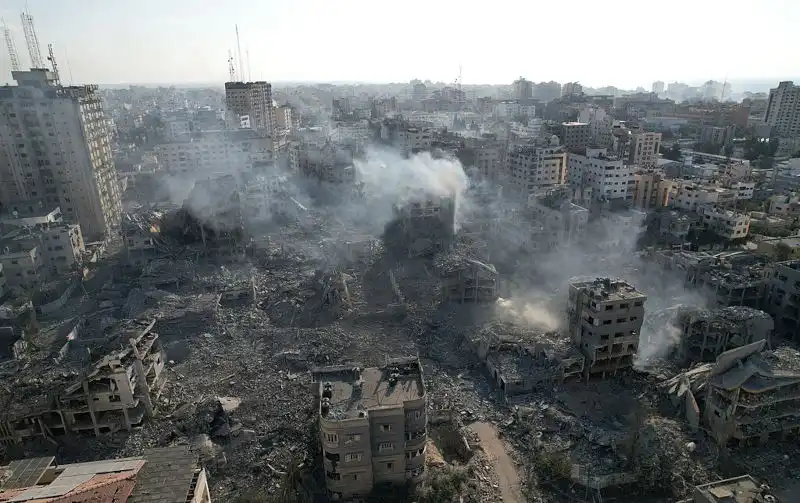
PALESTINE

Sat 12 Oct 2024 8:32 pm - Jerusalem Time

Ministry of Health: 800 units of blood delivered to our warehouses in the northern Gaza Strip

The Ministry of Health announced, on Saturday evening, that its crews, in cooperation with the Rahma Foundation and the United Nations Children's Fund (UNICEF), were able to deliver 800 units of blood from the central laboratories in Ramallah to its warehouses in the southern Gaza Strip, and from there to its warehouses in the northern Gaza Strip, as part of the "Our Blood is One" campaign.
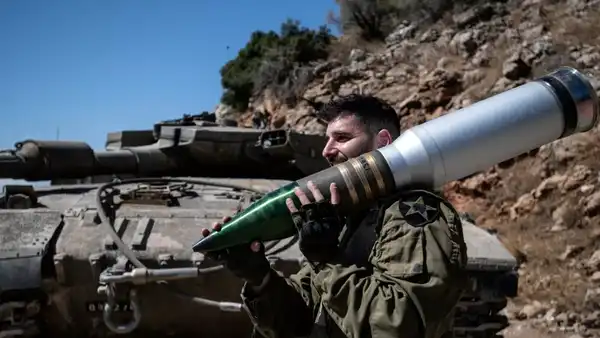

The ministry explained that "the blood units that were delivered are part of the units donated by our people in the northern governorates to our people in the southern governorates," as part of the second round of the "Our Blood is One" blood donation campaign.


Minister of Health Majed Abu Ramadan said: “We are making great efforts around the clock to provide the necessary health needs for our people in the southern governorates, in cooperation and partnership with international partner institutions and various health organizations. We appeal to the international community and international institutions to increase pressure to stop the escalating Israeli occupation aggression against our people and its deliberate targeting and siege of treatment centers in the Gaza Strip.”