PALESTINE

Wed 04 Dec 2024 5:24 pm - Jerusalem Time

Gaza Health: 44,532 dead as a result of the Israeli aggression since October 7

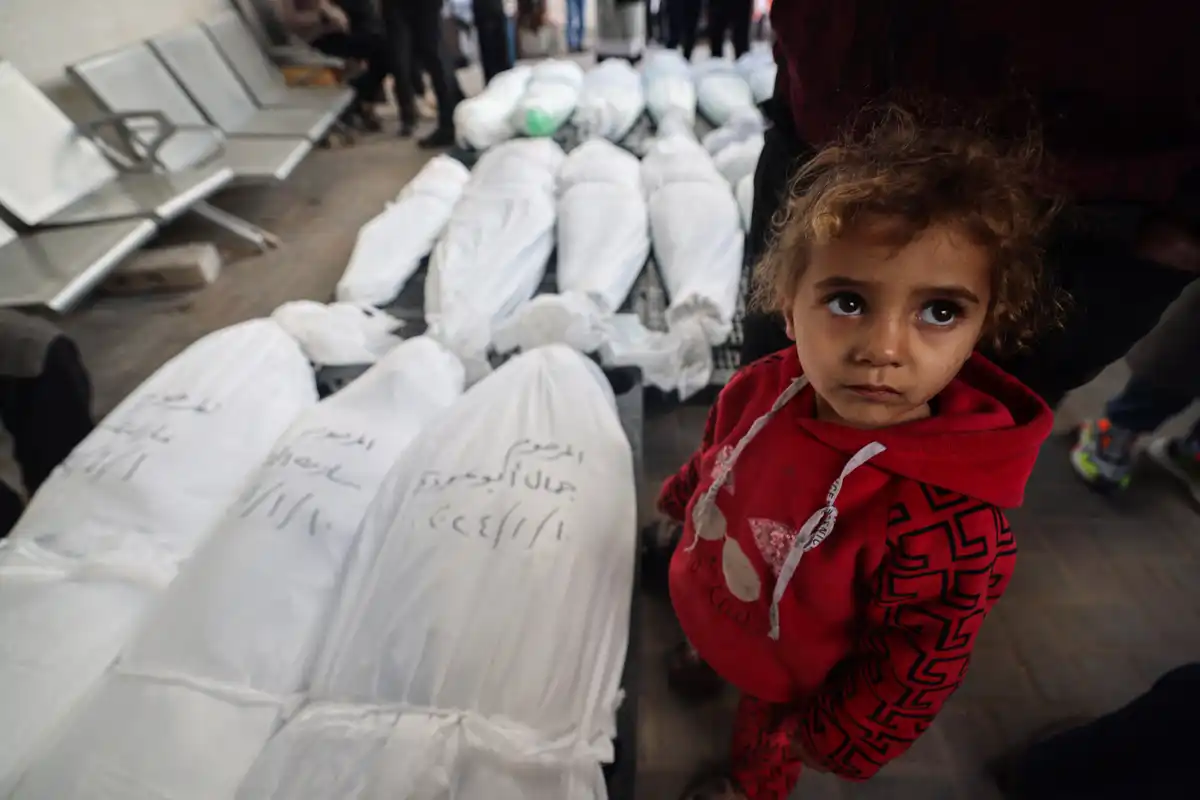
The Ministry of Health in Gaza announced on Tuesday that the death toll from the Israeli aggression on the Strip has risen to "44,532 dead and 105,538 wounded" since October 7, 2023.


The ministry said in its statistical statement for the 425th day of the war: "The death toll from the Israeli aggression has risen to 44,532 dead and 105,538 wounded since October 7, 2023."


It added, "The Israeli occupation committed 3 massacres against families in the Gaza Strip, 30 dead and 84 wounded people arrived at hospitals during the past 24 hours."


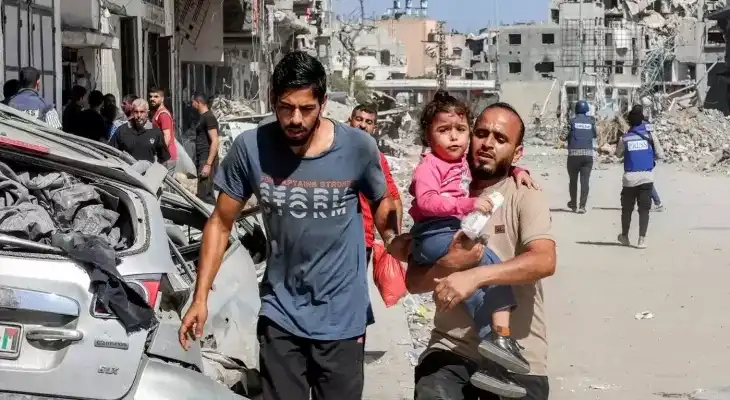
The ministry indicated that "a number of victims are still under the rubble and on the roads, and ambulance and civil defense crews cannot reach them."


With American support, Israel has been waging a genocide in the Gaza Strip since October 7, 2023, leaving behind about 11,000 missing people, in addition to the dead and wounded, amid massive destruction and famine that killed dozens of children and the elderly, in one of the worst humanitarian disasters in the world.


Israel continues its massacres, ignoring the UN Security Council resolution to end them immediately, and the International Court of Justice’s orders to take measures to prevent acts of genocide and improve the catastrophic humanitarian situation in Gaza.

PALESTINE

Wed 04 Dec 2024 5:09 pm - Jerusalem Time

Dead and wounded in Israeli occupation's bombing of various areas of the Gaza Strip

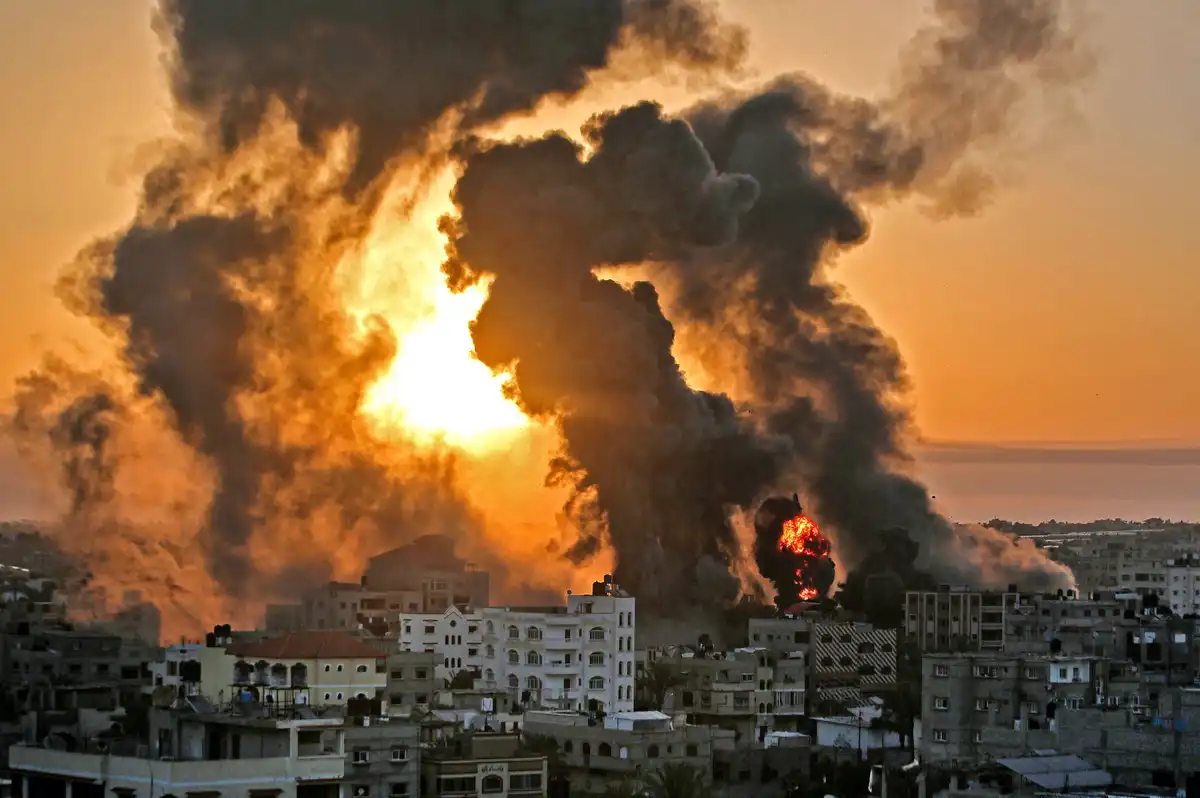
A number of citizens were killed and injured today, Wednesday, in the occupation's bombing of various areas of the Gaza Strip.


Local sources reported that an occupation drone targeted a group of citizens near Al-Shifa Tower, west of Gaza City, which led to the death of two citizens and the injury of others.


It added that drones opened fire on displaced people on Salah al-Din Street, east of Gaza City, in the central Gaza Strip, wounding many of them.


A citizen was killed and others were injured in gunfire from an occupation drone east of Al-Maghazi camp in the central Gaza Strip. The occupation artillery also bombed the homes of the Abu Mahadi family west of Al-Nuseirat.


Local sources reported that the Israeli occupation forces targeted Abu Tamam schools in Beit Lahia, north of the Gaza Strip, which led to the martyrdom and injury of a number of citizens.


It added that an occupation army sniper executed a young man at Al-Halabi roundabout in Jabalia Al-Balad, north of the Gaza Strip.


A citizen was also martyred when the occupation forces fired machine guns at a group of citizens in the Al-Alam area, northwest of Rafah.


An occupation reconnaissance plane targeted a group of citizens with a missile at the Martyrs' Roundabout in Al-Bureij camp, which led to the martyrdom and injury of a number of citizens who were transferred to Al-Awda Hospital in Al-Nuseirat and Al-Aqsa Martyrs Hospital in Deir Al-Balah.


During 60 days of genocide and ethnic cleansing, more than 3,700 citizens were killed or went missing in the northern Gaza Strip, in addition to about 10,000 injured and 1,750 arrested.


The occupation forces began displacing the people of Beit Lahia, forcing them to leave their homes and the areas that sheltered them in Beit Lahia through siege and bombardment.


Medical sources reported that the oxygen supply to Kamal Adwan Hospital has completely stopped after it was targeted yesterday by the Israeli occupation, which means that the entire health service has stopped.


It said that more than 100 patients inside Kamal Adwan Hospital in Beit Lahia, north of the Gaza Strip, are at risk of death, and the occupation is preventing access to Al-Awda Hospital.


Three medical staff members at Kamal Adwan Hospital were injured when explosive bombs were dropped on the hospital from Quadcopter aircraft.

PALESTINE

Wed 04 Dec 2024 4:10 pm - Jerusalem Time

Israel takes measures to prevent the arrest of its soldiers on charges of war crimes

Yedioth Ahronoth newspaper said on Wednesday that the Israeli occupation army has taken a series of unprecedented measures to restrict the travel of its senior leaders and soldiers abroad due to fears that they will be arrested on the basis of orders from the International Criminal Court or local courts.


The newspaper's military correspondent, Yoav Ziton, reported that these measures included asking some commanders and soldiers not to travel abroad, or asking them to return to Israel quickly, or asking them to remove photos and videos of them published on social media that implicate them in committing war crimes in Gaza, as well as not showing their locations when traveling.


In addition to the International Criminal Court issuing arrest warrants for Israeli Prime Minister Benjamin Netanyahu and former Defense Minister Yoav Galant on charges of war crimes, the correspondent revealed that there are organizations supporting the Palestinian cause abroad that have prepared "blacklists" of occupation leaders and soldiers with the aim of legally prosecuting them in their countries.


Organizations in Europe

He explained that this threatens to expose them to arrest or legal prosecution by local courts even in countries that are not signatories to the Hague Convention, such as the United States, China and India.


The reporter said the organizations, which are mainly active in Europe, publish the names and photos of the soldiers online, and follow their posts on social media.


When photos or information about the presence of soldiers in certain countries are published, these organizations file complaints with local authorities in those countries, which opens the door to investigations or even arrests.


Israel discovered about 30 legal threats against soldiers and officers who took part in military operations in Gaza, some of whom were planning to travel abroad.


Israeli measures

The reporter said the Israeli military relied on a risk assessment system to help soldiers determine which countries they could travel to without running a legal risk. These countries, which may have adopted local legislation that could harm Israeli soldiers, include South Africa and some European countries.


He pointed out that the International Criminal Court may later investigate military officers who supervised military operations in Gaza, such as brigade commanders or even the Chief of Staff.


Although current expectations are that the court may focus on senior military leaders, legal prosecutions against soldiers could occur if incriminating evidence is gathered through the media or the Internet.


Government sources reported that Israel has formed a working group between the ministries of defense and foreign affairs, in addition to the military prosecution, in order to confront these threats and monitor changes in local legislation in various countries that may affect Israeli soldiers.

PALESTINE

Wed 04 Dec 2024 3:59 pm - Jerusalem Time

Israeli forces prevents Palestinians from plowing their lands and seizes equipment in Hebron

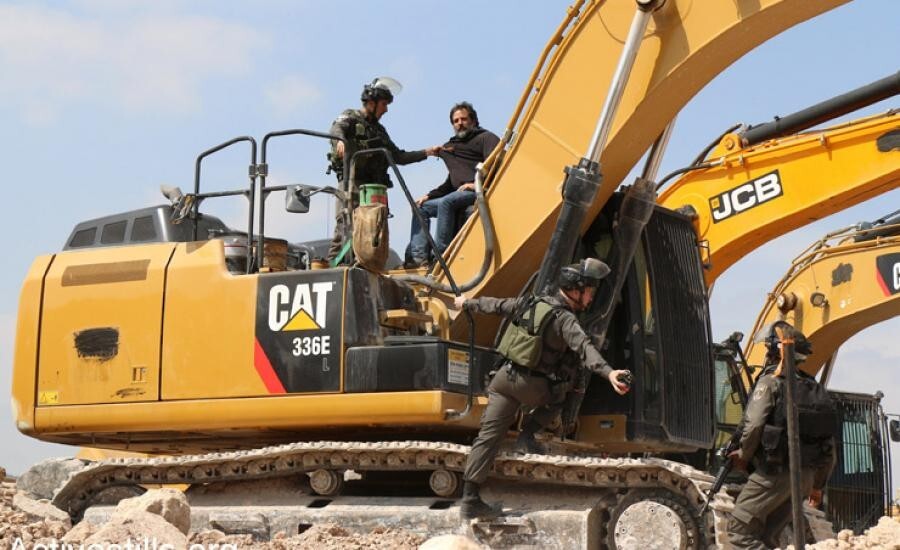
Today, Wednesday, the Israeli occupation forces prevented citizens from plowing and cultivating their lands, and seized agricultural equipment in Masafer Yatta, south of Hebron.


According to local sources, these forces attacked citizens while they were plowing their lands in the Shaab al-Batm area in Masafer Yatta, and seized agricultural equipment belonging to citizen Mahmoud Yousef al-Jabarin, after preventing them from working and farming, and forcing them to leave.

PALESTINE

Wed 04 Dec 2024 2:05 pm - Jerusalem Time

UNRWA: Families in Gaza Strip face dire conditions due to repeated displacement

The United Nations Relief and Works Agency for Palestine Refugees (UNRWA) said on Wednesday that families in the Gaza Strip are facing "dire conditions" due to repeated displacement, reiterating the "urgent need for an immediate ceasefire."


The UN agency added in a post on the X platform: "In Deir al-Balah in the central Gaza Strip, and throughout the Gaza Strip, families continue to face dire conditions."


It explained that these families are being displaced repeatedly due to the continuous shelling, seeking shelter in overcrowded UNRWA schools and temporary tents, and struggling to access basic necessities.


It reiterated the "urgent need for an immediate ceasefire in the Gaza Strip, and to ensure unhindered access for humanitarian aid to meet growing needs."


The war of extermination waged by the occupation since October 7, 2023, has forced about two million of the Strip’s citizens, numbering about 2.3 million Palestinians, to flee in tragic conditions with a severe and deliberate shortage of food, water and medicine.


Famine has spread in most areas of the Gaza Strip as a result of the ongoing aggression, especially in the north, following the persistence of genocide and starvation to force citizens to migrate south.


The Israeli occupation forces continue their aggression on the Gaza Strip, by land, sea and air, since October 7, 2023, which resulted in the martyrdom of 44,502 citizens, the majority of whom are women and children, and the injury of 105,454 others, in an incomplete toll, as thousands of victims are still under the rubble and on the roads, and ambulance and rescue crews cannot reach them.

PALESTINE

Wed 04 Dec 2024 1:32 pm - Jerusalem Time

1396 attacks carried out by Israeli occupation and its settlers in November

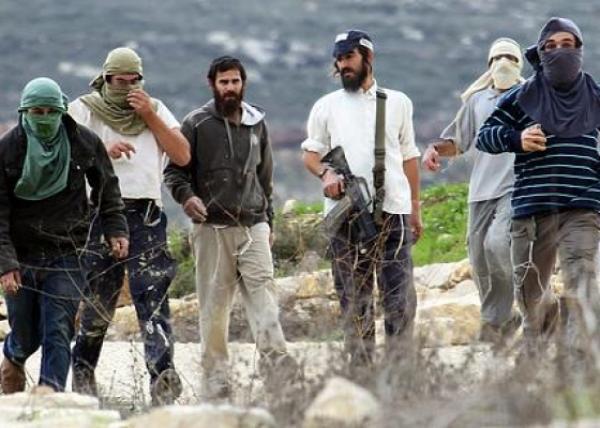
The head of the Wall and Settlement Resistance Commission, Minister Mu'ayyad Shaaban, said that the Israeli occupation forces and settlers carried out 1,396 attacks during last November, in a continuation of the ongoing series of terrorism by the occupation state against the Palestinian people, their lands and their properties.


Shaaban explained in the commission's monthly report, today, Wednesday, that the party represented by the occupation army carried out 1086 attacks, while the settlers carried out 310 attacks, and the total attacks were concentrated in the governorates of Ramallah with 273 attacks, Hebron with 253 attacks, and Nablus Governorate with 204 attacks.


He pointed out that the attacks ranged from armed attacks on Palestinian villages to imposing facts on the ground, field executions, vandalism, bulldozing of land, uprooting of trees, seizure of property, closures and barriers that sever the ties of Palestinian geography.


A dangerous ongoing wave of terrorism by the colonists' militia


Shaaban explained that the settlers' attacks, which amounted to 310 attacks, were concentrated in the Ramallah Governorate with 77 attacks, the Hebron Governorate with 73 attacks, the Nablus Governorate with 63 attacks, and the Salfit Governorate with 34 attacks.


He added that the settlers tried to establish 8 new settlement outposts, mostly of a pastoral nature, in the governorates of Hebron, Bethlehem, Ramallah, Nablus and Jericho.


Shaaban explained that the settlers' attacks during the current olive season, which began early last October, continued to escalate and target citizens in all Palestinian territories, with clear intent by the occupying state, which has empowered the settlers' armed militia to force citizens to back down from completing the season.


He added that the settlers' attacks resulted in the uprooting, damage, sabotage, poisoning and burning of a total of 1,806 trees, including 1,762 olive trees, through 42 attacks. These attacks were concentrated in the governorates of Nablus and Ramallah with 10 attacks, then the governorates of Hebron and Bethlehem with 7 attacks.


It seized 177 dunums of citizens' land.


Shaaban said that the occupation authorities seized 177 dunums of citizens’ lands in Salfit and Nablus last November through two military orders. The first was an expropriation order that targeted 166 dunums of Salfit Governorate lands, while the second order targeted Nablus Governorate lands through declaring 10 dunums of Burin village lands as state lands.


52 facilities demolished and 23 others notified to demolish


Shaaban pointed out that the occupation authorities carried out 52 demolition operations last November, which affected 63 facilities, including 27 inhabited homes, 2 uninhabited ones, and 17 agricultural facilities and others. They were concentrated in the Jerusalem governorates, with the demolition of 26 facilities, then the Hebron governorates with 10 facilities, and Nablus with 7 facilities. He indicated that the occupation authorities distributed 23 demolition notices for Palestinian facilities, concentrated in the Qalqilya governorate with 10 notices, then the Nablus governorate with 8 notices.


The occupation authorities are studying 5 new plans


Shaaban explained that the occupation authorities studied last November a total of 5 master plans (deposit) for the purpose of expanding the settlements of the West Bank and Jerusalem. The West Bank targeted the construction of a total of 311 colonial units on an area estimated at 69 dunams of citizens’ land, while plans within the borders of the city of Jerusalem aimed to build 800 colonial units on an area estimated at 12 dunams of citizens’ land.

ARAB AND WORLD

Wed 04 Dec 2024 1:30 pm - Jerusalem Time

The death toll of Israeli aggression on Lebanon is 4,047 and 16,638 wounded

Lebanese Health Minister Firas Abiad announced on Wednesday that at least 4,047 people were killed in Lebanon during more than a year of occupation aggression, most of them after last September.


Al-Abyad said in a press conference, "So far, we have recorded 4,047 dead and 16,638 wounded," noting that the majority of the victims died after September 15.


He added, "We believe that the real numbers may be higher, because there are martyrs who have been killed, and we do not know about them."

PALESTINE

Wed 04 Dec 2024 1:18 pm - Jerusalem Time

14 injuries during the Israeli forces' storming of Qalandia camp

14 citizens were injured today, Wednesday, during the Israeli occupation forces’ storming of Qalandia camp, north of occupied Jerusalem.


The Red Crescent Society reported that its crews dealt with 14 injuries during the storming of Qalandia camp, including two injuries from metal bullets and 12 injuries from toxic tear gas, and they were treated in the field.


It is noteworthy that the occupation army stormed the camp this morning and closed its entrance, which led to the outbreak of clashes, amid the firing of toxic tear gas bombs.

PALESTINE

Wed 04 Dec 2024 1:08 pm - Jerusalem Time

Evacuation of 11 Palestinian children with cancer from the Gaza Strip to Jordan

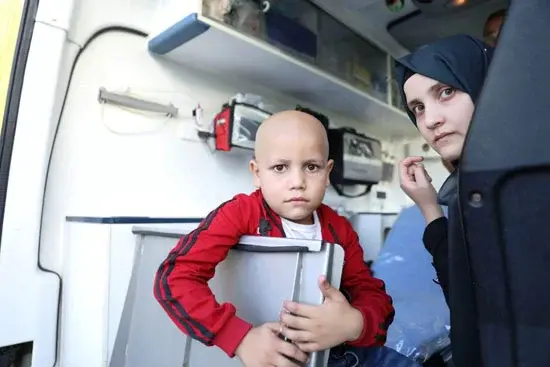
The World Health Organization announced, on Wednesday, the evacuation of 11 children with cancer from the Gaza Strip to Jordan, to receive treatment.


“WHO has evacuated 11 children in need of cancer treatment from Gaza to Jordan, along with 20 companions,” WHO Director-General Tedros Adhanom Ghebreyesus said in a post on the X platform.


He stressed that they demanded the use of all corridors to safely transport patients out of the Gaza Strip, adding: "In the end, peace is the best treatment."


On November 28, Ghebreyesus announced the evacuation of 17 patients from Gaza, which has been subjected to an Israeli war of extermination for more than a year.

PALESTINE

Wed 04 Dec 2024 1:01 pm - Jerusalem Time

An elderly Palestinian was killed after being attacked by Israeli forces south of Nablus

An elderly man was killed, on Wednesday afternoon, after the Israeli occupation forces attacked him south of Nablus.


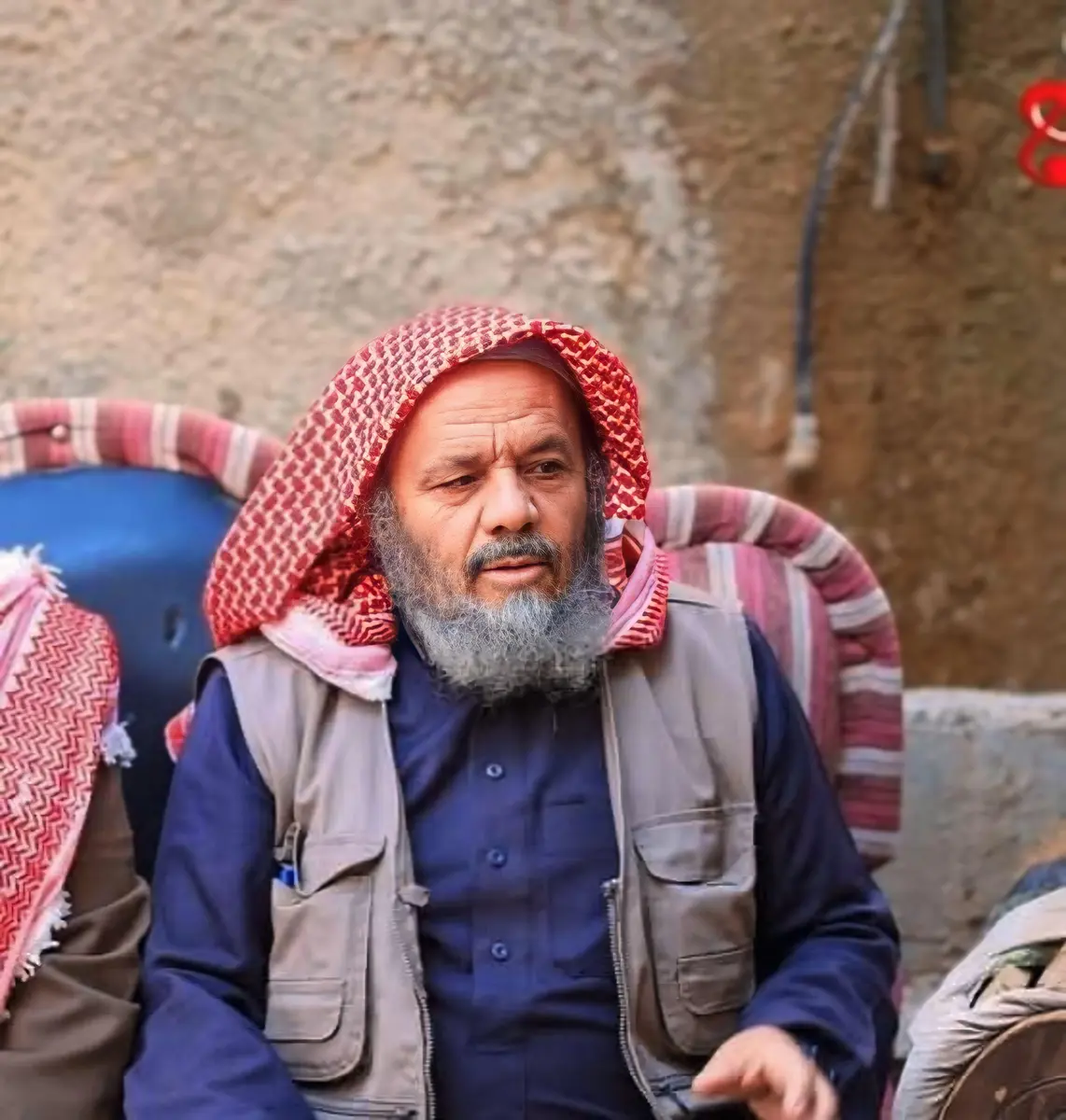
The mayor of Aqraba, Salah Bani Jaber, told the Quds.com correspondent that the elderly Sheikh Atef Malik Diriya died after the occupation forces severely beat him at the entrance to the town.

ARAB AND WORLD

Wed 04 Dec 2024 12:23 pm - Jerusalem Time

Lebanon: Israeli army renews warnings against return of displaced persons, continues to violate ceasefire

On Wednesday morning, the Israeli army renewed its warnings against the return of displaced persons to the towns of Shebaa, Hebarieh, Marjeyoun, Arnoun, Yahmor, Qantara, Shaqra, Barashit, Yatar, Mansouri and their surroundings, "until further notice."


He also warned against returning to the villages of Dahra, Taybeh, Tayri, Naqoura, Abu Shash, Abel al-Saqi, al-Bayada, al-Jbeen, al-Kharibeh, al-Khiam, Khirbet, Matmoura, al-Mari, al-Adayseh, al-Qalaa, Umm Tuta, Salib, Arnoun, Bint Jbeil, Beit Lif, Blida, Bani Hayyan, al-Bustan, Ain Arab Marjeyoun, Debbin, Dbaal, Deir Mimas, Deir Siryan, Houla, Halta, Hanin, Tayr Harfa, Yahmar, Yaroun, Yarin, Kfar Hamam, Kfar Kila, Kfar Shouba, al-Zaloutieh, Mahbib, Mays al-Jabal, Maysat, Marjeyoun, Marouhin, Maroun al-Ras, Markaba, Adshit al-Qusayr, Ain Abel, Ainata, Aita al-Shaab, Aitaroun, Alma al-Shaab, Arab al-Luwaizeh, al-Qawzah, Rab Thalatheen, Ramyeh, Rmeish, Rashaya al-Fakhar, Shebaa, Sheheen, Shamaa and Taloussa.


The Lebanese agency reported on Wednesday morning that "an artillery shell fell in the Marjeyoun plain. After midnight, the enemy had blown up houses and buildings in the town of Khiyam, where the sound of the explosion was heard throughout the south."


It also carried out combing operations with heavy and medium machine guns on Khiyam and Kfar Kila, in addition to artillery shelling on Kfar Kila, according to the Lebanese agency.

PALESTINE

Wed 04 Dec 2024 12:09 pm - Jerusalem Time

321 Israeli violations and settlers in the towns and villages of Salfit last month

The occupation forces and their settlers carried out 321 violations in the towns and villages of Salfit Governorate, during the past month.


Salfit Governor, Major General Abdullah Kamil, explained in a report that monitored all the violations during the past month, that the attacks focused on the vandalism of old olive trees, as 270 trees were observed being cut down and broken in Deir Istiya and Yasuf.


Regarding the raids, the occupation army continues to raid the villages and towns of the governorate and abuse citizens under flimsy pretexts. The report monitored 125 raids, raiding 18 homes, causing damage, and arresting and detaining 21 citizens.


The report monitored 51 attacks carried out by the occupation and its settlers in different areas. They also carried out 18 operations of seizing and stealing equipment in different areas under the pretext of working in areas classified as “C”, and vandalizing 6 properties.


In the checkpoints file, he indicated that the occupation used the closure of town entrances and the erection of checkpoints to restrict Palestinians, isolate areas from each other, and prevent them from freedom of movement, as the report monitored 21 closures and 43 checkpoints distributed across most areas of the governorate.


It explained that the land seizure operations are ongoing, represented by military orders to seize more of them, as the occupation authorities issued two notices during the past month to seize an area of 554 dunams and 792 meters of land belonging to the citizens of Yasouf, Marda, Kafl Haris, and Kafr al-Dik.


The report also monitored the demolition of 3 houses and 2 facilities in Deir Ballut and Al-Zawiya, and the bulldozing of 2 dunums of citizens’ land in Sarta.

OPINIONS

Wed 04 Dec 2024 10:45 am - Jerusalem Time

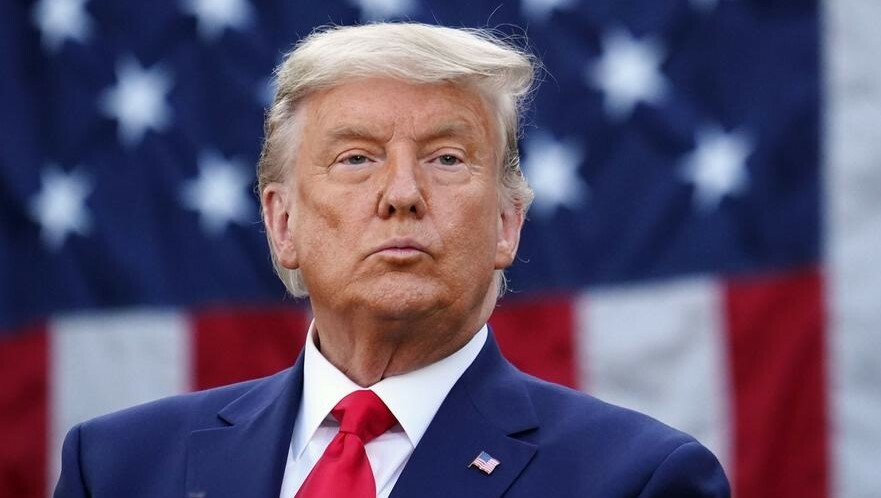
A message to Mr. President Trump!

op-ed - Al-Quds dot com

op-ed - Al-Quds dot com

Opinion Writer

Before the arrival of the US President-elect Donald Trump to the White House, it seems that he still believes that he will enter the wrestling ring as he did before his first presidential term, and the new term, which begins on the twentieth of next month, as he made reckless statements yesterday that included threats, to the effect that the failure to return the Israeli detainees before he arrives in power will have a heavy price.


These threats came after his meeting with the right-wing extremist Sara, the wife of the Israeli Prime Minister, and before his meeting with the Minister of Strategic Affairs Ron Dermer, to be accepted and admired by the extreme right-wing extremists, led by Netanyahu, who thanked Trump for what he described as his strong statement, and Minister Smotrich, who also thanked Trump for his statements, which Smotrich claimed clarified who the good guys are and who the bad guys are, calling for increasing pressure on Hamas and defeating it instead of surrendering to its demands, while the Israeli official broadcasting authority said in response to Trump’s threat that the United States apparently prefers a known dictator, and he has it, to chaos and armed groups.


To comment on these statements and the Israeli reactions to them, it must be taken into consideration that Israel, up until this moment, with its extreme right-wing government, is not interested in going to an exchange deal and ending the war on the Gaza Strip. This is clear from the subversive activity carried out by the Israeli army, under the direction of the right-wing government, the ethnic cleansing operations, the establishment of buffer zones and areas, and the ongoing measures on the ground to establish more settlements on the borders of the Gaza Strip, and the statements of Smotrich, who seeks to establish a military rule and a new civil administration in Gaza, claiming that its cost does not reach the amounts proposed yesterday by military officials, ranging between 15-20 billion shekels annually. All of this means that Israel is determined to remain in the Gaza Strip and strengthen the settlement of Jews there. The strange thing is that they proceed to publish statements claiming that they are encouraged by Trump’s directions, and that they may send a delegation to Egypt to discuss the exchange deal again, while they continue the operations of destroying the Gaza Strip and expanding the buffer zone by several kilometers. The Yedioth Ahronoth newspaper says that the Israeli army has completed most of the The works, to establish a buffer zone, with a new claim that Hamas has not surrendered in Jabalia yet, and that it has continuously succeeded in tracking Israeli forces in Jabalia, and this is an Israeli justification for continuing the aggression.


Israeli army data indicates the demolition of thousands of homes in the northern Gaza Strip and in the Shaboura axis in Rafah, in addition to the expansion of the Salah al-Din axis along the border, which means that the occupation army has received instructions to remain in the Gaza Strip, occupy it, and continue fighting there. In other words, Israeli measures on the ground do not at all correspond with the statements of occupation government officials that they intend to move towards an agreement that leads to a deal and a ceasefire.


What Israel is doing is a clear revenge on the citizens of the Gaza Strip, as one of the reserve soldiers admitted when he said: There is a strong feeling of revenge on everyone, in addition to his statements about not knowing the military purpose of blowing up houses in Gaza, as the Israeli government forces them to carry out these operations, which completely indicates the policy of ethnic cleansing and displacing Palestinians from their homes, which was admitted by the former Minister of Defense Ya'alon.


This proposal, which does not ignore the amount of Palestinian blood shed by the occupation and the destruction of all the components of its life, we direct it as a message to Mr. Trump to make sure of the truth about who are the good guys (the defenseless Palestinian civilians who are slaughtered by Israel daily), and who are the evil guys whose confessions have become a condemnation of those who force them to take revenge, kill, expel and displace the Palestinians (Netanyahu, his government and his army), and to confirm to Trump that the one who deserves punishment and the threats issued by him is the one who obstructs reaching an agreement or exchange deal that ends the war, and who has repeatedly appeared with impossible conditions, and refused to even think about releasing the Israeli detainees, and the Israeli street knows his identity and it is without a doubt Netanyahu and his entourage.


We hope that the message has reached President Trump, who has only accepted the pressures of the Israeli side, without taking into consideration the war of extermination that Israel is waging throughout the Gaza Strip.

OPINIONS

Wed 04 Dec 2024 10:37 am - Jerusalem Time

Netanyahu's choices between career and reputation

Majdi Al-Shomali

Majdi Al-Shomali

Opinion Writer

After the October 7 attack, Netanyahu had two paths: start negotiations with Hamas or start a war of extermination of the Palestinians in the Gaza Strip. The first path is simple and requires sophisticated negotiations, but it leads to the release of prisoners without wars in exchange for the release of a thousand prisoners, for example. At the same time, Netanyahu can order the formation of an investigation committee, appear above suspicion and ensure that those who are negligent are held accountable. In the first path, Netanyahu wins over the families of the prisoners and blocks the opposition. But Netanyahu chose the second path, which is to launch a war of extermination of the Palestinians, knowing in advance the consequences.


The second path was chosen from the first hours, and did not take time to think. Galant announced that he was dealing with human animals and would cut off water, food, electricity and communications to the Gaza Strip.


The results of the second choice came quickly and continue to this day for fourteen months: demonstrations all over the world, convictions and cases in the Supreme Court and the International Criminal Court, arrest decisions and a change in world public opinion, including inside America, especially among young people and universities, and massive demonstrations in Israel demanding an exchange deal.


Netanyahu and his group chose the second path because it is the only path through which Israel can regain its image of deterrence and the ability to suppress and control the entire region. Yes, it is the only path through which Israel can regain its function and the raison d'être of its existence. That function was questioned following the October 7 attack.


Netanyahu has given up on the prisoners and world public opinion, and exposed himself to arrest in order for Israel not to lose its job. That is why Netanyahu has been repeating from time to time: This is a fateful war.

OPINIONS

Wed 04 Dec 2024 10:35 am - Jerusalem Time

Will there be a ceasefire in the Gaza Strip?

Nabhan Khreisha

Nabhan Khreisha

Opinion Writer

After reaching a ceasefire agreement in Lebanon, the region is witnessing active diplomatic moves to reach a truce in the Gaza Strip. What indicates the possibility of reaching it is Netanyahu's announcement of his readiness to agree to a ceasefire, without stopping the war, because according to analysts, he believes that the conditions are ripe for the release of Israeli prisoners from the grip of Hamas, and maintaining friendly relations with Donald Trump, who asked him to obtain his "victory" before entering the White House on January 20, hoping that it will help him shape his "new Middle East." Behind the scenes, Egypt is conducting intensive efforts, with the support of the Biden administration and the team of President-elect Donald Trump, to reach a ceasefire agreement in the Strip, as it is preparing a draft of this agreement, which includes, in addition to the prisoner exchange deal, arrangements for managing the Strip after the end of the war, to be presented to Israel first, before presenting it to Hamas.


According to leaked information, the Egyptian proposal includes starting with a five-day “truce,” during which Hamas will collect information about the living and dead Israeli prisoners, about whom it does not have information due to Israeli bombing. This will be followed by a transition to a “temporary” truce of 60 days, during which the release of Israeli prisoners and Palestinian detainees will be exchanged, and 200 trucks of humanitarian aid will be brought into the Strip daily.


During this temporary truce, discussions are underway on mechanisms to end Hamas rule over the Gaza Strip, how Israel will withdraw from it, and deploy Palestinian forces assisted by an international mission in order to restore civil order there. The proposal also stipulates that the Palestinian Authority will supervise the civil administration of the Strip after the war, and will be assisted in this mission by an international security mission made up of Arab and European countries.


Whether a temporary truce or a permanent ceasefire is reached, Israel will not withdraw from all areas of the Gaza Strip to create a new reality there, as indicated by a number of indicators, including the ethnic cleansing taking place in the northern Gaza Strip to establish a buffer zone, and the establishment of an infrastructure of camps and roads, which indicate its intention to occupy it for a long period, in addition to the settlement plans, which enjoy the support of the Israeli right-wing government. It will also work to implement what it calls the “bubble plan” in northern Gaza, which was presented by a research center close to the ruling Likud party.


The bubble plan calls for isolating those deemed not to be Hamas supporters in areas where they can live, according to the Wall Street Journal. The newspaper quoted former Israeli army general Israel Ziv, who oversaw the Israeli withdrawal from the Strip in 2005, as saying that “this plan could last for the next five years, during which the Palestinian Authority could regain its security and administrative control over the Strip.”


In addition, Israel is working to implement the "Fingers Plan" launched by Ariel Sharon in 1971, which divided Gaza at the time into 4 isolated areas, interspersed with 5 fingers like the fingers of a hand, consisting of settlements and military zones. According to Haaretz, the Israeli army actually began implementing the Fingers Plan last March, by opening the Netzarim Corridor, 7 kilometers long and 8 kilometers wide, which separates the northern governorate and Gaza City from the center and south of the Gaza Strip, and is equivalent to 15% of the area of the Strip.


Gaza, after the ceasefire between Israel and Hezbollah, is now facing two scenarios: the first is that the ceasefire in Lebanon may give impetus to Egypt’s efforts, supported by the US and the Arabs, to reach a truce on the way to stopping the war. What reinforces this scenario is the growing pressure inside Israel (especially from the military establishment) demanding an end to the war and the return of the detainees in Gaza. The second scenario is the possibility that Israel will agree to a truce regardless of its duration, but without stopping its war on the Strip, because ending the war may lead to the dismantling of Netanyahu’s government coalition. In addition, the continuation of the war may allow Netanyahu to achieve his “absolute victory,” and thus gain wide popularity among Israeli society, which may provide him with immunity from legal prosecution on the corruption charges that are pursuing him.


Former US Secretary of State Henry Kissinger had described Israel as "a country with no foreign policy, only domestic policies," which may explain why Netanyahu might accept a limited deal with Hamas to strengthen his position in the domestic political arena, especially since his trial on corruption charges against him will take place in December, which may prompt him to try to disrupt the trial proceedings, due to his involvement in negotiations to reach a truce to release Israeli prisoners from Gaza. In addition, he may work to calm the situation in Gaza (tactically), to confront the repercussions of the arrest warrant issued by the International Criminal Court against him and his former Defense Minister Yoav Galant. His involvement in negotiations for a truce in Gaza is also a message to Donald Trump that he is responding to his call to end the war before his inauguration as US President in about 50 days.


Although Hamas has announced its readiness to return to negotiations with Israel to reach a ceasefire, and Netanyahu has announced his readiness to do so without stopping the war, the factors that contributed to reaching the Lebanon agreement are not available to the same extent for the Gaza Strip. Lebanon is a sovereign state with relations with many countries around the world, and Hezbollah has entrusted the Lebanese government with the task of negotiating. In contrast, Hamas is leading the negotiations itself due to the political and geographical division between the Gaza Strip and the West Bank, and the absence of a sovereign state capable of managing such negotiations.


In light of this reality, Israel will try to have the upper hand in any potential negotiations with Hamas, and will do everything in its power to keep its forces in the Strip to create a new reality.

OPINIONS

Wed 04 Dec 2024 10:26 am - Jerusalem Time

The Arab-Israeli conflict and its repercussions on the countries neighboring Palestine

Hamada Faraana

Hamada Faraana

Opinion Writer

The Arab-Israeli conflict has been the greatest challenge facing the Arabs, especially in the countries surrounding Palestine: Lebanon, Syria, Jordan and Egypt. This ongoing conflict has been reflected in the form of the internal situation and its political, economic and social manifestations, and the internal transformations have been linked to the course of this national conflict and its results, under the misleading slogan “No voice is louder than the voice of battle”, i.e. giving priority to confronting the national and nationalist enemy, at the expense of the basic rights of the Arab citizen in the four countries, with differences between one country and another in national priorities.


The Israeli colony was able to throw the Palestinian cause and its refugee consequences into the Arab embrace: Lebanese, Syrian and Jordanian in 1948, and change the title and rights of the Palestinian people represented by the United Nations resolution: 1- Partition Resolution 181 and the two-state solution, 2- Right of refugees to return resolution 194, to Resolution 302, which includes the formation of the United Nations Relief and Works Agency for Palestine Refugees. Note the words relief and works, and thus the issue of the Palestinian people was transformed from a political issue represented by Resolutions 181 and 194, to a humanitarian issue represented by Resolution 302.


Thus, the Palestinian people's issue, which was caused by the Israeli occupation, which was supposed to be responsible for resolving it and dealing with its consequences, turned into an Arab issue that sparked Arab-Arab disputes: Palestinian clashes with Jordan, Syria and Lebanon. It remained so until the late President Yasser Arafat, relying on the results of the first Intifada in 1989, was able to transfer the title, the issue, the struggle and the conflict in exile to the homeland after 1993, following the Oslo Accords, which forced Yitzhak Rabin to recognize the three titles: recognition of the Palestinian people, the PLO and the political rights of the Palestinians. Accordingly, the gradual Israeli withdrawal from the Palestinian cities took place, starting with Gaza and Jericho first, and the return of more than 400,000 Palestinians with the late President Abu Ammar, and the birth of the National Authority as a prelude to the establishment of the independent state.


What is certain is that this agreement was not accepted by the Israeli right and its leaders: Netanyahu, Sharon and Shamir. Netanyahu and Shamir obstructed the implementation of the agreement, and Sharon reoccupied the Palestinian cities in March 2002, which the occupation had previously withdrawn from. Prime Minister Rabin was assassinated on November 4, 1995, and a siege was imposed on Yasser Arafat, who was assassinated and passed away on November 11, 2004, against the backdrop of the Second Intifada in 2000.


These developments in the Palestinian issue, in one way or another, were reflected in the security and stability of the Arab countries surrounding Palestine:


The civil war broke out in Lebanon and lasted for 17 years, between the isolationist forces and the Lebanese National Movement, until the Taif Agreement was reached on September 30, 1989.


The events in Syria exploded in 2011, and continue to this day, and here they are renewed, not by chance, but after the massacres in Gaza and Lebanon and the practice of the harshest types of Israeli hostility and fascism against the Palestinians and the Lebanese.


As for Jordan, it was the most realistic and rational country, as it dealt with its internal situation with wisdom and patience and reached understandings with the political opposition forces.


I will not talk about the Arab countries surrounding Palestine that are paying the price of the Arab-Israeli conflict and participating in it, whether forced or convinced, to protect their national security or to recover their occupied territories: Syria and Lebanon, and the impact of this conflict on their internal systems. However, I find it necessary to talk about the repercussions of this on our Jordanian situation and the state’s options in strengthening internal cohesion and its internal front to confront challenges and respond to entitlements.

ARAB AND WORLD

Wed 04 Dec 2024 10:14 am - Jerusalem Time

Foreign Policy delves into the reasons behind the Saudi-Iranian rapprochement and Riyadh’s distancing from normalization

While the tone of Saudi Arabia's Crown Prince Mohammed bin Salman may seem to be shifting toward Tehran, this should not be a cause for concern, Foreign Policy magazine, which specializes in American foreign policy affairs, said in an article on Tuesday.


On November 11, at the Islamic Summit in Riyadh, the Saudi Crown Prince called on the international community (the United States) to force Israel to “respect the sovereignty of the sisterly Islamic Republic of Iran and not violate its territory.” At the same gathering, he described what the Israeli Defense Forces (IDF) did in the Gaza Strip as “genocide,” which has raised confusing speculation about the reasons for this gesture, especially since this speech may contradict the impressions of observers and politicians alike about Mohammed bin Salman, which has raised the question “What is happening with him? And in Saudi Arabia?”


“Mohammed bin Salman’s words at the summit appear to be a qualitative change,” the magazine says, “especially since he asked in 2017, a year after mobs stormed the Saudi embassy in Tehran, leading to the severing of relations between the two countries, how it was possible to have a dialogue with a regime built on an extremist ideology (Iran)… which [says] it must control the lands of Muslims and spread its Twelver Ja’fari doctrine throughout the Islamic world?”


The magazine notes that even after the Chinese government brokered the resumption of diplomatic relations between Saudi Arabia and Iran in March 2023, and the thaw began, officials in Riyadh still express doubts about Tehran’s intentions and remain distrustful of the Iranian leadership.


“Regarding Israel, Saudi officials have (so far) indicated that normalization is not a matter of if but when, and they have said it so often that after a while, no one cared about it anymore, as it has become just part of Saudi Arabia’s diplomatic messaging,” the magazine claims.


“With Israel’s brutal war on Gaza, the price the Saudis were demanding from the Israelis for normalization has steadily risen,” the magazine speculates. “Yet, over the past year, officials in Riyadh have appeared committed to a settlement with Israel. Despite accusing the Israelis of genocide since the early days of the war, Mohammed bin Salman never used the term before the summit on November 11.”


The magazine speculates on the reasons behind the change in Saudi rhetoric: First, it may be an opening attempt in negotiations with President-elect Donald Trump over the long-discussed security agreement between the United States and Saudi Arabia. And while Mohammed bin Salman has changed his position on Iran, he is doing so cautiously and deliberately.


Second, the magazine says, by moving closer to Iran, Mohammed bin Salman is moving away from Israel and the possibility of normalization. The brutality of the Israeli military operations in the Gaza Strip has angered many in Saudi Arabia. The author of the article, Stephen Cook, cites that on his recent visit to the kingdom, he and his colleagues were subjected to a barrage of criticism of the Biden administration over the ongoing massacre in Gaza, “and this must surely be part of Mohammed bin Salman’s thinking… The crown prince is very powerful, but he is not immune from public opinion. Normalization with Israel is not worth it for him in the short term, given the depth of public anger over the destruction of Gaza.”


“The crown prince’s use of the word ‘genocide’ is also a clear warning to the incoming Trump administration, which places great importance on normalization between Israel and Saudi Arabia as a follow-up to the Abraham Accords,” the author says. “There is no way that Saudi leaders would want to engage in normalization at a time when Israeli settlers have come to believe that Trump will not stand in the way of annexation, especially since his appointment of former Arkansas Gov. Mike Huckabee — an advocate of Israeli sovereignty over the occupied West Bank and support for annexation — as ambassador to Israel suggests they may not be wrong. It would be extremely embarrassing for the crown prince to go down the path of normalization only to have the Israelis — with Trump’s blessing — extend formal Israeli sovereignty to all or parts of the occupied West Bank.”


The author believes that by invoking the issue (and expression) of genocide, the Crown Prince is signaling to the president-elect that under the current circumstances, the Saudis are not prepared to move forward (in a normalization process).


Third and finally, according to Stephen Cook, “there is the most compelling explanation for Mohammed bin Salman’s apparent shift: after intervening in the civil war in Yemen, imposing a blockade on Qatar, forcing the resignation of the prime minister of Lebanon, and supporting opponents of the internationally recognized government in Libya, and failing to achieve any of his goals, the crown prince has concluded that bending the region to his will is not within his power… Instead, he has now turned inward, seeking to ensure stability within the kingdom. Pivoting toward Iran is one way to keep chaos outside Saudi Arabia’s borders.”


This shift is of paramount importance to Mohammed bin Salman as he spends hundreds of billions of dollars shaping the future of Saudi Arabia. One could question the wisdom of his grandiose and ambitious projects, including the new city of Neom and the Qiddiya Coast tourism project in Jeddah. But now that so much has been invested in them, it would be unwise for the Saudi leadership not to seek basic economic and political stability to give them a chance to succeed. There is no indication that the Saudis are suddenly trusting the Iranians, but they do not want to give them any excuse to spoil what is happening in Saudi Arabia at the domestic level.


In the not-so-distant past, the Saudis played the riyal game, essentially pushing to ensure that regional troubles didn’t hurt the kingdom. What Mohammed bin Salman has done is echoed in what he has done when he called on the world to rein in Israel and made clear that he sees Iran as a member of the family. “From the crown prince’s perspective, this is not a shift toward Iran but a shift toward Saudi Arabia,” the writer writes.

ARAB AND WORLD

Wed 04 Dec 2024 9:55 am - Jerusalem Time

Trump's promise and threat... The threat of hell is an attempt to put out fire with fire

Dr. Hussein Al-Deek: The coming period may witness an unprecedented escalation in Israeli policies towards the Palestinians with full support from the Trump administration

Dr. Raed Nairat: Trump seeks to focus on confronting China and avoiding direct conflict with Russia, which prompts him not to return to the Middle East

Suleiman Basharat: Trump wants Middle Eastern countries to turn from observers to actors regarding a deal to release Israeli detainees

Dr. Saad Nimr: Trump's fiery statements are an attempt to impose a quick solution to the Gaza crisis and end the file of Israeli detainees before he assumes the presidency

Firas Yaghi: Trump's statements aim to show his interest in ending the war in Gaza, which in itself is a positive sign despite the threatening tone.


The fiery statements made by US President-elect Donald Trump, threatening the Middle East with "hell" if the Israeli detainees in the Gaza Strip are not released, before he officially assumes the presidency on the twentieth of next month, come at a critical stage in the region, which is likely to escalate the war instead of stopping it.


In separate interviews with “I”, writers, political analysts, specialists and university professors believe that Donald Trump’s fiery statements reflect his personality and the ideological and political affinity between Trump and Israeli Prime Minister Benjamin Netanyahu, which raises questions about the features of the next phase in American policies towards the Middle East region, with the adoption of more stringent policies and a clearer bias towards Israel compared to the Biden administration.


Although these statements are fiery and unprecedentedly striking towards the region, some analysts and specialists believe that Trump's statements may pave the way for the possibility of achieving a breakthrough in the file of Israeli detainees or a calm in Gaza.


Personal alliance between Trump and Netanyahu


The writer, political analyst and specialist in American affairs, Dr. Hussein Al-Deek, confirms that Trump’s statements threatening the Middle East if the Israeli detainees are not released, reflect the personal alliance between him and Israeli Prime Minister Benjamin Netanyahu, and express a deep ideological and political convergence between the American right and the Israeli far right.


Al-Deek explains that these statements were not surprising, as they reflect Trump's true position, which has always been characterised by his hardline policies and absolute support for Israel, especially during his first term in office.


Al-Deek points out that Trump, like many American presidents, makes election promises that differ greatly from his policies after taking office.


Al-Deek describes this contrast as a “historical inevitability” in American politics, where election campaigns are used to attract voters, while priorities are reshaped after reaching power.


Al-Deek points out that Trump's record is full of pro-Israel moves that have sparked controversy, starting with moving the US embassy from Tel Aviv to Jerusalem, closing the Palestine Liberation Organization office in Washington, and transforming the US consulate in Jerusalem into the (Palestinian Affairs Unit) under the umbrella of the US embassy in Jerusalem.


These steps, according to Al-Deek, constitute evidence of Trump's commitment to policies that are in line with the aspirations of the right-wing Israeli government.


Al-Deek draws attention to the ideological nature of the Trump administration, which consists of conservative right-wing currents, including evangelical Christians and Zionists, in addition to neo-conservatives.


Al-Deek believes that this composition sent clear messages to the world, including the Palestinians, and even Hamas, that this administration adopts a position consistent with the Israeli government and its extreme right-wing tendencies.


Al-Deek points out that these ideological alliances between the US administration and the Israeli government are not based solely on political interests, but extend to doctrinal and ideological foundations that support the continuation and expansion of the Israeli occupation.


Al-Deek believes that Trump's recent statements reflect the features of the next stage, as Netanyahu confirmed, in his speech before the United Nations, the drawing of a "new Middle East," as this harmony between the two countries indicates difficult days ahead, especially with Trump's return to the White House.


Al-Deek explains that Trump, who runs his policies with a mentality he describes as “arrogant,” will work to implement policies that are more biased toward Israel than the Biden administration, and his new term is expected to be characterized by hostile policies toward the Palestinians, including tightening the siege on the Gaza Strip, and facilitating the supply of weapons to Israel through direct executive decisions without referring to Congress.


Trump's Possible Plans for the Forced Displacement of Palestinians


Al-Deek warns of Trump's potential plans to implement the forced displacement of Palestinians in the Gaza Strip and the West Bank, noting that Trump has previously stated that "Israel's areas are small and need to expand."


Al-Deek points out that these policies may include displacing the residents of the Gaza Strip abroad, which he described as very dangerous, and which the Biden administration did not dare to raise.


Al-Deek asserts that the coming period may witness a major and unprecedented escalation in Israeli policies towards the Palestinians, with the full support of the Trump administration, reflecting a more extreme position than ever before, not necessarily by using more lethal weapons, but by achieving Israel’s dream of displacing the Palestinians.


Regarding the possibility of achieving a political settlement between Israel and Hamas, Al-Deek believes that Trump's statements will further complicate the situation.


Al-Deek points out that these statements will push Netanyahu to adopt more extreme positions, which will make it unlikely that a deal will be reached to release the Israeli detainees in Gaza or achieve any calm.


He explains that Netanyahu aims to impose a surrender agreement on the Palestinian resistance that includes the release of detainees, the exit of Hamas leaders from Gaza, and the continuation of the Israeli military occupation of the Strip.


On the international level, Al-Deek believes that the world is taking Trump's statements seriously, but at the same time it is suffering from weakness in confronting American policies.


Al-Deek points to the absence of a multipolar or even bipolar international system as it was in past decades, allowing the United States to act as a global policeman, while Trump acts as a world leader.


An arrogant personality who often bases his positions on unrealistic facts.


Writer and political analyst Dr. Raed Nairat believes that the recent statements of US President-elect Donald Trump regarding Gaza come in the context of his arrogant personality, which often bases its positions on unrealistic facts.


Nairat cites a previous statement by Trump about a month ago, when he said that he did not know that there were any living Israeli detainees in Gaza, to appear today as if he is ignorant of what happened in the region and the comprehensive destruction that Israel has carried out and the exhaustion of all its military options to return these detainees.


Nairat explains that the threat of using force is no longer effective, pointing out that Israel itself has failed to achieve this, despite using all its military capabilities.


"If there is a threat to be made, it should be to the Israelis, to push them to make concessions that will lead to the release of the detainees," Nairat says.


Nairat explains that the families of the Israeli detainees understood Trump's statements in the context of pressuring Israeli Prime Minister Benjamin Netanyahu, not the Palestinian resistance.


Nairat points out that the families of the Israeli detainees blessed these statements because they realize, after a full year of war, that their sons will not return through military escalation, but rather through a possible exchange deal.


Nairat describes Trump's statements as "empty of content," wondering what he can offer Israel in terms of operations to pressure the resistance to release the detainees in Gaza.


Nairat points out that the administration of President Joe Biden has given Israel full and absolute support, providing it with advanced weapons, including the THAAD air defense system, which the United States has not given to any other country, and even sent a crew to operate it in Israel.


Regarding the contradiction in Trump's statements, Nairat points out that during his election campaign, he stressed that he did not want to ignite wars, but rather sought to extinguish them, which contradicts his recent positions.


"These contradictions are expected from Trump's personality, who often makes incoherent statements and makes political stances that are difficult to predict," Nairat says.


Nairat believes that Trump seeks to focus on confronting China and avoiding a direct clash with Russia, which is what prompts him not to return to the Middle East.


Nairat points out that this approach to returning wars to the Middle East conflicts with the interests of the American institutional state, as it was the American involvement in the Middle East in the past, especially in Afghanistan and Iraq, that allowed China to rise as a global power that threatens the United States.


In the context of talking about concluding an agreement in the Gaza Strip, Nairat explains that there has been a flood of news in the Hebrew media during the past ten days, indicating an Israeli attempt to prepare public opinion for an imminent deal with the Gaza Strip.


"It is not possible to determine the size or nature of this deal, but it is likely to include a truce or a broader agreement that may include a withdrawal from the Gaza Strip," Nairat said.


Nairat explains that Trump's statements regarding the Middle East give many European countries the courage to say "no" to American policies, given the dissatisfaction of many American institutions with them, which was previously reflected in the rejection of the "Deal of the Century."


Nairat asserts that the world has become more aware of the realities of the conflict over Palestine, which enhances its ability to confront political figures like Trump.


Nairat points out that the American return to the Middle East under Trump will remain a source of internal and external controversy, especially given its conflict with European and international interests.


Trump's statements require careful reading within multiple contexts.


Writer and political analyst Suleiman Basharat asserts that US President-elect Donald Trump’s statements regarding the Middle East, and his threats regarding the need to release Israeli detainees before he assumes power next month, require careful reading within multiple contexts.


Basharat explains that Trump's personality is well-known during his first term (2016-2020), characterized by making sudden decisions and implementing them quickly without waiting for agreement or a response from other parties. This characteristic makes his recent statements messages targeting three main parties: Israel, the Palestinians, and countries and mediators in the Middle East region.


Basharat points out that Trump, through his statements, is sending a clear message to the Israelis, that there is no room for maneuver or backtracking on any decisions taken, and this position contradicts the approach taken by President Joe Biden’s administration, which has been criticized for its weak positions and its backtracking on previous decisions under pressure from Israel.


Basharat points out that Trump is seeking to confirm that he will not allow Israel, especially Prime Minister Benjamin Netanyahu, to manipulate or back down from any American step, even if it does not fully align with the Israeli vision.


Basharat asserts that this trend reflects a radical difference in approach, as the Trump administration seeks to impose its agenda without providing much room for discussion or amendment, which makes its relationship with Israel more clear in defining common priorities, but without allowing Israeli policies that might affect direct American interests.


The second message is directed towards the Palestinians, especially the resistance factions in the Gaza Strip, where Basharat believes that Trump’s statements carry the character of psychological pressure, as they seek to create a state of anxiety among the Palestinians by waving sanctions and threats. However, the Palestinians, who lived through Trump’s experience in his previous term and were subjected to strict measures such as cutting off aid and closing Palestinian representative offices in Washington, have become more capable of dealing with these threats.


Basharat points out that the Palestinians are already living under the siege and the ongoing war for more than a year, which makes them the party suffering the most from violations and crimes, and therefore they will have nothing to lose if they decide to confront Trump’s policies or challenge his directions.


He points out that the third party targeted by Trump's statements are the mediators and influential countries in the Middle East, whether at the Arab or regional level.


Trump, according to Basharat, wants these parties to shift from an observer position to a direct actor in the issue of the Israeli detainees and their release. This trend explains the recent moves of some countries, such as Turkey, which has begun to show a desire to play a prominent role in any potential talks or deals. Arab countries, such as Egypt, are also witnessing an acceleration in discussing regional issues, which reflects the impact of Trump’s statements in pushing these countries towards finding solutions to the outstanding problems, especially with regard to the Gaza Strip.


Basharat believes that Trump, despite his escalatory rhetoric, may not resort to using direct military force. Instead, he is likely to resort to using political and diplomatic force, such as imposing economic and political sanctions on parties he believes are obstructing any diplomatic effort. He cites his previous experience, where he withdrew from the nuclear agreement with Iran, imposed strict sanctions on it, and cut ties with international institutions such as UNESCO.


The approach of “de-conflicting” through political deals


According to Basharat, Trump is relying on an approach of “de-escalation” through political deals, which could mean offering incentives to parties that cooperate with his vision, while at the same time imposing harsh sanctions on parties that obstruct the implementation of his agenda.


Basharat believes that there are indications that Trump's statements may be an indication of the imminent conclusion of a prisoner exchange deal between the Palestinian resistance and Israel, as Trump seeks to present himself as a strong president capable of achieving accomplishments that the Biden administration was unable to achieve.


This type of rhetoric, according to Basharat, could be used as part of an early election campaign, where Trump appears as a leader who can impose his will and achieve political breakthroughs before he officially takes office.


Questions about Trump's ability to offer anything new in the deal


Dr. Saad Nimr, a professor of political science at Birzeit University, believes that the statements of US President-elect Donald Trump regarding the Middle East have a fiery character that reflects his usual style of governance. Trump, who is known for his firmness and his efforts to avoid procrastination in issues, seeks, according to his recent statements, to impose a quick solution to the Gaza crisis and end the file of Israeli detainees before assuming the presidency again.


According to Nimr, Trump aims through his statements to send a clear message to the concerned parties, stating that the Middle East may face worse conditions if the Israeli detainees held by the Palestinian resistance are not released.


Despite the severity of his statements, Nimr raises questions about Trump's ability to offer anything new in this file, noting that Israel exerted pressure and committed genocidal massacres during the administration of President Joe Biden and did not achieve anything.


Nimr believes that Trump is relying in his threats on intensifying pressure on Hamas and Gaza, noting that this pressure may manifest itself in an additional Israeli escalation in the Strip.


However, Nimr points out that the Israeli escalation is not new for Gaza, which faces daily massacres and an ongoing war of extermination, which means that Trump's threats may not bring anything new.


Nimr points out that the recent Israeli statements do not carry any encouraging signs regarding the possibility of reaching a comprehensive deal, as Israel sees the temporary truce as a means of releasing the detainees without ending the war, which is something that the Palestinian resistance rejects.


Nimr stresses that the resistance, which has put its conditions on the table and which are clear to the whole world, insists on a complete cessation of the war, the entry of humanitarian aid, the opening of the crossings, and the withdrawal of the Israeli occupation forces from the Gaza Strip as part of any possible deal, and these are legitimate demands.


Nimr believes that this stubborn Israeli position constitutes a major obstacle to achieving progress, especially since Israel believes that it has benefited from the ceasefire in Lebanon to expand its military operations in Gaza, as this escalation reflects an Israeli vision that considers Gaza an open field of operations, which increases the complexity of the situation and makes reaching an agreement more difficult.


Regarding the international community, Nimr expresses his extreme pessimism about the possibility of major countries intervening to stop the Israeli aggression or to pressure for a comprehensive humanitarian and political solution in Gaza. The international community, which includes the United States and the European countries that support it, lacks the political will to take decisive steps against Israeli actions or Trump’s future policies.


Nimr explains that last year witnessed international silence in the face of the ongoing war of extermination and massacres in Gaza, indicating the inability of international institutions to intervene to protect the Palestinians or stop the aggression. Therefore, Nimr doubts the possibility of a fundamental change after Trump takes over the presidency and proposes new plans to end the war in Gaza.


Trump is trying to appear as a strong leader capable of imposing political deals.


Writer and political analyst Firas Yaghi believes that the statements of US President-elect Donald Trump, which included a threat of “hell” for those who do not release the Israeli prisoners held in the Gaza Strip, come in the context of his attempts to appear as a strong leader capable of imposing deals and political strategies before his arrival to the White House.


Yaghi links these statements to others made by Trump in a meeting with the head of the occupation government, Benjamin Netanyahu, where he seemed surprised by the absence of living Israeli prisoners in the Gaza Strip. This surprise indicates Trump’s interest in resolving the prisoners’ file in a way that contributes to ending the war, so that he can return to the White House without facing open crises in the Middle East.


Yaghi asserts that Trump’s statements do not target the already devastated Gaza Strip, but rather appear to be directed at the leadership of Hamas abroad, as his threat may carry a signal of the possibility of escalation through assassinations targeting the movement’s leaders, in an attempt to pressure Hamas and its supporters to accept a prisoner exchange deal.


However, Yaghi points out that Hamas is not in a position to fear such threats, as the movement’s leadership is accustomed to dealing with harsh conditions. Yaghi points out that whoever wants to release the detainees alive in a potential deal must take into account the survival of the other party’s leaders to ensure the success of the negotiations.


Yaghi points out that Trump's statements reveal a side of Trump's personality, who seeks to promote his image as a firm man who can impose his will on everyone.


Yaghi asserts that the reality in the Palestinian arena is different, as the Palestinians, led by President Mahmoud Abbas, had previously rejected the “Deal of the Century” proposed by Trump during his first term in office without paying any attention to his threats or political power.


As for Trump’s threatening statements before he took over the reins of power in the White House, Yaghi believes that they aim to show his interest in ending the war in the Gaza Strip, which is a positive sign despite the threatening formula. Trump knows that any solution to the prisoners’ issue will only be through an exchange deal, and he realizes that the continuation of the war deepens the humanitarian and political crisis in the region, which is something he does not want to face after assuming the presidency.


In the same context, Yaghi believes that Israel is aware of the difficulty of achieving its goals of completely eliminating Hamas, but it seeks to remove the movement from power in Gaza and dismantle its military capabilities so that it does not pose a future threat. Hence, it seems that the formation of the “Administrative Community Support Committee” that was agreed upon between Hamas and Fatah to govern Gaza represents a step towards the post-war phase on the Gaza Strip and the form of government there.


Yaghi points out that this committee, which came with the joint approval of Fatah and Hamas, reflects an internal awareness of the inevitability of change in the Gaza Strip after the war, which may be in line with preempting Israeli goals seeking to reshape the political and administrative landscape in the Strip.


Yaghi confirms that the interpretation of Trump’s statements differs between the different parties. While some take his threats seriously due to his record of implementing his promises, the Palestinian resistance forces do not pay much attention to them, as Hamas focuses on tangible agreements and not on political speeches.


Yaghi points out that Hamas is demanding American guarantees to end the war and for the Israeli army to withdraw completely from Gaza, which poses a major challenge to Netanyahu, as the latter, who is facing internal pressures in his government, cannot make clear commitments regarding ending the war once and for all.


Yaghi believes that Trump’s statements and directions reflect a state of international anticipation towards the Gaza Strip, as the region faces two options: either reaching a prisoner exchange deal, or an additional escalation that extends to include other arenas, with Syria as the beginning. However, in most cases, the potential escalation indicates a shift in attention towards Iran as part of the complex regional scene and the Israeli-American directions.


Despite the cautious optimism about the possibility of reaching an agreement, Yaghi stresses that there are major obstacles that need to be addressed. For example, the issue of the Rafah crossing and the discussions about the form of administration of Gaza after the war that was decided by the Palestinians through Egyptian mediation are still open, and require an American-Israeli green light in order to determine the framework of the final solution.


ARAB AND WORLD

Wed 04 Dec 2024 9:54 am - Jerusalem Time

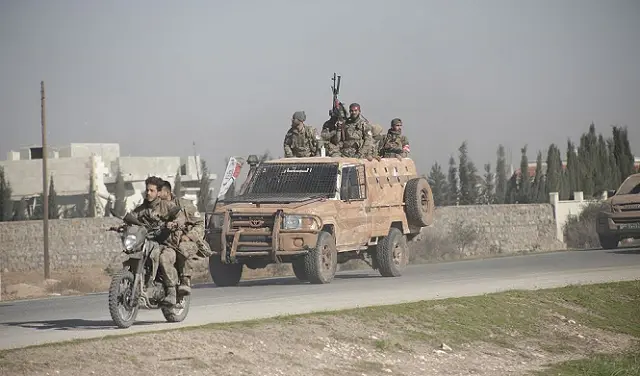
Syria: Fierce battles between regime forces and opposition factions in Hama countryside

Fierce battles are taking place between the Syrian regime forces and the opposition factions in the Hama countryside, with the continued advance and the "Deterrence of Aggression" operation launched by Hay'at Tahrir al-Sham and its allied factions last week.


The regime's SANA news agency reported on Wednesday morning that army units "continue their operations against the sites and axes of terrorist organizations' movements in the northern Hama countryside, and were able to expand the city's security zone by about 20 km after eliminating a number of terrorists and destroying their vehicles."


The Syrian Observatory for Human Rights reported that "Hay'at Tahrir al-Sham and the factions working with it within the 'Deterrence of Aggression' battle failed to control Jabal Zain al-Abidin near the city of Hama."


It added that "fierce battles erupted with the regime forces, which launched a counterattack after midnight on Tuesday-Wednesday, with air support from warplanes, during which they recaptured the villages of Kafr'a and Ma'arshhur, and pushed Hay'at Tahrir al-Sham away from the city of Hama by about 10 kilometers."


According to the Observatory, military reinforcements from the regime forces and the National Defense arrived at the northern, eastern and western axes of the Hama countryside, in addition to the arrival of local gunmen from the villages to the outskirts of Hama city.


Yesterday, Hay'at Tahrir al-Sham took control of Al-Samaqiyat, Kafr Ra'a, Ma'arshahur, Ma'ardis, the Al-Majanzarat School, which is considered the headquarters of the 25th Division and the 87th Brigade, the Batish checkpoint, and Rahbat Khattab, according to the Observatory.


On Tuesday, the "Deterrence of Aggression" forces led by Hay'at Tahrir al-Sham expanded their operations in the Hama countryside and reached the gates of Hama city. The organization cut off the main roads with Hama city towards Mahardah and al-Suqaylabiyah.


The death toll from the fighting since November 27 has risen to 605, including 299 from Hay'at Tahrir al-Sham and allied factions, 199 from regime forces and loyalist militias, and 107 civilians.

PALESTINE

Wed 04 Dec 2024 9:47 am - Jerusalem Time

Israeli forces launch a large-scale arrest campaign in the West Bank

The Israeli occupation forces launched a wide-scale arrest campaign in the West Bank at dawn and this morning, Wednesday.


In Qalqilya, five citizens were arrested from the city: Ahmed Al-Astal, Samer Al-Aqraa, Muhammad Jihad, Abdul Rahman Khalifa, and Suhaib Abu Hamed. Two citizens from the village of Azzun Atma, south of Qalqilya, were also arrested: Iyad and Yaqoub Al-Sheikh.


In Bethlehem, Mustafa Al-Saqa (19 years old) from Al-Jabal Street, Sajid Al-Asas from Al-Fawaghra neighborhood in the center of Bethlehem, and Muhammad Ayman Jaber (17 years old) from Al-Dheisheh camp were arrested after their families’ homes were raided and searched.


In Ramallah, the occupation forces arrested Jamal Ayman Mubarak and Majd Nael Sharakah from Jalazone camp.


The occupation also arrested the young man Ward Akef Al-Rimawi from Beit Rima, after raiding his family’s homes, searching them, and seizing an amount of cash amounting to 6 thousand shekels.


Meanwhile, the occupation forces stormed the village of Aroura, deployed in its streets, raided dozens of homes, detained more than 20 citizens, and subjected them to field investigation.


In Hebron, the occupation forces arrested the young man, Abdul Ghaffar Al-Deek, after searching his house and tampering with its contents.


In Tubas, six citizens from the town of Aqaba were arrested: Nashat Najeh Saleh Yassin Ghanem, Najeh Saleh Yassin Ghanem, Yassin Muhammad Yassin Al-Yassin, Laith Ahmad Yassin Ghanem, Ayham Rasim Yassin Ghanem, and Muhammad Hani Izzat Ghanem, in addition to the young man Basem Sati Yousef Daraghmeh from Tubas, while they were passing through the Deir Sharaf checkpoint northwest of Nablus.

PALESTINE

Wed 04 Dec 2024 9:32 am - Jerusalem Time

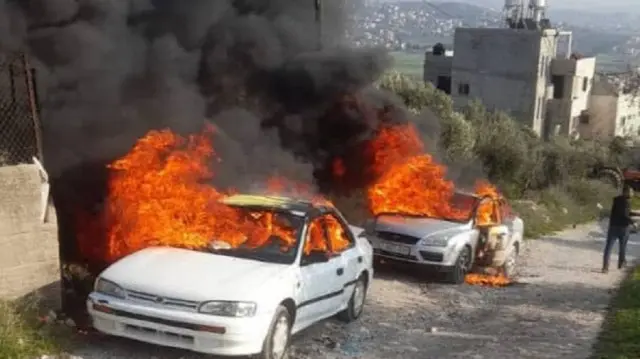
Israeli settlers burn two Palestinian houses, three vehicles and grocery stores in Nablus

This Wednesday morning, settlers burned two houses, three vehicles, and grocery stores in Nablus.


In the town of Furik, settlers attacked the town and set fire to a house under construction belonging to Omar Rabhi Adel Shahada, a grocery store belonging to Muhammad Nayef Hanani, a cargo vehicle belonging to Muhammad Rabhi Shahada, and a Ford vehicle belonging to Saja Muhammad Shahada.


Civil defense crews, with the support of Nablus Municipality Fire Department, extinguished the three fires.


In the town of Hawara, settlers attacked the town and set fire to a house under construction and two vehicles belonging to citizen Tayseer Ahmad Suleiman Awda.


The settlers carried out dozens of attacks in the town of Hawara, south of Nablus, the largest of which was in February 2023, when the settlers carried out a large-scale attack on the town, which led to the martyrdom of the young man Sameh Aqtash and the injury of about 100 citizens, and the burning of at least four houses and the destruction of others, in addition to the burning of dozens of vehicles and car garages.

PALESTINE

Wed 04 Dec 2024 9:29 am - Jerusalem Time

Fatah and Hamas Agreement: Support Committee for Unity of the West Bank and Gaza Strip

Hani Al-Masry: "Fatah" and "Hamas" agreed in Cairo to form a community support committee to manage Gaza.. and the reference is unclear

Ali Al-Awar: The Community Support Committee reflects an attempt to overcome political complexities, but it is a step that may marginalize the Palestinian cause

Dr. Ahmed Rafiq Awad: The Community Support Committee is an Egyptian and Palestinian attempt to deal with the difficult conditions left by the war

Dr. Ghassan Al-Khatib: What is being circulated about an agreement between Fatah and Hamas on the support committee is just leaks and press information only

Rasim Obeidat: The timing of the announcement of the formation of the committee is an attempt to block the path of non-Palestinian alternatives that may be imposed on the Strip


Despite the ongoing war of extermination waged by the occupying state on the Gaza Strip, and the absence of any prospect of ending it, meetings continued between the Fatah and Hamas movements in Cairo, to agree on a formula that can be passed internationally to manage the affairs of the Strip and alleviate the suffering of its residents.


Contrary to what was proposed months ago about a preliminary agreement between Fatah and Hamas to form a national consensus government, this matter was apparently met with a veto from Israel and behind it the United States, which insists on its refusal to participate in Hamas in any formula for managing the affairs of Gaza. An alternative was proposed, and an agreement was reached to form a “community support committee” to manage the affairs of the Strip, without an official announcement of its formation until yesterday, or whether it will carry out its work while the occupation of the Strip continues or after the withdrawal of the occupation army from it, and other details.


Analysts and writers spoke to “Y” about the importance of the timing of the announcement of the formation of this committee, as a Palestinian attempt to block the path of non-Palestinian alternatives that may be imposed on the Strip, and that the committee may be a compromise solution to deal with the circumstances imposed by the recent Israeli war.


A kind of concession to form a national unity government


Hani Al-Masri, Director General of the Palestinian Center for Policy Research and Strategic Studies - Masarat, said that according to media sources, the Fatah and Hamas movements agreed in Cairo to form a community support committee to manage the Gaza Strip, formed by a decree from the president.


He pointed out that its reference is not clear yet. Is it the Palestinian government? Or is it communicating with the government and coordinating with it? As well as the status of the governing institutions, including the security that existed in the Gaza Strip. An "international fund for the reconstruction of Gaza will be formed, supervised by donor countries and in which a representative of the Palestinian Ministry of Finance will participate."


Al-Masry stressed that the agreement has not been officially announced because the Fatah delegation will present the matter to the president, and this indicates either the existence of points of contention or most likely that the president will try to market the agreement to the Arab and international levels, noting that the most important thing is the American and Israeli; it has no value if it does not find acceptance, especially after the news of the existence of American efforts at the highest levels to form a committee to administer Gaza that has no connection to the Authority or Hamas, and will be armed and accompanied by a multi-national Arab force with the participation of American forces.


He considered that the committee included a kind of concession regarding the formation of a national unity government, a concession regarding control over the Gaza Strip, and a kind of acceptance of what Israel wants in some aspects, and the United States of America without anything in return.


Al-Masry wondered if there was approval for a comprehensive agreement that includes stopping the war of extermination and withdrawing from the Gaza Strip. Would the committee work under occupation, for example? I think the matter is still unclear, and I think it will not see the light.


Reaching a comprehensive agreement is extremely complex.


In turn, Ali Al-Awar, a specialist in resolving regional and international conflicts, said that the current developments in the Palestinian scene, especially the Fatah and Hamas talks in Cairo, reflect a change in the data compared to previous rounds.


He pointed out that the current political and field challenges make reaching a comprehensive agreement extremely complicated.


He added that Hamas is more convinced than ever of the necessity of political and social partnership with the Palestinian Authority, but it is still determined to maintain its presence and role in the Gaza Strip.


He continued: Despite Fatah's desire to regain full control over the Strip, it does not seem prepared to make major concessions to Hamas.


Al-Awar pointed out that the talk about the community support committee that was proposed as part of the negotiations reflects an attempt to overcome political complexities by addressing community issues, but it is a step that may marginalize the Palestinian cause.


He said: "The Palestinian issue, and the genocide and ethnic cleansing to which our people are being subjected, cannot be reduced to merely distributing humanitarian aid. The issue is much bigger and requires real political solutions."


Al-Awar stressed that the current situation requires the formation of a national unity government as an alternative to the current government, capable of facing political and field challenges.


Gaza catastrophe requires national entitlements that go beyond temporary solutions


He pointed out that the recent events in Gaza represent a new catastrophe that requires national entitlements that go beyond temporary or partial solutions.


He added: Fatah and Hamas must once again seriously consider the future of the Palestinian cause.


He referred to talk of a presidential decree issued by President Mahmoud Abbas appointing Rawhi Fattouh as Vice President, considering this a step towards new political arrangements within the Palestine Liberation Organization and in the occupied territories, which may be a prelude to the president’s exit from the political scene or the gradual transfer of power.


Al-Awar expected that the re-election of Donald Trump would lead to the introduction of new political arrangements on the Palestinian scene, especially with his control over the tools of pressure on Israel and its Prime Minister Benjamin Netanyahu.


He called on the Palestinian parties to exploit this stage to unify ranks and pressure for a ceasefire, and to protect the Palestinian people from the genocide that some Israeli generals acknowledge.


Al-Awar stressed that the Palestinian issue will remain a political issue par excellence, related to the establishment of an independent Palestinian state with Jerusalem as its capital, stressing that addressing humanitarian and administrative issues, such as managing the Rafah crossing or distributing aid, must be part of a comprehensive vision for a just political solution.
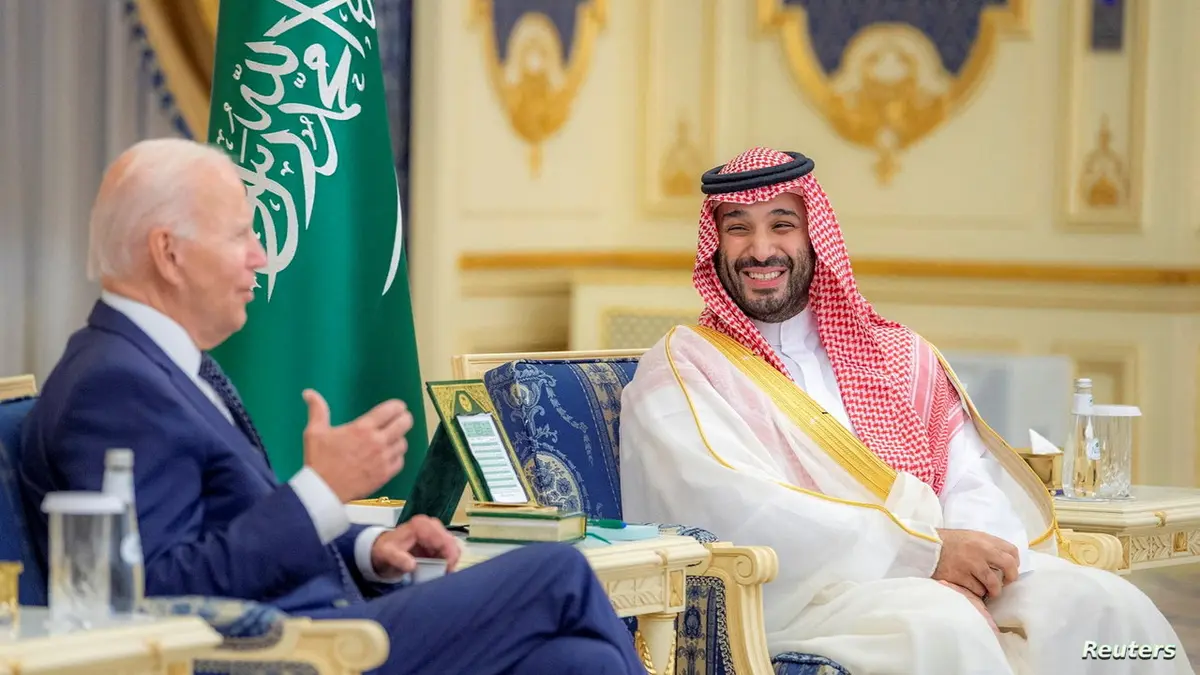


The committee is much less than a government and is loose in its relations.


For his part, Dr. Ahmed Rafiq Awad, Head of the Center for Future Studies at Al-Quds University, said that the Community Support Committee represents an Egyptian and Palestinian attempt to deal with the difficult conditions left by the war on the Gaza Strip, which led to widespread destruction and comprehensive devastation, in addition to transforming two million Palestinians into a state of poverty, disease and siege, in light of an extremely uncertain and worrying future.


Awad pointed out that this committee, if formed, would be much less than a government, and would be characterised by a loose nature in its relations with various parties, including the Palestinian Authority.


He added that the committee may be vague regarding its powers and the limits of its work, whether in time or place.


He explained that the formation of the committee represents an attempt to circumvent Israeli and American restrictions, which oppose the existence of Hamas or any central Palestinian authority running the Strip, as Israel explicitly rejects what it calls "Hamastan" or "Fatahstan."


He considered that the committee might be a compromise solution to deal with the circumstances imposed by the recent Israeli war.

Awad praised the Egyptian efforts aimed at forming a Palestinian body acceptable at the international and regional levels, capable of overcoming Israeli and American pressures and prohibitions.


Managing sector affairs quickly and practically


He added that these efforts come under compelling circumstances imposed by the war, and that the main goal of the committee is to manage the affairs of the sector quickly and practically, without waiting for the achievement of Palestinian reconciliation or the formation of a new government.


Awad stressed that forming the committee is not an easy matter, as it requires Palestinian, Arab and international approvals, which makes its birth a complex and challenging process.


He explained that the committee's work will be governed by many circumstances, including Israeli restrictions and narrow political margins, which makes it likely to fail.


Despite the expected difficulties, Awad stressed the importance of the committee, noting that it represents an acceptable Palestinian solution, especially since the Palestinian factions seem to agree on it.


He added: The compelling circumstances impose the need for a body to manage the sector, bring in aid, and care for the daily affairs of citizens.


Awad concluded his speech by stressing that the formation of the committee, despite the difficulties and challenges, represents a necessary and important step to deal with the humanitarian situation in Gaza.


He said: "We hope that the committee will succeed in light of the harsh circumstances, because it represents a glimmer of hope to alleviate the suffering of the population and manage the affairs of the sector at this critical stage."


Fears of Israel being exempted from its legal responsibilities


For his part, political analyst Dr. Ghassan Al-Khatib said: What is being circulated about an agreement between the Fatah and Hamas movements is still in the draft stage under review, pointing out the absence of any official announcement from the two parties regarding reaching a final agreement.


He added: "So far, what is being circulated are only leaks and press information, not official statements."


Al-Khatib explained that the draft circulated by the media raises fundamental questions about the nature of the work of the joint committee to be formed, pointing to a pivotal point, which is the work of the committee under the Israeli military occupation.


Al-Khatib wondered about the possibility of the committee working on civil affairs under the current occupation in the Gaza Strip, expressing his fear that this would lead to providing a service to Israel, by exempting it from its international legal responsibilities as an occupying power responsible for providing civil services to the population under its occupation.
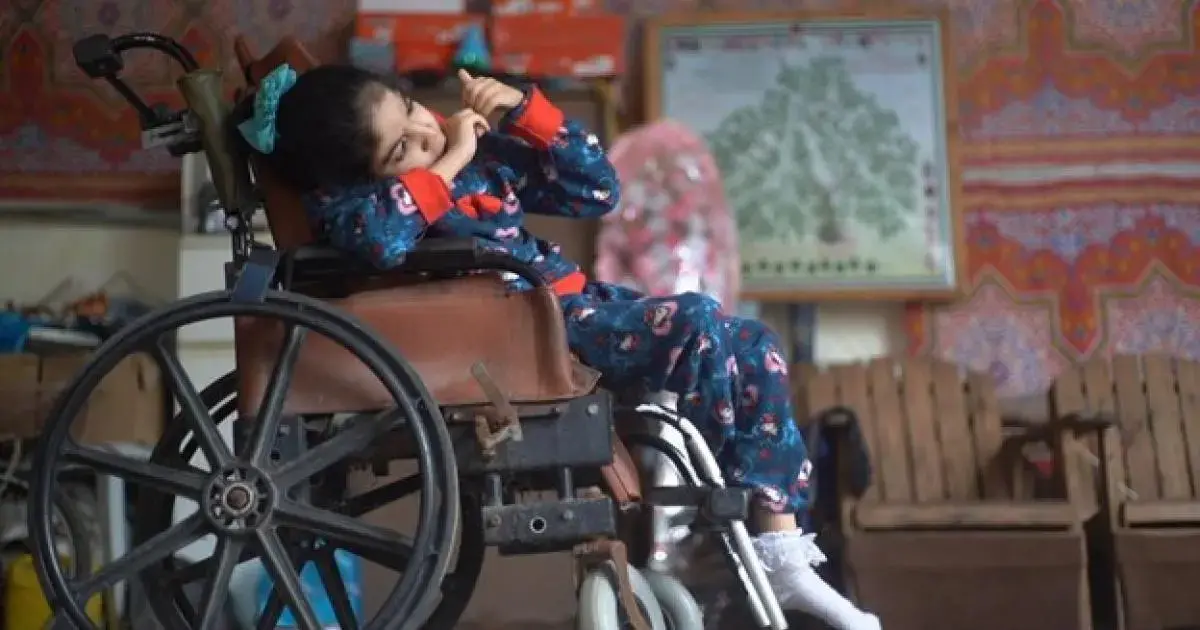

Al-Khatib pointed out that the draft did not address important issues related to the security aspect and the task of maintaining law and order, which are essential aspects of any agreement. He said: “These issues cannot be ignored, because achieving stability on the ground depends largely on the existence of clear mechanisms for maintaining security and order.”


Al-Khatib stressed that the success of this committee will be difficult in light of the continued occupation.


An important step to alleviate the suffering of the people of the Gaza Strip


In turn, the Jerusalemite political analyst Rasem Obeidat said: The formation of a committee to manage humanitarian and service affairs in the Gaza Strip represents an important step towards alleviating the suffering of the population and reorganizing the humanitarian situation in the Strip.


He explained that the committee, which is expected to be headed by the Palestinian government, will focus on the areas of reconstruction, education, health and the entry of aid.


Obaidat pointed out that if the committee is able to carry out its tasks according to a unified Palestinian vision, it may constitute an important development in addressing the humanitarian and service crises in the Strip.


However, he stressed that the success of this project depends largely on internal Palestinian consensus among the various forces, in addition to overcoming the challenges imposed by the Israeli occupation.


Obaidat stressed that the Israeli occupation opposes any steps that would strengthen the Palestinian administration in Gaza. He pointed to several obstacles that the occupation is working to impose: First: thwarting Palestinian efforts, as the occupation seeks to undermine any committee working to organize the sector by imposing measures that hinder its work.

Second: Geographical separation, whereby the occupation aims to divide the Strip geographically by imposing a long-term military administration. Third: Replacing Palestinian alternatives, whereby the occupation seeks to replace a civil administration subject to it or international administrations supported by regional or international parties as an alternative to the Palestinian Committee.


The success of the committee's work requires internal Palestinian consensus.


Obaidat pointed out that the chances of the committee's success depend on: First: achieving internal Palestinian consensus, so the Palestinian forces must agree on a clear framework for the committee's work, ensuring the prevention of external interference. Second: concluding field agreements, as Obaidat indicated that a ceasefire and a prisoner exchange deal could provide a positive climate that would allow the committee to work efficiently. Third: managing sensitive files such as the entry of aid, reconstruction, and resolving pending issues in a way that reflects the aspirations of the Palestinian people.


Obaidat said that the timing of the announcement of the formation of the committee carries important political implications, as it comes within the framework of Palestinian attempts to block the path of non-Palestinian alternatives that may be imposed on the Strip.


He stressed that Palestinian sovereignty over Gaza and its unity with the rest of the Palestinian territories, especially Jerusalem, must be a top priority to confront attempts at separation or imposing international guardianship.


Obeidat concluded his speech by pointing out that the success of this committee will depend on unifying internal Palestinian efforts and confronting Israeli and regional challenges.


Obaidat stressed that collective action is necessary to preserve Palestinian sovereignty and block plans that aim to undermine the unity of the Palestinian land and people.


PALESTINE

Wed 04 Dec 2024 9:27 am - Jerusalem Time

Please be aware... "Hurricane" is approaching!

Like the alarms that ring out to those arriving and departing in airport waiting rooms, the warning issued by the eccentric man deserves attention from the fearful, the dreamers, the deluded, and the confused who sit on the edges of the region's raging volcanoes.


Those who should pay most attention to the hurricane warning are those who have been struggling with the waves of the flood for more than a year, for whom its makers did not build a ship like the one Noah built for those who followed him, nor even a lifeboat to save them from its waves, if it turned back on them to drown them in it.


The hurricane warning requires caution, reconsideration, and preparation for all possibilities, including those that Trump threatened to bring upon the women and children of Gaza, that he would inflict upon them many times what his predecessor inflicted upon them, who bestowed upon his protégé the latest tools of destruction and devastation produced by his factories, which burned the crops and the offspring, and melted the flesh from the bones.


Trump returns roaring, threatening, and promising, and with him Trumpism returns as a racist approach and behavior, preceded by storms, like a wind that sweeps away everything that stands in its way, or anyone who tries to confront it.


The one drowning in the flood does not fear getting wet in the hurricane, so the children of Gaza will not be afflicted more than they were afflicted, but the man who raised the voices of the Arabs and Muslims is now reneging on his promises to them, and is unleashing the fire of his threat on them before he puffs up his feathers and sits on his throne.


May God help our people during Trump's four lean years.


Stop the genocide now..!

PALESTINE

Wed 04 Dec 2024 9:25 am - Jerusalem Time

Dead and wounded in Israeli continuous bombing of the Gaza Strip

A number of citizens were killed and injured, at dawn on Wednesday, as a result of the Israeli occupation bombing of several areas in the Gaza Strip.


Local sources reported that three citizens were killed and others were injured as a result of the occupation's raids on Deir al-Balah and a school housing displaced persons in al-Bureij camp in the central Gaza Strip.


It pointed out that the fire destroyed about 15 tents as a result of the occupation's bombing of Abu Hamisa School in Al-Bureij camp.

Medical crews recovered 9 martyrs as a result of the occupation's bombing yesterday, Tuesday, of citizens east of Rafah city, south of the Gaza Strip.


The occupation artillery also bombed the homes of citizens in the Tel al-Hawa and al-Sabra neighborhoods in Gaza City, while the occupation helicopters fired towards the northern areas of the Gaza Strip, while the occupation continued its bombardment of Beit Lahia, especially in the vicinity of Abu Tamam School and Kamal Adwan Hospital.


The Israeli occupation forces have continued their aggression on the Gaza Strip, by land, sea and air, since October 7, 2023, resulting in the death of 44,502 citizens, the majority of whom are women and children, and the injury of 105,454 others, in an incomplete toll, as thousands of victims are still under the rubble and on the roads, and ambulance and rescue crews cannot reach them.

PALESTINE

Wed 04 Dec 2024 9:14 am - Jerusalem Time

Al-Quds monitors the numbers of people with disabilities, their needs, and their exposure to slow death


Disability pandemic sweeps the sector

Director of Hospitals Marwan Al-Hamas to “Y”: More than 25 thousand disabled people in the sector

Gaza Strip has the highest number of children with disabilities in the world

Most of the injuries resulted in amputation of the lower limbs and most of the children lost their feet.

Lack of equipment and devices, no wheelchairs or crutches


"If my needs are not met, I will die," said Mohammed Al-Dhani, a young man with disabilities, as he began to narrate his suffering in light of the lack of his basic needs due to the ongoing Israeli war on the Gaza Strip.


Yesterday, the Palestinian NGO Network organized a press conference for people with disabilities on their international day, which is held on December 3 of each year.


In a wheelchair, Mohammed was present at the conference, hoping that his voice would reach the whole world. He told “I” and “Al-Quds” Dot Com: “The war has greatly affected my health, and I have begun to suffer from several problems, the most important of which is the kidney.”


"Every minute that passes, I have a problem," he adds.


The suffering is not limited to health problems only, but Muhammad also suffers from the lack of his basic needs as a young man who has suffered from a motor disability since birth.


He added: "I need diapers, but I don't have any and they are unavailable in the market. Even if they are available, their price is very high and I cannot afford to buy them."


He added: "This is the second year during the war that I celebrate the International Day of Persons with Disabilities, and we go out and hold sit-ins, but in vain no one is looking at our cause."


Mohammed called on all institutions concerned with people with disabilities to provide their basic needs more widely.


He also called on the entire world to look at people with disabilities in a positive and humane way, in order to open the crossings and evacuate them abroad to receive appropriate treatment.


On the other side, the young woman, Bahiya Al-Shaghnouni, sits in a wheelchair, demanding to travel abroad to complete her treatment.


She told Al-Quds.com: “My treatment has been suspended since the war began, and I am currently not receiving any type of treatment.”


Bahiya suffered a spinal fracture, leaving her bedridden and wheelchair-bound.


She continues: “Before the war, I was following up with physical therapy specialists, and I was receiving my treatment at the appropriate time.” She adds with frustration: “It has been two years since I received treatment. I wish I could travel and receive treatment abroad.”


In turn, the director of field hospitals in the Gaza Strip, Marwan Al-Hamas, told Al-Quds.com: “More than 25,000 people have been disabled since the beginning of the war, especially children, as the largest disability among children in the world is the children of Gaza.”


He added: "Most of the injuries result in amputation for children, especially their lower limbs. Some of them lose their feet below the knee, and the vast majority lose their feet above the knee."


Al-Hamas explained that people with disabilities suffer from a lack of special devices and tools, adding: “There are no wheelchairs or crutches to lean on, not to mention the lack of electric carts for those suffering from hemiplegia.”


He stressed that the Israeli occupation is deliberately killing them slowly, by preventing the entry of any devices that help people with disabilities, noting that they are also deprived of traveling to receive treatment.

PALESTINE

Wed 04 Dec 2024 9:06 am - Jerusalem Time

A young Palestinian succumbs to his wounds in occupied Jerusalem

A young man died today, Wednesday, from his wounds after being shot by the Israeli occupation forces yesterday in the occupied city of Jerusalem.


The Jerusalem Governorate announced the death of the young man Omar Hussam Yaqoub Shuwaiki (17 years old), who succumbed to his wounds from the occupation forces’ bullets in the town of Silwan, south of the blessed Al-Aqsa Mosque, where they arrested him, despite his serious injury.

PALESTINE

Tue 03 Dec 2024 10:09 pm - Jerusalem Time

Israeli forces shoot and arrest a young Palestinian south of Jerusalem

The Israeli occupation forces shot and arrested a young man, Tuesday evening, in the town of Silwan, south of the blessed Al-Aqsa Mosque.


The Jerusalem Governorate reported, in a brief statement, that the occupation forces opened fire on a young man whose identity has not yet been determined, in the town of Silwan, and arrested him after he was injured.


In the same context, the governorate stated that the occupation forces stormed the town of Hizma, northeast of occupied Jerusalem, without any arrests being reported.

ARAB AND WORLD

Tue 03 Dec 2024 9:46 pm - Jerusalem Time

Macron: French-Saudi conference in June 2025 to support the establishment of a Palestinian state

French President Emmanuel Macron announced during his official visit to Saudi Arabia that France and Saudi Arabia will jointly chair a conference in June 2025 to support the establishment of a Palestinian state, according to AFP.


Macron explained, in a statement to reporters, that the two countries will work in the coming months to enhance diplomatic efforts and bring together international parties to advance this path.


He added: "We decided to co-chair a conference on the two states next June," noting the importance of unifying international initiatives to achieve progress in this file.


When asked about the possibility of France recognizing a Palestinian state, Macron confirmed that he intends to do so "at the appropriate time," noting that this step may be linked to international movement that includes mutual recognition between the parties.


The French President also stressed the need to launch a recognition movement that would guarantee Israel's security and convince the concerned parties that the two-state solution is the most appropriate option for all.


PALESTINE

Tue 03 Dec 2024 9:25 pm - Jerusalem Time

Clashes with Israeli occupation east of Nablus

Clashes erupted with the Israeli occupation forces, Tuesday evening, east of the city of Nablus.


According to local sources, the occupation forces stormed the eastern part of the city, which led to the outbreak of clashes in the Al-Masakin Al-Sha'biya neighborhood, during which the occupation forces fired sound bombs and toxic tear gas, without reporting any injuries.

ARAB AND WORLD

Tue 03 Dec 2024 8:17 pm - Jerusalem Time

South Korea opposition: Declaring martial law 'unconstitutional'

South Korea's opposition Democratic Party leader Lee Jae-myung on Tuesday called President Yoon Suk-yeol's declaration of martial law in the country an "unconstitutional" decision.


According to South Korea's Yonhap news agency, the leader of the opposition Democratic Party described the martial law decision as an "unconstitutional and anti-people move."


"President Yoon declared martial law for no reason, and soon tanks, armored vehicles and soldiers with guns and swords will take over the country," he added.


Earlier today, South Korean President Yoon Suk-yeol declared "martial law" across the country, accusing the opposition of engaging in anti-state activities.


He explained in a television interview that martial law aims to eliminate pro-North Korean forces and maintain freedom and constitutional order in the country.


Martial law is a set of exceptional rules and measures that a state resorts to under emergency circumstances that allow it to temporarily suspend all or some of the laws in force in it, to ward off the dangers to which the country is exposed.