PALESTINE

Tue 03 Dec 2024 6:02 pm - Jerusalem Time

Blinken stresses to Dermer the need to end the war on Gaza and release the detainees

US State Department spokesman Matthew Miller said on Monday that US Secretary of State Anthony Blinken met with Israeli Minister of Strategic Affairs Ron Dermer on Monday to discuss the importance of ending the war in Gaza and returning all hostages held by Hamas.


“Secretary of State Antony Blinken met today with Israeli Minister of Strategic Affairs Ron Dermer and emphasized the importance of returning all hostages home and ending the war in Gaza,” Miller said in a statement from the secretary’s office on Monday evening.


“Secretary Blinken and Israeli Minister Dermer also continued discussions on how to chart a path forward in the post-conflict period that provides governance, security, and reconstruction, which the Minister emphasized is critical to Israel’s security. He discussed the humanitarian situation in Gaza and emphasized that Israel must do more to facilitate the delivery of humanitarian assistance throughout Gaza. The two Ministers discussed the importance of implementing the recently announced ceasefire in Lebanon to allow Israeli and Lebanese civilians to safely return to their homes and remain there for the long term,” the statement said.


Miller concluded his statement by saying: "The Secretary affirmed the United States' unwavering commitment to Israel's security against threats from Iran and its affiliates."


It is noteworthy that there is a lot of talk in the American capital about discussions currently underway regarding reaching an agreement under which there will be a ceasefire in Gaza, the entry of humanitarian aid, and the release of the Israelis held in Gaza, without there being any specific official statements regarding this.


Hamas insists on the withdrawal of all Israeli occupation forces from the entire Gaza Strip as a condition for the release of the detainees.


President-elect Donald Trump issued stern threats to Hamas on Monday, threatening an unprecedented response if the hostages were not released before he takes office on January 20.


Trump wrote on his Truth Social platform, “If the hostages are not released... the price will be paid in the Middle East, as well as for the officials who committed these atrocities against humanity.”

ARAB AND WORLD

Tue 03 Dec 2024 5:26 pm - Jerusalem Time

Israeli raid near Damascus kills Hezbollah liaison officer with Syrian army

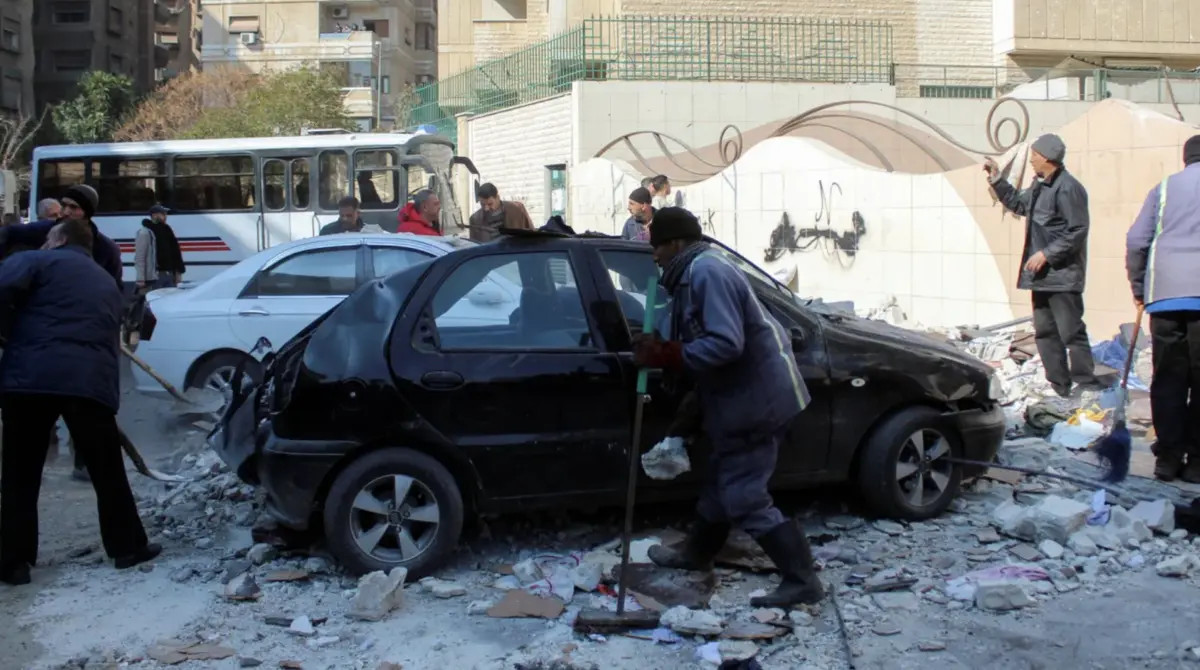
An Israeli air strike on a car near the Syrian capital Damascus on Tuesday killed Salman Jumaa, a senior Hezbollah figure in charge of liaising with the Syrian military, a Lebanese security source told Reuters.


The official Syrian Arab News Agency reported the airstrike on the airport road, but did not provide details on casualties. There was no immediate comment from the Israeli military.


Israel rarely acknowledges its strikes in Syria, where it has waged a years-long air campaign against what it says are Iranian military assets and those of Iran’s allies, including Hezbollah.


In a rare announcement last month, Israel said it had struck Hezbollah intelligence assets near Damascus.

PALESTINE

Tue 03 Dec 2024 5:20 pm - Jerusalem Time

Yedioth Ahronoth: Indications that the Israeli occupation of Gaza will continue for years

A new report by Yedioth Ahronoth military correspondent Yoav Zeitoun reveals that the Israeli occupation of the Gaza Strip could continue for years due to a range of military and security challenges it faces there.


The correspondent's extensive report attempts to shed light on what he said were the practical reasons that led the occupation army to expect this, represented by the continuation of the Palestinian resistance, the desire to secure the settlements surrounding Gaza, and to fortify the Philadelphi Corridor on the border with Egypt under the pretext of preventing the smuggling of combat equipment into Gaza.


Demolition and displacement under the pretext of security

Zaitoun highlights the policy of accelerated house demolitions in Gaza as an essential part of the Israeli military strategy, which aims to remove buildings and homes and level them to the ground under the pretext of removing the threat to settlements in the Gaza envelope.


In this context, he points out that the occupation forces have leveled many neighborhoods in the city of Beit Hanoun and other areas, such as the “Officers’ Towers” in the Shuja’iyya neighborhood and “Khirbet Khuza’a,” which has led to the displacement of thousands of Palestinian residents and the destruction of their livelihoods.


In the Netzarim corridor north of the Gaza Strip, the correspondent says it has been expanded to an area larger than Tel Aviv. He also notes that the occupation forces are nearing completion of the buffer zone, which is an average of one or two kilometers wide on the Palestinian side of the border, and the project covers about 95 percent of the planned area, while the search and destruction of Hamas tunnels continues.


He says that this buffer zone is not just a military zone, but rather part of a broader plan aimed at destroying the infrastructure of the Palestinian resistance and preventing the entry of any new threats into Israel.


He also points to the escalation of this policy in the Philadelphi Corridor, with the aim of expanding the buffer zone on the border. He says, “The demolition in this area is part of the army’s efforts to secure an area 2 to 3 kilometers wide, where it destroys Palestinian buildings that could threaten the lives of Israeli soldiers in the area,” he claims.


In this context, he describes the Philadelphi Corridor, which the Israeli army recently expanded as a road from Kerem Shalom to the sea (14 kilometers), and says, “The corridor has changed beyond recognition. The main engineering activity here is the demolition of homes that could endanger soldiers, and the leveling process is being carried out systematically to empty the border strip from Rafah to Sinai of homes.” He adds, “In the Shabura neighborhood alone, the forces have demolished 300 homes.”


The report attributes the Israeli measures to strengthening control over the Philadelphi crossing, reducing Hamas’s ability to move inside and outside the Strip, and preventing any smuggling operations or support for the Palestinian resistance from Egypt, which reinforces the need for Israeli forces to remain for long periods by imposing tight control over this area, and the area in northern Gaza, according to the writer.


While the military correspondent focuses on the fact that these measures, especially in northern Gaza, aim to “achieve security and stability for the settlements” in the Gaza envelope area, he ignores the fact that they have become a means of imposing demographic changes and creating future settlement facts in Gaza in order to achieve the vision of the extreme right in the Israeli government.


Hamas is rehabilitating itself

The military correspondent then moves on to talk about the situation in Gaza City itself (which the Israeli army has not raided for several months), where he reports from the occupation forces that the Qassam Brigades - the military wing of Hamas - is rehabilitating itself by recruiting new fighters, and trying to manufacture weapons such as drones that can carry a hand grenade.


"Hamas forces in Gaza City have leaders, even a brigade commander who has not yet been eliminated and prefers to operate out of sight," he added.


He also confirms the continued strength of Hamas south of the Netzarim corridor, and claims that "the Israeli army has not yet maneuvered there for fear of the presence of the kidnapped people," and points out that the more the population of the southern Gaza Strip is displaced north of Rafah and the border from the east, the more densely populated Nusairat is, reaching Deir al-Balah and the neighboring Mawasi.


He also warns that one scenario the Israeli military is considering is a sea attack on its forces in the western Netzarim corridor.


In light of these measures, the Palestinian resistance remains the biggest challenge facing the Israeli occupation, as the report confirms that Hamas continues to use tunnels to launch attacks on Israeli forces, which makes it difficult for the occupation to completely end its operations in the Gaza Strip.


He gives an example of this, saying that Hamas has so far killed about 30 Israeli soldiers and officers in the northern Gaza Strip, at a rate of one soldier or officer every two days, including the commander of the 401st Brigade, Colonel Ihsan Daqsa.


PALESTINE

Tue 03 Dec 2024 4:24 pm - Jerusalem Time

Hamas and Fatah agree to form a committee to administer Gaza

An informed Palestinian source confirmed that an agreement was reached between the Fatah and Hamas movements to form a committee called the “Community Support Committee” to administer the Gaza Strip the day after the war.


The source told Asharq Al-Awsat that the final agreement on the committee was reached after talks in Cairo, pending the matter being presented to President Mahmoud Abbas for approval and the issuance of a presidential decree regarding it.


The two-page document defines the committee as the body that will administer the Gaza Strip under the authority of the Palestinian government in Ramallah. The document includes six criteria for establishing the committee, which are: preserving the territorial integrity of the “Palestinian state” within the 1967 borders (in the West Bank, Jerusalem, and Gaza); communication between the Palestinian government in the West Bank and the committee in the Strip; that it be subordinate to the Palestinian political system; that the establishment of the committee not lead to the separation of Gaza from the rest of the Palestinian territories; that the formation of the committee take into account the selection of independent and qualified Palestinian national officials; and that the committee administer, coordinate with, and benefit from all local authorities in the Strip. The sixth criterion is that the committee’s work will continue until the reasons that led to its establishment are eliminated, or general elections are held, or another agreed-upon formula is adopted. This will be by national agreement and a decision by the President of the Palestinian Authority.


The Palestinian Authority and Hamas resorted to forming a support committee in the Strip, in an attempt to confront Israeli, regional and international attempts to bypass them.


Two sources from Fatah and Hamas said that there are persistent attempts to exclude the PA and Hamas from the “day after the war.” They added: “There are several proposals and discussions about who should govern the Strip, and that does not even include the Palestinian Authority.” They stressed that the message that the agreement is intended to send to this committee is that “the decision on the day after the war is a purely Palestinian issue.”


Over the past few months, the United States has been discussing with allies and partners, including Israel and regional states, a plan for the day after in Gaza, including a mix of Palestinian, Arab and international forces, a possible role for Palestinian officials abroad, American advisers, security companies and families. So far, Israeli Prime Minister Benjamin Netanyahu has maintained that the Palestinian Authority will not take over Gaza after the war, and has used his famous slogan, “No Fatahstan (Fatah), no Hamasstan (Hamas).”


Under the agreement, the committee will be affiliated with the Palestinian Authority, and will be responsible for providing and distributing humanitarian aid, managing civil affairs, and supervising the reconstruction of the Gaza Strip and the Rafah crossing.


The document stipulated that the committee would take over the Rafah crossing in accordance with the 2005 crossings agreement, which stipulates that the Authority would manage the Rafah crossing from the Gaza Strip side, with the presence of international observers there (a European mission) and a mechanism that would ensure Israeli security oversight from afar. This agreement, which addressed other crossings and even the presence of a seaport and a passage to the West Bank, was in effect for a short period before Hamas took control of the Gaza Strip in 2007, and then took over the management of the Rafah crossing with the departure of the Authority and foreign missions. The United States and the European Union support a return to the agreement, but Israel refuses and does not want any official Palestinian Authority presence so far, and has offered a symbolic presence there.


The agreement between Fatah and Hamas, sponsored by Cairo, came as part of a broader plan that mediators are working on in order to reach a prisoner exchange agreement and a final cessation of the war in the Strip, followed by Israel’s withdrawal.


Israeli and Hamas officials have expressed some optimism about the possibility of advancing a deal in the Gaza Strip, though it was not immediately clear whether it would mean an end to the war or a prelude to it.


Last Saturday, Asharq Al-Awsat published that Hamas is more open than ever to a “gradual” agreement in Gaza similar to the Lebanon agreement, and this includes the movement’s readiness to accept a gradual agreement.


According to Asharq Al-Awsat sources, the movement is prepared to accept a gradual Israeli withdrawal from the Gaza Strip, including the disputed axes, such as the Philadelphi and Netzarim crossings. Hamas is also willing to have the Palestinian Authority assume responsibility for the Rafah crossing, especially if this would help open it immediately.


Regarding the “day after the war,” Hamas, according to the sources, agrees to facilitate the work of the committee agreed upon with the Authority to take over the management of the Strip, and agrees to Arab supervision, and has no objection to the Arab countries having a clear role in rescuing and reviving the Gaza Strip again.


The agreement with Lebanon prompted the United States and mediators to renew efforts for an agreement in Gaza, and it raised optimism in Israel and among Hamas about a possible agreement, although each side sees and wants it differently. The statement by US President-elect Donald Trump, in which he warned the Middle East of hell if an agreement is not reached before he takes office on January 20, put additional pressure on Israel, Hamas and the mediators.


While waiting for an agreement to be reached in Gaza, the Palestinians will work to obtain Arab approval for the committee’s work and market it to the United States and the West, in an attempt to persuade Israel to agree to it.


The sources said that the committee will work temporarily until the picture becomes clearer, and until the Palestinian Authority can regain control of the Gaza Strip. The paper touched on forming an international fund to rebuild the Gaza Strip, and continuing work on the Strip’s outlets according to the mechanism that was followed before the war, but it did not touch on the most sensitive issues, such as security control, weapons, and security services in the Gaza Strip, which are the most complex issues, and are largely linked to Israeli, American, and Arab approval.

PALESTINE

Tue 03 Dec 2024 2:49 pm - Jerusalem Time

Israeli forces demolish a house and an agricultural facility west of Bethlehem

Today, Tuesday, the Israeli occupation forces demolished a house and an agricultural facility in the town of Nahalin, west of Bethlehem.


According to local sources, these forces demolished the inhabited house of citizen Ahmed Jamil Awad, located in the "Qarnat Al-Damas" area to the south, with a total area of 150 square meters, on the pretext of not having a license.


She added that clashes erupted at the site of the demolition, where the occupation forces fired tear gas and sound bombs, which led to a number of citizens suffering from suffocation.


An agricultural facility owned by citizen Muhammad Mahmoud Safi was also demolished, which consisted of a nursery, an agricultural room, a bathroom and a kitchen, in addition to another agricultural room owned by citizen Ibrahim Awad, under the pretext of not having a license.


ARAB AND WORLD

Tue 03 Dec 2024 2:36 pm - Jerusalem Time

Washington welcomes banking relationship between Israel and the Palestinian Authority, denies making concessions to Smotrich

The United States on Monday welcomed the Israeli government's decision to approve a one-year extension of its compensation to Israeli banks, which supports correspondent banking relations between Israeli and Palestinian banks.


Economic stability in the West Bank is "critical to security on both the Israeli and Palestinian sides," a joint statement by the US State Department and Treasury said Monday.


The statement, a copy of which was received by Jerusalem, said: “The United States welcomes the decision of the Government of Israel to approve a one-year extension of its compensation to Israeli banks, which supports correspondent banking relationships with their Palestinian counterparts. Economic stability in the West Bank is essential to Israeli and Palestinian security, and correspondent banking is a fundamental pillar of that economic stability. The United States appreciates continued cooperation with the Government of Israel and the Palestinian Monetary Authority on this issue.”


State Department spokesman Matthew Miller expressed his relief at the decision, but also some frustration with the Israeli actions, noting: “We had extensive discussions with the government of Israel about the intent to extend this correspondent banking agreement, and the discussions were longer and more intensive than they should have been.”


“Clearly, canceling this agreement would have had disastrous consequences for the Palestinians in the West Bank, but the point we have been making to the government of Israel is that it would have had disastrous consequences for the Israeli public as well,” Miller explained. “It is not in Israel’s interest to see further instability in the West Bank. It is not in Israel’s interest to see the West Bank economy collapse. So it is very disappointing that it has taken this long to convince the government of Israel to extend this agreement for a year, which it should have done through normal business without any intensive diplomatic efforts by the United States.”


Spokesman Miller denied that there was a deal in exchange for this resolution, in which the United States pledged to Finance Minister Smotrich to use its veto in the UN Security Council against any draft resolution in the Security Council to cease fire in Gaza, saying: “Now, having said this, with regard to the UN Security Council, we will continue to look at every resolution that comes before the UN Security Council, and judge whether a yes vote, a no vote, or an abstention vote is in the interest of the United States, and we will make our judgments on that basis and nothing else.”

PALESTINE

Tue 03 Dec 2024 2:33 pm - Jerusalem Time

The Council of Ministers decides to rent a headquarters for aid and form a committee to review the conditions of the electricity company in Gaza

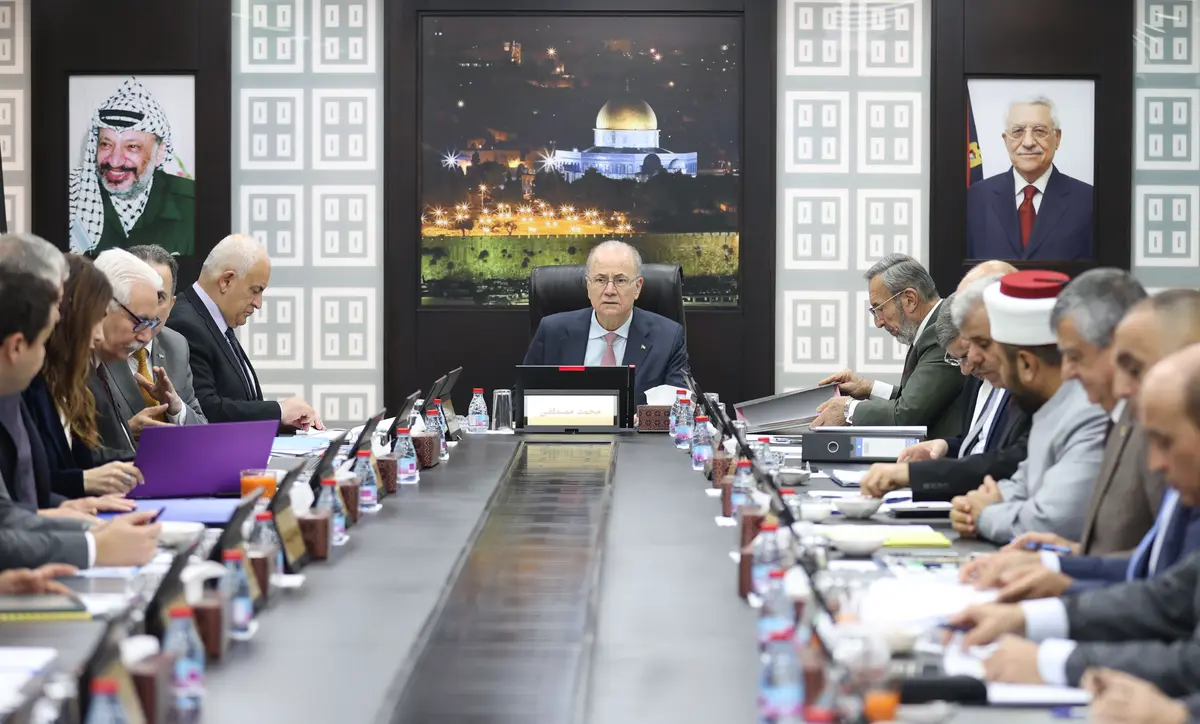
The Cabinet decided, on Tuesday, to rent an emergency headquarters to mobilize and receive aid inside the Strip, especially in light of the occupation’s targeting of a number of previous warehouses, and the need to organize the process of distributing aid to those who deserve it.


During the ministerial session held in Ramallah, he also decided to form a committee to evaluate the conditions of the Gaza Electricity Distribution Company and its employees and rectify their situation.


Prime Minister Mohamed Mustafa reviewed the outcomes and discussions of the Cairo Ministerial Conference to enhance the humanitarian response in the Gaza Strip, and stressed the need to intensify international pressure on the occupation to resume the entry of aid and planning for emergency relief, and support the United Nations Relief and Works Agency for Palestine Refugees (UNRWA), renewing his thanks to sisterly Egypt for hosting the conference in which 103 delegations from various countries, organizations and international bodies participated.


The Council of Ministers reiterated the State of Palestine's categorical rejection of any attempt to perpetuate the occupation in the Gaza Strip, reduce its geography, or cut off any part of the territory of the State of Palestine.


The Council also discussed government interventions to repair the effects of the Israeli invasions of the West Bank governorates, and thanked the various institutions and cadres working to serve our people, especially the cadres of the Civil Defense, Public Works, local authorities, and partners from the Chambers of Commerce and various institutions, for their active and collaborative role in rehabilitating roads and infrastructure to enhance the steadfastness of our people.


He also approved the appointment of a management committee for the municipal council in Jayyous in Qalqilya Governorate, especially after the resignation of more than half of the members of the previous council.


On the occasion of the International Day of Persons with Disabilities, which falls today, 3/12, the Council of Ministers paid tribute and appreciation to people with disabilities, stressing the continuation of work to integrate them more into the structure of institutions, and defending their issues, especially their suffering due to the continued aggression against our people in the Strip, as estimates by the Palestinian General Union of Persons with Disabilities indicate that the occupation has caused the disability of more than 90 thousand citizens since the beginning of the aggression on Gaza.


The Council welcomed the President’s issuance of the decree amending the State Property Management Law, which included new standards that would facilitate the process of citizens renting state lands, especially in areas close to the racist separation wall or areas targeted by colonialism, in order to benefit from them and invest in them to protect them from seizure.

ARAB AND WORLD

Tue 03 Dec 2024 2:28 pm - Jerusalem Time

Report: Militias in Syria have access to chemical weapons, which will force Israel to target them

The Israeli army threatens that if forces from the Syrian opposition militias or from the militias loyal to Iran reach the regime's stockpile of chemical weapons, "Israel will be obligated to target these capabilities through a military operation that will affect Syria and the entire Middle East," according to the Haaretz website today, Tuesday.


Israel fears that these militias will gain access to "sensitive means that pose a major threat to Israel, especially advanced weapons such as missiles."


Most of the chemical weapons were removed from Syria after an agreement between the regime and international parties after the civil war, but the newspaper considered that "a large part of the project, especially the experience that has accumulated over the years, still exists."

The newspaper added that Israel conveyed a message to the Syrian regime, through the Russians, demanding that it "insist on its sovereignty and demand that Iran prevent its activities on Syrian territory."


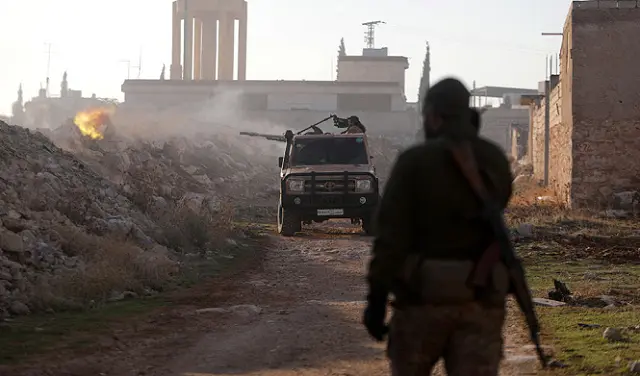
The Israeli army is following with "concern", according to the newspaper, the opposition militias' attack on the Syrian regime's strongholds, which began last week. Israeli intelligence sources estimate that "the Syrian president's position has weakened, and Iran, with Russian support, is exploiting the chaos to bring in tens of thousands of militants from the militias it supports," according to the newspaper.


The Israeli army estimates that there are about 40,000 members of the Iranian militias in Syria, whom the Israeli army is trying to target.


The Israeli army has been attacking the Syrian-Lebanese border area daily, claiming to prevent attempts to transfer weapons to Hezbollah, since the start of the ceasefire between Lebanon and Israel, which has been marred by Israeli violations in particular.


The newspaper pointed out that despite the lack of evidence that Iranian forces will settle in Damascus, an Israeli political official considered this a fact, and claimed that "Iran has begun pumping forces into Syria in an attempt to support the Assad regime and suppress the rebellion."


There was a fear among the Israeli political level that “the Syrian regime would not be able to suppress the rebellion, and that global terrorist organizations would control areas adjacent to the border with Israel.”

PALESTINE

Tue 03 Dec 2024 2:26 pm - Jerusalem Time

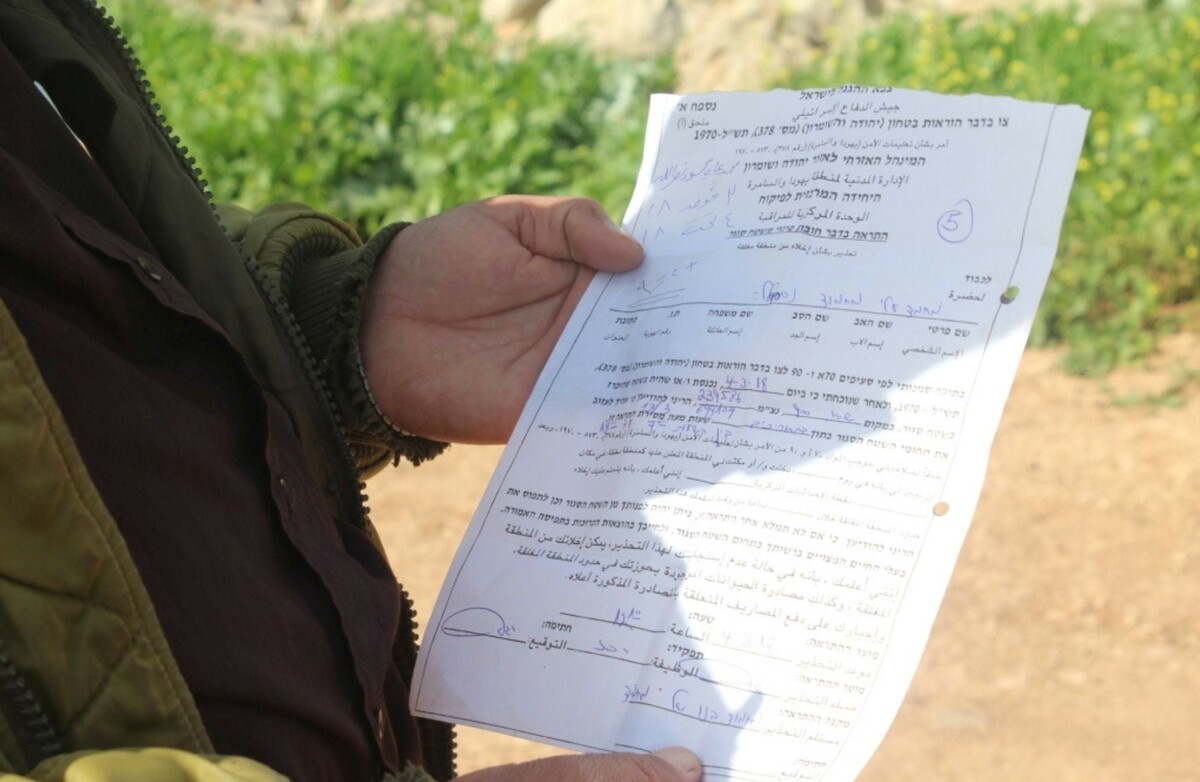
Israeli delivers demolition notices for school and homes south of Hebron

Today, Tuesday, the Israeli occupation forces delivered demolition notices to a school and three houses in Masafer Yatta, south of Hebron. The settlers also chased the farmers and prevented them from plowing their land.


According to local sources, these forces delivered notices to demolish the Khallet Amara School, in the Umm al-Safa area in Masafer Yatta, and prevented residents from continuing to work there, noting that this school consists of six mobile classroom units, which the occupation had demolished about a few months ago.


It also delivered notices to demolish the homes of citizens Ibrahim Ali Hussein Daoud, Zaid Jabreen Daoud, and Saeed Alian Awad, and to stop work on the home of citizen Salah Muhammad Al-Adra, noting that these homes are inhabited and their area is estimated to be between 150-200 square meters.


PALESTINE

Tue 03 Dec 2024 2:24 pm - Jerusalem Time

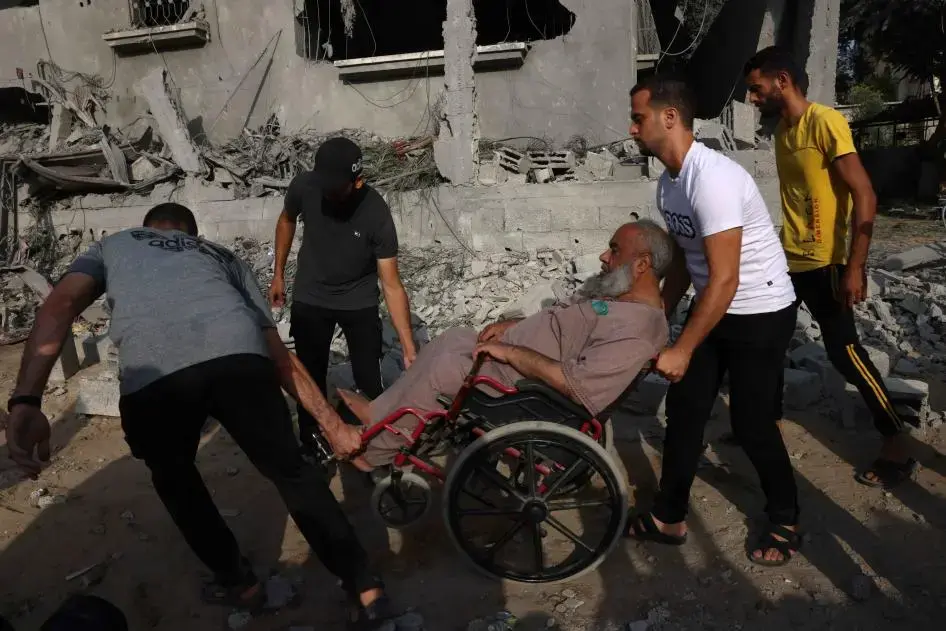
On the International Day of Persons with Disabilities: More than 26 thousand injured in the Gaza Strip during the aggression

The Central Bureau of Statistics said, “The number of serious injuries that changed the course of life in the Gaza Strip and require continuous rehabilitation was estimated at about 25% of the total number of injuries, i.e. no less than 26,140 people, until 11/24/2024.


The statistics department explained in a statement issued on the occasion of the International Day of Persons with Disabilities, which falls today, that in light of the ongoing Israeli aggression on the Gaza Strip, persons with disabilities are suffering from catastrophic humanitarian conditions, exacerbated by the widespread destruction of infrastructure and basic services and their exposure to tragic displacement conditions, in addition to the difficult psychological trauma they are exposed to.


In his statement, he relied on a report issued by the World Health Organization on 30/7/2024, on an analysis of the types of injuries resulting from the war, in which daily reports issued by Emergency Medical Teams (EMT) data were used in the period from 10 January to 16 May 2024, to estimate the number of serious injuries requiring ongoing care and rehabilitation in Gaza. These cases include between 13,455 and 17,550 serious injuries to the limbs, in addition to 3,105 - 4,050 amputations, most of them of the lower limbs.


In addition, the same report estimated that there were approximately 2,000 spinal cord and brain injuries, and the number of burn injuries was estimated at at least 2,000. Spinal cord injuries and burns require immediate treatment and rehabilitation to prevent long-term effects that may result in permanent disabilities.


About 10 children have their limbs amputated every day.

He pointed out in his statement that the Israeli aggression had had disastrous effects on children in the Gaza Strip, which were represented by serious physical injuries that left long-term effects on their health and lives. They may need repeated surgeries and expensive medical treatments, and the injuries may lead to permanent disability and incapacity.


Reports issued by the Ministry of Health indicated that 70% of the total number of wounded, which amounted to 104,567, until 11/24/2024, were children and women.


According to a report issued by Save the Children, citing UNICEF in January 2024, more than 1,000 children had their limbs amputated, an average of more than 10 children per day, during the first three months of the aggression.


Destruction of the health sector doubles the suffering


The situation of the injured has been exacerbated by the systematic destruction of hospitals and rehabilitation centres, as well as severe restrictions on the evacuation of patients and limited access to assistive devices such as wheelchairs, crutches and hearing aids, and severe shortages of medical supplies and essential consumables.


He explained that this systematic attack on health facilities and medical staff has limited the health system's ability to provide necessary treatment to the injured, especially those suffering from serious injuries such as spinal cord injuries and burns, which require immediate treatment and intensive rehabilitation to prevent long-term effects.


Amid this devastation, access to basic treatments and specialist services has become almost impossible, further worsening their health and putting their lives at grave risk.


Currently, only 17 of the 36 hospitals remain partially functional, while primary healthcare is frequently suspended or inaccessible due to insecurity, attacks and repeated evacuation orders. The only limb reconstruction and rehabilitation centre at Nasser Medical Complex has been out of service since December 2023, due to a lack of supplies and the displacement of specialist health workers, and was later damaged after an Israeli attack on the hospital in February 2024.


The Ministry of Health reports, up until 11/23/2024, indicate that more than 1,000 health workers and specialists were martyred. A previous report issued in May indicated that 39 physical therapy specialists were martyred.

PALESTINE

Tue 03 Dec 2024 1:54 pm - Jerusalem Time

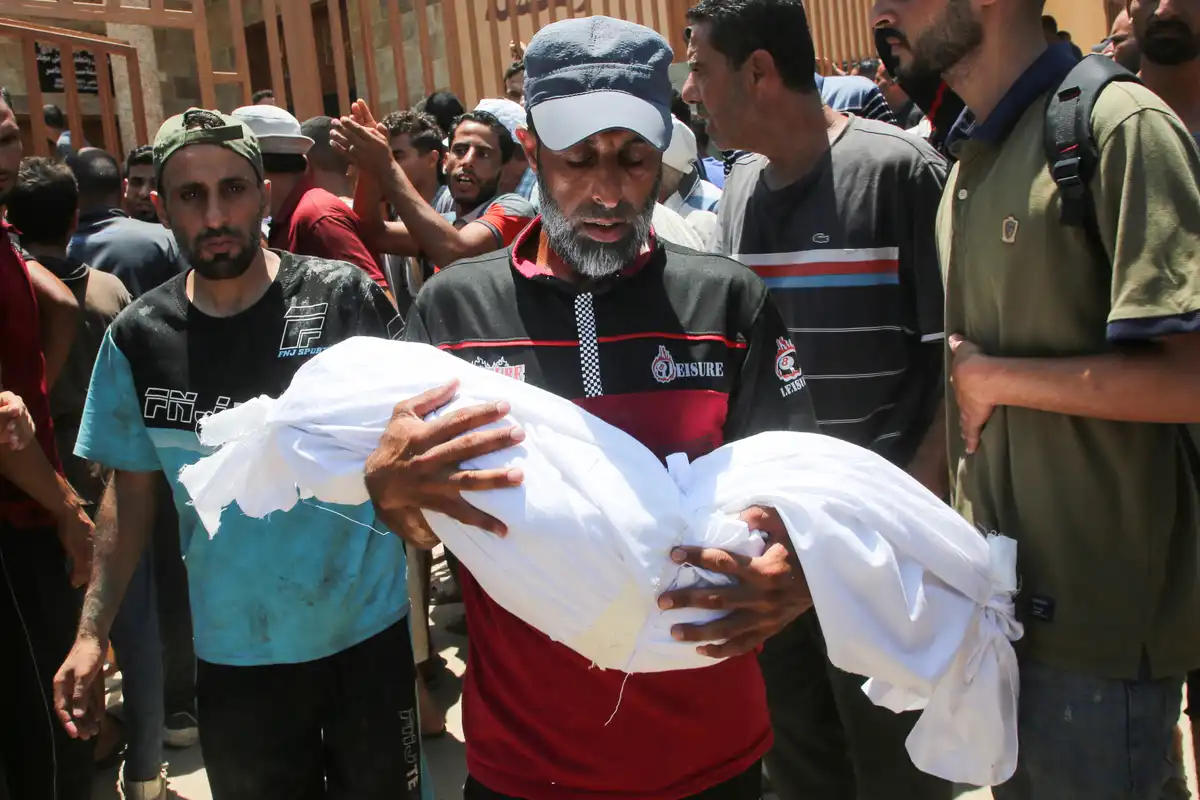
Gaza Health: Aggression victims rise to 44,502, injuries 105,454

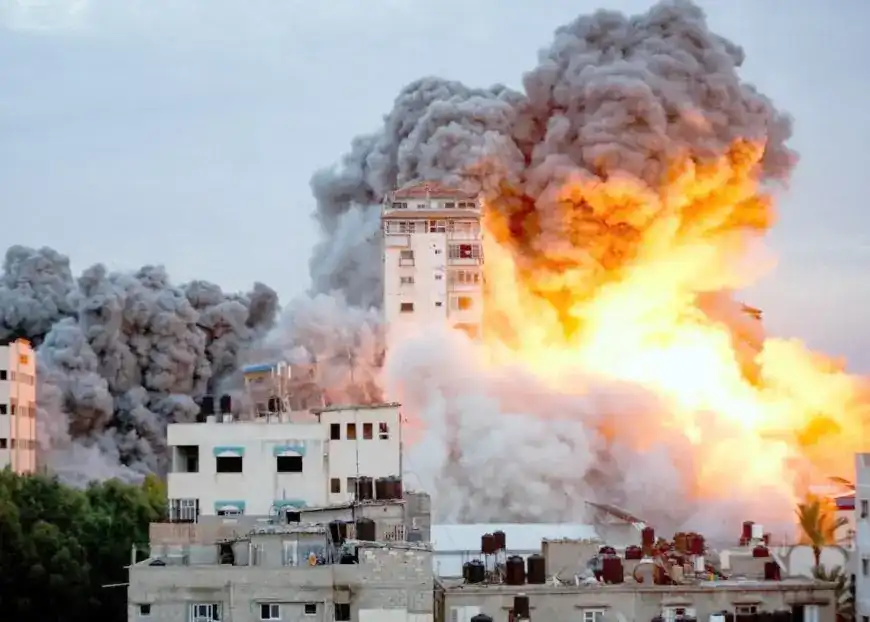
The Ministry of Health in Gaza announced today, Tuesday, that the death toll in the Gaza Strip has risen to 44,502, the majority of whom are children and women, since the start of the Israeli occupation aggression on October 7, 2023.


It added that the number of injuries has risen to 105,454 since the beginning of the aggression, while thousands of victims are still under the rubble.


It pointed out that the occupation forces committed two massacres, which resulted in the martyrdom of 36 citizens and the injury of 96 others.

OPINIONS

Tue 03 Dec 2024 1:52 pm - Jerusalem Time

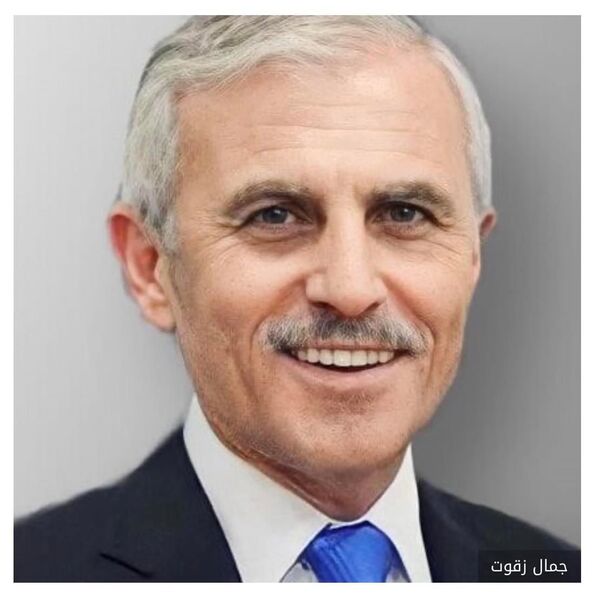
The luxury of dialogue under the burden of the crimes of genocide and ethnic cleansing

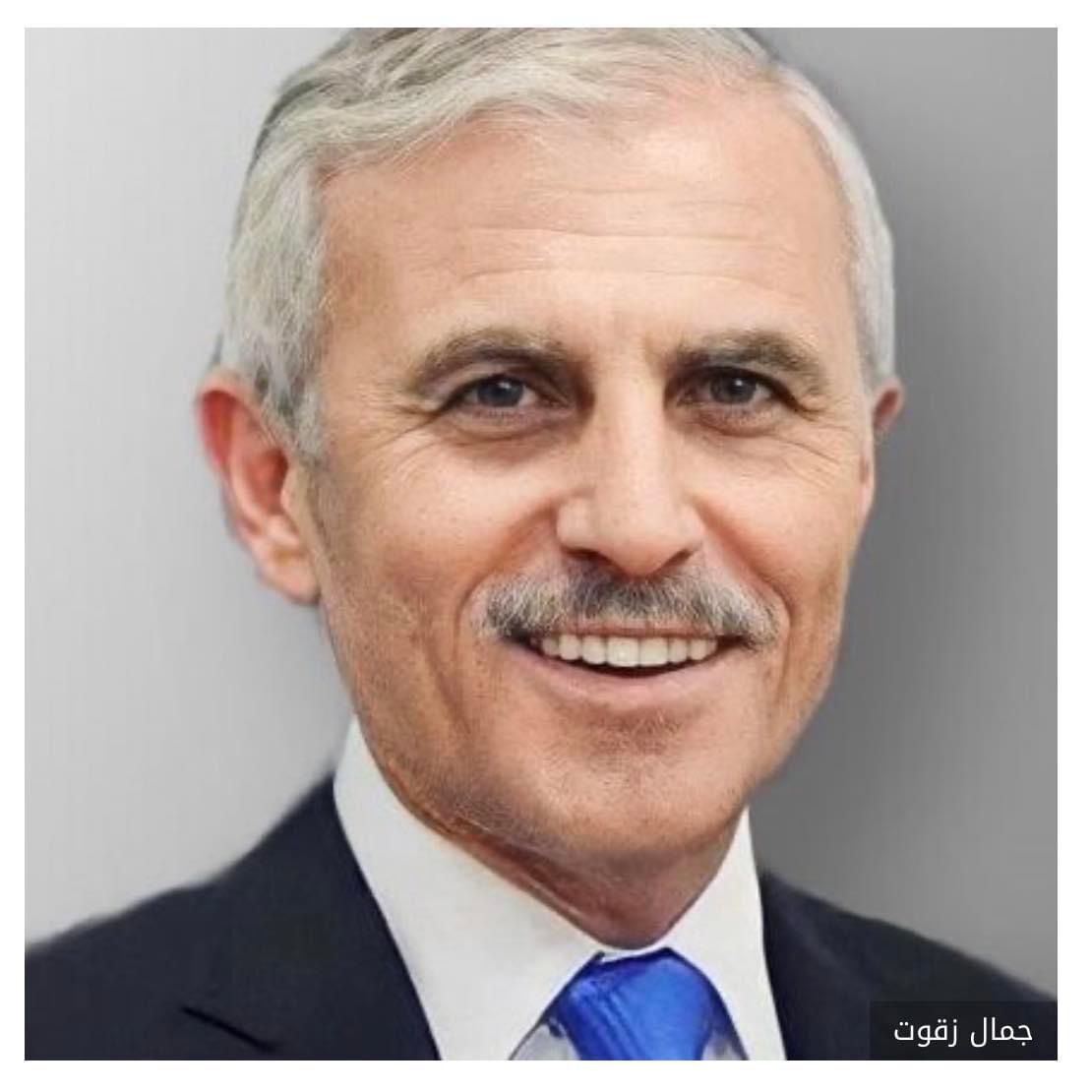
Jamal Zaqout

Jamal Zaqout

Opinion Writer

Historians will need many years, perhaps longer than it takes for the Palestinians to rebuild the Strip, to document the effects of the war on the lives of the people who survived the ongoing, bottomless genocide. The years of siege that preceded it gave birth to a generation of creative people in literature and technology in an attempt to nourish the soul and mind. Perhaps so that they would be able to leap over the walls of that siege that enveloped the details of people’s lives, to wider spaces that are no less competent than their pioneers.


In a few days, the war of extermination against the people of Gaza will enter its fifteenth month. The number of martyrs has exceeded forty-four thousand, four hundred and forty-two martyrs so far. The death toll continues and is counted by the minute. With them are no less than ten thousand missing, in addition to more than one hundred and five thousand wounded officially registered with the Ministry of Health, not to mention the thousands who may not have been able to reach the hospitals, most of which have been destroyed or the roads to them have been cut off.


All of these are not just numbers, but rather, all of them were filled with hope and passion for a life like the rest of the people in this world that has become an open village in which those deprived of a decent life aspire to live like their peers on this planet.


Yes, perhaps what we should see in this scene full of gloom and cruelty, and full of contradictions of the broader conflict between those who supply war criminals with weapons and provide protection to escape punishment, and those who fill the streets of the world’s capitals and cities, demanding an immediate end to this crime and the punishment of its perpetrators and those who support them. In addition, from the heart of the tragedy, we must redefine the meaning of heroism. Yes, we should see not only this heartbreaking tragedy, but also the human heroism that accompanies it, embodied by a mother who embraced the rest of her children to protect them in the apples of her eyes, after the entire universe failed to protect those she lost, and perhaps remained under the rubble of Jabalia or Beit Lahia camp, as embodied by a young man who threw away all his university degrees, devoting himself to cooking whatever food was available for the people of the neighborhood to which he was displaced. And also a journalist who did not care about the plan to destroy the evidence of the crime, to capture with his tearful eyes and the lens of his camera what documented it even if he paid the price for it with his life, as embodied by a doctor like Hussam Abu Safia, and hundreds of doctors and medical staff, as Hussam buried his own son on the wall of Kamal Adwan Hospital, refusing to abandon his humanitarian message to his patients and the wounded who were able to reach the remains of the hospital despite the death that the tanks of crime and killing and its artillery pursued them with, and before him the humane doctor Adnan Al-Barsh, the most famous surgeon in Gaza, who insisted on moving between its hospitals to save the lives of those he could despite the limited resources, then fell as a martyr due to the brutal torture in the occupation prisons, punished with his life for saving the lives of the innocent. Or the story of a mother and wife who had been blessed with two children after a fertilization transplant, when she went to look for a piece of bread for them and her husband, and returned to find their souls had ascended to the sky as a result of the bombing of an American-made aircraft. These are the real heroes, and with them are those whose creative spirit is unleashed by pain, as embodied today by the young novelist Yasser Al-Ghoul and dozens like him, or who document social phenomena in the shadow of war and the accompanying bumps that require treatment without waiting, as they are no less necessary than the epic steadfastness of the fighters, as is done, for example, by Dr. Talal Abu Rkaba, who was in Tunisia when the war began, and insisted on returning to the Strip, but was unable to reach his home, or to his mother who lost her leg in the northern Strip, because she was unable to reach a hospital that would provide her with treatment and care. Yes, these are the real heroes of civil society leaders like Amjad Shawa, Issa Saba, Fadi Sheikh Yousef, and thousands of other young men and women who accepted the challenge as competent leaders, and did not waste their time watching the pain and painful bumps, but rather engaged in alleviating that pain and hunger, and doing everything they could to generate hope... the real weapon and the target first and last of the apartheid state and ethnic cleansing, and unfortunately also of everyone who lets people down with his factionalism that has no concern other than blaming the victim, or floating the real criminal.

Such stories and thousands of others will be documented by Palestinian literature and novels to bear witness to a generation that did not wait for the claws of a new catastrophe to close, but rather decided to resist it with its nails and teeth, to prevent it, and to create with the people the story of a people who cannot be defeated. I think that these people no longer care much about the luxury of dialogues and the twisting of language, in a marathon that has extended for more than seventeen years, and its price has become blood and destruction in light of this ongoing genocide.


Perhaps what should be said is that "the people of Gaza, and with them all the people of Palestine, will not repeat the saying, 'You ate on the day the white bull was eaten.'" Gaza will remain the lever of Palestinian nationalism and the heart of its national movement, bequeathing the lessons of its living experience, that unity is the path to progress and salvation from injustice and occupation, and it will not be misled by fabricated committees, nor by any attempts to exploit its pain for selfish purposes, for Gaza, drowning in its pain, will not drown in the sea or in the desert maze.

PALESTINE

Tue 03 Dec 2024 12:47 pm - Jerusalem Time

Hebrew media: Israel is ready for a swap deal, not to stop the war

Yedioth Ahronoth quoted an informed source as saying that Israel is ready for a ceasefire in order to retrieve the hostages, not to end the war.


The newspaper added that Trump is the only one who can force Israel to stop the war and reach a swap deal.


The newspaper added, citing the source: "We will send a delegation if we see that there is a possibility to start negotiations, but it is still too early, and during the discussion held by Netanyahu, it was made clear that the hostages may not be able to survive another winter."


The source indicated that the negotiating team's message is that Israel needs to make painful concessions, and that the time has come to turn the page on the war in Gaza, and that there is a possibility of reaching a deal regarding the hostages before Trump's inauguration."


He stressed that Israel is ready for a ceasefire in order to retrieve the hostages, not to end the war.

ARAB AND WORLD

Tue 03 Dec 2024 12:46 pm - Jerusalem Time

Israel, Lebanon confirm commitment to ceasefire despite repeated violations

Israel and Lebanon confirmed to the White House that they are committed to the ceasefire agreement and want it to continue, despite repeated Israeli violations of the agreement, according to what the Walla website reported, citing informed sources.


The report quoted an Israeli official and another source described as "informed", that Israeli Minister of Strategic Affairs, Ron Dermer, met with US National Security Advisor, Jake Sullivan, at the White House on Monday, and stressed that Israel wants to maintain the ceasefire agreement.

PALESTINE

Tue 03 Dec 2024 12:43 pm - Jerusalem Time

An Israeli plan to cancel Oslo, dissolve the Authority, establish Jewish cities and colonies in the West Bank and implement the final solution..

An Israeli newspaper revealed a plan for settlement in the occupied West Bank, during the era of US President Donald Trump, which includes building new settlements and establishing advanced infrastructure in preparation for complete control.

(Israel Today) said that the new plan includes building four new settlements and communities, transportation and energy infrastructure, in addition to other projects over the course of 4 years of Trump’s rule, including converting settlements in strategic locations into cities through funded government decisions, such as the settlements of: Ma’ale Ephraim, Nahliel, Aliyah, Kiryat Arba and Efrat.


The newspaper revealed that ten activists, public figures and settlement leaders from the extreme right, including Finance Minister Bezalel Smotrich, met last week at the Ramada Hotel in Jerusalem as part of an extraordinary conference, during which they worked to develop a practical plan for settlement.

The newspaper continued, quoting its sources, that the meeting resulted in a practical, not theoretical, plan for settlement expansion, based on what the participants called the “window of opportunity,” including transforming the West Bank and the Jordan Valley into an integral part of Israel.

It pointed out that one of the proposals put forward referred to the possibility of canceling dealings with the Palestinian Authority, ending recognition of it, and returning the situation in the West Bank to what it was before the Oslo Accords, stressing that the Palestinian lands in the West Bank would later be classified as settlement lands within the framework of expanding the jurisdiction of the regional councils of the settlements.

As an alternative to the Palestinian Authority, the participants proposed establishing “Arab municipal authorities,” which would make Israel, in certain concepts, a federal government.

In addition, the plan seeks to advance control over Palestinian villages in Area C, which are theoretically under full Israeli control, but in practice are under Palestinian civil control.

The newspaper stressed that the heads of the settlements also proposed withdrawing the Palestinian Authority’s administration from the villages and towns of Area C, and working on plans to build cities there and create employment opportunities for the residents so that they remain in the “territories of Israel,” while working to eliminate “the two-state solution forever, according to a clear direction from the political level.” They also proposed making the West Bank and the Jordan Valley “an energy and industrial empire, which would make the region part of Israel in every sense.” Therefore, the newspaper concluded its report, they believe that there is a need to establish a comprehensive transportation infrastructure and a train infrastructure in the region.

Source: Sama News

PALESTINE

Tue 03 Dec 2024 12:38 pm - Jerusalem Time

UNRWA: The war of extermination on Gaza caused a terrible epidemic of infections

UNRWA Commissioner-General Philippe Lazzarini said that the Israeli war of extermination on the Gaza Strip has caused a "terrible epidemic of injuries" among Palestinians, with no rehabilitation services.


Lazzarini added in a statement published on his page on the "X" platform, today, Tuesday, that a disability pandemic is sweeping the Gaza Strip after the war.


He pointed out that Gaza has the highest number of amputee children per capita in the world, with many of them losing their limbs and undergoing surgery without anesthesia.


He explained that before the war, one in five households surveyed had at least one person with a disability, and according to the World Health Organization, one in four people injured in the Gaza war needs rehabilitation services, including care after amputations and spinal cord injuries.

PALESTINE

Tue 03 Dec 2024 12:37 pm - Jerusalem Time

Jerusalem: Israeli occupation demolishes a Palestinian house and bulldozes lands in the village of Nabi Samuel

This Tuesday afternoon, the Israeli occupation forces demolished a residential house and bulldozed lands in the village of Nabi Samuel, northwest of Jerusalem.


Local sources reported that the occupation forces demolished the house of citizen Amer Eid Barakat and bulldozed agricultural lands in the village.


The same sources explained that the occupation forces deliberately demolished the entire house, even though the demolition decision was only related to demolishing part of the wall.

PALESTINE

Tue 03 Dec 2024 12:22 pm - Jerusalem Time

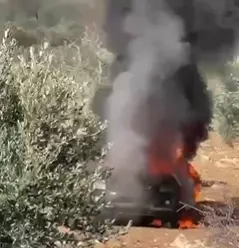
West Bank: Two Palestinians killed and an injury as a result of Israeli bombing a vehicle north of Tubas

Two citizens were killed and another was injured today, Tuesday, as a result of the Israeli occupation bombing of a vehicle near the town of Aqaba, north of Tubas.


According to the Ministry of Health, a citizen was injured in the lower limbs and arrived with the two dead to Tubas Governmental Hospital, and his injury was described as moderate.


The Red Crescent explained that the occupation forces are preventing ambulances from reaching the vehicle.


The occupation forces sent military reinforcements from the Tayasir checkpoint to the east.


PALESTINE

Tue 03 Dec 2024 11:57 am - Jerusalem Time

Yedioth Ahronoth: Trump has 3 powerful tools to pressure Hamas over Israeli prisoners

Yedioth Ahronoth newspaper said that US President Donald Trump cannot pressure Hamas militarily, but he has three powerful tools that he can use to pressure the release of Israeli prisoners in Gaza.


It added that the first tool is to strike Hamas's sources of funding around the world by closing charitable organizations in the United States and North America in general, and by influencing the Europeans to act in a similar manner.


It pointed out that the second tool is for Trump to carry out his threats against the Iranians that he promoted during the election campaign, and to use Hamas as a justification for imposing them, which prompts Tehran to pressure the movement.


It stressed that the third tool is the direct threat to the residents of Gaza in general, by announcing that the United States will not participate in the reconstruction of the Strip if Hamas does not back down from its intransigence regarding the prisoner deal.

PALESTINE

Tue 03 Dec 2024 11:44 am - Jerusalem Time

Gaza truce negotiations with renewed Egyptian efforts

Regional and international efforts to cease fire in Gaza continue, as Cairo hosts talks between delegations from Fatah and Hamas, in light of proposals to enable the Palestinian Authority to fully manage the Strip.


Meanwhile, reports indicate that Hamas leaders and their families have left Qatar for various destinations, with Israeli confirmations of positive indications regarding reaching a ceasefire agreement.


The Egyptian proposal: Stopping the fighting and empowering the Authority

Fatah leader Jihad Al-Harazin explained in his interview with the newsroom on Sky News Arabia that the Egyptian proposal includes an immediate ceasefire for a period ranging from 5 to 7 days, to allow Hamas time to determine the status of the detained prisoners, and then begin negotiations that will last for about 42 to 60 days to settle the outstanding issues, including the prisoner exchange deal.

Al-Harazin indicated that there are Egyptian ideas aimed at enabling the Palestinian Authority to fully manage the Gaza Strip, stressing that there is internal and regional consensus on this proposal.

Related News


Israeli and American Pressures

The discussion addressed the pressures facing Israel to cease fire, especially with American demands for the necessity of ending the fighting before next January.

Al-Harazin pointed out that Israeli Prime Minister Benjamin Netanyahu faces major challenges, as he is trying to achieve political gains through continuing military operations, but he realizes that international pressures, especially from Washington, may force him to move towards calm.


Hamas and the decline of regional bets

Al-Harazin discussed the position of the Hamas movement, indicating that the bets that the movement relied on, such as igniting the Lebanese front or supporting Hezbollah, have failed.

He explained that the Hamas movement has begun to realize that continuing the fighting leads to major losses for the Palestinian people, which prompted it to interact more positively with the Egyptian efforts.


Post-war: Scenarios for managing the sector

Regarding what is known as the "day after the war", Al-Harazin pointed out that there are proposals to form an independent community committee that includes Palestinian figures to manage the sector, while providing guarantees for the continuation of humanitarian aid.

He stressed that there are Arab efforts aimed at finding a consensus formula that guarantees the independence of the Palestinian decision and unifying the ranks, but the challenges remain in light of the continued Israeli presence in the sector.

Questions about the future: a permanent or temporary truce?

The discussion concluded with questions about the parties’ ability to reach a permanent truce that leads to the withdrawal of the occupation army from Gaza, or to be satisfied with a temporary truce without radical solutions.

Dr. Al-Harazin stressed that Hamas must deal seriously with the Arab proposals, as the main goal is to protect the Palestinian people and rebuild the Strip.

In light of these developments, the future of Gaza remains linked to the extent of the Palestinian parties’ ability to overcome their differences, invest international and Arab efforts to achieve calm, and end the suffering of the population in the Strip.

PALESTINE

Tue 03 Dec 2024 11:41 am - Jerusalem Time

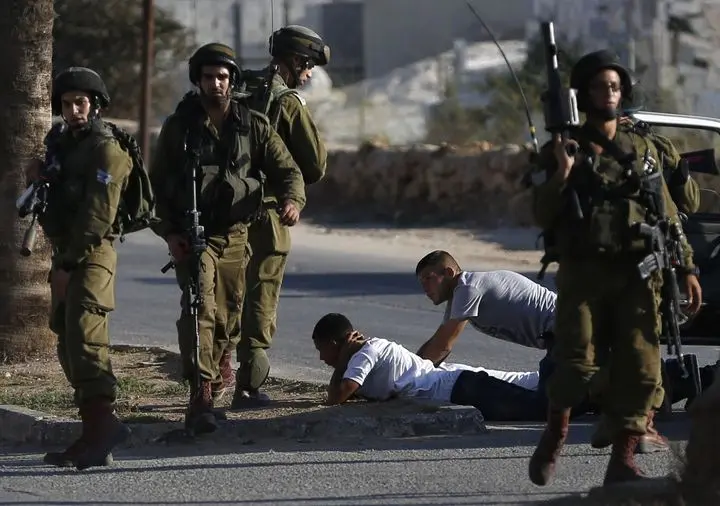
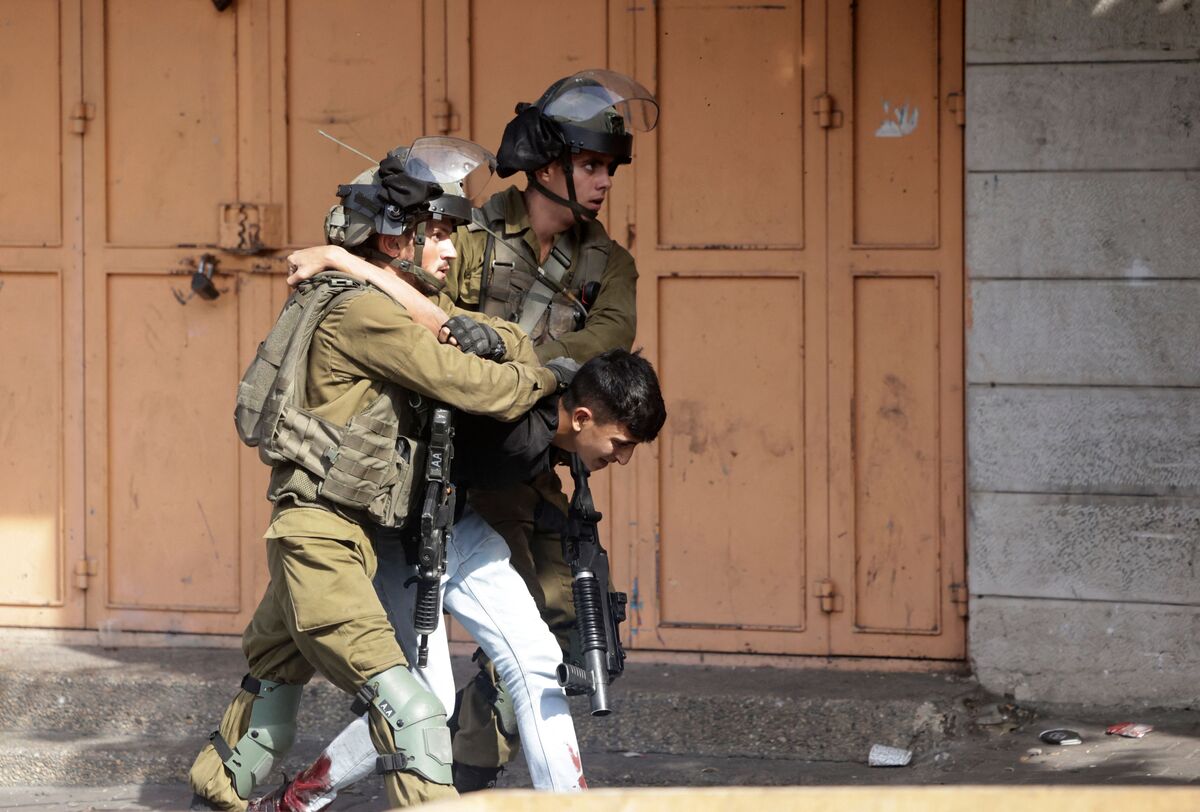
Israeli B'Tselem: Israeli soldiers abuse Palestinians in the center of Hebron

Today, Tuesday, the Israeli Information Center for Human Rights in the Occupied Territories, "B'Tselem", issued a report revealing the repeated cases of severe abuse practiced by Israeli soldiers against Palestinians in the center of the city of Hebron, in the southern occupied West Bank.


The report, titled “Unbridled: Soldiers’ Abuse of Palestinian Residents in Downtown Hebron,” is based on more than 20 testimonies given to the center by Palestinians about the attacks they were subjected to between May and August 2024.


The center said: “The victims spoke of how they were stopped by soldiers completely randomly while they were walking in the streets of Hebron, going about their daily lives; how they were beaten and subjected to a series of severe abuses, sometimes in the street, and sometimes at military checkpoints to which the soldiers took them.”


In this regard, the center's general director, Yuli Novak, said: "People leave their homes and go about their daily lives, and they are met by soldiers who arrest them and beat them until they faint," according to the report.


She added: "The testimonies recorded by B'Tselem field researchers reveal a terrifying situation, in terms of the standards of conduct of Israeli soldiers, and their use of extreme violence."


Novak continued: "After more than a year of the fierce war waged by Israel against the Palestinian people, the abuse of Palestinian passersby has become a desirable and even required behavior."


She added: "What is happening is not individual cases observed here or there, nor is there a deviation from instructions, but rather a phenomenon that expresses a systematic approach, and is the result of the process of dehumanizing the Palestinians led by the Israeli government."


B'Tselem pointed out that the testimonies "include descriptions of the violence, humiliation and abuse inflicted by the soldiers against men, women, youths and children."


The center quoted one of the victims as saying, “A series of severe physical and psychological abuses included beating, flogging, putting out cigarettes on the victims’ bodies, beating the genitals, injecting unknown substances, tying up limbs and blindfolding for long hours, threatening and insulting, and more.”


He added: "The soldiers choose their victims completely randomly while they are going about their daily lives, on their way to work or on their way back home, while drinking coffee in the yard, or on their way to the grocery store."


The center continued: "In most cases, the soldiers took their victims to military points, where they carried out the greatest amount of abuse against them," noting that "the victims were not suspected of committing any violation and were not tried, but were released immediately after the assault on them ended."


He explained that "many of the victims were in a condition that required medical treatment after being attacked by soldiers."


The center added: "Of all the victims of torture, only two were arrested, and even these two were released within a few days without any measures being taken against them."


"The escalation of violence to an extreme degree in its severity and scope is a direct result of the acceleration of the dehumanization of Palestinians among Israelis, including the view of Palestinians as a single, undifferentiated mass, all of whose members are enemies who are not only permissible to harm, but are desired and required," B'Tselem said.


The human rights center said: “The extent of the violence revealed by witness testimonies, which the soldiers practiced openly and sometimes documented with sound and image, indicates that the matter does not only reflect an individual desire for revenge, which is burning in the heart of this or that soldier, and not only a local failure.”


He continued, "This is a particularly violent product of a long-standing, systematic policy of repression, displacement and plunder that forms the core of the Israeli apartheid regime."


PALESTINE

Tue 03 Dec 2024 11:28 am - Jerusalem Time

Fatah and Hamas agree on a document to form a committee to administer the Gaza Strip

The negotiations hosted by the Egyptian capital, Cairo, on Saturday, which brought together the Palestinian leadership delegations from the Hamas and Fatah movements, led to an agreement on a document to form a community support committee to administer the Gaza Strip.


The document, which was revealed by the Al-Araby Al-Jadeed website and came in two pages, includes a definition of the committee as “administering the Gaza Strip, and its reference is the Palestinian government, and it is responsible for all fields (health, economics, education, agriculture, service and vital facilities), including relief work, addressing the effects of the war and reconstruction, and it is formed by national consensus, and the President of the State of Palestine issues a decree appointing this committee, and it exercises its duties in accordance with the systems and laws in effect in the territories of the Palestinian state.”


The founding document specified the determinants of the formation of the committee, which were represented in six determinants, the first of which was to preserve the unity of the occupied Palestinian state’s territories on the 1967 borders (West Bank – Jerusalem – Gaza), the second was to emphasize communication between the Palestinian government in the West Bank and the committee in Gaza. The third determinant, according to the document, stipulated that the committee would follow the Palestinian political system in the West Bank, Gaza and Jerusalem, and that its formation would not lead to the separation of Gaza from the rest of the Palestinian territories.


The fourth determinant stipulated that the formation of the committee should take into account the selection of professional Palestinian national elements from among the independent and competent individuals to carry out its tasks, while the fifth determinant was that the committee should manage all local authorities in the sector, coordinate with them, and benefit from them in a way that serves the Palestinian citizen.


The committee shall continue, according to the sixth specification in the document, to carry out its work in the sector until the reasons that led to its formation are eliminated, or until general elections are held or another formula agreed upon nationally is adopted, and this shall be by national consensus and by a decision of the President of the State of Palestine. The third clause in the document, which came in seven clauses, included an emphasis on the administrative, legal and oversight authority of the committee, such that its administrative authority is the Palestinian government, and its legal authority is the systems and laws in force in the Palestinian territories, while the oversight authority is the oversight bodies affiliated with the Palestinian Authority and currently in force in all Palestinian territories.


The document stipulated the formation of a national support and assistance body from local authorities in the sector, in a manner that ensures the committee can fully perform its assigned tasks without any obstacles or impediments due to the current situation there, in cooperation with official oversight authorities. According to the document, the committee will consist of 10-15 members from national figures with competencies and known for their integrity, experience and transparency. The organizational structure of the committee consists of a chairman, a deputy, and officials for the aid, education, health, and economy files, a local government official, a reconstruction official, and an official for communicating with local authorities and international organizations, in addition to a representative from the crossings authority.


According to the document, the committee's work will begin after all Palestinian factions meet to agree on its final formation in Cairo at the invitation of the President of the State of Palestine, provided that work continues at the Gaza Strip's outlets with the Israeli side, according to the mechanism that was followed before October 2023, and that the Rafah crossing is reopened in accordance with the 2005 agreement. The document also stipulates the formation of an international fund for the reconstruction of Gaza, supervised by donor countries, with the participation of a representative of the Palestinian Ministry of Finance and an assistant from the Community Support Committee, in order to ensure transparency and oversight.

PALESTINE

Tue 03 Dec 2024 11:07 am - Jerusalem Time

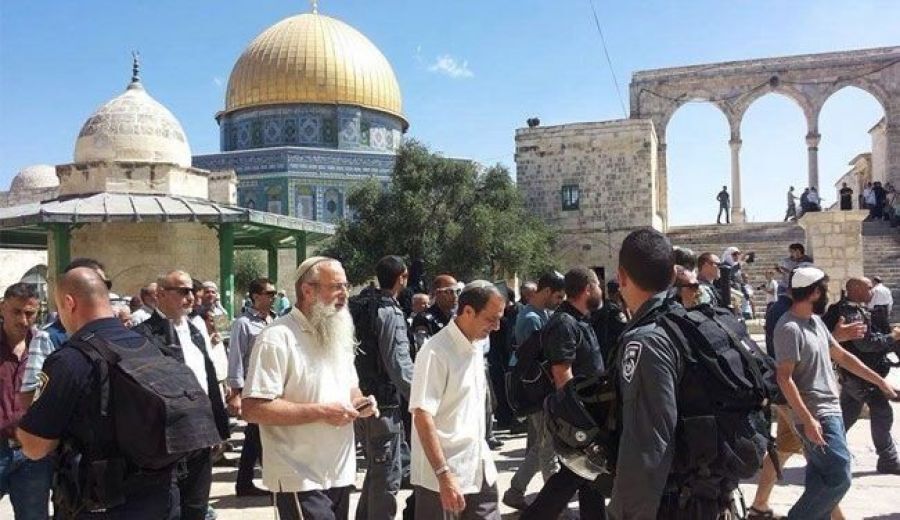
Al-Aqsa Mosque was stormed 20 times and the call to prayer was prevented in the Ibrahimi Mosque 55 times last month

The Ministry of Endowments and Religious Affairs documented, in its monthly report on the violations of the occupation and its settlers against places of worship, 20 incursions into the blessed Al-Aqsa Mosque, and the prevention of the call to prayer in the Ibrahimi Mosque 55 times, during the month of November.


The Awqaf said in its report that the occupation forces and settlers escalated their attacks on Al-Aqsa, noting that more than 3,801 settlers stormed the mosque, under heavy protection from the Israeli occupation forces, while worshipers were prevented from entering Al-Aqsa.


She warned of the nature of these attacks, which aim to establish the presence of the colonists and impose a new reality, through the performance of Talmudic rituals such as collective epic prostration, blowing the trumpet, and introducing plant offerings, at a specific time and place.


Regarding the Ibrahimi Mosque, the Ministry of Endowments said that the occupation prevented the call to prayer 55 times, and closed it to Muslims, at a time when the mosque witnessed a storming by the extremist Ben Gvir accompanied by dozens of settlers.


She pointed out that the occupation had paved a new colonial road from the Waqf lands to use it as a Jewish synagogue, which constitutes a flagrant violation of the sanctity of Islamic holy sites.


The Endowments warned of the danger of the plans announced by a member of the Knesset from the Likud Party, to control the Ibrahimi Mosque and place it completely under "Israeli sovereignty."


The report documented the occupation forces’ demolition of the Al-Shiyah Mosque in the town of Jabal al-Mukaber in occupied Jerusalem, noting that it had been built for 20 years. Settlers also desecrated the Khirbet Marah al-Baqar Mosque in the town of Dura in the Hebron Governorate.


He pointed out that the occupation forces damaged the Abu Bakr al-Siddiq mosque in Nour Shams camp, and the Shuhada mosque in Tulkarm camp, and demolished a prayer hall for the Arab al-Ara'ra community near the town of Jaba' east of Jerusalem, and demolished part of a settlement for the Abu Bakr al-Siddiq mosque in the Far'a camp in Tubas governorate.


Regarding Waqf lands and shrines, the Ministry of Endowments documented the attacks of the occupation forces and settlers on the Arbaeen shrine and site and Waqf lands in the city of Hebron, and the opening of a new road from Waqf lands to be used as a Jewish synagogue.

ARAB AND WORLD

Tue 03 Dec 2024 10:52 am - Jerusalem Time

Six Lebanese killed in Israeli bombing of southern Lebanon

Six Lebanese were killed and two others were injured in the bombing of the town of Haris in southern Lebanon by Israeli warplanes.


The Lebanese National News Agency stated that "the Israeli enemy's raid on the town of Haris resulted, according to an updated toll, in the death of six people and the injury of others."


The occupation continues to violate the truce agreement with Lebanon, which was announced a week ago, by launching a series of raids on Lebanese regions, and continuing to fly drones over towns and regions in the south, the Bekaa, the southern suburb of Beirut, and the capital Beirut.

PALESTINE

Tue 03 Dec 2024 10:47 am - Jerusalem Time

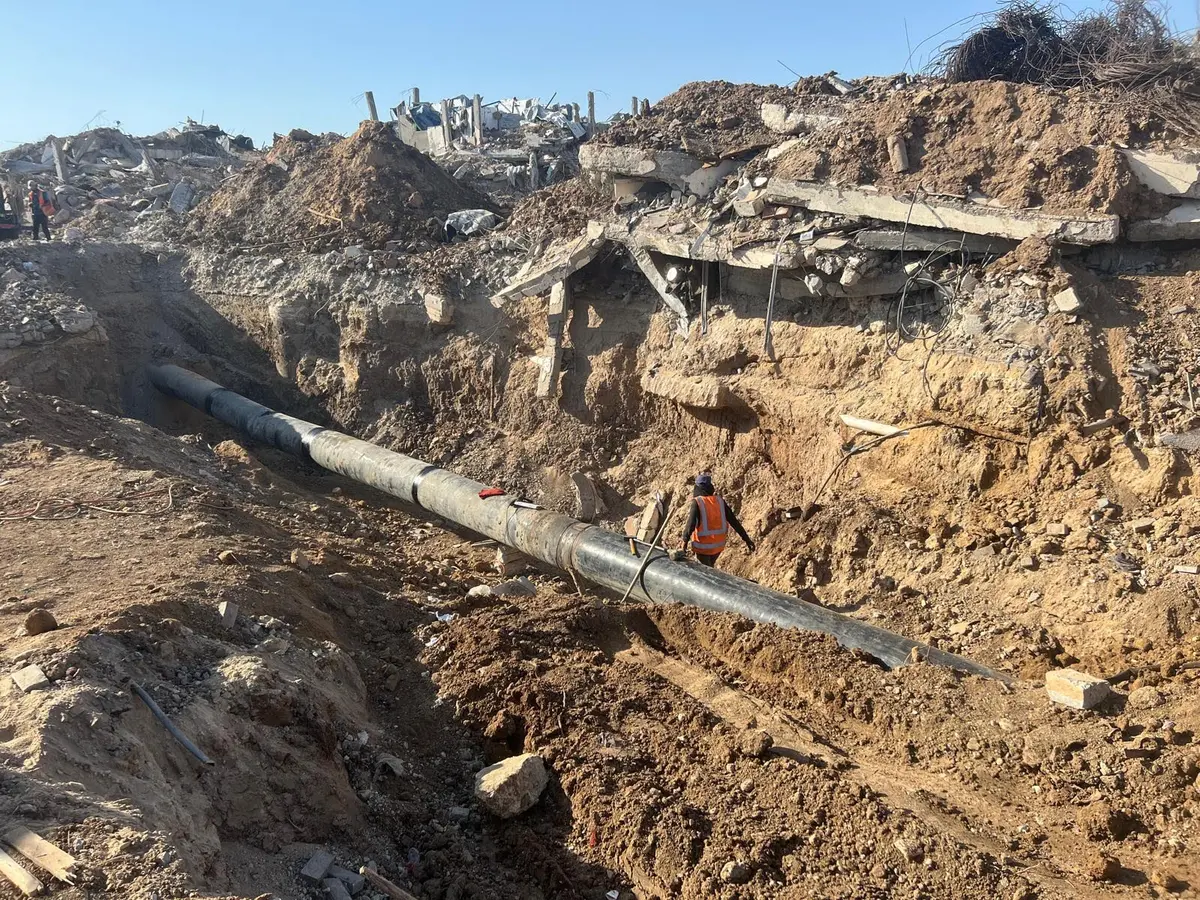
More than 80% of water sector losses due to ongoing aggression on Gaza Strip

The Water Authority announced that current estimates of the extent of losses incurred by the water sector during the ongoing aggression on the Gaza Strip exceed 80% in water sector facilities, including wells, pumping stations, desalination plants, distribution networks, and sewage plants.


The Water Authority explained, in a statement issued today, Tuesday, that the continued obstruction of the operation of the remaining water facilities has led to a severe shortage in the water supply, the flow of sewage floods into the streets, neighborhoods, and displaced persons’ gatherings, and the formation of catastrophic risks to public health and the environment.


Water wells:

International and UN reports confirmed that the production capacity of water wells has decreased sharply, reaching only about 10-20% of what it was before the aggression. This is mainly due to the damage to the wells, infrastructure, and water facilities, as well as the power outage needed to pump water from the wells and operate the water facilities, and the lack of fuel.


Targeting desalination plants:

The Water Authority warned of the continued shutdown of desalination plants, which are the only main source of drinking water, as a result of targeting them directly or their surroundings, and as a result of the interruption of energy supplies.


She pointed out that the three main stations that were targeted are: the North (Sudanese) Desalination Station, which has stopped working since the beginning of the aggression due to the extensive damage it sustained and the presence of the occupation forces inside and around it, and their deliberate conversion of it into a military barracks, and the Central Desalination Station, whose productivity has decreased due to damage to the wells feeding it, which are located on the seashore, as a result of the aggression.


She pointed out that the power supply had stopped, as the quantities of water produced had reached about 2,000 m3/day, and finally the southern desalination plant, whose productivity had decreased due to the power supply stoppage, as the quantities of water produced had reached 2,800 m3/day, but after it was connected to the electricity line currently, its quantities produced had been increased and it is still in trial operation.


Emergency interventions

In its statement, it explained that since the beginning of the aggression until today, its crews have been making strenuous efforts to provide as much water as possible to citizens, especially to shelters and displacement sites, and to reduce the flow of wastewater between populated areas to reduce the risks of the spread of serious epidemics and diseases.


She pointed out that she was able to implement many interventions, most notably: maintaining the three water connections and the main lines from Mekorot, as these connections represent 58% of the water supply in the Gaza Strip, implementing many interventions to maintain the damaged sections of the main and sub-lines, and following up on pumping work from these connections.


She noted that the amount of water currently supplied from Mekorot connections is 37,500 cubic metres per day.


She stressed that maintenance work was carried out on the main lines and water networks, with the aim of increasing water supplies from available sources, expanding the scope of service to densely populated areas, and raising the operational efficiency of the system to the minimum level in emergencies in Khan Yunis, Gaza, and North Gaza.


She pointed out that work is underway to support the operation and maintenance of the central and southern desalination plants, including providing fuel, purchasing spare parts, generators and solar panels, as the production of the two plants has reached approximately 5,000 (m³/day), i.e. at a rate of 62% of their production capacity before the aggression.


In the northern Gaza Strip, it said it had transported and distributed fuel to water facilities, which contributed to the operation of 60-65 wells, providing approximately 40,000 cubic meters per day, and rehabilitating and activating partially and completely damaged water wells, including the maintenance and reactivation of 6 wells in Jabalia, and following up on work and coordination with WASH institutions for urgent maintenance of a group of central wells, which were destroyed. In addition, it coordinated with

WASH institutions identify filling points on the Mekorot water line, and distribute it, through mobile tankers, to areas where there are no water networks and shelters.


As for interventions in the sanitation sector:

She explained that a share of fuel was allocated to operate a number of main sewage pumping stations to drain stagnant sewage water from residential neighborhoods, to prevent the spread of serious diseases, especially among children, including the Sheikh Radwan Pond Pump, the Baqqara Pumping Station, and the Asqoula Pumping Station in Gaza City, the Abu Rashid Pond Pump in Jabalia, to drain them of sewage water and treat floods. In addition to the Amal Pump in Khan Yunis.


She pointed out that work is underway to assess the damage to the sewage treatment plants in Khan Yunis and Al-Bureij.


Fuel crisis and warning of wells stopping work permanently

The Water Authority warned that the occupation's continued prevention and obstruction of the entry of necessary materials, most notably fuel, which, if the entry is continued, will lead to the current water wells stopping working, and thus the lack of water, which is originally in small quantities.


She expressed her concerns about the shutdown of more than 95% of water and sanitation facilities in the North Gaza Governorate due to the lack of fuel, as it is currently unable to deliver and distribute the fuel required to operate water wells and sewage pumping stations located in Jabalia, Beit Lahia and Beit Hanoun, where most of the population still lives.


In this regard, she stressed the need for effective intervention by the international community and UN organizations to pressure the Israeli side to ensure the entry of the fuel needed to operate water and sanitation facilities, noting that after strenuous efforts, she was able, during this week, in cooperation with partners, to enter approximately 21,700 liters that were distributed to water wells in the Gaza Governorate, Sheikh Radwan Pool, and Al-Baqara Station, for pumping sewage water, bringing the total amount of fuel entered since the beginning of the aggression to approximately 450 thousand liters, which are very small quantities, compared to the actual daily need to operate water facilities in the best possible way.


At the end of its statement, the Water Authority warned that what we are witnessing today in the Gaza Strip is the absence of the most important component of life, which is water, which no longer reaches the minimum recommended by the World Health Organization for human survival, which is 15 liters per citizen per day, saying: Today we are forced to work in a relief manner to provide the minimum amount of water.


ARAB AND WORLD

Tue 03 Dec 2024 10:28 am - Jerusalem Time

Israel continues its violations in Lebanon and prevents residents of 60 villages from returning

Israel continues to violate the ceasefire with Lebanon, with air and artillery bombardment of various areas in southern Lebanon, and the Israeli army continues to prevent residents of more than 60 villages from returning to southern Lebanon.


Eleven people were killed in Israeli strikes on Lebanon over the past 24 hours, with Hezbollah accusing Israel of violating the ceasefire agreement and, in response, firing rockets at an Israeli military site in the Shebaa Farms area, which the party considered a "preliminary defensive warning response."


The United States expressed its belief that the ceasefire is still holding in Lebanon, and that it is looking into possible violations of it, as US Secretary of State Anthony Blinken met in Washington on Monday with Israeli Minister of Strategic Affairs, Ron Dermer.


Blinken stressed to the Israeli minister the importance of implementing a ceasefire in Lebanon, to allow Israeli and Lebanese citizens to safely return to their homes and remain there for a long time, according to a statement by the US State Department.


PALESTINE

Tue 03 Dec 2024 9:42 am - Jerusalem Time

Israeli occupation authorities demolish a house in Umm al-Fahm

This morning, Tuesday, the Israeli occupation authorities demolished a house in the Umm al-Dub neighborhood in the city of Umm al-Fahm, claiming that it was built without a permit.


Demolition vehicles stormed the neighborhood under the protection of reinforced police forces and special units.


The demolished house is owned by Sadiq Halouk Igbaria, who had previously received a demolition order for the house.

OPINIONS

Tue 03 Dec 2024 9:31 am - Jerusalem Time

How Iran Sees the Path to Peace

Foreign Affairs

Foreign Affairs

Opinion Writer

By Mohammad Javad Zarif

The Islamic Republic Is Open to Negotiations—Including With America


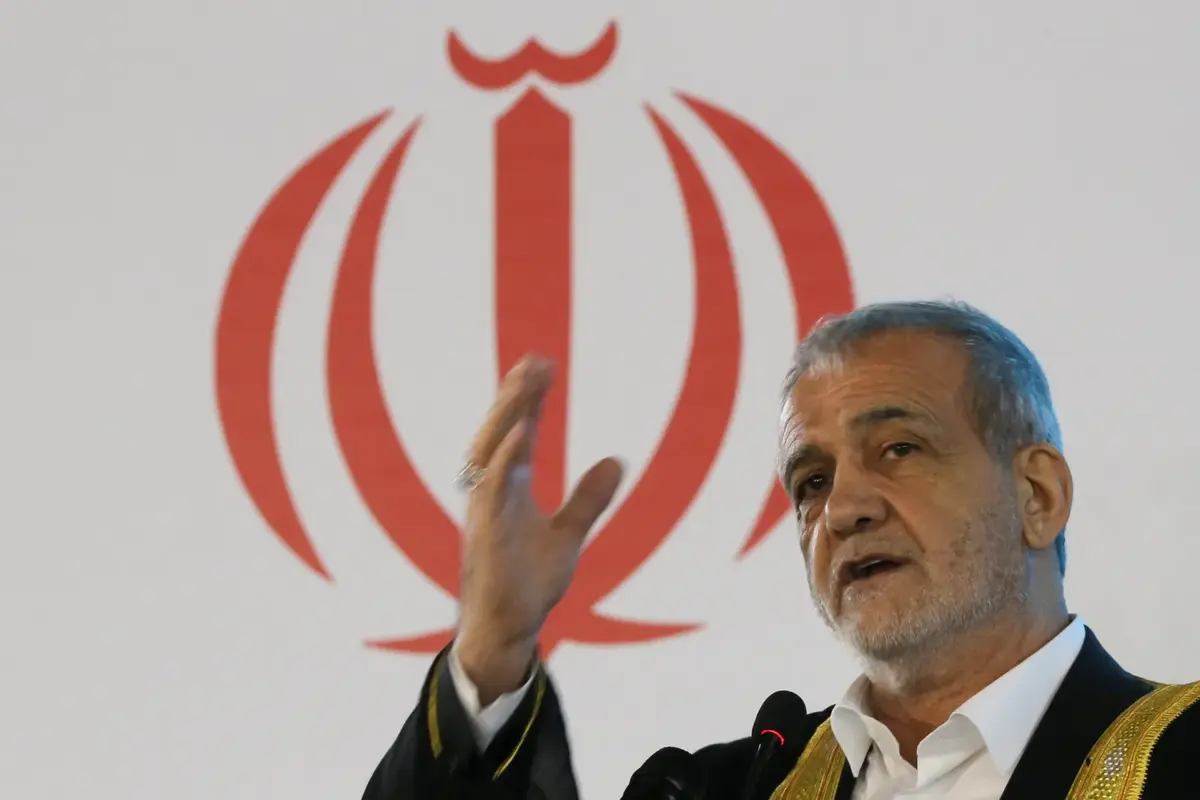
On July 30, Masoud Pezeshkian was sworn in as Iran’s new president. Mere hours after the ceremony, Ismail Haniyeh, the former prime minister of the Palestinian National Authority and chairman of the Hamas political bureau, was assassinated by Israel in a guesthouse near the presidential complex. Haniyeh had been invited to attend the inauguration, and his killing on Iranian soil cast a shadow over the proceedings. It also previewed the challenges Pezeshkian will face in pursuing his foreign policy ambitions.

But Pezeshkian is well prepared to handle all the difficulties that will arise over the coming years. Pezeshkian recognizes that the world is transitioning into a post-polar era where global actors can simultaneously cooperate and compete across different areas. He has adopted a flexible foreign policy, prioritizing diplomatic engagement and constructive dialogue rather than relying on outdated paradigms. His vision for Iran’s security is holistic, encompassing both traditional defense capabilities and the enhancement of human security through improvements in the economic, social, and environmental sectors.

Pezeshkian wants stability and economic development in the Middle East. He wants to collaborate with neighboring Arab countries and to strengthen relations with Iran’s allies. But he also wants to engage constructively with the West. His government is ready to manage tensions with the United States, which has also just elected a new president. Pezeshkian hopes for equal-footed negotiations regarding the nuclear deal—and potentially more.

Yet as Pezeshkian has made clear, Iran will not capitulate to unreasonable demands. The country will always stand up to Israeli aggression. And it will be undeterred from protecting its national interests.

POLITICS IS LOCAL

This is a historic moment for stability that the world should not let slip. Tehran certainly won’t. After over two centuries of vulnerability, Iran—under the leadership of Supreme Leader Ali Khamenei—has finally proven that it can defend itself against any external aggression. To take that achievement to the next level, Iran, under its new administration, plans to improve relations with neighboring states to help create a regional order that promotes stability, wealth, and security. Our region has been plagued for far too long by foreign interference, wars, sectarian conflicts, terrorism, drug trafficking, water scarcity, refugee crises, and environmental degradation. To tackle these challenges, we will work to pursue economic integration, energy security, freedom of navigation, environmental protection, and interfaith dialogue.

Eventually, these efforts could lead to a new regional arrangement that reduces the Persian Gulf’s reliance on external powers and encourages stakeholders to address conflicts through dispute resolution mechanisms. To do so, the region’s countries may pursue treaties, create institutions, enact policies, and pass legislative measures. Iran and its neighbors can start by mimicking the Helsinki process, which led to the formation of the Organization for Security and Cooperation in Europe. They can use the never-implemented mandate that the UN Security Council gave to the UN secretary-general in 1987, under Resolution 598. That resolution, which ended the Iran-Iraq War, called on the secretary-general to consult with Iran, Iraq, and other regional states to explore measures that could enhance security and stability in the Persian Gulf. The Pezeshkian administration believes this provision can serve as the legal basis for comprehensive regional talks.

Of course, there are obstacles that Iran and its neighbors must overcome to foster a peaceful, integrated regional order. Some differences with its neighbors have deep-rooted origins, shaped by varying interpretations of history. Others arise from misconceptions, mainly rooted in poor or insufficient communication. Still others are political constructs implanted by external forces, such as allegations concerning the nature and objective of Iran’s nuclear program.
But the Persian Gulf must move on. Iran’s vision aligns with the interests of Arab countries, all of which also want a more stable and prosperous region for the sake of future generations. Iran and the Arab world should thus be able to work through their differences. Iran’s support for Palestinian resistance could help kick-start such cooperation. The Arab world, after all, is united with Iran in its support for restoring the rights of the Palestinian people.

HITTING RESET

After more than 20 years of economic restrictions, the United States and its Western allies should recognize that Iran does not respond to pressure. Their intensifying coercive measures have consistently backfired. At the height of Washington’s most recent maximum-pressure campaign—and just days after Israel assassinated Iran’s leading nuclear scientist, Mohsen Fakhrizadeh—Iran’s parliament passed a law directing the government to rapidly advance its nuclear program and reduce international monitoring. The number of centrifuges in Iran has increased dramatically since 2018—when U.S. President Donald Trump withdrew from the nuclear deal—and enrichment levels have skyrocketed from 3.5 percent to over 60 percent. It is hard to imagine any of this would have happened if the West had not abandoned its cooperative approach. In this regard, Trump, who will take office again in January, and Washington’s partners in Europe have themselves to blame for Iran’s continued nuclear progress.

Instead of increasing pressure on Iran, the West should pursue positive-sum solutions. The nuclear deal provides a unique example, and the West should look to revive it. But to do so, it must take concrete and practical actions—including political, legislative, and mutually beneficial investment measures—to make sure Iran can benefit economically from the agreement, as was promised. Should Trump decide to take such steps, then Iran is willing to have a dialogue that would benefit both Tehran and Washington.

On a broader scale, Western policymakers must acknowledge that strategies aimed at pitting Iran and Arab countries against one another by supporting initiatives such as the so-called Abraham Accords (which normalized ties between various Arab countries and Israel) have proven ineffective in the past and will not succeed in the future. The West needs a more constructive approach—one that takes advantage of Iran’s hard-earned confidence, accepts Iran as an integral part of regional stability, and seeks collaborative solutions to shared challenges. Such shared challenges could even prompt Tehran and Washington to engage in conflict management rather than exponential escalation. All countries, Iran and the United States included, have a mutual interest in addressing the underlying causes of regional unrest.

Although today’s Iran is confident that it can fight to defend itself, it wants peace.

That means all countries have an interest in stopping the Israeli occupation. They should realize that the fighting and fury will continue until the occupation ends. Israel may think it can permanently triumph over the Palestinians, but it cannot; a people who have nothing to lose cannot be defeated. Organizations such as Hezbollah and Hamas are grassroots liberation movements that have emerged in response to occupation and will continue to play a significant role as long as the underlying conditions persist—which is to say until the Palestinians’ right to self-determination is realized. There can be intermediate steps, including immediate cease-fires in Lebanon and Gaza.

Iran can continue to play a constructive role in ending the current humanitarian nightmare in Gaza and work with the international community to pursue a lasting and democratic solution to the conflict. Iran will agree to any solution acceptable to Palestinians, but our government believes that the best way out of this century-long ordeal would be a referendum in which everyone living between the Jordan River and the Mediterranean Sea—Muslims, Christians, and Jews—and Palestinians driven to diaspora in the twentieth century (along with their descendants) would be able to determine a viable future system of governance. This is in line with international law and would build on the success of South Africa, where an apartheid system was transformed into a viable democratic state.

Constructive engagement with Iran, coupled with a commitment to multilateral diplomacy, can help build a framework for global security and stability in the Persian Gulf. It can thereby reduce tensions and foster long-term prosperity and development. This shift is crucial for overcoming entrenched conflicts. Although today’s Iran is confident that it can fight to defend itself, it wants peace, and it is determined to build a better future. Iran can be an able and willing partner, as long as its partnerships are based on mutual respect and equal footing. Let us not miss this opportunity for a new beginning.

PALESTINE

Tue 03 Dec 2024 8:55 am - Jerusalem Time

Trump threatens Hamas if it does not release Israeli detainees

US President-elect Donald Trump said, "The Middle East will pay a heavy price if the hostages held in the Gaza Strip are not released before his inauguration on January 20."


It is noteworthy that during the “Al-Aqsa Flood” attack on Israel on November 7, 2023, Hamas-led militants captured more than 250 people, according to Israeli statistics, including dual Israeli-American citizens.


About half of the 101 foreign and Israeli hostages still being held incommunicado in Gaza are believed to be alive.


In his most explicit comments on the hostages’ fate since his election on November 5, Trump threatened on social media: “If the hostages are not released by January 20, 2025, the date on which I proudly assume office as President of the United States, there will be a heavy price to pay in the Middle East, and to those responsible for these atrocities against humanity,” referring to Hamas.


Trump added: "Those responsible will be hit harder than anyone in the long and storied history of the United States of America." Hamas has called for an end to the war and a full Israeli withdrawal from Gaza as part of any deal to release the remaining hostages.


Israeli Prime Minister Benjamin Netanyahu said the war would continue until Hamas was eliminated and no longer posed a threat to Israel.


Hamas said on Monday that 33 hostages in Gaza had been killed during the nearly 14-month war between the Palestinian militant group and Israel in the blockaded territory, without giving their nationalities.


Israel launched its brutal war on the Gaza Strip immediately after the Al-Aqsa Flood attack, which led to the death of more than 45 thousand Palestinian citizens, the disappearance of more than 10 thousand, and the injury of more than 100 thousand citizens, the overwhelming majority of whom are women and children according to United Nations reports, in addition to the displacement of all the residents of the Strip from one place to another after the destruction of more than 80% of the Strip.


In a related matter, US National Security Council spokesman Sean Savitt described on Sunday the video released by Hamas of Israeli-American citizen Aiden Alexander (which angered Trump) as “a harsh reminder of the movement’s terrorism against citizens of multiple countries, including the United States,” noting that President Joe Biden’s administration had contacted Alexander’s family.


“The war in Gaza would stop tomorrow and the suffering of the people of Gaza would end immediately — and it would have ended months ago — if Hamas agreed to release the hostages,” the White House statement said. “They have refused to do so, but as the President said last week, we have a critical opportunity to make a deal to release the hostages, stop the war, and increase humanitarian assistance to Gaza.”

PALESTINE

Tue 03 Dec 2024 8:44 am - Jerusalem Time

Israeli occupation launches an arrest campaign in the West Bank

The Israeli occupation forces launched an arrest campaign in the West Bank at dawn and this morning, Tuesday.


In Salfit, the occupation forces stormed the town of Az-Zawiya and arrested: Firas Abdul Karim Adam Muqadi, Ward Rabhi Rabah Shaqir, Nazmi Ahmed Nazmi Raddad, Muhammad Basem Kamel Muqadi, Wael Mahmoud Bakr Shaqir, Ubadah Khaled Hamad Allah Raddad, Ghassan Rabhi Mustafa Muqadi, after raiding their homes, searching them and tampering with their contents.


In Ramallah, a young man was shot in the back with live bullets while driving his vehicle. He was transferred to a Ramallah hospital, where his condition was described as moderate.


Meanwhile, the occupation forces arrested the two boys Omar Raed Haj Muhammad and Adham Muhammad Zaghir, both 17 years old, after raiding their parents’ homes in the village of Al-Mughayyir, northeast of Ramallah.


In Bethlehem, the occupation forces arrested the deputy secretary of the Fatah movement, Majdi Abu Aker, and the freed prisoner Shadi Badawneh, after raiding and searching their families’ homes in Aida camp, and subjecting them to harsh interrogation.


Meanwhile, it detained about 50 young men during the storming of Aida and Al-Azza camps, and took them to the Rawad Center in Aida, subjected them to harsh interrogation, severely beat them, and handed over notices to a number of them to review with the Israeli intelligence, before they were released.


In Hebron, the occupation forces arrested Muhammad Jabrin Shahada Makhamreh, Mahmoud Hussein Hawshiya from the town of Yatan, and Islam Misk from the city of Hebron, after raiding and searching their homes.


These forces also searched several homes owned by the Abu Qubaita family in the town of Yatta, south of Hebron, and set up several military checkpoints at the entrances to Hebron, its towns, villages and camps, and closed a number of main and secondary roads, which hindered the movement of citizens.


In Nablus, the occupation forces arrested Asem Awad after raiding his house in the village of Salem, searching it and ransacking its contents.


They also stormed the town of Sebastia, northwest of Nablus, raided a house, searched it, ransacked its contents, and assaulted its residents.