PALESTINE

Tue 03 Dec 2024 8:34 am - Jerusalem Time

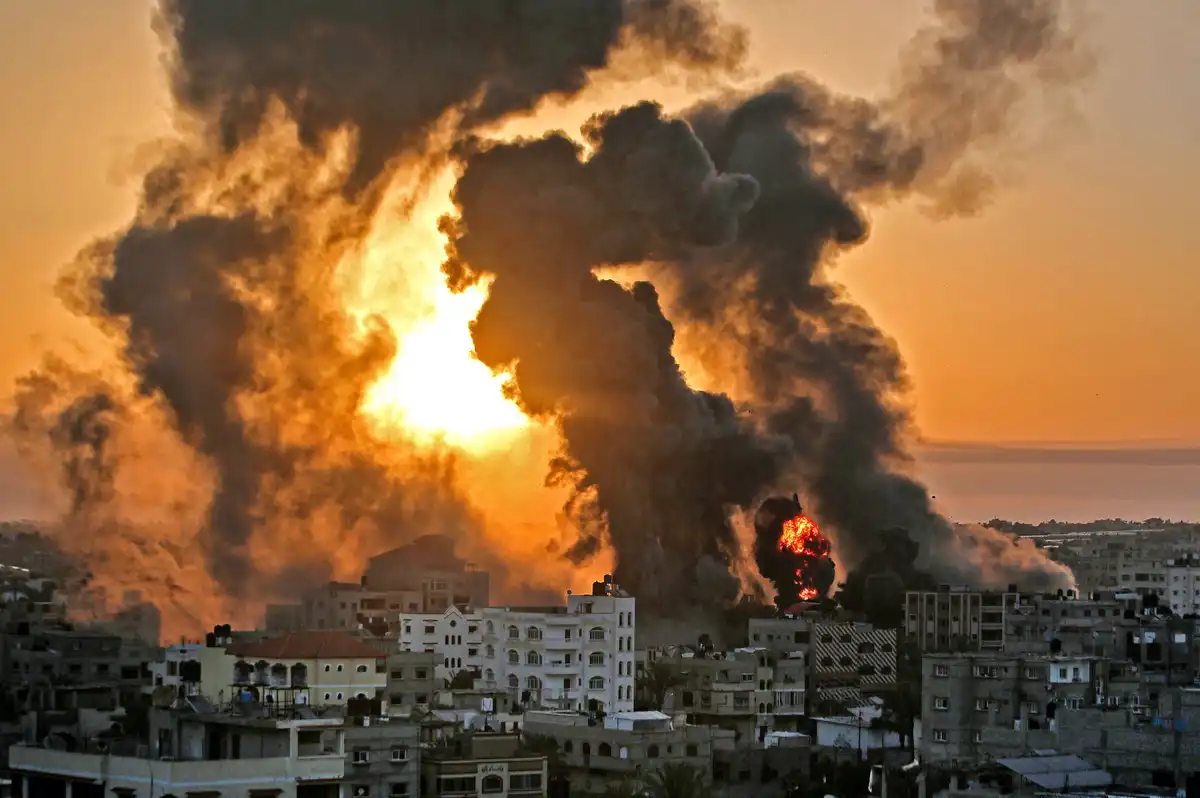
Dead and wounded in Israeli raids on the Gaza Strip

A number of citizens were killed and injured tonight as a result of the continued Israeli raids on the Gaza Strip.


In the southern Gaza Strip, Suhail Ahmed Suleiman Muammar (29 years old) was killed as a result of an Israeli air strike on the Al-Nasr neighborhood, northeast of Rafah city.


Meanwhile, the body of a martyr was recovered after an Israeli bombardment on the Al-Janina neighborhood, east of Rafah city.


In the northern Gaza Strip, three citizens were killed when the occupation air force bombed a group of citizens near the Canaan junction in Beit Lahia.


Two Palestinians were killed and others were injured in an Israeli bombardment of Palestinians near the Beit Lahia Club.


In Gaza City, a number of martyrs were killed and others were injured when the Israeli occupation forces bombed a four-story building south of the city.

PALESTINE

Tue 03 Dec 2024 8:28 am - Jerusalem Time

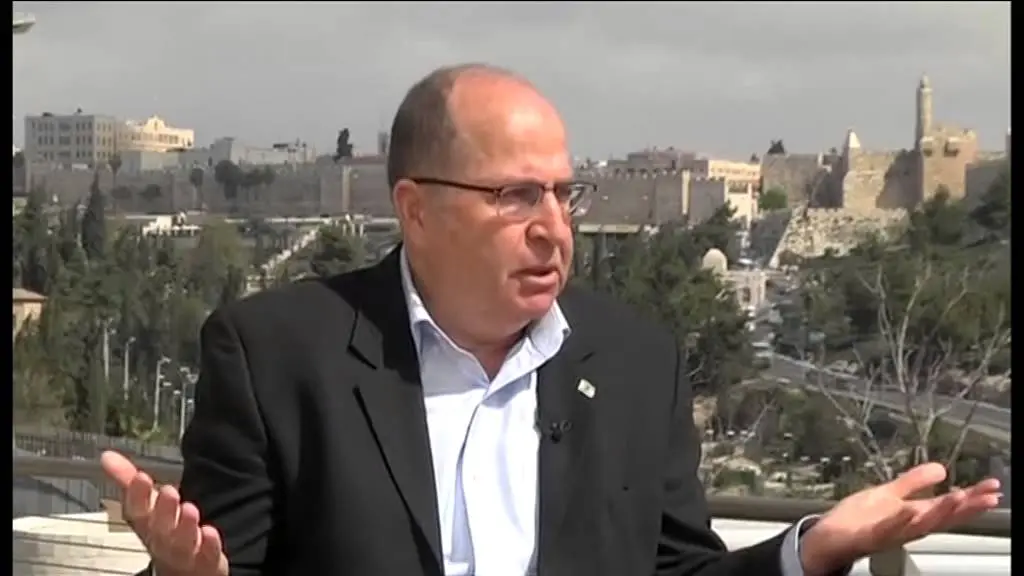
Ya'alon's statements on ethnic cleansing: Awakening of conscience or political rivalry?

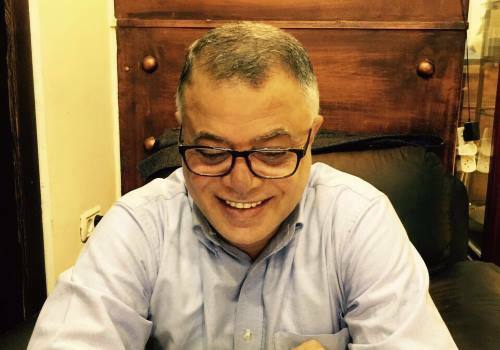
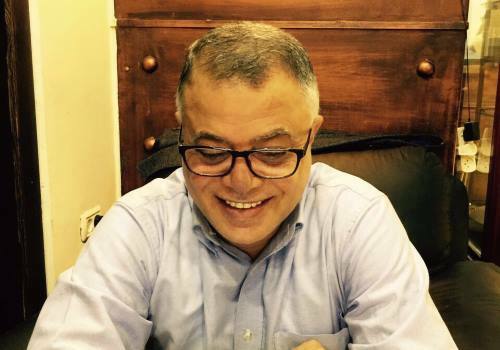
Dr. Ashraf Badr: Ya'alon's statements constitute an explicit criticism of the government's performance and the instructions it imposes on the Israeli army

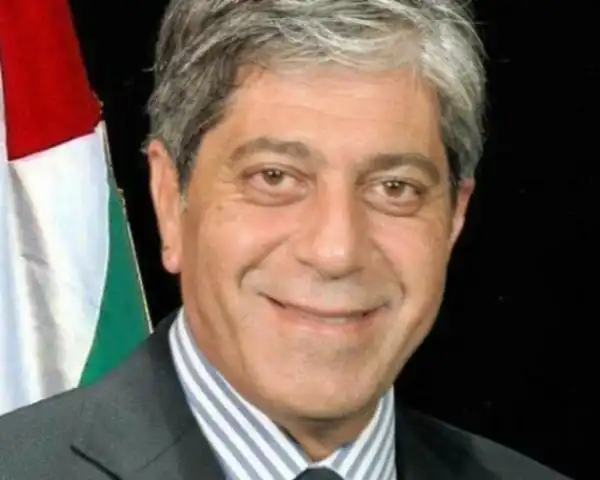
Muhammad Abu Allan Daraghmeh: Ya'alon's statements highlight the phenomenon of military and political leaders becoming more inclined towards "liberal" discourse after leaving power

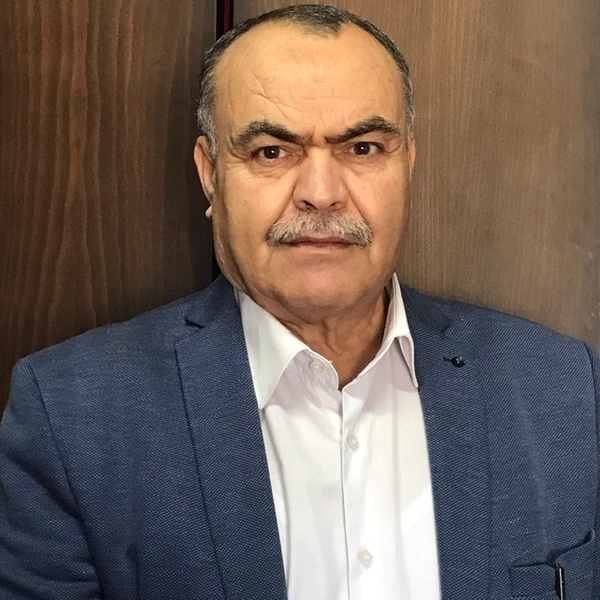
Dr. Raed Abu Badawiyya: Ya'alon's statements may be used as additional testimony to support the already conclusive evidence available about Israeli violations in Gaza

Fayez Abbas: Yaalon's statements about "ethnic cleansing" are an "earthquake" in Israel, for fear that the Palestinians will exploit them in international forums

Dr. Omar Rahhal: Ya'alon's statements do not reflect a "conscious awakening" as much as they come in the context of political conflicts and internal disputes in Israel

Yasser Manna: Ya'alon settles scores with Netanyahu, portraying him as responsible for policies that expose Israel to dangerous consequences


The statements of former Israeli Minister of War Moshe Ya'alon about the occupation army committing ethnic cleansing operations in the northern Gaza Strip reveal deep cracks in the internal Israeli scene and open the way for increasing international criticism of Israeli policies in Gaza. However, these statements show the extent of political disputes and their reaching a major slope in the occupying state of Israel.


In separate interviews with Al-Quds, writers, political analysts, specialists and university professors confirm that Yaalon’s statements are considered a criticism of the Israeli government’s performance, which reflects the intense conflicts in the occupying state. These statements also reinforce the Palestinian narrative about Israeli war crimes, which puts Tel Aviv in an international crisis, especially with the escalation of calls to hold Israeli officials accountable before international courts.


They point out that these statements reveal the depth of personal tensions between Ya'alon and the head of the occupation government, Benjamin Netanyahu, but they reflect deep concern about the future of Israel and its international standing. They may also add additional evidence of Israeli crimes in Gaza before international courts, which raises fears of escalating pressure on Israel in light of the legal cases filed against it.


They point out that the repercussions of these statements are still ongoing, amid widespread criticism from the government and even the opposition, with attempts to justify military policies, with the aim of reformulating the official Israeli narrative about the war on Gaza, but the internal situation in Israel remains tense, with real fears for Israel's future.


They assert that Ya'alon's statements did not reflect a "conscious awakening" as much as they were part of internal political conflicts, as his tense relationship with Netanyahu, which prompted him to resign, raises questions about the motives behind his statements.


Writers, analysts, specialists and university professors believe that these statements highlight the phenomenon of Israeli military and political leaders’ tendency to adopt a “liberal” discourse after leaving power, in an attempt to promote themselves in the context of their attempt to lead the political scene again.


Deep internal and external dimensions


The writer, political analyst and specialist in Israeli affairs, Dr. Ashraf Badr, believes that the recent statements of the Minister of War and former Chief of Staff of the Israeli Army, Moshe Ya’alon, regarding the occupation army committing war crimes and ethnic cleansing in northern Gaza, carry deep internal and external dimensions.


Badr explains that on the Israeli domestic level, Yaalon’s statements constitute an explicit criticism of the government’s performance and the instructions it imposes on the Israeli army, even though he has disavowed criticizing the army directly, which is something that stirs up the stagnant waters within the Israeli political scene, given the high status that Yaalon enjoys in Israeli society.


According to Bader, Ya'alon is a prominent figure in the Israeli political scene. He belongs to the ruling Likud party and is seen as a symbol of the Israeli security establishment. His public attacks on the current government's policies have sparked a wave of debate about government and military performance, which could pave the way for a rise in opposition voices within Israel.


Deep differences with Netanyahu


Dr. Bader believes that Yaalon’s statements express a deep political dispute between him and Prime Minister Benjamin Netanyahu, which goes back to the latter’s marginalization of him politically and exclusion from influential positions, which left clear scars on their relationship.


Badr points out that the criticisms made by Ya'alon, although they are personal in nature due to the disagreement with Netanyahu, show a real concern for Israel's status and future. According to Ya'alon, Netanyahu's policies are causing great harm to the Zionist project that Israel has worked to build for decades.


Badr points out that Ya'alon, despite his differences with Netanyahu in approach, agrees with him on the basic goal of serving the Zionist project, but Ya'alon believes that Netanyahu's policies are destroying what has been achieved.


On the international level, Bader asserts that Yaalon's statements may reinforce the Palestinian narrative regarding Israel's commission of war crimes and ethnic cleansing operations, especially in the Gaza Strip, and these statements may be used as supporting evidence in international courts, where Israel faces lawsuits regarding its crimes against the Palestinians.


Badr believes that these positions highlight Israel's internal divisions, which weakens Israel's image before the international community.


Badr stresses that Ya'alon's statements do not stem from a conscience awakening, but are part of a deep political rivalry, stressing that Ya'alon himself is accused of committing war crimes during his tenure as Minister of War, which makes him part of the system of occupation and aggression practiced by the Israeli army.


An unprecedented storm of criticism


The writer and expert on Israeli affairs, Muhammad Abu Allan Daraghmeh, describes the statements of the former Israeli Minister of War and Chief of Staff Moshe Ya'alon, in which he spoke about committing massacres and ethnic cleansing operations in the northern Gaza Strip, as having caused an unprecedented storm in Israeli political circles, as Ya'alon was subjected to a sharp attack from various political factions in Israel, whether from the ruling coalition or the opposition, and it also caused a wide resonance on the external level.


On the domestic level, Draghmeh explains that the Israeli government, with all its components, launched an attack on Ya’alon’s statements, describing them as defaming the Israeli army. The political opposition, led by Yair Lapid and Benny Gantz, also re-used the traditional defense discourse, stressing that “the Israeli army is a moral army that operates according to human values and international law,” and that what it is doing in Gaza is not genocide or ethnic cleansing, but rather “fighting terrorism.”


Draghmeh points out that the storm was not limited to the political arena, but extended to Israeli society. It prompted the father of one of the Israeli officers killed in Gaza to file an official complaint against Yaalon with the Israeli police and the Shin Bet, demanding an investigation into his statements. The officer’s father considered that these statements endangered the lives of soldiers and constituted a threat to state security.


The phenomenon of "liberal" discourse after leaving power


Daraghmeh asserts that Yaalon's statements do not reflect a conscience awakening, but rather come within the framework of internal Israeli political conflicts. The relationship between Yaalon and Prime Minister Benjamin Netanyahu has been deeply tense, especially after the latter pushed Yaalon to resign from his position as Minister of War. This deep personal and political dispute explains the severity of Yaalon's statements, which some see as an attempt to settle scores with Netanyahu.


However, Draghmeh points out that Yaalon's statements highlight a familiar phenomenon in the Israeli scene, where military and political leaders become more inclined towards "liberal" discourse after leaving power, without reaching the point of fully supporting Palestinian rights.


Draghmeh cites similar positions of figures such as Ehud Olmert, Ehud Barak, and Yair Golan, who called for political solutions after leaving their official positions.


On the external front, Draghmeh believes that Ya'alon's statements received wide international media coverage, which raised great concern in Israel.


Draghmeh stresses that the importance of these statements comes from the fact that they were issued by a prominent military figure who held high official positions, and came at a sensitive time after international arrest warrants were issued against the Israeli Prime Minister and his Minister of War.


Draghmeh points out that these statements add legal weight to the International Criminal Court’s narrative about Israel’s commission of war crimes and crimes against humanity in Gaza, and may lead to the issuance of more arrest warrants against Israeli military leaders, including the current Chief of Staff and the commanders of the Southern Command in the army.


Confronting Ya'alon's statements internally


In the face of the storm that Ya'alon's statements have stirred up, Israel has begun moves to contain its repercussions. Draghmeh points to a meeting that will be held in the Knesset under the title "The Siege - The Model of Victory According to International Law," which will be attended by ministers, Knesset members, military leaders, and experts in international law. The goal of the meeting is to justify the Israeli army's policies in the northern Gaza Strip, including the evacuation of residents and the imposition of the siege, as "legal and necessary measures to combat the enemy."


Draghmeh explains that this meeting reflects an Israeli attempt to respond to international criticism and reformulate the official narrative to defend the army, while emphasizing that military operations are in line with international law.


Meanwhile, Draghmeh points out that Ya'alon, in an attempt to mitigate the impact of his statements that sparked widespread controversy, confirmed that he did not mean the Israeli army, but rather the political level that is openly talking about ethnic cleansing in northern Gaza now, and settling Jews there.


Daraghmeh points out that Ya'alon claimed that he hoped that his public appearance might prevent the Israeli government from committing war crimes and holding Israeli army officers responsible, as was the case on October 7. He also said: "We must know how to win and remain humane."


Additional testimony to support conclusive evidence of crimes in Gaza


Dr. Raed Abu Badawiyya, Professor of International Law and International Relations at the Arab American University, believes that the statements of former Israeli Defense Minister Moshe Ya’alon regarding war crimes and ethnic cleansing in the northern Gaza Strip have clear political dimensions and reveal sharp divisions within Israel.


Abu Badawiya believes that Ya'alon's statements, despite their importance, do not constitute conclusive legal evidence in themselves before the International Criminal Court or the International Court of Justice, but they may be used as additional testimony to support the conclusive evidence already available regarding Israeli violations in Gaza.


Abu Badawiya explains that Ya'alon, as a former military man, provided an analysis that reflects a growing concern about Israel's international image and its political future.


According to Abu Badawiya, Ya'alon believes that his statements about ethnic cleansing and settlement policies may threaten Israel's international standing and push it towards the abyss, especially with the escalation of international pressure to hold it accountable for its crimes in the Palestinian territories.


Opposition to the continued occupation of Gaza..

Abu Badawiya points out that Ya'alon's statements come in the context of opposing the continued Israeli occupation of the Gaza Strip, which reflects the existence of a current within Israel, even among former leaders, that opposes the policies of the ruling extreme right, especially with regard to the occupation of the Gaza Strip.


Abu Badawiya explains that this political discourse by Ya'alon also reflects the unprecedented level of deep division within Israel, where the conflict between political forces has reached its peak, placing Israel at a major crossroads that threatens it as a Jewish state and places it before existential challenges, both internally and internationally.


Abu Badawiya explains that what opponents of the Israeli right-wing policies fear is that the occupation of the Gaza Strip will result in significant economic and human losses, in addition to its demographic effects, especially in light of the growing Israeli concern about the Palestinian demographic composition in the West Bank and within the 1948 borders, and then the attempt to control two million Palestinians in Gaza, which means increasing those fears, which constitute additional pressure on the Israeli leadership to make strategic decisions related to the future of the occupation.


Trump and Netanyahu pushed him to an expected settlement


Regarding future scenarios, Abu Badawiya believes that Donald Trump’s return to the White House may push Israeli Prime Minister Benjamin Netanyahu to seek a comprehensive settlement that includes the Gaza Strip and the West Bank and normalization with the Arab world.


Abu Badawiya asserts that this settlement may include an Israeli withdrawal from the Gaza Strip as part of a broader political deal aimed at achieving strategic gains for Israel, especially in the West Bank, and strengthening its normal relations with Arab countries.


"Earthquake" in Israel for fear of being exploited in international forums


Israeli affairs expert Fayez Abbas explains that Yaalon's statements about the occupation army carrying out ethnic cleansing operations in northern Gaza sparked a political and media storm inside and outside Israel, especially since the statements came based on testimonies of officers and soldiers serving in Gaza.


Abbas points out that Ya'alon is known for his military and political history, and his description of the ongoing operations as "war crimes" has significant dimensions, especially since he indicated that the soldiers are carrying out orders that contradict their personal convictions.


According to Abbas, this statement is considered unusual given Ya'alon's security status, as the statement sparked widespread criticism from the government coalition and the opposition, and many demanded that he retract and apologize, but he insisted on his position and refused to submit to political pressure.


Abbas believes that Yaalon's statements constituted an "earthquake" in Israel, but they were not the result of Israeli concern about acknowledging war crimes or ethnic cleansing operations per se, but rather due to fear that the Palestinians would exploit these statements in international forums. As international criticism of the Israeli aggression on Gaza escalates, it seems that this statement may open the door to broader demands for holding Israel accountable internationally.


Abbas points out that former Defense Minister Yoav Galant faces an international arrest warrant from the International Criminal Court. He described Ya'alon's statements as "false allegations," stressing that the Israeli army carries out its operations "in accordance with the law and the ethics of the army."


Abbas points out that Ya'alon, in contrast, has escalated his statements, indicating that the Israeli army "is no longer the most moral in the world," a claim that has been repeated previously in the context of criticism of crimes committed by the occupation forces.


Abbas explains that Ya'alon's statements do not necessarily reflect an "awakening of conscience," but rather appear to be a warning of the serious repercussions for Israeli soldiers, both in terms of the dangers they face in Gaza and the international trials that may await them.


Abbas believes that it is clear that Yaalon fears for the future of the Israeli military establishment, especially with the increasing international pressure to hold Israel accountable for its crimes in Gaza.


According to Abbas, Ya'alon's statements will not go unnoticed, as they may be used as a political and legal tool against Israel in international forums, which will strengthen the Palestinians' efforts to demand accountability for the occupation. These statements may also lead to further tension within Israel between the government and the opposition, and between the military leadership and the political elite.


It does not reflect a "awakening of conscience" but rather political struggles in Israel.


The writer, political analyst and director of the Shams Center for Human Rights, Dr. Omar Rahhal, believes that the statements of former Minister of War Moshe Ya’alon regarding Israel’s implementation of war crimes and ethnic cleansing operations in northern Gaza carry special significance, because they come from a former military official who is fully aware of the requirements of international law and the war crimes that constitute their violation.


Ya'alon, according to Rahal, spoke from a military perspective, far from political contexts, even if he meant internal political disputes, which gives his statements relative credibility and makes them difficult to deny or ignore, especially when viewed from a legal and political perspective.


Dr. Rahhal points out that Ya'alon's statements, despite their importance, do not reflect an "awakening of conscience" as much as they come in the context of political conflicts and internal disputes in Israel.


Ya'alon's attempts to dominate the political scene after Netanyahu


Rahhal explains that Ya'alon was once part of the military system that committed these crimes, and now seeks through these statements to achieve personal political gains. He aspires to return to the Israeli political arena after the era of Benjamin Netanyahu, and wants to create a new image for himself before the international community, especially the Europeans, as a "peacemaker" and supporter of human rights, despite his record full of violations and crimes during his tenure in office.


Rahhal points out that this strategy is not new in the Israeli scene, as many military and security officials who were involved in war crimes are trying to reshape their image after the end of their service, by appearing as peaceful and peace-supporting.


It constitutes a legal reference in condemning Israel.


Dr. Rahal believes that Ya’alon’s statements could constitute an important legal and political reference if used correctly by international human rights institutions. These statements could provide guiding evidence about the violations committed by the Israeli army in Gaza, especially if other supporting testimonies from former military officials like Ya’alon are available. However, Rahal doubts Ya’alon’s willingness to testify before legal forums or cooperate with human rights institutions, as his primary goal is to improve his political image, not to achieve justice for the victims of crimes.


Rahhal stresses the importance of exploiting such statements to shed light on Israeli crimes in Gaza, noting that they may open the door to future international trials of Israel and its leaders, especially if they are presented as supporting evidence to document war crimes in international courts.


Settling scores with Netanyahu after the ICC decision


Writer and expert on Israeli affairs Yasser Manna believes that Ya'alon's statements, in which he described what is happening in the Gaza Strip as "ethnic cleansing" and which sparked widespread reactions, reveal multiple dimensions related to the current Israeli political and military scene.


Mana' points out that Ya'alon, who is known for his hardline positions towards the Palestinians, is one of the most prominent Israeli military figures with a solid reputation in the security establishment, having previously served as Minister of Defense and led major military operations, which makes his statements have a great impact on the Israeli political scene.


Mana' explains that, however, Ya'alon's description of the situation in Gaza as "ethnic cleansing" constitutes a departure from the traditional discourse adopted within political and military circles, which raises questions about the reasons and motives for this proposal.


Mana links Ya'alon's statement to the deep personal dispute between him and Prime Minister Benjamin Netanyahu, which forced him to resign as defense minister in 2016. Ya'alon is considered one of Netanyahu's harshest critics, especially with regard to security policies and crisis management.


Mana'a explains that Ya'alon's statements come at a sensitive time, as Netanyahu faces local and international pressure against the backdrop of accusations from the International Criminal Court.


According to Mana, Ya'alon seeks to settle scores between himself and Netanyahu and exploit the ICC decision and this critical timing to strike Netanyahu, portraying him as responsible for policies that expose Israel to serious legal and political consequences.


Mana believes that Yaalon's statements highlight a growing conflict between the traditional military elite, to which Yaalon belongs, and the new elites that have risen in recent years with the support of Netanyahu and his allies.


According to Mana, Ya'alon expresses in his statements his concern about the changes in Israeli security strategies, which he considers dangerous to national security, reflecting short-term opportunistic strategies, which deepen divisions within the Israeli military establishment.


An unprecedented shift in Israeli domestic discourse


Mana'a asserts that Ya'alon's use of the term "ethnic cleansing" reveals an unprecedented shift in the internal Israeli discourse, as it opens the door to new international criticism of Israel. The statement also raises questions about the future of the relationship between the military and political establishments in light of the continuing differences between the various elites, which may affect the stability of the Israeli regime in the coming period.


OPINIONS

Tue 03 Dec 2024 8:27 am - Jerusalem Time

‘The ICC’s findings so far have only scratched the surface’

972+ Magazine

972+ Magazine

Opinion Writer

By Mohammed R. Mhawish 


Netanyahu and Gallant's arrest warrants are a victory for international justice even if enforcement remains a challenge, says Palestinian lawyer Raji Sourani.


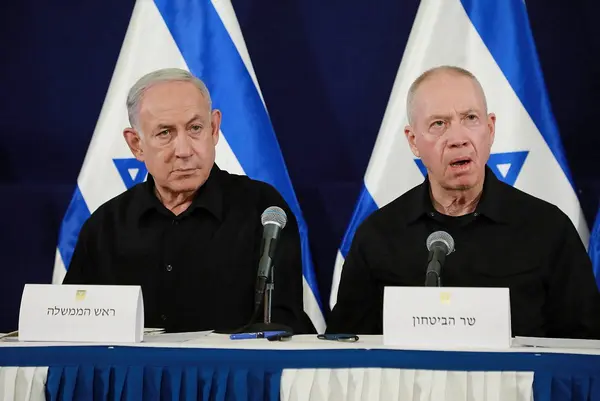
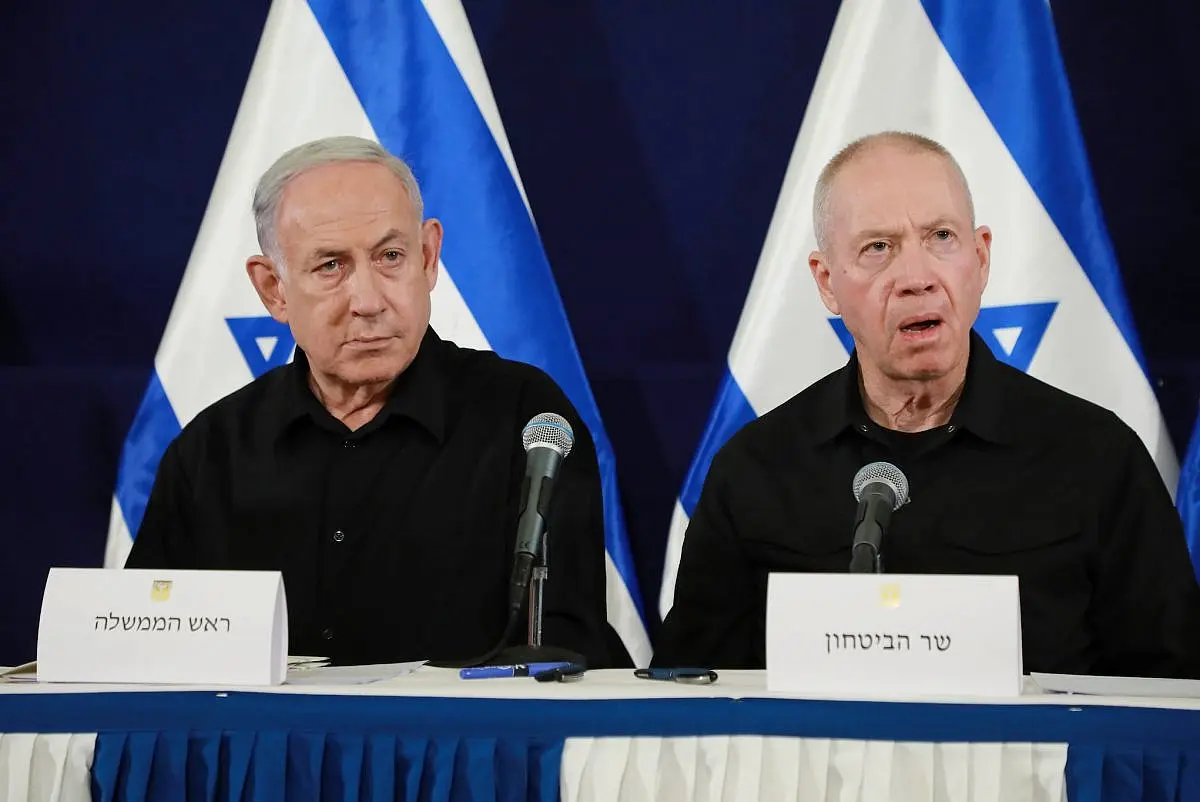
Last week, the International Criminal Court in The Hague issued arrest warrants for Israeli Prime Minister Benjamin Netanyahu and former Defense Minister Yoav Gallant. The court’s judges, in their Nov. 21 ruling, found that there were reasonable grounds to believe that the pair were responsible for war crimes and crimes against humanity committed in the context of Israel’s ongoing war on Gaza — namely, using starvation as a method of warfare, as well as “murder, persecution, and other inhumane acts.”

The ICC’s judges issued an additional warrant for the arrest of Hamas’ military chief Mohammed Deif, whom the Israeli army claimed it killed in July but whose death Hamas never confirmed; the group insisted at the time that Deif survived the assassination attempt, but has reportedly since acknowledged that he likely died. The court’s chief prosecutor, Karim Khan, had also requested arrest warrants for Hamas leaders Ismail Haniyeh and Yahya Sinwar, but Israel subsequently killed both men, in August and October respectively. 

The ICC launched a formal criminal investigation into war crimes and crimes against humanity in Israel-Palestine in 2021, when judges ruled that the court has jurisdiction over crimes committed in the occupied Palestinian territories and those committed by Palestinians inside Israel. The scope of the investigation dates back to 2014, but these warrants relate specifically to the period between Oct. 8, 2023, and May 20, 2024. 

Top of Form

Sign up

Bottom of Form

The decision also spells the defeat of an almost decade-long multi-agency Israeli campaign of surveillance and intimidation that aimed to thwart the ICC’s probe, which +972 Magazine, Local Call and the Guardian revealed earlier this year. 

To understand more about the significance of this ruling, +972 spoke with Raji Sourani, a human rights lawyer and director of the Gaza-based Palestinian Center for Human Rights (PCHR), one of several Palestinian human rights organizations that Israel surveilled while it provided testimony to the chief prosecutor’s office. In the following conversation, Sourani — who is currently based in Cairo, after fleeing the genocide in Gaza — unpacks the legal and political ramifications of the ICC’s decision, its historical context, and what it means for accountability in the ongoing Israeli assault on the Strip. 


The interview has been edited for length and clarity.

Can you break down what it means that the ICC has issued arrest warrants for Netanyahu and Gallant?

The decision to issue these warrants after a meticulous legal review signals the seriousness of the charges. It affirms allegations of Netanyahu and Gallant bearing responsibility for war crimes and crimes against humanity, particularly the use of starvation as a weapon of war and the intentional targeting of civilians in Gaza.

However, as significant as this step is, enforcement remains the ICC’s Achilles’ heel. While it has the authority to prosecute crimes of this magnitude, the court has no independent police or military force to execute these warrants. It relies entirely on its 124 member states, who are signatories to the Rome Statute [the court’s founding treaty], to act as its enforcers, arresting suspects within their borders. While this is a legal obligation under international law, enforcement is often subject to the political will of these states.

So should we expect to see them stand trial anytime soon?

Historically, the court’s reliance on member states to enforce warrants has led to selective compliance. For example, when Sudanese President Omar Al-Bashir was indicted for war crimes in Darfur, he travelled to several ICC member states without being apprehended. Similarly, Russian President Vladimir Putin, wanted for alleged war crimes in Ukraine, was recently welcomed in Mongolia, another ICC member, without consequence.

In the case of Netanyahu and Gallant, much will depend on where they travel, which is something they must now think carefully about. Initial reactions to the warrants have been encouraging, with several countries and organizations reaffirming their commitment to international justice. The European Union, with all 29 of its member states bound by the Rome Statute, has indicated through Josep Borrell [the EU’s high representative for foreign affairs and security policy] that they are obligated to act on these warrants. However, the political ramifications of arresting sitting or recently serving Israeli officials could deter even the most committed states.


The United States, a staunch ally of Israel and also not an ICC member, has openly condemned these warrants. This geopolitical shielding undermines the ICC’s authority and complicates its ability to hold powerful actors accountable. 

How might the United States’ opposition shape the global response to the warrants and, more broadly, affect the credibility and enforcement of ICC rulings?

The U.S. response to the ICC warrants is deeply troubling but not surprising. Historically, the United States has acted as Israel’s most ardent defender on the international stage, providing it with military aid, political cover, and diplomatic immunity. But its response to the warrants is both hypocritical and contradictory.

The United States frequently invokes international law to criticize adversaries, yet it rejects the very institutions it expects others to respect when its allies are implicated. Notably, it is not a signatory to the Rome Statute, the treaty that established the ICC. This undermines its moral authority to challenge the court’s legitimacy while also highlighting its unwillingness to be subject to the same standards it promotes globally.

The White House’s outright dismissal of the ICC warrants is a dangerous signal. It emboldens Israel to continue its policies of occupation, settlement expansion, and military aggression with the assurance of American protection. Furthermore, it discourages other nations from cooperating with the ICC out of fear of political repercussions.


International law’s credibility relies on its universal application. Selective enforcement undermines the entire system and raises legitimate questions about its impartiality. When powerful nations or their allies evade accountability, the rule of law becomes subordinate to political power.

The ICC, to its credit, has sought to challenge this perception by targeting individuals from both powerful and weaker states. However, the failure to enforce these warrants risks reinforcing skepticism about its ability to act as a true arbiter of justice.

What needs to happen in order for Israel’s leaders to actually be brought to justice?

The ICC’s role as a “court of last resort” means that its success depends on the broader international community’s willingness to uphold the rule of law. If member states fail to enforce these warrants, it risks turning accountability into a symbolic gesture rather than a tangible outcome. 

This marks the beginning of a long legal and political battle. For justice advocates, the challenge is to ensure that the ICC’s decisions are not only recognized but also acted upon, even in the face of immense political pressure. And international actors must prioritize legal obligations over political alliances. 

While this is easier said than done, sustained pressure from global movements can shift the political calculus over time. Even in states with strong political ties to Israel, public opinion and grassroots pressure could make non-compliance politically costly.


Lastly, the ICC must remain steadfast in its mission, despite the obstacles. It may work slowly and face setbacks, but the court’s existence is a testament to the enduring pursuit of justice. Every step, however incremental, contributes to the larger goal of holding perpetrators accountable and reaffirming the principles of international law.

Does the lack of enforcement mechanisms diminish the significance of these warrants? Will they have any other impact?

Issuing these warrants carries immense symbolic and legal weight. It is a victory for the principles of international justice, representing a critical step toward accountability for war crimes and crimes against humanity. It sends a powerful message that no one is above the law, not even the leaders of states with significant military and political power.

The warrants also challenge the long-standing perception that Israel operates with impunity. They vindicate decades of meticulous efforts by Palestinian civil society and international human rights organizations to document Israel’s violations in Gaza, the West Bank, and East Jerusalem, laying the groundwork for the ICC’s investigation and pressuring the international community to act. It is a milestone that strengthens the global recognition of Palestinian rights, even if it does not immediately deliver justice on the ground.

The decision also establishes a legal precedent that aims not only to hold individuals accountable but also to act as a tool of deterrence that could influence future actions by other leaders and countries.


What do you make of the court’s decision to issue an arrest warrant for a Hamas leader alongside Israeli leaders?

Targeting civilians is a violation of international law, no matter the context. But there is a need to uphold Palestinians’ rights to self-defense and resistance within the bounds of international law. I think focusing on individuals like Deif without addressing the broader context of occupation and apartheid risks undermining the legitimacy of the Palestinian struggle, and equating the occupied with the occupier.

The decision to issue a warrant for Deif can be seen as part of a pattern whereby the international community places disproportionate focus on the actions of the oppressed rather than the oppressor. I’ve long emphasized that the Palestinian struggle exists within the context of prolonged occupation, blockade, and systemic violence, which creates conditions where resistance emerges. International rulings need to reflect this broader reality.

True justice requires a comprehensive approach that holds all parties accountable, particularly those in positions of power perpetuating systemic violence. There has to be a stronger focus on Israel’s actions and for the international community to address the structural conditions that drive conflict.

Considering the breadth of the ICC’s investigative scope, do you foresee additional indictments for other individuals implicated in these alleged crimes?

Additional indictments are not just possible — they are probable. The ICC’s jurisdiction covers crimes committed since 2014, a period that encompasses a wide range of documented violations, including extrajudicial killings, illegal settlements, and the blockade of Gaza. These are not isolated incidents but part of a broader pattern of systemic oppression.


The ongoing nature of these crimes ensures that the investigation will expand. The ICC’s findings so far have only scratched the surface. The court is building a comprehensive legal framework that will likely implicate other high-ranking officials and military commanders. This is a long process, but the implications are far-reaching.

The warrants may also serve as a deterrent to other Israeli political and military officials, signaling that they, too, could face international accountability. It could lead them to be more cautious in their operations in Gaza or Lebanon due to the threat of future arrest warrants.

Besides the potential for the arrest of Netanyahu and Gallant, what other economic and diplomatic consequences could arise from the court’s ruling? 

The ICC’s decision has far-reaching economic and diplomatic implications, particularly for Israel’s relationships with the EU. As Josep Borrell rightly stated, this is a legal decision with binding consequences for EU member states. Israel’s preferential trade agreements with the EU, which exempt 65 percent of its exports from customs duties, are now under serious scrutiny.

It is ethically and legally indefensible for the EU to maintain these privileges while the sitting prime minister of Israel face charges of genocide and war crimes. Similarly, Israel’s participation in European sports leagues, cultural exchanges, and academic programs like Erasmus must be reconsidered. These partnerships starkly contradict the legal and moral weight of the ICC’s findings.

Economic consequences could extend beyond the EU. Countries in the Global South, many of which have been vocal in supporting the ICC’s mandate, may impose their own restrictions on trade and collaboration with Israel. This would not only isolate Israel diplomatically but also pressure it to comply with international law.


Israel has a long history of resisting external pressure, often doubling down on its policies in the face of international criticism. However, sustained economic and diplomatic isolation could force a recalibration. The loss of preferential trade agreements or cultural partnerships would not just harm Israel economically but also erode its international legitimacy.

Ultimately, the ICC’s decision is a watershed moment. It sets a new standard for accountability in the Israeli-Palestinian conflict, challenging the status quo and opening the door for broader legal, political, and economic consequences. Whether these pressures will compel Israel to change its policies remains to be seen, but the precedent has been set, and the world is watching.

You’ve highlighted the West’s hypocrisy when it comes to addressing war crimes. How does the international response to Palestine differ from other conflicts, such as that between Russia and Ukraine?

The international response to Palestine has long been characterized by a glaring double standard. The contrast with the reaction to Russia’s invasion of Ukraine is a stark example. Within months of the invasion, the ICC indicted Vladimir Putin, and the international community imposed sweeping sanctions on Russia. This swift and decisive action underscores a global consensus that war crimes must not go unpunished.

Yet, when it comes to Palestine, the same urgency is glaringly absent. For decades, Palestinians have faced systematic violence, displacement, and occupation, but the international response has been tepid at best. Calls for sanctions against Israel or legal accountability for its leaders are met with resistance, often dismissed as politically motivated or antisemitic.


This hypocrisy erodes the credibility of international law and institutions, raising serious questions about their impartiality. It also reinforces the perception that the rights of Palestinians are less important than those of others. However, the ICC’s recent decision challenges this narrative, signaling that even Israel’s leaders are not immune from scrutiny.

What does the ICC’s ruling symbolize for the Palestinian struggle for justice and liberation?

The road to justice is fraught with challenges. Israel and its allies have vigorously opposed ICC proceedings, using political, legal, and even coercive measures to derail accountability efforts. Legal professionals involved in these cases have faced threats, while Israel continues to dismiss the court’s jurisdiction.

Despite these obstacles, the Palestinian legal community has remained steadfast. Over decades, they have meticulously documented atrocities, built robust legal cases, and presented irrefutable evidence to international bodies. The ICC’s decision is a testament to their resilience and dedication. It represents a growing recognition of Palestinian rights on the international stage and challenges the long-standing impunity enjoyed by Israel.

At the same time, it is essential to recognize that justice for Palestinians will not come solely through legal channels. It requires a broader political, social, and international commitment to addressing the root causes of the conflict: occupation, displacement, and apartheid.

The ICC’s decision is significant, but it is only one piece of a much larger puzzle. The broader struggle for justice and liberation continues, empowered by the resilience and determination of the Palestinian people. As international attention grows, so too does the imperative to act decisively and hold Israel accountable for its actions.


PALESTINE

Tue 03 Dec 2024 8:06 am - Jerusalem Time

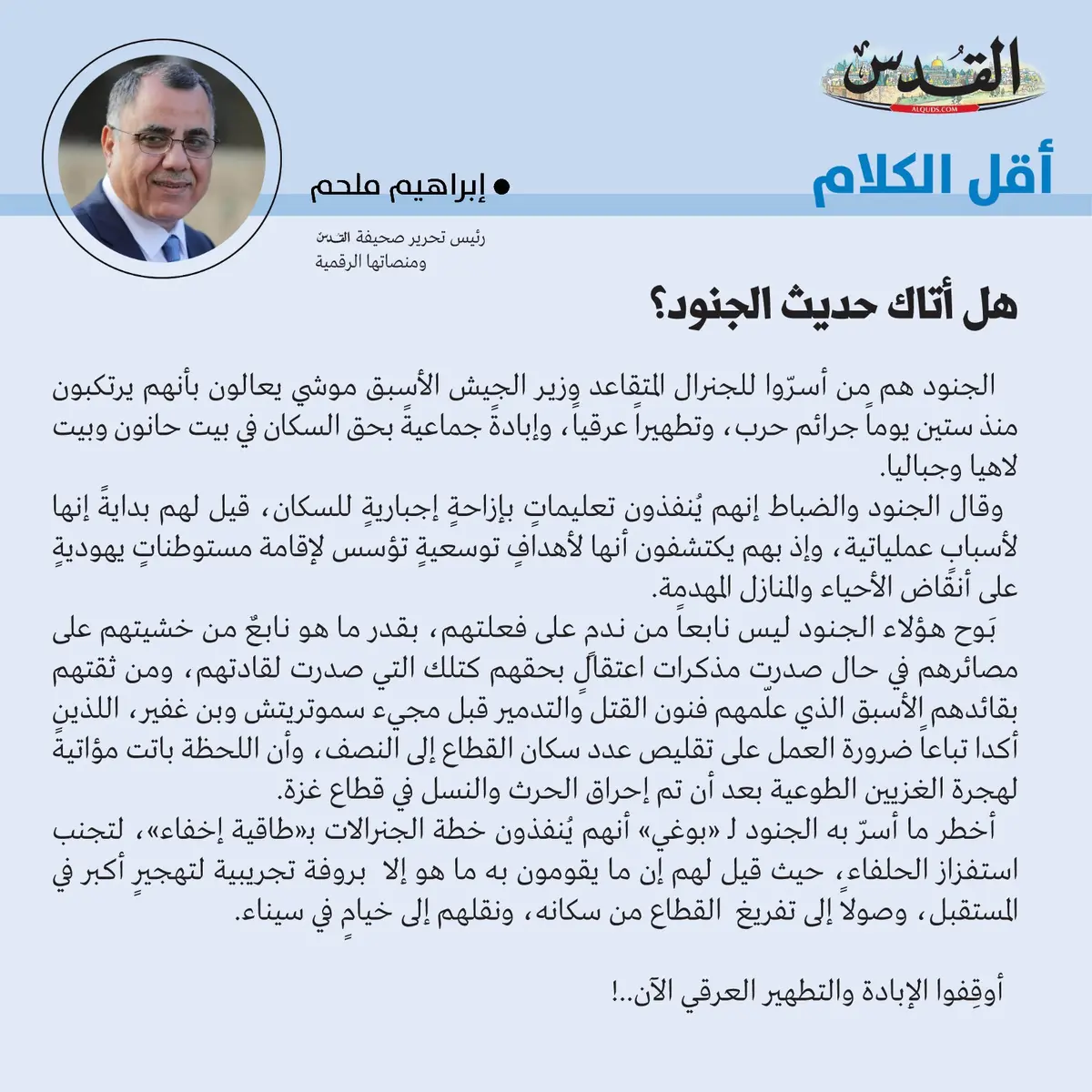
Did you hear the soldiers news?

The soldiers are the ones who confided in retired General and former Defense Minister Moshe Ya'alon that they have been committing war crimes, ethnic cleansing, and genocide against the residents of Beit Hanoun, Beit Lahia, and Jabalia for sixty days.


The soldiers and officers said that they were carrying out instructions for the forced displacement of the population, which they were initially told was for operational reasons, but they soon discovered that it was for expansionist purposes, establishing Jewish settlements on the ruins of the demolished neighborhoods and homes.


The confession of these soldiers does not stem from regret for their actions, but rather from their fear for their fates if arrest warrants are issued for them like those issued for their leaders, and from their trust in their former leader who taught them the arts of killing and destruction before the arrival of Smotrich and Ben-Gvir, who stressed, one after the other, the necessity of working to reduce the population of the Strip by half, and that the moment has become ripe for the voluntary emigration of Gazans after the crops and people in the Gaza Strip were burned.


The most dangerous thing the soldiers confided in Bogie was that they were implementing the generals' plan with an "invisibility cap" to avoid provoking the allies. They were told that what they were doing was nothing more than a trial run for a larger displacement in the future, leading to the evacuation of the Strip of its inhabitants and their transfer to tents in Sinai.


Stop the genocide and ethnic cleansing now..!

ARAB AND WORLD

Mon 02 Dec 2024 10:37 pm - Jerusalem Time

After Hezbollah's response to Israel's violations, Netanyahu vows a "strong" response

Israeli Prime Minister Benjamin Netanyahu vowed on Monday evening to respond forcefully to Hezbollah's firing of missiles at a military site in the occupied Lebanese hills of Kfar Shuba, considering it a "serious violation of the ceasefire."


Netanyahu said in a post on the "X" platform: "Hezbollah's firing of rockets at Har Dov (occupied Kfar Shuba) constitutes a serious violation of the ceasefire, and Israel will respond forcefully to it."


"We are determined to respond to any violation by Hezbollah, whether small or serious," he added.


In the context, Israeli Defense Minister Yisrael Katz vowed a "harsh response" to Hezbollah.


"We promised to act against any violation of the ceasefire by Hezbollah, and that is exactly what we will do," Katz said in a post on the X platform.


He vowed that "Hezbollah's firing on an Israeli army position in Har Dov will be met with a harsh response."


Since dawn on November 27, a fragile ceasefire has prevailed, ending the mutual shelling between Israel and Hezbollah that began on October 8, 2023, and then turned into a full-scale war in the last two months.


However, Israel violated the agreement dozens of times and launched attacks on Lebanese territory that resulted in deaths and injuries, which prompted Hezbollah on Monday evening to target the Israeli Ruwaysat al-Alam site in the occupied Lebanese Kfar Shuba hills, as an "initial warning response" to Tel Aviv's repeated violations of the agreement.

PALESTINE

Mon 02 Dec 2024 10:22 pm - Jerusalem Time

Dead and wounded in Israeli occupation raids on the north and center of the Gaza Strip

Two citizens were killed and others were injured, Monday evening, when Israeli occupation aircraft bombed a gathering of citizens on Al-Jalaa Street in Gaza City.


According to local sources, the occupation's drones bombed a gathering of citizens on Al-Jalaa Street, which resulted in the martyrdom of two citizens and the injury of others.


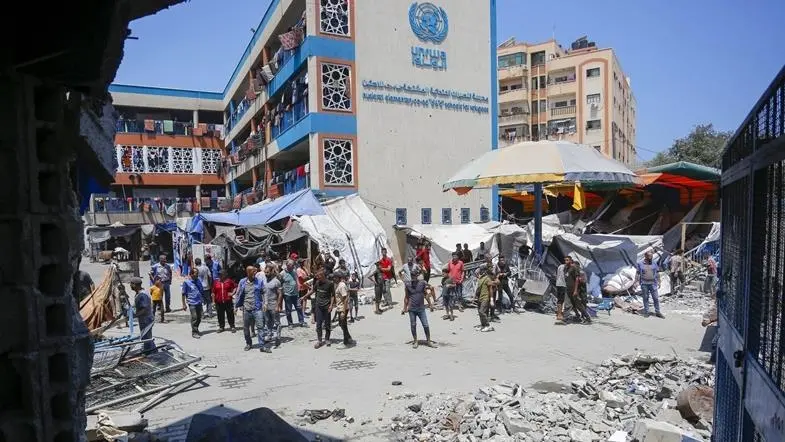
Medical sources reported that a girl was killed as a result of the occupation forces firing at Halima Al-Sadia School, which is sheltering displaced people in Jabalia Al-Nazla, north of the Strip.


Earlier, two citizens were killed and others were injured in an airstrike launched by the occupation forces on a commercial store on Omar Al-Mukhtar Street in Gaza City. Two citizens were also killed and others were injured in the occupation forces’ bombing of a gathering of citizens in the Al-Sabra neighborhood, south of the city.


UN teams retrieved the body of a child martyr and handed it over to medical teams at the Wadi Gaza Bridge on Rashid Street.


A number of citizens were injured as a result of the occupation's drones and artillery targeting the vicinity of the Industrial Junction, west of Gaza City.


The occupation artillery shelled the Saftawi neighborhood west of Jabalia in the northern Gaza Strip, coinciding with heavy gunfire from the occupation vehicles towards the neighborhood. The occupation artillery also shelled the town of Beit Lahia, and the occupation forces blew up several houses in the town.


In the middle of the Gaza Strip, a girl was killed and a citizen was injured, as a result of the occupation aircraft bombing a house in the Camp 1 area in Nuseirat. Five citizens were also injured when the occupation aircraft bombed a house in the Block 9 area in the Bureij camp, and they were transferred to Al-Awda Hospital.


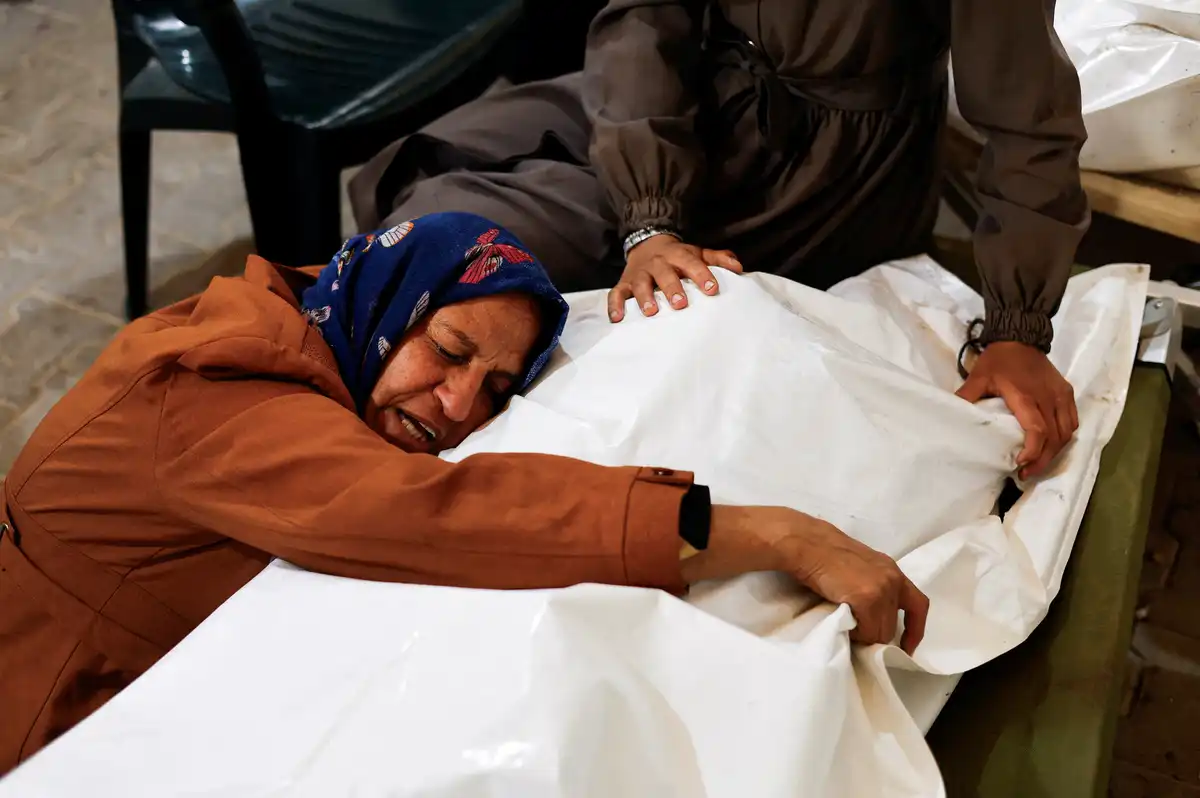
Medical sources announced the martyrdom of at least 30 citizens, including women and children, in the ongoing occupation raids on the Gaza Strip since this morning, including 17 in the central and southern Gaza Strip.


The Israeli occupation forces continue their aggression on the Gaza Strip, by land, sea and air, since October 7, 2023, which resulted in the death of 44,466 citizens, the majority of whom are women and children, and the injury of 105,358 others, in an incomplete toll, as thousands of victims are still under the rubble and on the roads, and ambulance and rescue crews cannot reach them.


ARAB AND WORLD

Mon 02 Dec 2024 9:50 pm - Jerusalem Time

Urgent: Trump threatens Hamas with an unparalleled hellish fate if it does not release the detainees

US President-elect Donald Trump said on Monday that the Middle East will pay a heavy price if hostages held in the Gaza Strip are not released before his inauguration on January 20.


It is noteworthy that during the “Al-Aqsa Flood” attack on Israel on November 7, 2023, Hamas-led militants captured more than 250 people, according to Israeli statistics, including dual Israeli-American citizens.


About half of the 101 foreign and Israeli hostages still being held incommunicado in Gaza are believed to be alive.


In his most explicit comments on the hostages’ fate since his election on November 5, Trump threatened on social media: “If the hostages are not released by January 20, 2025, the date on which I proudly assume office as President of the United States, there will be a heavy price to pay in the Middle East, and to those responsible for these atrocities against humanity,” referring to Hamas.


Trump added: "Those responsible will be hit harder than anyone in the long and storied history of the United States of America." Hamas has called for an end to the war and a full Israeli withdrawal from Gaza as part of any deal to release the remaining hostages.


Israeli Prime Minister Benjamin Netanyahu said the war would continue until Hamas was eliminated and no longer posed a threat to Israel.


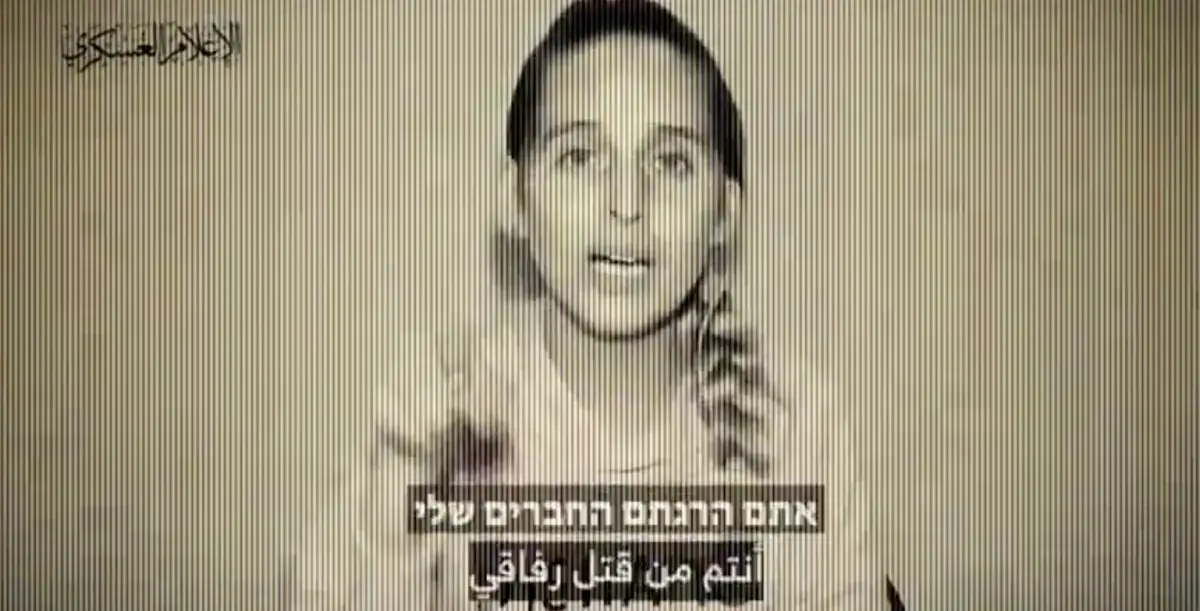
Hamas said on Monday that 33 hostages in Gaza had been killed during the nearly 14-month war between the Palestinian militant group and Israel in the blockaded territory, without giving their nationalities.


Israel launched its brutal war on the Gaza Strip immediately after the Al-Aqsa Flood attack, which led to the death of more than 45 thousand Palestinian citizens, the disappearance of more than 10 thousand, and the injury of more than 100 thousand citizens, the overwhelming majority of whom are women and children according to United Nations reports, in addition to the displacement of all the residents of the Strip from one place to another after the destruction of more than 80% of the Strip.


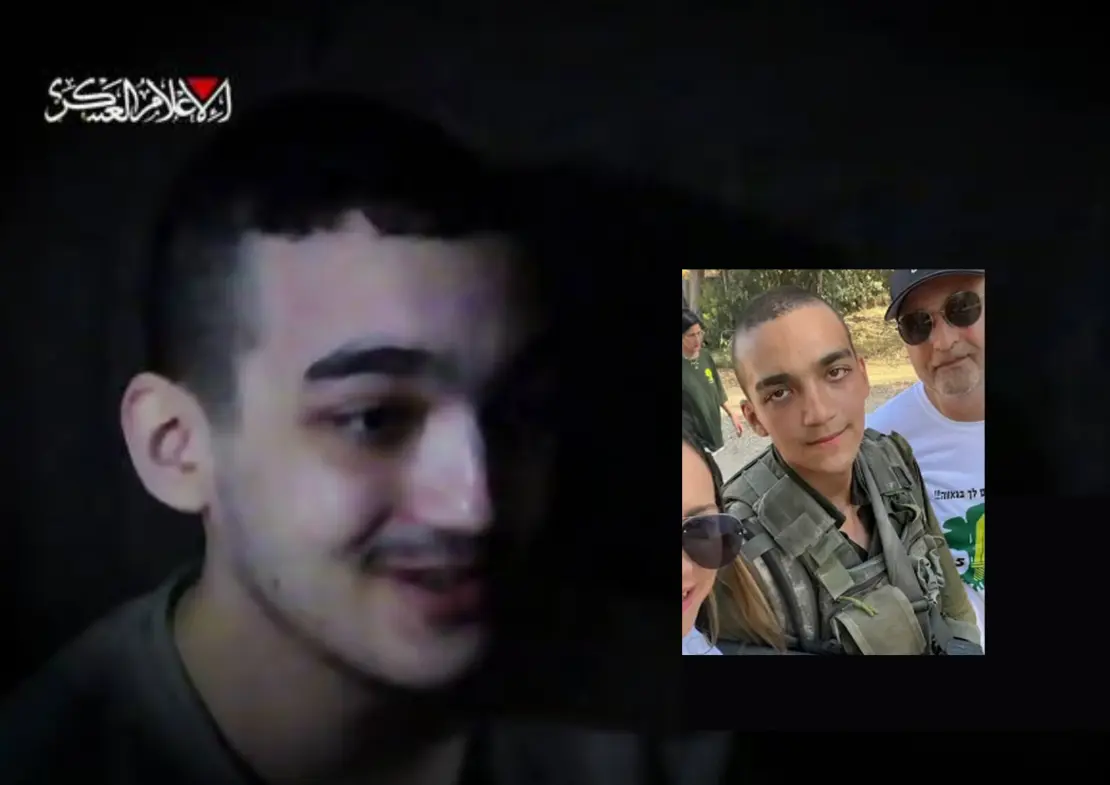
In a related matter, US National Security Council spokesman Sean Savitt described on Sunday the video released by Hamas of Israeli-American citizen Aiden Alexander (which angered Trump) as “a harsh reminder of the movement’s terrorism against citizens of multiple countries, including the United States,” noting that President Joe Biden’s administration had contacted Alexander’s family.


“The war in Gaza would stop tomorrow and the suffering of the people of Gaza would end immediately — and it would have ended months ago — if Hamas agreed to release the hostages,” the White House statement said. “They have refused to do so, but as the President said last week, we have a critical opportunity to make a deal to release the hostages, stop the war, and increase humanitarian assistance to Gaza.”
ARAB AND WORLD

Mon 02 Dec 2024 9:48 pm - Jerusalem Time

Israeli occupation carries out air strikes and reconnaissance flights in southern Lebanon

On Monday evening, the Israeli warplanes launched a series of airstrikes on towns in southern Lebanon, and carried out reconnaissance flights in its airspace, despite the ceasefire agreement between Tel Aviv and Hezbollah.


The official Lebanese News Agency said, "The enemy (Israeli) warplanes carried out a series of raids this evening (Monday), targeting the towns of Yaroun, Maroun al-Ras and Hanin in the Bint Jbeil district, and al-Sarirah in the Jezzine district."


The agency added that "hostile drones and reconnaissance aircraft are flying in the skies of Tyre and its surroundings."


Since dawn on November 27, a fragile ceasefire has prevailed, ending the mutual shelling between Israel and Hezbollah that began on October 8, 2023, and then turned into a full-scale war in the last two months.


However, Israel violated the agreement dozens of times and launched attacks on Lebanese territory that resulted in deaths and injuries, which prompted Hezbollah on Monday evening to target the Israeli Ruwaysat al-Alam site in the occupied Lebanese Kfar Shuba hills, as an "initial warning response" to Tel Aviv's repeated violations of the agreement.


As a result, Israeli ministers, including Finance Minister Bezalel Smotrich, called for a "harsh" response to Hezbollah, considering that "the time for containment is over."

PALESTINE

Mon 02 Dec 2024 9:08 pm - Jerusalem Time

A citizen was injured by Israeli occupation forces' bullets north of Tulkarm

A citizen was injured by Israeli occupation forces' bullets, this Monday evening, north of Tulkarm.


The Palestinian Red Crescent Society reported that its crews dealt with the injury of a citizen (38 years old) with live occupation bullets in the knee, while he was near the racist separation and expansion wall on the lands of Baqa al-Sharqiya, north of Tulkarm.


It added that the injured person, who is from the Dhnaba suburb, was transferred to the Martyr Thabet Thabet Governmental Hospital in Tulkarm.

ARAB AND WORLD

Mon 02 Dec 2024 8:59 pm - Jerusalem Time

Lebanon renews its commitment to calm and calls for an end to the Israeli genocide in Gaza

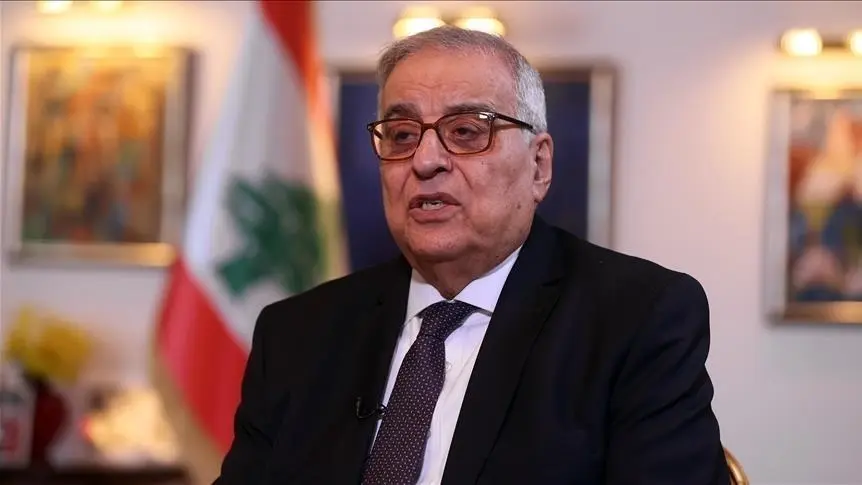
Lebanese Foreign Minister Abdullah Bou Habib confirmed on Tuesday his country's commitment to abide by the ceasefire agreement arrangements with Israel, calling for an end to the genocide that Tel Aviv has been committing in the Gaza Strip for more than a year.


This came in his speech at the ministerial conference to enhance the humanitarian response in Gaza, hosted by the Egyptian capital, Cairo, today, according to the official Lebanese News Agency.


Since dawn on November 27, a fragile ceasefire has prevailed, ending the mutual shelling between Israel and Hezbollah that began on October 8, 2023, and then turned into a full-scale war in the last two months.


Bou Habib said: "We have clearly declared that our permanent choice is diplomacy and self-defense when we are subjected to aggression."


He added: "We renew our commitment to fulfill our obligations, in accordance with the arrangements issued last week on November 26, in a joint statement by the United States of America and France."


He stressed that "we will not achieve stability and sustainable peace before ending the Israeli occupation of all Lebanese territories."


The Lebanese Foreign Minister pointed out that "diplomacy and commitment to the comprehensive and parallel implementation of Security Council Resolution 1701 opened a window in the wall of the crisis."


Among the most prominent provisions of the agreement that the United States and France are working to ensure Israel's commitment to is the latter's gradual withdrawal from south of the Blue Line (dividing line) within 60 days, and the deployment of official Lebanese army and security forces along the border, crossing points, and the southern region, according to a previous document obtained by Anadolu Agency.


However, Israel violated the agreement dozens of times and launched attacks on Lebanese territory that resulted in deaths and injuries, which prompted Hezbollah on Monday evening to target the Israeli Ruwaysat al-Alam site in the occupied Lebanese Kfar Shuba hills, as an "initial warning response" to Tel Aviv's repeated violations of the agreement.


Regarding the Israeli genocide in the Gaza Strip, Bouhaib said, "The world today is called upon to stand up for conscience to secure the needs of our brothers in Gaza so that it does not lose its humanity and the law of the jungle prevails," adding, "Today we need to stop the war (the Israeli genocide) in Gaza."


PALESTINE

Mon 02 Dec 2024 8:29 pm - Jerusalem Time

"Gaza Government" demands UNRWA to resume and increase its aid

The Government Media Office in Gaza called on the United Nations Relief and Works Agency for Palestine Refugees (UNRWA) on Monday evening to reverse its decision to suspend the entry of aid into the Strip through the Kerem Shalom crossing and to increase the number of trucks in light of the continued policy of starvation used by Israel as a “weapon of war against civilians.”


The office said in a statement: "UNRWA's decision to stop the entry of aid through the Kerem Shalom crossing is a shocking and surprising decision, and we hold the Israeli occupation fully responsible for its repercussions."


On Sunday, UNRWA announced the suspension of receiving aid to the Gaza Strip through the Kerem Shalom border crossing in the south of the Strip “due to the lack of security” there for months, according to a statement by UNRWA Commissioner-General Philippe Lazzarini.


"On November 16, a large convoy of aid trucks was stolen by armed gangs, and on Saturday we tried to bring in a number of food trucks via the same road, all of which were seized," he said in his statement, without mentioning who had seized them.


The government office in Gaza accused Israel of "full coordination with the outlaw and immoral gangs that steal aid at its direct behest to ensure that it does not reach those who deserve it and does not reach our Palestinian people."


On August 11, the Israeli newspaper Haaretz quoted unnamed sources in international relief organizations operating in Gaza as saying that “the Israeli army is allowing gunmen to loot aid trucks in Gaza and extort protection money from their drivers.”


The sources added that "the militants (...) prevented a large portion of the aid shipments entering Gaza through the Kerem Shalom crossing."


The newspaper confirmed that "the looting is systematic and the army turns a blind eye to it, and since relief organizations refuse to pay protection money, the aid often ends up in army warehouses."


The Government Media Office in Gaza held the responsibility for UNRWA’s decision on “the Israeli occupation, the American administration, and the countries participating in the genocide, such as Britain, Germany, and France, who support the occupation with weapons to kill civilians from our Palestinian people, and strengthen the occupation with political and diplomatic positions, which helped to continue this aggression against civilians in Gaza.”


It called on UNRWA to "reverse its decision and increase the amount of aid to the Gaza Strip and bring it in through other, safer humanitarian crossings and corridors."


It pointed out the Palestinians' "urgent need for this aid in light of the occupation's use of starvation as a weapon of war against civilians, and the spread of famine in the Gaza Strip, which is rejected by all international and humanitarian laws."


Famine has spread in most areas of the Gaza Strip as a result of the Israeli siege, especially in the north, following the persistence of genocide and starvation to force citizens to migrate south.


Israel has turned the Gaza Strip into the largest prison in the world, besieging it for the 18th year, and the war of extermination has forced about two million of the Strip’s citizens, numbering about 2.3 million Palestinians, to flee in tragic conditions with a severe and deliberate shortage of food, water and medicine.

PALESTINE

Mon 02 Dec 2024 8:01 pm - Jerusalem Time

Hamas announces the killing of 33 Israeli prisoners and sends a message to Netanyahu

The Islamic Resistance Movement (Hamas) announced today, Monday, the killing of 33 Israeli prisoners held by it, most of whom were killed by the Israeli occupation army’s bombing of various areas of the Gaza Strip since the start of the aggression in October 2023.


The movement said in a video clip posted on its Telegram page that "33 Israeli prisoners were killed and some of them disappeared due to the criminal (Israeli Prime Minister) Benjamin Netanyahu and his intransigence."


The movement warned, according to what was stated in the video, that "the continuation of the (Israeli) aggression raises the death toll of enemy prisoners," and said in a brief statement attached to the video, "With the continuation of your crazy war, you may lose your prisoners forever. Do what you must do before it is too late."


The movement indicated, according to the video, that "4 prisoners were killed and their captors were martyred on October 9, 2023, and 9 others on October 14 of the same year due to the intensive bombing of the Strip, and a prisoner was killed on December 8, 2023 in the thwarting of an Israeli force's attempt to reach a captive soldier, which led to his death."


Lost connection

The movement said that in 2024, "7 Zionist prisoners were killed on March 1, weeks after losing contact with their captors, and 3 prisoners were killed in a massacre committed by the occupation in the middle of the Gaza Strip on June 9."


It reported that "a prisoner was killed by his guard and two female prisoners were seriously injured on August 12, and 6 prisoners were killed on September 2. The occupation announced the recovery of their bodies from inside a tunnel in the city of Rafah as a result of the ongoing aggression."


The movement also noted the killing of two female prisoners as a result of the ongoing military operation in the North Gaza Governorate, the first of whom was killed on October 21 and the second on November 21.


On October 7, 2023, Palestinian resistance factions detained about 251 Israelis. According to Israeli estimates, about 105 people were released, including 81 Israelis, 23 Thais, and one Filipino, in the exchange deal in November 2023.


PALESTINE

Mon 02 Dec 2024 7:33 pm - Jerusalem Time

Egypt insists on Israeli withdrawal from Rafah crossing amid talk of imminent truce

Egypt's confirmation of its rejection of Israel's presence on the Palestinian side of the Rafah border crossing with the Gaza Strip and the Philadelphi Corridor coincided with efforts it is making in cooperation with the United States to end the war, and Israeli talk about concluding a truce in the Strip "soon."


On the Palestinian level, new meetings continued in Cairo between the Fatah and Hamas movements, to form an administrative committee for the sector to organize the sector’s affairs and close the gaps in the face of any Israeli obstacles.


Experts who spoke to Asharq Al-Awsat believe that Egypt’s confirmation of its position comes amidst talk of a deal being made behind the scenes, and that there is a path that could lead to a “close truce.” Some of them expressed the belief that “Israeli Prime Minister Benjamin Netanyahu’s reluctance to withdraw from the Rafah crossing was for local consumption, and will recede in the face of the Egyptian veto and American pressure to conclude a deal.”


During a meeting in Cairo with the Deputy Secretary-General of the United Nations, Amina Mohammed, Egyptian Foreign Minister Badr Abdel Aati reiterated “Egypt’s rejection of the Israeli military presence on the Palestinian side of the Rafah crossing and the Philadelphi corridor (which has been ongoing since last May),” according to a press release from the Egyptian Ministry of Foreign Affairs.


During a press conference held on the sidelines of the “Cairo Ministerial Conference to Enhance the Humanitarian Response in Gaza” on Monday, the Egyptian Foreign Minister revealed that “there are two delegations from Hamas and Fatah consulting to reach a common understanding in managing life affairs under the control of the Palestinian Authority,” stressing that “the Egyptian effort has not stopped for a moment in the communications to reach a deal and there are visions presented regarding the hostages and prisoners.”


Abdel-Ati revealed that “there are Egyptian ideas that Cairo is discussing with the Arab brothers regarding a ceasefire and what is called ‘the next day’,” stressing “working to open the Rafah crossing from the Palestinian side,” which Israel occupied last May, and Netanyahu has often expressed his refusal to withdraw from it, along with the Philadelphi corridor, throughout the past months.


This is the third meeting between Fatah and Hamas in two months, after two similar meetings in Cairo in early October and November, to discuss the formation of an “administrative body” for the Gaza Strip, called the “Community Committee to Support the People of the Gaza Strip,” affiliated with the Palestinian Authority, which includes independent figures and is issued by presidential decree from President Mahmoud Abbas. It is responsible for managing civil affairs, providing humanitarian aid to the Palestinians, distributing it in the Strip, re-operating the Rafah border crossing with Egypt, and beginning the reconstruction of what was destroyed by the Israeli war, according to what Palestinian sources told Asharq Al-Awsat.


Big momentum

The academic specializing in Israeli affairs, Dr. Ahmed Fouad Anwar, believes that “these Egyptian statements regarding the Rafah crossing come within the framework of a great momentum that continues regarding reaching a truce agreement soon in Gaza, especially since Cairo is hosting the delegations of (Fatah) and (Hamas) to complete the formation of the Gaza administration in a way that guarantees and enhances the chances of reaching a truce for the next day, and that there is a party that Israel does not object to in taking over the crossing.”


“It does not seem that Netanyahu’s objections will be repeated this time in light of the continued Egyptian veto in light of the current changes, especially with the signing of the Lebanon truce agreement a few days ago,” according to the Egyptian academic, who said that Netanyahu “will ultimately yield to that card that he was trying to bargain with and use to address domestic public opinion, especially since the failure of the Israeli security presence in this axis has been proven.”


According to the Palestinian political analyst, Dr. Ayman Al-Raqab, “The current context of the Egyptian statements comes in light of a positive movement led by Egypt and Washington, and also talked about by Israel, which wants to reach a truce deal in light of the desire of President Joe Biden, who was freed from the presidential elections and is now pressuring Netanyahu.”


It is expected that Hamas and Fatah will reach an agreement in Cairo regarding the administration of Gaza, to give Cairo’s statements regarding the crossing and the axis a new boost that will enable it to enhance the chances of reaching a deal for the day after the war and handing over the administration of the crossing to the Palestinian Authority, as was the case before.


Egypt's renewal of its position on the crossing and the axis comes two days after what the American newspaper "Wall Street Journal" reported from sources about the occurrence of talks between Egypt and Israel last week to reopen the Rafah crossing, to increase the entry of aid into Gaza, and to move towards a ceasefire agreement, on the condition that the Palestinian Authority helps in managing the Palestinian side of the crossing, and the "Hamas" movement relinquishes its complete control over it, and that it be reopened in December, if an agreement is reached.


The atmosphere is ready

The Egyptian movement comes as Hamas leaders revealed on Monday that a delegation from the movement met with Egyptian officials on Sunday in Cairo and discussed with them ways to reach a ceasefire in the Gaza Strip, in addition to meeting with a delegation from the Fatah movement that was visiting Cairo and discussed with them “administration of the Gaza Strip” after the end of the war that has been ongoing for more than 13 months between Israel and Hamas, according to what was reported by Agence France-Presse.


Israel is also talking about progress in the negotiations, according to what a source familiar with the details of the negotiations told the Israeli channel "Kan" on Monday, without clarifying the nature of the progress, but he spoke about Hamas accepting a gradual Israeli withdrawal from the Gaza Strip.


During his meeting with the family of one of the kidnapped Israelis, Israeli President Isaac Herzog said on Sunday that “there are negotiations behind the scenes regarding an exchange deal and the return of the hostages held in the Gaza Strip, and I believe that concluding it is more possible than ever before.”


The White House announced on Wednesday that the United States is making new diplomatic efforts to reach a ceasefire and agree to release the hostages held in the Gaza Strip, with the help of Turkey, Qatar and Egypt.


According to Al-Raqab, the atmosphere is now ready to move towards solutions and a gradual withdrawal starting from the Rafah and Philadelphi crossings, as well as the Palestinian Authority taking over the administration of the Gaza Strip away from Hamas after understandings. Thus, the truce may be imminent and the chances of reaching a solution the next day have become closer.


Anwar believes that the truce deal is maturing, and that the Israeli withdrawal in stages, especially from the crossing and the axis, has become the closest option, especially in light of the Israeli president’s statements supporting the truce agreement and that it is taking place behind the scenes.

ARAB AND WORLD

Mon 02 Dec 2024 6:28 pm - Jerusalem Time

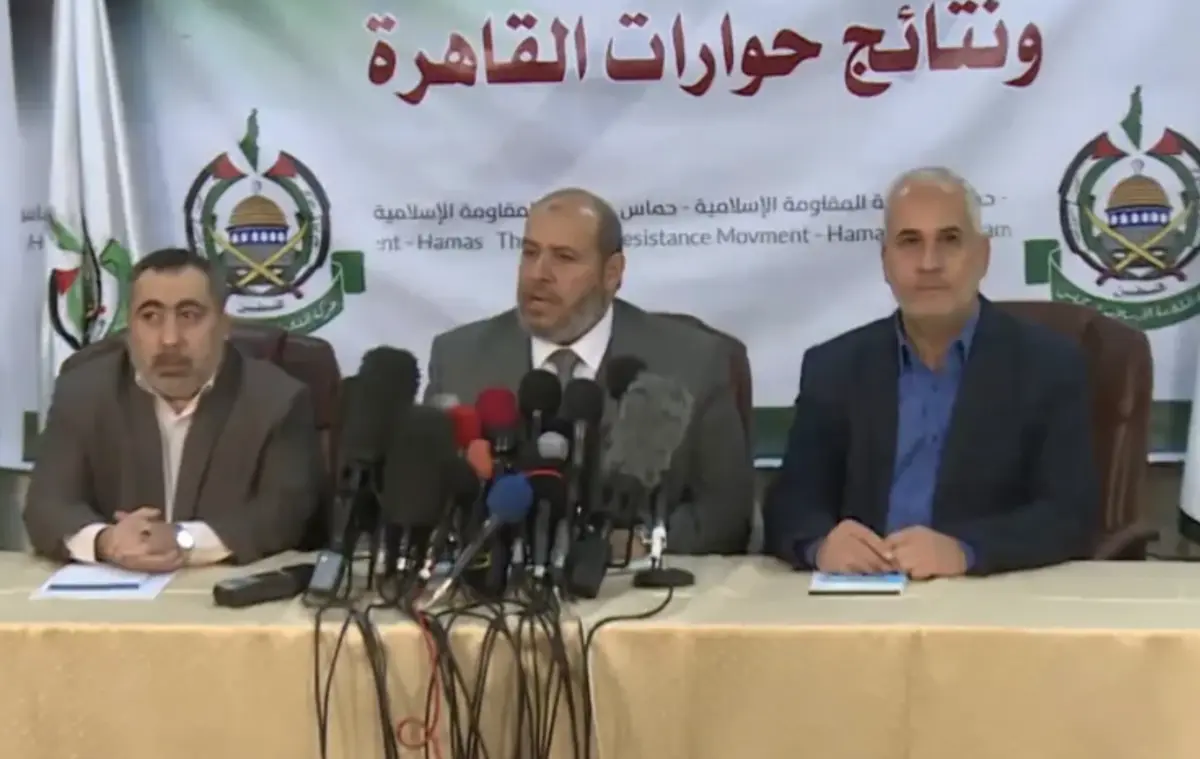
Hamas and Fatah discuss Gaza administration in Cairo

Agence France-Presse quoted leaders of the Islamic Resistance Movement (Hamas) today, Monday, as saying that a delegation from the movement met on Sunday evening in Cairo with a leadership delegation from the Palestinian National Liberation Movement (Fatah) and officials from the Egyptian General Intelligence Service to discuss ways to reach a ceasefire in the Gaza Strip.


A Hamas leader said that the leadership delegation that arrived in Cairo on Saturday met with the head of Egyptian General Intelligence, Major General Hassan Rashad, and intelligence officials on Sunday, and “discussed ways to stop the war and aggression, bring aid into Gaza, and open the Rafah crossing” on the border between the Strip and Egypt.


The leader confirmed that Hamas "has not received any new offers or proposals regarding a ceasefire or a prisoner exchange deal, although the mediators' efforts are ongoing."


AFP quoted the Hamas leader as saying, "There is still no political will on the part of (Israeli Prime Minister) Benjamin Netanyahu to reach a ceasefire and prisoner exchange agreement," adding that Hamas "is ready based on the constants set by the resistance factions."


Deal constants

The leader stressed that these "constants" are represented by "the (Israeli) military withdrawal from the Strip, the return of the displaced, a serious deal to exchange prisoners, whether in one go or in two stages, the immediate entry of aid, and reconstruction."


The Hamas leader said that the movement "reaffirmed that it is open to discussing any ideas or suggestions, and that it is interested in stopping the war and aggression and reaching an agreement that guarantees the implementation of these constants."


Another Hamas leader said, "Egypt, Qatar and Turkey are making great efforts to reach a ceasefire and prisoner exchange agreement, but Netanyahu is still obstructing it to this day."


He pointed out that the Palestinian people "are waiting for American and international pressure on Netanyahu to stop the war of extermination and reach an agreement as happened in Lebanon," referring to the ceasefire agreement between Israel and Hezbollah last week.


Meeting with Fatah delegation

Also in Cairo, the delegation headed by Hamas leader Khalil Al-Hayya met with a leadership delegation from the Fatah movement that was visiting Cairo and discussed with them the "administration of the Gaza Strip" after the end of the aggression on the Strip.


The Hamas leader said that the movement's delegation also met with the Fatah delegation, led by PLO Executive Committee member Azzam al-Ahmad, "and discussed with him the arrangements for the internal Palestinian situation and the administration of the Gaza Strip once the war ends."


He stated that the discussions with Fatah were taking place "under Egyptian auspices" and "focused on forming an independent administrative committee to manage the sector and supervise aid, crossings and reconstruction, in agreement with all Palestinian factions."


Jamal Obeid, a member of the Fatah movement’s supreme leadership body in Gaza, confirmed in a phone call with Agence France-Presse that the meeting took place, considering that the meetings between the two movements are “important in order to put the Palestinian house in order.”


During a press conference on the sidelines of an international ministerial conference for relief to Gaza hosted by the Egyptian capital with the participation of 103 international and Arab delegations, Egyptian Foreign Minister Badr Abdel Aati said today, Monday, that two delegations from the Hamas and Fatah movements are consulting in the capital Cairo to reach a common understanding regarding the administration of Gaza under the control of the Palestinian Authority.


The Egyptian Minister explained that there are two delegations from Hamas and Fatah in Cairo consulting to reach a common understanding on managing life affairs in Gaza under the control of the Palestinian Authority.


He stressed that there are ideas and visions being put forward regarding the release of prisoners in Gaza, the ceasefire, and the day after (the end of the aggression on the Strip).


The Israeli Broadcasting Authority reported earlier that Netanyahu held a meeting last night with ministers and the negotiating team tasked with concluding a prisoner exchange deal with Hamas to discuss opportunities to revive the exchange deal negotiations, while an informed source reported that Hamas is sticking to the condition of stopping the war on the Gaza Strip.


The Israeli Broadcasting Corporation quoted a source familiar with the negotiations with Hamas as saying that Israel is not at a stage of optimism, but has made progress on the issue of prisoner exchange.


ARAB AND WORLD

Mon 02 Dec 2024 5:43 pm - Jerusalem Time

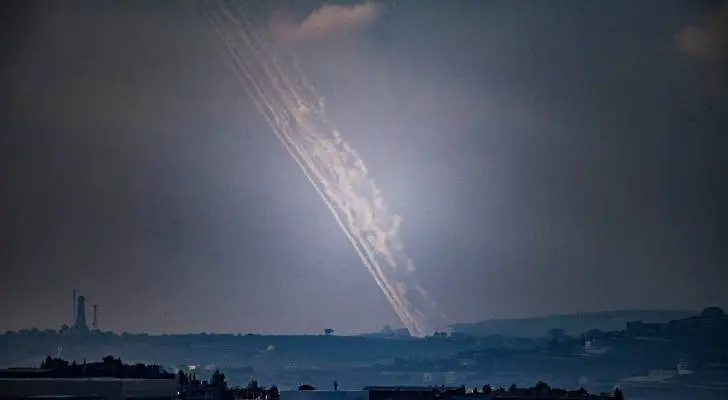
Hebrew media: 3 rockets were fired from Lebanon towards Shebaa Farms for the first time since the ceasefire

Hebrew media reported that three rockets were fired from Lebanon towards areas in the Shebaa Farms on Monday, for the first time since the ceasefire went into effect.


The occupation army said that Hezbollah fired two rockets on Monday towards the Mount Dov area, which fell in an open area without causing any casualties.


Hezbollah confirmed that it carried out a defensive response and targeted the Ruwaysat al-Alam position belonging to the occupation army in the occupied Lebanese Kfar Shuba hills.


Hezbollah added in a statement that targeting the Ruwaysat al-Alam site came after repeated violations by the occupation.


It is noteworthy that the Israeli occupation violated the ceasefire agreement with Hezbollah in Lebanon 62 times, since it came into effect on November 27, 2024, until yesterday, Sunday, according to what was published by the official Lebanese News Agency.


The occupation forces committed 24 violations of the ceasefire on Saturday, which resulted in the killing of two people and the injury of six others.


The Israeli occupation's violations of the ceasefire varied between artillery shelling, drone and warplane flights, in addition to firing machine guns, incursions, bulldozing roads, and setting fire to and crushing cars.


The violations were concentrated in the southern suburbs of Beirut, in addition to Marjeyoun and Bint Jbeil in Nabatieh Governorate, Tyre and Sidon in the south, and Baalbek District in Baalbek-Hermel Governorate, according to the National News Agency.


It is noteworthy that the ceasefire agreement went into effect at dawn last Wednesday, after months of mutual shelling between the Israeli occupation and Hezbollah that began on October 8, 2023, which resulted in the killing of 3,961 people and the injury of 16,520 others, including a large number of children and women.

ARAB AND WORLD

Mon 02 Dec 2024 4:02 pm - Jerusalem Time

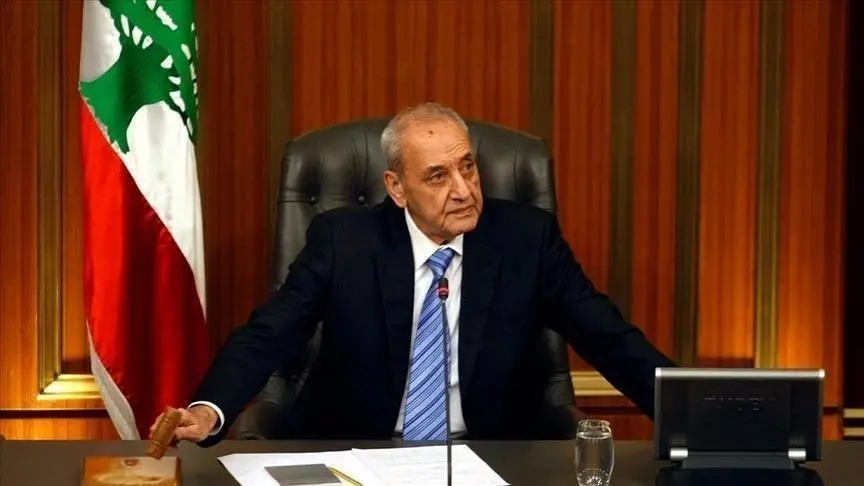
Berri calls on the monitoring committee to begin its tasks to withdraw Israel and stop its violations

Lebanese Parliament Speaker Nabih Berri called on Monday on the committee tasked with monitoring the implementation of the ceasefire agreement between Lebanon and Israel to begin its duties urgently and oblige Tel Aviv to stop its violations and withdraw from the Lebanese territories it occupies.


Since dawn on November 27, a fragile ceasefire has prevailed, ending the mutual shelling between Israel and Hezbollah that began on October 8, 2023, and then turned into a full-scale war in the last two months.


Berri denied, in a statement, a copy of which was received by Anadolu Agency, the truth of "all that is being circulated in the media that what Israel has been doing (of violations) since the ceasefire began is as if it were part of the terms of the agreement."


Among the most prominent provisions of the agreement, according to a document obtained by Anadolu Agency, is Israel's gradual withdrawal from south of the Blue Line (dividing line) within 60 days, and the deployment of official Lebanese army and security forces along the border, crossing points, and the southern region.


The Lebanese army and security forces will be the only party allowed to carry weapons in southern Lebanon, with the dismantling of military infrastructure and sites and the confiscation of unauthorized weapons.


Berri pointed out "the aggressive actions carried out by the Israeli occupation forces in terms of bulldozing homes in the Lebanese villages bordering occupied Palestine."


He added, "Israel continues to carry out air sorties and raids that have targeted the depths of Lebanese regions more than once, during which martyrs and wounded have fallen, the latest of which happened today in Hosh Al-Sayyed Ali in Hermel (east) and Jdeidet Marjeyoun (south)."


"All these actions represent a flagrant violation of the terms of the ceasefire agreement," he stressed.


Berri spoke about the technical committee that was formed to monitor the implementation of the agreement, asking: “Where is it from these ongoing violations and breaches that have exceeded 54 breaches, while Lebanon and the resistance are fully committed to what they pledged.”


Among the provisions of the agreement is the establishment of a committee approved by Lebanon and Israel to supervise and assist in ensuring the implementation of the obligations contained in the agreement, with Lebanon and Israel submitting reports on any violations to the committee and the United Nations Interim Force in Lebanon (UNIFIL).


Berri called on the committee to "urgently begin its tasks and oblige Israel to stop its violations and withdraw from the territories it occupies before anything else."


On Friday, US General Jasper Jeffers, who will head the ceasefire monitoring and supervision committee, arrived in Beirut.


The Lebanese Army Command announced, in a statement on Friday, that Army Commander General Joseph Aoun met with General Jeffers and discussed the general situation and the coordination mechanism between the concerned parties in the south.


Israel's violations of the agreement varied between bombings to destroy homes, shelling with artillery, warplanes and drones, flying drones, firing machine guns, incursions, bulldozing roads, and setting fire to cars, which led to the death of 4 people, including a soldier, and the injury of others.


On Sunday, the Israeli army announced that it had carried out military operations in southern Lebanon against what it claimed were "Hezbollah sites," claiming that they "posed a direct threat to Israel and violated the ceasefire understandings."


Hezbollah is silent about the repeated Israeli violations, and has previously announced that it is monitoring the implementation of the ceasefire and has its “hand on the trigger.”


The Israeli aggression on Lebanon, with American support, resulted in 3,961 deaths and 16,520 wounded, including a large number of children and women. Most of the victims and displaced persons were recorded after the escalation of the aggression on September 23, according to official Lebanese data.


ARAB AND WORLD

Mon 02 Dec 2024 2:55 pm - Jerusalem Time

White House denounces Hamas video, says it is intensifying efforts to achieve a swap deal

US National Security Council spokesman Sean Savitt described on Sunday the video released by Hamas of Israeli-American citizen Aiden Alexander as "a harsh reminder of the movement's terrorism against citizens of multiple countries, including the United States," noting that the administration of President Joe Biden had contacted Alexander's family.


“The war in Gaza would stop tomorrow and the suffering of the people of Gaza would end immediately — and it would have ended months ago — if Hamas agreed to release the hostages,” the White House statement said. “They have refused to do so, but as the President said last week, we have a critical opportunity to make a deal to release the hostages, stop the war, and increase humanitarian assistance to Gaza.”


“This deal is on the table now,” the statement said. “President Biden and the United States will continue to work around the clock to secure the release of our citizens, including through diplomatic efforts and increasing pressure on Hamas terrorists through sanctions, law enforcement, and other measures. On behalf of the Alexander family and all families of the hostages still held by Hamas, we will never stop our efforts to secure their immediate release.”


On Saturday, Hamas published a video clip showing Alexander speaking in English, addressing messages to US President-elect Donald Trump, and in Hebrew to Israeli Prime Minister Benjamin Netanyahu.


Commenting on the video, Alexander's mother, Yael, said at a rally in Tel Aviv that the video "shocked me deeply," and that it was evidence of "the bad situation that Eden and the rest of the hostages are in." She noted that Netanyahu had promised her that a deal to free the hostages was imminent.


For his part, Israeli Prime Minister Netanyahu described the video as a "video of violent psychological horror," stressing that Israel is "moving by all means to return the hostages."


The head of the "official camp" party, former Israeli Defense Minister Benny Gantz, said on Sunday that 30 hostages held by Palestinian armed factions in the Gaza Strip "lost their lives because we did not make a deal."


"If it is possible to reach an agreement in Lebanon, it is also possible to reach an agreement with the more fragmented Hamas," Gantz said.


It is noteworthy that Gantz's statement came a day after Hamas published a video showing Israeli-American citizen, Aidan Alexander, speaking in English and addressing messages to US President-elect Donald Trump, and in Hebrew to Israeli Prime Minister Benjamin Netanyahu.

PALESTINE

Mon 02 Dec 2024 2:19 pm - Jerusalem Time

Netanyahu to appear in court next week amid tight security

Israeli Prime Minister Benjamin Netanyahu will appear in court next week to defend himself in corruption cases against him, amid tight security measures, according to Israeli media.


Yedioth Ahronoth reported that the Israeli internal intelligence agency (Shin Bet) recommended moving a session for Netanyahu to give his testimony from the Central Court in Jerusalem to an underground location in Tel Aviv for security reasons.


Channel 12 Israel said that the recommendation to move Netanyahu's testimony session from Jerusalem to Tel Aviv came based on highly classified information.


The Israeli channel said on Monday that the will also came from the Central Court administration and the General Security Service (Shabak), and that the session will be held in a protected underground courtroom in the Central Court in Tel Aviv.


Netanyahu was due to appear before the Israeli District Court in Jerusalem next week, where he has testified more than once in the past, to defend himself in corruption cases against him.


The channel quoted Barak Lizir, the legal adviser to the Central Court Administration, as saying, "The Court Administration recommends holding a hearing for the Prime Minister's testimony in a protected underground courtroom in the Central Court in Tel Aviv," noting that the two parties - Netanyahu and the prosecution - are now awaiting a decision from the judges on the matter.


According to Israel's Channel 12, Netanyahu's testimony will be held on December 10, after it was postponed for 8 days from the original date scheduled for today, December 2.


She said the duration of the hearings is unknown and will be determined according to the needs of the defence and prosecution, but estimates indicate that they may take 20 days.


Netanyahu had requested to postpone his appearance before the court for two weeks, claiming that he was busy with the International Criminal Court issuing an arrest warrant against him on charges of committing war crimes and crimes against humanity in the Gaza Strip.


Netanyahu is expected to appear next week in court on charges of bribery, fraud and breach of trust, which were brought against him in January 2020, and his trial began in May of the same year.

PALESTINE

Mon 02 Dec 2024 1:45 pm - Jerusalem Time

Palestinian PM: UN resolutions must be implemented to stop aggression and secure aid

Prime Minister Mohamed Mustafa called for the urgent implementation of UN resolutions, especially Security Council Resolution 2735, in order to stop the aggression and secure the entry and delivery of aid to our people immediately and urgently, in a way that paves the way for the return of basic services such as health care and education, and to begin work to restore life to normal, leading to reconstruction and development, and returning the Gaza Strip to its natural space as an integral part of the State of Palestine, with the support of the international community.


“The Gaza Strip is still being subjected to a war of genocide that has been ongoing for more than 14 months, and until now, the comprehensive and systematic destruction of more than 80% of the infrastructure continues, especially hospitals, schools, water and sewage lines, with the spread of epidemics and diseases, and the interruption of electricity, water and fuel, which in its details and its combination constitutes a fully-fledged war crime, a failure of humanity and the principles of international law, and requires urgent and immediate action,” he said during his speech at the Cairo Ministerial Conference to Enhance the Humanitarian Response in the Gaza Strip, on Monday.


He added: "Gaza is facing an unprecedented humanitarian crisis today. It is a disaster area suffering from famine and destruction, where Israel, the occupying power, uses hunger as a weapon of war. We are witnessing deliberate, systematic and widespread starvation, not because of a shortage of aid, but as a result of preventing its entry and obstructing the work of humanitarian organizations and crews."


He stressed that this conference represents an appropriate opportunity to reaffirm our rejection of the continued occupation of the Gaza Strip, the continued closure of its various crossings, or the reduction of the geography or demographics of the Strip, or any part of the territory of the State of Palestine.


He stressed that the role of UNRWA is irreplaceable or irreversible, and that it has a pivotal role in the post-war period, as it has had for 75 years in protecting and providing relief to Palestinian refugees based on UN Resolution 194. Therefore, all Israeli laws targeting it must be rejected. He thanked all brotherly and friendly countries that support UNRWA and help provide and facilitate the entry of aid to our people, especially the Arab Republic of Egypt and the Hashemite Kingdom of Jordan.

Mustafa expressed his thanks to Egyptian President Abdel Fattah El-Sisi and the brothers in the Arab Republic of Egypt for holding this conference at this difficult time in particular, conveying the greetings of the Palestinian leadership, headed by President Mahmoud Abbas. He also thanked the Secretary-General of the United Nations, Antonio Guterres, his deputy, and representatives of all the countries present, as well as the international and regional institutions and relief organizations for their efforts and pivotal role in providing and securing the arrival of aid and essential needs, despite the targeting of their officials and workers, who witnessed the disaster with our people and suffered as we do.

He explained that the government was keen to continue providing everything possible to our people in the Gaza Strip, despite the harsh conditions we are going through, including the Israeli invasions and attacks on the cities of the West Bank, and the deductions of Palestinian tax funds, especially the provision of basic services in the areas of water, energy, communications, social affairs, health, education, financial and civil services.

Mustafa added: “The government has coordinated and maximized humanitarian relief efforts in partnership with its providers, which we hope will be enhanced by the outcomes of this conference. In addition to these immediate and vital efforts, the government is leading the necessary planning phase for the post-relief and humanitarian response phase, as ministries and government institutions are currently developing plans for early recovery and reconstruction, in preparation for launching the comprehensive development process.”

He pointed out that the government has developed a plan to reunify and develop national institutions in the Gaza Strip and the West Bank, which will enable the expansion and development of existing civil services to meet the needs of citizens after the war.

Mustafa continued: “The government has also developed a plan to launch recovery operations in the Gaza Strip and restore vital basic services, and pave the way for reviving the economy, in partnership with several international parties. It has also formed a government team to prepare detailed plans for the reconstruction of Gaza and building its economy, in partnership with national institutions, the World Bank, the United Nations, and the European Union. The team has reached advanced stages in preparing these plans.”

He added: "To ensure effective governance and full transparency, we have developed a comprehensive vision for establishing an independent and professional body to oversee reconstruction efforts. This effort will be complemented by the establishment of a financial trust fund dedicated to mobilizing and directing donor funding towards Gaza's reconstruction needs, in cooperation with the World Bank, in line with international standards and best practices."

Mustafa said: “We have developed a plan to enhance the resilience and sustainability of the national economy, by laying the foundations for sustainable and inclusive growth, stimulating private and public investment capable of generating job opportunities, increasing government revenues, and reducing long-term dependence on donor aid.”

He added: "We have developed a plan to enhance the performance of public institutions in the country by implementing the necessary legislative, administrative and financial reforms, in line with our national priorities, to ensure the efficient provision of services to our citizens in all Palestinian governorates, to enhance transparency and accountability, to support the rule of law, and to strengthen partnership with civil society, which will enable us to advance the Gaza Strip as well as the West Bank."

Mustafa stressed that the partnership and provision of support and humanitarian aid that are under discussion at this conference are an investment in the steadfastness and future of the Palestinian people, which preserves their dignity, increases the resilience of society and its ability to recover and rebuild, and sends a message of hope to our people that the world will not leave them alone.

-

PALESTINE

Mon 02 Dec 2024 1:43 pm - Jerusalem Time

Israel announces the death of a soldier captured from his tank on October 7

The Israeli occupation army announced today, Monday, the death of one of its soldiers who had been captive in the Gaza Strip since October 7, 2023, and explained the circumstances related to his capture and fate.


"Today, after about a year and two months, it was decided to determine the death of Omer Neutra, whose body is still being held in Gaza," Army Radio said. It noted that his death was determined based on what it described as intelligence findings that were obtained, without giving further details.


The army said in a statement that the soldier Neutra, 21, immigrated from New York to Israel, and was "the commander of a tank platoon in the 77th Battalion of the 7th Armored Brigade." It indicated that he was "kidnapped by a hostile organization," according to the statement.


The army radio stated that the soldier "was kidnapped on October 7, 2023, from the Nir Oz area in the Gaza Strip envelope."


She pointed out that Neutra was one of four soldiers inside a tank that was targeted by Palestinian gunmen with an RPG shell, which caused it to catch fire. She added that when the soldiers tried to escape from the tank, the Palestinian gunmen were waiting for them and took them captive inside the Gaza Strip.

PALESTINE

Mon 02 Dec 2024 1:41 pm - Jerusalem Time

Director of a hospital in northern Gaza: 200 dead under the rubble of homes

Dr. Hussam Abu Safiya, director of Kamal Adwan Hospital in Beit Lahia in the North Gaza Governorate, said that about 200 Palestinian dead are still under the rubble of homes destroyed by Israel in the northern Gaza Strip during the past 48 hours.


Abu Safiya explained in a video clip that "the humanitarian scene in the northern Gaza Strip is approaching an absolute catastrophe as a result of the ongoing Israeli aggression, as more than 200 Palestinians were killed in the past 48 hours, and their bodies are still under the rubble."


Abu Safiya added, "The Israeli occupation army committed massacres against the families of Al-Araj, Al-Baba, Alian, and Warsh Agha. Only three injuries from those who survived the Israeli raids reached the hospital, and they remained alive."


He continued, "What breaks the heart is hearing the voices of survivors calling for help from under the rubble, and when citizens tried to rescue them, they were targeted again by Israeli aircraft, which makes reaching those areas almost impossible."


He pointed out that targeting the Al-Araj family home was tragic, as there were about 100 people inside the house, and only one person survived, an employee in the Kamal Adwan Hospital laundry, who happened to be at work during the raid.

Abu Safiya explained that the hospital faces major challenges, most notably the prevention of the entry of medical equipment, medicines and necessary supplies, in addition to the prevention of the entry of ambulances, which arrive with difficulty.

He pointed out that there are 63 hospitalized cases, most of them are wounded, including 9 cases in intensive care, and two newborns, most of them critical cases.

On October 5, the occupation army began a large-scale military operation in the northern Gaza Strip. Since then, the operation has resulted in the martyrdom of more than 3,000 Palestinians, the displacement of tens of thousands, and the destruction of entire residential neighborhoods.

With American support, Israel has been waging a war on Gaza since October 7, 2023, which has left more than 149,000 Palestinian dead and wounded, most of them children and women, and more than 11,000 missing, amid massive destruction and famine that has killed dozens of children and elderly people.

PALESTINE

Mon 02 Dec 2024 1:26 pm - Jerusalem Time

Gaza Health: The death toll from the aggression has risen to 44,466

The Ministry of Health in Gaza announced today, Monday, that the death toll in the Gaza Strip has risen to 44,466, the majority of whom are children and women, since the start of the Israeli occupation aggression on October 7, 2023.


It added that the number of injuries has risen to 105,358 since the beginning of the aggression, while thousands of victims are still under the rubble.


It pointed out that the occupation forces committed 4 massacres during the past 24 hours, which resulted in the death of 37 citizens and the injury of 108 others.

ARAB AND WORLD

Mon 02 Dec 2024 12:29 pm - Jerusalem Time

Netanyahu's wife reveals details of her meeting with Trump

Sara Netanyahu, the wife of Israeli Prime Minister Benjamin Netanyahu, revealed details of her meeting with US President-elect Donald Trump in Florida.


Trump's deputy communications director, Margot Martin, wrote on Twitter that the president-elect had dinner with Sara Netanyahu at his resort.

Sara Netanyahu said she raised the hostage issue during her meeting with Trump, at his golf course in West Palm Beach.


“During the warm and friendly meeting, we discussed many topics, including the enduring friendship between Israel and the United States and the importance of continuing to nurture the unique bond between our countries,” she wrote in an Instagram post in English and Hebrew.


"I also drew the president's attention to the enormous suffering Israel endured on October 7," she added, referring to the surprise Hamas attack nearly 14 months ago.


Netanyahu's wife stressed the "urgent need to work to release the hostages (held in the Gaza Strip) and return them quickly."


She continued: "We also discussed the strategic importance of Israel's victory in the war against the axis of evil, for a more stable and secure future in the Middle East and around the world."


Sara Netanyahu also said that she congratulated Trump on his victory in the US presidential elections, which were held last November.

Sara Netanyahu traveled to Miami, where she will stay for weeks, to visit her son Yair.


PALESTINE

Mon 02 Dec 2024 11:56 am - Jerusalem Time

Dead and wounded in Israeli bombing of the Gaza Strip

A number of citizens were killed and injured today, Monday, in the Israeli occupation's bombing of the Gaza Strip.


Local sources reported that the occupation aircraft bombed a house near the Omari Mosque in Jabalia al-Balad, north of the Gaza Strip, while 8 citizens were injured when a reconnaissance plane targeted Halima al-Sadia School, which houses displaced people in Jabalia.


Two citizens were killed and others were injured in a bombing that targeted a gathering of displaced people in the city of Rafah.


In Deir al-Balah, the young man, Sabri Hassan al-Masdar (25 years old), was killed after heavy shelling by the occupation artillery east of the town of al-Masdar, east of Deir al-Balah, in the central Gaza Strip.

PALESTINE

Mon 02 Dec 2024 11:27 am - Jerusalem Time

Israeli General Staff Officials: The Circumstances Are Right to Complete the Prisoner Deal

Yedioth Ahronoth newspaper reported on Monday morning that officials in the General Staff confirmed that they see an opportunity to achieve a breakthrough in the negotiations with Hamas, and they want the political leadership to exploit it to reach an agreement.


Yedioth Ahronoth referred to a letter from senior officials in the General Staff, who hold key positions in the army, indicating that some of the signatories to the letter had previously doubted the possibility of reaching a deal. The letter coincided with a warning from the head of the prisoner file in the army of a real danger to the lives of Israeli prisoners in Gaza.


The military leaders attributed their opinion to several factors indicating a change in the status quo. These factors, according to them, are: the end of the war in Lebanon, the separation of fronts and the concentration of military weight on Gaza, developments in Syria, internal pressure in Gaza, and internal pressure in Israel.


The leaders added in their letter that the change in the US administration and the Egyptian efforts "which are striving with all their might to push the exchange deal forward" could help reach an agreement.


Yedioth Ahronoth reported yesterday, Saturday, that Donald Trump "is interested in pushing towards reaching an agreement, even before his return to the White House on January 20, and has conveyed a message to Netanyahu that Israel must end the war, before the change of power in the United States."


This comes as Major General Nitzan Alon, who is responsible for the prisoners' file in the army, warned that the prisoners' condition is deteriorating, and some of them are starving, as a result of the shortage of food supplies in the Strip. He also warned that some of the prisoners are in very serious health conditions, and there is a danger to the lives of some of them.


According to Channel 13, the security establishment in Israel estimates that the number of living prisoners is less than half the number of prisoners still in the Gaza Strip.


PALESTINE

Mon 02 Dec 2024 10:35 am - Jerusalem Time

Israel uproots about 150 olive trees east of Bethlehem

Today, Monday, the Israeli occupation forces uprooted dozens of olive trees in the village of Al-Minya, east of Bethlehem.


According to local sources, these forces uprooted about 150 olive trees in the Al-Baqaa area, west of the village, on the side of the main street that connects Bethlehem to its eastern countryside.


The people of Al-Minya village live under the double threat of settler violence and Israeli occupation policies aimed at displacing them from their lands.

OPINIONS

Mon 02 Dec 2024 9:12 am - Jerusalem Time

The fate of the unity of the arenas after the ceasefire agreement between Israel and Hezbollah

Retired Major General: Ahmed Issa

Retired Major General: Ahmed Issa

Opinion Writer

Last Tuesday, 11-26-2024, Israel announced its approval of the ceasefire proposal with Hezbollah, which was reached through indirect negotiations between the two parties with American mediation.


While the details of the agreement were not published, the majority of Israeli society, 61%, according to a poll conducted directly by the Hebrew Channel (13), saw that the agreement does not embody Israel’s victory in the war, and did not achieve any of its declared goals. The poll also revealed that there is a division within Israeli society regarding support for the agreement, with 44% in favor and 37% against.


This prompted Prime Minister Netanyahu to justify Israel’s approval of the agreement by explaining three justifications. The first was that the agreement allows Israel to focus on confronting the Iranian threat. The second was that the agreement enables Israel to give the exhausted army time to rest, and also gives the state time to fill its weapons and ammunition stores. The last was that the agreement breaks the concept of the unity of arenas and separates Gaza from Lebanon.


Despite what these justifications reveal about Israel’s strategic reality and intentions in the next phase, this article will seek to examine whether the agreement has truly broken the concept of the unity of arenas and separated Gaza from Lebanon.


The objectivity of the examination requires clarifying the angle from which Israel views the unity of the arenas, as Israel sees the unity of the arenas or the unification of the Arabs into an effective and influential military force as a threat to the conditions for the state’s survival. In this regard, Israeli national security experts, as well as Jewish geopolitical experts around the world, argue that Israel has succeeded during the past century, that is, from the declaration of its establishment in 1948 until the year 2000, in providing the conditions for the state’s survival, as the well-known geopolitical expert George Friedman wrote several years ago. Here are three conditions:

The necessity of preventing the Arabs from uniting into a single, influential and effective military force.


- The necessity of Israel’s continued control over choosing the time, place and sequence of the war.


- Israel must not go to war while there is an internal Palestinian uprising.


A reading of Israel's strategic reality after the year 2000 shows that Israel's strategy of preventing the Arabs from uniting into a single, influential military force was successful with regular Arab states and armies, but after the year 2000 this strategy proved to be a failure with the forces of the axis of resistance, which are considered to be organizations outside the state system.


It should be clarified here that this failure is considered one of the most important drivers of intellectual and political debates, including social divisions within Israel, especially since this debate began to appear publicly after the unilateral withdrawal from Lebanon to escape the Lebanese Islamic resistance led by Hezbollah, then the unilateral withdrawal from the Gaza Strip in 2005 to escape the Islamic resistance in Gaza led by the Hamas movement, then its defeat at the hands of Hezbollah in the July 2006 war, and its failure to achieve any military victories over the resistance in Gaza during any of the wars it has waged on Gaza since 2008, the most prominent of which was the Battle of the Unity of the Arenas in 2022, then the development of the idea of the Unity of the Arenas into a strategy as it was manifested in confronting the war of extermination that Israel has been waging since October 2023.


Perhaps the above shows how Israel views the unity of arenas, and the question that arises now is: Has Israel succeeded, through the ceasefire agreement on the Lebanese front, in breaking the concept of the unity of arenas and separating Gaza from Lebanon, as Netanyahu says?


To answer this question, Israeli national security experts themselves say that the ceasefire with Lebanon (Hezbollah) may have contributed to calming the front temporarily, but it did not clearly achieve the goal of disintegrating the unity of the arenas for the following reasons:


1- Continuing strategic coordination between the components of the resistance axis.


2- The media discourse of the axis of resistance, as this discourse reinforces unity between the fronts, which means that the calm on the Lebanese front did not radically affect this dimension, which was evident in the victory declaration speech of the Secretary-General of Hezbollah, Sheikh Naim Qassem, who clearly announced the party’s continued adherence to the strategy of resisting the occupation in Palestine until liberation, and in the speech of Mr. Al-Houthi, who announced his continued support for Gaza, its people, and its resistance.


3- The high possibility of a return to escalation again, especially since Israel is not willing to abide by the terms of the agreement signed with Lebanon, and to abide more by the terms of the undeclared US-Israeli bilateral agreement.


4- The Yemeni arena announced its continued commitment to supporting the resistance in Gaza and its bombing of central Israel with a ballistic missile yesterday morning, 12-1-2024.


5- Hezbollah was keen not to deviate from the unity of the arenas and to commit to resistance as a liberation strategy within precise calculations that take into account the internal Lebanese situation and the regional situation, as was clearly demonstrated in the speech of the Secretary-General of the party. Hezbollah, which is strong in Lebanon and the region, is more capable of supporting the Palestinian people, their resistance, and their liberation project from the occupation than Hezbollah, which is weak and isolated in Lebanon and the region.


6- The components of the resistance axis realize that they express the conscience of the Arab and Islamic peoples, despite the heavy prices that the Palestinian and Lebanese peoples have paid and are paying.


Israeli national security experts add that the Gaza front is the most influential front on the rest of the arenas, a front in front of which the Israeli army appears to be on its knees, which is evident in the army’s failure to free its prisoners from the grip of the resistance there, as retired Israeli General Giora Eiland said yesterday morning, Sunday, in a morning interview on the Hebrew Channel (12N).


The above reveals that the Israeli government, led by the wanted war criminal Netanyahu, continues to deceive the Israelis. Netanyahu says that he succeeded in dismantling the unity of the arenas and separating Gaza from Lebanon by announcing his approval of the ceasefire agreement. Even the youngest Israelis realize that the Gaza front, despite its small geographical area and the genocide and cleansing it has been subjected to (as former Defense Minister Bogie Ya’alon recently publicly acknowledged) over the course of fourteen months, still has the final say on all fronts and arenas.

OPINIONS

Mon 02 Dec 2024 9:10 am - Jerusalem Time

“Promoting Chaos and Sustaining Occupation”: The US-Israeli Hegemony Project in the Middle East

Marwan Emil Toubasi

Marwan Emil Toubasi

Opinion Writer

All eyes continue to be on the Middle East, where events are intertwined in a way that reflects a long-term project aimed at redrawing the geopolitical map of the region, especially what is happening today in Idlib and Aleppo, with the escalation of holocausts in Gaza, and after what happened to Lebanon, in a way that serves the interests of the United States and Israel. This project, which is based on sustaining chaos, destabilizing nation states, and liquidating our national cause, is gaining new momentum in light of the rapid developments in Palestine, Lebanon, Syria, and Iraq, with the direct threats they pose to other countries such as Jordan.


What is happening today is not just a passing escalation or a set of separate events, but rather an extension of an intertwined American-Israeli strategic vision that seeks to create a new Middle East, based on fragmenting countries and transforming them into fragile entities that are unable to resist hegemony. This vision is not a recent one, but was entrenched with the announcement by the United States and Israel of previous projects such as the so-called Arab Spring, and what Condoleezza Rice announced two decades ago regarding the new Middle East and organized chaos, then the “Deal of the Century,” and later the Middle East NATO, and last but not least, it seems, the aggression against Lebanon and the crimes taking place in Palestine. All of these projects aimed and continue to aim to liquidate our Palestinian national cause in a way that serves Israeli hegemony and the Zionist project, and normalization with Arab countries at the expense of the essence of our cause, which is considered a fundamental step towards reshaping the regional balance of power.


In Gaza, the features of this vision are still evident in its ugliest forms. The genocidal operations and the total destruction of infrastructure are not merely military responses to what happened on October 7 a year ago, but rather reflect a deliberate strategy aimed at exhausting and aborting the Palestinian resistance, and creating a new reality that turns the Strip into an isolated and unlivable area.


Through its aggression, Israel seeks to achieve several strategic goals. On the one hand, it aims to perpetuate the internal Palestinian conflict, and on the other hand, it seeks to re-establish direct occupation and settlement or impose strict control that excludes any resistance presence in Gaza and works to divide and isolate it. This aggression cannot be separated from Israel’s desire to use the Strip as a pressure card to impose its vision in the region, whether through attempts to liquidate the Palestinian cause once and for all or to turn the people of Gaza into refugees pushed towards Sinai or what Israel calls the “alternative homeland” in Jordan.


In Syria and Lebanon, the signs of the directed chaos that the United States and Israel are working to ignite and support are clearly evident. The return of support for the armed Takfiri and terrorist groups in Idlib, Aleppo and northern Syria now, and the almost daily Israeli attacks on their territories, aim to cut off Iranian supply lines to Syria and Lebanon, and keep the Syrian state in a state of permanent weakness, which prevents any return to its stability or the restoration of its full sovereignty over its lands or its supposed role in the region after the official Arab regime returned to it and it regained its position in the Arab League.


In Lebanon, the recent Israeli aggression reflected an attempt to undermine the Lebanese resistance represented by Hezbollah, which is one of Israel's most prominent strategic challenges in the region. Israel realizes that any stability in Lebanon may strengthen the position of the resistance and the unity of the Lebanese national position, so it seeks to keep the country in a state of political and economic tension, stir up internal unrest among the political parties, and play on the sectarian chord after failing to achieve its declared goals and suffering heavy human, military, and economic losses.


With the escalation of chaos in the region, Jordan emerges as a potential target in the American-Israeli project. Jordan’s geographical location, its strategic role in the Palestinian cause, and its support for it make it a sensitive axis in any plan to reshape the region.


The economic and political pressures that Jordan is facing, in addition to attempts to incite Takfiri groups to threaten internal security, are not isolated from this project. The United States and Israel realize that destabilizing Jordan may serve multiple goals, including increasing pressure on us Palestinians, and attempts to push us towards political options that serve an Israeli Zionist and religious vision of what is known as the “alternative homeland,” especially after the recent talk about a Palestinian state in northeastern Jordan and part of Iraqi territory by religious Zionist extremists.


In this context, the question arises about the role of the various American administrations in promoting this vision. The Trump administration, in particular during his previous term, showed a clear bias towards Israel, and a distinct dedication to strengthening the strategic partnership, and sought to accelerate the implementation of the New Middle East Project. By recognizing Jerusalem as the capital of Israel, pressing for the normalization of relations with Arab countries, and implementing the "Deal of the Century", the Trump administration provided unprecedented support for achieving Israel's goals in the region.

Now, Trump is likely to continue these policies through the Deal of the Century 2, and the unprecedented push to implement Saudi-Israeli normalization, but in a more aggressive manner, as he believes. Trump believes that promoting chaos and supporting Israel absolutely are the way to ensure American hegemony in our region in the face of rising Chinese and Russian influence and to contain the Iranian role in the absence of a unified Arab project.


Israel, for its part, is exploiting this chaos to achieve long-term strategic gains. It seeks to transform areas into permanent bases of influence, as is the case in Iraqi Kurdistan and Azerbaijan, where it is working to build new alliances that will strengthen its regional presence.


This strategy relies on transforming the countries of the region into weak and divided entities, allowing Israel to establish its hegemony and expand its influence without facing major threats.


But this strategy carries with it great risks, not only for the stability of the region, but also for international peace and security. Systematic chaos may lead to the escalation of conflicts and their transformation into comprehensive wars that are difficult to contain, especially with the ongoing proxy war against Russia through Ukraine.


Therefore, this stage requires a unified regional vision and a strong Palestinian and Arab political will to confront this project to impose a cessation of aggression on Gaza as part of the one Palestinian homeland. The countries of the region must adopt a counter-strategy based on resisting these projects and strengthening regional Arab and Islamic alliances, and even with friendly countries, especially China and Russia, and supporting the Arab countries targeted by these wars and chaos, and what the occupation will work on in terms of the annexation project of most of the West Bank. Only through this approach can the vicious cycle of chaos be broken and the plans aimed at changing the political and geographical maps of the Middle East be thwarted.

OPINIONS

Mon 02 Dec 2024 9:07 am - Jerusalem Time

Settlement plans in Gaza and the continuation of the genocide

Bahaa Rahal

Bahaa Rahal

Opinion Writer

The occupation government is continuing its war of genocide, and it is setting, according to its agenda, the plans of the settlement council and extremist settler leaders, who have revealed their malicious intentions and their savage desire to build settlement blocs in the Gaza Strip, specifically in the northern areas of the Strip, which are being subjected to organized ethnic cleansing operations, across the geographical area, and in a very bloody manner. In the chapters of killing, deprivation, death and siege, attempts are being made to expel and displace residents from their homes or what remains of them, to implement a plan prepared for the northern Gaza Strip area. This matter followed October 2023, when statements and threats were issued, and maps were drawn that were in line with the settlement plans under various pretexts, and according to a new map being drawn, which nibbles away at vast areas of the Gaza Strip, and includes them under the direct control and domination of the occupation, its soldiers and settlers.


The ethnic cleansing operations based on the expulsion and displacement of the population, under the pressure of the daily bombing, massacres and bloody slaughters carried out by the occupation, aim to obliterate the features of the Gaza Strip and draw a new map, which eats away at a third of the known area of the Strip, within the framework of attempts to impose population and agricultural settlement operations and others. This is what was expressed by a large number of members of the occupation government who support the idea of settlement and support Netanyahu and his coalition in his plans to continue the war of extermination and not stop it. If a truce occurs, it will not lead to stopping the war, according to his expression, but rather it will be temporary, after which he will continue the war, killing and displacement attempts. He has repeatedly announced that he refuses to stop the war in Gaza.


A tragic reality is witnessed in the northern Gaza Strip, with bloody operations and continuous bombing, amid policies of starvation and deprivation, and amid conditions that are unbearable for the human soul, as the people in the northern Gaza Strip lack all means of livelihood, and are exposed to the most heinous types of genocide, but they insist on not leaving and being displaced from the remains of their homes, as they live among the rubble of their homes in conditions that no human being can bear. They have known since the first day of the genocide that if they leave their areas, they will not return to them, because the ambitions of the occupation and its settlers target their homes and houses, even if they are rubble upon rubble.


The settlement plan in Gaza is one of the plans of genocide and ethnic cleansing that the war government has put in place since the first day of the aggression. It seeks to achieve and impose it by force of killing and violence, and with all the smart and unsmart weapons it possesses. However, to this day, it faces the patience and tolerance of the people in their tragic circumstances, refusing displacement, and they hope to stop this war, to catch their breath, and they look forward to a quick and urgent international intervention, in order to save the lives of those who are still alive.


OPINIONS

Mon 02 Dec 2024 9:06 am - Jerusalem Time

So that the Palestinians do not pay the price of settlements in the region

Dr. Ahmed Rafiq Awad

Dr. Ahmed Rafiq Awad

Opinion Writer

By this title, I mean that the regional parties will not achieve most of their demands by abandoning the Palestinian people, or by marketing illusions or selling spoiled goods, under the pretext of the balance of power, or a change in the region, or a difference in the international mood. There are those who are re-establishing their alliances and calculations by washing their hands and feet of the obligations of defending the Palestinian people, and being satisfied with selling some resonant slogans or weak positions that are not translated into real actions.

This is after some people saw that they would pay prices they could not afford, or that they might lose their living flesh, or that their head might be toppled altogether. There are those who believe that their role is limited to holding conferences, forming committees, and going back and forth between capitals, begging for positions that have not come and will not come. There are those who try to give the impression that they are getting closer to the occupying state in order to pressure it, blackmail it, and prevent it from further extremism, annexation, and killing.


There are those who believe that the occupying state is sparing it the wrath of the United States, and giving it enough to survive or stabilize, and there are those who try to say that it is trading moderate positions for extremist ones for a possible tangible settlement, and no one knows exactly what the real meaning of the word tangible is here. In short, the regional parties that are up to their ears in poverty, unemployment, impotence, and the threat of dismantling or even removal are losing the ability to support the Palestinian people or pay the dues of standing with them.


Therefore, after the change of the American administration and the arrival of a violent, extremist and impatient president, the parties in our Arab and Islamic region want to settle their situations and achieve their interests without paying attention to the Palestinian people whose tragedies are increasing and who are drowning in a sea of new challenges. Talk about the future Palestinian state is almost actually disappearing behind the global talk about annexing Area C and separating the Gaza Strip from the West Bank, or it disappears behind talk about imaginary or real and acceptable efforts or paths, leading to a Palestinian state. That is, talk about embodying the state has been replaced by merely starting actual negotiations, which is a dangerous trap and a great illusion that the Arab and Palestinian parties must not fall into.


There is no need to spend more time talking about the state, its importance, its content, and the method of its establishment. There is no need to spend effort, time, bloodshed, and destruction in order to talk about a subject that has been killed a hundred times through research, digging, and coverage. We cannot fall into the trap again, especially since Israel is openly talking about annexation in the West Bank, settlement in the Gaza Strip, and Judaization in occupied Jerusalem. This is on the one hand, while on the other hand, the Islamic countries in the region are also trying to settle their situations before Trump enters the White House by redefining their positions in the empty and violated Arab region, aspiring to influence and possessing military and economic power cards, which makes them reconsider their calculations with the Palestinian people again so that they do not get more involved or offer more entitlements than they planned, or were not and will not be prepared to pay. At least the bets of the Hamas movement have not achieved what was hoped for so far, and it does not seem that they will achieve it in the near future after everything we have seen. Our Arab and Muslim brothers and sisters, before Trump enters the White House, are each trying in their own way and style to present their cards and good intentions to the new American administration by softening or reducing the Palestinian demands, or even bypassing and ignoring them. Therefore, there is no real and effective unified proposal that everyone stands behind in order to solve the Palestinian issue, and there is no unified Arab or Islamic position to alleviate the suffering of the Palestinian people or at least stop the deadly killing machine that has not stopped killing in the Palestinian territories. It is strange that the dialogue and even the debate about the ceasefire is between Israel and its sponsors, and not with other parties. Someone will say that this is an exaggeration and that the Arab and Muslim brothers have done a lot for the Palestinian people, and no one denies this at all, but the question is: What are the results? Moreover, the helpless, fearful and hesitant usually tend to blame the victim rather than punish the executioner, and this is what happens to a large extent.


What can the Palestinian people do to avoid paying the price of settlements, and to avoid being the scapegoat for all settlements? There are usually two ways out of crises: either the flexible and realistic way in which the ceilings are lowered and demands are modest, or the difficult and costly way in which dreams are held on to no matter the cost.


I mean, do we have to make a settlement with the occupier, no matter how difficult and harsh it is, because our allies, friends and brothers have abandoned us, and do we have to acknowledge the losses and therefore change direction?! Or do we have to stick to the last positions for the sake of the last goals?!


The problem this time is that the occupier did not even leave us the luxury of choosing between flexibility and rigidity. This time, the occupier does not want us to choose at all. In our case, the occupier thwarted and aborted the idea of a settlement under the pretext that we failed to obey and submit, and the occupier also thwarted our resistance because it did not submit to his conditions and goals. After all, we and our occupier are in a deep crisis. We both reject a settlement, and we both reject defeat, and that is another matter.