PALESTINE

Sun 01 Dec 2024 6:08 pm - Jerusalem Time

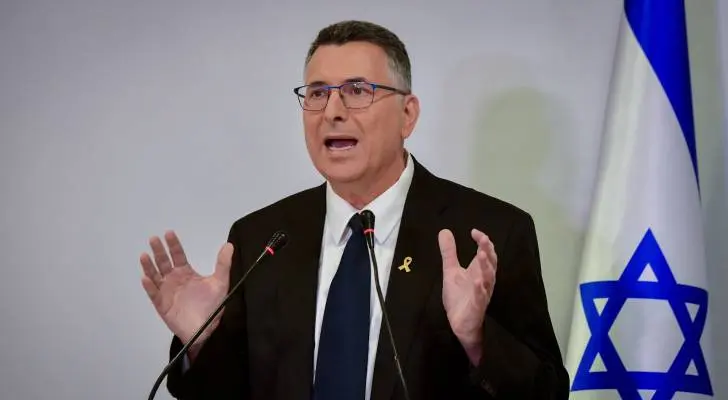
Israeli Foreign Minister: Signs of progress in prisoner deal, flexibility from Hamas

Israeli Foreign Minister Gideon Sa'ar claimed that there are signs of progress in a prisoner exchange deal with Hamas.


"There are signs of progress in the prisoner return deal, but I cannot provide more details now," Sa'ar said in statements he made during a conference held by the Hebrew newspaper Israel Hayom.

"There are indications that Hamas will be more flexible under the circumstances that have arisen," he added, referring to the ceasefire agreement in Lebanon between Hezbollah and Israel, without elaborating further.

"From the Israeli government's point of view, there is a desire to go to such a thing and I hope we can move forward," Sa'ar continued.

He continued: "Israel's basic position is that Hamas will not be able to control Gaza (the day after the war), but we are obligated to try to make progress on the prisoners' issue."

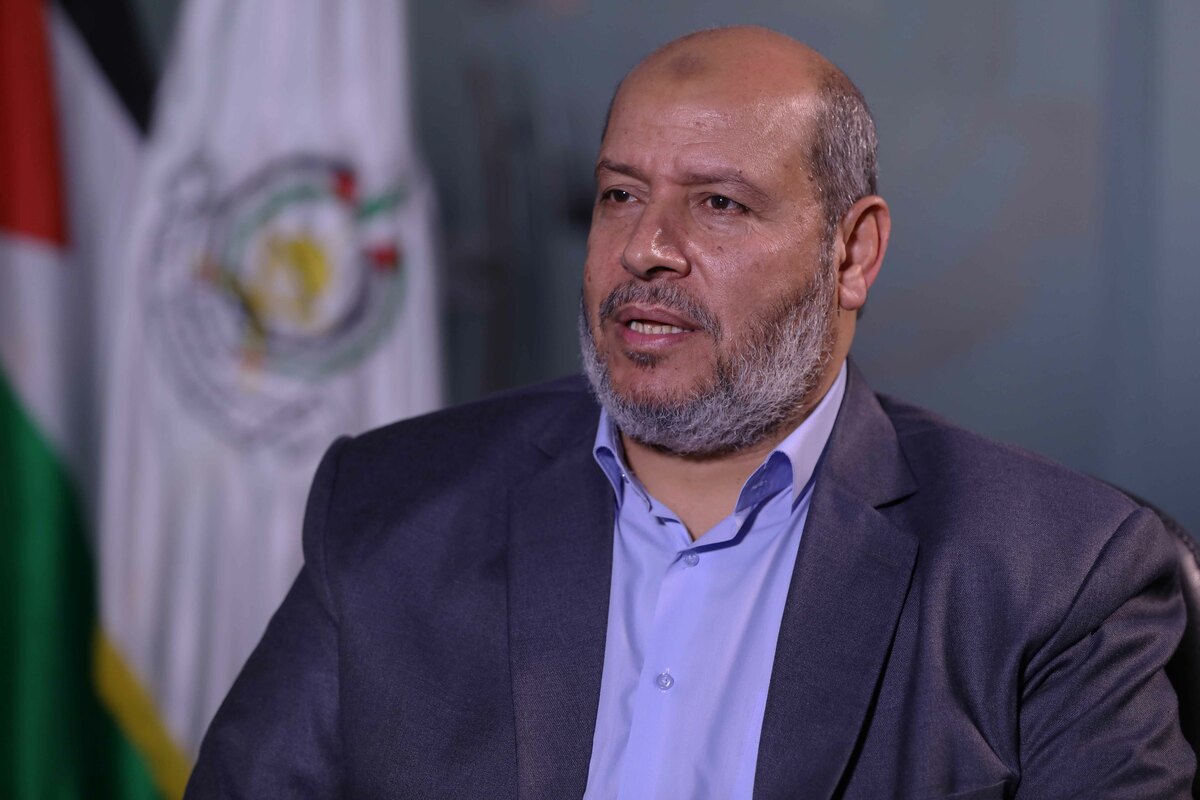
On Saturday, a Hamas delegation headed by prominent leader Khalil al-Hayya arrived in the Egyptian capital, Cairo, to meet with Egyptian intelligence chief Hassan Rashad, according to the Hebrew newspaper Yedioth Ahronoth.

The newspaper reported on Sunday that "the Egyptians are trying to promote reconciliation between Hamas and Fatah, and at the same time are pushing for a deal to return the prisoners, and according to reports they also sent a delegation to Israel last week."

She added, citing media reports, that Hamas is prepared to accept a "gradual agreement" similar to the ceasefire agreement reached with Hezbollah in Lebanon, meaning a gradual Israeli withdrawal from Gaza, not an immediate one as Hamas has demanded in the past.

The prisoner exchange negotiations faltered due to Israeli Prime Minister Benjamin Netanyahu’s insistence on “continuing control over the Philadelphi Corridor on the border between Gaza and Egypt, and the Rafah crossing in Gaza, and preventing the return of Palestinian faction fighters to northern Gaza (by inspecting returnees through the Netzarim corridor in the middle of the Strip).”

While Hamas insists on a complete Israeli withdrawal from the Strip and a complete cessation of war to accept any agreement.

Israel estimates that there are 101 prisoners being held in the Gaza Strip, while Hamas announced the killing of dozens of prisoners in random Israeli raids.

PALESTINE

Sun 01 Dec 2024 4:44 pm - Jerusalem Time

Hamas and Egyptian officials meet in Cairo

An informed Egyptian source revealed that a meeting has begun in Cairo between a Hamas delegation and Egyptian officials, in the presence of Major General Hassan Rashad, head of the General Intelligence Service. The source, who preferred to remain anonymous, said that the first meeting between the Hamas delegation, headed by Khalil al-Hayya, and Egyptian intelligence began Sunday afternoon. He added that the delegation arrived in Cairo yesterday, while the meetings began today to discuss the latest proposals for a ceasefire in the Gaza Strip.


The movement's official spokesman, Jihad Taha, said yesterday that the Hamas delegation's visit comes within the context of the efforts and endeavors undertaken by mediators to end the aggression against the Palestinian people in the Gaza Strip.


Jihad Taha pointed out that "Hamas is open to proposals that would lead to a ceasefire and withdrawal, address all issues left by the ongoing aggression, and stop the series of massacres and war of extermination." He added that "administration of the Gaza Strip is an internal Palestinian affair that is agreed upon with all national components of our people, and this requires concerted efforts to serve the issues of our people and their legitimate rights."

This statement comes amid ongoing international and regional efforts to calm the situation in Gaza, with increasing pressure on Israel to stop the military escalation, which has worsened the humanitarian situation in the Strip. Several international and regional parties are participating in mediation efforts to reach a ceasefire, with the aim of restoring calm and opening the door to political understandings.


Source: Al-Araby Al-Jadeed

PALESTINE

Sun 01 Dec 2024 4:44 pm - Jerusalem Time

Intensive Israeli bombing of Gaza and Khan Yunis leaves 7 dead

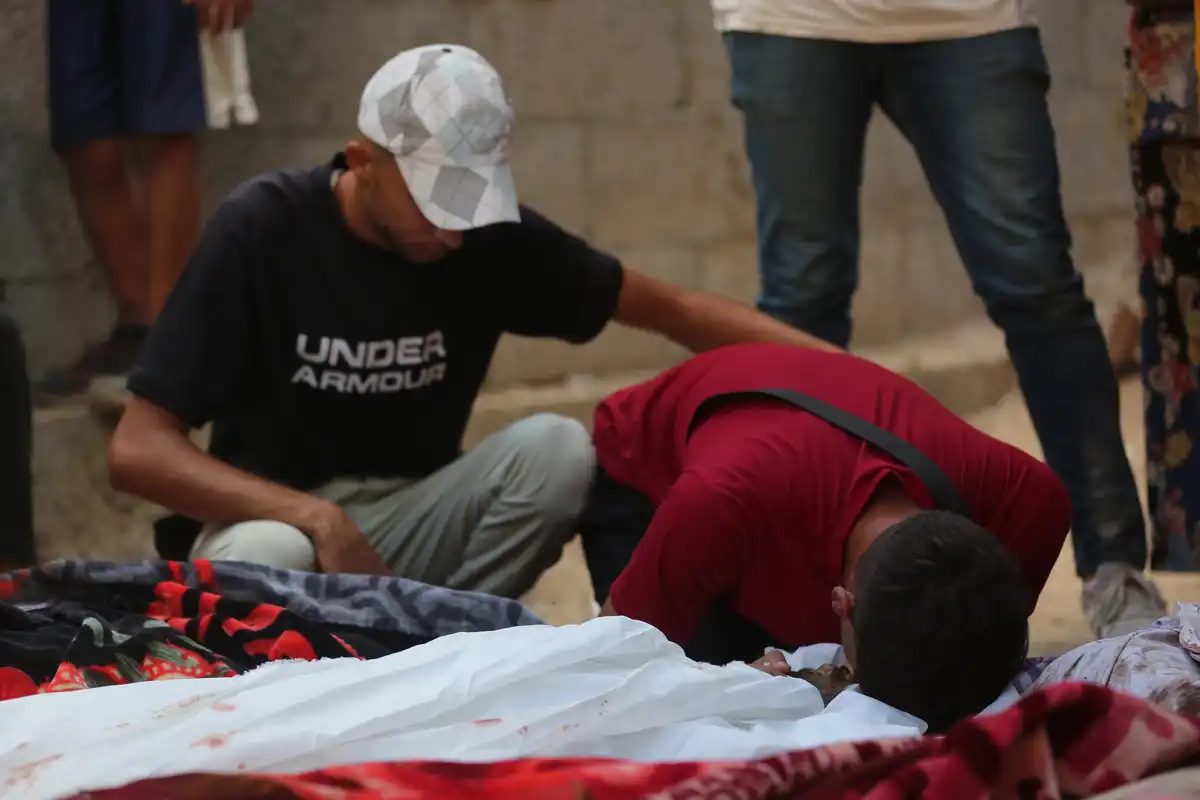
Seven citizens were killed and others were injured, today, Sunday, as a result of a series of Israeli raids that targeted various locations in the Gaza Strip.

In Khan Yunis, south of the Gaza Strip, two citizens were killed and others were injured as a result of shelling targeting a motorcycle on Salah al-Din Street, near Sheikh Nasser neighborhood.

In Gaza City, another airstrike targeted a group of citizens near the Lababidi intersection on Al-Nasr Street, resulting in more casualties.

Three citizens were also killed and others were injured as a result of an Israeli drone strike on Al-Wahda Street, near the Thai Restaurant, west of Gaza City.

In Al-Shati camp, an Israeli reconnaissance missile targeted citizens in the vicinity of Hamid Street, resulting in the death of one person and the injury of others.

In another escalation, the occupation aircraft targeted a house belonging to the Nasr family in Jabalia al-Nazla, north of the Gaza Strip, near the Qutaiba Mosque, which led to the injury of a number of citizens.

Medical sources at Nasser Medical Complex and Gaza European Hospital reported the arrival of the bodies of 12 martyrs since dawn today, including children and young men. Among the martyrs are:

Muhammad Mahmoud Ahmed Kaware’ (37 years old), Salah Abdullah Jaber Abu Hadayed (17 years old), Youssef Mahmoud Jihad Al-Haimsi (14 years old), and others from the Al-Qadi, Siyam, and Abu Raq’a families.

The Israeli occupation forces have continued their aggression on the Gaza Strip, by land, sea and air, since October 7, 2023, resulting in the death of 44,429 citizens, the majority of whom are women and children, and the injury of 105,250 others, in an incomplete toll, as thousands of victims are still under the rubble and on the roads, and ambulance and rescue crews cannot reach them.

ARAB AND WORLD

Sun 01 Dec 2024 2:34 pm - Jerusalem Time

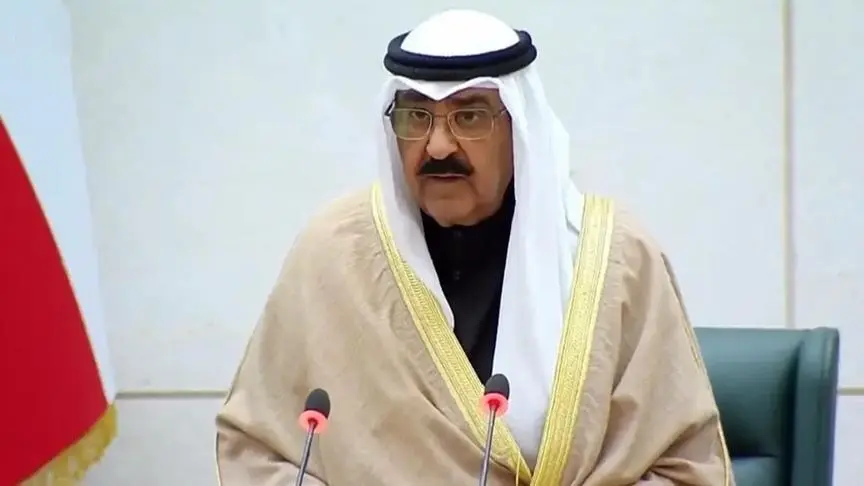
Emir of Kuwait: We condemn the genocide in Gaza and demand a ceasefire

The Emir of Kuwait, Meshal Al-Ahmad Al-Jaber Al-Sabah, called on the UN Security Council to immediately cease fire in the Gaza Strip, describing what is happening against the Palestinians as "genocide."


This came during the opening speech of the 45th summit of the Supreme Council of the Gulf Cooperation Council in Kuwait, according to what was broadcast by the official Kuwaiti news channel.


The Emir of Kuwait thanked the Emir of Qatar, Tamim bin Hamad bin Khalifa Al Thani, for his "wise management and efforts during His Highness's presidency of the previous session (the 44th summit)."


He said: "We meet under extremely complex circumstances that threaten the development and prosperity of our peoples, and this requires accelerating Gulf economic integration."


He added: "We condemn the genocide against the Palestinian people and call on the Security Council to immediately cease fire in Gaza and ensure the delivery of urgent aid."


He stressed his country's support for the establishment of an independent Palestinian state and the ongoing efforts, especially those led by Saudi Arabia, in this regard.

PALESTINE

Sun 01 Dec 2024 2:29 pm - Jerusalem Time

Two Palestinians killed by Israeli forces east of Jenin

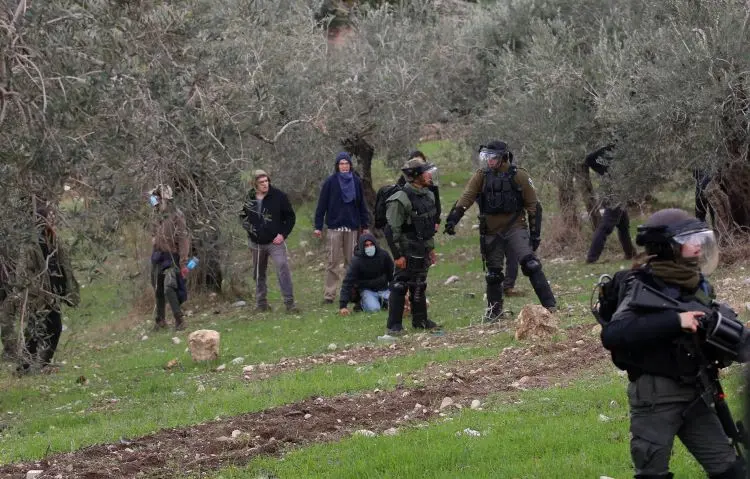
This evening, Sunday, two young men were killed by Israeli occupation forces in the village of Seir, southeast of Jenin.


This morning, an Israeli drone bombed an agricultural room in the village of Seir. At the same time, the occupation forces sent large military reinforcements to the area and began searching and combing the olive groves surrounding the targeted room.


According to local sources and eyewitnesses, the sounds of heavy gunfire were heard in the targeted area, before the announcement of the death of two young men whose identities are not yet known.

ARAB AND WORLD

Sun 01 Dec 2024 2:25 pm - Jerusalem Time

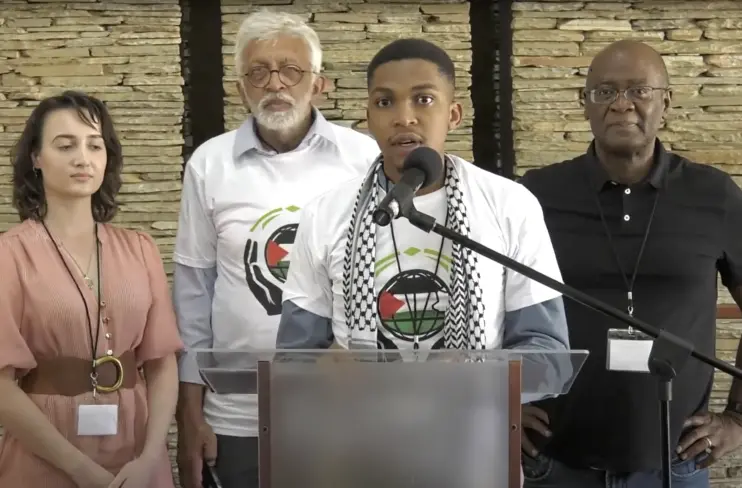
South Africa launches campaign to combat Israeli apartheid in Palestine

The Apartheid Committee in South Africa launched a global movement to combat apartheid practiced by Israel in the occupied Palestinian territories, at the conclusion of the popular conference hosted by the city of Pretoria on November 28 and 29, coinciding with the International Day of Solidarity with the Palestinian People called for by the United Nations.


The closing statement of a series of discussion sessions said that South Africa's official launch of the anti-apartheid movement represented "a historic moment filled with pride and commitment to the global struggle against racism, colonialism, exploitation and dehumanization."


The statement added that "this event constitutes a firm stand by South Africa against the Israeli apartheid settler regime and genocide against the Palestinian people."


This global movement draws its inspiration from the legacy of South Africa's struggle against apartheid, and aims to mobilize a broad coalition of societal forces to oppose apartheid in Palestine and call for the complete isolation of Israel.


Commitment to justice

The Chairman of the Steering Committee of the Anti-Apartheid Movement, Rev. Frank Chikane, said that the South African government has taken action against the genocidal practices committed by Israel in the Gaza Strip, which have extended to the West Bank. We need to do everything possible to stop this genocide.


In an interview with Al Jazeera Net, Shikane added that we in South Africa (government and people) believe in the justice of the Palestinian cause, which is why we were present at the International Court of Justice. In fact, "we have no choice, because if there is injustice practiced against anyone in the world, including the Palestinians, we will stand by them."


The head of the steering committee of the apartheid movement welcomed the recent decision of the International Criminal Court against Israeli Prime Minister Benjamin Netanyahu and his former Defense Minister Yoav Galant, saying that "the decision of the ICC came to clarify its position on the genocide committed by Israel, as it has always been accused of acting only against Africans, or if it is related to the enemies of the West, as they did with Russian President Vladimir Putin."


Global movement

“The genocide against Palestinians and Israel’s impunity must end, and we actively extend our solidarity to the Palestinians who continue to endure unimaginable injustice. Together we demand accountability, justice and freedom from apartheid, from the Jordan River to the Mediterranean,” Shikani said at the conclusion of the conference.


The conference statement also stressed that the launch of the anti-apartheid movement in South Africa ignites the spark for other countries to follow the same path in building momentum that will lead to a global movement.


The General Secretary of the South African Council of Churches, Rev. Mzwandidi Molo, called on religious communities to join in this movement. He said: “As the South African Council of Churches, we know the tragedy of racism and the value of global solidarity as our religious leaders have called for in the past.”


“Israel’s disproportionate violence, which has reduced the small area of Gaza – home to 2.5 million Palestinians – to rubble with heavy artillery, munitions and unacceptable shelling, bears the hallmarks of genocide as defined by international law. We therefore call for an end to Israel’s genocide and its destruction of homes, hospitals, schools, universities, churches and mosques,” he added.


Agenda


The conference resulted in the formation of working groups to organize its outcomes more effectively and ensure that measures are taken to ensure the implementation of the agenda that the conference participants called for, including:


  • Stop arming genocide.
  • Ban on trade with the apartheid regime.
  • Activate the boycott weapon.
  • End the genocide of children.
  • Ending ecocide.
  • Confronting Zionist propaganda and promoting the Palestinian narrative.
  • Punishing the Zionist project legally and diplomatically.
  • Supporting Palestinian prisoners and their families.


As part of the apartheid launch conference, simultaneous peaceful protests were held in front of the US Embassy in Pretoria as well as at US consulates in Cape Town, Durban and Johannesburg.


The statement issued by the conference indicated that these protests represent "a means of putting pressure on those governments that support and finance the acts of violence carried out by Israel."


It is noteworthy that during the period from 10 to 12 May, the city of Johannesburg hosted the activities of the World Conference against Israeli Apartheid in Palestine, which called at the time for launching a global movement to dismantle the Israeli settler colonialism and apartheid system, "and also authorized the state of South Africa to stop those leading the genocide in Gaza," according to Shikani.

PALESTINE

Sun 01 Dec 2024 2:11 pm - Jerusalem Time

UNRWA: Palestinians in Gaza depend exclusively on humanitarian aid

The United Nations Relief and Works Agency for Palestine Refugees (UNRWA) warned on Sunday that Palestinians in Gaza are now relying exclusively on humanitarian aid "in light of the continued undermining of the United Nations' ability to fulfill its mandate."


The agency reported in a post on X a complaint from an elderly Palestinian refugee woman about her inability to obtain medicines after they ran out at the agency due to Israeli restrictions on her carrying out her duties in the Strip.


“I have travelled long distances, passing through huge crowds of people just to reach the clinic here in Khan Younis to get my medication. I suffer from chronic diseases, yet I find no medicine available,” UNRWA quoted Jamila, 80, as saying.


“I was completely dependent on UNRWA to provide health care and education for me, my children and my grandchildren,” Jamila added. “Today I face a frightening reality: who will stand by us if UNRWA is not there?”


“In war-torn Gaza, civilians like Jamila are left to rely exclusively on humanitarian aid. The UN’s ability to fulfill its mandate is being continually undermined,” the agency commented in the same post.


It stressed that "the ceasefire must be stopped now."


On October 28, the Israeli Knesset (parliament) finally approved a ban on UNRWA activities in the occupied Palestinian territories.


On November 4, Israel informed the United Nations of the cancellation of the 1967 agreement on the work of UNRWA, which means banning its activities, if the decision comes into effect within three months.


Israel still controls the entry of humanitarian aid into the Gaza Strip, amid a stifling humanitarian crisis and the specter of famine, especially in the northern part of the Strip, and refuses to cooperate with UN and international organizations to bring in medicine, food and basic needs.


ARAB AND WORLD

Sun 01 Dec 2024 1:53 pm - Jerusalem Time

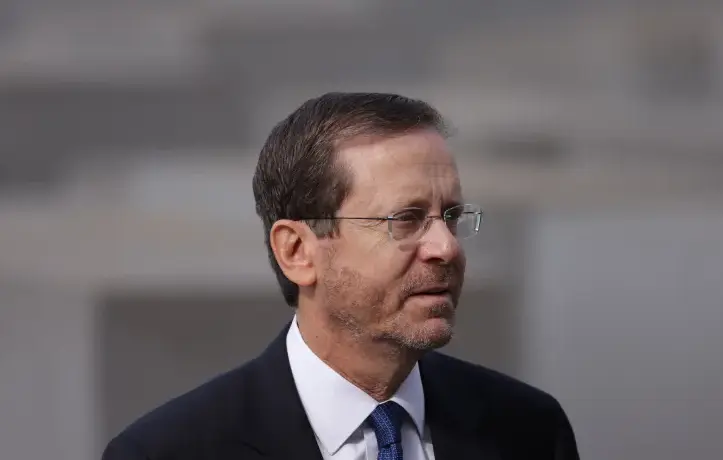
Israeli President: This is the right time for a prisoner swap deal

Israeli President Isaac Herzog stressed that the time is right to conclude a prisoner exchange deal between the Israeli government and the Palestinian resistance in the Gaza Strip.


"I reiterate my call to the Israeli leadership, the mediators and the world that this is the right time to conclude a hostage deal," Herzog said.


Maariv reported that "the Israeli president confirms that behind-the-scenes negotiations are underway to reach a swap deal and believes that it is possible."


For his part, Israeli opposition leader Yair Lapid called for an end to the war in Gaza and a prisoner exchange deal to return the Israeli prisoners held by the Palestinian resistance.


In the same context, the families of the Israeli prisoners said that the way to return their sons in Gaza is through ending the war there as part of a deal.


The Prisoners' Families Authority added that Prime Minister Benjamin Netanyahu and ministers Itamar Ben-Gvir and Bezalel Smotrich want to establish settlements on the heads of Israeli prisoners in Gaza.


The Authority pointed out that Netanyahu is the one who is obstructing and rejecting the exchange deal.


The Palestinian resistance captured more than 200 Israeli settlers and soldiers in Operation Flood of Al-Aqsa on October 7, with the aim of exchanging them for thousands of Palestinian prisoners in the occupation's prisons.


The occupation killed many of its prisoners in the raids it launched on the Gaza Strip, while dozens of them were released in a partial deal carried out through Qatari mediation a year ago.


According to reports, the Palestinian resistance still holds 100 Israeli prisoners in the Gaza Strip.


With American support, Israel has been committing genocide in the Gaza Strip since October 7, 2023, leaving more than 149,000 dead and wounded, most of them children and women, and more than 11,000 missing, amid massive destruction and famine that killed dozens of children and the elderly, in one of the worst humanitarian disasters in the world.


ARAB AND WORLD

Sun 01 Dec 2024 1:39 pm - Jerusalem Time

Blowing up tent houses and an Israeli drone flying over Beirut

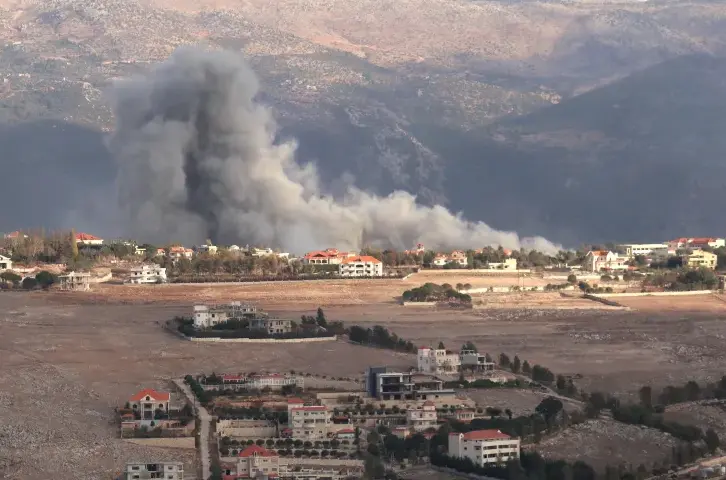
  1. A massive explosion occurred at dawn on Sunday in the border town of Khiam in the Marjeyoun district in southern Lebanon, likely as a result of an Israeli army attack, in a new violation of the ceasefire agreement that went into effect on Wednesday.


The Lebanese News Agency said, "A huge explosion occurred in the town of Khiam at dawn, and it is likely that the Israeli enemy carried out a bombing operation against some houses and buildings," without further details.


Later, the agency reported that explosions were heard on Sunday morning on the outskirts of the towns of Yaroun and Maroun in the Tyre district in the south of the country.


These explosions represent the latest violations by the Israeli army after the ceasefire was declared with Hezbollah in Lebanon last week.


Yesterday, Saturday, an Israeli drone flew over the Lebanese capital, Beirut, and its southern suburbs for the first time since the ceasefire, at a low altitude, without knowing the reasons, according to the Lebanese News Agency.


On Saturday, the Israeli army committed 24 violations of the ceasefire agreement, bringing the total number of violations since the agreement came into effect last Wednesday to 62, according to statistics prepared by the Anadolu Agency based on the announcements of the official Lebanese News Agency.


These violations resulted in the killing of two people and the injury of six others, bringing the total number of victims in Lebanon since the ceasefire came into effect to two dead and 10 injured.


On Wednesday morning, November 27, a ceasefire agreement between Israel and Hezbollah came into effect, ending the mutual shelling that began on October 8, 2023, and then turned into a full-scale war in the last two months.


Back home

On the other hand, the Israeli army continues to warn the residents of dozens of villages in southern Lebanon not to return to their homes until further notice.


Meanwhile, the five-member committee monitoring the ceasefire implementation mechanism is expected to begin its work this week after the arrival of the committee's military chief, US General Jasper Jeffers, two days ago, where he met with Lebanese Army Commander Joseph Aoun.


On another subject, hundreds of Hezbollah supporters gathered yesterday, shedding tears of grief over the former Secretary-General of the party, Hassan Nasrallah, at the site of his death in an Israeli raid in the southern suburbs of Beirut.


In a huge crater left by Israeli airstrikes on September 27 in the rubble-strewn Haret Hreik area, the party's yellow flags were raised, candles were lit and excerpts from Nasrallah's speeches were played from loudspeakers.


Terms of Agreement

The most prominent provisions of the ceasefire agreement include Israel's gradual withdrawal to the south of the Blue Line (the border between Lebanon and Israel) within 60 days, and the deployment of Lebanese army and security forces along the border, crossing points, and the southern region.


The Lebanese army will be the only entity allowed to carry weapons in southern Lebanon, with the dismantling of military infrastructure and sites, the confiscation of unauthorized weapons, and the establishment of a committee to oversee and assist in ensuring the implementation of these obligations.


There are no official details yet on the mechanisms for implementing the terms of the agreement that Washington and Paris will work to ensure are met.


The Israeli aggression on Lebanon resulted in 3,961 deaths and 16,520 injuries, including a large number of children and women. Most of the victims and displaced persons were recorded after September 23, according to official Lebanese data.


ARAB AND WORLD

Sun 01 Dec 2024 1:25 pm - Jerusalem Time

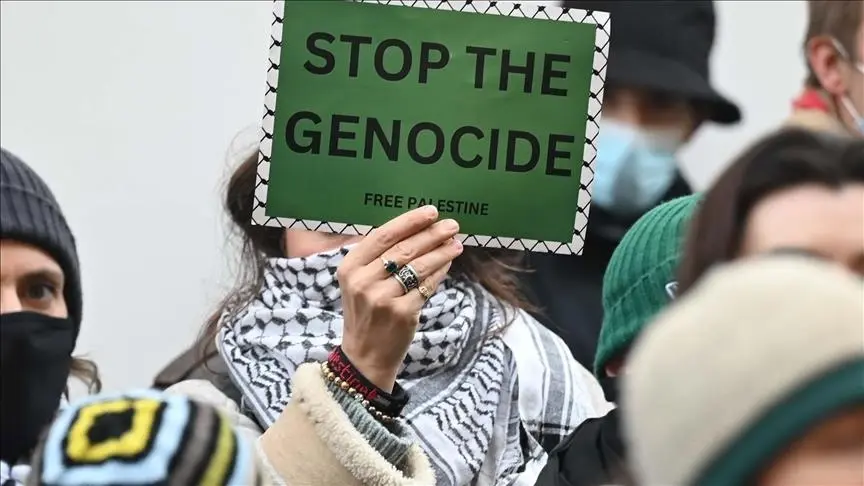
Demonstrations in 50 cities demanding a ceasefire in Gaza in Spain

Nearly 50 Spanish cities witnessed demonstrations on Saturday calling for an immediate ceasefire in the Gaza Strip, which has been subjected to a genocidal war by Israel since October 2023.


The demonstrations, held under the slogan "Truce for peace, no to terrorism, no to genocide", were attended by prominent Spanish artists such as singer Miguel Ríos, Annie B. Sweet, Nina Decanto and Ainoa Buitrago.


The film directors Fernando Colomo and Rodrigo Sorogoyen, and actresses Mercedes Sampiatro, Claudia Graffi, Vicky Peña, Olga Andrino, and Juan Echanov also participated.


The capital Madrid hosted one of these events, where demonstrators gathered in Sol Square, and some Spanish singers performed songs calling for peace.


The artists also posted a video clip calling for a ceasefire in Gaza, in which they appeared tearing up a paper that read, "Genocide in Gaza."


In a related context, about 15,000 artists from 35 countries, at the initiative of Spain, issued a joint statement in which they called for a “global anti-war movement,” affirming their support for Palestine’s right to establish an independent state.

ARAB AND WORLD

Sun 01 Dec 2024 1:10 pm - Jerusalem Time

Israel violated the ceasefire in Lebanon 62 times

The number of Israeli violations of the ceasefire agreement with Hezbollah, which entered into force on November 27, 2024, has risen to 62, according to statistics prepared by the agency based on what was published by the official Lebanese news agency.


Yesterday, Saturday, Israel committed 24 violations, which resulted in the killing of two people and the injury of six others. Thus, the number of victims in Lebanon since the ceasefire has risen to two dead and 10 injured.


The breach took various forms, including artillery shelling, drone and warplane strikes, machine gun fire, incursions, bulldozing roads, and setting fire to and crushing cars.


According to the National News Agency, the violations were concentrated in the capital Beirut and its southern suburbs, the districts of Marjeyoun and Bint Jbeil in the Nabatieh Governorate, the districts of Tyre and Sidon in the south, and the Baalbek District in the Baalbek-Hermel Governorate.


The Lebanese army confirmed last Thursday that Israel had violated the ceasefire agreement several times, noting that its leadership was following up on these violations in coordination with the relevant authorities, without providing further details.


Since dawn last Wednesday, a ceasefire agreement between Israel and Hezbollah has been in effect, ending the mutual shelling that began on October 8, 2023, and then turned into a large-scale war in the last two months.


The Israeli aggression on Lebanon resulted in 3,961 deaths and 16,520 injuries, including a large number of children and women. Most of the victims and displaced persons were recorded after September 23, according to official Lebanese data.

PALESTINE

Sun 01 Dec 2024 12:59 pm - Jerusalem Time

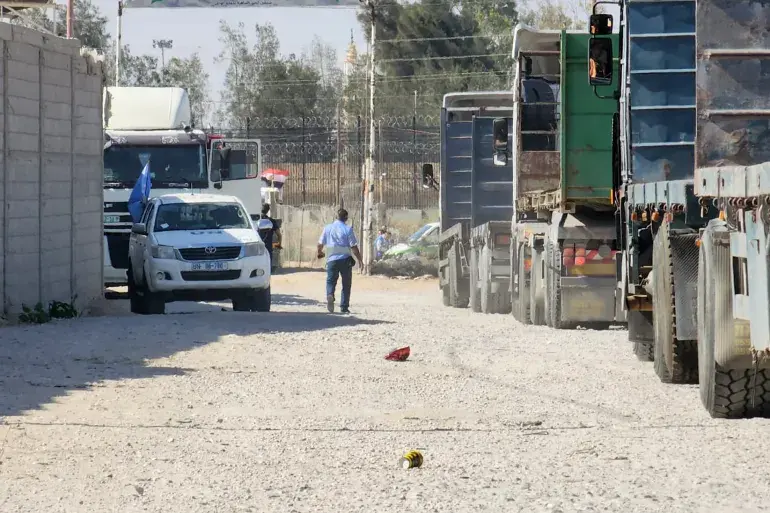
UNRWA stops delivering aid to Gaza via Kerem Shalom crossing

The Commissioner-General of the United Nations Relief and Works Agency for Palestine Refugees (UNRWA), Philippe Lazzarini, announced the suspension of the delivery of aid through the Kerem Shalom crossing, the main passage for the entry of humanitarian aid into the Gaza Strip, after an armed gang seized food trucks yesterday, Saturday, that tried to enter through the crossing.


Lazzarini stressed in a tweet on his account on the X platform that the humanitarian operation in Gaza has become unnecessarily impossible due to the blockade, Israeli obstacles and lack of security.


He pointed out that the responsibility for protecting relief workers and supplies lies with Israel as the occupying power.

He stressed that the decision - which he described as difficult - to stop delivering aid through the Kerem Shalom crossing comes at a time when hunger is rapidly worsening.


There were signs of thieves and bandits seizing aid trucks in the Gaza Strip, in coordination with the occupation forces that protect these gangs and target the Palestinian police forces to prevent them from securing aid.

PALESTINE

Sun 01 Dec 2024 12:41 pm - Jerusalem Time

80 Palestinians killed and 280 wounded in Jerusalem since October 7

The Jerusalem Governorate documented the death of 80 citizens and the injury of 280 others with live and rubber bullets, since the beginning of the comprehensive Israeli occupation aggression against our people on October 7, 2023, until the end of last November.


The governorate reported in statistics issued by the Public Relations and Media Unit, today, Sunday, that 1,984 cases of arrest were recorded from the governorate, and the occupation authorities issued 450 actual prison sentences against detainees from the governorate, and 108 decisions of house arrest, in addition to issuing 11 decisions to prevent travel, and 124 decisions to deport from the city of Jerusalem.


The governorate documented the storming of Al-Aqsa Mosque by 63,367 settlers, in addition to 391 demolition and bulldozing of homes and facilities.

ARAB AND WORLD

Sun 01 Dec 2024 11:44 am - Jerusalem Time

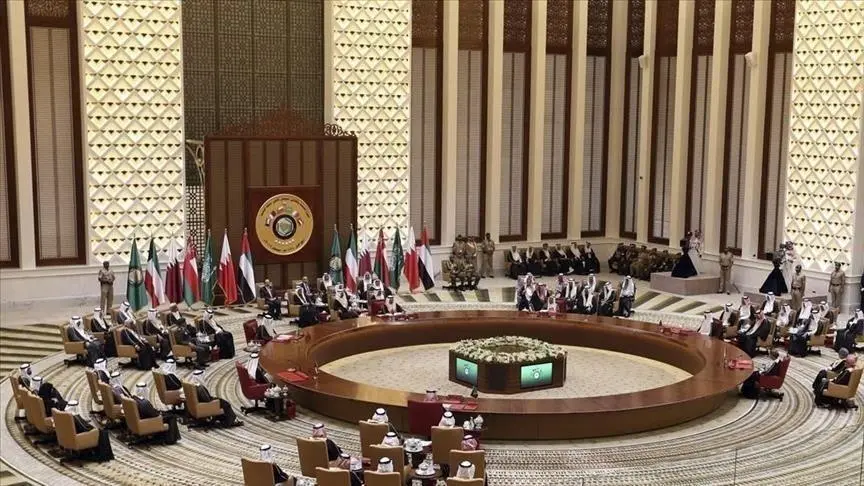
The 45th Gulf Summit discusses facing regional and global challenges

Kuwait will host the 45th Gulf Summit, the eighth of its kind, on Sunday, with the participation of leaders and representatives of Saudi Arabia, Qatar, the UAE, Bahrain and the Sultanate of Oman.


According to the official Kuwaiti News Agency (KUNA), "The 45th Gulf Summit will be held at Bayan Palace in the Kuwaiti capital, with the attendance of the leaders of the Council of States and their representatives."


It explained that the summit "discusses a number of priority strategic issues, including regional security issues, enhancing Gulf economic integration, confronting regional and global challenges, and developments in the situation in Palestine, Lebanon, Syria and Yemen."


For its part, the Omani News Agency reported on Sunday that "Deputy Prime Minister for Cabinet Affairs, Fahd bin Mahmoud Al Said, left the country heading to Kuwait to head the Sultanate of Oman's delegation to the 45th Gulf Summit, which will be held later today."


According to the Qatar News Agency (QNA), the Emir of Qatar, Tamim bin Hamad Al Thani, is participating in the 45th Gulf Summit.


While the Vice President of the UAE, Mansour bin Zayed Al Nahyan, heads his country's delegation to the summit, on behalf of the country's President, Mohammed bin Zayed Al Nahyan, according to the official news agency "WAM".


Saudi Arabia and Bahrain have not yet announced the participants in the summit, which will be hosted by the Emir of Kuwait, Meshal Al-Ahmad Al-Jaber Al-Sabah, until 7:05 GMT.


Over the course of the 43-year journey of the Gulf Cooperation Council, Kuwait has hosted 7 summits out of 44 summits, all of which aimed to enhance Gulf action, achieve integration between the Council’s countries, and adopt common positions regarding regional and international developments.


The first Gulf summit was hosted by Kuwait in 1984, and the summits followed in 1991, 1997, 2003, 2009, 2013, and 2017.

The summit, hosted by the Kuwaiti capital today, Sunday, will be the eighth summit held in the country and coincides with the 45th session of the Supreme Council of the Gulf Cooperation Council, according to local media.

ARAB AND WORLD

Sun 01 Dec 2024 10:31 am - Jerusalem Time

China denounces Taiwan president's visit to US state, threatens decisive action

China has strongly condemned the United States for allowing Taiwanese President Tsai Ing-wen to visit Hawaii, and Beijing has vowed to take "firm countermeasures" against US arms sales to Taiwan.


This is the first stop on the Taiwanese leader's tour of several Pacific regions, a trip he presents as the beginning of a "new democratic era" but which has angered Beijing.


A Chinese Foreign Ministry spokesman said in a statement that his country strongly condemns the US organization of Lai's "transit" and has lodged a formal protest in this regard with Washington.


He stressed that "China will closely monitor the development of the situation and take resolute and effective measures to safeguard its national sovereignty and territorial integrity."


China considers self-ruled Taiwan part of its territory and opposes any international recognition of the island as a sovereign state


Lai is making his first overseas trip since taking office in May, and will visit the US islands of Hawaii and Guam, as well as three allied Pacific nations: the Marshall Islands, Tuvalu and Palau.


In a speech before his departure, Lai said the tour "ushers in a new era of values-based democracy" and thanked the U.S. government for "helping to make this trip smooth."


Arms sales to Taiwan

In addition to the Taiwanese president's tour, the US announcement on Friday that it had approved a deal with Taiwan to sell F-16 parts and radar systems worth an estimated $385 million appears to have angered China.


Beijing on Sunday expressed its "firm opposition" and "denounced" the US's approval of the sales to Taiwan.

In a separate statement, the Chinese Foreign Ministry urged the United States to "immediately stop arming Taiwan or encouraging and supporting forces that seek Taiwan's independence and want to strengthen its military to achieve this."


The statement added that China will take "strong and resolute countermeasures" to defend its national sovereignty, security and territorial integrity.


He also stressed that these sales represent a "serious violation" of China's sovereignty, noting that Beijing has lodged "stern representations" with Washington regarding the issue.


The US State Department had approved the deal, while the US Defense Security Cooperation Agency submitted the required notification to Congress on Friday.


The United States does not recognize Taiwan as a state but nevertheless provides significant military aid, which China opposes, accusing Washington of interfering in its affairs.


China considers Taiwan part of its territory, and has not been able to reunify it since 1949. Despite its "preference for peaceful reunification," it has not abandoned the principle of using military force, and regularly sends warships and fighter planes around this island.

OPINIONS

Sun 01 Dec 2024 10:25 am - Jerusalem Time

Washington Post: Netanyahu reached an agreement with Hezbollah, so why not with Hamas?

Translation for "Al-Quds" dot com

Translation for "Al-Quds" dot com

Opinion Writer

The Washington Post said that the Lebanese Hezbollah, despite its greatly diminished military power, is far from having been defeated by the Israeli army, let alone destroyed.


The American newspaper reported that Hezbollah fired about 250 rockets and other missiles last Sunday - just two days before the ceasefire was announced - at targets in central and northern Israel, in one of the most violent barrages of rockets it has fired in months.


The Israeli government has not published any estimates of Hezbollah's casualties, unlike what happened with the Palestinian resistance movement (Hamas), which the newspaper considered evidence that the numbers are not impressive enough to announce.


Hezbollah is still strong

However, the Israeli Institute for National Security Studies claimed that Hezbollah has lost a total of 2,450 fighters out of an estimated 40 to 50 thousand.


According to the Washington Post report, Hezbollah still has tens of thousands of missiles and fighters with which it can rebuild its military capabilities and return to southern Lebanon, which borders Israel, regardless of what is stipulated in the ceasefire agreement, which went into effect last Wednesday, after the two sides agreed to an agreement brokered by the United States and France.


That decision called for Hezbollah fighters to withdraw to the north of the Litani River (about 32 kilometers from the Israeli border) and for the Lebanese army to deploy its forces to secure southern Lebanon.


Although the United Nations peacekeeping forces were supposed to monitor the parties’ compliance with the terms of the agreement, the Washington Post says that the peacekeepers have no authority to do anything but stand by as Hezbollah works to fortify itself.


Netanyahu’s concerns

The newspaper recalled the ceasefire agreement that was concluded after the Israeli invasion of Lebanon in 2006, and reported that it did not prevent Hezbollah from strengthening its forces on Israel’s northern border, and the new agreement reached this week will not prevent it from doing so.


The report added that Israeli Prime Minister Benjamin Netanyahu was keen this time to keep the ground attack within a few kilometers of the Israeli border to avoid getting bogged down in a costly quagmire.


Although Netanyahu will not admit it publicly, his calculations in private seem to indicate that Israel can live with Hezbollah fighters on its border as long as it deters them from actually attacking it, according to the report.


The American newspaper wondered why Netanyahu was not willing to strike a similar deal with Hamas. It pointed out that the Israeli Prime Minister pledged, in the speech in which he announced the ceasefire in Lebanon, that he would complete the mission of eliminating Hamas, a mission that Israeli military leaders say they cannot achieve.


Hamas

The newspaper expressed its belief that Netanyahu does not show much interest in a ceasefire with the Palestinian movement, which would result in the release of prisoners.


The Washington Post quoted veteran US diplomat Aaron David Miller as saying in an email that the deal with Lebanon was easier for Netanyahu, "but in Gaza, he knows that Hamas will not release the (Israeli) prisoners without major concessions, such as the release of a large number of Palestinian prisoners accused of killing Israelis and ending the war."


He explained that an agreement in this regard in Gaza could lead to the collapse of the ruling right-wing coalition in Israel, while Netanyahu intends to keep the army in Gaza for the coming months.


The newspaper confirmed in its report that US President-elect Donald Trump may be able to pressure Netanyahu to bring peace to the Gaza Strip, which is something that current President Joe Biden has not been able to do.


Source: Washington Post+Al Jazeera

PALESTINE

Sun 01 Dec 2024 10:09 am - Jerusalem Time

UNRWA: More than 415,000 Palestinian displaced people in Gaza are taking shelter in our schools

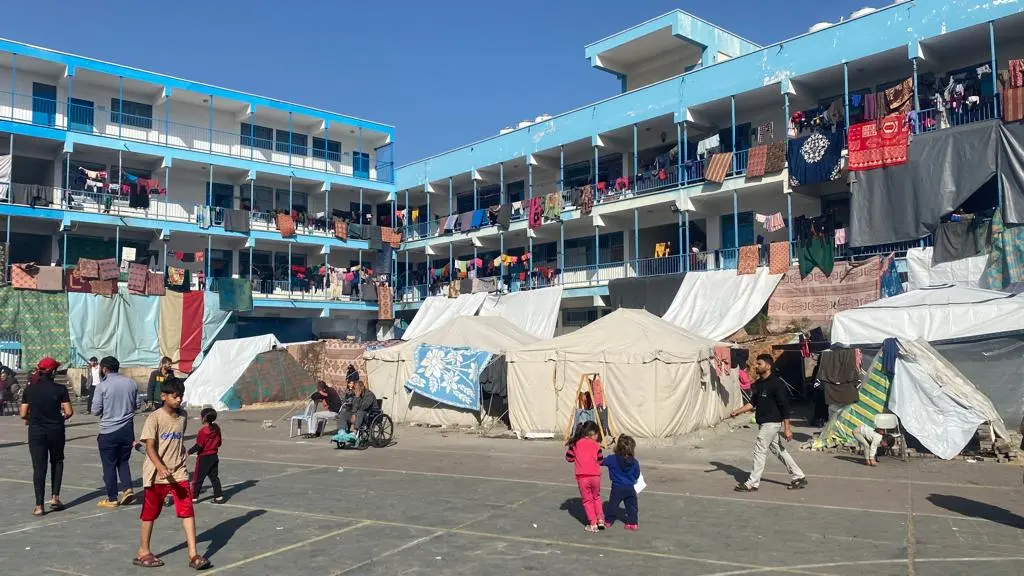
The United Nations Relief and Works Agency for Palestine Refugees (UNRWA) said on Sunday that more than 415,000 displaced people are currently sheltering in its school buildings in Gaza, while hundreds of thousands more are living "in worse conditions in temporary shelters."


This came in a post on the X platform, accompanied by a video clip filmed by one of the displaced women from her place of displacement, in which she narrated the difficulties and challenges facing the displaced in these buildings designated only for education, especially for women.


UNRWA said: "More than 415,000 displaced people in Gaza are now sheltering in UNRWA school buildings... hundreds of thousands more are trying to survive in even worse conditions inside temporary shelters."


Regarding the displaced woman who appears in the video clip, the agency said: “Aisha, one of the displaced women, says: This place is for education, not for housing,” expressing her suffering and highlighting “the additional harsh challenges facing women and girls in war.”


It said: "This is where I live. I left my home and my beautiful place to come to this place that does not have the necessities of life."


It added: "We are here as displaced Palestinian women who suffer greatly in terms of health and economic conditions and the provision of food and drink without any support or assistance."


It continued: "Life's facilities are far from us, the toilet is far away, there is no place to prepare food or rest, and the place where we are is not safe and is at risk of being bombed at any moment," stressing that "there is no security in all of Gaza, they have deprived us of the right to security and protection."


It continued her appeal: “It is our right that you protect us in times of war. We, as Palestinian women, are suffering. We need your support. Protect us and defend us. We want you to provide women who are not at fault in this war with a decent life so that we can confront society and life.”


It stressed that "the war has taken its toll on the women of Gaza, who are very tired, while it is impossible to provide any of their needs, including hygiene and sterilization supplies during menstruation," and said: "At this time of the month, women are destroyed."


It stressed: “This place is designated for education, and it is not suitable for living. It is full of insects, flies and cockroaches. There is no sanitary facility that we need in our daily lives.”


In a non-final tally, the number of martyrs since the beginning of the occupation's aggression on the Gaza Strip, since October 7, 2023, has risen to 44,382 martyrs, the majority of whom are women and children, and more than 105,142 injured, as thousands of victims are still under the rubble and on the roads, and ambulance and rescue crews cannot reach them.


Israel continues its massacres, ignoring two arrest warrants issued by the International Criminal Court on November 21 against its Prime Minister Benjamin Netanyahu and its former Minister of Defense Yoav Galant, for committing war crimes and crimes against humanity against the Palestinians.

PALESTINE

Sun 01 Dec 2024 9:56 am - Jerusalem Time

US President Joe Biden Pictured With Book On Palestine, Author Responds

The book, which frames establishment of Israel as a "settler-colonial conquest" met by Palestinian resistance, has fuelled debates since its release.

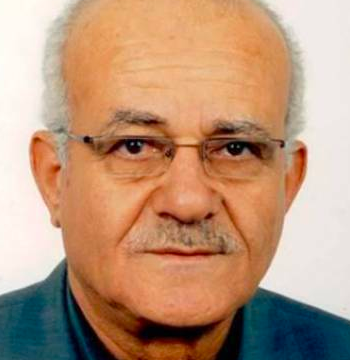
US President Joe Biden was spotted holding a copy of 'The Hundred Years' War on Palestine' by Columbia University professor emeritus Rashid Khalidi. The outgoing President surprised one and all with his pick during a Black Friday outing in Nantucket.

Mr Khalidi, the author of Palestinian and Lebanese descent, reacted to the pictures, saying the gesture was “four years too late.”

'The Hundred Years' War on Palestine' frames the establishment of Israel as a “settler-colonial conquest”, which met Palestinian resistance. In the 2020 book, Mr Khalidi, known for his pointed critique of US foreign policy on Israel, criticised Biden's successor, President-elect Donald Trump, in the book, describing his administration as a “mouthpiece for Israel.” He also labelled Israeli Prime Minister Benjamin Netanyahu's administration as “the most extreme government” in the country's history.

Biden has long described himself as a Zionist and his administration has faced criticism from both pro-Israel and pro-Palestinian advocates. “You don't have to be a Jew to be a Zionist. I am a Zionist,” he said during a meeting with Israeli President Isaac Herzog last year.

The book critiques the Israeli policies and staunch US support for the Jewish state, making it all the more surprising for people that Biden picked it in public.

Mr Khalidi's book talks about the history of Palestine, calling it a prolonged colonial struggle. It critiques US media for perceived bias and prescribes a future “based on equality and justice.” The text praises the First Intifada as a “victory” for Palestinians while labelling the Second Intifada a setback.

The book advocates for “a path based on equality and justice” that seeks to end “the oppression of one people by another.” It also highlights discriminatory policies against Palestinians, taking into account their diverse religious backgrounds, including both Muslims and Christians.

Describing the Israeli-Palestinian equation as a “settler-colonial confrontation”, the book argues that such conflicts historically end in one of three ways: the full subjugation or elimination of the Indigenous population, as seen in North America; the defeat and expulsion of colonisers, as in Algeria, which he acknowledges is rare; or the dismantling of colonial supremacy through compromise and reconciliation, as in South Africa, Zimbabwe, and Ireland.

Comments

Earlier, Joe Biden welcomed the ceasefire deal between Israel and Hezbollah. In a joint statement with French President Emmanuel Macron, Biden said the truce would protect Israel from Hezbollah's threats and pave the way for "lasting calm" in the region. He also pledged the US leadership to strengthen Lebanon's military capabilities and secure a broader peace, including efforts to address the conflict in Gaza.

OPINIONS

Sun 01 Dec 2024 9:47 am - Jerusalem Time

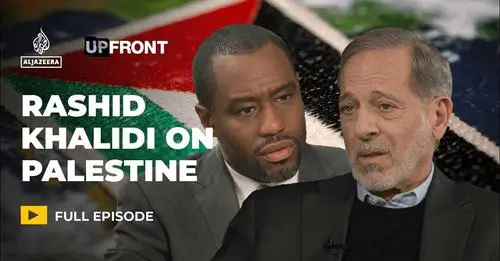
Rashid Khalidi: This genocide 'worse than any phase of Palestinian history' | UpFront

https://www.youtube.com/watch?v=1_SkF1-rDl0

https://www.youtube.com/watch?v=1_SkF1-rDl0

Opinion Writer


From the 1948 Nakba to the genocide unfolding in Gaza today, Israel has a long history of violence against the Palestinian people. As images of death and destruction continue to pour out of Gaza, the question arises: Has the world finally opened its eyes to the plight of the Palestinian people? And what is the historical significance of this moment for Palestine and for the broader Middle East? In an UpFront special, Marc Lamont Hill speaks to one of the pre-eminent historians of the Palestinian people, the Edward Said professor emeritus of modern Arab studies at Columbia University, Rashid Khalidi.


OPINIONS

Sun 01 Dec 2024 9:41 am - Jerusalem Time

Confession from within

op-ed - Al-Quds dot com

op-ed - Al-Quds dot com

Opinion Writer

The statements of the Chief of Staff of the Occupation Army and former Minister of Defense Moshe (Bogie) Ya'alon describing the activity of the Israeli army in the Gaza Strip as ethnic cleansing came as additional evidence and recognition from within the Israeli military establishment of the wars of extermination, massacres, ethnic cleansing campaigns, and the planned displacement of the citizens of the Gaza Strip and not allowing them to return to their homes and places of residence that were destroyed by the occupation.

In an interview over the Sabbath, Ya'alon admitted that the army was "cleansing the area of Gazans," which is in line with the generals' plan to create a military buffer zone, whereby citizens would be expelled to and

Central and southern Gaza Strip.


Ya'alon touched on other important issues, most notably the Netanyahu government's intention to drag Israel into occupying the Gaza Strip, annexing it, and establishing new settlements on the territory of the Strip.


Ya'alon's reference to the fact that the majority of the Israeli public supports separation from Gaza, withdrawal and ending the aggression is further evidence that the policy of the right-wing government led by Netanyahu, along with Smotrich and Ben-Gvir, does not pay any attention to public opinion and the Israeli street, and thus does not pay attention to what can be described, if I may say so, as the interests of the Israelis. Here, it is necessary to point out a poll conducted by Channel 12 of Israeli television, which indicated that 71 percent of Israelis support ending the war on Gaza and moving towards an exchange deal and a ceasefire.


Despite these views and orientations, and despite the recent diplomatic moves, and the visits of Palestinian delegations from Fatah, Hamas and Islamic Jihad to Cairo, and holding talks with the Egyptian side about the possibility of opening the Rafah crossing and increasing the rate of entry of humanitarian aid, as part of a broader and more comprehensive agreement, which may be followed by a ceasefire, and despite the moves that the United States claims to be making on the diplomatic level, Netanyahu has clearly declared that he will not stop the aggression on the Gaza Strip.


Returning to Ya'alon's interview, the interviewer asked him: Did you say "ethnic cleansing" in the Gaza Strip - is this what you think we are on our way to?


Ya'alon replied: "Why on the way? It really happened. Today there is no Beit Lahia, and there is no Beit Hanoun."


He added: In fact, we are cleansing the region of Palestinians and wiping them out of existence.


What awaits the Gaza Strip from Israeli plans is much greater than a swap deal, a partial ceasefire or a temporary truce. On the Israeli agenda is a strategic plan, the goal of which is to eliminate the cause of our Palestinian people, in the Gaza Strip and the West Bank, and to propose more settlement projects here and there, and to impose Israeli sovereignty in the West Bank and to practice the policy of Judaization in the full sense of the word in the city of Jerusalem, including strengthening settlement units, demolishing the homes of Jerusalemites, and seizing Islamic and Christian holy sites. All of these measures prove beyond any doubt the reality of the Israeli orientations and its arbitrary and racist policies against our Palestinian people. Ya’alon’s confessions come from the heart and depth of the Israeli military system to confirm that Israel is an entity that cannot be trusted, neither in negotiations nor discussions nor deals, and that it will continue the policy of death against everything Palestinian.

OPINIONS

Sun 01 Dec 2024 9:32 am - Jerusalem Time

A proposal to President Mahmoud Abbas

Lawyer Ziad Abu Ziad

Lawyer Ziad Abu Ziad

Opinion Writer

I am not exaggerating when I say that I feel insulted whenever I hear or read someone talking about “Abu Mazen’s succession,” because that means that we are a people who lack electoral legitimacy and still live in an age of submission to rulers and inheritance, which contradicts the simplest principles of democracy, especially since we are not a monarchy in which the king owns but does not rule, but rather we live under a system that is supposed to be a parliamentary system, and because we have a basic law that, if it had been implemented, no one would have talked about inheritance.


I am also not exaggerating when I say that the people who talk the most about the “post-Abu Mazen era” – as they call it – are the Israelis. I have repeatedly faced this question, whether from the Israeli media, or from foreign delegations visiting Israel and meeting with Israeli officials, and I hear them talk about this in the context of questioning the ability of the Palestinian people to manage their own affairs and focusing on the lack of democracy and good governance among the Palestinians.


In all cases, I have noticed that when the Israelis talk about inheritance, they talk about it by referring to the absence of a Palestinian democratic mechanism for selection, and that the “post-Abu Mazen era” will witness conflict and fighting over the seat, and that they - the Israelis - are preoccupied with the issue of ensuring that things do not get out of their control at that stage.


The last thing I read in this regard was a study prepared by the Israeli Institute for National Security Studies (INSS) which stated that “Recognizing that the Palestinian Authority in the West Bank is weak and based on the growing evidence that the lack of legitimacy has led to a serious impairment of the Palestinian Authority’s ability to govern and the ability of the Palestinian security services to operate, Orit Barlop was busy this week searching for whether there is an (alternative) leadership or leaderships in the West Bank that enjoy broad popular legitimacy.”


Berloop examined and researched three main influential groups from which local leaders usually emerge: academic student unions, independent municipal politicians, and the economic elite of businessmen.


"Orit says that the members of these groups, which belong to the academic elite - businessmen - and administrators, are the most pragmatic because they live in the West Bank and not in exile, and they were all elected in free elections and have the ability to move and organize the masses."


What I mean by this example is to indicate that the Israeli authorities at all levels are busy searching and exploring who will take over after the absence of President Abbas, or the disintegration of the authority, which is assumed to occur as a result of the conflict and internal fighting over the succession.


I wonder to what extent we are preoccupied with thinking about the future of the Palestinian Authority and the smooth transfer of power in the event of the president’s absence.


We went through this experience when the martyr President Yasser Arafat passed away, but at that time we had a Legislative Council in effect and we resorted to the mechanism provided for us by the Basic Law in Clause (2) of Article (37) whereby the Speaker of the Legislative Council at that time, Brother Rawhi Fattouh, assumed the duties of the presidency of the National Authority temporarily for a period of sixty days during which free and direct elections were held to elect a new president.


It is no secret that there were those who tried to question the commitment to the interim period and assumed that it might be extended to seize the presidency, but Palestinian democracy, at that time, disappointed the doubters and proved that we are a people who respect our laws and institutions.


So where are we today from that event that is a source of pride for all of us! Today we live without a legislative council, and we do not have a valid president of the legislative council, and we cannot implement the basic law with regard to this particular matter.

It must be said that in the absence of a constitutional mechanism to fill the vacuum and move from the temporary phase to the permanent situation, it is very possible that a conflict over the seats will occur, the result of which may be internal fighting or the loss of everything that has been achieved on the path to building the authority, considering that it was a step towards establishing the state. Therefore, there must be a mechanism that closes the doors to anyone who covets the seat and anyone who believes that he is the next heir, including what Hamas may claim that the last speaker of the Legislative Council is the most deserving of the presidency, even if it is temporary, or anyone who Israel or the regional powers may impose to ensure their interests and the continuation of their hegemony.


Although I am not a supporter of issuing decrees by law and I believe that they have been exploited to enact laws or amend other laws that do not meet the condition set by Article (43) of the Basic Law, which is “cases of necessity that cannot be delayed,” I suggest that the President issue a decree by law that includes adding the following words to Clause (2) of Article (37): “In the event that the Speaker of the Legislative Council is unable to be present, this task shall be entrusted to the Speaker of the National Council, with full compliance with the provisions of this article.”


Although I do not rule out that some will confront this proposal and question its legality, I believe that our urgent need to find a mechanism that guarantees a return to the path of electoral legitimacy and blocks the way to inheritance or fighting over power justifies and gives legitimacy to this proposal. The end justifies the means, especially in war and politics.

PALESTINE

Sun 01 Dec 2024 9:19 am - Jerusalem Time

Israeli colonists destroy Palestinian agricultural crops in the northern Jordan Valley

Last night, settlers destroyed agricultural crops in Khallet Khader in the northern Jordan Valley.


According to local sources, the settlers destroyed the irrigated corn crop in Khallet Khader in Farisiya, which is planted on an area of dozens of dunams and is in the harvest stage, and belongs to the farmers Adi Hamdallah and Ashraf Barham.


It is noteworthy that the Israeli occupation army and settlers, since October 7, 2024, have carried out a total of 16,663 attacks on Palestinian lands, properties and lives, exploiting the circumstances of war and aggression against our people in the Gaza Strip and in all places of Palestinian presence in order to impose new facts on the ground, according to the Wall and Settlement Resistance Commission.

ARAB AND WORLD

Sun 01 Dec 2024 9:19 am - Jerusalem Time

Hayat Tahrir al-Sham's attack on Aleppo was coordinated by the Biden administration with Israel and Turkey

An informed source told Al-Quds.com on Saturday that the attack by the al-Qaeda-affiliated Hayat Tahrir al-Sham on the positions of the Syrian state and regular forces came as a result of an American-Israeli “emergency plan” coordinated by the administration of President Joe Biden with Turkey, and “was implemented according to an American vision for the second day of the ceasefire agreement between Lebanon and Israel,” especially in light of the failure to achieve a decisive Israeli victory against Hezbollah, and this is “in the process of inflicting a defeat on Iran and its allies in the region, such as the Syrian army that regained control of Aleppo more than eight years ago.”


“These militias have more or less maintained their structure, benefiting from dual American and Turkish support that provided them with training and protection, and also benefiting from the fact that the Syrian army forces did not attack the Idlib region for several years, the area from which they launched on Wednesday,” said the source, who trained “Syrian rebels” such as the Free Syrian Army, Jabhat al-Nusra, and Hayat Tahrir al-Sham at bases in Jordan and Turkey at the end of the Obama administration and in the first year of the first Trump administration (2017-2021). He retired in 2018 to work with Western security companies operating in the region.


“There is no doubt that Turkey has provided protection for these militias, whose presence has been strengthened since Turkey occupied significant areas in what it called Operation Peace Spring, which began on October 9, 2019 (which was the third major Turkish military operation on Syrian territory since 2016, after Operation Euphrates Shield (2016-2017) and Operation Olive Branch (2018), and it has also provided these militias with significant operational space and the necessary freedom to move and continue to maintain strength,” the source added, requesting anonymity because of ongoing operations in the region.


In response to a question from the Jerusalem correspondent about the goal that America, Israel and Turkey want to achieve through these attacks, and what is the fate of both the Syrian government forces and the terrorist militias, the source said: “The United States - or the Biden administration, wants to maintain the American presence in Syria in order to maintain a pressure card on Russia, and to strike a blow to Iran and weaken its presence and influence in the region after eradicating the leadership and capabilities of Hezbollah, in addition to benefiting from the oil and supporting its Kurdish allies.”


"As for Israel, its goal is consistent with American goals, and it also believes that it has momentum to impose normalization on the countries of the region, which it wants to follow up by increasing pressure on Iran."


Regarding the goals of Turkish President Recep Tayyip Erdogan from the terrorist militias’ attack, the source said: “The goals of Turkey and Erdogan are complex and their roots go back decades; perhaps to the Adana Agreement in 1998; and certainly to the period immediately following the American invasion of Iraq, as there was a belief that the regime of (Syrian President Bashar) Assad was shaky in 2004 and 2005 following the American occupation of Iraq, and that the Syrian regime, which was providing support to the Iraqi rebels, was on the verge of collapse, which strengthened Turkish ambitions.”


“Despite the regime’s survival and success in avoiding the fate of (Iraqi President) Saddam (Hussein), relations between Assad and Turkey were tense between 2006 and 2011, and were severed after 2011, during the bloody Syrian civil war.”


The source added that Turkish President Erdogan is interested in invading the northeastern Syrian region ruled by the Kurdish Democratic Union Party (PYD), and that this is consistent with the logic adopted by the Turkish regime, which sees this as part of the fight against the Kurdistan Workers' Party (PKK) - which Turkey considers "terrorist" and is supported by the United States and the European Union, "and Türkiye considers its defeat a top security priority."


In addition, according to the source: “My reading of the scene makes me believe that Türkiye is seeking to control, and even annex, Idlib and Aleppo.”


Regarding his expectations for how things will go in light of the expansion of the “rebels” and the retreat of the Syrian army forces in an area adjacent to the Russian presence in Syria, the source said: “It will be a replay of the movie we watched during the years of the raging civil war: more innocent deaths; more displaced people and more destruction, and ultimately sweeping bloody attacks and air strikes by the Syrian army with Russian assistance and protection, unless there is an understanding between the Russian president and President (elect) Trump - - what is certain is that the next eight weeks (until Trump takes office) will be terrifying in the confrontation between the regime and the rebels.”


The source said he believed that "Trump will withdraw US forces from Syria, perhaps through a comprehensive agreement with (Russian President Vladimir) Putin, unless the United States becomes involved in a wider war in the region."


It is noteworthy that before the current crisis, Idlib province remained the last major stronghold of armed extremist organizations confronting the Syrian state throughout the Syrian conflict. The region has become a focal point for the overlapping interests of various local and international powers, creating a volatile and tense environment.


In 2017, as part of the Astana peace process, Russia, Turkey, and Iran agreed to establish de-escalation zones, with Idlib designated as one of them. The purpose of these agreements was to reduce the intensity of hostilities and create conditions for a political solution. However, the ceasefires were repeatedly violated, and military operations continued, leading to an escalation of the conflict. The growing influence of extremist Islamist groups, such as Hayat Tahrir al-Sham, also complicated the dialogue between the parties, as many of these organizations were excluded from the negotiations and classified as terrorist groups.


Hayat Tahrir al-Sham (an offshoot of al-Qaeda) has announced stunning advances in Aleppo, a major symbolic and strategic prize for the Biden administration and a major setback for the government in Damascus and its allies Russia and Iran.


The extremist rebels poured into Aleppo two days after an unexpected offensive from the rebel-held northwest and eight years after the city fell to forces loyal to the government of Bashar al-Assad at the end of a long siege. Wednesday’s rebel offensive is the most significant shift in years in the balance of power in Syria, a conflict that has become a battleground for global power rivalries and has also drawn in the United States, Turkey, Israel and a host of other outside actors.


Aleppo was a symbol of the Syrian rebellion after it erupted there in 2011, with the opposition seizing parts of the city in 2012. The rebel-held part of the city fell to the government in 2016 after a long campaign of Russian and Syrian airstrikes and siege.


If President-elect Trump decides to withdraw US forces from Syria, experts expect that he will be subjected - as he was in 2018 - to attacks by neoconservatives similar to when he withdrew 2,000 US troops from Syria in 2018.


The Washington Post at the time called Trump’s decision “Trump’s stunning surrender to Russia.” New York Times columnist Nick Kristof tweeted: “Abandoning the rebels, especially as the vacuum in ISIS territory opens up, is a gift to Assad and Putin, and we didn’t negotiate anything in return.” Washington Post hawk Mark Thiessen declared: “We need to restore the CIA’s covert train-and-equip program and lift the Defense Department’s restrictions on Sunnis joining us in the fight against the Assad regime.” Rep. Steny Hoyer (D-Md.), a close ally of AIPAC, called Trump’s decision “impulsive, irresponsible and dangerous.” He added: “I hope the president reconsider. In my opinion, the only people who are happy with this decision are the Syrians, the Iranians and the Russians.”


Republican hawks Lindsey Graham and Marco Rubio (the incoming US secretary of state) have condemned the move, as has former Obama-Biden State Department official Victoria Nuland in an op-ed in The Washington Post, saying, “By deciding to withdraw all US troops from Syria, President Donald Trump is giving a huge New Year’s gift to President Bashar al-Assad, the Islamic State, the Kremlin and Tehran.”


“Everything about this volatile decision puts American national interests at risk,” said Nuland, who has first-hand experience playing for regime change.


It is noteworthy that the ongoing American intervention in Syria for two years is illegitimate and illegal under international law, unconstitutional, unproductive, costly, and harmful to American national security interests in the region.

PALESTINE

Sun 01 Dec 2024 9:18 am - Jerusalem Time

Suffocation injuries.. Arrests and raids in the West Bank

This morning, Sunday, the Israeli occupation forces launched an arrest campaign in the West Bank.


In Tubas, the two young men, Qusay Ahmad al-Sayyid and the freed prisoner Muhammad Jamal al-Shawish, were arrested after raiding their families’ homes in the town of Aqaba.


Special units of the occupation army infiltrated the town at dawn today, followed by military reinforcements from the Tayasir checkpoint east of Tubas.


In Tulkarm, Mustafa Badir, a young man from the Ezbet Nasser suburb, was arrested after his house was raided and searched.


In Ramallah, the occupation forces arrested four school children in the village of Al-Mughayyir, namely: Rabah Raed Bishara Al-Hajj Muhammad, Alaa Abdul Hamid Abu Aliya, Rashid Darar Naasan, and Muslim Abdul Latif Abu Aliya, after raiding their families’ homes and destroying their contents.


Meanwhile, from the village of Burin, south of Nablus, the following were arrested: Idris Nasser Muhammad Najjar and Omar Asem Muhammad Najjar, after raiding and searching their homes.


In Salfit, the occupation forces arrested: Karam Al-Masry, Sharif Rushdi, Ahmed Abdel Fattah Maali, and Mohammed Al-Hassan, after raiding and searching their homes.


In Hebron, dozens of students suffered from suffocation after the Israeli occupation forces threw tear gas bombs in Al-Fawar camp.


Local sources reported that the occupation forces stormed the camp and fired a barrage of toxic tear gas bombs at school students, which led to dozens of students suffering from suffocation due to inhaling the toxic gas.


They also arrested citizen Abdul Rahman Al-Atrash, after raiding his house in the "Al-Huraik" area, south of the city, searching it and tampering with its contents.

PALESTINE

Sun 01 Dec 2024 9:11 am - Jerusalem Time

Seven Palestinians killed and wounded in Israeli bombing in Gaza Strip

Seven citizens, including two children, were killed and others were injured this Sunday morning in an Israeli airstrike on the central and southern Gaza Strip.


Local sources reported that two children from the Al-Qadi family were killed and others were injured when the occupation bombed a tent housing displaced people in the vicinity of Well 19, southwest of Mawasi, Khan Yunis.


The same sources added that four citizens were martyred in the occupation's bombing of Al-Shaboura camp in the center of Rafah city, where citizens who were forced to leave their homes after the occupation's vehicles penetrated the city are trying to reach its ruins, hoping to bring what is left of food or winter clothes. Some of them succeed in returning to the tents on the outskirts of the city, while others are killed by the machine of war and destruction.


It pointed out that a citizen was killed as a result of the occupation bombing a house in Al-Mufti land, north of Al-Nuseirat camp.


The Israeli occupation forces continue their aggression on the Gaza Strip, by land, sea and air, since October 7, 2023, which resulted in the death of 44,382 citizens, the majority of whom are women and children, and the injury of 105,142 others, in an incomplete toll, as thousands of victims are still under the rubble and on the roads, and ambulance and rescue crews cannot reach them.

PALESTINE

Sun 01 Dec 2024 9:09 am - Jerusalem Time

Death of two Palestinian detainees from the Gaza Strip inIsraeli prisons

Today, Sunday, the Prisoners' Institutions announced the death of two detainees from the Gaza Strip: Muhammad Abdul Rahman Huwaishel Idris (35 years old) and Muath Khaled Muhammad Rayyan (31 years old).


The institutions explained in a joint statement that the institutions were informed of the martyrdom of the detainee Idris through the Civil Affairs Authority the day before yesterday, 11/29/2024, in Ofer Prison, while they received the news of the martyrdom of the detainee Moaz Rayan after corresponding with the occupation army to inquire about his fate, and in the response it was found that he was martyred on 11/2/2024, without disclosing the place of his martyrdom.


The institutions indicated that, according to his family, detainee Muhammad Idris did not suffer from any health problems before he went missing on August 25, 2024, while detainee Rayan suffered from complete paralysis before his arrest on October 21, 2024.


It added that it was previously announced last November that a father and his son were martyred in the occupation prisons after the (HaMoked) Foundation was able to obtain a response from the occupation’s Supreme Court regarding their fate. They are: Munir Abdullah Mahmoud Al-Faqawi (42 years old) and his son Yassin Munir Al-Faqawi (18 years old), bringing the number of martyrs of the prisoner movement since the beginning of the war to (47) martyrs. They are only the martyr prisoners whose data the institutions received, while the occupation continues to hide dozens of Gaza detainees who were martyred after the war in the occupation prisons and camps.


In this context, the prisoners’ institutions confirm that the disclosure of more martyrs among the detainees of Gaza, who have been killed in the past months and days, means that the occupation is continuing with systematic torture crimes, in addition to medical crimes, the crime of starvation, rape crimes, and sexual assaults at various levels, in addition to the unlimited tools of abuse, including continuous restriction operations, and turning every detail in the structure of the camp and prison into a tool for torture, theft, and deprivation.


The institutions also confirm that the level of shocking and horrific testimonies and data that the institutions are following, even after more than 400 days have passed since the war of extermination, leads us daily to another aspect of the extermination, which is the ongoing crimes against prisoners and detainees in the prisons and camps of the Israeli occupation.


The institutions indicated that the time factor constitutes the most important decisive day for the fate of thousands of prisoners in the occupation’s prisons and camps. Thousands of sick and wounded prisoners and detainees, who endured the prison system’s procedures and crimes at the beginning of the war, no longer have the ability to do so today. Their health conditions are also clearly deteriorating, and many healthy prisoners have turned into patients due to the continued spread of epidemics and diseases and the crime of starvation. This is what we see daily, whether through visits or through the courts.


The institutions pointed out that the continuation of the catastrophic conditions faced by prisoners, especially the sick and wounded, will certainly lead to the martyrdom of more prisoners in the occupation's prisons and camps, as the relevant institutions no longer have the ability to limit the number of patients in prisons as a result of the spread of diseases among them, and the arrest of more wounded. It is worth noting that the number of martyred prisoners and detainees is the highest historically compared to the stages in which Palestine witnessed historical popular uprisings and uprisings.


The institutions also pointed out an important issue, which is the occupation army’s deliberate manipulation of responses to correspondence from the relevant institutions. This has been repeated in many cases, as the occupation army in some cases deliberately responds by saying that there is no information about the detainee or that he is not present, only to find out later in another response that he is a detainee or that he was martyred. The most recent of these cases was the case of the two martyrs Al-Faqawi, where the army’s first response was that they were not present, and after legal efforts it was found that they were martyred.


The institutions held the occupation fully responsible for their martyrdom, adding these crimes to the record of historical crimes committed by the occupation over many decades, which reached their peak with the continuation of the war of extermination against our people in Gaza, which constitutes the bloodiest stage in the history of our long conflict with the occupation.


The institutions indicated that with the martyrdom of the detainees Idris and Rayan, the number of martyr prisoners whose identities are known since 1967 has risen to (284), in addition to dozens of martyr prisoners whose identities and circumstances of their death are still being concealed by the occupation, and other detainees who were executed. Of the total number of dead of the prisoner movement, the number of dead prisoners after October 7 has risen to (47), whose identities have been announced by the relevant institutions.

PALESTINE

Sun 01 Dec 2024 9:04 am - Jerusalem Time

In an open dialogue, the private sector discusses challenges and priorities with Al-Baytar and Al-Amour

Dr. Omar Al-Baytar: The Ministry of Finance seeks to achieve a qualitative shift in the procedures and mechanisms followed to serve the business community

Engineer Mohammed Al-Amour: The Ministry of Economy is working to provide the necessary facilities to serve the importer and ensure that goods reach the market

Dr. Salem Abu Khaizaran: The private sector faces challenges in light of the repercussions of aggression and genocide crimes

Ahmed Abu Eida: Urgent need for emergency recovery plans to confront the destruction of the social and economic foundations of life in Gaza

Abdo Idris: A common vision must be developed to determine priorities and meetings must be held between the government and the private sector to resolve obstacles

Ahmed Al Qawasmi: The necessity of translating the partnership between the public and private sectors into real actions and working to find effective solutions to problems

Muhammad Ghazi Al-Harbawi: The importance of working to re-examine the file of suppliers’ dues to the government and developing practical plans to pay them

Ahmed Al-Qadi: Contractors’ arrears threaten the continuity of their work, and delaying payment affects the economic cycle

Hisham Massad: The necessity of finding solutions regarding tax refunds and processing tax files in a manner that takes into account the Palestinian situation

Mahmoud Al-Zalmout: We must work urgently and quickly to find a solution to the private sector’s dues file, especially the pharmaceutical suppliers sector.

Dr. Muawiya Al-Qawasmi: The current stage requires developing strategic plans to resolve issues that limit economic development

Abdul Rahman Hijjawi: The necessity of addressing the obstacles related to import and export, as well as the obstacles to supplying products to Gaza

Tamer Bransi: Focusing on the capabilities of developers and programmers by opening new markets for them with the aim of achieving an economic shift

Mazen Al-Zughayer: Removing obstacles facing Palestinian companies and providing facilities to develop their businesses, which leads to absorbing new workers


The Federation of Palestinian Businessmen Associations and the Coordination Council of Private Sector Institutions held the first meeting with the Minister of Finance, Dr. Omar Bitar, and the Minister of National Economy, Eng. Mohammed Al-Amour, at the headquarters of the Palestinian Businessmen Association - New Jerusalem in Ramallah, in the presence of representatives and heads of Palestinian private sector institutions in Gaza and the West Bank.


Dr. Salem Abu Khaizaran, Secretary of the Coordination Council of Private Sector Institutions and Chairman of the Federation of Palestinian Businessmen Associations, welcomed the attendees from the West Bank and Gaza via video conference, opening the session with a minute of silence for the souls of the martyrs of Palestine and reciting Surat Al-Fatihah. He gave a comprehensive and complete presentation on the most important topics and issues that pose a challenge to the Palestinian private sector, especially in light of the repercussions of the Israeli aggression and crimes of genocide.


Ahmed Abu Eida, Chairman of the Businessmen Association - Gaza, presented a summary of the economic situation in Gaza, stressing the need for concerted efforts between the West Bank and Gaza, and the urgent need for emergency recovery plans for the Gaza Strip to confront the destruction carried out by the Israeli occupation against all components of social and economic life in the southern governorates.


Minister of Finance Dr. Omar Bitar pointed out that the Ministry is working intensively to bring about a qualitative shift in all procedures and mechanisms followed in the Ministry in a way that serves the Palestinian business community in an easy and fast manner, and that this radical transformation in the Ministry will bring about a qualitative shift in the relationship between the service provider and its recipient, stressing that the Ministry is doing its utmost according to the available financial resources to pay the dues of the private sector.


For his part, Minister of National Economy Eng. Mohammed Al-Amour stressed that the private sector is an integral part of the national economy, and the need to work together to overcome all challenges facing the national economy.


He added: Regarding the file of new procedures related to importing from Turkey, the Ministry is working in coordination with the Palestinian private sector to provide all facilities and harness all its capabilities to serve the Palestinian importer in order to ensure that goods reach the Palestinian market only.


Al-Amour pointed out that the request submitted regarding importing from Turkey is responded to within 24 hours, and an electronic window has been allocated for the purpose of submitting requests and speeding up their implementation. These procedures come in cooperation and coordination with the Turkish Ministry of Trade, stressing that the ministry will deal positively with any proposals that would develop the new mechanism.


New quota instructions


Regarding the quota, Al-Amour confirmed that the file has been completely re-studied, and new instructions have been made available to everyone on the ministry’s page, which will allow all private sector companies the opportunity to benefit from the quota system according to the new standards.


Regarding the file of new economic bills, Al-Amour confirmed that the ministry is conducting intensive consultations with the private sector to come up with modern laws that take into account the Palestinian situation and establish an attractive investment environment, the latest of which was the new investment bill that is being discussed with the private sector and relevant parties, as well as the insolvency bill.


In turn, Abdo Idris, Chairman of the Federation of Chambers of Commerce, pointed out the need for concerted efforts between the public and private sectors to confront all economic challenges, and stressed the importance of finding a common vision to determine priorities during the next stage, and holding periodic meetings between the government and the private sector to solve all problems and obstacles.


Ahmed Al-Qawasmi, Chairman of the Hebron Businessmen Forum, stressed the necessity of translating the partnership between the public and private sectors into real actions and joint work to be able to find effective solutions to the problems facing traders and businessmen, especially with regard to the process of developing companies and facilitating their work.


Mohammed Ghazi Al-Harbawi, Vice President of the Palestinian Federation of Industries, pointed to the challenges facing factories that supplied their products to the Gaza Strip before the war, and whose dues were not addressed, stressing the need to find solutions to enable these companies to continue their work, stressing the need to work on re-examining the file of suppliers’ dues to the government, and developing practical plans to pay these dues.


Ahmed Al-Qadi, head of the Palestinian Contractors Union, confirmed that contractors’ arrears have become a threat to the continuity of contractors’ work in Palestine, and the delay in paying them directly affects the economic wheel in Palestine and prevents companies from paying their employees’ dues.


Hisham Masad, Chairman of the Businessmen Forum - Jenin, addressed the difficult economic situation experienced by businessmen in Jenin and all governorates of the homeland and the economic recession that Palestine is experiencing, stressing the need to work on finding joint solutions regarding tax refunds and processing tax files of taxpayers in a manner that takes into account the Palestinian situation.


For his part, Mahmoud Al-Zalmut, Treasurer of the Palestinian Businessmen Association - Jerusalem, pointed out the necessity of working urgently and quickly to find a solution to the file of the private sector’s dues, especially the drug suppliers sector, which has become unable to fulfill its obligations to suppliers as a result of its dues to the government.


Dr. Muawiya Al Qawasmi stressed that the current stage requires a joint national effort and the development of joint strategic plans between the public and private sectors to resolve all issues that may limit the achievement of comprehensive economic development and work together to confront all challenges.


Abdul Rahman Hijjawi, representative of the Palestinian Trade Center in Palestine, pointed out the need to address the obstacles related to import and export, especially through the Karameh crossing, in addition to the obstacles to supplying Palestinian products to the Gaza Strip.


Tamer Bransi, Chairman of the Palestinian Information Technology Association (PITA), pointed out the need to focus on the potential of Palestinian developers and programmers by opening new markets for them, as this sector can achieve a qualitative economic shift for the national economy, stressing the need to work on developing the legal and legislative environment regulating this important sector.


Mazen Al-Zughayer, a member of the Board of Directors of the Hebron Businessmen Forum, stressed the need to remove obstacles facing Palestinian companies and provide them with the necessary facilities to develop and expand their businesses, which would in turn lead to the absorption of new Palestinian workers.


At the end of the meeting, the attendees stressed the need to hold regular monthly meetings, combine all efforts to confront current economic challenges and issues, and begin intensive efforts to revive the national economy.


ARAB AND WORLD

Sun 01 Dec 2024 9:04 am - Jerusalem Time

Israeli army announces the interception of a missile launched from Yemen

The Israeli occupation army said on Sunday that it intercepted a missile launched from Yemen before it crossed into Israeli territory.


The army had previously announced that sirens sounded in a number of areas in central Israel after a missile was fired from Yemen.


Since the outbreak of the Gaza war in 2023, the Yemeni Houthi group has been firing missiles and drones at Israel in what it says is solidarity with the Palestinians.

PALESTINE

Sun 01 Dec 2024 8:53 am - Jerusalem Time

Presidential Decree: A Constitutional Necessity or a Political Controversy?

Dr. Talal Abu Afifa: The current stage requires strengthening unity and building a political system capable of facing challenges

Jihad Abu Zneid: A state of constitutional chaos and we must return to the legal foundations that govern the Palestinian system

Abdul Latif Ghaith: The decree raises deep legal and constitutional problems and deepens the confusion between the powers of the authority and the organization

Salwa Hadeeb: Since the PLO is the reference for the national authority, the constitutional declaration is correct and logical

Fadl Tahboub: The procedure is wise because it ensures a democratic and smooth transition of power without creating direct internal conflicts.

Ismail Muslimani: The step came at a critical time when the Palestinian scene is suffering from political, social and economic challenges


The presidential decree that the Speaker of the National Council assume the presidency of the Palestinian Authority until legislative and presidential elections are held has provoked mixed reactions in the Palestinian arena, especially since there is a Palestinian law that stipulates that the Speaker of the Legislative Council assume the presidency of the Authority in the event of a vacancy in the position, which is what happened when President Yasser Arafat passed away, as the Speaker of the Legislative Council at the time, Rawhi Fattouh, assumed the presidency of the Authority for a transitional period, until presidential elections were held in which President Mahmoud Abbas won.


Some writers and political analysts said that President Abbas's decision is important, even if it came late, and that as long as the PLO is the authority's reference, the constitutional declaration is correct and logical, while others considered that the decree raises deep legal and constitutional problems, and deepens the confusion between the authority's powers and the organization's, and that Palestine is living in a state of constitutional chaos, and that we must return to the legal foundations that govern the Palestinian system.


The president's decision is important even if it comes late.


Member of the General Secretariat of the General Union of Palestinian Writers and Authors, Dr. Talal Abu Afifa, stressed the importance of President Mahmoud Abbas’ decision to issue a presidential decree assigning the President of the Palestinian National Council to assume the presidency of the Palestinian National Authority until legislative and presidential elections are held in the event that the position of President becomes vacant for any reason.


Abu Afifa said: This decision came very late, as it was supposed to be issued since the 2021 legislative elections were cancelled due to the occupation’s refusal to hold them in Jerusalem.


Abu Afifa explained that the importance of the decision lies in thwarting the Israeli occupation’s plans, as if the position of the president becomes vacant in the event of his death, God forbid, the West Bank will witness a constitutional vacuum, internal unrest and chaos that will allow the occupation to intervene directly militarily, impose military rule again and final annexation under the slogan of maintaining security and stability in the West Bank and protecting the settlers.


Abu Afifa called on President Mahmoud Abbas to issue more decrees and decisions aimed at reforming the internal Palestinian situation.


Abu Afifa also called for removing those with private interests who work for external parties against the interest of the homeland from their positions of power in order to achieve the supreme interest of the Palestinian people, pointing out that the current stage requires strengthening national unity and building a political system capable of facing challenges.


Activating the PLO and restoring its prestige


For her part, Jihad Abu Zneid, a member of the National Council, said: Palestine is experiencing a state of constitutional chaos as a result of the internal division, the Israeli occupation, and the ongoing wars that hinder the lives of Palestinians and affect their stability.


She pointed out that these circumstances represent part of a war of extermination being waged against the Palestinian people.


Abu Zneid stressed the importance of the Palestinian National Council as a reference for the Legislative Council, explaining that the members of the Legislative Council are an integral part of the National Council.


She believed that this constitutional chaos requires a return to the legal foundations that govern the Palestinian system, noting that the President of the National Council is considered a constitutional reference in cases of emergency or absence of leadership.


Abu Zneid explained that the timing of some decisions may not be comfortable for the people, but the priority lies in protecting the unity of the Palestinian ranks and preventing the occurrence of sedition or crises in the future.


It also called for striving to achieve peace and security through an elected and inclusive Palestinian leadership, with a focus on reactivating the Palestine Liberation Organization and restoring its prestige as the only umbrella that unites Palestinians of all orientations.


Abu Zneid concluded by calling for the building of a unified Palestinian home that includes factions, independents, and academics, to protect the existence and future of the Palestinian people.


The decree weakens the Palestinian political system.


In turn, the Jerusalemite political analyst Abdul Latif Ghaith confirmed that the recent presidential decree raises deep legal and constitutional problems, pointing out that its legal status is unconstitutional for several reasons, most notably that Palestinian laws stipulate that the head of the Legislative Council is the body authorized to assume duties in the event of a constitutional vacuum, which could not be implemented due to the abolition of the Legislative Council.


He explained that the president's term of office has exceeded the constitutional limit for more than 20 years, which deepens the legal crisis.

Ghaith pointed out that the decree contributes to deepening the confusion between the powers of the Palestinian Authority and the Palestine Liberation Organization, which leads to the erosion of the boundaries between the institutions.


He explained that this overlap weakens the Palestinian political system and increases the ambiguity of powers between the various bodies.


Motives and timing of issuing the decree


Regarding the timing of the decree’s issuance, Ghaith wondered about its motives, hinting at the possibility of external influences and pressures, rather than an urgent internal Palestinian need.


He considered that the current Palestinian situation does not witness an urgent constitutional crisis that requires this decision, pointing out that its timing may be linked to external plans aimed at arranging the situation in the region in a way that serves certain international and regional interests.


Ghaith called for focusing on "arranging the internal Palestinian situation instead of issuing controversial decrees."


Ghaith stressed that the current stage requires Palestinian unity to confront major dangers, such as the escalating Israeli aggression and attempts to liquidate the Palestinian cause with international support, stressing the need to overcome the internal division, which represents the main obstacle to confronting fateful challenges.


Ghaith suggested several urgent steps to address the current crises: First, calling for the interim leadership framework: the need for the interim national leadership to meet to develop a unified strategy to confront the threats facing the Palestinian people. Second, forming a consensus government: establishing an agreed-upon national or technocratic Palestinian government that is capable of dealing with the situation in Gaza and the West Bank and confronting international pressures.


Ghaith concluded by stressing the importance of teamwork and strategic planning to face current challenges.

He explained that national unity and developing a common vision are the only way to protect the Palestinian cause from attempts at liquidation and foreign interventions.


The National Council is the representative council of the State of Palestine.


For her part, Salwa Hadeeb, a member of the Palestinian National Council, said: “Since we do not have an approved constitution, and since the Palestine Liberation Organization is the authority’s reference, the constitutional declaration is correct and logical.”


Hadeeb expressed her belief that it is time for the National Council to be the parliamentary council of the State of Palestine until a legislative council can be elected.


She said: “The National Council lacks nothing to exercise parliamentary powers, considering that the organization is the representative of the Palestinian people, and in this capacity it can fill the gaps in the missing laws and formulate the character and philosophy of the political system, in a way that preserves the identity of the state, decisively blocks attempts to hijack the national identity, and awakens Israel from the illusion of empowering Hamas politically in the West Bank so that it can dominate the scene, allowing the occupation to use it as a pretext to completely erase the existence of the Palestinian people.”


Hadeeb stressed that in the event that the division is not ended and the Legislative Council is absent, the President can use his powers contained in Article 43 of the Basic Law, which states that “the President of the Palestinian National Authority may, in cases of necessity that cannot be delayed and outside the sessions of the Legislative Council, issue decisions that have the force of law.”


Hadib saw the necessity of calling the National Council to convene, which has the authority to amend the constitution, add an article for the position of the vice president, and define his powers. In the event that it is not possible to convene the National Council, the Central Council can be called to amend the constitution, add an article for the position of the vice president, and define his powers, taking into account that the president must be elected by the people.


Curb internal disputes and prevent chaos and collapse


In turn, the Jerusalemite political analyst Fadl Tahboub confirmed that President Mahmoud Abbas’s issuance of a presidential decree stipulating that the President of the National Council assume the presidency of the Palestinian National Authority in the event that the position of the President becomes vacant, represents a deliberate step aimed at addressing several internal issues and ensuring a smooth transfer of power.


Tahboub explained that there are internal disputes regarding the succession of President Mahmoud Abbas, noting that these disputes pose a threat to the Palestinian Authority as a whole, which could lead to a state of chaos and collapse.


He pointed out that the presidential decision aims to reduce the severity of the differences by defining a clear mechanism for the transfer of power, whereby the President of the National Council is appointed as an interim president for a period of 90 days during which preparations are made for legislative and presidential elections.


Tahboub described this measure as "wise", because it ensures a smooth and democratic transfer of power without creating direct internal conflicts.


Tahboub touched on the timing of the decision, noting that there is pressure from some countries on President Abbas to make changes in the authority due to criticism related to corruption and the current administrative structure.


Tahboub considered that the decree came as an attempt to avoid these pressures and to show readiness for a democratic transition in the event of a leadership vacuum.


Regarding the decision’s connection to Israeli developments, Tahboub pointed out that Israel does not take into account the Palestinian Authority or any international or regional parties when making its decisions, such as annexing Palestinian territories.


Tahboub stressed that the measure taken now is similar to the mechanism for transferring power after the death of the late President Yasser Arafat, which proved successful in preventing chaos and ensuring stability.


He considered that the decree reflects experience in dealing with the transfer of power in a way that preserves the unity of leadership and reduces internal tensions.


Complex local and regional conditions


Jerusalemite political analyst Ismail Muslimani considered President Mahmoud Abbas' constitutional declaration a step that came at a critical time when the Palestinian scene is suffering from many political, social and economic challenges.

Muslimmani discussed the reasons for this announcement, its timing, and the implications behind it, noting that the timing comes in light of complex local and regional circumstances.


On the local level, the Palestinian Authority is facing great pressures as a result of the internal division between the Fatah and Hamas movements, in addition to economic and health challenges, most notably the Gaza war and ambitions in the West Bank.


He said: "The region is witnessing major political and strategic fluctuations, including the normalization of relations between some Arab countries and Israel, and the repercussions that this will have on the Palestinian issue."


Muslimani summarized the motives behind the declaration, saying: Firstly, enhancing internal stability: The constitutional declaration aims to unify ranks and enhance internal stability in the face of political and economic challenges.


Second: Institutional reform, as this step comes as part of broader efforts to strengthen government institutions and ensure the effectiveness of government performance. Third: Responding to external pressures, as in light of regional and international transformations, President Abbas seeks to strengthen the Palestinian position on the international stage by enhancing the political and constitutional legitimacy of the Palestinian Authority. Fourth, avoiding Hamas obtaining any position: It is known that Aziz Dweik is the speaker of the Legislative Council, and the Council was officially dissolved in 2018.


Implications of the Constitutional Declaration


Muslimani summarized the implications of the constitutional declaration as follows: 1- Reaffirming the rule of law: The constitutional declaration reflects the Palestinian leadership’s commitment to strengthening the rule of law and democracy. 2- Emphasizing national unity: The declaration seeks to unify the internal front and reduce the political divisions that plague the Palestinian scene.


3- Improving the negotiating position: With a strong constitutional framework, the Palestinian Authority can strengthen its position in future negotiations with international and regional parties. 4- American demand: President Biden requested that Hamas not be in power, in response to the American administration, especially Israel’s announcement to extend dealings with Palestinian banks for another year after American and European pressure.


Muslimani said: President Mahmoud Abbas's constitutional declaration stands out as an attempt to enhance internal stability and strengthen political legitimacy at a critical time.


He added: This announcement also reflects the urgent need to adapt to current challenges and ensure a better future for the Palestinian people. However, when the unilateral decision is made without the return of the Palestinian factions, some see it as a entrenchment of division and a violation of the previous law, and this unilateral decision may create a greater crisis among the Palestinian public.

PALESTINE

Sun 01 Dec 2024 8:43 am - Jerusalem Time

Will the Lebanese scenario apply to Gaza?

Akram Atallah: The Lebanese scenario cannot be applied in Gaza, and the regional context makes Israel believe that Hamas may be ready to make concessions

Dr. Jamal Harfoush: Protests by families of Israeli detainees and Israeli political criticism put Netanyahu under tremendous pressure to strike a deal

Dr. Hussein Al-Deek: The Biden administration is seeking in its final weeks to achieve a temporary truce in Gaza amid the lack of interest from the Israeli government

Fayez Abbas: Netanyahu faces internal pressure from the extreme right to prevent a deal with Hamas and to continue the war until its goals are achieved

Muhammad Abu Allan Daraghmeh: The visit of the Hamas delegation to Cairo, despite its momentum, is not linked to any official Israeli initiative regarding the possibility of concluding a swap deal


In light of the visit of the Hamas delegation to Cairo, and with statements by Israeli Prime Minister Benjamin Netanyahu and US President Joe Biden talking about the importance of concluding a deal in the Gaza Strip, questions are being raised about the possibility of repeating the truce scenario between Lebanon and Israel in the Strip.


In separate interviews with “I”, writers, political analysts, university professors and specialists believe that regional and international circumstances play a fundamental role in determining the course of the situation in the Gaza Strip, indicating that Israel will continue its military strategies with more pressure on Hamas in order to achieve broader goals that go beyond the exchange deal and temporary calm, such as expanding settlements and tightening control over the Strip.


On the other hand, internal and external pressures on the Israeli government are emerging, especially in light of popular protests and criticism from politicians, which poses major challenges to Prime Minister Benjamin Netanyahu, according to writers, specialists and university professors.


They point out that diplomatic moves, such as the visit of a Hamas delegation to Cairo, confirm regional efforts to try to find a way out of the conflict, but doubts remain about the effectiveness of these initiatives in light of Israeli intransigence and continued American support, while Hamas insists that any agreement must include a ceasefire and a complete Israeli withdrawal from the Gaza Strip.


In a parallel context, analysts are assessing the difference between the situation in Gaza and the Lebanese scenario, noting that the political and geographical conditions in the Strip differ significantly from those that helped conclude agreements in Lebanon, as Gaza is occupied and Lebanon is a sovereign state.


Hamas faces difficult internal and regional circumstances


Writer and political analyst Akram Atallah believes that Hamas is facing difficult internal and regional circumstances, reflected by the changes that have occurred in the balance of power in the region since the negotiations between it and Israel stopped last July.


Atallah points out that Israel was able to invest this period to achieve strategic and security successes, such as assassinating prominent leaders, most notably the heads of the Hamas political bureau, Ismail Haniyeh and Yahya Sinwar, as well as Israel’s success in targeting the military leadership of the Lebanese Hezbollah, which reflects a major shift.


Atallah stresses that Israel succeeded in separating the arenas between the Palestinian factions and the Lebanese Hezbollah, which led to the weakening of Hamas's ability to maneuver politically and militarily.


Atallah asserts that this changing regional context makes Israel believe that Hamas may be willing to make concessions that were not possible at the height of its power, especially after its recent regional losses.


Speaking about the American position, Atallah believes that President Joe Biden cannot be considered a serious mediator in light of the absolute support his administration provides to Israel.


Atallah explains that Biden has shown clear bias over the past months, as he has used his veto power in the Security Council to protect Israeli positions.


Atallah points out that his statements regarding the Israeli prisoners, as an indication of the need to recover them, come as part of an approach that is consistent with Israeli desires, without presenting any initiatives that contradict the Israeli position.


Regarding comparing the situation in Gaza to its counterpart in Lebanon, Atallah explains that the Lebanese scenario cannot be applied to Gaza, for several reasons. Hezbollah operates on the margins of the Lebanese state, while Hamas assumes actual rule in the Gaza Strip.


Atallah believes that Israel will not accept Hamas' return to rule in Gaza even after the end of the current war, pointing out that Netanyahu will not be able to return to the Israelis by keeping Hamas as part of any future agreement in which the movement rules the Gaza Strip and its continued existence means a threat to Israel.


Israel seeks to impose a new project in Gaza that goes beyond security control


Atallah believes that Israel is seeking to impose a new project in Gaza that goes beyond the issue of security control to include expanding settlements and tightening military control.


Atallah points out that Israel will not leave the Gaza Strip under international supervision as happened in Lebanon, but rather aims to maintain a direct security and military presence, and it believes that there is no one yet who rules Gaza on its behalf.


Atallah points out that there are Israeli plans to complicate living conditions in Gaza with the aim of pushing the population to emigrate outside the Strip, in an attempt to change the demographic composition in Israel's favor.


Atallah believes that Israel is working to escalate the situation in the Gaza Strip as part of a broader strategy aimed at achieving its security and demographic goals, ruling out any short-term solutions that might return the situation to what it was before October 7, 2023.


Complexities beyond the political surface


Professor Dr. Jamal Harfoush, Professor of Scientific Research Methods and Political Studies at the University of the Academic Research Center in Brazil, explains that talk of intensive political and diplomatic movements regarding a new deal indicates complications that go beyond the political surface. The arrival of a delegation from the Hamas movement to Cairo reflects the continuation of Egyptian efforts as an effective mediator, and is an affirmation of its pivotal role in regional issues, including the prisoners’ file.


What is new here, according to Harfoush, may be a change in Israeli calculations as a result of internal and external pressures. The ongoing protests by the families of Israeli detainees and the criticism within Israeli political circles are putting Netanyahu under enormous pressure to strike a deal, in addition to the changes in the international mood, as it seems that the international community has become more aware of the need to find a comprehensive solution to the Palestinian-Israeli conflict.


On the other hand, Harfoush points out that Israeli pressures on the Palestinians remain part of its negotiating tools, but the Palestinian side, especially the resistance, realizes the importance of this stage and understands that steadfastness and adherence to rights are the way to achieve legitimate and just gains.


Regarding US President Joe Biden’s statements, Harfoush believes that they reflect the sensitivity of the detainees’ file in Israeli-American policy, as these statements can be interpreted as an implicit message to Netanyahu’s government to speed up action and show tangible results before this issue turns into an additional weak point.


Harfoush points out that Netanyahu, who is fully aware of the American influence on Israeli decisions, is using these statements as a pretext to justify his attempts to reach a deal quickly. The American statements also suggest an implicit coordination between the American administration and the Israeli government to achieve joint political gains. However, American pressure on Israel does not absolve it of responsibility for the continuation of the occupation and the aggressive policies that caused these humanitarian crises in the first place.


Harfoush believes that talk of the “Lebanese scenario” alludes to the experience of indirect negotiations with the Lebanese resistance and the pressures and political tactics that accompanied it, but the Palestinian issue is distinguished by a historical, geographical and political specificity that differs from any other experience.


Harfoush explains that Israel may be trying to emulate some of the negotiation methods it used with Lebanon, but the context in the Palestinian experience is more complex. The Palestinian resistance does not only work within the framework of deterring the occupation or securing the release of prisoners, but rather struggles for the rights of the entire Palestinian people, including the right to self-determination and ending the occupation.


Harfoush believes that any attempt to impose a similar scenario will be futile, because the Palestinians today are more aware and determined to uphold their legitimate rights, as the resistance in Palestine proves that it often takes the initiative, and that it does not submit to pressure as much as it works according to a well-thought-out strategy that preserves the dignity of its people and guarantees their rights.


Israeli attempts to impose surrender terms on the resistance


The writer and political analyst specializing in American affairs, Dr. Hussein Al-Deek, believes that the administration of US President Joe Biden is seeking in its final weeks to achieve a tangible political achievement, represented by reaching a temporary truce in the Gaza Strip, but these efforts face field and political complications, as the Israeli government led by Benjamin Netanyahu seems not to be interested in such an agreement.


Instead, Israel is seeking to impose surrender terms on the resistance in Gaza, taking advantage of continued US support and Trump’s readiness to return to the White House, adding an additional political dimension to this battle, according to Al-Deek.


Al-Deek points out that Netanyahu considers what happened in Lebanon a strategic achievement, as he was able to separate the Hezbollah front from Gaza, which led to turning the Gaza Strip into the only arena for the conflict. This separation reflects an Israeli success in neutralizing the influence of the Lebanese resistance, especially after the agreement that ended military operations in the north.


According to Al-Deek, Netanyahu believes that this agreement enabled the Israeli army to refocus its operations on the Gaza Strip, which increases the targeting of the Palestinian resistance more intensively.


He explains that Israel seeks to establish its presence in the Gaza Strip, citing the Israeli Housing Minister and the head of the Settlements Council storming areas near the Gaza Strip, accompanied by representatives of the Nahala settlement movement. This storming included studying detailed maps and distributing land to settlers, which indicates Israel's intention to build new settlements in Gaza, similar to its projects in the West Bank.


Israeli government working to cancel the 2005 disengagement law


Al-Deek points out that at the legislative level, the Israeli government is working to cancel the 2005 Disengagement Law, which led to Israel’s withdrawal from the Gaza settlements, and new legislation is currently being discussed in the Knesset that would allow settlers to return to some of the areas that were previously evacuated, as happened with a similar law regarding the settlements in the northern West Bank from which they withdrew.


Al-Deek points out that in addition to this, Israel has begun to establish military infrastructure, including observation towers and permanent military sites along corridors such as Netzarim and Kosefim, reflecting a clear intention to maintain a permanent military presence in the Strip.


Al-Deek explains that the Palestinian resistance realizes that the only card it has is the issue of the Israeli prisoners, and therefore, it will not give up this card easily, but will stick to its demands, which are the complete withdrawal of the Israeli army from the Strip and the achievement of a permanent ceasefire. Also, any attempt by Netanyahu to release the prisoners without committing to a complete withdrawal will be met with rejection.


Al-Deek believes that Netanyahu's strategy aims to use the prisoners' issue as a negotiating card to complete military operations, which makes any truce or temporary agreement unlikely at the present time.


Al-Deek points out that the comparison between the Lebanon agreement and the situation in Gaza is not accurate due to the great difference in internal and external determinants. In Lebanon, there is an existing state with its legitimate institutions, which helped to reach an agreement between two states under a regional engineering that included France and the United States, in addition to local factors such as the Taif equations and the March 14 forces.


As for Gaza, Al-Deek confirms that the situation is completely different, as the Strip is suffering from a comprehensive war of extermination without the presence of local or international institutions capable of intervening, and Israel is exploiting this situation to implement its occupation policies, which makes any talk of a scenario similar to Lebanon in Gaza unrealistic.


Al-Deek points out that the entry of Turkish mediation into the crisis may contribute to resolving some issues, but he rules out that this will lead to a comprehensive agreement, especially since the main dilemma remains Israel's rejection of any complete withdrawal from the Strip.


Al-Deek believes that the Palestinian resistance will not give up its demands, which makes reaching a permanent truce or comprehensive agreement out of reach under the current circumstances.


Major obstacles facing Egyptian efforts


Fayez Abbas, a writer specializing in Israeli affairs, explains that Egyptian efforts to reach a ceasefire and a prisoner exchange deal face major obstacles due to Israel’s rejection of Hamas’s conditions, as Hamas’s demand for a complete Israeli withdrawal from the Gaza Strip is considered non-negotiable by the Israeli side.


According to Abbas, on the contrary, there are clear Israeli plans regarding settlement in the northern Gaza Strip, as the Israeli Minister of Housing prepared detailed maps in cooperation with settler leaders, during which land was distributed to right-wing settlement organizations, which confirms that Israel seeks to achieve long-term strategic goals that go beyond the ceasefire.


Abbas points out that Israeli Prime Minister Benjamin Netanyahu has declared his readiness to consider a ceasefire, but he refuses to end the war completely.


Abbas believes that this position reflects the intentions of the Israeli government to continue military operations to achieve its goals, most notably imposing a new settlement reality in Gaza.


Abbas points out that Netanyahu's statements indicate a lack of serious intention to reach a comprehensive agreement, which further complicates international diplomatic efforts.


Regarding the American position, Abbas believes that President Joe Biden is seeking to achieve a diplomatic achievement before the end of his term, which is the release of Israeli detainees, especially those who hold American citizenship, and stopping the war in Gaza, but Biden's attempts have faced obstacles from Netanyahu, who opposes reaching a deal for personal and political reasons.


Abbas points out that Netanyahu wants to give this achievement to his friend, US President-elect Donald Trump, instead of Biden.


Abbas explains that Netanyahu is facing internal pressure from the extreme Israeli right, especially from Israeli National Security Minister Itamar Ben-Gvir and Finance Minister Bezalel Smotrich, who reject any deal with Hamas and call for continuing the war until its full goals are achieved. This pressure threatens the future of Netanyahu's government, as these ministers have threatened to topple it if any settlement is accepted.


A radical difference between the Lebanese and Palestinian cases


In the context of comparing the war on Lebanon and Hezbollah, Abbas points to a fundamental difference between the two cases. In Lebanon, an agreement was reached between two states, while in Gaza there is no recognized state or government that can negotiate with Israel. Moreover, the Israeli army in the Lebanese war was in dire need of ending the war due to military exhaustion and a lack of supplies. This is a situation completely different from the war in Gaza, through which Israel aims to achieve long-term strategic and security goals.


Abbas stresses that the continuation of military operations reflects Israel's desire to impose a new reality in Gaza that includes controlling larger areas of land and completing its settlement project.


International mediation lacks the momentum needed to pressure Israel


The writer specializing in Israeli affairs, Muhammad Abu Allan Daraghmeh, explains that the visit of a Hamas delegation to Cairo, despite its momentum, is not linked to any official Israeli initiative regarding the possibility of concluding a prisoner exchange deal, as the head of the Israeli occupation government, Benjamin Netanyahu, adheres to his position of rejecting any prisoner exchange deal linked to a cessation of the war or the withdrawal of the Israeli army from the Gaza Strip.


Draghmeh points out that Netanyahu had previously expressed his willingness to conclude a limited exchange deal that he described as “humanitarian,” but he refuses that this step will lead to an end to the aggression or the withdrawal of the occupation forces. This approach is in line with his previous statements in which he called for occupying Gaza for several years with the aim of what he described as “reshaping the mentality of the population,” ending their support for the Palestinian resistance, and eliminating the threat of Hamas that threatens Israel.


Draghmeh points out that international mediation, whether Qatari or Egyptian, lacks the momentum needed to pressure Israel, while behind-the-scenes moves continue, and the pressures seem focused on Hamas, not Israel.


He explains that the current situation reflects a decline in the effective international role, especially with the absence of a decisive American position, whether before or after the presidential elections. In addition, Qatar, which was previously a major mediating player in the mediation efforts, has not resumed its role after it was suspended, which leaves the door open for timid moves by other parties.


Regarding US President Joe Biden’s statements in which he described the Trump administration’s waiting to conclude a deal as “madness” against the backdrop of the visit of the families of the Israeli detainees to the White House, Daraghmeh points out that these families requested direct intervention from Biden and called for the involvement of President-elect Donald Trump in the negotiations to pressure Netanyahu.


American influence remains limited


However, Draghmeh believes that the American influence on the file, whether before or after the elections, remains limited, and is unlikely to witness a major change during the remainder of Biden's term.


On the other hand, Draghmeh points out that there is talk within Israeli circles about re-settling the Gaza Strip as part of the Israeli government’s plans, which confirms that this trend is no longer limited to the Israeli Ministers of National Security and Finance, Itamar Ben-Gvir and Bezalel Smotrich, but has become an issue adopted by multiple components of the government coalition, including ministers, Knesset members, and settlement institutions. This trend reflects an Israeli strategy aimed at imposing a new reality on the ground, which complicates the possibility of reaching a comprehensive calm.


Regarding the possibility of applying a scenario similar to what happened on the northern front with Hezbollah to the Gaza Strip, Draghmeh believes that the situation in Gaza is radically different.


The occupation refuses to withdraw from Gaza or stop the aggression


Draghmeh asserts that the Israeli occupation seeks to achieve military and political gains in the Gaza Strip, but it rejects withdrawal or a comprehensive cessation of aggression, as the broad Israeli government support for the continuation of operations reinforces this trend, which makes the Lebanese scenario unlikely under the current circumstances.


Draghmeh believes that the current scene comes in the context of a reflection of the intransigence of Israeli positions, as Netanyahu rejects any concessions that may be interpreted as weakness, and while international and regional movements continue, the prisoner exchange file remains stuck in the absence of effective international will and pressures limited to the Hamas movement.