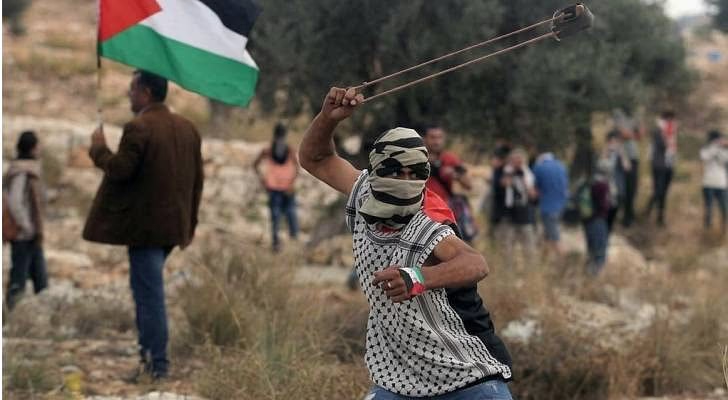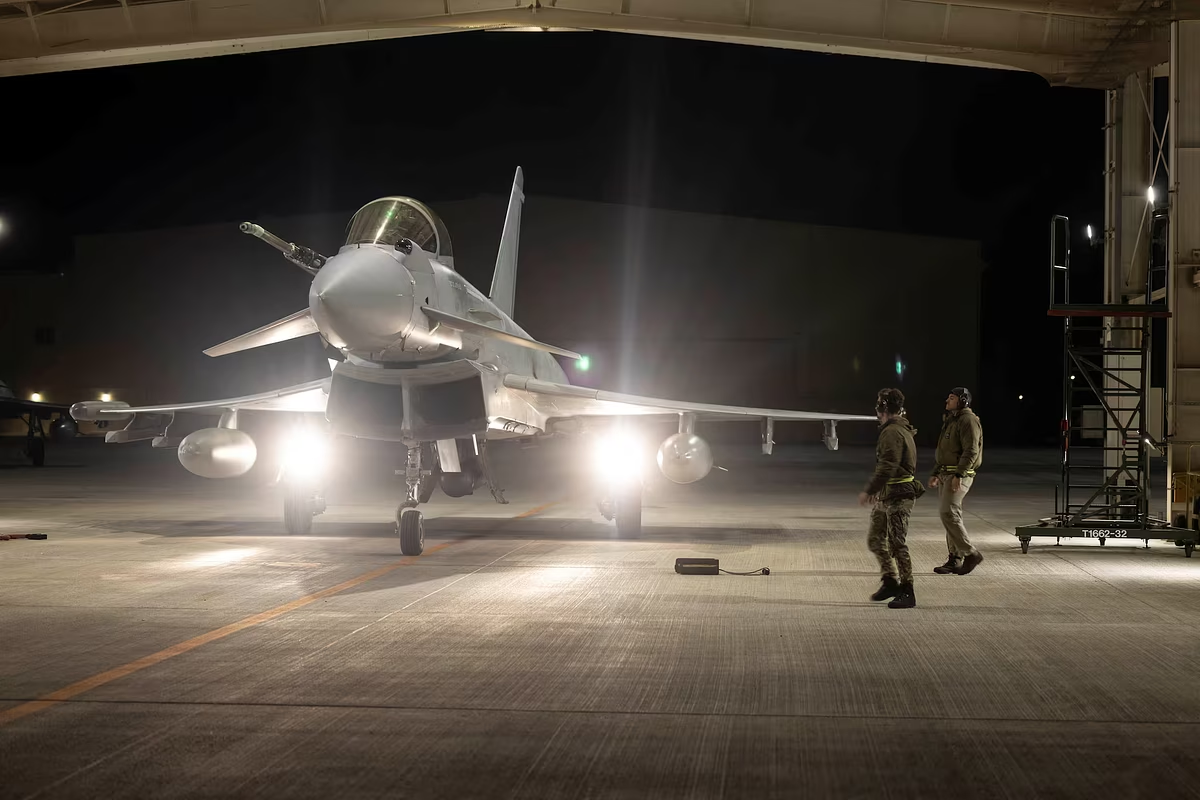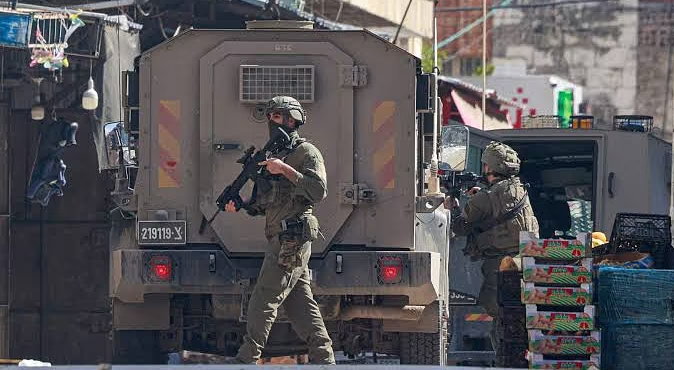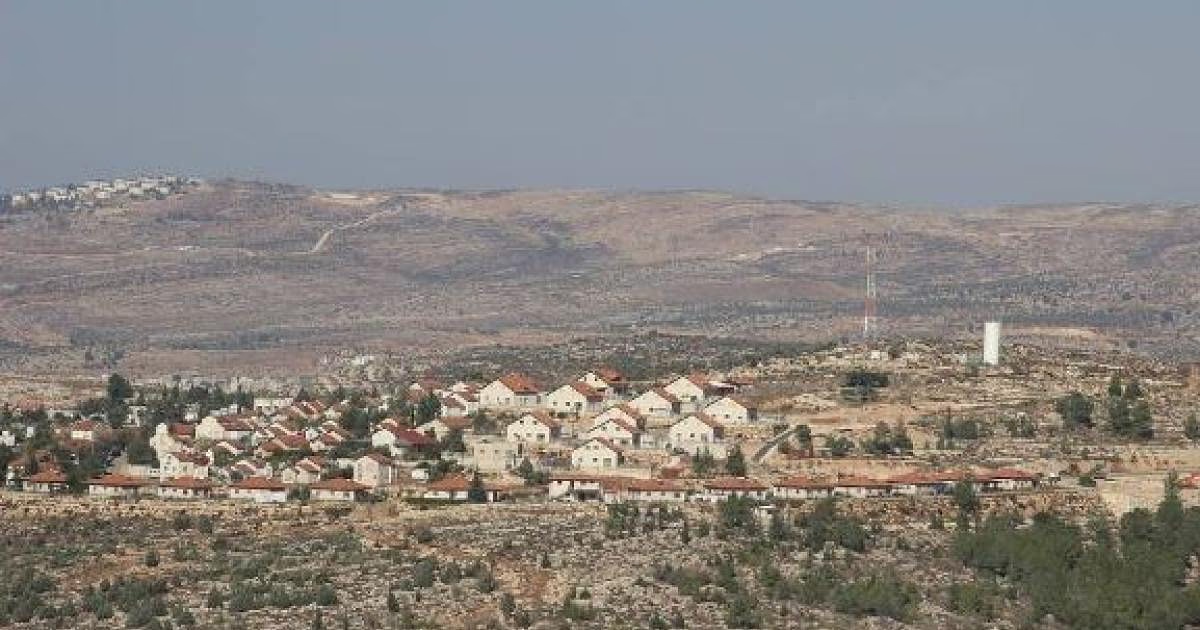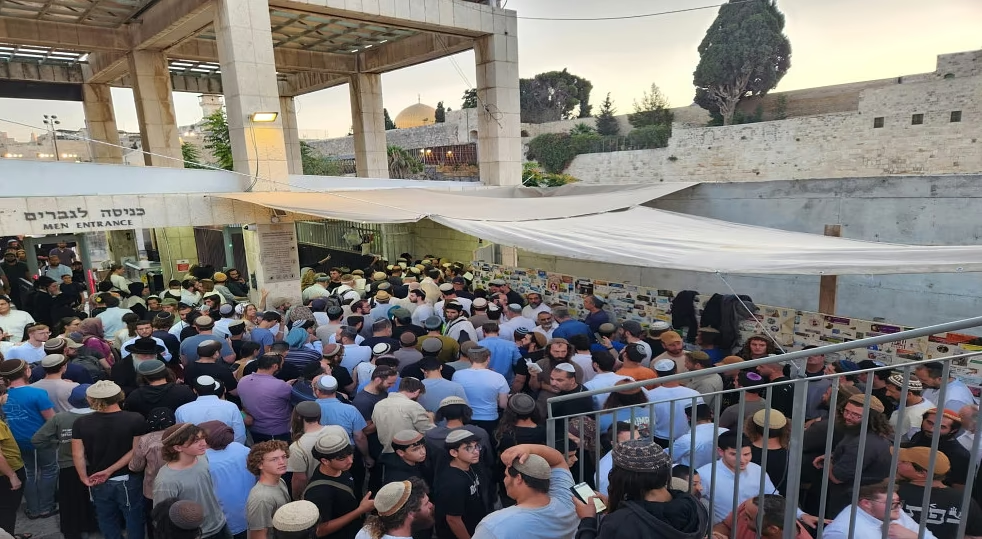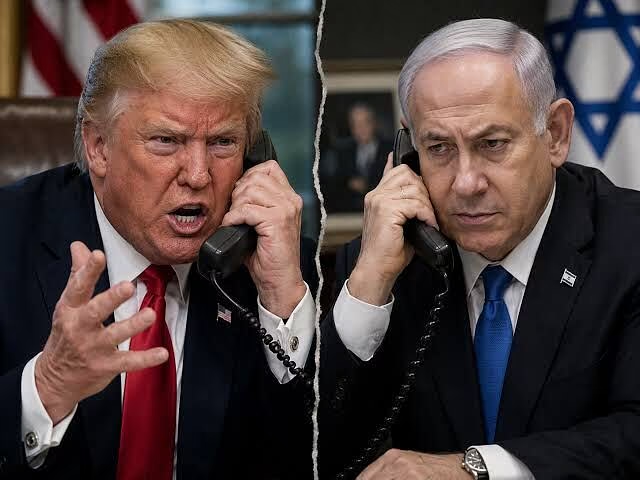
The US-based Pew Research Center has revealed the results of a comprehensive global survey showing that the vast majority of people in 36 countries worldwide hold negative attitudes towards Israel. The report issued by the institute also indicated that these countries are experiencing a state of deep distrust in Israeli Prime Minister Benjamin Netanyahu and his ability to manage international affairs.\n\nAccording to data collected by the institute between February and May of this year, the percentage of adults who hold a negative view of Israel reached approximately 67%, while the percentage of supporters did not exceed 25%. These results come in a sensitive time following military escalation in the region, which directly affected global public opinion.\n\nMuslim-majority regions recorded the highest levels of rejection of Israeli policies, with strong stances emerging in countries such as Turkey, Pakistan, Indonesia, and Malaysia. These negative attitudes also included residents of the West Bank and East Jerusalem, while the institute noted the impossibility of conducting the survey in the Gaza Strip due to security and field conditions.\n\nIn Europe, the results showed increasing negative evaluations, especially in countries like Spain, the Netherlands, and Italy, where half or more of adults expressed strong dissatisfaction with Israel. In contrast, some sub-Saharan African countries, such as Kenya, remained among the few regions that still held more positive views compared to the rest of the world.\n\nThe survey highlighted a clear generational gap in attitudes, with young people in North America and Europe tending to take tougher stances against Israel compared to older generations. In Hungary, for example, the rejection rate among young people under the age of thirty-four reached approximately 72%, a percentage significantly higher than that recorded among older age groups.\n\nOn the ideological front, the report revealed a sharp division between left-wing and right-wing currents, especially in the United States, Australia, and Greece. Within the US, 83% of those identifying as liberal expressed negative views towards Israel, while this percentage dropped to only 37% among conservatives, reflecting an increasing politicization of the Palestinian issue.\n\nThis year witnessed a significant shift in global public opinion compared to 2025 data, with negative sentiments increasing in 13 out of 24 countries for which previous data was available. In Argentina, the minority rejecting Israel shifted from 46% last year to become a majority comprising 55% of the total population in the latest survey.\n\nRegarding Benjamin Netanyahu's personality, the results confirmed that the majority of people in most surveyed countries do not trust his political decisions on the global stage. This lack of trust included major countries such as Germany, France, Canada, and the United Kingdom, where participants expressed deep doubts about his political wisdom and international orientations.\n\nKenya and the Philippines are the only exceptions in this survey, where more than half of the population still expresses confidence in the Israeli Prime Minister. Apart from these two countries, the general trend is towards a continuous decline in Netanyahu's popularity, especially among educated groups, youth, and political activists in the West.\n\nIn South Korea, the institute observed one of the largest changes in trust levels, with the percentage of those distrusting Netanyahu jumping from 64% last year to 76% currently. Analysts attribute this decline to the hardline military policies pursued by the current Israeli government, which are causing widespread international concern.\n\nThe report also indicated that the ideological gap in attitudes towards Netanyahu is clearly evident in high-income countries such as the Netherlands, Spain, and the United States. In these countries, the likelihood of distrusting the Israeli leader is at least 25 percentage points higher among those on the left compared to their counterparts on the political right.\n\nIn Italy, the survey recorded a significant increase in the percentage of those who "absolutely" distrust Netanyahu, reaching 62% compared to 45% in the previous year. This rapid increase reflects the extent of diplomatic and popular isolation that the Israeli leadership has begun to face in traditional European circles.\n\nThe institute concluded that these data reflect a fundamental shift in how the world perceives Israel as a state and Netanyahu as a leader, away from traditional alliances. It appears that the continuation of military operations and regional tensions has directly contributed to shaping this bleak view among global public opinion across its various orientations.\n\nIt is worth noting that this survey is one of the broadest statistical studies that addressed attitudes towards Israel since the beginning of recent events in the region. These figures provide a strong indicator for decision-makers around the world regarding increasing popular pressures demanding a change in policies towards the conflict in the Middle East.\n\nThe majority of people in most countries included in our survey this year expressed a negative opinion of Israel and little to no trust in Prime Minister Benjamin Netanyahu.
PALESTINE
Fri 05 Jun 2026 8:13 pm - Jerusalem Time
Global Survey: Majority in 36 Countries Hold Negative Views of Israel and Distrust Netanyahu
ARAB AND WORLD
Fri 05 Jun 2026 8:13 pm - Jerusalem Time
US House of Representatives Rejects Bill to Restrict Military Intervention in Lebanon
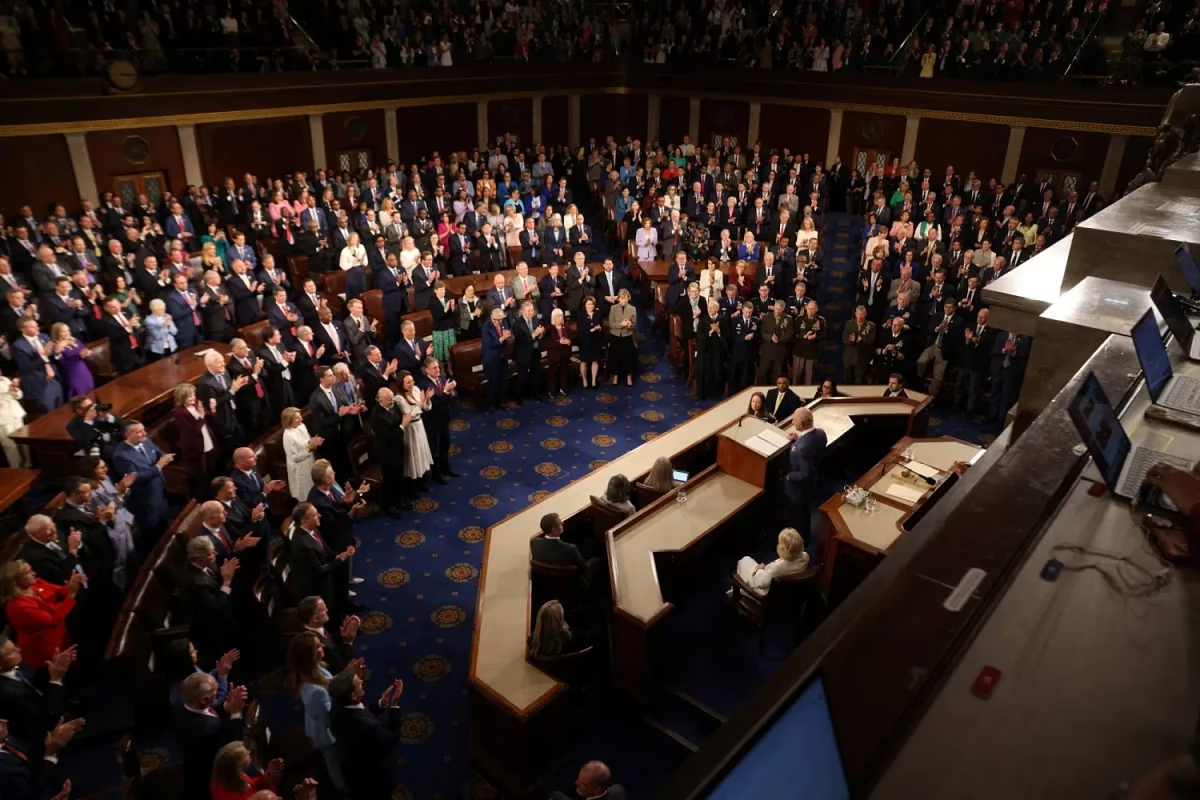
The US House of Representatives on Thursday voted to reject a bill based on the War Powers Act, which aimed to compel President Donald Trump to withdraw US forces from any combat operations in Lebanon that had not received prior congressional approval. The session saw a decisive vote that ended with a majority of 324 representatives opposing the proposal, compared to only 92 members in favor, while two representatives chose to abstain from voting, a move reflecting a division over the mechanisms of foreign military intervention.
The details of the vote showed broad bipartisan opposition to the resolution, with 207 Republicans and 117 Democrats, in addition to one independent representative, opposing it. In contrast, Representative Thomas Massie emerged as the sole Republican voice supporting the resolution, while Democratic Representatives Betty McCollum and Derek Tran were present without taking an explicit stance on the vote, which sparked widespread debate in Washington circles.
Democratic Representative Rashida Tlaib based her proposal on the absence of legal authorization, noting that Congress had not declared war nor granted specific permission for US forces to participate in Israeli military operations within Lebanese territory. Tlaib asserted in her argument that the United States had not designated any entity within Lebanon as a legitimate target under existing authorizations for the use of military force, rendering any combat involvement illegal according to her view.
Via the 'X' platform, Tlaib emphasized the humanitarian aspect of the crisis, pointing out that reports indicate the death of approximately 11 children daily in Lebanon as a result of the ongoing escalation. The representative called for an immediate halt to the shelling, considering that the Israeli government continues to expand the scope of its military strikes in various Lebanese regions, despite previous understandings related to a ceasefire agreement that did not withstand the field escalation.
In contrast, Democratic Minority Leader Hakeem Jeffries, along with party leaders, issued a clarifying statement affirming that no US armed forces personnel are currently engaged in combat or direct hostilities in Lebanon. This stance aimed to calm fears of imminent US involvement, considering that the wording of the proposed resolution does not align with the current field reality of forces deployed in the region.
Democratic leaders explained that addressing the issue of war powers in Lebanon should be done through other legislative channels that ensure the protection of US interests without harming security cooperation with the Lebanese army. They indicated that any legislative action must preserve Washington's ability to protect its diplomatic facilities and secure its personnel, which they considered a weakness in the resolution proposed by Tlaib.
This parliamentary move comes just one day after the House of Representatives successfully passed another resolution aimed at restricting President Trump's ability to launch military action against Iran without congressional approval. This disparity in the results of the two votes reflects the complexity of political calculations in Washington regarding Middle East issues, where lawmakers tend to tighten oversight on the Iran file while maintaining wider room for maneuver in the Lebanese file.
Congress has not granted any specific legal authorization for US forces to participate in Israeli military operations in Lebanon.
PALESTINE
Fri 05 Jun 2026 3:24 pm - Jerusalem Time
Young man martyred and his body detained in Ramallah amid international warnings of annexation plans
The Palestinian Ministry of Health announced this morning the martyrdom of 18-year-old Haitham Ezzedine Omar Hamaida, who was shot by Israeli occupation forces. The incident occurred during a military incursion targeting the village of Beitin, located east of Ramallah in the occupied West Bank.
Local sources confirmed that the occupation forces not only fatally shot the young man but also detained his body and prevented medical teams from providing him with first aid. This action is part of the policy of detaining the bodies of martyrs, which Israeli authorities frequently employ against Palestinians.
Beitin village witnessed violent confrontations during the night hours following the occupation vehicles' incursion into its neighborhoods, where soldiers fired live ammunition and tear gas heavily. These assaults led to fires in large areas of agricultural land belonging to the villagers, causing severe material losses.
For its part, the Israeli occupation army claimed that its soldiers observed a group of young men throwing Molotov cocktails at Israeli vehicles passing on the main road near the village. The military statement claimed that the shooting was a direct response to this threat, noting the ongoing pursuit of other participants in the incident.
In a related context, the Palestinian Red Crescent Society stated that its teams received an urgent report about an injured person in an area near the 'Beit El' settlement, which is built on citizens' lands. The society clarified that the occupation forces prevented ambulances from reaching the site and later refused to hand over the body to paramedics for transport to the hospital.
Official statistics indicate a sharp increase in the number of casualties in the West Bank since the start of the aggression on the Gaza Strip in October 2023. At least 1076 Palestinians have been martyred by Israeli occupation forces and settlers, amid intensive military campaigns targeting Palestinian cities, camps, and villages daily.
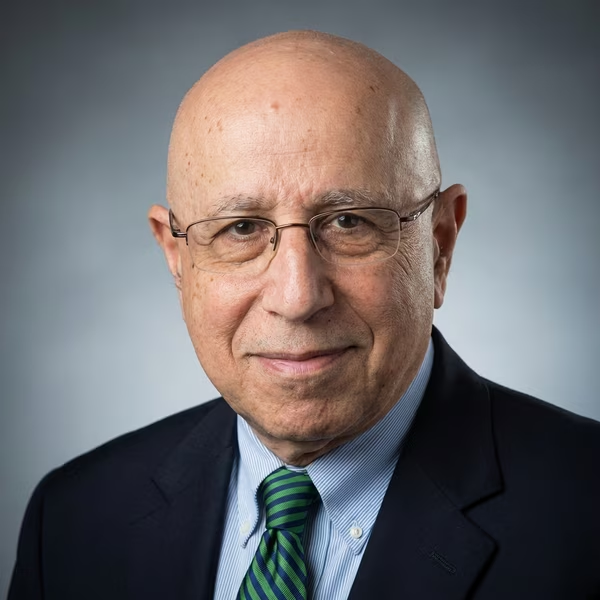
On the diplomatic front, the Palestinian Ambassador to the United Nations, Riyad Mansour, called on the American administration to exert real pressure to stop Israeli annexation plans. Mansour pointed out during a press conference in New York that Washington has the necessary tools to prevent the Israeli government from taking steps that would completely undermine the chances of achieving peace and stability.
Mansour stressed that the continuation of settlement policies in the occupied territories poses a direct threat to regional and international security. He demanded effective international action to stop Israeli encroachment on Palestinian lands, considering that international silence encourages the occupation to proceed with imposing a new reality that will be difficult to change in the future.
For his part, the Saudi Ambassador to the United Nations, Abdulaziz Al-Wasil, warned against Israeli endeavors aimed at changing the demographic and geographical reality in the West Bank. Al-Wasil affirmed that these systematic practices aim to undermine the possibility of establishing an independent and sovereign Palestinian state, which requires a firm stance from the international community.
At the conclusion of diplomatic efforts, the Organization of Islamic Cooperation called on the UN Security Council to fulfill its legal and moral responsibilities towards the Palestinian people. The organization, through Turkey's representative, called for immediate action to stop settlement activities and forced displacement, and to ensure accountability for those responsible for ongoing violations of international law.
Israeli practices constitute a continuous process of changing the demographic and geographical reality in the Palestinian territories, which threatens the possibility of establishing an independent state.
OPINIONS
Fri 05 Jun 2026 3:24 pm - Jerusalem Time
Anxieties of Change: Why Do Arab Elites Fear the Demands of Freedom?
The Arab political scene in general, and the Tunisian one in particular, is dominated by political and social groups that feel a real terror of the possibilities of change inherent in the popular consciousness. These elites have, over time, transformed into conservative forces desperately defending the prevailing conditions, in anticipation of the consequences that might result from the liberation of peoples and their breaking free from the shackles of dependency.
The concept of freedom, at its core, represents a critical transition from a state of stagnation and false stability to a state of movement and uncertainty, a stage that requires a long time to rebuild stability on sound foundations. This transitional path seems frightening and costly for forces unwilling to pay the price of change, which drives them to regress towards preserving the status quo as the least harmful option.
The capitalist class in the Arab region is one of the most prominent conservative forces, as it cannot be compared to the historical Western bourgeoisie that led democratic transformations. This class in our Arab context is a direct product of political regimes that created it to be an economic belt ensuring the survival of power in exchange for financial privileges.
Although global transformations offer enormous economic opportunities in an atmosphere of freedom, capital owners have chosen to defend their narrow matrix of interests by rejecting all radical change. This was clearly evident during the Arab Spring tests, where this class sided with everything that represented the spirit of the old regimes and pumped huge sums of money to stifle any peaceful movement.
These economic elites lack the necessary qualifications to lead social or intellectual change; they are a class experiencing a state of intellectual clinical death, and do not produce real developmental programs. Their ultimate ambition is to perpetuate the status quo, which explains their lack of support for culture or education, preferring to live under systems that reject openness.
On the other hand, modernizing elites emerge, raising slogans of liberalism, leftism, and nationalism in their theoretical literature, while in reality practicing behavior hostile to the liberation of peoples. Major political junctures have revealed a huge gap between the theoretical pamphlets of these elites and their practices, which often blessed the destruction of ballot boxes.
Political sources have observed a clear bias of modernizing forces in favor of military forces in several Arab countries, where popular movements were labeled as conspiracies to justify coups. This behavior stems from an established idea that any freedom that might enable a political opponent, specifically the Islamist current, to participate is a freedom that must be blocked.
These conservative modernists prefer the survival of bloody and totalitarian regimes over the people being liberated and choosing their representatives with free will, which is a stark contradiction to the principles of modernity. Some of them even went so far as to yearn for previous authoritarian rule models, forgetting decades of bitter criticism they directed at those regimes before the test of freedom confronted them with the truth.
This fear of freedom among these elites is partly due to their realization that the street's balance does not favor them, and that the modernization projects they adopted did not meet people's aspirations. In contrast, the masses, described as simple, have shown a greater ability to accept change and endure the hardships of the path separating tyranny and freedom.
Looking at the experience of Islamist currents, we find that they were the party that tried to protect freedoms in the initial founding period after the Arab revolutions, despite all attempts to discredit their experience. They actively contributed to establishing the foundations of democratic work in Tunisia and Egypt, and paid a heavy political and human cost as a result of their adherence to this path.
It is impossible to build a free and stable system if one team alone defends freedoms while the rest of the elites entrench themselves in the camp of counter-revolutions or suspicious silence. The path to freedom necessarily requires a transformation in the mindset of the economic and modernizing elite, a path that still seems long and arduous given the current circumstances.
The current Arab political scene is still governed by the mentality of enemies of freedom, at a time when supporters of real change are behind bars or in exile. Although the spirit of freedom still ferments in the hearts of peoples, talking about an imminent breakthrough requires caution and a precise reading of the balance of power on the ground.
The attempts of coup regimes to change their military or political facades are merely cosmetic operations aimed at preserving the essence of the existing tyranny. This conservative policy seeks to prolong the stagnant situation, but it always clashes with the existential question that threatens the worn-out pamphlets from which the enemies of change read.
Ultimately, the conflict in the Arab region remains a struggle between the will for liberation and forces that fear losing their privileges under the rule of law and citizenship. And even if the road is long, awareness of the contradictions of the conservative elites represents the first step towards regaining popular initiative and building a future where the ruler does not fear the freedom of the ruled.
Freedom means moving from a stagnant state to a dynamic and uncertain one, and this transition is frightening and costly for those afraid to pay the price.
ARAB AND WORLD
Fri 05 Jun 2026 3:24 pm - Jerusalem Time
'Experimental Zones' Plan in South Lebanon: A Test for Army Sovereignty and Fears of Prolonging Occupation
Recent outcomes of the negotiation round hosted by Washington have brought forth the concept of 'experimental' or 'model' zones as a practical mechanism to reshape the security reality in South Lebanon. This approach aims to transition from a fragile ceasefire to more sustainable security arrangements that ensure the long-term stability of the Lebanese-Israeli border.
According to joint understandings, it was decided to expedite the establishment of these zones to be under the exclusive and full control of the Lebanese Armed Forces, while preventing any armed presence outside the framework of the state. This experiment is scheduled to begin in a limited number of southern towns to assess its success before expanding its generalization to wider geographical areas in later stages.
The core idea of this proposal is a gradual withdrawal of Israeli occupation forces from specific locations, met by an immediate and comprehensive deployment of the Lebanese Army to ensure that no armed factions return. This measure is considered a phased test for the implementation of the provisions of international Resolution 1701, rather than moving towards a comprehensive and immediate application that may face complex field obstacles.
In the context of site identification, Lebanese President Joseph Aoun revealed that the Lebanese proposal included starting with the towns of Eastern and Western Zawtar, Yahmar, and Qalaat al-Shaqif, given their strategic location and proximity to the city of Nabatieh. Despite the geographical clarity of the proposal, it has raised a wave of questions and concerns within Lebanese political circles about the sovereign implications of this step.
Observers and analysts believe that adopting a gradual evaluation model may give the Israeli occupation a pretext to link its comprehensive withdrawal to unguaranteed field results, which could prolong the stay of its forces in some sensitive border points. This concern stems from the possibility of the 'test' turning into an open-ended timeline that subjects Lebanese sovereignty to the assessments of external parties.
For his part, political researcher Mohammed Alloush warned of the danger of the Lebanese Army becoming an 'executive body' for security tasks that serve international agendas, considering that subjecting the army's performance to American and Israeli evaluation undermines the independence of military decision-making. Alloush pointed out that Israel might try to push the army to carry out tasks that it failed to achieve on the ground in villages that witnessed fierce confrontations in recent months.
These developments coincide with the monitoring of field movements and Israeli withdrawals from the areas of Debbine and Blat, which opens the door to questions about whether these steps are the actual beginning of the implementation of the experimental zones model. Between the international vision that considers it a means of building trust, and local fears of its repercussions, South Lebanon faces a new phase of conflict management based on gradual field implementation.
The proposed mechanism makes the performance of the Lebanese Army subject to American-Israeli evaluation, and the military institution may turn into an executive body for externally defined security tasks.
PALESTINE
Fri 05 Jun 2026 3:24 pm - Jerusalem Time
Tragedy of Al-Jawazat Camp: 1800 Families in Gaza Face Famine and Stoppage of Aid
Al-Jawazat camp in the Gaza Strip is facing a complete collapse of its food security system, as the camp, inhabited by more than 1800 displaced families, has become a living example of an impending humanitarian catastrophe. Approximately 7,000 people live in a very narrow geographical area, with a complete absence of ready-made food and the energy sources needed for cooking, putting thousands of children and women in direct confrontation with hunger.
Mohammed Saada, the official in charge of managing the camp, confirmed that the crisis is worsening daily due to the lack of income for displaced families, which prevents them from being able to buy basic necessities even if they are available. Saada explained that the availability of flour does not solve the problem in the absence of firewood or cooking gas, leaving families unable to convert raw materials into edible meals.
Field data indicates that the gas allocation for a single family only arrives once every three months, a limited quantity that does not cover cooking needs for more than twenty days at best. This severe deficit has forced the displaced to rely entirely on charitable kitchens, but the cessation of the 'World Central Kitchen' due to occupation measures has brought down the last food safety nets in the region.
In addition to the food crisis, the displaced suffer from deteriorating health and environmental conditions, with skin diseases, mosquitoes, and insects spreading widely due to the absence of adequate health facilities. The suffering of the elderly and people with special needs is compounded as they find themselves in an environment lacking the most basic medical care, amid an insane rise in prices for alternative fuels such as wood and gasoline.
This suffering comes at a time when statistics indicate that the Israeli aggression has destroyed about 80% of the urban infrastructure in the Gaza Strip, turning cities into piles of rubble and iron. This widespread destruction has made finding safe shelter or a means of livelihood almost impossible, forcing residents to crowd into camps that lack the most basic services and humanitarian protection.
International reports supported by the United Nations had previously warned of an official famine outbreak in the Gaza governorates, confirming that more than half a million Palestinians face the risk of starvation. Observers emphasize that what is happening in Al-Jawazat camp is a recurring pattern in all camps in the Strip, amid widespread international silence and a scarcity of humanitarian aid that does not meet the minimum needs of the afflicted population.
Famine is no longer a future threat but has become a current reality knocking on the doors of the camps one after another.
PALESTINE
Fri 05 Jun 2026 3:24 pm - Jerusalem Time
Violent assault by Dutch police on Palestinian refugee's wife sparks human rights outrage
Malak Al-Mahmoud, the wife of Palestinian refugee Wissam Miqdad, revealed horrific details of a violent physical assault she suffered at the hands of Dutch police officers inside an asylum center. The woman, a Syrian residing in Germany, explained that security personnel beat and dragged her despite their prior knowledge of her sensitive health condition, as she was in advanced stages of pregnancy.
Media sources reported that Malak tried to appeal to the police officers and clearly informed them of the need to consider her physical condition, but the reaction was violent, involving pushing and forced dragging. The victim confirmed that this harsh treatment led to an immediate deterioration in her health, as she began to suffer from labor symptoms and severe pain that continued for several consecutive days before she gave birth to her daughter.
For his part, Palestinian refugee Wissam Miqdad, originally from the Gaza Strip, indicated that this incident occurred at the peak of immense psychological and living pressures faced by the family due to the complexities of their residency file. Miqdad explained that the Dutch authorities had informed him of their decision to deport him separately to Egypt, while his wife was to be deported to Germany, threatening to separate the family.
Despite the baby's survival and healthy arrival into the world, the family continues to live in a state of legal and psychological instability within the European continent. The family confirms that the repercussions of the assault still haunt them, as anxiety dominates their future in the absence of necessary legal and humanitarian protection guarantees for their situation.
In response, the Dutch police issued a statement confirming that they had launched a comprehensive review of the circumstances surrounding the use of force during the arrest operation at the 'Zift' asylum seekers' center. The authorities claimed that the widely circulated video clips do not reflect the full truth, but rather show an excerpt from the events of the incident, which began with a report of a fight.
According to available information, the incident dates back to May 19th in the Campweg area and has sparked a widespread wave of condemnation from international activists and human rights advocates. Observers considered the leaked footage to put human rights standards in Europe under scrutiny, especially concerning the treatment of the most vulnerable groups such as pregnant women and children.
This incident reopens the debate about the limits of the use of force by European security agencies within asylum and detention centers. Human rights advocates are calling for an independent and transparent investigation to ensure accountability for those involved in the assault and to establish strict protocols to prevent the recurrence of such grave violations against international protection seekers.
I clearly informed the police officers of my pregnancy and asked them to treat me gently, but they pushed and dragged me by force.
ARAB AND WORLD
Fri 05 Jun 2026 3:24 pm - Jerusalem Time
Trump Expresses Readiness to Meet Khamenei and Confirms Proximity to New Nuclear Deal
US President Donald Trump showed surprising flexibility towards the Iranian leadership, expressing his readiness to meet Supreme Leader Ali Khamenei to discuss ways to end tensions between the two countries. Trump affirmed during his remarks in the Oval Office that getting to know Khamenei would be an honor for him, emphasizing his desire to build a relationship based on mutual respect should such a meeting take place.
The US President indicated that negotiations between Washington and Tehran have reached advanced stages, with both parties close to drafting a comprehensive agreement. This anticipated agreement is based on a strict Iranian commitment not to seek nuclear weapons, in exchange for understandings that ensure regional stability and common interests.
Regarding the security of international navigation, Trump revealed positive developments concerning the Strait of Hormuz, confirming that the majority of naval mines have already been cleared. He considered the full reopening of navigation in this vital passage a fundamental pillar in any future understandings with the Iranian side.
Despite the optimistic tone, Trump clarified that he is not seeking a direct meeting at present, but rather links it to achieving tangible progress on the ground. He added that any meeting with the Iranian leader must be the culmination of actual steps that ensure the success of the nuclear and security agreement process.
The US President touched upon the complexities of the Iranian file, describing it as more difficult than other international files from a military and political perspective. He stressed that dealing with Tehran requires a different strategy that takes into account regional sensitivities and the risks of any escalation.
Trump revealed that there are intensive discussions within the US administration about the available options for dealing with Iran's nuclear program, including military options. However, he indicated the exclusion of some offensive proposals due to the high risks they entail, which could lead to an explosion of the situation in the Middle East.
On the other hand, media sources reported that current US diplomatic moves are under time pressure related to major international commitments. The United States is preparing to host the World Cup, which necessitates the current administration to cool down inflamed fronts to ensure the success of the global sporting event.
Observers believe that the approaching World Cup is pushing the White House to adopt a more cautious and balanced political discourse in dealing with foreign crises. Washington aims, through this approach, to reduce the likelihood of any disturbances that could affect energy markets or global navigation during the tournament period.
In contrast, academic voices from Tehran emerged questioning Washington's intentions, with Iranian experts considering Trump's adherence to his harsh conditions an impediment to any real progress. They pointed out that what Trump describes as a good deal is seen by the Iranian side as an attempt to impose total surrender on the country's sovereignty.
Circles close to decision-making in Iran affirmed that Tehran will not submit to American dictates that ignore the rights of the Iranian people. These sources stressed that Iran does not seek war and prefers diplomatic solutions, but stipulates that any agreement must preserve its supreme national interests.
Despite Trump's positive statements, the deadlock in the horizon of negotiations remains, as the gap between Washington's nuclear demands and Tehran's expectations for lifting sanctions is still wide. International circles are awaiting what the coming days will bring in terms of moves that may lead to a historic meeting or a continuation of the stalemate.
If I meet him, it would be an honor for me to get to know him, and I will treat him with all respect.
ARAB AND WORLD
Fri 05 Jun 2026 3:24 pm - Jerusalem Time
Deadly Israeli escalation in Lebanon and new evacuation orders coinciding with UN calls for calm
The Secretary-General of the United Nations, Antonio Guterres, welcomed the announcement of a ceasefire agreement between Lebanon and Israel, emphasizing in an official statement the necessity for all parties to immediately cease hostile attacks. Guterres urged the concerned parties to fully comply with the principles of international humanitarian law and ensure the protection of civilians in all circumstances and areas affected by the conflict.
The Secretary-General called on Hezbollah and non-state forces to abide by the Lebanese government's decisions aimed at extending its sovereignty over all national territory, stressing the importance of confining weapons to the state and its official institutions. He also issued a clear call for Israel to fully withdraw from areas north of the Blue Line, in respect for Lebanon's internationally recognized sovereignty and territorial integrity.
In a related context, Guterres affirmed the international organization's commitment to supporting all diplomatic efforts aimed at consolidating the cessation of hostilities and the comprehensive implementation of UN Resolution 1701. He expressed hope that ongoing negotiations would lead to lasting stability, declaring the UN's continued support for Lebanese state institutions, especially the Lebanese army, to enable it to perform its national duties.
On the ground, the pace of military operations did not subside, as field sources reported continued intense Israeli air raids on wide areas in southern Lebanon and the Beqaa, leading to the martyrdom of several individuals and injuries to others. These raids coincided with the occupation army issuing new evacuation orders for residents of the towns of Arnaya, Kafr Fila, and Anqoun, exacerbating the suffering of displaced persons in those areas.
Reports from the town of Anqoun indicate that it currently hosts about 2,500 displaced persons in addition to its original inhabitants, which makes the evacuation orders a direct threat to thousands of civilians who lack safe havens. Meanwhile, medical sources confirmed the martyrdom of three individuals and one injury in raids targeting the towns of Duweir and Haboush, where missiles completely destroyed residential buildings.
For its part, the Lebanese Civil Defense announced the martyrdom of seven people as a result of a series of overnight raids launched by Israeli aircraft on the coastal city of Tyre. Sources explained that rescue teams faced great difficulties in recovering victims from under the rubble due to the continuous intensive flights of warplanes and drones in the skies of the affected region.
In a further escalation, Israeli drones targeted a motorcycle at the popular relief intersection in the city of Nabatieh, and raids also hit the towns of Haboush and Abba, resulting in varying injuries among civilians. Local sources stated that warplanes destroyed a residential building near the gendarmerie station in the town of Duweir, leading to the martyrdom of one citizen and serious injuries to another.
The wave of intense shelling included the towns of Majdal Zoun, Al-Barak area, and Harouf roundabout, in addition to targeting buildings on the main road of Deir ez-Zahrani with precise airstrikes. The towns of Kafr Rumman, Nabatieh al-Fawqa, and the outskirts of Shoukin and Mayfadoun also came under intense artillery shelling since the early morning hours, causing extensive material damage to public and private properties.
In the city of Tyre, an airstrike targeting the vicinity of Jabal Amel Hospital destroyed a building belonging to a Lebanese bank, and resulted in injuries to 12 people described as moderate and minor. These targeting incidents come within the framework of the intensive military pressure policy practiced by the occupation on infrastructure and populated areas deep in southern Lebanon.
On the other hand, Hezbollah announced the execution of a series of military operations targeting gatherings of occupation soldiers and vehicles in the vicinity of Beaufort Castle, Rashaf, and Al-Qantara. Hezbollah affirmed in its statements that it confronted attempts of ground advances in the city of Khiam, in addition to shooting down a 'Hermes 450' drone and detonating explosive devices against an Israeli force that attempted to infiltrate towards the outskirts of the town of Al-Ghandouriya.
We call on all parties to fully respect the cessation of hostilities and to comply with their obligations under international humanitarian law at all times.
OPINIONS
Fri 05 Jun 2026 8:47 am - Jerusalem Time
New Poll Reveals Growing American Pessimism Towards War with Iran
Washington Message
Washington – Said Arikat - 5/6/2026
News Analysis
The results of a new poll conducted by the University of Maryland in cooperation with Ipsos reveal growing concern within the United States regarding war with Iran, an indicator reflecting an increasing gap between stated foreign policy goals and American public perceptions of the outcomes of such a war and its repercussions on national interests.
According to the results of the "Critical Issues Poll" supervised by the renowned researcher Shibley Telhami, the majority of Americans believe that the war with Iran has harmed American interests more than it has achieved gains. This comes at a time when questions are increasing within political and academic circles about the utility of continued military involvement in Middle East conflicts, and Washington's ability to achieve clear strategic objectives through them.
The results show clear partisan differences in evaluating the war, with 84 percent of Democrats and 63 percent of independents saying that the war's effects were more negative than positive for the United States. Among Republicans, the picture appeared less severe but still leaned towards pessimism; 33 percent believed the war's outcomes were negative, compared to only 25 percent who considered them positive.
This indicator is particularly important because Republicans typically form the political base closest to adopting more hawkish foreign policies, and they represent the segment most supportive of President Donald Trump. Nevertheless, the poll results suggest that doubts about the war's utility are no longer confined to the Democratic or independent camps but have extended to segments of Republican voters themselves.
The results also reveal a deeper crisis related to Americans' perception of the war's trajectory and its actual outcomes. According to the poll, fewer than one in six Americans believe that the United States has won or is on its way to winning. In contrast, the largest number of participants said that neither side could be considered victorious or decisively ahead in the conflict.
Telhami believes that these results reflect growing popular fears that the United States is not achieving tangible gains from the war, regardless of the objectives declared at its outset. He points out that the absence of a sense of victory among various segments of public opinion, including older Republican demographics, makes it difficult to imagine that extending or expanding the war would change the general direction of popular attitudes.
These results reveal a recurring phenomenon in American political history: the decline of popular support for wars as they drag on and lack clear indicators of success. Americans may accept military involvement in the early stages of conflicts under the influence of a sense of threat or out of a desire to defend national interests, but the continuation of military operations without tangible results often leads to the erosion of public trust. Current figures suggest that the war with Iran has begun to enter this phase, where the discussion revolves more around cost and return than political slogans and stated objectives.
In a separate but equally important context, Telhami, in another study prepared in collaboration with researchers Calvert Jones and Marc Lynch, discussed the results of the current spring's "Middle East Scholars Measure," which focuses on the assessment by academic specialists in regional affairs of the impacts of artificial intelligence and its professional uses.
The study indicates that artificial intelligence has already entered the field of Middle East studies, but in a heterogeneous manner and accompanied by varying degrees of concern and reservation. Most participants reported that this technology has not significantly affected their teaching methods so far, yet those who confirmed an impact described it, almost collectively, as mostly negative.
This stance reflects growing concerns within academic circles about the impact of AI tools on the quality of scientific research and students' critical thinking levels, in addition to the risks associated with producing inaccurate or misleading content whose sources are difficult to verify.
The academics' concern does not stem from the technology itself, but from the speed with which it permeates the production and circulation of knowledge. Educational institutions typically need many years to develop ethical and methodological standards for dealing with new tools, while AI is spreading at an unprecedented pace. Many researchers fear that excessive reliance on these tools will weaken independent analytical skills and original research, which are the fundamental pillars of academic work. Therefore, the current hesitation appears to be a reflection of a transitional state rather than a definitive rejection of the technology.
One of the most prominent findings of the study was a striking disparity between researchers' assessment of the impact of artificial intelligence and their assessment of the role of social media in shaping American public opinion on the Palestinian issue and the Israeli-Palestinian conflict.
25 percent of academics believed that AI-generated propaganda and misinformation contributed to shifting American public opinion towards more pro-Israel stances, while only 13 percent believed it fostered sympathy for Palestinians.
In contrast, 64 percent of participants said that social media platforms, such as "X" and "TikTok," contributed to shifting American public opinion towards greater sympathy for Palestinians. Thus, a large number of researchers believe that the impact of the two technologies moves in opposite directions when addressing political issues related to the Middle East.
This paradox reveals a new battle unfolding in the digital space over the formation of public consciousness. Artificial intelligence tends to produce massive amounts of organized and steerable content, making it an effective tool in influence and propaganda campaigns. Social media, on the other hand, provides a wider space for the spread of direct testimonies, images, and videos coming from the field. Hence, many researchers believe that American public opinion is now influenced by two different sources of information; one institutional and organized, and the other popular and interactive, which explains the contradiction in the trends observed by recent studies.
The results of both studies conclude that the American mood is undergoing rapid transformations on two parallel levels: the first relates to increasing popular doubts about the utility of foreign wars, and the second is linked to the profound changes brought about by new digital technologies in shaping knowledge and public opinion. In both cases, it appears that the United States faces growing challenges in convincing its citizens of the utility of traditional policies, whether on battlefields or in information arenas.
OPINIONS
Fri 05 Jun 2026 8:46 am - Jerusalem Time
Iran and Maritime Straits: The Struggle for Influence Between the American Global Order and the Chinese Alternative
From the first moments of the Israeli occupation's response to the Al-Aqsa Flood operation, Benjamin Netanyahu's government began formulating war objectives and setting timelines for their achievement. This determination was necessary to absorb the anger of the internal opposition, which held the government responsible for the security failure, while the Biden administration pressed for a shorter war duration, fearing erosion of international support.
The recent statement by former Israeli Defense Minister Yoav Gallant shocked political circles when he announced that Israel would need years to achieve its goals in Gaza. This time estimate revealed a significant gap between Israeli military ambitions and the reality on the ground imposed by the Palestinian resistance and its ability to endure for a long time.
Despite more than two years since the outbreak of the confrontation, Israel has not succeeded in achieving its fundamental goals of forced displacement or the complete elimination of Hamas's structure. Observers attribute this setback to the growing defensive power within Gaza, in addition to the active regional support element that has exerted continuous pressure on various fronts.
The United States has been directly involved in the battlefields, whether through engagement with the Houthis in Yemen or providing intelligence and logistical support in Gaza and Lebanon. Despite the previous attempts by the Biden administration to prevent a comprehensive regional war, absolute military and political support for Israel remained the only constant in American policy.
With Donald Trump's arrival at the White House, the intensity of American involvement in direct confrontation with Iran escalated to support its strategic ally. This was evident in the 'Midnight Hammer' operation, which targeted Iran's fortified Fordow facility, in an attempt to undermine the Iranian nuclear program that Israel views as an existential threat.
Current Israeli ambitions extend beyond the Gaza Strip, as the right-wing government seeks to reshape the Middle East under the name of 'Greater Israel.' This project includes geographical expansion and security influence that extends to cover large parts of neighboring countries, with the aim of ending any regional power centers outside the sphere of dependency.
In contrast, Iran is undergoing a deep internal transformation with the emergence of a new generation of technocrats who manage political and military files with a nationalist doctrine. This transformation has made the Iranian regime more focused on the art of governance and national interest, transcending the traditional revolutionary ideological frameworks that prevailed in past decades.
The United States believes that maintaining its global order requires absolute control over waterways and maritime choke points such as the Strait of Hormuz and Bab al-Mandab. This control is the primary guarantee for the continued dominance of the dollar and securing global trade routes that connect East and West.
Iran is a vital component of China's 'Belt and Road' initiative, which seeks to provide an economic alternative to the Washington-led global order. This fierce struggle in the waterways reflects Beijing's desire to restore its position as the world's largest economy through the new 'Eurasia' economic system.
Recent developments have shown that the American military bases deployed in the region are no longer sufficient to fully secure navigation in the Strait of Hormuz. This field challenge has put the American administration in a real dilemma, as it has become clear that igniting wars without a clear exit strategy leads to the depletion of power and international prestige.
Israel's vision of dispensing with American support within a decade, as Netanyahu stated, seems fraught with risks in light of geopolitical shifts. From an American strategic perspective, Israel remains an advanced military base, not an entity completely independent of Washington's vital interests in the region.
Ultimately, the region stands at a crossroads between a decaying American global order and a Chinese system quietly making its way through economy and alliances. Iran, with its geographical positioning and new doctrine, remains the cornerstone of this conflict that will redraw the map of international powers for many years to come.
Israel, first and foremost, is nothing more than an American military base in the Middle East, just like the aircraft carriers that roam the oceans.
OPINIONS
Fri 05 Jun 2026 7:38 am - Jerusalem Time
The Absent Source of Power: The Palestinian People Between the Authority's Dilemma and the Potential of Popular Resistance
Dr. Ibrahim Nairat
Throughout decades of long conflict, Palestinians have been preoccupied with the question of leadership more than they have been with the question of power. Leaderships have succeeded one another, organizations have risen and others have declined, and programs and slogans have changed, but the reality has continued to pose the same question: Where does true Palestinian power lie?
Often, the Palestinian crisis is reduced to a crisis of leadership or a crisis of political organizations, as if changing individuals or replacing positions is sufficient to bring about a fundamental transformation in reality. However, a calm review of the Palestinian experience leads to a different conclusion; true power has never been exclusive to a leader, a faction, or an institution, but rather has been inherent in Palestinian society itself, in its exceptional ability to steadfastness, survival, and preservation of its national identity despite all transformations and pressures.
Long occupations do not only confront armies, but they confront peoples. A military force may be able to win a battle or impose its control over land, but it faces a more complex dilemma when it finds itself before a people who refuse to surrender, assimilate, or abandon their national narrative. Therefore, the secret to the continuation of the Palestinian cause throughout these decades has not been military or economic superiority, but rather the ability of Palestinian society to reproduce itself generation after generation, and to maintain its national presence despite all attempts at weakening and attrition.
From this perspective, true Palestinian power appears to be inherent in the Palestinian individual himself; in the student who insists on his right to education, in the farmer who protects his land, in the worker who continues to search for a dignified life, and in the family that transmits national memory to its children, as well as in millions of Palestinians inside and outside the homeland who have maintained their belonging and identity despite changing places and circumstances.
However, possessing power is one thing, and the ability to employ it and transform it into effective political action is another. Here begins the deeper Palestinian dilemma. The people possess enormous energy, but this energy does not necessarily transform into organized power capable of asserting its presence in the political equation. Between latent power and effective action stands a set of structural obstacles that have accumulated over time.
Perhaps the most prominent of these obstacles appears in the complex relationship between Palestinian society and the Palestinian Authority. Since the establishment of the Authority, a political and administrative structure emerged, primarily designed within a vision based on building and managing state institutions. Over time, a complete system of laws, agencies, functions, interests, and political culture was formed, deriving its logic from the idea of the state more than from the logic of national liberation movements.
Here emerges a paradox worth contemplating. On the one hand, official discourse repeatedly calls for popular resistance as a strategic option in confronting the occupation. On the other hand, the existing political structure appears incapable of producing or leading a broad and sustainable popular movement. The reason is not necessarily the absence of will, but rather because the logic of authority and the logic of popular resistance stem from different priorities.
Authority, by its nature, seeks stability, administration, and the preservation of institutions, services, and public order, while popular resistance relies on community initiative, mass mobilization, and direct political friction with the reality of occupation. The former fears chaos and the political, economic, and security costs that may result from it, while the latter believes that stagnation itself carries an increasing national cost.
For this reason, the problem may not be the absence of calls for popular resistance, but rather the existence of a structural gap between the party issuing the call and the environment required for its success. Popular resistance is not an administrative decision that can be issued from above, but rather a social and political process that grows when people feel that they are partners in the decision, not just recipients of it.
Over time, the distance between society and its political institutions widened. Traditional popular frameworks declined, public participation weakened, and feelings of frustration accumulated among broad segments of Palestinians who no longer saw a direct impact of their political participation on the course of events. In light of this reality, it became difficult to mobilize society around long-term collective projects, no matter how just or necessary they were.
Hence, the question that is increasingly present in Palestinian discourse emerges: Has the existence of the Authority become a structural obstacle to popular initiatives?
Perhaps the answer is not that simple. The problem is not in the existence of the Authority itself, but rather in the nature of the relationship that has developed between it and society. When institutions become a closed space and mechanisms of participation, renewal, and accountability weaken within them, they gradually lose their ability to absorb popular energy. And when citizens feel that their role is limited to waiting for decisions rather than participating in making them, individual and collective initiative both decline.
Conversely, reducing the crisis to the Authority alone ignores other equally important factors; such as political division, social and economic transformations, declining trust in public work, and the exhaustion of society under the weight of daily burdens. Nevertheless, the relationship between the Authority and the people remains one of the most important knots that hinder the transformation of latent societal power into organized political power.
Palestinian history has repeatedly proven that society possesses an exceptional ability to act when it feels that it is the owner of the national project, not just its audience. In moments when popular will met with a comprehensive national vision, Palestinians were able to produce forms of collective action that left a deep impact on the course of the cause, while when the gap between leadership and people widened, initiatives declined and frustration replaced action.
This analysis gains further clarity when looking at the current field reality, where settlement expansion is accelerating unprecedentedly, amidst a clear inability to produce Palestinian initiatives capable of curbing it or even creating a serious political or field cost for it. This scene is not only read as a unilateral development by the occupying power, but also as a reflection of the state of paralysis and dispersion in Palestinian collective action, and the absence of the ability to transform popular anger into organized and effective action.
From this perspective, it appears that the other side is not content with investing in the material balance of power, but also benefits from the state of division, narrow horizons, and lack of initiative, allowing it to expand its facts on the ground with the least cost or deterrence. Here, the gap between the latent power in society and the inability of political frameworks to activate it becomes clearer, and it becomes one of the most important elements in explaining the current scene, where the strength of settlement action intersects with the weakness of counter-action, at a moment when political confusion is mixed with a strategic dead end.
Therefore, the central Palestinian question today is not only about who leads, or which organization has the greatest influence, but about how to rediscover the true source of power inherent in society itself. The issue is not a crisis of faces or names as much as it is a crisis of the relationship between original power and its political institutions.
The Palestinian people still represent the largest elements of power in the conflict equation. They are the source of steadfastness, continuity, legitimacy, and the ability to raise the cost of occupation and deplete its project in the long run. But this power will remain latent unless it finds a political and institutional framework capable of absorbing it, organizing it, and transforming it into a comprehensive national project.
However, understanding this source is not enough unless it is coupled with rebuilding the mechanisms capable of transforming it into organized and sustainable action. The Palestinian dilemma today does not seem to be in the absence of popular will as much as it lies in the widening gap between society and the political frameworks that are supposed to represent it and organize its energies. Therefore, the question is no longer how to mobilize people, but how to rebuild the relationship between society and politics on new foundations.
This begins with freeing community initiatives from the captivity of factional polarization, and restoring credibility to intermediary institutions such as unions, student federations, cooperative societies, and local committees capable of representing public interests away from political divisions. It also requires redefining popular resistance itself, not as seasonal events or fleeting moments of protest, but as a daily community culture embodied in education, volunteer work, land protection, promoting local production, and building networks of solidarity and steadfastness.
At the same time, no popular project can rise without restoring trust between citizens and their institutions, a trust that is not built on slogans, but on transparency, accountability, expanding participation, renewing elites, and opening the way for new generations to contribute to decision-making. This task may require transcending the centrality of national action by empowering local initiatives in cities, villages, and refugee camps, and building community coordination networks capable of acting from the grassroots up instead of waiting for decisions from the political center alone.
The most sensitive challenge is to redefine the role of the Authority itself. It is not required to monopolize national action or to lead all forms of popular movement, but rather to transform from a position of controller to a position of enabler, and from an authority that manages society to a framework that allows society to organize itself and express its interests and initiatives.
Here emerges the deeper question that will determine the shape of the next phase: Do Palestinians seek to build a popular movement independent of the Authority or integrated with it? Perhaps the solution does not lie in either of the two options in their absolute form, but in a third formula based on a strong society that possesses its independent institutions and free public spheres, and an authority that recognizes the role of society as a partner, not a subordinate.
Only then can the latent power in the Palestinian people transform from a historical energy of steadfastness into an organized political and social force, capable of renewing the national project and restoring balance to the conflict equation.
PALESTINE
Fri 05 Jun 2026 7:25 am - Jerusalem Time
Young man martyred by occupation bullets in Ramallah and a series of incursions target West Bank cities
The Palestinian young man, Haitham Ezz El-Din Omar Humaida, 18 years old, was martyred by Israeli occupation forces' bullets during their incursion into the village of Beitin, east of Ramallah. The Palestinian Ministry of Health confirmed that it was officially informed of the young man's martyrdom and the detention of his body by the General Authority for Civil Affairs, following violent confrontations in the area.
Local sources reported that the occupation forces stormed the village amidst heavy live gunfire and toxic gas bombs, which led to fires breaking out in the surrounding agricultural lands. Palestinian youths confronted the incursion, while snipers were deployed on rooftops to secure the movements of Israeli military vehicles within the village's alleys.
For its part, the occupation army claimed in a statement that its soldiers spotted a group of Palestinians throwing Molotov cocktails at settlers' vehicles on a main road. The statement claimed that the shooting was to neutralize what it described as 'saboteurs,' confirming the killing of one of them and continuing to pursue others who fled the scene.
In a related context, the Palestinian Red Crescent Society stated that its crews were prevented from providing first aid to the injured person immediately after receiving the report near the 'Beit El' settlement. The society clarified that the occupation army imposed a security cordon around the area and refused to hand over the body, forcing the ambulance to leave the site at gunpoint.
The incursions were not limited to Ramallah but extended to include Aqabat Jaber camp in Jericho and Beit Ummar town north of Hebron, where forces carried out raids on homes and thorough searches of their contents. Military operations also targeted the towns of Qabalan southeast of Nablus and Tuqu' in Bethlehem, amidst terrorizing peaceful residents in the late hours of the night.
In Jenin Governorate, occupation forces raided a house in Al-Zahra neighborhood and stormed the towns of Al-Jadida, Al-Mughayyir, and Siris, where scattered clashes broke out with resistance fighters. The forces launched an arrest campaign targeting a number of young men in Hizma town north of occupied Jerusalem and Broqin town west of Salfit, taking them to their interrogation centers.
Regarding settler attacks, Shaqba village witnessed a violent attack during which settlers set fire to several Palestinian vehicles, leading to widespread fires. Residents of Sinjil town north of Ramallah confronted an attempt by settlers to steal sheep from a farmer, which prompted the attackers to assault citizens' vehicles with stones and smash their windows.
In the Wadi Al-Sha'er area east of Salfit, Palestinian cars were pelted with stones by extremist settler groups, resulting in severe material damage. Settlers also stormed Abu Falah village and the towns of Deir Dibwan and Burqa, in an attempt to impose a new settlement reality and tighten the noose on Palestinian movements between villages.
In Hebron, settlers expelled farmers and shepherds from their lands east of Idhna town and stole a number of sheep under the protection of the occupation army. The scene was repeated in Qusra town south of Nablus, where settlers prevented landowners in the Ras al-Ain area from accessing their fields, threatening them with weapons if they returned.
The violations extended to Al-Khan Al-Ahmar village east of occupied Jerusalem, where settlers deliberately grazed their livestock inside Palestinian lands to destroy crops. Other groups also raided Kisan village east of Bethlehem, as part of a systematic escalation aimed at displacing Palestinian residents from areas classified as 'C'.
These developments come amidst a continuous escalation since October 7, 2023, with official statistics indicating the martyrdom of more than 1168 people in the West Bank. Reports also recorded the injury of over 12,000 Palestinians and the arrest of nearly 23,000 others, amidst forced displacement operations affecting thousands of Palestinian families.
The occupation army refused to hand over the martyr's body to our crews and ordered them to return from the injury site near Beit El settlement.
PALESTINE
Fri 05 Jun 2026 7:25 am - Jerusalem Time
The Tragedy of the Rajab Family: The Departure of Child Sara Closes the Civil Registry for a Palestinian Family Annihilated by the Occupation
Nine-year-old Sara Rajab did not know that her visit to her martyred father's shrine before Eid al-Adha would be her last farewell before joining him. After watering his grave, occupation missiles struck the building where she was sheltering on the first day of Eid, ending the journey of a child who had lived the bitterness of orphanhood and loss for two consecutive years.
The chapters of the tragedy began in mid-November 2023, when a suicide drone targeted the family's apartment in the Zeitoun neighborhood, south of Gaza City. The attack at the time resulted in the martyrdom of her mother Aya and her younger brothers Abdul Rahman and Malik, while Sara miraculously survived with her father Sameh despite suffering severe body burns.
After that incident, Sara suffered from severe psychological crises, as she was forced to displace to the southern Gaza Strip, away from her father, whom the occupation had besieged in the north. Her aunt Fatima described that period as the most difficult, as the child resorted to isolation and began to vent her trauma by drawing missiles penetrating the bodies of her family and turning them into scattered remains.
The family tried to maintain Sara's morale through video messages exchanged with her father, expressing her intense longing for him and her siblings who had been taken by death. Sara lived on the hope of meeting, which was temporarily realized with the implementation of the first ceasefire agreement in early 2025.
Sara returned to her father's embrace in Gaza City, believing that the war had ended and that safety had returned to her last refuge. However, the resumption of the aggression in March 2025 brought the child back into the cycle of displacement and fear, as she moved between her aunt's and maternal aunt's homes to escape the continuous military incursions.
In mid-November 2025, Sara received the final blow with the martyrdom of her father in a bombing that targeted a residential building west of Gaza. Thus, the child became the sole survivor of her small family, joining a tragic list that includes thousands of families from which only one individual remains, struggling with memories of loss.
Statistics from official sources in Gaza indicate that more than 6020 Palestinian families have suffered partial annihilation, with only one survivor remaining. Sara's story embodies the painful reality experienced by children in the Strip, where nightmares and the harsh scenes of their loved ones' scattered remains, torn apart by Israeli shells, haunt them.
On the evening of the first day of Eid al-Adha, specifically on May 27, occupation aircraft struck Sara's maternal grandfather's house with several heavy missiles. The bombing led to Sara's immediate martyrdom, along with her 16-year-old maternal aunt Israa, and her 57-year-old grandfather Emad, all ascending at once.
With Sara's departure, the file of the Rajab family was closed in the Palestinian civil registry, as there is no longer any individual bearing the name of this small family. This family is one of 2700 families completely annihilated by Israel since the beginning of the aggression, resulting in the deletion of the names of more than 8500 martyrs from official records.
Her aunt Fatima speaks with anguish about the last moments, confirming that Sara had been repeating the phrase 'I miss them' throughout the morning of Eid. It seems her soul was preparing to depart and join her parents and siblings, ending the suffering of a child who endured pain, loss, and displacement that mountains could not bear.
This tragedy places the international community before major ethical questions about the fate of children in Gaza who are relentlessly targeted by the war machine. Sara's story is not just a number in statistics; it is a cry that documents a crime of genocide that wipes out entire families from existence, leaving behind rubble and bloody memories.
What did the children do to deserve all this? Sara has departed to join her family, of whom no one remains.
ARAB AND WORLD
Fri 05 Jun 2026 7:25 am - Jerusalem Time
Trump's Only Condition for War: Behind the Scenes of US Efforts to Avoid All-Out Confrontation with Iran
American press reports, citing responsible sources, revealed that President Donald Trump secretly informed his inner circle that he does not intend to return to the option of an all-out war against Iran at this time. The sources clarified that Trump set a single red line for reversing this stance: direct Iranian attacks on American forces resulting in casualties among soldiers.\n\nLeaked data indicates that the current US administration prefers to maintain the existing ceasefire, despite the sporadic military skirmishes in the region. It appears that Trump is prepared to tolerate low levels of escalation for extended periods, as part of a strategy aimed at avoiding a slide into a wide-ranging regional conflict in the Middle East.\n\nThis revelation comes at a time when this week has seen the most severe escalation since the truce came into effect last April. Sources reported that Tehran launched barrages of rockets and drones targeting US military bases and Kuwait International Airport, resulting in at least one death and damage to some facilities.\n\nOn the ground, Iran continues to assert control over the Strait of Hormuz, which has led to tangible disruptions in global energy markets and maritime navigation. In response, the United States continues to tighten its naval blockade on Iranian ports, in an attempt to undermine Tehran's economic capabilities and push it towards the negotiating table.\n\nIn a hearing before the House of Representatives, US Secretary of State Marco Rubio downplayed the seriousness of the reciprocal attacks, describing them as defensive measures rather than a harbinger of all-out war. Rubio affirmed that US responses are always in the context of self-defense, noting that if Iran stops targeting ships, US responses will necessarily cease.\n\nDespite the on-the-ground tension, President Trump continues to promote opportunities for reaching a comprehensive agreement with Tehran that would end the existing hostility. This anticipated agreement, according to the American vision, aims to fully reopen the Strait of Hormuz and dismantle Iran's nuclear program, including the disposal of enriched uranium stockpiles accumulated by Tehran.\n\nIn recent press statements, Trump expressed no rush to conclude the deal, emphasizing that the economic blockade could continue for a longer period if Iran does not make the required concessions. The US President, during a press conference in the Oval Office, considered the situation to still be under control, describing peace talks as progressing despite the difficulties.\n\nRegarding regional diplomatic moves, sources revealed that Trump personally intervened to prevent Israeli Prime Minister Benjamin Netanyahu from carrying out a large-scale military operation in Lebanon. This intervention came out of fear that any Israeli military adventure could undermine the diplomatic path Washington is trying to build with Tehran.\n\nFor his part, Iranian Foreign Minister Abbas Araqchi warned of the consequences of any Israeli escalation targeting Lebanese territory, considering that it would mean the immediate collapse of the truce agreements. Araqchi stressed that the region could find itself facing an uncontrollable all-out war if military provocations continue on the northern front.\n\nThe US administration has been working for weeks to draft a "memorandum of understanding" that sets a sixty-day timeframe for negotiations, but Trump recently rejected an Iranian proposal in this regard. The White House insists on the necessity for Tehran to make fundamental and tangible concessions before discussing any economic gains or lifting of sanctions imposed on it.\n\nIn contrast, Iran adheres to its position that Washington must take confidence-building steps before any serious negotiations on the nuclear file. Tehran demands the release of its frozen financial assets in international banks, or direct financial support to compensate for the losses its economy has incurred due to years of blockade.\n\nObservers believe that Trump currently faces two difficult choices; either accepting a limited agreement that may not guarantee a complete dismantling of nuclear capabilities, or continuing the policy of maximum pressure. Experts warn that Iran has shown a high capacity to withstand economic pressures, making the task of extracting decisive concessions from it extremely complex.\n\nPolitical circles in Washington consider the current confrontation with Iran to be the first real test of foreign policy directions in Trump's second term. Military and economic issues are intertwined, amidst internal pressures demanding an end to US involvement in Middle East conflicts without sacrificing strategic interests.\n\nIn conclusion, the region remains hostage to the results of this intense diplomatic and military struggle, as the world watches the ability of the parties to exercise restraint. With the continued blockade and reciprocal strikes, the question remains whether diplomacy will succeed in defusing the explosion, or whether a single incident on the ground could ignite the war that everyone fears.\n\nIn that region of the world, a ceasefire is more like a slower rate of fire.
PALESTINE
Fri 05 Jun 2026 7:25 am - Jerusalem Time
Occupation Isolates Kamal Adwan Hospital Director in Nafha Prison
The Israeli Prison Service has transferred Dr. Hussam Abu Safiya, director of Kamal Adwan Hospital in the northern Gaza Strip, from the Negev detention center to solitary confinement cells in Nafha Desert Prison. This move comes amidst harsh detention conditions lacking the most basic human necessities, with his continued deprivation of necessary medical treatment and fundamental rights guaranteed by international conventions and laws.
Nasser Odeh, Abu Safiya's defense lawyer, confirmed that the decision to transfer and place him in solitary confinement represents a direct punitive measure taken by the prison administration in response to an appeal filed against the decision to continue his arbitrary detention. Odeh clarified that this escalation followed a series of threats and pressures exerted by Israeli intelligence officers against the detained doctor to force him into silence.
Through these pressures, the occupation authorities aim to prevent Dr. Abu Safiya from revealing the facts related to the inhumane detention conditions he and thousands of Palestinian prisoners face. Solitary confinement serves as a means to completely cut off his communication with fellow prisoners and prevent the defense team from meeting him, as lawyers have been denied visits multiple times without clear legal justifications.
Since his arrest about a year and a half ago, the director of Kamal Adwan Hospital has faced systematic abuse, including deliberate medical neglect despite the deterioration of his health. Israeli authorities insist on detaining him under the so-called 'unlawful combatant law,' a legal pretext that allows for continued detention without presenting an indictment or concrete evidence to incriminate him.
Occupation forces arrested Abu Safiya on December 27, 2024, coinciding with their raid on the hospital he managed in the northern Strip. Since then, his detention has been extended repeatedly, most recently in mid-October 2025, when a decision was issued to extend his detention for an additional six months without a fair trial.
In early 2025, Israeli media broadcast a recording showing the doctor in shackles, a move described by human rights circles as a form of 'psychological terrorism' and a deliberate attempt at humiliation. This clip sparked widespread condemnation, demanding the protection of medical personnel performing their humanitarian duty amidst harsh war conditions.
Lawyer Nasser Odeh indicated that his client's case falls within a broader policy targeting Palestinian medical personnel, with approximately 14 doctors still abducted from within hospitals. These practices are considered part of a systematic plan aimed at destroying the healthcare system in the Gaza Strip and punishing doctors for their role in saving the lives of the wounded and sick.
On the legal front, the defense team filed an appeal with the Israeli Supreme Court demanding Abu Safiya's immediate release, based on the argument that his detention violates the Geneva Conventions. These conventions provide special protection for medical personnel during armed conflicts, making his continued detention a blatant violation of established international norms.
While a hearing to consider the appeal was scheduled for the coming days, the sudden decision to transfer him to Nafha Prison has obstructed the legal process and increased concerns for the doctor's life. Legal sources expressed fears that the isolation might be a cover for further abuse away from the already limited human rights oversight.
Documented data indicates that since the beginning of the aggression on Gaza, the occupation has arrested approximately 737 medical personnel, including doctors, paramedics, and nurses. Testimonies from those released from prisons confirm that these detainees are subjected to various forms of torture and ill-treatment, in an attempt to break the will of the Palestinian health sector, which has stood firm against the war machine.
The transfer of the doctor to solitary confinement aims directly to prevent him from interacting with prisoners, and to completely isolate him from his lawyers and his external environment.
ARAB AND WORLD
Fri 05 Jun 2026 7:25 am - Jerusalem Time
Trump: We don't need a deal to get Iran's uranium, and we've made progress on the Lebanon file
US President Donald Trump made striking statements on Thursday evening, in which he affirmed that the United States has the ability to access Iran's enriched uranium stockpiles without the need to conclude a formal agreement. Trump indicated during his remarks to reporters at the White House that these materials are 'buried' underground, considering that the Iranian side would not be able to prevent Washington if it decided to obtain them, despite his emphasis that there is no urgent need for that at present.
In the context of the diplomatic track, the US President revealed that ongoing negotiations with Tehran are witnessing tangible progress and described them as 'going very well'. Trump anticipated the possibility of reaching final understandings or a framework agreement during the current weekend, reflecting optimism in the White House about the imminent breakthrough in the Iranian nuclear file, which has topped the international agenda for many years.
Regarding the possibility of a summit meeting, Trump clarified that he currently has no desire to meet with Iranian Supreme Leader Mojtaba Khamenei, but he left the door open for this possibility. He added that if the two countries succeed in reaching a comprehensive agreement, he would show the necessary respect and might meet with the Iranian leadership to solidify the foundations of the new understanding, stressing that the results will determine the shape of the future relationship.
On the Lebanese front, Trump expressed optimism about making real progress in negotiations between Israel and Lebanon, affirming that the Lebanese people deserve to live in lasting peace. The US President revealed direct contacts with Israeli Prime Minister Benjamin Netanyahu, and also dropped a surprise by confirming talks with parties in Hezbollah on this file to ensure the de-escalation process moves forward.
These statements coincide with a tripartite declaration issued by Washington, Beirut, and Tel Aviv, which includes a 'declaration of intent' aimed at a complete cessation of hostilities by Hezbollah. The proposal includes moving Hezbollah elements and its military platforms north of the Litani River, in an attempt to create a buffer zone that ensures the stability of Israel's northern border and ends the ongoing escalation.
In contrast, these diplomatic moves faced strong opposition from Hezbollah's leadership, as the party's Secretary-General Naim Qassem issued statements attacking the results of the negotiations. Qassem described what was reached as rejected outright, claiming that these conditions are not accepted by wide segments of the Lebanese people and detract from the country's sovereignty and the achievements of the resistance.
On the ground, the Israeli aggression continues to cast its heavy shadow over towns and villages in southern Lebanon, where the region is witnessing military escalation despite a fragile ceasefire agreement. Washington had extended this agreement until early July, but continuous violations and expanded operations that began last March still threaten the complete collapse of the political track.
Official statistics issued by health authorities in Lebanon indicate the scale of the humanitarian catastrophe, as the death toll since the start of the expanded aggression last March has reached approximately 3,526 martyrs. Medical teams also recorded more than 10,733 injured, while the number of displaced people from their homes exceeded one million, creating a worsening humanitarian crisis in shelters.
Observers believe that Trump's statements aim to exert maximum pressure on Tehran and Beirut simultaneously, by hinting at military and technical capabilities on the one hand, and opening direct negotiation channels on the other. The next few days remain crucial in determining whether the 'declaration of intent' will turn into a lasting agreement on the ground, or whether the field escalation will thwart American diplomatic efforts.
I don't think Iran can stop us if we want to get the uranium, but there's no need because it's buried.
ARAB AND WORLD
Fri 05 Jun 2026 7:25 am - Jerusalem Time
"Flamingo Revolution" Sweeps Albania: Widespread Protests Against Trump Family Investment Projects
Tensions in the Albanian streets have escalated for the fifth consecutive day, as thousands of demonstrators continue to protest against a massive tourism project led by 'Affinity Partners,' a company owned by Jared Kushner, former US President Donald Trump's son-in-law. The protests are concentrated in the capital, Tirana, and the targeted coastal areas, amidst chants rejecting what protesters describe as the sale of national lands for suspicious foreign investments.
The popular movement, launched under the slogan 'Albania is not for sale,' has adopted the pink flamingo as its symbol, becoming known as the 'Flamingo Revolution.' This symbol expresses absolute rejection of transforming natural reserves and sensitive ecosystems in the Vjosa-Narta region into luxury tourist resorts and residential complexes that threaten the region's biodiversity.
The past few days have witnessed violent clashes between police forces and protesters in front of the Prime Minister's office, where authorities used water cannons to disperse the crowds. Despite government attempts to open channels for dialogue, demonstrators have rejected any partial solutions, demanding the immediate and complete cancellation of the investment project on Sazan Island and the coastal area.
Direct confrontations also occurred in the field between local residents and private security company personnel in the Pishë Poro-Narta area, after companies attempted to erect barbed wire preventing fishermen from accessing the beaches. These clashes resulted in injuries and arrests, prompting authorities later to revoke the licenses of two security companies due to their excessive use of force against civilians.
On the political front, the Albanian opposition fully adopted the demands of the street, leveling harsh accusations against Prime Minister Edi Rama. The opposition considered that the government was making sovereign concessions and unjustified legal facilitations to the Trump family in exchange for international political influence, describing the coastal sites as having become a 'political sacrifice.'
In contrast, the Albanian government strongly defends the project, asserting that it will be a major economic driver for the country with returns that could reach $4.6 billion. Official sources confirm that the investments led by Kushner will create thousands of jobs and place Albania on the map of luxury global tourism, despite all the criticism directed at the project.
The Anti-Corruption and Organized Crime Agency has entered the crisis, announcing the opening of an official investigation into government decisions issued in 2024. The investigations focus on changing the legal status of vast lands previously classified as natural reserves, in addition to suspicions of forgery in land ownership and illegal sales operations.
Under these investigations, judicial authorities ordered the freezing of bank accounts belonging to 'Albania Land Development,' a company linked to the project's investors. This step comes under increasing public pressure demanding transparency and disclosure of the nature of the deals made behind closed doors with the former US President's son-in-law.
The ambitious and controversial project includes the development of Sazan Island, formerly a strategic military base, into a global tourist destination. Technical estimates indicate that the cost of developing the island alone will reach 1.4 billion euros, with plans to build hotels, marinas, and residential complexes with a capacity exceeding 10,000 hotel rooms.
Environmental experts have warned that the project is located in one of the most environmentally sensitive areas on the European continent, as Vjosa-Narta is a major stop for migratory birds. Experts confirm that massive construction work will lead to the destruction of natural habitats for rare species of animals and birds, constituting an irreparable environmental disaster.
Albania's crisis has begun to take on international dimensions, with European Union officials expressing concern about the violation of environmental laws and legal standards in these deals. These officials warned that such violations could pose serious obstacles to Albania's path towards EU accession negotiations in the near future.
This crisis recalls previous experiences in neighboring countries, where large politically backed investment projects led to widespread corruption and conflicts of interest. Observers fear that the project could become a model for cross-border corruption that exploits the national resources of developing countries for the benefit of international political and economic elites.
Despite Prime Minister Edi Rama's offer to form dialogue committees, the gap between the authorities and the street continues to widen significantly. Protesters believe that any dialogue that does not begin with halting work on the project is merely an attempt to absorb public anger and push through deals under new names, affirming their continued escalation in the field.
With protests continuing and expanding to include other cities, Albania remains at a crossroads between economic ambitions driven by massive foreign investments and a popular movement insisting on protecting sovereignty and the environment. The 'Flamingo Revolution' remains poised for further momentum amidst the sharp division over the future of the Albanian coast and national resources.
Albania is not for sale... Transforming sensitive coastal sites into a political sacrifice for family interests is utterly unacceptable.
PALESTINE
Fri 05 Jun 2026 7:24 am - Jerusalem Time
Massacre in Sahmar and doubts surrounding the ceasefire agreement in Lebanon
The Israeli occupation army escalated its aerial raids on wide areas in southern Lebanon and the Beqaa in the eastern part of the country today, Thursday, disregarding recent American announcements about reaching a ceasefire agreement. The violent raids included the towns of Sahmar and Qleia in western Beqaa, in addition to Tibnin, Haris, Kafra, Srifa, and Shoukin in southern Lebanon.
Occupation forces committed a massacre in the town of Sahmar in western Beqaa, where field sources reported more than 7 airstrikes in less than half an hour. These intensive attacks resulted in the martyrdom of 5 civilians and varying injuries to others, in an initial toll expected to rise due to the extensive destruction.
In a related context, the Sahmar municipality issued an urgent statement calling on residents to absolutely refrain from heading to the town due to significant security risks. The municipality affirmed that Israeli targeting now affects everyone without exception, targeting civilians, men and women, in their homes and on their roads.
The southern front also witnessed scattered attacks, where an Israeli drone targeted a motorcycle in the town of Maaroub, leading to the martyrdom of one citizen and the injury of another. Raids also targeted a civilian car near the town of Doueir, reflecting the continuation of assassination and field pursuit policies despite talks of de-escalation.
Regarding international forces, the United Nations Interim Force in Lebanon (UNIFIL) announced the death of one of its soldiers due to injuries sustained from mortar shells falling on one of its positions near Marjayoun. The international force clarified that the incident also resulted in the injury of two other personnel, confirming the opening of an official investigation to determine the circumstances of the targeting.
For its part, Hezbollah responded with a series of military operations targeting gatherings of occupation soldiers and vehicles in the areas of Yahmar al-Shaqif and al-Qantara. The party also announced the execution of an attack with suicide drones targeting a command position of the occupation near Beaufort Castle, confirming direct hits among Israeli forces.
Politically, the US State Department sparked widespread controversy after announcing the understandings of the fourth round of ceasefire negotiations. Observers considered that the leaked clauses primarily focus on the commitments of the Lebanese side, without imposing clear restrictions or reciprocal commitments on the Israeli side.
The proposed understanding stipulates the withdrawal of Hezbollah elements north of the Litani River and a complete cessation of military operations by the party. The proposal also includes accelerating the deployment of the Lebanese army in specific experimental areas, and working to dismantle any military structures not affiliated with the Lebanese state and preventing their re-formation in the future.
In contrast, there is a clear absence of any timetable for the withdrawal of occupation forces from the territories they recently infiltrated in southern Lebanon. The American statement also did not clearly address the cessation of Israeli airstrikes or ongoing military operations, leaving the door open for continued aggression.
Israeli Security Minister Yisrael Katz further complicated the scene with statements in which he affirmed that Israel would not withdraw from southern Lebanon at present. Katz indicated that the army would continue its military operations to destroy what he described as Hezbollah's infrastructure, including controlling strategic sites such as Beaufort Castle.
The American statement included a paragraph that raised deep political questions, as it indicated that Lebanon and Israel do not harbor hostile intentions towards each other. Analysts considered that this wording goes beyond temporary security arrangements to hint at future political prospects related to the nature of the relationship between the two states.
Political researchers believe that the proposed understanding lacks the required balance, as it imposes detailed conditions on Lebanon in exchange for the absence of international guarantees to stop the aggression. The success of this path remains linked to the Lebanese state's ability to implement it on the ground, the position of active forces, and the course of broader regional understandings.
The enemy spares no one, including civilians, men and women, and we call on residents not to go to the town due to the imminent dangers.
PALESTINE
Fri 05 Jun 2026 7:23 am - Jerusalem Time
Jerusalem bids farewell to Al-Aqsa Mosque Imam Sheikh Walid Siam after a life full of giving
The occupied city of Jerusalem and the blessed Al-Aqsa Mosque lost today, Thursday, Sheikh Walid Siam, who passed away at the age of 71, after a long and bitter struggle with illness. The deceased is considered one of the prominent scientific and advocacy figures in the Holy City, having spent decades of his life in the precincts of Al-Aqsa Mosque as an imam and a teacher for generations.
Local sources in Jerusalem stated that Sheikh Siam left a clear mark in the field of Islamic education, specializing in teaching Islamic education, Quranic sciences, and Tajweed rules. Successive generations of Jerusalemites studied under him, inspired by his values of knowledge, etiquette, and strong connection to Islamic holy sites amidst the challenges surrounding the city.
Sheikh Siam's journey was not limited to imamate and teaching; it also included working as a Sharia marriage officiant and a religious preacher, enjoying wide respect in Jerusalemite circles. Despite his religious standing, the Sheikh was not spared from the harassment of the Israeli occupation, as he was arrested in 2019 and placed under house arrest by the occupation authorities for several days in an attempt to restrict his advocacy role.
Jerusalemites mourned Sheikh Siam on social media platforms with touching words, recalling his amazing insistence on being present in Al-Aqsa Mosque even in the most difficult moments of his illness. His loved ones confirmed that he was keen to reach the courtyards of the mosque using an electric wheelchair, so that his voice and presence remained an authentic part of the place's identity and sanctity.
For his part, Sheikh Hussam al-Din Afana, one of Palestine's scholars, eulogized his late student, describing him as a model of loyalty, knowledge, and high morals. Afana pointed out that Sheikh Siam was not just an imam of Al-Aqsa Mosque, but also the sheikh of Dar Al-Quran Al-Karim and the imam of Al-Adhami Mosque, emphasizing that his passing represents a great loss for the advocacy scene in Palestine.
Sheikh Walid Siam, the Imam of the blessed Al-Aqsa Mosque and the Sheikh of Dar Al-Quran Al-Karim there, passed away. He was one of the best students I have ever taught in terms of character, manners, and knowledge.
PALESTINE
Fri 05 Jun 2026 7:23 am - Jerusalem Time
Naeem Qassem attacks ceasefire agreement and describes negotiations as 'shameful': Resistance continues
Hezbollah Secretary-General, Naeem Qassem, launched a scathing attack on the results of the direct negotiations held between Lebanon and Israel under American auspices, describing them as 'rejected in their entirety'. Qassem affirmed in an official statement that these results do not represent the aspirations of broad segments of the Lebanese people who refuse to relinquish their sovereign rights.
These statements came after a joint announcement issued on Thursday by Lebanon, Israel, and the United States, indicating that an agreement had been reached to implement a ceasefire. The proposed agreement relies on the complete cessation of Hezbollah's military operations, in addition to the evacuation of all its elements from the area south of the Litani River in southern Lebanon.
Qassem stressed in his statement that the resistance will continue its missions as long as the Israeli occupation of any part of Lebanese territory persists, considering that any ceasefire must be comprehensive and coupled with a complete withdrawal. He also warned that northern Israel will not enjoy security as long as Lebanese villages and their inhabitants remain under the weight of continuous bombing and targeting.
The Secretary-General described the direct negotiation process as 'shameful and a farce', calling for a halt to what he considered an insult to the Lebanese state and the sacrifices of its people. He clarified that the party categorically rejects any attempt to link the survival of the resistance's weapons to the issue of a ceasefire or Israeli withdrawal from the occupied territories.
Qassem held the Lebanese authority fully responsible for addressing internal division and fulfilling its national duties in protecting sovereignty. He believed that the proposed roadmap for a ceasefire aims essentially to 'exterminate a part of the people and enslave the rest', emphasizing that the current outcome is absurd and humiliating.
For his part, the commander of Iran's Quds Force, Esmail Qaani, entered the crisis by demanding Israel withdraw to the lines that existed before the 'Forty-Day War'. Qaani indicated that the Lebanese people will reap the fruits of their steadfastness and jihad in the near future, emphasizing the deep ties between the resistance fronts.
Informed sources in Tehran reported that the Iranian vision closely links what is happening on the Lebanese front with the major regional balances in the region. The sources clarified that the tools of pressure are no longer limited to the Lebanese field, but have extended to include threats to American interests in Gulf countries.
Estimates indicate that targeting American military bases in Kuwait, Bahrain, and the UAE has become part of the indirect engagement equation between Iran on the one hand, and Israel and Washington on the other. This escalation aims to pressure the American administration to force Tel Aviv to accept fair de-escalation terms.
Despite the escalation, Tehran realizes that expanding the scope of confrontation in the Gulf arenas carries a heavy political and security cost in the long run. Nevertheless, the primary goal currently remains to reach a ceasefire formula that meets the minimum demands of the resistance axis and ensures the stability of the fronts.
The past three days witnessed unprecedented tension, as Iran threatened to permanently halt diplomatic exchanges with the American side. This coincided with warnings issued by Hezbollah to residents of northern settlements about the need for immediate evacuation in the event of targeting the southern suburbs of Beirut.
In a related context, reports speak of intensive international efforts to bring the parties back to the negotiating table and avoid sliding into a comprehensive regional war. Signals from within Iran indicate the existence of continuous communication channels aimed at reaching understandings that end the current state of escalation.
Iranian circles believe that the current Lebanese situation calls for more effective action from Tehran, and perhaps tactical concessions to strengthen 'unity of the fronts'. This coordination includes the fronts of Yemen, Iraq, and other axes within what is known as the resistance front to ensure tangible political gains.
Data indicates that Washington is striving to impose a long-term de-escalation exceeding sixty days, in order to secure relative stability preceding major international events. Among these events are the preparations for the World Cup, which prompts the American administration to focus on closing hot files.
The coming days remain crucial in determining the fate of the agreement, amidst anticipation of what the mutual field and political pressures will yield. While Hezbollah insists on its sovereign conditions, international powers continue their attempts to impose a new reality in southern Lebanon that guarantees the security of Israel's northern borders.
The results of the direct negotiations are absurd and humiliating, and they are rejected in their entirety by broad segments of the Lebanese people.
PALESTINE
Fri 05 Jun 2026 7:23 am - Jerusalem Time
The Mystery of Siham Sergewa's Disappearance: Years of Ambiguity Haunt the Fate of the Libyan Parliamentarian
The case of Libyan parliamentarian and doctor Siham Sergewa enters its sixth year without satisfactory answers, as her fate remains unknown since that bloody night in July 2019. The incident, which began with an armed raid on her home in Benghazi, has become one of the most prominent cases of enforced disappearance that troubles the political and human rights scene in Libya.
The roots of the tragedy date back to July 17, 2019, when armed groups stormed Sergewa's home a few hours after a television interview in which she criticized the war on the capital, Tripoli. The armed men not only abducted the MP but also shot her husband and assaulted one of her sons before taking her to an unknown location.
Siham Sergewa, who hails from a prominent family in Derna, was not just a fleeting political figure, but a distinguished academic who obtained her doctorate in clinical psychology from the University of London. She returned to her homeland to contribute to the establishment of the first autism association in Benghazi, dedicating years of her life to academic and humanitarian work before entering the political arena.
Sergewa's political star rose after the February 17 revolution, where she was one of the strong female voices advocating for democracy and political participation. In 2014, she successfully secured her seat in the House of Representatives for Benghazi, receiving thousands of votes, reflecting widespread popular trust in her balanced approach.
The abducted MP was known for her bold stances, demanding the unification of sovereign institutions and the full civilian oversight of the military establishment. In October 2018, she went further by demanding accountability for the leadership of eastern Libya's forces before parliament, emphasizing the separation between military action and political ambition.
Sources close to the family confirm that Sergewa's opposition to the military offensive on Tripoli in April 2019 was a dangerous turning point in her path. From Cairo, she explicitly announced her rejection of military solutions and called for a return to the negotiating table, which her opponents considered a transgression of the red lines drawn in the eastern region.
The night of the abduction witnessed terrifying details, as the abductors left clear threatening messages on the walls of the house with phrases like 'The army is a red line.' These signs were linked by international organizations, including Amnesty International, to armed groups operating under the cover of the forces controlling Benghazi at that time.
Despite the parliamentary immunity Sergewa enjoyed, official investigations have not yielded any concrete results or revealed the identity of the perpetrators. The absence of surveillance camera footage and the failure to identify the military vehicles that surrounded the house raised widespread suspicions about a desire to obscure the traces of the crime.
In 2020, an audio leak attributed to MP Issa Al-Oraibi sparked widespread controversy after he indicated that the group that abducted and killed Sergewa belonged to security agencies in the east. Despite the seriousness of these statements, they remained within the framework of political debate without turning into a judicial path that would bring justice to the victim.
International pressure did not stop, as the European Union mission and embassies of 12 countries issued statements demanding Sergewa's immediate release. Former UN advisor Stephanie Williams also repeatedly called for revealing her fate, considering that her vacant seat in parliament represents a stain on the face of Libyan justice.
As 2025 approaches, the case has resurfaced after unconfirmed photos, said to be of the abducted MP, circulated in a detention center. However, international human rights organizations such as Human Rights Watch quickly demanded a transparent investigation to verify these claims, warning against misleading public opinion.
Political analysts believe that Sergewa's case reflects the heavy price paid by dissenting voices in armed conflict environments. The disappearance was not just a targeting of her person, but a message of intimidation to all voices calling for a civil state and rejecting the militarization of the state in Libya.
Sergewa's family, specifically her husband Ali Rabie, still cling to hope of knowing the truth despite the long years. Rabie confirms in his testimonies that his wife always believed that dialogue was the only way to save Libya from bloodshed, a principle for which she paid with her life.
Siham Sergewa's story remains a bleeding wound in the memory of Libyans and a testament to an era of grave human rights violations. While calls for accountability for those responsible continue, the question remains: Where is Siham Sergewa? This is a question awaiting a legal and moral answer that will end the suffering of her family and her nation.
Siham Sergewa's seat in the House of Representatives remains vacant, a constant reminder of the crime of enforced disappearance.
PALESTINE
Fri 05 Jun 2026 7:23 am - Jerusalem Time
Surgeon Adam Hamawy Wins Democratic Nomination in New Jersey for Congressional Elections
Retired American military doctor and surgeon, Adam Hamawy, achieved a comfortable victory in the Democratic primary elections for the 12th District in New Jersey. This win came after an intensive election campaign that primarily focused on social justice issues and the slogan 'Healthcare, Not Bombs'.\n\nIn his victory speech to a crowd of supporters, Hamawy affirmed his determination to go to Congress to defend citizens' rights and direct resources towards healthcare instead of funding wars. He also emphasized the necessity of reforming the American economy to serve all segments of the population, not just the elite, announcing his commitment to abolishing the Immigration and Customs Enforcement (ICE) agency.\n\nThe winning candidate declared a firm stance on political funding, asserting that he would not accept any donations from corporate political action committees (PACs) or from the American Israel Public Affairs Committee (AIPAC). Hamawy clarified that his decisions and votes in Congress would stem from his personal convictions and the interests of his constituents, and he would not be beholden to any lobbying group.\n\nHamawy's campaign received financial and logistical support from prominent progressive organizations, notably 'Justice Democrats' and the 'Middle East Policy Project'. These organizations spent approximately $200,000 on promotional campaigns, which contributed to enhancing his political presence against his competitors.\n\nAccording to informed sources, Hamawy surpassed his closest rival in the primary race by an estimated ten thousand votes. This significant margin reflects voters' desire for change and their adoption of the progressive agenda put forth by the surgeon, who is known for his bold humanitarian stances.\n\nIn a joint statement, the supporting organizations indicated that Dr. Hamawy's courage and commitment to human rights formed the core of his election campaign. The statement added that the primary goal is to end open-ended spending on foreign conflicts and redirect those resources to support local communities within the United States.\n\nObservers believe that voters were attracted to Hamawy's candidacy due to his direct field experience in conflict zones, especially in the Gaza Strip. Hamawy volunteered to save the lives of Palestinian children under bombardment, which gave him high credibility in speaking about international humanitarian crises.\n\nHamawy also received significant moral support from prominent political figures, foremost among them Senator Bernie Sanders, who welcomed the victory. Sanders considered Hamawy to be a strong progressive voice in the House of Representatives, noting that his medical background gives him a unique vision for reforming the healthcare system.\n\nThrough this nomination, Hamawy seeks to succeed retired Democratic Representative Bonnie Watson Coleman in the 12th District seat. His experience working in a field hospital in the southern Gaza Strip during 2024 is one of the most prominent milestones that shaped his current political discourse on American foreign policy.\n\nIn addition to his experience in Gaza, Hamawy has a long military history, having served as a doctor in Iraq, and Senator Tammy Duckworth credits him with saving her life in 2004. Hamawy stated that throughout his career, he had not witnessed violations against medical personnel like those he observed during his time in Gaza.\n\nIn conclusion of his speech, Hamawy emphasized that his role as a surgeon taught him to confront crises directly, but he refuses to merely 'bandage' wounds. He asserted that the time has come to adopt a 'preventive treatment' approach in politics, by changing the system that causes these crises from their roots.\n\n"Throughout my professional career, I have not witnessed the extent of violations and targeting of medical workers as I did in Gaza.
PALESTINE
Fri 05 Jun 2026 7:23 am - Jerusalem Time
In response to his plea.. Providing medical care and glasses for the Gazan child Ayoub Junaid
In a swift humanitarian response, the teams of Operation "Gallant Knight 3" answered the call of the Palestinian child Ayoub Junaid, whose story recently topped social media platforms. The child had appeared in a moving video recounting his suffering from losing clear vision due to his medical glasses and their lenses being broken, which prevented him from living his life normally amidst the difficult conditions in the Gaza Strip.
Field sources reported that immediately after monitoring the child's case, he was transferred to a specialized medical center for the necessary laboratory and medical examinations. Modern medical glasses were secured to suit his needs, which helped restore his ability to see clearly and brought joy to his heart after a period of psychological and physical suffering.
The initiative did not stop at providing medical care for the child only, but also included providing urgent relief aid to his family to enhance their ability to withstand the current challenges. This step comes with the support of the UAE International Aid Agency, as part of a series of humanitarian interventions targeting the most affected groups in the Strip, especially children who face exceptional circumstances.
The child's mother and grandmother expressed their deep gratitude and appreciation for this initiative, which restored hope to the child amidst the harsh conditions.
PALESTINE
Fri 05 Jun 2026 7:23 am - Jerusalem Time
Field escalation and political division: Hezbollah rejects Washington agreement, and Israel continues its raids on the South
Areas of South Lebanon and the Beqaa witnessed a bloody military escalation on Thursday evening, as Israeli occupation aircraft launched a series of intense raids targeting the towns of Tyre and Nabatieh, resulting in injuries and widespread destruction. Field sources reported that a raid targeted the Al-Masaken area in Tyre, while other attacks hit the town of Baraachit and the Bint Jbeil district, in addition to a drone targeting the Ansar-Koutharieh Al-Riz public road.
In the western Beqaa region, occupation forces committed a massacre in the town of Sahmar, killing 5 civilians after the town was subjected to more than 7 airstrikes in less than half an hour. This shelling coincided with Israeli drones targeting motorcycles and cars in the towns of Maaroub and Douair, leading to the death of one martyr and the injury of others, amidst continuous intensive overflights by warplanes.
For its part, Hezbollah responded by carrying out qualitative military operations, announcing that it had targeted a newly established logistical support site for the occupation army on the outskirts of the town of Yaroun Al-Shaqif using two attack drones. The party also confirmed in a statement the destruction of an Israeli Merkava tank near the historic Beaufort Castle after targeting it with a guided missile, which led to it catching fire and its crew being killed or wounded.
On the political front, Hezbollah surprised by officially informing the Lebanese authorities of its rejection of the results of the negotiations held in Washington between Lebanon and Israel under American patronage. A leader in the party conveyed this position through Parliament Speaker Nabih Berri, emphasizing that the party will not accept any political arrangements imposed on it outside the framework of national and field constants.
Hezbollah Secretary-General Naim Qassem had launched a fierce attack on the draft agreement, describing it as a 'disgrace' rejected by broad segments of the Lebanese people. Qassem considered that what was reached in the fourth round of talks in Washington does not meet the aspirations of the resistance, stressing that the field will ultimately have the final say.
In contrast, a joint statement issued by Lebanon, Israel, and the United States announced an agreement for a complete ceasefire. The agreement stipulates Hezbollah's evacuation of all its elements and equipment from the area south of the Litani River, with the Lebanese army taking full control of those areas to ensure the non-return of unofficial armed manifestations.
Lebanese Prime Minister Nawaf Salam, for his part, warned against any attempts to procrastinate or refuse to implement the agreement, stressing that the opposing parties will bear sole responsibility for the serious repercussions. Salam called for prioritizing the supreme national interest, indicating that practical steps will begin with a trial deployment of the Lebanese army in specific areas as part of a long executive process.
On the Israeli side, there were no signs of de-escalation, as Prime Minister Benjamin Netanyahu stated that military operations in the north would continue until objectives are achieved, likening the situation to what happened in Gaza. Defense Minister Yoav Gallant also affirmed that the army would not withdraw from the strategic positions it had seized in southern Lebanon, including Beaufort Castle.
Also in the field, UNIFIL announced the death of one of its soldiers due to injuries sustained from mortar shells falling near the Marjayoun area, in addition to the injury of two other personnel. This incident highlights the risks faced by international forces amidst the continued intense exchange of shelling between the two sides despite talk of political understandings.
Reports from Washington indicate that the new agreement does not include a clear timetable for the withdrawal of Israeli forces, nor does it obligate Tel Aviv to definitively halt its airstrikes. This has sparked widespread criticism within Lebanon, especially with statements from the Israeli far-right, where Itamar Ben-Gvir described the agreement as a 'historic mistake' and a capitulation to American pressure.
With the death toll reaching 3516 martyrs and over 10,000 injured, the Lebanese street awaits the outcomes of this sharp division between the government and Hezbollah. While Beirut seeks to establish a ceasefire through diplomatic channels, the field continues to ignite amidst Israeli insistence on imposing a new security reality by military force.
What was achieved in southern Israel is what the situation will be in the northern areas, and military operations are ongoing.
PALESTINE
Fri 05 Jun 2026 7:22 am - Jerusalem Time
Warnings of a Waste Treatment Settlement Project Threatening Qalandia Lands in Jerusalem
The Jerusalem Governorate issued a strongly worded statement warning against the decision by the so-called 'Israeli National Committee for Planning and Building' to actually begin planning procedures for the establishment of a major settlement facility for waste treatment. The Governorate clarified that this project will be built on the lands of Qalandia village, located northwest of occupied Jerusalem, considering the move a dangerous escalation that falls within the policies of annexation and systematic seizure of Palestinian lands.
Sources confirmed that the danger of this plan lies in its exceeding the declared environmental objectives, as its implementation is accompanied by a change in the course of the annexation and racist expansion wall to swallow additional areas of agricultural land. The project aims to directly seize about 278 dunams of citizens' lands, threatening the livelihood of dozens of families who depend on agriculture in that vital area.
According to the technical details of the project, which dates back to 2024, the occupation seeks to establish a massive station for treating plastic and paper waste and flammable materials. The plan aims to convert this waste into electrical energy that is directly pumped to feed the Israeli grid, which observers see as an exploitation of occupied resources and lands to serve the economic and technological interests of the occupation.
_The Jerusalem Governorate_ stressed that the project carries Judaization dimensions aimed at reshaping the geography and demography of the area through forced displacement of residents, as the plan directly threatens 40 inhabited homes. It also warned of the severe health and environmental damage that will result from emissions and pollutants, which will directly affect air and soil quality and the safety of groundwater in the Palestinian vicinity.
In a related context, the statement revealed legal and administrative moves led by the occupation's Minister of Finance, Bezalel Smotrich, in April 2025, where he signed notifications to activate old confiscation orders dating back to the seventies and eighties. This step aims to legitimize the seizure of vast areas of land to prepare the necessary infrastructure for the new project and the surrounding industrial areas.
Extensive confiscation operations include about 1200 dunams allocated for the industrial zone known as 'Atarot', including 390 dunams privately owned by the residents of Qalandia village. The plan also included the seizure of an additional 137 dunams under the pretext of establishing a 'security facility', thereby tightening the noose on Palestinian villages and towns in that area and separating them from their natural surroundings.
_The Governorate_ concluded its statement by calling on the international community, the United Nations, and all human rights and environmental organizations to intervene urgently to stop this settlement encroachment. It demanded accountability for the occupation authorities for their continuous violations of international environmental law and the Fourth Geneva Convention, which prohibits the exploitation of the property of peoples under occupation or changing the features of occupied land to serve the occupying power.
The project represents a clear example of what is known as environmental racism, and constitutes a blatant violation of the provisions of international humanitarian law and the Fourth Geneva Convention.
PALESTINE
Fri 05 Jun 2026 7:22 am - Jerusalem Time
Israeli Fortifications in Rafah Spark Silent Crisis Over 'Camp David' Security Annex
The peace treaty signed between Egypt and Israel, known as 'Camp David,' has once again taken center stage in the political and security arena, following recent reports supported by satellite imagery. These reports document the Israeli occupation army establishing fortifications and new military sites within the Palestinian city of Rafah and very close to the Egyptian border, which constitutes a clear violation of the agreed-upon security arrangements.
These military movements come at a sensitive time, coinciding with the ongoing aggression on the Gaza Strip and the Israeli forces' control over the Salah al-Din (Philadelphi) axis. These steps have raised fundamental questions in strategic circles about the extent of Tel Aviv's commitment to the military restrictions that have governed the shared border for more than four decades, and how Cairo will deal with these repeated breaches.
In this context, Major General Samir Farag, former Director of Moral Affairs in the Egyptian Army, affirmed that the Israeli movements in Zone 'D' under the agreement are completely rejected. He clarified that this area, adjacent to the Egyptian border, does not permit the presence of heavy military vehicles or the construction of permanent defensive installations, making the current Israeli actions a clear violation of the military annex's provisions.
Zone 'D' is part of four security zones defined by the 1979 agreement to ensure stability on the border. This zone is located within Israeli-controlled territories and is subject to strict armament restrictions. According to established protocols, Israel is only allowed to deploy very limited forces to secure the border, without any presence of offensive combat equipment or strategic fortifications.
Farag pointed out that the mechanism for dealing with these violations involves filing a formal complaint with the United States as the guarantor and supervisor of the agreement's implementation. Washington then tasks a joint committee to investigate the field facts, and subsequently directs the violating party to remove the transgressions and return to the previous legal status.
The former military official revealed that Egypt had previously filed a successful official complaint following Israel's invasion of the Palestinian city of Rafah, when Israeli tanks were spotted stationed in prohibited areas at the crossing. These diplomatic and legal pressures led to the Israeli side's compliance and the removal of the violations at that time, confirming the effectiveness of continuous Egyptian monitoring.
On the other hand, the current period is witnessing what resembles a 'war of complaints,' with Israel submitting observations regarding development operations carried out by the Egyptian side at Al-Goura Airport in North Sinai. This exchange reflects a state of subdued tension under the guise of official commitment to the treaty, amid attempts by each party to maintain power balances in the border region.
Dr. Tarek Fahmy, Professor of Political Science at Cairo University, believes that the recent Israeli moves are provocative in response to firm Egyptian stances. He explained that the extensive military maneuvers recently conducted by the Egyptian army, and Cairo's categorical rejection of plans to displace Gaza residents, prompted Israel to attempt to exert pressure through an intensified military presence near the border.
Fahmy also revealed that there has been a stated Israeli desire for some time to amend the provisions of the Camp David Treaty to serve its new security interests, which Cairo categorically rejects. He added that Egypt might only show flexibility in amending the security protocols related to the border area, provided that Israel fully withdraws from Gaza and adheres to previously signed international agreements.
Inside Israel, Prime Minister Benjamin Netanyahu faced sharp criticism from former generals who warned that continuous provocations could lead the Egyptian army to significantly reinforce its presence on the border. These concerns increased after the surprise visit by Egyptian Chief of Staff Lieutenant General Ahmed Khalifa to the border strip last September, which was considered a clear show of force.
On the official level, a responsible Egyptian source affirmed that the concerned authorities are meticulously following all developments in the northeastern strategic direction. The source stressed that Egypt is committed to the treaty as a legal framework, but will not tolerate monitoring and documenting any Israeli violation and presenting it to the relevant international bodies overseeing implementation to ensure that the field reality is not altered.
The sources concluded that the Egyptian position is based on maintaining regional stability while protecting full sovereignty and preventing any attempt to impose a new fait accompli in the Philadelphi Corridor. Cairo remains committed to diplomatic and legal frameworks to address these crises, while emphasizing that any deployment of its forces is done with full coordination and according to the requirements of national security.
The Israeli presence and movements violating the agreement in Zone (D) are completely rejected by Egypt, and the agreement does not permit the presence of any heavy military vehicles there.
PALESTINE
Fri 05 Jun 2026 7:22 am - Jerusalem Time
Health Catastrophe in Gaza: Death Looms Over Thousands of Cancer Patients as Medications Run Out
Thousands of tumor-stricken patients in the Gaza Strip face imminent death due to a severe and unprecedented shortage of cancer medications and essential medical supplies. This crisis comes amid intensified restrictions by the Israeli occupation forces on the entry of humanitarian aid, leading to a near-total paralysis in hospitals' ability to provide the necessary healthcare to save lives.
The Ministry of Health in Gaza confirmed that the lives of over 4,000 cancer patients are at stake, describing the health and humanitarian situation for this group as having reached a 'catastrophic deterioration.' Medical sources explained that about 66% of the cancer medication stock has already run out from the Strip's warehouses, leaving patients without real treatment options.
In field testimonies from the Gaza Cancer Center in Khan Yunis, the wife of a patient recounts her husband's suffering. He underwent a pancreatectomy and requires daily treatments for kidney disease and cancer. She bitterly noted that they stand helpless as his health deteriorates, as he has only been able to receive three chemotherapy doses since the beginning of the current crisis.
For his part, patient Faraj Mohammed Abdel Qader summarized the tragedy of forgotten patients, stating that he has not received any treatment dose since last September despite suffering from the disease for five years. Abdel Qader appealed to human rights organizations and the World Health Organization for urgent intervention to facilitate the entry of medications, emphasizing that Gaza's patients suffer from deadly marginalization.
Dr. Saleh Sheikh Al-Eid, head of the Oncology Department at the Gaza Cancer Center, warned that the picture is growing bleaker with a noticeable increase in new cases of the disease. Sheikh Al-Eid explained that the severe scarcity of treatments has led some essential varieties to 'zero stock,' making medical intervention often futile.
The medical official revealed a shocking reality regarding the currently followed treatment protocols, where doctors are forced to give patients traditional chemotherapy doses as 'temporary resilience doses.' These doses are only intended to help the patient endure pain while awaiting an uncertain opportunity to travel to complete radiation or targeted immunotherapy, techniques entirely unavailable within the Strip.
Sheikh Al-Eid pointed out that most prescriptions currently dispensed are nothing more than pain relievers, which completely lose their effectiveness when cases reach advanced stages of the disease. He stressed that the continued closure of crossings and preventing patients from traveling abroad for treatment has directly led to a continuous rise in death tolls among tumor patients.
In conclusion of his humanitarian cry, the head of the Oncology Department appealed to the international community and relief organizations to act immediately and pressure the occupation authorities to open the crossings. He affirmed that allowing the entry of medical equipment and modern treatments is the only way to save thousands of lives being ravaged by disease on one hand, and killed by the suffocating siege on the other.
The lives of more than 4,000 cancer patients are threatened due to medication shortages, and the situation has reached a catastrophic deterioration.
PALESTINE
Fri 05 Jun 2026 7:22 am - Jerusalem Time
Abbas Approves National Council Electoral System and Sets Polling Date for 2026
It was officially announced in Ramallah that the President of the State of Palestine and Chairman of the Executive Committee of the Palestine Liberation Organization, Mahmoud Abbas, has approved the electoral system for the Palestinian National Council for 2026. This legal step follows the system's approval by the Organization's Executive Committee, in an effort to organize the electoral process and ensure its inclusivity for Palestinians in all their locations.
The Palestinian Presidency has set November 1, 2026, as the official date for these elections, which aim to inject new blood into the Organization's institutions. This entitlement is seen as a strategic step to enhance democratic participation and consolidate the principles of political pluralism in the Palestinian arena, which is burdened with challenges.
Under the new system, elections will adopt the principle of full proportional representation through electoral lists in a secret, general, and direct ballot. The law stipulated that the occupied Palestinian territories be considered a single electoral district, while each area in the diaspora where conditions for holding elections are available will be treated as an independent electoral district.
The system set the number of National Council seats at 350, distributed precisely to ensure balance between the interior and exterior; 200 seats were allocated to represent Palestinians in the occupied territories. The Palestinian diaspora received 150 seats, with the system emphasizing the protection of this quota and the impermissibility of reducing it under any political or field circumstances.
In exceptional cases where it is impossible to conduct the electoral process in some refugee and diaspora areas, the system provided clear legal alternatives to ensure representation. These alternatives include resorting to the electoral college or national consensus that brings together political forces in those areas, or direct appointment according to the criteria specified by the approved electoral system.
The system also addressed the institutional relationship between the House of Representatives and the Palestinian National Council, emphasizing the principle of functional integration while maintaining the independence of each institution. According to the legal article, every member elected to the Palestinian House of Representatives automatically becomes a member of the National Council throughout their parliamentary term, without increasing the total number of seats.
Official sources explained that this linkage aims to unify the legislative authority internally and connect it to the general structure of the PLO, the legitimate and sole representative of the Palestinian people. If the election dates for both councils coincide, the winners of the House of Representatives seats will automatically occupy the two hundred seats allocated to the Palestinian territories in the National Council.
Through these amendments, the Palestinian leadership seeks to update the organizational structure of the PLO and renew its popular legitimacy before the international community. The Presidency affirms that these steps represent a fundamental national milestone to complete efforts aimed at expanding the base of popular participation in Palestinian national decision-making and protecting the national project from current challenges.
Adoption of this system comes in the context of developing the institutional structure of the Palestine Liberation Organization and renewing the legitimacy of its representative institutions.
PALESTINE
Fri 05 Jun 2026 7:22 am - Jerusalem Time
Assassinations in Gaza: Occupation Targets Security Leaders and Martyrs in Separate Raids
The Israeli occupation army, in cooperation with the Internal Security Agency (Shin Bet), announced today, Thursday, the implementation of a military operation targeting a group of senior officials in the General Security Apparatus of the Hamas movement in the Gaza Strip. The joint statement clarified that the operation was carried out through coordinated air and naval raids targeting a site in the northern part of the Strip last night, which led to the killing of a number of influential security leaders.
According to Israeli claims, the raid resulted in the assassination of Hassan Rabah Hassan Labad, who holds the position of Deputy Head of the General Security Apparatus in the movement. The occupation army described Labad as playing a central and pivotal role in decision-making processes within the security apparatus, considering his elimination a blow to the organizational structure of the movement in Gaza.
The list of targets in the raid also included Assem Amin Shalash Shabir, Abdullah Atta Younis Abu Kouloub, and Muhammad Nouman Zaki Abu Maraq. Occupation sources claimed that these officials were influential elements in shaping security decisions and were working to rehabilitate the movement's military and security capabilities recently to confront Israeli forces.
The occupation statement indicated that the targeted General Security Apparatus undertakes sensitive tasks, including securing the senior leaders of the Hamas movement and organizing communication and coordination channels among them. The statement also claimed that the apparatus is responsible for collecting intelligence information about the movements of the occupation army, which helps the political and military leadership of the movement in making its field decisions.
On the ground, medical and local sources reported the martyrdom of 11 Palestinians and the injury of dozens of others, including women and children, as a result of simultaneous Israeli raids that targeted several areas since dawn today. The attacks focused on four residential apartments in different areas of Gaza City, causing widespread destruction of property and a state of panic among civilians.
In a horrific massacre on Al-Mukhabarat Street in northwestern Gaza City, five members of one family were martyred after a direct shelling targeted their residential apartment. Eyewitnesses confirmed that the martyrs were a couple and their three children, while rescue teams were able to pull out a lone girl who remained alive and was transferred to the hospital for treatment of her injuries.
The raids did not stop there, as the occupation aircraft targeted an apartment in the 'Al-Israa 1' building in the Tal Al-Hawa neighborhood in the southern part of the city, resulting in the martyrdom of a couple and the injury of others with varying degrees of injuries. Sources stated that one of the injured is in very serious condition, while the raid caused extensive damage to buildings adjacent to the targeted site.
In Al-Shati refugee camp, west of Gaza City, a Palestinian citizen was martyred and dozens were injured as a result of a raid targeting a house belonging to the Muhanna family in a densely populated area. Local sources reported that the shelling caused a huge fire that spread to neighboring houses, increasing the number of injuries and suffocation cases among residents in the area.
The shelling also hit the Sheikh Radwan neighborhood in the northern part of the city, where a Palestinian was martyred and others were injured after an apartment in the 'Al-Ghoul' building was targeted. The raid caused a fire in the building, while civil defense teams rushed to control the flames and prevent their spread, amidst great difficulties resulting from the continuous intensive flight of warplanes.
In the southern part of the Strip, Nasser Medical Complex announced the arrival of a number of injured people as a result of shelling carried out by an Israeli drone in the center of Khan Younis city. These field developments come amidst continued escalating tension, despite previous ceasefire agreements, as the Hamas movement has not issued any immediate official comment on the assassination claims.
According to the latest updates from the Ministry of Health in Gaza, the death toll since the start of the ceasefire agreement on October 10, 2025, has risen to 947 martyrs and 2935 injured. These figures reflect the extent of continuous violations and military operations that have not stopped despite international efforts to establish calm in the afflicted Strip.
This new wave of escalation further exacerbates the suffering of the residents in the Gaza Strip, who are facing the repercussions of the ongoing war of extermination since October 2023. Local sources confirm that the recent raids directly targeted populated civilian areas, which increases the human cost of losses among Palestinian families.
From the air and from the sea, the army and the Shin Bet eliminated senior officials of the General Security Apparatus of the Hamas organization in the Gaza Strip.