PALESTINE

Fri 05 Jun 2026 7:23 am - Jerusalem Time

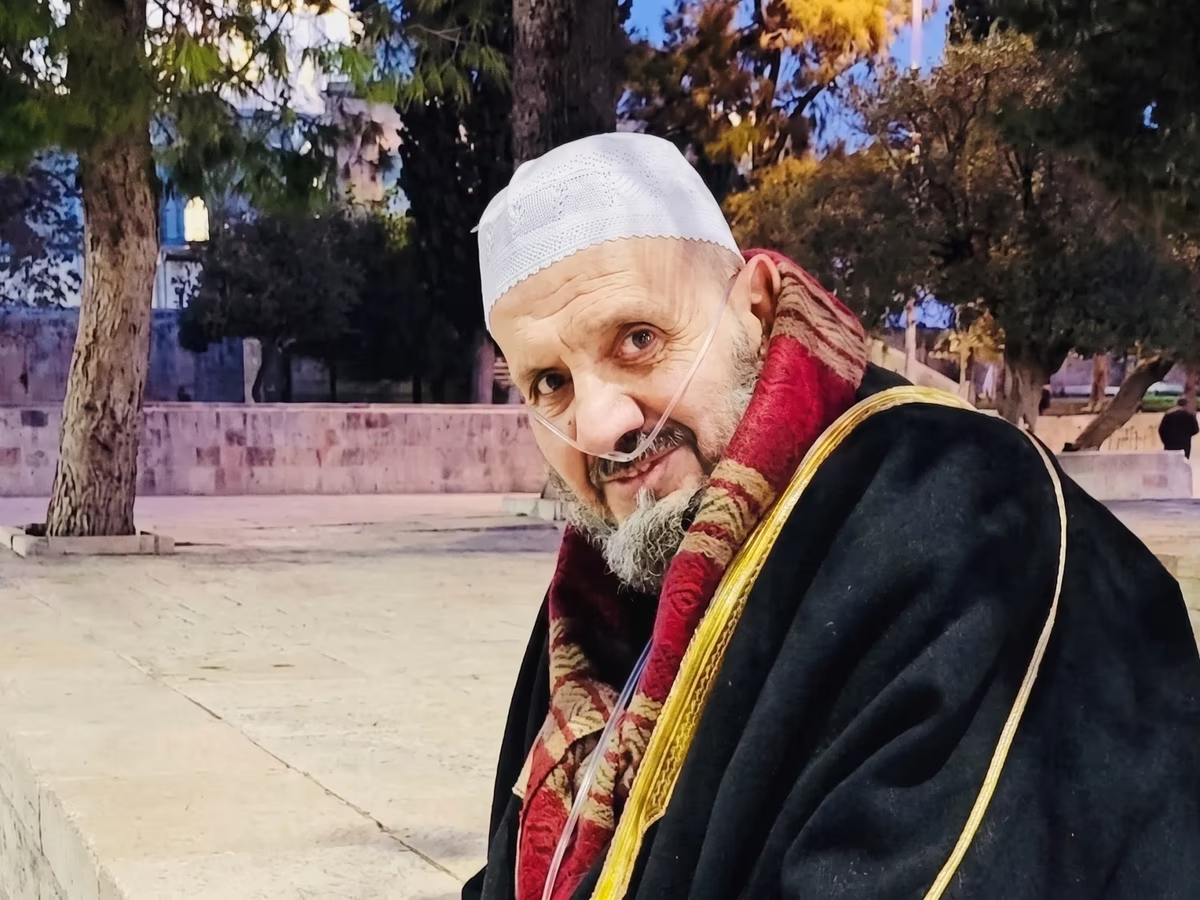
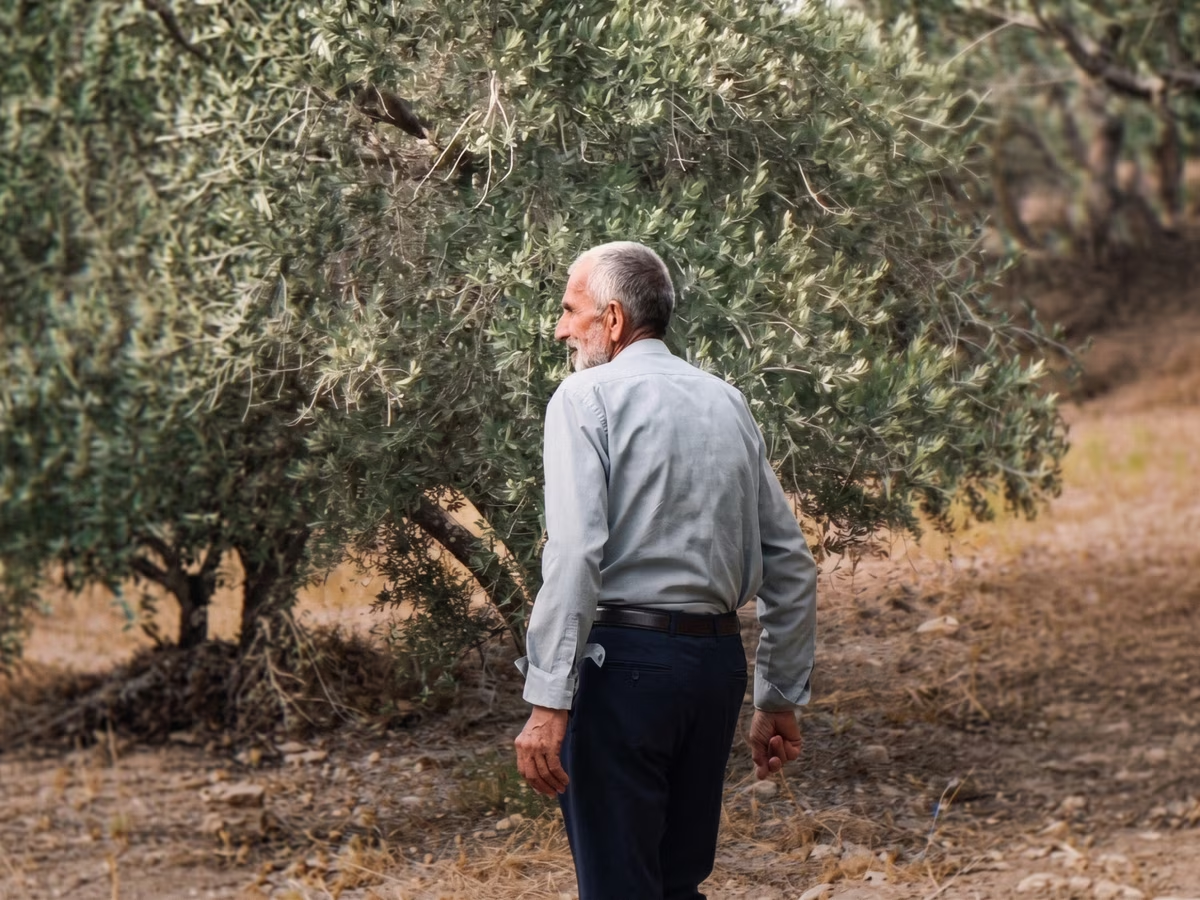
Jerusalem bids farewell to Al-Aqsa Mosque Imam Sheikh Walid Siam after a life full of giving

The occupied city of Jerusalem and the blessed Al-Aqsa Mosque lost today, Thursday, Sheikh Walid Siam, who passed away at the age of 71, after a long and bitter struggle with illness. The deceased is considered one of the prominent scientific and advocacy figures in the Holy City, having spent decades of his life in the precincts of Al-Aqsa Mosque as an imam and a teacher for generations.

Local sources in Jerusalem stated that Sheikh Siam left a clear mark in the field of Islamic education, specializing in teaching Islamic education, Quranic sciences, and Tajweed rules. Successive generations of Jerusalemites studied under him, inspired by his values of knowledge, etiquette, and strong connection to Islamic holy sites amidst the challenges surrounding the city.

Sheikh Siam's journey was not limited to imamate and teaching; it also included working as a Sharia marriage officiant and a religious preacher, enjoying wide respect in Jerusalemite circles. Despite his religious standing, the Sheikh was not spared from the harassment of the Israeli occupation, as he was arrested in 2019 and placed under house arrest by the occupation authorities for several days in an attempt to restrict his advocacy role.

Jerusalemites mourned Sheikh Siam on social media platforms with touching words, recalling his amazing insistence on being present in Al-Aqsa Mosque even in the most difficult moments of his illness. His loved ones confirmed that he was keen to reach the courtyards of the mosque using an electric wheelchair, so that his voice and presence remained an authentic part of the place's identity and sanctity.

For his part, Sheikh Hussam al-Din Afana, one of Palestine's scholars, eulogized his late student, describing him as a model of loyalty, knowledge, and high morals. Afana pointed out that Sheikh Siam was not just an imam of Al-Aqsa Mosque, but also the sheikh of Dar Al-Quran Al-Karim and the imam of Al-Adhami Mosque, emphasizing that his passing represents a great loss for the advocacy scene in Palestine.

Sheikh Walid Siam, the Imam of the blessed Al-Aqsa Mosque and the Sheikh of Dar Al-Quran Al-Karim there, passed away. He was one of the best students I have ever taught in terms of character, manners, and knowledge.

PALESTINE

Fri 05 Jun 2026 7:23 am - Jerusalem Time

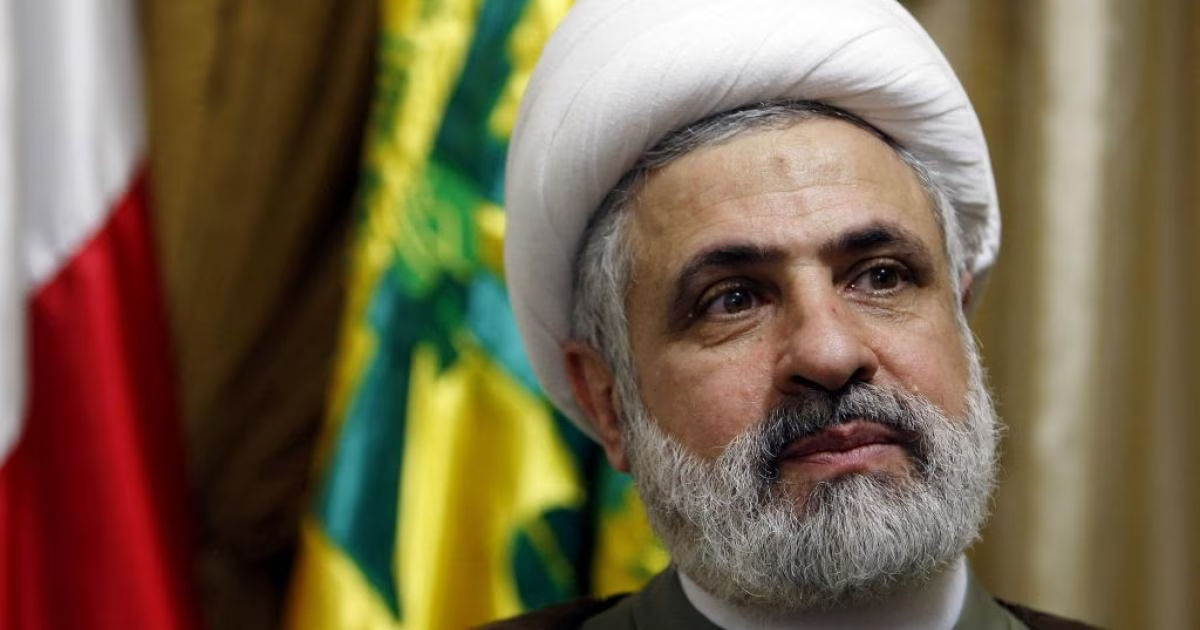
Naeem Qassem attacks ceasefire agreement and describes negotiations as 'shameful': Resistance continues

Hezbollah Secretary-General, Naeem Qassem, launched a scathing attack on the results of the direct negotiations held between Lebanon and Israel under American auspices, describing them as 'rejected in their entirety'. Qassem affirmed in an official statement that these results do not represent the aspirations of broad segments of the Lebanese people who refuse to relinquish their sovereign rights.

These statements came after a joint announcement issued on Thursday by Lebanon, Israel, and the United States, indicating that an agreement had been reached to implement a ceasefire. The proposed agreement relies on the complete cessation of Hezbollah's military operations, in addition to the evacuation of all its elements from the area south of the Litani River in southern Lebanon.

Qassem stressed in his statement that the resistance will continue its missions as long as the Israeli occupation of any part of Lebanese territory persists, considering that any ceasefire must be comprehensive and coupled with a complete withdrawal. He also warned that northern Israel will not enjoy security as long as Lebanese villages and their inhabitants remain under the weight of continuous bombing and targeting.

The Secretary-General described the direct negotiation process as 'shameful and a farce', calling for a halt to what he considered an insult to the Lebanese state and the sacrifices of its people. He clarified that the party categorically rejects any attempt to link the survival of the resistance's weapons to the issue of a ceasefire or Israeli withdrawal from the occupied territories.

Qassem held the Lebanese authority fully responsible for addressing internal division and fulfilling its national duties in protecting sovereignty. He believed that the proposed roadmap for a ceasefire aims essentially to 'exterminate a part of the people and enslave the rest', emphasizing that the current outcome is absurd and humiliating.

For his part, the commander of Iran's Quds Force, Esmail Qaani, entered the crisis by demanding Israel withdraw to the lines that existed before the 'Forty-Day War'. Qaani indicated that the Lebanese people will reap the fruits of their steadfastness and jihad in the near future, emphasizing the deep ties between the resistance fronts.

Informed sources in Tehran reported that the Iranian vision closely links what is happening on the Lebanese front with the major regional balances in the region. The sources clarified that the tools of pressure are no longer limited to the Lebanese field, but have extended to include threats to American interests in Gulf countries.

Estimates indicate that targeting American military bases in Kuwait, Bahrain, and the UAE has become part of the indirect engagement equation between Iran on the one hand, and Israel and Washington on the other. This escalation aims to pressure the American administration to force Tel Aviv to accept fair de-escalation terms.

Despite the escalation, Tehran realizes that expanding the scope of confrontation in the Gulf arenas carries a heavy political and security cost in the long run. Nevertheless, the primary goal currently remains to reach a ceasefire formula that meets the minimum demands of the resistance axis and ensures the stability of the fronts.

The past three days witnessed unprecedented tension, as Iran threatened to permanently halt diplomatic exchanges with the American side. This coincided with warnings issued by Hezbollah to residents of northern settlements about the need for immediate evacuation in the event of targeting the southern suburbs of Beirut.

In a related context, reports speak of intensive international efforts to bring the parties back to the negotiating table and avoid sliding into a comprehensive regional war. Signals from within Iran indicate the existence of continuous communication channels aimed at reaching understandings that end the current state of escalation.

Iranian circles believe that the current Lebanese situation calls for more effective action from Tehran, and perhaps tactical concessions to strengthen 'unity of the fronts'. This coordination includes the fronts of Yemen, Iraq, and other axes within what is known as the resistance front to ensure tangible political gains.

Data indicates that Washington is striving to impose a long-term de-escalation exceeding sixty days, in order to secure relative stability preceding major international events. Among these events are the preparations for the World Cup, which prompts the American administration to focus on closing hot files.

The coming days remain crucial in determining the fate of the agreement, amidst anticipation of what the mutual field and political pressures will yield. While Hezbollah insists on its sovereign conditions, international powers continue their attempts to impose a new reality in southern Lebanon that guarantees the security of Israel's northern borders.

The results of the direct negotiations are absurd and humiliating, and they are rejected in their entirety by broad segments of the Lebanese people.

PALESTINE

Fri 05 Jun 2026 7:23 am - Jerusalem Time

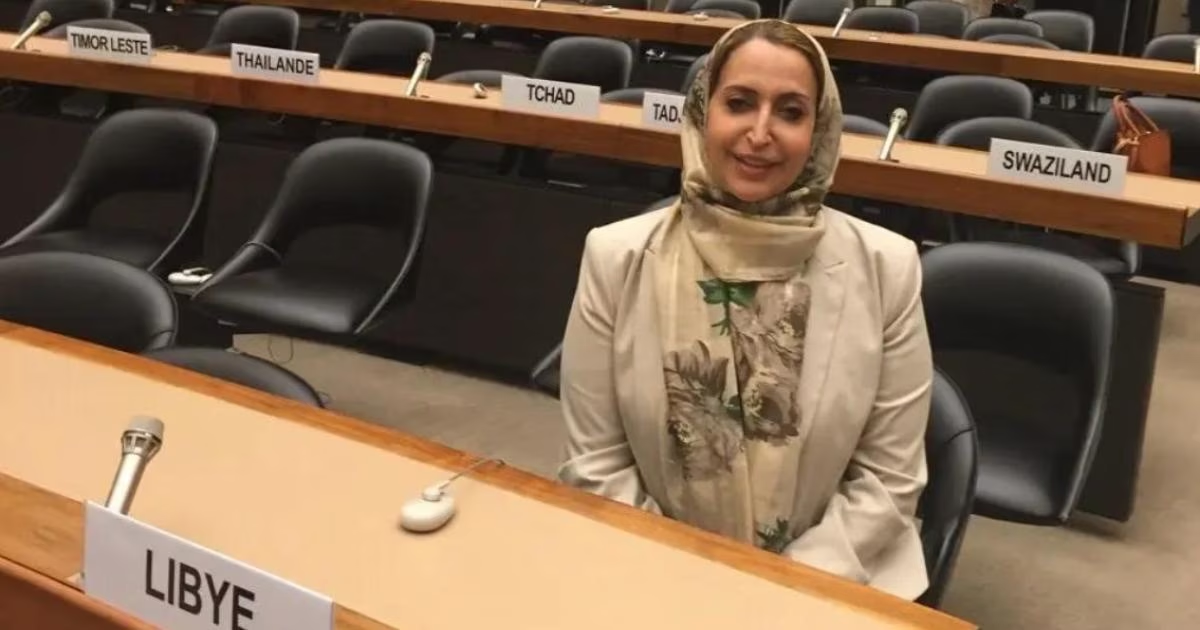
The Mystery of Siham Sergewa's Disappearance: Years of Ambiguity Haunt the Fate of the Libyan Parliamentarian

The case of Libyan parliamentarian and doctor Siham Sergewa enters its sixth year without satisfactory answers, as her fate remains unknown since that bloody night in July 2019. The incident, which began with an armed raid on her home in Benghazi, has become one of the most prominent cases of enforced disappearance that troubles the political and human rights scene in Libya.

The roots of the tragedy date back to July 17, 2019, when armed groups stormed Sergewa's home a few hours after a television interview in which she criticized the war on the capital, Tripoli. The armed men not only abducted the MP but also shot her husband and assaulted one of her sons before taking her to an unknown location.

Siham Sergewa, who hails from a prominent family in Derna, was not just a fleeting political figure, but a distinguished academic who obtained her doctorate in clinical psychology from the University of London. She returned to her homeland to contribute to the establishment of the first autism association in Benghazi, dedicating years of her life to academic and humanitarian work before entering the political arena.

Sergewa's political star rose after the February 17 revolution, where she was one of the strong female voices advocating for democracy and political participation. In 2014, she successfully secured her seat in the House of Representatives for Benghazi, receiving thousands of votes, reflecting widespread popular trust in her balanced approach.

The abducted MP was known for her bold stances, demanding the unification of sovereign institutions and the full civilian oversight of the military establishment. In October 2018, she went further by demanding accountability for the leadership of eastern Libya's forces before parliament, emphasizing the separation between military action and political ambition.

Sources close to the family confirm that Sergewa's opposition to the military offensive on Tripoli in April 2019 was a dangerous turning point in her path. From Cairo, she explicitly announced her rejection of military solutions and called for a return to the negotiating table, which her opponents considered a transgression of the red lines drawn in the eastern region.

The night of the abduction witnessed terrifying details, as the abductors left clear threatening messages on the walls of the house with phrases like 'The army is a red line.' These signs were linked by international organizations, including Amnesty International, to armed groups operating under the cover of the forces controlling Benghazi at that time.

Despite the parliamentary immunity Sergewa enjoyed, official investigations have not yielded any concrete results or revealed the identity of the perpetrators. The absence of surveillance camera footage and the failure to identify the military vehicles that surrounded the house raised widespread suspicions about a desire to obscure the traces of the crime.

In 2020, an audio leak attributed to MP Issa Al-Oraibi sparked widespread controversy after he indicated that the group that abducted and killed Sergewa belonged to security agencies in the east. Despite the seriousness of these statements, they remained within the framework of political debate without turning into a judicial path that would bring justice to the victim.

International pressure did not stop, as the European Union mission and embassies of 12 countries issued statements demanding Sergewa's immediate release. Former UN advisor Stephanie Williams also repeatedly called for revealing her fate, considering that her vacant seat in parliament represents a stain on the face of Libyan justice.

As 2025 approaches, the case has resurfaced after unconfirmed photos, said to be of the abducted MP, circulated in a detention center. However, international human rights organizations such as Human Rights Watch quickly demanded a transparent investigation to verify these claims, warning against misleading public opinion.

Political analysts believe that Sergewa's case reflects the heavy price paid by dissenting voices in armed conflict environments. The disappearance was not just a targeting of her person, but a message of intimidation to all voices calling for a civil state and rejecting the militarization of the state in Libya.

Sergewa's family, specifically her husband Ali Rabie, still cling to hope of knowing the truth despite the long years. Rabie confirms in his testimonies that his wife always believed that dialogue was the only way to save Libya from bloodshed, a principle for which she paid with her life.

Siham Sergewa's story remains a bleeding wound in the memory of Libyans and a testament to an era of grave human rights violations. While calls for accountability for those responsible continue, the question remains: Where is Siham Sergewa? This is a question awaiting a legal and moral answer that will end the suffering of her family and her nation.

Siham Sergewa's seat in the House of Representatives remains vacant, a constant reminder of the crime of enforced disappearance.

PALESTINE

Fri 05 Jun 2026 7:23 am - Jerusalem Time

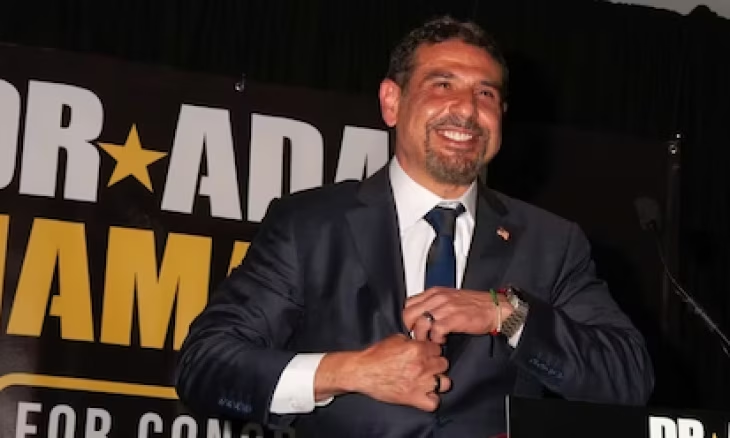
Surgeon Adam Hamawy Wins Democratic Nomination in New Jersey for Congressional Elections

Retired American military doctor and surgeon, Adam Hamawy, achieved a comfortable victory in the Democratic primary elections for the 12th District in New Jersey. This win came after an intensive election campaign that primarily focused on social justice issues and the slogan 'Healthcare, Not Bombs'.\n\nIn his victory speech to a crowd of supporters, Hamawy affirmed his determination to go to Congress to defend citizens' rights and direct resources towards healthcare instead of funding wars. He also emphasized the necessity of reforming the American economy to serve all segments of the population, not just the elite, announcing his commitment to abolishing the Immigration and Customs Enforcement (ICE) agency.\n\nThe winning candidate declared a firm stance on political funding, asserting that he would not accept any donations from corporate political action committees (PACs) or from the American Israel Public Affairs Committee (AIPAC). Hamawy clarified that his decisions and votes in Congress would stem from his personal convictions and the interests of his constituents, and he would not be beholden to any lobbying group.\n\nHamawy's campaign received financial and logistical support from prominent progressive organizations, notably 'Justice Democrats' and the 'Middle East Policy Project'. These organizations spent approximately $200,000 on promotional campaigns, which contributed to enhancing his political presence against his competitors.\n\nAccording to informed sources, Hamawy surpassed his closest rival in the primary race by an estimated ten thousand votes. This significant margin reflects voters' desire for change and their adoption of the progressive agenda put forth by the surgeon, who is known for his bold humanitarian stances.\n\nIn a joint statement, the supporting organizations indicated that Dr. Hamawy's courage and commitment to human rights formed the core of his election campaign. The statement added that the primary goal is to end open-ended spending on foreign conflicts and redirect those resources to support local communities within the United States.\n\nObservers believe that voters were attracted to Hamawy's candidacy due to his direct field experience in conflict zones, especially in the Gaza Strip. Hamawy volunteered to save the lives of Palestinian children under bombardment, which gave him high credibility in speaking about international humanitarian crises.\n\nHamawy also received significant moral support from prominent political figures, foremost among them Senator Bernie Sanders, who welcomed the victory. Sanders considered Hamawy to be a strong progressive voice in the House of Representatives, noting that his medical background gives him a unique vision for reforming the healthcare system.\n\nThrough this nomination, Hamawy seeks to succeed retired Democratic Representative Bonnie Watson Coleman in the 12th District seat. His experience working in a field hospital in the southern Gaza Strip during 2024 is one of the most prominent milestones that shaped his current political discourse on American foreign policy.\n\nIn addition to his experience in Gaza, Hamawy has a long military history, having served as a doctor in Iraq, and Senator Tammy Duckworth credits him with saving her life in 2004. Hamawy stated that throughout his career, he had not witnessed violations against medical personnel like those he observed during his time in Gaza.\n\nIn conclusion of his speech, Hamawy emphasized that his role as a surgeon taught him to confront crises directly, but he refuses to merely 'bandage' wounds. He asserted that the time has come to adopt a 'preventive treatment' approach in politics, by changing the system that causes these crises from their roots.\n\n"Throughout my professional career, I have not witnessed the extent of violations and targeting of medical workers as I did in Gaza.

PALESTINE

Fri 05 Jun 2026 7:23 am - Jerusalem Time

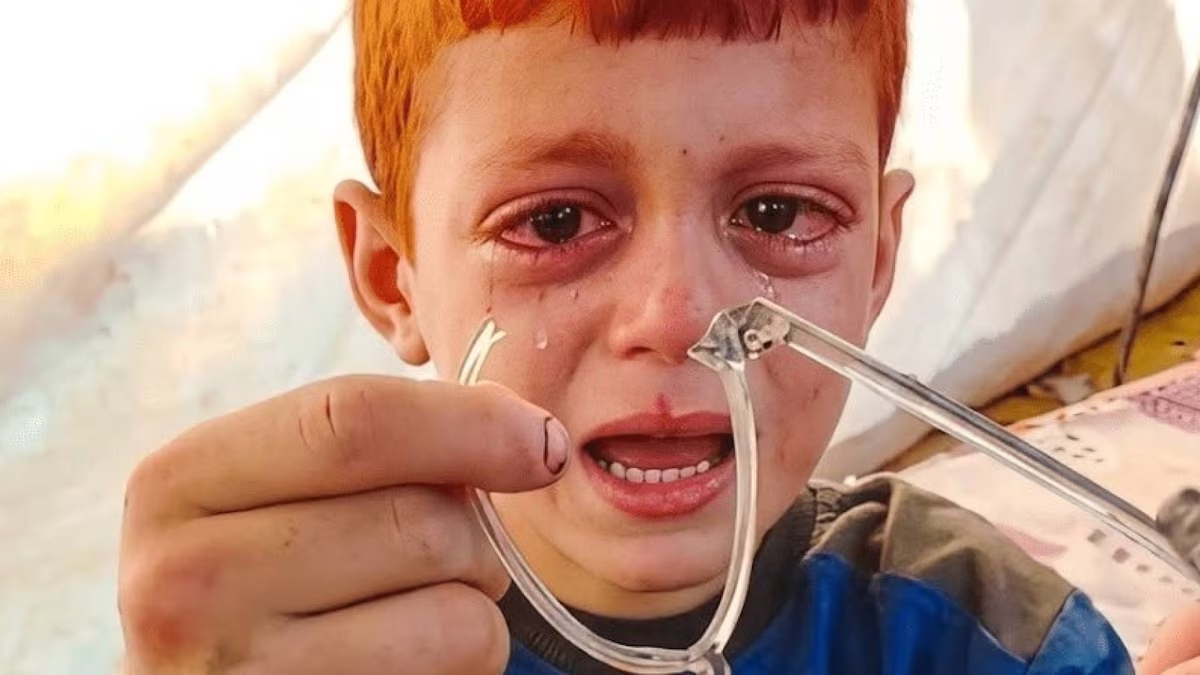
In response to his plea.. Providing medical care and glasses for the Gazan child Ayoub Junaid

In a swift humanitarian response, the teams of Operation "Gallant Knight 3" answered the call of the Palestinian child Ayoub Junaid, whose story recently topped social media platforms. The child had appeared in a moving video recounting his suffering from losing clear vision due to his medical glasses and their lenses being broken, which prevented him from living his life normally amidst the difficult conditions in the Gaza Strip.

Field sources reported that immediately after monitoring the child's case, he was transferred to a specialized medical center for the necessary laboratory and medical examinations. Modern medical glasses were secured to suit his needs, which helped restore his ability to see clearly and brought joy to his heart after a period of psychological and physical suffering.

The initiative did not stop at providing medical care for the child only, but also included providing urgent relief aid to his family to enhance their ability to withstand the current challenges. This step comes with the support of the UAE International Aid Agency, as part of a series of humanitarian interventions targeting the most affected groups in the Strip, especially children who face exceptional circumstances.

The child's mother and grandmother expressed their deep gratitude and appreciation for this initiative, which restored hope to the child amidst the harsh conditions.

PALESTINE

Fri 05 Jun 2026 7:23 am - Jerusalem Time

Field escalation and political division: Hezbollah rejects Washington agreement, and Israel continues its raids on the South

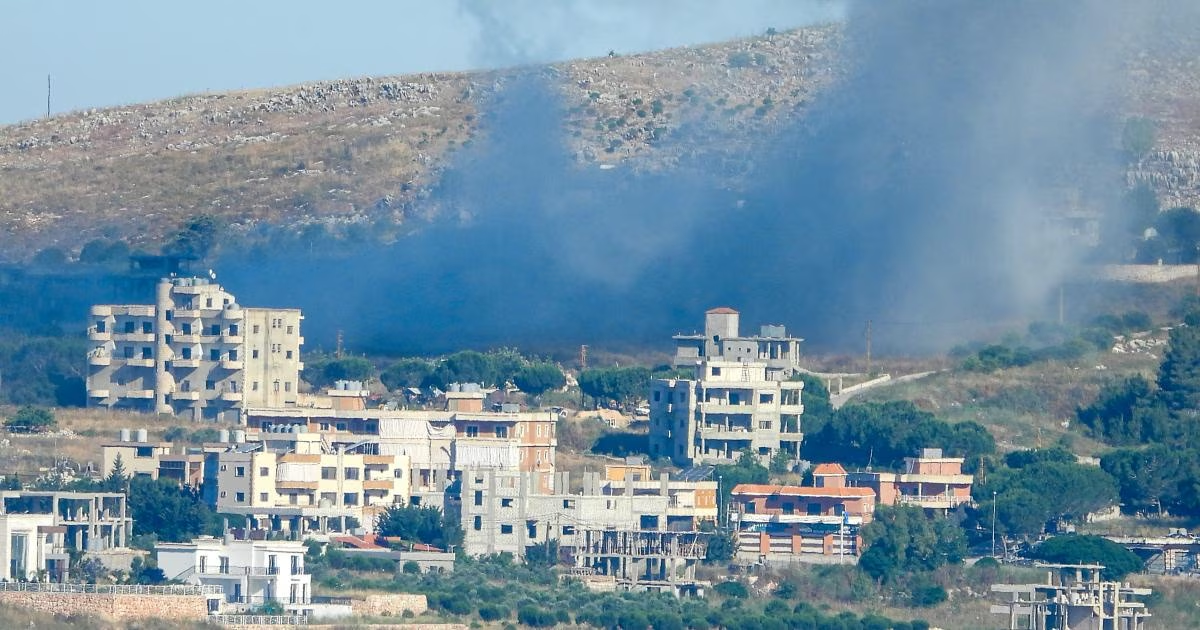
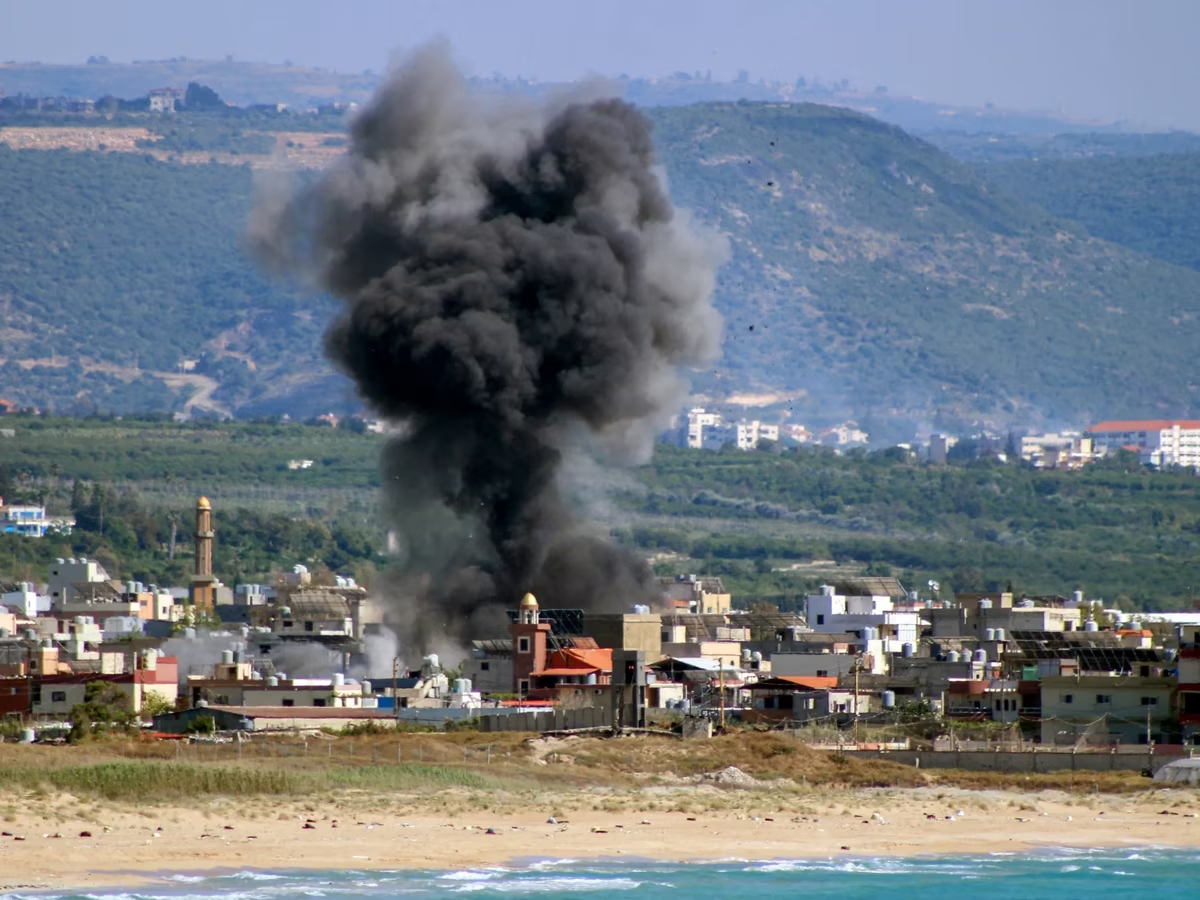
Areas of South Lebanon and the Beqaa witnessed a bloody military escalation on Thursday evening, as Israeli occupation aircraft launched a series of intense raids targeting the towns of Tyre and Nabatieh, resulting in injuries and widespread destruction. Field sources reported that a raid targeted the Al-Masaken area in Tyre, while other attacks hit the town of Baraachit and the Bint Jbeil district, in addition to a drone targeting the Ansar-Koutharieh Al-Riz public road.

In the western Beqaa region, occupation forces committed a massacre in the town of Sahmar, killing 5 civilians after the town was subjected to more than 7 airstrikes in less than half an hour. This shelling coincided with Israeli drones targeting motorcycles and cars in the towns of Maaroub and Douair, leading to the death of one martyr and the injury of others, amidst continuous intensive overflights by warplanes.

For its part, Hezbollah responded by carrying out qualitative military operations, announcing that it had targeted a newly established logistical support site for the occupation army on the outskirts of the town of Yaroun Al-Shaqif using two attack drones. The party also confirmed in a statement the destruction of an Israeli Merkava tank near the historic Beaufort Castle after targeting it with a guided missile, which led to it catching fire and its crew being killed or wounded.

On the political front, Hezbollah surprised by officially informing the Lebanese authorities of its rejection of the results of the negotiations held in Washington between Lebanon and Israel under American patronage. A leader in the party conveyed this position through Parliament Speaker Nabih Berri, emphasizing that the party will not accept any political arrangements imposed on it outside the framework of national and field constants.

Hezbollah Secretary-General Naim Qassem had launched a fierce attack on the draft agreement, describing it as a 'disgrace' rejected by broad segments of the Lebanese people. Qassem considered that what was reached in the fourth round of talks in Washington does not meet the aspirations of the resistance, stressing that the field will ultimately have the final say.

In contrast, a joint statement issued by Lebanon, Israel, and the United States announced an agreement for a complete ceasefire. The agreement stipulates Hezbollah's evacuation of all its elements and equipment from the area south of the Litani River, with the Lebanese army taking full control of those areas to ensure the non-return of unofficial armed manifestations.

Lebanese Prime Minister Nawaf Salam, for his part, warned against any attempts to procrastinate or refuse to implement the agreement, stressing that the opposing parties will bear sole responsibility for the serious repercussions. Salam called for prioritizing the supreme national interest, indicating that practical steps will begin with a trial deployment of the Lebanese army in specific areas as part of a long executive process.

On the Israeli side, there were no signs of de-escalation, as Prime Minister Benjamin Netanyahu stated that military operations in the north would continue until objectives are achieved, likening the situation to what happened in Gaza. Defense Minister Yoav Gallant also affirmed that the army would not withdraw from the strategic positions it had seized in southern Lebanon, including Beaufort Castle.

Also in the field, UNIFIL announced the death of one of its soldiers due to injuries sustained from mortar shells falling near the Marjayoun area, in addition to the injury of two other personnel. This incident highlights the risks faced by international forces amidst the continued intense exchange of shelling between the two sides despite talk of political understandings.

Reports from Washington indicate that the new agreement does not include a clear timetable for the withdrawal of Israeli forces, nor does it obligate Tel Aviv to definitively halt its airstrikes. This has sparked widespread criticism within Lebanon, especially with statements from the Israeli far-right, where Itamar Ben-Gvir described the agreement as a 'historic mistake' and a capitulation to American pressure.

With the death toll reaching 3516 martyrs and over 10,000 injured, the Lebanese street awaits the outcomes of this sharp division between the government and Hezbollah. While Beirut seeks to establish a ceasefire through diplomatic channels, the field continues to ignite amidst Israeli insistence on imposing a new security reality by military force.

What was achieved in southern Israel is what the situation will be in the northern areas, and military operations are ongoing.

PALESTINE

Fri 05 Jun 2026 7:22 am - Jerusalem Time

Warnings of a Waste Treatment Settlement Project Threatening Qalandia Lands in Jerusalem

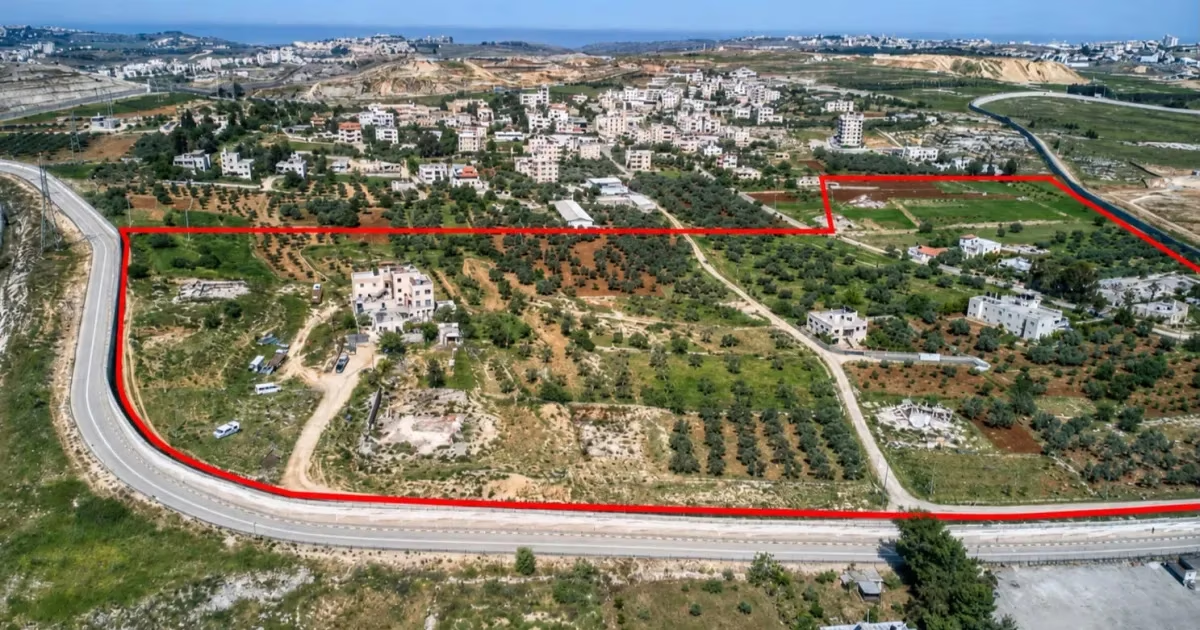
The Jerusalem Governorate issued a strongly worded statement warning against the decision by the so-called 'Israeli National Committee for Planning and Building' to actually begin planning procedures for the establishment of a major settlement facility for waste treatment. The Governorate clarified that this project will be built on the lands of Qalandia village, located northwest of occupied Jerusalem, considering the move a dangerous escalation that falls within the policies of annexation and systematic seizure of Palestinian lands.

Sources confirmed that the danger of this plan lies in its exceeding the declared environmental objectives, as its implementation is accompanied by a change in the course of the annexation and racist expansion wall to swallow additional areas of agricultural land. The project aims to directly seize about 278 dunams of citizens' lands, threatening the livelihood of dozens of families who depend on agriculture in that vital area.

According to the technical details of the project, which dates back to 2024, the occupation seeks to establish a massive station for treating plastic and paper waste and flammable materials. The plan aims to convert this waste into electrical energy that is directly pumped to feed the Israeli grid, which observers see as an exploitation of occupied resources and lands to serve the economic and technological interests of the occupation.

_The Jerusalem Governorate_ stressed that the project carries Judaization dimensions aimed at reshaping the geography and demography of the area through forced displacement of residents, as the plan directly threatens 40 inhabited homes. It also warned of the severe health and environmental damage that will result from emissions and pollutants, which will directly affect air and soil quality and the safety of groundwater in the Palestinian vicinity.

In a related context, the statement revealed legal and administrative moves led by the occupation's Minister of Finance, Bezalel Smotrich, in April 2025, where he signed notifications to activate old confiscation orders dating back to the seventies and eighties. This step aims to legitimize the seizure of vast areas of land to prepare the necessary infrastructure for the new project and the surrounding industrial areas.

Extensive confiscation operations include about 1200 dunams allocated for the industrial zone known as 'Atarot', including 390 dunams privately owned by the residents of Qalandia village. The plan also included the seizure of an additional 137 dunams under the pretext of establishing a 'security facility', thereby tightening the noose on Palestinian villages and towns in that area and separating them from their natural surroundings.

_The Governorate_ concluded its statement by calling on the international community, the United Nations, and all human rights and environmental organizations to intervene urgently to stop this settlement encroachment. It demanded accountability for the occupation authorities for their continuous violations of international environmental law and the Fourth Geneva Convention, which prohibits the exploitation of the property of peoples under occupation or changing the features of occupied land to serve the occupying power.

The project represents a clear example of what is known as environmental racism, and constitutes a blatant violation of the provisions of international humanitarian law and the Fourth Geneva Convention.

PALESTINE

Fri 05 Jun 2026 7:22 am - Jerusalem Time

Israeli Fortifications in Rafah Spark Silent Crisis Over 'Camp David' Security Annex

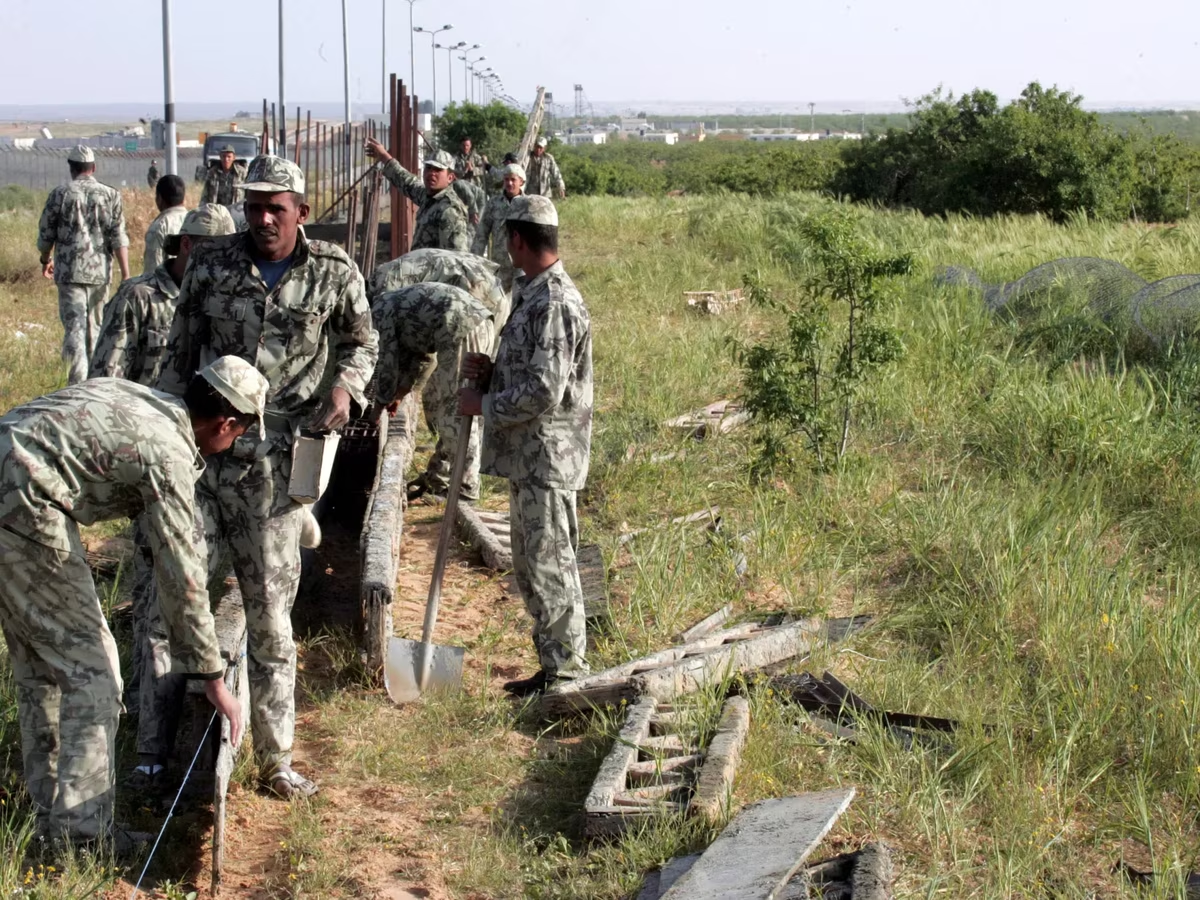
The peace treaty signed between Egypt and Israel, known as 'Camp David,' has once again taken center stage in the political and security arena, following recent reports supported by satellite imagery. These reports document the Israeli occupation army establishing fortifications and new military sites within the Palestinian city of Rafah and very close to the Egyptian border, which constitutes a clear violation of the agreed-upon security arrangements.

These military movements come at a sensitive time, coinciding with the ongoing aggression on the Gaza Strip and the Israeli forces' control over the Salah al-Din (Philadelphi) axis. These steps have raised fundamental questions in strategic circles about the extent of Tel Aviv's commitment to the military restrictions that have governed the shared border for more than four decades, and how Cairo will deal with these repeated breaches.

In this context, Major General Samir Farag, former Director of Moral Affairs in the Egyptian Army, affirmed that the Israeli movements in Zone 'D' under the agreement are completely rejected. He clarified that this area, adjacent to the Egyptian border, does not permit the presence of heavy military vehicles or the construction of permanent defensive installations, making the current Israeli actions a clear violation of the military annex's provisions.

Zone 'D' is part of four security zones defined by the 1979 agreement to ensure stability on the border. This zone is located within Israeli-controlled territories and is subject to strict armament restrictions. According to established protocols, Israel is only allowed to deploy very limited forces to secure the border, without any presence of offensive combat equipment or strategic fortifications.

Farag pointed out that the mechanism for dealing with these violations involves filing a formal complaint with the United States as the guarantor and supervisor of the agreement's implementation. Washington then tasks a joint committee to investigate the field facts, and subsequently directs the violating party to remove the transgressions and return to the previous legal status.

The former military official revealed that Egypt had previously filed a successful official complaint following Israel's invasion of the Palestinian city of Rafah, when Israeli tanks were spotted stationed in prohibited areas at the crossing. These diplomatic and legal pressures led to the Israeli side's compliance and the removal of the violations at that time, confirming the effectiveness of continuous Egyptian monitoring.

On the other hand, the current period is witnessing what resembles a 'war of complaints,' with Israel submitting observations regarding development operations carried out by the Egyptian side at Al-Goura Airport in North Sinai. This exchange reflects a state of subdued tension under the guise of official commitment to the treaty, amid attempts by each party to maintain power balances in the border region.

Dr. Tarek Fahmy, Professor of Political Science at Cairo University, believes that the recent Israeli moves are provocative in response to firm Egyptian stances. He explained that the extensive military maneuvers recently conducted by the Egyptian army, and Cairo's categorical rejection of plans to displace Gaza residents, prompted Israel to attempt to exert pressure through an intensified military presence near the border.

Fahmy also revealed that there has been a stated Israeli desire for some time to amend the provisions of the Camp David Treaty to serve its new security interests, which Cairo categorically rejects. He added that Egypt might only show flexibility in amending the security protocols related to the border area, provided that Israel fully withdraws from Gaza and adheres to previously signed international agreements.

Inside Israel, Prime Minister Benjamin Netanyahu faced sharp criticism from former generals who warned that continuous provocations could lead the Egyptian army to significantly reinforce its presence on the border. These concerns increased after the surprise visit by Egyptian Chief of Staff Lieutenant General Ahmed Khalifa to the border strip last September, which was considered a clear show of force.

On the official level, a responsible Egyptian source affirmed that the concerned authorities are meticulously following all developments in the northeastern strategic direction. The source stressed that Egypt is committed to the treaty as a legal framework, but will not tolerate monitoring and documenting any Israeli violation and presenting it to the relevant international bodies overseeing implementation to ensure that the field reality is not altered.

The sources concluded that the Egyptian position is based on maintaining regional stability while protecting full sovereignty and preventing any attempt to impose a new fait accompli in the Philadelphi Corridor. Cairo remains committed to diplomatic and legal frameworks to address these crises, while emphasizing that any deployment of its forces is done with full coordination and according to the requirements of national security.

The Israeli presence and movements violating the agreement in Zone (D) are completely rejected by Egypt, and the agreement does not permit the presence of any heavy military vehicles there.

PALESTINE

Fri 05 Jun 2026 7:22 am - Jerusalem Time

Health Catastrophe in Gaza: Death Looms Over Thousands of Cancer Patients as Medications Run Out

Thousands of tumor-stricken patients in the Gaza Strip face imminent death due to a severe and unprecedented shortage of cancer medications and essential medical supplies. This crisis comes amid intensified restrictions by the Israeli occupation forces on the entry of humanitarian aid, leading to a near-total paralysis in hospitals' ability to provide the necessary healthcare to save lives.

The Ministry of Health in Gaza confirmed that the lives of over 4,000 cancer patients are at stake, describing the health and humanitarian situation for this group as having reached a 'catastrophic deterioration.' Medical sources explained that about 66% of the cancer medication stock has already run out from the Strip's warehouses, leaving patients without real treatment options.

In field testimonies from the Gaza Cancer Center in Khan Yunis, the wife of a patient recounts her husband's suffering. He underwent a pancreatectomy and requires daily treatments for kidney disease and cancer. She bitterly noted that they stand helpless as his health deteriorates, as he has only been able to receive three chemotherapy doses since the beginning of the current crisis.

For his part, patient Faraj Mohammed Abdel Qader summarized the tragedy of forgotten patients, stating that he has not received any treatment dose since last September despite suffering from the disease for five years. Abdel Qader appealed to human rights organizations and the World Health Organization for urgent intervention to facilitate the entry of medications, emphasizing that Gaza's patients suffer from deadly marginalization.

Dr. Saleh Sheikh Al-Eid, head of the Oncology Department at the Gaza Cancer Center, warned that the picture is growing bleaker with a noticeable increase in new cases of the disease. Sheikh Al-Eid explained that the severe scarcity of treatments has led some essential varieties to 'zero stock,' making medical intervention often futile.

The medical official revealed a shocking reality regarding the currently followed treatment protocols, where doctors are forced to give patients traditional chemotherapy doses as 'temporary resilience doses.' These doses are only intended to help the patient endure pain while awaiting an uncertain opportunity to travel to complete radiation or targeted immunotherapy, techniques entirely unavailable within the Strip.

Sheikh Al-Eid pointed out that most prescriptions currently dispensed are nothing more than pain relievers, which completely lose their effectiveness when cases reach advanced stages of the disease. He stressed that the continued closure of crossings and preventing patients from traveling abroad for treatment has directly led to a continuous rise in death tolls among tumor patients.

In conclusion of his humanitarian cry, the head of the Oncology Department appealed to the international community and relief organizations to act immediately and pressure the occupation authorities to open the crossings. He affirmed that allowing the entry of medical equipment and modern treatments is the only way to save thousands of lives being ravaged by disease on one hand, and killed by the suffocating siege on the other.

The lives of more than 4,000 cancer patients are threatened due to medication shortages, and the situation has reached a catastrophic deterioration.

PALESTINE

Fri 05 Jun 2026 7:22 am - Jerusalem Time

Abbas Approves National Council Electoral System and Sets Polling Date for 2026

It was officially announced in Ramallah that the President of the State of Palestine and Chairman of the Executive Committee of the Palestine Liberation Organization, Mahmoud Abbas, has approved the electoral system for the Palestinian National Council for 2026. This legal step follows the system's approval by the Organization's Executive Committee, in an effort to organize the electoral process and ensure its inclusivity for Palestinians in all their locations.

The Palestinian Presidency has set November 1, 2026, as the official date for these elections, which aim to inject new blood into the Organization's institutions. This entitlement is seen as a strategic step to enhance democratic participation and consolidate the principles of political pluralism in the Palestinian arena, which is burdened with challenges.

Under the new system, elections will adopt the principle of full proportional representation through electoral lists in a secret, general, and direct ballot. The law stipulated that the occupied Palestinian territories be considered a single electoral district, while each area in the diaspora where conditions for holding elections are available will be treated as an independent electoral district.

The system set the number of National Council seats at 350, distributed precisely to ensure balance between the interior and exterior; 200 seats were allocated to represent Palestinians in the occupied territories. The Palestinian diaspora received 150 seats, with the system emphasizing the protection of this quota and the impermissibility of reducing it under any political or field circumstances.

In exceptional cases where it is impossible to conduct the electoral process in some refugee and diaspora areas, the system provided clear legal alternatives to ensure representation. These alternatives include resorting to the electoral college or national consensus that brings together political forces in those areas, or direct appointment according to the criteria specified by the approved electoral system.

The system also addressed the institutional relationship between the House of Representatives and the Palestinian National Council, emphasizing the principle of functional integration while maintaining the independence of each institution. According to the legal article, every member elected to the Palestinian House of Representatives automatically becomes a member of the National Council throughout their parliamentary term, without increasing the total number of seats.

Official sources explained that this linkage aims to unify the legislative authority internally and connect it to the general structure of the PLO, the legitimate and sole representative of the Palestinian people. If the election dates for both councils coincide, the winners of the House of Representatives seats will automatically occupy the two hundred seats allocated to the Palestinian territories in the National Council.

Through these amendments, the Palestinian leadership seeks to update the organizational structure of the PLO and renew its popular legitimacy before the international community. The Presidency affirms that these steps represent a fundamental national milestone to complete efforts aimed at expanding the base of popular participation in Palestinian national decision-making and protecting the national project from current challenges.

Adoption of this system comes in the context of developing the institutional structure of the Palestine Liberation Organization and renewing the legitimacy of its representative institutions.

PALESTINE

Fri 05 Jun 2026 7:22 am - Jerusalem Time

Assassinations in Gaza: Occupation Targets Security Leaders and Martyrs in Separate Raids

The Israeli occupation army, in cooperation with the Internal Security Agency (Shin Bet), announced today, Thursday, the implementation of a military operation targeting a group of senior officials in the General Security Apparatus of the Hamas movement in the Gaza Strip. The joint statement clarified that the operation was carried out through coordinated air and naval raids targeting a site in the northern part of the Strip last night, which led to the killing of a number of influential security leaders.

According to Israeli claims, the raid resulted in the assassination of Hassan Rabah Hassan Labad, who holds the position of Deputy Head of the General Security Apparatus in the movement. The occupation army described Labad as playing a central and pivotal role in decision-making processes within the security apparatus, considering his elimination a blow to the organizational structure of the movement in Gaza.

The list of targets in the raid also included Assem Amin Shalash Shabir, Abdullah Atta Younis Abu Kouloub, and Muhammad Nouman Zaki Abu Maraq. Occupation sources claimed that these officials were influential elements in shaping security decisions and were working to rehabilitate the movement's military and security capabilities recently to confront Israeli forces.

The occupation statement indicated that the targeted General Security Apparatus undertakes sensitive tasks, including securing the senior leaders of the Hamas movement and organizing communication and coordination channels among them. The statement also claimed that the apparatus is responsible for collecting intelligence information about the movements of the occupation army, which helps the political and military leadership of the movement in making its field decisions.

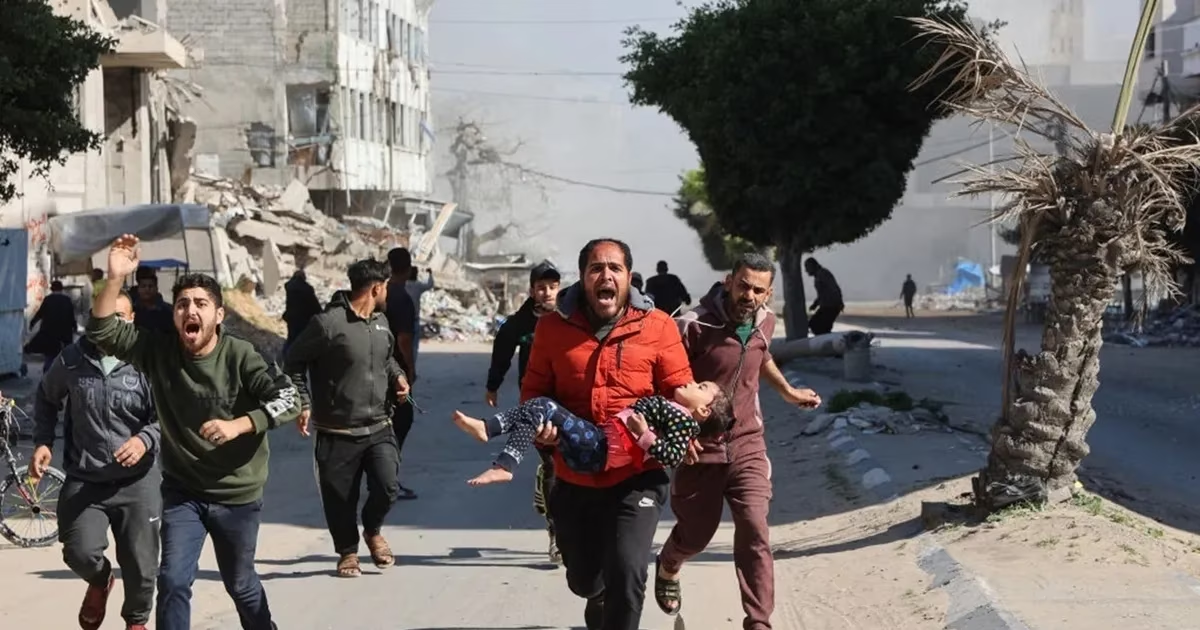
On the ground, medical and local sources reported the martyrdom of 11 Palestinians and the injury of dozens of others, including women and children, as a result of simultaneous Israeli raids that targeted several areas since dawn today. The attacks focused on four residential apartments in different areas of Gaza City, causing widespread destruction of property and a state of panic among civilians.

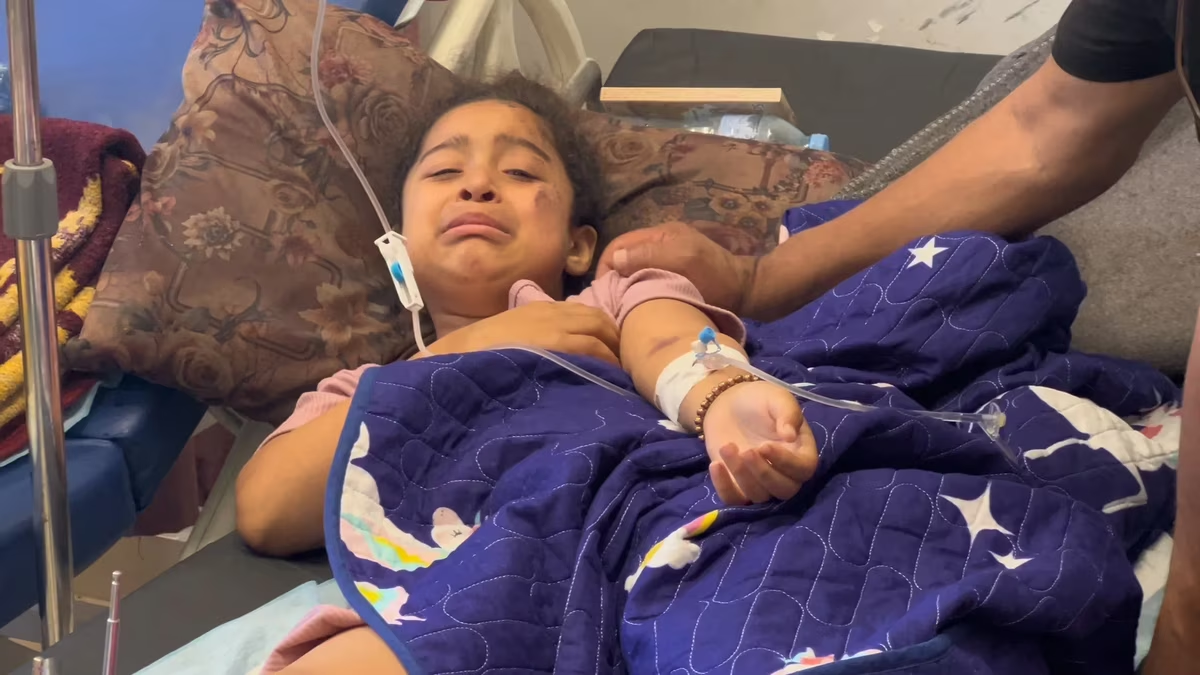
In a horrific massacre on Al-Mukhabarat Street in northwestern Gaza City, five members of one family were martyred after a direct shelling targeted their residential apartment. Eyewitnesses confirmed that the martyrs were a couple and their three children, while rescue teams were able to pull out a lone girl who remained alive and was transferred to the hospital for treatment of her injuries.

The raids did not stop there, as the occupation aircraft targeted an apartment in the 'Al-Israa 1' building in the Tal Al-Hawa neighborhood in the southern part of the city, resulting in the martyrdom of a couple and the injury of others with varying degrees of injuries. Sources stated that one of the injured is in very serious condition, while the raid caused extensive damage to buildings adjacent to the targeted site.

In Al-Shati refugee camp, west of Gaza City, a Palestinian citizen was martyred and dozens were injured as a result of a raid targeting a house belonging to the Muhanna family in a densely populated area. Local sources reported that the shelling caused a huge fire that spread to neighboring houses, increasing the number of injuries and suffocation cases among residents in the area.

The shelling also hit the Sheikh Radwan neighborhood in the northern part of the city, where a Palestinian was martyred and others were injured after an apartment in the 'Al-Ghoul' building was targeted. The raid caused a fire in the building, while civil defense teams rushed to control the flames and prevent their spread, amidst great difficulties resulting from the continuous intensive flight of warplanes.

In the southern part of the Strip, Nasser Medical Complex announced the arrival of a number of injured people as a result of shelling carried out by an Israeli drone in the center of Khan Younis city. These field developments come amidst continued escalating tension, despite previous ceasefire agreements, as the Hamas movement has not issued any immediate official comment on the assassination claims.

According to the latest updates from the Ministry of Health in Gaza, the death toll since the start of the ceasefire agreement on October 10, 2025, has risen to 947 martyrs and 2935 injured. These figures reflect the extent of continuous violations and military operations that have not stopped despite international efforts to establish calm in the afflicted Strip.

This new wave of escalation further exacerbates the suffering of the residents in the Gaza Strip, who are facing the repercussions of the ongoing war of extermination since October 2023. Local sources confirm that the recent raids directly targeted populated civilian areas, which increases the human cost of losses among Palestinian families.

From the air and from the sea, the army and the Shin Bet eliminated senior officials of the General Security Apparatus of the Hamas organization in the Gaza Strip.

PALESTINE

Fri 05 Jun 2026 7:22 am - Jerusalem Time

London Renews Support for Jordanian Guardianship over Al-Aqsa in Response to 'Kushner-Huckabee' Plans

British government sources affirmed the necessity of adhering to the Hashemite Jordanian guardianship over the holy sites in occupied Jerusalem, emphasizing the importance of respecting the existing historical status quo. This official stance came in a statement from the Foreign Office in response to reports revealing American and Israeli moves aimed at changing the identity of Al-Aqsa Mosque and withdrawing administrative powers from it.

These British statements come at a sensitive time, as press reports have revealed a 'conspiracy' led by former US President's son-in-law Jared Kushner, and former US Ambassador to Israel Mike Huckabee. This plan aims to end the historical guardianship of the Jordanian royal family, a guardianship that has ensured the stability of the status quo in the Noble Sanctuary for many decades.

According to leaked information, the proposed plan seeks to establish a new Israeli body to manage the site, declaring Al-Aqsa Mosque a 'multi-faith center'. This approach represents a radical reversal of international understandings, as it would grant settlers and Jews equal rights to access the mosque and officially and publicly perform collective Talmudic prayers.

The plan also includes granting Israeli occupation authorities a decisive say in the administrative and religious affairs of the mosque, including the appointment of imams, custodians, and senior Waqf officials. The plan also stipulates that the content of Friday sermons must be subject to prior Israeli censorship and approval, thereby stripping the mosque of its Islamic sovereignty and turning it into a tool under full occupation control.

For his part, independent British MP Shoukat Adam led a parliamentary move to question Foreign Secretary Yvette Cooper about these dangerous plans. Adam explained in his letter that Al-Aqsa Mosque is not merely a place of worship, but a symbol of identity and dignity for Palestinians and Muslims worldwide, warning of the repercussions of tampering with its current status.

MP Adam called on the British government to provide clarifications on whether it had directly raised these reports with the American administration and the Israeli government. He also called for an assessment of the risks of 'ethnic cleansing' and instability that could result from attempts to change the legal and historical status of the holy sites in occupied Jerusalem.

In response to these questions, a spokesperson for the British Foreign Office stated that London highly appreciates the Jordanian role in protecting the holy sites. The spokesperson indicated that Britain considers Jordanian guardianship a fundamental pillar of stability, affirming that the UK's official position remains steadfast in supporting the existing arrangements without change.

This British stance is the first of its kind to reconfirm support for Jordanian guardianship since the emergence of reports about the Kushner-Huckabee plan. This move reflects growing concern in Western diplomatic circles about the extremist policies that may be adopted by parties associated with the former US administration and the current Israeli government.

In a related context, sources close to the British government indicate that ministers are considering taking practical steps to pressure Israel, including imposing a ban on settlement goods. This study comes as part of an escalation of British criticism of the expansion of illegal settlements in the West Bank, which undermines prospects for peace and stability in the region.

Reports indicate that the plan promoted by Kushner and Huckabee relies on suddenly bypassing the authority of the Islamic Waqf, which is supported by Jordan. Observers believe that the implementation of such plans will lead to a wave of widespread anger in the Arab and Islamic worlds, given the spiritual and political status represented by the blessed Al-Aqsa Mosque.

Although Kushner currently holds no official position, his influence on Middle East policies remains a subject of interest and monitoring. International parties fear that these proposals could pave the way for more aggressive policies towards the holy sites if certain currents return to power in Washington.

In conclusion, the British position supporting Jordan remains an important step in confronting attempts to liquidate the Hashemite guardianship, but the on-the-ground challenges in Jerusalem are becoming more complex. Popular and parliamentary calls in London continue to exert real pressure to ensure that Al-Aqsa Mosque is not harmed and to protect the Arab and Islamic identity of the holy city.

The existing historical arrangements regarding the status quo in the holy sites in Jerusalem must be respected, and we appreciate the important role played by Jordan as their guardian.

PALESTINE

Fri 05 Jun 2026 7:22 am - Jerusalem Time

Arab Group at UN warns: Settlements tear apart West Bank, eliminate two-state solution

The Arab Group at the United Nations issued a strongly worded statement, warning of the serious consequences of recent Israeli occupation policies in the occupied Palestinian territories. The group clarified that the accelerating pace of settlement expansion poses a direct threat to the integrity and geographical unity of the Palestinian territories, necessitating urgent international action to stop these violations.

Arab diplomatic sources confirmed that the current settlement plans are not only aimed at confiscating land, but systematically seek to divide the West Bank into isolated cantons. This geographical division aims to prevent the establishment of a contiguous and viable Palestinian state, which represents a stab in the back of international efforts aimed at achieving stability in the region.

The statement stressed that the policies pursued by the occupation government, led by Benjamin Netanyahu and the extremist ministers Smotrich and Ben Gvir, put a definitive end to peace opportunities. The Arab Group considered that these practices reflect an ideological orientation that refuses to recognize legitimate Palestinian rights and insists on imposing a new reality by force of arms and settlements.

The Arab Group also pointed to a clear and dangerous coordination between the field operations that are devouring the geography of the West Bank and the political discourse of the occupation leaders. This harmony aims to close any future political horizon, making talk of a two-state solution impossible in light of the continued urban settlement expansion at the expense of Palestinian lands.

In conclusion of its statement, the Arab Group called on the international community to bear its legal and moral responsibilities towards the Palestinian people. It affirmed that silence on these settlement crimes encourages the occupation authorities to proceed with destroying what remains of opportunities for justice, stressing the need to take effective steps to protect the two-state solution from complete collapse.

The occupation's settlement expansion plan aims to geographically divide the West Bank and eliminate the chances of a two-state solution.

ARAB AND WORLD

Thu 04 Jun 2026 8:10 pm - Jerusalem Time

US efforts for a ceasefire in Lebanon falter amid Hezbollah's rejection and warnings of a field 'catastrophe'

US diplomatic efforts aimed at imposing a calm in Lebanon are facing serious challenges, as political interpretations varied regarding the recent announcement of a ceasefire between Israel and Hezbollah. Experts and analysts agreed that the next phase is fraught with significant security risks, especially given the wide gap between Washington's conditions and the aspirations of the parties on the ground.

In this context, Hezbollah's Secretary-General, Sheikh Naim Qassem, announced the party's categorical rejection of the US announcement regarding the situation in southern Lebanon. Qassem affirmed that military operations will not cease until a real and comprehensive ceasefire is achieved, including a clear schedule for the withdrawal of Israeli forces from Lebanese territories within a specific and unambiguous timeframe.

On the official Lebanese side, President Joseph Aoun considered the US announcement to be the 'last chance' that must be seized to avoid further destruction. Aoun held the parties rejecting the agreement fully responsible for future repercussions, indicating that the current situation can no longer tolerate further political maneuvers at the expense of the country's security.

Washington had revealed a preliminary agreement between Israel and Lebanon to establish 'experimental zones' under the exclusive control of the Lebanese Armed Forces. This proposal, which came after a fourth round of negotiations in Washington, aims to exclude all non-governmental parties from military presence in those areas, amid intense internal debate in Israel about the feasibility of the agreement.

For his part, Professor of International Law Dr. Ali Fadlallah criticized the content of the US announcement, describing it as completely ignoring Lebanese sovereign interests. Fadlallah pointed out that Donald Trump's communication with Hezbollah through intermediaries days ago proves that military power on the ground is the primary driver of the negotiation process, away from traditional official channels.

In an assessment of the field situation, academic Charbel Maroun described what is happening in the South as a true 'Lebanese catastrophe' by all humanitarian standards. Maroun explained that military operations have completely leveled 68 villages, in addition to the displacement of more than 120,000 citizens, and the fall of thousands of victims, both dead and wounded, in the absence of leverage for the negotiating delegation.

Data issued by military sources south of the Litani River indicate the extent of continuous Israeli violations, with the destruction of more than 11,000 homes documented since the end of last November. The sources confirmed that the continued shelling and the fall of hundreds of martyrs after previous truce announcements have eroded the Lebanese public's trust in any international promises that do not guarantee a complete withdrawal.

Regarding the regional role, observers noted the Iranian behavior, which only began to move effectively when the threat reached the heart of the capital Beirut and its southern suburbs. It appears that Tehran is seeking to establish its presence as an essential party in any 'grand bargain' planned by the US President, despite Washington's stated attempts to exclude it from arrangements for the future of the South.

Analysts concluded that reaching a sustainable truce at present seems almost impossible given the lack of alignment between the warring forces and the negotiating parties. With Israel's insistence on continuing field escalation and Hezbollah's rejection of US conditions, the Lebanese arena remains open to all escalatory possibilities in the coming days.

Hezbollah will not stop its operations until a real ceasefire is achieved and an Israeli withdrawal is scheduled within a specific timeframe.

PALESTINE

Thu 04 Jun 2026 8:09 pm - Jerusalem Time

Soumaya Ghannouchi: Gaza is experiencing a 'fake truce' and the occupation is repeating the genocide model in Lebanon

Tunisian writer Soumaya Ghannouchi shed light on the ongoing tragedies in the Gaza Strip, considering that what the international community promotes about a ceasefire is nothing but a fake narrative behind which daily crimes hide. Ghannouchi affirmed that the Eid images coming from the Strip revealed a bitter reality that completely contradicts the calm political discourse that Western capitals are trying to market.

The writer stated that the occupation continues to implement its expansionist plans and direct military aggression against civilians, in a clear attempt to forcibly displace them outside the Strip's borders. This escalation comes amid absolute international silence, and even complicity in falsifying facts by claiming the truce's steadfastness while Palestinian blood flows in the streets and markets.

The article monitored tragic scenes from the Eid days, including the martyrdom of the mother 'Hidayah' in front of her daughters while buying Eid clothes, and the burning of displaced persons' tents that no longer provide any protection for their occupants. These events confirm that the Israeli war machine does not differentiate between a religious occasion or a displacement area, but rather targets the Palestinian presence everywhere.

Ghannouchi pointed out that statistics issued by UN sources confirm the martyrdom of more than 26 Palestinians during the Eid days alone, most of them women and children. These numbers make the debate about the existence or non-existence of a truce worthless for the victims who are killed in both cases, revealing the extent of deception in the current political discourse.

Reports indicate that occupation forces have killed about 1,000 Palestinians since the announcement of the so-called October truce, raising the total number of martyrs and missing persons to nearly 73,000. This reality proves that the Palestinian side largely adhered to the calm, while the occupation continued to violate it systematically and daily without deterrence.

The writer criticized the new international definition of a truce, which seems to grant the occupation the right to launch raids, demolish homes, and kill civilians without it being described as a violation. In contrast, news headlines are filled with accusations of 'escalation' if any slight reaction comes from within the besieged Gaza Strip.

Ghannouchi considered that this falsification aims to remove the Gaza issue from the top of global news headlines and alleviate popular pressure on Western governments. This atmosphere allows the occupation to continue its attack, while political leaders market themselves as peacemakers through illusory initiatives that have no basis on the ground.

The writer paused at the role of Tony Blair, the former British Prime Minister, describing his statements about the 'plan to end the war' as the height of political deception. Ghannouchi questioned the fate of the victims who fell on Eid, emphasizing that Blair avoids answering the identity of the party launching daily raids and expanding its military control.

She also revealed the collapse of the promises of the alleged 'Peace Council,' where reconstruction plans and the entry of international forces disappeared in suspicious silence. International press sources indicated that this council's fund has become completely empty, confirming that the real mission was to manage public perceptions, not to stop the war of extermination.

In a related context, Ghannouchi drew attention to Benjamin Netanyahu's statements in which he boasts of controlling 60% of the Strip's area and his endeavor to raise this percentage. These statements, coinciding with his ministers' calls for 'voluntary migration,' reveal the true intentions of the occupation to transform Gaza into an area completely under its control.

The writer warned that the absence of international consequences has created a state of arrogance in the occupation, leading to the transfer of the same criminal patterns to Lebanon. The scenes coming from southern Lebanon, of the destruction of towns and the targeting of journalists and medical facilities, have become a repeated version of what happened and is happening in Khan Yunis and Gaza.

She explained that the targeting of the health sector in Gaza has reached unprecedented global levels, with more than 1,700 medical personnel martyred since the beginning of the aggression. This pattern, which has been normalized in Gaza, is now expanding to Lebanon, sending a clear message that the immunity granted to the occupation will lead to an expansion of the scope of targeting.

Ghannouchi touched upon Jonathan Pollard's statements, which considered the confrontation with Iran merely a prelude to targeting countries like Turkey and Egypt in the future. Although these countries are mediators in negotiations, the Israeli mentality shaped by impunity sets no limits to its future military aggression.

The writer concluded her article by emphasizing that Gaza remains the central issue and the cornerstone of everything happening in the Middle East, because it is the spot where all red lines have been removed. What has been tried and tested in Gaza, from collective punishment and displacement, will continue to threaten the entire region unless the occupation faces real consequences for its actions.

The new definition of a truce grants Israel the right to continue raids and kill civilians, yet the world insists on calling this situation a ceasefire.

PALESTINE

Thu 04 Jun 2026 8:09 pm - Jerusalem Time

On their International Day.. Gaza's Children Pay the Price of Aggression Amidst Loss, Disability, and Psychological Trauma

While the international community commemorates the International Day of Innocent Children Victims of Aggression on June 4th each year, the Gaza Strip is drowning in a flood of horrific testimonies that redefine childhood as a period burdened by loss and pain instead of play and growth. This tragedy is embodied in hospital rooms and shelters, where an entire generation faces the consequences of a war that not only destroyed stones but also disfigured the bodies of children and left deep scars on their souls.

Sham Iyad Azzam, an 11-year-old girl, represents this pain; she woke up on the first day of Eid al-Adha to fires engulfing her home, losing her sister Sidra and her leg, which was amputated from the knee. Sham is currently undergoing intensive treatment at Al-Shifa Hospital, struggling with her fears of a future where simple movement requires the help of others, amidst constant anxiety about not being able to reintegrate into her social environment.

In another scene of suffering, the entire Aliwa family lies in one hospital room after an Israeli bombing caught them sleeping on the third day of Eid. The father, Musa, the mother, Nermin, and their four children, including twins, suffer from complex fractures in their pelvises and feet, in an incident that turned the joy of Eid into a difficult treatment journey under the rubble and then on hospital beds.

As for seven-year-old Ghada Dababesh, the aggression took her right arm while she was playing on a swing in a school sheltering displaced people in the Al-Tuffah neighborhood. Ghada recounts in brief words how play turned into a nightmare of smoke and explosions, finding herself today suffering from what is medically known as 'phantom limb pain,' where her brain continues to send pain signals to an arm that is no longer there.

Ghada's psychological suffering goes beyond physical pain, as the little girl faces a feeling of being different from her peers and clear introversion for fear of bullying, while her family tries to support her through alternative educational centers. Her story confirms that injury is not just an organic amputation, but a forced قطع from practicing the simplest daily life details such as eating, writing, and playing.

In another corner of the Strip, the tragedy of complete orphanhood emerges in the story of the two children, Jana and Hazem Al-Ajal, who lost their parents and all their family members in a single bombing that killed 19 people. Jana, the only survivor of her immediate family, today suffers from behavioral disorders and severe emotional outbursts, and avoids talking about her parents in a desperate attempt to escape the bitter reality of loss.

Psychological specialists indicate that what Gaza's children are experiencing goes beyond traditional patterns of trauma, with Dr. Osama Emad describing the situation as 'complex and cumulative traumas.' These effects appear in the form of persistent nightmares, social phobia, and physical manifestations such as enuresis and stuttering, as well as a noticeable delay in linguistic and cognitive development due to deprivation of education.

Mental health experts warned that continuous exposure to scenes of violence and destruction generates aggressive and impulsive behaviors in children, especially in the absence of regular family and school support. The continuation of this reality without relief and systematic interventions may lead to the emergence of a generation suffering from long-term behavioral and cognitive disorders, threatening the social fabric of Palestinian society in the future.

Turning to numbers, medical sources in the Ministry of Health revealed shocking statistics reflecting the systematic targeting of childhood, with 21,638 children martyred since the beginning of the aggression. This toll represents about 30% of the total martyrs, indicating that children are the most affected group by the ongoing military operations in residential areas.

The data details that among the child martyrs, there are 6,410 children under the age of five, and 1,073 infants who were martyred before the age of one. Medical sources also recorded the deaths of 162 children due to hunger and severe malnutrition, a dangerous indicator of the deterioration of food security and the collapse of the health system in the besieged Strip.

As for the injured, more than 45,000 children have suffered varying injuries, including about 1,000 children who underwent amputations of their limbs, which represents 20% of the total recorded amputation cases. This group faces enormous challenges due to the lack of prosthetics and specialized rehabilitation centers, in addition to the need for 5,000 injured to travel urgently to receive treatment abroad.

The phenomenon of orphanhood has become a major social crisis, with estimates indicating that approximately 60,000 children have lost one or both parents during the months of war. These children today lack not only material care, but also the psychological and emotional protection provided by the family, placing a heavy burden on society and relief organizations with limited resources.

The stories coming from Gaza on the International Day of Innocent Children Victims of Aggression confirm that the war has not left a single home without affecting a child, whether by killing, injury, or orphanhood. The live testimonies of Sham, Ghada, and Jana remain a cry in the face of a global conscience that contents itself with commemorating annual events while the war machine continues to harvest the lives and futures of innocent children.

In conclusion, hope remains dependent on real international interventions that go beyond verbal condemnation to provide protection and treatment for thousands of children facing disability and psychological trauma. The current generation of Gaza needs a comprehensive national and international rehabilitation strategy to ensure that these physical and psychological scars do not turn into a permanent obstacle that deprives them of their natural right to life.

I was playing on the swing, then I heard an explosion and saw smoke, then they cut off my hand.

ARAB AND WORLD

Thu 04 Jun 2026 8:09 pm - Jerusalem Time

Washington Announces Ceasefire Agreement Between Lebanon and Israel: Exclusive Control for Lebanese Army and Disarmament of Militants

The US State Department revealed that the Lebanese and Israeli sides have reached a formal ceasefire agreement, following the conclusion of the fourth round of intensive talks hosted in Washington D.C. This development represents a fundamental shift in the course of the border conflict, establishing a new security framework aimed at ending the ongoing hostilities.

The announced agreement includes the establishment of specific experimental zones within Lebanese territory, where exclusive control and security authority will be vested solely in the Lebanese Army. Sources emphasized that this step aims to test the Lebanese state's ability to assert its effective sovereignty, paving the way for the expansion of this experiment in later stages.

The agreement stipulates the necessity of excluding all non-state armed factions and entities from these experimental zones, with mechanisms in place to ensure they do not return. Washington considers empowering the Lebanese Army to impose its full control as the cornerstone that will pave the way for a comprehensive and lasting peace and security agreement between the two parties.

The American statement affirmed that shaping the future of relations between Beirut and Tel Aviv is the exclusive responsibility of the sovereign governments in both countries, free from external interference. The United States also declared its categorical rejection of any attempts by states or non-governmental actors to hijack Lebanese decision-making or mortgage the country's future to regional agendas.

In the spirit of building trust, both parties reaffirmed the absence of any hostile intentions in their mutual relations, committing to continue direct negotiation channels to resolve all outstanding issues. This commitment aims to reach a comprehensive settlement that ends the state of conflict and ensures the stability of shared borders under direct international auspices.

The agreed-upon security framework includes explicit provisions related to dismantling the infrastructure of illegal armed groups and preventing their rearmament in any form. Sources clarified that any final agreement to cease hostilities must be signed directly between the two governments and under the direct supervision of the US administration to ensure precise implementation.

The talks witnessed a consensus among the participating parties in condemning Iranian movements in the region, with Tehran's attacks and activities described as a key factor in undermining stability in the Middle East. The US State Department also reiterated its absolute rejection of any parallel negotiation tracks that might distract efforts to reach a final solution through the American channel.

For its part, the Israeli side emphasized during the talks that achieving national security and preserving its territorial integrity are closely linked to the disarmament of Hezbollah and the complete dismantling of its military capabilities. Tel Aviv insists on the necessity of continuing direct negotiations under American leadership as the sole means to address security threats and achieve the vision of sustainable peace.

In contrast, the Lebanese delegation stressed the necessity of mutual respect for internationally recognized borders and the immediate and comprehensive cessation of all combat operations affecting national sovereignty. Beirut affirmed its adherence to the principles of its territorial integrity and the full assertion of state sovereignty over all areas, considering the strength of the national army as the sole guarantee of stability.

The future of the relationship between Israel and Lebanon must be decided exclusively by the sovereign governments of the two countries, and we reject any attempt to hold Lebanon's future hostage.

PALESTINE

Thu 04 Jun 2026 5:55 pm - Jerusalem Time

'Mosquito and Hornet' Protocols: How the Occupation Turns Palestinians into Human Shields in Gaza?

Recently, terms such as 'Mosquito Protocol' and 'Wasp Protocol' have emerged in Israeli military circles, describing a systematic policy based on using Palestinian civilians and prisoners as human shields. These practices, which have escalated during the ongoing war on the Gaza Strip, aim to reduce the risks faced by soldiers when storming buildings and sites suspected of containing explosive devices or ambushes.

The 'Mosquito Protocol' primarily relies on forcing Palestinian detainees to enter facilities and homes before the invading forces to verify that they are free of dangers. Human rights reports have documented that this practice has become common among military factions, where civilians are pushed into potential death zones to avoid casualties among Israeli soldiers.

The 'Wasp Protocol,' on the other hand, refers to a more complex operation involving the transfer of prisoners from the West Bank to the Gaza Strip specifically to carry out dangerous reconnaissance missions. These prisoners are forced to wear Israeli military uniforms and have cameras attached to their heads, in an attempt to camouflage and use them as field intelligence tools under threat of arms.

The Israeli organization 'Breaking the Silence' revealed that resorting to these methods came as a 'practical' alternative after the increasing losses among dogs trained to detect explosives. Former soldiers reported that military leaders did not consider any ethical implications for these practices, but rather considered them an effective means of preserving the lives of soldiers at the expense of Palestinian lives.

In a painful testimony, Palestinian Ayman Abu Hamdan recounted details of his detention in the summer of 2024, where he was forced to wear military clothes and search booby-trapped houses in the northern Gaza Strip. Abu Hamdan confirmed that the soldiers threatened him with direct killing if he refused to comply with orders, highlighting the extent of psychological and physical terror practiced against detainees.

For its part, journalistic sources quoted Israeli officers' confessions confirming that orders to use human shields were sometimes issued by high-level military commanders. These sources indicated that some units would assign at least one Palestinian to each military squad to ensure 'clearing' paths before the troops advanced.

The Hebrew newspaper 'Haaretz' documented the incident of a Palestinian prisoner's death in the southern Gaza Strip after a commander in the 'Nahal' Brigade used him to search a building. Investigations reveal that soldiers call these victims 'Shawish,' a derogatory term reflecting the cheapening of their lives in exchange for the safety of the attacking forces.

International media platforms also circulated photos and videos showing Palestinian prisoners, some injured, tied with ropes and forcibly pushed towards destroyed homes. These scenes clearly show surveillance cameras mounted on their bodies to transmit live and direct footage of what is happening inside the buildings to the army's control devices.

In a related context, the head of the Prisoners' Affairs and Ex-Prisoners' Commission affirmed that these practices often aim to eliminate prisoners after their missions are completed to bury the facts with them. He described this policy as an unprecedented moral decline and a full-fledged war crime that requires urgent international intervention to hold those responsible accountable.

Reports indicate that the use of children and adolescents was not excluded from these protocols, with sources quoting Israeli soldiers using teenagers as young as 16 as human shields. These youths are placed in direct confrontation with death without any regard for international laws protecting minors in armed conflicts.

Legally, the use of civilians as human shields constitutes a blatant violation of the Fourth Geneva Convention and the Rome Statute of the International Criminal Court. These actions are considered war crimes that do not expire, as international laws prohibit endangering the lives of civilians or prisoners for military objectives.

In conclusion, the testimonies of survivors and investigative reports leaked from within the Israeli army remain conclusive evidence of the 'Mosquito and Wasp' methodology. As the war continues, human rights demands are escalating for an independent international investigation into these violations, which redefine the concept of crimes against humanity in the modern era.

You have no other choice, do it or we will kill you.

ARAB AND WORLD

Thu 04 Jun 2026 5:55 pm - Jerusalem Time

New York Times: Trump Administration Ignored Intelligence Warnings Preceding Iran's Closure of Strait of Hormuz

The 'New York Times' revealed in an extensive report that the administration of US President Donald Trump ignored clear intelligence and military indicators that preceded the outbreak of confrontation with Iran. The newspaper explained that the Iranian Revolutionary Guard conducted massive maneuvers under the title 'Smart Control of the Strait of Hormuz' in mid-February, which served as a final warning that Washington did not take seriously enough.

With the outbreak of war, Iranian forces were able, within a few days, to impose complete control over the Strait of Hormuz, threatening to target oil tankers with swarms of fast boats and drones. This move led to a complete paralysis of international navigation and a crazy surge in energy prices, putting the White House before a strategic challenge it had not accurately calculated.

Three months after the crisis, Tehran is now using its grip on the Strait as its most important leverage in negotiations regarding its nuclear program. President Trump's reaction reflected a state of severe annoyance, as he described Iranian leaders as 'crazy bastards' on social media platforms, threatening them with 'hell' unless the waterway was opened immediately.

For their part, former US officials who participated in war scenario simulations confirmed that what happened was not surprising, as studies for many years concluded that closing the Strait would be the inevitable Iranian response to any American attack. Dennis Ross, former National Security Council official, stated that the focus was always on the Strait as the first expected Iranian reaction in any conflict.

In a related context, former National Security Advisor John Bolton confirmed that Trump had been fully aware of this possibility for many years. Bolton expressed his surprise at the administration's lack of preparedness for this outcome, especially since the Strait of Hormuz had always been at the heart of discussions related to the regime change plans in Tehran that he had promoted.

In contrast, White House spokeswoman Olivia Wells defended the administration's position, asserting that prior planning was in place and that the President was aware of Iran's intentions to obstruct navigation. She indicated that US forces took preemptive measures to destroy Iranian mine-laying vessels, but the reality on the ground proved more complex than expected.

Observers believe that Trump fell into the trap of underestimating Iran's defensive capabilities, while overestimating the US military's ability to forcibly reopen the Strait when needed. It seems that some officials in the administration based their assessments on the false premise that Tehran would not close the Strait because it would represent 'economic suicide' for them, as they rely on it for their oil exports.

But Tehran surprised American military planners by relying primarily on coastal missiles and low-cost drones instead of entirely on traditional naval mines. This tactical shift made it difficult for traditional defense systems to secure large tankers, as drones provided the ability to continuously harass navigation without high costs.

The roots of this geographical dilemma date back to the Cold War era, where approximately 20% of global oil supplies pass through this narrow strait. Despite historical warnings issued by former presidents such as Barack Obama, the recent escalation, which included airstrikes that killed senior Iranian leaders, pushed Tehran to resort to its most extreme military options.

Former CIA analyst Kenneth Pollack indicated that the American pursuit of regime change is what prompted the Iranians to decide to close the Strait as an existential option. It seems that Trump had hoped for a rapid collapse of the Iranian government that would prevent it from carrying out its threats, encouraged by the Prime Minister of the occupation, Benjamin Netanyahu.

On the political front, Secretary of State Marco Rubio faced pressure from Democratic senators to ensure that no concessions would be made to Iran in exchange for opening the Strait. Rubio had previously stated that closing the Strait would unite the world against Iran, but reality showed significant hesitation from international allies to engage in direct military confrontation.

Despite Trump's announcement of warships escorting oil tankers, this step was not effectively translated on the ground due to the high risks. Washington's attempts to form an international coalition also encountered British and French conditions demanding a political agreement first, leaving the United States to face the crisis alone.

Saudi Arabia, according to the report, warned of the risks of military escalation spiraling out of control, which prompted Trump to backtrack on 'Operation Freedom' to rescue stranded tankers. This hesitation reflected the gap between the administration's escalatory rhetoric and its actual ability to secure international waterways in an unconventional war.

In conclusion, the newspaper stressed that any unilateral American attempt to open the Strait would require a large-scale ground and air operation to clear the Iranian coast of missile platforms and drones. This completely contradicts Trump's election promises to end 'endless wars' and avoid involvement in major military conflicts in the Middle East.

It is impossible to believe that Trump was surprised by the closure of the Strait; the more important question is why the administration was not prepared for this inevitable outcome?

PALESTINE

Thu 04 Jun 2026 5:09 pm - Jerusalem Time

On the Day of Victims of Aggression.. Gaza Children Face a War of Annihilation That Robs Them of Their Right to Life and Education

The international community's commemoration of the 'International Day of Innocent Children Victims of Aggression' coincides with a catastrophic reality experienced by hundreds of thousands of children in the Gaza Strip, where the Israeli war machine has turned their lives into a series of displacement and deprivation. While the United Nations established this day in 1982 to highlight the suffering of children in conflicts, Gaza's children find themselves outside the scope of international protection amidst widespread destruction that has affected their homes and schools.

Field data confirms that the basic priorities for children in the Strip have shifted from playing and learning to the arduous search for a livelihood and a drink of water among the rubble. Thousands of young children spend long hours in queues or moving between dilapidated displacement tents that lack the most basic necessities for a dignified life, reflecting the depth of the humanitarian crisis imposed by the ongoing aggression.

Official statistics issued by medical and human rights sources indicate that the war of annihilation has claimed the lives of more than 21,000 Palestinian children, a number that reflects a direct targeting of the future generations in Gaza. Among these martyrs, there are approximately 19,000 school students who dreamed of a stable educational future before the occupation's aircraft destroyed their dreams and schools over their heads.

The Israeli killing machine did not differentiate between age groups, as reports documented the martyrdom of more than 450 infants, and over a thousand children who had not yet completed their first year. Bombing operations also affected more than 5,000 children under the age of five, highlighting the extent of brutality in dealing with unarmed civilians in populated areas.

In addition to the martyrs, the war left more than 44,000 children with varying injuries, many of whom suffer from permanent disabilities and deprivation of necessary medical care. The collapsed health system faces severe difficulties in providing treatment to these injured due to the systematic targeting of hospitals and the prevention of essential medical supplies from entering.

Starvation has emerged as one of the cruelest tools of war, with medical sources recording the deaths of more than 200 children due to severe malnutrition and dehydration inside shelters and tents. This suffering is exacerbated by the tight siege that prevents sufficient food aid from reaching them, placing thousands of other children under the threat of slow death.

On the social front, the war has left a major humanitarian tragedy with approximately 58,000 children losing one or both parents, finding themselves facing the burdens of life without family support. These orphans live in harsh psychological and social conditions, as displacement centers lack psychological and social support programs capable of accommodating this magnitude of trauma.

The educational process in the Gaza Strip suffered a devastating blow, after most schools were either turned into rubble or overcrowded shelters for displaced people. Hundreds of thousands of students have been deprived of their right to education for the second consecutive year, threatening the loss of an entire generation and the spread of illiteracy and ignorance due to the deliberate destruction of educational infrastructure.

Experts and psychologists warn of the long-term repercussions that this war will have on the mental health of children who have witnessed scenes of killing and destruction daily. Repeated exposure to bombing and the loss of personal safety instills deep psychological disorders in young children that may last for decades, unless urgent intervention is made to end their suffering.

Medical sources reported that the aggression has not completely stopped despite announced agreements, with 947 Palestinians martyred and thousands more injured since October 2025 due to ongoing Israeli violations. These figures confirm that the policy of direct targeting of civilians, especially children, continues in various forms, disregarding all international laws.

In displacement camps, children are forced to walk kilometers to fetch water for their families, or search through piles of waste for materials that can be used for heating or selling. This bitter reality has robbed children of their childhood and turned them into forced laborers in an environment that lacks the simplest public safety standards, amidst the spread of diseases and epidemics.

The International Day of Children Victims of Aggression remains a cry in the face of a global conscience that stands helpless to stop the bloodshed in Gaza. With the ongoing repercussions of the war of annihilation, the Palestinian child remains the weakest link, paying the highest price with their lives and future amidst a suspicious international silence regarding the crimes committed against humanity.

More than 21,000 children have been martyred since the beginning of the annihilation, including approximately 19,000 school students, amidst international silence and the exacerbation of the humanitarian crisis.

PALESTINE

Thu 04 Jun 2026 5:09 pm - Jerusalem Time

The sole survivor of the Labad family.. Child Hala wakes up to the tragedy of her family's annihilation in Tal al-Hawa

Nine-year-old child Hala Hassan Rabah Labad woke up to a tragic reality after losing her entire family in an airstrike that targeted their home in the Tal al-Hawa neighborhood of Gaza City. Her small world instantly transformed from family warmth to harsh solitude, as she became the sole survivor of a massacre that erased her family members' names from the Palestinian civil registry. Hala is now in Al-Shifa Hospital, surrounded by bandages and shock, completely unaware that the night she spent with her sisters was their last farewell.

Rescue and search operations under the rubble in the Tal al-Hawa neighborhood stopped at Hala's body, which was still breathing, to emerge from the debris carrying an unhealing scar of loss. Medical sources described the child's condition as physically stable but suffering from deep psychological trauma due to the explosion that shook her bed and ended the lives of everyone she loved. This tragedy comes at a time when the targeting of unarmed civilians in densely populated residential areas of Gaza City is escalating.

The tragedy of the Labad family occurred as part of a series of bloody massacres committed by the occupation army on Thursday dawn, where human rights and field organizations monitored 12 new violations of the ceasefire agreement in the Strip. These violations included intense artillery shelling and gunfire, in addition to direct targeting of inhabited residential apartments. These attacks caused a state of panic among citizens who had hoped for relative calm after the recent understandings.

Medical sources at Al-Shifa Hospital reported the martyrdom of 9 people and the injury of 15 others with varying degrees of wounds, as a result of warplanes targeting four residential apartments in the western and southern areas of Gaza City. The raids were not limited to the Tal al-Hawa neighborhood but also affected an apartment belonging to the Al-Ghoul family in the Sheikh Radwan neighborhood, and another belonging to the Muhanna family near the Abu Yousef Al-Qouqa roundabout in Al-Shati camp. These simultaneous attacks reflect a determination to inflict the greatest possible human losses among civilians.

The suffering of the residents of the Gaza Strip continues with ongoing airstrikes targeting residential buildings without prior warning, raising the daily toll of child and female victims. Field sources confirm that targeting the family of child Hala and other families represents a blatant violation of international and humanitarian laws. Amidst this escalation, the fate of survivors like Hala remains suspended between the pain of loss and the challenges of survival in an environment destroyed by the Israeli war machine.

The world of child Hala transformed from family warmth to absolute silence, leaving her as the sole witness whose breath was snatched from the rubble of complete orphanhood.

ARAB AND WORLD

Thu 04 Jun 2026 5:09 pm - Jerusalem Time

Unprecedented American Pressure on Muscat to End its Neutrality Towards Tehran

International press reports have revealed an escalation in tensions between Washington and Muscat, as the Sultanate of Oman faces increasing pressure from the United States due to its adherence to a traditional policy of neutrality in the escalating conflict with Iran. This pressure comes amidst American accusations that Muscat maintains close relations with Tehran and avoids taking decisive stances against its activities in the region.

Informed sources reported that Omani officials moved from the first days of the confrontation to open secret channels of communication with Tehran, in a diplomatic effort to contain the repercussions of the military conflict. These efforts succeeded in securing air corridors for some Gulf countries, which Muscat considered a success reflecting its position as a trusted mediator between the two parties to the conflict.

However, the American administration began to view this neutrality as an indirect alignment with the Iranian side, which prompted Washington to exert intense pressure for a clearer stance. President Donald Trump's administration went further by hinting at imposing economic sanctions, and even issuing military threats based on intelligence information.

American intelligence reports claim that Muscat was considering joining an Iranian plan aimed at imposing financial fees on ships crossing the strategic Strait of Hormuz. For its part, the Omani authorities completely denied these allegations, affirming their full commitment to the freedom of international navigation and their intention not to impose any financial restrictions on ships.

In the context of the official response, Omani Information Minister Abdullah Al-Harrasi affirmed that his country is ready to work with the United States and all international partners to enhance regional stability. Al-Harrasi explained that Muscat always seeks to protect common interests and prevent any disturbances that could threaten the security of the sensitive region.

Oman's strategy throughout the war has been based on maintaining a delicate balance between its historical alliance with Washington and its geographical and political ties with Tehran. Muscat believes that this approach offers the only opportunity to maintain stability and open avenues for diplomatic solutions away from the language of weapons.

Despite this approach, the Sultanate has been subjected to sharp criticism from Washington and some regional allies who demand a tougher stance towards Iran. Muscat fears that abandoning its neutrality could turn it into a direct target for Iranian responses, as happened with other countries during previous periods of tension.

For her part, researcher Sanam Vakil believed that the threats issued by the Trump administration reflect an American conviction that the Sultanate has become closer to Tehran than it officially declares. She pointed out that Omani policy is currently subject to unprecedented American scrutiny that affects the constants of its non-aligned foreign policy.

It was noted that Oman avoided issuing direct condemnations of Iran regarding the attacks targeting maritime navigation or the missile strikes that the region has recently witnessed. This position is consistent with Omani diplomatic traditions that prefer to keep channels of dialogue open with everyone to avoid sliding into a comprehensive confrontation.

Omani Foreign Minister Badr Al-Busaidi had called from the beginning of the conflict for the necessity of avoiding escalation, warning that the continuation of the confrontation weakens the entire region. Al-Busaidi also put forward the idea of reviewing regional security relations with international powers in light of the rapid developments taking place on the scene.

In contrast, sources recorded that Iran directed fewer strikes towards Omani interests compared to its neighbors, which reinforced American suspicions about the nature of the understandings between the two countries. However, officials confirmed that Muscat provided limited logistical support to American forces at the beginning of military operations without direct involvement.

US President Donald Trump sparked widespread controversy by hinting at the possibility of military strikes against Oman if its cooperation with Tehran's plans in the Strait of Hormuz was proven. Treasury Secretary Scott Pisent also threatened economic sanctions, before receiving official assurances from Omani Ambassador Talal Al-Rahbi denying those intentions.

Omani diplomacy is currently working to contain this crisis through an international campaign that highlights the Sultanate's role in protecting navigation and ensuring the flow of global trade. These efforts include coordination with the United Nations to ensure the safe passage of food and humanitarian aid ships heading to the African continent.

In conclusion, these pressures revealed serious challenges facing Muscat in maintaining its historical role as a regional mediator amidst the sharp polarization. It appears that the trust gap between Washington and Muscat has widened, especially after Oman refrained from signing international statements condemning Iranian naval movements.

Omani policy towards Iran has opened the door to unprecedented American scrutiny of a country that has long built its foreign policy on neutrality.

PALESTINE

Thu 04 Jun 2026 5:09 pm - Jerusalem Time

Chair of the British Parliament's Foreign Affairs Committee: London Failed Palestinians and Allowed Israel to Evade Punishment

Emily Thornberry, Chair of the British Parliament's Foreign Affairs Committee for the Labour Party, directed sharp and unprecedented criticism at her country's government, accusing it of failing to take effective measures to pressure the Israeli occupation. Thornberry considered that London failed to defend the principles of international law and let down the Palestinian people amidst the escalating humanitarian crisis in the Gaza Strip and the West Bank.

Sources indicated that these statements came during an event organized by Medical Aid for Palestinians and the Council for Arab-British Understanding in Westminster. The Labour MP attacked what she described as 'hesitation and lack of ambition' in British foreign policy towards the Palestinian issue, emphasizing that current stances do not rise to the level of crimes committed on the ground.

Thornberry criticized the way US President Donald Trump handled the Gaza file, especially after his announcement of a ceasefire. She said that this announcement did not change the tragic reality, but rather caused a decline in international attention to the issue while the killing machine continues to claim the lives of Palestinian civilians daily.

Sources noted that Thornberry had not previously directed this level of public criticism at her government's Middle East policy, which gives her statements significant political weight within the Labour Party. This shift comes at a time when popular and political pressures are increasing to take firmer stances against ongoing Israeli violations.

Regarding the decision to recognize the State of Palestine, Thornberry clarified that the step taken by the government eight months ago was important but remained 'ink on paper.' She affirmed that the absence of political will prevented this recognition from turning into an integrated political path that would push towards achieving a two-state solution or change the bitter reality experienced by Palestinians.

The British MP stressed that talking about a ceasefire in Gaza completely contradicts the facts on the ground and reports from the Strip. She pointed out that hundreds of Palestinians were killed in the period following Trump's truce announcement, which proves the lack of seriousness of these announcements in protecting civilians or stopping the bloodshed.

Thornberry also addressed Israeli Prime Minister Benjamin Netanyahu's statements about controlling large areas of the Gaza Strip, considering them evidence of the occupation's complete sense of impunity. She affirmed that the absence of international accountability is the primary driver for the continuation of settlement and aggressive policies in the occupied territories.

The MP expressed her deep disappointment with London's stance on international law, noting that Britain, which claims to defend international justice, failed the Palestine test. She said that this historical shortcoming contributed to leaving the Palestinian people alone in facing one of the most horrific stages of abuse and forced displacement.

Thornberry criticized the British government's delay in responding to the International Court of Justice's advisory opinion on the illegality of the occupation, despite hundreds of days having passed since its issuance. She called for the necessity of accepting the court's legal conclusions and translating them into immediate practical steps, including a comprehensive review of relations with entities associated with settlements.

The Chair of the Foreign Affairs Committee demanded a comprehensive ban on the import of products originating from illegal Israeli settlements. She stressed the need to impose strict sanctions on individuals and entities involved in settlement activity, and to prevent British companies from participating in any activities that support the perpetuation of the occupation.

Thornberry called on the British government to lead an international movement in cooperation with countries that have recently recognized Palestine to form a united front against settlement expansion. She affirmed that the goal should be to make the occupation economically and politically costly to the extent that it forces Israel to reconsider its expansionist policies in the West Bank.

The MP warned against the repetition of the Gaza scenario in the West Bank, where Palestinian families are subjected to displacement and systematic killing amidst suspicious international silence. She said that merely issuing written condemnations is no longer acceptable, and that delay in serious international action will lead to humanitarian catastrophes that cannot be remedied in the future.

In conclusion of her statements, Thornberry called on London to play an active leadership role instead of merely observing or following US policies. She affirmed that the time has come to prove Britain's ability to have a real impact on the course of events and protect what remains of opportunities to achieve justice for the Palestinian people.

It is worth noting that these criticisms come amidst a severe deterioration in humanitarian conditions within the Gaza Strip, where displaced people live in harsh conditions amidst widespread destruction. These statements place the British government under increasing pressure to review its foreign policies and adopt positions consistent with its international legal and moral obligations.

Britain has fallen short in fulfilling its responsibilities towards the Palestinians, and this shortcoming has contributed to their abandonment during one of the most difficult stages in their modern history.

PALESTINE

Thu 04 Jun 2026 5:09 pm - Jerusalem Time

Health in Gaza: 11 martyrs in one day, total toll exceeds 72,000

The Palestinian Ministry of Health in the Gaza Strip reported in its daily statistical update that hospitals received 11 martyrs and 32 injured as a result of attacks carried out by the occupation forces during the past twenty-four hours. These injuries and deaths come amidst ongoing military operations targeting various areas of the Strip, exacerbating the already deteriorating humanitarian crisis.

Official data issued by the Ministry revealed that the number of victims since the eleventh of last October, the date associated with the start of ceasefire understandings, has risen to 947 martyrs and 2,935 injuries. Medical teams and rescue crews have also been able to recover 781 bodies from various sites that had been bombed at earlier times.

Regarding the cumulative toll since the aggression erupted on October 7, 2023, medical sources confirmed that the number of officially documented martyrs has reached 72,956. Meanwhile, the number of injured and wounded individuals dealt with by the dilapidated health system has risen to 173,043 people, suffering from injuries of varying severity.

The Ministry emphasized in its statement that there are large numbers of victims who are still missing, with many trapped under the rubble of destroyed homes or in rugged roads. Civil defense and ambulance crews face enormous challenges preventing them from reaching these targeted areas to recover bodies or provide relief to trapped injured individuals.

Field reports indicate that the continued Israeli shelling directly hinders any attempts to recover victims, increasing the likelihood of a rise in the number of martyrs due to bleeding or lack of immediate medical care. Health authorities appeal to the international community to intervene to secure safe corridors for rescue teams to carry out their humanitarian missions in the affected areas.

Amidst these horrific figures, the Gaza Strip is experiencing a state of paralysis in vital facilities, with remaining hospitals overcrowded with patients and wounded amidst a severe shortage of medical supplies and fuel. Sources confirm that the health situation has reached unprecedented catastrophic stages threatening the lives of thousands of injured people who require urgent surgical interventions.

A number of victims are still under the rubble and in the streets, amidst the difficulties faced by ambulance and civil defense crews in reaching them.

PALESTINE

Thu 04 Jun 2026 5:09 pm - Jerusalem Time

From Gaza to Capitol Hill.. A military doctor approaches a historic victory for Palestine in New Jersey elections

American military doctor and surgeon Adam Hamawi is close to achieving an unprecedented political accomplishment in New Jersey, as he leads the scene in the Democratic Party primaries. This race is seen as a vital indicator of the growing strength of the pro-Palestine movement and its ability to mobilize support within American electoral bases.

Media reports indicate that Hamawi, who is competing in the state's 12th district, represents a new voice challenging traditional influence within the party. This district, which includes vital areas such as Trenton and Princeton University, is considered one of the most secure areas for Democratic candidates in the upcoming general elections.

Hamawi's professional background gives him exceptional weight; he is a former military surgeon in the US National Guard who served on several international fronts. However, the major turning point in his career was his volunteering for medical work in the Gaza Strip during the recent Israeli aggression, where he witnessed the extent of the humanitarian tragedy firsthand.
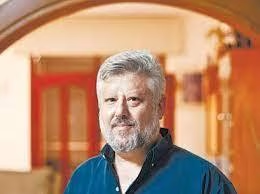
During his presence in Gaza, Hamawi found himself trapped with his colleagues inside a hospital after the occupation forces took control of the border crossings. This harsh experience prompted the American doctor to return to his country carrying a living testimony, trying to convey the voice of the victims to the decision-makers in Washington.

Hamawi faced a great shock upon his return, as he found widespread disregard from members of Congress who refused to listen to his field testimony about the collapse of the health system in Gaza. This frustration was the main driver for his decision to run for elections, believing that real change requires a direct presence in Parliament.

Hamawi emphasizes in his statements that what he witnessed in the Palestinian territories is unlike any other conflict he participated in around the world, considering that the issue goes beyond relief work to the necessity of amending American foreign policies. Observers believe that his victory will represent the first breakthrough for a candidate who places Gaza at the heart of his electoral agenda.

For his part, Democratic Representative Ro Khanna considered that Hamawi's rise reflects a radical shift in the awareness of the Democratic voter towards the Palestinian issue. Khanna pointed out that voices that have long been marginalized are finally getting a real platform to influence the party's future directions.

In contrast, Hamawi's rise did not go unopposed, as pro-Israel organizations launched intensive media campaigns against him. These attacks attempted to link the American doctor to controversial entities based on opinion articles and old reports lacking direct evidence, in an attempt to hinder his electoral progress.

Hamawi responded to these accusations by describing them as a systematic smear campaign targeting his clear political positions on human rights in Palestine. He affirmed that the medical institutions he previously worked with had received official recognition from American administrations, including the administration of former President Bill Clinton.

The Democratic candidate stressed that using the accusation of terrorism against Muslims has become an exhausted political tool to silence critical voices. He clarified that he will continue to be proud of his military and medical service to the United States, and these pressures will not deter him from continuing his political path.

Hamawi's campaign relies heavily on small donations and grassroots support, away from the influence of major lobbying groups like 'AIPAC'. He has succeeded in building a broad coalition that includes leftist forces and human rights organizations that see him as an honest alternative to the traditional party establishment dominated by political money.

Hamawi's resume stands out as an additional strength, as Senator Tammy Duckworth gratefully recalls how he saved her life in Iraq. This record of field military service makes it difficult for his opponents to question his patriotism or loyalty to supreme American interests.

Political circles are cautiously awaiting Tuesday's results, as Hamawi competes with Sue Altman in a heated race that reflects the division of Democratic elites. His supporters believe that his arrival in Congress will give a strong boost to the progressive current that demands an end to unconditional military support for the Israeli occupation.

In conclusion, Adam Hamawi represents a model for a candidate who combines professional competence and ethical commitment to international humanitarian issues. His success in reaching Washington will undoubtedly mark a milestone in the history of Palestinian and Arab political representation within the American legislative institution.

I witnessed the horrors of wars in many regions, but what I saw in Palestine was completely different, and human rights work alone is not enough to bring about change without reaching decision-making centers.

PALESTINE

Thu 04 Jun 2026 2:11 pm - Jerusalem Time

Political Protests in New York Following Smotrich's Participation in a Pro-Occupation March

Political circles in New York City witnessed a storm of sharp criticism following the appearance of Israeli occupation finance minister, Bezalel Smotrich, at a march organized to support Israel. American officials expressed their displeasure at the presence of the minister, known for his far-right stances, considering that his presence casts a negative shadow on the event.

New York Governor Kathy Hochul directly condemned Smotrich's participation, noting that his rhetoric is characterized by extremism and incitement to societal divisions. Hochul affirmed that the principles promoted by the Israeli minister completely contradict the human and political values adopted by New York State, despite her continuous affirmation of general support for Israel.

For his part, New York City Councilman Zahran Mamdani expressed his deep shock at Smotrich's invitation to participate in such a public event in the city. Mamdani explained in press statements that he chose not to participate in the march in protest against the presence of figures representing an extremist current that rejects peaceful solutions.

Mamdani considered that the vision presented by the occupation finance minister reflects a dangerous trend towards the ongoing war in the Gaza Strip, as this vision ignores basic human rights. He added that the policies advocated by Smotrich disregard the safety of civilians and children who pay the price of the armed conflict.

Informed sources indicated that these criticisms reflect a growing gap between Democratic leaders in the United States and far-right ministers in the occupation government. Observers believe that Hochul's and Mamdani's statements represent increasing political pressure aimed at isolating extremist voices that hinder international efforts for de-escalation.

In a related context, the march witnessed a clear division among participants, with some expressing reservations about the presence of Smotrich, who faces international accusations of inciting violence and expanding settlements. These developments come at a sensitive time for US-Israeli relations due to differing positions on managing the conflict in the region.

In conclusion, this incident highlights the extent of the challenges faced by Israeli right-wing figures in international forums, especially in major cities that include political and ethnic diversity. Smotrich's positions remain a subject of wide debate, with critics arguing that they contribute to fueling the conflict and undermining opportunities for stability in the Middle East.

Smotrich represents extremist and divisive rhetoric, and his positions are inconsistent with the values on which New York is founded.

OPINIONS

Thu 04 Jun 2026 1:29 pm - Jerusalem Time

A New Future, A New Path


Gershon Baskin

There are moments in the life of nations when the old political language no longer works, old leadership no longer inspires, and old excuses no longer convince anyone. Palestinians are living through such a moment. So are Israelis. The region stands before a rare opening to turn tragedy into a new political horizon.The war in Gaza must genuinely end not only with the silence of guns but with the birth of a new political reality. Otherwise, it will become another chapter in the same failed history: destruction, mourning, promises of reconstruction, more occupation, more extremism, more despair, and then the next explosion. That is not a future. That is a trap.Two political arenas now require immediate work.The first is the Palestinian arena. The Palestinian people must hold new national elections – presidential and legislative – as Palestinian Authority President Mahmoud Abbas promised in his letter to French President Emmanuel Macron and Saudi Crown Prince Mohammed bin Salman one year ago.According to that promise, elections must take place within one year of the end of the war in Gaza. They should happen before the next Israeli elections. Palestinians must not arrive at Israel’s next political turning point with the same exhausted leadership, the same paralyzed institutions, and the same claim that “there is no Palestinian partner.”Those elections must include Palestinians in Gaza, the West Bank, and East Jerusalem. These are not three separate political realities. They are one integral territorial unit – the territory of the future State of Palestine. Any political process that treats Gaza as separate will not create a Palestinian state. It will create another temporary arrangement that collapses under the weight of its own dishonesty.A new Palestinian election law must be passed before elections are held. The principle must be clear: one authority, one law, one gun. No armed group, militia, organization that maintains weapons outside state authority, or party that supports armed struggle should be allowed to run. Democracy cannot be the license to undo itself. It cannot be built under competing guns.This is not a demand made for Israel’s benefit. It is a Palestinian national interest. A state that does not control its weapons is not a state. A government that cannot enforce the law equally on all is not a government. A political system in which armed factions compete with elected institutions is not democracy. It is a formula for civil conflict, corruption, foreign manipulation, and permanent weakness.The Palestinian people deserve better: a democratic, accountable, modern political system that serves citizens rather than factions, protects freedoms, encourages pluralism, and opens a real horizon for independence, prosperity, and peace. Women, young people, civil society, the private sector, professionals, and local leaders must not be decoration in the next Palestinian political system. They must be at its center.The recent Fatah Central Committee elections proved, once again, Fatah’s irrelevance as a vehicle for the future. The old guard reelected itself. The same faces, habits, political culture, and inability to speak to the younger generation, to Gaza, to the diaspora, to women, to professionals, and to people who want dignity and honest government rather than slogans and patronage.Fatah was once a national liberation movement. Today it looks like the party of yesterday. It still carries historical legitimacy, but that is not enough to govern the future. A movement that cannot renew itself cannot renew a people. A leadership afraid of democracy cannot build a democratic state. A party whose internal elections reproduce the past cannot lead a national rebirth.That is why the Palestinian people need new directions, new parties, and a new language of national responsibility. They need movements that speak honestly about freedom, democracy, rule of law, economic development, equality, nonviolence, regional integration, and peace. They need politics that does not confuse militancy with strategy, slogans with achievement, or survival of the leadership with liberation of the people.That is also why ideas such as “New Path,” founded by a large group of representatives of the younger generations like former Fatah activist Samer Sinijlawi, matter. A new Palestinian political path must be built on the conviction that the Palestinian people deserve a democratic, just, and modern system – one that serves citizens rather than factions; protects freedoms; rejects violence as a political tool; and seeks independence through diplomacy, regional partnership, and accountable governance.The European Union must use its influence on Abbas and the Palestinian Authority; Arab countries must do the same. Egypt, Jordan, Saudi Arabia, Qatar, the UAE, and Morocco should speak with one voice: Palestinian national renewal is essential, not just cosmetic political and institutional reforms. Elections must be held. The law must be changed. The old system must open the door to a new generation.The second arena is regional and international. Qatar, Saudi Arabia, the UAE, Egypt, and Jordan must coordinate a serious political campaign toward US President Donald Trump. Recent events have shown that Trump has influence over Israeli decision-making that no other world leader has. No Israeli prime minister – Benjamin Netanyahu or anyone else – can ignore a determined American president, especially if backed by the Arab region and a clear package of security, normalization, development, and peace.The next Israeli government will not voluntarily end the Israeli-Palestinian conflict, accept a Palestinian state, or dismantle permanent occupation. It will move only if there is a powerful external framework that makes the price of refusal higher than the price of agreement. That framework must come from Washington, but it must be pushed, shaped, and supported by the Arab region.The Arab states should tell Trump directly: The time has come to turn points 19 and 20 of his own plan into an action plan. A “credible pathway” to Palestinian self-determination and statehood cannot remain a phrase in a document. A “political horizon” cannot remain diplomatic decoration. These words must become a timetable, a mechanism, and a binding political process.The future Palestinian state must be part of a broader regional architecture: demilitarized, deradicalized, democratic, and developed. It must live alongside Israel within a regional system of security cooperation, economic development, diplomatic relations, and mutual recognition. This is about a new Middle East in which Israeli security and Palestinian freedom are interdependent realities.Palestine will never be free if Israel does not have security. Israel will never be secure if the Palestinians do not have freedom. That must guide the next phase.This will not happen by itself, by Israeli generosity, or by more international statements. It will happen only if Palestinians, Arabs, Europeans, Americans, and peace-minded Israelis act together with urgency and clarity.The sequence is clear. End the war in Gaza for real. Pass a new Palestinian election law based on one authority and one gun. Build new Palestinian political forces. Hold Palestinian elections in Gaza, the West Bank, and East Jerusalem. Push Trump to move Israel toward a real two-state agreement. Embed that agreement in a regional security and economic architecture.Make the promise of Palestinian statehood real – not someday, not after another generation of suffering, but within a defined political process that begins now. Somewhere in that process, Israel will also hold elections and, hopefully, remove the disastrous Netanyahu-Bezalel Smotrich-Itamar Ben-Gvir regime.The region does not need another slogan. It needs a new path. The Palestinians do not need recycled leadership. They need a new future. Israelis do not need another illusion that the conflict can be managed forever. They need to understand their security depends on Palestinian freedom.A new future is possible. But it will not be given to us. It must be made. And it must begin now.


ARAB AND WORLD

Thu 04 Jun 2026 1:23 pm - Jerusalem Time

For the first time in its history.. Germany loses the race for non-permanent membership in the Security Council

The halls of the United Nations General Assembly witnessed a major diplomatic surprise, as Germany failed to secure a non-permanent seat on the International Security Council for the term extending between 2027 and 2028. This failure came after fierce competition within the Western European and Other States group, where Berlin was unable to garner enough votes to surpass its competitors on the old continent.

According to the ballot results announced by the international organization, Portugal garnered 134 votes, while Austria received 131 votes, granting them the right to represent the European group in the Council. In contrast, Germany's tally stopped at only 104 votes, which represents its first electoral loss in this race since it began its ambitious participation to be present at the center of international decision-making.

Germany, which represents the largest economy in the European continent and a prominent member of the G7, is considered one of the basic pillars of regional and international security and politics. Despite its long history of occupying this seat for six previous terms, the recent voting results reflected shifts in the balance of power and support within the 193-member General Assembly.

In a related context to the elections, Zimbabwe succeeded in securing the seat allocated to the African continent after obtaining the support of 182 countries, benefiting from being the sole candidate from the continent. Trinidad and Tobago also secured representation for the Latin American and Caribbean region by obtaining 181 votes in a ballot that saw no significant competition for this geographical seat.

As for the Asian group, matters remained pending a second round of voting after none of the candidates managed to decide the outcome from the first round. The Philippines and Kyrgyzstan are competing for the seat allocated to the continent, amid international anticipation for what the upcoming decisive rounds will yield to complete the structure of non-permanent members for the next phase.

It is scheduled that the five countries that will be finally chosen will begin their official duties on January 1, 2027, where they will replace Pakistan, Somalia, Greece, Denmark, and Panama. These countries will join the list of current non-permanent members whose membership ends at the end of 2027, namely Bahrain, Colombia, Latvia, Liberia, and the Democratic Republic of Congo.

This shift comes at a sensitive time when the United Nations faces increasing pressure to reform the Security Council and expand the representation of developing countries and major non-permanent states. Germany has been one of the most prominent advocates for this reform for many years, but its recent failure may cast a shadow over its diplomatic efforts aimed at strengthening its leadership role within the international institution.

These results are a diplomatic surprise for Germany, which has held a non-permanent seat on the Security Council during six previous terms and continuously calls for the reform of the international system.

ARAB AND WORLD

Thu 04 Jun 2026 1:23 pm - Jerusalem Time

British Museum postpones lecture on 'Jewish History' amid fears of protests

The international cultural scene witnessed widespread controversy following the British Museum's decision in London to postpone an academic lecture dedicated to 'Ancient Jewish History'. This step comes amidst escalating global boycott indicators against the occupying state at both official and popular levels, leading observers to consider the decision a reflection of the international climate rejecting the occupation's policies, even in aspects that appear purely academic or historical.

Israeli security affairs expert, Uzi Rabi, considered what happened at the British Museum a momentous event that goes beyond a mere scheduling glitch. Rabi explained that the museum is not just a lecture hall, but a global cultural institution and a temple of memory and antiquities, noting that postponing the discussion of the ancient 'Kingdoms of Israel and Judah' reflects the conflict's shift from the contemporary political sphere to a struggle over the origin of the historical narrative.

Israeli sources indicated that this postponement represents a kind of 'cultural strangulation' that does not rely on direct censorship orders or judicial decisions, but rather stems from a general atmosphere imposed by popular pressure. These sources believe that venerable cultural institutions now prefer to avoid holding events related to Jewish or Israeli identity for fear of disruption by protesters opposing the occupation's policies and the ongoing war on the Gaza Strip.

In the context of justifying the position, it is believed that the British Museum management seeks to protect its staff and public from any potential security tensions that might accompany the event. However, Israeli criticism sharply rebuked this approach, considering that the true test of culture lies in the ability to withstand 'external noise' rather than succumbing to threats, which raises questions about who has the right to determine what is said within the halls of global museums.

Hebrew reports claimed that the message conveyed to Jews in Britain through this measure indicates that the dissemination of their culture has become conditional on the approval or silence of others. Analysts claimed that turning a lecture on ancient Near Eastern history into a 'security event' reflects a crisis in Western society that has begun to move away from the traditional Israeli narrative, and subjects history to 'political filtering' resulting from the current conflict in the Palestinian territories.

Observers believe that this development is not just a fleeting incident, but part of a broader context of avoiding support for the occupation in major Western capitals, including London. This incident confirms the growing criticism directed at Israel in international academic and cultural forums, where crimes committed against the Palestinian people have become an obstacle to passing any activities that attempt to promote the Israeli narrative, even if they are cloaked in the guise of ancient history.

Postponing this lecture means that Israel is facing cultural strangulation, as a venerable institution prefers to postpone a historical event for fear of threats from opponents.

PALESTINE

Thu 04 Jun 2026 1:23 pm - Jerusalem Time

Settlement plan to seize historical lands between Sebastia and Al-Masoudiya in Nablus

The area located between the towns of Sebastia and Al-Masoudiya, northwest of Nablus city, is facing a new settlement threat, as the occupation authorities seek to confiscate vast areas of private agricultural land. Farmer Jawad Ghazal stands as a witness to this encroachment, expressing his shock at the decision to transform his land, inherited from his family, into a settlement park serving settlers and preventing its legitimate owners from accessing it.
Sources reported that the occupation uses the pretext of tourism projects and public parks as a cover to impose its full control over archaeological and agricultural sites in the Nablus countryside. The towns of Sebastia and Al-Masoudiya are among the most targeted areas due to their historical significance, and residents fear that these projects will isolate Palestinian villages and stifle the urban and agricultural expansion of the indigenous population.

Speaking about the daily suffering, Ghazal affirmed that farmers in that area live in a constant state of anxiety due to repeated attacks by the occupation army and settlers. He pointed out that he personally was subjected to abuse and severe beating about a year ago while on his land, considering that these practices primarily aim to intimidate Palestinians and push them to voluntarily leave their properties to facilitate settlement expansion operations.

Observers warned that the establishment of the settlement park would paralyze the movement of farmers and deprive dozens of families of their sole source of livelihood, which depends on the bounty of this land. This step is considered part of a systematic policy to change the demographic and geographical character in the northern West Bank, threatening to cut off geographical communication between the Palestinian towns surrounding Nablus city.
Despite the continuous threats, the residents of the area cling to their historical right to their lands, affirming their continued steadfastness in the face of Judaization schemes. Farmers appealed to the international community for the necessity of intervention to stop the theft of lands that is taking place under misleading tourism pretexts, stressing that this land represents their identity and memory that cannot be relinquished, no matter the sacrifices.

This land is part of our lives and our identity, and we will not give up our right that we inherited from our fathers and grandfathers, no matter the pressures.