






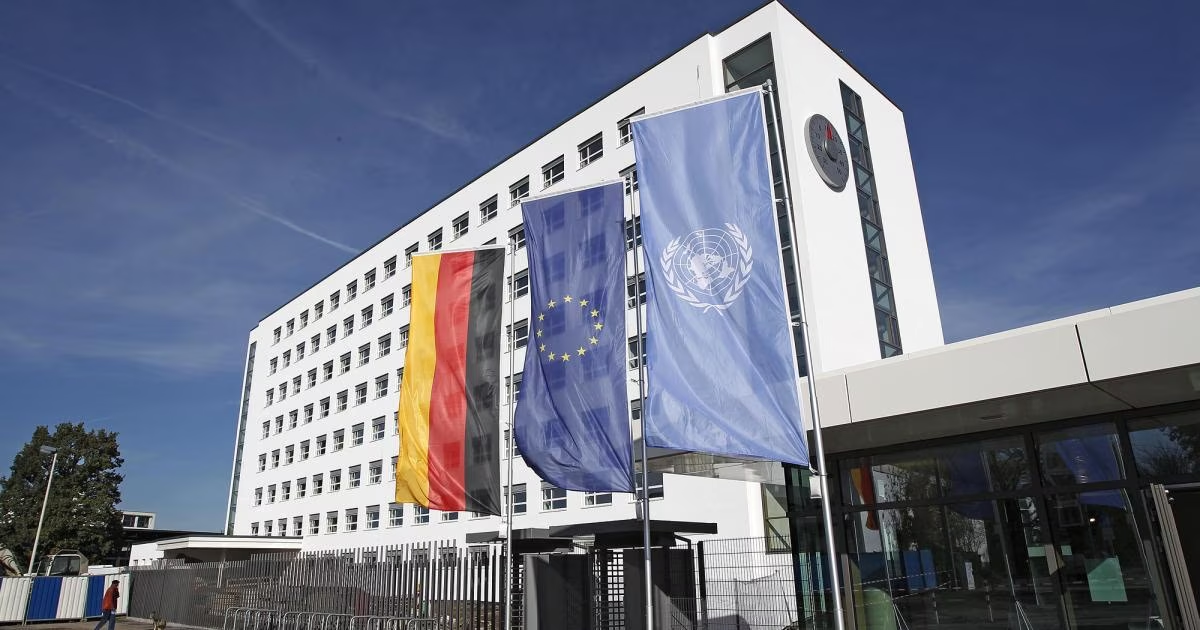
The halls of the United Nations General Assembly witnessed a major diplomatic surprise, as Germany failed to secure a non-permanent seat on the International Security Council for the term extending between 2027 and 2028. This failure came after fierce competition within the Western European and Other States group, where Berlin was unable to garner enough votes to surpass its competitors on the old continent.
According to the ballot results announced by the international organization, Portugal garnered 134 votes, while Austria received 131 votes, granting them the right to represent the European group in the Council. In contrast, Germany's tally stopped at only 104 votes, which represents its first electoral loss in this race since it began its ambitious participation to be present at the center of international decision-making.
Germany, which represents the largest economy in the European continent and a prominent member of the G7, is considered one of the basic pillars of regional and international security and politics. Despite its long history of occupying this seat for six previous terms, the recent voting results reflected shifts in the balance of power and support within the 193-member General Assembly.
In a related context to the elections, Zimbabwe succeeded in securing the seat allocated to the African continent after obtaining the support of 182 countries, benefiting from being the sole candidate from the continent. Trinidad and Tobago also secured representation for the Latin American and Caribbean region by obtaining 181 votes in a ballot that saw no significant competition for this geographical seat.
As for the Asian group, matters remained pending a second round of voting after none of the candidates managed to decide the outcome from the first round. The Philippines and Kyrgyzstan are competing for the seat allocated to the continent, amid international anticipation for what the upcoming decisive rounds will yield to complete the structure of non-permanent members for the next phase.
It is scheduled that the five countries that will be finally chosen will begin their official duties on January 1, 2027, where they will replace Pakistan, Somalia, Greece, Denmark, and Panama. These countries will join the list of current non-permanent members whose membership ends at the end of 2027, namely Bahrain, Colombia, Latvia, Liberia, and the Democratic Republic of Congo.
This shift comes at a sensitive time when the United Nations faces increasing pressure to reform the Security Council and expand the representation of developing countries and major non-permanent states. Germany has been one of the most prominent advocates for this reform for many years, but its recent failure may cast a shadow over its diplomatic efforts aimed at strengthening its leadership role within the international institution.
These results are a diplomatic surprise for Germany, which has held a non-permanent seat on the Security Council during six previous terms and continuously calls for the reform of the international system.




Share your opinion
For the first time in its history.. Germany loses the race for non-permanent membership in the Security Council