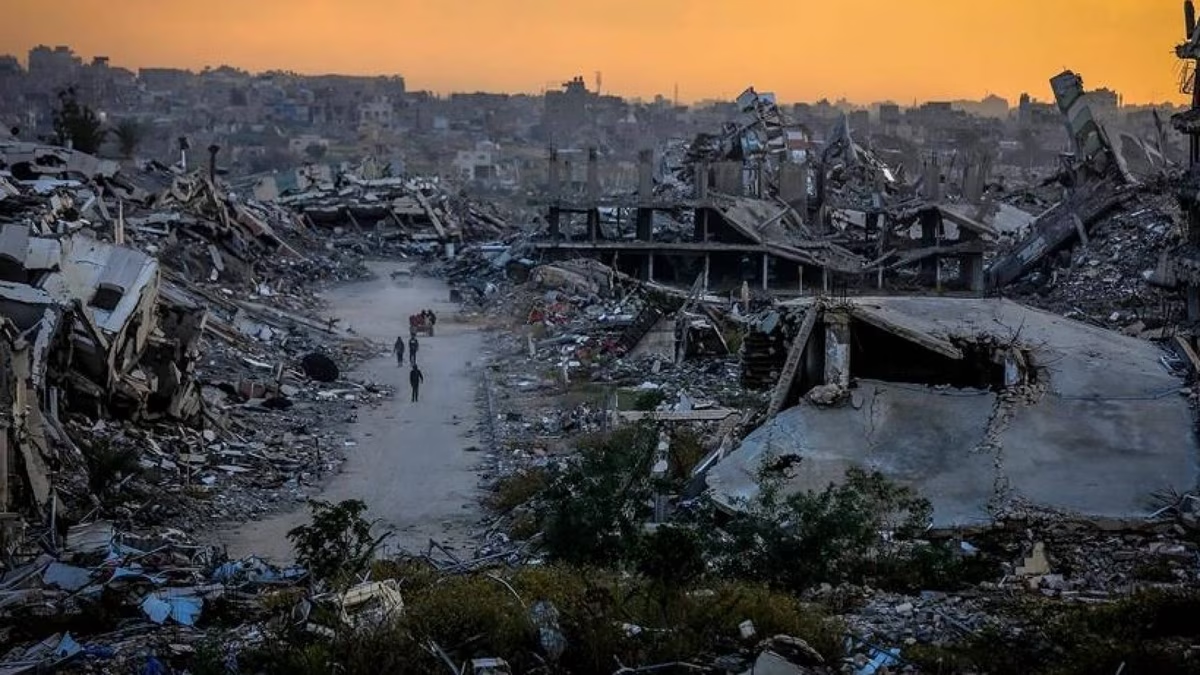
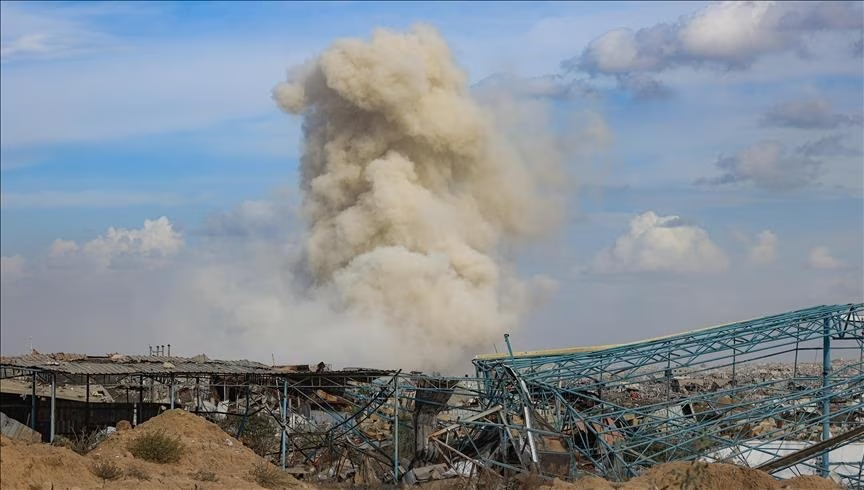
A newspaper published a report describing what it called the Middle East reaching something like 'zero hour', where deep exhaustion from wars intersects with a timid desire to break the ongoing cycle of violence, noting that the scale of destruction and human losses in Syria, Gaza, Lebanon, and Israel has created a state of collective exhaustion that pushes broad sectors of the region's peoples to prefer life and stability over revenge.
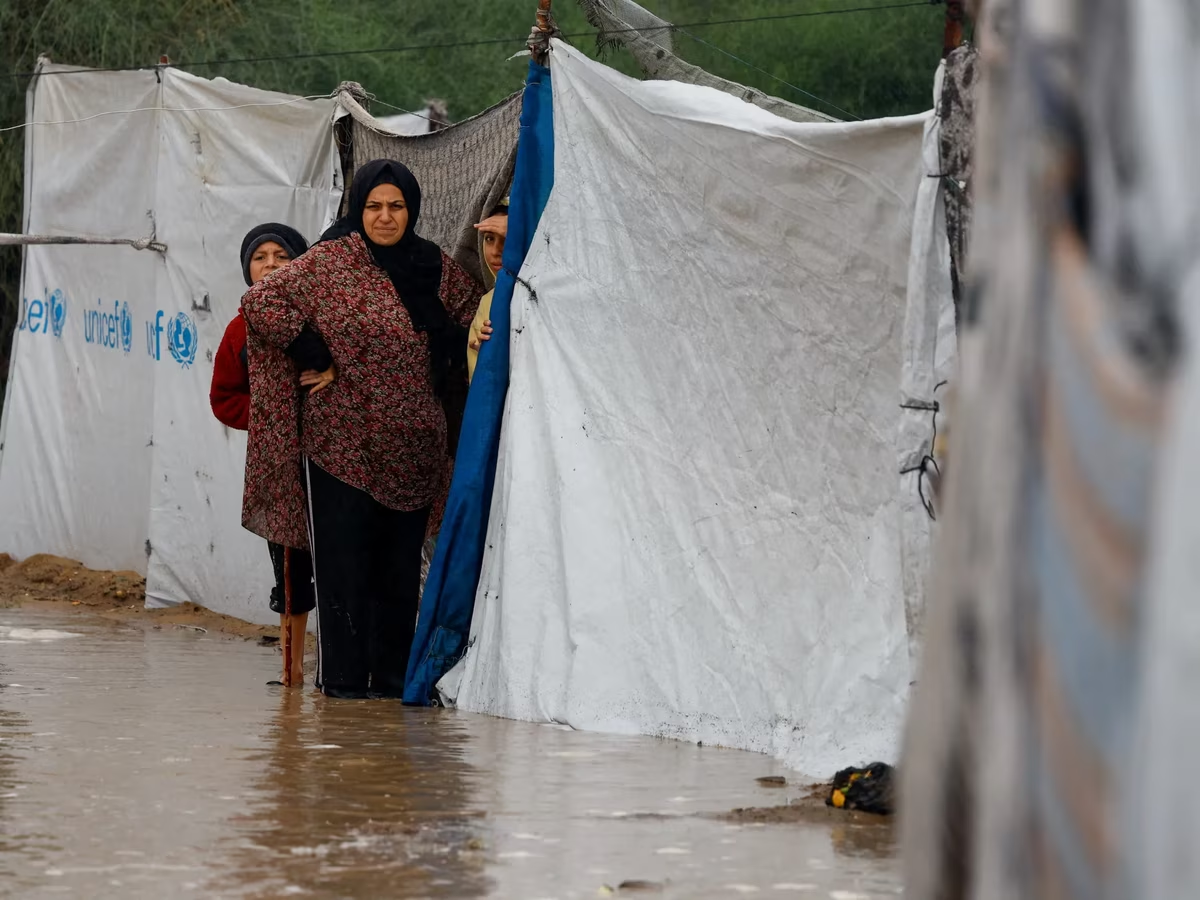
The newspaper said that a new spirit is beginning to form in the Middle East from among the ruins and destruction, amid torture and terror, expressing rejection of endless cycles of violence, and striving to build a future for children that advances over clinging to past conflicts.
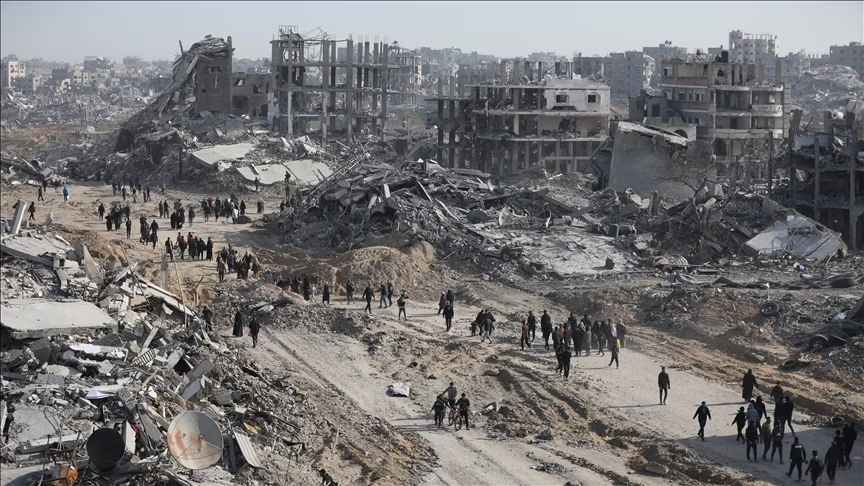
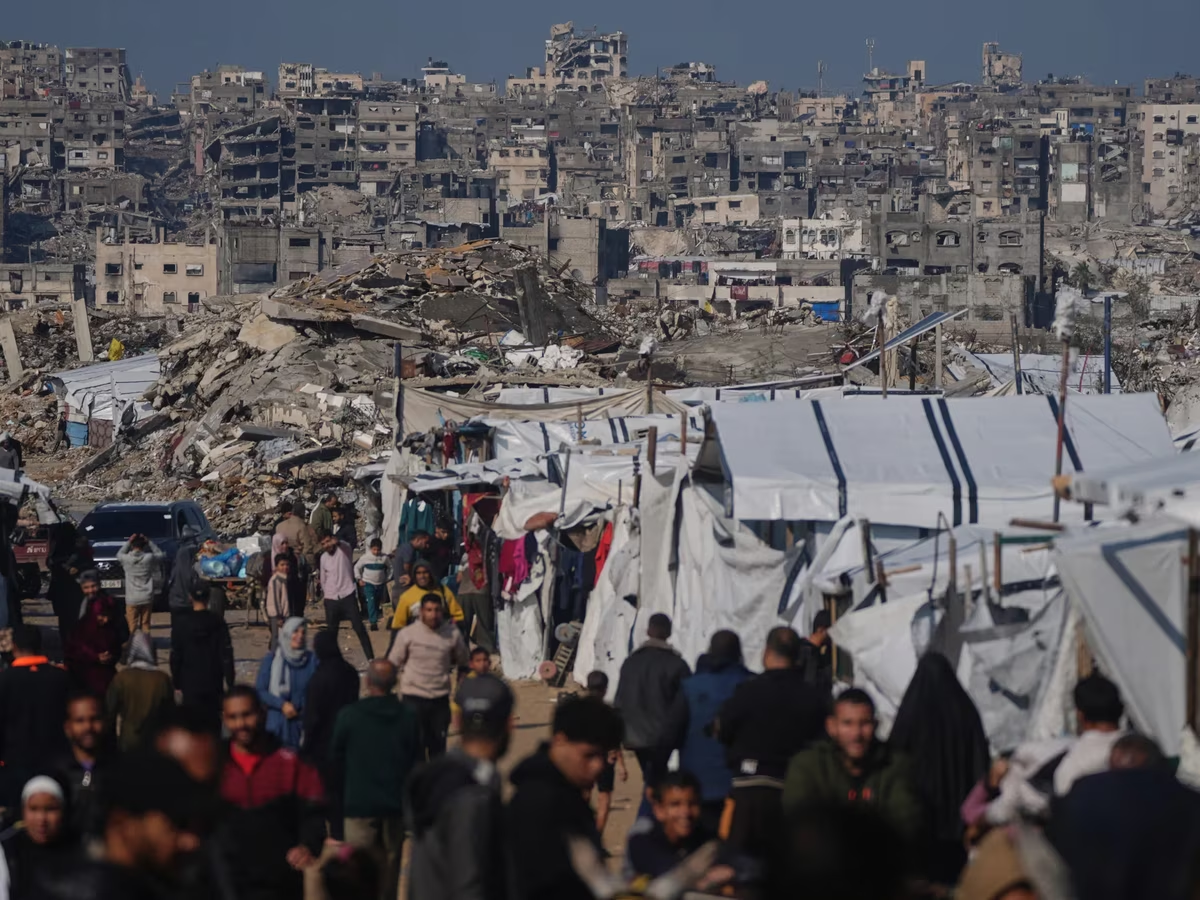
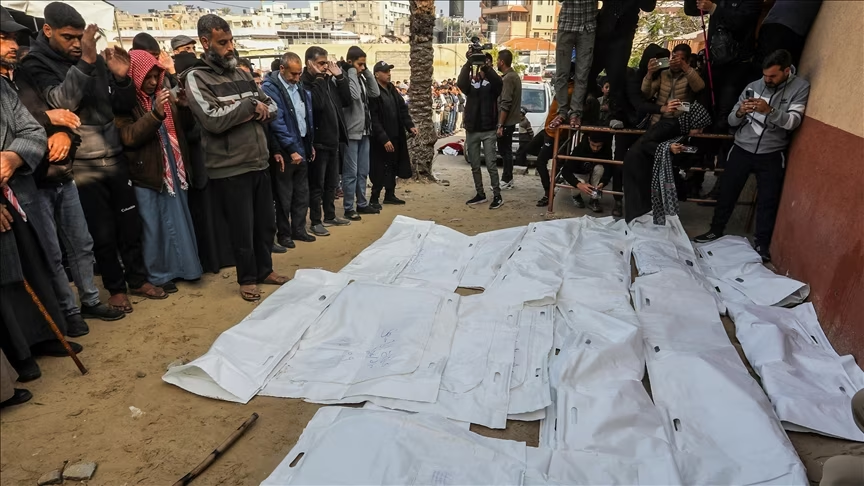
It explained that this feeling, despite being fragile and controversial, feeds on a general state of exhaustion after more than half a million people were killed in the Syrian civil war, and about 70,000 Palestinians during two years of war in Gaza, in addition to nearly 2,000 Israelis.
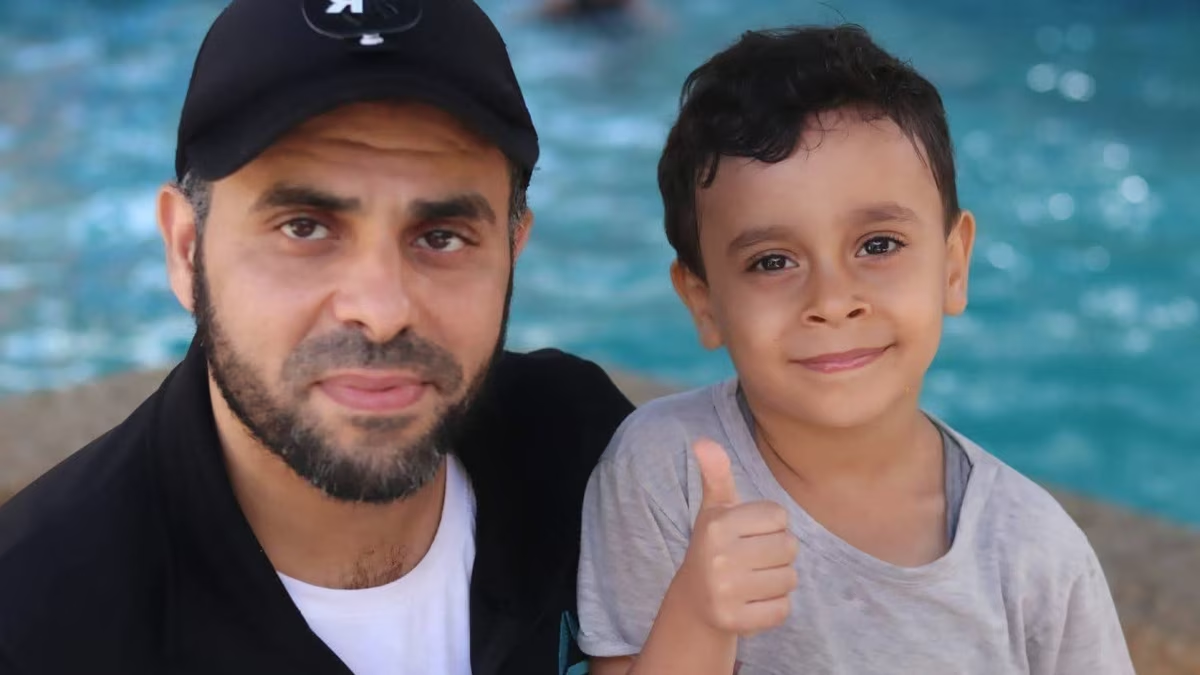
The newspaper quoted Hassan Samadi, 48 years old, who lost his younger brother in a bombing carried out by Bashar al-Assad's regime and whose family later fled to Jordan, saying that a solution must be found because people are tired of war and no longer want anything but to live in peace.
It indicated that the desire for safe coexistence prevails in various parts of the region; in Syria, torn by war, one slogan is repeated: 'We just want to live'.
As for Saudi Arabia, according to the report, it seeks to transform into a major, open, technologically advanced power representing modern Islam, away from Arab ideologies, while 'pragmatism' has become the key word in the Sunni Gulf monarchies that once feared the influence of Shiite mullahs in Iran.
Nevertheless, the newspaper confirmed that the region remains flammable, noting that the United States responded this month to the killing of two American soldiers and a translator with airstrikes against ISIS in Syria, following the Trump administration's announcement in its national security strategy that the region 'is transforming into a place for partnership, friendship, and investment', and that the era of the Middle East dominating American foreign policy 'has fortunately ended'.
The newspaper considered that this optimism seems exaggerated, because unresolved issues cannot be solved overnight with a presidential signature.
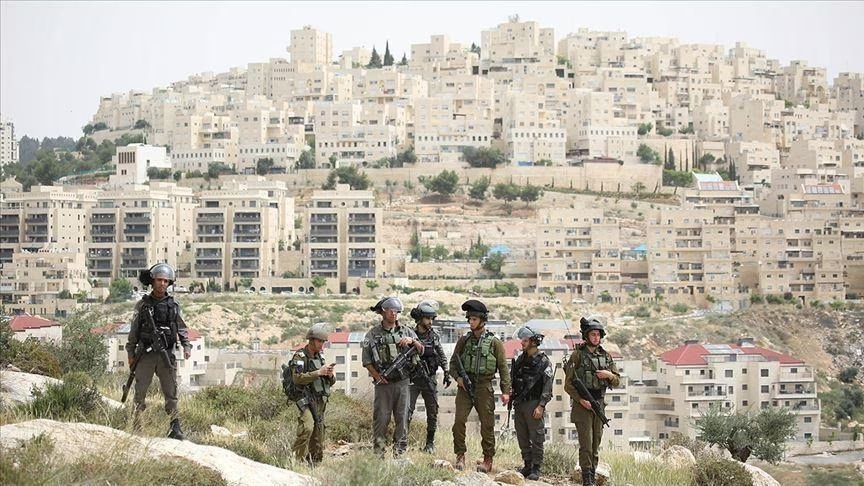
It clarified that the sectarian division in Syria still clashes with the desire for unity, and that war continues in Yemen, while the Iranian regime remains weak but determined to destroy the occupying state, while Israeli settlers continue to occupy Palestinian lands in the West Bank with support from an extreme right-wing Israeli government.
It also noted that the Gaza agreement is beginning to crack, and that everything related to the next phase of the peace plan, from the international stabilization force and disarming Hamas to the withdrawal of the occupation and the role of the Palestinian Authority, remains controversial.
The newspaper added that the issue of 'sequencing', meaning which concessions should come first and from which side, has become the new battleground, but it confirmed that very few want a return to war, considering that the remarkable thing amid fluctuating emotions between hope and terror is the quiet determination of many to choose hope over despair and destruction.
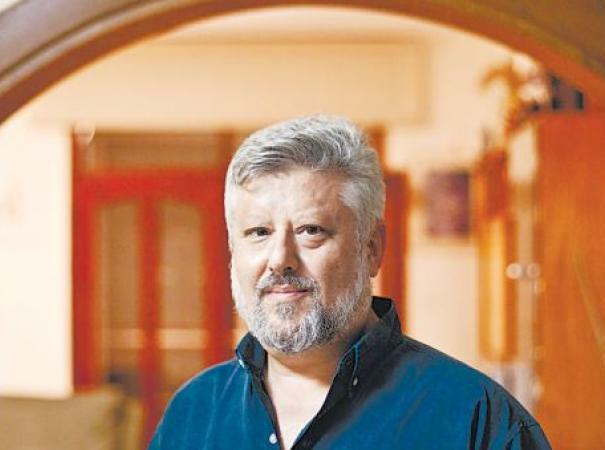
It quoted Israeli historian and writer Gershom Gorenberg as saying that the Gaza war violated Israel's principle of waging short wars, and that a state of comprehensive exhaustion prevails in the occupying state, hindering the renewal of fighting, noting that this exhaustion may open a margin for dialogue, especially amid a broad reshuffling of the Middle East's cards, suggesting a possible change in mindsets.
The newspaper pointed out that Iran suffered a severe blow during Israel's 12-day war in June, and that the Iranian regime is currently focusing on its survival, considering that this relative stagnation may give some time to those seeking to exit the conflict cycle, although the Iranian nuclear program, though diminished, has not ended, and may become a target for Israeli and American military action again.
As for Hezbollah in Lebanon, the newspaper mentioned that it has become merely a shadow of what it once was, while Hamas in Gaza remains firm but in a defensive position after losing its leaders targeted by the occupying state, considering that the movement's weakness may give exhausted Gaza residents a chance to seek a different future.
In Syria, the newspaper clarified that governance is now in the hands of a Sunni majority supported by Saudi Arabia and Turkey, most of which do not want to continue the conflict, but seek reconstruction and seizing new economic opportunities, confirming that the chain of destruction extending from Gaza to the Lebanese borders with the occupied territories and up to northern Syria reveals the absurdity of violence and constitutes a stark condemnation of widespread human failure.
It quoted Bashir Muhammad, 27, a government soldier from Aleppo, saying: 'We lost our future because Assad bombed all the schools and I couldn't even get a high school diploma; now we want our children to have a life'.
In the city of Nabatieh in southern Lebanon, parts of which have turned into ruins, Jihad Wahab, 24, returned from Turkey where he completed his computer science studies, to be with his family during the latest round of fighting with the occupation, saying: 'My heart is broken, that's what I feel when I look at the destruction. Why all this? Why do I have to leave my country to build my future?'
The newspaper indicated that the destruction has generated a longing for renewal, where many hope for a future without new wars between Israel and the Palestinians, or that Saudi Arabia will eventually proceed with normalizing relations with Israel if it ensures a 'reliable, irreversible, and time-bound' path toward establishing a Palestinian state, including rebuilding Gaza.
It also noted that some see the possibility of a security agreement between Israel and Syria led by President Ahmed al-Shara, who said in Doha this month that his country seeks good relations with all its neighbors and wants to be a 'model for the region'.
Although these scenarios seem unattainable for now, the newspaper quoted Norwegian Foreign Minister Espen Barth Eide as saying he believes there is an opportunity, with the caveat that things often do not go as planned in the Middle East, noting that the establishment of a Palestinian state alone can prevent the continuation of Israel's war.
It added that establishing a Palestinian state requires a huge change in Israeli policy based on gradual and increasing occupation of the West Bank, which was confirmed by Anne-Claire Legendre, senior advisor to French President Emmanuel Macron on Middle East affairs, saying that the biggest change in mindsets is needed within Israel, wondering why not think of new peace agreements after the resilience of agreements with Egypt, Jordan, and Gulf countries during two years of violence.
The newspaper noted that the occupying government approved last week a deal worth $35 billion with Egypt to supply it with natural gas, a step that strengthens economic relations despite the pressures it faced during the Gaza war.
The newspaper confirmed that bringing about this change and addressing deep wounds is not easy, given the permanent price imposed by Middle East wars in blood.
It discussed the Syrian revolution that erupted in 2011 as part of the Arab Spring, starting as a demand for freedom and democracy against more than half a century of tyranny, before turning into a long bloody conflict that brought back authoritarianism and extremism strongly to the region.
It explained that the conflict against Bashar al-Assad's regime tore the Middle East apart for years, allowing al-Qaeda and ISIS to establish bases, with brutal support from Iranian Shiite agents, Hezbollah fighters, and Russian forces for the old regime, while Kurds supported by the United States fought ISIS and sought to carve out their own territories, while millions of Syrians remained between displacement and exile or barely surviving amid the destruction.
The newspaper mentioned that Germans call the total destruction that followed World War II in 1945 'Stunde Null' or 'zero hour', considering that Syria is living a similar moment, where the country stopped in 2011 and more than 100,000 people disappeared, while Syrian novelist Khaled Khalifa described those who survived the civil war as 'living dead'.
From the heart of this chaos, a new leader emerged: Ahmed al-Shara, a former jihadist who founded a branch of al-Qaeda in Syria twelve years ago, and today says he wants to unite the country.
Despite acts of violence witnessed in the coastal areas with an Alawite majority loyal to Assad, and the Suwayda region with a Druze majority that Israel sought to establish relations with, the newspaper said that al-Shara has made notable progress in one year, gaining support from the United States, Russia, and China, lifting economic sanctions, maintaining restraint in the face of repeated Israeli military provocations, and beginning to lay the foundations of state institutions.
It noted that for the first time in more than half a century, Syria is no longer part of an axis that makes it a entrenched enemy of the West, considering this a radical transformation in the Middle East, reflected in the celebrations of the fall of Assad's regime a year ago.
It quoted Hind Qabawat, Syrian Minister of Social Affairs and the only woman in the government, saying that the president wants success for all the martyrs and missing in the revolution, confirming that there is no way but to be a bridge for all components, and that inclusivity is the only way.
The newspaper said that the future of American policy seems unclear, noting Donald Trump's son-in-law's statement at the Doha Forum this month that 'the distinctive thing about my father is that you never know what he will do'.
It saw that this ambiguity may keep adversaries on alert, but it makes American diplomacy incoherent and difficult to predict its path.
It explained that some features of the new policy have become clear, including choosing leaders without regard to regimes or values, seeking peace through economic prosperity hoping that money will be a comprehensive cure, and not seeking liberal democracies, but giving 'the region a chance to develop its own structure'.
It noted that part of this structure may include expanding the Abraham Accords that established diplomatic relations between Israel and two Gulf countries in 2020.
In Gaza, the newspaper mentioned that Washington sees the need for a strong leader who unites Palestinians and has charisma similar to Syrian President Ahmed al-Shara, which the American administration described to France as the 'al-Shara model'.
It added that the United States has begun direct talks with Hamas leaders for the first time through envoy Steve Witkoff and the president's son-in-law Jared Kushner, indicating a change in the American approach toward Islamists, where former fighters, even those previously labeled terrorists, are no longer excluded from playing political roles.
It quoted Palestinian-American businessman Bashara Bahbah as saying that there are pressures from the United States and Europe to release Marwan Barghouti, the prominent Palestinian leader serving life sentences in Israel.
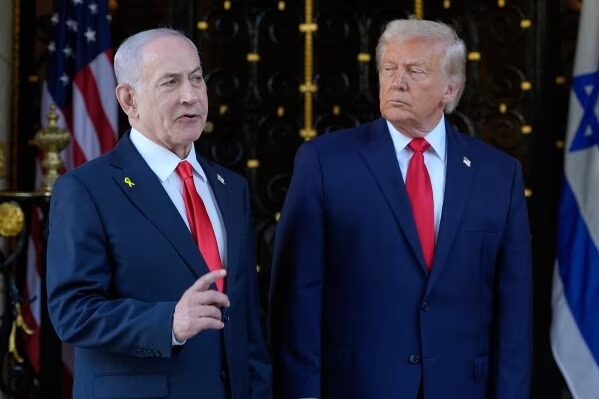
The newspaper explained that Barghouti is seen in the West Bank and Gaza as a figure capable of uniting the Palestinian movement toward establishing a state, which makes Israeli Prime Minister Benjamin Netanyahu likely opposed to his release.
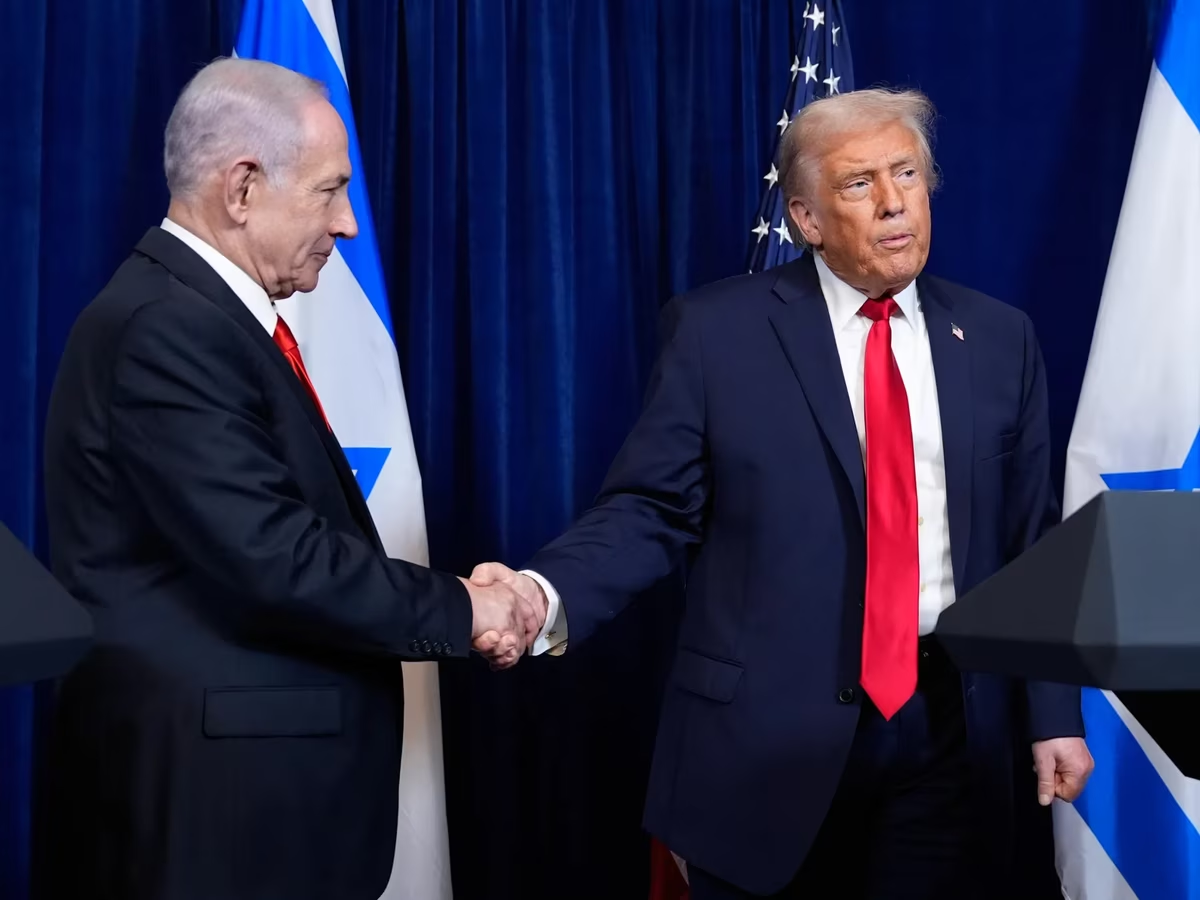
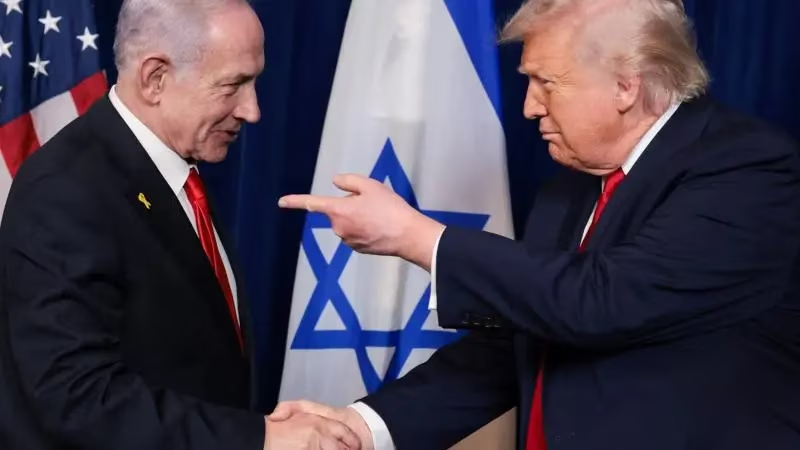
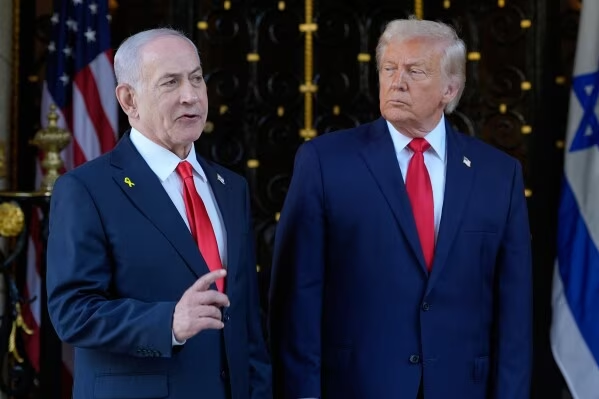
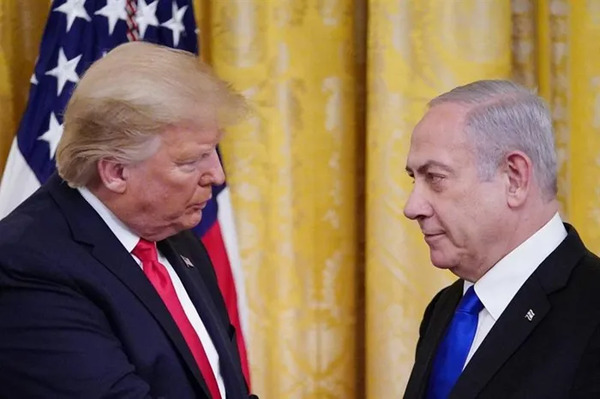
It said that the Trump administration provided strong support for Netanyahu, but it was cautious support, as Trump did not clarify his position on the two-state solution, although Article 19 of his 20-point plan on Gaza talks about 'a reliable path toward self-determination and the Palestinian state, which we recognize as the aspiration of the Palestinian people'.
The newspaper considered that these cautious phrases, despite their limitations, reflect an intersection between Trump's support for Israel and his personal relationships with Saudi Arabia, Qatar, and other Gulf countries, making it difficult for him to ignore the demands of his Arab allies if he wants to succeed in any agreement.
It added that Netanyahu's position is clear in rejecting the establishment of a Palestinian state, a position common within Israel, especially after Hamas's attack on October 7, 2023, considering him a skilled politician in survival but may lack sufficient support to form a new government after the upcoming elections.
The newspaper speculated that his likely successor will seek more innovative ways to end the ongoing state of war, given that Palestinians and Jews will not leave the disputed land between the Mediterranean Sea and the Jordan River.
The newspaper said that violence in Syria cannot subside quickly, as sectarian cracks are deep, even if the exhaustion of the population has reduced their intensity without ending them.
It noted that at the beginning of the Syrian uprising in 2012, Assad's regime appointed local community leaders to distribute weapons against rebels, and minorities like Christians often stood with the Alawite sect to which Assad belongs, considering that targeting Mansour's cousins came because one of them was involved in arming those who killed Sunni rebels.
It added that the same principle appeared in the city of Aleppo, where it erupted in October